Taking It On The Chin: The Graceful Art Of Accepting Rejection

“Was I bitter? Absolutely. Hurt? You bet your sweet ass I was hurt. Who doesn’t feel a part of their heart break at rejection. You ask yourself every question you can think of, what, why, how come, and then your sadness turns to anger. That’s my favorite part. It drives me, feeds me, and makes one hell of a story.” ― Jennifer Salaiz

Rejection is akin to getting sucker-punched in the gut and, as a writer, you know this because you’ve undoubtedly experienced it in one form or another. We all have. Even with this blog, as harmless as it is, I sometimes receive comments that take issue with or flat-out reject things I’ve posted (hey, it happens, and you can’t fault people for having opinions that differ from your own).

While it’s no big secret that we all seek acceptance, rejection—impossible to avoid once your work steps out of the For-Your-Eyes-Only comfort zone and into the hands of the reading public—is an important part of your journey if your intention is to develop as a person and grow as a writer.

After you’ve gone through your initial grieving period (don’t deny or bury your feelings because that’s just not healthy), try these suggestions on for size to help you cope during the initial rejection rough patch:

1. Take yourself out of the equation

Your written piece is your baby, forever tethered to you by an unseen and intangible umbilical cord, and although it will always be a part of you, when someone disapproves of your work, they’re not necessarily rejecting you, the person.

Yes, I’m well aware it’s impossible to completely divorce yourself from something you’ve created. Especially when that sly critter Self-Doubt sidles up beside you and makes you question if there’s something wrong with you or your talent. But instead of taking this to heart and allowing it to consume you, you need to adjust your thinking.

When your work is rejected it’s usually more a reflection of the viewpoint, needs, or requirements of the person making the decision. The thoughts in your work may not align themselves with the thoughts of the target audience, which doesn’t necessarily make it bad, it’s simply not a piece that fits into their jigsaw puzzle.

Of course, if they offer you a reason why your work was rejected, you shouldn’t rush to dismiss it. Take a step back, look at the critique objectively, and if it has merit, consider incorporating it into your next draft.

2. Anticipate rejection

It’s coming whether you like it or not, so why not bake yourself a big ole Bundt cake, put the kettle on, and have yourself a little nosh when it arrives.

When writing, if you expect rejection, what it should do is make you up your game by challenging you to raise the yardstick, push the envelope and send your best work out into the world. And before you mistake my meaning, I’m not asking you to get down on your work and take the negative view that your writing isn’t good enough and never will be. I just want you to adjust your mental outlook. It’s like the saying goes, “Hope for the best, expect the worst.” It cuts down on the disappointment that may come later on.

Also, don’t let a verbal or written rejection kill your drive and lead you down the path of procrastination. Use it to become a better, stronger writer.

3. Stay focused

You can’t control your peers, society, or the world at large, so why not concentrate on your own thoughts, feelings, actions, and behaviors? Just because you’re not gifted with the inhuman ability to alter reality, doesn’t mean you’re powerless to alter your personal reality. By turning your focus inward, you acknowledge what you want and realize you have the power to set events in motion to achieve your goals.

How does this apply to rejection? You may be able to avoid the downward spiral of self-doubt by accepting there will always be cynics who are entitled to their opinions, be they informed or otherwise, and said opinions do not—and I repeat do not—have power over you. Instead of focusing on their negativity, turn your attention to what you can control, apply what you’ve learned from their comments, and move forward to produce more powerful work.

4. Spot the merit in rejection

I know I’ve taken an “it’s them, not you” approach in this post but honestly, not all rejection is unfounded. We’ve all produced work that exists on different levels. Some writings strike the right chord with the majority of your audience and others miss the mark by scant inches and even a country mile. This is when you let slip your inner critic and examine your work for uninspiring ideas, a poor approach, confusing views, unclear writing, passive voice, etc.

It also helps to learn to self-question, which is far and away different from self-doubt. Turning detective and analyzing why the editor in question didn’t accept the story, what were they looking for and what you could have done differently to meet their needs, may help you decipher learning points of which you were previously unaware.

A word of caution: Unless you have a personal connection with an editor or publisher, I would advise against contacting them directly to ask why your work was rejected. While you may see it as a means to improve your craft, your intent may be misconstrued. You never want to gain the reputation of being that writer. Or, perhaps you do. In that case, have at it. Who am I to tell you what to do?

5. Understand that rejection is growth

You’ve heard the saying, “One step forward, two steps back,” and you might believe receiving a rejection is taking those two soul-crushing backward steps, but you, my friend, are absolutely 100% incorrect. It’s the one step forward to understanding what people are looking for in the real world and how you can progress your writing to accomplish your objectives.

And if you have a piece of writing that has received more than a few rejections, instead of chucking it in the drawer of misfit tales, why not give it the once-over one more time, taking all the constructive comments into account while you do it. You just might find that you can spot and understand the weak points in your story’s structure and fortify them with the experience you’ve gained from learning how to cope with, deconstruct and master the lessons within the criticism you’ve received.

As I said from the start, you’re not the only person who’s dealt with rejection. Click this link to view some of the rejection letters received by bestselling authors. If they can handle it and press on, so can you.

Sally forth and be brush-your-shoulders-offingly writeful, my friend.

It Ain’t Impossible Once Somebody Gets It Done

“To believe a thing impossible is to make it so.” – French Proverb

Everyone talks about the writer’s toolkit and all the utensils it should contain, but writers also need to have a storehouse equipped with a shelf that holds just one thing:

The belief that anything is possible.

I’m sure you’ve already figured out that if someone has already done a thing, you can do it, too, once you’ve set your mind to it. But have you ever stopped to consider that even if no one has done this writing task that’s swimming around in your brain, you still can do it? All you need to do is cut out the middleman. You really don’t need anyone else to prove that your project is possible. You can just go on out there and do it for yourself.

Don’t worry, I’m not gonna sell you a load of universal law nonsense like “everything in life is possible because you’ve been gifted with all the necessary tools, skills, drive, and connections you need to make it happen.” If your aim is to do the impossible, you’re gonna have to work at it. Hard. And that’s a fact, Jack.

Now, you’re no doubt saying. “Okay, I get that it takes drive, dedication, passion, and the right mindset, but let’s get to the meat of the nutshell. Just how do I do the impossible?”

Well, my friend, I’m glad you asked.

1. Find the cost of your impossible.

You know very well I’m not talking about money (you can cross that financial bridge when you come to it). Failure (as discussed in a previous post) is the coin of the realm if you don’t reach your seemingly impossible goal, and you pay by taking in the pitying glances from the mundanes that use you as an example of why the impossible must never be strived for. You pay by watching your dreams burn to ash before being scattered by the winds of harsh reality. You pay by having your creative center scooped out of you with a melon baller. Or, you might pay in some other way, but make no mistake about it…

You. Will. Pay.

As stated previously, very few things in this world are truly impossible. Most times the price is just too high. You need to take a moment and truthfully examine what the personal costs to you will be (time, relationships with friends, family, etc.) and if you’ll make the commitment to remit payment should the ferryman demand a toll for crossing impossible waters.

2. Take baby steps towards the impossible.

Once you’ve zeroed in on that impossible writing endeavor, start small. Slip on your water wings, dip your big toe in the shallow end of the pool and learn the basics. The impossible isn’t one gigantic thing, it’s a series of things that increase in difficulty or complexity. Splash around in the kiddie end of the pool and get yourself acclimated to the waters before you decide to breaststroke your way into the deep end.

3. Handcuff yourself to inspiration.

Some people create a vision board with images, inspirational sayings, and the like. I know, these received a bad rap after Rhonda Byrnes’ book, The Secret, came under critical fire, but having a visual reminder of your ultimate goal is akin to keeping your eyes on the prize.

Others surround themselves with like-minded people or people who have achieved some level of success in the same or similar fields. Buddy up to them, pick their brains—politely and tactfully, of course—and find out what motivated them. Learning from someone else’s experiences, though your own will undoubtedly be completely different, can help you avoid potential pitfalls up ahead.

4. Stop gabbing about it and start doing it.

It’s great having a goal to achieve and having done all your knowledge-gathering groundwork and psyching yourself up to the point where you become a one-person cheerleading squad, but a lot of people get stuck in that complacency gap between research and action. You’ll know you’re there if you spend more time talking about conquering your impossible task than you are acting on conquering your impossible task.

Making it happen is the point where your inspiration gets put to the test because it’s where you’ll begin running into obstacles and roadblocks, where excuses for why you can’t take action start springing up like daisies.

The workaround? Micro-goals. Remember when we talked about baby steps? Get used to them because you’ll be taking a lot of them. Inch by inch, everything’s a cinch. Set daily tasks, give yourself deadlines and milestones, and keep in mind that you will have bad days, encounter setbacks, and missteps along the way. It’s all part of the process when conquering the impossible.

And get out of the habit of beating yourself up when things don’t go your way. Things will change as you begin to work towards something new, but the great thing is that your plans are not set in stone. If something doesn’t work, switch things up until it does. You’re a shark from this point on, always moving forward.

5. Celebrate the completion of micro-goals.

Why shouldn’t you? You’ve just taken a chunk out of the impossible. You’ve pressed your nose to the grindstone, torn down mental barriers, plotted courses around obstacles. Take a moment to pat yourself on the back.

6. Do it again with the next plateau.

Sure, get into the habit of doling out self-attaboys (“boys” being gender-neutral) but don’t get too full of yourself because you’ve still got a long, long way to go. The good news is, you now know the impossible is possible, so Go get ’em, tiger!

Side Note: There is one circumstance in which I will advocate for the impossible. In your attempt to pull off your Herculean task, you will encounter people who will try to hold you back—strangers, acquaintances, friends, family members, and fellow writers—out of fear, envy, spitefulness, or even a misguided sense of love. They will make you doubt yourself, keep reminding you of your faults, constantly criticize your ideas, discount your strengths, and generally make you feel unimportant.

In order to see your way through to the finish line, you must make it impossible for these people, regardless of who the hell they are or what they mean to you, to stand in your way. Kick their obstacle-shaped backsides straight to the nearest curb. And if they happen to be a friend, family, or someone you really care about, have no fear, you can always swing back and pick them up upon your return from Successville (and allow them to gnaw on a slice of told-you-I-could-do-it pie).

I do have one request for you: After you’ve accomplished your mission, do me a favor and drop me a line to let me know about the sweet taste of breathing the rarified air atop your lofty perch. If I must live vicariously through your success, so be it! I accept my fate!

Sally forth and be impossibly writeful, my friend.

One Hell Of An Offer

Modestine was aware of the gap in her memory, the section of consciousness that had been removed, and two separate events seamlessly spliced together in a non-jarring, dream jump-cut fashion.

The first partial memory was of Modestine stepping out of the shower. Her petite foot missed the rubberized shower mat by inches and instead slid along the wet tiled floor. Her vision shifted up toward the ceiling and her eyes locked on the one hundred watt energy-saving fluorescent light bulb. The next instant, at the point of the splice, she found herself standing inside a pair of pearlescent gates, waiting as patient as the lamb she was in life.

She was dead, of this there was no doubt. There was also no cause for alarm. She had no memory of either fear, pain, or the precise moment of her death. That was the portion that had been mercifully removed from her awareness, no doubt to aid in her acceptance of events.

Modestine watched the hubbub of nervous yet joyous chatter and a flurry of feathers as angels tested their wings in the air above her. They flew from structure to structure—she hesitated thinking of the impossibly tall spires as buildings because their various shapes defied her limited perceptions of architecture—getting the lay of the land. Though no one told her, she somehow knew this commotion was normal for the first day of new arrivals in Heaven.

While she waited, Modestine’s eyes drifted over to an ornate pulpit offset to the right of the gates. This, she assumed, was where the welcoming saint was supposed to have been stationed, but Peter was nowhere in sight. She noticed a few pages had fallen from the ledger on the pulpit, so she spent a little time laying the leafs out, deciding the order they should go in, and locating the exact spots in the book they had fallen from.

Finally, an angel arrived. He was tall and thin, wearing black horn-rimmed eyeglasses he obviously no longer needed. It was a remnant of his physical life that he clung to, a misconception that it was a permanent part of his appearance. A trapping that would fade in time. This was yet another thing Modestine had known without being told.

The glasses made the angel look bookwormish and out of place in their surroundings. Then she felt guilty for judging his appearance. Who was she to do this? She, who had always been short and mousy in the physical world, what her mother affectionately called the unsundertall and unassuming. She wondered what she looked like to him and if the same rules of beauty still applied here.

“Hi, I’m Modestine,” she offered a hand and a smile simultaneously.

Bookworm eyed her head to toe and back to head again, before taking her hand for two firm pumps. He opened his mouth and let out a high-pitched screeching noise, intense enough to rock her celestial molars.

Modestine, who graduated magna cum laude in never let ’em see you sweat university, replied, “Pleased to meet you,” and she tried her best to match the noise he made…but came up a little short. A lot short, actually.

Bookworm let out a burst of short laughs like a semi-automatic weapon. “Just messing with you. My name’s Phil. Welcome to Heaven!”

Modestine didn’t really get the joke but smiled anyway. “Are you here to give me the guided tour?”

“Heavens no, that’ll come later, once all this dies down. Saint Peter sends his apologies, by the way…”

“Oh, that’s no problem at all.”

“I’m here to take you to class,” Phil said and with a single flap of his wings, shot into the sky.

“Oh, okay.” Modestine imitated Phil’s action and was understandably a little unsteady on her wings, but through sheer determination managed to keep up.

Phil led her past fields of flora and fauna, the likes of which she could never have dreamed existed and finally into a structure that housed a vast amphitheater that was unmistakably set up like a classroom. Packed to capacity, its seats were filled with the most grotesque and vile creatures imaginable.

“Here you are,” Phil gestured in the direction of the amphitheater and was about to fly off.

“Wait! Wait!” Modestine caught his forearm and pulled him down to eye level. “Where do I sit?”

“At the podium, where else?” Even in Heaven, the duh-look carried a sting.

“What? Why?”

“Don’t tell me no one let you know?” Phil looked at the class with his best can you believe some people look. “You’re a teacher, right? Or were, before, you know…”

Modestine nodded, “Underprivileged kids. Twelve years.”

“Well…” Phil swept his arm in the direction of the class as if to answer.

“Oh, no…no way. I’m not qualified for this. I barely know what I’m doing here.”

“The information will present itself as you need it. Heaven’s cool that way.”

“But, this class…” Modestine whispered. “Not to be rude but what are they?”

“Our version of underprivileged students. They’re bussed in every day.”

“From Hell?”

“We tend not to use that term in front of the students. We call it The Basement.” Phil checked the invisible watch on his bare wrist. “Well, I’d love to stay and chat, but I’ve gotta run. Too many new recruits and not enough ushers. You’ll be great. I’ve got a feeling about you.” he smiled and shot into the sky, leaving Modestine’s jaw swinging on its hinges.

The once and now future teacher straightened out her ethereal robe, cleared her throat, turned, and faced the class. “Pleased to meet you, class. My name is Modestine. Welcome to Introduction to Heaven.” The name she took off the lesson booklet on the podium. The completely blank lesson booklet. Beside it was the roster. “Hopefully you’re all in your assigned seats because it’s the only way I’m going to learn your names with a class this size.”

Modestine went through the attendance sheet and called her students one by one, each responding with a grunt or bodily noise that she assumed translated as “Present!” When she completed her check, surprisingly every student sat quietly or whispered inaudibly to their neighbor.

“Well, class, as some of you might have figured out, I’m new here, but don’t let that stop you from asking questions. My goal is to teach you everything about heaven, which means I’ll be learning it as you do, and if I don’t know an answer to your question, I’ll do my best to find out as quickly as possible. Today, though, I’m going to outline my expectations of you, and how you’ll be graded.”

The time passed swifter than Modestine had anticipated. Quite frankly she was surprised to be aware of the passing of time at all. For the most part, her students were orderly. A few class clowns, but nothing she couldn’t handle. She’d straighten them out before the course was over.

The entire class watched her closely, she never felt so scrutinized before, and a good deal of the period was spent answering questions about Earth. It wasn’t long before she realized these students were born in Hell, and Earth was like some mythical place to them. When the earth questions began dying down, she introduced several ice-breaking games before the class broke for recess.

As the class filed out of the amphitheater, some by flight, a few in a puff of eye-watering brimstone, and the rest on cloven feet, one student hung back.

“Miss Modestine,” the young demon said when all the others had left.

“Just Modestine, and yes?” she searched the attendance sheet for the section he came from, hoping one of the names would jog her memory.

The demon shook his head. “You won’t find me on your list. I’m not one of your students.”

“You’re not? Then who…?”

“Many names have I, from those who live and those who die, but for you, I wish to be known as Mister Thatch.”

Modestine frowned, looking down at this creature who straighten itself in an odd regality. “All right, Mr. Thatch, what is it you want?”

Thatch pulled a file folder from seemingly nowhere and opened it. “Interesting session today. I’m assuming you taught the class off the cuff, as I am unable to identify any of what was discussed in the pre-approved syllabus, correct?”

“As I stated at the beginning of class, this assignment was thrust upon me at the last moment, so if you have any objections…”

“No, please, you mistake my meaning. I’m not here to condemn you, I was simply assessing your performance. It’s what I was hired to do.”

“By whom?”

“Your superiors would call them Basement Management.”

“And do my superiors know you’re here?”

“They should. It would make for a shoddy operation if they didn’t. Now, as to my assessment,” he pulled a document from his folder, stapled in the top left-hand corner. “Here is an offer from my employers for you to teach your course to a larger audience of underprivileged students. Please study it carefully and feel free to contact me with any questions or concerns. Please be aware that agreement to the terms as stipulated in the contract will require you to abandon your post here. Out of curiosity, are you willing to relocate?”

Modestine stared dumbstruck at the professionally worded document in her hands. An immediate and instant “No” rested on the tip of her tongue but never quite made it past her lips, because, in her quick scan, she found a list of perks that tickled each and every one of her many interests, as any temptation worth its salt should have done.

“I’ll need to read this more closely, Mr. Thatch, before I can respond, of course.”

“Of course. I think you’ll find the compensation quite reasonable. If you have questions, you may summon me at any time. We have high expectations and we’re positive you can fulfill them, Miss Modestine.”

“Just Modestine, and why me?”

“You’re new and, as yet, unjaded by the caste system. We look forward to working with you,” Thatch held out a hand, which Modestine took. It was remarkably soft, despite its texture. “Enjoy the rest of your day.”

Modestine watched as the demon simply evaporated from the room. She looked at the contract. Am I willing to relocate? she asked herself as she walked over to her desk, sat, and read the agreement more thoroughly.

Again, she found it difficult to verbalize the word No. Chiefly because she loved working with underprivileged students and they didn’t come more disadvantaged than the denizens of The Basement. The second reason was she’d always preferred warmer climates and there was an odd constant chill to the air in Heaven.

Wanna Succeed as a Writer? Buddy Up to Failure, it’s the Best Friendship You’ll Ever Make

failure-is-awesome-a-manifesto-for-your-20s-so-you-dont-suck-at-life-1-638

Far better is it to dare mighty things, to win glorious triumphs, even though checkered by failure… than to rank with those poor spirits who neither enjoy nor suffer much, because they live in a gray twilight that knows not victory nor defeat. — Theodore Roosevelt

The act of screwing it up, getting it all wrong and falling flat on your literary face is the worst, most evil thing that can be thrust upon the fragile ego of a creative person. No writer ever wants to be standing hip-deep in a congealing bucket of epically proportioned failure. Not only does it cling to you, branding you with the scarlet letter of incompetence, but the fumes from it seep into your pores and attack your confidence, enthusiasm, and self-esteem.

And even worse than failing? Atychiphobia:

From the Greek phóbos, meaning “fear” or “morbid fear” and atyches meaning “unfortunate” atychiphobia is the abnormal, unwarranted, and persistent fear of failure, often leading to a constricted lifestyle, and is particularly devastating for its effects on a person’s willingness to attempt certain activities.

But “fear of” is getting kicked to the curb in this post because—if you haven’t guessed from the title—I’m actually advocating for failure, which in my insolent opinion, gets a bad rap.

When you first begin to write for an audience, or writing in a genre that’s new to you, or in a different format, etc., your first attempts will most likely not be optimal. No two ways about it, no getting around it. Why? Because your life isn’t a movie, wunderkind wasn’t conveniently inserted into your backstory, and greatness isn’t DNA-encodable at this point in time, it still has to be strived for.

You. Will. Fail.

Fail to connect with your audience. Fail to notice logic issues in your plot easily spotted by a reader. Fail to end a story properly (if you even complete it at all). Fail in your use of words to convey the intended images. Fail to make a sale. Fail to impress your literary heroes. Fail to please everyone (always), the majority (on occasion), and anyone (trust me, it happens).

The only surefire way to avoid writing failure is to either never commit your ideas to paper—let them swirl around in the magical kingdom of your imagination, living their Peter Pan existence, as you vegetate in front of the TV—or never put your writing out into the world. If either of these sounds like a viable solution, good on you, and go for it. I’m not here to judge.

If, however, you’re not satisfied with letting ideas fester in your gray matter as you wait for the opportunity to unleash your genius in that perfect moment that never ever seems to swing around your way, you’ll need to look disappointment square in the eye and accept the fact that the outcome of your writing endeavors will not always line up with your expectations.

And though I’m not here to judge, should you actually consider never committing your ideas to paper, one possible adverse effect is that idea can metamorphosize into a bloated squatter that takes up an unnecessary amount of mind space, thereby blocking the arrival of new ideas. If it were me, I’d serve it an eviction notice and make way for a new tenant. But that’s just me. Still no judgments.

Once you’ve wrapped your noggin around the simple truth that you will fail and have given up feeling hopeless, weak, and belittling both yourself and your talents, you’re finally ready to accept the fact that failure plays a very important, incredibly positive role in your writing life. In fact, it offers you a chance to grow and learn.

The first step in learning how failure breeds success is to let yourself fail a few times. Experience it in it’s totality. When you discover that it does not, in fact, destroy you, feel free to brush yourself off and climb back on the horse. All successful writers have experienced failure (and a great deal of the time the success/fail ratio favors the negative) but what made them successful is they weren’t afraid to fail and if they did, they just learned from their mistakes and moved on.  They didn’t allow themselves to be defeated by rejection, hurt, or disappointment.

There will be those of you who poo-poo (yeah, I said poo-poo, deal with it) the notion of getting accustomed to failure because you personally know someone whose first-ever novel made the bestsellers list, whose first draft screenplay became a Hollywood blockbuster, whose tweets became a TV series, blah-blah-blech. There’s a professional name for that phenomenon. It’s called a miracle. Right place, right time, all the planets fall into alignment. This is great when/if it happens, but you shouldn’t factor it into your overall game plan. It’s akin to being dirt poor and signing the deed on a mansion just because you’re sure you’re gonna win the lottery.

Well, writing calls, so I must be off—I’m sure I’ll speak more on this topic in the future—but before I go, let me leave you with a list to help you on your way to palling up with failure:

  1. Read.
  2. Write.
  3. Fail.
  4. Learn.
  5. Repeat.

It’s as simple, and as difficult, as that.

Sally forth and be failingly writeful, you intrepid writer, you.

Love’s Love Lost – A Valentine’s Day Tale (sort of)

Once upon a time, in New York’s gloomy and perpetually rainy Alphabet City, there was born a girl who was said to be the living embodiment of love.

From the doctor’s first slap, the girl giggled instead of crying and flushed the neighborhood of all its gray. Her smile was a bottomless thing, its roots branching up from her soul, and it beamed so brightly as to cause blindness if it caught you unawares. Her large jade eyes radiated an innocence so pure it momentarily took your breath away. Given her birthright, she was destined to have but one mate throughout her lifetime, and that person would live a charmed life ever after.

Or so the story went.

While an urban legend to most, Cadogan believed the girl existed and based on the age of the story’s telling, surely had to be an adult now. He also was convinced it was his mission to locate the girl and put an end to love, once and for all.

Cadogan worked fingers to the bone for years and all the wealth he amassed selling off his various successful startup companies was spent on all the matchmakers who claimed to have an in with the living embodiment of love. Most were scammers, of course, the rest were simply delusional and bestowed the honor upon the wrong women. Only one woman was genuine. She knew the embodiment’s true identity and so deep was her jealousy that she gladly agreed to arrange a match if it meant obliterating the anomaly from the face of the planet.

When Cadogan met the matchmaker in a single occupancy room off Delancey Street, he thought of all the people he had ever encountered, this woman was the flipside of the living embodiment of love’s coin. Emaciated with a rat’s nest for hair, her features were packed together tightly as if God had pinched her face when she was born and left it to set that way.

“Your fee’s been paid in full, so why haven’t you set up the introduction?” Cadogan asked.

“You’re not ready.” the matchmaker spat the words like a cawing crow. “As long as you wear your true intentions like armor, she’ll dismiss you outright.”

“If I pretend, she’ll spot the ruse instantly. I’m sure she’s developed the ability to detect friendly facades. I’ll approach her as a man scorned, which is the truth, and win her over from there.”

“Interesting. And how do you mean to kill her?”

“Those were not my words. I mean to put an end to love.”

“The difference being?”

“I intend to woo her, make her love me, and when she’s at her happiest moment, I’ll argue with her, break her heart with harsh words and hurtful actions. And I will not let her leave, and I will not stop, not until the shine dulls in her eyes and the smile becomes a rootless tree, and even then I will continue until she withdraws, from our relationship, from her happiness, from the world.”

“That will take years if it ever happens at all.”

“It will. I’m a patient and persistent man,” Cadogan said.

“But I doubt you’re strong enough.”

“Then refund my money and I’ll find her on my own.”

The matchmaker leaned in closer and eyed Cadogan head to toe. His nose was full of her scent, decaying food left to stew in its own rancid juices.

“A deal is a deal,” she said. “So we’re clear, when I make the introduction, my part will be done. Should you fail in your attempts, the fee won’t be returned, understood?”

Cadogan nodded and she led the way out of the Delancey room. Under the cloak of night, they dipped down into a subway station marked, Closed For Restoration. Past the turnstile and empty platform onto the train tracks. Cadogan masked his apprehension as he gave the third rail a wide berth and occasionally peered over his shoulder at the sound of distant train rumblings.

Between stations, they encountered a society of people, homeless and long abandoned by the surface society, who barred their path. Cadogan thought he would have to fight his way through, but the matchmaker had things well in hand. She mumbled something to the leader, a password perhaps, and pulled a tin of potted meat from her handbag and placed it in the man’s bony hand. When he stepped aside, the pair carefully waded through a field of displaced people’s bedding and cooking stations until they finally reached the service passageway that led to a room not much larger than the one the matchmaker used as an office.

In the room were two chairs that faced each other. The matchmaker sat in one and gestured for Cadogan to sit opposite her.

“If this is some sort of trick…”

The matchmaker waived off the comment before it could become a threat. “She will be here, I promise.”

“Why here?” Cadogan asked.

“There’s an interesting story behind that,” the matchmaker said, clearing her throat as she spat a gob of phlegm to the side. “It seems the gift of unconditional love that Everleigh was born withthat’s the name of the woman you seek, Everleigh—the gift that flowed freely from her, the gift that touched everyone within her sphere of influence and filled them with ecstasy, proved too much for most people to bear.”

“Are you telling me people fell too much in love?” Cadogan asked.

“To the point of delirium. It drove them mad. Imagine the feeling when you have loved someone or something in your life, more than anything else in the world, loved it so much that it hurt. Now multiply that by ten, a hundred, a thousand, a million, even. Never any hatred, or indifference, only a love for everything that increases exponentially the longer you remain in Everleigh’s presence.”

“I never considered that.”

“Most people don’t.”

“So what happened?” Cadogan leaned forward in his seat.

“Nothing like a good story, eh?” The corners of the matchmaker’s mouth curled slightly. “Everleigh’s parents, immune to her gift, fearing for their daughter’s safety as well as their own, moved in the small of the night to parts unknown, somewhere far removed from society at large, and remained in seclusion.”

The matchmaker stopped talking. Cadogan waited, thinking she paused for dramatic effect, but after nearly ten minutes of silence, asked, “Is that it?”

“All the true bits. The rest is apocrypha. I figured that wouldn’t interest you.”

Cadogan shrugged, his disinterest unconvincing, “Since we’re here…”

“Well, the way I heard it, the family managed to get along fine. True, they were isolated but they were also together and safe and Everleigh’s constant state of happiness helped the situation be less stressful. Their lives remained uneventful…until the day their daughter reached puberty.

“On the fourteenth day of the second month of her eleventh year, Everleigh began growing distant, her once innocent eyes darkened and the luster faded from her smile. The gift once thought to be good was slowly transforming from its former sham and ruse into the corrupt curse it truly was.”

Cadogan’s brow knotted. “So she’s not actually a child of love?”

“Why would you think that? Everleigh is the physical embodiment of love. At birth, she was the love that was new and innocent and when she entered womanhood, she became the other side of love, the dark side none of us admit to feeling or acting upon.”

“Well, whichever side she represents, when I make her mine, I will cause it to wilt away to nothingness.”

“Do you have an alternate plan?”

“A what?”

“Should she find out what you are attempting, is there a fallback?”

“The only way she would find out is if you tell her…”

“Oh, I won’t have to tell her anything…you already have.”

It took Cadogan a few moments to piece together her meaning. “You’re…?”

The matchmaker spread her arms wide. “The genuine article.”

“But you’re…”

“A hag? Not at all what you expected? It’s the only bit the urban legend got wrong. I was born an ugly child, but people viewed me through the eyes of unconditional love, so my looks didn’t matter.”

“You tricked me!”

“How? Hello, Cadogan, I am Everleigh, pleased to meet you. Consider yourself introduced. Now, live up to your word,” Everleigh said as she moved from her chair and sat on Cadogan’s lap. “Woo me and put an end to love. I dare you.”

Cadogan wanted to push her off…but perhaps he hadn’t really wanted that at all. Up close, Everleigh wasn’t that horrible to look at. Her mottled skin was actually clear and smooth. Her nose once bent and crooked, appeared aquiline now. Her lips, full and delicious. Her build, athletic.

“Something the matter?” Everleigh asked.

Cadogan’s heart beat in his throat. “What are you doing to me?”

“Giving you a taste. I can control the power now. Love, hate, passion, jealousy…to greater and lesser degrees.”

Cadogan tried to scowl but his face wouldn’t cooperate. “What are you going to do to me?”

“Offer you the opportunity to become my mate,” said Everleigh. She climbed off his lap and drew her power back into herself, allowing Cadogan to see her in her true form again. “If legend is to be believed, a charmed life awaits you.”

“And if I decline?”

“Then you join the loveless,” Everleigh gestured toward the door.

“You mean the people we passed…?”

“Men and women, not much different than yourself, unable to deal with heartbreak or rejection. Selfish people who, being denied love, sought to prevent others from experiencing it.”

“But why do they remain here living like rats in a sewer?” Cadogan asked.

“They were unable to fulfill their supposed heart’s desire of removing my influence from the world and refused my offer of companionship. Once you turn your back on love, what else is there?” Everleigh drained the dark room entirely of love and let him ponder the notion as he sank deep into loneliness and wallowed in abandon and despair.

After an eternity of brooding silence, Cadogan spoke up, “I…accept your offer. I will become your mate.”

“And will you woo me, make me love you, and when I am at my happiest, will you break my heart and make me withdraw from the world?”

“That I will indeed, even if it takes the rest of my life.”

“Challenge accepted,” Everleigh shook the man’s hand firmly.

The contract sealed, Cadogan put his plan into effect by telling the living embodiment of love his story. Of the woman he loved, that he did nothing to deserve but was blessed with nonetheless. Of their happiness together. Of the sharp knife of cruel fate that cut their time short. Of the anguish that swallowed him whole the instant her body was committed to the ground.

And when his tale was through, Cadogan pulled her into his embrace and kissed her with every ounce of his intent, and Everleigh was forced to admit she felt a slight tingle. They battled for years in this game of hearts, each giving as good as they got, and if he actually succeeded in putting an end to her, it was with kindness. Despite the competition that continued to their dying days, the couple wound up living happily ever after.

Oh, and they had one child, who was said to be the living embodiment of peace…but that’s a story for another day.

Happy Valentine’s Day!

The Long Haul to One Hundred and Seventy-Five Short Stories

short-story

“I love short stories because I believe they are the way we live. They are what our friends tell us, in their pain and joy, their passion and rage, their yearning and their cry against injustice.” ― Andre Dubus

I began writing when I was young.

Well, back then I drew pictures and wrote little stories beneath them in a prehistoric blog-like fashion. The first story I remember writing was about God. Couldn’t have been more than five years old at the time and I’m sure it wasn’t much of a story. The only reason I remember it is because I was severely punished for it. Not the story so much as the crayon drawing of God accompanying it. Just a bearded man sitting on a chair in the clouds. To this day I have no idea why it sparked so much anger.

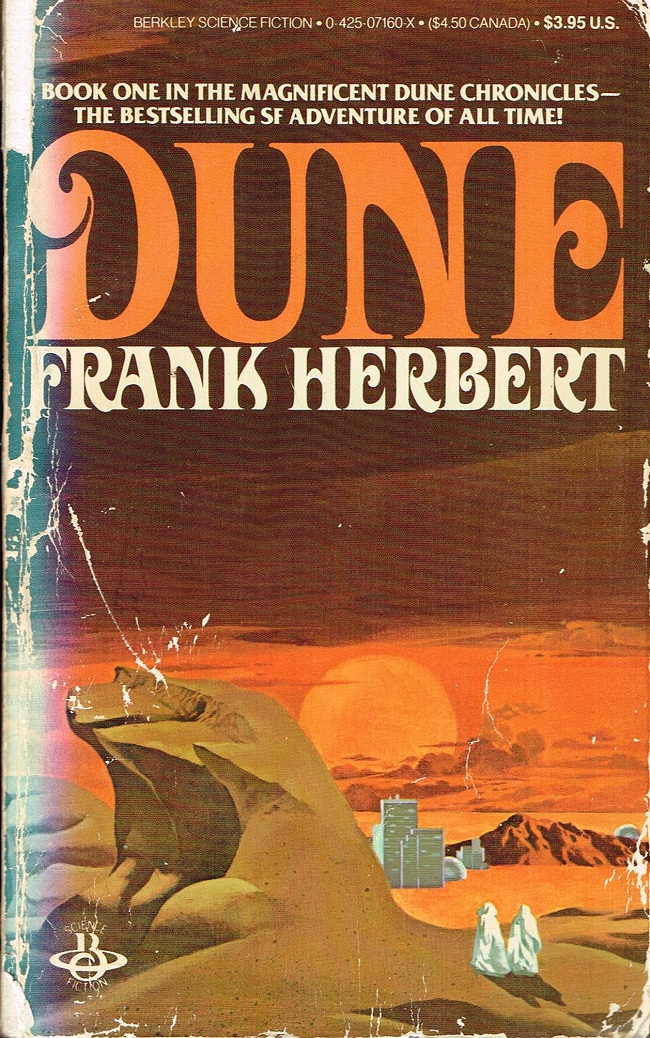
In school, I devoured comic books and my storytelling reflected this as I scribbled comic panels in my composition notebooks and sometimes my textbooks if I ran out of paper. I only shifted gears to prose after Frank Herbert absolutely blew my mind with the first book in his Dune series that I read in the sixth grade to impress a girl named Jeanette Baker.

It was her favorite book.

Ultimately, she wasn’t all that impressed by either me or my ability to read feudal interstellar societal science fiction, but Paul Atreides, The Bene Gesserit, The Fremen, and The Spice Melange left a lasting impression on me.

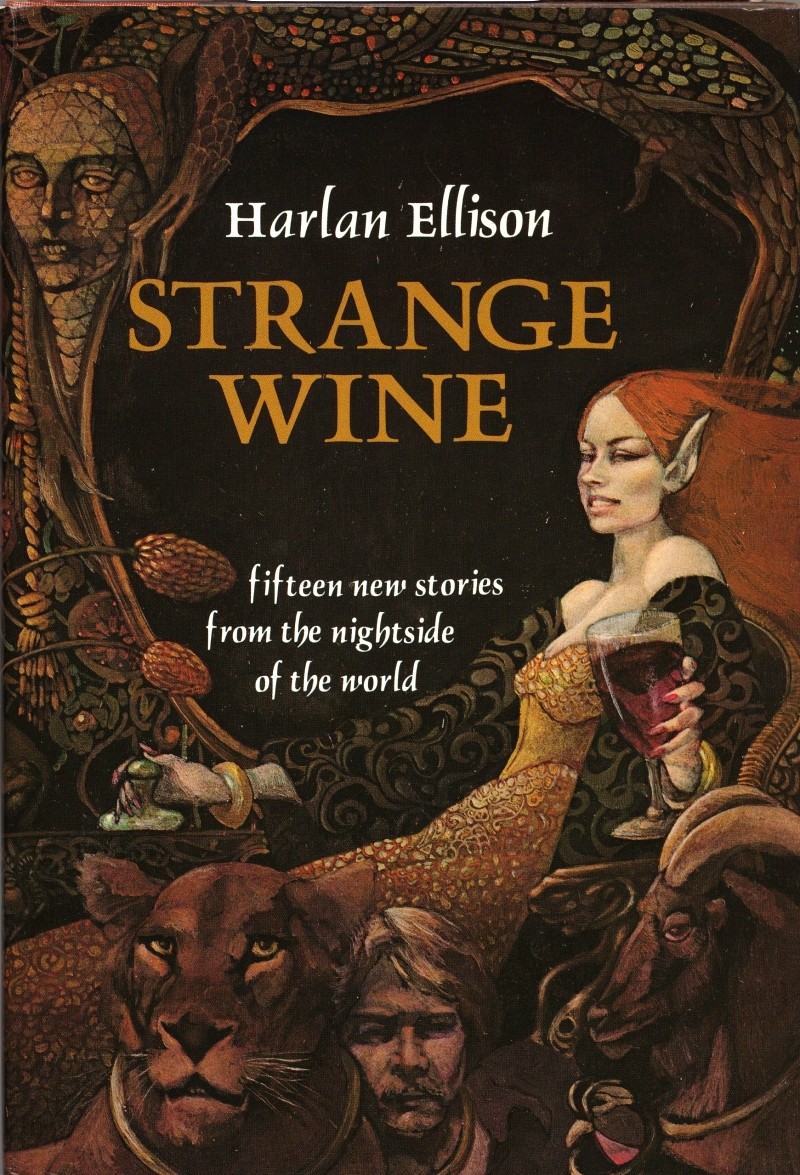
Unavoidable circumstances after college pulled me away from writing for longer than I’m happy to admit, but today marks the completion of my one hundred and seventy-fifth short story since I was lured back into writing after reading a copy of Harlan Ellison’s short story collection, Strange Wine, in a public library tucked away in Portsmouth Virginia.

Another mind-altering experience, as Harlan introduced me to the world of speculative fiction.

This milestone doesn’t include my detours into graphic novel self-publishing or article writing and short/feature-length screenwriting. Nor does it include the many and various unfinished stories that inhabit my Story Box Full of Regret. Many were picked up by a number of magazines, vanity press, and now-defunct publications during the halcyon days of snail mail querying and submissions, some of which are posted on this site, two are viewable at MasticadoresIndia, and only thirteen have been forever filed away in the fad drawer due to severely outdated themes.

Of the remaining one hundred and sixty-nine stories, only six are so cringe-inducingly bad that I refuse to revise them. They serve as a reminder of just how awful my writing can be when I’m off my game and a yardstick as to how far I’ve come since my far-too-late-in-life return to the medium.

The one hundred fifty-two on the rung above are mostly inspired by actual events, ripped from the pages of my journal—when I used to keep a journal—and fictionalized into speculative and science fiction, horror, and modern-day twisted fairy tale pieces. This was when I followed that old chestnut piece of writing advice, Write what you know. These stories know the terrain well enough since they’ve been around the block a time or two. All they need is a bit of a touch-up, light revision at the most, before they make their rounds again. I’m confident they’ll find a home somewhere.

The final eleven are hatchlings, newbie stories that are a tad more introspective and feature solid speculative elements. I’m a proud Papa so I must admit that these tales are my best, though if I had my druthers I would have planted their roots more firmly in the soil of either horror or science fiction instead of having them languish somewhere in the bleed of the two genres.

Of these, four are out for approval which leaves seven that I’m in the midst of revising before they join their brothers and sisters in the cold cruel world. The aim naturally is to send them all out so that can quit bugging me about wanting to be read. They can be so annoying that way.

Cheers for humoring me as I wool-gathered.

12 Plays of Christmas: Memory Is The Liar That Whispers Fantastic Pasts In Our Ears (a true story…I think)

Calvin-and-Hobbes-esque-Tiny-litle-snowman-army

There’s a Christmas-adjacent story I’m fond of telling, that hand on heart I swear is true, about a girl I met in a park during a blizzard.

Before I go any further, I need to let you know that I’m probably older than a good many of you who will read this and there are miles and miles of memories between now and when the incident occurred, so the sad fact of the matter is I don’t remember what she looked like. Not exactly. In my fading memory’s defense, I only saw the bit of her frosty red face that was nestled within the fur ring of her hooded parka.

And I’ll admit that my recollection of events might be slightly dramatized and infused with more schmaltzy innocence and devil may care fun, as we built a snow fort to defend ourselves from the invading snow army, but it happened, the girl was real and not some imaginary snow playmate—I’ve had plenty of those and I know the difference—and a good time was had by all…or at least by me.

The memory gets more Michael Bayish with each retelling. It takes on mass and bulks up and challenges me to become a better liar in order to bear its additional weight. But am I actually a liar? If the current version records over the initial memory on the VHS tape in my mind and all I have left is the most recent telling, then I am relaying events as I recall them, no? And why shouldn’t I drape this memory with grace so that it might straighten its back and hold its head higher, as it strolls amongst my other remembrances? I am one of only two people who possess this memory and since I cannot verify that the other party is holding up their end, it’s my sworn duty to keep it alive, embellishments and all.

Just before Christmas vacation, it started out as one of my favorite kinds of schooldays, you know, where you wake up and the world outside is completely white and Alice Cooper’s voice is singing on a continuous loop in your head, “School’s out for-ever!” as you do your victory dance in front of the icy window.

What was that? Just me, then? All right. Good to know.

Anyhoo, after lying about leaving my books at school—thereby avoiding studying to get ahead of the class (perish the thought)—and breezing through my chores, I ventured forth into snowmageddon and discovered… no one else was outside. Oh, sure, people were attempting to dig their cars out, but none of my friends, hell, no one my age was visible in the dense thundersnow.

Cowards, the lot of them!

Undaunted—I wasn’t going back inside, not on a free day like this—I trekked to the local park and that was when I saw The Girl. Out on her lonesome, rolling the lower portion of a snowman-to-be with all the intensity of a Winterland Victoria Frankenstein.

When she eventually caught sight of me, she stopped and glared, trying to suss me out. Was I friend or foe? We stood there for ages, still as statues, locked in a silent Mexican Stare Off. She was determined, this one, to wait me out. She had staked claim to this park and I was the trespasser. If we were ever going to come to an accord, I’d have to make the first move. So, I did the only thing I could do in that situation…

I began rolling the middle portion for her snowman. That seemed to be good enough for her.

You ask me what her name was? Well, there are only two words that come to mind when I think about her: amber and hazel. So, either her name was Amber and she had hazel eyes, or she was an amber-eyed Hazel. Perhaps even something in between like Hazamberel or Amhazelber? I can’t rule any options out at this point.

The park was ours and ours alone, we two intrepid children of The Bronx. We laughed in the face of the snowpocalypse and frolicked—as much as our starfish overlayering would allow—and built an ominous snow army that we waged snow war against, plowed through the snow soldiers, and beat them down to the ground, before turning on each other in the snowball fight to end all snowball fights, tried to sled downhill on a ratty piece of cardboard, discovered how truly fast squirrels are when we tried to catch one, marveled at how far trees could bend under the weight of snow and made a pact to be friends forever.

I learned that day that pacts are not unbreakable—I never saw Hazamberel again—and just how like a delicate snowflake a memory was.

Not a terribly exciting story to hear, I realize, but I’m not telling it for your enjoyment. I tell it so that I don’t lose it and so that it doesn’t fade any more than it already has from the weathers of time or become trapped and freezes to death in the hedge maze like Jack Nicholson in The Shining.

That’s part of the duty we owe to our past, to not only remember it but become the architects and build up the bits of foundation that have crumbled away due to neglect.

So, please stop me if I’ve told you this one before, but once, when I was younger, I met a girl in a blizzard, at least I think it was snowing, maybe it was rain, and her name was some sort of color, Vermillion or Fuchsia, maybe…

13 for Halloween: Homeless (audio)

Part 1 * Part 2

I don’t dream. I never have. Dreams are reserved for people who are asleep. Me? I’m what they call a true illuminate because I can transcend into a higher state of consciousness, beyond the realm of mere dreams. When my physical body is at rest, recharging, I enter into a state of intensified wakefulness and the universe becomes a playground for my astral form.

Sometimes I travel with purpose, to view the birth of a star, or bear silent witness to the death of a solar system. Other times I drift aimlessly in the cosmos and ruminate on the miracle of existence. Then there are times when I’m caught in the undercurrent of an event that exists in defiance of the natural order and chaos of reality.

Tonight, it’s the latter.

I’m being drawn against my will to a bedroom, where a naked couple performs some sort of, I don’t know, ritual? that can only remotely be considered sex by a raving lunatic. The sounds of their ecstasy? lament? fill the air as their bodies bend, twist and contort in ways the human form isn’t designed for, even if they happen to be triple jointed. They both move in a feverish and jerky fashion, attempting to slot themselves together, like two shifting pieces of an ever-changing puzzle, until the man’s mangled body finally forms the proper key to tumble the lock of the woman’s hideously misshapen physique.

There’s a sound unlike anything I’m ever heard and suddenly a patch of reality behind the deformed mass of the couple segments horizontally and lifts like a venetian blind being drawn. I can’t be sure, but I think they somehow managed to open a door to another dimension? plane of existence? and now shapes are moving in the reality rift, clawing their way through the opening.

I try to move closer in order to get a better look, tamping down my fear of the unknown because in my astral form whatever they are can’t hurt me. And just as the lead figure is about to come into view, I’m being pulled away, snapping back to my physical body, by a force stronger than the one that brought me here. On the way I see things, brittle and broken images of horrible events happening all over the world, racing past me at subliminal speeds…before I come to a complete halt.

It takes a moment for me to realize that I’m back where I started from, the spot I chose to rest, at the treeline of the forest behind my house. But something’s wrong. I hear noises coming from within the forest, unnatural sounds trying to mask themselves within the hum of nature. My senses are sharper during intensified wakefulness and I can feel them, lurking in the field of trees, cloaked by the shadows of the night, moving stealthily toward my sleeping body.

I force myself to remain calm. I still have time to slip back into my body, wake myself up and make it back to the house before whatever’s coming can reach me. The process of slipping back into my physicality is so simple…

No! It’s impossible!

I didn’t spend that much time away from my body. I’ve traveled longer distances and remained out until the crack of dawn with no problem plenty of times before.

My attention snaps back to the treeline. They’re braver now, all the stealthiness abandoned as they crawl out from the cover of the trees. And I see them for the first time, these things, like creatures out of a nightmare. I scream to draw their attention but they can’t hear me.

The inhuman beasts surround my defenseless outer casing. I try again to reenter my framework, but for some reason, maybe I was away too long, I’m now locked out of my own body. But I don’t give up. I lunge at them, swing my fists and try to kick them, which is about as effective as fighting air. So, I float, helpless to stop them, and all I can do is watch and cry as they tear the flesh from my bones and savagely devour my anatomy.

I once felt superior to everyone else. having the universe to explore, but now all I feel is homeless and alone, and I’m terrified because I’m not sure how long I can survive without the physical body that served as my anchor.

Tiny Stories: Meat Cute

Popular belief has it that the universe is comprised of atoms. In reality, the universe is actually made up of…

Of all the things that could potentially ruin societies the world over, destroying religious ideals, tearing apart the family unit, pitting toxic masculinity against extremist feminism, breaking down the education system, dividing the races, removing the population’s right to bear arms, inhibiting self-reliance and ingenuity, collapsing the internet, destabilizing economies…who ever thought that all humankind had built could have fallen apart over the disappearance of edible meat?

Bovine spongiform encephalopathy, or mad cow disease as it was commonly known, first reared its ugly head in Britain in 1986 when British herds were fed the processed animal remains of sheep infected with the brain-wasting disease, scrapie.

Isolated cases had shown up in Ireland, Canada, and the United States but the situation was considered under control…that was until July 22, 2002, when all the gamey animals (beef, horse meat, mutton, venison, boar, and hare) and the white meat animals (pig, rabbit, veal, lamb, duck, and goose) contracted the disease, plunging the meat manufacturing industry into chaos as their infrastructures collapsed. Herbivores were now the ruling class and non-conforming carnivores were doomed to extinction.

That was when the rioting began. Rogue carnivorous factions set crops ablaze, poured bleach over produce in supermarkets, rampaged through farmer’s markets causing as much destruction as they could in order to level the dietary playing field.

The meat industry was hard at work searching for a major scientific breakthrough when a geneticist and cloning expert discovered a process to save the carnivore population, and soon national meat lotteries were held. Hopeful contestants purchased tickets for a chance to win 10 pounds of USDA lab-grown meat.

Tammy “Finnsy” Finnegan purchased a ticket on a lark. She’d never won a thing in her life but when she purchased a container of milk at her local bodega and the clerk had no folding money in the till to offer her as change and she hated carrying loose coins, so she opted to put the money on a lottery ticket instead. And as was the way of the world and her life, because she thought nothing of it, the universe decided to grant it to her.

The ticket was redeemable at a meatpacking plant that had been converted into a lottery reclamation center. There she met the runner-up winner, Mick McCaffrey, who went by the name, Mooch.

It turned out that Mooch was diabetic and his blood sugar was low. He explained that normally he fell asleep when he was low, but this day as a result of being a winner, he was very animated and laughing and jumping around. Finnsy tried to calm him down and to stop him from running through the facility, she held his hand.

Once Finnsy got Mooch to calm down and sit, she sat next to him and talked, and though she would never admit it in a court of law, she might have flirted with him a bit. She found him cute, after all.

Mooch kept saying he loved her smile and asked why her face was turning red. When there was finally a lull in the conversation, Mooch asked Finnsy to dinner, and offered to cook his share of the meat for her.

She said yes as the lottery officials called Mooch in to collect his prize. Finnsy found it odd that they would award the runner-up prize first, but soon let the thought pass. A while later, the official returned and awarded her the 10-pound meat prize. She loitered a while to talk to Mooch and finalize their dinner arrangements, but was informed that he had left while she was conducting her news interviews.

Little did Finnsy know that when she sat down and tucked into the steak she prepared later that evening, that she was indeed having dinner with Mooch.

Tiny Stories: It Was A Dark And Stormy Night

Popular belief has it that the universe is comprised of atoms. In reality, the universe is actually made up of…

It was a dark and stormy night…in my soul, the type I was all too familiar with—where all my relationships with loved ones and acquaintances rested, but I was not at peace.

You see, there was a stranger who walked the streets of my inner being, my own personal Spring Heeled Jack, who sought out the connections I had made throughout the span of my lifetime and, with the skill of a surgeon, severed these ties, one by one.

Call it mad coincidence, but as the bonds within were severed, the person associated with them were discovered brutally slain. Had my Ripper, that entity filled with rage and the unbearably intense need to be alone finally become corporeal?

And now, as we stood face to face, taking in the measure of one another, the only question flooding my mind was—

Will he sever ties with me now?