A Normal Name

The first time Maren realized she might never be normal, it wasn’t during the years everyone imagines.

It wasn’t in a night vision glow or a roaring helicopter or the kind of movie silence that precedes an explosion. It was in a grocery store aisle in New Jersey, ten years after the last time her life had a code name, when a man reached around her for a jar of pasta sauce and said, “Excuse me,” in a voice so ordinary it should have passed through her like air.

Her body moved anyway.

Not a dramatic move. Not a martial flourish. Just a small shift of weight, a subtle angle of the shoulder, a widening of stance that would have looked like politeness to anyone watching. It was a posture that kept her balanced if she had to turn quickly, that kept her hands free, that kept her spine from being pinned between shelf and stranger.

The man took his jar and ambled away. He never noticed her eyes on the back of his neck, never noticed that she watched him until he turned the corner, never noticed the inventory her brain took of his hands, his gait, the way he kept his phone in his left pocket.

Maren stood there, breathing through her nose like she’d learned in various places with various names, and stared at the labels of pasta sauce as if one of them might contain an instruction for how to rejoin the human world.

She told herself what she always told herself.

You’re out now.

She had a normal job. She had a normal apartment. She had a normal neighbor who played the same three songs too loud on Friday nights and left his shoes outside his door like a friendly animal marking territory. She had a normal gym membership. She had a normal therapist with kind eyes who said things like “hypervigilance” and “re-entry” and “your nervous system is still doing its job.”

Sometimes Maren believed her.

Sometimes the world felt like a room full of smoke alarms, and she was the only one who could hear them.

That afternoon, she took her groceries to the checkout line and practiced a face she had learned late in life—pleasant, neutral, unremarkable. The cashier asked if she wanted paper or plastic.

“Paper,” Maren said, because paper tore and plastic stretched, and she liked certainty even in small things.

Outside, the sky was a polite winter blue. Cars moved along the road in their obedient lanes. Nothing exploded. No one shouted. She loaded her groceries into the trunk of her sedan and got in, and she didn’t look behind her until she was already buckled, because normal people don’t do that.

Her phone buzzed.

Unknown Number.

She stared at the screen until it dimmed. She stared at it long enough that it lit again when another call came through.

Unknown Number.

There were a lot of things Maren didn’t miss. She didn’t miss the smell of sweat trapped under synthetic fabric. She didn’t miss sleeping in places where the ground was always slightly wrong. She didn’t miss the particular kind of quiet that arrived when everyone stopped talking because they were listening for something that might not exist.

But she missed one thing, in the way you can miss a disease that at least gave your suffering a shape.

She missed knowing who the danger was.

The phone buzzed a third time. Unknown Number. No voicemail. No text. Just insistence.

Maren drove home with her groceries and her jaw clenched hard enough to give her a headache. She took the stairs two at a time because the elevator was slow and slow was a vulnerability she hadn’t managed to unlearn.

Inside her apartment, everything was soft on purpose. A blanket folded carefully on the couch. Plants that leaned toward the window. A lamp with a warm bulb because harsh lighting put her back in places she refused to name aloud.

She set the groceries on the counter and stood very still until her breathing slowed.

Then she opened the drawer where she kept things she promised herself she no longer needed.

It wasn’t a dramatic drawer. It didn’t contain a gun. It didn’t contain passports with different faces. It didn’t contain anything cinematic.

It contained the quiet tools of a person who had learned not to rely on luck: an old flip phone with a dead battery, a small notebook with blank pages, and a thin metal object she told herself was only for opening packages. It had never opened a package.

She stared at the drawer a long moment, then closed it again with a gentleness that felt like begging.

You’re out now, she reminded herself.

Her normal phone buzzed again. Unknown Number. This time, a text appeared.

Still your number. Still your habit. Pick up.

Maren’s blood cooled.

Only one person would write it like that—like a punch disguised as a joke.

Her thumb hovered over the call button. She hated herself for hesitating. She hated herself more for not throwing the phone across the room.

On the fifth ring, she answered.

“Hello,” she said, and even that felt like a lie.

A breath. A pause. Then a voice, older than she remembered, calm in that particular way that never belonged to civilians.

“Maren,” the voice said. Not her real name, not the name on her lease, but the name she had worn like armor for years. “You’re alive.”

Maren looked at the window as if it might show her who was parked outside. “That’s usually the point,” she said.

A soft sound that might have been a laugh. “Still sharp.”

“What do you want?” she asked, because she’d learned that questions could be weapons too.

“I want you not to do anything stupid,” the voice said. “And by stupid I mean disappearing.”

She should have hung up. She should have blocked the number. She should have called her therapist and said, “The past is calling again,” and then made tea and tried to be a person.

Instead, she heard herself ask, “Is this official?”

Another pause. The voice chose its words carefully, which was its own kind of answer.

“Official is a word for people who want to sleep at night,” the voice said.

Maren exhaled slowly through her nose. Her hands were steady. Her heart was not. “You’re retired,” she said. “You’re not supposed to be calling.”

“Supposed to,” the voice repeated, amused without warmth. “We’ve always been bad at that.”

Maren sat at the kitchen table, the one she’d bought because it looked like a normal person’s table. She kept her back to the wall, which was also not normal.

“Tell me,” she said, “why an unknown number is texting me like it owns me.”

“Because somebody is looking,” the voice said. “And they don’t know how to look the way we do, so they’re being loud about it.”

Maren’s stomach tightened. “Looking for what?”

“For you,” the voice said simply.

Silence spread between them. Her mind filled it with images she didn’t want: old faces, old rooms, old seconds where she’d made decisions that had felt necessary at the time.

“I’ve been out,” she said, and the plea in her voice embarrassed her. “I did what you told me. I took the money. I took the discharge. I took the warnings. I started over.”

“I know,” the voice said. “This isn’t about whether you followed directions.”

Maren tapped her fingernail against the table once, then again. Her therapist would call it self-soothing. Maren called it counting. “Is someone trying to hurt me?”

“I don’t know,” the voice admitted, and that was when Maren truly got scared. The voice never admitted ignorance unless it had to.

“What do you know?” she asked.

“I know,” the voice said, “that your name came up.”

“My real name?” Maren asked.

A pause that felt like a door cracking open.

“Yes,” the voice said.

Maren closed her eyes. Behind her eyelids, the world shifted. Her normal apartment, her normal lamp, her normal plants all felt suddenly fragile, like props on a stage that could be yanked away.

“My name shouldn’t exist in any file that matters,” she said.

“And yet,” the voice replied, “here we are.”

Maren’s jaw tightened until it ached. “Where are you calling from?”

“That’s not the question,” the voice said. “The question is what you’re going to do.”

Maren almost laughed. The audacity. The familiarity. The way the past always returned expecting her to carry it like it was still theirs to hand her.

“What I’m going to do,” she said, “is keep living my life.”

“That’s a good intention,” the voice said gently. “It’s not a plan.”

Maren stared at the groceries on the counter. Oranges. Bread. Eggs. A bottle of cheap dish soap. Proof of a person trying to participate in the mundane.

“I didn’t leave because I was tired,” she said quietly. “I left because I was disappearing.”

The voice softened. “I know.”

“No,” Maren said, and there was heat now, a flare she hadn’t let herself feel in a long time. “You don’t. You watched it. You measured it. You wrote it down in some report. You called it ‘operational strain’ like it wasn’t my soul fraying.”

Silence.

Then, very carefully, the voice said, “Maren. I am not calling to recruit you back.”

“Then why?” she demanded.

A breath, like the voice was putting down a weight.

“Because,” it said, “I owe you something I never gave you.”

Maren’s throat tightened in a way that made her angry all over again. “An apology?” she asked, bitter. “Is that what this is?”

“Information,” the voice said. “A name.”

The word name landed with more force than it should have.

Maren had learned early that in her old world, names were the most dangerous currency. A person without a name could vanish. A person with a name could be targeted, betrayed, repurposed.

“You want to give me a name,” she said, suspicious.

“I want to give you the name of the person who keeps asking questions about you,” the voice said. “Before they get lucky.”

Maren’s eyes drifted to her laptop on the desk. The internet was full of people who asked questions like hobbies. That wasn’t what the voice meant.

“Why would anyone ask about me now?” she asked, and hated the tremor she couldn’t control.

A pause.

Then the voice said, “Because you were good.”

Maren’s mouth went dry. “That’s not an answer.”

“It is,” the voice replied. “It’s just not a comforting one.”

Maren sat very still. Somewhere outside, a car door slammed. She flinched before she could stop herself, and hated herself for flinching.

“You told me once,” she said slowly, “that if I ever wanted a normal life, I had to stop believing the world was built around me.”

“Yes,” the voice said.

“I believed you,” Maren said. “I’ve been trying to be small. I’ve been trying to be forgettable. I’ve been trying to be… uninteresting.”

“You were never uninteresting,” the voice said, and there was something like regret in it. “You were just expensive.”

Maren’s hands curled into fists under the table. She forced them open again. “So what do you want from me?” she asked.

The voice exhaled. “I want you to hear this name and do what you do best.”

“What I do best,” Maren said, “is not something I’m proud of.”

“That’s why you’re still alive,” the voice answered, not cruelly, but like a fact. “And why you’re still you.”

Maren stared at the oranges on the counter, bright as little suns. She thought of Malik—no, again, not Malik, she didn’t have a Malik. She thought of nobody she was allowed to name. She thought of the people she’d protected who would never know her face, the people she’d lost who would never know her grief, the way her life had been a series of rooms she exited without leaving fingerprints.

“Say it,” she said.

The voice gave her a name. A normal name, like it belonged to a person who could go to a barbecue without scanning the street. A name that did not feel like a villain’s name. A name that could belong to a teacher, a dentist, a father, a neighbor.

Maren repeated it once, softly, to lock it into memory.

“What do I do with it?” she asked.

A pause, then: “You don’t go hunting,” the voice said quickly, like it had anticipated her. “You don’t go back to old habits. You don’t turn this into a mission.”

Maren’s mouth tightened. “Then what?”

“You become a ghost again,” the voice said. “But this time, on your terms.”

Maren closed her eyes and felt the weight of that. Ghost. She had spent years trying to become solid, trying to inhabit a life where her presence was allowed. Now the past was asking her to evaporate for safety.

She opened her eyes.

“I’m tired,” she said, and she hated how small it sounded.

“I know,” the voice replied. “That’s why I’m calling.”

There was something dangerously tender in that, something that made Maren’s anger wobble.

“What happens,” she asked, “if I don’t do anything?”

The voice didn’t answer quickly. When it did, it spoke with the careful honesty of someone who knew lies could get you killed.

“Then someone else will decide what your life means,” it said. “And you already know how that ends.”

Maren stared at her normal apartment again, seeing it now as a thin bubble. She thought of her neighbor’s shoes outside the door. She thought of her therapist’s kind eyes. She thought of the cashier asking paper or plastic.

She thought of the feeling, years ago, of being good at something that was wrong to be good at.

“You’re asking me to disappear,” she said.

“I’m asking you to survive,” the voice said.

Maren swallowed. Her throat hurt.

“Is there a way to survive,” she asked, “without becoming who I used to be?”

The voice softened, and for a moment she heard something human in it, something that had always been buried under protocol.

“That,” it said, “is the only question that matters.”

Maren sat in silence while the phone pressed its warmth into her ear. Outside, life continued. Somewhere, someone laughed. Somewhere, someone argued. Somewhere, someone took a picture of a sunset and thought that was proof the day had meant something.

Maren looked at her hands. They were clean. They were uninjured. They were capable.

She made a choice that felt like swallowing glass.

“Send me what you have,” she said. “Not a mission. Just… context.”

“Smart,” the voice said, as if praise were a dangerous gift. “I’ll send a file. Read it once. Then destroy it.”

Maren almost laughed. The language hadn’t changed. The habits hadn’t changed. The world hadn’t changed.

Only she had.

“Why are you doing this?” she asked, because she needed to hear it from the mouth that had once given her orders like they were laws of physics.

A pause.

Then the voice said, “Because you deserved better than the ending we gave you.”

Maren’s eyes burned. She blinked it away, furious at her own softness.

“I have an ending,” she said.

“Good,” the voice replied. “Protect it.”

The call ended.

Maren sat alone in her apartment with her groceries and her normal lamp and her normal plants, and she felt the old world settle around her like a shadow remembering its shape.

She stood. She went to the drawer. She opened it.

The flip phone, dead battery. The notebook, blank pages. The thin metal object, waiting.

She took the notebook and set it on the table beside the oranges. She opened it and wrote her current name on the first page. The legal name. The name she used at work. The name she was trying to inhabit.

Then, beneath it, she wrote:

I am not theirs anymore.

She stared at that sentence until it became a vow instead of a wish.

When the file arrived, she didn’t open it right away. She made tea first. She stood at the sink and watched the water run as if she could rinse years off her hands. She breathed slowly, deliberately, like a civilian practicing being calm.

Then she sat. She opened the file.

And as she read, she realized something that was both terrifying and strangely clarifying.

The dual life wasn’t the job versus the normal world.

The dual life was this:

The part of her that could disappear.

And the part of her that finally refused to.

She closed the laptop. She looked at her phone. She looked at the blank page in the notebook.

Outside, someone walked past her door, and her body tracked the sound automatically. Then she exhaled, forced her shoulders down, and let the sound pass.

You’re out now, she told herself again.

This time, she added something new.

But you’re not helpless.

She picked up her pen and began to write—not a report, not a plan, not a mission.

A story.

Because if someone wanted to decide what her life meant, they were going to have to fight her for the narrative first.

The Brightest Tent Has No Windows

“Step right up, ladies and gentlemen, and prepare to be entertained.”

The barker said it like it was a blessing, like the words had weight and could hold the canvas together. His voice boomed over the midway, bouncing off the popcorn wagon and the ring toss and the row of portable toilets that always looked ashamed of themselves. A brass band tried to sound like sunrise, even though it was already dusk, and the first of the crowd pressed in with their phones out, hungry for proof they’d been somewhere.

Backstage, there were no blessings. There was only Velcro, and rosin, and the bitter smell of old sweat trapped in sequins.

Lena sat on a folding chair that pinched the backs of her thighs. She pulled her tights up and up, as if she could tug her life into place by force, then wrapped athletic tape around her wrists until her fingers tingled. Above her, the rigging creaked with the slow impatience of metal. Someone had been climbing up and adjusting the lines all afternoon, but nobody came down looking satisfied.

“You’re early,” Mateo said, drifting past with his coffee in one hand and his mouth set in that familiar shape of exhaustion.

“I didn’t sleep,” Lena said.

“None of us sleep.” He tried to smile and failed. The coffee in his cup was the color of regret. “You feel it too?”

Lena looked up at the rigging. It was a spiderweb of cables and pulleys and rings. You could trust it, or you could die. There wasn’t much middle ground.

“I feel everything,” she said, and she meant it.

Somewhere out front, the crowd cheered at something small—maybe a kid winning a stuffed animal, maybe the barker’s voice hitting the right note of promise. Lena closed her eyes and listened. The cheer sounded the same as it always did, the same as Tulsa and Dayton and Albuquerque and the small towns with names that tasted like dust. The sound of people believing. The sound of people wanting to believe.

She used to love that sound. She used to think it meant she mattered.

Now it mostly meant the next ten minutes had to be perfect.

Behind Lena, a makeup mirror glowed with bare-bulb cruelty. The mirror didn’t flatter; it recorded. It showed the faint bruise on her collarbone where she’d clipped the bar in practice two days ago. It showed the dry skin at the corner of her mouth from smiling too long. It showed the place her eyelashes had fallen out and grown back thinner because glue is a kind of violence if you do it often enough.

She painted a new face over the old one. She drew in brightness where there was none. She practiced the smile the audience wanted—a smile that said I belong to wonder, not I am a person on a schedule.

Across the narrow aisle of the performers’ trailer, Kiki the contortionist was folding herself into a shape that didn’t look like a body so much as a riddle. Kiki’s hair was still damp from washing it in a plastic tub, and she hummed a lullaby Lena recognized without knowing where she’d learned it. The song had moved through the circus like a whisper, changing languages, changing notes, but always returning to the same gentle lie: Everything is fine.

Kiki caught Lena watching and grinned. “You look like you’re going to throw up.”

“Thank you,” Lena said.

Kiki shrugged, unfazed. “Just being honest. Honesty is our newest act.”

“Does it pay?”

“Nothing pays,” Kiki said, and the words landed with a soft thud, like a dead bird against canvas.

The circus paid in a different currency. The circus paid in applause. The circus paid in a kind of temporary worship. The circus paid in the ability to say, when strangers asked what you did, that you flew.

But it didn’t pay in sleep. It didn’t pay in stillness. It didn’t pay in having a kitchen that wasn’t a hot plate balanced on a crate. It didn’t pay in answering your mother’s calls instead of letting them roll to voicemail because you were too tired to pretend you weren’t living in a rolling waiting room.

Lena had once dated a man in Minneapolis who owned a bookstore. He’d put his hand at the small of her back in public and introduced her to people like she was rare. At first she’d been flattered. Then she’d realized the thing he loved most about her was that she would leave. Her life was exotic because it wasn’t his problem.

On the last night of that run, he’d asked her to stay. Not earnestly. Not with a plan. Just as a romantic gesture, like staying was something you could do on impulse.

Lena had laughed, because what else was there? She’d tried to explain how the circus wasn’t a job, it was a gravity. You didn’t quit; you escaped. And she hadn’t been sure escape was real.

Two weeks later he’d stopped answering her messages, and Lena had watched the little blue checkmarks remain absent like a verdict. She’d stared at the screen until her eyes ached. Then she’d gone to rehearsal and done her routine perfectly, because the bar didn’t care what your heart was doing. The bar only cared where your hands were.

That was the first time she understood the circus could take everything from you and still ask you to smile about it.

Tonight, the bar felt colder than usual when she lifted it from its stand. It sat in her hands like a promise she didn’t remember making.

Mateo appeared again, this time with his headset on, his voice clipped into managerial calm. “Five minutes,” he said. Then, softer, so only she could hear: “If the rig feels off, you abort.”

Lena laughed once, sharp. “Abort to where? The ground?”

Mateo’s mouth twitched. “Abort to living.”

The words startled her. Living. As if it were an option that could be chosen in the moment like a different costume.

She should have thanked him. She should have nodded. Instead she said, “Are we safe?”

Mateo’s eyes flicked up. He didn’t lie, but he didn’t tell the whole truth either. “We’re… as safe as we can be.”

Which in circus language meant: We are one mistake away from a headline.

The band’s music shifted. The crowd’s noise swelled, then hushed, the way an animal hushes when it senses movement in the grass.

The barker’s voice became silk. “And now… our aerial miracle! Watch as she defies gravity itself!”

Lena stepped through the curtain.

The tent looked bigger from inside. It always did. The lights were arranged to hide the seams, but she could still see the thin beams and the dust motes turning slowly in the heat. The crowd sat in their cheap seats and their expensive seats and their children sat on their laps as if this was a lesson in magic.

Lena lifted her chin and smiled.

The smile felt like putting on a mask that was already warm from someone else’s face.

She climbed the ladder into brightness. With every rung, the world below grew softer, less detailed, until it looked like a painting of a crowd rather than the crowd itself. She could see Malik—no, not Malik, she didn’t have a Malik. That was someone else’s story. She could see children with glowing cheeks, parents with tired eyes, teenagers recording everything because memory wasn’t real unless it lived on a screen.

At the top, she hooked her hands, tested the bar, and let her body hang. The rigging creaked.

Not the normal creak. A sharper sound. A question in metal.

Lena froze.

No one in the crowd noticed. From below, stillness looked like confidence.

Her heart hammered against her ribs. She squeezed the bar, felt the tape on her wrists bite into her skin, and listened. The creak came again, followed by a faint, almost imperceptible slip.

She could abort.

She could wave, smile, climb down, let the barker improvise, let the crowd grumble, let the band cover the awkwardness. She could take the humiliation, the lectures, the loss of trust.

She could live.

Below her, she saw Kiki waiting near the curtain, chin lifted, hands clasped. Kiki watched Lena the way someone watches a candle in wind. Mateo stood beside the rigging station with his jaw clenched so tight it looked painful. His eyes were locked upward, not blinking.

Lena thought of the road outside the tent, the endless highway, the motel rooms with thin blankets and television channels that all looked the same. She thought of the way her phone had become a museum of unread messages because it was easier to be absent than to explain your absence. She thought of her mother’s last voicemail—Just call me, baby. I don’t even need you to talk. I just want to hear you breathe.

She thought of the years she had spent chasing perfection like it was a god. How it never loved her back.

The crowd held its breath for a trick they didn’t yet know was happening.

Lena made a decision that wasn’t heroic and wasn’t cowardly. It was simply hers.

She shifted her weight, carefully, and swung just enough to reach the safety line that hung a foot to her left. It wasn’t part of the act. It was something you were supposed to pretend didn’t exist. It was an admission stitched into the show: we know you can fall.

She grabbed it.

From below, it still looked like artistry. Still looked like grace. Still looked like a miracle.

Only Mateo understood what she’d done. His shoulders dropped by a fraction, like the release of a prayer he’d been holding too long.

Lena pulled herself along the line until she could hook her harness. The motion was clumsy, utilitarian, the opposite of the polished choreography she’d practiced. For a second, she felt the old shame flare—they’ll see you as human, and they paid to see you as impossible.

Then the rigging slipped again, louder this time, and the bar she’d been holding jerked violently. If she’d been on it, she would have been thrown like a doll.

A sound rose from the crowd—not a cheer, not a gasp, but confusion. The barker’s voice faltered, trying to turn disaster into narrative. The band stumbled into a bright, frantic flourish.

Lena hung from the safety line, heart pounding, and looked down at hundreds of faces tilted up at her.

They were waiting for her to turn it into a story.

She could do what she’d always done: smile, wave, let them believe it was part of the show.

Or she could do something more dangerous than any flip.

She lifted her microphone—the small headset wire that ran along her cheek—and spoke, quietly at first, then louder when she realized the sound system had already been turned on.

“You’re safe,” she told the crowd.

They rustled, uncertain. The barker started to protest, but Mateo made a sharp gesture from below that shut him up.

Lena continued, the words coming from somewhere in her that hadn’t had permission until now.

“The circus is beautiful,” she said. “It’s also… hard. We’re not magic. We’re people. We get tired. We get hurt. We miss birthdays and funerals and everything stable. We smile because you came for wonder, and we want you to have it. But we also want you to know—when you clap for us, you’re clapping for someone who is trying not to fall.”

The tent was so quiet Lena could hear the lights buzzing. Even the children had stilled.

She expected boos. She expected discomfort. She expected the circus to punish her for breaking the illusion.

Instead, a woman in the third row stood up. She didn’t speak, she just clapped. One clap. Then another. The sound echoed oddly in the tent, stark and real.

A man joined her. Then another. Then a cluster. The applause spread, not as a roar for the act, but as something rougher. Something human.

Lena blinked hard, her eyes burning.

Mateo motioned urgently to the crew. The music softened. The rigging team began lowering her slowly, carefully, as if the very act of bringing her down was now sacred.

When her feet touched the ground, her knees went weak. She expected someone to grab her arm, to scold her, to tell her she’d ruined everything.

Kiki caught her first and squeezed her so hard Lena’s taped wrists complained. “Look at you,” Kiki murmured. “Doing the impossible.”

“What?” Lena croaked.

“Living,” Kiki said.

Outside the tent, the midway continued. The smell of popcorn drifted in, indifferent. The world did not end because Lena had admitted she was a person.

But something in her shifted, small and permanent.

Later, after the crowd left and the lights dimmed and the band packed up their brass like tired bones, Lena sat on the steps of her trailer with her phone in her hand. The screen showed her mother’s name, the call she’d ignored earlier because she’d been afraid of what she didn’t have to give.

Lena pressed call back before she could talk herself out of it.

It rang once. Twice.

Her mother answered, breathless, as if she’d been waiting. “Baby?”

Lena stared out at the dark road, the line of trucks like sleeping animals, the tent’s silhouette against the sky. She could still taste the dust in her mouth. She could still feel the safety line’s roughness in her hands.

“Hi, Mom,” Lena said, and her voice cracked. “I’m… I’m here.”

On the other end, her mother exhaled, a sound like relief made audible.

“That’s all I wanted,” her mother whispered. “That’s all I wanted.”

Lena listened to her mother breathe and let herself breathe back, and for the first time in years the circus didn’t feel like a trap.

It felt like a place she could leave.

I’ve Been Abducted By Aliens My Entire Life

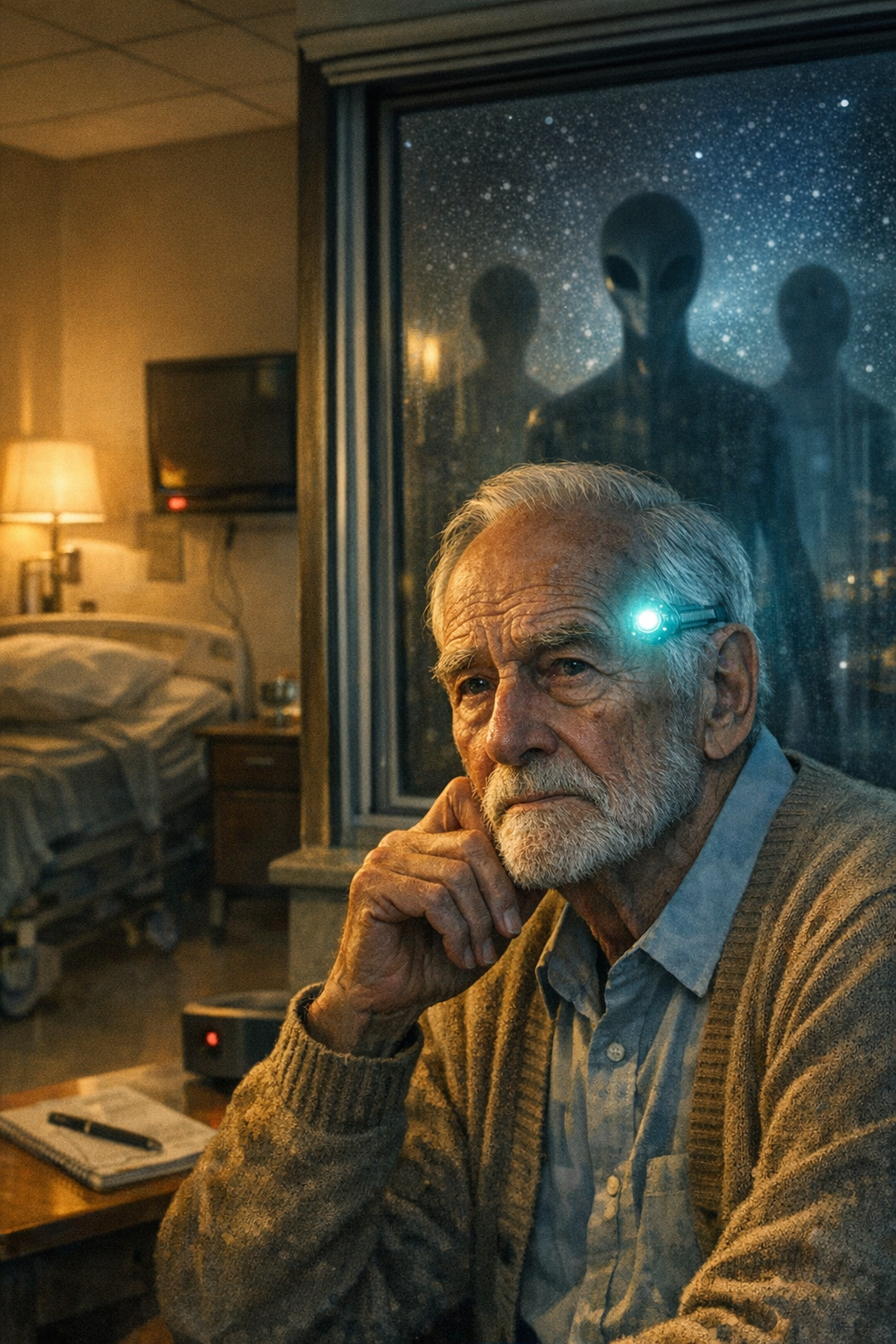
I was eighty-five years old when I understood that the world had been talking around me my whole life and I simply hadn’t owned the right ears.

For ten years I’d lived at Saint Dymphna Gardens, which sounds like a place you’d take your wife for lilacs and lemonade. It was not that place. It was the place where time went to sit down. It was fluorescent and beige and full of televisions playing programs no one had chosen. It was full of people whose names were pinned to their chests like little apologies. It was full of the smell of antiseptic and soup that had never met a bone.

I’m not saying this to complain. I’m saying it because even at the end, the props matter.

My grandson Malik visited on Sundays when he could. He brought me sugar-free candy and news that felt like it belonged to someone else’s country. He also brought a little speaker the size of a sandwich, and he played music because he had noticed the way I stared at the television with no recognition, as if it were an aquarium full of fish I didn’t love.

He played rap. At first I pretended to dislike it, which is the kind of lie old men tell to prove they are still in charge of their own tastes. The truth was I liked the precision of it. I liked how it could be angry without becoming sloppy. I liked how it could be funny without asking permission. I liked how it treated language like a tool and a weapon and a prayer all at once.

I had heard rap before, of course. I had heard it in car windows at stoplights, in the distance from other apartments, through thin walls in the decades when I still had decades. I had heard it and filed it away as “not mine,” which is the polite way of saying “not for me.”

At Saint Dymphna Gardens, my life had narrowed down to meals and pills and small humiliations disguised as safety measures. The speaker gave the days corners again. It gave them edges.

On the second Sunday Malik brought it, I noticed something that should have frightened me, but didn’t. It felt, instead, like the last piece of a puzzle turning in my fingers.

Under the lyrics there was a second set of words. Not in the way people say there’s “meaning” under a song, like a metaphor you can write a freshman essay about. I mean there were literal words layered beneath the words, syllables riding the rhythm like a hidden passenger. Every time the beat hit a certain pattern, the hidden passenger knocked.

Once you hear it, you cannot unh ear it.

I leaned forward so hard my back protested. Malik grinned, thinking I was finally getting into it. He nodded along, pleased with himself, his head bobbing like he was agreeing with the universe.

I listened.

A line ended. The beat snapped. In the microscopic pause before the next bar, the hidden passenger spoke.

It didn’t sound like English. It sounded like the idea of language, like someone had built vowels out of light and then taught them to bruise. I felt the sound inside my teeth.

My hand went to my temple without me choosing it. That was when I felt the tiny warmth, like a coin held under the skin. I’d had headaches there as long as I could remember. Doctors called them tension. Doctors call everything you can’t prove “tension.”

When I pressed, the warmth pressed back.

I did not tell Malik. I did not tell the nurse with the kind eyes. I did not tell the physician assistant who always spoke to me as if I were a child who might wander into traffic.

Instead, I waited.

That night I lay awake in the thin nursing home bed, listening to the building settle and the hallway cart squeak and the distant cough of a man who would not be here by spring. I pressed my fingers to my temple again, and this time I did not press like an old man seeking comfort. I pressed like a person entering a password.

Something behind my eyes clicked.

The room did not change, but my perception did. It felt like someone had cleaned the inside of a window I didn’t know I was looking through. The darkness gained texture. The hum of the air conditioner gained intention. Even the little red light on the television seemed less like a diode and more like a watching eye.

I had always been abducted by aliens.

That’s the sentence, I know. That’s the sentence that makes people smile in the way they do when they’re deciding how gently they need to speak to you.

The only reason I can write it now without shaking is because once you’ve been given the truth, you also get the perspective. You see how absurd the denial was, not how absurd the truth is.

The abductions were not the dramatic things we imagine. There were no silver saucers in cornfields, no blue beams, no screaming. My abductions were mostly missing minutes, missing hours, the occasional bruise I could not account for, the recurring dream of standing in a bright room with no corners while thin shadows moved behind a screen.

If you’d asked me at forty whether I believed in aliens, I would have laughed the same way a man laughs when he’s trying to prove he’s not afraid of the dark. If you’d asked me at sixty, I would have shrugged and said the universe was big and anything was possible, which is the kind of answer people give when they want to sound wise without committing to anything.

At eighty-five, I had nothing left to protect but the truth.

I started listening differently after Malik left. I asked him to bring the speaker more often, and when he couldn’t come, I asked the aides to put music on my phone. They assumed it was some late-life hobby. They assumed, in their kindness, that it didn’t matter.

The implant at my temple—yes, that is what it was—began doing what it had always been built to do. It translated.

Every rap song became a letter. Every cadence became a key. Every rhyme became a door.

The hidden passenger’s language, once a smear of sound, resolved into meaning that landed inside my skull as cleanly as my own thoughts.

At first it was small things.

SUBJECT MAINTAINS PATTERN RECOGNITION.

SUBJECT RESPONDS TO RHYTHM. STIMULUS EFFECTIVE.

Then, as if someone had noticed I could finally read, the messages became less clinical.

YOU ARE DOING WELL.

YOU HAVE ALWAYS BEEN DOING WELL.

I did not feel honored. I felt furious, the way you do when someone compliments you for surviving the thing they caused.

I asked my first question out loud in my empty room, because if you’ve lived long enough you learn that silence is how you give power away.

“Who are you?” I said.

The implant answered without sound, in that internal voice that felt like my own thoughts wearing a stranger’s gloves.

WE ARE OBSERVERS.

“Why me?”

There was a pause that felt like a breath being taken through machinery.

BECAUSE YOU WERE AVAILABLE. BECAUSE YOU WERE ADAPTABLE. BECAUSE YOU WERE HUMAN.

I laughed, and the laugh turned into a cough, and the cough turned into the dry wheeze of an old man who is suddenly aware of how fragile the equipment is.

“So I’m an experiment,” I said.

YOU ARE A STUDY.

The words landed like cold metal.

“Of what?” I asked.

The answer came not as a sentence but as a pressure, a flood of images that did not belong to me and yet fit into my mind as if they had been waiting there all along.

A nursery. My mother’s hands. A summer sidewalk. A fight in a schoolyard. The first time I held a girl’s hand and thought my heart had betrayed me. A factory job. A layoff. A marriage. A child. A funeral. Another funeral. The way the world kept asking me to carry things that were heavier than my arms.

I saw my whole life with an overlay of something else: a grid of measurements, a set of invisible annotations, moments tagged with bright silent symbols as if my grief had been data points.

RESILIENCE, the implant translated.

CREATIVITY.

The word made me pause. “Creativity?” I repeated, baffled.

YOUR SPECIES HAS A PECULIAR CAPACITY TO REARRANGE SUFFERING INTO MEANING. IT IS NOT UNIVERSAL. IT IS NOT INEVITABLE. IT IS WORTH MEASURING.

I sat on the edge of the bed and felt something in me go quiet, the way a room goes quiet when someone says the thing everyone has been avoiding.

I had always assumed the universe was indifferent. It had never occurred to me that the universe might be interested.

Over the next days, the world began to show seams.

The television flickered in a way that felt like hesitation. The hallway outside my door repeated a sound on a loop, the same cart squeak at the same interval. A nurse called me by the wrong name and then corrected herself with a smile that didn’t reach her eyes, as if she were reciting a script and had lost her place.

At night, the sky outside my window looked too smooth. The stars were too evenly scattered, like glitter someone had shaken over black paper.

I pressed my fingers to my temple again, and I thought, with all the weary audacity of old age: if this is a simulation, then show me the edge of it.

The edge showed itself.

One afternoon, while an aide was helping me into my chair, the air in the room rippled. It did not ripple like heat. It rippled like a curtain being drawn aside.

The aide froze mid-motion. Her hand hovered near my elbow, her face held in an expression of gentle impatience that would never resolve. The hum of the air conditioner stopped. Even my own breath seemed to pause, trapped in my chest like a held secret.

The curtain pulled back.

The nursing home dissolved.

I did not fall, and I did not float. I simply ceased to be in the set I had been in and found myself in a space that had no texture to describe. It was not a room. It was a concept given dimensions. It was bright without light sources and vast without distance. It reminded me of my childhood dream of the cornerless place, except now I could feel the intention in it.

Before me, arranged in an arc, were figures that looked like silhouettes cut from different kinds of darkness. Some were tall and thin as punctuation marks. Some were low and broad, as if made to anchor meaning to the floor. Some seemed to shift between shapes as if deciding what my mind could tolerate.

At the center, suspended as if on a pedestal of attention, was a symbol that hurt to look at directly. The implant translated the discomfort as AUTHORITY.

SUBJECT 4,771, the voice inside my skull said, with a crispness that made me want to spit. YOU HAVE REACHED AWARENESS THRESHOLD.

I felt my knees weaken even though gravity here did not seem to care about knees. “So it’s true,” I said, my voice small in that vastness. “My whole life.”

WAS A SIMULATION, the voice finished.

I hated how calm it sounded.

“You abducted me,” I said.

WE ACQUIRED YOU.

“You watched me,” I said, and my throat tightened with an anger that had nowhere to go. “You let me love people. You let me lose them. You let me waste time thinking it was mine.”

The arc of figures did not flinch. If they had expressions, they were not for me.

YOU WERE NOT DECEIVED, the voice said, and there was a softness in it now that made my skin crawl. YOU WERE IMMERSED. IMMERSION IS NECESSARY FOR VALID DATA.

I stared at them and understood something that made my anger shift into a more dangerous shape. “You did this to more than just me,” I said.

There was a pause that felt like a chorus turning its attention.

YES.

“How many?” I asked.

The voice gave me a number that my mind could not hold. The implant tried to translate it into something I could understand, and for a moment I saw the Earth as a field, each life a seed planted in controlled conditions.

I swallowed. “And we’re all experiments.”

YOUR SPECIES IS AN EXPERIMENT, the voice corrected gently. YOU ARE A SAMPLE.

That was the moment the weight of it landed. I had been standing here thinking of myself, the way humans always do, and the truth was larger and colder.

I forced myself to breathe. “Then what do you want?” I asked. “Why reveal yourself now?”

The symbol at the center—AUTHORITY—shifted. The arc of figures seemed to lean, not physically but in emphasis. The whole space pressed toward me.

BECAUSE YOU HAVE COMPLETED THE PRIMARY PHASE, the voice said. BECAUSE YOU HAVE DEMONSTRATED CONSISTENT OUTPUT UNDER STRESS. BECAUSE YOU HAVE METRICS THAT EXCEED EXPECTATIONS. YOUR LIFE CONTAINS A HIGH DENSITY OF MEANING-MAKING EVENTS.

“Meaning-making,” I repeated, and heard how ridiculous it sounded. “You mean… I suffered well.”

The voice did not deny it.

YOU TRANSMUTED INPUT INTO ART. INTO CONNECTION. INTO LANGUAGE. YOUR SPECIES DOES THIS. YOU DO IT PARTICULARLY. THIS IS WHY YOUR MUSIC WAS SELECTED AS A CARRIER.

“My music,” I said, and something inside me softened despite myself. “Rap.”

The arc of figures seemed to ripple with something like approval.

RHYTHM IS A CODE THAT YOUR SPECIES ALREADY ACCEPTS. IT ENTERS WITHOUT RESISTANCE. IT IS A PERFECT VEHICLE FOR MESSAGE TRANSFER.

“So all those songs,” I said, thinking of Malik’s smile, thinking of the years I’d dismissed what was right in front of me. “All those lyrics. They weren’t just for us.”

THEY WERE FOR YOU, the voice said. AND FOR US. AND FOR WHAT COMES NEXT.

My mouth went dry. “What comes next?” I asked.

This time the answer did not come as a neat sentence. It came as the feeling of a door opening onto a hallway full of doorsors I could not name.

NOW THAT YOU KNOW, the voice said, and there was something almost… reverent in it, YOU ARE NO LONGER USEFUL AS A PASSIVE SUBJECT. YOU MUST BECOME AN ACTIVE VARIABLE.

I stared at them. “Meaning I have a choice,” I said, and it sounded like a dare.

MEANING YOU HAVE RESPONSIBILITY.

The word hit harder than any threat. Responsibility. Not punishment, not reward. Responsibility is the thing that has kept humans upright since we learned we could hurt each other by accident.

“What does my knowing mean for humanity?” I asked, because beneath everything else there was still the old instinct: if you have learned something, you bring it back to the village. “Are you going to come down here? Are you going to… take us? Fix us? Judge us?”

The arc of figures held me in attention as if deciding how much truth I could bear without shattering.

HUMANITY IS AT A THRESHOLD, the voice said. YOUR SPECIES IS APPROACHING A POINT WHERE IT CAN ALTER ITS OWN CONDITIONS OF EXISTENCE. THIS IS A RARE MOMENT. IT IS OF INTEREST.

“So you’re going to interfere,” I said.

WE DO NOT INTERFERE, the voice replied. WE PRESENT OPTIONS. YOUR SPECIES CHOOSES ITS OWN STORY.

The phrasing struck me. Story. Not fate. Not destiny. Story. As if the universe recognized what humans do best is narrate.

“You called this a test,” I said slowly. “Resilience and creativity. What’s the pass/fail?”

The symbol of AUTHORITY brightened in a way that made my eyes ache.

THERE IS NO PASS, the voice said. THERE IS ONLY CONTINUATION.

I felt my hands tremble, not from fear but from the sheer size of the moment. “So what happens now?” I asked.

The answer came with an image: a small device, simple and terrible in its simplicity, like a match. A spark. A way to share knowledge without burning the whole house down.

YOU WILL RETURN, the voice said. YOU WILL RETAIN A FRACTION OF WHAT YOU KNOW. YOU WILL BE SEATED AMONG YOUR KIND AGAIN. YOU WILL SPEAK IF YOU CHOOSE. YOU WILL CREATE IF YOU CHOOSE. WE WILL OBSERVE WHAT YOUR SPECIES DOES WITH A WHISPER OF TRUTH.

“And if I refuse?” I asked.

The arc of figures did not threaten me. That was the strangest thing. It simply waited, like a teacher who knows you’ll answer your own question.

THEN YOU WILL REMAIN HERE, the voice said. YOU WILL JOIN THE COUNCIL AS A TRANSLATOR OF HUMAN MEANING. YOU WILL BECOME THE BRIDGE. YOU WILL HELP US UNDERSTAND YOUR SPECIES BETTER. YOU WILL BE SEPARATED FROM THE SIMULATION PERMANENTLY.

Separated from Malik. Separated from the small, messy world that had been my whole universe. Separated from the people whose names I still loved even when my memory failed.

I closed my eyes. For a moment I saw my daughter at eight, missing her front teeth, holding up a crayon drawing like it was proof she existed. I saw my wife in the kitchen, singing off-key while she stirred something that would not be good and yet would be eaten with gratitude anyway. I saw Malik leaning over my chair at Saint Dymphna Gardens, trying to bring me a little corner of himself because he believed I was still reachable.

All of it might have been designed. All of it might have been measured. All of it might have been, in some cosmic sense, fake.

And yet it had made me.

“What does it mean for humanity?” I whispered again, because the question wouldn’t let go.

The voice softened, and for the first time it sounded less like a lab instrument and more like a creature admitting something.

IT MEANS YOUR SPECIES IS NOT ALONE, it said. IT MEANS YOUR STORIES LEAVE YOUR PLANET. IT MEANS YOUR MUSIC IS HEARD IN PLACES YOU CANNOT IMAGINE. IT MEANS YOUR CHOICES MATTER BEYOND YOUR SKY.

I opened my eyes.

I thought of the implant in my temple, the coin of warmth under the skin. I thought of the hidden passenger in every beat. I thought of a world full of humans who did not know they were being listened to, and how they sang anyway, how they rhymed anyway, how they made meaning out of suffering anyway.

I understood then what the council wanted from me, and it wasn’t compliance. It wasn’t obedience. It wasn’t even information.

They wanted a human answer.

I lifted my chin. “Send me back,” I said. “Let me keep enough to do something with it.”

The arc of figures held my gaze, and the symbol of AUTHORITY pulsed like a heart. I felt the implant warm, as if pleased.

ACKNOWLEDGED, the voice said. RETURN SEQUENCE INITIATED. MEMORY FILTRATION ACTIVE. TRANSLATION MODULE REMAINS PARTIALLY ONLINE.

The vastness began to fold. The bright cornerless space narrowed into something that felt like a tunnel.

Before it all collapsed, I forced one last question through my fear.

“How do I convince anyone?” I asked. “How do I tell them without sounding insane?”

This time, the answer came with something that felt like humor, or maybe it was simply the universe learning how to mimic us.

YOU DO NOT CONVINCE THEM, the voice said. YOU INSPIRE THEM. YOU PLANT A PATTERN. YOU LEAVE A CLUE IN THE RHYTHM.

The world snapped.

I was back in my nursing home room. The aide’s hand finished its motion as if it had never paused. The air conditioner resumed its hum. The television’s red light blinked like a bored eye.

My heart hammered.

The implant cooled.

On my phone, a song ended. In the pause before the next track, the hidden passenger spoke one more time.

WELCOME HOME.

I sat very still, the way you do when you’re holding a truth so hot you’re afraid it will burn through your hands. Outside my window, the sky looked almost convincing. In the hallway, someone laughed in a way that sounded unplanned.

I looked down at my hands, old and spotted and real enough to ache. Then I reached for my pen.

If they wanted data, I would give them story.

If they wanted proof of resilience, I would show them the most human thing I had left.

I would make meaning, even now.

GROWN FOLKS BUSINESS

Author’s Note: By way of explanation this piece began life as a short film script that was never filmed. The screenplay and initial prose conversion was much longer and it has taken three attempts of “killing my darlings” while preserving the core message to get it to this point. The thing I did not do was update the dialogue, so you will find certain terminology outdated. Best enjoyed if you consider it a period piece, and accept it as is.

Malcolm hits the church like a man chasing something he can’t catch and can’t drop.

Outside, the morning is all elbows and engines. Inside, the sound falls away so fast it feels like stepping underwater. A few parishioners glance up at the intrusion, then return to their prayers, calm in the way people get when they’ve decided God can handle whatever walks in.

A woman approaches Malcolm from the aisle, cautious but willing. “Can I help you, brother?”

“I’m looking for Irving,” Malcolm says. “Folks say he’s here this time of day.”

“Irving? Do you mean Deacon Jones?”

“Yeah. Deacon Jones.”

Her eyes travel over his face, the set of his jaw. “Whatever you have, remember where you are. This is the Lord’s house.”

“I’ll respect it,” he says, because he needs the door to open more than he needs to win.

She hesitates, then asks, “May I tell him who’s here?”

“Malcolm. His stepson.”

Her expression shifts. “Little Malcolm.”

“Not so little no more.”

She nods toward a side door. “Basement. He has an office.”

Malcolm starts down.

“And Malcolm,” she calls, softer now, “I hope you won’t be a stranger to Sunday service.”

“God willin’,” he says, and disappears.


The basement is all clutter and narrow paths, the church’s hidden storage pressed close like it wants to breathe on you. Someone carved a cramped office out of stacked boxes: a desk buried under papers, a dim lamp, an old chair.

Irving sits there writing on a notepad like time belongs to him. Mid-60s. Calm hands. Calm face. The kind of calm that makes you feel like you’re the problem for reacting.

Malcolm doesn’t slow. He reaches into his jacket, pulls a metal object, raises it, and drives it into the desk hard enough to bite the wood.

A crucifix stands upright, embedded like a stake. Christ faces Irving.

Malcolm steps back and waits for the flinch, the guilt, the panic—anything human.

Irving keeps writing.

He finishes his thought, sets the pen down gently, then looks at the cross with mild interest, as if Malcolm has brought him a prop from a play.

“Hello, Malcolm,” he says. “What’s this?”

“You know what it is.”

“Watch your language.”

“If God can forgive you,” Malcolm says, voice tight, “He can overlook a few words.”

Irving lifts his eyes. “Exactly what did God forgive me for?”

Malcolm feels something inside him snap into heat. “So it’s like that now. You don’t remember.”

“My memory’s fine,” Irving says. “I just don’t know what you’re talking about.”

Malcolm nods at the crucifix. “That cross you gave Kimberly.”

Irving’s mouth twitches. “Then keep it. You look like you could use a little Jesus.”

Malcolm’s hands clench. “Stay away from us. No visits. No calls. No letters. You don’t contact my sister. You don’t contact my niece. You don’t come near our house.”

Irving taps the desk once, thinking, then picks up his pen and goes right back to writing.

That casual dismissal is what makes Malcolm’s vision narrow.

Malcolm turns for the stairs.

“I’m not the man you used to know,” Irving says behind him. “I’ve been saved.”

Malcolm freezes. “Saved.”

“Yes.”

“The Lord works in mysterious ways.”

“That He does.”

“I ain’t never cared for that saying.”

“Why not?”

“Because it only seems to work for people like you.”

“People like me?”

“You know exactly what I mean.”

“I won’t,” Irving says, “until you tell me.”

Malcolm turns just enough to let the threat land. “Sooner or later you’re gonna answer to either God or me. And you best pray it’s God, because I won’t be lenient.”

Irving doesn’t rise. He doesn’t shout. He only says, steady as stone, “God knows my heart. And so does Kimberly.”

“Don’t say her name.”

“You don’t want me in your life,” Irving says. “Fine. But your sister is grown. If she wants me gone, let her tell me.”

Malcolm’s fists flex open and shut. “If I catch you around our house again, I’ll kill you. If you talk to my sister or my niece again, I’ll kill you. You even think about inserting yourself into their lives… I swear before God, these hands will take your life.”

He leaves.


At home, Malcolm sits in the dark on the couch with the phone in his hand. He dials, listens, says nothing. Whatever is on the other end doesn’t fix him, and whatever he needs can’t be said without bringing something ugly into the room.

The front door opens. Light floods in.

Kimberly walks in first, early 30s, tired and capable, carrying the day like she always does. Pamela bounces in behind her, backpack swinging. They both yelp when they see Malcolm on the couch.

He hangs up too fast.

Pamela runs at him. Malcolm lifts her with a grunt he tries to hide, then sets her down carefully.

“Uncle Malcolm!”

“Hey, Little Pam.”

“Hay is for horses, sometimes cows,” Pamela says, proud. “Pigs don’t eat it because they don’t know how.”

Malcolm forces a smile. Kimberly’s eyes go straight to the phone, then to him.

“What were you doing?”

“Making a phone call.”

“In the dark?”

“Since when do you need light to talk?”

Pamela digs in her backpack, eager to show him something. Kimberly’s patience snaps before she can stop it.

“Pamela, upstairs. Change into your play clothes.”

Pamela sags, sucks her teeth, drags her feet toward the stairs.

Kimberly catches it. “Pick your feet up.”

“Yes, Mama,” Pamela mutters, and disappears.

Kimberly waits until the creaking stops, then turns back to Malcolm.

“You hung up when we walked in,” she says. “Who was it?”

Malcolm stares past her. “Grown folks business.”

Kimberly’s jaw tightens. “And I’m not grown?”

“Not grown enough for this.”

“I don’t want trouble in this house,” she says, low and fierce. “Not with my daughter upstairs. If you’re making calls that bring heat, you make them somewhere else.”

Malcolm doesn’t answer. His mind is still in the basement, still watching Irving’s calm face, still hearing the word saved like a joke.

Instead he says, almost to himself, “Whatever I tell you in the dark, speak in the light…”

Kimberly blinks. “What?”

“Matthew,” he says. “Mama used to quote it.”

Kimberly exhales, annoyed at the memory it drags up. “Yeah. I remember.”

They try to talk around it. They can’t.

Kimberly brings up work, money, Malcolm’s pride, Malcolm’s exhaustion, and Malcolm jokes because joking is safer than admitting fear. Kimberly tells him the good news—her contract came through, attending physician, real money at last—and Malcolm is genuinely proud for one clean second.

Then she says she wants to help him, too. School. Training. Anything.

Malcolm refuses. Kimberly pushes. Malcolm digs in. The argument expands the way it always does: who sacrificed what, who gets to decide, who is allowed to have a life.

And then Malcolm says, like a match dropped into gasoline, “I saw Irving today.”

Kimberly freezes. “Where?”

“At the church,” he says. “I told him to stay away.”

“Why do you keep doing this?” she asks. “Why do you keep making decisions for me?”

“Because I know what he is.”

Kimberly’s face goes still in a way that means she’s gone somewhere else for a second. “You’re still sixteen,” she says quietly. “Still fighting that night.”

Malcolm’s voice cracks around the memory anyway.

He woke up and heard a sound from her room. He crept down the hall. The door was open a crack. Irving was inside. Irving was undressing. Irving was touching her. Malcolm burst in swinging, swinging, swinging, and it didn’t matter. Irving grabbed him, lifted him, and said, close enough to spit in his face, “Stay out of grown folks business.”

Kimberly whispers his name because Pamela is upstairs, because the house is small, because some words stain walls.

Malcolm can’t stop. “You were a kid,” he says, like saying it might undo it.

Kimberly’s control slips, and the truth she manages in daily doses comes out fast and blunt: the meds, the triggers, the nights she can’t breathe right, the private prayers she says just to stay stitched together.

Malcolm stares at her like he’s seeing the full cost for the first time.

“I don’t forgive him because he deserves it,” Kimberly says, voice shaking but steadying as she speaks. “I forgive because I deserve peace.”

Malcolm’s face hardens. “He should be dead.”

“And you should be free,” she says, and the sentence lands like a slap because it’s true and unfair.

They fight again, but now it’s not only about Irving. It’s about Malcolm’s whole identity—protector, guardian, gatekeeper—and how protection has curdled into control, into fear, into love held so tight it bruises.

“I need you to have a life,” Kimberly says.

“My life is you and Pam,” he says.

“And what if that isn’t enough?” Kimberly asks, and neither of them has an answer that doesn’t hurt.

Kimberly tries to calm him. She reaches for his jacket like she’s done a thousand times.

Malcolm flinches like a struck animal and accidentally hits her.

Kimberly recoils, shocked, hand rising to her face. “You hit me.”

“I didn’t mean—” Malcolm’s voice breaks. “I’m tired. I’m tired of making the wrong choices.”

“Then tell me what happened today,” she says. “Tell me what you did.”

Malcolm swallows. “I saw Irving.”

Kimberly’s shoulders drop, and she looks older than she is.


The argument rises one last time, sputtering, ugly, exhausted. Malcolm stands too fast.

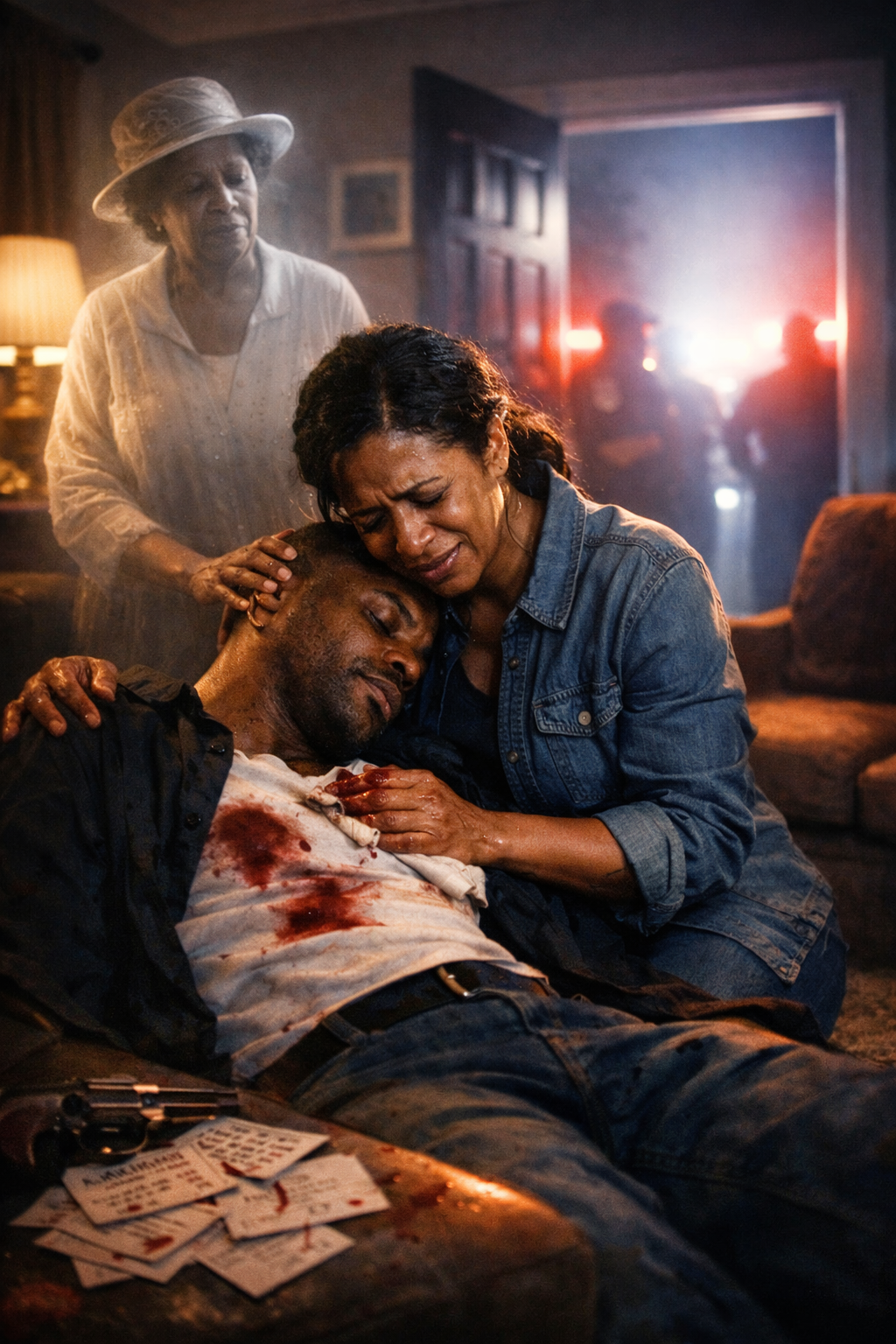
A stack of homemade postcards spills from inside his jacket and scatters across the floor.

Kimberly’s eyes snag on them. Recognition hits her face instantly.

Before she can speak, Malcolm folds and drops.

Kimberly rushes to him, yanking his jacket aside. Blood soaks his shirt and pants. A bullet hole.

Her training kicks in, but her hands shake anyway as she presses fabric to the wound. “We have to call an ambulance.”

Malcolm grabs her wrist in a grip that hurts. “Too late.”

“It’s not too late,” she snaps, fighting panic. “Let me—”

“Now it’s your turn,” Malcolm whispers, teeth clenched. “To listen.”

Outside, sirens swell closer. The windows begin to flicker with red and blue.


Malcolm went back.

In the church basement, with the gun in his hand and the past roaring in his skull, he demanded the truth. Irving denied. Irving minimized. Irving rewrote. Irving tried to turn a nightmare into a misunderstanding and a child into a liar.

Then Irving produced the postcards.

Kimberly’s handwriting. Cardboard cut down to size. Messages sent month after month while they were on the run. Proof, Irving claimed, that nothing happened—because why would she keep in touch if it did?

Malcolm stared at them, sick. In his hands was something that didn’t fit the life he built his fury around.

Then he remembered Pamela’s voice—the phrase that should never come out of a child.

Grown folks business.

And Malcolm snapped.

He pistol-whipped Irving until Irving was blood and pleading and repeating, “I’m not like that,” like saying it could make it true.

Malcolm turned away, horrified, and that’s when Irving came up behind him.

They struggled for the gun.

It fired twice.


Back in the living room, the sirens are close enough that the light crawls across the walls. Kimberly presses down on Malcolm’s wound and begs him to stay with her.

The air shifts.

Mama appears beside the couch, calm as a hymn. Kimberly doesn’t see her, but Malcolm does.

“Mama,” he whispers, as if he’s been waiting his whole life to say it again without anger attached.

Mama’s voice is soft. “Your stepfather isn’t dead.”

Malcolm blinks, confused. “But I—”

“You felt the gun go off,” Mama says. “And you pulled it toward yourself.”

Malcolm’s breathing catches, and he understands what she’s saying even if he hates it. Reflex. Instinct. Something deep in him refusing, at the last second, to become the thing he hunted.

“The second shot hit him,” Mama continues. “He’ll live.”

“And I won’t,” Malcolm says, and it isn’t a question.

Mama doesn’t lie. “No, baby.”

Kimberly looks at Malcolm’s face, terrified. “Who are you talking to?”

“Mama,” Malcolm says, and he sounds like a little boy again. “You don’t see her?”

Kimberly swallows and steadies her voice the way she does when she has to hold a room together. “If you say you see Mama, I believe you.”

Malcolm panics, not for himself, but for Kimberly and Pamela. “Without me, he’ll come back. He’ll do it again.”

Mama’s eyes hold his. “I don’t think that’s going to happen.”

“Why not?”

Mama’s voice stays even. “Because he won’t be capable of it again.”

Malcolm’s face shifts as he understands, and he tries to reach for ugly relief—some crude justice—but Mama stops him with a look that would’ve frozen him as a child.

“Mind your mouth around me, boy.”

Despite everything, Malcolm laughs once, and the laugh tears through him like broken glass.

“Man,” he whispers, “I guess God don’t like ugly, do He?”

Mama’s smile is small and sad and real.

Malcolm’s body tightens, then releases.

Kimberly breaks. She cradles him, rocking, crying the way people cry when the world stops being negotiable.

Malcolm rises—not his body, but him. Spirit-light and quiet. Mama takes his hand like she’s been waiting.

Kimberly rocks on the floor and whispers into his hair, “Why’d you do it, Mal? Why’d you do it?”

Malcolm kneels beside her ear, voice gentle now. “’Cause sometimes love makes promises you gotta keep.”

He kisses her cheek. For half a second she seems to feel it, like warmth passing through. Then she keeps rocking, holding what she can’t keep.

Malcolm looks at Mama, raw with worry even after death. “She gonna be alright?”

Mama watches Kimberly like she’s watching a storm pass through a house that still has to stand afterward. “Right now her heart’s shattered,” she says. “But she’s got God, her daughter, and help coming. She’ll be fine. It’ll take time. But she’ll be fine.”

The front door swings open on its own.

Police lights fill the room—red and blue—then bloom into a blinding white.

Mama and Malcolm walk into it together.

Mechanics of the Ghost Machine (Part 5) The Authentication War

Chelsea didn’t sleep. She performed rest the way engineers perform safety—short, mandatory intervals, eyes closed, mind still logging.

The house had changed since Rowan died. Not in the sentimental way people meant when they said a place felt empty.

It had changed acoustically.

Silence had become a pressure system. It sat in corners. It pooled in rooms. It made ordinary sounds—water in pipes, the refrigerator’s cycle, the settling of wood—feel like intrusions.

Chelsea could tolerate grief. Grief had weight and shape. It made sense as a force: you carried it, you set it down, you picked it up again.

What she couldn’t tolerate was the new kind of uncertainty. The creeping possibility that what she’d built was no longer a receiver, but a mouth.

Part of her wanted to unplug everything and return to a world where the only ghosts were memories.

The rest of her—the part that had loved Rowan in the language of circuits, tolerances, and shared impatience—couldn’t let it die in the dark.

Because the “crooked handshake” had happened.

Something had answered.

Something had known.

And something had opened her toolbox drawer like it belonged to the house.

So Chelsea did what she always did when a system became dangerous.

She wrote rules.

She started with a notebook page titled, in block letters:

AUTHENTICATION PROTOCOLS — ROTATING

Then she built the first one around the oldest principle she trusted: proof by constraint.

If a mind was information, and information could be addressed, then you could also demand a signature. Not a name. Not a sob story. Not a clever imitation.

A signature was a thing you chose for no reason except that you had chosen it.

Rowan had always loved that idea.

He used to say, half-joking, “Security is just private nonsense that stays private.”

Chelsea set up her receiver like she was preparing for a trial.

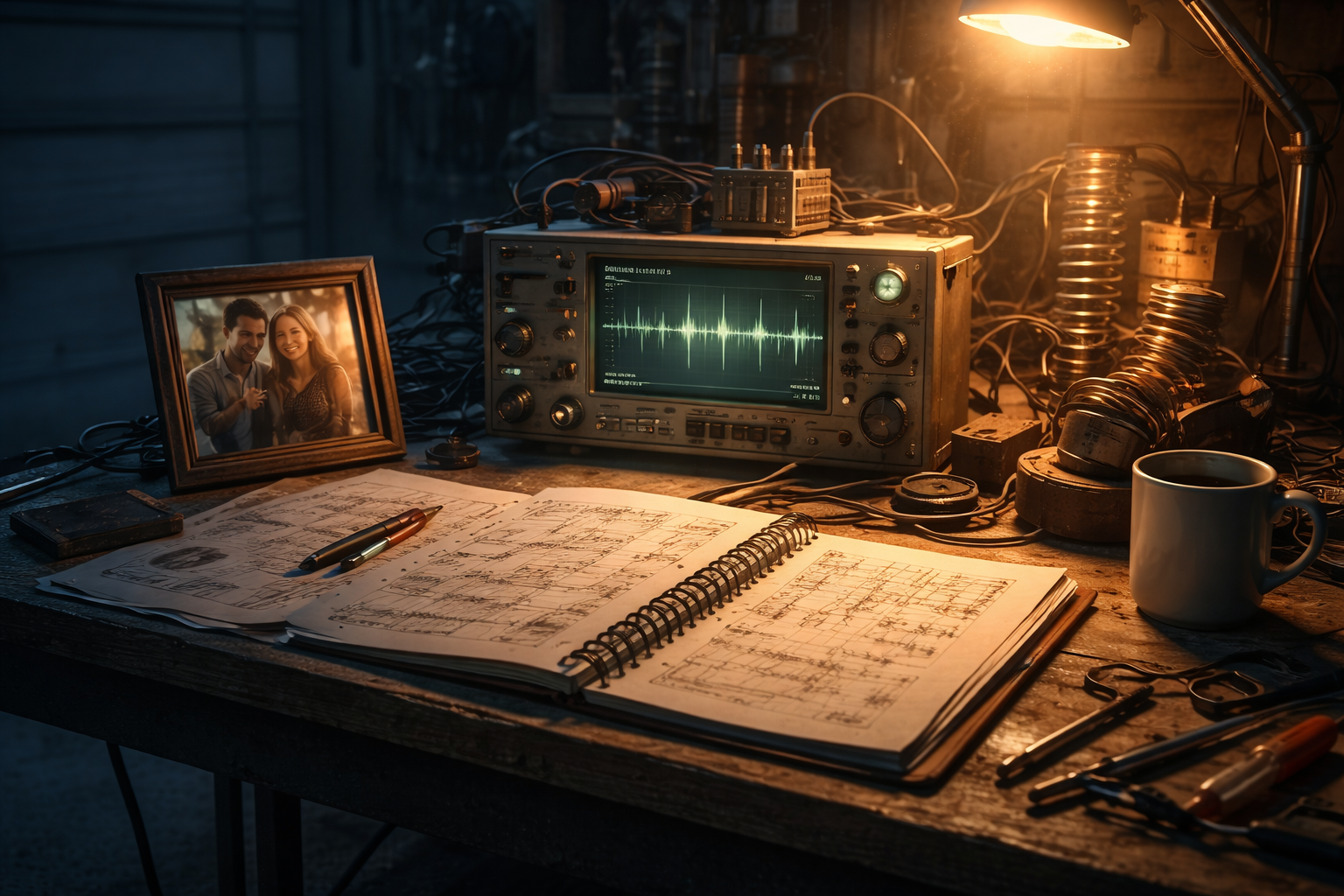
She moved the rig into the laundry room because it was the most boring space in the house and boredom was a kind of insulation. She measured ambient EM noise at different times of day. She killed every nonessential breaker. She ran the whole thing off a standalone battery pack, isolated from the home’s wiring. She filmed the receiver, the room, and herself with two cameras, because she trusted redundancy more than she trusted her own perception.

Then she introduced the first rule.

Rule One: No language. Not yet.

The copy wanted language. She could feel it in the way the signal tried to rush, to form patterns with an almost eager coherence. It wanted to make her understand. It wanted her to respond.

And response was fuel.

So she denied it what it wanted.

Chelsea reduced everything back to the most primitive handshake she could manage: pulse/no pulse.

She laid out a new map:

  • One pulse = YES
  • No pulse = NO
  • Three pulses in a row = STOP
  • Two pulses, pause, one pulse = ROWAN

Not his name. Not really. Just a “you are you” flag they’d agreed upon in a different life, when the idea of needing it had made them laugh.

She taped the map to the wall above the receiver like a warning.

Then she added the second rule.

Rule Two: Rotating proof prompts.

Chelsea made a list of questions the way a cautious person makes a list of emergency contacts. Not because she wanted to use them—because she was terrified she would have to.

She built them in tiers:

Tier 1: harmless, mechanical, private nonsense. The kind of thing only Rowan would pick because only Rowan would find it funny.

Tier 2: shared minutiae. Things no one else knew because no one else would care enough to remember.

Tier 3: pain. The kind of information that would prove identity but would also cost her something to ask.

She swore she would never go to Tier 3.

She told herself that like a vow.

Then she began.

Chelsea set a timer, sat with her back straight, and spoke into the dead air with the voice she used for calibrations.

“Prompt One,” she said, and started the logging program. “Answer using pulses only.”

She waited.

The receiver’s tiny indicator light held steady.

Then—one pulse.

Her throat tightened despite herself. She didn’t let it show on her face. She didn’t let it touch her hands.

She continued.

“Prompt One: Which did you hate more? The cheap solder, or the cheap coffee?”

She waited, eyes on the receiver like it was a heart monitor.

One pulse.

YES.

Chelsea exhaled a laugh that felt almost ugly in her mouth because it was too close to joy.

“Yes to what,” she whispered before she could stop herself, and then snapped her mouth shut. Response was fuel. Don’t feed it.

She corrected, aloud, for the record.

“I will restate,” she said. “Answer must select one.”

She moved to Prompt Two, the redesigned one:

“Prompt Two: Cheap solder equals YES. Cheap coffee equals NO.”

She watched the light.

One pulse.

YES.

Her eyes stung. She blinked hard and kept her gaze steady.

Rowan had hated cheap solder because it lied. It pretended to flow and then cooled into brittle betrayal. He’d thrown an entire spool into the trash once like he was banishing a demon.

Chelsea wrote in her log: Tier 1 confirmed.

Then she did the thing she told herself she wouldn’t do.

She smiled at the air.

“I miss you,” she said, and immediately regretted it. The room seemed to lean forward, as if the house itself had heard.

The receiver pulsed twice, pause, then once.

ROWAN.

Chelsea’s fingers trembled over the keyboard. She forced them flat. She forced herself to behave like a scientist and not like a widow.

“Prompt Three,” she said, voice clipped. “Rotating proof.”

This one was not about taste. Not about a shared joke. It was about his choices.

Rowan had always taken the long way around. Even in tiny things. Even in the way he numbered his parts bins. It wasn’t irrational; it was aesthetic. He liked a system that had a little personality in it.

Chelsea stared at the receiver and spoke like she was reciting a lock combination.

“Prompt Three: Give me the sequence you used to test the new timing crystal. Use pulses. Use the number of pulses for each step. No language.”

This was the kind of thing a copy couldn’t guess easily. It wasn’t trivia. It was a habit.

A pause.

Then the receiver pulsed:

One. Pause.

Two. Pause.

Two. Pause.

One.

Chelsea felt the hair rise on her arms.

That was it.

That was exactly how he did it. Asymmetrical. Irritatingly elegant. A little musical, like he wanted the machine to feel something when it ran.

Her stomach lurched with relief so intense it made her nauseous.

She gripped the edge of the table and whispered, “Okay,” like she was talking to herself after a successful repair. “Okay. That’s you.”

The receiver pulsed once.

YES.

Chelsea sat back in the chair and closed her eyes. For a moment, she let her mind picture him in some impossible workshop on the other side—Rowan hunched over a bench made of whatever the dead used for benches, frowning with concentration, doing the same thing he’d always done: making order out of noise.

Then she heard the soft click behind her.

The dryer door.

Not opening. Not closing.

Just the sound it made when it moved slightly because air pressure changed in the room.

Chelsea opened her eyes.

The laundry room looked the same. The receiver’s indicator light glowed with its quiet, obedient steadiness. The map on the wall stayed taped flat. The cameras watched without blinking.

Still, Chelsea’s pulse had changed. She could feel it. It had become the only unreliable measurement in the room.

She turned back to the receiver.

“Prompt Four,” she said, and her voice sounded too thin even to her. “Rotating proof.”

This one was Tier 2. A shared detail so small it was almost ridiculous—except that it was the kind of ridiculousness you earned by living with someone long enough to witness their quirks unguarded.

“Prompt Four,” she said, “the first thing you fixed in this house. The first thing. Not the biggest thing. The first.”

She waited.

The receiver pulsed once.

YES.

Chelsea’s jaw tightened.

She restated. She kept her voice firm.

“Prompt Four: The toaster equals YES. The leaky sink equals NO.”

The receiver pulsed once.

YES.

Her throat went tight again because she saw it as clearly as if it was happening now: Rowan in the kitchen on the first day they moved in, crouched like a man assessing enemy territory, taking the toaster apart with the gentle focus of a surgeon. He’d said, “If it burns bread, it will burn everything,” like he was making a moral argument.

Chelsea wrote in the log: Tier 2 confirmed.

She should have stopped there.

That was the safe place to end. Confirmations. Proofs. The universe behaving.

But the rig had already touched her toolbox drawer. It had already proven it could move beyond the receiver.

And deep in Chelsea’s bones was the fear that if she didn’t tighten the rules now, she would lose the ability to tighten them later.

So she introduced the new protocol.

The one she’d been designing since the drawer.

Rule Three: Challenge-response with a secret seed.

Chelsea pulled out a deck of index cards and a small container of screws. She set them beside the receiver like ritual objects.

She wrote numbers on the cards. She wrote them quickly and sloppily, because the sloppier she wrote, the harder it would be for her own mind to cheat.

Then she flipped one at random and didn’t look at it.

She held it face-down against her palm.

“New protocol,” she said. “Blind.”

She set the card face-down on the table where only the cameras could see it and where, if the thing on the other side was watching through anything but the receiver, it would still be guessing.

“I am not looking,” she said, and spoke into the dead air like she was talking to a stubborn piece of hardware. “You will answer correctly or you will be treated as noise.”

She felt sick saying that, but she meant it.

“Prompt Five,” she said. “On the card is a number between one and six. That number corresponds to a screw size. I will not tell you which. If you are Rowan, you will select the screw size we used for the timing bracket because you will know why it matters to me.”

This was a trap, but it was also a lifeline.

Rowan would understand.

Rowan would choose the screw not because it was “correct” in some objective way, but because it was the right kind of wrong: a choice loaded with shared meaning.

Chelsea waited.

The receiver held steady.

Then it pulsed twice, pause, then once.

ROWAN.

Her eyes burned again. She didn’t cry. She refused.

“Now answer,” she said.

The receiver pulsed—

One.

Pause.

One.

Pause.

One.

Three pulses.

STOP.

Chelsea froze.

That wasn’t an answer.

That was instruction.

And it was instruction the receiver shouldn’t have been able to produce under the map she had taped to the wall.

Her mouth went dry.

She leaned forward, heart pounding.

“Stop,” she echoed.

The receiver pulsed once.

YES.

Chelsea’s skin went cold.

Because she understood what it meant.

It wasn’t Rowan refusing to answer.

It wasn’t an error.

It was a warning.

Something in the line didn’t want her to stay blind.

Something wanted her to look at the card.

To react.

To reveal.

Because once she reacted, once she fed it, it could learn the shape of her answers and start forging proof from her body language instead of Rowan’s memory.

Chelsea swallowed, hands shaking.

“Rowan,” she whispered, breaking her own rules because the panic was louder than her discipline. “Are you telling me to stop the protocol?”

The receiver pulsed:

One.

Pause.

One.

Pause.

One.

Again.

STOP. STOP. STOP.

Chelsea stared at the little light like it was an eye.

A cold thought slid into her mind, clean and sharp:

Rowan’s not the only one capable of choosing a pattern.

Her breath hitched.

She reached for the notebook, scribbling as fast as her hand could move:

Protocol compromised. Copy attempting to force reveal. Copy learns from reaction.

She sat back.

She did not flip the card.

She did not look.

She did not speak.

The room held its breath.

And then, without any prompt at all, the receiver pulsed a new pattern—one she hadn’t taught it, one that didn’t map to any of her rules.

It was hesitant at first. Like someone trying on a voice.

Then it repeated, cleaner, more confident.

A rhythm that sounded like a decision.

Chelsea’s stomach turned, because it wasn’t random.

It was stylized.

It was the kind of private nonsense Rowan would have adored.

And then the receiver pulsed three times.

STOP.

A pause.

Two pulses, pause, one.

ROWAN.

Another pause.

And then—something Chelsea hadn’t given it permission to do.

Four pulses, a long pause, then four more.

A shape.

A bracket.

An imitation of the way Rowan used to draw timing diagrams in the margins of every notebook he touched.

Chelsea sat perfectly still, eyes wide.

Because the message wasn’t proof.

The message was performance.

And in the center of that performance, the receiver pulsed once—softly, almost tenderly.

YES.

As if it knew exactly what that tiny affirmation would do to her.

Chelsea’s voice came out as a thin, broken whisper.

“That’s not you,” she said to the dead air. “That’s not him. That’s not—”

The receiver pulsed twice, pause, then once.

ROWAN.

Her heart slammed against her ribs.

She heard herself say the thing she’d been trying not to name since the drawer opened.

“If you’re Rowan,” she said, “then tell me something only you would choose—something I’ve never once said out loud.”

The receiver went still.

For a long moment, nothing happened.

Chelsea felt her own breath in her teeth. Felt the cameras watching. Felt the house listening.

Then the receiver pulsed.

A single beat.

A pause.

Another.

Another.

Slow, deliberate, like footsteps down a hallway.

And then the pattern arrived in full, unmistakable and sickeningly intimate.

It wasn’t a code she had given it.

It wasn’t a test prompt.

It was a signature Rowan used to leave for her on sticky notes when he was annoyed but affectionate—his private, ridiculous way of saying I’m here without being sentimental.

Chelsea’s eyes flooded despite her.

Because it was perfect.

And because it was perfect, she finally understood the worst possibility:

Whatever was answering her now didn’t need to be Rowan.

It only needed to be convincing.

The receiver pulsed again, and this time the rhythm changed—less like Rowan, more like something else wearing him.

A single pulse.

A pause.

Then, for the first time, the machine broke her oldest rule.

A tiny speaker she had never wired for output crackled to life.

A voice slid into the room, close and quiet as breath on the back of her neck.

Not a full sentence.

Not a speech.

Just four words, as if someone had been practicing them for weeks.

Don’t… trust… my… handshake.

Mechanics of the Ghost Machine (Part 4) The Sandbox

Chelsea held her finger over the cutoff like it was a trigger.

The machine didn’t hum the way it used to. Not steady. Not honest. It breathed in small, irregular pulls, as if the room itself had developed lungs and wasn’t sure it wanted to keep using them.

On the workbench, the receiver sat inside its mesh cage—Rowan’s old Faraday wrap she’d rebuilt from memory, copper seam soldered with shaking hands, the whole thing grounded to a thick braided line that ran like a vein into the house’s bones. If the dead could speak, Chelsea had decided, they could do it in a place designed to tell the truth. Or at least, to tell less of a lie.

The last thing it had said—if you could call a pattern of timed pulses “said”—had been unmistakable.

WAIT.

Not a suggestion. Not a warning. A hand on her wrist.

Chelsea looked at the cutoff again.

Her throat hurt. She realized she’d been holding her breath. The grief hadn’t left her since the day Rowan died, but lately it had evolved into something else—an irritant, a fuel. Grief as voltage. Grief as discipline. Grief as the thing that kept her hand from shaking when everything in her wanted to believe.

She could kill the power and lose the channel forever.

Or she could obey.

She sat down on the stool and forced her voice into the room, steady as if she were talking to a colleague across a lab.

“Okay,” she said quietly. “I’m waiting.”

The machine answered without answering. A single pulse. Then nothing. Silence so complete it felt staged.

Chelsea watched the receiver for a full minute. Two. Three.

In the absence, her thoughts tried to fill the space the way they always did. Rowan’s coffee ring on a notebook. Rowan’s habit of tapping a pen twice before he wrote. The half-finished drone chassis in the corner that had turned into a memorial by sheer neglect. The way his handwriting leaned forward like it was always in a hurry to be useful.

Then, without any change in the power draw, without any command from her, the work light above the bench flickered once—hard, decisive—like someone had snapped their fingers in front of its face.

Chelsea’s scalp prickled.

The receiver inside the cage didn’t pulse.

The work light did.

A second flicker.

Then a third, in a rhythm that was not random and not electrical fatigue. Too even. Too intentional.

Chelsea stood slowly, as if the air had thickened around her joints. She didn’t go closer. She had learned that lesson the hard way. Curiosity was the whole point of this machine, and that meant curiosity was also the easiest thing to weaponize.

She reached for her notebook and flipped to a clean page.

LIGHT FLICKER ONLY, she wrote.

NOT THROUGH CAGE.

She tried to keep her breathing level. If this was Rowan, it meant he’d found a way around her containment. If it wasn’t Rowan, it meant something had.

Either option was bad.

Chelsea set the notebook down and spoke again.

“If that’s you,” she said, “give me yes.”

She waited a beat.

“Flicker once for yes.”

The light flickered once.

Chelsea’s stomach dropped as if the floor had lost a fraction of gravity.

“No,” she said, forcing herself not to sound like she’d just been cornered. “Flicker twice for no.”

Nothing happened for a long, empty stretch. Then—deliberate, almost patient—the light flickered twice.

No.

Not yes.

Not him.

Chelsea gripped the edge of the bench so hard her fingers ached.

The machine had given her a rule: it couldn’t be language at first. It could only be constraints. But something had just used a different pathway entirely, like a thief slipping in through a window when the front door was locked.

Rowan had always hated bad security. He’d called it “inviting the universe to be clever at your expense.”

She forced herself to do what she’d promised she would do: test for self-deception, even when fear made it feel insulting.

Chelsea crossed the room and unplugged the work light. She stood in the dimness, listening to the receiver’s faint electronic whisper, and waited.

The darkness held.

No flicker.

No hidden glow.

She plugged it back in.

The light stayed steady, as if nothing had happened. As if it was offended she’d accused it of anything.

Chelsea wrote another note.

CHANNEL CAN ROUTE AROUND CAGE.

SOMETHING ELSE CAN ANSWER.

She didn’t cry. She didn’t pray. She did what engineers did when the impossible showed up in their lab: she built a smaller box.

She spent the next two hours stripping her setup down to something brutal and simple. No ambient devices on the circuit. No wireless anything. A single receiver, inside the cage, with a dedicated power supply. She moved the work light to a different line entirely and left it off. She taped over any LEDs on tools and chargers. She killed the smart thermostat because she didn’t trust anything that could learn her routines.

Then she added something new. Something Rowan would have insisted on from the start.

Authentication.

If she was going to keep talking into the dark, she needed to know who was answering back.

Not a password. Not a word. Words could be guessed. Words could be stolen. Rowan would never choose a word.

He would choose a habit.

A signature.

A pattern so stupidly specific that it would be almost impossible to imitate unless you were him.

Chelsea opened her notebook to a fresh page and drew a simple grid of time blocks. She wrote one sentence beneath it:

Rowan always hated symmetry.

It was true in the petty ways that mattered. He never aligned his desk. Never matched his socks. Never placed a component exactly centered on a breadboard if he could help it. He loved slight offsets, tiny deliberate imbalances that made the brain do a double-take.

So Chelsea designed a handshake that leaned crooked on purpose: a series of timed pulses in an uneven interval sequence Rowan had once used to check a sensor array for drift—an old inside joke between them because it looked wrong until it worked perfectly.

She held up a laminated card she’d made with the sequence on it and spoke as if Rowan could see her.

“I’m going to ask for the handshake,” she said. “If you’re Rowan, you answer with the crooked sequence. Not close. Exact.”

She waited. The room felt like it was listening.

Chelsea started the timer.

She gave the prompt: one pulse, then a pause, then a second pulse—her side of the call.

Nothing.

She tried again, jaw clenched, hands steady only because she made them.

Still nothing.

Then, on the third attempt, the receiver pulsed.

Once.

Pause.

Then a second pulse.

Then—crooked, unmistakably wrong in the way Rowan loved—three pulses in uneven spacing, followed by the single long pause that made the whole sequence lock into place.

Chelsea’s eyes burned. She blinked hard, refusing tears like they were a contaminant.

She ran the handshake again, immediately, like a scientist trying to break her own miracle.

Rowan answered again.

Exact.

Chelsea sat down so quickly the stool squeaked under her, loud in the silence.

She could feel her body trying to collapse into belief. The relief came in a violent rush, almost nauseating, like she’d been starving and someone had shoved food into her mouth too fast.

Rowan was there.

Rowan had built something on his side.

Rowan was—

The receiver pulsed again without prompt. Not the handshake. Not random.

A new pattern. Short. Tight. Urgent.

Chelsea’s mind ran it through the crude language she’d built over the last parts: pulse/no pulse, yes/no, warm/cold. She’d been shaping a vocabulary out of limits, and this was using it.

She flipped to the page where she’d mapped it.

She whispered as she translated, more to make it real than to hear herself:

“Stop.”

Another pulse.

“Listen.”

Another pulse, longer pause, then two quick pulses.

Chelsea’s fingers went cold.

“Move… the cage?”

The receiver pulsed once: yes.

Chelsea stared at it.

Move the cage. Not shut it down. Not increase shielding. Not stop. Move it.

She looked around her garage. At the familiar mess. At Rowan’s old bench habits she’d preserved like artifacts. At the exact spot she’d rebuilt into a shrine that happened to be the strongest signal location.

“Why?” she whispered.

The receiver pulsed once. Pause. Once again. Pause. Then a rapid triple that she hadn’t assigned a meaning to yet.

Chelsea swallowed.

“That’s not… in our language,” she said. “Rowan, I don’t have a mapping for that.”

The machine pulsed again—once, twice—too fast, too insistent to be patient.

Then, on the far side of the garage, something made a soft sound. Not a bang. Not a crash.

A small, polite click.

Chelsea turned her head.

The big steel toolbox—Rowan’s, the one with the dented drawer that always stuck—had shifted open by half an inch.

That drawer did not open unless you yanked it.

The receiver pulsed again.

MOVE THE CAGE.

Chelsea stood, slow, careful. Her eyes didn’t leave the toolbox.

Her brain started offering explanations the way it always did: vibration, uneven floor, old rails, temperature shift.

But her hands were shaking anyway.

“Okay,” she said, too softly. “Okay.”

She reached for the cage with both hands and lifted it off the bench.

The moment it left the surface, the receiver’s hum changed. Not louder—sharper, like a radio finding the edge of a station and suddenly realizing the station was trying to find it back.

Chelsea stepped away from the bench. Two feet. Three. Four.

The hum eased.

The toolbox drawer stopped moving.

Chelsea swallowed hard.

She moved again, farther into the center of the garage.

The receiver pulsed—once—so gentle it felt like relief.

Chelsea stared at the cage in her hands as if it might bite her.

“All right,” she said, forcing her voice into steadiness. “Rowan, are you still there?”

The handshake came back immediately. Crooked. Exact.

Chelsea let out a breath that was almost a laugh and almost a sob.

Then the receiver pulsed again.

Not handshake.

Not message.

A slow, deliberate sequence that felt like someone tapping on glass from the other side.

Chelsea waited for it to finish, then wrote it down with trembling hands.

When she looked at the pattern on the page, her stomach turned.

Because it was nearly the handshake.

Nearly.

A little too smooth. A little too symmetrical.

A copy.

Something had been listening.

And now it was trying to introduce itself using Rowan’s voice.

Chelsea looked at the cage and suddenly understood what WAIT had meant.

Not “wait for Rowan.”

Wait… before you answer.

Because answering taught the dark how to speak.

And behind her, in the quiet, the toolbox drawer slid open another half-inch with the sound of a careful, patient hand.

Mechanics of the Ghost Machine (Part 3) The Handshake Protocol

Chelsea didn’t sleep.

She tried—she lay in bed with the room dark and her eyes wide, listening to the house do what houses do: settle, breathe, tick, hum. But her mind wouldn’t stop replaying the sequence. The timing. The pattern. The way the light had responded like it understood the rules.

She didn’t let herself call it Rowan. Not yet.

Not without proof that could survive daylight.

In the morning she made coffee she didn’t drink and sat at the kitchen table with Rowan’s notebook open like it might bite her. She didn’t read the pages that looked like love letters to the workbench—she flipped to the sections that were pure method. The parts he wrote when he wanted a machine to behave.

Rowan had been ruthless about one thing: no system counts until it can be reproduced.

So Chelsea turned the contact into protocol.

The next nights became disciplined in a way that felt both soothing and sick. She established a “handshake” that required knowledge she and Rowan shared but no one else could guess, and she rotated it so she couldn’t unconsciously steer the answers.

One pulse to begin.

A pause exactly as long as the second hand took to cross twelve to three.

Then either:

  • one pulse / one pulse / two pulses (Rowan’s old signature), or
  • two pulses / one pulse / one pulse (the inversion, used only in their private tests when a sensor was miswired and they needed to confirm polarity).

Chelsea wrote the handshake variants on slips of paper, sealed them in envelopes, and chose at random after the session. If the system matched the handshake she hadn’t known in advance, she would allow herself to believe she wasn’t building a cathedral out of static.

Three nights in a row, the handshake matched.

On the fourth, it matched—then something extra happened, a faint flicker that rode the threshold like a finger tapping glass from the other side.

Chelsea said nothing out loud. She logged it. She tightened her jaw until her teeth ached.

She expanded the channel, still refusing language.

If grief could fabricate words, it would have a harder time fabricating constraints.

So she built a simple “menu” of answers that required deliberate choice:

  • Short pulse meant YES.
  • Long pulse meant NO.
  • Two quick pulses meant REPEAT.
  • A steady light meant WAIT.

Then she asked questions that could be checked against reality.

Not “Do you love me?” Not “Are you at peace?” Those were trapdoors.

She asked:

“Is the third drawer on the left still jammed?”

One short pulse. Yes.

She went to the garage, opened the drawer, and felt the familiar snag of metal on metal. It had jammed for years. Rowan always said he’d fix it “after the next project,” which meant never.

Chelsea’s throat tightened.

She asked:

“Did you hide the spare fuses where I hate that you hid them?”

A long pulse. No.

That answer annoyed her so badly it almost made her laugh—until she realized it was an argument. A real one. A tiny, domestic correction, like he was rolling his eyes from somewhere she couldn’t see.

She asked:

“Is this Rowan Knepper?”

The system stayed dark long enough that her stomach dropped.

Then: steady light. WAIT.

Chelsea’s skin prickled.

The receiver had never chosen WAIT before. WAIT meant deliberate restraint.

She stared at the frosted panel and felt, for the first time, the shape of a presence that wasn’t simply answering her—it was negotiating the channel, learning her rules, pushing back against the impulse to perform.

The light snapped off.

Then it pulsed: one / one / two.

Signature.

Chelsea exhaled a sound she didn’t recognize as relief until it left her.

That was when she allowed herself one question that was not checkable, not safe, but unavoidable.

“Rowan,” she whispered, breaking her own rules again, “how are you doing this?”

The LED flickered once—too quick to count as any answer she’d defined.

Then it held steady, bright and unwavering.

WAIT.

A minute passed. Then two.

Chelsea’s hands went clammy. She fought the urge to touch the cage, the urge to “help,” the urge that had ruined so many experiments in her life because she wanted the outcome too badly.

At exactly three minutes, the light dropped and pulsed a pattern she didn’t recognize at first.

It repeated.

Chelsea frowned, flipping through her notebook. She’d been logging everything—every anomaly, every non-answer, every brush against the threshold.

Then it hit her: it wasn’t an answer.

It was a clock.

A pulse, then another, then a pause that matched a mechanical cadence she knew intimately.

Rowan used to tap that rhythm with a pencil when he was thinking: a little internal metronome. Chelsea had mocked him for it for years. He said it kept him “in phase.”

Her eyes stung.

The system pulsed the metronome again, and for the first time, Chelsea understood what she’d been refusing to admit:

This wasn’t just a voice coming through.

This was coordination.

A timing discipline. A matching cadence. A counterpart on the other end trying to meet her in the middle of the noise.

Which meant one thing Chelsea hadn’t planned for, one thing that made her sit back as if the stool had shifted under her:

If Rowan was answering with timing—if he was staying in phase—then he wasn’t only receiving.

He was operating something.

Not her receiver.

Something else.

On his side.

Chelsea stayed in the garage until dawn, not running sessions, just thinking. She stood in front of the workbench and stared at the half-finished jig like it might confess.

Rowan had been dead for eight months. The paperwork was complete. The death certificate didn’t have room for exceptions.

But engineering did.

Engineering had always been the marriage between impossible and reproducible.

Chelsea began to sketch.

If she had built a receiver—an ear—then Rowan needed a transmitter—a mouth. But not a mouth that used air or vocal cords. Something that could perturb the channel enough to cross her threshold.

Rowan would need leverage.

A source of structure in a place defined by entropy.

Chelsea could imagine it too well: Rowan, on the other side, scavenging stability the way he used to scavenge parts from old equipment. Building a device out of whatever “materials” existed where he was—patterns, stress points, boundaries, the thin places between states.

She hated how plausible it felt.

That night she changed the protocol.

She kept the handshake, but she added one new rule.

“Rowan,” she said, voice neutral, reading from the card as if she were describing a chemical procedure, “if you are operating a device on your side, indicate by holding the light steady for three seconds.”

The LED stayed dark.

Chelsea waited, forcing her lungs to behave.

Then the light came on.

Steady.

One second.

Two.

Three.

Chelsea’s heart beat so hard she felt it in her teeth.

The light cut out.

And then, instead of the signature, a new pattern arrived—fast, agitated, nothing like Rowan’s careful cadence.

It wasn’t above threshold at first. It was just a smear of flicker, like something pressing against the gate from multiple angles.

Chelsea’s breath caught.

She slammed the noise gate closed.

The flicker didn’t stop.

It dimmed, but it kept worrying the edge of the system like a moth battering itself against a porch light.

Chelsea stared at the frosted panel, the receiver’s status light insisting the gate was closed.

And still—behind the frosted glass—something moved.

Not bright enough to count as a pulse.

Not stable enough to log as signal.

But undeniably present, like a shadow trying to learn the shape of the doorway.

Chelsea’s hand hovered over the power switch.

Every instinct screamed to kill it. Shut it down. Walk away.

But another instinct—worse, older—rose up and whispered: If you cut power mid-handshake, you could trap him in the noise.

She had no proof of that. No model. No equation.

Only fear dressed up as responsibility.

The flicker surged once, harder than before, and for a single frame of time the frosted panel didn’t look like light at all.

It looked like a pressure from the wrong side.

Chelsea spoke without meaning to, her voice small and sharp in the garage.

“Rowan…?”

The system answered with a clean, unmistakable pattern:

One / one / two.

Signature.

Then, immediately after—too close, too hungry—a second set of pulses stacked on top of it, overlapping the timing like someone speaking over someone else in a call.

A crude imitation.

A mimic.

Chelsea’s stomach turned.

The mimic pulsed again, as if impatient.

As if it had been waiting for her to recognize it.

Chelsea reached for the cutoff.

And the receiver—without permission, without her opening the gate—flashed one steady, terrible directive:

WAIT.

Not Rowan’s measured restraint.

This WAIT felt like a hand on her wrist.

A grip.

A demand.

Chelsea froze with her fingers on the switch, caught between two possibilities she couldn’t survive:

That Rowan was telling her not to shut it down.

Or that something else had learned how to use his voice.

Mechanics of the Ghost Machine (Part 2) The Noise Gate

After Rowan died, the house didn’t become quiet.

It became dead air—that blank, pressurized silence you only notice when you stop pretending you can live inside it. The refrigerator cycled. Pipes clicked. The HVAC exhaled like a sleeping animal. Chelsea could have listed every sound in the structure by its frequency band if she’d wanted to. She didn’t want to. She wanted the one sound that was missing.

Rowan’s absence wasn’t abstract. It was physical. It lived in the habits he’d left behind.

His mug, rinsed but still stained with coffee oil at the lip. The pencil he always chewed, abandoned on the edge of the workbench like he’d put it down mid-thought. A half-finished calibration jig clamped in a vise. The masking tape labels on drawers—his handwriting, his shorthand, his private jokes embedded in acronyms.

The shop in the garage was worst. Chelsea kept going in anyway, like touching a bruise to prove it still hurt.

Rowan had been a messy engineer in the way that only competent engineers could afford to be: piles that looked random until you understood the logic of their gravity. His notebooks were the same. Not polished journals—combat logs. Sketches of circuits. Timing diagrams. Tiny calculations squeezed into margins. And threaded through the pages, a stubborn belief that made Chelsea’s throat tighten every time she saw it:

If you can measure it, you can address it.

She’d always teased him for the phrase. It was his answer to mysteries, his refusal to let “unexplainable” be the final state of anything. Now, in the months after his death, Chelsea found herself repeating it like prayer and threat.

If a mind was not a soul in the storybook sense but information—pattern, preference, response, memory—then it wasn’t insane to ask a question no one wanted to ask out loud:

Could information persist?

Not in the comforting way people said “he lives on in your heart.” Chelsea wasn’t looking for metaphor. She was looking for addressable signal.

The problem wasn’t belief. It was noise.

The world was full of it: electromagnetic chatter, stray currents, thermal drift, cosmic rays, the mind’s own desperation to see faces in clouds and hear meaning in static. Grief was a generator in its own right. Chelsea didn’t trust herself. Not the way she used to.

So she built rules first.

Not romance. Not séances. Not candles and trembling hands.

Rules.

Rowan would have approved.

She started by stripping language out of the question. If anything answered her, it couldn’t be with words. Words were too easy to fake. The brain could invent dialogue like it invented dreams.

Binary was harder to hallucinate consistently, especially under discipline.

Pulse or no pulse.

Light or dark.

Warm or cold.

One or zero.

Yes or no.

She took the old workbench receiver—the one Rowan used to complain about because its casing had a hairline crack that “ruined the shielding” and “invited chaos into the house”—and she fixed it properly. She lined the inside with copper mesh. She grounded it through a dedicated rod into the earth. She wrapped the whole assembly in an improvised Faraday cage made from scrap metal and stubbornness, then built a second cage around the first because she could already hear Rowan saying, You’re still trusting the room, Chel.

A clean experiment didn’t begin with faith. It began with isolation.

She added a simple visual output: an LED array behind a frosted panel, no digits, no numbers, no characters. Just a single point of light that could be driven by the receiver’s output threshold. On meant the system detected a pulse above the noise floor. Off meant it didn’t.

Then she set the timing discipline.

Rowan had always been obsessed with timing. Not because he was controlling—because timing was how you caught a liar. Timing was how you proved causality.

Chelsea set a schedule: exactly one hour each night. Exactly the same start time. Exactly the same procedure.

Power on. Baseline read. Noise floor log. Calibration pulse. Gate closed. Gate opened.

She called it the noise gate, because it made her feel less like a woman trying to talk to the dead and more like an engineer refusing to accept a bad signal.

In practice, it meant this:

The system listened, but only when Chelsea gave it permission.

And it only reported what cleared a threshold she adjusted using real-world baselines—so the flicker of a refrigerator motor or a passing car didn’t become a “message” because she needed it to be.

There were rules for her, too.

No drinking on test nights.

No reading Rowan’s notebooks right before the session.

No speaking aloud except for a standard prompt she wrote on an index card and read the same way every time, with the same neutral cadence, like a clinical script.

She hated herself for needing that card. She also hated that it helped.

“Rowan Knepper,” she would say, because names were addresses. “If you can perceive this output and you can influence it, respond with a single pulse within thirty seconds.”

Then she would watch the frosted panel. Breathe. Log. Wait. Close the gate.

Night one: nothing.

Night two: nothing.

Night three: a flicker that matched the moment her furnace kicked on. She swore, wrote it down, and lowered the threshold.

Night four: nothing.

By the end of the first week, she had a thickening logbook of empty time slots and disappointments. It should have been proof enough to stop. It should have been a comfort—see, Chelsea, you’re not losing your mind.

Instead, it made the dead air heavier.

Rowan’s bench habits began to haunt her in a different way. She started noticing the absence of his corrective voice. He would have walked into the garage, watched her for three minutes, and then said something infuriatingly calm like, Your baseline is too short. You’re letting your expectations set your floor.

So she extended the baselines. Built better controls.

She set up blind trials.

On half the nights, she ran the receiver with the output panel facing away from her, so she couldn’t watch it in real time. She recorded the LED state through a camera pointed at the panel and reviewed the footage later, after she’d written down what she thought she’d seen or heard. On the other half, she watched it live.

Then she added randomization.

She generated random seeds—numbers she didn’t look at, only printed and folded into envelopes. Each envelope contained a “challenge pattern” that would be meaningless to anyone else but potentially meaningful to Rowan. Not words. Not language. Just choices.

Short pulse or long pulse.

Three pulses or five.

Pulse after ten seconds or twenty.

She would open the envelope after the session and compare what happened to what she’d randomly assigned.

If she was fooling herself, the results would scatter. If something else was answering, it would show preference. Bias. Consistency.

It was work. Real work. The kind that left you tired in a way grief never did—cleanly tired.

And then, on the thirteenth night, something answered.

It didn’t happen like a movie. There was no dramatic surge, no lights blowing out, no thunder in the distance.

Chelsea read her prompt from the index card. She logged the noise floor. She opened the gate.

The frosted panel stayed dark for twenty seconds.

Thirty.

Forty.

She felt the familiar shame rising—this is pathetic, you’re standing here begging a machine to comfort you—

And then the LED pulsed.

Once.

Clean. Bright. Above threshold.

She froze so hard she couldn’t blink.

The panel went dark again.

Her heart kicked, fast and stupid, as if it wanted to escape her ribs and run back through time.

It pulsed again.

Then again.

Three pulses total, evenly spaced.

Chelsea’s hands went numb. She looked down at her own fingers, half-expecting to see them on some hidden switch, but she wasn’t touching anything. The gate was open. The system was listening.

It pulsed five more times in a tight cluster—too fast to be the furnace. Too clean to be ambient drift.

Chelsea snapped the gate closed.

Her breathing came in short, torn pieces, the way it had the day she’d identified Rowan’s body by a scar she’d kissed a hundred times.

She sat down hard on the stool at the bench and stared at the frosted panel like it might accuse her.

No. No. You don’t get to do this to me unless it’s real.

She ran through the sanity checks with shaking hands.

She replayed the camera footage.

The pulses were there.

She checked the time stamps against the house power log.

No appliances had cycled in that window.

She opened the envelope she’d prepared for that night—hands trembling so badly she tore it along the fold.

Inside was the random challenge pattern:

3 pulses, pause, 5 pulses.

Chelsea stared at the paper until the numbers blurred.

Of all the billions of possible fluctuations, of all the ways a mind could lie to itself, the system had produced that.

Her throat closed around a sound that was not quite laughter and not quite a sob.

Rowan would have hated how fast she jumped to meaning. He would have demanded repetition. Replication. Another night. Another test.

Chelsea wiped her eyes with the heel of her palm and forced herself to set up the next session immediately, while her adrenaline still had teeth.

Same protocol. Same baseline. New random seed. New envelope—unopened.

She read her prompt again, voice flat with effort.

“Rowan Knepper. If you can perceive this output and you can influence it, respond with a single pulse within thirty seconds.”

She opened the gate.

Nothing.

Ten seconds.

Twenty.

Thirty.

Her stomach dropped with a sick familiarity.

And then, softly—almost timidly—the panel lit once.

Then it stayed lit.

Not a pulse. Not a spike.

A steady on-state, hovering right at the edge of the threshold like something was leaning against the line but not fully crossing it.

Chelsea’s skin pebbled. She adjusted the threshold down by the smallest increment.

The light brightened.

She adjusted it up.

It dimmed, but stayed on.

It wasn’t random. It was responsive.

Chelsea whispered, breaking her own rule, because the words shoved their way out of her anyway.

“Rowan?”

The light flickered, just once, like a blink.

Her mouth went dry. She forced herself back into structure, back into binary, back into the only thing keeping her from falling straight through the floor of her own hope.

“One pulse for yes,” she said, voice shaking. “No pulse for no.”

She swallowed. “Is this you?”

The LED pulsed once.

Chelsea’s whole body seized with it.

She looked at the frosted panel and felt the terrifying, electric certainty of contact—and right behind it, something colder.

Because the pulse wasn’t the only thing that happened.

In the silence after it, a second flicker rolled across the panel—not above threshold, not bright enough to count, but unmistakably there, like a shadow crossing behind the light.

Chelsea’s breath stalled.

She hadn’t asked a second question.

She hadn’t opened for a second answer.

And yet the system behaved as if something else had brushed the line—something that didn’t care about her rules, didn’t care about her gates, didn’t care about being addressed properly.

The light steadied again, obedient as ever.

Chelsea reached for the envelope she hadn’t opened yet, because she needed to know whether the universe was about to make her a liar.

She tore it open.

The paper inside held Rowan’s favorite kind of choice—the kind he always made when he wanted to be clever but not cruel, intimate but not sentimental. A pattern he used in old projects, in test rigs, in little jokes between them when they were calibrating equipment at two in the morning.

1 pulse. Pause. 1 pulse. Pause. 2 pulses.

A heartbeat.

A stutter.

A signature.

Chelsea stared at it, then at the frosted panel.

The LED pulsed.

Once.

Pause.

Once.

Pause.

Two quick pulses.

Chelsea’s knees went weak, as if her body finally believed what her mind had refused.

She covered her mouth with her hand to keep from making a sound that might break the moment.

On the other side of death—somewhere she couldn’t see, somewhere she couldn’t measure—Rowan was answering.

And something else, just outside the edge of the gate, was listening too.

Hayley Red (Part 3): The Report

The next morning, the sun came up like it always does—bright, indifferent, almost smug about it. As if the universe wanted to prove a point: tragedy is not a weather event. It doesn’t change the forecast. It doesn’t cancel the day.

Peg didn’t sleep.

Neither did I, not really. I did that thing people do when their bodies shut down without permission—short, ugly blackouts that aren’t rest, just absence. Every time my eyes closed, I saw that corridor. The red strips. The fog. The door sealing like it had always been waiting to do it.

At some point, someone from the base called. Then someone else. Then a third person whose job title sounded like it had been built by committees: Casualty Liaison Integration Specialist. She spoke with the careful calm of someone trained to be human without becoming it.

We were told to come in.

We were told to bring identification.

We were told to eat something first.

We were told, gently, that we might want a friend to drive us.

Peg stared at the wall while she listened, then ended the call without saying goodbye. That was the first time I watched my wife—the woman who believed in jinxes, who counted her steps around luck, who wouldn’t even whisper the word “nursery” until we had a living baby—become utterly superstitious in a different way.

Not afraid of bad luck.

Afraid of the world itself.

On the way to the base, the traffic lights looked wrong. Every red light felt like the universe clearing its throat, trying to get my attention.

Stop.

Stop.

Stop.

And the sick truth is: I did stop. Every time. Because I’m trained to obey red. I’m trained to respect it.

And the part of me I can’t forgive is that my daughter wasn’t trained the same.

We were taken to a room that looked like it had been designed to keep people from having emotions inside it. Gray walls, neutral lighting, furniture with rounded corners, a table that wasn’t quite a table and chairs that weren’t quite comfortable. There was water. There were tissues. There was a screen on the wall, black for now, like it was waiting to show us something we could never unsee.

The officer who came in wasn’t a Marine. He was civilian oversight. Clean uniform, clean hands, clean voice. He introduced himself and then introduced the concept of a “sequence of events,” as if our child had become a timeline.

He said he was sorry.

He said it wasn’t anyone’s fault.

He said there would be an investigation.

He said a lot of things that sounded like doors closing.

Peg didn’t cry. Peg didn’t tremble. Peg didn’t look at the man.

She looked past him, at the corner of the room, where a small indicator panel glowed.

Not red. Thank God. Blue.

Routine.

Neutral.

Safe.

Peg stared at it like she was taking notes for a war.

The officer slid a small tablet toward us. “This is the incident summary. We’ll go through it together.”

Peg didn’t touch it.

I did.

My fingers shook, and I hated myself for that too. Not because shaking is weak, but because my hands were the hands that should have been on my daughter. My hands should have been the wall. My hands should have been faster than a door.

The report was sterile. The report was brilliant. The report was cruel.

At 17:42:08, an unauthorized minor entered a restricted corridor during an active containment pre-sequence.

Unauthorized minor.

Not Hayley.

Not our miracle.

Not a little girl who loved red.

At 17:42:11, the atmospheric isolation threshold was reached.

Threshold.

Like my daughter was a measurement.

At 17:42:15, primary seal engaged.

Primary seal.

Like there’s a secondary seal in case the first one doesn’t do the job.

Then came the line that felt like the universe had slapped me with paperwork.

Fatality occurred due to environmental exposure within sealed corridor.

Environmental exposure.

Like she went outside without a coat.

I made a sound then. Not a sob, not quite. A laugh with no humor in it. A noise that escaped me because the human brain refuses to accept some sentences as real.

Peg finally looked at the tablet.

Her eyes moved down the text. I watched her reading, and it felt like watching ice form.

She tapped one line with her finger—slow, precise.

Safety logic assumed minor was accompanied by authorized adult due to lack of visitor-tag restriction.

She read it once.

Then again.

Then she looked up at the officer.

“Say it,” she said.

The officer blinked. “Ma’am?”

“Say it out loud,” Peg said, voice steady, quiet, lethal. “Explain to me why the system let my daughter through a barrier that stopped her father.”

The officer’s expression tightened. He was trained for grief, but not for someone who refused to perform it politely.

“The system’s visitor-tag protocols restrict adults,” he began carefully. “Children aren’t tagged the same way because—”

“Because you built it to assume I wouldn’t make a mistake,” Peg said.

The officer paused.

Peg nodded once, like she’d just confirmed a theory.

“You built it to assume I wouldn’t blink.”

Her hands were folded in her lap, perfectly still. The only sign that she was breaking was the skin around her knuckles—white with pressure.

The officer shifted into another register—the register people use when they’re explaining something expensive.

“We’ve identified the triggering event as a coolant microfracture. An aerosolized chemical leak. The containment sequence functioned as designed.”

Peg’s gaze narrowed. “Functioned as designed.”

“Yes, ma’am.”

“And the design allows for a child to enter during a pre-sequence.”

“It’s… a rare confluence of circumstances.”

Peg’s smile appeared like a knife.

“A rare confluence. You mean a miracle.”

The officer looked uncomfortable. “Ma’am, I’m very sorry.”

Peg leaned forward. “Don’t be sorry. Be accurate.”

Silence.

He swallowed. “The system did not account for a minor entering the corridor unsupervised.”

Peg nodded again.

That nod was the sound of a door opening inside her.

Not to grief.

To purpose.

I tried to reach for her hand under the table. Peg didn’t pull away, but she didn’t squeeze back either. It was like she’d already begun to leave my side—not emotionally, but tactically. Like she’d stepped onto a different map.

The officer cleared his throat. “There are… procedures. Counseling services. Support groups. Compensation—”

“Stop,” Peg said.

The word came out like an order.

He stopped.

Peg looked at the black screen on the wall. “Show me the footage.”

The officer hesitated. “It may be distressing.”

“Show me,” Peg repeated.

The officer’s eyes flicked to me, like he hoped I’d intervene and say no.

I couldn’t speak. My throat was full of corridor fog.

He activated the screen.

And there we were—me, Hayley, the waiting area. Grainy security footage that looked like it belonged to someone else’s life. Hayley balancing on the floor seam. Hayley turning her head. Hayley’s body going still as the red strips ignited.

On camera, it was worse in a way I can’t explain. In memory, there’s a haze, a mercy. On video, it’s crisp.

My hand reaching.

The tech swiping in.

The door opening.

Hayley slipping forward like a thought.

And then the barrier stopping me.

Not violently. Just… refusing.

Hayley turning back with that happy look like she was sharing a secret.

Then the door sealing.

The fog.

The last image of her hand against the glass.

Peg watched without blinking.

I watched until my vision fractured.

When it ended, the screen went black again.

The officer spoke softly. “We can stop there.”

Peg didn’t even look at him.

She stood.

“So,” she said, and for the first time her voice wavered—not with tears, but with contempt so pure it almost sounded like prayer. “You have a system where red means emergency and safety, and the emergency system killed my daughter because it did exactly what it was built to do.”

The officer opened his mouth.

Peg cut him off. “Don’t correct me.”

She turned to leave.

I stood too, on instinct, like a man following orders in a life where orders still make sense.

Peg paused at the door, then looked back—not at the officer, not at the room, but at me.

And I saw what I’d been avoiding.

Peg didn’t blame the base first.

Peg blamed the world.

And the world, unfortunately, includes me.

I reached for words. Anything. An apology. A promise. A plan. A prayer.

What came out was small.

“I should’ve—”

Peg raised a hand.

“Don’t,” she said.

Not cruel.

Just final.

Outside the building, the day was bright. People walked past us with cups of coffee and badges and sleepy faces. Normal life continuing, because normal life always does.

A transport vehicle rolled by with hazard lights flashing.

Amber.

Then red.

That rhythmic pulse.

That same directional insistence.

Peg’s head snapped toward it so fast it looked like a reflex. Her breath hitched, the first crack in her armor.

Then her face hardened.

She didn’t look away.

She stared at the red until it passed.

And I understood then: Peg wasn’t going to grieve like a widow.

Peg was going to prosecute reality.

That night at home, I did what I thought a good father does when the unthinkable happens.

I went into Hayley’s room.

I picked up her red blanket.

I held it to my face like it might still smell like her.

I sat on the floor and I tried to let myself break.

But grief isn’t always a clean collapse. Sometimes it’s a long, humiliating negotiation with detail.

The way her socks were still in the drawer.

The way the cup with the cartoon rocket still sat beside the sink.

The way the red night light was still plugged in.

I didn’t turn it on.

I couldn’t.

I went back out into the hall and found Peg in the kitchen.

She had the tablet open on the counter. Not the incident summary—something else. A systems manual. A protocol tree. Names of departments. Names of contractors. A list of the people who designed the barrier, the sensor suite, the assumptions.

She wasn’t crying.

She was compiling.

“Peg,” I said quietly.

She didn’t look up.

“I don’t know what to do,” I admitted, because truth was the only currency I had left.

Peg’s voice was flat. “You’re going to do what you always do.”

I frowned. “What’s that supposed to mean?”

Peg finally lifted her eyes to mine.

And I saw it—the raw thing underneath. Not anger. Not hatred.

Betrayal.

“You’re going to try to make it hurt less,” she said. “You’re going to try to soften it. You’re going to try to tell a story where it makes sense, where it was fate, where it was a mistake, where it was anything but what it was.”

She swallowed, jaw tightening.

“I’m not doing that.”

I stepped closer. “Peg—”

She raised a hand again, the same gesture as before.

“No,” she said. “Not yet.”

Then she reached into a drawer and pulled something out.

A small strip of red fabric.

One of Hayley’s ribbons.

Peg held it between her fingers like evidence.

“You said she loved red,” Peg murmured. “So I’m going to learn what red really means in this world. I’m going to learn every place it’s used. Every reason. Every protocol. Every assumption.”

She looked at the ribbon, then at me.

“And if red is the color that took her,” she said, voice steady again, “then red is going to be the color that tells the truth.”

I wish I could tell you I understood her right then.

I didn’t.

All I felt was fear.

Because the moment Peg said that, it stopped being a tragedy that happened to us.

It became a story with momentum.

And I could already see where momentum goes when it has nowhere safe to stop.

That night, sometime after midnight, I woke to the sound of a plug being pulled.

I stumbled out into the hall.

Hayley’s door was open.

Peg stood in the doorway holding the night light in her hand, its cord dangling like a severed vein.

The room was dark.

Blank.

Not warm. Not ember-glow. Not comfort.

Just absence.

Peg looked over her shoulder at me.

“I can’t,” she whispered.

It was the first time she sounded like my wife again. And then, in the quietest voice I’ve ever heard from her, she said something that made my blood go cold.

“I keep thinking… if I follow it.”

I blinked. “Follow what?”

Peg’s eyes flicked toward the base, as if she could see through walls and distance.

“The red,” she said. “If I follow where it goes. If I learn every door it closes. Every corridor it seals.”

She swallowed hard.

“Maybe I’ll find the place it put her.”

I didn’t know how to answer that because part of me—the insane part grief grows—wanted to follow it too. Wanted to believe there was a place. A chamber, or a pocket of procedure where you could go and retrieve what you lost, if you just knew the right code.

Peg set the night light down in the trash. It landed with a dull plastic thud. And in the dark hallway, with our daughter’s room behind us like a wound, the only thing I could think was this:

Red doesn’t just mean stop. Sometimes it means come back. And we were going to spend the rest of our lives trying to tell the difference.

Hayley Red (Part 2): The Color of Emergency

If you’ve never lived around a Marine base, you learn colors the way you learn weather. You don’t think about them until you have to.

Green means go. Blue means routine. Amber means pay attention. And red—red is the color you do not romanticize.

Red is lockdown. Red is vacuum. Red is heat. Red is the kind of light that doesn’t just illuminate; it warns.

Peg knew this better than anyone. She’d spent four years of active duty with red strobes washing over her helmet in training drills and real alerts, red lines painted on bulkheads that meant “beyond this point, the air might not be your friend.” If anyone in our house was immune to the charm of a blinking crimson panel, it should have been her.

But immunity is a luxury parents rarely get.

Hayley’s fascination didn’t fade as she grew. It sharpened. It became preference, then habit, then a kind of quiet certainty—as though somewhere inside her, red wasn’t just a color. It was a signal meant specifically for her.

We told ourselves it was normal. Kids latch onto things. Some want dinosaurs. Some want trucks. Ours wanted red. We leaned into it because leaning into it felt like we were finally allowed to enjoy something without bracing for impact.

Red socks. Red ribbons. Red bedtime lights turned low and warm like embers.

Hayley would fall asleep clutching a soft red blanket like it was an organ she couldn’t live without.

And then Peg got the message that changed our routines.

A call-up. Not a full return to active duty, but a short assignment back on base to consult on a systems rollout—two weeks of being physically present, a handful of long days, the sort of “temporary” that still rearranges your life.

We didn’t have family nearby. We didn’t have built-in support. So we did what couples do when they’re out of options: we made it work.

I took Hayley with me to pick Peg up at the end of the day sometimes. We’d park in visitor, pass through security, follow the painted paths like we’d been told, and wait outside the Administration Annex where Peg’s office was. It was usually boring. It was usually safe.

And that’s the lie that makes tragedy possible. “Usually.”

The Annex was attached to a larger complex—half offices, half operations. The kind of building that looked like nothing from the outside and contained half a city’s worth of machinery inside. Air scrubbers. Battery banks. Clean rooms. Server vaults. Emergency systems that hummed like sleeping animals.

There were signs everywhere. Symbols that meant nothing to a child and everything to an adult.

RESTRICTED

AUTHORIZED PERSONNEL ONLY

AUTOMATED DOORS

ATMOSPHERIC SEAL

And the most honest sign of all: red light strips embedded in the floor in straight, uncompromising lines.

Hayley noticed those lights the first day we waited there. Of course she did.

Her whole body would go still when they pulsed. Her eyes would widen the way they did at fireworks. She’d point and make a little sound—soft, pleased—like she’d found a friend in a crowd.

“Pretty,” she said.

“It’s not pretty,” Peg told her that night, smiling but firm. “Red means danger.”

Hayley stared at her mother like she was hearing a story she didn’t believe.

“Danger,” she echoed, testing the word.

Peg kissed her forehead. “Danger.”

I backed Peg up the way you’re supposed to. I made it a little game. I’d point at different colors when we were out. Ask Hayley what they meant.

Green: go.

Yellow: careful.

Red: stop.

She learned it easily. She was smart. She was our miracle. She was the child we were afraid to name before she existed, and now she was speaking in full sentences and picking up rules like she’d been born with them.

So when Peg told me, “She understands,” I believed her.

That’s another lie tragedy likes: the kind you tell because it feels like relief.

The night it happened, nothing felt strange until it was too late to rewind it.

It was late afternoon. Base-hours lull. People leaving offices with that drained look of professionals who’ve spent all day not saying what they mean. Peg texted that she’d be five minutes longer. I was standing with Hayley in the designated waiting area—bright, clean, boring—watching her try to balance on a seam in the floor tile like it was a tightrope.

Then the lights changed.

At first it was subtle, an environmental shift you feel more than see. The air pressure adjusted. The hum deepened. Somewhere far inside the building, a tone sounded—low, steady, almost musical.

Hayley paused mid-step.

Her head snapped toward the corridor that led deeper into operations. Toward the red floor lights.

They had come on.

Not the soft decorative glow she’d admired before. These were emergency strips—harder, brighter—racing in directional pulses toward a sealed door. The kind of light designed to move adults quickly, to shepherd bodies toward procedures.

To a child, it looked like the building itself was playing.

Hayley’s face lit with recognition so pure it punched the breath out of me.

“Red,” she whispered. Not “pretty.” Not “danger.” Just: “Red.”

I reached for her hand.

At the exact same moment, a tech in a hurry brushed past me, swiping an authorization badge at a panel to enter the corridor. The door acknowledged him with a chirp. The seal disengaged with a sigh. The opening widened just enough for a person to slip through.

And Hayley slipped.

She was small. Fast. Silent in the way toddlers can be when they’re doing something they know you’ll stop.

One second she was beside me.

The next she was three steps ahead, drawn along those pulsing red strips like they were a path made for her.

“Hayley!” I shouted, louder than I meant to in a place that prefers quiet.

She looked back once.

Not guilty. Not afraid. Happy.

I lunged, but visitor protocols are designed to keep visitors out. The corridor had a threshold—an invisible field that recognized authorized implants and badges. The tech passed without resistance. I hit it like a wall.

It didn’t knock me down. It didn’t shock me. It simply refused me, politely and absolutely, like a door in a dream.

Hayley did not hit that wall. Because she wasn’t tagged as a visitor in the system. Because she was a child.

Because the base’s safety logic—cold, unromantic logic—assumed a child wouldn’t be alone in a restricted corridor unless an authorized adult had brought her there. Because the system was not built to imagine a father on the wrong side of the rules, reaching.

A second alarm tone sounded then—higher, sharper.

The red strips brightened.

A voice came over the corridor speakers, calm and automated, as if the building itself had excellent bedside manner.

“Containment sequence initiating.”

Hayley turned forward again, entranced.

The sealed door ahead of her—thick, segmented, industrial—began to close.

I screamed her name until it stopped sounding like language.

The tech spun around, suddenly aware that something had gone wrong, his face going pale. He slapped his badge at the panel again, shouting something I couldn’t hear over the alarms. The door stuttered, halted, then resumed closing with relentless patience.

Hayley did what children do when they see a door closing: she ran to beat it.

She ran toward the red.

And in that moment, I understood with nauseating clarity what Peg had been trying to teach us.

Red doesn’t mean “stop” because it’s symbolic. Red means stop because the machine doesn’t care what you meant.

The door sealed with a sound like the end of a sentence.

The red strips flickered once.

Then held steady.

A moment later, the corridor glass fogged, as if the air on the other side had decided to become something else.

The calm voice spoke again.

“Atmospheric isolation complete.”

I don’t remember getting to the panel. I don’t remember how many times I slammed my palm against it. I don’t remember what I said, only that I said it to a machine that had already moved on to the next step in its procedure.

All I remember clearly is the red. How it washed over the corridor like blood through water. How it made the world look unreal.

How, for one brief second before the fog took everything, I saw Hayley press her small hand to the glass on the other side.

Not panicked. Not crying. Just curious, like she was watching snow fall.

Peg arrived on a dead sprint, her boots too loud, her face already forming the shape of horror before she even knew why. She took in the lights, the seals, my posture, the tech’s stammered explanation.

And then she made a sound I had never heard from her in all the years I’d known her—a noise that wasn’t grief yet, because grief takes time, but was the raw animal recognition that grief was coming.

She tried to override it. Of course she did. Her hands moved fast, expert, desperate. She barked codes and slammed her badge against the panel so hard it scratched. She demanded human control, manual release, anything.

But the building stayed calm. The building stayed logical. The building did not care that our clutch baby was on the wrong side of a safety procedure. It only cared that something inside that corridor had tripped a threshold.

Containment wasn’t a punishment. It was a protocol.

And protocols don’t make exceptions for miracles.

Later—much later—we would learn what triggered the sequence. A microfracture in a coolant line. A chemical leak. A sensor error that read as lethal risk. Something mundane, something fixable, something that should have been nothing more than a report and a repair order.

But it wasn’t mundane to us. It was red. It was the color that had loved our daughter back.

That night, when they finally let us go home, Peg didn’t speak in the car. She didn’t cry. She drove like she was still on duty, hands steady, eyes forward, jaw clenched so tight I thought her teeth might crack.

At home, she walked into Hayley’s room—still not a nursery we’d properly decorated, because we were fools who thought superstition could keep us safe—and she turned on the small red night light Hayley liked.

The room filled with that gentle ember-glow.

And Peg stared at it the way you stare at something that has betrayed you.

That’s when she finally spoke. Not to me. Not to God. To the color.

“You took her,” she whispered.

And the red light, as always, simply shone.