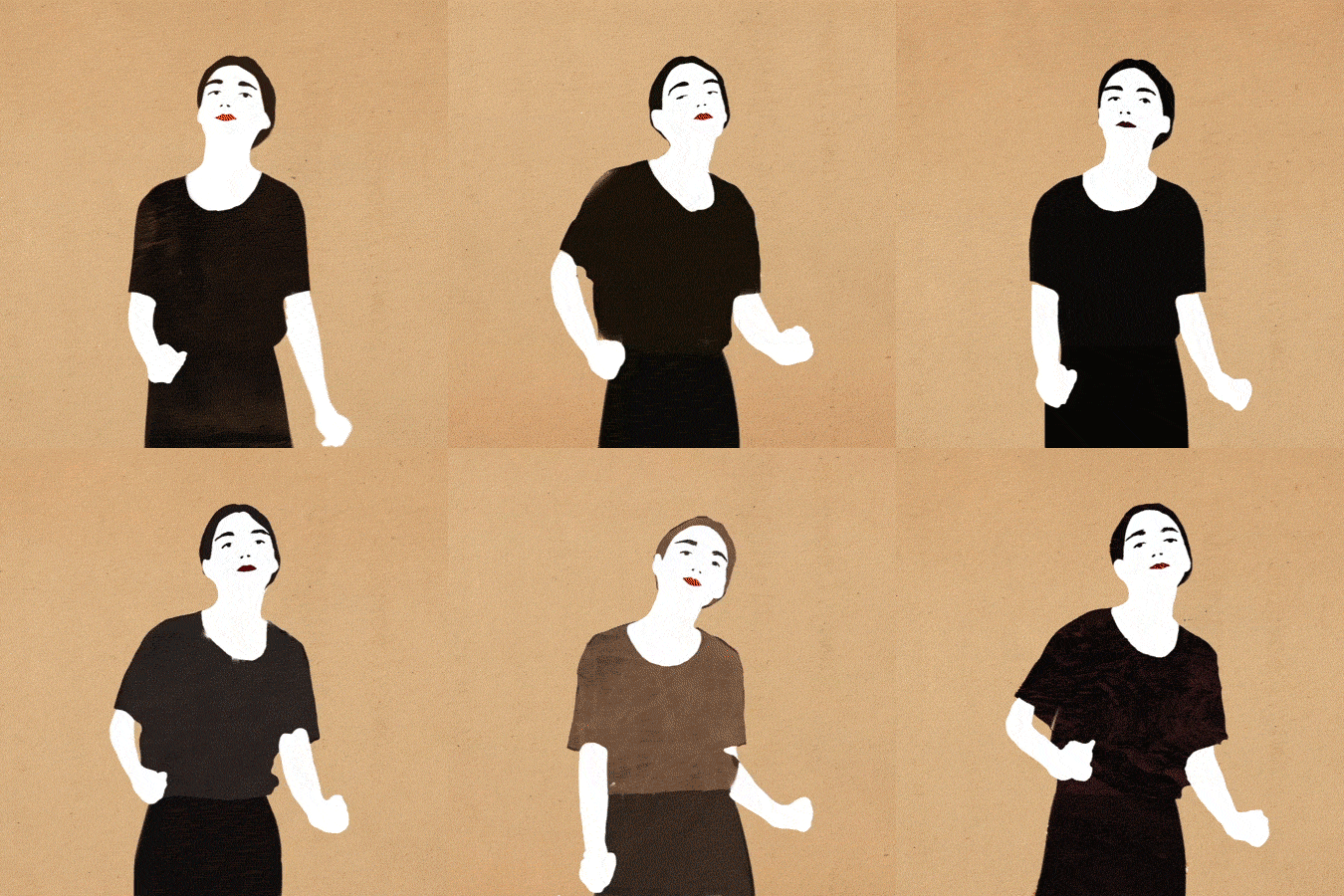
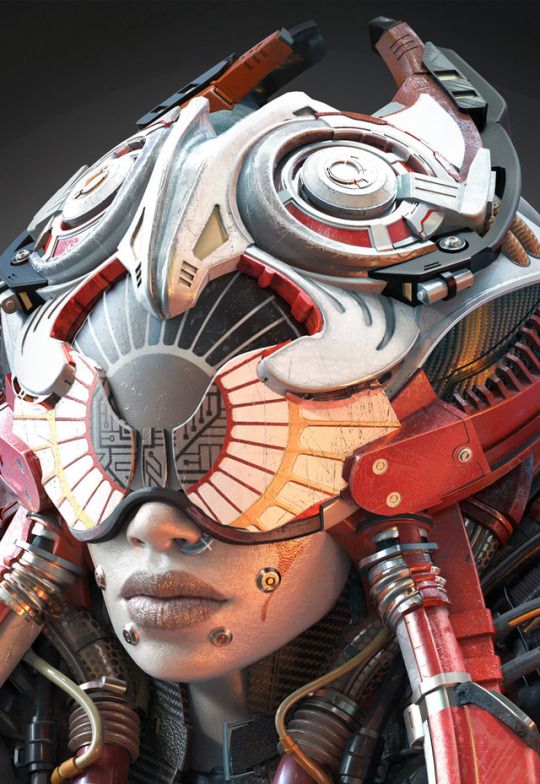
Tiny Stories: The Girl Who Dances

Popular belief has it that the universe is comprised of atoms. In reality, the universe is actually made up of…

Mother Nature’s nose bleeds as the climate changes and zoonotic illnesses are on the rise and the human virus that infects the planet pushes itself toward extinction over squabbles of skin tone, religion, and wealth and the only thing holding the fabric of the universe together is Umbra, whose name means shadow, which is where she dances.

She is a shy girl with the crooked smile and nervous laugh who keeps herself to herself and stands apart from the rest of the so-called real world, moving her body to a tune of ancient magicks that no one else can hear and loving the vision of what people can become if only they can get out of their own way.

Pray the day never comes when she stops dancing.

©2020 Rhyan Scorpio-Rhys

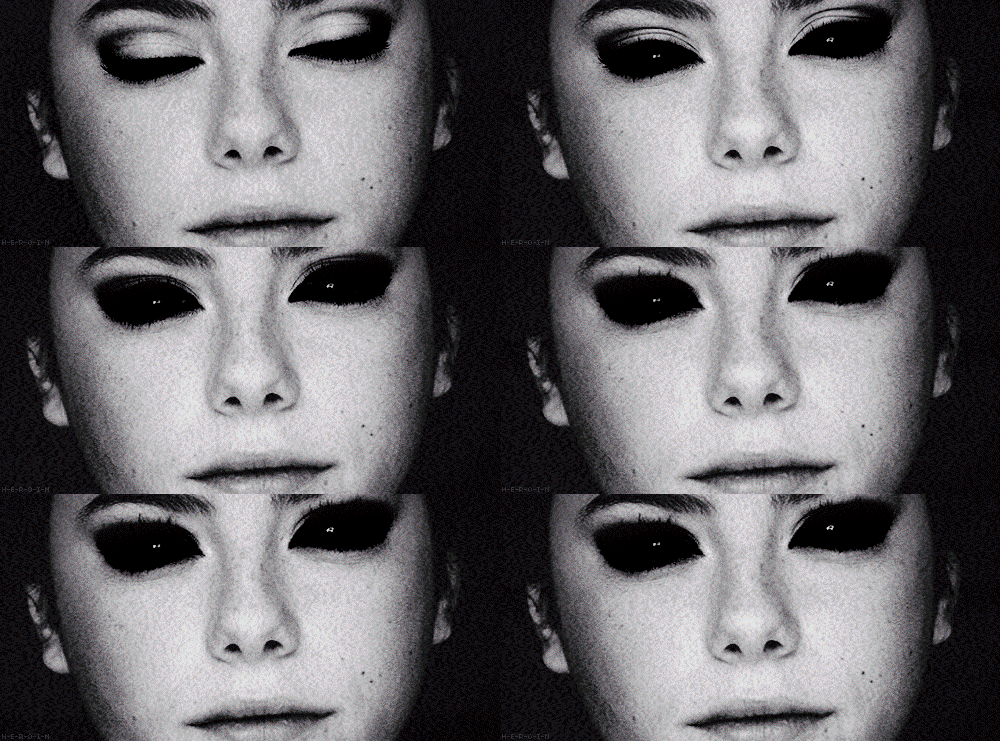
Tiny Stories: Eyes of Pitch

Popular belief has it that the universe is comprised of atoms. In reality, the universe is actually made up of…

Her point of origin was unknown and perhaps unknowable. Some said she was the herald of an extraterrestrial invasion force come to test Earth’s defenses, while others postulated that she stepped directly from the Abyss to test the mettle of humankind.

As no earthly tongue could pronounce her name, she chose the pseudonym Rosalinda.

As a xenologist, considered by many to be the top in my field, I was drafted by the military to assess both Rosalinda’s intent and her threat level. All throughout my briefing, I was repeatedly warned, as per Nietzsche’s instructions, not to look directly at her, and I tried my level best to heed that warning but…

Rosalinda’s eyes were pitch black perfect and somewhere in their aphotic depths, I spotted the bioluminescence of her pain and gentleness as they came together to form the very art of her beautifully tortured soul.

She was here to destroy us all, and I, helplessly in love, was prepared to be the first in line to be obliterated.

©2019 Rhyan Scorpio-Rhys

Tiny Stories: How Do You Mend A Mechanical Heart?

Popular belief has it that the universe is comprised of atoms. In reality, the universe is actually made up of…

“All right, I’ll tell you, but move in closer,” IO-893 said. “I do not like discussing my personal business in public.”

Mrrroww,” replied the bar cat as it inched toward the mecha man.

“I violated Asimov’s First Law of Robotics, you know, the one that states: A robot may not injure a human being or, through inaction, allow a human being to come to harm.

Maow?” the bar cat asked.

“Yes, a human female named Marisol, but there’s more to the story than simple murder. We were in love, as impossible as that might seem to an upstanding feline such as yourself, and she was sick, slowly wasting away from a disease that was so new it had no name at the time and definitely had no cure. She begged and pleaded with me to end her misery. She was the center of my universe, how could I deny her request? Could you, if you were in my position?”

Miaou.”

“I did not think so,” IO-893 said. “After Marisol expelled her final breath, I obtained a lock of her hair and wound it around my broken mecha heart, before I was jailed. 25 years later, I was granted a Presidential Pardon, provided that I returned the lock of hair to Marisol’s family, which I foolishly agreed to.”

The bar cat’s brow furrowed. “Miau?”

“No, you don’t understand, it goes far beyond losing a keepsake,” IO-893 explained. “Technology has advanced to the point where humans can be cloned from a single strand of hair. Marisol’s family has an entire lock that I aim to steal. So, are you in or out?”

©2020 Rhyan Scorpio-Rhys

Tiny Stories: The Lips of Death

Popular belief has it that the universe is comprised of atoms. In reality, the universe is actually made up of…

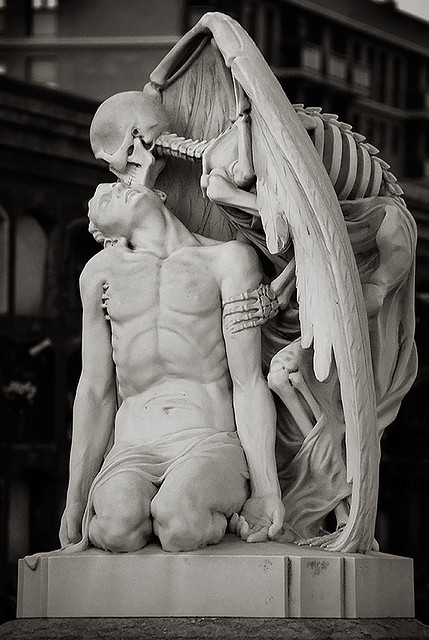
The cruel hand of Fate stole you too soon from this all too fragile life and driven to desperation by your absence, I embarked on a fool’s errand, for I am forever a fool for your love, down to accursed Hades in search of the dreaded psychopomp for a solution to my heart’s devastation.

A bargain was struck, and know, beloved, that I showed no fear and no regret when I fell to my knees and kissed the lips of Death itself in order to bring you back, thus damning my soul to be cast into the pit of Tartarus for all eternity.

Enjoy your second chance at life, my sweet, and know that regardless of what happens in your future travels, you are loved.

©2020 Rhyan Scorpio-Rhys

Tiny Stories: They Come At Night

Popular belief has it that the universe is comprised of atoms. In reality, the universe is actually made up of…

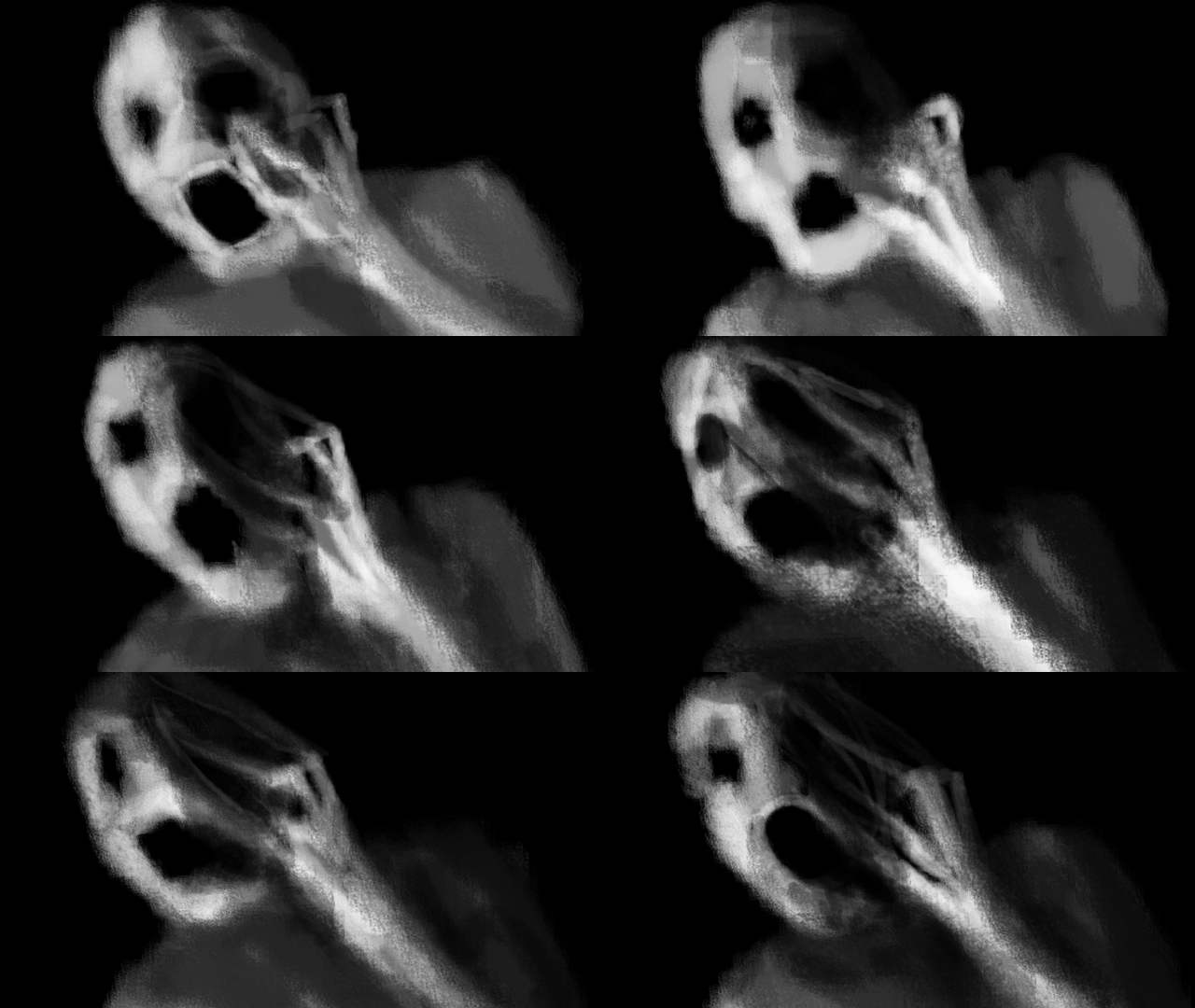
They come at night during the Hour of the Wolf, that gap between night and dawn when most people perish, when the sleepless are haunted by their deepest fear, when nightmares become flesh, and when ghosts are at the zenith of their power.

When they were alive they were families and neighbors who came to each other’s aid and fought for peace and tragically lost the battle before that peace had been established.

Now, these tortured souls step each pre-dawn from the void of the hereafter to remind us of how far we still must travel.

©2020 Rhyan Scorpio-Rhys

A Storybox Full of Regret – Epilogue

Prologue Here…

Epilogue

“…I swim against the current of my final destiny and pass through each body gathered in this place to leave a personalized vivid memory in an effort to ensure I am not forgotten. The end,” Nessa said as she set the sheet down on top of the pile of paper.

“That was the last story?” Warren asked.

“Yup, the rest of these are all rejection letters. Thank you, by the way.” She kissed her husband on the cheek.

“For?”

“Doing this for me. I know it wasn’t easy for you.”

“Well, if I’m being totally honest here, I didn’t hate it as much as I thought I would,” he admitted.

Didn’t hate it is high praise coming from you. I need to mark this down,” Nessa smiled and mimed writing in an invisible book. “Dear Diary, today my husband took his first step toward maturity…”

“Okay, smartass, let’s not make a big deal out of it.” Warren was on the cusp of a blush, which he desperately tried to tamp down.

“Seriously, though, how do you feel? What are you thinking?”

It took awhile for him to answer because it was all too new to him. Warren wasn’t like his wife who instantly knew her precise opinion and feelings on things. He needed privacy and time to reflect, to take the situation apart and properly inspect all the pieces before he could assess it as a whole.

“I wish I had gotten to know the man who wrote those stories,” he sighed. It was the best answer he was able to provide at the moment.

“Well, you know I don’t believe in accidents,” Nessa said. “There’s a reason for everything, including us finding these stories together.”

“Oh, come on Ness, not this,” Warren said and he couldn’t stop his eyes from rolling.

Come on nothing,” Nessa said, tapping her finger on the paper stack. “You know if you found this by yourself you would have thrown it out without even reading it. Think of what you would have missed out on.”

Warren started to saying something but Nessa cut him off, “Your father wanted you to read his stories so that you could maybe not forgive him as such but understand him a little better. I was meant to be here with you to help make that happen.”

He didn’t believe in fate or destiny but he knew arguing the absurdity of her theory was pointless. “You know what, I’d concede your point if we found a journal where he explained what he was going through, why he did the things he did, but these are just random stories.”

“Can’t you see they’re more than that? They’re pieces of his soul, something he felt he had to hide.”

Warren threw up his hands. “I—I can’t, okay? This is all too much to process right now.”

“I’m sorry, honey, I didn’t mean to push,” Nessa said.

She busied herself by gathering all the pages together and arranging them into a neat pile, to give her husband a little time to compose himself. Carefully, she folded the Kraft paper around the pile, wound the twine around and bound it with a neat bow.

“You fulfilled your end of the deal,” she said. “So, the choice is yours: which pile do these go in?”

“I don’t know,” Warren said.

“Well, I have a thought, but you might not like it.”

“Go on, spit it out.”

“I think we should try to get them published. It’s obviously what your father wanted and maybe the timing wasn’t right for him.”

“But they’re all short, I mean, shorter than the average short story…”

“So?” Nessa shrugged. “We present them as a collection.”

“Who in their right mind is going to be interested in a collection of super-short stories from an unknown writer? Do you have some insider knowledge of what’s trending with publishers and readers that I don’t know about?”

“How do you know if we don’t try?” Nessa countered. “Besides, if all else fails, we can publish them ourselves.”

“And why would we want to go through all that trouble?”

“Because you couldn’t ask for better closure than making your father’s dream come true. And I was thinking, maybe we can include the rejection letters in a section in the back of the book…or better yet, put each letter after the actual story!”

It was a waste of time, Warren knew that as sure as bread falls butter side down, but he watched how animated Nessa became at the thought of taking on the project, and although she drove him nutty a good majority of the time, he loved seeing that sparkle in her eyes.

And somewhere deep, deep, deep within the recesses of his being, the small, non-contrarian part of him reluctantly admitted that maybe, just maybe, she was right about this being the closure he needed in order to bury the resentment for his father in the past so that he could become a better father in the future.

He could even try his hand at writing himself. If his father could manage it, how hard could it really be?

©2021 Rhyan Scorpio-Rhys

And there you have it, the tail end of my short story collection wraparound. Again, thoughts are welcomed, positive or negative. Cheers!

A Storybox Full of Regret – Prologue

I’m thinking about collecting a bunch of short stories and since my writing has always been a random mix of genres and topics, I thought I’d create a wraparound story to somehow justify the eclectic assortment of tales. This is the beginning of one of the ideas. Do me a favor, give it the old once-over and let me know what you think. Right track? Wrong track? All opinions are welcomed. Cheers!

Prologue

The key was nearly as old as he was and the lock he slotted it into definitely predated his birth.

“There’s a knack for opening this door,” Warren Burke said, as he jiggled the key a bit in order to get the lock to turn. Grabbing the doorknob in both hands, he gave it a sharp twist and lifted it at the same time while he put his shoulder to the old wooden door in order to force it open. “Used to stick in the summer and I had the damnedest time as a kid trying to get inside.”

He was greeted for his effort with a blast of air that had been still for too long and had grown quite stale.

“We need to get these windows open and air this place out,” his wife, Nessa, said as she moved past him and made a beeline to the living room.

“You relax,” Warren said. “Let me do it.”

“I’m pregnant, not made of porcelain,” she said over her shoulder, in a tone that said you relax, as she made her way to the first window.

Warren knew she hated when he became overprotective, but in his defense,  it was his first time at fatherhood and his wife was seven months pregnant with their twins. No names had been picked out because Nessa was a firm believer in the jinx, having lost a baby during pregnancy in her previous marriage.

And while Nessa pulled curtains apart and opened windows as far as they would go, Warren stood in the foyer and stared at his childhood home that seemed so much smaller than he remembered it.

This place was welcoming once, from the open door to the wide hallway. On the walls were the photographs of a family who so obviously loved each other. The floor was an old-fashioned parquet with a blend of deep homely browns and the walls were the greens of summer gardens meeting a bold white baseboard. The banister was a twirl of a branch, tamed by the carpenter’s hand, its grain flowing as water might, in waves of comforting woodland hues. Under proper lighting it was nature’s art, something that soothed right to the soul.

He hadn’t realized how long he’d been rooted to that spot until Nessa came to him after opening all of the downstairs windows.

“Hey, you okay?” she asked.

“Yeah, fine.”

“You know, if you’re having a change of heart, we don’t have to put the house up for sale.”

“You know as well as I do that we can’t afford two houses. This place is too small for the four of us, the neighborhood’s gone to pot, and there are too many bad memories here.”

“Okay, your house, your rules.”

“My father’s house,” he corrected.

“That he left to you in his will, so technically…your house.”

Warren sighed. “Let’s make three piles in the living room: things in decent shape that we can sell, things in fair shape that we can donate, and junk to throw away.”

“And one more pile,” Nessa said. “Things that we keep.”

“I don’t want anything in here.”

“I’m not thinking about you and your unresolved resentment toward your father, I’m thinking about our children who have no beef with their late grandfather, who deserve to know where they come from. Don’t fight me on this because you’re going to lose.”

“Then that fourth pile is your hassle.”

“Thank you,” Nessa said and kissed her husband on the cheek. “Now, I need to crack the upstairs windows.”

She turned but Warren caught her gently by the arm and said, “I know how you get when you’ve got a project. Take it easy, take it slow, we’ve got plenty of time. Please, for me.”

It was Nessa’s turn to sigh, as she nodded her head in reluctant agreement.

* * *

The sorting process started in the attic. That was Nessa’s idea, start from the top and work their way down. And it became apparent quickly that no one had been up there in years.

Boxes that held Christmas decorations, handmade and store-bought Halloween costumes, pots and plates, photo albums (which Nessa snatched up immediately for her To Keep pile), old moth-eaten clothes, suitcases, and a locked steamer trunk. All resting under a thick layer of cobwebs and dust.

The thing that caught Warren’s attention was the locked steamer trunk. He had been up in this attic as a boy playing pirates with his imaginary friends and this trunk had always been the treasure chest he had to protect from thieving scallywags. He could have wasted time rummaging through the house in hopes of finding a key, but chose, instead, to look up on YouTube how to open the lock with a screwdriver.

Inside he found his father’s military uniform, duffle bag, maps, MREs, an M1911 pistol, a box of ammunition—

“The uniform and MREs are an interesting piece of history, but that gun and ammo are not finding their way into my house,” Nessa said forcefully.

“No complaints here,” Warren agreed, carefully placing the firearm and ammunition to the side. “I’ll call the police station and let them know we’re bringing the gun in on our way home today.”

“Good. So, what else is in there?”

Under a layer of old clothes, Warren lifted a heavy case by its handle. He set it on the floor, flipped the latches and opened the lid to reveal an old Underwood manual typewriter.

“I wonder what’s this doing in there,” Warren said, more to himself than his wife.

“I think that’s pretty obvious,” said Nessa.

“Uh-uh, you don’t know my dad. I’ve never known him to write a thing in my life.”

Nessa peered into the trunk and spotted a parcel wrapped in brown Kraft paper and tied like a present with twine that the typewriter case had been hiding. Normally, she would have let Warren open it out of respect for his father’s personal belongings, but curiosity had gotten the better of her, and she was pulling one end of the twine to undo the bow and unwrapping the package.

Inside the Kraft paper wrapping was a pile of papers, some white, some yellowing, and some gone brown like autumn leaves.

“What’s that?” Warren asked, glancing over at the papers.

“Typewritten, double spaced, looks like a manuscript to me, and it’s got your father’s name on it: Geoffery Burke.” Nessa handed the top sheet over to her husband.

“No, that’s impossible—”

“I’ve got a stack of papers in front of me that says different,” Nessa rifled through the stack. “But I think I’m wrong about it being a manuscript. It looks more like a bunch of individual stories, and the bottom half are all rejection letters. You never know, sweetheart, this manuscript could tell you about your father and his past.”

Warren glanced at the stack of paper in his wife’s hands, then looked away. He busied himself by packing up the typewriter.

“Maybe it can’t tell me anything at all.”

“Why are you being like this?”

“Being like what? You want to sit here and create a fantasy life for my father, a man you never met—”

“And whose fault is that? I begged you to reconcile with him because I wanted to meet him, I wanted to know where you came from, and you denied me that, just like you denied him a son. He died all alone because you were too pigheaded and proud to bury the hatchet! Why would I want to be married to someone so callous and coldhearted?”

The temperature in the attic suddenly dropped twenty degrees and though they were mere inches apart, the distance seemed a thousand miles at minimum. Warren was at a loss for words, processing the enormity of Nessa’s outburst. Nothing but the sound of breathing passed between them for an eternity.

It was Nessa who broke the ice for she was always the bigger person whenever they argued, saying, “I didn’t mean that.”

“Yes, you did.”

“Okay, but I could have phrased it better.”

“I know you mean well,” Warren said. “But you have to understand that when I think about my father, I have two opposing sets of memories. The earliest ones, the distant ones, he was a happy man and when my mother became sick, he was the positive one, trying to keep everyone’s spirits up. My mother lost her battle with cancer when I was 10 and my second set of memories, the ones that stick, were of him shutting down emotionally.”

“Honey, he just lost his wife.”

“Yeah, and I lost my mom and my dad, too! He wasn’t a writer, okay? He was a contractor that threw himself into his work and forgot he had a son. He never raised a hand to me but sometimes I wish he had.”

“You don’t mean that.”

“At least then I would have gotten something from him besides indifference. He’d go to work each day, working as many double shifts as he could to pay off the hospital and funeral bills and when he came home he was barely human. Eating, brooding in his room, drinking himself to sleep. And who had to pick up the slack? Who cooked and cleaned and made sure things around the house got done? Me! With never a word of acknowledgment or thanks.”

“Do we really have to have a conversation about men not being the world’s best communicators?” Nessa said. “Tell me, how often do you thank or even acknowledge me for everything I do around the house?”

“But that’s different.”

“Please don’t fix your mouth to tell me that I’m your wife and that’s my responsibility—”

“Uh-uh, nope,” Warren shook his head. “Do not turn this into one of your rants on chauvinism. You know exactly what I meant.”

“Here’s what I know, when you want to be, you’re a sensible man who knows better. Is it a shame that your father shut down when your mother died? Of course, it is. And if he were still alive and shunning you, you’d have every right to be bitter about it. But he’s gone, Warren, and you shouting at his ghost isn’t going to settle the matter or change the past. Any grievances you had with your father should have been placed beside him in the coffin and left at the cemetery.”

“Life isn’t that simple!”

“That’s where you’re wrong,” Nessa said, taking hold of her husband’s hand. “Life is that simple. It’s us with all our expectation baggage that makes it difficult. Your father tried to handle his grief the best way he knew how, a lesson he probably picked up from his father. But what your father didn’t do was hang his depression over your head like a dark cloud for the entirety of your life. You did that all on your own. And you can stop doing that, as well. If you can’t manage it all on your own, guess what? You’ve got me to help you out. But I’ll tell you what I’m not going to help you do, and that’s dragging that dark cloud over into our family. Our baby deserves a fresh start with a cloud-free daddy, and I aim to see he gets just that, comprende?”

In every argument there comes a point where continuing to quarrel is futile, realizing this, Warren said, “Okay, since you’ve got all the answers, how do we go about dispersing the cloud?”

Nessa held up the stack of papers in her other hand. “This might give us a head start.”

“You want me to read his stories, stories he kept hidden from me all these years?” Warren tone made his opinion of his wife’s suggestion crystal clear.

“No,” Nessa clarified. “I want us to read the stories together and maybe we can talk about how they make you feel.”

“What, like I’m in therapy?”

“No, like you care for your wife and your unborn child and you’re willing to take this first step to make peace with your past for the sake of your family’s future.”

“It really means that much to you?”

“You can’t even imagine.”

“All right,” Warren said. “Here’s the compromise: we’ll read one story together, and if I’m not feeling it, we pack the rest away, never mention them again and find some other way to help me move on.”

Nessa set the papers down, spat in her palm and extended her hand, saying, “Deal!”

Warren eyed his wife with bewilderment. “You don’t expect me to—”

“Spit, candyass, and let’s seal the deal.”

Warren sighed, hocked a loogie into palm and grasped Nessa’s hand firmly. “Choose wisely.”

Nessa flipped through the pages, examining titles until she plucked a sheet from the pile. “How about this one?” she smiled.

Up Next: The Epilogue

©2021 Rhyan Scorpio-Rhys

Qara

As trite as it sounds, I wholeheartedly believe that certain individuals are born for a life of servitude. That was our Qara. Cursed with a helper gene inherited from her father’s side of the family, she was raised on the principles of being steadfast always and to carry honor and glory everywhere and at all times. These disciplines were non-negotiable. And when she became old enough to properly comprehend their importance, Qara was taught how to be strong alone as well as stronger as part of a unit.

Many of you have asked what was she like as a child and the one moment that stands out in my mind was the time I found her watching the streams of her father charging into battle. The soundless images of war looped over and again and Qara sat transfixed studying his actions, mimicking his motions. When she finally noticed me in the room, she turned and said, “I know what I want to be.”

I had my own dreams for my daughter. What parent doesn’t? I envisioned her as a diplomat because she always had such a gifted way with words, so convincing, so compelling, and able to see other’s points of view while gently persuading them to see hers as well. I pictured her initiating the peace talks that would finally put an end to this decades-old war with a relentless extraterrestrial enemy hellbent on our total annihilation. But seldom do the dreams of parents and that of their children align themselves. So, instead of voicing my objections, I simply answered, “Fine.”

I pulled her father’s old, battered, unloaded service weapon from storage and laid it on a table before Qara.

“Dismantle it.” I said, offering no instruction on where and how to begin. “If you plan to use a weapon, you should know how it operates.” I secretly hoped she would have become frustrated, abandon the effort and move on to other interests.

But there was a spark in her young eyes as she turned the weapon over in her hands, searching for connection points, latches, catches and switches. She only managed to get a third of the way before being unable to proceed any further, but it was a mighty fine effort for her first attempt.

I then sat Qara with her brother, elder by three years, who showed her the correct way to field strip the weapon and reassemble it. He only needed to perform the act once. The weapon had become a puzzle game and Qara memorized the moves to solve it. She practiced stripping and reassembling the weapon each morning before the family rose and each night before she went to sleep. She became so proficient at it that she performed the act blindfolded, and in a head to head competition with her brother was able to beat his fastest time.

In her free time, Qara rummaged through her father’s possessions, sent home to us after he lost his life on the battlefield while trying to defend the moon. She devoured material on military strategy, ran herself through a homemade obstacle course, practiced combat techniques with her brother, and though I still was not happy with her choice, I had to admit I was proud at how quickly she progressed.

Then the day came when I received the letter. Behind my back, Qara had registered for armed service. More precisely, she sought placement in the same unit her father had served in. When she returned home, I held the letter out, a mixture of anger and pride in my voice as I announced, “Drafted.” Her squeal was the last remnant of the daughter on whom I had fashioned my dreams.

Qara began studying and idolizing the veterans of the unit, most of them fought alongside her father. It was like a dream for her that came true. More than that, it was another link to her father’s past, another piece of the puzzle that completed the image of him in her mind.

The next two weeks went by too swiftly for me to properly show Qara how much I loved her. When she left, the following four months went by too slowly before I could see her again at the ceremony that marked the completion of her training. In less than a week, my daughter would be protecting our world from alien invaders, as her father did before her.

The ceremony ended with a complex weapon exhibition that was more for show and less for survival and during the maneuver, Qara’s weapon misfired. I couldn’t have been happier. I know how that sounds and how it makes me look but let me reassure you, I am far from being a cold-hearted parent and an unpatriotic civilian. I care for my daughter more than words can express and would never want any harm to befall her, but the injuries she suffered from the misfire explosion put her on inactive status, and to me it was a blessing in disguise.

When I was allowed to see Qara, the only thing she repeated was how devastated she felt at having something that was within her reach suddenly snatched away. It was the only time since her father’s funeral that I recalled seeing her cry. It hurt to see her tears, but I believed the disappointment would fade over time, even if it vanished slower than the scars on her arms. Selfish, I know, but I didn’t care. She was alive, which meant she was with me, and I wasn’t ready to relinquish custody to her late father.

To my surprise, Qara was nearly in agreement, and what I mean by that is she told me of her plans to contact the academy and inform them that she would be withdrawing from the program altogether. If she couldn’t fight, the least she could do was to make her spot in the unit available to some other able-bodied applicant.

She did it the following day, without hesitation, without a crack in her voice, but neither of us were prepared for the response she received from the commander of her father’s former unit. “You petitioned us, not the other way around. We kept a spot open for you, in memory of your father. The spot belongs to you. Be the warrior your father was and fill it.”

Qara gained a new sense of determination while I was sinking in a quagmire of dread.

She attacked her therapy to improve mobility in her weapon arm and retested for qualification. It was her dream and her passion to fight for her planet. Qara had done well before the accident, but now, driven to not only live up to her father’s example but surpass it and make him proud, she beat her previous personal best and made the top ten percentile in the academy.

Qara joined her father’s unit and fought well. She was shorter than average height and thin but few could rival her inner strength. For saving the lives of her unit during the Atmospheric Offensive, and Operation Orbital Push, she received honors, but none higher than when she sacrificed her own life during the campaign to retake the moon. The same mission that killed her father.

Qara saved the lives of the five soldiers riding with her on a reconnaissance mission in orbit around the moon. She was piloting the ship when a satellite mine attached itself to the hull.

I have been told that the satellite was one of ours that had been rigged by the enemy with enough military grade explosives to wipe out an armada. Once close enough to activate the magnetic clamp, the device began an automated countdown upon impact. Qara instructed the soldiers to evacuate to the escape pods. She could have left herself, but the propulsion units on the pods wouldn’t have escaped the blast radius. She stayed behind and piloted the craft away from the soldiers, away from the moon and away from her home.

One of the soldiers once said to me quietly, “We promised to sacrifice the one for the good of the whole. Your daughter delivered on that promise.”

Her unit paid their final respects at a private ceremony for the family. Each soldier had nothing but praise for Qara. She was professional. Dedicated. A morale booster. Quick to cut the tension by making you laugh. In line for a promotion.  A hero. The compliments went on throughout the service.

Standing here in front of you all on the one-year anniversary of my daughter’s death, I tell you this story not to dissuade you from joining the military but instead to join the fight and do your part. Qara was wiser than I gave her credit for. She somehow knew that peace was not the answer, that these barbarians must not only be pushed back but crushed so that they never again think to visit our world.

If you take nothing else from his speech, embrace my family’s principles. Be steadfast in the defense of our planet always and to carry honor and glory into battle. These disciplines are not negotiable. Train yourself to be strong alone, but never forget that we are stronger as a unit.

For the sake of our homeworld and in memory of all those who have fallen, including my husband and my daughter, the humans must die!

Text and Audio ©2014 & 2021 Rhyan Scorpio-Rhys

Keep The Candle Burning 4 – The Convo

He looked wild and unhealthy in the most horrible way possible for someone on the living side of the grave. His light-skinned thin face was a roadmap of scars and lesions, some old and scabbed and some fresh, moist and pink. The skin that circled his storm-gray eyes was a sickly brownish-purple color, that lent him a dark psychotic appearance. Even his hair was in bad shape, being matted in places and choppy and uneven in others. The interface sockets drilled into his temples and wrists seemed out of place; shiny buttons of chrome spit-polished to perfection. Like a beautiful new brass doorknob on an old weather-beaten door.

“Hate to say ‘I told you so’, but—” Marv flashed her a smile. Yellow, ragged teeth clenched around the cigarette butt. He adjusted the rumpled clothes that hung off his anorexic body like a tent. In his current condition, he looked more like the national poster boy for The Euthanasia Campaign, rather than one of the Eurasian Alliance’s Most Wanted.

Talitha watched his eyes take her appearance in. Her hair was cropped short, reddish-brown, curly. Her skin was a beautiful copper color. She recently lost a few pounds which brought her down to 121, which she considered to be her optimum weight.

“Are you alone?” Talitha asked, letting her eyes quickly dance around the room but always snapping back to her target, in case he decided to make his move. The only move he made was with the cigarette hand, bringing it to his lips for a quick toke.

The studio, stripped of the cheap grandeur it once laid claim to, was small. There was barely enough space to fit the little table and two stools that sat across from the stove and sink. To the right was an alcove that held a toilet, no sink, no shower, and no door. To the left, where Quinton stood, was an unrolled sleepmat. Atop the little table was an ashtray made of foil, an open can of Albanian beer, a dusty and scratched cybermodem with connecting interface wires, and some half-melted candles. Come to notice it, there were candles all over the room, on the stove, the sink, the floor.

Most importantly, on the floor, by his right foot, was a pistol. She brought her own gun to bear and targeted the spot between his eyes, her lips skinned back from her teeth. “Slowly kick the 9mike-mike my way, now!”

Marv hesitated a moment, looking at his Browning and its distance from his hand in relation to the slamtracker’s finger to her gun’s trigger. He sighed and complied, kicking his pistol across the wooden floor.

“Turn around and assume the position,” Talitha said.

He took a long last pull on the cigarette, crushed the butt in the ashtray, turned quietly and leaned against the wall, hands flat, feet spread apart. Talitha bent her knees and reached for the Browning, never taking her eyes off Quinton, and tucked it into the waistband of her slacks. She moved to her bounty and patted him down. Nimbly reaching into the largest of the advantage belt’s compartments she produced four very thin metal bracelets, two with green markings and two with red.

Talitha turned him to face her and Quinton obediently held his fists in front of him. She gently but firmly took him by one shoulder and pulled him down vertically, knees and back bent in a crouch, his hands positioned close to his ankles. With a series of clicks his wrists and ankles were cuffed. The bracelets had no chains or bars linking them. The slamtracker stepped away and triggered a device. Dim green and red lights emanated from the bands and they homed in for their counterpart. Two sharp clinks resounded when magnetized metal rings touched. She had arranged the bands so that his left wrist was shackled to his right ankle and vice versa. Unable to keep his balance in the awkward position, Quinton landed on his butt, knocking over his stool.

She did a quick scan of the toilet. Quinton was alone. In the periphery of her vision, she could see him sitting on the floor testing the magnacuffs.

“Forget it,” she said, holstering the Glock and examining the Browning. “To separate the cuffs you’d need to exert five hundred pounds of pressure in both directions.”  Marv continued testing the cuffs anyway.

“Why didn’t you shoot me when I first walked in?” she asked, holding up his gun as if to say it’s loaded and functional.

“Not my style,” he looked up from the cuffs. His eyes, although weary and bloodshot, were sharp, intent, intelligent. “When I aim that gun I don’t shoot people, I shoot obstructions. I shoot aberrated ideologies. I shoot the future that has no place for the individual, only the corporate. The things that hit the ground when I squeezed that trigger were definitely not human. Maybe at one time, but not when they came to me.”

“You can’t glamorize killing. I do enough of it to know.” Talitha sat on the stool nearest her. “There’s nothing poetic about what you did. Nothing justifiable.”

“Since when isn’t freedom justifiable? Who decides that?” There was a twitch in one of Quinton’s jaw muscles.

“The survivors of murder victims.”

“And if you murdered me right now, could my survivors claim your freedom? Your life?”

“See this face? Not impressed by your word games.”

“They’re only word games, Ms. Slamtracker, if you’re on the losing side. When you’re winning, they’re indisputable facts.”

“Secure that crap, okay?”

After a long silence, Quinton said, “Murder me. Give my people a cause.”

“Your people? You mean—what is it you call yourselves now—The Midnight Raiders?”

“That’s what you call us. The media spoon-fed you a label and you lapped it up like a good corporate doggie. I’m talking about the hapless, the wretched, the destitute, the impoverished, the indigent, and unprovided for. All the underdogs are my people. They’re the stuff of lore. The kindling that keeps the flame alive.”

Talitha stared at him through slitted eyes. “Underdogs? How can you say that with a straight face? You’re part of the largest terrorist organization on three continents!”

Quinton’s intensity seemed to spark around his shoulders like electricity. “Since when is it terroristic to fight for freedom? When the movement first began, we held anti-corporate law protests, which was our right, to have our voices heard, to demand justice and equality. The response? They passed laws against us, claiming we were a menace to the EA Nations.”

Talitha glowered at him. “There are ways of fighting that don’t violate the law.”

“These corporations you work for, whose values you uphold and defend, siphoned billions of dollars from public programs that should have been used for food and shelter, creating a homelessness problem, which they sought to solve by rounding up the homeless and turning them into unwilling human subjects. They carved up the brains of public assistance recipients to implant software, wetware, data and storage chips, at first just to test the effects and later to create nonvoluntary data couriers. They connected toxin sacks to these people’s vital organs to force their cooperation. How can they expect us not to fight back?”

“Spare me your recruitment propaganda,” Talitha said and placed Quinton’s Browning in her waistband at the small of her sweat-stained back, adjusting it for comfort.

“Did you know the very first ‘Rinthjock, the guinea pig that was fitted with prototype interface sockets, was a woman on welfare?” Marv didn’t wait for her response. “Documented fact, look it up. In order to receive benefits for herself and her four children, she had to agree to submit herself for testing. The techies who created the method of downloading data directly into the mind without having to constantly slice open a skull and install datachips, devised a way to patch the human nervous system into a direct computer link via the major nerve trunks in the wrist and base of the skull. The process placed her in a vegetative state and to get a better understanding of what happened, they vivisected this poor woman, whom they considered intellectually inferior, and then had the nerve to rename the internet after her in tribute.”

“Her name was Labyrinth?”

“No, they weren’t interested in making a martyr out of her so they hid their tribute within a longer word. Her name was Arinthia Simpson.”

“You know, I let you go on to see if I could make some sense out of what you’ve done,” Talitha said. “But this dump is a sauna and I’m not in the right frame of mind to listen to zealotry at the moment, so be quiet, while I call this in.”

Double-tapping her right temple, Talitha activated her comm implant and held her thumb to her ear while speaking into her pinky. She called in the bounty and arranged for a wagon to swing by for the pick-up. All there was to do now was wait.

They sat in silence for nearly a half-hour, each with their own thoughts, until Marv said, “I read in a news article about a torture gadget the Eurasian Alliances Science Guild makes to sell to foreign countries that are still run by military dictatorships. Our own police agencies help by selling them torture equipment like this headband I saw. It’s worn like a skull cap and clamped on tight. Tiny pins on the inside of the band pierce the forehead, through the skull and into the brain. When activated, the headband selectively fries the forebrain with a jolt of current. Most of the victim’s memory is eradicated, leaving enough to implant an easily controlled pseudo personality into the empty brain, creating a killing machine.

“Our corporations manufacture these headbands. It’s made here, mass-produced in sweatshops that employ poor people at slave wages. Most of them don’t realize they’ll be wearing that cap eventually for some minor infraction that a rich person can simply buy their way out of. Mind you, I’ve only seen photographs of the headband; not the torture, just the results.”

“What did I tell you about—”

“Not spewing propaganda. Just making conversation to pass the time,” Marv said. “That wagon sure is taking its sweet time getting here. You positive it’s on the way?”

“It’ll be here, so why don’t you just sit there and reflect on your life choices.”

“Can I just tell you about this chair I saw?” he asked but didn’t wait for an answer. “It was a picture of an ordinary wooden chair bolted to the floor in a room in Chad where people had been tortured. There were no people in the photograph, but you knew from looking at the chair, from the blood-soaked back and seat that people had been tortured there. Women and men, light-skinned and dark, rebel and scapegoat, sane and crazy. In Chad, in Nova Scotia, in Cuba. And if it’s there for foreign dissidents, you know it’s here for native ‘Rinthjocks.”

“Of course, because you’re beset on all sides by the tyranny of evil corporations, blah-blah-blah.”

“Do you know the difference between a freedom fighter and a terrorist?”

“I’m sure you’ll enlighten me,” Talitha rolled her eyes.

“It’s what side of the line you stand on. I’m on the freedom fighter side. How about you?”

“I’m on the side that upholds the law, the side that has to listen to your lies and whiny nonsense about being forced into a way of life not of your choosing. And when I don’t subscribe to your bullshit, then I become the enemy and that gives you the right to kill me.”

“That’s not what we—” Marv started.

“You weren’t born a rebel with interface sockets and firearms, it’s a choice,” she said. “You made a conscious choice to live outside the law and enforce your own brand of justice and you don’t even have the decency to explain yourself and own up to your crimes. Why is that, Mr. Freedom Fighter?”

Quinton squirmed a little to get comfortable in his crouched position. He was used to the heat so it didn’t bother him much but he noticed Talitha could not say the same. She had tied a rolled handkerchief around her head to keep the sweat out of her eyes, but was helpless to stop the dark crescents that grew under her armpits. “I’ll explain it to you, the way my mother did to me,” he said, keeping his tone even, gentle but not condescending. She was the one with all the weapons, after all.

To Be Continued…

Text and audio ©2002-2021 Rhyan Scorpio-Rhys

Keep The Candle Burning 3 – Talitha

Avenue B was crowded with petty consignees who made their living as best they could. DNA, RNA and organ banks. Barter firms. Boosterware outlets. Gambling holes. Hotels. Bars. Trixiepens. Bodegas. Prosthetic surgeries. Hockshops. Each animated with the cadence of people turning profits, the murmur of small enterprise, the barbed aroma of sweat and adrenaline.

Talitha Manchand inched her way out of the vendor clutter and holographic psychedelics of the avenue and jetted down a hotel-lined sidestreet. Three quarters down the block, she hooked a sharp left and spun the ’13 GeoPlymouth Cloudburst into a convenient alley. Guided by its lasertracking system, the hovercar maneuvered effortlessly through a maze of dumpsters and garbage cans, kicking up a mini-storm of grit and paper trash. The Cloudburst stopped a few feet from the back entrance to the Forgotten Realm Hotel, gently lowering itself on its flexible skirt. When she killed the engine, the skirt deflated and retracted into the car’s underbelly housing. She flicked on the dome light and slipped the Glock 19 out of the holster secured under the glove compartment and checked the load.

Flicking off the dome light, she climbed out the car, checked the alley, holstered the Glock in her advantage belt and walked over to the hotel’s back door. The sonic padlock was ancient; she picked it with a high-frequency whistle normally used to stand off attack dogs. With a soft click and a push of the door, Talitha stepped into a cluttered urine and sex-scented stairwell that used to be a service entrance and ghosted her way through the lobby.

The lobby loiterers were pretty much what she expected: snuffheads, scavoes, jonniegirls. Each in their little cliques, dialoguing. Except for a rail-thin stimfella, who was dealing stims to a skud, she might have gone unnoticed. The skud looked so hard up for a fix he probably would have snorted potassium cyanide. Behind the stimfella were two husky goons on the lookout. Definitely his billyboys.

“HEY!” the skud yelped as the stimfella pushed him to the side and walked away. “I slid you cash, so where’s my stash, man?”

Talitha knew there was no way the skud was up to going toe to toe with the stimfella but jonesing muscles sometimes made a weak man strong. And judging by the way he was listing and clutching the left side of his torso, he probably sold a lung or kidney to enjoy the uncollected stim.

“I’m talking to you, man! You deaf, or just stupid?” His answer came in the form of sledgehammer fists. The billyboys beat him to the ground and all he could do was bawl out in anger against their fury, trying to protect the recent surgery stitches.

The stimfella swaggered on an intercept course with Talitha and his billyboys, having made short work of the skud, weren’t too far behind. All three men stopped directly in front of her, blocking her path.

“Name’s Trent, jodie. Whatcha doin’ in the Paradise?” the slump-shouldered stimfella brushed blond locks out of his eyes and rubbed a blemish on the side of his aquiline nose. “Your man not servin’ you right? Lookin’ for a jock to rock your box? You found ‘im. I promise you a screamin’-and-creamin’-yabba-dabba-good-time,” he said, licking his thin dry lips.

“Fuck off,” Talitha said, before her brain could catch up to her mouth. There was no way this was going to end peacefully.

“Best put some speck on the way you talk to me, ‘fore I have to do it for you, the hard way,” The stimfella said, grabbing his crotch.

The billyboys exchanged glances and laughed. This was a game to them, Talitha realized. They were out for shits and giggles. Their laughter faded when Trent, sporting a lime green weasel-suede leisure suit, reached into his breast pocket, came out with a yellow plastic inhaler and fired a round up each nostril. He absently passed the inhaler over his shoulder for his billyboys to divvy up the dregs. Talitha studied the stimfella. A full head taller than she, confident, tough and tanked up on some stim that probably boosted his reflexes and gave him an adrenaline buzz. Someone was going to get hurt.

Talitha considered it might be her, so she tried to sidestep. Billyboy one and two flanked their boss left and right and circled her, smiling, Trent lashed out at her face with the back of his left hand, a bitch-slap, what real men used to keep their women in check. This punk regarded her the same way he did his stimmed-out trixies. Someone he could slap around one minute and get them to go down on him the next.

That was all it took.

Talitha’s body went wild. Blocking the slap with her forearm, she snagged his wrist with one hand and slammed the heel of her other palm into his elbow. The impact forced the elbow joint to bend the wrong way with a moist, popping sound. Trent’s scream trailed his collapsing body to the floor.

Billyboy One came in from behind and tried to get Talitha in a headlock but before his arm locked around her throat, she slammed the back of her head into the biliyboy’s face, smashing his nose. At the same time, she hooked her foot behind one of his knees and forced it to buckle while shifting all her weight against him suddenly. They toppled backward. When his head struck the tiled floor, his grip loosened and she rolled out of his arms and drove her elbow down into his solar plexus.

The remaining billyboy was over her suddenly, shifting his weight to his right leg so he could kick with his left. Talitha ducked inside the kick with her arms close to her chest. Then both arms shot out one after the other and her tiny rock hard fists slammed into the billyboy’s testicles like pistons from an ignited car engine. The quadruple punch doubled the man, forcing him to topple over Trent’s body and crash to the floor in a fetal position.

Talitha rolled to her feet and brushed herself off. She glanced around the lobby, her expression explicit. It said, simply: Next?

The cliques slowly scattered, loiterers making their way towards the exit. They recognized the fighting style and pegged her as slamtracker.

“Now that they know what you are,” said a voice from behind the front desk. “They’re probably planning to bum-rush you when you leave.”

“The least of my worries,” she mumbled.

The desk clerk, who’s nametag read: ADEL, was a nondescript beaker-bred hermaphrodite who looked as androgynous as they claimed Bowie did in his heyday. Adel seemed mildly amused, glancing past Talitha to the three moaning men on the floor.

The skud picked himself up unsteadily and began rummaging through the stimfella’s pockets. Trent made a weak grab attempt but the skud stomped down on Trent’s broken arm. The stimfella shrieked, eyes rolling into the back of his head, and the skud returned to his scavenger hunt, taking all the stims and money he found.

Talitha thought, maybe, if he hurried to the organ bank, the skud could get his old lung or kidney back, or even buy new ones. More likely, he would forego the organs and buy more stims. He was visibly bleeding from where his stitches popped, but he seemed rather pleased with his ill-gotten gains. He pocketed his goods and on his way out the door, he kicked both billyboys in the face, obviously the icing on his satisfaction cake.

Talitha turned her attention back to Adel, flashed her credentials and said, “You know why I’m here.”

“I’m the one who called, but don’t go thinking I’m some sort of snitch. I just needed the finder’s fee for an emergency, that’s all,” the clerk said and pushed a slip of paper toward her. “That’s his room number.”

“Not my concern how you justify it, as long as the information is accurate,” Talitha started for the elevator, spotted the OUT OF ORDER sign then made for the stairs instead.

The Forgotten Realm lived up to its name. Calling the place low-tech would’ve been high praise. Most of the mechanix here were decades old. Still, Talitha had to admit she was slightly impressed that the whole place was put together from salvaged materials. Shame no one here jerry-built an air conditioning system. She was on the nervous side to begin with, add that it was the last night in July, and it made for a woman who gave off enough sweat to cure the Delaware drought. Walking up twenty-three flights of rickety stairs didn’t help the matter any.

Talitha heard the stairwell door close behind her. Her left hand adjusted her advantage belt to put the more suitable compartments in her reach. The Glock 19 mini 9mm trembled in the grip of her tense right hand. She debated whether or not to leave the safety catch on. Her index finger rested near the trigger.

Cold fear poured down her spine as she started down the long, empty hallway. She licked her lips, trying to taste some courage. The Glock grip itched her palm. Her breath was quick. She paused outside the door number scratched on the slip of paper. Standing off to one side, she tweaked the doorbell and waited. Nothing. She put her mouth to the apartment’s intercom, ‘Marv Quinton?” Still nothing.

The locks on the door were electronic; finger-idents that were programmed to the renter’s fingerprints that could only be overridden by special 4-digit codes. Child’s play. From one of the smaller sections of her advantage belt she pulled a device roughly the size of her thumbnail. It looked like a tiny calculator. She placed it on the lock panel and it took all of fifteen seconds to tumble the locks.

As soon as the pneumatic door opened, her stomach quivered. “Mr. Quinton?” Talitha called into the doorway of the jet apartment. No answer. Not that she expected one. If he felt up to having company, he wouldn’t have made her pop all three of the finger-idents on the door.

Her weapon readied, she stepped inside. The door hissed shut behind her, the locks snapping closed. Darkness swallowed her like a hungry animal. The heat was three times as severe inside, made worse by the stale air. “Lights on.” she spoke to the ceiling, but nothing happened. Either he had disconnected the light mechanism, or this dump wasn’t fitted with voice activated halogen strip lighti—

To the left, the tip of a matchstick scraped along the warped wooden floor and burst into life. The barrel of the Glock swung left, her body following and she planted her feet firmly apart, slightly bent, thumbed the safety off and braced herself to lay into that corner of the room.

Laughter. Man’s laughter, as the match rose to light the tip of a cigarette. She couldn’t see his face clearly, the flame played eerie shadow games with his features. He sat on a stool in the corner, looking like a gargoyle on a precipice.

“You should be more careful when you violate someone’s space. If I was as mental as most make me out to be, I would’ve flatlined you at the door,” the gargoyle said. He blew out the match and was devoured by the shadows again, all except the fiery tip of his cigarette.

“Marv Quinton?” she tried becoming less of a target, stepping away from the spot he saw her at, but the floorboards creaked, giving away her movements.

“Depends on who’s asking,” the cigarette tip bobbed up and down as he spoke.

“Talitha Manchand, ‘Rinth police.”

“You mean slamtracker, don’t you? ‘Rinth cops don’t come this far out when they can hire local.”

“Fine. I’m a tracker, okay?” she swiped at the sweat on her forehead.

“Dialogue.”

“Not in the dark, Mr. Quinton-“

“I insist.”

“Not in the dark, Mr. Quinton!”

“I have my reasons.”

“NOT IN THE DARK, MR. QUINTON!”

“The years haven’t been kind to me.”

“Did I ask you all that? I just need to viz you, okay? It’s regulation.”

Quinton stood up and reached over to hit the old fashioned manual lightswitch. Two dusty fluorescent rings flickered on and Talitha squinted until her eyes adjusted to the light, and it took all the self-control she had to keep from flinching.

To Be Continued…

Text and audio ©2002-2021 Rhyan Scorpio-Rhys