The pocket watch was a pendulum of brilliant gold in the candlelit room. The mechanized ticking reminded Vanessa of raindrops striking a car roof, and all at once she was transported back to her rainy eighteenth birthday, in the back of Jimmy Erler’s old, beat up ’67 Chevy Impala, letting him round all the bases because she foolishly believed he was the one who deserved her much coveted v-card.
For some silly reason, she had recreated the memory of her first time into something clumsy and awkward but romantic and committed herself to the lie so hard and for so long that she actually believed it was true. But under Doc Halley’s hypnosis session, the fairytale facade fell away, and her breathing escalated from jittery pants to an almost animalistic sucking in of air as if she was underwater. Her body was becoming thick and heavy and she heard Jimmy’s sweet nothings whispered in her ears turn into screams for help.
It was then that she realized their heavy petting had been abandoned for her pummelling, clawing, kicking, and biting at her nineteen year old date who had balled up in a fetal position trying to protect himself from her brutal assault. Before the date, Jimmy bragged about his prowess and his ability to bloom her flower. The shame of it was that he didn’t live long enough to see just how right he was.
My mother warned me to guard the things I held precious by keeping them hidden inside me. The only thing I held precious was her and I found it impossible to place her inside my body. I was too young to understand she was talking about love. Too young to save the best parts of my mother’s love in my heart. Too consumed by the hate caused by her leaving me on my own. Too young to accept that death comes to us all.
It was hard to hold onto her love. Hard because I watched her body decay and rot away to nothingness. I watched to see the precious things she kept inside her and where she managed to hide them so I could do the same. I never found them. I watched as I picked vermin from her flesh and fought away carrion from her decaying form, until the day she was unrecognizable to me.
In particular, I watched her heart. Who knew what was inside there but I knew it was fragile because my mother spoke many times about how it had been broken. She said, “Sometimes you have to break a heart to find out how strong it really is.”
But when her heart became visible, I couldn’t see any cracks. I watched it as it bruised like an apple and disintegrated away. Nothing inside it but emptiness. I was hoping to see love—even though I had no idea what love looked like—or at least be privy to some secret that would explain the world to me. I found none of those things.
Her heart was a chamber for maggots. That was what my mother kept precious. Little disgusting creatures that fed off her body. They were everywhere. Stripping my mother of her beauty.
It grew harder to remember her face. I tried to recall the last time I saw her eyes or her smile but that memory was too distant in the past, lost in the forest of forgetfulness.
Occasionally I dreamt of my mother, standing in a room somewhere I had never been but yet felt so familiar to me, her face was a storm. Clouds roiled where features should have been. When she spoke, her voice was a swarm of black bees the drained the life of anything it touched. The bees blotted out the room and ate a pet dog I only had in dreams and never in real life, before coming for me.
I would run from the house and through the trees, down a dirt path that led to a black pond of brackish water. The water called to me and I was torn for the water was frightening, but so too were the bees who devoured trees on their way to eat me.
No real choice at all, I dove into the pond and discovered the water was actually tar and I was being pulled in, just as other creatures foolish enough to make the same mistake, the same fear-based choice as I had.
My nose and mouth filled with hot thick liquid, bitter molasses that scorched my insides, and melted me like butter on the griddle.
I woke alone in the dark, choking for air, my chest weighted with the heaviness of fear. My breathing was a thick, wet noise like someone sloshing through mud — or tar! — and I no longer felt safe in this world, so I did the only thing I could think to do.
I crawled inside the remains of my mother’s body and wrapped her tight around me so that I could be the thing she kept precious.
The following is an excerpt from a police interview with Imogen Debenham conducted by Detective Sergeant Ellis Oxley on 14 March 2019:
DS Oxley: Do you have any idea why you’re here?
Debenham: Your sniffer dogs…
DS Oxley: Cadaver dogs.
Debenham: Made sure to get that little detail in, didn’t you? All right, your cadaver dogs found something in my rose garden.
DS Oxley: The investigators unearthed a box…
Debenham: Made of four-inch thick cedar planks. It measured 1.143 meters long by .381 meters wide.
DS Oxley: How do you know the precise measurements of the box, Miss Debenham?
Debenham: Call me Imogen, and I know the measurements because I built the box, as you call it, with my own hands.
DS Oxley: And what would you call the box, Imogen?
Debenham: We both know what it is, don’t we? It’s a coffin that I buried just shy of 23 years ago, which makes me wonder why now? What sort of tip could you have received 23 years after the fact and from which of my neighbors?
DS Oxley: That isn’t relevant at the moment, Imogen…
Debenham: Then what is relevant?
DS Oxley: We found remains inside the coffin, which included bones.
Debenham: It’s interesting the details you leave out.
DS Oxley: What do you mean?
Debenham: What type of bones did you find? Animal? Human?
DS Oxley: I’m not at liberty…
Debenham: Detective Sergeant, I intend to cooperate fully with your investigation. I have agreed to this interview without a solicitor, and will answer any question put to me truthfully, provided that there exists a level playing field of honesty between us.
DS Oxley: A quid pro quo situation?
Debenham: Always been a fan of the Thomas Harris novels, I have. So, let’s look at the facts, shall we? You’ve found remains on my property, and although you suspect foul play, I have not been formally charged. So, what type of remains have you found?
DS Oxley: (clears throat) Our forensic team have determined that the bones are not quite human, but they bear certain similarities.
Debenham: Here is where we run into a bit of difficulty.
DS Oxley: How so?
Debenham: I can tell you exactly what they are, the remains, but you won’t believe me.
DS Oxley: You have no idea what I’d believe. I’ve come across things in my line of work that would make a madman’s head spin. So, let’s have it, then.
Debenham: You wouldn’t think to look at me now, but when I was younger, I caught the eye of every man I came across, and I enjoyed the fruits of my beauty and pursued all manner of pleasure with reckless abandon.
DS Oxley: What does this have to do with anything?
Debenham: I was careless. I became pregnant. No idea who the father was, and out of all the men who claimed to love me, who’d do anything for me, only one stepped up to take responsibility. He was a kind man, not the sort I was usually attracted to, but he was attentive and saw me through the pregnancy…
DS Oxley: Imogen…
Debenham: It was a stillbirth.
DS Oxley: I’m…sorry for your loss.
Debenham: The funny thing was I hadn’t planned on keeping the baby. After it was born, I was going to put it up for adoption, and let the kind gentleman and myself off the hook, because I wanted to return to my lifestyle, only a little bit wiser as not to repeat this mistake. But, as soon as I saw the lifeless body of my newborn, I became inconsolable.
DS Oxley: The remains we found were not consistent with that of a newborn child.
Debenham: Of course not. My biological son, it was a boy, in case I hadn’t mentioned, was offered to a family who excelled in the care and raising of dead children, and in exchange, I was given Qomal.
DS Oxley: I need to stop you there, Imogen. Are you saying this family raised your son from the dead?
Debenham: Don’t be absurd. The family was from a race of the embalmed dead, who would embalm my boy and care for him as only they could. They were in a similar situation with a living being on their hands, with no means to care for it.
DS Oxley: So you swapped a dead baby for a living one?
Debenham: I swapped my son for Qomal. So much like a child. All it ever needed was a cup of milk with a few drops of my blood in it every morning, some toys to play with, and sweets and biscuits to eat. To keep the contract intact, all that was required was lighting a black candle every night, burn some incense, and recite a mantra.
DS Oxley: What sort of contract?
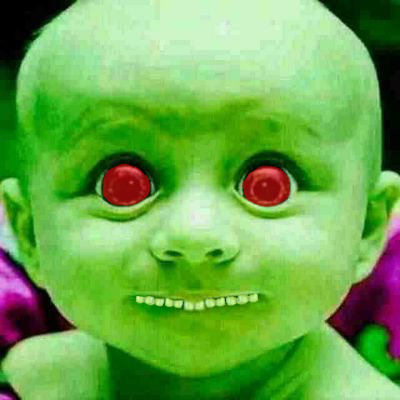
Debenham: A Qomal isn’t forever. They’re meant to help you through the grieving process for the loss of a child. It’s like a toddler, you see, except its skin has a greenish hue, its eyes are red and clouded, its ears are pointed, and it has rows of sharp teeth. But while it was alive, I saw none of this, because I was its mother and only viewed my Qomal through the eyes of love.
DS Oxley: And when the contract expires…?
Debenham: You mean when my grief was manageable? The Qomal grows weak, calcifies and dies.
DS Oxley: How did you know to do all this? Making the exchange, observing the terms of a contract?
Debenham: I didn’t. It was my kind gentleman who introduced this world to me.
DS Oxley: What is his name?
Debenham: That I will not tell you. I made him a promise and I intend to honor it.
DS Oxley: Are you two still together?
Debenham: No, we parted ways when Qomal died.
DS Oxley: Why?
Debenham: I was meant to cremate Qomal, place the ashes in an urn and bury it beneath a flower bed, but I couldn’t bring myself to burn something I loved, something that helped ease my pain and nurse me back to sanity. The gentleman said there would be consequences, and I have waited 23 years for them to arrive.
At this point in the interview, loud scratching noises can be heard on the recording, as well as the sound of footsteps and a door being opened, followed by the guttural snarls of an unspecified animal.
DS Oxley: Holy Mother of Jesus!
Debenham: My baby?
The recording concludes with the sounds of screaming amidst a great commotion.
The current whereabouts of Detective Sergeant Ellis Oxley and Imogen Debenham have yet to be determined.
Lolsy never believed in infatuation at first sight. To her, attraction had always been a mental process. Physical beauty was a temporary thing, a pretty wrapping that often disguised an ugly package. Then she met Marleton, a new hire at work, who, at first glance, awakened an inner poet she never knew existed.
To her, this man was that magical type of handsome that seeped into the marrow of her bones, that drew her into the depth of his eyes, which would have been beautiful in any shade, with the siren song of his gentle voice. When he spoke her name, her mask slipped, the one she wore to keep the world at bay, her heartbeat quickened, and she became lost in lurid fantasies of how she would please his body all over the conference room, on the floor, the chairs, on top off the table, all while her coworkers watched with envy.
She caught herself locking eyes with him constantly, where he would smile and patiently wait for her to initiate conversation, but her vapor-locked brain turned her mute, forcing her to turn away in embarrassment. At night, she pondered how she could have fallen head over heels for an absolute stranger who was eight years her junior? She had never been interested in younger men before and sincerely doubted they would have had anything in common, so she made it her business to avoid him, but the office was too small for that to work effectively, and all it took was for him to laugh at her weak attempts at humor to be sucked into fantasies about having him on the copier machine, in the break room, in the elevator, and in the parking lot, on top of the cars, again, so all her coworkers could bubble over with jealousy.
And she knew the sex would be spectacular because she was an Aries and he was a Sagittarius, and everyone knew that Aries was ruled by Mars, that red hot passion planet, and Sagittarius was ruled by Jupiter, the planet of philosophy and luck. Their signs tended to look at the world in the same way, and his Sagittarius liked to take risks under Jupiter’s indulgent influence, and her Mars was all about initiative, and taking aggressive action. So, why then was she stalling? If she simply took what belonged to her, she knew he would be ready and willing to go along for the ride.
And that was all it took. Lolsy made her mind up to pop the latches on her restraint, as she damned the torpedoes, and went full steam ahead. The following day at work, she marched up to Marleton and told, not asked, but told him that they were going out on a date, and as she suspected, he offered absolutely no resistance with anything she planned for their night together.
When they met at the restaurant, Marleton arrived in casual wear, while Lolsy dressed up sexier than sexy, because she wanted to make her intentions clear. You don’t bring a knife to a gunfight. This man was going to have to step up his game. She was going to burst onto the scene like a crossfire hurricane, and run him through his paces, and make him feel the way he made her feel from the very start.
All that changed the moment he greeted her and pulled out her chair at the table. Her bravado evaporated, making way for sweet happiness, as they talked and flirted their way through the meal. The chemistry between them was undeniable, and they effortlessly progressed from laughter to kisses, to sweet whispered exchanges, to an Uber ride back to his apartment.
The time for pretense had long passed, so they went straight from the front door to the bedroom. In his presence, in this place, all Lolsy’s foolish notions of being in control melted away. The nearness of Marleton, filled her nose with a scent that let her know instantly that he was her drug. His arms wrapped around her back and in one gentle pull, their lips touched and his tongue probed her mouth and she was intoxicated in an instant.
“Whatever you want, you can have,” Lolsy said, trying her damnedest to focus on getting the words out clearly through the heady trance he put her under. “There isn’t a thing I can do to stop you, and I don’t want to stop you.”
With a laugh, Marleton lifted Lolsy off her feet, carried her to the bed, and set her down gently onto the mattress. He stripped her expertly, gingerly, before disrobing himself, and climbing in the bed beside her. His fingers combed through the softness of her hair, before moving along her cheek, down to her neck, and every inch of skin he brushed, his lips blessed that area with a kiss that sent electricity through her body. He went down one side, and came up the other, and when they were face to face, they locked eyes. He silently asked for consent and she granted it gladly with a nod. Then he was all business, moving atop her, slotting their bodies together as if they were missing pieces of a puzzle that had finally become whole.
They engaged in amorous congress for hours that seemed like days that seemed like years. When all was finally said and done, a weak and breathless Lolsy smiled and said, “I knew it would be like this.”
“You did?”
Lolsy nodded, “Of course. You’re a Sagittarius.”
“Far more than that, I’m afraid,” Marleton chuckled. “I’m also an incubus.”
Off her confused expression, Marleton explained that he was a demon, of sorts, who engaged in sexual activity with women in order to prolong his life. If she understood, or objected, he could not be sure, for Lolsy was too feeble by this point to effectively communicate, but although a demon, he was not a monster. He made her as comfortable as he could manage, as he drained her of every iota of her life force.
Lavinia’s skin was the shade just above albinism and her straightened hair, dyed deep crimson, framed a beautiful face marked with matching black eyeliner and lipstick, and occasionally when she tilted her head he thought he spotted black gages that created flesh tunnels in her earlobes. Black was the obvious theme for her ensemble as she was done up in black Elizabethan style clothing. Despite the fact that he had zero interest in goths, the four words Eason thought best described his blind date were: Out. Of. His. League. But somehow, through an odd series of events and several disastrous dates, they had become a couple.
And there was love, perhaps not on her part but certainly on his and even though Eason was treated far below the level he deserved, he could not bear to quit the relationship for the simple reason that should Lavinia leave, he feared no one would knock on love’s door ever again. So, while the theater of his soul was only occupied by one disinterested audience member, it was far better than playing his one-man lonely hearts show to an empty house.
But was it truly a relationship? Had Lavinia considered the poor, besotted fool more than a mere friend with benefits? They did not know each other’s friends, let alone their families, and the pair always met in obscure places like cemeteries, a section of a public park where creepy dolls had been strung up among the trees, the sites of car accidents where victims’ families and friends left flowers and lit candles in memoriam, and abandoned subway stations and catacombs. Essentially places where they ran little risk of running into known people.
There were also no public displays of affection, but amorous congress could be had if an area possessed the proper ambiance, such as in a freshly dug grave or a deserted mental hospital. When no such place presented itself, Lavinia allowed Eason to rent a motel room, the shadier, the better. He put up with her eccentricities for the same reason as thousands of women and men remained in bizarre relationships, because the coitus exceeded his every expectation.
During a rare dialogue exchange, Lavinia admitted to suffering from anthropophobia, which was a fear of both interacting with and being around other people, and she was only able to be with Eason because she had not thought of him as a person. She also considered herself a presentarian, a word she invented to describe only living in the present moment because the past was irrelevant and she did not believe in the future. And in his heart of hearts, Eason knew that they would not grow old together.
On the final night they would ever be together, Eason rented a nice hotel room and ordered room service with champagne and candles because he wanted to show Lavinia what he thought of her. The problem was he didn’t really see her. He was an ambivert overthinker whose head remained planted firmly in romantic clouds, and he had a terrible habit of constructing fantasies about women based on the limited knowledge he gleaned from their social media photos. While she was an introvert who would rather read true crime books than deal with the real world, and that she possessed an abnormal love of silence.
Lavinia picked at the meal, sipped some champagne but spent most of the evening perched on the window sill, in her very own pocket dimension of eternity, watching pedestrians on the street below. Eason always prided himself on being the most patient man on the planet but he came to realize that next to her, his patience was nothing, a pebble in a rock slide.
She was beautiful, silhouetted against the moonlight, and that beauty weakened Eason’s patience and made him annoyed at being ignored and when he was unable to bear it any longer, he broke the silence.
“Do you know the irony of being a mime?” he asked, and when no answer came, he continued. “Dying and being trapped in a box. Get it? Mime? Trapped in a box?”
It was a stupid joke, an icebreaker, and off her expression, Eason was immediately regretful of having disturbed her solitude.
Lavinia turned and held her hand up, palm facing him, exposing a tattoo he had not seen before. It appeared to be a baby’s skull that was divided by a dagger-like crucifix that was intertwined with a long-stemmed thorny rose.
“I remember,” she whispered low and soft but somehow her voice nearly shattered Eason’s eardrums. “When the cold of peace and the heat of evil were no different from each other. That was before the edges of earth were rounded by popular belief. I remember when the clouds would sacrifice its life to feed the hungry earth, slashing its wrists so this planet could drink its fill and slake its voracious thirst.”
Eason was about to speak, about to question the meaning of what she said but Lavinia crossed the room, pressed her black nailed finger to his lips, and eased him down onto the bed. He was suddenly dumbstruck by the power she had over him, this silent power. Even her body, which he mistakenly thought he knew so well, radiated a power that made him weak.
Hours passed, and Eason drifted in and out of sleep, still mesmerized by the very silent sight of her on top of him. He dozed off again, and when he came to, she was still astride him, but her normally long, cool stare was somehow different now and it caused him to tremble.
The corners of her mouth turned down in a slight frown. “You are a fool, Eason Gadsen, for making me see you as a person. Your affection disturbs me. It slides into my silence, shredding it and sending it spiraling down on the heads of those who pass under this window. They do not know or sense it now, but it will affect their lives significantly. They have taken pieces of a life that does not belong to them. That they do not deserve.”
“I don’t understand,” Eason said in a voice so timid that it might have belonged to a child.
“They are taking my silence with them, taking me. And I am not to be shared.”
“I still don’t understand.”
“Now, I must go to them, to each one and see the sights that assault their eyes, smell scents that nauseate them, touch the textures of their worlds, be compressed into the microcosms that are their lives. I was not meant for that. And if I cannot retrieve the pieces they have stolen, these strangers will kill me without ever knowing me. And it will be your fault.”
“None of this is making any sense, but tell me how I can help you! I’ll do anything you ask!”
Lavinia cupped Eason’s face in her hands and said, “I need you to promise me something.”
“Anything.”
“Do not hate me.”
“Never.”
“I need your help to undo what you have done. Will you aid me? Will you give me what I need?”
“Of course.”
“You have to promise.”
“I promise.”
“No, you must speak the words of the promise.”
“Okay,” Eason said, confused. “I promise to aid you, to give you what you need.”
“You are a better man than I deserve, Eason Gadsen, and I will never forget you,” Lavinia said as she pressed her lips to Eason’s mouth and inhaled sharply.
As per the promise, she breathed in what she needed: the elasticity of his skin, the strength from his muscles, the vision from his eyes, and every last drop of silence that he possessed. But in an act of kindness that proved that she too loved him, she had not taken everything. She left him his life, and perhaps, if she was able to reclaim what was hers, she would return to restore him for he had given her the ability to believe not only in love but the future as well.
I have become narcoleptic in order to serve she who haunts my dreams. I know that I should stay awake and stay away from this mysterious woman who is hellbent on stealing my soul, but although her presence strips away my courage, I am enraptured at the sight of her beauty and addicted to the danger that she wears like an aromatic scent.
My nameless dream lover is a paradox, duskily exotic yet of no recognizable ethnic descent and so pale as to make alabaster appear tanned. Her long flowing hair is a tangle of locks, thick, wild and constantly billowing like obsidian curtains in the wind, streaked with grey at her pronounced widows peak and temples. Her eyebrows, dense and dark, contrast colorless retinas that draw my eyes down along an aquiline nose to her pink rosebud lips that drip crimson onto the hi-necked lace top that seems to rise and crash against her shoulders and breasts.
My knees buckle and I kneel at her approach, weak, naked and shivering as she towers over me. Her narrow hands with their thin, scalpel-like fingers, hover inches from my exposed throat, twitching in anticipation. She plans to kill me, and I should be afraid, but all I can think about, all I care about, is if I will feel her touch, taste her lips and fulfill my desire one last time before she takes from me a life that I would give to her freely.
I always awaken the same way, unfulfilled, miserably alone, and alive, much to my dismay.
Today’s entry is a shortie because I’m busy wrestling with a wordy bastard of a story that refuses to be tamed but I’m in a particularly stubborn mood, so challenge met!
That said, I offer you my three simple facts of writing:
If you do not write the story you truly want to write, it will never be read. You can’t have the unwashed masses confirm your greatness when you haven’t given them anything to be in awe of.
If you don’t submit your work—–for review, publication, employment, or whatever—–the answer will always be no. The cruelest rejection you can ever receive is from yourself, the toughest critic you’ll ever know. If you never show your work, you never give an editor, publisher, prodco, or whatever, the chance to say yes (exercise caution, of course, and protect your writing before letting it fly out into the world).
If you don’t write, you’ll never be a writer. Plain and simple. Also, many, many, many years from now, when you’re lying on your deathbed, do you really want a box of regret—–filled with all the unwritten stories of your life—–hanging over your head like the sword of Damocles? I think not.
My mother warned me to guard the things I held precious by keeping them hidden inside me. The only thing I held precious was her and I found it impossible to place her inside my body. I was too young to understand she was talking about love. Too young to save the best parts of my mother’s love in my heart. Too consumed by the hate caused by her leaving me on my own. Too young to accept that death comes to us all.
It was hard to hold onto her love. Hard because I watched her body decay and rot away to nothingness. I watched to see the precious things she kept inside her and where she managed to hide them so I could do the same. I never found them. I watched as I picked vermin from her flesh and fought away carrion from her decaying form, until the day she was unrecognizable to me.
In particular, I watched her heart. Who knew what was inside there but I knew it was fragile because my mother spoke many times about how it had been broken. She said, “Sometimes you have to break a heart to find out how strong it really is.”
But when her heart became visible, I couldn’t see any cracks. I watched it as it bruised like an apple and disintegrated away. Nothing inside it but emptiness. I was hoping to see love—even though I had no idea what love looked like—or at least be privy to some secret that would explain the world to me. I found none of those things.
Her heart was a chamber for maggots. That was what my mother kept precious. Little disgusting creatures that fed off her body. They were everywhere. Stripping my mother of her beauty.
It grew harder to remember her face. I tried to recall the last time I saw her eyes or her smile but that memory was too distant in the past, lost in the forest of forgetfulness.
Occasionally I dreamt of my mother, standing in a room somewhere I had never been but yet felt so familiar to me, her face was a storm. Clouds roiled where features should have been. When she spoke, her voice was a swarm of black bees the drained the life of anything it touched. The bees blotted out the room and ate a pet dog I only had in dreams and never in real life, before coming for me.
I would run from the house and through the trees, down a dirt path that led to a black pond of brackish water. The water called to me and I was torn for the water was frightening, but so too were the bees who devoured trees on their way to eat me.
No real choice at all, I dove into the pond and discovered the water was actually tar and I was being pulled in, just as other creatures foolish enough to make the same mistake, the same fear-based choice as I had.
My nose and mouth filled with hot thick liquid, bitter molasses that scorched my insides, and melted me like butter on the griddle.
I woke alone in the dark, choking for air, my chest weighted with the heaviness of fear. My breathing was a thick, wet noise like someone sloshing through mud — or tar! — and I no longer felt safe in this world, so I did the only thing I could think to do.
I crawled inside the remains of my mother’s body and wrapped her tight around me so that I could be the thing she kept precious.
Sally forth and be keeping things preciousingly writeful.
I burned my soul to ash but the pain paled in comparison to the terror that struck my heart like a match, anticipating her arrival and the tirade she would carry in tow. An unwarranted fear, as she was calm when she saw what I had done. Calm and nurturing. Soothing my pain with herbs and aromas, and each early morning during the hour of the wolf, she laid an ear on my back and listened as my soul mended itself.
She never spoke the words of disappointment aloud but it registered in her eyes. Although residing within my body, this wounded thing, this unwanted soul, did not belong to me. She had laid claim to it many years past, and in my despondency, I had taken liberties with her property and attempted to destroy it. Again.
ii.
The first time, I threw my soul into a sinkhole and allowed the ground to swallow it whole. I made her acquaintance when she plucked it from the soil like a tattered tuber. “I saw what you did,” she said. “And since you would so recklessly toss this precious thing away, it is no longer yours, but mine, agreed?” I nodded and she handed my soul back to me for safekeeping.
I honored our pact for a few years, caring for it within my limited capacity, but during a particularly nasty bout of depression, I tied heavy stones to my soul and pushed it off the sea wall. For a second time, she appeared, fishing my soul from the waves, and scolded me, “You are charged with protecting this thing that is mine, do you understand?” Again, I nodded. Again, I lied.
iii.
“Why do you want this worthless soul when it has been crushed by the earth? Why do you want it when it has been drowned in the sea? Why do you want it when it has been set aflame like so much tinder?” I searched long and hard yet found no answer in her silence.
iv.
During the day, when she thought me preoccupied, she secreted herself in the shadows and slept. One day I followed her into the darkness and watched her body twitch from dreaming and listened as she muttered,
One more soul, once buried deep.
One more soul, in ocean steeped.
One more soul, by fire burned.
One more soul, of air returned.
v.
Under her care, my soul grew healthier and it frightened me. I was pitilessly plagued and badgered by the phrase, One more soul, of air returned, that repeated in my mind’s ear until it turned dogged and cacophonous. But she was unaware of my inner torment, in fact, she was in an exceptionally good mood today, her voice almost a song, “I know you don’t see it, but you are a gift, you are. You have no idea just how special.”
vi.
Today was the day. I felt it in my marrow. Something was destined to happen, something I most likely would not survive. I should have embraced this eerie premonition, for it was no secret that I did not want to continue in this manner, broken, detached, and alone. But the choice of how and when I departed this wretched life was mine to make and mine alone. So, I stalled by distracting her with trivialities. “May I have more broth? Have you seen my shoes? No, not that pair, the other ones? Can we go for a walk?” If she knew my plan, her expression never showed sign. No request was too large or small on this day. She granted them all.
vii.
We strolled along the pathway in the park that led to the duck pond, a place we visited often during my convalescence. Picked, naturally, as not to arouse suspicion as I searched for the proper diversion in order to make my escape. But I was so wrapped in my own thoughts, I failed to notice that she was walking slower than usual today. “Can we rest a moment?” she asked as we neared the benches. “I am a little short of breath.”
Her breathing became a labored and raspy thing before it hitched and became lodged in her throat. When her face went dusky blue and she slid off the park bench, I panicked. The opportunity had presented itself and there I stood like an idiot, frozen. Entangled in the decision of whose life to save, or more accurately, whose death I could live with.
There was no real choice.
viii.
Her breathing was a trembling, liquid sound as I pressed my mouth to hers and exhaled, but instead of me breathing air into her body, I felt her sucking air from my lungs, and not just air…
I tried desperately to pull away but her thin, vise-like hands clamped down on the nape of my neck and held me firm in a kiss that was collapsing me. My hold on life became dim and futile, but before I slipped away into emptiness, I noticed the oddest thing: her belly began to swell.
Every fiber of my actuality was drawn into her, and my soul, the object I had forever been so reckless with, was systematically being stripped of concern, of negativity, of identity. I fell further and further into a darkness that pressed on me from all sides. So tight, so constricted. I was still unable to breathe but the sensation was somehow different now.
At the very moment when it seemed the darkness was about to claim me for eternity, there came a burst of light so bright as to cut my eyes. Thankfully something soon blotted out the light – a face, slowly coming into focus but I knew her before I saw her. From the moment I heard her soft cooing, “You are a gift, you are. You have no idea just how special.”
Mother.
About Of Air Returned: Delusion can be a scary thing, but it can also be wonderful at the same time. This piece was written in the early part of 1988, during a period when I swore I could do no wrong—it’s fine, you can laugh, I’ll just cringe quietly in the corner. I was heavily into both science and speculative fiction and had recently rediscovered the works of The Brothers Grimm, so I was determined to create my own collection of fairy tales for the—then—modern age.
Applying fairy tale rules, I could introduce the fantastic or the bizarre into any story with little or no explanation, and have all the characters in the tales accept everything as normal. Wishes as deus ex machina. Love as the ultimate cure-all. All the good stuff without all the fuss. Genius, right?
It would take the better part of six months for me to discover I wasn’t the groundbreaker I imagined myself to be. On the plus side, I followed my then idol, Harlan Ellison’s advice and was able to churn one of these puppies out a day.
Of course, most of them are unreadable. This one teeters on the edge. I kinda like it and it kinda embarrasses the hell out of me, but it was one of the three Rhyan Realm tales–yeah, I created my own sub-genre name for them, what of it?–that actually saw print… after 10-some-odd rejections.
You’ll laugh, you’ll cry, you’ll kiss a few minutes goodbye.
They say, “Everyone has at least one good book in them” and while I think book might be a bit of a stretch, I wholeheartedly believe that everyone has at least one good story in them. The natural length—the pure story without padding or the encumbrance of unnecessary detail or description—of which can range from flash fiction (under 1,000 words) to short story (under 7,500 words) to novelette (7,500 to 17,500 words) to novella (17,500 to 40,000 words) to a proper novel (over 40,000 words).
No matter how non-creative you believe yourself to be, your brain is nonetheless gifted with the special ability of imagination, and regardless of how infrequently you put it to use, you still are able to dream up intricate realities, despite your age or IQ level. Haven’t we all, at one time or another, projected a new reality in our minds in the form of daydreaming our desires? And no two daydreams are exactly the same since we each possess unique preferences, points of view, wants and needs.
Yet, even armed with the knowledge of this gift, we, as writers, tend to suffer because we either do not fully believe in or properly comprehend our true nature as creators. Sure, we continue to imagine “what if” scenarios but sometimes we find it difficult to allow those thoughts to flow through us—the conduit—and blossom into the stories they need to become.
The following list isn’t a step-by-step “how to” guide, because no one can tell you precisely what you need to do to access your inner story. You are a totally unique entity, after all. View it more as a broom to help you sweep away the clutter piled up on the footpath to your personal tale.
1. Examine your self-image.
The first battle you must face is the one against your self-image. You are more than pen and paper, more than a keyboard, more than “just another writer” or more than whatever obstacle your past or conditioning has placed in your path. The main reason why most writers fail to connect with their inner story is because of their limited knowledge of who they truly are.
As flawed human beings we are so engrossed with the perceptions of who we are that we fail to see that we are usually the source for the reality we have created for ourselves. Sure, the walls of the prison may have been constructed by events of the past, by family, peers or environment, but we continue to fortify the walls and never once open the lock–the key is always in our possession–push the cell door to step out into freedom.
This in no way suggests you have to deconstruct your self-image–unless that’s your goal, then by all means, have at it. You’re merely peeling away the layers of the identity you’ve created for yourself for societal purposes and exposing your core self, the real you. Don’t worry, it’s only for the exercise of writing. You can reapply your layers once you’re done.
Your secret identity is safe with me.
2. Take note of your gifts.
Different from writer traits–talent, the hunger for knowledge, and diligence–a writer’s gift can range from an eye for detail, to a flair for description, to a talent for dialogue. Or, you might not even be aware of your talents, so I want you to grab a piece of paper and something to write with and in 60 seconds jot down a list of what you’re good at. Don’t think about it. Simply jot down, off the top of your head, the things that come easiest to you when you write.
All done? Now take a long, hard, honest look at your list. The things you don’t concentrate on, those bits and bobs that just sort of come naturally to you when you write… those are your gifts. You’d be surprised to discover how many writers aren’t aware of their innate skills because they aren’t utilized in their everyday work lives and wind up being placed in the “Hobby” category.
3. Exploit your strengths.
Since you’re bothering to read this, my guess is that you’ve written a couple of pieces already and maybe even finished a few of them. Now, if you’re an avid reader, you will have no doubt compared your piece to your author idols, and have developed the brutally honest ability to cast a critical eye upon your own work and spot areas in your writing that aren’t as strong as others. And since the writing isn’t perfect, you are therefore a horrible writer who should no longer legally be allowed to string a sentence together in an email, let alone write a story.
Maybe it’s true. Maybe you really are a bad writer–hey, they exist–but that’s not my call to make. I don’t know you, so I’ll assume you at least have some fundamental writing potential. However, no matter how good you are, there is one basic truth you must learn to face: Your writing will never be perfect. Why? As stated in a previous post: Because wunderkind wasn’t conveniently inserted into your backstory, and perfection isn’t DNA-encodable at this point in time. Still, you should always strive to get your writing as close to perfection as you can manage, and accept the fact that: It. Will. Not. Be. Perfect.
Maybe you can’t write a convincing love scene. Maybe you struggle with organic dialogue. Maybe you get stumped when attempting to create a character’s internal arc. Maybe you’re rubbish at tying up all your story’s loose threads. Console yourself in the knowledge that you wouldn’t be the first. A few of these “weaknesses” and more are true for authors of published works, some of which even make bestseller lists.
And because, as a writer, you are always a student and ever pushing yourself and learning new ways to hone your craft, you will eventually learn to strengthen your weaknesses. In the meantime, put all of the aspects of your writing into perspective, make a deal to stop beating yourself up so much, and focus on your strengths. They’re your “A” game.
4. Gird your loins against the enemy.
In addition to dealing with possible self-image barriers, there are other obstacles that can block your path: Fear, intimidation, procrastination, and self-doubt. The problem with these buggers is that they often take the form of lies you tell yourself. And they happen to be effective as hell because they insulate your brain from facing unpleasantries, in this case the difficult portions of the writing process that you need to slog through in order to strike gold.
The biggest lie you can tell yourself as a writer is, “I’ll do it later.” It’s a dishonest postponement because later never comes. If you don’t confront the enemies that keep you from your writing and tamp the bastards down long enough to complete your piece, then you don’t have what it takes to be a writer. Staring into the gaping maw of the harsh realities that terrify you is one of the most important parts of the process.
Slap a “H” on your chest and “Handle” it.
5. Identify your genre.
At this point, you arch an eyebrow and ask, “Rhyan, how can anyone not know the genre of their story?”
The answer lies within the fact that writers are creators. Some are resistant to the notion of placing labels or classifications on their work. For others, classification difficulties arise when their piece contains elements from several genres as some writers disagree with the act of limiting creative freedom in order to adhere to strictly delineated genre segregation.
For your audience, knowing the genre sets not only the stage, but their expectations as well, and puts them in the proper mindset to both understand and accept the rules of your story.
At this stage in the process, the importance of identifying your genre has to do with story mechanics. Certain elements step to the forefront and operate differently depending on genre, so you should be aware of the rules of the category–even if you decide to break them because of the maverick you are–as you’re arranging your idea into the proper story structure (see: Simple Anatomy of a Plot Outline).
6. Plant your feet firmly in the soil of your story.
This is your story. First and foremost, it must feel natural to you. No matter how fantastical the environment, how outrageous the yarn you’re spinning, if you don’t feel confident in the pocket dimension you’ve created, there’s little chance of you selling the story as being credible. Your job is to take utter nonsense and portray it with as much authenticity as possible.
7. Go with your gut.
Some people seek permission to write. Thinly disguised under the “Oh, it’s just an idea I’m toying with” veil, they will ask family and friends if they should write about such-and-such or if this-that-or-the-other-thing would make an interesting topic.
I urge you not to be this person.
I’m reminded of a quote by Jerome Lawrence, “The whole point of writing is to have something in your gut or in your soul or in your mind that’s burning to be written.” So, if you can actually feel inspiration or instinct churning like hot snakes in your gut to write, forget the opinions of those around you, disregard the idea of “should” and just go for it.
Never live with regret, if you can help it.
8. Do it now. No better time than the present.
To snatch a line from Pixar’s Ratatouille “Why not here? Why not now?”
By now you know you must show up for writing everyday, and there’s no time like the present. So, why not find yourself a quiet spot, practice listening, and trust what you hear. That’s your inner story talking to you, and it not only has to be unlocked but it must be accessible at will.
I know it’s become hackneyed to instruct you to follow your bliss, but if you deny your instincts to do what you truly want to do, then the problem becomes one of trust. Do you trust the voice within you or do you trust reality as you are made to perceive it? Or, are you willing to trust the voice and write what you hear, no matter how crazy it sounds?
You have to learn to be compassionate with yourself, as well as having compassion for yourself. Especially during the vulnerable times when you’re blocked and can’t bring yourself to write because you’re scared you’ll be rejected. Take some small comfort in knowing you’re not alone in this.
Since all art must be criticized, every single published author had to overcome fear of rejection. What you need to keep in mind is that your audience–human, just the same as you–can only relate to your writing from their own experience, and sometimes their feedback will be negative. That doesn’t necessarily indicate problems in your writing, and may simply reflect a varying viewpoint.
But fear of rejection has no business rearing its ugly head right now as it’s time for you to honor your inner story by listening to the words it shares with you and writing about it. Trust me, if you’re willing to enjoy the process, you can write damn near anything.
So, why not sally forth and be inner story writeful?







 MADD FICTIONAL