Matters of the Heart

Sometimes it’s difficult to return, even if it’s to something you love, which for me is writing.

The reason? Well, while the rest of the world was focusing on the pandemic over the past two-plus years, I was dealing with the fact that my heart wouldn’t act right. I’m not going to go into too much detail but if you’re interested, you can read about it here: A Funny Thing Happened… and here: Widowmaker.

Almost a year to the day of my last stent implantation, my cardiologist sent me for a nuclear stress test (because after a few months of following the doctor’s orders and feeling fine, the chest pressure returned whenever I exerted myself) and I failed the test so miserably that I was rushed to the hospital for another catheterization, but the surgeon discovered the stents had failed and felt the best option was bypass surgery.

That was in the middle of June and recovery from open heart surgery is a creature that drags its feet at the slowest pace imaginable. Aside from the physical post-operation incision, chest muscle, rib cage, lungs, and heart pains, there are mental and emotional side effects as well, chief among them being the loss of interest in favorite activities, hence the reason why I haven’t been writing.

I intend to change that.

New story next week.

Maybe.

‘Til next now, be at peace, take care of your heart, be kind to others, and enjoy your life!

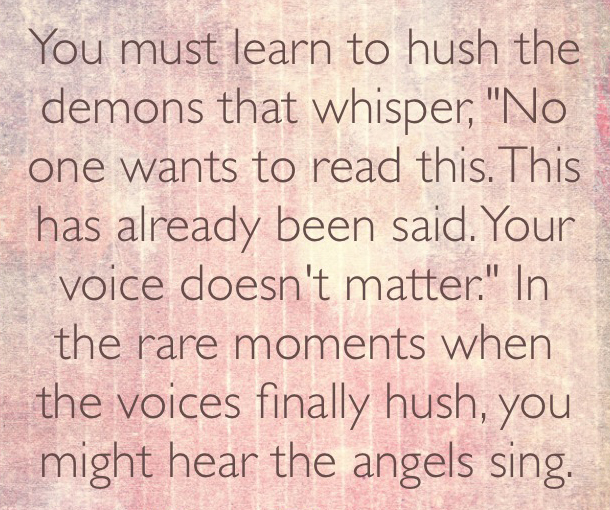
Fending Off Them Pesky Writing Demons

photo-11

There will be days, despite all the brilliant advice you’ve collected up to this point and your very best intentions, when you will not be able to write a single word. I just need you to realize:

You. Are. Not. Alone. In. This.

Every writer falls victim to these pesky writing demons at some point, but what marks your ability as a serious writer is how you rise to the challenge and get your writing back on track, secure in the knowledge that you have the power to keep the negative mental beasties at bay. As always, I offer a few tips for you to stuff inside your writing rucksack for a rainy day:

  1. When you pluck an idea from the ether, jot it down immediately. Ideas arrive without warning and evaporate from your mind like a dream upon waking. When you’re hit with an idea, you’re always sure you’ll remember it. Foolish mortal. How many story ideas have you lost relying solely on your overtaxed memory? When an idea hits, take a moment to put it in writing—we tend to remember things we physically write down—or carry around a digital voice recorder or use that recording app on your smartphone that you forgot you have.
  2. Don’t start on a blank page. La página en blanco. La page vierge. Die leere seite. La malplenan paĝon. Den tomma sidan. Built entirely of writers’ blocks, the blank page is the fire in which writers burn. The abyss that stares back and makes us overthink committing words to the page. The way to combat it? Don’t start with a blank page. Put something at the top of the page. Anything. A random sentence, the story’s mission statement, or ask a question. Better yet, have a character ask a question and then set out to answer it. Whatever you put there isn’t set in stone and can be altered or eliminated entirely once you work out what you truly want to write.
  3. You don’t always have to begin at the beginning. Sometimes you’re hit with a juicy dialogue exchange, a powerful scene, or an intense interaction…but it belongs somewhere in the middle of a story that you haven’t quite sussed out yet. That’s all right. Take what you have and get it down on paper without worrying about the order in which scenes are written. Once you have that, you can begin fleshing out other connecting scenes and when your basic draft is done, you can go back, reshuffle the order and polish it.
  4. Stop waiting for the perfect word. When you sit down to write, write. Flipping through your mental thesaurus is not part of the creative process of capturing your ethereal ideas and solidifying them on the page. Keep writing. Don’t let anything take you away from the act of committing words to the page. Write first, and show your brilliance later.
  5. Cheat on your favorite writing spot. Yes, yes, cheating is a bad thing and I would never condone it anywhere else, for any other reason (honest), but sometimes you can become so comfortable writing in one particular place that it ends up being the only place you can get your writing done. By venturing out and writing in new locations—the park, public library, coffee shop, public atriums—you’re training yourself to put words on paper wherever you are. The ideal location doesn’t make you a writer, your ability to write no matter where you are situated does.
  6. Know when to hold ’em, know when to fold ’em. There’s only so much revision, re-editing, and perfecting a story can take. There comes a time in each story’s life when you’re going to have to accept that your baby is all grown up now and it’s about as perfect as you can make it. Also, continuously reworking a story is a little mind game you play with yourself. It’s an excuse for not starting on the next story, the one that really needs your attention. Stop holding yourself back. On to the next one.
  7. Develop agitation towards procrastination. It’s not your friend, really, it’s not. Despite how clever you think you’re being by justifying your reasons for not writing, you’re only hurting yourself because writing doesn’t get easier the more you fob it off. It simply means you have less time to do it. Writing isn’t the enemy here, time is. Make time to be heard.

There are many other writing demons and sometime in the future I’ll address the more serious ones—insecurity, self-doubt, jealousy—but I will leave you with two parting thoughts: 1) Part of maturing as a writer is coming to the realization that your writing will never be the perfect little darling in the real world as it is in your mind, and 2) Writing something that’s acceptable (but not quite perfect) is a damn sight better than not writing anything at all.

Sally forth and be demon fend offingly writeful.

Joey Mac and the Pearlescent Unicorn Uniform (Part 1)

image

His job made Joseph MacDonal II, Joey Mac to his pals, the enemy of the world and a target for assassination. He was one of the few people on the planet trained and licensed to butcher unicorns and prepare their meat for consumption. This also put him at odds with PAUTU (People Against the Unethical Treatment of Unicorns) who accused him of unicorn genocide.

The thing that stuck in everyone’s craw, more than selling unicorn steaks, chops, and burgers, was the butchery aspect, though that was the bit they all had gotten wrong. Yes, Joey was technically a unicorn butcher, but the proper definition was:

/ˈbo͝oCHər/ – NOUN
A person whose trade is cutting up and selling meat in a shop.

which he did. What most folks failed to understand, though it was a matter of public record, was that his license hadn’t included or even allowed the hunting or slaughtering of unicorns or any other animals. In fact, Joey never killed a thing in his life. Insects that crossed his path were the subject of a strict catch, relocate and release system.

At this moment, Joey sat across from a field news reporter undergoing makeup in preparation for the live broadcast. He found her cute in a cable news presenter sort of way, and probably would have been more attracted to her if she hadn’t had that I’ll-make-my-bones-off-this-story hungry look in her eyes.

She ignored him completely, even brushing off his initial “Hello” until the cameraman counted her down. When the station anchor threw to her, the field reporter beamed a smile so unnaturally white, that it would have stood out in a blizzard.

“Thank you, Sylvia. I’m here with noted unicorn slaughterer, Joseph MacDonal,” the field reporter said, finally locking her predatory eyes on him.

“Actually, I’m a unicorn butcher…”

“Same difference, isn’t it?”

“Actually, there’s a big dif–‘

“What made you decide to embark on this horrible profession?” she interrupted.

***

The economy had been in the crapper since before God talked to Moses and Joey hadn’t worked in forever. And even though he was one of the fortunate ones who managed to do what analysts suggested and set aside six months’ worth of salary in a high yield account before he was made redundant at the meatpacking plant, now going on his tenth year, all that money was little more than a distant memory.

A Christian in name more than practice, it had been years since the soles of his shoes touched the floor of a church and that time was his best friend’s wedding, a wife twice removed. To say Joey was out of practice with the proper act of prayer would have been an understatement. His first attempt came off as more of a bitch session, with him blaming his parents for his rotten upbringing and lambasting society for its prejudice of gingers, which, he reckoned, was the chief reason for his being kept down by the man. Surprisingly, he saw no results.

His second attempt at prayer was akin to a letter to Santa, in which he listed all the positive things he’d ever done in life and expected a little compensation for his good behavior. Again, results were not forthcoming.

Third time was the charm, however, when he realized that he should have admitted his sin, expressed thanks for the things he had, and humbly requested the one thing he needed most: a job.

He put no expectation on the prayer and went about his normal daily existence, when, a week later, he received a phone call. Seemed that a friend of a friend knew a guy who knew a guy who had a roommate who was related to a woman who owned her own business was looking for someone in his line of work.

Joey arrived at the interview, résumé in hand, and launched into his well-rehearsed spiel when the businesswoman waived him off and ushered him into a small kitchen area.

“Show me what you can do,” she gestured at a section of the animal carcass, a shank, by the look of it, that rested atop a butcher block countertop.

Joey inspected the meat before touching a utensil. Not beef, pork, nor lamb, the texture was something he had never encountered before. A grain-like beef, yet soft to the touch like flan, and it shimmered without a light source as if it were bioluminescent.  “What is this?” he asked.

“Are you interested in the job or not? I don’t have all day,” she drummed her fingers on her crossed arms.

Joey sighed, selected a knife from the butcher block and approached the slab of meat, much in the same manner a sculptor would a block of marble, envisioning the cuts before blade touched flesh. With no idea what type of animal he was dealing with, there was no way of telling how this woman expected it to be prepared, so he simply followed his instincts and let the meat talk to him. And in a way, it did.

Every time the stainless steel edge portioned the strange meat, Joey thought he heard a high-pitched tone, like the sound of a moistened finger running along the rim of a crystal goblet. A sound that broke his heart. But in the aftermath, when the tone was just about to become inaudible, he heard a voice inside his head. It said two words:

forgive you

and he felt a permission was granted. This had not relieved the wave of guilt that flooded over him but it gave him the desire to do something with his own life worthy of this unknown animal’s sacrifice.

When he was done, the businesswoman nodded her approval, “Every bit the professional you claimed to be.” And it was a professional job. Every cut was perfect, none too generous, nor too small, and there were absolutely no scraps. He utilized every last bit of the meat.

“I’m curious, what type of meat is this?”

“Unicorn,” she said very matter of factly.

“Uni-excuse me?”

“You heard me.”

“I don’t get the gag,” Joey inwardly chastised himself on his tone. If his dumb mouth cost him the job, he’d…

“I’m quite serious,” the woman took him by the upper arm in a grip tighter than he was comfortable with and led him through a maze of stairwells and corridors, down, down, so far down beneath street level that he expected to see passage markers scratched into the walls by Arne Saknussemm.

Their destination was a room designed to look like a field, complete with grass, trees, and rocks. Had he been blindfolded and dropped here, Joey would have sworn he was outside. The room was so vast, he couldn’t see the far wall. The only telltale sign this was, in fact, an indoor facility were the track lights that provided sunlight, positioned incredibly high overhead, but even they were mostly obscured by the clouds of the room’s self-contained weather system. But as fascinating as all this was, by far the most mindblowing thing were the unicorns grazing in the field.

“They’re real?” Joey asked.

The woman couldn’t suppress her chuckle, “Our organization, as advanced as it is, isn’t able to manufacture live unicorns.”

“But how is this possible?” Joey took a cautious step into the room and felt the spongy grass beneath his shoe. He moved slowly as not to spook a unicorn no more than ten feet away. The unicorn paid him no mind.

“Some trapper with an overabundance of dumb luck caught the last pair in existence by accident. Fortunately for him, and us, they were a stallion and mare. We made him a very wealthy man in order to breed them in captivity.”

“For food?” there went his tone again, but this time he didn’t care.

The woman shrugged. “There’s nothing else we can do with them. You can’t ride them. Young, old, virginal, virtuous… it doesn’t matter. They simply won’t allow it. Utilize the horn for its magical properties? It’s only magical for the unicorn, there’s no transference of power. Grinding down the horn and ingesting the powder for immortality? Turns out the human body is unable to digest the powder.”

“Then why not let them go?”

“Not until we recoup our investment. And we can’t risk one of our competitors getting hold of them and creating a revenue source we haven’t managed to think up ourselves… yet.”

“This is going to sound strange,” Joey said. “But I don’t know if I can do this.”

Not The End…

Climbing The Freytag Pyramid (or getting on top of dramatic structure)

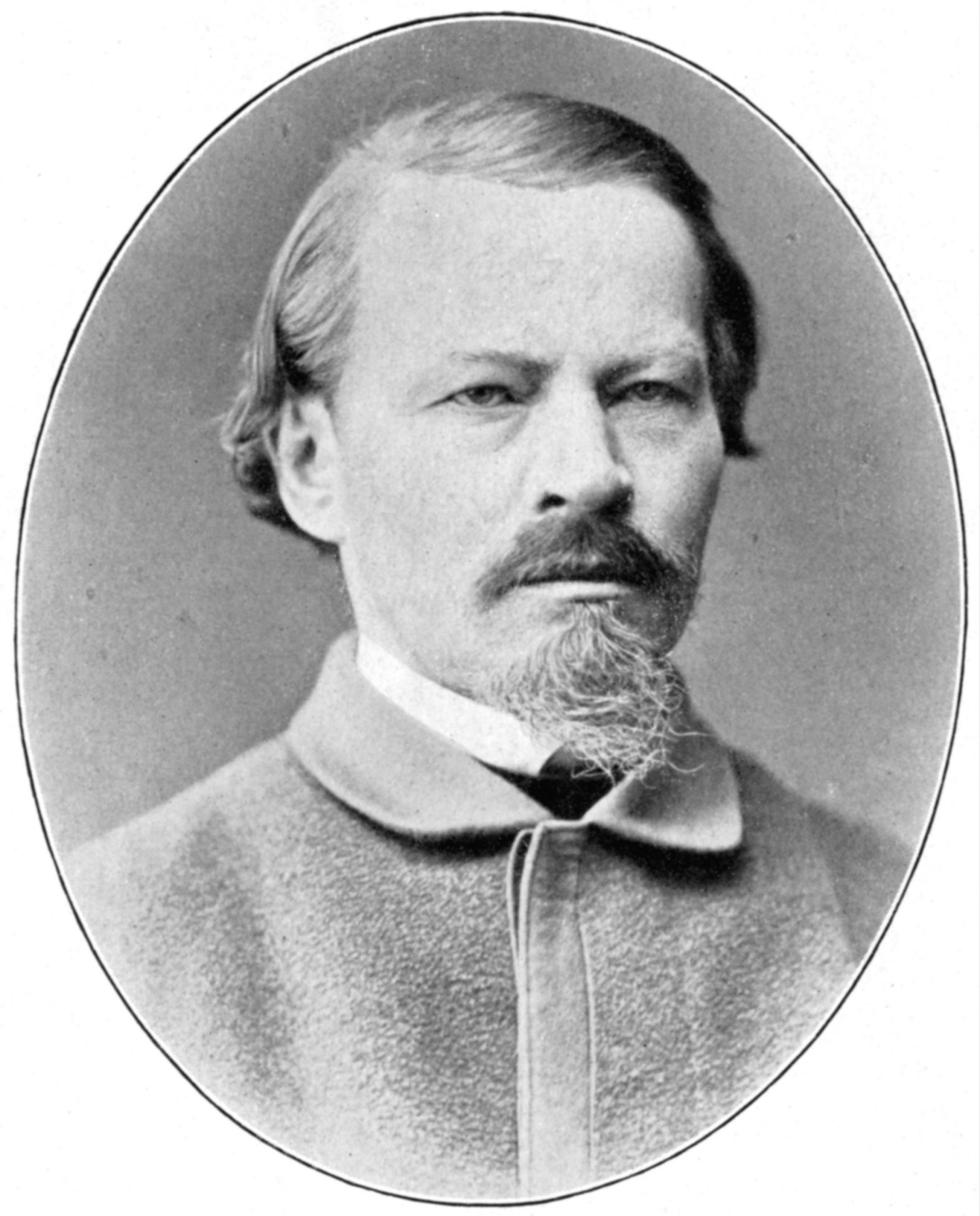
ImageScholars have been analyzing the structure of drama for nearly as long as it’s been written or performed. One of the more notable studies belongs to nineteenth-century German playwright and novelist, Gustav Freytag and his “Die Technik des Dramas” (Technique of the Drama).

Image

He didn’t originate the concept, mind you, Aristotle introduced the idea of the protasis, epitasis, and catastrophe—beginning, middle, and ending—three-act plot structure, which was later replaced with drama critic Horace’s five-act structure.

But creators are never satisfied with the status quo, so when playwrights began toying around with three and four-act plays, Freytag wrote a definitive structure study—referred to as Freytag Pyramid—that explained the necessity of dividing a standard drama into the following five acts:

Image

Stage 1: Exposition—as discussed in an earlier post—introduces the setting of the story, the characters, their situation, atmosphere, theme, and the circumstances of the conflict. Traditionally, exposition occurs during the opening scenes of a story, and when expertly executed background information is only gradually revealed through dialogue between major and minor characters.

Stage 2: Rising action—sometimes called complication and development—begins with the point of attack that sets a chain of actions in motion by either initiating or accelerating conflict. Difficulties arise, which intensifies the conflict while narrowing the possible outcomes at the same time. Complications usually come in the form of the discovery of new information, the unexpected opposition to a plan, the necessity of making a choice, characters acting out of ignorance or from outside sources such as war or natural disasters.

In this stage, the related series of incidents always build toward the point of greatest interest.

Stage 3: Climax—is the turning point, where the protagonist’s journey is changed, for the better or the worse. In comedies, the protagonist’s luck changes from bad to good, due to their drawing on hidden inner strengths. Drama is the other side of the coin, where things take a turn for the worse and reveal the protagonist’s hidden weaknesses.

Stage 4: Falling action—during this stage, the conflict unravels and the protagonist either wins or loses against the antagonist. This is also where a moment of final suspense might be found, in which the final outcome of the conflict is in doubt.

Stage 5: Dénouement—also known as resolution, or catastrophe— in drama, brings the events from the end of the falling action stage to the actual closing scene. Conflicts are resolved in a manner that either creates normality and a sense of catharsis for the characters, or release of tension and anxiety for the audience. In comedy, the protagonist is always better off than they were at the beginning of the story. And in tragedy, the protagonist is worse off in the end—hence the alternate title for this stage, catastrophe.

As I’m sure you’re well aware, Freytag’s analysis wasn’t meant for modern drama. For starters, front-loading your story with exposition is usually the kiss of death for your audience’s declining attention span. If exposition is truly needed, it should occur naturally within your story in the smallest fragments possible.

Also, modern storytellers tend to use falling action to raise the stakes of the climax for dramatic impact, having the protagonist fall short of their goal, encountering their greatest fear of losing something or someone important to them. And when they’re at their lowest point, they’re struck with an epiphany, giving the protagonist the courage to take on the final obstacle, resulting in the classic climax.

And there you have it.

Sally forth and dramatic structuringly writeful.

Do You Blindside Yourself With Your Writing? If Not, Why Not?

“Surprise yourself.  If you can bring the story—or let it bring you—to a place that amazes you, then you can surprise your reader.” — Chuck Palahniuk

Has your writing ever blindsided you? Have your characters ever caught you off guard by saying or doing something clever or revealing a bit of information that you yourself didn’t know? When re-reading a piece that you set aside to cool, have you ever wondered where the ideas, voices, and speculative elements came from and if you have any more of that inside you?

The answer is: Of course, there’s more.

Writing is a journey of discovery, and one of the great pleasures of storytelling is that you discover the amazing things that dwell in your brain, things about yourself and your thought processes that you might not otherwise uncover. And besides self-expression, isn’t that the major point of writing?

So, how do you blindside yourself with your talent? You simply let go.

Get out of your own head and write on instinct. Park the perfectionist on the soft shoulder and write your ever-loving heart out. This is part and parcel of learning to be kind to yourself as you write. Your genius can’t flow steadily with someone backseat editing the entire trip. You can always swing back around and pick up the bugger when you’re ready to begin the rewrite.

And don’t begin your story fretting about how it will end. Your story is smarter than you give it credit for. When it’s done, you’ll see the pop-up timer.

It’s essential to keep in mind whenever you pick up a pen or touch fingertips to keyboard that you’re doing it from a position on the shoulders of the literary giants who came before you, the ones who surprised you with their words, so every time you write, you should follow their lead and surprise yourself.

Until next time, sally forth and be surprising yourselfingly writeful.

PS. If you have roughly an hour to kill—I know, it’s the internet and you’ve got memes to see and threads to troll—you could do a lot worse than lending an ear to Ray Bradbury’s 2001 “Telling the Truth” keynote address of The Sixth Annual Writer’s Symposium by the Sea.

Not only does he counsel aspiring writers to spend their time writing lots of short stories—even if they’re mostly bad, there’s gotta be a couple of good ones in the bunchbut he also suggests to write with joy and for fun, and to let yourself be surprised by your writing and by life.

The Island of Misfit Posts #2: No Enemy But Time

Like its predecessor, Discouraged by Discouragement, this pesky fella here is another one of those posts that didn’t quite turn out as expected and ended up on the cutting room floor (though a part of its sentiment made its way into You’re Where You Are). Caught somewhere between my musings of growing older while still struggling with the craft and my intent of advising impatient writers to slow down, the post started taking the shape of something neither fish, flesh, nor good red herring:

“Do you think, I have not just cause to weep, when I consider that Alexander at my age had conquered so many nations, and I have all this time done nothing that is memorable!” — Julius Caesar

When you reach a certain age, you become acutely aware of time, how much you’ve squandered on things you swore were important at the moment, and how little you still have left in your account. Whenever I get the time brain bug, I’m always brought back to the line from Delmore Schwartz’s poem, Calmly We Walk through This April’s Day (quoted in that horrendous film Star Trek: Generations), “Time is the fire in which we burn.” I love that line. It resonates within me.

But I digress.

Many aspiring authors feel the pressures of time, either believing because of their age that they’ve gotten a late start in the writing process and need to play catch up, or simply haven’t got the proper time to devote to a writing regime, so they attempt to bang out herculean writing tasks without bothering to first learn the rules. They assume because they’ve taken on board the advice to write everyday that their skill set automatically improves and mistakes auto-correct themselves. They read, as instructed, but fail to apply storytelling rules—plotting, story goals, scenes and sequences, the purpose of characters, effective use of dialogue—to their own work.

That’s not to say their writing is bad, it simply lacks a consistent quality. A beautiful bit of prose or a dynamic character can easily get lost in the quagmire of weak grammar, poor pacing, and a meandering plot. Recognizing it can sometimes be hard to turn an objective eye on your own writing, here are a few questions to ask yourself, to see if you need to go back to writers boot camp:

1. Do you tell a story?

I assume you’re familiar with the phrase, “You can’t see the forest for the trees.” This applies to your writing as well, especially when you’re concentrating on your piece at the word choice and sentence structure level. Sometimes it helps to take a step back and get a big picture view of what you’re attempting to do, what it is you’re really trying to write about. The answer isn’t always as clear cut as you’d imagine.

2. Is your writing concise?

This one’s a toughie, because it calls on you to chuck out everything you learned in school about the proper way to write an essay. Well, this ain’t about writing essays, bub (or bubette, no gender discrimination here) and the rules of pacing language are different in fiction. The first rule you need to learn is: Never use a long sentence when a short one does the same job.

3. Are you addicted to adjectives and adverbs?

Adjectives and adverbs are among the more hotly debated issues in the writing community, and while opinions vary, the common rule of thumb is less is more. It can be hard to spot over usage while writing so when you’re done with your piece, look for chains–a string of adjective and adverb two or greater—and whittle it down until you’re left with one or two essential ones. Also worth bearing in mind, when you feel the need to modify a noun or a verb, make sure they need to be modified. If they do, select the best word to convey your meaning.

4. Are you familiar with the word “subtle?”

Your audience is smarter than you realize. There’s no need for you to spell everything out in exacting detail. And, believe it or not, some folks actually enjoy interpreting things for themselves.

5. Should you be shifting viewpoints?

Hopping from one character’s head to another without causing audience confusion requires a certain level of skill, and I’m certainly not suggesting that you shouldn’t be doing it (and if I told you not to, you’d rush out and do it anyway) but why not baby step your way towards it? Work on mastering the one character viewpoint first.

6. Do you show too much?

Yes, the standard rule is “show, don’t tell” but you don’t need to show everything. When in doubt, refer to Elmore Leonard’s rule,”Try to leave out the part that readers tend to skip.”

7. Do you create apathetic characters?

You’re an artist, your work is all about the truth, even in fiction. I get it. I’ve been there. But creating a realistic character based on your current bout of apathy, depression, or (heaven forbid) suicidal thoughts, often doesn’t make for good reading. Your characters must have wants and needs to push the plot forward. Audiences have no need to read stories where the characters have no desire to live or accomplish something.

8. Is your antagonist one dimensional?

Villains that are evil for evil’s sake are boring. Flesh them out with wants and needs like you would your main character. And remember, every villain is a hero in their own mind.

9. Does your dialogue matter?

Yes, leaving white on the page is a good thing as no one like slogging through dense blocks of description, but are you breaking up paragraphs with bits of meaningless chatter? Dialogue should be used as a communication between characters that evokes reaction. One characters says something that another character reacts to, which sparks a reaction, and so on, until the scene concludes. If you have no idea what your character has to say, then you don’t know your character well enough.

10. Can you write an ending?

Some people excel at writing beginnings, and that all they’re good at. Each chapter is a new beginning, with no middle to be found and as for an ending? I’m sure you can work out the answer to that. Other people get off to a slow start in the beginning, come into their own in the middle and peter out at the finish line. Let’s face it, endings are tough. Not only must you keep it clear and simple while you deliver on the promise of the premise (without being didactic), but you have to tie up all your story’s loose ends, and if you’re planning to surprise your audience, it shouldn’t be with an inappropriate twist, added for shock value. Keep in mind that writing the words “The End” doesn’t finish a story if it has no resolution.

In truth, I couldn’t finish it because I wasn’t in the proper frame of mind at the time. Although it might not be visible in the post, that damned time brain bug kept nagging at me, not with words, but with a feeling — the feeling of being left behind in the race for achievement. Before you say a word, I know better. In fact, one of my favorite quotes on this matter comes from the now-famous commencement speech, Ladies and gentlemen of the class of ’97:

“The race is long and, in the end, it’s only with yourself.”

But we’re human, aren’t we? And sometimes knowing a truth doesn’t prevent you from feeling the exact opposite.

Sally forth and be time-ignoringly writeful.

The Island of Misfit Posts #1: Discouraged by Discouragement

When I sit down to write these posts, I never know what they’ll be about beforehand. It’s a first-thought-that-hits-me-stream-of-consciousness sort of thing. Sometimes they’re on point, other times they meander a bit, but as stated in the About This Site section, the posts are less about me attempting to appear clever or knowledgeable (what are the odds, really?), and more about getting myself into a proper writing frame of mind with a warm-up exercise. Mental calisthenics, if you will.

As you might imagine, it doesn’t always go to plan. Case in point: the post below. Inspired in part by Susannah Breslin’s Forbes article, Why You Shouldn’t Be A Writer, and Martin Levin’s, You Suck And So Does Your Writing—which is more about petty squabbles between notable literary figures (how I would have combined the two ideas is anyone’s guess)—it was meant to be a discouragement piece, you know, separating the wheat from the chaff, and all that, that started out like this:

Of All the Things You Could Do With Your Life, Why On Earth Would You Purposely Choose To Be A Writer?

Don’t worry, it’s not a trick question, but one you should be prepared to ask yourself and answer before undertaking writing in any fashion as a serious profession. Among the more common reasons I’ve come across in my travels are:

1. No commuting and every day is Pajama Friday!

I can’t fault your logic here because commuting is generally a nightmare and what’s better than tooling around your house in a onesie all day long like an agoraphobic superhero? Sadly, it isn’t a good enough reason to want to be a writer, especially since there other telecommuting positions that offer more stability and better chances at becoming a career.

2. What better way is there to make a ton of dough and roll around in my piles of cash?

Well, you could try your hand at playing the lottery or betting the ponies, for starters. Rich writers are the exception to the rule. The majority of people who claim writing as a profession, work their mental fingers to the bone, producing material for years before they even get a glimpse at recognition, let alone a healthy paycheck. Instead of rolling in piles of cash, you’ll most likely be rolling up your coins, praying your landlord accepts pennies for rent.

3. Nothing better than being my own boss with flexible hours!

Flexible hours? Been writing long? Writing is a huge commitment that commandeers your entire life with absolutely no guarantee of any sort of financial gain. As stated earlier, there are other work-from-home opportunities that are far more secure and come equipped with a steady payday. And being your own boss isn’t the sipping Mai Tais under a beach umbrella fantasy you imagine it to be. First off, there’s no one to delegate all the donkey work to, and your brain doesn’t simply punch out when the working day has ended. Writing–and the guilt of not writing–never leaves you in peace until the article/book/screenplay/project has been completed.

4. It would be amazing to see my best-selling book in a bookstore/my script turned into a blockbuster feature film/win the Pulitzer Prize for my groundbreaking article series.

Who wouldn’t want any of those things? While we’re daydreaming, I’d also like to be an astronaut so that I can save the planet from extraterrestrial threats, be the smartest man in any room I’m in so that I can solve all the world’s problems and become Earth President, and build a safe-box time machine–that protects me from any sort of injury–equipped with a high end movie camera in order to jump back and forth in time to make the ultimate series of historical documentaries.

Now that my feet have touched terra firma and I’m once again grounded in reality, I can tell you that while it’s great to dream big, fame is one of the worst reasons to choose writing as a profession.

But the post wasn’t really working for me because I could feel myself getting snarkier as the piece went on, which wasn’t my intent going in. So, I decided to step off my soapbox and kill the post. And there it sat in my trash for days, forgotten like Charlie-In-The-Box, Dolly, Spotted Elephant, and King Moonracer. But it miraculously survived deletion during my numerous trash emptying sessions. This had to be a sign. What sign, I hadn’t the faintest, but I decided to attempt recycling it into a less judgmental, more positive message:

Writers are born critics who will criticize any and everything that crosses their paths, especially fellow writers. They will issue their assessments and commentary with the righteousness of having had their opinions validated by the Mount Horeb burning bush. These are the writers who cut open veins and bleed for the love of the craft, whose skulls ring with haunting voices that cannot be silenced until exorcized onto the page, who believe in their heart of hearts that the only words that deserve to be written are the truths that need to be told.

I can’t lie, sometimes I feel the same way.

But I’m not as bothered by it anymore because I know firsthand that the writing process has its own way of weeding out the fly-by-night scribblers, posers, and pretenders with the obstacles it scatters on the long and winding path to a completed project. Whether your driving force is money, fame, to impress a person/people, burning need, or love of the art form, you will still experience your fair share of procrastination, anxiety, writer’s block, time crunches, lack of motivation, fear of rejection, judgment of peers, and impatience of selling a piece.

If you can repeatedly bash your head into these walls, get up, dust yourself off and continue to write, who am I to question your motives? That, my friends, is the best I can do fer ya, today.

Sally forth and be encouragely writeful.

21 Writing Lessons A Wise Man Would Share (and no, I’m not calling myself wise)

270497_5510453_lz

  1. Commitment is what transforms an idea floating around in your head into reality. Putting pen to paper speaks boldly of your intentions to write and are the actions which speak louder than the words. It is making the time when there is none. Coming through time after time after time, year after year after year. Commitment is the stuff character is made of; the power to shape ethereal things. It is the daily triumph of integrity over skepticism.
  2. No one is perfect. The quicker this is realized the faster you can get on with being excellent. Start every morning ready to write harder than you did the day before and plot further than you ever imagine.
  3. Avoid over-explaining yourself in writing. Be confident that your audience is intelligent enough to understand.
  4. Write down what’s most important to you in your writing career and the steps to accomplish that goal and show up for it. Sometimes we tend to do the things that are most important to us when it’s written down.
  5. Play the hand you’re dealt. Stop envying someone else’s talent or success. Have the courage to face your own writing challenges head-on. It builds character. Start looking for a way through instead of a way out.
  6. Become a student of life. Learn something new every day. The day you stop learning is the day you become obsolete so keep learning and keep writing.
  7. No more excuses. Stop making excuses for not writing and replace them with ways to do better writing. Excuses are a waste of time and energy.
  8. Never be ashamed to tell anyone you’re a writer, whether you’re published or not. The definition of a writer is a person who writes or is able to write. Being ashamed to acknowledge this fact to people speaks to self-doubt, which is a desire killer.
  9. Never be afraid of a writing challenge. If you never strive to be more than what you are, you’ll never truly know what you can become.
  10. Be of service to other writers. Pointing people in the right direction is such a small thing. Give advice to those who ask for it. Offer support to those who want it. We’re all here to teach as well as learn.
  11. Work like hell. If you want to earn a living as a writer, that is. Treat it like a profession, put your absolute best foot forward and be thorough. Cross every “T” and dot every “I”.
  12. Discover yourself. Find your passion, and life purpose, and pursue them…then write about them.
  13. Don’t take it personally. Don’t be afraid to acknowledge and laugh at something that you’ve written in the past that’s just plain awful. Self-awareness and self-confidence show that you’re comfortable in your own skin.
  14. Manage your time. Our situation and environment are ever-changing so be careful not to confuse the things that are urgent with the things that are important. Look for time wasters and eliminate them.
  15. Ask for help. Writing can be tough and although you do a majority of it alone, you should never write in a total vacuum and there’s no shame in seeking advice when you’re stuck.
  16. Do your homework. Know what you’re getting into before you start writing in a particular field, format, or genre. Doing your homework reduces uncertainty and fear.
  17. Daydream often. Your imagination is a muscle that requires exercise and daydreaming is an excellent way to flex it. Embrace and preserve your daydreams at all costs.
  18. Forgive and set free. Freeing your mind to write is almost as important as actually sitting down to write, so cultivate a healthy dose of forgiveness and set someone free. Learn to forgive others and stop carrying those bags of hate, guilt, or regret.
  19. Stay one step ahead. Avoid big fish/small pond thinking if at all possible. If you’ve mastered a particular style of writing, why not be proactive, take the initiative, and see what other types of writing challenges are out there for you?
  20. Love yourself. Become your own priority. Strive to be the you, you want to be. Once you accomplish this, it will show in your writing, trust me.
  21. Finish what you’ve started. Avoid the urge to stray. Distractions are the writer’s most fearsome adversary. Avoid jumping off a project because a better idea has come along. Jot the better idea down, set it aside, and come back to it when you’re done with your current project.

Sally forth and be wisely writeful.

50 Questions That Can Help Free Your Mind (to concentrate on writing…hopefully)


The common advice for freeing your mind to write is to create a journal. I’m fairly certain that most of you have either 1) created a journal that you may or may not keep current, or 2) heard the advice and decided journaling isn’t for you (hey, it happens).

So, what other options do you have when you’ve lost your self in a quagmire of self-pity, mundane daily obligations, and insurmountable life woes and can’t quite seem to maintain your true identity or nurture your creative center?

Why, you slap on your pith helmet, turn your gaze inward, and explore that largely ignored country of your core self, naturally. And the best way to accomplish this is with the list below. Why a list? Because you’re a writer and writers love lists.

Be advised that there are no right or wrong answers because sometimes simply asking the right questions is the answer.

  1. How old would you be if you didn’t know how old you are?
  2. Which is worse, failing or never trying?
  3. If life is so short, why do we do so many things we don’t like and like so many things we don’t do?
  4. When it’s all said and done, will you have said more than you’ve done?
  5. What is the one thing you would most like to change about the world?
  6. If happiness was the national currency, what kind of work would make you rich?
  7. Are you doing what you believe in, or are you settling for what you are doing?
  8. If the average human life span was 40 years, how would you live your life differently?
  9. To what degree have you actually controlled the course your life has taken?
  10. Are you more worried about doing things right, or doing the right things?
  11. You are having lunch with three people you respect and admire. They all start criticizing a close friend of yours, not knowing she/he is your friend. The criticism is distasteful and unjustified. What do you do?
  12. If you could offer a newborn child only one piece of advice, what would it be?
  13. Would you break the law to save a loved one?
  14. Have you ever seen insanity where you later saw creativity?
  15. What is something you know you do differently than most people?
  16. How come the things that make you happy don’t make everyone happy?
  17. What is one thing have you not done that you really want to do? What’s holding you back?
  18. Are you holding onto something you need to let go of?
  19. If you had to move to a state or country besides the one you currently live in, where would you move and why?
  20. Do you push the elevator button more than once? Do you really believe it makes the elevator faster?
  21. Would you rather be a worried genius or a joyful simpleton?
  22. Why are you, you?
  23. Have you been the kind of friend you want as a friend?
  24. Which is worse, when a good friend moves away, or losing touch with a good friend who lives right near you?
  25. What are you most grateful for?
  26. Would you rather lose all of your old memories, or never be able to make new ones?
  27. Is it possible to know the truth without challenging it first?
  28. Has your greatest fear ever come true?
  29. Do you remember that time 5 years ago when you were extremely upset? Does it really matter now?
  30. What is your happiest childhood memory? What makes it so special?
  31. At what time in your recent past have you felt most passionate and alive?
  32. If not now, then when?
  33. If you haven’t achieved it yet, what do you have to lose?
  34. Have you ever been with someone, said nothing, and walked away feeling like you just had the best conversation ever?
  35. Why do religions that support love cause so many wars?
  36. Is it possible to know, without a doubt, what is good and what is evil?
  37. If you just won a million dollars, would you quit your job?
  38. Would you rather have less work to do, or more work you actually enjoy doing?
  39. Do you feel like you’ve lived this day a hundred times before?
  40. When was the last time you marched into the dark with only the soft glow of an idea you strongly believed in?
  41. If you knew that everyone you know was going to die tomorrow, who would you visit today?
  42. Would you be willing to reduce your life expectancy by 10 years to become extremely attractive or famous?
  43. What is the difference between being alive and truly living?
  44. When is it time to stop calculating risk and rewards, and just go ahead and do what you know is right?
  45. If we learn from our mistakes, why are we always so afraid to make a mistake?
  46. What would you do differently if you knew nobody would judge you?
  47. When was the last time you noticed the sound of your own breathing?
  48. What do you love? Have any of your recent actions openly expressed this love?
  49. In 5 years from now, will you remember what you did yesterday? What about the day before that? Or the day before that?
  50. Decisions are being made right now. The question is: Are you making them for yourself, or are you letting others make them for you?

Sally forth and be free-mindedly writeful.

Hone, Hone, Hone Your Writing Craft, Gently on the Page

hone_your_craft_poster-r6b69f9c0d09d4cbea7a2a9de0e7a811b_ihk_8byvr_216

I hate to be the one to break it to you, but solid writing skills don’t suddenly blossom overnight. Like any skill, it has to be learned before it can be mastered. Your writing ability is a weapon unique to you, no one else has your voice, but raw talent isn’t enough to help you wield this weapon effectively. First, it needs to be honed by patience, determination, experience, and the 10 practical tips listed below:

  1. WRITE EVERY DAYWriting is a muscle that needs to be exercised to get stronger. The blank page is that jogger’s path in the park you walk past everyday, the treadmill tucked in the corner of the garage, the exercise DVD that never quite found its way into the player, the dusty and unused gym membership you purchased at the beginning of the New Year. It’s the thing you need to show up for every day in order to get it to work for you.
  2. DON’T PROCRASTINATE – Sometimes you can be too smart for your own good. Knowing how difficult and painfully agonizing writing can be, you begin hearing the siren call of all the things that attempt to lure you away from planting your butt in a chair and committing words to the page. Sometimes you justify it with useful endeavors (housework, laundry, errands, and the like), other times you hide behind the white lie of doing research on the internet, or you flat out vegetate and do absolutely nothing at all. And I’m not saying there’s anything wrong with any of these activities…you simply don’t do them when it’s time to write.
  3. FIGHT THROUGH WRITER’S BLOCK – I’ve already addressed this in a previous post and since I’m not in the mood to repeat myself, you can read my thoughts on writer’s block, as well as some possible solutions to get you back into the flow here.
  4. LEARN FROM THE MASTERS – You may have noticed (head to the back of the class if you haven’t) that I continuously post lists featuring the thoughts, rules, and writing habits of famous authors. The reason should be obvious. They’ve been where you are now, handled what you’re currently struggling with…and they made it through. Who better to get advice from?  It’s like that old story:

    A man walks down the street, not paying attention where he’s going and falls into a hole. The walls are so steep he can’t get out. A doctor passes by and the guy shouts up, “Hey you. Can you help me out?”  The doctor writes a prescription, throws it down in the hole and moves on. Then a priest comes along and the guy shouts up, “Father, I’m down in this hole can you help me out?” The priest writes out a prayer, throws it down in the hole and moves on. Then a friend walks by, “Hey, Joe, it’s me can you help me out?”  And the friend jumps in the hole. The man is dumbfounded, “Are you stupid? Now we’re both down here.” The friend says, “Yeah, but I’ve been down here before and I know the way out.”

  5. FIND YOUR MUSEIf you haven’t found your muse yet, you’re probably looking in the wrong place. And woe betide the scribe who only seeks inspiration online. There’s a time to interweb—truth of the matter, you can overload your brain to the point of creative blockage or total shutdown—and a time to get back to basics by venturing out into the world to experience things that catch your attention and identify the things that motivate you to be creative.
  6. KILL YOUR DARLINGS – You love your stories to the point of looking at them through the eyes of a proud parent. Nothing wrong with that, you should be proud of them, they’re your creation, after all. But are they healthy? Are they at the right weight or are they unnecessarily bloated? Editing is the balance in your writing, the order in chaos, and it’s every bit as grueling as struggling through writer’s block. But once you master this, you’ll be amazed to discover how your writing style changes.
  7. ASK FOR FEEDBACK – Don’t even fix your mouth to ask me why. You know the reasons (you’ll become a better writer, writing will become a less painful process, blah-blah-blah). When you might need feedback is probably a better question to ask. Maybe you’ve just plotted out a story and want to run the idea past a family member or friend? Or perhaps you’re halfway through a draft and you’re unsure about the direction you’ve decided to take. Essentially, asking for feedback helps you break out of the isolation of writing and you’re no longer working in a vacuum, wondering whether or not you’re making yourself understood. Seeking feedback from others is taking positive, constructive steps to improve your own writing and develop as a writer. And develop a tough skin because not all of the feedback you get will be positive.
  8. READ, READ, READ – Stephen King once wrote, “If you don’t have time to read, you don’t have the time (or the tools) to write. Simple as that.” and if you don’t believe that and don’t like to read, you shouldn’t pursue writing as a profession. Reading good writing can teach you about structure, dialogue, pacing, plot, using symbols and imagery to convey a point. Reading expert writing gives you something to strive for, as well as keeping you humble; there will always be writers out there who are better than you, just accept it. You can even learn lessons from reading bad writing (Why doesn’t the dialogue flow? Why are scenes dragging? Why don’t i care about the characters?).
  9. STUDY THE RULES, THEN BREAK THEMLearning to be a more efficient writer can be a chore—it’s always daunting trying to adopt a new way of working. Stepping outside your comfort zone is never fun and rules generally tend to seem restrictive. But before you ask, “Why can’t I just pick and choose stuff that suits me?” consider that in order to be able to choose the bits to use and the parts to leave behind, it’s necessary to first learn all the rules before you can go cherry-picking through them.
  10. KEEP THE DEMONS AT BAY – That brainbox of yours is a Pandora’s Box jam-packed with surprises and miracles and as-yet-untapped genius…and the counterbalance to that are the demons that nurture that tortured writer’s spirit you possess. They feed on rejection and whisper fear and doubt in your ear, but since they’re a necessary evil, it’s important that you develop the ability to silence them while you’re writing. Nothing gets between you and your writing, especially not some crabs in a barrel mind demons.

Sally forth and be honing-your-craftly writeful.