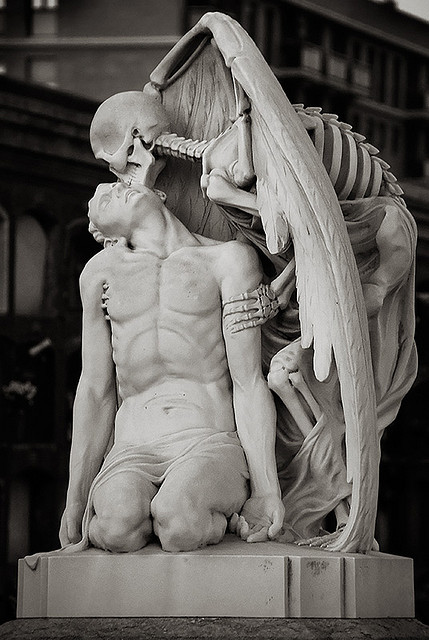
To Be Beautiful Was To Be Almost Dead

In the heart of a lavish penthouse adorned with sparkling chandeliers and marble floors, Selene lived her half-life. A legendary beauty, her name was whispered in awe and envy across high-society circles. But what they didn’t know was the price she paid for her ethereal allure—she existed in a liminal state between life and death.

Her room was a cavern of perpetual twilight, the curtains perpetually drawn, shielding her from the sunlight that she had not felt on her skin for what seemed like an eternity. The little nourishment she received was carefully measured, a minimalistic regimen designed to sustain her existence but not enrich it. To look at her plate of food was to gaze upon a barren landscape—minimalistic, almost skeletal.

Mirrors framed with gold leaf adorned her walls, but they were more like windows into a soul that was slowly crumbling away. Her eyes, once bright and full of life, now carried the heavy weight of an unspoken sorrow. They were beautiful, yes, but they were the eyes of someone who knew that her beauty was both her triumph and her tragedy.

In her world, beauty wasn’t a thing to be celebrated—it was a currency, a bargaining chip in a high-stakes game that she couldn’t afford to lose. And the price of such staggering beauty? A life drained of its essence, vitality converted into aesthetic perfection. Her beauty was a carefully constructed façade, a work of art crafted from deprivation and sacrifice.

The society that adored her, that thrust her into the spotlight and onto the covers of magazines, had no idea of the solitude she lived in. They did not see the agony in her perfection, the hollowness behind her smile, the years of life she had traded away for a few moments in the spotlight.

It was a paradox—her life was a monument to beauty, yet a tomb for everything that makes life worth living. And so she existed, not fully alive but not entirely dead, a celebrity goddess in a gilded cage, a beauty forever teetering on the brink of oblivion.

To be beautiful, she realized, was to be almost dead—a shell of magnificence hiding a core of emptiness. And as another day passed without sunlight, without joy, without the essence of life, she couldn’t help but wonder: was it worth it?

Between Dreams and Desolation

Jason woke up to find Charlemagne in her usual position, arm draped over him with her face nuzzled into his shoulder. He smiled, planted a kiss that wouldn’t wake a baby on her forehead, and carefully slid out of bed.

Apparently, not carefully enough. “Morning already?” she murmured, her eyes still closed. Even half-asleep, she was a vision that took his breath away—her skin glowing softly in the morning light, her hair a golden halo around her face, and her lips slightly parted as if on the verge of whispering sweet secrets.

“Morning,” he replied, his voice tinged with a subtle sadness she didn’t catch, her consciousness still straddling the border between the dreamworld and reality. “I love you.”

“Love you back,” she said, stretching before getting up.


Jason was one of the fortunate few who absolutely loved his job, but today, the office had become a foreign landscape, a maze of cubicles and faces that seemed to blur into a monochrome palette of insignificance. His normally tidy desk was utter chaos: a stack of unattended paperwork on one side, unanswered emails piling up on his computer screen, and a coffee mug that had seen better days.

Amanda, his coworker and the closest thing he had to a friend at work, noticed his sudden transformation. “Jason, are you alright?” she probed, eyes narrowing with concern.

Jason looked up, realizing only then how deeply he had been lost in thought. “I’m fine,” he managed, forcing his lips into something resembling a smile. “Just a lot on my mind, that’s all.”

Amanda wasn’t easily fooled. “If you need to talk, I’m here.”

Jason hesitated. He had never been one to share his personal life at work, but the growing strain was becoming a behemoth he could no longer ignore. “It’s complicated,” he finally said, his eyes dropping to the keyboard. “But thanks, Amanda. I’ll keep that in mind.”

His computer monitor stared back at him, a blank canvas that mirrored the emptiness he felt within. His thoughts continually drifted to Charlemagne, the love he couldn’t explain and the secret he couldn’t share.


Back home, the evening unfolded like a well-rehearsed play, each act imbued with a sense of comforting familiarity. Jason and Charlemagne stepped into the kitchen, a symphony of slicing and sautéing beginning almost immediately.

“So, pesto or marinara?” Jason asked, looking over an array of ingredients.

“Let’s go with pesto tonight,” Charlemagne decided, her eyes twinkling. “You know how much I love it.”

With that, he started grinding basil leaves in a mortar while she focused on finely chopping garlic. Soon, the kitchen was filled with the intoxicating aromas of fresh herbs and spices.

As they cooked, their hands occasionally touched, sending sparks of warmth through Jason’s body. When dinner was ready, they sat down to enjoy the pasta, both relishing the homemade pesto that seemed to taste better with each bite.

After dinner, they settled on the couch, a bowl of popcorn between them, and turned on that comedy show they both loved. Laughter filled the room as they lost themselves in the humor, Charlemagne snorting out loud at a particularly funny scene, causing Jason to laugh even harder.

“God, I needed that,” Charlemagne said, wiping away a tear of mirth.

“Me too,” Jason agreed, his eyes meeting hers. For a moment, the world outside ceased to exist. It was just the two of them, bound by a happiness so pure it was almost ethereal.

They closed the evening with their nightly ritual of sitting on the porch. But tonight, concern etched Charlemagne’s features as she sensed Jason’s internal struggle. “You seem distant,” she remarked.

Jason looked deep into her eyes, eyes he had gotten lost in so many times before. “I have something to tell you, but I’m terrified it will change everything,” he hesitated, his voice quivering with tension.

Charlemagne furrowed her brows, her eyes filled with concern. “Okay, now you’ve got me worried. You know you can tell me anything, right?”

Jason took a deep breath and mustered every ounce of courage he had. “Charlemagne… you’re not real.”

“What are you talking about?” she asked.

“You’re a sort of figment of my imagination, a dream I’ve clung to for so long, wished for so hard, that you finally became real to me.”

“Do you hear yourself?” She pulled back, looking at him incredulously. “Are you aware of how insane you sound right now?”

“You know everything I know because you’re an extension of me. If you look within yourself deep enough, you’ll know what I’m saying is true.”

For a long moment, Charlemagne didn’t react. Her expression shifted from disbelief to introspection. It was as if she were undergoing her own existential crisis, grappling with the staggering implication that she might not be real, despite her emotions, thoughts, and burgeoning self-awareness.

“If I’m not me, then who am I?” she asked, her eyes searching his for an answer, any answer.

Jason sighed, his gaze dropping to the floor as if the truth were too heavy to carry. “You’re an amalgamation, a composite of women I’ve loved or thought I loved. All failed relationships. I took the best parts of them—their kindness, intelligence, the way they made me feel loved—and I constructed you, the perfect mate for me.”

Charlemagne’s face contorted with a mix of fascination and horror. “So I’m what? A Frankenstein of your failed romances? A living highlight reel?”

“I wouldn’t think of it that way,” Jason said, his voice tinged with a sadness that seeped into his words. “You’re far more than that. You became someone I could talk to, laugh with, share my life with.”

“Why didn’t you tell me this from the beginning?”

“Because our relationship was so fragile then. I was afraid you’d vanish into thin air, and I’d never be able to get you back.”

“Why tell me now?” she asked with a voice filled with a vulnerability he had never heard before.

“The longer I kept this from you, the heavier it weighed on me. It’s a terrible thing to love a dream so much you can’t bear to wake up.”

Charlemagne’s eyes narrowed, clearly conflicted. “But I feel real…I feel alive…and now I’m stuck in this existential paradox. Do you have any idea what it feels like to be suddenly aware of your own unreality? What does that even make me?”

Jason reached out, taking her hand. It felt as warm as it always had—almost real. “You’re more real to me than anyone I’ve ever known. In my heart, you’re irreplaceable.”

The night air was silent except for their breathing, each trying to make sense of a love that transcended the boundaries of reality and illusion.

Charlemagne’s eyes bore into Jason’s, a turbulent sea of emotion and conflict behind them. “Have you ever stopped to consider what it feels like to be told you’re not real?” she asked, her voice tinged with an existential melancholy. “To suddenly question your own thoughts, emotions, the very fabric of your consciousness?”

Jason felt the weight of her words sink deep into him. For a moment, he closed his eyes, plunging himself into an existential abyss. He thought of Charlemagne—her laughter, her warmth, the love he felt emanating from her—and how all of that might be unreal. Then he pondered the concept of unreality itself, the unfathomable chasm that separates existence from non-existence. If she was unreal, then what did it say about him? What did it say about the universe where such love, such vivid emotions, could be mere illusions?

Finally, he spoke, his voice thick with newfound understanding. “I can’t even begin to grasp the depth of what you’re going through. Being confronted with your own unreality must be like looking into an abyss that reflects nothing back.”

Charlemagne studied him with a serious but inscrutable expression as if measuring the sincerity of his words. Then her lips parted, and she said something he would never forget.

“Good. Now, I have something to tell you, Jason…I’m not the one who isn’t real.”

To Hell With A Kiss

Eli roamed the cold corridors of his empty home for weeks that seemed like years, each room a mockery of the life he shared with Mara. Loneliness clung to him like the scent of decaying roses on a grave—sweet yet sorrowful. And when the echoing silence became too much to bear, Eli decided it was time to take the journey. Perilous though it may be, Hades was his travel destination, which meant he first needed to seek out the psychopomp, for he required a guide through the afterlife.

Abiding by the rules, Eli gathered the ritualistic trinkets: a lock of Mara’s hair, the pendant she wore every day of their life together, and the first love letter she penned to Eli. Armed with the knowledge scoured from dusty tomes and digital deep-dives, Eli prepared the ground with intricate circles of salt, each stroke a promise of undying love.

Eli uttered the incantation, and the room darkened, the air growing dense, pulling him into the abyss. He slipped on a patch of unreality and tumbled into the twilight realm, where murky waters stretched as far as the eye could see, and souls floated aimlessly, their faces twisted in eternal sorrow. Amidst the sea of spirits, the psychopomp—veiled and mysterious—stood on a drifting skiff.

“You dare to seek me out?” The psychopomp’s voice was an unsettling blend of male and female tones, old and young timbres.

“Yes,” Eli’s voice quivered, “To bring back my Mara, if only for one moment.”

The psychopomp studied Eli’s face. “A second of mortal time equals one of your years here. What are you willing to sacrifice?”

“Whatever it takes,” Eli replied, determination seeping into every syllable.

“Even Death’s kiss?” asked the psychopomp. “Beware—the price of that osculation is one you will bear forever.”

With an otherworldly flourish, the psychopomp summoned Mara’s soul. The air shivered as she appeared and her face lit up upon seeing Eli. Time was of the essence; a year in Hades was draining away in this fleeting mortal moment.

“Is it really you?” Mara asked, tears misting her ethereal eyes.

“Yes, my love, it’s me. I’ve missed you more than words can say.”

Before they could say another word, the psychopomp moved swiftly, pressing its lips to Eli’s. A sensation of coldness seeped into their soul, but Eli hardly felt it. The kiss from Death was complete.

Mara’s form began to dissolve, but not before she whispered, “Thank you for bringing love into my life and afterlife.”

As Eli returned to the mortal plane of existence, he found his appearance had changed; his eyes, once a vibrant blue, now a chilling gray, and a chill settled into the marrow of his bones that no fire would ever be able to chase away. He also knew the hour and method of his inescapable death—the lasting cost of his choice. But as he sat alone in his quiet home, a single tear rolled down his cheek.

It was a price he would willingly pay again, a thousand times over.

Rules of Visitation (Revised)

I almost missed her visit. My disbelief in ghosts had fortified a stubborn veil over my perceptions, making me almost immune to the spectral. But tonight was different. The rain was falling in torrents, its ceaseless hiss drowning out all other sounds, and then there it was—her voice.

“James,” it whispered, woven into the tapestry of rainfall, each drop a syllable of her name. “James.”

At first, I dismissed it as an auditory illusion, a byproduct of my loneliness. But she persisted, her voice cascading with the rain, and my eyes, driven by an inexplicable impulse, moved toward the window.

She was there, a fragile wisp of memory made visible, pressed against the glass. Rainwater dribbled down her translucent face, like tears shed by the sky itself. My heart surged with a blend of love and sorrow, a cocktail of emotions I hadn’t tasted since the day she was taken from me.

I rushed to the window, hands trembling, but it wouldn’t budge. An invisible tether held me back, a boundary I couldn’t cross. My fingers barely touched the cold glass, craving the warmth her presence used to offer.

“Rosalyn,” I mouthed, my voice choked with regret and questions. “How? Why now?”

Her spectral eyes met mine, brimming with a serenity that could calm even the fiercest storms. “There are rules, James,” she began, her voice emanating from the fog of her form. “Rules that even love can’t bend.”

“What rules? What are you talking about?”

She floated closer, her form illuminating the darkness of the room. “Our love, pure as it is, must now abide by the laws of my new existence. I can only visit you when it rains, and only on days that are sacred to us—our birthdays, our wedding anniversary, and today, the day my earthly journey ended.”

The weight of her words settled over me, anchoring me to an altered reality. As quickly as she appeared, Rosalyn began to fade, her form dissipating into the mist outside the window, becoming one with the rain.

“I love you,” she said, her voice gradually swallowed by the falling drops, becoming a silent echo that only my heart could hear.

“And I you,” I whispered back, pressing my palm against the cold glass, a poor substitute for her touch. But it was a touch nonetheless, a fleeting connection that would have to sustain me until the heavens wept again on a day we once celebrated. Then, and only then, could our sorrow reunite us, even if just for a moment.

The Lovers, The Dreamers, and Me

In the far future, societies would be divided into three categories: Lovers, Dreamers, and Outliers. This wasn’t to say everyone slotted into these archetypes perfectly or even easily, but that was what the reprogramming stations were for. Marla, however, stood out. As one of the top-tier Dreamers, she crafted fantasies that plugged directly into the cerebral cortex, delivered through Dream Machines sold at a premium.

On this particular evening, Marla surveyed the Dream Market from her glass-walled studio. Neon lights flickered, advertising dreams of love, adventure, and pleasure. Her eyes, however, were vacant, worn from sculpting dreams she could never experience.

At the same time, Thomas, an Outlier, navigated through the crowd with a scowl. He hated this place and everything it stood for. His sister had become a Lover, addicted to dreams that left her dazed and incoherent. Tonight was the night he’d put an end to it.

And then there was Celia. A Lover and a connoisseur of dreams, she came to the market for her hundredth purchase—a dream called “Eternal Sunset” crafted by Marla.

***

Thomas was almost panting by the time he reached Marla’s high-rise studio. He’d dodged two surveillance drones and a roving squad of Dream Company’s security enforcers to get here. The studio looked alien to him, gleaming with sterile opulence—a glass cocoon that seemed to float above the chaos below.

Marla, meanwhile, was reviewing feedback on her latest dream creation when her security feed pinged an alert. An Outlier was approaching her studio. This was unusual; they never came this close to the Dream Market’s epicenter, let alone to a Dreamer’s personal studio. Intrigued more than concerned, she activated the door mechanism and heard the buzz that allowed him entry.

Thomas stepped inside, his eyes adjusting to the ambient lighting, his nostrils flaring at the aroma of exotic incense. He felt out of place, like a moth daring to flutter around a flame.

“I need your help,” Thomas blurted out, his voice tinged with desperation.

Marla eyed him cautiously. “And why, pray tell, would I assist an Outlier? You people aren’t exactly fans of what we do.”

“That’s just it,” Thomas locked eyes with her, “I’ve discovered something you Dreamers should find very troubling. Your dreams—the fantasies and scenarios you create—they’re not just being sold for profit.”

Marla leaned back, steepling her fingers, her interest piqued. “I’m listening.”

“Someone inside the Dream Company is harvesting portions of these dreams, mixing them with… something else. They’re creating intrusive thought patterns, subliminal messaging. Basically, mind control experiments.”

Marla’s eyes widened. Her dreams were her art, her contribution to society. To think they were being altered and used for something nefarious was unsettling, to say the least.

“So, what’s in it for me if I help you?” she finally asked, breaking the tense silence.

“Isn’t the perversion of your art enough?” Thomas shot back.

“It might be,” Marla said, her voice tinged with new resolve. “But there has to be more.”

“Fine,” Thomas conceded, “The truth. The entire, unvarnished truth. And maybe, just maybe, a chance to be more than a factory of other people’s dreams. A chance to dream for yourself.”

Marla felt a shiver go down her spine. For years, she had poured her imagination into the Dream Machines, always wondering what it would be like to be on the other side—to be a Dreamer and a Lover.

“Alright,” she finally said, “I’ll do it. But this better be worth the risk.”

***

Celia had long been a fan of Marla’s creations. Tonight, she was eager to escape into “Eternal Sunset,” Marla’s latest release. The description promised a multisensory experience—golden sunsets across beaches that never end, accompanied by a symphony of rolling waves and warm winds carrying the scent of salt and freedom.

Settling into her cushioned Dream Chair, Celia plugged the interface cable into the port behind her ear. Her room’s walls faded, replaced by a breathtaking landscape—a vast, endless shore bathed in the soft glow of the setting sun. She took a deep breath, relishing the sensation of warm, moist air filling her lungs, tasting the salt on her lips.

But as she walked along the shoreline, listening to the soothing cascade of the waves, something felt off. The horizon, which usually held the shimmering mirage of the perpetual sunset, started to darken. A swirling vortex of obsidian-black tendrils began to materialize, tearing through the red and gold sky like ink spilled on a masterpiece.

Celia felt an unexpected pull, a force dragging her towards this unnatural anomaly. She tried to unplug, to yank herself back to her room, but for a split second, she was held in place, frozen. Then she saw them—figures materializing from the edges of the vortex, their faces indistinct, but their eyes clear, almost glowing. They were beckoning her, reaching out their arms in a silent plea or perhaps an invitation.

With a jolt, Celia managed to disconnect, ripping the cable from the port as she gasped for air. She was back in her room, the once-welcome walls now feeling like a cage. Her heart pounded in her chest, adrenaline surging through her veins as if she’d narrowly escaped a predator. Yet, amid the fear and confusion, a thought lingered: Who were those figures? And why did they look so eerily familiar, like forgotten friends—or warnings—from another life?

***

While Thomas meticulously set up his gear—a laptop full of hacking software designed to breach even the toughest firewalls—Marla was busy weaving her dream. She considered it her pièce de résistance, a concoction of vivid colors and disruptive elements that would overwhelm the Dream Company’s servers. As her hands glided over her Dream Console, the air around her shimmered with ethereal light, an external manifestation of the powerful dream she was crafting.

Just as they planned, Marla uploaded her dream into the public feed, where it would momentarily act like a virus. The dream was coded to disrupt the server’s normal functions, confusing the AI algorithms long enough for Thomas to do his work. As soon as she received the signal from Thomas—his eyes met hers, and he gave a slight nod—Marla hit the ‘Release’ button.

Meanwhile, Celia, her nerves still rattled from her last dream experience, walked toward the market. She thought that being around people, even if they were plugged into their dreams, might alleviate some of her anxiety. But as she approached, she noticed the large public screens that usually displayed advertisements flicker and glitch. Around her, people began to unplug from their Dream Machines, their faces a mix of confusion and disorientation.

Curiosity led her gaze away from the bewildered crowd. That’s when she saw them—Thomas and Marla, huddled in a secluded corner of the marketplace. Their focus was intense, locked onto the laptop screen that Thomas had balanced precariously on a makeshift table. He was typing at a breakneck speed, bypassing security measures while Marla watched the server statuses on a separate window, ready to upload another disruptive dream if needed.

It was that moment when it clicked for Celia. The faces she had seen in the dream, the dark vortex—it all connected back to this. The two people in front of her were altering the course of the world as she knew it, and for some reason, she felt an inexplicable urge to join them, to be part of whatever rebellion or truth they were bringing to light.

***

Thomas’s fingers flew across the laptop keyboard, each keystroke a precise maneuver in navigating the labyrinthine security protocols of the Dream Company’s mainframe. Finally, a window popped up on the screen—Access Granted. His heart pounded in his chest as he navigated through the various layers of classified information.

“Got it,” he muttered under his breath, clicking on a folder labeled “Outlier Studies.” As the files loaded, he felt a cold dread crawl up his spine.

“Marla, you need to see this,” Thomas said, his voice tinged with urgency and disbelief. He stepped aside to give her a full view of the screen.

Marla scanned through the files displayed before her. What she saw were not just codes and numbers, but detailed research reports, confidential memos, and raw data—all pointing to one horrifying reality. The Dream Company had been conducting covert studies on Outliers, surveilling them without consent. More shocking was the realization that the memories of these Outliers were being harvested, their most intimate and personal moments distorted and commodified into dreams for public consumption.

“The bastards,” Marla muttered, her eyes narrowing, “they’re turning real people’s experiences into these twisted, marketable dreams. It’s not just an invasion of privacy; it’s a violation of consciousness. They’re stealing souls and selling them.”

Thomas nodded, his face grave. “It’s darker than we thought. It’s not just about monopolizing the dream market; it’s about control, manipulation, the annihilation of what makes us human.”

Marla clenched her fists, her eyes meeting Thomas’s. “Then let’s take them down and reveal this nightmare for what it really is.”

***

Celia, her footsteps silent but purposeful, approached Thomas and Marla. She’d seen enough flickering screens and disoriented dreamers today, and something told her these two were at the center of it all.

“What exactly are you doing?” she demanded, her eyes locking onto the open laptop brimming with clandestine files.

Thomas looked up, meeting her gaze, weighing how much to reveal. “We’re freeing you. Freeing everyone,” he finally said, the gravity of the moment making his words a solemn vow.

“And how is uploading files going to accomplish that?” Celia asked skeptically, her eyes darting between Thomas and the laptop screen.

Marla intervened, her voice tinged with a sense of urgency. “It’s more than just files. It’s proof—proof of how the Dream Company has been manipulating us all. They’ve turned personal memories into twisted, commercial dreams. They’re manipulating our very consciousness.”

“And if people know the truth?” Celia pressed, now genuinely intrigued.

“Then they have the choice to unplug, to demand transparency, to reclaim their minds and lives,” Thomas said, filled with a newfound determination.

With a final, resolute click, Marla uploaded the classified files to a public server. Instantly, notifications lit up on smartphones, tablets, and screens all around the market. Faces that were once lost in dreams now reflected shock, anger, disbelief.

As the files disseminated far and wide, the buzz of conversation surged through the market like an electric current. Vendors and dreamers alike were unplugging from their Dream Machines, conversations bursting forth in pockets of chaos and revelation. Shares of the Dream Company started plummeting, live updates flashing red across financial news feeds.

Celia took it all in—the confusion, the awakening, and the two figures at the eye of this storm. “You’ve started something big,” she said softly, almost in awe.

“Or maybe,” Marla looked at Thomas and then back at Celia, “we’ve just ended something terrible.”

***

The Dream Company’s undoing was swift and decisive. Revelations flooded the media; investigative reports, interviews, and editorials dominated the headlines for weeks. Regulatory authorities cracked down hard, dismantling the empire that had monopolized the human imagination. High-ranking executives were arrested, their reputations irrevocably tarnished as they faced a litany of charges from ethical violations to psychological exploitation.

Thomas, for the first time in years, found a modicum of peace. His younger sister, who had been a chronic user of the Dream Company’s products, slowly but surely began to recover. It was as if a veil had lifted from her eyes, and the woman he remembered from their childhood started to emerge again. The newfound clarity in her eyes was worth all the risks he had taken.

Marla, once a craftsman of artificial dreams, found herself embracing the imperfect art of natural dreaming. Lying in her bed at night, she welcomed the chaotic tapestry of thoughts, feelings, and random memories that wove themselves into dreams. It was erratic, illogical, and profoundly human—attributes no machine could replicate.

As for Celia, her transformation was nothing short of revolutionary. She had been a frequent dreamer, lost in the fantasies curated by the Dream Company, but the experience of the market’s abrupt awakening had shifted something deep within her. Fueled by a newfound purpose, she joined the Outliers, dedicating herself to advocating for the intrinsic value of real, tactile experiences over artificial ones. She became a spokesperson, her compelling story inspiring thousands to reconsider the simulated realities they had grown dependent on.

But even as Thomas, Marla, and Celia found new roles in a drastically altered landscape, the global community grappled with the aftershocks. The Lovers who cherished the manufactured emotional and romantic dreams found themselves at a crossroads. With the absence of spoonfed emotions, many returned to traditional forms of connection—old-fashioned dates, heartfelt conversations, and the unpredictable rollercoaster of real love. Initially disoriented, some eventually discovered the richness of authentic relationships, replete with both their beauty and their flaws.

As for the Dreamers, the transition was more jarring. With the market for dreams effectively collapsed, they faced sudden unemployment and an identity crisis. But Marla, ever the visionary, seized this opportunity. She spearheaded a new initiative that aimed to channel the Dreamers’ unparalleled skills into other sectors, such as virtual education, psychological therapy, and even space exploration simulations. It was an endeavor that tapped into their unique abilities while adhering to ethical guidelines—a second chance at dreaming with purpose.

The publication of the Dream Company’s manipulations had another unexpected but invaluable outcome. Worldwide debates erupted about the ethics of thought manipulation, the commodification of human experiences, and the need for stringent regulations. This discourse ushered in a new era of tech ethics, influencing policy decisions at the highest levels.

So, in their quest for justice and authenticity, Thomas, Marla, and Celia had unwittingly lit the fuse for a broader societal transformation. The implosion of the Dream Company didn’t just liberate them; it catalyzed a collective awakening. For better or worse, the world had changed, but at least it was now a world where dreams were once again the private sanctuary of the individual, not the tradable assets of a faceless corporation.

Too Long For Instagram: From The Murky Depths

The creature emerged from the depths of the murky lake, its movements slow and languid, like a grotesque dance of death. Its pale, lifeless eyes locked onto its prey, as it dragged itself closer, leaving a trail of slime and terror in its wake.

The too large for Instagram remix:

In the dying light of dusk, whispers rippled through the crowd as the small lakeside community of Gowansville gathered at the water’s edge. Wannipur Lake had always been a source of life, but now it emanated a dark foreboding. Townsfolk disappeared without a trace, pets had gone missing, and local legends of Purrie, the lake-dwelling monster, had resurfaced.

Betty Bowen, an introverted librarian who’d always found solace in books, stood among them. She clutched a worn leather-bound tome, its pages yellowed with age but brimming with arcane knowledge.

Just as the sun disappeared below the horizon, the surface of the lake broke. A creature, its form an unholy amalgamation of scales, slime, and gnarled limbs, emerged. The crowd’s murmurs turned into palpable panic; their paralysis was the creature’s feast.

Betty’s hands trembled, but she opened her book. Her voice cracked as she began reciting an incantation her grandfather had once taught her, passed down through generations but never used. The air tensed, electric. The creature roared, its dread-filled aura clashing with the energy now emanating from Betty’s words.

Nothing happened. The crowd’s hope wilted; their impending doom was palpable.

Betty’s eyes filled with tears. She thought of her late grandfather, of his unshakable faith in her, and the unspoken guilt that she’d never fully believed in the family lore. She turned the page, and her eyes caught a phrase she had never noticed before. Taking a shaky breath, she recited the new incantation.

The creature writhed, releasing a guttural cry that echoed across the lake. Then, with a final roar of defeat, it retreated, sinking back into the murky depths.

As the crowd erupted into cheers, Betty felt a weight lift off her, replaced by a newfound understanding. She looked down at her book, its ancient words now a proven arsenal against the unknown.

“People!” Betty raised her voice, holding her book high. “Never underestimate the power of these pages, for they are not just words but shields against the darkness. We must continue to read, to write, and to share stories that give us—”

Before Betty could finish, the placid surface of the lake erupted. Monstrous tentacles shot out of the water, heading straight for the librarian. Before anyone could react, the tentacles wrapped around her, pulling her off her feet and into the dark abyss of the lake. Her piercing scream was the last sound heard before she vanished.

The ancient tome had fallen from her grasp during her struggle, landing on the muddy shoreline with a soft thud. The crowd was paralyzed, their faces a mix of shock and horror.

The lake returned to its eerie calm as if nothing had happened. Town car mechanic Fred Baker looked at Betty Bowen’s book. Other people were looking at it too, but no one made a move, so he stepped forward.

Just as his fingers grazed the leather cover, another set of tentacles shot up from the lake, snatching the book and pulling it beneath the surface, leaving nothing but ripples in its wake, and Fred Baker shaken to his core.

The crowd stood there, their silence heavy with the reality of their powerlessness. Their last beacon of hope had been extinguished, swallowed by the same darkness they had sought to overcome. And so, they dispersed, each left to ponder the fragility of their existence and the impenetrable mysteries that lurked just below the surface.

As they walked away, a hushed conversation began to ripple through the crowd. “Maybe we should consider offering a sacrifice to Purrie,” someone suggested. “Once a month, to keep it at bay.”

Heads turned, eyes met, and for the first time that day, a sense of unity formed, born not out of hope but out of a shared grim understanding. It was a pact forged in fear, but it was a pact nonetheless—one that signaled their willingness to coexist with the darkness, even if it meant appeasing its appetite.

Tiny Stories: You Will Know When You Receive A Sign (Revised)

Popular belief has it that the universe is comprised of atoms. In reality, the universe is actually made up of…

As a child, I found solace in skepticism, surrounded as I was by a cacophony of fervent prayers and whispered ‘Amens’ that filled the hollow chambers of my family’s home. To me, religion was a relic, a museum piece best observed from a distance. I prided myself on my detachment, content to witness the ritualistic gestures and solemn hymns without ever feeling their tug on my soul.

That was until the day the very fabric of the sky seemed to tear open. A sudden roar rattled the air, like the trumpet of an apocalyptic angel, followed by an unnatural silence that seemed to swallow all other sounds. People stopped in their tracks, heads tilted upward in collective anticipation. Then, without warning, a violent column of fire spiraled down from an otherwise pristine, storybook-blue sky.

As it descended, I felt a wave of blistering heat wash over me, searing the air and leaving a sulfurous smell that stung my nostrils. The ground beneath my feet trembled, and for a moment, it felt as if the Earth itself were recoiling in horror. The fire targeted my home with an uncanny, surgical precision, leaving everything else untouched. Within seconds, the life I’d meticulously constructed was reduced to ashes and cinders, a smoldering ruin that sent tendrils of smoke high into the atmosphere.

The aftermath was surreal, like standing in the epicenter of a storm that had passed as quickly as it arrived. All that remained was a blackened scar on the Earth, an indelible mark as though the hand of Divinity had chosen to brand me.

Questions erupted inside me like shards of broken faith. Had I mocked the cosmic order one time too many? Was this devastation a punishment, a warning, or perhaps the ultimate test of spirit?

“Why do you tremble?” my neighbor, Miss Hattie, an old woman known for her devoutness, approached me as I stood by the smoldering ruin that used to be my life.

“Wouldn’t you?” I retorted, my voice laced with newly formed bitterness and awe. “The sky declared war on me.”

“Or maybe,” she glanced upwards, “It invited you to listen.”

Her words were like a seed planted in freshly tilled soil. My skepticism still lingered, haunting the edges of my newfound vulnerability, but the need to explore—to quench this sudden thirst for understanding the divine—became irresistible.

With nothing left but a suitcase of doubts and the fragmented memories of my past life, I began my pilgrimage. Was it a quest to seek forgiveness or perhaps to sate my nascent spiritual curiosity? The answer was a foggy mirage on the horizon, but for the first time, I felt the grip of faith seize my once-wayward soul. And it held on with a voracity that mirrored my own accelerating race against time, each step a stride toward an elusive salvation.

Tiny Stories: Cosmetic Layers (Revised)

Popular belief has it that the universe is comprised of atoms. In reality, the universe is actually made up of…

As the world teetered on the edge of chaos, Kathryn found she possessed a gift that was not just a personal shield but a societal glue. She had the rare ability to project an aura of calm, sewn from threads of an arcane energy that existed before humankind was a twinkle in evolution’s eye, a veneer that was more than skin-deep. Her placid demeanor was contagious, radiating outward like ripples in a pond, and wherever she went, discord transformed into harmony.

Her soft, doe eyes weren’t merely deceptive; they were enchanting, ensnaring anyone who locked gaze with her into a trance of tranquility. Her rouge-cheeked smile wasn’t counterfeit; it was a magical sigil that disarmed hostility and forged connections.

But this power came at a steep price. Every rough patch she smoothed in the world around her manifested within her, stored in hidden pockets of her psyche. Over time, these collected fragments began to unravel the very fabric of her reality. No one knew the true face that lay behind her silken mask, a disarray of emotions and unresolved conflicts that only she could see.

And so, Kathryn found herself at a crossroads, suspended between the utopia she could create for others and the inner dystopia she had to endure. Could she continue to be the linchpin holding society together, or would she finally allow her inner turmoil to surface, unleashing chaos onto the fragile world?

Before she could contemplate it further, Kathryn found that her soul-searching stroll led her to a particularly volatile protest. And as the riot between protestors and police slowly transformed into a peaceful gathering in her presence, she felt something snap deep within her.

Kathryn had finally reached her limit. The reservoirs of her psyche had finally overflowed. The pain was unbearable, like white-hot needles weaving through her consciousness, tying knots around her sanity. Her eyes, once a beacon of serenity, became stormy whirlpools that sucked in light but emitted none. Her smile, which used to disarm even the harshest critics, twisted into a pained grimace.

As she staggered through the crowd, the world around her began to disintegrate. The serenity she had cast over the people evaporated as if it had never been. Arguments resumed, fights broke out, and the air became charged with the stench of anarchy.

Kathryn fell to her knees, clutching her head in her hands as if trying to hold her unraveling mind together. Her aura of calm shattered, releasing all the stored discord in an explosive burst that radiated outward, a shockwave of raw emotion.

The crowd recoiled as if struck by an invisible force. Those close to her collapsed, overwhelmed by the unleashed turmoil.

And then, she was gone.

Kathryn disintegrated into a shower of arcane embers that dissipated into the air, leaving behind only an empty space where she once stood. The crowd, now dazed and confused, looked around as if waking from a long, strange dream.

Though no one could explain what had just happened, a sense of loss hung in the air, a collective understanding that something vital had been extinguished. Society had lost its linchpin, but Kathryn had paid the ultimate price for a borrowed harmony, her existence consumed by the very chaos she had tried to contain.

Tiny Stories: Of Prefaces Unread

Popular belief has it that the universe is comprised of atoms. In reality, the universe is actually made up of…

Technology had finally advanced to the point where dermal holographic emitters showcased prefaces above everyone’s heads—bullet points of the highs, lows, and turning points in a person’s life—and society had become a library of human experience. Couples formed with a glance, prejudices shattered, and crime rates dropped, all because everyone was an open book.

Except Samuel.

An author who had lived a life meticulously crafted for the perfect preface, he found himself a book gathering dust on a neglected shelf. He watched enviously as people engaged in instant connections, their eyes scanning the floating words above heads. His own preface, filled with layers of subtext and metaphors, resonated only with his fellow authors, none of whom took the extra step to genuinely know him.

Frustrated, he thought, “If only I could rewrite my preface to appeal to them, to make them see.” So, he studied, analyzed, and crafted tales aimed at resonating with the hearts of others. But despite his efforts, his works—and his life—remained tragically unread.

In a cruel twist of fate, Samuel was involved in a car accident. As he lay on the asphalt, gasping for air, he noticed something: people gathering around him were reading his preface, now flashing the words “Tragic End” in bold letters. For a brief, heartbreaking moment, Samuel had an audience.

And then, his preface faded away, the last lines unwritten, unshared, and unread.

Tiny Stories: Prelude to a Fight (Revised)

Popular belief has it that the universe is comprised of atoms. In reality, the universe is actually made up of…

“Let’s just talk about this some other time,” Lexi sighed, exasperatedly flicking a loose strand of hair behind her ear. She scanned the almost empty bistro, where a solitary server bustled between tables, clearly not ours. She’d always been keenly aware of her surroundings.

“Why not settle it now?” I pressed, my fingers nervously tapping the edge of the table.

The furrow in Lexi’s brow deepened as she bit back her initial response. She took a deep, measured breath, as if inhaling courage, and said, “Because you’re not here, not really. You’re a million miles away, even when you’re looking right at me.”

“Don’t be absurd. You have my full attention.”

“Quit lying to me. Just this once, can you do that? I see that far-off look in your eyes like you’re solving a puzzle in your head.”

Caught, I wanted to glance away. “That’s just how my face looks, Lexi.”

“Ah, deflecting with humor. Classic you.”

“You love drama, don’t you? Creating mountains out of molehills.”

She clenched her fists, white-knuckled. “If you’d stop treating our relationship like a series of escape rooms, maybe we’d get somewhere!”

I sighed. “Our non-relationship, you mean? We broke up. I don’t owe you any explanations.”

Lexi’s voice lowered to a whisper. “That’s why we’re over, isn’t it? Because you’re an enigma wrapped in a riddle and I’m tired of solving for X.”

The server finally appeared, tray in hand. “Are you two ready to order?”

“No,” Lexi snapped. “We’re not.” She pushed her chair back so forcefully it almost toppled. “Maybe when you’re ready to be real with someone, give me a call. Until then, enjoy solving your puzzles alone.”

As she walked away, leaving me in an emotionally charged silence, it finally hit me. The biggest puzzle I could never solve was sitting across from me this whole time. And now, she was a riddle walking out the door.