The Island of Misfit Posts #3: Saturday Storytime Cellar

I’m a horrible planner, always have been, so it’ll come as no surprise that I don’t outline these posts beforehand. It’s all stream of consciousness writing, which is akin to jamming your grubby mitts into Forest Gump’s chocolate box and never knowing whatcha gonna wind up with.

The idea for this abandoned post sorta-kinda stemmed from my admiration of the original versions of popular fairy tales, but as I was writing it, Carole and Paula from The Magic Garden (a live action kid’s TV show in the 70’s) flashed in my brain and I couldn’t shake the image of them hunkered down in a dank and musty cellar, embittered because the glory days had passed them by and they were relegated to the thankless task of repurposing stories in order to snare the short attention spans of modern day jelly-droppers.
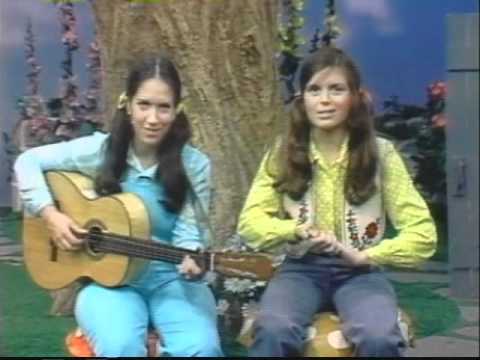
hqdefault

Needless to say, that’s not quite how the finished product turned out:

Saturday Storytime Cellar: Redahlia

Gather ’round in a semi-circle on the story mat, boys and girls. Don’t forget to bring your milk and graham crackers, and please sit criss-cross applesauce to make room for your neighbors. Yes, Jimmy? Question?

Your dad’s right, it used to be called Indian style but that’s before we discovered the name was offensive to Native Americans. Yes, Jimmy?

Your father is certainly entitled to his opinions, but you can tell him that there’s nothing creepy about meeting in this cellar. It’s only until the West Nile virus scare at the garden has been taken care of. And a hippie is a person associated with a subculture involving a rejection of conventional values and not that it’s any of his business but I do shave my underarms. Also, I’m sure the word he used was thespian, which is another word for an actor and I was at one time, in college, during an experimental phase.

Anyone have any other questions before we get started? Jimmy, put your hand down, please. Today’s story is about a little girl, long before she wore a riding hood, and if you think you know the story, you’re as wrong as Jimmy’s dad. Dead wrong. This is the tale of Redalhia

hqdefault

“Alas for those girls who’ve refused the truth: The sweetest tongue has the sharpest tooth.” ― Jack Zipes, Little Red Riding Hood and Other Classic French Fairy Tales

The various herbs and tinctures had been gathered, carefully measured and mixed into the recipe and when the baking was done, Mother asked her only daughter, Redalhia, to take the specially prepared galette and pot of cream to Grandmother’s forest cottage.

Redalhia didn’t quite feel up for the journey. Her body was undergoing a significant change and she found herself trapped betwixt and between being the girl she once was and the woman she would one day become. But she loved Grandmother so very dearly that she put her own cares aside and happily gathered the food into a basket before setting off for the forest.

How could she do any less? Her grandmother had fallen ill and the severity of her malady forced her to live apart from the family in a cottage deep within the forest, for fear of passing the sickness onto anyone else.

At the tree line of the forest, the road she walked split in two and at the fork stood the changeling-wolf known in the village as Bzou. The shapeshifter sensed her approach and quickly took the form of a man. When she grew close enough to benefit from the power of his bright smile, Bzou flashed his teeth and asked, “Excuse me, dear, where are you going?”

“To Grandmother’s house, sir.” Redalhia answered.

Bzou sniffed the air, “And what, fair creature, do you carry?” but it wasn’t the scent of the food in the basket that tempted his nostrils.

“Why, Mother’s cooking, of course. Bread and cream for Grandmother’s supper. She lives in the forest cottage.”

“And which path will you take?” Bzou asked, gesturing at both paths, one after the other. “The Path of Needles or the Path of Pins?”

Redalhia pondered this a moment. “The Path of Pins, I think, since it is the quickest.”

“Are you certain?”

“Yes, very. I have traveled both paths and Pins is the quickest.”

“Let us put your expertise to the test, shall we? I will take the Path of Needles, and we will see who gets there first.”

Redalhia shrugged for she knew she was right, but if the silly man wanted to waste his time, who was she to stop him? She set off down the Path of Pins and thought it strange that he simply stood there, grinning, and watched her walk.

Bzou knew the girl was right. Of course the Path of Pins was quicker and she definitely would have reached the cottage first had the shapeshifter walked on two legs. But using all four? There was no way she would be faster than he. When the girl disappeared within the dense patch of trees, the wolfen shook off his human guise, trotted down the Path of Needles, and as he knew he would, reached Grandmother’s cottage first.

The cunning  wolf altered his appearance to resemble Redalhia and rapped gently on the door. When Grandmother answered, her thrill at seeing her favorite grandchild was short lived as Bzou slaughtered her, quickly and efficiently as not to leave a mess. He gnawed her flesh, lapped up her blood and ate her bones to the marrow, leaving only a small portion of flesh that he placed on a little dish in the pantry, and a bit of blood that he drained into a little bottle. Then Bzou cleaned himself, took the form of Grandmother and dressed in her cap and shawl before climbing into bed.

When Redalhia finally knocked on the door, Bzou carefully disguised his guttural voice before calling out, “Come in, my child.”

“Grandmother,” the girl beamed, “Mother sent me here with a galette and a cream.”

“Put them in the pantry, child. Are you hungry and thirsty?”

“Yes, I am.”

“There is meat in the pantry for you to cook and wine beside it to drink.”

Redalhia cooked the meat and as she began to eat it, a little cat mewled, “You are eating the flesh of your grandmother!”

“Throw your shoe at that noisy cat,” said Bzou, and so the girl did.

As Redalhia washed the meat down with wine, a small bird cried, “You are drinking the blood of your grandmother!”

“Throw your other shoe at that noisy bird,” Bzou commanded, and the girl did so.

When Redalhia finished her meal, Bzou said, “You must be exhausted from your journey, child. Take off your clothes, come to bed, and I shall warm you up.”

It was true, after the meat and drink, her head did spin slightly. There was something in the flavor of the meal, a familiarity basted in sorrow. “Where shall I put my clothing, Grandmother?”

“Throw them on the fire, child, for you won’t need them anymore.”

Normally, Redalhia would have questioned this but a sudden weariness fogged her mind. She tossed her bodice, skirt, petticoat, and stockings on the fire, and climbed into bed.

The nearness of her, the smell of her budding womanhood, caused Bzou’s concentration to wander and his guise slipped a bit.

Even through the sleepy haze, Redalhia noticed the change. Her once frail grandmother was hairier, her arms stronger, ears larger, and her teeth — those teeth were familiar but they didn’t belong to the old woman’s face. Where had she seen them before?

Bzou spoke in gentle tones to allay the girl’s suspicions, “My hair is to keep you warm on cold nights, my arms to hold you close, my ears to better hear your sweet voice, and my teeth…”

Sharp teeth. Sharper than any human has ever had. “The better to eat me with?” Redalhia leapt from the bed. “Bizou!”

The wolf smiled and let the disguise fall away. “Yes, ’tis I.”

“But where is Grandmo–” the truth slowly dawning, “You ate her!”

“We share that sin, my dear. Now come and lie beside me.” Bzou patted the empty side of the bed.

The realization made Redalhia retch. “I — I feel ill…”

“Do it in the bed, my child, I do not mind.”

The girl staggered out the cottage door and vomited the undigested bits of her late grandmother against a plum tree.

Bzou followed her outside, shaking his canine head, “What a waste of good meat. Are you finished yet, deary, so that we may attend to our affairs?”

“My only affair is to see you dead!” the girl spat.

“You are welcomed to try, after I take from you what is mine.”

Redalhia sprinted from the tree and took off down the Path of Pins.

“Nectar sweetened by the chase!” Bzou grinned as he darted down the Path of Needles, powerful legs carrying him to the fork in the road with a swiftness unmatched by any human. He braced himself for the girl to appear from the tree line. He would take her straightaway, no more games. He waited. And waited. Until waiting turned to impatience and impatience turned to realization, “Clever girl. She…”

Doubled back once she heard Bzou on the Path of Needles. Her first instinct was to run to the safety of her home, but she quickly realized how foolish a thought that was. She couldn’t risk leading the wolf to her house, couldn’t afford to lose Mother as well.

Branches and thistles and thorns and bramble torn at Redalhia’s naked flesh as she ran past the cottage and through the woods which had no path.And when she thought she couldn’t run any further, she reached a river, swift and deep, where laundresses on both banks were hard at work.

“Help me cross,” she pleaded with them. The washer women took pity on the girl and spread a sheet over the water and held tightly to its ends. No sooner than when Redalhia had begun to cross the bridge of cloth, Bzou reached the river and jumped upon the sheet as well.

She too was on all fours now, scrambling to reach the other side of the river, and when the wolf was almost upon her, Redalhia dove off the sheet onto the river bank and yanked the linen from the laundresses’ hands and let it go.

Bizou’s paws clawed at the muddy river bank. looking for purchase but Redalhia kicked them away. He bobbed the surface a few times, shifting forms from wolf to the man in the road to Redalhia herself to Grandmother and finally back to his true wolf self, desperately trying to swim against the tide but was too badly tangled in the sheet. He let out one last pitiful howl before he drowned.

I try to turn off the editor as I write, and I’m mostly successful, but this time I wasn’t. I realized there was a problem with shifting tones in the post. The cellar bit contained a humor that was lacking in Redalhia, which meant when I returned to the cellar and attempted to be clever in my wrap up, the fairy tale itself would seem out of place. One of these things just doesn’t belong here.

Sure, I could have opted for another less serious fairy tale and posted Redalhia separately, but that would have required planning, and as we well know, I and planning do not see eye to eye.

Sally forth and be shapeshiftingly but not grandmother-eatingly writeful.

©2014 Rhyan Scorpio-Rhys

Creative Commons License

Memory Is The Liar That Whispers Fantastic Pasts In Our Ears

Calvin-and-Hobbes-esque-Tiny-litle-snowman-army

“I’m not a liar. I just have a good memory for things that never happened.” ― J.T. Bock

There’s a story I’m fond of telling, about a girl I met in a park during a blizzard. Sad fact of the matter is I don’t remember what she looked like. Not exactly. In my fading memory’s defense, I only saw the bit of her frosty red face that was nestled within the furry ring of her hooded parka. And I’ll admit that my recollection of events might be slightly dramatized and infused with more schmaltzy innocence and devil may care fun, as we built a snow fort to defend ourselves from the invading snow army, but it happened, the girl was real and not some imaginary snow playmate—I’ve had plenty of those, so I know the difference—and a good time was had by all, or at least by me.

The memory gets more Michael Bay-ish with each retelling. It takes on mass and bulks up and challenges me to become a better liar in order to bear its additional weight. But am I actually a liar? If the current version records over the initial memory on the VHS tape in my mind and all I have left is the most recent telling, then I am relaying events as I recall them, no? And why shouldn’t I drape this memory with grace so that it might straighten its back and hold its head higher as it strolls amongst my other remembrances? I am one of only two people who possess this memory and since I cannot verify that the other party is holding up their end, it’s my sworn duty to keep it alive, embellishments and all.

It started out as one of my favorite kind of schooldays, you know, where you wake up and the world outside is completely white and Alice Cooper’s voice is on a continuous loop in your head as you do your victory dance in front of the window, “School’s out forever…

What was that? Just me, then? All right. Good to know.

Anyhoo, after lying about leaving my books at school–thereby avoiding studying to get ahead of the class (perish the thought)–and breezing through my chores, I ventured forth into snowmageddon and discovered… no one else was outside. Oh, sure, people were attempting to dig their cars out, but none of my friends, hell, no one my age was visible in the dense thundersnow.

Cowards, the lot of them!

Undaunted–I wasn’t going back inside, not on a day like this–I trekked to the local park and that was when I saw The Girl. Out on her lonesome, rolling the lower portion of a snowman-to-be with all the intensity of a Winterland Victoria Frankenstein.

When she eventually caught sight of me, she stopped and glared, trying to suss me out. Was I friend or foe? We stood there for ages, still as statues, locked in a silent Mexican Stare Off. She was determined, this one, to wait me out. She had staked claim to this park and I was the trespasser. If we were ever going to come to an accord, I’d have to make the first move. So, I did the only thing I could do in that situation…

I began rolling the middle portion for her snowman. That seemed to be good enough for her.

You ask me what her name was? Well, there are only two words that come to mind when I think about her: amber and hazel. So, either her name was Amber and she had hazel eyes, or she was an amber-eyed Hazel. Perhaps even something in between like Hazamberel or Amhazelber? I can’t rule any options out at this point.

The park was ours and ours alone, we two intrepid children of The Bronx. We laughed in the face of the snowpocalypse and frolicked–as much as our starfish overlayering would allow–and built an ominous snow army that we waged snow war against, plowed through the snow soldiers and beat them down to the ground, before turning on each other in the snowball fight to end all snowball fights, tried to sled downhill on a ratty piece of cardboard, discovered how truly fast squirrels are when we tried to catch one, marveled at how far trees could bend under the weight of snow and made a pact to be friends forever.

I learned that day that pacts are not unbreakable–I never saw Hazamberel again–and just how like a snowflake a memory is.

Not a terribly exciting story to hear, I realize, but I’m not telling it for your enjoyment. I tell it so that I don’t lose it, so that it doesn’t fade any more than it already has from the weathers of time, or become trapped and freezes to death in the hedge maze like Jack Nicholson in The Shining.

That’s part of the duty we owe to our past, to not only remember it but become the architects and build up the bits of the foundation that have crumbled away due to neglect.

So, please stop me if I’ve told you this one before, but once, when I was younger, I met a girl in a blizzard, at least I think it was snowing, maybe it was rain, and her name was some sort of color, Vermillion or Fuchsia, maybe…

Text and Audio ©2014 – 2021 Rhyan Scorpio-Rhys

Top Ten 2013 Mundanities I Didn’t Mind Being Mired In

Yeah, yeah, I know what you’re thinking, “A top ten 2013 list is so… December 2013,” but I didn’t realize I had this great idea until I swiped it from Lani-Lani-bo-Bani-Bonana-fanna-fo-Fani-Fee-fy-mo-Mani, sole proprietor of Life the Universe and Lani.

Why roll out this blog post version of a best of clip show? Is it some clever ruse to get you to follow me til your dying day? To shower me with much deserved (and ever elusive) praise? To send in donations so that I might begin construction on my pet project: The Everlasting Dream Church of Rhyan (my genius must be preserved!)?

Yes, yes, and yes.

So take a gander, and enjoy… or not. Totally your call, mate.

Macon

Number 10: The Maconheiro Preview Clips

Clips from a disastrous horror film I attempted to shoot with absolutely no money and with the kind assistance of local talent, until locations became increasingly difficult to obtain and actors booked paying jobs. Still, ya gotta try to find out what’s doable and what ain’t, am I right? Rhetorical question. Of course I’m right.

Number 9: Snatched From the Heart of Stars: What’s Your Creative DNA?

You most likely won’t like this one. No one does but yours truly. It originated from a dream and while I might have bungled it a bit bringing it into reality, I loved the internal exploration. It breaks the blog post rules of being too damned long and meandering, but it’s my baby, and I love it just the way it is. So, deal.

Number 8: My Mad Fat Brain Bug: A Story Box Full of Regret

Writing this actually prompted me to dust off some of my more prehistorically published short speculative fiction stories and repurpose them as a collection (available on Amazon, in case you’re interested)

Number 7: A Message to My Younger Self: Try Harder

An actual message I wrote to my younger self. I’m still working on the Dezil-Washington-Deja-Vu-esque time machine to send it into the past.

https://maddfictional.com/wp-content/uploads/2013/09/dead-worms-in-ohio.jpg

Number 6: Passage Through the Graveyard of Earthworms

One of the easiest posts I’ve ever written. Standing in the midst of sun-dried worm cadavers, I typed it up on my iPhone.

Number 5: Rise of the Fallen 722nd

The post pretty much says it all. Rarely am I inspired by a piece of commercial art, but…

hand-string-tied_~x10591428

Number 4: I Put This Moment Here

Sadly, this post hits closest to home because I am forgetting things at an alarming rate.

braid

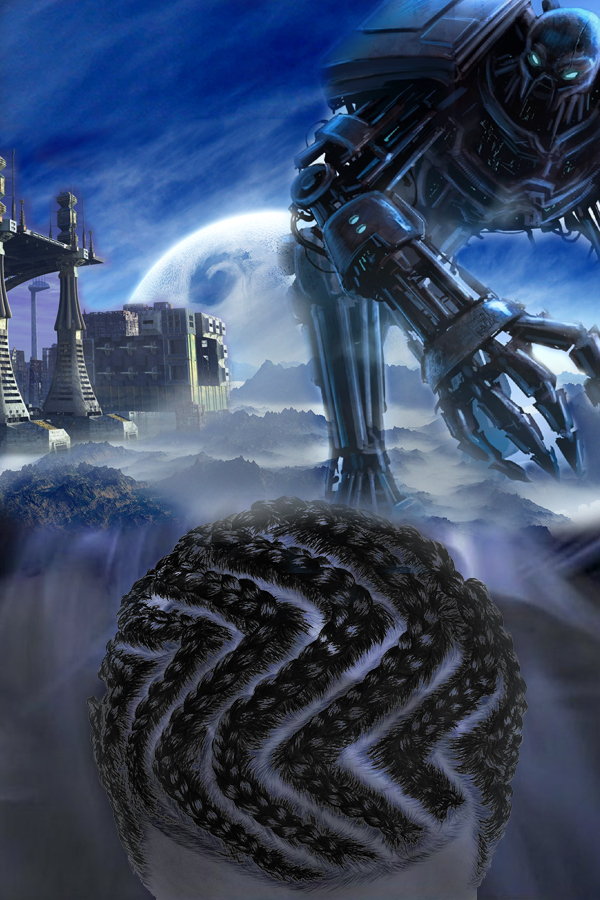
Number 3: Braiding Tales: We Built a World, Row by Row

A true story I had forgotten about until an idle comment in some random conversation with absolute strangers triggered the memory. I love when that happens, but I fear how many memories I’ve already forgotten that will never find their triggers.

Number 2: Duchess and the Anecdote

A sort of indirect sequel post to my Number 1 pick, in which I finally managed to utilize a character that’s been stuck in my head for ages.

Number 1: Stories Are the Creatures That Forage in the Wilderness of Our Minds

Although a writing advice post, I really like the wraparound bits in this one and I realize that it’s a bit gauche to fall in love with your own cleverness, but the quote from which the title was extracted is inspired.

And there you have it. My personal best bits of 2013. Let’s see what gems this year brings.

Sally forth and be whipping out your credit card and dialing because operators are standing byingly writeful.

©2014 Rhyan Scorpio-Rhys

Creative Commons License

Savior Complex

“You have a messiah complex, got to save the world.” — Dean Koontz, Odd Thomas

I’ve never been much for crowds, not even as a child. People huddled en masse tended to embrace a hive mind of boorishness, which was why I tended to do all my necessities shopping early on Tuesday mornings. Fewer people and less hassle as I collected my weekly provisions, zipped through the express lane, out of the market and on to the next chore on my list that required social navigation. But something wasn’t quite right today. Tuesday? Of course. Early morning? Naturally. Empty supermarket? Not by a long shot.

The aisles were crawling with miscreants of every possible variety. Attention deficit disordered shoppers who treated their shopping cart like cars out of a Fast and Furious film, crashed into other carts and shoppers with reckless abandon in search of the ever elusive sale of nearing-their-sell-by-date items they probably had no practical use for; forsaken carts parked in the middle of aisles blocking throughways and creating bumper to bumper trolley traffic; and coupon carrying cretins stalling checkout lines because they hadn’t quite mastered the simple art of having payment in hand for their items and beating a hasty retreat out into the open plains of the parking lot.

I contemplated pivoting on my heels and leaving the shopping for another morning or possibly next Tuesday—surely I could have survived a week on basic rations. But had I left, I wouldn’t have run into Tatum.

It was seventeen years since I laid eyes on her last. She was still attractive, more so now, a slender Honduran with mocha skin, shoulder-length dreadlocks, and a disarming smile that tended to pull a bit to the right side of her face. Unlike previous times when I randomly encountered someone from my past on the street and immediately began flipping through my mental card catalog for any excuse to walk away, I was actually pleased to see her. In that moment of reciting the usual social pleasantries by rote, all the negative history hadn’t existed. We waded in a pool of heart-warming nostalgia.

Her smile never wavered as she told me how her life hadn’t turned out quite the way she planned. When we were together, she studied to be a lawyer. Now, she worked as a marketing senior manager for a cosmetics firm, was the mother of two, a girl and a boy, seven and nine years old respectively, who were fathered by a deadbeat boyfriend who ditched both the wedding and his kids in one fell swoop.

I had no idea how long we stood there blocking the aisle much to the ire of the other shoppers nor did I care. For the first time in quite a while, I honestly enjoyed exchanging words with a person who wasn’t trapped within the confines of a television set. But all good things, as they say—so, we exchanged numbers, promised each other we’d call and went our separate ways.

And on the way home, the strangest nagging notion crept up from the back of my mind: had we been able to work things out all those many years ago, her life might have turned out differently. Better. Then came the guilt as if my absence was somehow responsible for the direction her life took. And on the tail end of that guilt came the shame for not being a better boyfriend to her and a better person in general.

I promptly crumpled up her number and kicked it down a storm drain. Neither she nor I needed to be reminded of what might have been.

Less than a week later, once I had time to regret trashing her phone number, she called me out of the blue with an invitation to have lunch and meet her children. I wasn’t particularly keen on the latter, but I definitely wanted to see her again.

We met at a faux Italian restaurant, a fast food chain done up in dime store décor to give the eatery a stereotypical taste of Italy, and I had to admit that I didn’t mind her kids all that much. They were a bit unruly, but what children weren’t at those ages? Although I felt a little awkward being interrogated by her brood, it was nice being in Tatum’s company. I experienced a level of comfort in her presence that oddly felt like home.

That was, until her daughter, Tracie, asked, “Did you and Mommy have S-E-X?” as if spelling the word somehow made the question safe to ask.

Confirmed bachelor that I was, I wasn’t comfortable chatting with a nine-year-old about sex. I had no idea what the proper protocol was, so I turned to Tatum and with a look, asked, Did we have S-E-X, Mommy?

Without batting an eye, Tatum answered, “Yes. We had sex.”

Was that how it’s done nowadays? Was it the norm for ex-boyfriends to be brought to lunch with the kiddies to openly discuss their sexual history? I was still reeling from that exchange when her son, Lee, chimed in, “You could be our Dad!”

The old one-two punch. These kids worked me over like a speed bag. They laughed at my embarrassment and I tried to play it off, but it unnerved me on a deep level. The rest of the conversation was downhill after that in terms of my personal discomfort. We got on well enough, the four of us, better than expected and when we said our goodbyes after lunch, I was hit with another weird sensation—jealousy. Because her children weren’t our children and in her family, there was no place setting for me at the table. It only lasted an instant but long enough to have registered.

I tried to put things into perspective, tried to remember why our relationship ended in the first place, it wasn’t a build up of all the minor things, the petty annoyances that masked the underlying truth that people simply grew apart. If I was honest, it was the Santería, the Afro-Cuban ritualistic and ceremonial worship of saints her family practiced religiously that rubbed me the wrong way. She asked how I felt about it and I told her I didn’t believe in things like that and it was the truth, but the other truth, the deeper truth, was that it scared a part of me that I didn’t want to acknowledge.

To be clear, it wasn’t Tatum practicing rituals so much as her mother. That woman hated me from the moment she clapped eyes on me, no rhyme, no reason, just pure unadulterated hatred. For some reason, I hadn’t measured up to her exacting standards of what constituted a proper boyfriend for her daughter and she never bothered hiding that fact. She visited our apartment constantly and after she left, I would find things hidden around the house, under the bed, in the refrigerator. Little Santería objects tucked away everywhere.

One day when I arrived home early with the intention of whipping up a surprise dinner for Tatum when she got off from work, I walked in on Tatum’s mother and sisters in the middle of a Santeria ritual. There were others with them, perhaps family members I hadn’t met or just fellow practitioners, all clad in white. Drummers talked to the saints, playing their specific beat, eyes closed in a trance while robed dancers chanted in ancient Yoruba as they spun and shook off the evil eye.

And in the center of the living room, Tatum’s mother stared at me like I was a burglar, like I was the thing that didn’t belong in my own home. Before I knew it, the last of my resolve evaporated and I began yelling for her and everyone else to get the hell out of my apartment, jabbing my finger in the air at her for emphasis. The old woman ignored me and she walked in ever-expanding circles while smoking a cigar that smelled of things I’d never smelled before and blew smoke in my face as she spoke in tongues. It made me gag and start to cough. I clutched at my throat and lost consciousness to the sight of Tatum’s mother and sisters laughing at me.

When I came to, Tatum was home. I told her what happened and she called her mother on the phone. After a lengthy conversation, she said she understood how things must have seemed and apologized for not telling me she allowed them to use the apartment while we were out but ultimately she sided with her family over me.

That was all it took. I moved out of the apartment that night and never looked back. Depending on how you looked at it, if her mother was casting a spell to get rid of me, it actually worked because I was out of her daughter’s life.

I kept this firmly in mind when Tatum phoned and invited me around hers for dinner. I accepted the invitation, mind you, but I kept the incident with her mother firmly in mind. It had been a month of Sundays since I had a proper home-cooked meal because no one in their right mind would have called what I did cooking.

Tatum greeted me at the door, apron on, dusted with flour and seasonings, happy homemaking in full effect. The kids were in the kitchen and to my astonishment were finishing up washing the dishes. They dried their hands before they ran up and hugged me. I looked into their faces and something seemed off. Their smiles were too wide, teeth too white and there was something unnatural about the intensity in their eyes. And their faces looked different. They still possessed features that were reminiscent of Tatum but the rest was somehow different, incomplete, like faces in transition. I chalked it up to being overly tired and thought no more of it.

Dinner went well. Who knew Tatum could have been such a gracious hostess? The kids made the meal a pleasant experience, as well. They stopped bickering and playing with their food when I asked them to, laughed at my jokes and listened with rapt attention as I talked about the time I met their mother.

When dinner was over we sat in the living room. The apartment was too small for two growing kids but Tatum arranged everything in a way that made it feel roomy, as though it was a real house.

We sat on the sofa, all of us, Tatum paging through a family photo album on her lap. Pictures of vacations with the deadbeat boyfriend, of her during various stages of her pregnancy, of her and deadbeat holding a newborn Lee and later with Tatum holding a newborn Tracie while deadbeat lurked somewhere in the background. A life well documented.

Tatum told me how difficult things had been. Deadbeat had developed a drug habit and came around under the guise of seeing his children only to beg off some money to score and if that hadn’t worked, he stole things to sell or threatened to take the kids.

One time when Tatum refused to give him any more money, he made good on his threat and Stacie and Lee were taken from her by Child Services because of alleged abuse charges. She described the hell she had to go through to get her family back.

As if on cue, there was a knock at the door. It was deadbeat, whose Christian name was Oscar, most likely coming around again to score. She spoke with him in hushed tones through the space in the door allowed by the security chain. When his shouts turned to raged kicks on the door, I stepped up behind Tatum so that he could see me. “Everything all right, Tate?”

It was like trying to put out a fire with gasoline. Oscar lost his mind and no manner of reasoning calmed him. I showed him my cell phone, made sure he had seen me dial 911 and only then as he weighed the options in his mind did he leave, but not before he made his threats. He would be back, to kill me, get his kids and make Tatum pay.

Tatum convinced me not to involve the police but only after she agreed to let me stay the night in case Oscar decided to return. We tried to salvage the rest of the evening for the sake of Tracie and Lee but deadbeat’s presence lingered in the air.

The sofa was made up for me as comfortable as she could manage, but sleep was the furthest thing from my mind. I was afraid that Oscar would return, afraid that I wouldn’t be much use since I wasn’t a violent man. All I could have done was to block his attack while Tatum grabbed the kids and made their way to safety. And if that was what it took, then so be it.

When the tension of the evening finally loosened its grip and I began drifting off, Tatum came to me. Without uttering a word, she slid her nightgown off her shoulders and let it fall to her ankles. Why hadn’t I ever noticed just how perfect she was before? She stood there, naked and beautiful in the moonlight that poured in from the living room window, and I knew then and there that I would have done anything for her. Smiling, she climbed on top of me and it was paradise.

After we were done, after all the love I was capable of making had been made, after the pillow talk in which things were said that were sweet and emotional and ultimately meaningless, Tatum gathered her nightgown and went back to her bed. I understood her not wanting the children to find her in my arms in the morning, but a small piece of me was gutted.

My head swam with a million thoughts, my heart filled with far too many emotions, and that, combined with the feeling that something still wasn’t quite right, meant there was no sleep for me this night. And so preoccupied was I that I hadn’t heard it at first. The sound. The jingling of keys.

I strained my ears, trying to locate the noise again. After a few moments of silence, I wondered if it had just been my overactive imagination. It couldn’t have been him with a set of keys, surely Tatum would have changed the locks. Then it happened again. The sound of a key sliding into a lock. I sat bolt upright on the sofa, eyes scanning the darkness for a weapon. Remote controls, game console controllers, DVDs—the candy dish! It was no gun, but the glass was solid enough to crack a skull.

I stared into the dark hallway from the living room entranceway and heard the front doorknob turning. The door opened a crack and light spilled in from the apartment building’s hallway. An arm slipped in through the crack holding a hooked wire, perhaps a piece of a clothes hanger, that scratched at the door until it found purchase in the handle of the security chain which it then dragged along the track slowly until the chain fell away.

I should have acted then. I should have rushed the door, slammed his arm in it, put my full weight against the door, held him there and called the police for them to cart him away. But I was held in place by a tension that locked inside of me. Instinct had taken over. So had the fear.

The intruder’s silhouette appeared in the doorway before the door clicked shut behind him, plunging the hall back into darkness. Footsteps, slow and deliberate. The floorboards creaked as if they were screaming a warning. I threw the candy dish with all my might into the darkness and knew that I missed my target completely when I heard it crash off the front door and glass rained down on the floor.

Then I heard a rustling come from the kids’ room, obviously awakened by the noise. Were they coming to investigate? Something snapped inside me. This bastard wasn’t going to harm those kids!

I charged into the darkness until I collided with the intruder. But as angry and determined as I was, I was no match for his explosive violence. He heaved me into the air and threw me onto the floor, unleashing a hail of punches and kicks that knocked me senseless. I put my arms up to protect my face and instinctively curled into a ball but my defensive position blocked none of his attacks.

He must have sensed how weak I was, what a uselessly pathetic man he was dealing with because he stopped hitting me and chose instead to wrap his hands around my throat. I flailed spastically to get him off as I gasped for air but the intruder was having none of it. He slammed my head against the floor in a violent demonstration of his control over me as I gasped my last remaining breaths.

Then light flooded the room. Tatum and the children stood at the end of the hall, staring at me. My emotions were mixed. I wanted them to go away, I didn’t want them to see me like this. I wanted them to get to safety, but on the other hand, I wanted them to help me. I didn’t want to die.

But there was something in the way they looked at me, something that told me things weren’t right. And I looked up at the intruder—

Who was no longer there. And now I understood why they were staring at me. Here I was lying on the floor with my own hands wrapped around my neck. It took some effort for me to loosen my own grip. I staggered to my feet and tried to explain how Oscar had come back, how he had a key and he broke in and was going to do something terrible to them, but they didn’t understand.

“Who’s Oscar?” the kids asked and, “What’s wrong with Daddy?”

“Stop that! It isn’t funny anymore!” I tried to yell through a raw throat. “I’m not your father!”

A genuine look of pain danced across Tracie and Lee’s faces as they turned to Tatum, asking, “Why is he saying this, Mommy? Why is he acting so strange?”

And I was feeling strange like my entire world had suddenly shifted on its axis.

“I can prove it,” I said as I ran past them into the living room and grabbed the photo album for proof and flipped through the pages of—

Tatum and I on vacation. Me posing with her during various stages of both her pregnancies. The pair of us cradling a newborn Lee and later with us holding a newborn Tracie while Lee lurked in the background pulling a silly face.

These weren’t the pictures I had seen earlier and I had no recollection of having taken these photos, yet they existed.

And I looked at Tracie and Lee and they were different again, now a mixture of Tatum and I thought I actually saw bits of myself in their faces. The kids asked Tatum what was wrong and she explained that I, Daddy, just had a nightmare, that’s all. She told them that everything would be all right in the morning, everything back to normal.

After Tatum swept up the shattered candy dish, she began to usher me to the bedroom, grabbing the pillow off the sofa when something fell to the floor, something that had been resting under the pillow. It looked like a figure made of red-tinged folded palm leaves, bound together by hair but I couldn’t see it properly because she quickly brushed it under the sofa with her foot. I asked her what it was and she said it was just one of the kids’ toys and she would talk to them about picking up their things, or she suggested maybe I should do it, after I got back from Tuesday morning shopping, because she wouldn’t have time since she was staring at a monster of a day down at the law firm tomorrow.

Text and Audio ©2013-2021 Rhyan Scorpio-Rhys

Stories Are the Creatures That Forage in the Wilderness of Our Minds

“Stories are the creatures that forage in the wilderness of our minds. Their claws pierce our curiosity, digging in deep to prevent our escape, as they force us into their maw, past razor sharp teeth of conflict.” —- Rhyan Scorpio-Rhys

Tell me a story.” the woman said, book opened to a blank page on her lap, graphite stick firmly in hand and at the ready. The reading chair in which she sat was, what appeared to my eyes, nothing more than a series of interwoven vines that had grown from the lush green carpet in the center of the room. This indoor library of hers smelled of petrichor, the scent of rain on dry earth, which would explain the moisture that dotted the spines of the books stacked in chaotic fashion on the recessed shelves lining the walls.

I — I don’t have any stories.” I shifted uncomfortably in a small puddle on the carpet—that was most assuredly grass—as the woman took in the sum of me.

Nonsense, everyone has stories, some more interesting than others, but they are stories nonetheless.” she said, gesturing with a nod for me to sit. “Everything is present for a story to exist: a teller, that would be you, and an audience, which would be me.”

My seat—a normal metal folding chair with padding—was as much out of place with the room’s décor as I. A reminder, no doubt, that although invited, I was still considered an interloper. The fact that the chair was bone dry despite the moist surroundings was of small consolation. I squirmed until I found the position that afforded the least amount of discomfort and said, “All right, then… I don’t know how to tell a story.”

Ah, a different matter altogether.” she said, placing the book and graphite aside. “The act of storytelling is as old as the creative spark that burns within us all. And though truly great storytellers are born, those lacking the unique gift may still acquire the skill.”

1. Keep it simple.

The first thing to bear in mind is if you have the choice between a complicated or simple telling, choose the simple approach. As marvelous as the brain may be, it can become overwhelmed if it attempts to process too much information at one time.

2. Open big.

Next, you mustn’t be afraid to grab your audience by the balls!” the woman smiled, amused by my unease. “And never apologize for doing so. You’re familiar with the saying, ‘you only get one chance to make a first impression,’ aren’t you? The same applies to your story. You need to carefully craft your opening line to grab your audience’s attention immediately, and represent the promise of your story by displaying a unique voice and perspective.

“There is no going soft here. Your opening line should possess the elements that make up the story as a whole, told in a distinctive voice, a point of view, a rudimentary plot and some hint of characterization. By the end of the first paragraph, your audience should know the setting and conflict… unless there is a particular reason to withhold this information.”

3. Be mindful of your story’s spine.

“Stories are the creatures that forage in the wilderness of our minds. Their claws pierce our curiosity, digging in deep to prevent our escape, as they force us into their maw, past razor sharp teeth of conflict. But despite outward appearances, these beasts are only as strong as their spine.

“Your duty is to support that spine by arranging your content in a logical order and supporting it with anecdotes that raise questions to keep up interest and moments of reflection to show your story’s appeal. We, as the audience, need a reason to care.

“And lop off the vestigial appendages of tangents where you find them. Going too far astray will only lose your audience’s attention.”

4. Don’t alienate your audience.

Some subjects require a delicate touch. You’ll know them by their appearance and the uneasy feeling they leave in your gut. By no means avoid them if they’re integral to your story, but instead find the best way to craft the tale so that you draw your audience in before revealing sensitive details. Invest them in the story before you shock them and then give them time to digest it.

5. End strong.

Whether you end your story on an upbeat note, allow your audience to fill in the blanks, come full circle with your lead, close with a relevant quote, provide a brief summary, or wrap things up with either a surprise or anecdotal ending… you need to come strong. Elevate your story’s effectiveness with a great ending and leave them with a lasting impression. The yang to your ‘first impression’ yin.

“You should also give your audience the proper space to appreciate your ending. A mere sentence or two in which you take a step back and let the story meaning steep in their mind.

And finally, allow your audience to hear the door click shut behind them, signifying that the story is well and truly over. Everything’s done and dusted. Thank you for visiting my world, now it’s time to return to your own.”

Got all that?” she asked. I nodded that I understood.

Good,” the woman rested the tip of the graphite stick on the book leaf, “now tell me a story.

Click.

Sally forth and be writeful.

©2013 Rhyan Scorpio-Rhys

Creative Commons License

Of Air Returned

i.

I burned my soul to ash but the pain paled in comparison to the terror that struck my heart like a match, anticipating her arrival and the tirade she would carry in tow. An unwarranted fear, as she was calm when she saw what I had done. Calm and nurturing. Soothing my pain with herbs and aromas, and each early morning during the hour of the wolf, she laid an ear on my back and listened as my soul mended itself.

She never spoke the words of disappointment aloud but it registered in her eyes. Although residing within my body, this wounded thing, this unwanted soul, did not belong to me. She had laid claim to it many years past, and in my despondency, I had taken liberties with her property and attempted to destroy it. Again.

ii.

The first time, I threw my soul into a sinkhole and allowed the ground to swallow it whole. I made her acquaintance when she plucked it from the soil like a tattered tuber. “I saw what you did,” she said. “And since you would so recklessly toss this precious thing away, it is no longer yours, but mine, agreed?” I nodded and she handed my soul back to me for safekeeping.

I honored our pact for a few years, caring for it within my limited capacity, but during a particularly nasty bout of depression, I tied heavy stones to my soul and pushed it off the sea wall. For a second time she appeared, fishing my soul from the waves, and scolded me, “You are charged with protecting this thing that it mine, do you understand?” Again, I nodded. Again, I lied.

iii.

“Why do you want this worthless soul when it has been crushed by the earth? Why do you want it when it has been drowned in the sea? Why do you want it when it has been set alight like so much tinder?” I searched long and hard yet found no answer in her silence.

iv.

During the day, when she thought me preoccupied, she secreted herself in the shadows and slept. One day I followed her into the darkness and watched her body twitch from dreaming and listened as she muttered,

One more soul, once buried deep.
One more soul, in ocean steeped.
One more soul, by fire burned.
One more soul, of air returned.

v.

Under her care, my soul grew healthier and it frightened me. I was pitilessly plagued and badgered by the phrase, One more soul, of air returned, that repeated in my mind’s ear until it turned dogged and cacophonous. But she was unaware of my inner torment, in fact, she was in an exceptionally good mood today, her voice almost a song, “I know you don’t see it, but you are a gift, you are. You have no idea just how special.”

vi.

Today was the day. I felt it in my marrow. Something was destined to happen, something I most likely would not survive. I should have embraced this eerie premonition, for it was no secret that I did not want to continue in this manner, broken, detached, and alone. But the choice of how and when I departed this wretched life was mine to make and mine alone. So, I stalled by distracting her with trivialities. “May I have more broth? Have you seen my shoes? No, not that pair, the other ones? Can we go for a walk?” If she knew my plan, her expression never showed sign. No request was too large or small on this day. She granted them all.

vii.

We strolled along the pathway in the park that led to the duck pond, a place we visited often during my convalescence. Picked, naturally, as not to arouse suspicion as I searched for the proper diversion in order to make my escape. But I was so wrapped in my own thoughts, I failed to notice that she was walking slower than usual today. “Can we rest a moment?” she asked as we neared the benches. “I am a little short of breath.”

Her breathing became a labored and raspy thing before it hitched and became lodged in her throat. When her face went dusky blue and she slid off the park bench, I panicked. The opportunity had presented itself and there I stood like an idiot, frozen. Entangled in the decision of whose life to save, or more accurately, whose death I could live with.

There was no real choice.

viii.

Her breathing was a trembling, liquid sound as I pressed my mouth to hers and exhaled, but instead of me breathing air into her body, I felt her sucking air from my lungs, and not just air…

I tried desperately to pull away but her thin, vise-like hands clamped down on the nape of my neck and held me firm in a kiss that was collapsing me. My hold on life became dim and futile, but before I slipped away into emptiness, I noticed the oddest thing: her belly began to swell.

Every fiber of my actuality was drawn into her, and my soul, the object I had forever been so reckless with, was systematically being stripped of concern, of negativity, of identity. I fell further and further into a darkness that pressed on me from all sides. So tight, so constricted. I was still unable to breathe but the sensation was somehow different now.

At the very moment when it seemed the darkness was about to claim me for eternity, there came a burst of light so bright as to cut my eyes. Thankfully something soon blotted out the light – a face, slowly coming into focus but I knew her before I saw her. From the moment I heard her soft cooing, “You are a gift, you are. You have no idea just how special.”

Mother.

Donor

low red blood cell count

There was a knock at Tim’s front door. Impossibly, there was a knock on a day there shouldn’t have been one. Not that it was a big disturbance, it had only interrupted his woolgathering. He began reading a book hours ago and somewhere along the way his mind drifted off to the point where he wouldn’t have been able, even with a gun pressed to his temple, to tell which page he was on or what part of the story he last read.

The knock again. Tim placed the book open face down on the side table. Next to it was the handheld trigger for the silent alarm which he picked up and let his thumb hover over the panic button. Should he press it or simply answer the door? Smart money was on activating the alarm but he had always been a slave to curiosity so he pocketed the remote, rose from his comfy chair, exited the living room and padded across the hardwood foyer floor on the balls of his feet.

The closer he got to the door he heard some sort of commotion going on outside and as his hand landed on the doorknob he drew in a deep breath and held it for a long moment to quell the anxious feeling hatching in the pit of his belly. Tim hadn’t realized just how unaccustomed he was to answering his own door, it had been so long.

As he turned the knob a thought crossed his mind, perhaps the person on the other side of the door, the lawbreaker, was a deranged lunatic or religious fanatic who saw it as their duty, their purpose, their God-given right to put an end to what they viewed as an abomination. He knew that wasn’t the case, though. The knock was far too polite. They were all so damned polite, the knockers. Lightly rapping on his door all day, all night, in any weather, even on holidays. Especially on holidays. The only time they didn’t knock was on Sunday, his sanctioned day of rest.

He opened the door to shouts and protests. A crowd of people clustered on his front porch began forming a semi-circle behind the woman who stood in the doorway directly in his face. They accused her of jumping the queue, shouted that what she was doing was illegal, and warned/threatened her with the prosecutable penalties of her actions. And the discontent was spreading along people of all ages, ethnicities, male and female alike who gathered in a line that ran the length of his front walk to the pavement, down the block, and most likely around the corner, who were waiting their turn for an audience. But all the chatter came to an abrupt halt the moment they caught sight of Tim.

The woman in front of him, the illegal knocker, had a familiar face but her features were too average, too face-in-the-crowd, to recall outright, Tim had to flip through his mental rolodex and play the association game. He twigged her face was connected to some sort of event that would have revealed a location that eventually would have produced a name. Taking a deep breath, he relaxed his mind and softened his focus and let his gears spin a bit until he came up with:

Fundraiser ~~> community center ~~> Dick Cole

This woman was a friend of Dick Cole. Linda something-or-other. Rhymed with seed. Greed? Mead? Plead?

“Linda Reid,” Tim smiled, more at the swiftness of the connection than the pleasure of seeing the woman. “It’s been a while. A couple of years, I think.”

“Settle down, everyone,” Tim addressed the throng beyond the woman. “You know I’m not allowed to accept appointments today so she’s not cutting in line ahead of any of you. She happens to be a friend.”

Tim gestured for Linda to step inside which prompted the grousing to recommence but he merely closed the door to let them vent amongst themselves.

“Sorry for causing a commotion,” Linda said, smiling a bit too much. “And for not keeping in touch. Things have been so hectic down at the center with budget cuts and understaffing…and other things, that I don’t socialize much anymore. And you’ve got a lot on your hands at the moment—”

Tim waved off the rest of the sentence. “No worries,” he said, leading her past the empty administrative desks and into the sitting room.

“Awful lot of furniture crowding your foyer,” Linda said.

“That’s for the staff, doormen, greeters, admin assistants, all government appointed. They see to visitors. There are also bodyguards posted at each of the house’s ingress and egress points but they all have the day off because it’s my day off.”

“I suppose that’s another thing I’m sorry for.”

“I don’t get many non-work related visitors so this is a welcomed change,” Tim said, gesturing for Linda to take a seat. “Can I get you anything? Water? Juice? Or I could put the kettle on?”

“Do you have anything stronger?” Linda asked sheepishly as she sat down.

“I don’t imbibe, I’m afraid. Rules of my employment and all.”

“Yes, of course, how foolish of me. Water’s fine, then.”

Tim popped into the kitchen and returned with two glasses and ice water in a silver pitcher dotted with dew-like condensation.

“Not to fret,” he said, sitting opposite Linda and filling her glass. “Most people never consider it when they drop by.”

She took the water glass and swallowed two gulps. “I–um–I think I have a slight confession to make.”

“This isn’t a social visit, is it?”

“I can explain.”

“Explain what exactly? That you’re a lawbreaker and you seek to make me complicit in your crime? Is this a trap? Did the organization send you? Are you here to test me? Well, I’m not having it so you can go back and tell your bosses that I don’t cut side deals to pocket a little extra cash. We made an arrangement and I’m honoring it to the best of my ability!”

“So, how does this go? Do I have to fill out an application? Sign a legal document? Do you need proof? I didn’t think to bring any with me but I can get whatever it is you need.”

“If your request is granted, you’ll need to sign a few documents, including one that absolves me of any blame should the outcome fail to have the desired effect,” he said automatically.

“Naturally, without a doubt,” Linda answered, a bit too eagerly.

They’re always so eager at this stage, before the harshness of reality sets in, Tim thought. “But for right now, all you have to do is tell me what brings you here.”

“Um, okay,” she adjusted herself in the seat and wondered how her breath could so suddenly get caught in her throat. “It isn’t for me, you understand, I’d never come to ask for myself.

It’s my fiancé, Dick, you’ve met him, in fact, he introduced us at a fundraiser two years ago.”

“Yes, I know Dick. What’s wrong with him?”

“He has amyotrophic lateral sclerosis,” Linda said in a quiet voice.

“Lou Gehrig’s disease.” Tim’s stomach turned over. He didn’t need her to elucidate further.

She nodded, her eyes fading down to the throw rug, absently tracing patterns. “It’s in the late stages now. I would have come sooner, but it’s taken me some time to talk Dick into this. He doesn’t think it seems right. Not what you do, that’s fine and he thinks you’re a saint for doing it. He doesn’t think it’s right asking you for help, especially this kind of help. Dick doesn’t want you or anyone else taking pity on him. He’s never taken a handout in his life and he can’t help but see this as charity.”

“Yes,” Tim said, not bothering to hear the rest of the pitch. That’s what they were, pitches. Not simple requests or implorations, these were stories designed to pull at his heartstrings. But who ever bothered to listen to his story? Not one of them. Not a single person among the many that crossed his threshold ever bothered asking him a personal question. As if he wasn’t human, as if he wasn’t allowed his own tragedy.

“What? I don’t understand.” She set the glass down on the nearby table, missing the coaster by half an inch. Tim either hadn’t noticed or decided not to comment.

“I’m saying, yes.”

“Yes, you’ll help?” Linda blinked and met the man’s gaze as a hopeful smile began to split her face.

“Yes.”

“I — I don’t know what to say,” she was on her feet before she knew what was happening, moving in for a hug. “I — thank you, Tim!”

Tim put his hand up, stopping the woman in her tracks. “Don’t thank me yet. There are still a few things you need to realize before you accept my offer.”

“It doesn’t matter. Anything! And I mean anything!” Interest colored her face.

“Please calm down for a moment and listen to me. This thing you’re asking of me, this gift of blood, it may not solve your problems and could possibly worsen matters for you.” Tim traced his finger around the rim of his glass.

“I’ll take that chance… we’ll take that chance!”

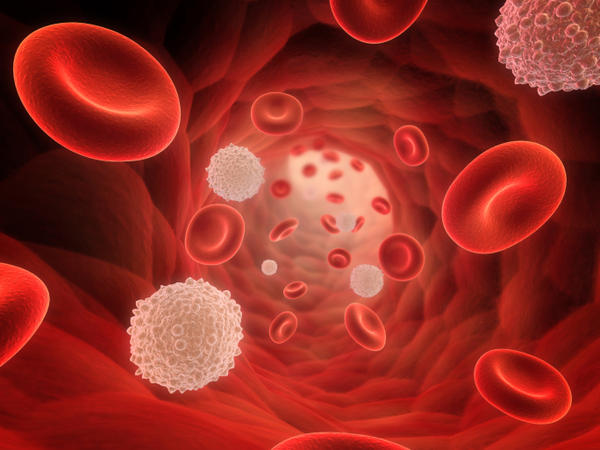
“Listen to me!” Tim brought the glass down on the table, just hard enough to startle and capture her full attention. At the cost of a wet sleeve and the water stains that would surely mark the cherry wood. “Ever since scientists discovered the curative properties of my blood, tests have been run. Mostly successful, I’m a match for all blood types, and my white blood cells haven’t encountered a disease it can’t cure—”

“Which is why I came to you. I did my research and you cured other ALS patients before—”

“The problem isn’t my blood,” he interrupted. “It’s Dick’s immune system reaction that’s the danger. If his body rejects my blood and tries to attack parts of it, there won’t be a second chance. He instantly becomes a non-match. On the other hand, if his body takes the transfusion, in a few month’s time, his white blood cells will resemble mine and he’ll automatically be enlisted in the same line of work as I am.”

The weight of Tim’s words slowly settled on Linda. “You mean, he’ll—?”

“He’ll never know another moment’s peace for the rest of his life. People will hound him, pleading for themselves or family or friends, day and night, night and day. Nonstop. Some gentle, others less so.”

“But why is that necessary?” Linda asked.

“My white blood cells can’t be synthesized. Top minds have tried and failed time and again. And although my blood can be stored, the white blood cells lose their miraculous properties over a period of thirty-six hours outside my body.

“I would have been strapped to a table in a laboratory for the rest of my natural life if I wasn’t for my brother. Hell of a lawyer. Fought his ass off to petition the quality of life rights that allow me the tiny bit of freedom I have. The stipulation is I must share my gift, triage the world, help the sickest among you. There are restrictions, legal hours when people have the right to approach me, but no one listens. How can they be expected to follow the rules when they or their loved ones are dying?

“I used to fight it. Turn people away when the established workday was through. Dealt with the angry mobs and the death threats. Then I asked myself, “Why?” Why fight my fate? If I’m meant to help people, why shouldn’t I do it when it needs to be done and not only when I want to do it? And there’s a selfish reason if I’m honest. You see, if I help enough people, if enough of the populace possesses my blood, I won’t be special anymore or alone in all this. Maybe then, when there’s enough blood to go around and my bit for the world is done, the price of my gift paid, maybe then I can be left alone to die in peace.”

Linda hesitated. She shook her head and turned to leave. “This… this is… “ She stumbled over the words, not knowing how to express her thoughts.

Tim realized too late that he said too much, chose the wrong person to unburden himself on. He regretted his action instantly. “It’s a lot to process, I know. Why don’t you go home and discuss it with Dick? You can contact me if you decide to go through with it.”

From his shirt pocket, he fished out a solid white business card, imprinted only with a faint phone number that had to be viewed at the proper angle in order to be seen. “A direct line, please don’t share it with anyone.”

“I won’t,” Linda muttered as she shambled to the doorway. “I — look, I know you can’t talk about the other people you’ve seen, but can you just tell me if anyone has ever turned down your help after you’ve explained everything to them?”

For a moment, Tim didn’t respond, he just watched as the hope drained from her face. “More people than you might imagine.” He noted she found no reassurance in his answer. He turned away, unable to look upon her sorrow any longer. He had his own to contend with.

Over his shoulder, he said, “Be sure you tell Dick everything I’ve told you, and if he refuses, try to understand. Sometimes there are worse things than death.”

Text and Audio ©1988 – 2021 Rhyan Scorpio-Rhys

Famous Thoughts on Grammar and Usage

1. “You can be a little ungrammatical if you come from the right part of the country.” — Robert Frost

2. “Word has somehow got around that the split infinitive is always wrong. That is a piece with the outworn notion that it is always wrong to strike a lady.” — James Thurber

3. “It is indeed acceptable practice to sometimes split an infinitive. If infinitive-splitting makes available just the shade of meaning you desire or if avoiding the separation creates a confusing ambiguity or patent artificiality, you are entitled to happily go ahead and split!” — Richard Lederer

4. “When you catch an adjective, kill it.” — Mark Twain

5. “The adjective is the banana peel of the parts of speech.” — Clifton Fadiman

6. “The adjective is the enemy of the noun.” — Voltaire

7. “If the noun is good and the verb is strong, you almost never need an adjective.” — J. Anthony Lukas

8. “Don’t say it was ‘delightful’; make us say ‘delightful’ when we’ve read the description. You see, all those words (horrifying, wonderful, hideous, exquisite) are only like saying to your readers ‘Please will you do my job for me?’” — C.S. Lewis

9. “Forward motion in any piece of writing is carried by verbs. Verbs are the action words of the language and the most important. Turn to any passage on any page of a successful novel and notice the high percentage of verbs. Beginning writers always use too many adjectives and adverbs and generally use too many dependent clauses. Count your words and words of verbal force (like that word “force” I just used).” — William Sloane

10. “The editorial ‘we’ has often been fatal to rising genius; though all the world knows that it is only a form of speech, very often employed by a single needy blockhead.” — Thomas Baington Macaulay

11. “Only presidents, editors and people with tapeworm have the right to use the editorial ‘we.’” — Mark Twain

Writing Joke of the Day: Comforting a Grammar Nazi

Q: What do you say when you are comforting a grammar nazi?
A: There, Their, They’re

English Professor

“In English,” he said, “A double negative forms a positive. In some languages, though, such as Russian, a double negative is still a negative. However, there is no language wherein a double positive can form a negative.”

A voice from the back of the room piped up, “Yeah, right.”

Library

A Texan was visiting Harvard University, and was lost. He stopped a student and asked, “Do you know where the library is at?”

“I sure do,” replied the student, “But, you know, you’re not supposed to end sentences with prepositions.”

“What?”

“Prepositions. You ended your sentence with an ‘at’, which you aren’t supposed to do.”

“Oh, ok,” said the Texan, “Do you know where the library is at, asshole?”

Grammar walks into a Bar

Three intransitive verbs walk into a bar. They sit. They Drink. They Leave

A comma splice walks into a bar, it has a drink and then leaves.

A dangling modifier walks into a bar. After finishing a drink, the bartender asks it to leave.

A Question mark walks into a bar?

Two Quotation marks “walk into” a bar.

A gerund and an infinitive walk into a bar, drinking a drink.

The bar was walked into by the passive voice.

The past, the present, and the future walked into a bar. It was tense.

A synonym ambles into a pub.

A gerund and an infinitive walk into a bar, drinking to drink.

A hyperbole totally ripped into this bar and destroyed everything.

A run on sentence walks into a bar it is thirsty.

Falling slowly, softly falling, the chiasmus collapsed to the bar floor.

A group of homophones wok inn two a bar.

Panda

A panda walks into a cafe. He orders a sandwich, eats it, then draws a gun and fires two shots in the air.

“Why?” asks the confused waiter, as the panda makes towards the exit. The panda produces a badly punctuated wildlife manual and tosses it over his shoulder.

“I’m a panda,” he says at the door. “Look it up.”

The waiter turns to the relevant entry and, sure enough, finds an explanation.

“Panda. Large black-and-white bear-like mammal, native to China. Eats, shoots and leaves.”

Neil Gaiman reads from The Graveyard Book

A favorite writer of mine, Neil Gaiman. Enjoy as he reads from The Graveyard Book, winner of the 2010 Cilip Carnegie Medal, the Newbery Medal and the Booktrust Teenage Book Prize 2009, and shortlisted for the Kate Greenaway Award.