I’ve been out of sorts for the past week or so. Not physically under the weather, but artistically less than okay. As if my creativity somehow caught a head cold.
Replete with out-of-sortsosity, my inspiration receptors have become clogged and in the wee hours of the night I’m no longer able to decipher the Aramaic Morse code of the house creaks that whisper my dreams back to me as it settles.
My fear is that The Order Of Things has finally caught up with me and placed a lien on my Adulting Account, something I’ve been attempting to stave off for most of my life. There’s no way in hell I could withstand a grown-up audit, they’d revoke my maturity license for sure.
Hell, I still watch cartoons—-but to make myself sound more posh I refer to them as animation, or anime, depending on the crowd I’m addressing, I still read the occasional comic book—-that’s graphic novel to you, pal!, and I’m that waaaaay-too-old guy you sometimes spot out the corner of your eye in the supermarket, waving my arms like a lunatic while trying to maintain my balance on the back of the shopping cart I’m riding like a Honda Kick N Go Scooter down the candy/soda aisle, singing Blur’s “Woo Hoo.”
And here’s where Out-of-sortstein rears its monstery head and blocks my attempt at crafting a pithy wrap-up that brings everything all together and ties it in a neat little bloggy bow.
Instead, I gots nothing.
So just this once, I’m asking you in Peter Pan fashion to use your imagination and pretend I wrote something clever and clap your hands. Petey asked his audience to do it when it looked like Tinker Bell was dying so she could get well again. I’m asking mine to help bring my creativity back to life.
“You have a messiah complex, got to save the world.” — Dean Koontz, Odd Thomas
I’ve never been much for crowds, not even as a child. People huddled en masse tended to embrace a hive mind of boorishness, which was why I tended to do all my necessities shopping early on Tuesday mornings. Fewer people and less hassle as I collected my weekly provisions, zipped through the express lane, out of the market and on to the next chore on my list that required social navigation. But something wasn’t quite right today. Tuesday? Of course. Early morning? Naturally. Empty supermarket? Not by a long shot.
The aisles were crawling with miscreants of every possible variety. Attention deficit disordered shoppers who treated their shopping cart like cars out of a Fast and Furious film, crashed into other carts and shoppers with reckless abandon in search of the ever elusive sale of nearing-their-sell-by-date items they probably had no practical use for; forsaken carts parked in the middle of aisles blocking throughways and creating bumper to bumper trolley traffic; and coupon carrying cretins stalling checkout lines because they hadn’t quite mastered the simple art of having payment in hand for their items and beating a hasty retreat out into the open plains of the parking lot.
I contemplated pivoting on my heels and leaving the shopping for another morning or possibly next Tuesday—surely I could have survived a week on basic rations. But had I left, I wouldn’t have run into Tatum.
It was seventeen years since I laid eyes on her last. She was still attractive, more so now, a slender Honduran with mocha skin, shoulder-length dreadlocks, and a disarming smile that tended to pull a bit to the right side of her face. Unlike previous times when I randomly encountered someone from my past on the street and immediately began flipping through my mental card catalog for any excuse to walk away, I was actually pleased to see her. In that moment of reciting the usual social pleasantries by rote, all the negative history hadn’t existed. We waded in a pool of heart-warming nostalgia.
Her smile never wavered as she told me how her life hadn’t turned out quite the way she planned. When we were together, she studied to be a lawyer. Now, she worked as a marketing senior manager for a cosmetics firm, was the mother of two, a girl and a boy, seven and nine years old respectively, who were fathered by a deadbeat boyfriend who ditched both the wedding and his kids in one fell swoop.
I had no idea how long we stood there blocking the aisle much to the ire of the other shoppers nor did I care. For the first time in quite a while, I honestly enjoyed exchanging words with a person who wasn’t trapped within the confines of a television set. But all good things, as they say—so, we exchanged numbers, promised each other we’d call and went our separate ways.
And on the way home, the strangest nagging notion crept up from the back of my mind: had we been able to work things out all those many years ago, her life might have turned out differently. Better. Then came the guilt as if my absence was somehow responsible for the direction her life took. And on the tail end of that guilt came the shame for not being a better boyfriend to her and a better person in general.
I promptly crumpled up her number and kicked it down a storm drain. Neither she nor I needed to be reminded of what might have been.
Less than a week later, once I had time to regret trashing her phone number, she called me out of the blue with an invitation to have lunch and meet her children. I wasn’t particularly keen on the latter, but I definitely wanted to see her again.
We met at a faux Italian restaurant, a fast food chain done up in dime store décor to give the eatery a stereotypical taste of Italy, and I had to admit that I didn’t mind her kids all that much. They were a bit unruly, but what children weren’t at those ages? Although I felt a little awkward being interrogated by her brood, it was nice being in Tatum’s company. I experienced a level of comfort in her presence that oddly felt like home.
That was, until her daughter, Tracie, asked, “Did you and Mommy have S-E-X?” as if spelling the word somehow made the question safe to ask.
Confirmed bachelor that I was, I wasn’t comfortable chatting with a nine-year-old about sex. I had no idea what the proper protocol was, so I turned to Tatum and with a look, asked, Did we have S-E-X, Mommy?
Without batting an eye, Tatum answered, “Yes. We had sex.”
Was that how it’s done nowadays? Was it the norm for ex-boyfriends to be brought to lunch with the kiddies to openly discuss their sexual history? I was still reeling from that exchange when her son, Lee, chimed in, “You could be our Dad!”
The old one-two punch. These kids worked me over like a speed bag. They laughed at my embarrassment and I tried to play it off, but it unnerved me on a deep level. The rest of the conversation was downhill after that in terms of my personal discomfort. We got on well enough, the four of us, better than expected and when we said our goodbyes after lunch, I was hit with another weird sensation—jealousy. Because her children weren’t our children and in her family, there was no place setting for me at the table. It only lasted an instant but long enough to have registered.
I tried to put things into perspective, tried to remember why our relationship ended in the first place, it wasn’t a build up of all the minor things, the petty annoyances that masked the underlying truth that people simply grew apart. If I was honest, it was the Santería, the Afro-Cuban ritualistic and ceremonial worship of saints her family practiced religiously that rubbed me the wrong way. She asked how I felt about it and I told her I didn’t believe in things like that and it was the truth, but the other truth, the deeper truth, was that it scared a part of me that I didn’t want to acknowledge.
To be clear, it wasn’t Tatum practicing rituals so much as her mother. That woman hated me from the moment she clapped eyes on me, no rhyme, no reason, just pure unadulterated hatred. For some reason, I hadn’t measured up to her exacting standards of what constituted a proper boyfriend for her daughter and she never bothered hiding that fact. She visited our apartment constantly and after she left, I would find things hidden around the house, under the bed, in the refrigerator. Little Santería objects tucked away everywhere.
One day when I arrived home early with the intention of whipping up a surprise dinner for Tatum when she got off from work, I walked in on Tatum’s mother and sisters in the middle of a Santeria ritual. There were others with them, perhaps family members I hadn’t met or just fellow practitioners, all clad in white. Drummers talked to the saints, playing their specific beat, eyes closed in a trance while robed dancers chanted in ancient Yoruba as they spun and shook off the evil eye.
And in the center of the living room, Tatum’s mother stared at me like I was a burglar, like I was the thing that didn’t belong in my own home. Before I knew it, the last of my resolve evaporated and I began yelling for her and everyone else to get the hell out of my apartment, jabbing my finger in the air at her for emphasis. The old woman ignored me and she walked in ever-expanding circles while smoking a cigar that smelled of things I’d never smelled before and blew smoke in my face as she spoke in tongues. It made me gag and start to cough. I clutched at my throat and lost consciousness to the sight of Tatum’s mother and sisters laughing at me.
When I came to, Tatum was home. I told her what happened and she called her mother on the phone. After a lengthy conversation, she said she understood how things must have seemed and apologized for not telling me she allowed them to use the apartment while we were out but ultimately she sided with her family over me.
That was all it took. I moved out of the apartment that night and never looked back. Depending on how you looked at it, if her mother was casting a spell to get rid of me, it actually worked because I was out of her daughter’s life.
I kept this firmly in mind when Tatum phoned and invited me around hers for dinner. I accepted the invitation, mind you, but I kept the incident with her mother firmly in mind. It had been a month of Sundays since I had a proper home-cooked meal because no one in their right mind would have called what I did cooking.
Tatum greeted me at the door, apron on, dusted with flour and seasonings, happy homemaking in full effect. The kids were in the kitchen and to my astonishment were finishing up washing the dishes. They dried their hands before they ran up and hugged me. I looked into their faces and something seemed off. Their smiles were too wide, teeth too white and there was something unnatural about the intensity in their eyes. And their faces looked different. They still possessed features that were reminiscent of Tatum but the rest was somehow different, incomplete, like faces in transition. I chalked it up to being overly tired and thought no more of it.
Dinner went well. Who knew Tatum could have been such a gracious hostess? The kids made the meal a pleasant experience, as well. They stopped bickering and playing with their food when I asked them to, laughed at my jokes and listened with rapt attention as I talked about the time I met their mother.
When dinner was over we sat in the living room. The apartment was too small for two growing kids but Tatum arranged everything in a way that made it feel roomy, as though it was a real house.
We sat on the sofa, all of us, Tatum paging through a family photo album on her lap. Pictures of vacations with the deadbeat boyfriend, of her during various stages of her pregnancy, of her and deadbeat holding a newborn Lee and later with Tatum holding a newborn Tracie while deadbeat lurked somewhere in the background. A life well documented.
Tatum told me how difficult things had been. Deadbeat had developed a drug habit and came around under the guise of seeing his children only to beg off some money to score and if that hadn’t worked, he stole things to sell or threatened to take the kids.
One time when Tatum refused to give him any more money, he made good on his threat and Stacie and Lee were taken from her by Child Services because of alleged abuse charges. She described the hell she had to go through to get her family back.
As if on cue, there was a knock at the door. It was deadbeat, whose Christian name was Oscar, most likely coming around again to score. She spoke with him in hushed tones through the space in the door allowed by the security chain. When his shouts turned to raged kicks on the door, I stepped up behind Tatum so that he could see me. “Everything all right, Tate?”
It was like trying to put out a fire with gasoline. Oscar lost his mind and no manner of reasoning calmed him. I showed him my cell phone, made sure he had seen me dial 911 and only then as he weighed the options in his mind did he leave, but not before he made his threats. He would be back, to kill me, get his kids and make Tatum pay.
Tatum convinced me not to involve the police but only after she agreed to let me stay the night in case Oscar decided to return. We tried to salvage the rest of the evening for the sake of Tracie and Lee but deadbeat’s presence lingered in the air.
The sofa was made up for me as comfortable as she could manage, but sleep was the furthest thing from my mind. I was afraid that Oscar would return, afraid that I wouldn’t be much use since I wasn’t a violent man. All I could have done was to block his attack while Tatum grabbed the kids and made their way to safety. And if that was what it took, then so be it.
When the tension of the evening finally loosened its grip and I began drifting off, Tatum came to me. Without uttering a word, she slid her nightgown off her shoulders and let it fall to her ankles. Why hadn’t I ever noticed just how perfect she was before? She stood there, naked and beautiful in the moonlight that poured in from the living room window, and I knew then and there that I would have done anything for her. Smiling, she climbed on top of me and it was paradise.
After we were done, after all the love I was capable of making had been made, after the pillow talk in which things were said that were sweet and emotional and ultimately meaningless, Tatum gathered her nightgown and went back to her bed. I understood her not wanting the children to find her in my arms in the morning, but a small piece of me was gutted.
My head swam with a million thoughts, my heart filled with far too many emotions, and that, combined with the feeling that something still wasn’t quite right, meant there was no sleep for me this night. And so preoccupied was I that I hadn’t heard it at first. The sound. The jingling of keys.
I strained my ears, trying to locate the noise again. After a few moments of silence, I wondered if it had just been my overactive imagination. It couldn’t have been him with a set of keys, surely Tatum would have changed the locks. Then it happened again. The sound of a key sliding into a lock. I sat bolt upright on the sofa, eyes scanning the darkness for a weapon. Remote controls, game console controllers, DVDs—the candy dish! It was no gun, but the glass was solid enough to crack a skull.
I stared into the dark hallway from the living room entranceway and heard the front doorknob turning. The door opened a crack and light spilled in from the apartment building’s hallway. An arm slipped in through the crack holding a hooked wire, perhaps a piece of a clothes hanger, that scratched at the door until it found purchase in the handle of the security chain which it then dragged along the track slowly until the chain fell away.
I should have acted then. I should have rushed the door, slammed his arm in it, put my full weight against the door, held him there and called the police for them to cart him away. But I was held in place by a tension that locked inside of me. Instinct had taken over. So had the fear.
The intruder’s silhouette appeared in the doorway before the door clicked shut behind him, plunging the hall back into darkness. Footsteps, slow and deliberate. The floorboards creaked as if they were screaming a warning. I threw the candy dish with all my might into the darkness and knew that I missed my target completely when I heard it crash off the front door and glass rained down on the floor.
Then I heard a rustling come from the kids’ room, obviously awakened by the noise. Were they coming to investigate? Something snapped inside me. This bastard wasn’t going to harm those kids!
I charged into the darkness until I collided with the intruder. But as angry and determined as I was, I was no match for his explosive violence. He heaved me into the air and threw me onto the floor, unleashing a hail of punches and kicks that knocked me senseless. I put my arms up to protect my face and instinctively curled into a ball but my defensive position blocked none of his attacks.
He must have sensed how weak I was, what a uselessly pathetic man he was dealing with because he stopped hitting me and chose instead to wrap his hands around my throat. I flailed spastically to get him off as I gasped for air but the intruder was having none of it. He slammed my head against the floor in a violent demonstration of his control over me as I gasped my last remaining breaths.
Then light flooded the room. Tatum and the children stood at the end of the hall, staring at me. My emotions were mixed. I wanted them to go away, I didn’t want them to see me like this. I wanted them to get to safety, but on the other hand, I wanted them to help me. I didn’t want to die.
But there was something in the way they looked at me, something that told me things weren’t right. And I looked up at the intruder—
Who was no longer there. And now I understood why they were staring at me. Here I was lying on the floor with my own hands wrapped around my neck. It took some effort for me to loosen my own grip. I staggered to my feet and tried to explain how Oscar had come back, how he had a key and he broke in and was going to do something terrible to them, but they didn’t understand.
“Who’s Oscar?” the kids asked and, “What’s wrong with Daddy?”
“Stop that! It isn’t funny anymore!” I tried to yell through a raw throat. “I’m not your father!”
A genuine look of pain danced across Tracie and Lee’s faces as they turned to Tatum, asking, “Why is he saying this, Mommy? Why is he acting so strange?”
And I was feeling strange like my entire world had suddenly shifted on its axis.
“I can prove it,” I said as I ran past them into the living room and grabbed the photo album for proof and flipped through the pages of—
Tatum and I on vacation. Me posing with her during various stages of both her pregnancies. The pair of us cradling a newborn Lee and later with us holding a newborn Tracie while Lee lurked in the background pulling a silly face.
These weren’t the pictures I had seen earlier and I had no recollection of having taken these photos, yet they existed.
And I looked at Tracie and Lee and they were different again, now a mixture of Tatum and I thought I actually saw bits of myself in their faces. The kids asked Tatum what was wrong and she explained that I, Daddy, just had a nightmare, that’s all. She told them that everything would be all right in the morning, everything back to normal.
After Tatum swept up the shattered candy dish, she began to usher me to the bedroom, grabbing the pillow off the sofa when something fell to the floor, something that had been resting under the pillow. It looked like a figure made of red-tinged folded palm leaves, bound together by hair but I couldn’t see it properly because she quickly brushed it under the sofa with her foot. I asked her what it was and she said it was just one of the kids’ toys and she would talk to them about picking up their things, or she suggested maybe I should do it, after I got back from Tuesday morning shopping, because she wouldn’t have time since she was staring at a monster of a day down at the law firm tomorrow.
I was toiling away at a short story for the longest time—-it was an elusive bastard of a thing that simply refused to cooperate—-but there I was knee-deep in the rising action stage and the words were flowing at a pretty decent clip and some of it was even good if i do say so myself—-
And then I hit the Duh Moment.
It’s that precise instant when a puzzle piece your subconscious has been working on without your knowledge slips into place and your entire universe makes absolute sense. What’s the matter with me? The solution is so simple! How did I not see this before? It was staring me right in the face, plain as day!
One of the single best experiences when writing. That magical moment of crystal clarity. And it lasts for just a moment.
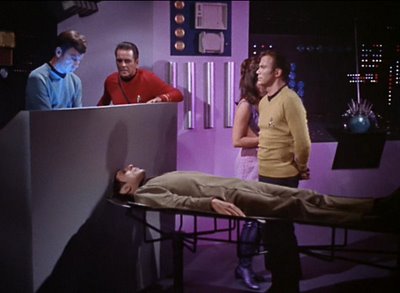
Just like the episode of Star Trek where the Eymorgs steal Spock’s brain and McCoy has to put on the Teacher in order to perform a reverse brain transplant within the three-hour time limit that the implanted knowledge lasts—-phew! that’s a mouthful—-you’re in a race against time to commit as much of that new-found genius to the page as possible before it slips away like a dream upon waking.
You’re also trying to beat the crash.
Coming down off the adrenaline rush when your story came together, your mind will lock onto something and detour on a tangent and you’ll miss a vital piece of information and the structure will topple like a Jenga tower.
In the end, your mind winds up bone weary and you’ll need to step away from the inspiration carnage in order to rebuild your depleted creativity reserve. No worries, though. It’s all part of the process.
As for the aforementioned short story? Still working on it. The first draft is still in the construction phase, but thanks to a bulletted list as long as your arm, I was able to jot down all the important bits.
“Art to me is an anecdote of the spirit, and the only means of making concrete the purpose of its varied quickness and stillness.” —– Mark Rothko
They come from miles around, my characters do, traveling the great distance from the fringes of my minds eye, some even making the long and arduous haul from my childhood, just to sit and talk. They do this whenever I’m alone.
As they gather ’round, I cast an eye upon their many and various faces and can’t help but feel the slightest twinge of remorse. Being in my company, locked within the confines of my imagination, is not wholly unlike a purgatory for them. A holding pattern, a waiting room, where they converse amongst themselves in voices audible only to myself, trying to catch my attention in the slimmest hope of being set free. Birthed into a story.
Some are fresh meat, the rest lifers, each easily spotted by the differences in their appearance and the strength of their voices. Fresh meats are gossamers—newly formed characters, little more than a stack of traits—who shout in whispers. Lifers, on the other hand, are as fleshed out as you or I, perhaps even more so, who have acquired the proper pitch and turn of phrase to catch me unawares during the times when my mind idles.
Before the talks begin–serious conversation, not the normal natterings they engage in–a flying thing the size of a butterfly, jewel toned blue stripes, greenish gold spots, with flecks of silver on the wings, lands in the palm of my outstretched hand.
“What is that, then?” a childlike voice asks from somewhere deep in the crowd, low to the ground. I recognize it instantly.
“It’s an anecdote, Duchess. Come see for yourself.” I reply, as the creature’s wings beat softly on my palm.
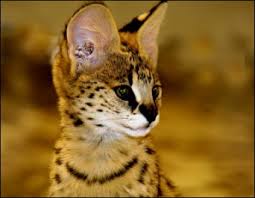
The throng–my personal rogues gallery whose roster includes reputables and reprobates alike–part like the Red Sea, making way for the most noble of all serval cats, The Duchess.
“An antidote? Have you been poisoned?” The Duchess queries as she saunters into the open space, a dollop of concern gleaming in her vivid blue eyes.
I try to not laugh, partly out of respect, but mostly due to the fact that though she is the eldest of my unused characters, she is technically still but a kitten. “No, Duchess, it’s an anecdote, as in a short, amusing or interesting story about a person or an incident.”
“I know full well what an anecdote is, thank you kindly. I was merely attempting to lighten the dreadfully somber mood with a bit of levity.” Not her best faux pas cover, but it was swift, which should count for something. As casually as she could manage, the kitten turned to see if anyone found amusement at her expense. No one did. They knew better. “May I hold it?”
I hesitate and stare at the leapling. Created on February 29th all those many years ago, it was my rationale–on paper–for keeping her a kitten, seeing as she had fewer birthdays, she would naturally age at a decelerated rate. The actuality is I have an affinity for kittens. For full grown cats? Not so much. And now the dilemma is if her kittenish nature should come into play and, without meaning to, cause injury to the anecdote, then all this would be for naught.
Her eyes plead with all the promise of being good and I have no choice but to relent. “It’s fragile, so be gentle. Take care not to crush it.” I gently place the anecdote in her cupped paws.
“Why does one need an anecdote?” The Duchess of Albion asked, her nose twitching whenever the creature moves its wings.
“To tell a proper story.” I answer. “More than just a sequence of actions, anecdotes are the purest form of the story itself.”
“But I thought characters are at the heart of every great story?”
“They are and anecdotes connect the hearts and minds of those characters to a story.” I try to feign calm but I can see the kitten’s body tensing up. Her eyes, those glorious baby blues, are studying the creature closely. Was I wrong in my decision to trust that she rules her instincts and not the other way around?
“They also add suspense to your story, giving the audience a sense that something is about to happen. If you use them right, you can start raising questions right at the beginning of your story—something that urges your audience to stay with you. By raising a question, you imply that you will provide your audience with the answers. And you can keep doing this as long as you remember to answer all the questions you raise.”
The kitten’s breath becomes rapid and her paws close in around the anecdote and I want to cry out, urge her to stop, but it’s far beyond that point now. She is in control of her own fate. Canines bare themselves, paws pulling the creature closer to her mouth.
“No!” she shakes her head violently. Her ears relax and her mouth closes as her breathing returns to normal. Then, the oddest thing happens…
The Duchess begins to vanish. All the characters look on in a dazed silence, uncertain how to react.
“What is happening to me?” she shoots me a panicked glance as cohesion abandons her form.
“Haven’t you sussed it out yet?”
“No… I’m scared!”
“Don’t be.” I smile. “Look around you. You’re at the heart of a story. You’re free.”
“Truly?” she is suddenly overwhelmed with delight, her expression priceless. “But — but what do I do with the anecdote now?”
“Open your paws, let it fly off.”
She unfolds her paws. Tiny wings beat their path to freedom. Then someone from the back of the crowd gives The Duchess a slow clap. Soon, others join in, building into a tidal wave of applause.
The now translucent Duchess waves a tearful thank you to the crowd, before turning back to me with a request, “Say my name.”
“Why?”
“Because you always simply address me Duchess and I want to hear you call me by my full name one last time before I g– —”
And just like that, she was gone.
I bid you a fond farewell, Your Grace the Duchess of Albion Gwenore del Septima Calvina Hilaria Urbana Felicitus-Jayne Verina y de Fannia. Enjoy your journey. You will be missed.
“Stories are the creatures that forage in the wilderness of our minds. Their claws pierce our curiosity, digging in deep to prevent our escape, as they force us into their maw, past razor sharp teeth of conflict.” —- Rhyan Scorpio-Rhys
“Tell me a story.” the woman said, book opened to a blank page on her lap, graphite stick firmly in hand and at the ready. The reading chair in which she sat was, what appeared to my eyes, nothing more than a series of interwoven vines that had grown from the lush green carpet in the center of the room. This indoor library of hers smelled of petrichor, the scent of rain on dry earth, which would explain the moisture that dotted the spines of the books stacked in chaotic fashion on the recessed shelves lining the walls.
“I — I don’t have any stories.” I shifted uncomfortably in a small puddle on the carpet—that was most assuredly grass—as the woman took in the sum of me.
“Nonsense, everyone has stories, some more interesting than others, but they are stories nonetheless.” she said, gesturing with a nod for me to sit. “Everything is present for a story to exist: a teller, that would be you, and an audience, which would be me.”
My seat—a normal metal folding chair with padding—was as much out of place with the room’s décor as I. A reminder, no doubt, that although invited, I was still considered an interloper. The fact that the chair was bone dry despite the moist surroundings was of small consolation. I squirmed until I found the position that afforded the least amount of discomfort and said, “All right, then… I don’t know how to tell a story.”
“Ah, a different matter altogether.” she said, placing the book and graphite aside. “The act of storytelling is as old as the creative spark that burns within us all. And though truly great storytellers are born, those lacking the unique gift may still acquire the skill.”
1. Keep it simple.
“The first thing to bear in mind is if you have the choice between a complicated or simple telling, choose the simple approach. As marvelous as the brain may be, it can become overwhelmed if it attempts to process too much information at one time.”
2. Open big.
“Next, you mustn’t be afraid to grab your audience by the balls!” the woman smiled, amused by my unease. “And never apologize for doing so. You’re familiar with the saying, ‘you only get one chance to make a first impression,’ aren’t you? The same applies to your story.You need to carefully craft your opening line to grab your audience’s attention immediately, and represent the promise of your story by displaying a unique voice and perspective.
“There is no going soft here. Your opening line should possess the elements that make up the story as a whole, told in a distinctive voice, a point of view, a rudimentary plot and some hint of characterization. By the end of the first paragraph, your audience should know the setting and conflict… unless there is a particular reason to withhold this information.”
3. Be mindful of your story’s spine.
“Stories are the creatures that forage in the wilderness of our minds. Their claws pierce our curiosity, digging in deep to prevent our escape, as they force us into their maw, past razor sharp teeth of conflict. But despite outward appearances, these beasts are only as strong as their spine.
“Your duty is to support that spine by arranging your content in a logical order and supporting it with anecdotes that raise questions to keep up interest and moments of reflection to show your story’s appeal. We, as the audience, need a reason to care.
“And lop off the vestigial appendages of tangents where you find them. Going too far astray will only lose your audience’s attention.”
4. Don’t alienate your audience.
“Some subjects require a delicate touch. You’ll know them by their appearance and the uneasy feeling they leave in your gut. By no means avoid them if they’re integral to your story, but instead find the best way to craft the tale so that you draw your audience in before revealing sensitive details. Invest them in the story before you shock them and then give them time to digest it.”
5. End strong.
“Whether you end your story on an upbeat note, allow your audience to fill in the blanks, come full circle with your lead, close with a relevant quote, provide a brief summary, or wrap things up with either a surprise or anecdotal ending… you need to come strong. Elevate your story’s effectiveness with a great ending and leave them with a lasting impression. The yang to your ‘first impression’ yin.
“You should also give your audience the proper space to appreciate your ending. A mere sentence or two in which you take a step back and let the story meaning steep in their mind.
And finally, allow your audience to hear the door click shut behind them, signifying that the story is well and truly over. Everything’s done and dusted. Thank you for visiting my world, now it’s time to return to your own.”
“Got all that?” she asked. I nodded that I understood.
“Good,” the woman rested the tip of the graphite stick on the book leaf, “now tell me a story.”
I burned my soul to ash but the pain paled in comparison to the terror that struck my heart like a match, anticipating her arrival and the tirade she would carry in tow. An unwarranted fear, as she was calm when she saw what I had done. Calm and nurturing. Soothing my pain with herbs and aromas, and each early morning during the hour of the wolf, she laid an ear on my back and listened as my soul mended itself.
She never spoke the words of disappointment aloud but it registered in her eyes. Although residing within my body, this wounded thing, this unwanted soul, did not belong to me. She had laid claim to it many years past, and in my despondency, I had taken liberties with her property and attempted to destroy it. Again.
ii.
The first time, I threw my soul into a sinkhole and allowed the ground to swallow it whole. I made her acquaintance when she plucked it from the soil like a tattered tuber. “I saw what you did,” she said. “And since you would so recklessly toss this precious thing away, it is no longer yours, but mine, agreed?” I nodded and she handed my soul back to me for safekeeping.
I honored our pact for a few years, caring for it within my limited capacity, but during a particularly nasty bout of depression, I tied heavy stones to my soul and pushed it off the sea wall. For a second time she appeared, fishing my soul from the waves, and scolded me, “You are charged with protecting this thing that it mine, do you understand?” Again, I nodded. Again, I lied.
iii.
“Why do you want this worthless soul when it has been crushed by the earth? Why do you want it when it has been drowned in the sea? Why do you want it when it has been set alight like so much tinder?” I searched long and hard yet found no answer in her silence.
iv.
During the day, when she thought me preoccupied, she secreted herself in the shadows and slept. One day I followed her into the darkness and watched her body twitch from dreaming and listened as she muttered,
One more soul, once buried deep.
One more soul, in ocean steeped.
One more soul, by fire burned.
One more soul, of air returned.
v.
Under her care, my soul grew healthier and it frightened me. I was pitilessly plagued and badgered by the phrase, One more soul, of air returned, that repeated in my mind’s ear until it turned dogged and cacophonous. But she was unaware of my inner torment, in fact, she was in an exceptionally good mood today, her voice almost a song, “I know you don’t see it, but you are a gift, you are. You have no idea just how special.”
vi.
Today was the day. I felt it in my marrow. Something was destined to happen, something I most likely would not survive. I should have embraced this eerie premonition, for it was no secret that I did not want to continue in this manner, broken, detached, and alone. But the choice of how and when I departed this wretched life was mine to make and mine alone. So, I stalled by distracting her with trivialities. “May I have more broth? Have you seen my shoes? No, not that pair, the other ones? Can we go for a walk?” If she knew my plan, her expression never showed sign. No request was too large or small on this day. She granted them all.
vii.
We strolled along the pathway in the park that led to the duck pond, a place we visited often during my convalescence. Picked, naturally, as not to arouse suspicion as I searched for the proper diversion in order to make my escape. But I was so wrapped in my own thoughts, I failed to notice that she was walking slower than usual today. “Can we rest a moment?” she asked as we neared the benches. “I am a little short of breath.”
Her breathing became a labored and raspy thing before it hitched and became lodged in her throat. When her face went dusky blue and she slid off the park bench, I panicked. The opportunity had presented itself and there I stood like an idiot, frozen. Entangled in the decision of whose life to save, or more accurately, whose death I could live with.
There was no real choice.
viii.
Her breathing was a trembling, liquid sound as I pressed my mouth to hers and exhaled, but instead of me breathing air into her body, I felt her sucking air from my lungs, and not just air…
I tried desperately to pull away but her thin, vise-like hands clamped down on the nape of my neck and held me firm in a kiss that was collapsing me. My hold on life became dim and futile, but before I slipped away into emptiness, I noticed the oddest thing: her belly began to swell.
Every fiber of my actuality was drawn into her, and my soul, the object I had forever been so reckless with, was systematically being stripped of concern, of negativity, of identity. I fell further and further into a darkness that pressed on me from all sides. So tight, so constricted. I was still unable to breathe but the sensation was somehow different now.
At the very moment when it seemed the darkness was about to claim me for eternity, there came a burst of light so bright as to cut my eyes. Thankfully something soon blotted out the light – a face, slowly coming into focus but I knew her before I saw her. From the moment I heard her soft cooing, “You are a gift, you are. You have no idea just how special.”
When I sit down to write these posts, I never know what they’ll be about beforehand. It’s a first-thought-that-hits-me-stream-of-consciousness sort of thing. Sometimes they’re on point, other times they meander a bit, but as stated in the About This Blog section, the posts are less about me attempting to appear clever or knowledgeable (what are the odds, really?), and more about getting myself into a proper writing frame of mind with a warm up exercise. Mental calisthenics, if you will.
As you might imagine, it doesn’t always go to plan. Case in point: the post below. Inspired in part by Susannah Breslin’s Forbes article, Why You Shouldn’t Be A Writer, and Martin Levin’s, You Suck And So Does Your Writing–which is more about petty squabbles between notable literary figures (how I would have combined the two ideas is anyone’s guess)–it was meant to be a discouragement piece, you know, separating the wheat from the chaff, and all that, that started out like this:
Of All the Things You Could Do With Your Life, Why On Earth Would You Purposely Choose To Be A Writer?
Don’t worry, it’s not a trick question, but one you should be prepared to ask yourself and answer before undertaking writing in any fashion as a serious profession. Among the more common reasons I’ve come across in my travels are:
1. No commuting and every day is Pajama Friday!
I can’t fault your logic here because commuting is generally a nightmare and what’s better than tooling around your house in a onesie all day long like an agoraphobic superhero? Sadly, it isn’t a good enough reason to want to be a writer, especially since there other telecommuting positions that offer more stability and better chances at becoming a career.
2. What better way is there to make a ton of dough and roll around in my piles of cash?
Well, you could try your hand at playing the lottery or betting the ponies, for starters. Rich writers are the exception to the rule. The majority of people who claim writing as a profession, work their mental fingers to the bone, producing material for years before they even get a glimpse at recognition, let alone a healthy paycheck. Instead of rolling in piles of cash, you’ll most likely be rolling up your coins, praying your landlord accepts pennies for rent.
3. Nothing better than being my own boss with flexible hours!
Flexible hours? Been writing long? Writing is a huge commitment that commandeers your entire life with absolutely no guarantee of any sort of financial gain. As stated earlier, there are other work-from-home opportunities that are far more secure and come equipped with a steady payday. And being your own boss isn’t the sipping Mai Tais under a beach umbrella fantasy you imagine it to be. First off, there’s no one to delegate all the donkey work to, and your brain doesn’t simply punch out when the working day has ended. Writing–and the guilt of not writing–never leaves you in peace until the article/book/screenplay/project has been completed.
4. It would be amazing to see my best-selling book in a bookstore/my script turned into a blockbuster feature film/win the Pulitzer Prize for my groundbreaking article series.
Who wouldn’t want any of those things? While we’re daydreaming, I’d also like to be an astronaut so that I can save the planet from extraterrestrial threats, be the smartest man in any room I’m in so that I can solve all the world’s problems and become Earth President, and build a safe-box time machine–that protects me from any sort of injury–equipped with a high end movie camera in order to jump back and forth in time to make the ultimate series of historical documentaries.
Now that my feet have touched terra firma and I’m once again grounded in reality, I can tell you that while it’s great to dream big, fame is one of the worst reasons to choose writing as a profession.
But the post wasn’t really working for me because I could feel myself getting snarkier as the piece went on, which wasn’t my intent going in. So, I decided to step off my soapbox and kill the post. And there it sat in my trash for days, forgotten like Charlie-In-The-Box, Dolly, Spotted Elephant, and King Moonracer. But it miraculously survived deletion during my numerous trash emptying sessions. This had to be a sign. What sign, I hadn’t the faintest, but I decided to attempt recycling it into a less judgmental, more positive message:
Writers are born critics who will criticize any and everything that crosses their paths, especially fellow writers. They will issue their assessments and commentary with the righteousness of having had their opinions validated by the Mount Horeb burning bush. These are the writers who cut open veins and bleed for love of the craft, whose skulls ring with haunting voices that cannot be silenced until exorcized onto the page, who believe in their heart of hearts that the only words that deserve to be written are the truths that need to be told.
I can’t lie, sometimes I feel the same way.
But I’m not as bothered by it anymore, because I know first hand that the writing process has it’s own way of weeding out the fly-by-night scribblers, posers and pretenders with the obstacles it scatters on the long and winding path to a completed project. Whether your driving force is money, fame. to impress a person/people, burning need, or love of the artform, you will still experience your fair share of procrastination, anxiety, writers block, time crunches, lack of motivation, fear of rejection, judgement of peers, and impatience of selling a piece.
If you can repeatedly bash your head into these walls, get up, dust yourself off and continue to write, who am I to question your motives? That, my friends, is the best I can do fer ya, today.
I was talking to a friend yesterday about one of the housemates in this year’s Big Brother UK (how dare you judge me!) who had the annoying nonstop habit of thinking aloud in a random, babbling manner that made me sometimes feel as if I was reading her unfiltered thoughts. This, naturally, brought the topic of internal monologue to mind.
Whether you refer to it as verbal stream of consciousness, internal speech, or inner voice, internal monologue occurs when your characters engage in conversations with themselves, thinking in words at a conscious or semi-conscious level.
When used properly, making your audience privy to your character’s thoughts and internal struggles can add levels of emotion and intrigue that deepen your story nicely. But it’s not an easy skill to master, and in the hands of an inexperienced writer, the piece can quickly become a quagmire of unnecessary narrative.
Here are a few things you might want to bear in mind:
Mind your thoughts. The first thing to keep in mind–which should be obvious–internal monologues are always written from a character’s point of view, and the thoughts should match their personality and speech patterns.
Act first, think later. Avoid the temptation of beginning your story with expositional monologue. Sure, you’re eager to set the scene and establish characters, location, time period, etc., but you should consider capturing your audience’s attention from the onset by thrusting them into a riveting bit of dialogue, intrigue or action, before introducing the necessary exposition.
Don’t tip your hand, but don’t wait too long, either. You should never let a character’s thoughts introduce vitals details before they’re relevant to your story. Also, make sure you’ve provided your audience with everything they need to know before any tense scenes and definitely before you reach the climax. Never put a pitstop in your action sequence to sandwich in a bit of explanatory monologuing. Ick. Makes me shiver just thinking about it.
Back the right horse. If you have a choice between using dialogue or internal monologue, go with the dialogue–if, of course, it can properly explain pertinent information or convey the internal battles of your character. When doing this, however, there’s a trope you need to avoid, affectionately known as the dreaded “As you know, Bob” where one character tells another character something they already know.
Show, don’t tellstill applies… somewhat. If you utilize enough internal monologuing in your writing, you’ll come to realize that sometimes, despite your best efforts, you’ll need to tell what a character’s thinking instead of showing it. Just don’t make a habit out of it.
Everything you know, not everything I know. I watch a lot of martial arts flicks, especially the old Shaw Brothers chop socky ones, and a recurrent theme was of an undeserving young student turning his newly acquired martial arts skills on the old master. I only bring this up because of a line I heard during a showdown where the young buck is boasting that he not only knows all the old man’s techniques, but he also has the advantage of youth on his side. The old master shakes his head and corrects the younger aggressor, “I taught you everything you know, not everything I know.” This should be the same with your character. There is no reason on this green earth for your audience to know everything your character knows. Everyone likes a little bit of mystery and in your audience’s case, it’s what keeps them turning pages.
Thoughts do not drive a story. Chiefly because they’re a poor substitute for conflict. This is another one of those things that should be evident, since I assume you’re an avid reader. So think on the last book that really held your attention, I’m talking about the one you continued to read even though your eyes were burning because you were fighting off sleep. What kept you invested in the book? The character’s thoughts? The answer you’re searching for should be conveniently located in the “Hell, no” aisle. More likely than not, the things that held your interest–writing style aside–were the story’s action and dialogue, because they’re what defines your character best.
In closing, interior monologue is one of the more useful writing tools at your disposal, and if you economically pepper it amongst action sequences, and dialogue, it should serve you and your story well.
Don’t you just love the feeling when a thought or concept tickles your mind in the right way and the longer you contemplate it, the greater the potential it has for existing as a piece of writing? And it always blindsides you, doesn’t it? On some idle Thursday whilst you’re hip-deep in work or chores and too preoccupied to be overly critical of it. And in its purest form, untested by experts, it’s a thing of beauty–this idea of yours–but as the title of this post suggests… it doesn’t even live in the neighborhood of being a story.
So, despite the fact that you were clever enough to have jotted the idea down on paper–preventing it from pulling a Papillon-esque escape—and attempted to workshop it somewhat, tacking on the odd bits of reality to make it less ethereal, in the end all your efforts amounted to were pages of writing that eventually found their way into a file folder or a desk drawer.
That’s because you haven’t moved your idea into the development stage yet. What you’ve done up to this point is commonly referred to as seat-of-your-pants writing. It’s all fun and loosey-goosey and noncommittal and some writers are actually able to complete stories in this fashion with nary a problem. The rest of us, however, tend to run out of steam, write ourselves into a corner, or worse yet, discover that our idea lacks staying power.
The workaround is to create an outline for your idea. This is where some writers begin to whinge that outlining is boring, it locks the brain into rigid thinking, it creates too much anxiety, and makes your story sound just plain silly. If you’re that writer, there’s nothing more I can offer you here other than a good luck handshake and a pat on the back. I wish you well.
For everyone remaining, before we get to the outline, I’m going to tear a page out of the screenwriters’ bible and suggest you create a logline (for more details see: At Loggerheads With Loglines) which in this case will be a single sentence synopsis of your story’s plot with an emotional hook to stimulate interest.
Why a single sentence? I think Albert Einstein summed it up best, “If you can’t explain it simply, you don’t understand it well enough.” It’s really not that hard once you get the hang of it and to prove it to you. I’ll create loglines right here on the spot, from the first three ideas that pop into my head, so that you can better understand what I’m talking about:
“After her parents die in a tornado that destroys her isolated small farm, an agoraphobic girl struggles to survive in the harsh wilderness as the frost approaches.”
“A wife returns home from grocery shopping and finds that her husband is married to another woman and her own children no longer recognize her.”
“A twenty-something virgin with a week left to live races to fulfill her dying wish to find true love in her small town.”
These representative concepts aren’t the best, granted, but they serve their purpose in showing how your idea would look explained in a concise manner that would plant recognizable images in your audience’s mind.
The first concept sets up not only the tragedy but also the protagonist’s weakness and the ordeal she must overcome in order to survive. The second is more in the speculative fiction vein, as normal events take a sharp left turn and create a reality-bending mystery for the protagonist to solve. And the third, while seeming a bit unrealistic and extreme, introduces the notion of a ticking clock which implies a sense of urgency.
You’ll notice that character names and details are missing from the above sentences, and that’s because they have no place here. Your goal is to introduce the protagonist (by gender and sometimes following an adjective and/or job title if absolutely essential to the story), establish their goal and set up an obstacle, preferably with a hook to answer the unspoken yet ever-present audience question, “Why should I read this?”
If your initial attempts fail to net the desired results, rework the sentence, and keep reworking it until your idea sounds like a solid story. Once you’re satisfied, you’re ready to begin the precursor to building an outline by examining the overall structure of your story. The easiest way to accomplish this is by answering:
Who is the protagonist and what is their goal?
Who is the antagonist and what is their goal?
Who are the supporting cast and what are their main wants.
What are the major events and sequences and in what order should they appear to properly convey the story?
With these answered, you can safely move onto plotting your concept by applying the five stages of dramatic structure (see: Climbing the Freytag Pyramid), which are:
Exposition – Where you introduce the setting of your story, the characters, their situation, the atmosphere, theme, and the circumstances of the conflict.
Rising action – Difficulties arise that intensifies the conflict while narrowing the possible outcomes at the same time.
Climax – The turning point of your story, where your protagonist has changed and their hidden weaknesses are revealed.
Falling action – The conflict finally unravels and your protagonist either wins or loses to your antagonist. Also where the final suspense is usually located when the final outcome of the conflict is in doubt.
Dénouement – The satisfying ending to your story in which the conflict is resolved—or not.
The great thing about this stage is you don’t have to fill these stages in any particular order. Not really sure what your rising action is yet, but have a lock on your dénouement? Jot it down. In fact, feel free to move around and provide details as they come to you. And give your inner critic a little free reign as you get in the habit of asking yourself a ton of questions, because each answer you give is a baby step towards fleshing the whole megillah out.
After that’s done, congratulations, your idea is now a plot. In order to turn it into a story, all you need to do is…
Sally forth and be writeful.
— Rhyan Scorpio-Rhys
PS. For anyone still reading this that felt the off-the-cuff writers got short shrift in this post, allow me to apologize and offer this one quick piece of advice:
Start your story off with that touchstone moment–a powerful situation–something that thrusts your character(s) into the deep end of the problem pool of an injustice or imbalance, something that possibly pisses you off in real life (allowing your rage to carry you through to the end), something that signifies there’ll be plenty of conflict and tension coming down the pike. And deny your character(s). No easy solutions. Let them wrestle with the problems in their own unique manner. And toss additional problems in their path for good measure.
(This is where you accept the good luck handshake and pat on the back).
The damnedest thing can place a bug in your brain. Rod Serling is the source of one of mine.
It happened while I was deep within my Twilight Zone infatuation phase, in the prehistoric information days before civilian access to the internet, when I devoured every Serling-related book, article or fanzine I could lay my grubby little mitts on. In one of the pieces, I read how Rod’s widow, Carol, found a number of scripts and stories amongst her late husband’s possessions that were unproduced at the time.
And thus the bug found a home in my grey matter.
I pictured Rod in the final moments before he shuffled off this mortal coil, his gaze sliding across the room until it fell on the closet door, eyes filled with that unique brand of sadness only known to writers. Carol would remember that stare and later be drawn to the closet by a mysterious force that urged her to dig out a box buried deep beneath the material remnants of Rod’s life, shed like so much old skin. A box filled with his regrets, the stories that remained untold, that never found a proper home.
You don’t have to say it, I know that’s all rubbish. Simply me fictionally placing myself in the position of a man I never met. If Rod had any regrets at all, I certainly wasn’t privy to them. But that doesn’t make my brain bug any less real.
You see, I have a box–well, it started off as a file folder and grew into a box–filled with stories in various stages of development. Ideas written on scraps of paper, composition notebooks loaded with concepts and outlines, and completed stories that only exist in paper form–written pre-computer on an Underwood typewriter, circa 1950–as I haven’t gotten down to the laborious task of transferring them to my computer.
I don’t discuss my box much and I only brought it up to respond to an email I recently received (copied and answered here with permission):
“I want to write a blog but I’m scared of being exposed and having people judge or attack me because of my opinions and I don’t think I have the writing skills to get my point across in the right way. What gives you the courage to write?“
Guess what? Self-doubt and anxiety regarding humiliation and criticism is all part of the process and grist for the mill, so welcome to the club. What separates writers from non-writers is that instead of running away from that fear, we invite it in for wine and cheese. Befriend the beast that frightens you most because there’s a story just waiting to be revealed in that encounter.
It’s true that honest writing takes courage, as does sharing your writing with people who may not be kind in their opinion of it, but you also have to realize that it’s not your job to make people like your writing. Some people will flat out hate it because of your views (see: The Opinions Expressed) or your writing style, and because they may not know any better, can possibly hate you because of it. Hopefully, it’ll be the minority. Accept it as an unavoidable truth and move on.
As for the question, “What gives [me] the courage to write?” Everyone has their own reason for writing, and fear of acceptance isn’t high on my list. Sure, it’d be great if the unwashed masses loved my work, but the simple truth is all writing has its audience, whether infinite or infinitesimal, and if you never put your writing out there, there’s no chance in hell of your audience ever finding it.
The real reason I write is because of the aforementioned box. I just don’t want to be lying on my deathbed–hopefully many, many, many years from now–and staring at that damned box full of unwritten stories. I no doubt will have my fair share of regrets in my final days, but I’m determined not to have that box be one of them.
And since we’re on the topic of regrets, I recently read a book, “The Top Five Regrets of the Dying: A Life Transformed by the Dearly Departing” by Bronnie Ware, a palliative care nurse who cited the most common lamentations as being:
I wish I’d had the courage to live a life true to myself, not the life others expected of me.
I wish I hadn’t worked so hard.
I wish I’d had the courage to express my feelings.
I wish I had stayed in touch with my friends.
I wish that I had let myself be happier.
So, while I can’t offer you reasons why you should write, I can tell you that most of the regrets listed above factor heavily in my need to write.
In closing, someone once wrote, “writing is like getting into a small boat with a wonky paddle and busted compass and setting out on rough waters in search of unknown lands.”
Author’s note: Since I’m never at a loss for ideas, I don’t dip into my story box as much as I’d like to, though I occasionally slip one or two of them into or in between current projects. The story idea folder on my computer… that’s a whole different story.




 MADD FICTIONAL