Unwritten Stories That Will Never See The Light of Day (maybe)

Prodigy. Genius. Talented. Gifted. Blessed. While it’s true these words describe me to a T, there are times when greatness does not come easily (no, really, it’s true) and some of the ideas that spill forth from my gray matter fall far from the greatness for which I am known.

Most of these hideas (hideous ideas) are forgotten as quickly as they appear, but there are a handful, a select few, that hang around and claim squatter’s rights on mental real estate better suited to my magnum opus(es).

This post shall serve as an eviction notice, with the hope that given some minor attention, the ideas will pack their belongings and fuck off back to obscurity.

image

Venusian Gender Non-Specific Martians From The Moon

The year is 1938 and the United States launches a rocketship with the secret mission of sending settlers to stake claim to Earth’s moon for America. Upon their arrival, the lunar settlers stumble upon the satellite’s indigenous lifeform, Venusian Martians who do not identify by gender. The settlers also learn of a Venusian Gender Non-Specific Martian plot to invade Earth and mine the planet for the most precious energy source in the galaxy… human tonsils!

image

Trouser Snakes On A Dame

Samantha Jackson, an asexual parking enforcement officer, is trapped in a subway train full of horny business men during rush hour traffic and is force to take on car after car of deadly, one-eyed snakes, deliberately unzipped to deflower any virgin who dares stand in their way.

“I am sick and tired of these masturfapping trouser snakes on this mother loving dame!”

image

Pocket Rocket To The Stars

It’s 1937 and America is looking for alternative fuel and power sources. Enter female rocket scientist, Hedda DiClasse, who builds a rocketship powered by the ever elusive and once thought to be mythical female orgasm. Problems arise when Captain Manuel “All Man” Hardbody is brought aboard to pilot the vessel despite the fact he possesses too much testosterone. Can he and Dr. DiClasse put aside their differences and come together to ride that rocket into the Milky Way?

image

I Was A Teenage Neanderthal Bride

Ooba wan’t going to be told whom she would marry, especially with all the potential Cro Magnon suitors running around, with their promises of a newer, better way of life. But even as she discovers the prefect homo erectus, she finds herself torn between pursuing her wondrous new life or saving her old life and her family from extinction.

image

If Books Could Kill

A single mother gives her daughter a popular children’s book, only to discover that it is possessed with the soul of her recently murdered serial killer husband who’s out for revenge.

image

Firstborn

A viral outbreak renders the human race infertile and in order to cheat death, the top scientists and surgeons turn to the works of Victor Frankenstein until generations later, the world is nothing but frankenpeople, but when a frankenwoman gets pregnant and gives birth, the planet will stop at nothing to dissect the newborn.

image

Gym Rat Blue

Five unbelievably attractive rookie cops who look as though they spend every waking moment at the gym, have just graduated from the police academy in a nondescript city that could be New York but is probably somewhere in Canada. Now that training’s over and the rough and tumble life of a beat cop begins, they must learn not only to deal with their duties as police officers, but also deal with the problems and expectation of their severely dysfunctional families and friends, while maintaining their unnatural good looks, even after being shot. Pose, pout, protect and serve is the name of the game at the One-Oh-Sex Precinct.
image

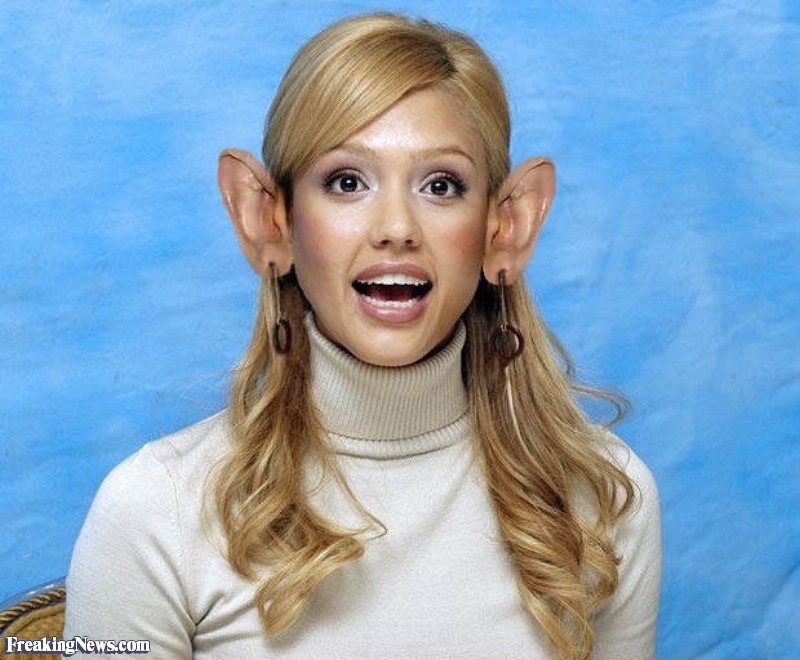
Let Go Of My Ears, I Know What I’m Doing

We never need talk about this story or its title ever again. Move along, nothing to see here.

Sally forth and be repurposing your less than stellar story ideasingly writeful.

©2014 Rhyan Scorpio-Rhys

Creative Commons License

Things Kept Precious

image

My mother warned me to guard the things I held precious by keeping them hidden inside me. The only thing I held precious was her and I found it impossible to place her inside my body. I was too young to understand she was talking about love. Too young to save the best parts of my mother’s love in my heart. Too consumed by the hate caused by her leaving me on my own. Too young to accept that death comes to us all.

It was hard to hold onto her love. Hard because I watched her body decay and rot away to nothingness. I watched to see the precious things she kept inside her and where she managed to hide them so I could do the same. I never found them. I watched as I picked vermin from her flesh and fought away carrion from her decaying form, until the day she was unrecognizable to me.

In particular, I watched her heart. Who knew what was inside there but I knew it was fragile because my mother spoke many times about how it had been broken. She said, “Sometimes you have to break a heart to find out how strong it really is.”

But when her heart became visible, I couldn’t see any cracks. I watched it as it bruised like an apple and disintegrated away. Nothing inside it but emptiness. I was hoping to see love—even though I had no idea what love looked like—or at least be privy to some secret that would explain the world to me. I found none of those things.

Her heart was a chamber for maggots. That was what my mother kept precious. Little disgusting creatures that fed off her body. They were everywhere. Stripping my mother of her beauty.

It grew harder to remember her face. I tried to recall the last time I saw her eyes or her smile but that memory was too distant in the past, lost in the forest of forgetfulness.

Occasionally I dreamt of my mother, standing in a room somewhere I had never been but yet felt so familiar to me, her face was a storm. Clouds roiled where features should have been. When she spoke, her voice was a swarm of black bees the drained the life of anything it touched. The bees blotted out the room and ate a pet dog I only had in dreams and never in real life, before coming for me.

I would run from the house and through the trees, down a dirt path that led to a black pond of brackish water. The water called to me and I was torn for the water was frightening, but so too were the bees who devoured trees on their way to eat me.

No real choice at all, I dove into the pond and discovered the water was actually tar and I was being pulled in, just as other creatures foolish enough to make the same mistake, the same fear-based choice as I had.

My nose and mouth filled with hot thick liquid, bitter molasses that scorched my insides, and melted me like butter on the griddle.

I woke alone in the dark, choking for air, my chest weighted with the heaviness of fear. My breathing was a thick, wet noise like someone sloshing through mud — or tar! — and I no longer felt safe in this world, so I did the only thing I could think to do.

I crawled inside the remains of my mother’s body and wrapped her tight around me so that I could be the thing she kept precious.

Sally forth and be keeping things preciousingly writeful.

©2014 Rhyan Scorpio-Rhys

Creative Commons License

Of Air Returned

i.

I burned my soul to ash but the pain paled in comparison to the terror that struck my heart like a match, anticipating her arrival and the tirade she would carry in tow. An unwarranted fear, as she was calm when she saw what I had done. Calm and nurturing. Soothing my pain with herbs and aromas, and each early morning during the hour of the wolf, she laid an ear on my back and listened as my soul mended itself.

She never spoke the words of disappointment aloud but it registered in her eyes. Although residing within my body, this wounded thing, this unwanted soul, did not belong to me. She had laid claim to it many years past, and in my despondency, I had taken liberties with her property and attempted to destroy it. Again.

ii.

The first time, I threw my soul into a sinkhole and allowed the ground to swallow it whole. I made her acquaintance when she plucked it from the soil like a tattered tuber. “I saw what you did,” she said. “And since you would so recklessly toss this precious thing away, it is no longer yours, but mine, agreed?” I nodded and she handed my soul back to me for safekeeping.

I honored our pact for a few years, caring for it within my limited capacity, but during a particularly nasty bout of depression, I tied heavy stones to my soul and pushed it off the sea wall. For a second time she appeared, fishing my soul from the waves, and scolded me, “You are charged with protecting this thing that it mine, do you understand?” Again, I nodded. Again, I lied.

iii.

“Why do you want this worthless soul when it has been crushed by the earth? Why do you want it when it has been drowned in the sea? Why do you want it when it has been set alight like so much tinder?” I searched long and hard yet found no answer in her silence.

iv.

During the day, when she thought me preoccupied, she secreted herself in the shadows and slept. One day I followed her into the darkness and watched her body twitch from dreaming and listened as she muttered,

One more soul, once buried deep.
One more soul, in ocean steeped.
One more soul, by fire burned.
One more soul, of air returned.

v.

Under her care, my soul grew healthier and it frightened me. I was pitilessly plagued and badgered by the phrase, One more soul, of air returned, that repeated in my mind’s ear until it turned dogged and cacophonous. But she was unaware of my inner torment, in fact, she was in an exceptionally good mood today, her voice almost a song, “I know you don’t see it, but you are a gift, you are. You have no idea just how special.”

vi.

Today was the day. I felt it in my marrow. Something was destined to happen, something I most likely would not survive. I should have embraced this eerie premonition, for it was no secret that I did not want to continue in this manner, broken, detached, and alone. But the choice of how and when I departed this wretched life was mine to make and mine alone. So, I stalled by distracting her with trivialities. “May I have more broth? Have you seen my shoes? No, not that pair, the other ones? Can we go for a walk?” If she knew my plan, her expression never showed sign. No request was too large or small on this day. She granted them all.

vii.

We strolled along the pathway in the park that led to the duck pond, a place we visited often during my convalescence. Picked, naturally, as not to arouse suspicion as I searched for the proper diversion in order to make my escape. But I was so wrapped in my own thoughts, I failed to notice that she was walking slower than usual today. “Can we rest a moment?” she asked as we neared the benches. “I am a little short of breath.”

Her breathing became a labored and raspy thing before it hitched and became lodged in her throat. When her face went dusky blue and she slid off the park bench, I panicked. The opportunity had presented itself and there I stood like an idiot, frozen. Entangled in the decision of whose life to save, or more accurately, whose death I could live with.

There was no real choice.

viii.

Her breathing was a trembling, liquid sound as I pressed my mouth to hers and exhaled, but instead of me breathing air into her body, I felt her sucking air from my lungs, and not just air…

I tried desperately to pull away but her thin, vise-like hands clamped down on the nape of my neck and held me firm in a kiss that was collapsing me. My hold on life became dim and futile, but before I slipped away into emptiness, I noticed the oddest thing: her belly began to swell.

Every fiber of my actuality was drawn into her, and my soul, the object I had forever been so reckless with, was systematically being stripped of concern, of negativity, of identity. I fell further and further into a darkness that pressed on me from all sides. So tight, so constricted. I was still unable to breathe but the sensation was somehow different now.

At the very moment when it seemed the darkness was about to claim me for eternity, there came a burst of light so bright as to cut my eyes. Thankfully something soon blotted out the light – a face, slowly coming into focus but I knew her before I saw her. From the moment I heard her soft cooing, “You are a gift, you are. You have no idea just how special.”

Mother.

The Various Rules for Writing Fiction by Famous Authors

1. Read it aloud to yourself because that’s the only way to be sure the rhythms of the sentences are OK (prose rhythms are too complex and subtle to be thought out – they can be got right only by ear).

2. Cut (perhaps that should be CUT): only by having no ­inessential words can every essential word be made to count.

3. You don’t always have to go so far as to murder your darlings – those turns of phrase or images of which you felt extra proud when they appeared on the page – but go back and look at them with a very beady eye. Almost always it turns out that they’d be better dead. (Not every little twinge of satisfaction is suspect – it’s the ones which amount to a sort of smug glee you must watch out for.)

Diana Athill

Roddy Doyle

1. Do not place a photograph of your ­favourite author on your desk, especially if the author is one of the famous ones who committed suicide.

2. Do be kind to yourself. Fill pages as quickly as possible; double space, or write on every second line. Regard every new page as a small triumph ­–

3. Until you get to Page 50. Then calm down, and start worrying about the quality. Do feel anxiety – it’s the job.

4. Do give the work a name as quickly as possible. Own it, and see it. Dickens knew Bleak House was going to be called Bleak House before he started writing it. The rest must have been easy.

5. Do restrict your browsing to a few websites a day. Don’t go near the online bookies – unless it’s research.

6. Do keep a thesaurus, but in the shed at the back of the garden or behind the fridge, somewhere that demands travel or effort. Chances are the words that come into your head will do fine, eg “horse”, “ran”, “said”.

7. Do, occasionally, give in to temptation. Wash the kitchen floor, hang out the washing. It’s research.

8. Do change your mind. Good ideas are often murdered by better ones. I was working on a novel about a band called the Partitions. Then I decided to call them the Commitments.

9. Do not search amazon.co.uk for the book you haven’t written yet.

10. Do spend a few minutes a day working on the cover biog – “He divides his time between Kabul and Tierra del Fuego.” But then get back to work.

Roddy Doyle

1. Finish the day’s writing when you still want to continue.

2. Listen to what you have written. A dud rhythm in a passage of dialogue may show that you don’t yet understand the characters well enough to write in their voices.

3. Read Keats’s letters.

4. Reread, rewrite, reread, rewrite. If it still doesn’t work, throw it away. It’s a nice feeling, and you don’t want to be cluttered with the corpses of poems and stories which have everything in them except the life they need.

5. Learn poems by heart.

6. Join professional organisations which advance the collective rights of authors.

7. A problem with a piece of writing often clarifies itself if you go for a long walk.

8. If you fear that taking care of your children and household will damage your writing, think of JG Ballard.

9. Don’t worry about posterity – as Larkin (no sentimentalist) observed “What will survive of us is love”.

Helen Dunmore

1. Never worry about the commercial possibilities of a project. That stuff is for agents and editors to fret over – or not. Conversation with my American publisher. Me: “I’m writing a book so boring, of such limited commercial appeal, that if you publish it, it will probably cost you your job.” Publisher: “That’s exactly what makes me want to stay in my job.”

2. Don’t write in public places. In the early 1990s I went to live in Paris. The usual writerly reasons: back then, if you were caught writing in a pub in England, you could get your head kicked in, whereas in Paris, dans les cafés . . . Since then I’ve developed an aversion to writing in public. I now think it should be done only in private, like any other lavatorial activity.

3. Don’t be one of those writers who sentence themselves to a lifetime of sucking up to Nabokov.

4. If you use a computer, constantly refine and expand your autocorrect settings. The only reason I stay loyal to my piece-of-shit computer is that I have invested so much ingenuity into building one of the great auto­correct files in literary history. Perfectly formed and spelt words emerge from a few brief keystrokes: “Niet” becomes “Nietzsche”, “phoy” becomes  ­”photography” and so on. ­Genius!

5. Keep a diary. The biggest regret of my writing life is that I have never kept a journal or a diary.

6. Have regrets. They are fuel. On the page they flare into desire.

7. Have more than one idea on the go at any one time. If it’s a choice between writing a book and doing nothing I will always choose the latter. It’s only if I have an idea for two books that I choose one rather than the other. I ­always have to feel that I’m bunking off from something.

8. Beware of clichés. Not just the ­clichés that Martin Amis is at war with. There are clichés of response as well as expression. There are clichés of observation and of thought – even of conception. Many novels, even quite a few adequately written ones, are ­clichés of form which conform to clichés of expectation.

9. Do it every day. Make a habit of putting your observations into words and gradually this will become instinct. This is the most important rule of all and, naturally, I don’t follow it.

10. Never ride a bike with the brakes on. If something is proving too difficult, give up and do something else. Try to live without resort to per­severance. But writing is all about ­perseverance. You’ve got to stick at it. In my 30s I used to go to the gym even though I hated it. The purpose of ­going to the gym was to postpone the day when I would stop going. That’s what writing is to me: a way of ­postponing the day when I won’t do it any more, the day when I will sink into a depression so profound it will be indistinguishable from perfect bliss.

Geoff Dyer

1. The first 12 years are the worst.

2. The way to write a book is to actually write a book. A pen is useful, typing is also good. Keep putting words on the page.

3. Only bad writers think that their work is really good.

4. Description is hard. Remember that all description is an opinion about the world. Find a place to stand.

5. Write whatever way you like. Fiction is made of words on a page; reality is made of something else. It doesn’t matter how “real” your story is, or how “made up”: what matters is its necessity.

6. Try to be accurate about stuff.

7. Imagine that you are dying. If you had a terminal disease would you ­finish this book? Why not? The thing that annoys this 10-weeks-to-live self is the thing that is wrong with the book. So change it. Stop arguing with yourself. Change it. See? Easy. And no one had to die.

8. You can also do all that with whiskey.

9. Have fun.

10. Remember, if you sit at your desk for 15 or 20 years, every day, not ­counting weekends, it changes you. It just does. It may not improve your temper, but it fixes something else. It makes you more free.

Anne Enright

I Feel the Need, the Need For the Careful Build of Momentum

Print

You’ve finally finished your latest piece of fiction. Congratulations! Once you’ve stuck a feather in your cap and given your back a big, hearty slap, you pass your gem along to a trusted reader… and the notes you get back are, “the story feels uneven/ seems melodramatic/ lacks momentum/ becomes anticlimactic” and you haven’t got the foggiest how that could be possible. You made sure your writing has all the basic components a story of this type should have, so where’s the problem?

The simple and direct answer to that would be pacing, my friend.

Proper pacing is one of the critical elements needed to keep your audience actively engaged and as a writer you must develop structural and word choice skills and use a variety of devices to control the speed and rhythm at which your plot unfolds.

Here are a few tips to start you on your journey:

1. The most obvious momentum control is length.

When writing a tense scene—filled with action, danger or crisis—you want your audience to experience feelings of speed and intensity. There’s no room for distractions here, just the meat of the nutshell, which is accomplished by keeping your descriptions and sentences concise, and if there’s any dialogue, have your characters spit it out at a rapid-fire tempo.

During the times when you need to establish a character, place or event in order to build a foundation for your story, longer scenes with more descriptive sentences, character thoughts, richer dialogue and transitions, come into play.

2. Give your audience a chance to catch their breath.

Let’s say one of your strengths is creating sharp, high-tension scenes. You trim the fat off sentences, annihilate unnecessary prepositional phrases, and swap out passive linking verbs for active ones like a pro. In fact, you’re so good at it that it becomes your default style of writing. That’s great. I’m pleased as punch for ya. Your audience—not to mention your characters—however, will need a breather between high conflict points, which means you must vary your pacing by providing a slower, more introspective scene. Balancing your story with intentional calm moments also ensures your electrifying scenes maintain their power.

3. The devil—and a slower pace—is in the details.

I’ve mentioned in other posts that you should always plant your feet firmly in the soil of your story, and if you can accomplish this, it pays off during scenes when something extremely dramatic is about to happen. This is where you take your time and describe everything in detail so that your audience feels the full impact.

4. Remember the advice, “show, don’t tell?” Well, it doesn’t always apply.

Yup, I know, it’s been drilled into your head countless times and I’ve even written about it (see: Skip The Tell And Bring On The Show) but there are always exceptions to the rules. Tedium is the primary cause for this rule break, as your intention is to keep your audience’s focused on the important and interesting matters. By telling rather than showing, you can skim over unimportant scenes that you don’t want to linger on.

5. Become a master manipulator (of word choice and sentence structure)

You don’t need me to tell you that words are the tools by which you control the worlds you create, and those same words—both singular and in groupings—are your first best means of managing your story’s pace. But the manipulation of the length of words, phrases and clauses to control the ebb and flow of sentence and paragraph structures, isn’t the only way deal with pace. You also have allies in cliffhangers and prolonged outcomes.

Now that I’ve mentioned cliffhanger, you’re no doubt thinking, “oh yeah, naturally…” because as an avid reader, you know first hand that you hate being left in the lurch and will quickly flip the page to discover what happens next. Your job as a writer will be to introduce that uncertainty in the form of an impending threat, an interruption in the action, unfinished business, or a dangling peril.

Prolonged outcomes, on first thought, might appear to require a slower pacing, but the reverse is actually true. When you prolong an event, the story speed increases because you’ve piqued your audience’s interest and they’re eager to discover how the events play out and pay off.

As with all my posts, this is simply rudimentary information, and you will come to notice that each story you write has its own unique pace. Some will speed along fast and furious, while others will make their way unhurriedly to the end. What’s important is that you’re not only aware of the message your story’s pace conveys to the audience, but are also in absolute control of it.

Sally forth–at the proper pace–and be writeful.

— Rhyan Scorpio-Rhys

Unlock Your Inner Story

Photo: Unlock your inner story ...

They say, “Everyone has at least one good book in them” and while I think book might be a bit of a stretch, I wholeheartedly believe that everyone has at least one good story in them. The natural length—the pure story without padding or the encumbrance of unnecessary detail or description—of which can range from flash fiction (under 1,000 words) to short story (under 7,500 words) to novelette (7,500 to 17,500 words) to novella (17,500 to 40,000 words) to a proper novel (over 40,000 words).

No matter how non-creative you believe yourself to be, your brain is nonetheless gifted with the special ability of imagination, and regardless of how infrequently you put it to use, you still are able to dream up intricate realities, despite your age or IQ level. Haven’t we all, at one time or another, projected a new reality in our minds in the form of daydreaming our desires? And no two daydreams are exactly the same since we each possess unique preferences, points of view, wants and needs.

Yet, even armed with the knowledge of this gift, we, as writers, tend to suffer because we either do not fully believe in or properly comprehend our true nature as creators. Sure, we continue to imagine “what if” scenarios but sometimes we find it difficult to allow those thoughts to flow through us—the conduit—and blossom into the stories they need to become.

The following list isn’t a step-by-step “how to” guide, because no one can tell you precisely what you need to do to access your inner story. You are a totally unique entity, after all. View it more as a broom to help you sweep away the clutter piled up on the footpath to your personal tale.

1. Examine your self-image.

The first battle you must face is the one against your self-image. You are more than pen and paper, more than a keyboard, more than “just another writer” or more than whatever obstacle your past or conditioning has placed in your path. The main reason why most writers fail to connect with their inner story is because of their limited knowledge of who they truly are.

As flawed human beings we are so engrossed with the perceptions of who we are that we fail to see that we are usually the source for the reality we have created for ourselves. Sure, the walls of the prison may have been constructed by events of the past, by family, peers or environment, but we continue to fortify the walls and never once open the lock–the key is always in our possession–push the cell door to step out into freedom.

This in no way suggests you have to deconstruct your self-image–unless that’s your goal, then by all means, have at it. You’re merely peeling away the layers of the identity you’ve created for yourself for societal purposes and exposing your core self, the real you. Don’t worry, it’s only for the exercise of writing. You can reapply your layers once you’re done.

Your secret identity is safe with me.

2. Take note of your gifts.

Different from writer traits–talent, the hunger for knowledge, and diligence–a writer’s gift can range from an eye for detail, to a flair for description, to a talent for dialogue. Or, you might not even be aware of your talents, so I want you to grab a piece of paper and something to write with and in 60 seconds jot down a list of what you’re good at. Don’t think about it. Simply jot down, off the top of your head, the things that come easiest to you when you write.

All done? Now take a long, hard, honest look at your list. The things you don’t concentrate on, those bits and bobs that just sort of come naturally to you when you write… those are your gifts. You’d be surprised to discover how many writers aren’t aware of their innate skills because they aren’t utilized in their everyday work lives and wind up being placed in the “Hobby” category.

3. Exploit your strengths. 

Since you’re bothering to read this, my guess is that you’ve written a couple of pieces already and maybe even finished a few of them. Now, if you’re an avid reader, you will have no doubt compared your piece to your author idols, and have developed the brutally honest ability to cast a critical eye upon your own work and spot areas in your writing that aren’t as strong as others. And since the writing isn’t perfect, you are therefore a horrible writer who should no longer legally be allowed to string a sentence together in an email, let alone write a story.

Maybe it’s true. Maybe you really are a bad writer–hey, they exist–but that’s not my call to make. I don’t know you, so I’ll assume you at least have some fundamental writing potential. However, no matter how good you are, there is one basic truth you must learn to face: Your writing will never be perfect. Why? As stated in a previous post: Because wunderkind wasn’t conveniently inserted into your backstory, and perfection isn’t DNA-encodable at this point in time. Still, you should always strive to get your writing as close to perfection as you can manage, and accept the fact that: It. Will. Not. Be. Perfect.

Maybe you can’t write a convincing love scene. Maybe you struggle with organic dialogue. Maybe you get stumped when attempting to create a character’s internal arc. Maybe you’re rubbish at tying up all your story’s loose threads. Console yourself in the knowledge that you wouldn’t be the first. A few of these “weaknesses” and more are true for authors of published works, some of which even make bestseller lists.

And because, as a writer, you are always a student and ever pushing yourself and learning new ways to hone your craft, you will eventually learn to strengthen your weaknesses. In the meantime, put all of the aspects of your writing into perspective, make a deal to stop beating yourself up so much, and focus on your strengths. They’re your “A” game.

4. Gird your loins against the enemy.

In addition to dealing with possible self-image barriers, there are other obstacles that can block your path: Fear, intimidation, procrastination, and self-doubt. The problem with these buggers is that they often take the form of lies you tell yourself. And they happen to be effective as hell because they insulate your brain from facing unpleasantries, in this case the difficult portions of the writing process that you need to slog through in order to strike gold.

The biggest lie you can tell yourself as a writer is, “I’ll do it later.” It’s a dishonest postponement because later never comes. If you don’t confront the enemies that keep you from your writing and tamp the bastards down long enough to complete your piece, then you don’t have what it takes to be a writer. Staring into the gaping maw of the harsh realities that terrify you is one of the most important parts of the process.

Slap a “H” on your chest and “Handle” it.

5. Identify your genre.

At this point, you arch an eyebrow and ask, “Rhyan, how can anyone not know the genre of their story?”

The answer lies within the fact that writers are creators. Some are resistant to the notion of placing labels or classifications on their work. For others, classification difficulties arise when their piece contains elements from several genres as some writers disagree with the act of limiting creative freedom in order to adhere to strictly delineated genre segregation.

For your audience, knowing the genre sets not only the stage, but their expectations as well, and puts them in the proper mindset to both understand and accept the rules of your story.

At this stage in the process, the importance of identifying your genre has to do with story mechanics. Certain elements step to the forefront and operate differently depending on genre, so you should be aware of the rules of the category–even if you decide to break them because of the maverick you are–as you’re arranging your idea into the proper story structure (see: Simple Anatomy of a Plot Outline).

6. Plant your feet firmly in the soil of your story.

This is your story. First and foremost, it must feel natural to you. No matter how fantastical the environment, how outrageous the yarn you’re spinning, if you don’t feel confident in the pocket dimension you’ve created, there’s little chance of you selling the story as being credible. Your job is to take utter nonsense and portray it with as much authenticity as possible.

7. Go with your gut.

Some people seek permission to write. Thinly disguised under the “Oh, it’s just an idea I’m toying with” veil, they will ask family and friends if they should write about such-and-such or if this-that-or-the-other-thing would make an interesting topic.

I urge you not to be this person.

I’m reminded of a quote by Jerome Lawrence, “The whole point of writing is to have something in your gut or in your soul or in your mind that’s burning to be written.” So, if you can actually feel inspiration or instinct churning like hot snakes in your gut to write, forget the opinions of those around you, disregard the idea of “should” and just go for it.

Never live with regret, if you can help it.

8. Do it now. No better time than the present. 

To snatch a line from Pixar’s Ratatouille “Why not here? Why not now?”

By now you know you must show up for writing everyday, and there’s no time like the present. So, why not find yourself a quiet spot, practice listening, and trust what you hear. That’s your inner story talking to you, and it not only has to be unlocked but it must be accessible at will.

I know it’s become hackneyed to instruct you to follow your bliss, but if you deny your instincts to do what you truly want to do, then the problem becomes one of trust. Do you trust the voice within you or do you trust reality as you are made to perceive it? Or, are you willing to trust the voice and write what you hear, no matter how crazy it sounds?

You have to learn to be compassionate with yourself, as well as having compassion for yourself. Especially during the vulnerable times when you’re blocked and can’t bring yourself to write because you’re scared you’ll be rejected. Take some small comfort in knowing you’re not alone in this.

Since all art must be criticized, every single published author had to overcome fear of rejection. What you need to keep in mind is that your audience–human, just the same as you–can only relate to your writing from their own experience, and sometimes their feedback will be negative. That doesn’t necessarily indicate problems in your writing, and may simply reflect a varying viewpoint.

But fear of rejection has no business rearing its ugly head right now as it’s time for you to honor your inner story by listening to the words it shares with you and writing about it. Trust me, if you’re willing to enjoy the process, you can write damn near anything.

So, why not sally forth and be inner story writeful?

— Rhyan Scorpio-Rhys

Famous Thoughts on Grammar and Usage

1. “You can be a little ungrammatical if you come from the right part of the country.” — Robert Frost

2. “Word has somehow got around that the split infinitive is always wrong. That is a piece with the outworn notion that it is always wrong to strike a lady.” — James Thurber

3. “It is indeed acceptable practice to sometimes split an infinitive. If infinitive-splitting makes available just the shade of meaning you desire or if avoiding the separation creates a confusing ambiguity or patent artificiality, you are entitled to happily go ahead and split!” — Richard Lederer

4. “When you catch an adjective, kill it.” — Mark Twain

5. “The adjective is the banana peel of the parts of speech.” — Clifton Fadiman

6. “The adjective is the enemy of the noun.” — Voltaire

7. “If the noun is good and the verb is strong, you almost never need an adjective.” — J. Anthony Lukas

8. “Don’t say it was ‘delightful’; make us say ‘delightful’ when we’ve read the description. You see, all those words (horrifying, wonderful, hideous, exquisite) are only like saying to your readers ‘Please will you do my job for me?’” — C.S. Lewis

9. “Forward motion in any piece of writing is carried by verbs. Verbs are the action words of the language and the most important. Turn to any passage on any page of a successful novel and notice the high percentage of verbs. Beginning writers always use too many adjectives and adverbs and generally use too many dependent clauses. Count your words and words of verbal force (like that word “force” I just used).” — William Sloane

10. “The editorial ‘we’ has often been fatal to rising genius; though all the world knows that it is only a form of speech, very often employed by a single needy blockhead.” — Thomas Baington Macaulay

11. “Only presidents, editors and people with tapeworm have the right to use the editorial ‘we.’” — Mark Twain

Writing Joke of the Day: Comforting a Grammar Nazi

Q: What do you say when you are comforting a grammar nazi?
A: There, Their, They’re

English Professor

“In English,” he said, “A double negative forms a positive. In some languages, though, such as Russian, a double negative is still a negative. However, there is no language wherein a double positive can form a negative.”

A voice from the back of the room piped up, “Yeah, right.”

Library

A Texan was visiting Harvard University, and was lost. He stopped a student and asked, “Do you know where the library is at?”

“I sure do,” replied the student, “But, you know, you’re not supposed to end sentences with prepositions.”

“What?”

“Prepositions. You ended your sentence with an ‘at’, which you aren’t supposed to do.”

“Oh, ok,” said the Texan, “Do you know where the library is at, asshole?”

Grammar walks into a Bar

Three intransitive verbs walk into a bar. They sit. They Drink. They Leave

A comma splice walks into a bar, it has a drink and then leaves.

A dangling modifier walks into a bar. After finishing a drink, the bartender asks it to leave.

A Question mark walks into a bar?

Two Quotation marks “walk into” a bar.

A gerund and an infinitive walk into a bar, drinking a drink.

The bar was walked into by the passive voice.

The past, the present, and the future walked into a bar. It was tense.

A synonym ambles into a pub.

A gerund and an infinitive walk into a bar, drinking to drink.

A hyperbole totally ripped into this bar and destroyed everything.

A run on sentence walks into a bar it is thirsty.

Falling slowly, softly falling, the chiasmus collapsed to the bar floor.

A group of homophones wok inn two a bar.

Panda

A panda walks into a cafe. He orders a sandwich, eats it, then draws a gun and fires two shots in the air.

“Why?” asks the confused waiter, as the panda makes towards the exit. The panda produces a badly punctuated wildlife manual and tosses it over his shoulder.

“I’m a panda,” he says at the door. “Look it up.”

The waiter turns to the relevant entry and, sure enough, finds an explanation.

“Panda. Large black-and-white bear-like mammal, native to China. Eats, shoots and leaves.”

Coined by the Immortal Bard: Popular Words and Phrases

shakespear-infographic_small

Many of the words and phrases we casually toss about in our everyday conversations can be traced back to a man who is considered the greatest writer of the English language, William Shakespeare. He boldly toyed with the language–as any good writer should–turning nouns into verbs, verbs into adjectives, adding prefixes and suffixes, and joining unrelated words to create new definitions. Below is a list of a few of the phrases and words coined by the immortal bard:

Phrases:

  • All that glitters is not gold (The Merchant of Venice)(“glisters”)
  • All’s well that ends well (title)
  • As good luck would have it (The Merry Wives of Windsor)
  • As merry as the day is long (Much Ado About Nothing / King John)
  • Bated breath (The Merchant of Venice)
  • Bear a charmed life (Macbeth)
  • Be-all and the end-all (Macbeth)
  • Better foot before (“best foot forward”) (King John)
  • The better part of valor is discretion (I Henry IV; possibly already a known saying)
  • In a better world than this (As You Like It)
  • Brave new world (The Tempest)
  • Break the ice (The Taming of the Shrew)
  • Breathed his last (3 Henry VI)
  • Brevity is the soul of wit (Hamlet)
  • Refuse to budge an inch (Measure for Measure / Taming of the Shrew)
  • Cold comfort (The Taming of the Shrew / King John)
  • Come what come may (“come what may”) (Macbeth)
  • Dead as a doornail (2 Henry VI)
  • A dish fit for the gods (Julius Caesar)
  • Dog will have his day (Hamlet; quoted earlier by Erasmus and Queen Elizabeth)
  • Devil incarnate (Titus Andronicus / Henry V)
  • Eaten me out of house and home (2 Henry IV)
  • Elbow room (King John; first attested 1540 according to Merriam-Webster)
  • Faint hearted (I Henry VI)
  • Fancy-free (Midsummer Night’s Dream)
  • Fight till the last gasp (I Henry VI)
  • Flaming youth (Hamlet)
  • Forever and a day (As You Like It)
  • For goodness’ sake (Henry VIII)
  • Foregone conclusion (Othello)
  • Full circle (King Lear)
  • The game is afoot (I Henry IV)
  • The game is up (Cymbeline)
  • Give the devil his due (I Henry IV)
  • Good riddance (Troilus and Cressida)
  • Jealousy is the green-eyed monster (Othello)
  • It was Greek to me (Julius Caesar)
  • Heart of gold (Henry V)
  • ‘Tis high time (The Comedy of Errors)
  • Hoist with his own petard (Hamlet)
  • Household words (Henry V)
  • Improbable fiction (Twelfth Night)
  • In a pickle (The Tempest)
  • In my heart of hearts (Hamlet)
  • In my mind’s eye (Hamlet)
  • Infinite space (Hamlet)
  • Infirm of purpose (Macbeth)
  • It is but so-so(As You Like It)
  • It smells to heaven (Hamlet)
  • Itching palm (Julius Caesar)
  • Kill with kindness (Taming of the Shrew)
  • Killing frost (Henry VIII)
  • Knit brow (The Rape of Lucrece)
  • Knock knock! Who’s there? (Macbeth)
  • Laid on with a trowel (As You Like It)
  • Laughing stock (The Merry Wives of Windsor)
  • Laugh yourself into stitches (Twelfth Night)
  • Lean and hungry look (Julius Caesar)
  • Lie low (Much Ado about Nothing)
  • Live long day (Julius Caesar)
  • Love is blind (Merchant of Venice)
  • Melted into thin air (The Tempest)
  • Though this be madness, yet there is method in it (“There’s a method to my madness”) (Hamlet)
  • Make a virtue of necessity (The Two Gentlemen of Verona)
  • Milk of human kindness (Macbeth)
  • Misery acquaints a man with strange bedfellows (The Tempest)
  • Much Ado About Nothing (title)
  • Murder most foul (Hamlet)
  • Naked truth (Love’s Labours Lost)
  • Neither rhyme nor reason (As You Like It)
  • Not slept one wink (Cymbeline)
  • [Obvious] as a nose on a man’s face (The Two Gentlemen of Verona)
  • One fell swoop (Macbeth)
  • Time is out of joint (Hamlet)
  • Out of the jaws of death (Twelfth Night)
  • Own flesh and blood (Hamlet)
  • Star-crossed lovers (Romeo and Juliet)
  • Parting is such sweet sorrow (Romeo and Juliet)
  • What’s past is prologue (The Tempest)
  • [What] a piece of work [is man] (Hamlet)
  • Pitched battle (Taming of the Shrew)
  • Play fast and loose (King John)
  • Pomp and circumstance (Othello)
  • Primrose path (Hamlet)
  • Quality of mercy is not strained (The Merchant of Venice)
  • Salad days (Antony and Cleopatra)
  • Seen better days (As You Like It? Timon of Athens?)
  • Send packing (I Henry IV)
  • Make short shrift (Richard III)
  • Sick at heart (Hamlet)
  • Snail paced (Troilus and Cressida)
  • Something in the wind (The Comedy of Errors)
  • Something wicked this way comes (Macbeth)
  • A sorry sight (Macbeth)
  • Sound and fury (Macbeth)
  • Spotless reputation (Richard II)
  • Stony hearted (I Henry IV)
  • Such stuff as dreams are made on (The Tempest)
  • Smooth runs the water where the brook is deep (“Still waters run deep”) (2 Henry VI)
  • The short and the long of it (The Merry Wives of Windsor)
  • Sweets to the sweet (Hamlet)
  • Swift as a shadow (A Midsummer Night’s Dream
  • Set my teeth on edge (I Henry IV)
  • Tell truth and shame the devil (1 Henry IV)
  • There’s no such thing (?) (Macbeth)
  • There’s the rub (Hamlet)
  • This mortal coil (Hamlet)
  • To gild refined gold, to pain the lily (“to gild the lily”) (King John)
  • To thine own self be true (Hamlet)
  • Too much of a good thing (As You Like It)
  • Tower of strength (Richard III)
  • Towering passion (Hamlet)
  • Trippingly on the tongue (Hamlet)
  • Wear my heart upon my sleeve (Othello)
  • What’s done is done (Macbeth)
  • What the dickens (The Merry Wives of Windsor)
  • Wild-goose chase (Romeo and Juliet)
  • Working-day world (As You Like It)
  • The world’s my oyster (Merry Wives of Windsor)

Words: 

  • accommodation (Othello)
  • accused (n.) (Richard II — first known use as a noun, meaning person accused of a crime)
  • addiction (Henry V / Othello)
  • admirable (several; seems unlikely)
  • advertising (adj.)(Measure for Measure; in context, means “being attentive”; the noun was already in use)
  • aerial (Othello)
  • alligator (Romeo and Juliet; Spanish “aligarto” was already in use in English)
  • amazement (13 instances; first known use as a noun)
  • anchovy (I Henry IV; first attestation in English of the Spanish word for dried edible fish)
  • apostrophe (“apostrophas”)(Love’s Labour’s Lost; seems to be a well-known word already)
  • arch-villain (Measure for Measure / Timon of Athens)
  • to arouse (2 Henry VI / Hamlet; “rouse” was the usual form)
  • assassination (Macbeth; “assassin” was already in use and derives from “hashish eater”)
  • auspicious (several; “auspice” was a Roman practice of fortune-telling by bird flight)
  • backing (I Henry VI; this is just a pun on a known word)
  • bandit (II Henry VI, actually “bandetto”, the first attestation in English of a familiar Italian word for people “banned”, i.e., outlaws)
  • barefaced (in the sense of “barefaced power”) (Macbeth)
  • baseless (in the sense of fantasy without grounding in fact) (The Tempest)
  • beached (several, merely means “possessing a beach”)
  • bedazzled (The Taming of the Shrew)
  • bedroom (A Midsummer Night’s Dream, merely means a place to sleep on the ground)
  • belongings (Measure for Measure)
  • to besmirch (Henry V)
  • birthplace (Coriolanus; first attestation)
  • to blanket (King Lear; first use as a verb)
  • bloodstained (I Henry IV)
  • blusterer (A Lover’s Complaint)
  • bold-faced (I Henry VI)
  • bottled (Richard III)
  • bump (Romeo and Juliet; first attestation of onomopoeic word)
  • buzzer (Hamlet; means gossipper)
  • to cake (Timon of Athens, first attestation as a verb)
  • to castigate (Timon of Athens)
  • to cater (As You Like It; from coetous, a buyer of provisions)
  • clangor (3 Henry VI / 2 Henry IV)
  • to champion (Macbeth; first attestation as a verb, and in an older sense of “to challenge”; though the noun was familiar as someone who would fight for another)
  • circumstantial (As You Like It / Cymbeline; first attestation in the sense of “indirect”)
  • cold-blooded (King John; first use to mean “lack of emotion”)
  • coldhearted (Antony and Cleopatra)
  • compact (several; seems to have been a common word)
  • to comply (Othello)
  • to compromise (The Merchant of Venice, several of the histories; seems to have been already in use)
  • to cow (Macbeth; first use in English of a Scandinavian verb)
  • consanguineous (Twelfth Night; “consanguinity” was already in use)
  • control (n.) (Twelfth Night)
  • countless (Titus Andronicus / Pericles)
  • courtship (several, seems unikely)
  • critic (Love’s Labour’s Lost; Latin term)
  • critical (not in today’s sense) (Othello, A Midsummer Night’s Dream)
  • cruelhearted (The Two Gentlemen of Verona)
  • Dalmatians (Cymbeline)
  • dauntless (Macbeth)
  • dawn (I Henry IV, King John; first use as a noun, the standard had been “dawning”)
  • day’s work (several, must have been a common expression)
  • deafening (II Henry IV; in the sense of a noise that is loud but does not produce real deafness)
  • to denote (several; already a word in Latin)
  • depository
  • discontent (Richard III / Titus Andronicus; the verb was in use but this is the first attestation as a noun)
  • design (several, seems unlikely)
  • dexterously (Twelfth Night)
  • dialogue (several, seems already familiar)
  • disgraceful (I Henry VI; means “not graceful”)
  • dishearten (Henry V)
  • to dislocate (King Lear, refers to anatomy)
  • distasteful (Timon of Athens)
  • distracted (Hamlet / Measure for Measure; seems possible)
  • divest (Henry V / King Lear; probably already in use as referring to a royal title)
  • domineering (Love’s Labour’s Lost; from a Dutch word)
  • downstairs (I Henry IV, supposedly first use as an adjective)
  • droplet (Timon of Athens)
  • to drug (Macbeth; first use as a verb)
  • to dwindle (I Henry IV / Macbeth, seems already familiar as a term for body wasting)
  • to educate (Love’s Labour’s Lost)
  • to elbow (King Lear; first use as a verb)
  • embrace (I Henry VI; first use as a noun)
  • employer (Much Ado about Nothing)
  • employment (several, obviously familiar)
  • engagement (several, seems simply the first attestation)
  • to enmesh (Othello)
  • to ensnare (Othello)
  • enrapt (Troilus and Cressida)
  • enthroned (Antony and Cleopatra)
  • epileptic (King Lear; first use as an adjective, though the noun was old)
  • equivocal (Othello / All’s Well that Ends Well; first use as adjective, though the verb “to equivocate” was familiar)
  • eventful (As You Like It)
  • excitement (Hamlet / Troilus and Cressida; both times as plural; first use as a noun)
  • expedience (several, supposedly first use as noun)
  • exposure (several, supposedly first use as noun)
  • eyeball (The Tempest)
  • eyedrops (II Henry IV; means “tears”)
  • eyesore (The Taming of the Shrew)
  • fanged (Hamlet, first attestation)
  • farmhouse (The Merry Wives of Windsor; first known use of the compound)
  • far-off (several, seems already familiar)
  • fashionable (Timon of Athens / Troilus and Cressida)
  • fathomless (not today’s sense) (Troilus and Cressida)
  • fitful (Macbeth)
  • fixture (not current sense) (Merry Wives of Windsor / Winter’s Tale)
  • flawed (King Lear; first use as an adjective)
  • flowery (A Midsummer Night’s Dream)
  • foppish (King Lear)
  • fortune-teller (The Comedy of Errors)
  • to forward (I Henry IV; first use as a verb)
  • foul-mouthed (several, seems already familiar)
  • freezing (Cymbeline)
  • frugal (several; “frugality” was already in common use)
  • full-grown (Pericles)
  • gallantry (Troilus and Cressida)
  • generous (several, obviously already known)
  • gloomy (several, “to gloom” was a verb)
  • glow (several; the word had originally meant red-and-warm)
  • gnarled (Measure for Measure; alteration of knurled which was a standard word for bumpy)
  • go-between (several, seems familiar)
  • to gossip (The Comedy of Errors; first use as a verb; “gossip” was one’s familiar friends)
  • gust (III Henry VI, seems already familiar and was an Old Norse word)
  • half-blooded (King Lear)
  • hint (Othello, first use in today’s sense)
  • hob-nails (I Henry IV, alleged; seems already familiar)
  • hobnob (Twelfth Night; older term was “hab, nab”, and not in today’s sense)
  • homely (several, seems already familiar)
  • honey-tongued (Love’s Labour’s Lost)
  • hoodwinked (already known from falconry)
  • hostile (several, seems like a word that is already familiar)
  • hot-blooded (The Merry Wives of Windsor / King Lear)
  • housekeeping (The Taming of the Shrew; seems unlikely)
  • howl (several, clearly familiar)
  • to humor (Love’s Labour’s Lost, first attestation as a verb)
  • hunchbacked (can’t find)
  • to hurry (Comedy of Errors, first attestation as verb)
  • ill-tempered (can’t find)
  • immediacy (King Lear, first use as noun)
  • impartial (2 Henry IV)
  • to impede (Macbeth, first use as verb, though “impediment” was already widely used)
  • import (several, and not used in the modern sense)
  • immediacy (King Lear, first attestation as a noun)
  • importantly (Cymbeline, first attestation as an adverb)
  • inaudible (All’s Well that Ends Well; “audible” was already in use)
  • inauspicious (Romeo and Juliet)
  • indistinguishable (not in today’s sense)(Troilus and Cressida)
  • inducement (several, seems unlikely)
  • investment (II Henry IV, not in present sense)
  • invitation (The Merry Wives of Windsor; signifies “flirting”)
  • invulnerable King John / Hamlet / The Tempest; first attestation for the negative; Coriolanus has unvulnerable)
  • jaded (several, seems already a term of contempt)
  • Judgement Day (I Henry VI; usual term had been “Day of Judgement”)
  • juiced (Merry Wives of Windsor; first attestation as an adjective)
  • kissing (several, first attestation of the participle, though surely not its first use)
  • lackluster (As You Like It)
  • ladybird (Romeo and Juliet)
  • to lament (several, seems already familiare)
  • to lapse (several, first attestation as a verb, though already familiar as a noun)
  • to launder (first use as a verb; “laundress” was in common use)
  • laughable (The Merchant of Venice)
  • leaky (Antony and Cleopatra / The Tempest)
  • leapfrog (Henry V; first attestation but seems unlikely as a coinage)
  • lonely (several, seems unlikely)
  • long-legged (can’t find)
  • love letter (can’t find)
  • to lower (several, seems already known)
  • luggage (first use as noun)
  • lustrous (Twelfth Night / All’s Well that Ends Well)
  • madcap (several, attestation as adjective; the noun had become popular just before)
  • majestic (several, first use as adjective)
  • majestically (I Henry IV; first attestation as adverb)
  • malignancy (Twelfth Night, seems possible)
  • manager (Love’s Labour’s Lost / Midsummer Night’s Dream; first attestation as noun)
  • marketable (As You Like It; first use as adjective)
  • militarist (All’s Well that Ends Well)
  • mimic (Midsummer Night’s Dream)
  • misgiving (Julius Caesar; first use as noun, though “to misgive” was in common use)
  • misplaced (several, seems unlikely)
  • to misquote (1 Henry IV; not in the present sense)
  • money’s worth (Love’s Labours Lost)
  • monumental (several, seems unlikely)
  • moonbeam (A Midsummer Night’s Dream)
  • mortifying (Merchant of Venice / Much Ado About Nothing )
  • motionless (Henry V)
  • mountaineer (Cymbeline; the sense is “hillbilly”)
  • multitudinous (Macbeth)
  • neglect (several, obviously already known)
  • to negotiate (Much Ado about Nothing / Twelfth Night; verb from the Latin)
  • new-fallen (Venus and Adonis / I Henry IV)
  • new-fangled (Love’s Labour’s Lost / As You Like It)
  • nimble-footed (several, seems already a familiar expression)
  • noiseless (King Lear / All’s Well that Ends Well)
  • to numb (King Lear, first attestation as a transitive verb)
  • obscene (several; straight from Latin)
  • obsequiously (first use of the adverb; comes from “obsequies”, or funeral rites)
  • outbreak (Hamlet, first attestation as a noun)
  • to outdare (I Henry IV)
  • to outgrow (can’t find)
  • to outweigh (can’t find)
  • over-cool (II Henry IV)
  • overgrowth (can’t find)
  • over-ripened (II Henry VI ;first-use of the familiar compound)
  • over-weathered The Merchant of Venice)
  • overview (can’t find)
  • pageantry (Pericles Prince of Tyre)
  • pale-faced (A Midsummer Night’s Dream)
  • to pander (several; was already a proverb)
  • pedant (several, seems already in common use for a stuffy teacher)
  • perplex (King John / Cymbeline)
  • perusal (Sonnets / Hamlet; first use as a noun)
  • to petition (Antony and Cleopatra / Coriolanus; first use as a verb)
  • pious (several, seems very unlikely)
  • posture (several, seems known)
  • premeditated (several; first attestation of the adjective, though the noun was in use)
  • priceless
  • Promethean (Othello / Love’s Labour’s Lost)
  • protester (not today’s sense) (Julius Caesar)
  • published (2 Henry VI)
  • puking (As You Like It)
  • puppy-dog (King John / Henry V)
  • on purpose (several; seems very unlikely)
  • quarrelsome (As You Like It / Taming of the Shrew)
  • questing (As You Like It; first use of the gerund)
  • in question (several, seems already in use)
  • radiance (several; first use as noun)
  • to rant (The Merry Wives of Windsor / Hamlet; loan-word from Dutch or previously-unattested English word?)
  • rancorous (2 Henry VI, Comedy of Errors, Richard III, all early plays, seems unlikely)
  • raw-boned (I Henry VI)
  • reclusive (Much Ado about Nothing; first use as adjective)
  • reinforcement (Troilus and Cressida / Coriolanus; seems already in use)
  • reliance
  • remorseless (several, first attestation of this form)
  • reprieve (several, obviously already in use)
  • resolve (several, obviously already in use)
  • restoration (King Lear)
  • restraint (several, seems already familiar)
  • retirement (II Henry IV; refers to military retreat; first use as noun)
  • revolting (several, obviously already familiar)
  • to rival (King Lear; first attestation as verb; noun was well-known)
  • rival (Midsummer Night’s Dream; first attestation as adjective, noun was well-known)
  • roadway (II Henry IV; first attestation of the compound)
  • rumination (As You Like It; first use as noun)
  • sacrificial (Timon of Athens; not today’s usage)
  • sanctimonious (Measure for Measure / Tempest)
  • satisfying (Othello / Cymbeline)
  • savage (several; the word was obviously already in use)
  • savagery (King John / Henry V; first use as this form)
  • schoolboy (Julius Caesar / Much Ado about Nothing)
  • scrubbed (The Merchant of Venice)
  • scuffle (Antony and Cleopatra; first use as noun, though the verb was familiar)
  • seamy-side (Othello)
  • to secure (II Henry VI; first use as a verb; the adjective was well-known)
  • shipwrecked (Pericles Prince of Tyre, seems unlikely)
  • shooting star (Richard II; first known use of the phrase)
  • shudder (Timon of Athens; first use as a noun; verb already well-known)
  • silk (alleged; obviously not Shakespeare’s)
  • stocking (obviously not Shakespeare’s)
  • silliness (Othello)
  • skim milk (I Henry IV; first use of the familiar term)
  • to sneak (Measure for Measure; supposed first use of the verb)
  • soft-hearted (2 Henry VI / 3 Henry VI; first use of the familiar phrase)
  • spectacled (Coriolanus; not in today’s sense)
  • splitting (II Henry VI; first use as adjective)
  • sportive (Richard III / Comedy of Errors / All’s Well that Ends Well; supposed first use)
  • to squabble (Othello; supposed first use, as with “to swagger”)
  • stealthy (Macbeth; first use as adjective)
  • stillborn (can’t find, obviously not Shakespeare’s)
  • to submerge (Antony and Cleopatra)
  • successful (Titus Andronicus, seems dubious)
  • suffocating (Othello; supposed first use as a descriptor)
  • to sully (I Henry VI)
  • superscript (Love’s Labour’s Lost)
  • to supervise (Love’s Labour’s Lost; also Hamlet but not in today’s sense)
  • to swagger (II Henry IV, others; in context this seems to be already a well-known word)
  • switch (first use to mean “twig”)
  • tardily (All’s Well that Ends Well; first use of adverb)
  • tardiness (King Lear; “tardy” as adjective was well-known)
  • threateningly (All’s Well that Ends Well; first use of the adverb)
  • tightly (The Merry Wives of Windsor; first use as an adverb)
  • time-honored (Richard II)
  • title page (can’t find; seems unlikely)
  • to torture (several; first use as a verb)
  • traditional (Richard III; first use as adjective)
  • tranquil (Othello; “tranquility” was an old word)
  • transcendence (All’s Well that Ends Well; first attestation of the noun)
  • tongue-tied (III Henry VI / Julius Caesar / Troilus and Cressida; seems first attestation of a phrase already in use)
  • unaccommodated (King Lear)
  • unaware (Venus and Adonis; first use as an adverb; the adjective was not yet in use)
  • to unclog (Coriolanus, first use as a negative)
  • unappeased (Titus Andronicus)
  • unchanging (The Merchant of Venice)
  • unclaimed (As You Like It; not in today’s sense)
  • uncomfortable (Romeo and Juliet)
  • to uncurl
  • to undervalue (The Merchant of Venice)
  • to undress (The Taming of the Shrew; seems unlikely)
  • unearthly (Winter’s Tale)
  • uneducated (Love’s Labour’s Lost, seems possible)
  • ungoverned (Richard III / King Lear)
  • to unhand (Hamlet)
  • unmitigated (Much Ado about Nothing)
  • unpublished (King Lear; in the sense of “still unknown”)
  • unreal (Macbeth, first use of the negative)
  • unsolicited (Titus Andronicus / Henry VIII; supposed first use of the form)
  • unswayed (Richard III; not in today’s sense, but “is the sword unswung?”)
  • unwillingness (Richard III / Richard II)
  • upstairs (I Henry IV; supposedly first use as an adjective)
  • urging (Richard III / Comedy of Errors; first attestation as a noun
  • useful (several, seems already familiar)
  • varied (Love’s Labour’s Lost, others)
  • vastly (Rape of Lucrece, not present sense)
  • viewless (Measure for Measure; means “invisible”)
  • vulnerable (Macbeth; used in today’s sense)
  • watchdog (The Tempest; first use of the phrase)
  • well-behaved (The Merry Wives of Windsor; first known use of the compound)
  • well-bred (II Henry IV; first use of the familiar compound)
  • well-read (I Henry IV)
  • whirligig (Twelfth Night)
  • to widen
  • widowed (Sonnet 97 / Coriolanus; first use as an adjective)
  • worn out (Romeo and Juliet / 2 Henry IV; seems unlikely)
  • worthless (III Henry VI, several others; seems just a first attestation)
  • yelping (I Henry VI; first attestation of this adjectival form)
  • zany (Love’s Labour Lost; simply a loan-word from Italian commedia dell’arte)