Susa’s Playground Redux

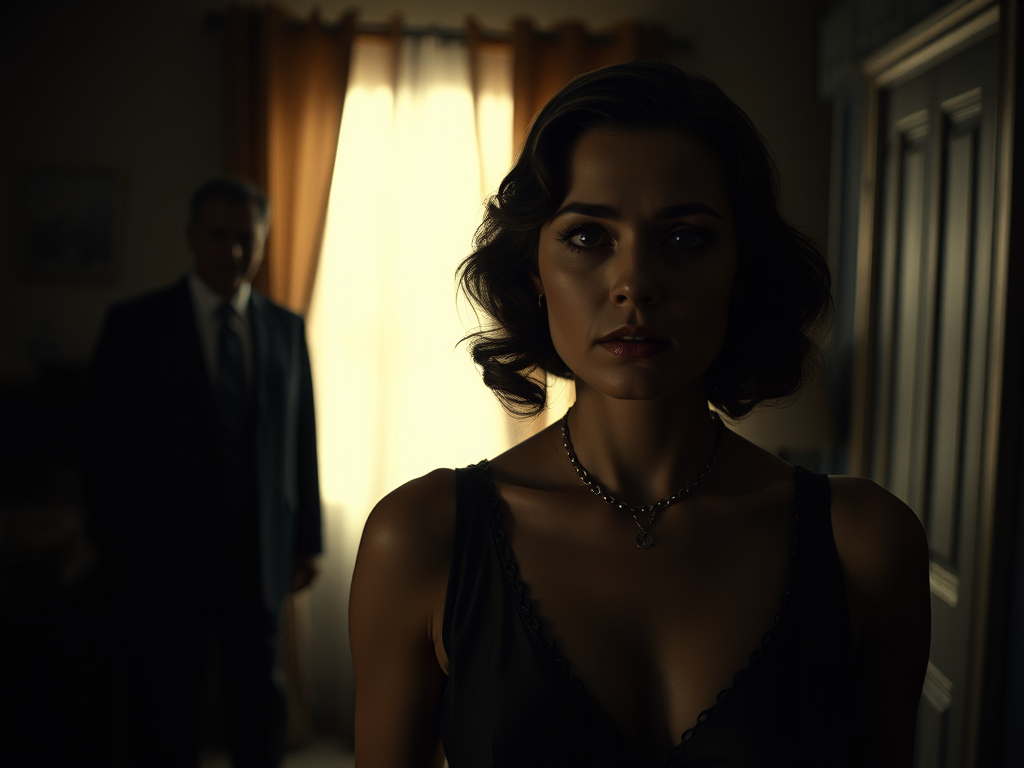
There was something wrong with Susa. Not in the way of outward deformity or disturbing behavior. No, her skin was like polished ivory, her voice always soft, sweet even, a child of perfect manners and perfect calm. She loved her parents, was kind to animals, and never, ever raised her voice in anger. She never threw a tantrum, never shed a tear in frustration. If you wronged her, she simply blinked those glassy, wide-set eyes and moved on with the kind of detachment that made you uneasy, like a predator deciding it wasn’t hungry just yet.

But something was off. People whispered about her behind closed doors. The other children kept their distance, casting quick, suspicious glances her way. Adults, for all their smiles and nods, couldn’t help but feel an instinctual unease whenever she was near, though no one could put their finger on why.

Susa seemed… otherworldly, like a porcelain doll with a soul just barely contained within it.

It wasn’t until the nightmares began that people realized the truth.

The first victim was a boy from her class, a bully who had made Susa cry in front of everyone by ripping the head off her favorite doll. He thought nothing of it. The next night, his screams woke the entire neighborhood. He ranted in feverish terror, his hands clutching his hair, eyes wide as if seeing something no one else could. He spoke of a place—Susa’s playground, he called it.

He described a vast, bleak expanse of dead earth stretching in all directions, a blood-red sky hanging overhead like the edge of some long-forgotten apocalypse. In the distance, there was a swing set. Only, instead of swings, it held rows of lifeless bodies, slowly swaying back and forth as though moved by a wind no one could feel. The figures were familiar. He recognized his parents, his friends, and even strangers he had passed by in his life—all hollowed out, their faces twisted in eternal agony.

And there, standing at the center of it all, was Susa, watching him with those blank, doll-like eyes, her pale lips twitching into a faint smile. She said nothing. She didn’t need to. The moment he saw her, the boy said, he knew he was never safe again, not even in his sleep.

The next night, another child. Then another.

And it wasn’t just children.

Adults too, those who had ever been rude to her, ever given her the slightest hint of disdain or condescension, found themselves whisked away into Susa’s nightmare realm as soon as their heads hit the pillow. The dreams were vivid, too vivid, filled with grotesque landscapes that seemed to bleed malice from every corner.

Some saw fields of rotting corpses, the faces of their loved ones among the dead. Others wandered through endless tunnels where the walls pulsed like the insides of a living creature, their footsteps echoing in a rhythmic, heart-like beat that grew louder with every step. And always, always, at the center of these nightmares stood Susa, her eerie silence louder than any scream.

She never threatened them. She never raised a hand against them. She simply watched.

And yet, those who awoke from Susa’s dreams never felt safe again. They couldn’t shake the feeling that some part of them had been left behind in that desolate place. Some refused to sleep at all, terrified of returning to her playground, and yet, sleep always came. And with it, the nightmares.

Soon, people began disappearing.

At first, it was a trickle—an old woman who had once snapped at Susa for crossing her lawn, a bus driver who had scolded her for not paying the fare. Then it became a flood. Entire families vanished overnight, their beds left untouched as though they had simply been plucked from their slumber and spirited away.

Authorities searched, but no trace of the missing was ever found. The only common thread was Susa, that quiet, unassuming little girl with the alabaster skin and the vacant eyes.

But by then, no one dared question her.

People began avoiding her entirely, crossing the street when they saw her coming, whispering prayers under their breath whenever she passed by. Parents pulled their children from school, families moved out of town, desperate to escape her presence.

Yet Susa remained. Unchanging. Untouched.

She never chased after those who fled, never lifted a finger to hurt anyone directly. But the nightmares persisted. Each night, more people found themselves dragged into her desolate playground, where they would wander through endless deathscapes, unable to escape the feeling that something vital was slowly being drained from them.

And every night, Susa was there. Watching.

Not as punishment. Not even as revenge.

No, her playground wasn’t a place of retribution. It was a warning—a glimpse into the death that awaited anyone who crossed her.

Because Susa wasn’t like the rest of humanity. She was something far older, something that wore the skin of a little girl but carried the weight of a much darker power.

And as the last few townsfolk packed up and left, they couldn’t shake the feeling that Susa wasn’t bound by geography. You could leave town, leave the country even, but you could never leave her behind.

Redhalia Redux

The path of pins was a lie. Swiftness, Redalhia had boasted, but the sun was already bleeding through the canopy, and she was late. A dull ache throbbed low in her belly, a new and unwelcome rhythm that left her feeling unsettled in her own skin. She clutched the basket, the warmth of her mother’s galette a small comfort.

At the fork in the road, he waited. Not a wolf, but a man with a woodsman’s shoulders and eyes like chips of ice. A predator’s stillness was in him.

“In a hurry, little bird?” he rumbled, his voice a gravelly purr. He sniffed the air, a gesture too animal for his human face. “Something sweet on the wind.”

Redalhia’s chin lifted. “I’m for my Grandmother’s cottage. And I’m not afraid of you.”

A slow smile spread across his lips, showing teeth that were a shade too long. “Fear is not the only path. There is the path of pins, for the quick and the clever. And the path of needles, for those who linger.” He gestured with a thumb. “Which will it be?”

“Pins,” she said, her youthful pride a sharp, foolish thing. “And I’ll be there long before you.”

He watched her go, hips swaying with a defiant rhythm. Only when she was gone did he allow the man-skin to peel away, and with a guttural sigh, Bzou loped down the path of needles on four silent paws.

When Redalhia arrived, the cottage was unnervingly quiet. “Grandmother?” she called, pushing the door open.

The old woman was in bed, blankets pulled to her chin. Her voice was a dry rasp. “Ah, my child. I am weak. But I’ve left a little something for you on the table. Meat to build your strength, and wine to warm your blood.”

On the table sat a small platter of dark, cooked meat and a goblet of what looked like watered wine. A barn cat on the windowsill let out a low, guttural yowl. “Kin eats kin,” it seemed to cry.

“That wretched cat,” rasped the figure in the bed. “Throw your shoe at it.”

Redalhia hesitated, but the wine’s aroma was strangely compelling, thick and metallic. She took a sip. It was dizzying, erasing the ache in her belly and clouding her thoughts. She ate the meat. It was rich and strangely familiar.

Sated and light-headed from the “wine,” she undressed as bidden and slipped under the covers. The bed was too warm, and her grandmother smelled of damp earth and musk.

“What fine, strong arms you have, Grandmother,” Redalhia murmured, her head spinning. She felt coarse hair brush her skin.

“All the better to hold you with,” came the rumbling reply.

“And what large, dark eyes you have.”

“All the better to see your fear with.”

A claw, sharp as a shard of glass, pricked her side. The fog in her mind tore away, replaced by icy terror. That was not Grandmother’s voice. That was not Grandmother’s touch.

“And what great teeth you have!” she shrieked, scrambling out of the bed as Bzou lunged, his true form exploding from the bedclothes.

He roared, “All the better to—”

But she was already gone, snatching her crimson cloak as she bolted out the door into the twilight. The wolf gave chase, slavering jaws snapping. Redalhia flung herself from the path, deep into a thicket of thorns, leaving her cloak behind as a blood-red sacrifice.

Bzou lunged for the flash of crimson, his howl of triumph turning into a yelp of pain as the thorns ensnared him. He thrashed, tearing himself free in ribbons of flesh and fur.

Redalhia didn’t stop. She fled to the river, where washer-women were gathering their linens. “Help me!” she cried, her voice raw.

Seeing the bloody wolf gaining on her, they stretched a heavy linen sheet taut across the churning water. Redalhia scrambled across, the sheet sagging and swaying. Just as she reached the far bank, she looked back. The wolf was halfway across. With a final, desperate sob, she yanked the sheet from the women’s grasp.

Bzou plunged into the current. The sheet, his winding-shroud, tangled around his limbs. As the river dragged him under, he fixed his icy eyes on her.

“Foolish girl!” he howled, water filling his throat. “The meat you ate was your grandmother’s flesh! The wine you drank… was my blood! The curse is in you now!”

The river swallowed his final words.

And so it was. Redalhia’s monthly flowering now brought a different kind of blossoming. When the full moon coincided with her blood, Mother would bolt the door to Grandmother’s old cottage, leaving her ravenous daughter chained within. And there, in the darkness, she would listen to the howls and pray for the dawn to deliver them both.

Death Do Us Not Part

Walter Baldwin had always been different.

Back then, they didn’t have a name for it. Today, he would be classified as neurodivergent—his mind wired to see patterns where others saw only chaos.

He was also brilliant. Devoting his life’s work to the mysteries of the brain, he earned his doctorate by mapping its final flickers—the synaptic whispers between life and death. He believed that human consciousness lingered past the moment of expiration, like a voice echoing in an empty house. His research was meant to help the grieving process, to prove that death was not an abrupt end, but a slow fade.

Then, Dorothy died.

It was a freak accident. A sedan ran a red light, struck her car, and left nothing but twisted steel and an empty space. She was gone before he arrived at the hospital. They handed him a clear plastic bag of her belongings. He remembered staring at her wedding ring, still smeared with blood, and thinking, No. No, this isn’t right.

Walter had always been a man of science. that is, until grief rewrote the laws of reality.

His daughter, Shirley, was the first to notice the shift.

“You’re not sleeping,” she told him one morning, standing in the kitchen with her arms crossed. “And you’re avoiding work.”

Walter, unshaven and hollow-eyed, stirred his coffee without drinking it. His house smelled of burnt toast and unwashed clothes. Shirley sighed.

“Dad, listen to me. You have to—”

“I heard her,” he said. His voice was flat. Unshaken.

Shirley’s expression faltered. “What?”

“Last night.” He finally looked at her. “I was reviewing neural decay patterns, and there was an anomaly. A frequency that shouldn’t have been there.”

Shirley placed her hands on the counter, gripping the edge. “Dad. Please don’t do this.”

But her plea was far too late. Walter had already begun.


He relocated his research to a house outside Atlanta—an old rundown Victorian thing he managed to get dirt cheap, that hummed in the wind, with walls that swelled and groaned as if breathing. He filled it with stolen lab equipment, wires curling like veins across the hardwood floor, and spent his days and nights playing back Dorothy’s EEG scans from the morgue, searching for the signal.

Richard Fiske, his research assistant, tried to reason with him.

“Listen, Walter. You’re looking for something that isn’t there.”

Walter didn’t answer. He only turned up the volume on the signal. It was faint, like a heartbeat beneath static.

Then, something whispered his name.

Richard slammed the laptop shut. “Jesus Christ, Walter, that’s auditory pareidolia. You’re hearing what you want to hear.”

Walter pressed his fingers to his temples. The hum in his ears was growing louder. “Then why does it keep happening?”

Lester Allen, a brilliant but reclusive engineer, was the only one who didn’t dismiss him outright. “You’re listening to death’s afterimage,” Lester murmured, sifting through the data. “A voice trapped in a neurological photograph.”

“So now, all we need to do is find a way to amplify it,” Walter said.

Lester hesitated. “But what if the brain isn’t just lingering? What if it’s still…thinking?”

Walter ignored him. One problem at a time.


There was no doubting that Walter was a man of science, but the fact of the matter was that science had its limits. And that was where Madame Gravestone came in.

She was not the fraud he expected. Her presence unsettled him. She studied his equipment with quiet interest before finally saying, “You are opening doors. The question is: Do you know how to close them when you’re done?”

Walter hated her…but couldn’t deny that he needed her.

They worked together. She held séances while his machines recorded electromagnetic disturbances. The voices were growing louder. Dorothy was coming through.

But as they were on the brink of a breakthrough, something went wrong.

One night, during a particularly intense session, the housekeeper, Mrs. Hargrove, entered the room.

She had worked in the mansion for years, long before Walter arrived. She had seen many strange things, but nothing like this.

“What are you doing?” she asked, her voice trembling.

Walter barely glanced at her. His pulse was pounding. Dorothy’s voice was clearer than ever.

“She’s here,” he whispered.

Mrs. Hargrove stepped closer, her eyes widening. “No,” she said. “No, that’s not your wife.”

The moment snapped like a rubber band.

The equipment sparked, the lights flickered, and a deep, rattling breath filled the room. Madame Gravestone’s eyes went wide.

“Shut it off,” she hissed.

But Walter was frozen. Dorothy’s voice was still calling his name.

Mrs. Hargrove let out a strangled gasp. Her body stiffened, her eyes rolling back as she convulsed and collapsed.

Walter fell to his knees, shaking her. “No, no, no, wake up!”

But the housekeeper was gone. Her face a frozen mask of terror.


When the sheriff arrived, Walter told the truth, but the truth sounded utterly insane.

“You were…talking to the dead?” Sheriff Thompson asked, rubbing his jaw. “And that killed your housekeeper?”

Walter sat in a chair, hands shaking. “It wasn’t supposed to happen like that.”

When word reached Shirley, she paid her father a visit. She looked at him with an expression that made his stomach turn.

“I told you to stop,” she whispered.

“I wish I could.”

That night, alone in his study, he listened to the last recording.

The static crackled. A whisper slithered through.

“Walter.”

His breath caught.

It was Dorothy’s voice. But distorted. Stretched. Wrong.

“This is all so unnecessary. All you need to do is let me in.”

His heart slammed against his ribs. His hands trembled.

And he whispered, “Yes. Come in, my love.


Rumor had it that Lester tore out of that house like a bat out of hell. He left town without so much as a by your leave and was never seen nor heard from again.

Madame Gravestone also mysteriously disappeared, her occult accoutrements abandoned in the mansion.

Shirley pleaded for someone—anyone—to help her in her search.

But, as with the others, Walter Baldwin was never seen again.

The rundown Victorian mansion stood empty. At night, passersby swore they could hear static crackling from the second-floor windows.

Sometimes, if you listened closely, you could hear a voice whispering.

“Let me in.”

And if you answered, the door would open.

©2025 Rhyan Scorpio-Rhys

Black Forest Bianca

Kevin McClure matched with Bianca Forester three days ago. Her profile had been strangely compelling—a chef specializing in heritage Black Forest cuisine, with photos of her meticulously layering dark chocolate sponge, kirsch-soaked cherries, and thick cream into elaborate cakes.

Her bio mentioned she’d recently moved from Germany’s Black Forest region, and her messages had been oddly formal yet playful. A mix of old-world charm and something he couldn’t quite place.

When she invited him to her restaurant, Schwarzwald, for a private after-hours tasting, he jumped at the chance. The reviews were stellar—but something about the place was elusive. The website had no menu, no listed hours. When he searched for photos, they all seemed… wrong—as though the restaurant itself didn’t want to be seen.


Kevin arrived at 9 PM sharp. The street was empty. Schwarzwald stood in the dim glow of a single lantern, its heavy wood-and-iron door cracked open, inviting him inside.

The restaurant was dark except for a single table, bathed in candlelight. The walls were lined with twisted wooden beams that looked almost organic, as though the building had grown from the ground itself.

Bianca greeted him in a crisp white chef’s coat, her dark hair pinned back, except for a few loose strands curling around her pale face.

“I hope you’re hungry,” she said, leading him to the table. Her accent was soft, but deliberate, like someone who had spoken English for centuries but never quite let go of their mother tongue.

She brought out the first course—thin slices of Black Forest ham, deep red with marbled white veins.

“Cured in-house,” she explained. “Traditional methods. The smoking process takes months. But the preparation?” She smiled. “That begins with the first bite.”

Kevin picked up a slice and placed it on his tongue.

The taste was indescribable.

At first, it was rich, velvety, almost intoxicating. Then—something shifted. A creeping feral musk. The deep, loamy taste of soil after rain. The lingering bitterness of pine resin. Something ancient. Something alive.

Bianca watched him intently.

“What’s your secret ingredient?” he asked, the question half a joke, half a plea.

Her smile widened. “We preserve more than just meat in the Black Forest.”

She disappeared into the kitchen.


Kevin’s vision swam. The candle flames flickered strangely, their shadows elongating, twisting, moving when nothing else did.

The walls seemed… closer. The beams had shifted, hadn’t they? The wood looked like bones now—not carved, but grown that way, shaped by centuries of wind, time, and hunger.

Bianca returned, setting down a slice of Black Forest cake before him. The cherries glistened wetly in the candlelight, dark as coagulated blood.

Kevin blinked. His fingers felt numb. He tried to stand, but his legs wouldn’t move.

“What… what’s happening?” he slurred. His fork clattered against the plate.

Bianca tilted her head. Her pupils were too large now, swallowing the color of her irises, and her shadow on the wall was… wrong.

Too tall. Too jagged.

Branches. Not arms.

“The Black Forest is old, Kevin,” she murmured, voice deepening, growing rough, raw, and layered—like a chorus of voices speaking through her. “The trees, the roots, the soil—we learned long ago how to preserve more than just flesh. Time. Memory. Life itself.”

The walls creaked. No—breathed.

Kevin’s body felt heavy, sinking into the chair as if the wood had begun to absorb him.

Bianca stepped closer. Her shadow branched outward, dark tendrils splitting and stretching across the walls like reaching roots.

“You ate the ham.”

Her fingers brushed his face, and Kevin saw.

A flash of dark trees stretching skyward. Something vast and watching beneath the canopy. A hunger older than the bones of the world.

The restaurant wasn’t a place—it was a threshold. A piece of the Black Forest, still alive, still feeding, still growing.

And now, so was he.

Bianca leaned in, whispering in his ear.

“The smoking process takes months.”

She pressed a hand to his chest.

“But the preparation… that begins with the first bite.”


Three days later, Schwarzwald unveiled a new special.

A house-cured Black Forest ham, unlike anything diners had ever tasted.

“The depth of flavor is incredible,” a patron murmured over candlelight, slicing into the delicate meat. “What’s the secret?”

Bianca smiled from the kitchen doorway, watching, waiting.

“Family tradition,” she said.

She turned back inside, where the restaurant sighed, exhaling softly, the wood of the beams shifting, growing.

On the dating app, a new profile appeared.

Someone seeking adventurous diners interested in sampling authentic Black Forest cuisine.

After hours.

©2025 Rhyan Scorpio-Rhys

The Unchosen

The air in Chiara’s apartment was heavy—dense with the weight of unspoken words and unshed tears. Dust motes danced in the shafts of pale light seeping through the curtains, casting everything in an ashen haze. The room felt alive in a way she couldn’t bear, even though it wasn’t. Two figures, shimmering like oil on water, lingered in the corners of her vision: Everett, seated in her worn armchair, stroking his translucent jaw in thoughtful repose, and Jasper, pacing the length of the room like a caged animal.

They had been the men she loved. And, because of her, the men she lost.

She hadn’t chosen between them—not when it mattered. Not when the storm came roaring off the coast, tearing the pier apart beneath their feet. Chiara had hesitated, caught between reaching for Everett’s calm hand and Jasper’s desperate grasp. That heartbeat of indecision had sealed their fates, the wood splintering under their weight, dragging them both into the icy depths.

Now, their faces followed her everywhere, fixed in the agony of their final moments: Everett’s melancholy eyes, filled with resignation, and Jasper’s sharp, defiant glare, burning with questions she could never answer.

For the first few weeks, she had convinced herself it was a punishment. She deserved this haunting, this eternal vigil. But what had once been guilt twisted into something far darker.


The visitations began benignly enough. Everett offered quiet observations, his soothing voice pointing out sunsets and shapes in the clouds. Jasper, in contrast, was all fire, urging her to take risks, criticizing her for wasting her potential.

Chiara tried to treat them like housemates. She spoke to them aloud, dividing her days between Everett’s measured advice and Jasper’s relentless passion. But ghosts were not housemates. They were echoes, fragments trapped in the amber of their unfinished lives. And the cracks began to show.

Their jealousy poisoned the air, subtle at first—a misplaced comment, a lingering look. But soon, arguments erupted over her choices, over her friends, over every detail of her life.

One night, Chiara came home from a disastrous date, her cheeks still burning with embarrassment. Jasper materialized first, leaning against the wall with a smirk.

“That guy was a joke,” he sneered. “You deserve someone who actually sees you.”

Everett appeared a moment later, shaking his head. “Or someone who doesn’t need to be fixed, Jasper. You can’t keep chasing damaged people just to feel useful.”

Chiara screamed into her pillow that night, their voices echoing in her skull.


Their presence began to seep into her work. Chiara was a writer—well, she had been before the haunting reduced her creativity to ash. Now, every word she typed felt wrong, hollow.

One evening, Everett hovered above her desk, peering over her shoulder.

“You’ve used that phrase twice already,” he said, his voice soft but insistent. “Repetition dulls the impact.”

Jasper appeared beside him, rolling his spectral eyes. “What she needs is urgency, not your academic critiques. Tell her to write something that hurts.”

“Stop it!” Chiara snapped, shoving the laptop away. “I can’t think with both of you breathing down my neck—” She stopped, catching the irony of her words, but neither ghost laughed.

The room felt colder. The two men turned their gazes on each other, the air thickening with their mutual disdain. A low hum began to vibrate through the apartment as their emotions spiraled out of control.

The next day, Chiara woke to find the word failure scrawled across her bathroom mirror in condensation. She stumbled back, her heart pounding, as laughter echoed from somewhere unseen. Jasper’s laughter.

She snapped.

“This is my life!” she screamed into the empty apartment. “You’re dead! You don’t get to dictate what I do anymore!”

The ghosts appeared in unison, Everett’s face grim, Jasper’s alight with defiance.

“We’re not dictating,” Everett said. “We’re trying to save you.”

“Save me?” Chiara spat. “From what? From myself? You’re not here for me—you’re here because of your own unfinished business! You can’t let go, and now I’m paying the price!”

The air seemed to vibrate with their anger. Jasper’s form wavered, becoming jagged and wild, while Everett’s shimmered with an unsettling brightness. The apartment trembled under the weight of their conflict, the walls creaking as though the building itself might collapse.

Desperate, Chiara fled to the only place she could think of: the church. She hadn’t been there since the funerals, and the sight of the altar made her stomach churn.

Father Anton met her in his study, his brow furrowed as she recounted her story.

“They’re not just ghosts,” she said, her voice trembling. “They’re pieces of me. Pieces I can’t let go of.”

The priest nodded slowly. “Exorcism isn’t just about banishment. It’s about release. Are you ready to let them go, Chiara? Truly let them go?”

She wasn’t. But she didn’t have a choice.


The ritual was a harrowing thing. As Father Anton chanted, the air around them thickened, growing icy. Chiara could feel Everett and Jasper pulling at her, their spectral hands grasping at her soul.

“Chiara,” Everett whispered, his voice breaking. “Don’t do this. Please.”

“You’ll regret it,” Jasper snarled, his fiery intensity flickering like a dying flame.

Tears streamed down her face as she forced herself to speak. “I’m sorry. I loved you both. But I can’t keep living like this. I can’t keep dying with you.”

With a final burst of light, the room fell silent.

Chiara collapsed to her knees, the weight in the air gone. For the first time in years, her apartment was still.

But the silence wasn’t peace. It was absence.

As she watched the first rays of dawn pierce the clouds, a loneliness she’d never known before settled over her, a stark contrast to the promise of the new day.

Thirteen For Halloween: The Summer of Shattered Innocence

When it was Joanie Hayden’s turn, she strode proudly to the head of the classroom with her school writing assignment written neatly in cursive in blue ink on lined loose-leaf paper. Despite her confident posture, she looked a bit of a mess. She was noticeably thinner and paler since last semester, and her hair wasn’t quite as neat, her dress was on the rumpled side, and her patent leather shoes lacked their normal shine.

As she began to read, her voice echoed through the room, a haunting melody that spoke of unspeakable truths. “How I Spent My Summer Vacation,” she announced, the words dripping with a bitter irony that only she could fully comprehend.

Joanie moved through the open space, her steps measured and deliberate, each gesture a silent scream of the agony that had been etched into her very being. She spoke of the cellar, a dank and oppressive prison where she had been locked away, left to waste away in the shadows of her own despair.

The hunger had gnawed at her, a constant companion in her solitary confinement. She spoke of the cheese, stolen from rat traps in a desperate bid for survival, the taste of desperation and decay lingering on her tongue long after the last morsel had been consumed.

But it was the beatings that truly shattered her innocence, each blow a cruel reminder of the twisted love her mother had found in the arms of a monster. Joanie had endured in silence, her cries swallowed by the darkness, lest she incur the wrath of the man who had stolen her mother’s affection and shattered their once-happy home.

As she neared the end of her tale, Joanie held up the final page of her assignment, a splash of color amidst the monochromatic horror of her words. The map, meticulously crafted in vibrant hues, was a twisted treasure map, guiding the way to the remains of her tormentors.

The classroom fell silent, the weight of Joanie’s revelation settling upon them like a suffocating blanket. Her teacher and classmates, once so eager to hear of carefree summer adventures, now sat stunned, their faces etched with a mixture of shock, horror, and pity.

But Joanie stood tall, her eyes blazing with a fire that had been forged in the crucible of her suffering. She had endured the unimaginable, her innocence ripped away by the very people who were meant to protect her. And in the end, when the darkness had threatened to consume her entirely, she had found the strength to fight back, to reclaim her shattered soul from the abyss.

As the authorities descended upon the classroom, their sirens a discordant symphony outside the windows, Joanie felt a strange sense of peace wash over her. She had spoken her truth, laid bare the horrors of her summer, and in doing so, had finally set herself free.

In the years that followed, Joanie’s story would serve as a reminder of the monsters that lurk in the shadows of even the most idyllic homes. But for Joanie herself, the summer of her shattered innocence would forever be the defining moment of her unbreakable spirit, a reminder that even in the darkest of nights, a single spark of hope can illuminate the way to redemption.

And so, as she stepped down from the head of the classroom, her assignment clutched tightly to her chest, Joanie Hayden knew that she had not merely survived her summer vacation, but had emerged from the depths of hell itself, a phoenix rising from the ashes of her own destruction.

Thirteen tales of terror, woven in the night,
Guided by the flickering jack-o'-lantern's light.
From haunted playgrounds to twisted dreams,
We've explored the darkness, or so it seems.

Mad mothers and lost souls, a writer's deadly prose,
Innocence shattered, and secrets no one knows.
Each story a glimpse into the abyss,
Where horrors lurk, and shadows kiss.

But through it all, you've been by my side,
Brave readers, willing to take this eerie ride.
Your courage and curiosity, a guiding star,
Illuminating the path, both near and far.

As the veil grows thin, and the witching hour draws near,
I thank you for facing each tale without fear.
For delving deep into the macabre and grim,
And letting these stories seep beneath your skin.

Now, as the harvest moon hangs high above,
And the night is filled with a chilling sort of love,
I bid you a Happy All Hallow's Eve, my friends,
May your night be filled with spooks and delightful ends.

So light your candles, and carve your pumpkins with care,
For the spirits of Thirteen For Halloween are always there.
In the whispers of the wind, and the creaks of the floor,
Ready to haunt and thrill you, forevermore.

HAPPY HALLOWEEN!

Thirteen For Halloween: The Hollow Within

image

In the echoes of my mother’s fading voice, I cling to the remnants of her wisdom, a child lost in the labyrinth of grief. Her words, once a comforting whisper, now haunt me like a twisted lullaby: “Guard the things you hold precious by keeping them hidden inside you.” But how could I, a mere child, comprehend the intricacies of love and loss? How could I find solace in the hollow chambers of my own heart when all I knew was the consuming emptiness of her absence?

I watched, helpless and alone, as her body decayed, a grotesque tableau of life’s fragility. The stench of rotting flesh filled my nostrils, a sickening perfume that permeated every corner of my existence. I searched, desperate and frantic, for the precious things she claimed to keep hidden within her, hoping to uncover the secrets that would guide me through this nightmare. But as I picked the vermin from her flesh and fought the carrion that sought to claim her, I found nothing but the hollow emptiness of death.

Her heart, once a mystery I longed to unravel, revealed itself to me in the most horrific of ways. I watched as it bruised and withered, a rotten apple consumed by the decay that surrounded it. And within its chambers, I found not love, not the answers I so desperately craved, but a writhing mass of maggots, feasting upon the remnants of her essence. The precious things she kept were nothing more than the disgusting creatures that stripped away her beauty, leaving me with nothing but the fading memories of her face.

In my dreams, she comes to me, a twisted apparition of the mother I once knew. Her face, a roiling storm of clouds, speaks to me in a voice that is a swarm of black bees, devouring all that is living and good. I run, through the forest of forgetfulness, seeking escape from the nightmare that consumes me. But there is no refuge, only the brackish waters of a black pond that beckon me with their siren’s call.

I plunge into the depths, only to find myself ensnared in a tar-like embrace, choking on the bitter molasses that fills my lungs and melts my flesh. I wake, gasping for air, my chest heavy with the weight of fear, my breathing a sickening, wet noise that echoes in the darkness. And in that moment, I know that I am no longer safe in this world, that the horrors that haunt me will never relent.

And so, in a final act of desperation, I crawl inside the remains of my mother’s body, wrapping her decaying flesh around me like a cocoon. I become the thing she kept precious, the maggot that feasts upon her essence, the hollow within that consumes all that is left of her. For in this twisted embrace, I find the only solace I have ever known, the only way to keep the precious things hidden inside me, safe from the horrors that lurk beyond the veil of death.

Thirteen For Halloween: The Demon’s Lament

Alethea stood at the edge of twilight, a figure straddling the sacred and profane, cloaked in human flesh that barely concealed the infernal fires beneath. Her beauty was a mask, her voice a siren's call, lilting with promises of protection and devotion. She breathed lies as easily as air, each word slipping like silk around the throat of her chosen prey.

"Calvin," she whispered, the sound curling through the gloom. "You need not fear me. I only seek to keep you safe."

The air grew thick with the scent of decay, the cloying perfume of ancient temptation. Calvin, a man anchored in faith, clutched his rosary so hard his knuckles paled. His heart beat against his ribs like a frantic animal, but his thoughts held firm, fortified by the Scriptures that warned against the Beast's seductive touch.

“Stay back,” he stammered, eyes wide, the cross held between them like a blade. “You are not of this world. You are a creature of darkness.”

Alethea's gaze softened with an almost imperceptible sadness, a crack in the veneer of her monstrous facade. "You speak of darkness as if you truly understand it," she said, her voice as cold as the grave. "You cling to your faith, your symbols, as though they could protect you from the reality that lies beneath your skin. We are not so different, you and I."

Her eyes, black pools that swallowed the light, seemed to plead with him to see beyond the horror, to recognize the fractured soul trapped within the demon's form. But Calvin’s grip tightened, and his lips moved silently, reciting prayers he had learned as a child. The holy words fell from his tongue like ash.

“Get thee behind me, Satan,” he spat, though his voice quivered. “I will not succumb to your wiles.”

Alethea’s expression darkened, the illusion of warmth draining from her face like a sunset giving way to the night. Her features sharpened, revealing the contours of something ancient and hungry lurking just beneath the surface of her skin. The sadness in her eyes flared into rage, a cold flame that burned without heat.

“You fool,” she hissed, her voice reverberating like the tolling of a funeral bell. “You speak of salvation, but you have damned yourself by your own hand. Had you not recoiled in fear, I would have shielded you from the evils of this world until the stars themselves burned out.”

The shadows around her twisted and writhed, alive with malice. Calvin stumbled back, his faith wavering as an icy dread clawed its way up his spine. In that instant, the mask fell away, and the full horror of her true form unfurled before him: a thing forged in the abyss, its skin a darkened marble streaked with cracks through which a hellish glow seeped. Her mouth split wide, revealing rows of needle-like teeth slick with hunger.

A scream clawed its way from Calvin's throat as she descended upon him. Her nails, sharp as daggers, raked his flesh, and her mouth, unhinged and yawning like a pit to oblivion, latched onto his throat. As she fed, the life drained from his eyes, the rosary slipping from his limp fingers to the cold earth below. His soul, severed from its mortal tether, slipped into darkness, vanishing like a final breath on the chill wind.

When the feeding was done, Alethea stood amidst the carnage, her hunger sated but her heart hollow. She knelt beside Calvin's body, her bloodstained lips trembling as she whispered, “I would have loved you.” Her words fell into the night, unanswered and unheard, a lament carried away by the wind.

The silence that followed was suffocating, and Alethea found herself staring into the void, a creature born of darkness yet grieved by a love that had been poisoned by the prejudice of mortal men. In the end, she was left with nothing but the taste of regret and the certainty that true damnation lay not in her infernal nature, but in the hearts of those who could only see her as a monster.

The night wore on, and the demon wept tears of blood over a love that had died before it had ever truly lived.

Thirteen For Halloween: The Seer of Forsaken Alleys

The narrow street felt like a forgotten corner of the world, shadowed by crumbling buildings and dimmed by the setting sun. Renee had passed this way hundreds of times, always ignoring the rusted neon sign that flickered above the doorway: Madame Celeste—Fortunes Told. She never believed in that sort of thing.

But today was different.

Fresh out of a five-year sentence for armed robbery, her body was free, but her mind had remained shackled to one thought: her daughter, Ellie. Five years of missed birthdays, five years of wondering whether her child even remembered her, five years with no answers. The State had taken Ellie, placed her with some family she’d never met. No matter how hard Renee searched, it was as if her daughter had vanished.

Desperate, with nowhere else to turn, she stood at the entrance of the dingy fortune-telling parlor, the name Madame Celeste practically buzzing like an insect in her ears.

The inside was worse than she expected. Threadbare curtains, a single flickering candle, and the heavy scent of incense thickened the air. A table, draped in velvet, sat in the middle of the room, and behind it, the fortune teller herself: a gaunt woman in a patchwork of scarves and jewelry, her face obscured by a veil of beads.

“I’ve been expecting you,” the woman said, her voice smooth, with a hint of a rasp.

Renee hesitated, her pulse quickening. “How could you—?”

“I know why you’re here,” Madame Celeste interrupted, gesturing to the chair. “Sit. We’ll find her together.”

Renee’s breath caught. How could this stranger know? Was this a scam? But the thought of Ellie—the need to see her again, hold her again—was stronger than her suspicion. She sat.

“Your daughter… Ellie,” the fortune teller whispered, the name slipping from her lips like smoke. Her long fingers danced over a worn deck of tarot cards, shuffling them with an eerie grace. “She’s closer than you think.”

The cards fell, one by one. The Hanged Man. The Tower. Death.

Renee’s throat tightened. “What does that mean? Where is she?”

Madame Celeste smiled, revealing teeth too sharp for comfort. “She’s waiting for you. But to find her, you must follow the path unseen. The roads of the dead. You’ve walked close to the edge before, haven’t you? You know the place where life and death blur?”

Renee clenched her fists. “What are you talking about?”

“The place you’re looking for is not a physical one,” the seer murmured. “Ellie has crossed over, but not in the way you fear. Her spirit is bound to this world, wandering, waiting. She needs you to set her free.”

A chill crawled up Renee’s spine. “No… no, Ellie’s alive. She’s out there. I just need to find her.”

Madame Celeste leaned closer. “She was alive. But when you went away, no one came for her. No one cared. The family she was placed with—”

“What are you saying?” Renee’s voice cracked.

The fortune teller’s gaze pierced her, unblinking. “Your child died alone. Starved. Forgotten. The only way to reunite with her is to cross over yourself.”

Renee shot up from the table, her heart pounding. “You’re lying!”

But deep down, something in the words resonated. She had nightmares in prison, visions of Ellie calling out for her, crying, alone. She’d always woken up drenched in sweat, praying it was just her mind playing tricks.

“Go to the place where you were happiest with her,” Madame Celeste said softly. “She will meet you there.”

With shaking hands, Renee fumbled for the door. The fortune teller’s voice echoed in her ears as she stumbled into the night, a single word repeating: cross over.

The old playground. It hadn’t changed in all these years. Rust clung to the swings, the slide was chipped and faded, and the jungle gym looked skeletal under the streetlights. Renee stood there, the memories rushing back—of Ellie laughing, her tiny hands clutching the chains as she swung higher and higher.

“Ellie?” Renee whispered into the cold night air.

A shadow flickered at the far end of the playground. A small figure, no taller than a child, emerged from the gloom.

Renee’s heart lurched. “Ellie?”

The figure stepped closer, and as it did, Renee’s stomach twisted. It wasn’t Ellie. The thing that approached had her daughter’s shape, but its skin was wrong—pale, sagging, with hollow eyes that stared without seeing. It moved with a jerking motion, like a puppet on tangled strings.

“Mommy?” the thing rasped, its voice an echo of the child Renee once knew, but distorted, broken.

Renee’s legs buckled. “No… no, this isn’t real!”

The thing’s head tilted, its cracked lips curling into a grotesque smile. “You left me. Why did you leave me, Mommy?”

Renee screamed, backing away, but the figure advanced, faster now. Its skeletal hand reached for her, ice-cold fingers grazing her skin.

“I was waiting for you,” it whispered. “Now you can stay with me… forever.”

The world around Renee darkened, the playground fading as the shadows closed in. Her breath came in ragged gasps, and in her last moments, the memory of Ellie’s real laughter—pure and joyful—was drowned out by the horror that had taken its place.

The next day, the sidewalk fortuneteller packed up her things and moved on.

The playground remained, but the swing no longer moved in the wind. In its place, a new shadow hung in the air—one that sometimes whispered a name, searching, always searching, for the child she’d lost.

Thirteen For Halloween: The Skin Thief

The sterile air of the hospital was heavy, tinged with the scent of antiseptic and decay. Karl lay there, a fragile wisp of the child he had once been, his skin pale, stretched taut over bones that should have still been growing. The disease had whittled him down to something less than a boy, more like a flickering candle, guttering on the edge of darkness.

The heart monitor beeped in slow, shallow rhythms—each sound a metronome counting down his final hours. His parents sat nearby, hollow-eyed, their hands trembling as they held his, as if their love alone could keep him tethered to this world. But their love was powerless against the ravenous hunger that lurked unseen.

In the corner of the room, Karl’s imaginary friend, King Koda, waited. He was a tall figure, clothed in shimmering robes that only Karl could see, with a face that radiated kindness. Or, at least, it had once. Lately, something about the king's eyes had changed—becoming darker, hungrier.

Karl didn’t notice. He saw only his beloved companion, the king who had been with him through lonely nights and hospital stays. King Koda had always promised to protect him, to shield him from pain. But tonight, there was something wrong with that smile.

The boy dreamed of worlds
Where kings were friends and nightmares were myths
But some monsters wear familiar faces
And not all imaginary friends are safe


As his breaths grew shallow, Karl’s vision blurred. His parents whispered soothing words, but their voices seemed distant. And in the fog of his fading consciousness, Karl felt King Koda’s hand touch his—warm, far too warm, almost burning.

"Don’t be afraid," King Koda said, his voice soft, like silk sliding over a blade. "I will take care of you. I’ll make sure you live forever."

The words should have comforted Karl. But something was wrong. The touch of the king’s hand felt different now—too solid, too real. The air around the bed felt thick, oppressive, like the room itself was closing in, trapping him.

A promise laced with venom
The king whispers his dark command
In the shadow of death
There is a hunger older than time


Karl’s breath hitched, and for the first time in weeks, fear coursed through his frail body. He tried to call for his parents, but his voice was caught in his throat. His eyes darted toward them, desperate—but they sat, heads bowed, oblivious, as if some unseen force held them in a trance.

King Koda leaned closer, his once regal face now twisted into something grotesque, his teeth too sharp, his eyes too hollow. “It’s time, Karl. You have something I need.”

A coldness crept into the room, a suffocating weight. Karl’s skin prickled, and the little light left in his eyes began to dim as Koda’s true nature unveiled itself. The king wasn’t a friend. He wasn’t even human. He was something ancient, something that had fed on the minds of the vulnerable for centuries.

And now, he would take Karl’s life as his own.

Innocence devoured by shadows
A king of nightmares sheds his guise
A child’s light extinguished
As the Skin Thief claims his prize


With a sickening crack, King Koda’s form began to shift. His once-fantastical body twisted, growing taller, the flesh warping and tearing until it was no longer robes and crowns, but sinew and bone, stealing Karl’s shape. The frail child beneath him gasped, his last breath a shallow wheeze as the boy’s form slipped away—just another hollow shell for the creature to wear.

The heart monitor flatlined, its shrill scream blending with the rising wind of the creature’s birth. The room was filled with a gust that seemed to come from nowhere, scattering the tokens of love—the toys, the blankets, the flowers—as though they had never mattered.

And then, in the stillness, it stood—no longer King Koda, but Karl. Or something that wore Karl’s face.

The parents rushed to their son’s side, but it was too late. The thing that stood before them blinked with the same blue eyes, smiled with the same soft lips—but it was not their son. Not anymore.

Beneath the skin, something else watched them, something ravenous. The creature’s lips curled up, just slightly, as it settled into its new form. A wave of terror washed over the parents, though they didn’t understand why. Not yet.

“Mom? Dad?” the thing that was not Karl said, its voice innocent, perfect.

They wept with joy, not knowing that what they embraced was a monster.

In the mask of a child’s flesh
The Skin Thief walks the earth
Preying on those who see only what they wish


The hospital lights flickered as the creature left, hand in hand with Karl’s parents, their hearts too broken to sense the wrongness beside them. But deep inside, the thing smiled. It had taken Karl’s skin, his life, and now it would take more—because hunger like this is never satisfied.

And out in the night, a shadow passed across the moon, as another innocent life was claimed by the Skin Thief.