Coined by the Immortal Bard: Popular Words and Phrases

shakespear-infographic_small

Many of the words and phrases we casually toss about in our everyday conversations can be traced back to a man who is considered the greatest writer of the English language, William Shakespeare. He boldly toyed with the language–as any good writer should–turning nouns into verbs, verbs into adjectives, adding prefixes and suffixes, and joining unrelated words to create new definitions. Below is a list of a few of the phrases and words coined by the immortal bard:

Phrases:

  • All that glitters is not gold (The Merchant of Venice)(“glisters”)
  • All’s well that ends well (title)
  • As good luck would have it (The Merry Wives of Windsor)
  • As merry as the day is long (Much Ado About Nothing / King John)
  • Bated breath (The Merchant of Venice)
  • Bear a charmed life (Macbeth)
  • Be-all and the end-all (Macbeth)
  • Better foot before (“best foot forward”) (King John)
  • The better part of valor is discretion (I Henry IV; possibly already a known saying)
  • In a better world than this (As You Like It)
  • Brave new world (The Tempest)
  • Break the ice (The Taming of the Shrew)
  • Breathed his last (3 Henry VI)
  • Brevity is the soul of wit (Hamlet)
  • Refuse to budge an inch (Measure for Measure / Taming of the Shrew)
  • Cold comfort (The Taming of the Shrew / King John)
  • Come what come may (“come what may”) (Macbeth)
  • Dead as a doornail (2 Henry VI)
  • A dish fit for the gods (Julius Caesar)
  • Dog will have his day (Hamlet; quoted earlier by Erasmus and Queen Elizabeth)
  • Devil incarnate (Titus Andronicus / Henry V)
  • Eaten me out of house and home (2 Henry IV)
  • Elbow room (King John; first attested 1540 according to Merriam-Webster)
  • Faint hearted (I Henry VI)
  • Fancy-free (Midsummer Night’s Dream)
  • Fight till the last gasp (I Henry VI)
  • Flaming youth (Hamlet)
  • Forever and a day (As You Like It)
  • For goodness’ sake (Henry VIII)
  • Foregone conclusion (Othello)
  • Full circle (King Lear)
  • The game is afoot (I Henry IV)
  • The game is up (Cymbeline)
  • Give the devil his due (I Henry IV)
  • Good riddance (Troilus and Cressida)
  • Jealousy is the green-eyed monster (Othello)
  • It was Greek to me (Julius Caesar)
  • Heart of gold (Henry V)
  • ‘Tis high time (The Comedy of Errors)
  • Hoist with his own petard (Hamlet)
  • Household words (Henry V)
  • Improbable fiction (Twelfth Night)
  • In a pickle (The Tempest)
  • In my heart of hearts (Hamlet)
  • In my mind’s eye (Hamlet)
  • Infinite space (Hamlet)
  • Infirm of purpose (Macbeth)
  • It is but so-so(As You Like It)
  • It smells to heaven (Hamlet)
  • Itching palm (Julius Caesar)
  • Kill with kindness (Taming of the Shrew)
  • Killing frost (Henry VIII)
  • Knit brow (The Rape of Lucrece)
  • Knock knock! Who’s there? (Macbeth)
  • Laid on with a trowel (As You Like It)
  • Laughing stock (The Merry Wives of Windsor)
  • Laugh yourself into stitches (Twelfth Night)
  • Lean and hungry look (Julius Caesar)
  • Lie low (Much Ado about Nothing)
  • Live long day (Julius Caesar)
  • Love is blind (Merchant of Venice)
  • Melted into thin air (The Tempest)
  • Though this be madness, yet there is method in it (“There’s a method to my madness”) (Hamlet)
  • Make a virtue of necessity (The Two Gentlemen of Verona)
  • Milk of human kindness (Macbeth)
  • Misery acquaints a man with strange bedfellows (The Tempest)
  • Much Ado About Nothing (title)
  • Murder most foul (Hamlet)
  • Naked truth (Love’s Labours Lost)
  • Neither rhyme nor reason (As You Like It)
  • Not slept one wink (Cymbeline)
  • [Obvious] as a nose on a man’s face (The Two Gentlemen of Verona)
  • One fell swoop (Macbeth)
  • Time is out of joint (Hamlet)
  • Out of the jaws of death (Twelfth Night)
  • Own flesh and blood (Hamlet)
  • Star-crossed lovers (Romeo and Juliet)
  • Parting is such sweet sorrow (Romeo and Juliet)
  • What’s past is prologue (The Tempest)
  • [What] a piece of work [is man] (Hamlet)
  • Pitched battle (Taming of the Shrew)
  • Play fast and loose (King John)
  • Pomp and circumstance (Othello)
  • Primrose path (Hamlet)
  • Quality of mercy is not strained (The Merchant of Venice)
  • Salad days (Antony and Cleopatra)
  • Seen better days (As You Like It? Timon of Athens?)
  • Send packing (I Henry IV)
  • Make short shrift (Richard III)
  • Sick at heart (Hamlet)
  • Snail paced (Troilus and Cressida)
  • Something in the wind (The Comedy of Errors)
  • Something wicked this way comes (Macbeth)
  • A sorry sight (Macbeth)
  • Sound and fury (Macbeth)
  • Spotless reputation (Richard II)
  • Stony hearted (I Henry IV)
  • Such stuff as dreams are made on (The Tempest)
  • Smooth runs the water where the brook is deep (“Still waters run deep”) (2 Henry VI)
  • The short and the long of it (The Merry Wives of Windsor)
  • Sweets to the sweet (Hamlet)
  • Swift as a shadow (A Midsummer Night’s Dream
  • Set my teeth on edge (I Henry IV)
  • Tell truth and shame the devil (1 Henry IV)
  • There’s no such thing (?) (Macbeth)
  • There’s the rub (Hamlet)
  • This mortal coil (Hamlet)
  • To gild refined gold, to pain the lily (“to gild the lily”) (King John)
  • To thine own self be true (Hamlet)
  • Too much of a good thing (As You Like It)
  • Tower of strength (Richard III)
  • Towering passion (Hamlet)
  • Trippingly on the tongue (Hamlet)
  • Wear my heart upon my sleeve (Othello)
  • What’s done is done (Macbeth)
  • What the dickens (The Merry Wives of Windsor)
  • Wild-goose chase (Romeo and Juliet)
  • Working-day world (As You Like It)
  • The world’s my oyster (Merry Wives of Windsor)

Words: 

  • accommodation (Othello)
  • accused (n.) (Richard II — first known use as a noun, meaning person accused of a crime)
  • addiction (Henry V / Othello)
  • admirable (several; seems unlikely)
  • advertising (adj.)(Measure for Measure; in context, means “being attentive”; the noun was already in use)
  • aerial (Othello)
  • alligator (Romeo and Juliet; Spanish “aligarto” was already in use in English)
  • amazement (13 instances; first known use as a noun)
  • anchovy (I Henry IV; first attestation in English of the Spanish word for dried edible fish)
  • apostrophe (“apostrophas”)(Love’s Labour’s Lost; seems to be a well-known word already)
  • arch-villain (Measure for Measure / Timon of Athens)
  • to arouse (2 Henry VI / Hamlet; “rouse” was the usual form)
  • assassination (Macbeth; “assassin” was already in use and derives from “hashish eater”)
  • auspicious (several; “auspice” was a Roman practice of fortune-telling by bird flight)
  • backing (I Henry VI; this is just a pun on a known word)
  • bandit (II Henry VI, actually “bandetto”, the first attestation in English of a familiar Italian word for people “banned”, i.e., outlaws)
  • barefaced (in the sense of “barefaced power”) (Macbeth)
  • baseless (in the sense of fantasy without grounding in fact) (The Tempest)
  • beached (several, merely means “possessing a beach”)
  • bedazzled (The Taming of the Shrew)
  • bedroom (A Midsummer Night’s Dream, merely means a place to sleep on the ground)
  • belongings (Measure for Measure)
  • to besmirch (Henry V)
  • birthplace (Coriolanus; first attestation)
  • to blanket (King Lear; first use as a verb)
  • bloodstained (I Henry IV)
  • blusterer (A Lover’s Complaint)
  • bold-faced (I Henry VI)
  • bottled (Richard III)
  • bump (Romeo and Juliet; first attestation of onomopoeic word)
  • buzzer (Hamlet; means gossipper)
  • to cake (Timon of Athens, first attestation as a verb)
  • to castigate (Timon of Athens)
  • to cater (As You Like It; from coetous, a buyer of provisions)
  • clangor (3 Henry VI / 2 Henry IV)
  • to champion (Macbeth; first attestation as a verb, and in an older sense of “to challenge”; though the noun was familiar as someone who would fight for another)
  • circumstantial (As You Like It / Cymbeline; first attestation in the sense of “indirect”)
  • cold-blooded (King John; first use to mean “lack of emotion”)
  • coldhearted (Antony and Cleopatra)
  • compact (several; seems to have been a common word)
  • to comply (Othello)
  • to compromise (The Merchant of Venice, several of the histories; seems to have been already in use)
  • to cow (Macbeth; first use in English of a Scandinavian verb)
  • consanguineous (Twelfth Night; “consanguinity” was already in use)
  • control (n.) (Twelfth Night)
  • countless (Titus Andronicus / Pericles)
  • courtship (several, seems unikely)
  • critic (Love’s Labour’s Lost; Latin term)
  • critical (not in today’s sense) (Othello, A Midsummer Night’s Dream)
  • cruelhearted (The Two Gentlemen of Verona)
  • Dalmatians (Cymbeline)
  • dauntless (Macbeth)
  • dawn (I Henry IV, King John; first use as a noun, the standard had been “dawning”)
  • day’s work (several, must have been a common expression)
  • deafening (II Henry IV; in the sense of a noise that is loud but does not produce real deafness)
  • to denote (several; already a word in Latin)
  • depository
  • discontent (Richard III / Titus Andronicus; the verb was in use but this is the first attestation as a noun)
  • design (several, seems unlikely)
  • dexterously (Twelfth Night)
  • dialogue (several, seems already familiar)
  • disgraceful (I Henry VI; means “not graceful”)
  • dishearten (Henry V)
  • to dislocate (King Lear, refers to anatomy)
  • distasteful (Timon of Athens)
  • distracted (Hamlet / Measure for Measure; seems possible)
  • divest (Henry V / King Lear; probably already in use as referring to a royal title)
  • domineering (Love’s Labour’s Lost; from a Dutch word)
  • downstairs (I Henry IV, supposedly first use as an adjective)
  • droplet (Timon of Athens)
  • to drug (Macbeth; first use as a verb)
  • to dwindle (I Henry IV / Macbeth, seems already familiar as a term for body wasting)
  • to educate (Love’s Labour’s Lost)
  • to elbow (King Lear; first use as a verb)
  • embrace (I Henry VI; first use as a noun)
  • employer (Much Ado about Nothing)
  • employment (several, obviously familiar)
  • engagement (several, seems simply the first attestation)
  • to enmesh (Othello)
  • to ensnare (Othello)
  • enrapt (Troilus and Cressida)
  • enthroned (Antony and Cleopatra)
  • epileptic (King Lear; first use as an adjective, though the noun was old)
  • equivocal (Othello / All’s Well that Ends Well; first use as adjective, though the verb “to equivocate” was familiar)
  • eventful (As You Like It)
  • excitement (Hamlet / Troilus and Cressida; both times as plural; first use as a noun)
  • expedience (several, supposedly first use as noun)
  • exposure (several, supposedly first use as noun)
  • eyeball (The Tempest)
  • eyedrops (II Henry IV; means “tears”)
  • eyesore (The Taming of the Shrew)
  • fanged (Hamlet, first attestation)
  • farmhouse (The Merry Wives of Windsor; first known use of the compound)
  • far-off (several, seems already familiar)
  • fashionable (Timon of Athens / Troilus and Cressida)
  • fathomless (not today’s sense) (Troilus and Cressida)
  • fitful (Macbeth)
  • fixture (not current sense) (Merry Wives of Windsor / Winter’s Tale)
  • flawed (King Lear; first use as an adjective)
  • flowery (A Midsummer Night’s Dream)
  • foppish (King Lear)
  • fortune-teller (The Comedy of Errors)
  • to forward (I Henry IV; first use as a verb)
  • foul-mouthed (several, seems already familiar)
  • freezing (Cymbeline)
  • frugal (several; “frugality” was already in common use)
  • full-grown (Pericles)
  • gallantry (Troilus and Cressida)
  • generous (several, obviously already known)
  • gloomy (several, “to gloom” was a verb)
  • glow (several; the word had originally meant red-and-warm)
  • gnarled (Measure for Measure; alteration of knurled which was a standard word for bumpy)
  • go-between (several, seems familiar)
  • to gossip (The Comedy of Errors; first use as a verb; “gossip” was one’s familiar friends)
  • gust (III Henry VI, seems already familiar and was an Old Norse word)
  • half-blooded (King Lear)
  • hint (Othello, first use in today’s sense)
  • hob-nails (I Henry IV, alleged; seems already familiar)
  • hobnob (Twelfth Night; older term was “hab, nab”, and not in today’s sense)
  • homely (several, seems already familiar)
  • honey-tongued (Love’s Labour’s Lost)
  • hoodwinked (already known from falconry)
  • hostile (several, seems like a word that is already familiar)
  • hot-blooded (The Merry Wives of Windsor / King Lear)
  • housekeeping (The Taming of the Shrew; seems unlikely)
  • howl (several, clearly familiar)
  • to humor (Love’s Labour’s Lost, first attestation as a verb)
  • hunchbacked (can’t find)
  • to hurry (Comedy of Errors, first attestation as verb)
  • ill-tempered (can’t find)
  • immediacy (King Lear, first use as noun)
  • impartial (2 Henry IV)
  • to impede (Macbeth, first use as verb, though “impediment” was already widely used)
  • import (several, and not used in the modern sense)
  • immediacy (King Lear, first attestation as a noun)
  • importantly (Cymbeline, first attestation as an adverb)
  • inaudible (All’s Well that Ends Well; “audible” was already in use)
  • inauspicious (Romeo and Juliet)
  • indistinguishable (not in today’s sense)(Troilus and Cressida)
  • inducement (several, seems unlikely)
  • investment (II Henry IV, not in present sense)
  • invitation (The Merry Wives of Windsor; signifies “flirting”)
  • invulnerable King John / Hamlet / The Tempest; first attestation for the negative; Coriolanus has unvulnerable)
  • jaded (several, seems already a term of contempt)
  • Judgement Day (I Henry VI; usual term had been “Day of Judgement”)
  • juiced (Merry Wives of Windsor; first attestation as an adjective)
  • kissing (several, first attestation of the participle, though surely not its first use)
  • lackluster (As You Like It)
  • ladybird (Romeo and Juliet)
  • to lament (several, seems already familiare)
  • to lapse (several, first attestation as a verb, though already familiar as a noun)
  • to launder (first use as a verb; “laundress” was in common use)
  • laughable (The Merchant of Venice)
  • leaky (Antony and Cleopatra / The Tempest)
  • leapfrog (Henry V; first attestation but seems unlikely as a coinage)
  • lonely (several, seems unlikely)
  • long-legged (can’t find)
  • love letter (can’t find)
  • to lower (several, seems already known)
  • luggage (first use as noun)
  • lustrous (Twelfth Night / All’s Well that Ends Well)
  • madcap (several, attestation as adjective; the noun had become popular just before)
  • majestic (several, first use as adjective)
  • majestically (I Henry IV; first attestation as adverb)
  • malignancy (Twelfth Night, seems possible)
  • manager (Love’s Labour’s Lost / Midsummer Night’s Dream; first attestation as noun)
  • marketable (As You Like It; first use as adjective)
  • militarist (All’s Well that Ends Well)
  • mimic (Midsummer Night’s Dream)
  • misgiving (Julius Caesar; first use as noun, though “to misgive” was in common use)
  • misplaced (several, seems unlikely)
  • to misquote (1 Henry IV; not in the present sense)
  • money’s worth (Love’s Labours Lost)
  • monumental (several, seems unlikely)
  • moonbeam (A Midsummer Night’s Dream)
  • mortifying (Merchant of Venice / Much Ado About Nothing )
  • motionless (Henry V)
  • mountaineer (Cymbeline; the sense is “hillbilly”)
  • multitudinous (Macbeth)
  • neglect (several, obviously already known)
  • to negotiate (Much Ado about Nothing / Twelfth Night; verb from the Latin)
  • new-fallen (Venus and Adonis / I Henry IV)
  • new-fangled (Love’s Labour’s Lost / As You Like It)
  • nimble-footed (several, seems already a familiar expression)
  • noiseless (King Lear / All’s Well that Ends Well)
  • to numb (King Lear, first attestation as a transitive verb)
  • obscene (several; straight from Latin)
  • obsequiously (first use of the adverb; comes from “obsequies”, or funeral rites)
  • outbreak (Hamlet, first attestation as a noun)
  • to outdare (I Henry IV)
  • to outgrow (can’t find)
  • to outweigh (can’t find)
  • over-cool (II Henry IV)
  • overgrowth (can’t find)
  • over-ripened (II Henry VI ;first-use of the familiar compound)
  • over-weathered The Merchant of Venice)
  • overview (can’t find)
  • pageantry (Pericles Prince of Tyre)
  • pale-faced (A Midsummer Night’s Dream)
  • to pander (several; was already a proverb)
  • pedant (several, seems already in common use for a stuffy teacher)
  • perplex (King John / Cymbeline)
  • perusal (Sonnets / Hamlet; first use as a noun)
  • to petition (Antony and Cleopatra / Coriolanus; first use as a verb)
  • pious (several, seems very unlikely)
  • posture (several, seems known)
  • premeditated (several; first attestation of the adjective, though the noun was in use)
  • priceless
  • Promethean (Othello / Love’s Labour’s Lost)
  • protester (not today’s sense) (Julius Caesar)
  • published (2 Henry VI)
  • puking (As You Like It)
  • puppy-dog (King John / Henry V)
  • on purpose (several; seems very unlikely)
  • quarrelsome (As You Like It / Taming of the Shrew)
  • questing (As You Like It; first use of the gerund)
  • in question (several, seems already in use)
  • radiance (several; first use as noun)
  • to rant (The Merry Wives of Windsor / Hamlet; loan-word from Dutch or previously-unattested English word?)
  • rancorous (2 Henry VI, Comedy of Errors, Richard III, all early plays, seems unlikely)
  • raw-boned (I Henry VI)
  • reclusive (Much Ado about Nothing; first use as adjective)
  • reinforcement (Troilus and Cressida / Coriolanus; seems already in use)
  • reliance
  • remorseless (several, first attestation of this form)
  • reprieve (several, obviously already in use)
  • resolve (several, obviously already in use)
  • restoration (King Lear)
  • restraint (several, seems already familiar)
  • retirement (II Henry IV; refers to military retreat; first use as noun)
  • revolting (several, obviously already familiar)
  • to rival (King Lear; first attestation as verb; noun was well-known)
  • rival (Midsummer Night’s Dream; first attestation as adjective, noun was well-known)
  • roadway (II Henry IV; first attestation of the compound)
  • rumination (As You Like It; first use as noun)
  • sacrificial (Timon of Athens; not today’s usage)
  • sanctimonious (Measure for Measure / Tempest)
  • satisfying (Othello / Cymbeline)
  • savage (several; the word was obviously already in use)
  • savagery (King John / Henry V; first use as this form)
  • schoolboy (Julius Caesar / Much Ado about Nothing)
  • scrubbed (The Merchant of Venice)
  • scuffle (Antony and Cleopatra; first use as noun, though the verb was familiar)
  • seamy-side (Othello)
  • to secure (II Henry VI; first use as a verb; the adjective was well-known)
  • shipwrecked (Pericles Prince of Tyre, seems unlikely)
  • shooting star (Richard II; first known use of the phrase)
  • shudder (Timon of Athens; first use as a noun; verb already well-known)
  • silk (alleged; obviously not Shakespeare’s)
  • stocking (obviously not Shakespeare’s)
  • silliness (Othello)
  • skim milk (I Henry IV; first use of the familiar term)
  • to sneak (Measure for Measure; supposed first use of the verb)
  • soft-hearted (2 Henry VI / 3 Henry VI; first use of the familiar phrase)
  • spectacled (Coriolanus; not in today’s sense)
  • splitting (II Henry VI; first use as adjective)
  • sportive (Richard III / Comedy of Errors / All’s Well that Ends Well; supposed first use)
  • to squabble (Othello; supposed first use, as with “to swagger”)
  • stealthy (Macbeth; first use as adjective)
  • stillborn (can’t find, obviously not Shakespeare’s)
  • to submerge (Antony and Cleopatra)
  • successful (Titus Andronicus, seems dubious)
  • suffocating (Othello; supposed first use as a descriptor)
  • to sully (I Henry VI)
  • superscript (Love’s Labour’s Lost)
  • to supervise (Love’s Labour’s Lost; also Hamlet but not in today’s sense)
  • to swagger (II Henry IV, others; in context this seems to be already a well-known word)
  • switch (first use to mean “twig”)
  • tardily (All’s Well that Ends Well; first use of adverb)
  • tardiness (King Lear; “tardy” as adjective was well-known)
  • threateningly (All’s Well that Ends Well; first use of the adverb)
  • tightly (The Merry Wives of Windsor; first use as an adverb)
  • time-honored (Richard II)
  • title page (can’t find; seems unlikely)
  • to torture (several; first use as a verb)
  • traditional (Richard III; first use as adjective)
  • tranquil (Othello; “tranquility” was an old word)
  • transcendence (All’s Well that Ends Well; first attestation of the noun)
  • tongue-tied (III Henry VI / Julius Caesar / Troilus and Cressida; seems first attestation of a phrase already in use)
  • unaccommodated (King Lear)
  • unaware (Venus and Adonis; first use as an adverb; the adjective was not yet in use)
  • to unclog (Coriolanus, first use as a negative)
  • unappeased (Titus Andronicus)
  • unchanging (The Merchant of Venice)
  • unclaimed (As You Like It; not in today’s sense)
  • uncomfortable (Romeo and Juliet)
  • to uncurl
  • to undervalue (The Merchant of Venice)
  • to undress (The Taming of the Shrew; seems unlikely)
  • unearthly (Winter’s Tale)
  • uneducated (Love’s Labour’s Lost, seems possible)
  • ungoverned (Richard III / King Lear)
  • to unhand (Hamlet)
  • unmitigated (Much Ado about Nothing)
  • unpublished (King Lear; in the sense of “still unknown”)
  • unreal (Macbeth, first use of the negative)
  • unsolicited (Titus Andronicus / Henry VIII; supposed first use of the form)
  • unswayed (Richard III; not in today’s sense, but “is the sword unswung?”)
  • unwillingness (Richard III / Richard II)
  • upstairs (I Henry IV; supposedly first use as an adjective)
  • urging (Richard III / Comedy of Errors; first attestation as a noun
  • useful (several, seems already familiar)
  • varied (Love’s Labour’s Lost, others)
  • vastly (Rape of Lucrece, not present sense)
  • viewless (Measure for Measure; means “invisible”)
  • vulnerable (Macbeth; used in today’s sense)
  • watchdog (The Tempest; first use of the phrase)
  • well-behaved (The Merry Wives of Windsor; first known use of the compound)
  • well-bred (II Henry IV; first use of the familiar compound)
  • well-read (I Henry IV)
  • whirligig (Twelfth Night)
  • to widen
  • widowed (Sonnet 97 / Coriolanus; first use as an adjective)
  • worn out (Romeo and Juliet / 2 Henry IV; seems unlikely)
  • worthless (III Henry VI, several others; seems just a first attestation)
  • yelping (I Henry VI; first attestation of this adjectival form)
  • zany (Love’s Labour Lost; simply a loan-word from Italian commedia dell’arte)
To Save or Not to Save (the Cat): That is the Question

save-the-cat
“There’s this inherent screenplay structure that everyone seems to be stuck on, this three-act thing. It doesn’t really interest me. To me, it’s kind of like saying, ‘Well, when you do a painting, you always need to have sky here, the person here and the ground here.’ Well, you don’t.” — Charlie Kaufman

“Oyez, Oyez, Oyez!” That’s the town crier outside your window, all decked out in a red and gold robe, white breeches, black boots and a tricorne hat, clanging his handbell and making the public pronouncement that “Hollywood is broken!”

A statement which isn’t close to being accurate. Even if the industry fails to rake in the desired opening weekend profits from their current crop of mega-budget box office bombs, it will continue to churn out content even if it has to scale back production costs and cut salaries to do so. The real problem with Hollywood lies within its mindset, the outdated mode of thinking it still employs.

The simple fact is what used to work a few years ago no longer does and unless you’re Amish, a hermit, a bunkered-in end-of-the-world survivalist, or possess a serious dislike for 24-frame-per-second entertainment, you’ll have noticed a decline of late in the quality of Hollywood movies. And you’re not alone. Not only has theater attendance been dwindling and the grousing of movie critics and cinema snobs increased regarding the lack of originality springing from the loins of Tinseltown–particularly during this painful remake, reboot and prequel/sequel franchise phase—but even the average LCD movie-goer has begun to experience a touch of ennui in the midst of all the fast-paced, mind-baffling CGI and excessive explosions.

No big news if you’re a screenwriter, aspiring or otherwise, as this has been a source of debate and complaint for a couple of years now and it didn’t truly become headline worthy until Steven Spielberg and George Lucas spoke at USC, weighing in on the subject and predicting the inevitable “implosion” in the mega-budget film industry. Which, of course, led to a series of articles speculating, finger-pointing and assigning blame.

The latest target is American screenwriter Blake Snyder, who released a screenwriting manual in 2005, Save the Cat! The Last Book on Screenwriting You’ll Ever Need. His book provided a by-the-minute pattern for screenwriting, which included 15 essential plot points or beats that all scripted stories should contain (the example below is based on a screenplay 110 pages in length ):

1. Opening Image (Pg. 1) – Is a snapshot of the world before this story begins.

2. Theme Stated (Pg. 5) – Where you state what your movie is about before the adventure begins.

3. Set-Up (Pgs. 1-10) – The introduction to the world, the protagonist and the overall problem within the story.

4. Catalyst (Pg. 12) – Often referred to as the inciting incident, this is the point where something happens within your protagonist’s world that sets the story into motion.

5. Debate (Pgs. 12-25) – Though it’s obvious that your protagonist must accept the “call to adventure,” he/she doubts the journey they must take.

6. Break into Two (Pg. 25) – Your protagonist has faced the now-or-never choice and proactively steps into Act 2 where the story begins to ramp up.

7. B Story (Pg. 30) – Usually associated with the “love” story, this is where the protagonist encounters the person to whom they can confide what’s happening. But the role isn’t restricted to a love interest — it can be a Mentor, or a bunch of new characters that will help the protagonist understand this strange new place, assist him/her, and teach them the lesson of the journey.

8. Fun and Games (Pgs. 30-55) – This is where you find your “trailer moments.” The plot gets put on hold as your protagonist explores the new world (essentially it’s your pitch for the movie when it comes time to sell it).

9. Midpoint (Pg. 55) – Is the “no turning back” part of your movie, where your protagonist faces a whole new problem — even bigger than the one they started out with. This is where we get either a “false victory” (high) or a “false defeat” (low). It’s also where “time clocks” appear to pick up the pace of the story and rush to the end.

10. Bad Guys Close In (Pgs. 55-75) – From this point, both internal (problems inside the protagonist’s team) and external (the antagonists tighten their grip) pressure is applied that makes life tough for the hero.

11. All Is Lost (Pg. 75) – Something (an old belief system) or someone (the mentor) dies at this point in the story, forcing the protagonist to change in order to grow into the person they need to be to accomplish their goal(s).

12. Dark Night of the Soul (Pgs. 75-85) – The “Why hast thou forsaken me?” part where the protagonist is bereft and wondering, “Now what?” They have lost all hope.

13. Break into Three (Pg. 85)
– But thanks to a fresh idea, new inspiration, or last-minute advice or information from that person representing the B Story, the protagonist takes a proactive step into Act 3, devising a brand new plan of action and committing to going all the way!

14. Finale (Pgs. 85-110) – By adding what he’s learned to what he was before, the protagonist applies all that they are in a brand new way. Here is when your hero is at the doorstep of defeat yet “digs deep down” for that last ounce of strength — and faith — to triumph!

15. Final Image (Pg. 110) – Since all stories are about “transformation,” this is reverse of the Opening Image, a “snapshot of the world after,” proves that a change has occurred within the protagonist and their world.

Unfortunately, Mr. Snyder passed away in 2009 and is unable to defend himself, but is his book actually the reason that more and more people are becoming disenchanted with new releases? Screenwriters fall on both sides of this argument. There are those who see Save The Cat as a boon since the book instructs writers on producing unique, hot concepts, requires that they carry out the “promise of the premise” and beseeches them to “escalate the stakes” with full force in a bold new manner. While others think Mr. Snyder’s formula is best suited for high concept family comedies and has no business being applied to adult-themed stories that operate in black/grey moralities, as shoehorning them into the rigid 15 beat structure chokes the life out of the original work.

When it comes to the subject of creating beat sheets, not to sound like a fence-rider, but I find myself being both pro and con. On the plus side, hats off to Mr. Snyder for analyzing the composition of Hollywood films and further segmenting the 3 Act structure into smaller more manageable parts, much in the same way Gustav Freytag did in the nineteenth century with stage plays (see: Climbing The Freytag Pyramid). It really does help you gain a better understanding of the basic anatomy of an average studio-produced movie.

On the negative side, you have what I call the Nostradamus Effect, and if you’ve watched more than a handful of movies in your lifetime, you’ve experienced it to some degree. It occurs whilst viewing a film and suddenly you’re able to predict all the salient plot points, the futures of the supporting characters, and spot each and every twist and turn as if you’ve read them on signposts a mile off. That’s your brain recognizing the pattern, the formula. And I firmly believe that formulas cannot produce art, nor can they possess the spontaneity necessary to shock and surprise the modern day movie audience.

Having said that, I take a “Hey, man, whatever gets you writing” approach to Mr. Snyder’s methods when it applies to other writers. And that’s not to say that I don’t use the Save The Cat formula on occasion, but only when a stubborn story refuses to take shape. Once I get that bad boy locked down, I shake things up accordingly in the rewrite. Rules are meant to be broken, after all, and any writer worth their salt knows this. But guess who doesn’t? Yup, the rest of the industry.

Studios employ script readers who provide coverage–the analysis and grading of screenplays with Pass/Fail marks—which takes the whole beat system a bit too literally about hitting all the 15 marks on exact page counts. And if a script happens to be lucky enough to make it past these literary sentries, it will go through an additional series of rewrites by various screenwriters, adding studio-suggested bits stolen from other popular films “that worked previously”—whether the recycled bits fit the theme of the current script or not–often resulting in a frankenfilm. Sorry, you can’t hang that on Save The Cat.

I can’t tell you the number of early draft screenplays I’ve read that were far and away superior to the finished product. A few recent ones that come to mind are: Jon Spaihts’ “Alien Engineers” (Prometheus), Evan Daugherty’s “Snow White and the Huntsman,” and Kurt Wimmer’s “Edwin A. Salt” (Salt).

In closing I’d like to invite all the doomcasters to stop picking on a dead man whose system is quite possibly the victim of misuse and put their sandwich boards away. Hollywood is getting a much needed wake-up call–thanks in no small part to the internet and other modes of content distribution–and isn’t in danger of imploding, it’s just experiencing some growing pains. The first thing it needs to do, in the process of mitigating its risk in the creation of new product, is to focus a little more on forecasting what will sell tomorrow (#innovation) rather than duplicating what sold yesterday.

Sally forth and be structurally knowledgeable yet rule-breakingly writeful.

– Rhyan Scorpio-Rhys

Popular Made Up and Misused Words That Need to be Given Their Walking Papers

17 Misused And Made Up Words That Make You Rage

Irregardless isn’t a word. The one you’re looking for is regardless.

17 Misused And Made Up Words That Make You Rage

So not a word. Supposedly is, though.

17 Misused And Made Up Words That Make You Rage

The only way this exists is if flustered and frustrated had a baby. And they didn’t.

17 Misused And Made Up Words That Make You Rage

Can we conversate a moment about the proper usage of the word converse?

17 Misused And Made Up Words That Make You Rage

Random doesn’t mean weird or goofy. It means, “without definite aim, direction, rule, or method.”

17 Misused And Made Up Words That Make You Rage

It’s sherbet.

17 Misused And Made Up Words That Make You Rage

So that means you do care a little bit? Perhaps you mean you couldn’t care less?

17 Misused And Made Up Words That Make You Rage

Intents. And. Purposes.

17 Misused And Made Up Words That Make You Rage

Please enunciate when you make up words. Or even annunciate. Certainly don’t announciate.

17 Misused And Made Up Words That Make You Rage

It’s foliage. FO-LEE-IDGE.

17 Misused And Made Up Words That Make You Rage

There’s no X in espresso, ma’am.

17 Misused And Made Up Words That Make You Rage

Nauseous means to cause nausea. If you’re sick, you’re nauseated.

17 Misused And Made Up Words That Make You Rage

C’mon, no Z sound!

17 Misused And Made Up Words That Make You Rage

Misestimate or underestimate. You can’t have both. Don’t be greedy. Misunderestimate is a charming Bushism that should be left in the past.

17 Misused And Made Up Words That Make You Rage

The correct phrase is simply vice versa.

17 Misused And Made Up Words That Make You Rage

Nother is nonstandard. Just say another or whole other.

Sally forth and be correctly speakful.

— Rhyan Scorpio-Rhys

The Opinions Expressed Do Not Necessarily Reflect blah-blah-blah…

The internet is filled with writers who either write for attention, because they’re bored, to fit in, to crack wise, to ruin people’s day, to make connections, to share experiences, etc. These are generally people who write because they can. Nothing wrong with that, but I’m not addressing those writers today.

I’d like to take a moment to turn the spotlight on the people who write because they have to. People with voices that won’t be silenced. Those invisible few who write to be seen. To whom candid writing is a necessity in order to make their message more relatable, significant, profound, and enduring.

I have a friend, well, that’s a bit of a stretch—that term is so inappropriately applied these days—more like an online acquaintance that I’m on friendly terms with (at present), whom I admire, even though I don’t always agree with their views or the appropriateness and timing in which they’re injected into a conversation.* But I respect the hell out of the person because they aren’t afraid of not being liked.

Different from finding your voice–I’ll address that in a future post–not being afraid to express an honest, unfavorable opinion for fear of losing fans or raising the ire of the audience is not only an admirable trait but also a fundamental step toward becoming a better writer.

It’s essential to develop the ability to say something important without getting hung up on the word important. There are those who put forward the challenge to only write what’s missing in the world. It’s a nice sentiment but the knowledge of what’s missing from the world is already out there and has probably, with all due respect, been written by someone more intelligent and eloquent than yourself. What’s missing from the world is the people’s willingness to put worldwide love, caring, peace and understanding into action, despite your personal views or belief system. There is obviously nothing wrong with writing about this… just as there’s nothing wrong with writing about what feels important to you.

So, what separates the “because I can” and “because I must” writers? The musters have generally identified and clarified their unique worldview. The keyword in the sentence is unique. Every writer has a worldview, even if they aren’t consciously aware of it, often adopted from one particular media source or a friend or relative. That’s a great starting point, but to be an authentic writer you need to know what you believe. What are your values? What do you stand for? How do you interpret life? Be aware that as you grow, your worldview will shift and your writing will become more candid.

Musters also strive to be clear and accurate in their writing as their goal is to reveal the truth.  They tend to be selective with words because they appreciate the potential words have to create images that makes their audience feel something profound and enduring.

In summary, write candidly, speak your mind. Say something important. If someone isn’t going to like you because of your opinion, let them dislike the real you. Better that than currying favor with folks who only like you for who you pretend to be, in my far-from-humble opinion.

But what do I know? I just write a blog.

Sally forth and be writeful.

*If we have an online relationship and you think this post is about you, you’re not vain at all, in fact, you’re probably right. Doesn’t mean I don’t have mad love for ya, kiddo.

Damon Knight’s Three Reasons Why He Shouldn’t Have Written A Book On Writing

  1. Writing can only be learned, not taught.
  2. Even if it can be taught, you can’t learn to write by reading a book.
  3. Even if you can learn that way, you may stifle your creativity by learning too much about processes that should be spontaneous and automatic.

creating short fiction

Now, I know what you’re thinking, “What idiot would shoot himself in the foot like that?” The answer? A smart one. The three reasons listed above open the introduction of his book, so that he can acknowledge that tired old “you can’t teach writing” chestnut that comes up all the time, before offering possible workarounds. If you’re into writing short fiction and you haven’t read Damon’s book yet, I suggest you snag yourself a copy.

Sally forth and be writeful.

One-Sided Conversations With The Author

Image

You can always tell when winter’s officially dead in New York. The city streets are suddenly chock-a-block with flea markets. Seriously, they begin springing up like daisies. People peddling the useless and discardable bits of their lives to folks looking to fill the holes and empty spaces in their own. I’m no exception. I’ve been on both sides of the table.

Yesterday, while meandering through one of the vacant lot bazaars, I ran into an old  fraintance (less than a friend, more than an acquaintance) who was carrying a box of ratty old hardcover books that she acquired on the cheap. We get to talking and I’m surprised at how well the conversation is going (the memories of why we didn’t get along in the end hadn’t hit my expired warranty brain yet). She struggled a bit with the box so I offered to carry it for her and suggested grabbing a bite at a nearby greasy spoon.

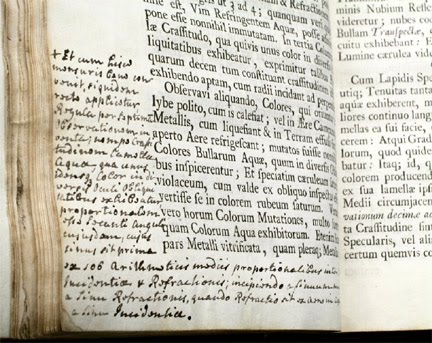
Over a meal, we inspected the books. Titles I’d never heard of, in such a shoddy shape as to rob them of any resale value. But we both noticed writing in the margins of several of the books. Pages and pages of it. Questions. Annotations. Comparisons to real life events. Supportive statements.

My fraintance automatically assumed they were the notes of some poor person who used to be a book editor that somehow couldn’t reconcile the fact that their profession was a long dead thing buried in the occupational heyday of youth.

To me, the neatly stacked margin sentences seemed more like thoughts that refused to remain locked within a curious and fully engaged mind and instead tried to open a discussion, share opinions and points of view, enter into an intellectual debate over the content of paragraphs and dialogue. It read like a one-side conversation with the author. Chatting with a literary ghost.

I was actually intrigued by this notion and tried to borrow one of the books to examine at my leisure, but she was having none of it, calling my view a load of romantic nonsense. By this time, the memories of why I hadn’t gotten along with the fraintance in the first place began leaking into the cracks of our conversation and flooding the space between us.

She knew I saw a story in there. Knew that I’d end up borrowing the books one by one in an attempt to piece together a backstory and motivation for the margin writer. Perhaps I still will one day, I just wish I had access to the original reference materials.

Sally forth and be readful.

— Rhyan Scorpio-Rhys

To Sow, Perchance To Reap

Image

The world is full of folks who appreciate nature and the great outdoors to the point of creating a mental happy place of some idyllic green pasture. That ain’t me. City boy born and bred. Concrete, glass and steel is my Garden of Eden. Yet, despite not being blessed with a green thumb, I planted something today.

An idea.

Okay, “idea” is a bit of a stretch. It’s more like a plot germ. As it stands, it’s a weak and feeble thing prematurely delivered into the world that requires incubation, so I decided to commit it to the ground at the tail end of my mind and ignore it until it has the strength to claw its way out of the grave.

But don’t feel too sorry for it, though. It’s not alone. It’s planted beside random bits of cool dialogue that I’ll never be able to work into a real world conversation, and nebulous set pieces that don’t quite fit into any of my existing stories. They’re all tucked away in my own personal mental pet cemetery.

“The soil of a man’s mind is stonier; a man grows what he can imagine and scribes it.”

Apologies for the bastardization of your quote, Stephen.

And no, I won’t tell you what the plot germ is. Not out of fear of it being stolen (what, thieves on the interwebz? Nope, I won’t believe it) but simply because 1) you wouldn’t understand it in its present form, and 2) I’m not superstitious but I firmly believe in the dreaded jinx. If I tell you what it is, it’ll never grow.

So, I will go about my business and occupy my mind with trivialities—like the numerous problems with Star Trek Into Darkness and why show writers create interested premises for Doctor Who episodes only to abandon all logic and rush the stories to unsatisfying climaxes—and allow my subconscious to absently weed my preemie idea seed. I’ll wait until it breaks free of its chrysalis as a brain soil stained vision with roots that encircle the heart of a story that I cannot wait to write. Until then, I’ll follow the sage advice of Mssr. Ron Popeil and, “Set it and forget it.”

Sally forth and sow, perchance to reap.

— Rhyan Scorpio-Rhys

Replete With Jargonosity

Image

Simply put: I hate jargon. It’s a cheap language trick feeding on lazy minds that’s slowly destroying descriptive speech as well as the written language. It’s both deceptive—giving the user a faux brilliance that might actually be found lacking if their comments were put into simple terms—and safe, since no one wants to appear out of the cool loop by stopping the jargon-spouter and asking them exactly what they mean (and isn’t it great when you actually call them on it and they struggle for answer?).

And before you mistake my meaning, I understand the importance of industry terms—screenplay direction, set lingo, etc.—as a method of saving communication time in a short attention-spanned world, and as a means of demonstrating how well you understand your area of expertise.

The jargon I hate is of the screenwriting variety in a non-professional setting when it comes to peer review. Not only for my work. In general. But that wasn’t always the case. When I first got into screenwriting I was, quite naturally, greener than a Granny Smith and eager to soak up as much knowledge on the subject of crafting the perfect script as possible, which included industry speak. I mean, who doesn’t want to learn the buzzwords of their aspiring trade and toss them into casual conversations with industry professionals to prove to that they’re with it and they dig the scene, man?

Then I joined several screenwriting groups that met online and at a physical location and attended screenplay review seminars and began to notice how some people hid behind parroted catchphrases in order to avoid the conflict of offering an honest opinion.

I don’t expect my hatred of jargon to change the way things work—hell, I even jargonate (the act of using jargon in verbal conversation) myself, more often than I’m comfortable with—I’m simply saddened by the slow death of Plain English as a method of conveying clear meaning without unnecessary complexity. Particularly when used to offer constructive criticism.

Sally forth and be writeful.

— Rhyan Scorpio-Rhys

What Lies Beneath

Image

I always love reading authors introductions to short stories and sometimes find the inspiration for writing the tale more interesting than the story itself. And just so we’re clear, I don’t mean the opening line and/or paragraph of the story. I’m talking about the preface, and a well-written introduction in the right hands is like the director’s commentary or behind-the-scenes footage or Easter eggs on your favorite DVD.

The odd thing about me is I can’t actually write an introduction to my own work until after I’ve completed the story, which I guess makes it more of a postmortem than an actual preface. I think the primary reason is if I write the introduction first it feels like I’m writing the story twice, instead of offering a quick glimpse at the man behind the curtain.

On more than one occasion, I had no idea what served as the impetus for the story I’d just written. Not immediately anyway. It usually comes to me later, sometimes days or weeks, when I’d wake with the story and characters stuck in my head, unraveling plot and dialogue in my mind until I uncovered the parallels to some half-forgotten event.

They’re like finding buried treasure, aren’t they? Those memories stored in neurons on seldom traveled synaptic pathways. Which made me think about a new project. Normally I don’t write drama pieces, I tend to gravitate towards speculative and science fiction, religious fantasy and horror, but I think I’d like to write a collected book filled with nothing but prefaces. Inspirations for stories without including the stories themselves.

I haven’t quite worked all the bugs out of the idea yet and I’m not sure how marketable it would be, but some projects we write for ourselves and not the quick buck, don’t we?

— Rhyan Scorpio-Rhys