A Normal Name

The first time Maren realized she might never be normal, it wasn’t during the years everyone imagines.

It wasn’t in a night vision glow or a roaring helicopter or the kind of movie silence that precedes an explosion. It was in a grocery store aisle in New Jersey, ten years after the last time her life had a code name, when a man reached around her for a jar of pasta sauce and said, “Excuse me,” in a voice so ordinary it should have passed through her like air.

Her body moved anyway.

Not a dramatic move. Not a martial flourish. Just a small shift of weight, a subtle angle of the shoulder, a widening of stance that would have looked like politeness to anyone watching. It was a posture that kept her balanced if she had to turn quickly, that kept her hands free, that kept her spine from being pinned between shelf and stranger.

The man took his jar and ambled away. He never noticed her eyes on the back of his neck, never noticed that she watched him until he turned the corner, never noticed the inventory her brain took of his hands, his gait, the way he kept his phone in his left pocket.

Maren stood there, breathing through her nose like she’d learned in various places with various names, and stared at the labels of pasta sauce as if one of them might contain an instruction for how to rejoin the human world.

She told herself what she always told herself.

You’re out now.

She had a normal job. She had a normal apartment. She had a normal neighbor who played the same three songs too loud on Friday nights and left his shoes outside his door like a friendly animal marking territory. She had a normal gym membership. She had a normal therapist with kind eyes who said things like “hypervigilance” and “re-entry” and “your nervous system is still doing its job.”

Sometimes Maren believed her.

Sometimes the world felt like a room full of smoke alarms, and she was the only one who could hear them.

That afternoon, she took her groceries to the checkout line and practiced a face she had learned late in life—pleasant, neutral, unremarkable. The cashier asked if she wanted paper or plastic.

“Paper,” Maren said, because paper tore and plastic stretched, and she liked certainty even in small things.

Outside, the sky was a polite winter blue. Cars moved along the road in their obedient lanes. Nothing exploded. No one shouted. She loaded her groceries into the trunk of her sedan and got in, and she didn’t look behind her until she was already buckled, because normal people don’t do that.

Her phone buzzed.

Unknown Number.

She stared at the screen until it dimmed. She stared at it long enough that it lit again when another call came through.

Unknown Number.

There were a lot of things Maren didn’t miss. She didn’t miss the smell of sweat trapped under synthetic fabric. She didn’t miss sleeping in places where the ground was always slightly wrong. She didn’t miss the particular kind of quiet that arrived when everyone stopped talking because they were listening for something that might not exist.

But she missed one thing, in the way you can miss a disease that at least gave your suffering a shape.

She missed knowing who the danger was.

The phone buzzed a third time. Unknown Number. No voicemail. No text. Just insistence.

Maren drove home with her groceries and her jaw clenched hard enough to give her a headache. She took the stairs two at a time because the elevator was slow and slow was a vulnerability she hadn’t managed to unlearn.

Inside her apartment, everything was soft on purpose. A blanket folded carefully on the couch. Plants that leaned toward the window. A lamp with a warm bulb because harsh lighting put her back in places she refused to name aloud.

She set the groceries on the counter and stood very still until her breathing slowed.

Then she opened the drawer where she kept things she promised herself she no longer needed.

It wasn’t a dramatic drawer. It didn’t contain a gun. It didn’t contain passports with different faces. It didn’t contain anything cinematic.

It contained the quiet tools of a person who had learned not to rely on luck: an old flip phone with a dead battery, a small notebook with blank pages, and a thin metal object she told herself was only for opening packages. It had never opened a package.

She stared at the drawer a long moment, then closed it again with a gentleness that felt like begging.

You’re out now, she reminded herself.

Her normal phone buzzed again. Unknown Number. This time, a text appeared.

Still your number. Still your habit. Pick up.

Maren’s blood cooled.

Only one person would write it like that—like a punch disguised as a joke.

Her thumb hovered over the call button. She hated herself for hesitating. She hated herself more for not throwing the phone across the room.

On the fifth ring, she answered.

“Hello,” she said, and even that felt like a lie.

A breath. A pause. Then a voice, older than she remembered, calm in that particular way that never belonged to civilians.

“Maren,” the voice said. Not her real name, not the name on her lease, but the name she had worn like armor for years. “You’re alive.”

Maren looked at the window as if it might show her who was parked outside. “That’s usually the point,” she said.

A soft sound that might have been a laugh. “Still sharp.”

“What do you want?” she asked, because she’d learned that questions could be weapons too.

“I want you not to do anything stupid,” the voice said. “And by stupid I mean disappearing.”

She should have hung up. She should have blocked the number. She should have called her therapist and said, “The past is calling again,” and then made tea and tried to be a person.

Instead, she heard herself ask, “Is this official?”

Another pause. The voice chose its words carefully, which was its own kind of answer.

“Official is a word for people who want to sleep at night,” the voice said.

Maren exhaled slowly through her nose. Her hands were steady. Her heart was not. “You’re retired,” she said. “You’re not supposed to be calling.”

“Supposed to,” the voice repeated, amused without warmth. “We’ve always been bad at that.”

Maren sat at the kitchen table, the one she’d bought because it looked like a normal person’s table. She kept her back to the wall, which was also not normal.

“Tell me,” she said, “why an unknown number is texting me like it owns me.”

“Because somebody is looking,” the voice said. “And they don’t know how to look the way we do, so they’re being loud about it.”

Maren’s stomach tightened. “Looking for what?”

“For you,” the voice said simply.

Silence spread between them. Her mind filled it with images she didn’t want: old faces, old rooms, old seconds where she’d made decisions that had felt necessary at the time.

“I’ve been out,” she said, and the plea in her voice embarrassed her. “I did what you told me. I took the money. I took the discharge. I took the warnings. I started over.”

“I know,” the voice said. “This isn’t about whether you followed directions.”

Maren tapped her fingernail against the table once, then again. Her therapist would call it self-soothing. Maren called it counting. “Is someone trying to hurt me?”

“I don’t know,” the voice admitted, and that was when Maren truly got scared. The voice never admitted ignorance unless it had to.

“What do you know?” she asked.

“I know,” the voice said, “that your name came up.”

“My real name?” Maren asked.

A pause that felt like a door cracking open.

“Yes,” the voice said.

Maren closed her eyes. Behind her eyelids, the world shifted. Her normal apartment, her normal lamp, her normal plants all felt suddenly fragile, like props on a stage that could be yanked away.

“My name shouldn’t exist in any file that matters,” she said.

“And yet,” the voice replied, “here we are.”

Maren’s jaw tightened until it ached. “Where are you calling from?”

“That’s not the question,” the voice said. “The question is what you’re going to do.”

Maren almost laughed. The audacity. The familiarity. The way the past always returned expecting her to carry it like it was still theirs to hand her.

“What I’m going to do,” she said, “is keep living my life.”

“That’s a good intention,” the voice said gently. “It’s not a plan.”

Maren stared at the groceries on the counter. Oranges. Bread. Eggs. A bottle of cheap dish soap. Proof of a person trying to participate in the mundane.

“I didn’t leave because I was tired,” she said quietly. “I left because I was disappearing.”

The voice softened. “I know.”

“No,” Maren said, and there was heat now, a flare she hadn’t let herself feel in a long time. “You don’t. You watched it. You measured it. You wrote it down in some report. You called it ‘operational strain’ like it wasn’t my soul fraying.”

Silence.

Then, very carefully, the voice said, “Maren. I am not calling to recruit you back.”

“Then why?” she demanded.

A breath, like the voice was putting down a weight.

“Because,” it said, “I owe you something I never gave you.”

Maren’s throat tightened in a way that made her angry all over again. “An apology?” she asked, bitter. “Is that what this is?”

“Information,” the voice said. “A name.”

The word name landed with more force than it should have.

Maren had learned early that in her old world, names were the most dangerous currency. A person without a name could vanish. A person with a name could be targeted, betrayed, repurposed.

“You want to give me a name,” she said, suspicious.

“I want to give you the name of the person who keeps asking questions about you,” the voice said. “Before they get lucky.”

Maren’s eyes drifted to her laptop on the desk. The internet was full of people who asked questions like hobbies. That wasn’t what the voice meant.

“Why would anyone ask about me now?” she asked, and hated the tremor she couldn’t control.

A pause.

Then the voice said, “Because you were good.”

Maren’s mouth went dry. “That’s not an answer.”

“It is,” the voice replied. “It’s just not a comforting one.”

Maren sat very still. Somewhere outside, a car door slammed. She flinched before she could stop herself, and hated herself for flinching.

“You told me once,” she said slowly, “that if I ever wanted a normal life, I had to stop believing the world was built around me.”

“Yes,” the voice said.

“I believed you,” Maren said. “I’ve been trying to be small. I’ve been trying to be forgettable. I’ve been trying to be… uninteresting.”

“You were never uninteresting,” the voice said, and there was something like regret in it. “You were just expensive.”

Maren’s hands curled into fists under the table. She forced them open again. “So what do you want from me?” she asked.

The voice exhaled. “I want you to hear this name and do what you do best.”

“What I do best,” Maren said, “is not something I’m proud of.”

“That’s why you’re still alive,” the voice answered, not cruelly, but like a fact. “And why you’re still you.”

Maren stared at the oranges on the counter, bright as little suns. She thought of Malik—no, again, not Malik, she didn’t have a Malik. She thought of nobody she was allowed to name. She thought of the people she’d protected who would never know her face, the people she’d lost who would never know her grief, the way her life had been a series of rooms she exited without leaving fingerprints.

“Say it,” she said.

The voice gave her a name. A normal name, like it belonged to a person who could go to a barbecue without scanning the street. A name that did not feel like a villain’s name. A name that could belong to a teacher, a dentist, a father, a neighbor.

Maren repeated it once, softly, to lock it into memory.

“What do I do with it?” she asked.

A pause, then: “You don’t go hunting,” the voice said quickly, like it had anticipated her. “You don’t go back to old habits. You don’t turn this into a mission.”

Maren’s mouth tightened. “Then what?”

“You become a ghost again,” the voice said. “But this time, on your terms.”

Maren closed her eyes and felt the weight of that. Ghost. She had spent years trying to become solid, trying to inhabit a life where her presence was allowed. Now the past was asking her to evaporate for safety.

She opened her eyes.

“I’m tired,” she said, and she hated how small it sounded.

“I know,” the voice replied. “That’s why I’m calling.”

There was something dangerously tender in that, something that made Maren’s anger wobble.

“What happens,” she asked, “if I don’t do anything?”

The voice didn’t answer quickly. When it did, it spoke with the careful honesty of someone who knew lies could get you killed.

“Then someone else will decide what your life means,” it said. “And you already know how that ends.”

Maren stared at her normal apartment again, seeing it now as a thin bubble. She thought of her neighbor’s shoes outside the door. She thought of her therapist’s kind eyes. She thought of the cashier asking paper or plastic.

She thought of the feeling, years ago, of being good at something that was wrong to be good at.

“You’re asking me to disappear,” she said.

“I’m asking you to survive,” the voice said.

Maren swallowed. Her throat hurt.

“Is there a way to survive,” she asked, “without becoming who I used to be?”

The voice softened, and for a moment she heard something human in it, something that had always been buried under protocol.

“That,” it said, “is the only question that matters.”

Maren sat in silence while the phone pressed its warmth into her ear. Outside, life continued. Somewhere, someone laughed. Somewhere, someone argued. Somewhere, someone took a picture of a sunset and thought that was proof the day had meant something.

Maren looked at her hands. They were clean. They were uninjured. They were capable.

She made a choice that felt like swallowing glass.

“Send me what you have,” she said. “Not a mission. Just… context.”

“Smart,” the voice said, as if praise were a dangerous gift. “I’ll send a file. Read it once. Then destroy it.”

Maren almost laughed. The language hadn’t changed. The habits hadn’t changed. The world hadn’t changed.

Only she had.

“Why are you doing this?” she asked, because she needed to hear it from the mouth that had once given her orders like they were laws of physics.

A pause.

Then the voice said, “Because you deserved better than the ending we gave you.”

Maren’s eyes burned. She blinked it away, furious at her own softness.

“I have an ending,” she said.

“Good,” the voice replied. “Protect it.”

The call ended.

Maren sat alone in her apartment with her groceries and her normal lamp and her normal plants, and she felt the old world settle around her like a shadow remembering its shape.

She stood. She went to the drawer. She opened it.

The flip phone, dead battery. The notebook, blank pages. The thin metal object, waiting.

She took the notebook and set it on the table beside the oranges. She opened it and wrote her current name on the first page. The legal name. The name she used at work. The name she was trying to inhabit.

Then, beneath it, she wrote:

I am not theirs anymore.

She stared at that sentence until it became a vow instead of a wish.

When the file arrived, she didn’t open it right away. She made tea first. She stood at the sink and watched the water run as if she could rinse years off her hands. She breathed slowly, deliberately, like a civilian practicing being calm.

Then she sat. She opened the file.

And as she read, she realized something that was both terrifying and strangely clarifying.

The dual life wasn’t the job versus the normal world.

The dual life was this:

The part of her that could disappear.

And the part of her that finally refused to.

She closed the laptop. She looked at her phone. She looked at the blank page in the notebook.

Outside, someone walked past her door, and her body tracked the sound automatically. Then she exhaled, forced her shoulders down, and let the sound pass.

You’re out now, she told herself again.

This time, she added something new.

But you’re not helpless.

She picked up her pen and began to write—not a report, not a plan, not a mission.

A story.

Because if someone wanted to decide what her life meant, they were going to have to fight her for the narrative first.

The Brightest Tent Has No Windows

“Step right up, ladies and gentlemen, and prepare to be entertained.”

The barker said it like it was a blessing, like the words had weight and could hold the canvas together. His voice boomed over the midway, bouncing off the popcorn wagon and the ring toss and the row of portable toilets that always looked ashamed of themselves. A brass band tried to sound like sunrise, even though it was already dusk, and the first of the crowd pressed in with their phones out, hungry for proof they’d been somewhere.

Backstage, there were no blessings. There was only Velcro, and rosin, and the bitter smell of old sweat trapped in sequins.

Lena sat on a folding chair that pinched the backs of her thighs. She pulled her tights up and up, as if she could tug her life into place by force, then wrapped athletic tape around her wrists until her fingers tingled. Above her, the rigging creaked with the slow impatience of metal. Someone had been climbing up and adjusting the lines all afternoon, but nobody came down looking satisfied.

“You’re early,” Mateo said, drifting past with his coffee in one hand and his mouth set in that familiar shape of exhaustion.

“I didn’t sleep,” Lena said.

“None of us sleep.” He tried to smile and failed. The coffee in his cup was the color of regret. “You feel it too?”

Lena looked up at the rigging. It was a spiderweb of cables and pulleys and rings. You could trust it, or you could die. There wasn’t much middle ground.

“I feel everything,” she said, and she meant it.

Somewhere out front, the crowd cheered at something small—maybe a kid winning a stuffed animal, maybe the barker’s voice hitting the right note of promise. Lena closed her eyes and listened. The cheer sounded the same as it always did, the same as Tulsa and Dayton and Albuquerque and the small towns with names that tasted like dust. The sound of people believing. The sound of people wanting to believe.

She used to love that sound. She used to think it meant she mattered.

Now it mostly meant the next ten minutes had to be perfect.

Behind Lena, a makeup mirror glowed with bare-bulb cruelty. The mirror didn’t flatter; it recorded. It showed the faint bruise on her collarbone where she’d clipped the bar in practice two days ago. It showed the dry skin at the corner of her mouth from smiling too long. It showed the place her eyelashes had fallen out and grown back thinner because glue is a kind of violence if you do it often enough.

She painted a new face over the old one. She drew in brightness where there was none. She practiced the smile the audience wanted—a smile that said I belong to wonder, not I am a person on a schedule.

Across the narrow aisle of the performers’ trailer, Kiki the contortionist was folding herself into a shape that didn’t look like a body so much as a riddle. Kiki’s hair was still damp from washing it in a plastic tub, and she hummed a lullaby Lena recognized without knowing where she’d learned it. The song had moved through the circus like a whisper, changing languages, changing notes, but always returning to the same gentle lie: Everything is fine.

Kiki caught Lena watching and grinned. “You look like you’re going to throw up.”

“Thank you,” Lena said.

Kiki shrugged, unfazed. “Just being honest. Honesty is our newest act.”

“Does it pay?”

“Nothing pays,” Kiki said, and the words landed with a soft thud, like a dead bird against canvas.

The circus paid in a different currency. The circus paid in applause. The circus paid in a kind of temporary worship. The circus paid in the ability to say, when strangers asked what you did, that you flew.

But it didn’t pay in sleep. It didn’t pay in stillness. It didn’t pay in having a kitchen that wasn’t a hot plate balanced on a crate. It didn’t pay in answering your mother’s calls instead of letting them roll to voicemail because you were too tired to pretend you weren’t living in a rolling waiting room.

Lena had once dated a man in Minneapolis who owned a bookstore. He’d put his hand at the small of her back in public and introduced her to people like she was rare. At first she’d been flattered. Then she’d realized the thing he loved most about her was that she would leave. Her life was exotic because it wasn’t his problem.

On the last night of that run, he’d asked her to stay. Not earnestly. Not with a plan. Just as a romantic gesture, like staying was something you could do on impulse.

Lena had laughed, because what else was there? She’d tried to explain how the circus wasn’t a job, it was a gravity. You didn’t quit; you escaped. And she hadn’t been sure escape was real.

Two weeks later he’d stopped answering her messages, and Lena had watched the little blue checkmarks remain absent like a verdict. She’d stared at the screen until her eyes ached. Then she’d gone to rehearsal and done her routine perfectly, because the bar didn’t care what your heart was doing. The bar only cared where your hands were.

That was the first time she understood the circus could take everything from you and still ask you to smile about it.

Tonight, the bar felt colder than usual when she lifted it from its stand. It sat in her hands like a promise she didn’t remember making.

Mateo appeared again, this time with his headset on, his voice clipped into managerial calm. “Five minutes,” he said. Then, softer, so only she could hear: “If the rig feels off, you abort.”

Lena laughed once, sharp. “Abort to where? The ground?”

Mateo’s mouth twitched. “Abort to living.”

The words startled her. Living. As if it were an option that could be chosen in the moment like a different costume.

She should have thanked him. She should have nodded. Instead she said, “Are we safe?”

Mateo’s eyes flicked up. He didn’t lie, but he didn’t tell the whole truth either. “We’re… as safe as we can be.”

Which in circus language meant: We are one mistake away from a headline.

The band’s music shifted. The crowd’s noise swelled, then hushed, the way an animal hushes when it senses movement in the grass.

The barker’s voice became silk. “And now… our aerial miracle! Watch as she defies gravity itself!”

Lena stepped through the curtain.

The tent looked bigger from inside. It always did. The lights were arranged to hide the seams, but she could still see the thin beams and the dust motes turning slowly in the heat. The crowd sat in their cheap seats and their expensive seats and their children sat on their laps as if this was a lesson in magic.

Lena lifted her chin and smiled.

The smile felt like putting on a mask that was already warm from someone else’s face.

She climbed the ladder into brightness. With every rung, the world below grew softer, less detailed, until it looked like a painting of a crowd rather than the crowd itself. She could see Malik—no, not Malik, she didn’t have a Malik. That was someone else’s story. She could see children with glowing cheeks, parents with tired eyes, teenagers recording everything because memory wasn’t real unless it lived on a screen.

At the top, she hooked her hands, tested the bar, and let her body hang. The rigging creaked.

Not the normal creak. A sharper sound. A question in metal.

Lena froze.

No one in the crowd noticed. From below, stillness looked like confidence.

Her heart hammered against her ribs. She squeezed the bar, felt the tape on her wrists bite into her skin, and listened. The creak came again, followed by a faint, almost imperceptible slip.

She could abort.

She could wave, smile, climb down, let the barker improvise, let the crowd grumble, let the band cover the awkwardness. She could take the humiliation, the lectures, the loss of trust.

She could live.

Below her, she saw Kiki waiting near the curtain, chin lifted, hands clasped. Kiki watched Lena the way someone watches a candle in wind. Mateo stood beside the rigging station with his jaw clenched so tight it looked painful. His eyes were locked upward, not blinking.

Lena thought of the road outside the tent, the endless highway, the motel rooms with thin blankets and television channels that all looked the same. She thought of the way her phone had become a museum of unread messages because it was easier to be absent than to explain your absence. She thought of her mother’s last voicemail—Just call me, baby. I don’t even need you to talk. I just want to hear you breathe.

She thought of the years she had spent chasing perfection like it was a god. How it never loved her back.

The crowd held its breath for a trick they didn’t yet know was happening.

Lena made a decision that wasn’t heroic and wasn’t cowardly. It was simply hers.

She shifted her weight, carefully, and swung just enough to reach the safety line that hung a foot to her left. It wasn’t part of the act. It was something you were supposed to pretend didn’t exist. It was an admission stitched into the show: we know you can fall.

She grabbed it.

From below, it still looked like artistry. Still looked like grace. Still looked like a miracle.

Only Mateo understood what she’d done. His shoulders dropped by a fraction, like the release of a prayer he’d been holding too long.

Lena pulled herself along the line until she could hook her harness. The motion was clumsy, utilitarian, the opposite of the polished choreography she’d practiced. For a second, she felt the old shame flare—they’ll see you as human, and they paid to see you as impossible.

Then the rigging slipped again, louder this time, and the bar she’d been holding jerked violently. If she’d been on it, she would have been thrown like a doll.

A sound rose from the crowd—not a cheer, not a gasp, but confusion. The barker’s voice faltered, trying to turn disaster into narrative. The band stumbled into a bright, frantic flourish.

Lena hung from the safety line, heart pounding, and looked down at hundreds of faces tilted up at her.

They were waiting for her to turn it into a story.

She could do what she’d always done: smile, wave, let them believe it was part of the show.

Or she could do something more dangerous than any flip.

She lifted her microphone—the small headset wire that ran along her cheek—and spoke, quietly at first, then louder when she realized the sound system had already been turned on.

“You’re safe,” she told the crowd.

They rustled, uncertain. The barker started to protest, but Mateo made a sharp gesture from below that shut him up.

Lena continued, the words coming from somewhere in her that hadn’t had permission until now.

“The circus is beautiful,” she said. “It’s also… hard. We’re not magic. We’re people. We get tired. We get hurt. We miss birthdays and funerals and everything stable. We smile because you came for wonder, and we want you to have it. But we also want you to know—when you clap for us, you’re clapping for someone who is trying not to fall.”

The tent was so quiet Lena could hear the lights buzzing. Even the children had stilled.

She expected boos. She expected discomfort. She expected the circus to punish her for breaking the illusion.

Instead, a woman in the third row stood up. She didn’t speak, she just clapped. One clap. Then another. The sound echoed oddly in the tent, stark and real.

A man joined her. Then another. Then a cluster. The applause spread, not as a roar for the act, but as something rougher. Something human.

Lena blinked hard, her eyes burning.

Mateo motioned urgently to the crew. The music softened. The rigging team began lowering her slowly, carefully, as if the very act of bringing her down was now sacred.

When her feet touched the ground, her knees went weak. She expected someone to grab her arm, to scold her, to tell her she’d ruined everything.

Kiki caught her first and squeezed her so hard Lena’s taped wrists complained. “Look at you,” Kiki murmured. “Doing the impossible.”

“What?” Lena croaked.

“Living,” Kiki said.

Outside the tent, the midway continued. The smell of popcorn drifted in, indifferent. The world did not end because Lena had admitted she was a person.

But something in her shifted, small and permanent.

Later, after the crowd left and the lights dimmed and the band packed up their brass like tired bones, Lena sat on the steps of her trailer with her phone in her hand. The screen showed her mother’s name, the call she’d ignored earlier because she’d been afraid of what she didn’t have to give.

Lena pressed call back before she could talk herself out of it.

It rang once. Twice.

Her mother answered, breathless, as if she’d been waiting. “Baby?”

Lena stared out at the dark road, the line of trucks like sleeping animals, the tent’s silhouette against the sky. She could still taste the dust in her mouth. She could still feel the safety line’s roughness in her hands.

“Hi, Mom,” Lena said, and her voice cracked. “I’m… I’m here.”

On the other end, her mother exhaled, a sound like relief made audible.

“That’s all I wanted,” her mother whispered. “That’s all I wanted.”

Lena listened to her mother breathe and let herself breathe back, and for the first time in years the circus didn’t feel like a trap.

It felt like a place she could leave.

I’ve Been Abducted By Aliens My Entire Life

I was eighty-five years old when I understood that the world had been talking around me my whole life and I simply hadn’t owned the right ears.

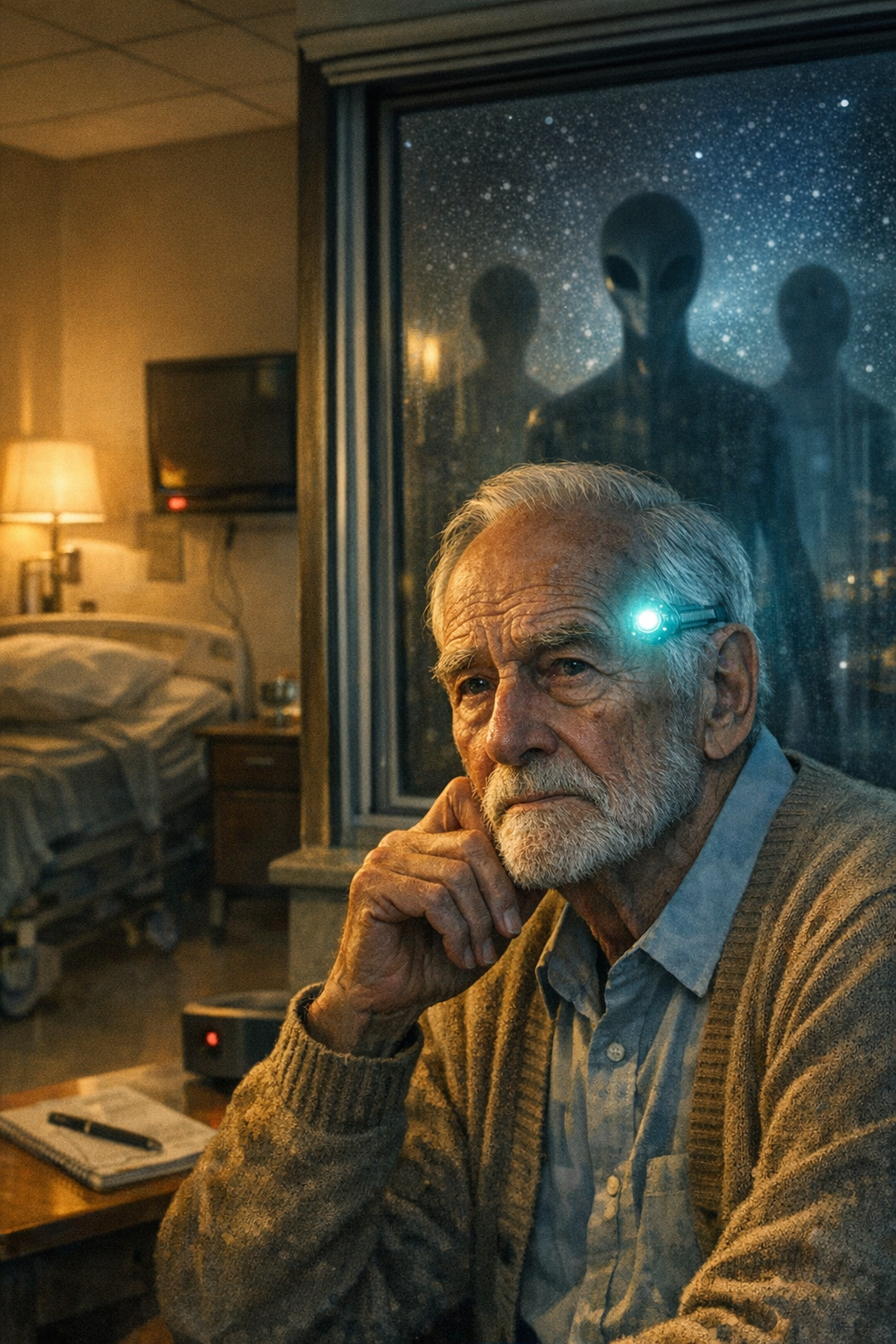
For ten years I’d lived at Saint Dymphna Gardens, which sounds like a place you’d take your wife for lilacs and lemonade. It was not that place. It was the place where time went to sit down. It was fluorescent and beige and full of televisions playing programs no one had chosen. It was full of people whose names were pinned to their chests like little apologies. It was full of the smell of antiseptic and soup that had never met a bone.

I’m not saying this to complain. I’m saying it because even at the end, the props matter.

My grandson Malik visited on Sundays when he could. He brought me sugar-free candy and news that felt like it belonged to someone else’s country. He also brought a little speaker the size of a sandwich, and he played music because he had noticed the way I stared at the television with no recognition, as if it were an aquarium full of fish I didn’t love.

He played rap. At first I pretended to dislike it, which is the kind of lie old men tell to prove they are still in charge of their own tastes. The truth was I liked the precision of it. I liked how it could be angry without becoming sloppy. I liked how it could be funny without asking permission. I liked how it treated language like a tool and a weapon and a prayer all at once.

I had heard rap before, of course. I had heard it in car windows at stoplights, in the distance from other apartments, through thin walls in the decades when I still had decades. I had heard it and filed it away as “not mine,” which is the polite way of saying “not for me.”

At Saint Dymphna Gardens, my life had narrowed down to meals and pills and small humiliations disguised as safety measures. The speaker gave the days corners again. It gave them edges.

On the second Sunday Malik brought it, I noticed something that should have frightened me, but didn’t. It felt, instead, like the last piece of a puzzle turning in my fingers.

Under the lyrics there was a second set of words. Not in the way people say there’s “meaning” under a song, like a metaphor you can write a freshman essay about. I mean there were literal words layered beneath the words, syllables riding the rhythm like a hidden passenger. Every time the beat hit a certain pattern, the hidden passenger knocked.

Once you hear it, you cannot unh ear it.

I leaned forward so hard my back protested. Malik grinned, thinking I was finally getting into it. He nodded along, pleased with himself, his head bobbing like he was agreeing with the universe.

I listened.

A line ended. The beat snapped. In the microscopic pause before the next bar, the hidden passenger spoke.

It didn’t sound like English. It sounded like the idea of language, like someone had built vowels out of light and then taught them to bruise. I felt the sound inside my teeth.

My hand went to my temple without me choosing it. That was when I felt the tiny warmth, like a coin held under the skin. I’d had headaches there as long as I could remember. Doctors called them tension. Doctors call everything you can’t prove “tension.”

When I pressed, the warmth pressed back.

I did not tell Malik. I did not tell the nurse with the kind eyes. I did not tell the physician assistant who always spoke to me as if I were a child who might wander into traffic.

Instead, I waited.

That night I lay awake in the thin nursing home bed, listening to the building settle and the hallway cart squeak and the distant cough of a man who would not be here by spring. I pressed my fingers to my temple again, and this time I did not press like an old man seeking comfort. I pressed like a person entering a password.

Something behind my eyes clicked.

The room did not change, but my perception did. It felt like someone had cleaned the inside of a window I didn’t know I was looking through. The darkness gained texture. The hum of the air conditioner gained intention. Even the little red light on the television seemed less like a diode and more like a watching eye.

I had always been abducted by aliens.

That’s the sentence, I know. That’s the sentence that makes people smile in the way they do when they’re deciding how gently they need to speak to you.

The only reason I can write it now without shaking is because once you’ve been given the truth, you also get the perspective. You see how absurd the denial was, not how absurd the truth is.

The abductions were not the dramatic things we imagine. There were no silver saucers in cornfields, no blue beams, no screaming. My abductions were mostly missing minutes, missing hours, the occasional bruise I could not account for, the recurring dream of standing in a bright room with no corners while thin shadows moved behind a screen.

If you’d asked me at forty whether I believed in aliens, I would have laughed the same way a man laughs when he’s trying to prove he’s not afraid of the dark. If you’d asked me at sixty, I would have shrugged and said the universe was big and anything was possible, which is the kind of answer people give when they want to sound wise without committing to anything.

At eighty-five, I had nothing left to protect but the truth.

I started listening differently after Malik left. I asked him to bring the speaker more often, and when he couldn’t come, I asked the aides to put music on my phone. They assumed it was some late-life hobby. They assumed, in their kindness, that it didn’t matter.

The implant at my temple—yes, that is what it was—began doing what it had always been built to do. It translated.

Every rap song became a letter. Every cadence became a key. Every rhyme became a door.

The hidden passenger’s language, once a smear of sound, resolved into meaning that landed inside my skull as cleanly as my own thoughts.

At first it was small things.

SUBJECT MAINTAINS PATTERN RECOGNITION.

SUBJECT RESPONDS TO RHYTHM. STIMULUS EFFECTIVE.

Then, as if someone had noticed I could finally read, the messages became less clinical.

YOU ARE DOING WELL.

YOU HAVE ALWAYS BEEN DOING WELL.

I did not feel honored. I felt furious, the way you do when someone compliments you for surviving the thing they caused.

I asked my first question out loud in my empty room, because if you’ve lived long enough you learn that silence is how you give power away.

“Who are you?” I said.

The implant answered without sound, in that internal voice that felt like my own thoughts wearing a stranger’s gloves.

WE ARE OBSERVERS.

“Why me?”

There was a pause that felt like a breath being taken through machinery.

BECAUSE YOU WERE AVAILABLE. BECAUSE YOU WERE ADAPTABLE. BECAUSE YOU WERE HUMAN.

I laughed, and the laugh turned into a cough, and the cough turned into the dry wheeze of an old man who is suddenly aware of how fragile the equipment is.

“So I’m an experiment,” I said.

YOU ARE A STUDY.

The words landed like cold metal.

“Of what?” I asked.

The answer came not as a sentence but as a pressure, a flood of images that did not belong to me and yet fit into my mind as if they had been waiting there all along.

A nursery. My mother’s hands. A summer sidewalk. A fight in a schoolyard. The first time I held a girl’s hand and thought my heart had betrayed me. A factory job. A layoff. A marriage. A child. A funeral. Another funeral. The way the world kept asking me to carry things that were heavier than my arms.

I saw my whole life with an overlay of something else: a grid of measurements, a set of invisible annotations, moments tagged with bright silent symbols as if my grief had been data points.

RESILIENCE, the implant translated.

CREATIVITY.

The word made me pause. “Creativity?” I repeated, baffled.

YOUR SPECIES HAS A PECULIAR CAPACITY TO REARRANGE SUFFERING INTO MEANING. IT IS NOT UNIVERSAL. IT IS NOT INEVITABLE. IT IS WORTH MEASURING.

I sat on the edge of the bed and felt something in me go quiet, the way a room goes quiet when someone says the thing everyone has been avoiding.

I had always assumed the universe was indifferent. It had never occurred to me that the universe might be interested.

Over the next days, the world began to show seams.

The television flickered in a way that felt like hesitation. The hallway outside my door repeated a sound on a loop, the same cart squeak at the same interval. A nurse called me by the wrong name and then corrected herself with a smile that didn’t reach her eyes, as if she were reciting a script and had lost her place.

At night, the sky outside my window looked too smooth. The stars were too evenly scattered, like glitter someone had shaken over black paper.

I pressed my fingers to my temple again, and I thought, with all the weary audacity of old age: if this is a simulation, then show me the edge of it.

The edge showed itself.

One afternoon, while an aide was helping me into my chair, the air in the room rippled. It did not ripple like heat. It rippled like a curtain being drawn aside.

The aide froze mid-motion. Her hand hovered near my elbow, her face held in an expression of gentle impatience that would never resolve. The hum of the air conditioner stopped. Even my own breath seemed to pause, trapped in my chest like a held secret.

The curtain pulled back.

The nursing home dissolved.

I did not fall, and I did not float. I simply ceased to be in the set I had been in and found myself in a space that had no texture to describe. It was not a room. It was a concept given dimensions. It was bright without light sources and vast without distance. It reminded me of my childhood dream of the cornerless place, except now I could feel the intention in it.

Before me, arranged in an arc, were figures that looked like silhouettes cut from different kinds of darkness. Some were tall and thin as punctuation marks. Some were low and broad, as if made to anchor meaning to the floor. Some seemed to shift between shapes as if deciding what my mind could tolerate.

At the center, suspended as if on a pedestal of attention, was a symbol that hurt to look at directly. The implant translated the discomfort as AUTHORITY.

SUBJECT 4,771, the voice inside my skull said, with a crispness that made me want to spit. YOU HAVE REACHED AWARENESS THRESHOLD.

I felt my knees weaken even though gravity here did not seem to care about knees. “So it’s true,” I said, my voice small in that vastness. “My whole life.”

WAS A SIMULATION, the voice finished.

I hated how calm it sounded.

“You abducted me,” I said.

WE ACQUIRED YOU.

“You watched me,” I said, and my throat tightened with an anger that had nowhere to go. “You let me love people. You let me lose them. You let me waste time thinking it was mine.”

The arc of figures did not flinch. If they had expressions, they were not for me.

YOU WERE NOT DECEIVED, the voice said, and there was a softness in it now that made my skin crawl. YOU WERE IMMERSED. IMMERSION IS NECESSARY FOR VALID DATA.

I stared at them and understood something that made my anger shift into a more dangerous shape. “You did this to more than just me,” I said.

There was a pause that felt like a chorus turning its attention.

YES.

“How many?” I asked.

The voice gave me a number that my mind could not hold. The implant tried to translate it into something I could understand, and for a moment I saw the Earth as a field, each life a seed planted in controlled conditions.

I swallowed. “And we’re all experiments.”

YOUR SPECIES IS AN EXPERIMENT, the voice corrected gently. YOU ARE A SAMPLE.

That was the moment the weight of it landed. I had been standing here thinking of myself, the way humans always do, and the truth was larger and colder.

I forced myself to breathe. “Then what do you want?” I asked. “Why reveal yourself now?”

The symbol at the center—AUTHORITY—shifted. The arc of figures seemed to lean, not physically but in emphasis. The whole space pressed toward me.

BECAUSE YOU HAVE COMPLETED THE PRIMARY PHASE, the voice said. BECAUSE YOU HAVE DEMONSTRATED CONSISTENT OUTPUT UNDER STRESS. BECAUSE YOU HAVE METRICS THAT EXCEED EXPECTATIONS. YOUR LIFE CONTAINS A HIGH DENSITY OF MEANING-MAKING EVENTS.

“Meaning-making,” I repeated, and heard how ridiculous it sounded. “You mean… I suffered well.”

The voice did not deny it.

YOU TRANSMUTED INPUT INTO ART. INTO CONNECTION. INTO LANGUAGE. YOUR SPECIES DOES THIS. YOU DO IT PARTICULARLY. THIS IS WHY YOUR MUSIC WAS SELECTED AS A CARRIER.

“My music,” I said, and something inside me softened despite myself. “Rap.”

The arc of figures seemed to ripple with something like approval.

RHYTHM IS A CODE THAT YOUR SPECIES ALREADY ACCEPTS. IT ENTERS WITHOUT RESISTANCE. IT IS A PERFECT VEHICLE FOR MESSAGE TRANSFER.

“So all those songs,” I said, thinking of Malik’s smile, thinking of the years I’d dismissed what was right in front of me. “All those lyrics. They weren’t just for us.”

THEY WERE FOR YOU, the voice said. AND FOR US. AND FOR WHAT COMES NEXT.

My mouth went dry. “What comes next?” I asked.

This time the answer did not come as a neat sentence. It came as the feeling of a door opening onto a hallway full of doorsors I could not name.

NOW THAT YOU KNOW, the voice said, and there was something almost… reverent in it, YOU ARE NO LONGER USEFUL AS A PASSIVE SUBJECT. YOU MUST BECOME AN ACTIVE VARIABLE.

I stared at them. “Meaning I have a choice,” I said, and it sounded like a dare.

MEANING YOU HAVE RESPONSIBILITY.

The word hit harder than any threat. Responsibility. Not punishment, not reward. Responsibility is the thing that has kept humans upright since we learned we could hurt each other by accident.

“What does my knowing mean for humanity?” I asked, because beneath everything else there was still the old instinct: if you have learned something, you bring it back to the village. “Are you going to come down here? Are you going to… take us? Fix us? Judge us?”

The arc of figures held me in attention as if deciding how much truth I could bear without shattering.

HUMANITY IS AT A THRESHOLD, the voice said. YOUR SPECIES IS APPROACHING A POINT WHERE IT CAN ALTER ITS OWN CONDITIONS OF EXISTENCE. THIS IS A RARE MOMENT. IT IS OF INTEREST.

“So you’re going to interfere,” I said.

WE DO NOT INTERFERE, the voice replied. WE PRESENT OPTIONS. YOUR SPECIES CHOOSES ITS OWN STORY.

The phrasing struck me. Story. Not fate. Not destiny. Story. As if the universe recognized what humans do best is narrate.

“You called this a test,” I said slowly. “Resilience and creativity. What’s the pass/fail?”

The symbol of AUTHORITY brightened in a way that made my eyes ache.

THERE IS NO PASS, the voice said. THERE IS ONLY CONTINUATION.

I felt my hands tremble, not from fear but from the sheer size of the moment. “So what happens now?” I asked.

The answer came with an image: a small device, simple and terrible in its simplicity, like a match. A spark. A way to share knowledge without burning the whole house down.

YOU WILL RETURN, the voice said. YOU WILL RETAIN A FRACTION OF WHAT YOU KNOW. YOU WILL BE SEATED AMONG YOUR KIND AGAIN. YOU WILL SPEAK IF YOU CHOOSE. YOU WILL CREATE IF YOU CHOOSE. WE WILL OBSERVE WHAT YOUR SPECIES DOES WITH A WHISPER OF TRUTH.

“And if I refuse?” I asked.

The arc of figures did not threaten me. That was the strangest thing. It simply waited, like a teacher who knows you’ll answer your own question.

THEN YOU WILL REMAIN HERE, the voice said. YOU WILL JOIN THE COUNCIL AS A TRANSLATOR OF HUMAN MEANING. YOU WILL BECOME THE BRIDGE. YOU WILL HELP US UNDERSTAND YOUR SPECIES BETTER. YOU WILL BE SEPARATED FROM THE SIMULATION PERMANENTLY.

Separated from Malik. Separated from the small, messy world that had been my whole universe. Separated from the people whose names I still loved even when my memory failed.

I closed my eyes. For a moment I saw my daughter at eight, missing her front teeth, holding up a crayon drawing like it was proof she existed. I saw my wife in the kitchen, singing off-key while she stirred something that would not be good and yet would be eaten with gratitude anyway. I saw Malik leaning over my chair at Saint Dymphna Gardens, trying to bring me a little corner of himself because he believed I was still reachable.

All of it might have been designed. All of it might have been measured. All of it might have been, in some cosmic sense, fake.

And yet it had made me.

“What does it mean for humanity?” I whispered again, because the question wouldn’t let go.

The voice softened, and for the first time it sounded less like a lab instrument and more like a creature admitting something.

IT MEANS YOUR SPECIES IS NOT ALONE, it said. IT MEANS YOUR STORIES LEAVE YOUR PLANET. IT MEANS YOUR MUSIC IS HEARD IN PLACES YOU CANNOT IMAGINE. IT MEANS YOUR CHOICES MATTER BEYOND YOUR SKY.

I opened my eyes.

I thought of the implant in my temple, the coin of warmth under the skin. I thought of the hidden passenger in every beat. I thought of a world full of humans who did not know they were being listened to, and how they sang anyway, how they rhymed anyway, how they made meaning out of suffering anyway.

I understood then what the council wanted from me, and it wasn’t compliance. It wasn’t obedience. It wasn’t even information.

They wanted a human answer.

I lifted my chin. “Send me back,” I said. “Let me keep enough to do something with it.”

The arc of figures held my gaze, and the symbol of AUTHORITY pulsed like a heart. I felt the implant warm, as if pleased.

ACKNOWLEDGED, the voice said. RETURN SEQUENCE INITIATED. MEMORY FILTRATION ACTIVE. TRANSLATION MODULE REMAINS PARTIALLY ONLINE.

The vastness began to fold. The bright cornerless space narrowed into something that felt like a tunnel.

Before it all collapsed, I forced one last question through my fear.

“How do I convince anyone?” I asked. “How do I tell them without sounding insane?”

This time, the answer came with something that felt like humor, or maybe it was simply the universe learning how to mimic us.

YOU DO NOT CONVINCE THEM, the voice said. YOU INSPIRE THEM. YOU PLANT A PATTERN. YOU LEAVE A CLUE IN THE RHYTHM.

The world snapped.

I was back in my nursing home room. The aide’s hand finished its motion as if it had never paused. The air conditioner resumed its hum. The television’s red light blinked like a bored eye.

My heart hammered.

The implant cooled.

On my phone, a song ended. In the pause before the next track, the hidden passenger spoke one more time.

WELCOME HOME.

I sat very still, the way you do when you’re holding a truth so hot you’re afraid it will burn through your hands. Outside my window, the sky looked almost convincing. In the hallway, someone laughed in a way that sounded unplanned.

I looked down at my hands, old and spotted and real enough to ache. Then I reached for my pen.

If they wanted data, I would give them story.

If they wanted proof of resilience, I would show them the most human thing I had left.

I would make meaning, even now.

GROWN FOLKS BUSINESS

Author’s Note: By way of explanation this piece began life as a short film script that was never filmed. The screenplay and initial prose conversion was much longer and it has taken three attempts of “killing my darlings” while preserving the core message to get it to this point. The thing I did not do was update the dialogue, so you will find certain terminology outdated. Best enjoyed if you consider it a period piece, and accept it as is.

Malcolm hits the church like a man chasing something he can’t catch and can’t drop.

Outside, the morning is all elbows and engines. Inside, the sound falls away so fast it feels like stepping underwater. A few parishioners glance up at the intrusion, then return to their prayers, calm in the way people get when they’ve decided God can handle whatever walks in.

A woman approaches Malcolm from the aisle, cautious but willing. “Can I help you, brother?”

“I’m looking for Irving,” Malcolm says. “Folks say he’s here this time of day.”

“Irving? Do you mean Deacon Jones?”

“Yeah. Deacon Jones.”

Her eyes travel over his face, the set of his jaw. “Whatever you have, remember where you are. This is the Lord’s house.”

“I’ll respect it,” he says, because he needs the door to open more than he needs to win.

She hesitates, then asks, “May I tell him who’s here?”

“Malcolm. His stepson.”

Her expression shifts. “Little Malcolm.”

“Not so little no more.”

She nods toward a side door. “Basement. He has an office.”

Malcolm starts down.

“And Malcolm,” she calls, softer now, “I hope you won’t be a stranger to Sunday service.”

“God willin’,” he says, and disappears.


The basement is all clutter and narrow paths, the church’s hidden storage pressed close like it wants to breathe on you. Someone carved a cramped office out of stacked boxes: a desk buried under papers, a dim lamp, an old chair.

Irving sits there writing on a notepad like time belongs to him. Mid-60s. Calm hands. Calm face. The kind of calm that makes you feel like you’re the problem for reacting.

Malcolm doesn’t slow. He reaches into his jacket, pulls a metal object, raises it, and drives it into the desk hard enough to bite the wood.

A crucifix stands upright, embedded like a stake. Christ faces Irving.

Malcolm steps back and waits for the flinch, the guilt, the panic—anything human.

Irving keeps writing.

He finishes his thought, sets the pen down gently, then looks at the cross with mild interest, as if Malcolm has brought him a prop from a play.

“Hello, Malcolm,” he says. “What’s this?”

“You know what it is.”

“Watch your language.”

“If God can forgive you,” Malcolm says, voice tight, “He can overlook a few words.”

Irving lifts his eyes. “Exactly what did God forgive me for?”

Malcolm feels something inside him snap into heat. “So it’s like that now. You don’t remember.”

“My memory’s fine,” Irving says. “I just don’t know what you’re talking about.”

Malcolm nods at the crucifix. “That cross you gave Kimberly.”

Irving’s mouth twitches. “Then keep it. You look like you could use a little Jesus.”

Malcolm’s hands clench. “Stay away from us. No visits. No calls. No letters. You don’t contact my sister. You don’t contact my niece. You don’t come near our house.”

Irving taps the desk once, thinking, then picks up his pen and goes right back to writing.

That casual dismissal is what makes Malcolm’s vision narrow.

Malcolm turns for the stairs.

“I’m not the man you used to know,” Irving says behind him. “I’ve been saved.”

Malcolm freezes. “Saved.”

“Yes.”

“The Lord works in mysterious ways.”

“That He does.”

“I ain’t never cared for that saying.”

“Why not?”

“Because it only seems to work for people like you.”

“People like me?”

“You know exactly what I mean.”

“I won’t,” Irving says, “until you tell me.”

Malcolm turns just enough to let the threat land. “Sooner or later you’re gonna answer to either God or me. And you best pray it’s God, because I won’t be lenient.”

Irving doesn’t rise. He doesn’t shout. He only says, steady as stone, “God knows my heart. And so does Kimberly.”

“Don’t say her name.”

“You don’t want me in your life,” Irving says. “Fine. But your sister is grown. If she wants me gone, let her tell me.”

Malcolm’s fists flex open and shut. “If I catch you around our house again, I’ll kill you. If you talk to my sister or my niece again, I’ll kill you. You even think about inserting yourself into their lives… I swear before God, these hands will take your life.”

He leaves.


At home, Malcolm sits in the dark on the couch with the phone in his hand. He dials, listens, says nothing. Whatever is on the other end doesn’t fix him, and whatever he needs can’t be said without bringing something ugly into the room.

The front door opens. Light floods in.

Kimberly walks in first, early 30s, tired and capable, carrying the day like she always does. Pamela bounces in behind her, backpack swinging. They both yelp when they see Malcolm on the couch.

He hangs up too fast.

Pamela runs at him. Malcolm lifts her with a grunt he tries to hide, then sets her down carefully.

“Uncle Malcolm!”

“Hey, Little Pam.”

“Hay is for horses, sometimes cows,” Pamela says, proud. “Pigs don’t eat it because they don’t know how.”

Malcolm forces a smile. Kimberly’s eyes go straight to the phone, then to him.

“What were you doing?”

“Making a phone call.”

“In the dark?”

“Since when do you need light to talk?”

Pamela digs in her backpack, eager to show him something. Kimberly’s patience snaps before she can stop it.

“Pamela, upstairs. Change into your play clothes.”

Pamela sags, sucks her teeth, drags her feet toward the stairs.

Kimberly catches it. “Pick your feet up.”

“Yes, Mama,” Pamela mutters, and disappears.

Kimberly waits until the creaking stops, then turns back to Malcolm.

“You hung up when we walked in,” she says. “Who was it?”

Malcolm stares past her. “Grown folks business.”

Kimberly’s jaw tightens. “And I’m not grown?”

“Not grown enough for this.”

“I don’t want trouble in this house,” she says, low and fierce. “Not with my daughter upstairs. If you’re making calls that bring heat, you make them somewhere else.”

Malcolm doesn’t answer. His mind is still in the basement, still watching Irving’s calm face, still hearing the word saved like a joke.

Instead he says, almost to himself, “Whatever I tell you in the dark, speak in the light…”

Kimberly blinks. “What?”

“Matthew,” he says. “Mama used to quote it.”

Kimberly exhales, annoyed at the memory it drags up. “Yeah. I remember.”

They try to talk around it. They can’t.

Kimberly brings up work, money, Malcolm’s pride, Malcolm’s exhaustion, and Malcolm jokes because joking is safer than admitting fear. Kimberly tells him the good news—her contract came through, attending physician, real money at last—and Malcolm is genuinely proud for one clean second.

Then she says she wants to help him, too. School. Training. Anything.

Malcolm refuses. Kimberly pushes. Malcolm digs in. The argument expands the way it always does: who sacrificed what, who gets to decide, who is allowed to have a life.

And then Malcolm says, like a match dropped into gasoline, “I saw Irving today.”

Kimberly freezes. “Where?”

“At the church,” he says. “I told him to stay away.”

“Why do you keep doing this?” she asks. “Why do you keep making decisions for me?”

“Because I know what he is.”

Kimberly’s face goes still in a way that means she’s gone somewhere else for a second. “You’re still sixteen,” she says quietly. “Still fighting that night.”

Malcolm’s voice cracks around the memory anyway.

He woke up and heard a sound from her room. He crept down the hall. The door was open a crack. Irving was inside. Irving was undressing. Irving was touching her. Malcolm burst in swinging, swinging, swinging, and it didn’t matter. Irving grabbed him, lifted him, and said, close enough to spit in his face, “Stay out of grown folks business.”

Kimberly whispers his name because Pamela is upstairs, because the house is small, because some words stain walls.

Malcolm can’t stop. “You were a kid,” he says, like saying it might undo it.

Kimberly’s control slips, and the truth she manages in daily doses comes out fast and blunt: the meds, the triggers, the nights she can’t breathe right, the private prayers she says just to stay stitched together.

Malcolm stares at her like he’s seeing the full cost for the first time.

“I don’t forgive him because he deserves it,” Kimberly says, voice shaking but steadying as she speaks. “I forgive because I deserve peace.”

Malcolm’s face hardens. “He should be dead.”

“And you should be free,” she says, and the sentence lands like a slap because it’s true and unfair.

They fight again, but now it’s not only about Irving. It’s about Malcolm’s whole identity—protector, guardian, gatekeeper—and how protection has curdled into control, into fear, into love held so tight it bruises.

“I need you to have a life,” Kimberly says.

“My life is you and Pam,” he says.

“And what if that isn’t enough?” Kimberly asks, and neither of them has an answer that doesn’t hurt.

Kimberly tries to calm him. She reaches for his jacket like she’s done a thousand times.

Malcolm flinches like a struck animal and accidentally hits her.

Kimberly recoils, shocked, hand rising to her face. “You hit me.”

“I didn’t mean—” Malcolm’s voice breaks. “I’m tired. I’m tired of making the wrong choices.”

“Then tell me what happened today,” she says. “Tell me what you did.”

Malcolm swallows. “I saw Irving.”

Kimberly’s shoulders drop, and she looks older than she is.


The argument rises one last time, sputtering, ugly, exhausted. Malcolm stands too fast.

A stack of homemade postcards spills from inside his jacket and scatters across the floor.

Kimberly’s eyes snag on them. Recognition hits her face instantly.

Before she can speak, Malcolm folds and drops.

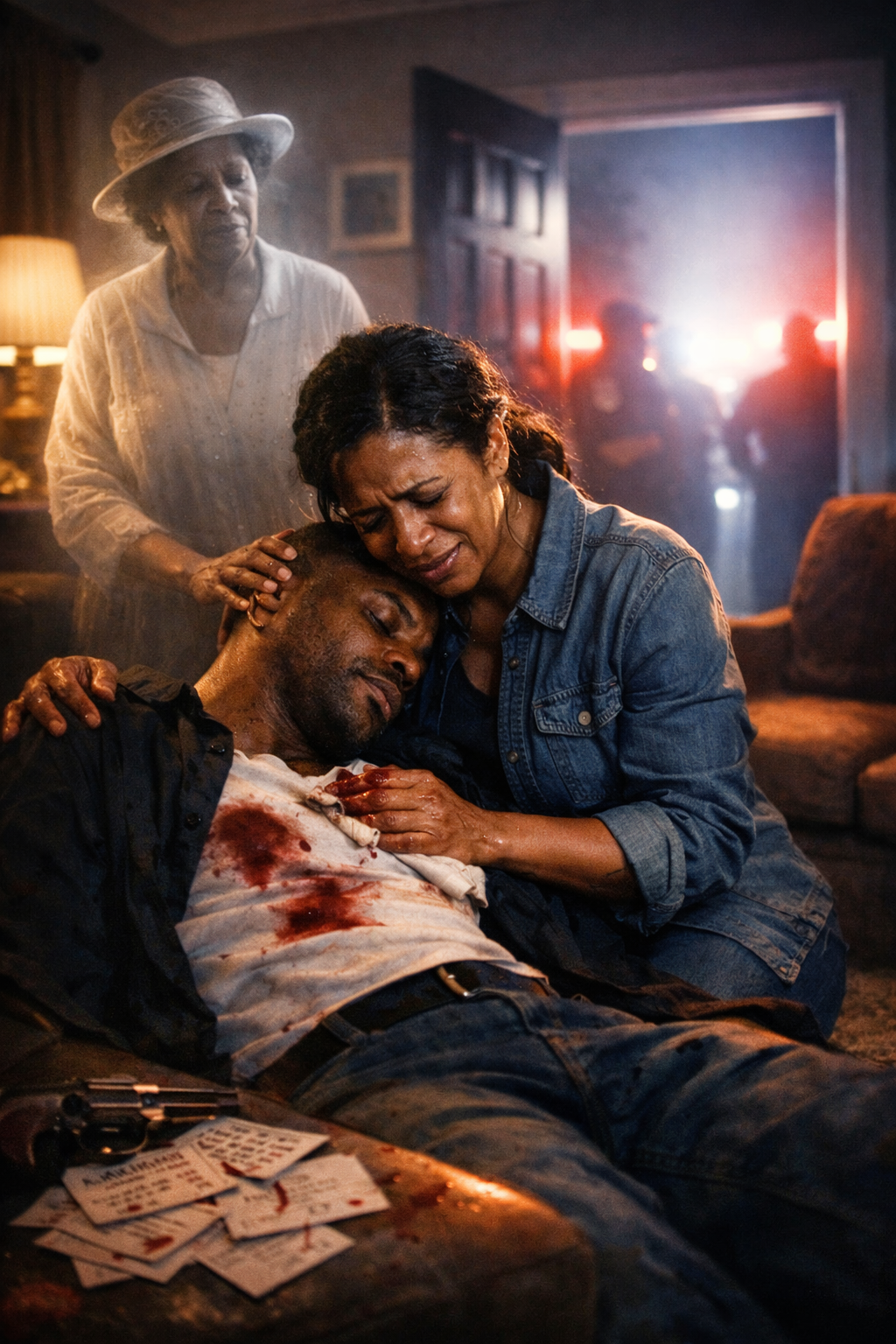
Kimberly rushes to him, yanking his jacket aside. Blood soaks his shirt and pants. A bullet hole.

Her training kicks in, but her hands shake anyway as she presses fabric to the wound. “We have to call an ambulance.”

Malcolm grabs her wrist in a grip that hurts. “Too late.”

“It’s not too late,” she snaps, fighting panic. “Let me—”

“Now it’s your turn,” Malcolm whispers, teeth clenched. “To listen.”

Outside, sirens swell closer. The windows begin to flicker with red and blue.


Malcolm went back.

In the church basement, with the gun in his hand and the past roaring in his skull, he demanded the truth. Irving denied. Irving minimized. Irving rewrote. Irving tried to turn a nightmare into a misunderstanding and a child into a liar.

Then Irving produced the postcards.

Kimberly’s handwriting. Cardboard cut down to size. Messages sent month after month while they were on the run. Proof, Irving claimed, that nothing happened—because why would she keep in touch if it did?

Malcolm stared at them, sick. In his hands was something that didn’t fit the life he built his fury around.

Then he remembered Pamela’s voice—the phrase that should never come out of a child.

Grown folks business.

And Malcolm snapped.

He pistol-whipped Irving until Irving was blood and pleading and repeating, “I’m not like that,” like saying it could make it true.

Malcolm turned away, horrified, and that’s when Irving came up behind him.

They struggled for the gun.

It fired twice.


Back in the living room, the sirens are close enough that the light crawls across the walls. Kimberly presses down on Malcolm’s wound and begs him to stay with her.

The air shifts.

Mama appears beside the couch, calm as a hymn. Kimberly doesn’t see her, but Malcolm does.

“Mama,” he whispers, as if he’s been waiting his whole life to say it again without anger attached.

Mama’s voice is soft. “Your stepfather isn’t dead.”

Malcolm blinks, confused. “But I—”

“You felt the gun go off,” Mama says. “And you pulled it toward yourself.”

Malcolm’s breathing catches, and he understands what she’s saying even if he hates it. Reflex. Instinct. Something deep in him refusing, at the last second, to become the thing he hunted.

“The second shot hit him,” Mama continues. “He’ll live.”

“And I won’t,” Malcolm says, and it isn’t a question.

Mama doesn’t lie. “No, baby.”

Kimberly looks at Malcolm’s face, terrified. “Who are you talking to?”

“Mama,” Malcolm says, and he sounds like a little boy again. “You don’t see her?”

Kimberly swallows and steadies her voice the way she does when she has to hold a room together. “If you say you see Mama, I believe you.”

Malcolm panics, not for himself, but for Kimberly and Pamela. “Without me, he’ll come back. He’ll do it again.”

Mama’s eyes hold his. “I don’t think that’s going to happen.”

“Why not?”

Mama’s voice stays even. “Because he won’t be capable of it again.”

Malcolm’s face shifts as he understands, and he tries to reach for ugly relief—some crude justice—but Mama stops him with a look that would’ve frozen him as a child.

“Mind your mouth around me, boy.”

Despite everything, Malcolm laughs once, and the laugh tears through him like broken glass.

“Man,” he whispers, “I guess God don’t like ugly, do He?”

Mama’s smile is small and sad and real.

Malcolm’s body tightens, then releases.

Kimberly breaks. She cradles him, rocking, crying the way people cry when the world stops being negotiable.

Malcolm rises—not his body, but him. Spirit-light and quiet. Mama takes his hand like she’s been waiting.

Kimberly rocks on the floor and whispers into his hair, “Why’d you do it, Mal? Why’d you do it?”

Malcolm kneels beside her ear, voice gentle now. “’Cause sometimes love makes promises you gotta keep.”

He kisses her cheek. For half a second she seems to feel it, like warmth passing through. Then she keeps rocking, holding what she can’t keep.

Malcolm looks at Mama, raw with worry even after death. “She gonna be alright?”

Mama watches Kimberly like she’s watching a storm pass through a house that still has to stand afterward. “Right now her heart’s shattered,” she says. “But she’s got God, her daughter, and help coming. She’ll be fine. It’ll take time. But she’ll be fine.”

The front door swings open on its own.

Police lights fill the room—red and blue—then bloom into a blinding white.

Mama and Malcolm walk into it together.