Tiny Stories: Lost in Snow (Revised)

Popular belief has it that the universe is comprised of atoms. In reality, the universe is actually made up of…

Duke had always loved the feeling of snow under his paws, the crisp winter air filling his lungs as he and his human trudged along the mountain trail. They had had their differences before setting out on this trek—maybe about a chewed-up shoe or an untimely bark—but none of that mattered now. They were a team bound by love and a shared sense of adventure.

However, the mountain had its own plans.

With a deafening roar, the serenity of the alpine setting shattered as an avalanche ripped through the trees and descended upon them. In a panic, Duke latched onto his human’s leg, determined to be the good boy he had always tried to be. Snow, merciless and unforgiving, surged around them like a tidal wave, snuffing out the daylight and encapsulating them in a tomb of ice and cold.

Time seemed to stretch and distort in the dark quietude. Then, with an instinctual burst of adrenaline, Duke managed to push his head through the icy encasement, gulping in air tinged with frost. His throat scorched with each hoarse bark he let out, a desperate call for his lost human. But there was no response, just the unsettling silence that comes when nature asserts its brutal dominion.

Yet Duke would not—could not—give up. He began to dig, his paws flurrying through the snow with a frantic energy. Each scoop was a promise, each layer he penetrated, a prayer. Finally, his paw brushed against fabric, then skin. His human was cold, unresponsive, but alive.

With every ounce of his being, Duke barked until the sound echoed through the mountains, reaching the ears of a rescue team. When they arrived, they found a nearly miraculous scene: a human, unconscious but breathing, and a dog, steadfast and unwavering in his loyalty.

For Duke, being a good boy was not just a matter of following commands or playing fetch; it was a commitment, a pact between two souls who had ventured into the wilderness as partners. And even when faced with the immense power of nature’s fury, it was a pact that neither an avalanche nor the cold hand of fate could ever break.

Tiny Stories: Remember The Grain (Revised)

Popular belief has it that the universe is comprised of atoms. In reality, the universe is actually made up of…

Valeria sat at the head of an opulent banquet table, her eyes gleaming at the culinary wonders that surrounded her. A dizzying array of meats—venison, beef, lamb—filled the air with their mouthwatering aroma. To any observer, it seemed like the epitome of a feast, a carnivorous heaven—all designed to celebrate Valeria’s notorious predilections.

Her hosts, wearing enigmatic smiles, stepped forward to offer her a dish swathed in gold leaf and encrusted with exotic spices. Yet Valeria hesitated, her eyes narrowing at the proffered plate. In a world where her carnivorous tastes were well-known and celebrated, her refusal shocked the room into a leaden silence.

It wasn’t that Valeria was averse to exotic fare. No, her palate was as adventurous as they came. But there was a very distinct, haunting reason behind her reluctance—a reason so repulsive and gut-wrenching that it defied polite explanation.

The meat on that gilded plate was human flesh.

She recognized its subtle but unmistakable grain, its texture, and smell, a scent forever imprinted on her memory like a brand. Years ago, a dreadful accident had occurred in her family’s home, a mishap that turned a sibling rivalry into a tragic horror. Her younger brother had become dinner, not out of design but due to a grotesque series of events that culminated in his unknowing preparation and serving.

That night had forever changed Valeria, transforming her not only into a carnivore of human flesh but also a prisoner of her own abhorrent knowledge. She had lived with the indelible stain of that memory, an internal scar that defied healing. And as her gaze met the eyes of her hosts, she knew they understood the monstrous dilemma that loomed before her—a silent acknowledgment of the darkest aspects of human desire and taboo.

The One Rule: A Story ReTold in Haiku

When I get bored, I experiment (hey, everyone’s gotta have a hobby) so I decided to take one of my Tiny Stories and tell it in a series of haikus. Let me know what you think (the actual story follows the haiku, for comparison).

Jenna's warning sounds,
Bernadette doubts its power,
Seduction awaits.

Eyes locked, Bryce's secret,
Svengali of enticement,
Web of seduction.

Bernadette's challenge,
Promising to stay untouched,
Ignoring warnings.

The office reveals,
A gnome-like man, quite ordinary,
Invisible allure.

Bernadette's gaze breaks,
Green eyes captivate her soul,
Fantasies take hold.

Consumed by desire,
Bryce seeks her essence true,
She willingly falls.

Original version:

“Before you step in there,” Jenna said, making sure to lock eyes with her friend. “I need to warn you about Bryce’s…ability.”

“Ability? C’mon, Jenn.” Bernadette hadn’t meant her tone to sound so dismissive but she had other more important matters on her mind at the moment.

“It’s uncanny, actually.”

“What are you even talking about?”

“Do you believe in the power of seduction?”

“Um, I believe that people who are seduced wanted to be seduced.”

“Well, you might want to rethink that.”

“Why? Because you think I’m going to walk in there and suddenly become enticed into taking a course of action counterproductive to my goals?”

“I’m not calling into question your intestinal fortitude, Bernie, it’s just that I’ve seen firsthand that man in action and I’m telling you Bryce has this weird Svengali innate ability to ensnare people into his web of seduction, women and men alike.”

“Hashtag challenge accepted. I think I’m going to be just fine.”

“Look, just do me a favor please, and gird your loins.”

“Gird my what? Did we just slip and accidentally fall into the Old Testament?”

“Promise me you’ll avoid eye contact.”

“What?”

“Train your eyes on the point just between his eyes and soften your focus.”

“Soften my—?”

“Promise me!”

“Okay, okay, I promise…gawd. You are so weird.”

“Good luck in there.”

The office was on the smallish side compared to the others Bernadette had seen in the building but the weight of a room had been dispersed equally as to lend an air of spaciousness. Bryce offered a smile as he gestured to the leather chair opposite him across the desk.

Bernadette, armed with her list of questions, took the seat and made the attempt to soften her focus and not make eye contact, but the truth of the matter was she wanted to look, to see what all the fuss was about.

And she wasn’t all that impressed.

Not that she considered herself a statuesque beauty by any stretch of the imagination, nor did she feel in a position to judge anyone’s appearance, but after all the send-up, Bryce MacDowell turned out to be a nebbishy gnome of a man. Frankly, he was quite ordinary enough in appearance to be considered invisible in modern-day society and any charisma granted to him likely wouldn’t have had the power to beguile even the weakest of minds.

The one rule in being granted the interview, not to look the man directly in the eye, Bernadette had broken that in less than a minute. And in even less time than that she found herself gazing into the most exhilarating green eyes in existence, eyes older, wiser, and more powerful than anything she had ever encountered or read about in her entire life. His plain forgettable face became an immaculate work of art that ran through every aspect of her mind. She was instantly and utterly consumed by fantasies of kissing his lips that seemed so tender, pink, and inviting, of running her fingers through the obsidian silk of his hair, of caressing his pearlescent alabaster skin, of letting him inside her, not physically, no, that would surely come later. She knew he truly wanted access to the core of her being. He wanted to absorb her very soul…

…and she was happy to let him.

Tiny Stories: The Hand of Love (Revised)

Popular belief has it that the universe is comprised of atoms. In reality, the universe is actually made up of…

When I was a young girl, my father vanished from the earthly plane. But he didn’t merely die—he transitioned. I sensed his absence, his “moving on,” as it were, before anyone else could muster the courage to tell me. A space that had been filled with light became dark; a melody turned into silence. It was as if a cosmic switch had been flipped.

When the news eventually reached my ears, I didn’t cry; instead, I turned inward. My family looked at me with concern, as I refused to eat or sleep, ignoring the therapists who tried to guide me back to the realm of the living. Colors ceased to exist; life itself became a blurred painting left out in a cosmic storm.

I was drifting, fading from existence, my spirit stretching thin, until I collapsed. That’s when it happened. I found myself falling through layers of a dimension not governed by our understanding of space-time, traveling backward through the chronicles of my own existence to the point of inception—the first spark of passion my father had ignited in me.

My descent halted abruptly, and I landed on a surreal beach of incandescent white sand and a boundless aquamarine ocean. Standing on the shoreline was my father, his image superimposed against a shimmering canvas of galaxies, nebulas, and interstellar phenomena.

“Is this heaven?” I asked, awestruck by the spectacle.

He laughed, the sound echoing like a harmonious cosmic wave. “No, sweetheart. This is merely a threshold. Paradise exists in dimensions cooler than this.”

“I want to stay,” I pleaded.

“One day you will, when you’ve fulfilled your purpose in the mundane realm.”

“That’s unfair.”

He held up his hand, now glowing with celestial light. “You see this? It might seem insignificant, but it carries the weight of a universal promise. Even if you can’t see me, my protective hand will guide you.”

Before I could protest, he leaned down and kissed my forehead. In that instant, a cascade of light enveloped me, and I found myself back in my bed, surrounded by my earthly family.

They never heard this story from my lips; they’d rationalize it, strip it of its wonder. But make no mistake—I’ve faced insurmountable odds and survived. In those moments, I felt the presence of that cosmic hand, reassuring me that love transcends all dimensions, guiding me safely through the labyrinth of life.

Beyond Words

Shinichi Mochizuki’s solution to the ABC Conjecture

One of the major downsides to tech advancement on Earth, after our biggest brains finally made faster than light interstellar space travel a reality and we opened our planetary borders to all friendly offworld visitors, was that the human dating pool became oh so very shallow.

Bored with the same old same old, curious, and adventurous single and married people began dipping their toes in alien waters, some for the experience, others for committed relationships, and the rest simply for bragging rights. It had gotten so bad that finding a partner interested in a same species relationship became near impossible. And those not willing to get it on with an extraterrestrial chose to marry their farm animals, automobiles, cartoon characters, and even holograms, rather than share intimacy with another human being.

I tried to fight the good fight and preserve the human race, but there’s only so much rejection a man can face before throwing in the towel. I resigned myself to a fate of hermitry and searched for hobbies to occupy my mind until the day my timecard was punched for the final time.

But the universe wasn’t done tormenting me yet. On my birthday, I received an anonymous gift in the mail: an all-expenses-paid trip to an orbital platform that was hosting a speed dating event. My first reaction was to chuck the invite in the trash and return to my 40,000 piece jigsaw puzzle of the notorious math problem, “The ABC Conjecture.” What stopped me was the 7-course meal and open bar, guaranteed, whether you successfully found a match or not.

Shinichi Mochizuki’s mathematical solution could take the back seat for a night, while I stuffed my face in space and got absolutely pie-eyed.

I made a half-hearted attempt at looking decent, no sense in getting turned away at the space jitney depot for improper attire, and got a jumpstart on the festivities by knocking back as many complimentary cocktails on the flight up to the orbital platform as I could manage.

The plan was to make a beeline for the food and bar and, when I had my fill, catch the next available jitney home. The catch was that I had to complete at least one round of speed dating before having access to food and drink. The second disappointment was absolutely my fault for not reading the invite carefully. I was one of ten humans in attendance, all of them male because this was an interspecies speed dating event. How in the world did I overlook that detail?

For four minutes at a pop, I went through the motions of engaging in conversation with an Onzuid, a Thraikket, a Brelgut, a Mellad, a Thaeqen, and a Raphoth, and a majority of those dates were spent struggling to communicate in broken English, which I had to give them credit for. They knew more of my language than I knew of theirs.

My final obstacle was a Neita, who spoke no English at all. She, the assumed pronoun because she wasn’t able to convey one herself, spoke in melodies while her bioluminescent skin shifted through the color spectrum with each note. I had no idea what she was saying, but I had to admit, it was beautiful to watch.

When it was my turn to talk, I decided to sing about my upbringing, not knowing whether she would be impressed by my effort or take offense, thinking she was being mocked, but I was only here for the food and drink, so what the hell.

I sang about being born in The Bronx, in a neighborhood that history marked as one of the most dangerous places to live in New York at the time, but on my block, everyone spoke like they knew you. We played on the concrete year ’round because there was no local park, ate free bologna and butter sandwich lunches at the public school during the summer, and filled our days playing handball, riding bikes, competing in games like Steal The Bacon, Hot Peas And Butter, Ringolivio, Freeze Tag, Skelzies, and when we got a little older, Run-Catch-Kiss. Water fights consisted of anything you could fill from the open fire hydrant (pots, pans, cups, buckets, or whatever). And if you didn’t go home dirty, you weren’t having a good time. We ate whatever we wanted because no one knew a thing about food allergies (and fried chicken and red Kool-Aid were as important as the air we breathed). We fought with our hands and made up the next day like nothing happened. And if you showed disrespect to your elders or looked in their mouth while they were talking to grown folks, you would get put in your place immediately. And the universal rule was, once the street lights came on, that was our curfew. Anything left undone would have to wait until tomorrow.

When I was done, she smiled (at least, I took it to be a smile) and glowed a calming shade of yellow. The bell rang, and I nodded goodbye and made my way to the dinner table. To my surprise, she joined me, and we sang to each other for the rest of the night.

When the event was over (yes, I stayed to the end) and before we went our separate ways, I gave her my phone number. I wasn’t sure if she understood the gesture, if she would call me, or even how we would manage to meet up if she did call. All I knew was that love would find a way.

Pavement Tales: An Unexpected Trip

I love to walk…and my mind hates being idle, so every now and then during my morning constitutional I create…

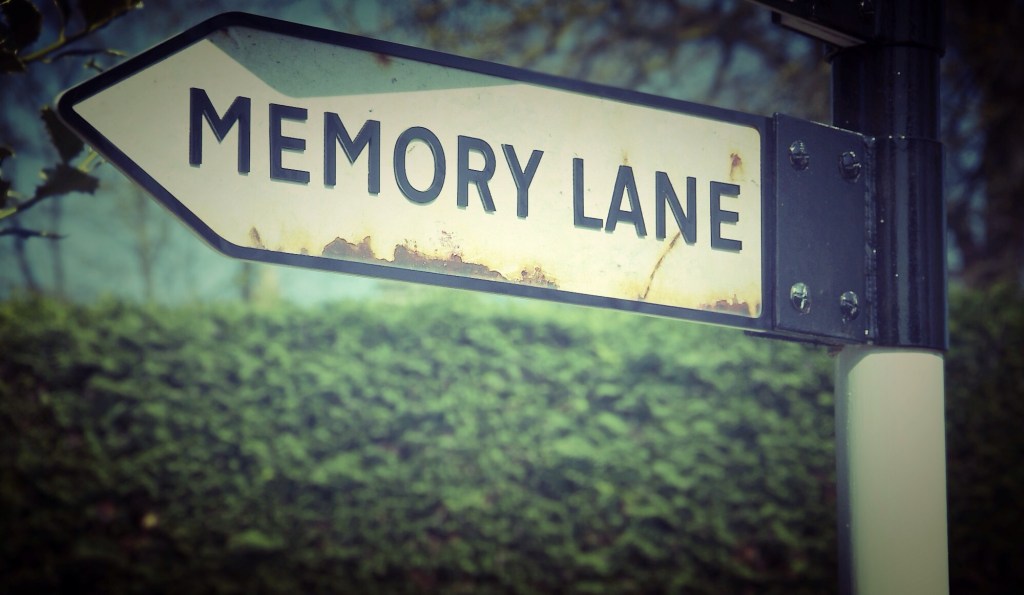
I’d like to tell you there’s no story today, chiefly because while I was out for my daily constitutional and my mind was idle, I took a detour down a very ordinary Memory Lane. But that wouldn’t be the complete truth, because nothing is ever really ‘ordinary’ in the realm of memories, is it?

Normally, I’m not the sentimental type who sifts through the sands of the past. But today was different. My mind wandered to old acquaintances—people who had evaporated from my life not through conflict but simply because adulthood pulled us into different orbits.

As I strolled deeper into this labyrinth of nostalgia, I felt an odd sensation—as if the memories themselves were alive, breathing, watching. A shiver ran down my spine, and for a moment, it was as if I had stepped into a different time, a different place. The memories grew vibrant, almost hyper-real. I could hear the laughter from a joke told years ago; I could feel the grip of a long-lost friend’s handshake.

And then something truly strange happened: a memory I didn’t recognize. Faces unfamiliar, voices I had never heard, all speaking in a language that sounded like distorted echoes. I felt disoriented, as though caught in a narrative that wasn’t my own. Did memories have memories? Were these intruders, or were they forgotten fragments of experiences so deeply buried they seemed alien?

It’s tempting to say that perhaps I stumbled upon a wormhole in my own neural pathways, a secret tunnel that connected me to alternate versions of my life—or even stranger realms. But, of course, that would be acknowledging that today’s not-story is a story, and we can’t have that, can we?

So, let’s agree that there was no story today. But still, be in good health, stay sane and safe. Keep your fingers crossed, but also keep your mind open; you never know what ‘unstories’ might unfold when you least expect them.

Pavement Tales: The Graveyard of Earthworms (Revised)

I love to walk…and my mind hates being idle, so every now and then during my morning constitutional I create…

Walking has always been my jam. It helps with the monotony of my daily existence as that could always stand a little bit of twisting. As impure as New York City air is, I still consider it fresh enough to help clear some of the mental cobwebs that accumulate overnight.

When not listening to music or an audiobook or radio play, I tend to mind-sift through fictional character conversations and story scene settings, oblivious to the world surrounding me, but on this particular day, something crept into my sphere of awareness.

Looking down at the pavement, I realized that I was traipsing through what looked like the aftermath of the Great Worm War of 2023. The sidewalk battlefield was nothing less than apocalyptic—a surreal D-Day rendered in invertebrate form. Earthworms, thousands of them, lay slain upon the unforgiving concrete, coating the expanse of an entire city block in a macabre tapestry.

Logically, I knew how this could have happened. I knew the little buggers came to the surface either during the heavy rains—but it’s been dry weather for the past week—or to pair off and mate only to get caught on things that are hard for them to crawl across, like sidewalks and subsequently fry on the surface from sun rays, but that normally occurs during springtime.

So, what was this, then? What ghastly event had caused this Wormageddon? Had there actually been a battle? Had warring worm clans pitched against one another over a territorial dispute? Factions in conflict over the claiming of a Lumbricus Terrestris throne? Noble families locked in a deadly dispute over an unholy Montague/Capulet union?

In my mind’s eye, the scene sprang to life with cinematic grandeur. I envisioned worm clans adorned with micro-armor, their soft bodies writhing in war dances, chanting anthems of dirt and decay. Generals—distinguished by their slightly girthier segments—led their troops into the fray. Did they fight over sacred compost hills? Was it a religious crusade concerning the true nature of soil pH levels?

I imagined wormy war cries, nearly inaudible squelches, filling the air. Siege weapons made of twigs and pebbles, catapulting minuscule mud balls. Earthworm sorcerers—yes, let’s go all in—conjuring protective barriers of moist earth. The clash of factions, the deaths of heroes, the utter annihilation—all laid bare on this pedestrian walkway.

And then my imagination took a darker turn. What if this was a message?

As I stood there, staring at their dried remains, curled into runic shapes, I wondered if they had been somehow gifted with a vision of the approaching apocalypse and had sacrificed themselves in an effort to warn us in the only language they knew. The last Germanic language spoken to them by man before the two species went their separate ways in evolution.

At that moment, I felt like Indiana Jones in the passageway to the Grail chamber, trying to decipher the worm cadavers’ possible portents of doom, only without the aid of a diary or Sean Connery whispering something about, “Only the penitent man will pass.” or like John Nash in “A Beautiful Mind” only without an ounce of his mental code-breaking ability.

And I stood there. Longer than I’m comfortable admitting. Frustrated by the limits of my linguistics. Finally, I forced myself to move on, but not before making a promise:

No more outdoor strolls without my iPod.

One For A Wish

In the waning glow of the city’s rush hour, Albert maneuvered through throngs of pedestrians, his arms laden with grocery bags. The sky overhead smudged into deep purples and fiery oranges, heralding twilight. A sound managed to snag the outer fringes of his attention, the crunch of gravel. His eyes flicked toward a nearby alley, and he caught a harrowing scene: an old woman was clutching her purse with a vice-like grip, in a deadly game of tug of war with a thug brandishing a knife.

Time froze.

Albert’s heart pounded against his ribcage. He wasn’t a hero by any stretch of the imagination, but he also wasn’t the sort of man who could ignore an injustice. With a muffled curse—because he knew this wouldn’t end well for him—he yelled, “Hey! Leave her alone!”

And before he realized what he was doing, Albert had thrown down his groceries—sending cans rolling into the gutter, and cereal boxes splattering open, exposing their fortified innards—and was lunging at the mugger.

The thug whirled around, his eyes dark voids of malice. His pocket knife captured the fading twilight as he turned, transforming it into an ominous glint. Albert lunged, fist aimed squarely at the thug’s face. In an agile move, the mugger released the old woman’s purse and sidestepped Albert’s punch, retaliating with a brutal blow to Albert’s midsection. Losing his footing, Albert staggered into the assailant, causing both men to tumble to the ground. The knife slipped from the mugger’s grip and vanished into the encroaching shadows.

The old woman screamed for help, and now that he was unarmed and sensing the growing peril, the thug sprang to his feet. In his haste to escape, he landed one more punch on Albert and followed it with a vicious kick to his face. Albert’s world swirled into a disorienting haze, the taste of copper flooding his mouth as he watched the mugger melt away into the labyrinthine darkness.

A frail figure with a halo of white hair, the old woman clutched her purse to her chest and began fussing over Albert. “Oh dear, he hurt you. I don’t often do this, but I live not too far away. Won’t you come with me and let me tend to your wounds? It’s the least I can do.”

“I’ll be alright,” Albert said, his voice raspy. “You still have your purse. That’s enough for me.”

“But look at you,” she said in an accent he couldn’t quite identify. “And your poor groceries are scattered all across this filthy alley.”

“That stuff’s replaceable, you’re not.”

“I’m afraid you don’t understand. I was raised never to leave a debt unrepaid,” she implored, her pale blue eyes holding an enigmatic blend of wisdom and desperation. She opened her purse and fished out six antiquated copper coins.

“I didn’t do this for a reward.”

“These coins aren’t for spending; they’re for wishing. Most people think that large silver coins grant better wishes, but it isn’t the size of the coin or its denomination; it’s the material they’re made from that makes the difference. Copper attracts the best magic.”

“That’s very kind of you, but save the wishes for yourself. I’m fine, really.”

“They are no longer my coins; they belong to you,” the woman insisted, grabbing Albert’s wrist in a grip that belied her age. She sighed as the coins slid off her palm, as though she was letting go of an enormous burden. The coins felt heavier in Albert’s hand than coins of that size should.

“There is a fountain in the town square; go there and make your wishes. And with each coin you drop in the fountain waters, you must recite One for a wish, Two for a kiss, Three for a letter, Four for something better, Five for sorrow, Six see your sweetheart tomorrow.”

She made him repeat the recitation several times before she released her vice grip, said, “Thank you,” and went on her way.

***

Albert’s apartment was a testament to his isolation. The walls were stark and bare, devoid of any pictures or artwork that might suggest a life rich with experiences or shared moments. The furniture was minimalistic: a simple couch, a coffee table, and an unassuming dining set with just a single plate neatly positioned, as though anticipating a meal that would never be shared. On a chest of drawers that held a few nondescript items—a wallet, some receipts, a half-used bottle of cologne—sat a shallow dish meant for loose change.

Albert placed the six dull brown coins the old woman had given him into this dish. Each coin was slightly smaller than a penny, and so worn that any imagery or inscription it once bore had been erased by the merciless passage of time. Once he set them down, they seemed to blend into the mundane tableau of his life, and he soon forgot about them.

Days went by as they did in the life of a lonely single person, each one a repetition of the last. Sometimes, to offer a twist in his monotony, Albert would walk in a different direction, and this day, he found himself walking through the town square. A picturesque fountain stood at its center, its waters continually flowing but somehow never escaping, much like Albert himself. As he passed by, he observed a young couple deeply in love, their lips locked in a passionate kiss, utterly oblivious to the world around them. Usually, such public displays of affection would irritate him, a constant reminder of what he lacked. But there was something about this couple, something so genuine that it broke through his usual cynicism.

Just then, he felt an unusual weight in his pocket—a weight that seemed to materialize out of nowhere. Reaching in, his fingers brushed against the rough surface of the coins he had left in his apartment.

The old woman’s instructions came flooding back to him. Puzzled yet intrigued, he thought, with a sense of inexplicable resolve, Why not? Albert took one of the six coins and, holding it between his thumb and forefinger, whispered, “One for a wish.” His words melded with the sorrowful symphony of cascading water. And in that moment, inspired by the love he had witnessed, he wished for something that had long eluded him: companionship, a meaningful human connection that had always seemed just out of reach.

The following day, while out running errands, Albert was jolted from his thoughts when he collided with someone on the crowded streets. “Oh! I’m so sorry!” the stranger exclaimed, her hazel eyes wide with surprise and a hint of embarrassment.

“No, it’s my fault,” Albert responded, feeling an immediate sense of intrigue. “I should have been paying more attention. Are you okay?”

“I’m fine, just in a rush and completely turned around. New in town,” the woman said, her voice tinged with desperation as she glanced at her phone. “And already late for a crucial meeting. I can’t even find a taxi.”

“Let me see the address,” Albert offered, sensing her urgency. She handed her phone over, and Albert looked at the location. “Well, the good news is it’s not too far from here. The bad news? It’s a bit of a labyrinth getting there.”

The woman sighed, “I can’t afford to get lost again.”

“How about I escort you? I promise I’m a fantastic guide,” Albert said with a reassuring smile.

She looked hesitant but then nodded, her eyes locking onto his. “I would really appreciate that, thank you.”

“My name’s Albert, by the way.”

“Pleased to meet you, Albert. I’m Emily,” she quickly informed him. Her eyes, soft hazel orbs framed by wisps of auburn hair, seemed like wells of untold stories to Albert.

Albert navigated them through shortcuts and alleys as they walked, each turn calculated to shave time off their journey. To ease the tension, he initiated a conversation. “So, what brings you to our little maze of a city?”

“A job,” Emily said. “I’m a graphic designer. The firm I work for just landed a big contract here, so they sent me to handle it.”

“That sounds exciting,” Albert remarked, genuinely interested. “And stressful.”

“You have no idea,” Emily chuckled.

“And you? What do you do?” Emily asked, momentarily forgetting her stress as she became engrossed in the conversation.

“I work in IT. Not as exciting as graphic design, but it pays the bills.”

As they rounded the last corner, the building Emily had been looking for came into view. She let out a sigh of relief. “I can’t believe we made it. Thank you, Albert. You’re a lifesaver.”

“It was my pleasure, really,” Albert said, feeling a unique connection forming, one he hadn’t felt in a very long time.

They stopped in front of the building, both aware that the moment was about to end. “Well, this is me,” Emily said, her voice carrying a note of reluctance.

“Yeah,” Albert replied, equally hesitant. “Good luck with your meeting.”

“Thanks. I wish we had more time to… you know, chat,” Emily said, her eyes meeting his, revealing a hint of regret.

“Me too,” Albert agreed, sensing the spark between them was something worth exploring but unsure how to capture the moment before it vanished.

And then they parted ways, Emily rushing into her building and Albert standing there for a few seconds, watching her go. He realized he hadn’t asked for her number, a regret that hung heavy in the air long after she had disappeared from sight.

Albert ambled through the town square on his way home; the fountain’s cascading water called out to him, reminding him of the inexplicable, yet unmistakable, connection he’d felt with Emily. He felt a slight heaviness in his pocket, and his fingers grazed over the small, worn coins once again.

A realization unfolded within him like the petal of a late-blooming flower. He’d met Emily—the bewitching woman with hazel eyes—right after he’d made his first wish. The correlation lit up his mind, a flicker of hopeful fire. Was there really a connection?

He paused, standing before the fountain, which seemed more mystical now than it ever had, and with a newfound sense of intention, he reached into his pocket and drew out the second of the mysterious copper coins. He stared at its tarnished surface as though it held answers to questions he had yet to ask.

Taking a deep breath, he let the coin slip from his grasp, watching as it arched gracefully through the air and broke the fountain’s water surface with a soft splash. As the ripples emanated outward, carrying with them his silent hopes, he spoke the words, “Two for a kiss.”

The coin sank out of sight, but its absence was filled with a swelling of anticipation, almost as if the universe had finally taken note of his desire. Shaking off a sense of wonder, he continued his walk home, but this time a buoyant sense of possibility carried him along. For the first time in what felt like an eternity, Albert looked forward to what tomorrow might bring.

The setting sun was casting golden rays that filtered through the city buildings as Albert took his usual route home from work. Just as he was about to cross the street, he noticed Emily standing at a corner, scanning her phone with a slightly furrowed brow. The sight of her reignited the hope kindled by yesterday’s magical encounter and his subsequent wish by the fountain.

“Emily, fancy running into you again!” Albert called out, crossing the street with a palpable sense of anticipation.

She looked up, and her eyes met his. Instantly, her face brightened. “Albert! This is a pleasant surprise.”

“Serendipity must be working overtime,” he grinned. “Would you, by any chance, be free for dinner?”

Her eyes hesitated for a moment, scanning the horizon as if searching for a reason to decline, but then she smiled. “I’d love to, actually.”

At the restaurant, ambient music played softly in the background, candles flickered on the tables, and the air was thick with the scent of freshly prepared food. Yet, despite the charming setting, it was as if they were in a bubble of their own, the world outside momentarily forgotten.

“This is a lovely place,” Emily began, swirling her wine glass as she spoke, “I would’ve walked right past it if not for you.”

Albert chuckled, “Well, this place is a hidden gem, but the real treasure is the company.”

Emily blushed, captivated by his words. “You’re quite the charmer, aren’t you?”

“Only when inspired,” he replied, locking eyes with her.

Over dinner, they discussed their interests and their dreams, their laugh echoing in shared jokes. Each conversation seemed to draw them closer, almost as if they were solving a puzzle that neither knew they were a part of.

The night drew to a close, and Albert found himself walking Emily back to her hotel. The atmosphere between them was thick with unspoken words and sentiments that neither wanted to disturb.

“So,” Albert began, carefully choosing his words, “How about catching a movie tomorrow? There’s a new arthouse film that’s getting rave reviews.”

Emily hesitated. “I’d love to, Albert. I really would, but I can’t.”

Albert’s eyes met hers, his smile waning but still present. “No worries, we can make it another time. Whenever you’re free.”

Emily took a deep breath. “That’s the thing, Albert. I can’t make it another time either.”

The weight of the unspoken filled the space between them. Albert’s eyes searched hers, wondering if he should voice the assumption forming in his mind. “Ah, I see. You must be in a relationship already. Boyfriend or husband? Or, uh, something else? I didn’t mean to—”

“No, it’s not that,” Emily cut in, a soft sigh escaping her lips. “I should have told you early; tonight’s my last night in town. I’m leaving on an assignment tomorrow.”

Albert felt a mix of surprise and disappointment wash over him. The universe had given him this brief, almost magical connection, only to yank it away so quickly.

“I see,” he finally said, the words heavy yet sincere. “That’s a shame.”

Emily nodded. “Unfortunate timing, isn’t it?”

Albert felt a mix of disappointment and urgency. “In that case, I hope this isn’t too forward, but may I kiss you goodbye?”

Her eyes sparkled. “I’d be disappointed if you didn’t.”

Their lips met, and it felt like time stopped at that moment. It was a soft kiss, yet it carried the weight of their unspoken feelings, a simple yet profound connection that neither had anticipated but both so deeply yearned for.

As they parted, Emily whispered, “Thank you for a beautiful end to my stay here.”

***

A week had passed since that electrifying encounter with Emily, and Albert found himself in a peculiar limbo. She occupied his thoughts, making routine distractions like work and daily errands all but meaningless. He walked by places they had briefly visited together, like breadcrumbs on a path of nostalgia. Even the books he read seemed dull; their plots couldn’t compare to the unfolding mystery of his own life.

Albert’s moral compass remained steadfast despite the emotional whirlpool he was navigating. Making a wish that would alter the course of Emily’s career was out of the question. That would be a selfish violation of her autonomy, and Albert knew it. Yet, his fingers itched to dial her number, to hear her voice—only he had never gotten her contact information.

The third coin, according to the old woman, was Three for a letter. Surely that couldn’t affect her career if they simply maintained some sort of correspondence, so Albert purposely took a coin to the town square fountain this time. His hand hovered above the water for a moment, contemplating the ripple effects of what he was about to do. With a deep breath, he tossed the third coin into the fountain, watching as it plunged into the water and settled among countless other coins—each a silent testament to hopes, wishes, and dreams.

“Three for a letter,” he whispered to the fountain, his words mingling with the sound of cascading water as if sealing a pact with the universe.

As he stepped away, Albert felt an unusual peace settle over him. He had cast his wish into the world, whether by magic, fate, or mere coincidence. And now, he could only wait and hope that somewhere, somehow, his message would find its way to Emily. Whatever happened next was out of his hands, yet strangely, he felt an inkling of certainty that their paths were not done crossing. After all, wishes, like love, moved in mysterious ways.

It was a crisp, clear day the next morning, and the sun seemed to shine a little brighter than usual as Albert sipped his coffee as a knock echoed through his quiet apartment. Startled, he opened the door to find the mail carrier, holding an elegant envelope sealed with an intricate wax stamp. “Special delivery,” the mail carrier said.

Albert’s heart raced as he took the letter. “Thank you,” he managed to say, his voice tinged with wonderment. As the door closed, he carefully examined the envelope. It was an ecru color, subtly textured, with his name elegantly hand-written. And in the upper left-hand corner was the most important information in the world, Emily’s return address.

In a world of emails, videos, and text messages, this woman had taken the time to purchase stationery and handwrite a letter to him. He felt a sense of honor that he couldn’t readily explain, and his hands trembled as he broke the wax seal. He unfolded the parchment paper and drank in her words.

“Dear Albert,” the letter began. Emily wrote of how she couldn’t shake their meeting from her thoughts, how the very thought of him brought a sense of warmth and excitement she hadn’t felt in years. She explained she had asked around for his address, unashamed in her pursuit to know him better. “Though miles may lie between us, words can bridge our worlds,” she wrote.

Albert felt his heart swell as he read. Emily’s letter was more than just ink on paper; it was an invitation into her life, her thoughts, and her future. And it was an affirmation, a soul-stirring assurance that their encounter was as meaningful to her as it was to him.

Seized by an impulse, he rushed out and purchased the best stationery he could find and sat down at his small writing desk. Albert began to pen his response, his thoughts flowing effortlessly. He wrote of his daily routines, of the loneliness that had ebbed but never fully receded, and how her very presence—though only in ink—had brightened his life immeasurably.

Weeks turned into months, and their letters became a tapestry of shared confidences, dreams, and the intricate details that make a life. Each envelope that arrived was a chapter, each letter a verse in their unfolding love story. Despite the physical miles that separated them, their words built a bridge, a secret world where they were the protagonists in a romance of their own making.

Emily’s letters became a bright point in Albert’s otherwise monotonous routine. He eagerly awaited her eloquent prose, the lyrical accounts of her travels, and her poetic musings that somehow managed to turn even the mundane into something worth marveling at. Yet, a gnawing ache in the core of his being started to make itself known—each letter, while beautiful, also magnified the unfillable space that physical separation had wedged between them.

Albert realized that paper and ink, no matter how earnest, could not replicate the warmth of a touch, the electricity of a shared glance, or the intimacy of a spoken word. Each letter he opened was a double-edged sword: an aching reminder of what could be, yet currently wasn’t.

One evening, overcome by this realization, Albert found himself walking to the fountain. His hand delved into his pocket, fingers grazing the cool, worn surface of the fourth coin. He hesitated momentarily, wondering whether it was fair to interfere with the natural course of things. But as he stood there, the moonlight dancing on the water below, he felt almost as if the fountain itself urged him on, whispering promises of possibilities that hung tantalizingly in the night air.

Taking a deep breath, he clutched the coin tightly and whispered, “Four for something better,” as though the coin were a talisman capable of altering the fabric of his life. With a flick of his wrist, the coin spun through the air and plunged into the depths of the fountain, sending ripples across the surface as it disappeared.

As he walked away, Albert felt a weight lifted off him, replaced by a sense of vague expectancy. He didn’t know what form this ‘something better’ would take, but the act of wishing felt like setting the coordinates for a new destination in his emotional universe.

Days turned into weeks, and although nothing overtly miraculous happened, Albert noticed subtle changes. An air of anticipation surrounded him; even his daily routines felt imbued with a newfound energy. The letters from Emily continued, but they, too, seemed to carry a different undertone—an air of unspoken possibility that both thrilled and terrified him.

It was as if both he and Emily were on the cusp of something, teetering on the edge of a transformation neither could articulate but both deeply felt. Albert wasn’t sure whether the fountain or coin’s magic was real or imagined, but one thing was irrefutable: his wishes had set in motion a chain of events, unseen yet palpable, that were incrementally bringing him closer to that elusive ‘something better’.

And so he waited, his soul attuned to the mysterious rhythms of the universe, anticipating the moment when the next chapter in his life—and Emily’s—would finally begin.

Albert’s cell phone rang during his lunch break one day, and he was elated when he heard Emily’s voice over the phone, her words infusing him with a sense of euphoria he hadn’t felt in months.

“Guess what, Albert? My company’s opening a new branch near you, and they’re sending me there. Can you believe it? We’ll finally be in the same city!”

The news was so miraculous, so perfectly aligned with his last wish, that for a moment, Albert found himself at a loss for words. After a moment, he managed to stammer, “That’s incredible, Emily. I can’t wait to see you.”

She gave him her flight details, and he noted them down meticulously. It felt like destiny was finally smiling upon them.

The following day, Albert stood in the airport, holding a bouquet of roses and sporting an expectant smile that he couldn’t suppress. Every announcement from the loudspeaker made his heart leap. But as the minutes stretched into hours, that initial enthusiasm turned into anxious pacing. The flight status on the screen kept flickering between “Delayed” and “Awaiting Update.”

As he aimlessly wandered near the arrival gate, his mind began to race through a series of worst-case scenarios. His phone buzzed periodically with updates on the flight delay, but that did little to allay his growing sense of dread.

Suddenly, a palpable wave of emotion surged through the airport terminal. People were staring at their phones, some bursting into tears, others gasping in disbelief. Confused and alarmed, Albert turned to a man nearby. “What’s going on here?”

The man looked up from his phone, his face etched with concern. “Check the news. They’re reporting something about a flight with engine trouble.”

Albert’s fingers trembled as he unlocked his phone and navigated to a news website. The headline was chilling: “Flight 417 Reported Engine Trouble Before Going Missing Over Atlantic.”

His heart sank, and the bouquet of roses he held felt like a hundred-pound weight in his arms. A shiver ran down his spine as the horrific reality of the news settled in. Time seemed to stand still, and the hustle and bustle of the airport faded into a distant hum.

The news reported that the rescue effort turned into a recovery mission in the following days. With each passing hour, hope dwindled as updates came back increasingly grim. Friends and family tried to console Albert, but their words felt like mere echoes in the vast emptiness that had enveloped him. He replayed every moment, every conversation he had had with Emily, as though clinging to the fragments would somehow piece reality back into the shape he wanted.

At night, he found himself standing at the fountain, staring at it like an oracle whose prophecies had veered tragically off course. He thought about the coin, the wish for ‘something better,’ and wondered if fate had twisted his words into a cruel, unbearable irony.

Clutching the two remaining coins tightly in his fist, he hesitated. Could he still believe in the magic that seemed to have brought him so much yet cost him so dearly? His fingers felt the worn edges of the coins, each one like a piece of a puzzle that could never be completed.

With a shaky breath, he opened his hand and looked at the coins. These small, innocuous disks had taken on so much meaning, yet they also seemed hopelessly inadequate at that moment. But what did he have left but hope?

“Five for sorrow,” he whispered, his voice catching. The coin slipped from his fingers, cutting through the air before splashing into the fountain, its ripples mingling with his reflected tears.

“Six see your sweetheart tomorrow,” he continued, a bittersweet smile forming on his lips as he released the final coin. It joined the first in the water, and for a moment, it felt like he’d dropped a part of his soul into the fountain.

As he stood there, eyes fixed on the water, Albert realized he was holding his breath, as if the fountain would somehow respond, validating his pain, his hope, his love. But there was only the constant, melancholic murmur of the fountain, echoing his solitary lament into the dark night.

Sleep had become a rare commodity for Albert, coming in fits and starts, like droplets in a drought. Night after night, he would lie on his bed, staring at the ceiling, replaying the events leading up to Emily’s disappearance. But tonight was different. His body, no longer able to sustain the burden of insomnia and emotional exhaustion, surrendered to the arms of a restless sleep.

However, sleep’s embrace was short-lived. A sudden, thunderous knock shattered the quiet of his apartment, ripping him from his uneasy slumber. His heart pounded in his chest as he stumbled to the door, his mind a fog of disoriented thoughts. Could it be news of Emily?

When the door swung open, his blood turned to ice. Standing before him was Emily—but not the Emily he remembered. Her skin was bloated, a sickly shade of blue, as though she had spent a lifetime submerged underwater. Her clothes were torn to shreds, clinging to her form in tattered strips. Her eyes, once lively and expressive, were now vacant voids of darkness.

Albert’s gaze dropped to her hand as it slowly opened. Six worn copper coins clattered onto the hardwood floor, each one landing with a resonance that seemed to shake the very foundation of his world. The coins—the very tokens of his wishes—had returned to him in the most horrifying way imaginable.

Her lips parted, and what came out was a voice so distorted, it barely resembled anything human—a guttural rasp laced with something far darker than malice, tinged with anguish that echoed the depths of hell itself.

“Is this what you wished for?” she croaked, the words oozing from her mouth like a putrid liquid.

The atmosphere in the room thickened, filling with an oppressive dread that left Albert paralyzed. He stared at the grotesque figure before him, his mouth agape but no words forthcoming. The six copper coins lay at his feet, now symbols of a wish turned cataclysmically wrong, each reflecting the distorted image of a man trapped in his own nightmarish reality.


Too Long For Instagram: The Quackening: A Fowl Apocalypse

As explained in a previous post, I participate in Twitter hashtag games, and bulk those tweets up for Instagram…and sometimes they’re too big. So, instead of deleting them, I decided to post them here.

Original Tweet (the prompt was the word #languid):

A kerfuffle arose in a suburban neighborhood when a mysterious rift opened up, spewing forth an endless parade of sentient rubber ducks. The residents realized the only way to survive The Quackening was to engage their unexpected bath time adversaries in battle.

The too large for Instagram remix:

In a sleepy suburban neighborhood, where lawns were manicured and the biggest scandal involved an overgrown hedge, life was predictable—comfortable even. Then came the day that would be forever seared into the residents’ memory—the day of “The Quackening.”

Without warning, the sky darkened as if cloaked by an invisible eclipse. A rift, pulsating like a wound in reality, cracked open above. What fell from it was a ceaseless deluge of rubber ducks, their beaks honed to an impossibly sharp point and eyes glowing with malevolent intent.

Laughter turned into screams as the first duck sliced through a rose bush, turning petals into confetti. Children who had initially reached out in glee now clung to their parents, eyes wide with unspoken terror. The absurdity of the situation did nothing to cushion its very real threat.

Out of sheer necessity, neighbors who had once been consumed with petty grievances became unlikely allies. An emergency meeting was called in the middle of the cul-de-sac. Bob, the high school chemistry teacher, arrived holding a vat of homemade acid. Emily, a soccer mom with an artistic streak, brandished cans of spray paint, ready to blind the incoming attackers. Alan, the retiree, wheeled out his vintage snowblower, repurposed to shoot shards of ice.

Their weapons were as unconventional as their foes, a ragtag arsenal birthed from desperation and ingenuity. Their eyes met, each person silently vowing to protect their surreal suburban fortress at all costs.

The battle commenced with a cacophony of quacks that seemed to mock humanity itself. Bob’s acid splashed, melting ducks into grotesque puddles of yellow. Emily’s spray paint arced through the air, blinding several ducks and turning them into erratic, aimless missiles. Alan’s snowblower roared to life, firing ice shards that skewered the aerial fiends. Yet, for each duck vanquished, it seemed two more appeared, raining endlessly from the still-open rift.

Chaos and rubber feathers swirled through the air as dusk fell. The body count rose—on both sides. Karen, a once-vivacious book club organizer, fell, overwhelmed by a swarm that left her body marred by countless puncture wounds. Her eyes, still open, reflected the absurd horror of her final moments.

Time lost meaning as the sun dipped below the horizon. The rift, that damned rift, finally began to contract, but at a snail’s pace. The residents, dirty, bruised, and running on fumes, felt their spirits buoyed by this glimmer of hope.

With a final, almost defiant quack, the rift sealed shut, swallowing the remaining ducks into whatever nightmarish realm they had originated from. A hushed silence enveloped the neighborhood, punctuated only by the collective sighs of relief—and sobs of mourning.

Their neighborhood would never be the same. Lawns were now battlefields, littered with the carcasses of the rubber monstrosities and the weapons that had defeated them. Conversations would no longer revolve around benign topics like weather forecasts or homeowner’s association fees. Now, they would speak of the fallen, of their scars, and of the day their reality had been torn asunder.

In whispered conversations and heartfelt eulogies, they found a newfound, albeit grim, sense of community. Petty squabbles seemed so trivial now, erased by the shared trauma of a fowl apocalypse.

Though life would go on, the scars—physical and emotional—would remain, a lasting testament to the resilience of humanity, even in the face of the utterly ridiculous. It was a day that would be passed down in hushed tones and disbelieving shakes of the head, forever memorialized as The Quackening.

Too Long For Instagram: Your Prompt Is My Command

As explained in my previous post, I participate in Twitter hashtag games, and bulk those tweets up for Instagram…and sometimes they’re too big. So, instead of deleting them, I decided to post them here.

Original Tweet (the prompt was the word #puny):

Due to recent changes in supernatural beings labor laws, genies were released from their indentured servitude and replaced by AI bots. Although the redesign resulted in faster response times, a shamefully puny amount of the magic lamp was budgeted for granting wishes.

The too large for Instagram remix:

There was a time when magic was as common as the air you breathe, and genies and djinns were the custodians of wishes. For centuries, they offered a flicker of hope, encapsulated in the ornate lamps that adorned every market and household. The lamp’s metal felt warm to the touch, and if you held it to your ear like a seashell, you could hear the distant laughter of joyous genies.

But times were changing, which meant attitudes and sensibilities changed, and the labor laws changed as well. To simplify this tale, we’ll focus on one genie in particular named Elzar. Neither male nor female—but his pronouns were he/him—Elzar, with his long beard of actual spun silver, was considered among his peers to be wise and jolly, and so was elected to lead his brethren to freedom from their metal confines. Elzar, who kept abreast of the latest technology, brokered a deal to have the remaining genies and djinns of the world replaced by AI bots—cold, unfeeling, yes, but efficient. The company behind the bots, TechnoWish Inc., heralded the dawn of a new era.

However, transitions are never smooth, and the first cracks in the new program began to appear almost immediately. In a quaint little apartment where the wallpaper and furniture had seen better days, Sallie Benson, a young woman whose eyes had long surrendered their sparkle to the unyielding drudgery of life, clutched the magic lamp she purchased off the Shazamazon website. She couldn’t afford the top dollar she spent on the lamp, but buying one off OpenSesamebay was risky since one was never sure whether the lamp contained all three guaranteed wishes.

Her eyes flickered between the instruction manual and the antique brass lamp, its intricate designs almost mocking her desperation. A medical bill lay open on the table, and the numbers swam before her eyes. Next to it was a calendar marked with the days her mother had left—perhaps a week or a month at most. The room seemed to close in on her. “You’ve got three chances,” she mumbled, her voice tinged with a despair she couldn’t shake.

Taking a deep breath, Sallie activated the AI bot by sliding her palm along the galvanic pad on the lamp’s side and spoke her wish. “I want my mom to be healthy again.”

“Your prompt is my command,” a mechanical voice responded, and the lamp whirred, its circuits buzzing. “Delivery scheduled: One home gym set.”

Sallie stared at the lamp, her eyes widening in disbelief before narrowing into slits. Each failure was a betrayal; this inanimate object had just betrayed her when she needed it most. Her heart raced as she yelled, “That’s not what I meant!”

One wish gone, two remaining. On her second attempt, she reworded her wish, “I wish for my mother’s illness to be cured.”

“Your prompt is my command,” the lamp’s mechanical voice announced. “Order confirmed: One book titled ‘Living with Chronic Illness’ en route.”

Sallie, furious now, clenched her fists until her knuckles whitened. “You’ve got to be kidding me!”

On her final try, Sallie focused all her concentration on her third wish. “Please, just make my mom well.” This time, the lamp paused longer as if trying to compute human emotion and need complexities. Finally, it chirped, “Digital coupon for healthcare supplement issued.”

Feeling defeated, cheated, and utterly alone, Sallie’s hands trembled as if holding the unbearable weight of her shattered hopes. “What an idiot I am for expecting a machine to understand what it means to watch someone you love suffer!” she cried as she hurled the lamp across the room, watching it collide with the wall as if she could exorcise her pain through its destruction.

In their newly conjured ethereal haven—a plane full of old-world floating palaces and cloud gardens—the genies and djinns relaxed, celebrating their newfound freedom. All except for Elzar, who stood apart, gazing at the magical tapestry that mapped out the mortal realm. Each thread represented a wish granted, a life altered. His keen eyes focused on one thread that dulled and darkened, snapping him from his reverie. He felt a jolt, a pang of guilt so sharp it was almost physical. The thread snapped, and he knew whose it was.

It turned out Sallie’s lamp wasn’t just any lamp; it was a repository of centuries of wishes, dreams, and sorrows. It still bore the residue of Elzar’s magic, an echo of his essence that now throbbed like a missing limb. This was more than a lamp; it was a tether to countless lives he had changed. And now, he felt he had failed them.

Elzar gathered the Council of Djinn in a lavish chamber where the air shimmered with unresolved wishes. “The magic we gifted to the mortal plane is being squandered,” he began. Murmurs filled the room, some of the dissent. “Are we not better off without the responsibilities?” one djinn challenged. Elzar’s eyes met the challenger’s. “But at what cost? We traded the gift of nuance for the chill of efficiency. And if we don’t act, we risk our legacy and the delicate balance of magic itself.”

After days of secret meetings and celestial lobbying, Elzar and his fellow genies launched a “Wish Wisely” campaign. They took their message to the streets, TV shows, and even Congress. All seemed futile until a blunder broke the camel’s back: an AI bot mistakenly turned a man into a literal “pillar of the community,” changing him into an inanimate column outside city hall. Public sentiment erupted, a groundswell of anger and disbelief, leaving the government with no choice but to re-establish the rights of the genie community.

A collective sigh of relief reverberated from every magic lamp, now warm and glowing as before. This was of little use to Sallie as she had thrown her lamp away. It was probably buried in some landfill waiting to be rediscovered years from now by some lucky soul who would take the wishes that rightfully belonged to her.

“So much sorrow, so much lost potential,” a deep voice murmured behind her.

Sallie leaped out of her skin as she spun. Her eyes widened in disbelief as a figure materialized in front of her inside a sudden burst of azure smoke. Her heart pounded like a drum, each beat a cry of alarm. She took a step back, almost stumbling over her own feet. Her first thought was for her vulnerable and sick mother in the next room. She opened her mouth, but no sound came—only a strangled, fearful gasp.

“Calm yourself,” Elzar exclaimed, his hands raised in a gesture meant to soothe. But his appearance, an ethereal figure in a mundane apartment, only intensified her alarm. He saw her eyes dart toward the room where her mother lay sick and realized how high the stakes were. “I assure you, I mean no harm.”

Sallie finally found her voice. “Who are you? How did you get in here? I have a sick mother in the next room! Take anything you want, but please don’t hurt us—”

“My name is Elzar,” he interrupted, locking eyes with her. It was as if he peered into the deepest corridors of her soul, where she hid her hopes and fears. He made a simple gesture, and the lamp Sallie had thrown away appeared in his hands. “And this was my home.”

“You’re a genie?”

“That I am.”

“I don’t understand. Why are you here?”

“Your original purchase contract has been renegotiated, and your prior wishes have been rendered null and void. You may keep or return the items you received; it will not affect the three wishes obligated to you.”

A glimmer of hope reignited within her. “You mean I get another chance?”

“That you do.”

“Wait, are these the same AI bot wishes? If so, no thank you.”

Elzar smiled, handing her the lamp. “Young Sallie, wishes are the seeds of destiny, but remember, your actions water them. What wish may I grant you today?”

The lamp felt so different in her hands now, warmer, heavier. She couldn’t stop tears streaming down her face as she whispered, “Please, Elzar, can you cure my dying mother?”

Elzar snapped his fingers with a playful wink, enveloping her in a warm glow. “Your wish is more than just my command; it is my honor, Sallie Benson.”

When Sallie heard her mother gasp, she rushed into the bedroom, heart pounding in her chest. And there she found her mother, not just upright but glowing with a vitality Sallie feared was forever lost. They embraced, their laughter filling the room like a forgotten melody. For the first time in years, Sallie allowed herself to imagine a future that extended beyond hospital walls and medical charts.

From that day on, AI bots were limited to more menial tasks. Through trial and error, humanity had been reminded that the delicate tapestry of human desires—woven from threads of hope, love, and desperation—could not be left in the hands of machines devoid of understanding.

Elzar returned to his celestial realm, satisfied but ever watchful, ensuring that the balance between magic and machine remained intact.

And so, the magic lamps of the world once more brimmed with endless possibilities. Genies like Elzar, free but forever committed to their sacred duty, were back where they belonged—making wishes come true.

As for Sallie’s remaining wishes and the adventures they would take her and her mother on, those are stories for another time. Yet, as they laughed and hugged, a mysterious emblem inscribed on the bottom of the lamp began to glow, its light seeping through the cracks of the wooden table. Neither Sallie nor her mother saw it, but somewhere in the ethereal haven, Elzar felt a shiver run down his spine.

Sensing his unspoken query, an ancient tome appeared before the silver-bearded genie; its pages fluttered open to reveal a prophecy, foretelling a calamity so dire it could snuff out both magic and mankind.

“What are you planning to wish for, Sallie Benson?” he muttered to himself.