You write for yourself. More daydreams than proper stories, your writing at this point appeals to you more so than other people. These stories tend to reflect your desires and fantasies and may contain in-jokes and references unfamiliar to a general audience.
STAGE 2:
You strive to break free of your narcissistic writing shell and communicate with a broader audience, but your reach exceeds your grasp. You’re aware of what you want to write but you’re caught in that in-between space of partially-developed and fully-fleshed-out stories. This is usually where you begin receiving your rejection letters. Keep these. Sure, they’re crushing at the time but they’re great to look back on once you’ve sold your work.
STAGE 3:
Your stories have begun to flesh themselves out but they’re still not where they need to be structurally and/or technically. This is also where you begin to work on improving your character development.
STAGE 4:
You’ve acknowledged and tackled all the problems in the previous stages, and though you haven’t totally mastered them yet, you can compose stories competently enough to jam your foot in the doorway of the professional writer field.
Are there other stages? Sure, and I’ll address them in a later post (this should be more than enough for you to gnaw on for now), so until next time…
“So the writer who breeds more words than he needs, is making a chore for the reader who reads.” ― Dr. Seuss
No better moment exists than when you first get hit with that brand spanking new premise for a story. There will be those of you who disagree, citing the signing of a contract and being handed a check for your work as a better moment, but I beg to differ. When a story first bursts to life in your mind, you are in the superposition of optimism. The story will be great, the best thing you’ve ever written and will be well-received by the washed and unwashed masses alike. No reality lurking about to place limitations on your spectacular vision at this point.
So, you do your prep work—outlining, research, character development, etc.—and pound out your first draft. And you’re happy with yourself. Real happy. Your first instinct is to share it with the world, but before you slap your baby in the mail or post it online, I need to break some bad news to you. Your story isn’t perfect. Not only is it filled with mistakes but it’s a tad overweight.
Since you most likely don’t have access to an editor at this stage in your writing career, the onus is on you to sharpen the edge of your blue-pencil blade to fix typos and cull clumsy or ambiguous phrasing.
If you’ve ever handed a story to someone to read, a story you were sure was error-free, you quickly learned that spotting mistakes in your own writing is difficult. The problem with self-editing is your mind glosses over errors because it knows what you meant to write and sometimes reads that instead of what you actually wrote. Fortunately, self-editing is a skill you can learn to hone in order to eliminate mistakes and improve the quality of your writing:
1. Don’t edit on the fly
I know this is a hard thing to do, but when you’re writing why not concentrate on getting your idea down on paper first? Sure, if you spot a typo it’s okay to correct it or to approach a sentence from a different angle in order to keep flow going, but when you begin deleting sections of your work or get caught in the dreaded rewrite loop—reworking the same paragraph over and over again—you’re placing road blocks between you and the forward progression of your story.
One solution to help break you out of this bad habit may be to try a distraction-free writing program like OmmWriter, Write or Die, Freedom, Grandview, and Don’t Look Back.
2. Set it and forget it
Once you’ve finished your latest magnum opus, stuff it in a drawer and go about your business before you even think about attempting to edit it. Concentrate instead on one of the many things you had to put aside in order to make time to write. What you’re doing here is stepping out from among the trees so you can see the entire forest.
You’ll find when you eventually return to your work, you’re approaching it with a new set of eyes that are better equipped to spot things you’ve missed, things that don’t work as well as you initially thought they did, inconsistencies, etc.
3. Big picture editing before sentence micromanagement
I know, I know, you’re eager to jump in and fine tooth comb your work sentence by sentence, and good on you for being that keen, but before you get into the detail work, I need you to consider examining your content and overall structure. Is there important information missing from the piece? Or a section that’s either irrelevant or seems out of place? How about scenes in desperate need of drastic revision?
Focus on the major issues before you begin tweaking words and sentences.
4. Put your work on a diet
You’ve over-written the piece. Uh-uh, don’t argue. You’re a writer who’s in love with the notion of stringing words together to convey ideas that plant images your audience’s mind, which means you over-write. Don’t be ashamed, most writers use more words than are absolutely necessary.
It’s time to get your piece into fighting shape by cutting its body mass index by ten percent. It’s easier to drop this excess poundage than you think, by simply losing mediocre phrases, unnecessary adjectives, and repeated points.
5. Don’t rely solely on spell-check
A spell-checking program can be your friend, but we all know from experience that it isn’t foolproof. The human eye is still the best tool for catching those sneaky homophone imposter stand-ins (to, too, two; it’s, its; yaw, yore, your, you’re; there, their, they’re), the ever-elusive missing words, auto-correct mishaps, etc.
6. Be backwards in your reading
Mistakes love sliding past you because they realize how tough it is proofing your own work. One of the ways to flip the script and catch them at their diabolical game is to start at the very end of your story and read it backwards. Sounds silly, but it works.
7. Push your darlings out of the nest
One of the awful things about being a writer is that you’re never one hundred percent completely satisfied with your work. But no matter how determined you are to touch the face of perfection, the hard fact is your writing will never be flawless. Accept it. You’re just going to have to settle for the best you can humanly manage. You’ll know when you’ve reached that point when you begin making slight adjustments, then reverting it back to its original form.
It’s time to stop, kiss your darlings on the forehead and push them out of the nest and let them fly into the world.
***
Actually, there are a plethora of editing tips that you can utilize before you get to this stage and instead of listing them all, I’ve decided to post the links below and allow you to browse them at your leisure and cherry pick the ones that work best for you.
Finding balance in your life isn’t simple. Balancing life and writing is even harder. Finding balance in your writing? That’s something you’ll be working on for the rest of your natural writing life, because a well-written story balances exposition, description, action and dialogue, but not in equal measure. You need to keep a watchful eye on exposition.
In its basic form, exposition is the part of a story that sets the stage for the drama to follow, introducing the theme, setting, characters, and circumstances, usually at the beginning of the story. Sounds straightforward enough, right? Well, writing good exposition that flows with the story and continues to draw the audience in, isn’t as easy as it sounds. In fact, many writers misuse exposition as an illegal dumping ground for information that not only causes a distraction that breaks the flow of a story, but also decreases interest.
And you don’t have to be an expert to spot the exposition dump (aka infodump) because we’ve all experienced and recognized it while reading a novel or watching a movie or television program. It’s that speed bump or sometimes roadblock in the story where the writer unloads a ton of information at once as a means of explaining things like backstory, characters, and the rules of the story world. If you’re a culprit of this, stop it now. We’ll forgive your ignorance in past works (go back and cull the exposition, if at all possible) but it’s a bad exposition technique and the line must be drawn here. This far, no further.
Typically, infodumping occurs when a character, new to the scene, is introduced to a foreign setting and is force-fed all the knowledge of the various individuals at play, the rules of the micro society, and the overall big picture of the story world. You’ll find this a lot in science fiction and fantasy tales.
Other bad/lazy infodumping techniques include “The Lecture,” where a speaker over-explains information the writer discovered during their research period of the writing process and thought would show their faux expertise in the subject. The other offender is commonly known in the sci-fi writing community as the “As You Know, Bob,” conversation, where one character tells another character information they already know. Please don’t do this. Not only is it lazy, but it comes across as unrealistic.
This isn’t to say that all exposition is bad, in fact, properly executed, it takes up roughly 10% of a well-balanced written piece (the other 90%, of course, being the description, action and dialogue that make up the scenes). Some of the information embedded within expository text is actually relevant, it simply requires a little finesse to fit it in seamlessly and not disrupt the story’s flow.
Of course, if you handle your description, action and dialogue properly, you can whittle that 10% down and most people won’t notice or care about the missing exposition.
Well, that’s enough infodumping for me today. I’m off to tear a story down and rebuild it.
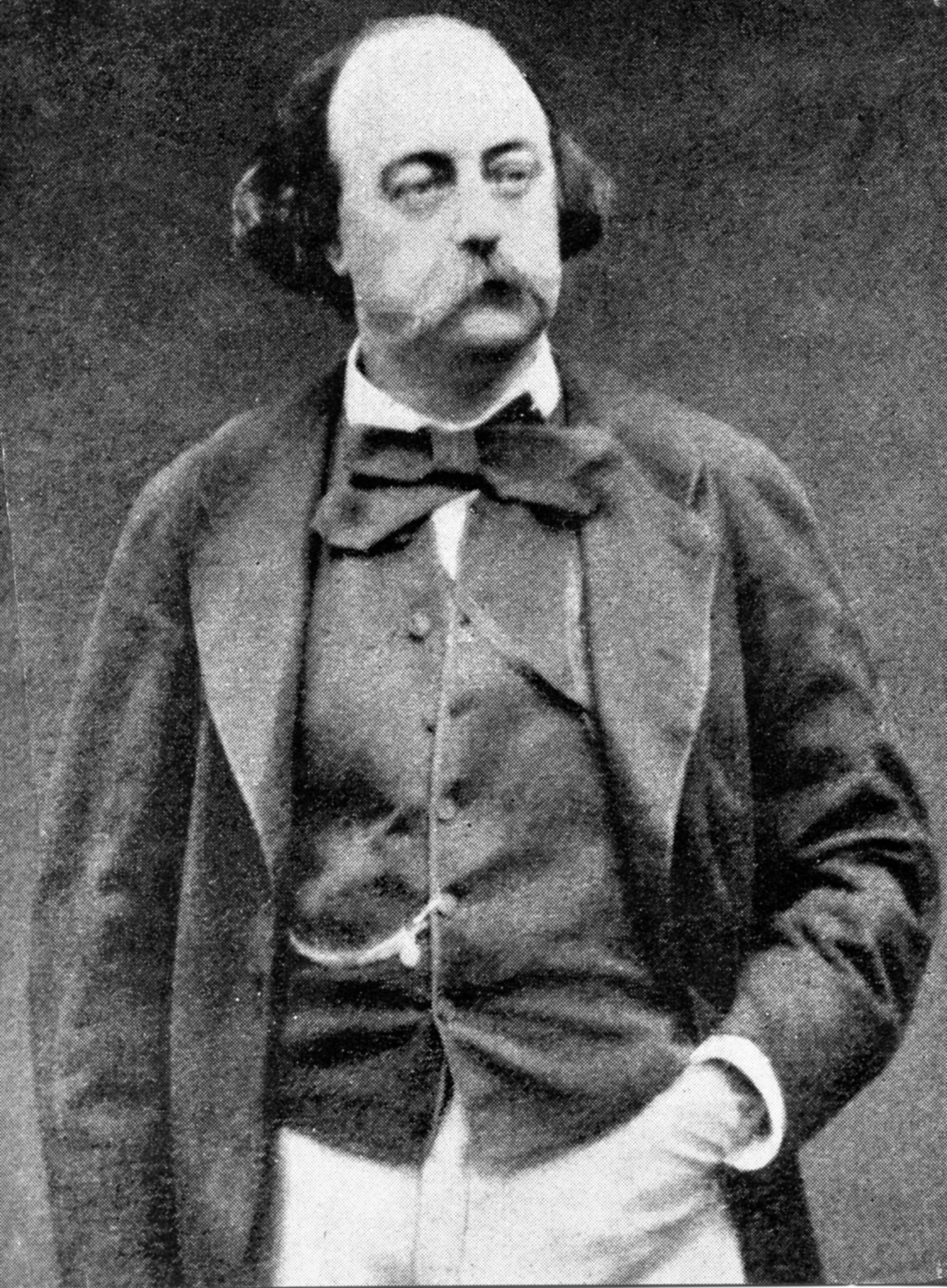
“Be regular and orderly in your life, so that you may be violent and original in your work.” – Gustave Flaubert
Live a good life. This isn’t something I should have to tell you. As you make your way through the workaday world, you should strive to do no harm, treasure your relationships with family and friends, seek calming pleasures that contribute to peace of mind, and live in harmony and balance.
Your written life? That’s a different creature all together.
Safe, tame, bland, and sometimes “it’s good” (with the unspoken “but…” attached on the end like a phantom limb) are among the worst things someone can say about your work. Whenever you write, your goal should be to provide elements that hook your audience and reels them in and after the story has been told, leaves them with an emotional takeaway.
Writing is about risk-taking, about snapping off the handbrakes, about shrugging off restraint, about leaving your internal censor bound and gagged in a tiny room, allowing your words and imagination to run amuck and wreak havoc in the world you’ve created.
If you’re not currently writing this way, what’s holding you back? What’s bridling your passion? What’s preventing you from creating bold characters, powerful phrases and dangerous situations? If not yours, then whose hand is on the lever that controls the sluice gates holding back the churning anxiety, obsession and peril your story desperately needs?
Are you trapped within the safe zone because of fear? Then allow me to geek out a moment as I quote the litany of fear, an incantation used by the religious/political sisterhood known as the Bene Gesserit from Frank Herbert’s science fiction classic, Dune:
I must not fear. Fear is the mind-killer. Fear is the little-death that brings total obliteration. I will face my fear. I will permit it to pass over me and through me. And when it has gone past I will turn the inner eye to see its path. Where the fear has gone there will be nothing. Only I will remain.
Fear is also an art-killer. It’s typically the fear of being judged by professionals, critics and peers, of not being admired by the audience for taking a controversial stance or doing horrible things to characters. But the possible opinions and tastes of everyone outside yourself shouldn’t factor in while you’re creating your story. The transfer of ownership hasn’t taken place at this point. It isn’t the reader’s story yet, it’s still yours, so why not write fiercely?
Give your characters barbed tongues and let them spit venom. Give them the courage to do all the things you would never dream of attempting, even on your most adventurous or foolhardy day. Tear their hearts out and make them suffer as you place them smack dab in the center of conflict and tension-filled drama.
Basically, I’m asking you to fish out that key that you’ve hidden in the back of a junk drawer within the deep recesses of your mind and open the door to your wildest imaginings.
You’ll come to discover that if you’re open, honest and free in your writing, yes, you will have your critics and people who won’t either like or understand your work, but you’ll also attract an audience that will come back for more.
What’s that? You need more incentive? Okay, well I didn’t want to break out the big guns but here goes:
I dare you to become more engaging and intriguing with your writing. I double-dog dare you.
Everyone I knew wrote me off as a space case, as if I was insane or some sad eccentric with little grip on reality but none of them, not a single solitary person, bothered to get to know me, to peer beyond this veil of all too fragile flesh in order to witness the infinitude that lay within.
Researching on her tablet, Mayra discovered the first functional fetal organ to develop was the heart, typically eighteen to nineteen days after fertilization which began to beat and pump blood around day twenty-two. But when it came to ensoulment, the closest thing she found to a specific answer dated back to the time of Aristotle, where it was believed the human soul entered the forming body at forty days for boys and ninety days for girls, which was of exactly zero use in explaining why there had been no sightings of child or baby spirits and if her as yet unborn child currently had a soul.
“How long do you think you’ve been pregnant?” Bethany asked.
“Um, I don’t know,” Mayra said, counting the days back to when she first took the test.
“At least six weeks?”
“Sure, I think. Maybe? Why?”
“Because six weeks is the earliest you can get a dating scan.”
“A what now?”
“An ultrasound to find out how far along you are and detect the presence of a heartbeat. Don’t you want to hear your baby’s heartbeat? I know I do.”
Mayra felt slightly ashamed that Bethany had taken the reins with regard to the clinical aspects for the pregnancy while she was preoccupied with the metaphysics of soul creation and death.
“It’s been over six weeks since I missed my period,” Mayra said.
“So, should I book us an appointment?” Bethany asked, and received no response. “What’s up with you?”
“You’re not going to like this,” Mayra sighed. “But I think Gavin might be right.”
“About what?”
“Maybe it’s not right to bring a child into this new world.”
Bethany sat across from Mayra in complete silence, lost in her thoughts for a long while before saying, “I don’t know how to respond to that. I mean, if that’s Gavin’s voice in your head, I’d tell you to tell it to fuck off. If you’re thinking it because you’re nervous, I can totally understand that but like I’ve told you a hundred times, you are not alone, and I’ll keep telling you until it finally sinks in. But if this is truly how you feel, then I support you and your choice and I’ll be here for you however you need me to be so don’t feel guilty because you have to do what’s right for you.”
“I have to admit, Bethy, I have no idea what’s right anymore.”
***
It was an odd thing but being in the hospital to get the ultrasound made the situation real. Mayra was going to have a baby, she was going to be a single mom which meant she had some growing up to do. She was afraid the sonographer was going to make assumptions about her since Bethany was at her side instead of Gavin but it was one of those childishly foolish notions that she needed to push out of her head.
“At this point we should be able to see the baby take shape,” the sonographer, whose name was Gloria, smiled. “Your little one is slowly becoming a person and I have to admit this is the point I find the most exciting. Nine months might seem like a long time but it will fly by. Make the most of this experience because once you hold your baby in your arms everything will be different.”
“Do you think this is something I can do alone?” Mayra had no idea why she asked the question. The words just slipped out before she was aware of what she was saying.
“Yes, even though it’s obvious to me you aren’t alone,” Gloria said without missing a beat and nodding a smile at Bethany. “Somehow I can tell there are always going to be people around to help you. Pregnancy can sometimes make you feel like you’re in it by yourself but you’d be surprised at how people will step up to help.”
“That’s a curious bedside manner you’ve got there,” Bethany said.
“So I’ve been told,” Gloria replied and to Mayra she said, “The scan usually takes about twenty minutes.”
“Twenty minutes?” Mayra said.
“I know your bladder’s full but we’ll get through this as quickly as possible,” Gloria held up a squeeze bottle and a small hand-held device. “First I’m going to apply some ultrasound gel to your tummy and move this transducer over your skin to get views of your baby.”
Mayra looked down at the gel being spread over her stomach. Her body was still in the same shape it had always been, something the baby would soon change and she wasn’t quite sure she was ready for it. When she glanced at Bethany, she saw her friend was staring across the room at a ghost midwife standing nearby, watching the monitor, waiting patiently. It was impossible to pretend she wasn’t there but a strange phenomenon was taking place where people began ignoring the spirits, they had become so commonplace. Exhaling deeply, she turned her attention to the screen. Being able to see her growing child was the whole reason she was there, and she wasn’t about to let the dead spoil this moment.
“Okay, Mayra, this is going to feel weird, but I promise you it’s truly worth it,” Gloria said.
Mayra said a silent prayer that the scan turned out normal and the baby was healthy but the moment the transducer made contact with her belly—everything changed. Her vision filled with starbursts. A million points of light filled her mind and she was overcome with a sensation that was simply too good, too pure to exist in this imperfect world. Her sense of existence expanded beyond the limitations of infinity and for one brief moment the edges of her mind brushed against the minds of every person, living and dead, linking together like a jigsaw puzzle of peace and all was right in the universe for a nanosecond before infinite knowledge avalanched onto her mind sending shards of information into her brain and out through the back of her skull over and over eternally and existence filled her mouth, filled her throat, filled her lungs, suffocating her with its presence and it would not let up, would not let her fight, would not let her scream as she was engulfed by the unending blinding whiteness of everything until she became nothing at all.
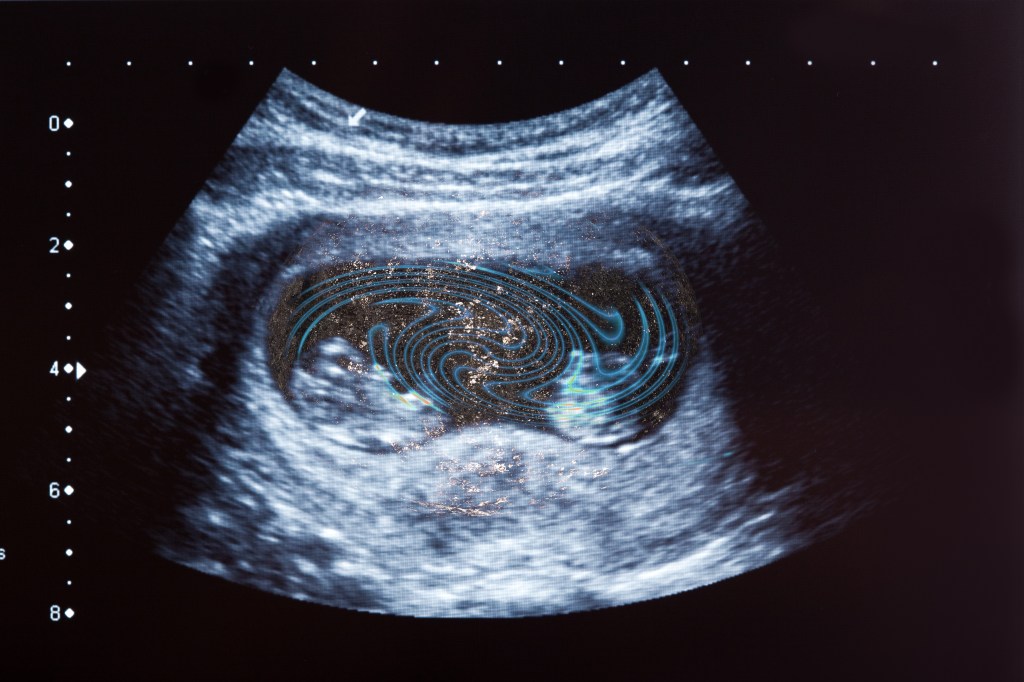
The bits and pieces that made her unique no longer existed in this pearlescent void and how could it? The totality of everything had pushed everything she had ever been out of her. She was now a hollow lifeless shell—until she wasn’t. Reality, her reality, the only one she personally experienced, had begun reknitting itself, stitch one, purl two until she was back in the examination room with the sonographer and Bethany. Both women stood stock-still as if they had been turned into stone by a basilisk, mouth agape, staring at the monitor. What they saw on the screen looked nothing like a baby at all. It looked more like a blob, a swirling mass that resembled a distant galaxy viewed through a space telescope.
When Gloria recovered enough to form words, she said, “Let me get one of the doctors in for a second opinion,” and bolted out of the room before Mayra could ask a question.
Mayra turned to Bethany who was gathering their coats and bags in a hurried fashion.
“Bethy, what are you doing?”
“Sweetie, we need to get the fuck out of here, now!”
I thought I could handle any trouble that came my way but the murder investigation had gone riotous way too fast and I was caught at ground zero.
I tried to beat a hasty retreat to call for backup but standing between me and the Big Top’s only egress was the Circus Authorities, a bundle of fast-moving, nimble as fuck, acrobatic clowns armed to the teeth with corrosive acid pies and rubber chickens filled with ball bearings.
Turning on the television was almost always a bad idea. The one sure thing in all this madness was that every channel with a news outlet, syndicated and cable alike, provided twenty-four hour a day updates of variations on the same stories: people dealing with the spirits of loved ones. The sad fact of the matter was daily life seemed to stop the moment the dead returned to Earth. And that was the good news.
Interspersed between dramatic reenactments of tearful afterlife family reunions was the blowback religion was suffering due to its failure to provide answers for the reason Heaven was destroyed, the purpose of dead spirits returning to Earth and the overcrowding it was causing, and why anyone should continue worshipping if they were no longer a reward for living a righteous life. The suicide rate continued to climb but not all of the disillusioned practitioners were taking their own lives. Some took it upon themselves to express their anger in the form of the vandalization of churches, mosques and religious community centers which quickly escalated to bomb threats, physical attacks on parishioners, then to mass shootings and bombings. In order to minimize the death toll in America, the President passed an executive order to close places of worship and urged other countries to follow suit but failed to gain any traction as religious congregations across the states defied the ban.
Experts assembled comprehensive databases of bombers and mass shooters who aimed their attacks on religious groups or places of worship to try to better understand and help prevent future violence of this kind. They stated, normally the statistics would have indicated the perpetrators being men, mostly Caucasian, single and unemployed, ages ranging from twenty to forty, with histories of mental illness, substance abuse, and victims of serious childhood trauma. Worship murderers also typically fell into one of two distinct categories: ethno-religious hate groups who target a specific group of people to blame for their grievances; or angry individuals in crisis motivated by domestic issues. But new studies showed no gender, ethnicity or age correlation among the offenders. In fact, the common thread seemed to be people prepared to commit suicide who were afraid of dying alone. If they had to exist in void, they wanted to be surrounded by their family and friends.
To combat the escalating tension, celebrities formed organizations to hold Death of Heaven vigil simulcast on tv, radio, podcast and across all the social media platforms around the world to offer support for those suffering as a result of the loss, as well as counseling for those having difficulty adjusting to having dead abusive spouses and family members return into their lives.
Mayra shut the tv off. She couldn’t be bothered flicking through the channels to find something to momentarily distract her. Even the soaps had been forced to add current events into their storylines, thanks to deceased actors appearing on set and going through their former character motions.
Stretching out on the sofa, her hand reflexively reached out for her smartphone.
“There’ll come a time when you’ll have to face facts,” Bethany said as she crossed from the bedroom, heading for the kitchen. “In your own time, of course, but sooner would be better for your mental state and the baby’s health.”
Damn. She had been busted by her friend once again and though Bethany tried not to sound too judgmental, Mayra felt a sense of shame that she wasn’t strong enough to admit the truth and move on with her life.
“Yeah, I know,” Mayra said, thumb hovering over the number keypad. “I keep going over it in my head, but our lives are too entwined. Gavin hasn’t touched the bank account, not that there’s a lot in there to begin with, so that means he doesn’t have a lot of money. He has to either be crashing with a friend or maybe he moved back to his parents’ house.”
“And you’ve already dialed all those numbers a dozen times. Sure, maybe if you pester them enough someone will eventually break and fess up, but you don’t know what story he spun to them and you could wind up looking like the psycho stalker ex-girlfriend.”
“I don’t care what people think. I just need to talk to him. I need that, Bethy, I need it.”
“Sweetie, I’m not telling you not to call, not to try. All I want is for you to be happy and if happy isn’t possible right now then I want you to feel comfortable moving forward without that dead weight hanging around your neck. From what you’ve told me the two of you were more like house mates for a while now. If that’s what you want out of life then go for it and I’ll support you the best way possible, but if you want someone to love you the way you deserve to be loved I think you need to accept the reality that you kissed a frog and instead of getting a prince, you got warts.”
“I know calling him probably isn’t the smartest thing to do, but I need to hear his voice. Don’t hate me.”
“Never,” Bethany said, continuing to the kitchen. “I’ll leave you to it.”
Mayra dialed Gavin’s cell, cursing herself for being a weak-willed idiot.
“The number you have dialed is not in service, please check the number and try again.” The automated voice wasn’t what she expected to hear. She hung up and tried again. “The number you have dialed—” She disconnected and carefully redialed his phone number one more time. “The number you have dialed—” Mayra hurled the phone across the room and screamed, “Fuck!”
Bethany ran into the living room. “What is it? What happened?”
“That bastard changed his number,” Mayra said and suddenly the floodgates opened. Everything she kept bottled up came spilling out. Gavin hadn’t left a note or emailed her or even sent a text message. The very least he could have done if he was at his parents’ house was to have his mother or father call her to let her know he was safe. But no, all she got after five years of dating was an apartment full of the empty spaces he used to inhabit. She ended with, “He’s gone,” before breaking down into uncontrollable tears.
“Yes, he is, sweetie,” Bethany pulled her friend into her arms and gently rocked her. “But you’re not alone.”
***
Bethany had done more than Mayra could ever have asked. She worked out the apartment lease with the landlord, removing Gavin’s name and replaced it with her own, as well as smoothing things over with Mayra’s boss so she could take a few days off and still keep her job. At times Mayra had been overwhelmed by it all, and the complicated emotions that came with accepting her relationship with Gavin was well and truly over came and went like the tides. There were days when she hated her ex-boyfriend—and it had taken a while to adjust to thinking of him as an ex—for what he’d done and the only thing she really wanted to do was to hurt him the way he hurt her. Then there were days when she accepted the way things were, realizing there was nothing she could have done to change what was.
One of the best reasons for having Bethany so close was that Mayra could open the release valve when her brain became too cluttered with random, disturbing thoughts and voice things she ordinarily wouldn’t have been able to speak with Gavin about.
“I’ve been thinking a lot about miscarriages,” Mayra let slip while she and Bethany were working on a jigsaw together. It was a three thousand piece Educa Amsterdam with Red Bike Puzzle. Challenging enough to focus her concentration on since besides the red bike, the rest of the puzzle was in black and white with reflective surfaces. Still, idle thoughts had a way of creeping in.
“What?” Bethany gave her a look she’d grown accustomed to since moving in together, the look of being blindsided. “You shouldn’t be worrying about things like that. Stay positive. Everything’s going to be all right because there’s no reason they shouldn’t be.”
“You don’t understand. I’m not worrying about miscarrying, not yet at least, I was just wondering when life begins. Is it at conception?”
“I—I’m no expert but I’d say, sure, why not?”
“Then why haven’t we seen the souls of any aborted children? Or still births? Is it because their souls hadn’t properly developed?”
“Okay, that’s disturbing on a number of levels. Have you actually been looking for them? I wouldn’t even know what that would look like and I don’t think I’d want to know.”
“You’ve got a point there,” Mayra admitted. “But what about kids? Of all the people who’ve died and returned, why hasn’t anyone reported spotting children?”
“Oh man,” Bethany said. “With all the confusion going on, I never realized all we’ve been encountering are adults. What happened to all the kids? And people are tripping over ghosts outside but I haven’t seen one in our apartment yet. Have you?”
“I—” Mayra began, then thought about it. “No, I haven’t.”
“Somebody must have died here.”
“Bethy!”
“This isn’t a new building, is what I’m saying. What are the odds this is one of the few places on Earth where no deaths have ever occurred?”
The loamy smell of rain-damp soil fills the air of my Earth Day isolation. Birdsong twitters through the brick and mortar forest lining the long abandoned streets, and I sit on my doorstep patiently waiting for the day when I can appreciate nature and the life it gives so freely without hiding behind a mask and latex.
Popular belief has it that the universe is comprised of atoms. In reality, the universe is actually made up of…
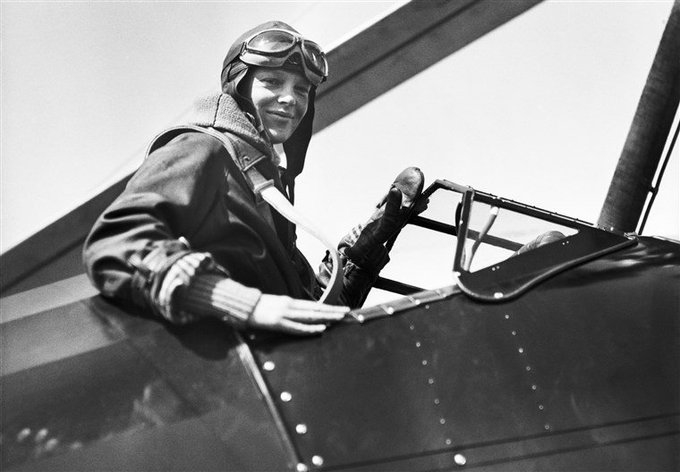
While Amelia couldn’t quite put her finger on it or explain how the devil it happened, she knew her reality had somehow shifted because the air smelled wrong—not just of engine exhaust but of evaporating destiny and melting fate.









 MADD FICTIONAL