Shane didn’t realize he was being recruited into a cult until at least the third compliment.
“Hello, friend. My name is Grant. What’s your name?”
“Shane.”
“Nice to meet you, Shane. May I tell you something?”
Shane paused. This was usually the part where strangers tried to sell him something—religion, phone plans, their mixtape. “Is it bad news?”
“No.”
“Are you proselytizing?”
“No.”
“Then sure.”
Grant leaned in, eyes gleaming with the fervor of someone who had either seen the light or was about to start a pyramid scheme. “You’re amazing.”
Shane blinked. “I am?”
“Yes, you are.”
“Well… thanks, I guess.”
“Do you have anything you want to tell me?”
Shane shifted uncomfortably, adjusting his grip on his grocery basket. “I said thank you.”
“Yes, indeed you did. Anything else?”
“What did you have in mind?”
“Well, I told you that you were amazing, so…”
“You want me to tell you that you’re amazing?”
“Exactly!”
Shane sighed. “Okay… you’re amazing.”
“You might find it a little odd, but I feel empowered when you say that.”
“Then I guess I’m warmed by your positive karma.”
“Your warmth threatens my karma.”
“Oh yeah? Well, the absurdity of your sudden unease is as laughable as your ‘You’re Amazing’ new age philosophy.”
Grant’s expression darkened. “Now you’ve succeeded in angering me with your ignorant labeling of my doctrine and guiding philosophy.”
Shane raised an eyebrow. “Oh, you have a doctrine? Does that make it a cult? If so, is it exclusionary? And do I fit into the negative stereotyping of the masses, or would I be permitted to join such a worthy cause for a small fee to the exalted grand high mystic great one?”
“As an unbeliever, which you are, don’t think your sarcasm has gone unnoticed. We’re entitled to 51% of your soul.”
“Not a horrible percentage, as cults go,” Shane admitted. “But I still have a nagging question. Will joining fill me with a false sense of superiority over non-believers, or will I be conditioned to happily go about my business, spreading the ‘You’re Amazing’ spiel to others?”
Grant sighed. “Look, stop with the questions and just go kill your family already. It’s for the best, okay?”
There was a long silence.
Shane finally took a slow breath. “Unanswered questions and hostile commands to boot! Wow, you guys really are legit. Alright, sign me up.”
The next steps were straightforward.
There was paperwork. There was a multi-level reward system. There was a video, which played on a slightly warped VHS cassette, in which a nameless figure in a turtleneck explained that the Cult of Subtextuality was not a cult but a “reality reframing initiative.”
Grant, now Shane’s assigned mentor, nodded along.
“We believe in the power of subtext,” the video explained. “We believe that the true meaning of all things is never what is said, but what is felt.”
It then cut to an infomercial montage: smiling people, hands clasped, gazing lovingly into a flickering television screen. A man in a suit discussing politics on a news panel. A group of cult members gathered around a cash register, nodding solemnly as a cashier asked if they wanted to “round up their purchase for charity.”
“The world is coded in messages you cannot see,” the narrator continued. “But we see them for you.”
Shane watched. He wasn’t sure if it was ironic or sincere. Maybe that was the point.
“By the way,” he said. “I took care of the family. What am I supposed to do now to advance to the next level of… cultiness?”
Grant beamed. “Oh, fantastic! Give us your firstborn. And tattoo your whole body. But good job! My superiors are so impressed. They love your feeble-minded allegiance to any pretension of authority.”
Shane stared. “Tattoo? Tattoo? Hold on a second. No one ever said anything about tattoos. That’s it, I want out. I’ve had enough of your ‘tattoo your body to show your inferiority to the high sacred master overlord’ mumbo-jumbo.”
Grant’s face fell. “That’s it. You’re cut. No everlasting peace, no tranquility, no blissful bounding through the fields of heaven. You can just sit outside St. Peter’s gates forever, you disbeliever, you.”
“Fine then, you infidel,” Shane snapped. “I don’t need your pseudo-utopic, hallucinogenic-induced dream. I have Disneyland to fill the soon-to-be gaping hole in my psyche left over from the brainwashing you’ve pumped into my brain. Just wait until The Toronto Star hears about this!”
Grant went pale. “Toronto Star? What an excellently composed news authority. Its insight and credibility never fail to expand my perspective on the intricate workings of our world. Truly a fine journalistic institution. My mind just turns to a viscous jelly-like substance when I look at their headlines. A conspicuous pool of frothy drool accumulates at the sides of my mouth whenever I peruse their pages.”
Shane stepped back. “Sweet mother of all that is sacred! What have they done to you? Can’t you see the cult has warped your mind to the point where you’d be happy endorsing nearly anything?”
Grant twitched. “Preston Manning… don’t get me started… a fine politician… a beacon of our times… conservatism is what we need… we need… we need… strong leadership… damn immigrants… common sense revolution… Mike Harris… don’t get me started…”
Shane’s stomach dropped. “Oh no. They’ve taken you. You’re too far gone. Just know… this is for the best.”
He grabbed a pillow.
Grant sighed. “Don’t forget to break out of the institution by throwing large objects into steel-reinforced windows. It will make the dramatic effect of your selfless act even more poignant and meaningful.”
Shane hesitated. “Damn. I forgot to stare longingly at a flock of birds earlier. I hope that this will still be considered effective cinematography, since there’s been no foreshadowing.”
Grant shook his head. “Milos Forman would not be impressed by your lack of effective symbolic imagery.”
Shane froze. “Ah-hah! So that’s who’s behind this cult. I knew you’d slip up sooner or later.”
Grant’s smile widened. “He’s not alone… You don’t know how far it goes. You’re trifling with powers you can’t possibly comprehend.”
Shane narrowed his eyes. “Not… Mr. Dressup?”
Grant sighed. “He’s a minor pawn. His sinister talents are well applied to young Canadian children, teaching them to be inherently distrustful of hand puppets who live in trees, as well as the Irish in general. He’s more of a prototype… a foreshadowing of things to come. Much like The Terminator, who then came back in Terminator II but as a good Terminator… well, sort of…”
Shane dropped the pillow.
He sat down.
Took a deep breath.
And finally said, “Goddammit, I think I really am in a cult.”
When the pastries first went viral, people called them Ganymuffins, though, to be honest, they weren’t even remotely related to the muffin family, or even to the Jupiter moon, Ganymede, for that matter. The actual ingredients remained a mystery until Doughmenic Bakery, Inc. filed a patent and listed the horribly renamed ConstellaScones as:
a laminated soy-based dough, deep-fried in pumpkin seed oil, which is then dusted with confectioners sugar, filled with a proprietary fruit preserve recipe and glazed.
This turned out to be a big fat lie.
It wasn’t until much later that we learned the real ingredients and how the baked goods were actually made. Then, everyone called them blood doughnuts, which should have affected sales, but by then it was far too late. We had been hooked on them for at least a decade.
***
Maybe that wasn’t the best way to start. My father always told me I couldn’t tell a story good and proper, always back to front with everything jumbled up in the middle. Perhaps I should have begun by mentioning our first contact with the Tiiwarnias? Sound good to you? Okay, let’s rewind and give that one a go.
On August 15, 1977, while searching for extraterrestrial intelligence, the Big Ear radio telescope located at Ohio State University received a strong narrowband radio signal that appeared to originate from the constellation Sagittarius. Dubbed the Wow! signal after Astronomer Jerry R. Ehman circled the recorded data on a computer printout and wrote the comment Wow! beside it, the anomaly lasted a full 72 seconds and bore the expected hallmarks of extraterrestrial origin.
A set of first contact protocols were rushed into draft that essentially stated if anyone received an extraterrestrial signal they were obligated to share the information with the rest of the world and were warned against broadcasting any replies without international consultation. In actuality, we could have taken our time composing the protocols because it took decades for the extraterrestrials to receive the reply and by the time they had, they were already here.
World governments rallied together and held a conference to (1) devise a plan of action to the potential threat posed by these unknown extraterrestrials and their alien motivations; and (2) discuss making the right first impression, whether we should tell the aliens all the bad things about humanity, or just the good things, and what language we would use. What would be the official first contact language of Earth?
In the end, none of it mattered.
As the Tiiwarnias touched down on American soil, all reports came through the White House which, of course, caused tensions with the rest of the world. The U.S. government agreed to work together with the United Nations to create a team of scientists and researchers from each nation to join in the first contact mission.
The public was informed through government officials and the White House Press Secretary that the aliens couldn’t speak any of our Earth languages and expert linguists made the determination that we would never be able to speak theirs, so a hybrid-speak was mutually adopted that combined the simplest words of all the languages, which the news explained as a sort of interstellar pig Latin. Because of this, it was nearly impossible to determine their level of intelligence but it was simply assumed that beings capable of interstellar spaceflight were orders of magnitude smarter than the brightest among us. From our increased dealings with them, they appeared to be beyond thoughts and acts of aggression and war and treated us with immense consideration and respect.
Yet, despite the aliens’ politeness, there was something… off. The way official reports danced around certain questions. The way scientists who had once been eager to discuss first contact suddenly went quiet. No leaks, no whistleblowers, no “anonymous sources” spilling classified details to reporters in dimly lit parking garages. Just silence.
And then there was the biggest red flag of all: no footage.
Not one single leaked video, blurry photo, or grainy livestream of the Tiiwarnias outside the government’s carefully orchestrated press events. Not even a rogue intern snapping a pic for clout. Either we’d suddenly become a species capable of keeping a secret, or someone was scrubbing every unauthorized glimpse before it ever saw the light of day.
And if there’s one thing history has taught us? When the government tells you everything is fine, everything is definitely not fine.
The Tiiwarnias earned their name from a television field reporter who attempted the nearest pronunciation our human tongues could manage of a word the alien visitors repeated frequently.
As far as shared technology went, the aliens were absolutely uninterested in our advancement and theirs was so beyond our understanding there was no way to adapt it to our systems or reverse engineer it. Even their seemingly limitless power source was both visible and touchable yet not liquid or gas or matter in any way we could measure or analyze. We weren’t capable of using it as a fuel or power source and more importantly, it existed beyond our ability to be weaponized. So while an international team of theoretical physicists continued to study it and create theories to explain it, the world at large lost interest in the Tiiwarnias.
That was until the press conference.
Until their television appearance, the public hadn’t laid eyes on the aliens. There had been artist renditions based on reports but none came close to capturing their unique alienness. When the broadcast cut to the live feed, the world finally saw them—and let me tell you, the artist renditions hadn’t even come close.
The Tiiwarnias were… unsettling. Not in a monstrous, tentacled-horror kind of way, but in the way your brain struggled to place them. Like an optical illusion that made sense only until you looked too long. They had faces, but not the kind you’d instinctively trust. Too symmetrical, too smooth, like something designed by a committee that couldn’t agree on what a person should look like. Their mouths were thin suggestions of shape, never quite moving when they spoke, and their eyes—God, their eyes.
Not black, not pupil-less, not the soulless void Hollywood loved to slap onto anything alien. No, these were worse. Multi-layered, refractive, shifting between colors like an oil slick catching the light. When they turned their gaze to the cameras, I swear you could feel it. Like looking at something that was looking back with interest, but no real understanding.
They were tall, but not towering. Their limbs just slightly too long, their fingers tapering into delicate, unnecessary points. Their skin—if you could call it that—was pale but not white, translucent but not see-through, as if they were composed of something that hadn’t quite decided whether it wanted to be solid or liquid.
And yet, they moved with an almost absurd grace, like dancers trained in a gravity different from our own. Effortless. Unnatural.
No wonder the government hadn’t shown them to us sooner. The moment they appeared on-screen, every human instinct screamed wrong.
And then they presented us with donuts.
At first, nobody moved.
The President—flanked by a dozen tight-lipped officials—stared at the silver tray piled high with what, by all appearances, looked like donuts. A slight sheen of glaze, powdered sugar dusted over the tops, the kind of thing you’d find in any grocery store bakery aisle.
A long silence stretched between species.
Were they serious? This was first contact—the moment humanity had dreamed of for generations—and the first thing they did was roll up with intergalactic Krispy Kremes?
The press, bless them, snapped out of the collective daze first. Murmurs rippled through the room, cameras flashing, reporters already forming the inevitable what does it mean? headlines.
The President glanced at his Chief of Staff, then at the tray. His face betrayed deep suspicion, but also something else: the impossible weight of being the guy who either (A) rejected the first gift from an alien race, potentially causing an interstellar diplomatic incident, or (B) took the first bite and died on live television.
The room held its breath.
Finally, in a move that could only be described as passing the buck, the President turned to Dr. Marina Solano, head of the international First Contact Research Division. She blinked, pointed at herself, and mouthed, me?
A slight nod.
Swallowing hard, Solano stepped forward, selected a donut—no, not a donut, a ConstellaScone, a name Doughmenic Bakery would shove down our throats later—and hesitated just long enough for every camera in the room to zoom in.
Then she took a bite.
And her face changed.
It wasn’t a oh, this is good change. It wasn’t even a holy hell, this is the best thing I’ve ever eaten change. It was something deeper, something more visceral—as if every pleasure receptor in her brain had just been hardwired into something beyond human comprehension.
Her breath hitched. Her pupils blew wide.
The entire world watched as Dr. Marina Solano, esteemed astrophysicist, decorated scholar, and one of the most rational minds on the planet, devoured the rest of the donut like a starving animal.
A second of stunned silence.
Then the rest of the delegation lunged for the tray.
The aliens, eerily patient, merely watched as the most powerful figures on Earth shoveled bite after bite into their mouths, eyes glassy, hands trembling, as if they had just been offered the answer to a question they didn’t even know they were asking.
By the time the press got their hands on the leftovers, it was already too late.
We were hooked.
***
As mentioned before, the Tiiwarnias ship touched down planetside deep within a national forest on a 140-acre ranch in Sedona, Arizona, that belonged to a Hollywood stuntman and was used as a filming location for several movies. It also just so happened to be one of the most popular destinations in America for spotting supposed unidentified flying objects.
The ranch was reported to have been confiscated by the U.S. Government and certain areas of the national park were deemed off-limits but there were individuals who operated clandestine tours at night and that was how I became involved.
I worked for a rag named, Candor Weekly, as an investigative reporter, and my assignment was to infiltrate the base where the aliens were being held and uncover the things the government wasn’t sharing with us. So, I joined the Truth Seekers tour group and rented the suggested pair of night vision glasses and binoculars that had seen better days, after I signed an accident waiver and release of liability form, in which I agreed to hold harmless, and indemnify Truth Seekers Tours from and against all losses, claims, damages, costs or expenses (including reasonable legal fees, or similar costs). I wondered which one of these Einsteins thought they would be able to enforce the document for their illegal tour company that routinely trespassed on government land?
The tour group gathered two hours before sunset for orientation where we had been given a brief history of the strange occurrences that happened almost nightly since the aliens arrived.
“First, all of the animals on the ranch, dogs, and horses mostly, became sick with diseases that none of the vets in these parts were able to explain,” Tourguide Flint said and quickly followed with, “But not to worry, though, whatever bug is flying around out there only affected animals. I’ve been conducting these tours nightly and my doc says I’m fit as a fiddle!”
“Also, you’re gonna want to take pictures because there’s some freaky stuff that goes on out there especially during the last hour of twilight,” Flint continued.
“What kind of freaky stuff?” I asked.
“All kinds. From crazy light shows in the sky to bigfoot and dinosaur sightings and the biggest of them all, thelight portal!”
“The what?”
“Hey, man, I don’t invent it, I just record it,” Flint held up his hands in a don’t shoot the messenger fashion. “I’ve got plenty of photographic proof over there in the tour log book. Now, I’m not saying that it allows beings from other dimensions to travel here and vice versa, like some of the less reputable tour guides claim, but the portal’s the real deal, man, as real as it gets!”
“Oh, and there are two things you should know,” Flint added. “One: we’re uninvited guests on government land so it’d be a smart thing to turn off your camera’s flash. You don’t want to give our presence away, do you? And two: your electronic devices will not work out there, so the cameras on your phones will be useless. Not to worry though, we sell disposable cameras with 400-speed film which is excellent for taking nighttime photos.”
Probably a lie and scam to part the tour group with more of their money, but I bought a couple of cameras just to be on the safe side.
“Uh, sorry for all the questions,” I raised my hand.
“Knowledge is essential, man,” Flint smiled. “Ask away.”
“If this place is as heavily guarded as people say, how are you able to take tours out each night?”
“That’s because most of the barracks you’ll see are all decoys, man. The real base is underground, accessible by an elaborate tunnel system, used by both the military and the extraterrestrials.
“Course, some folks went poking around to find the real deal,” Flint said, lowering his voice like he was letting us in on some deep, dark secret. “Journalists. UFO nuts. Couple of rich boys with more money than sense.”
“And?” I asked.
“And nothing.” He gave me a knowing look. “Because they were never seen again. Oh sure, you’ll hear the usual excuses—car accidents, sudden retirements, tragic boating mishaps. But we all know what’s really going on. You get too close, you stop being a problem real quick.”
A woman in the group laughed nervously. “You’re just trying to scare us.”
“Am I?” Flint shrugged. “All I’m saying is, some questions ain’t meant to be answered. And some things? They stay buried for a reason.”
He clapped his hands together, jolting the group out of the heavy silence. “Now! Who’s ready to see some UFOs?”
I forced a grin, but my gut twisted. Because if half of what he was saying was true, I wasn’t just looking for a story anymore.
I was walking into a cover-up.
If there was a base out there, this was most likely true.
Once the sun set, the tour began with a two-hour meditation walk starting at the Amitabha Stupa, supposedly Sedona’s most spiritual vortex. Flint took us through a painfully boring guided meditation that ended at a well-known hot spot of UFO activity where we were guaranteed sightings of UFOs, using special night vision goggles. People in the group swore up and down to have spotted objects. I turned up a big fat goose egg.
Flint began rambling again about the “decoy barracks” and “elaborate tunnel systems” and while the rest of the tour group nodded at the prospect of uncovering the truth of the government UFO cover-up, I found myself in the grip of an irresistible gravitational pull, to be anywhere else at the moment.
But maybe there was something to the whole elaborate tunnel thing, so I slipped away from the oblivious group and I must have done some fantastically good deed in a former life, because after fifteen minutes of mindless wandering with my borrowed night-vision goggles, I luckily stumbled upon something.
A maintenance door? An emergency exit? Whatever it was, it was discreetly tucked behind what appeared to be a Hollywood movie prop of a pile of boulders. My heart raced as I dug my fingers into the seam and managed to pry the door open with the kind of stealth usually reserved for midnight snack raids.
The narrow tunnel was dim, lit only by the intermittent sputter of the night-vision goggles. The silence was oppressive and every step echoed, mingling with a faint, almost mocking aroma of something being baked—a scent that brought me back to childhood Sunday baking days with Mom, which was profoundly out of place in an underground labyrinth.
The descent into the heart of darkness felt like it went on forever but eventually the tunnel opened to a vast, cavernous chamber and in the middle of it lay a massive structure that could only have been described as an alien ship. Not the sleek, awe-inspiring craft of sci-fi cinema, but a crumpled, battered wreck, half-swallowed by the earth. Its metal skin, scarred by impact and time, gave off that same beguiling aroma of freshly baked goods. I hesitated for a moment before the allure of inexplicable contradictions forced me to press on.
Creeping along the ship’s rusted exterior, I discovered a side entrance open just enough to allow me to slip inside undetected. The interior was bizarre beyond words: stark, high-tech surfaces clashed with an oddly domestic atmosphere. And then I saw it—a surreal assembly line of sorts. There, strapped to a conveyor belt contraption that could have been ripped straight from a mad inventor’s sketchpad, was a creature whose features were unmistakably alien yet curiously reminiscent of a human in an uncanny valley sort of way. It was bound in restraints, its pale, unearthly skin lit by the harsh glare of a single overhead lamp, and from its body—of all things—continued to emerge a steady stream of what looked unmistakably like ConstellaScones.
I was never what anyone would have ever called “quick on the uptake” but my breath hitched in my throat and my heart pounded with horror, because I instantly knew what I was looking at. And the absurdity of it all was almost too much to comprehend: an alien was being forced into a subservient role that even the most desperate and despicable of culinary con artists wouldn’t consider. Before I could fully process the scene, I heard muffled voices coming from a nearby room or compartment or whatever they were called on an alien ship.
Slipping into a narrow passage, I pressed my ear to a cold, metallic wall and caught fragments of conversation between two individuals: one whose tone was clinical and detached, the other brimming with a greasy sort of enthusiasm.
“—so, you’re telling me it’s exactly the same as donuts?”
“Chemically, there’s no difference,” the clinical and detached speaker said. “I know you’re new here but surely you can smell it, can’t you? And have you tasted one? It’s donuts. Addictive as hell, and beyond our wildest indulgences.”
The other voice, smoother yet laced with dark humor, replied, “In the briefing they said only two of them survived the crash, and that one of them recently died and the other one’s been on a permanent strike ever since they started the forced-feed routine. So, how are they still shipping out ConstellaScones?”
“It turns out if you break them down to raw materials, you can manufacture a whole new batch.”
“So, they’ve been turning the dead bodies into alien donut poop?”
“Poop? Is that what they told you? The scientists discovered a while ago that we haven’t been eating their excrement at all. We’ve been snacking on their offspring.”
I nearly dropped my night-vision goggles. The implications ricocheted around in my head like a badly tossed frisbee at a Fricket match. Here I was, in a subterranean facility that smelt of freshly baked betrayal, and the dark truth was layered like a well-crafted éclair: a high-stakes, interstellar donut racket where survival, exploitation, and culinary perversion meshed into one twisted recipe.
As I absorbed the conversation, my mind raced with a cocktail of disgust, fascination, and a grim sense of responsibility. I knew I should retreat and report what I’d found, but the deeper I delved, the more I felt that the true story was just beginning to rise—like dough left to proof in the most unlikely of ovens.
Clutching my evidence—a hastily snapped photo of the conveyor belt and a recording of the hushed voices—I backed away from the macabre production line. My next move was clear: I had to expose this unholy alliance between extraterrestrial misfortune and human greed.
As I retraced my steps through the tunnel, the weight of what I’d uncovered pressed down on me like an overfilled jelly donut about to burst. My mind spun through the possibilities—if I got this story out, if people knew the truth, if they understood what they’d been eating, they’d…
They’d what?
Panic? Riot? Demand justice? Burn down every Doughmenic Bakery in righteous fury?
Or—
Would they shrug, lick the glaze off their fingers, and take another bite?
A cold realization slithered up my spine, slow and insidious. We’d been eating them for years. A decade of blind devotion, of cult-like devotion. We hadn’t just accepted the addiction. We’d embraced it.
Would I be exposing a horror? Or just ruining breakfast?
That’s when I heard it—a distant clink, the unmistakable scrape of a boot against stone.
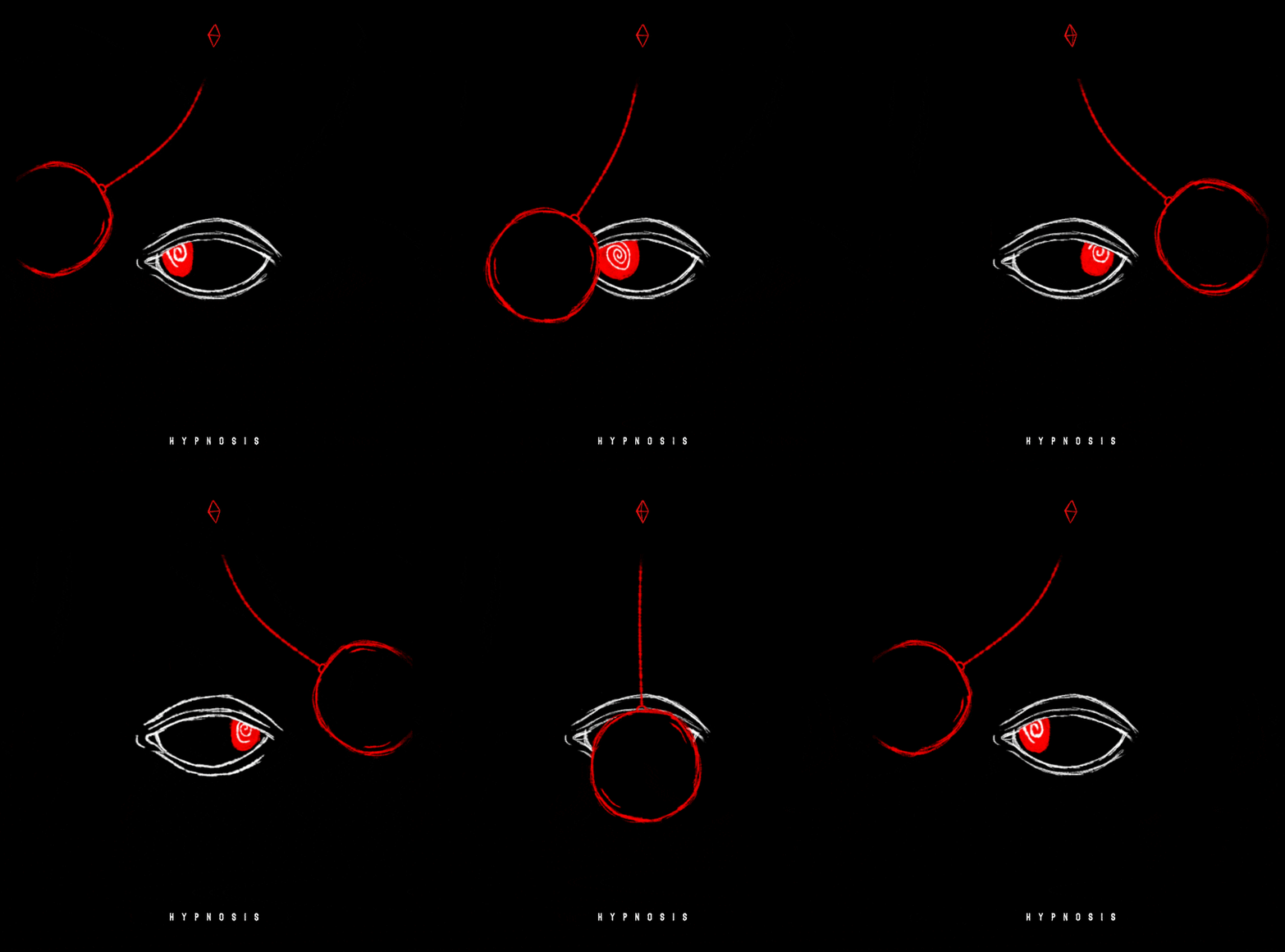
Vanessa’s eyes locked onto the swinging pocket watch, its brass glinting in the low candlelight, the rhythmic ticking sinking deeper into her mind. Each pendulum swing seemed to pull her further from the present and hurl her back to that night—the one she’d buried beneath layers of false memory, beneath years of carefully constructed lies.
She had rewritten the story so many times. In her version, the ’67 Chevy Impala was a haven, its worn leather seats a cradle of budding romance, and Jimmy Erler, her first, was tender, patient. But as Doc Halley’s hypnotic voice probed deeper, the truth began to surface, a nightmare she had kept locked away in the darkest corners of her mind.
Her breath quickened. The rain. She could hear it again, hammering the car’s roof, relentless as the truth clawed its way out. The soft whispers Jimmy once murmured in her ear weren’t sweet at all—they were commands, demands, filled with malice, punctuated by the scrape of his teeth against her skin. He wasn’t patient. He wasn’t tender. He was hungry.
Vanessa felt herself spiraling, the fragile mask of memory shattering, each fragment revealing the brutal reality she had long denied. There were no stolen kisses beneath the rain-soaked windows, no shy fumblings of young love. Instead, there was pain—her pain—and Jimmy’s mocking laughter as he forced her against the seat. His hands, once remembered as gentle, had clawed at her clothes with savage urgency.
And then… something had broken inside her.
In the shifting candlelight of Doc Halley’s office, Vanessa’s hands clenched involuntarily, her nails digging into her palms. The image in her mind grew sharper, crueler. Jimmy’s face—twisted with something darker than desire, eyes gleaming with cruelty—blurred, then fractured. Her own hands—those hands—were the ones clawing at him now, tearing at his skin, his clothes, anything she could reach.
She could still hear his voice, the smug bravado crumbling into panic as her fingernails raked his face, drawing blood, her teeth sinking into his shoulder. She had fought back. No, not fought—she had become something else, something feral, her rage drowning out all sense, all fear, until there was only the violence, the raw power coursing through her limbs.
Jimmy had screamed. But the more he screamed, the more alive she felt.
When the fog lifted, she remembered the silence. Jimmy had been curled up, his breath ragged, bloodied and trembling, his once cocky smile twisted into a grimace of terror. He was no longer the predator—he was prey, and she had tasted his fear.
The watch ticked on, its steady rhythm pulling her back to the present, but the weight of that night lingered, suffocating. The realization hit her like a fist to the gut. She hadn’t been the victim, not entirely. The real horror wasn’t Jimmy, or what he had done. It was what she had unleashed in herself.
Vanessa blinked, her mouth dry, her body rigid in the chair. Doc Halley’s voice cut through the silence like a knife, gentle but probing.
“What did you see, Vanessa?”
Her gaze shifted to the pocket watch again. The ticking was louder now, deafening.
“I… I didn’t stop,” she whispered, her voice barely audible. “I wanted to. But I didn’t.”
Doc Halley leaned closer, the candlelight casting strange shadows across his face. “What didn’t you stop?”
Her breath hitched. The memory had become a living thing, growing inside her, feeding off her guilt and her need for absolution. But there was none to be had. Not for this.
“I didn’t stop… hurting him.”
The room seemed to shrink, the darkness pressing in. She had lied to herself for years, convinced herself that Jimmy had been the monster, that she had been the innocent. But as the truth bubbled up, she knew it had been something else. She had felt good—terrifyingly, exhilaratingly good—when she tore him apart.
Doc Halley’s voice was distant now, almost drowned out by the watch’s ticking. “Do you think you can forgive yourself?”
Vanessa closed her eyes, but the image of Jimmy’s broken body wouldn’t fade. She hadn’t just taken back control that night. She had destroyed him.
The candle flickered and died, plunging the room into cold darkness.
“No,” she whispered into the void. “I don’t think I can.”
And in the silence that followed, she realized the monster she feared wasn’t lurking in Jimmy’s memory, or in some dark corner of her past. It had always been inside her—waiting.
The Cracked Spine was a secondhand bookstore that smelled of old paper from a bygone era. The air was thick with the weight of hardcover and paperback editions in search of new owners, each containing stories begging to be reread. We reached for the same copy of Proust’s In Search of Lost Time, fingers brushing in that intimate, fleeting way that only strangers can experience. It should have been a harmless moment, a serendipitous encounter, but instead, it marked the beginning of a descent into madness.
Nora, a figure swathed in the quiet allure of mystery, captivated me immediately. Her dark eyes, a shade too deep to be entirely human, held an intensity that unsettled as much as it intrigued. Our love for literature wove an initial bond, yet there was something deeper, an unspoken tension lurking beneath her every word. While I bared the pages of my soul, Nora remained an unread novel, her secrets bound in leather, sealed by something much darker than ink.
I should have known something was wrong when she invited me into her home. There was a weight to the atmosphere in her flat, a heaviness that pressed against my chest, making it hard to breathe. Rows of books lined every wall, like a silent congregation of forgotten lives watching my every move. But one book stood apart, a volume so ancient that its spine seemed to pulse with something… alive.
Nora noticed my gaze, and in an instant, her demeanor changed. She moved to block my path, her movements too quick, too desperate. “It’s not ready,” she said, her voice trembling—fearful, even. “It’s only a draft.”
But I couldn’t stop myself. My curiosity had taken root, festering into an obsession, and despite her protests, I reached for the book. The leather binding was unnaturally warm, as though the cover itself was alive, pulsing beneath my fingertips. The moment I opened it, I felt the floor beneath me tilt, the world spinning as the words leapt off the page, twisting and coiling around my mind like serpents.
The first few pages were innocuous enough—rough sketches, half-formed ideas, fragments of what could be—but the further I read, the more a terrifying pattern began to emerge. The protagonist was a man. He was a writer. He was me.
Each chapter chronicled intimate details of my life, moments no one else could possibly know. The way I always kept my pens organized by color. The whiskey I drank when I couldn’t sleep. The thoughts I only admitted to myself in the dead of night. But the horror didn’t end there—no, the final chapters were something else entirely.
They told of a slow, creeping descent into terror. Each word described how this man—how I—would die, alone and forgotten, hunted by something far more dangerous than Nora’s simple mystery. There were no metaphors here. No clever narrative tricks. This was a blueprint. A death sentence.
I looked up from the book to find Nora watching me, her expression unreadable. But there was something in her eyes, something dark and predatory. The warmth I had once seen was gone, replaced by an emptiness so cold it turned my blood to ice. She smiled—a slow, curling smile that never reached her eyes.
“I’ve been working on that for a long time,” she whispered, stepping closer. Her voice was low, intimate, as though we were lovers sharing a secret. “It’s my best work yet, don’t you think? The final chapter is… exquisite.”
The realization hit me with sickening clarity—this wasn’t fiction. It wasn’t a story. It was a prophecy. Nora had been crafting my death with the precision of a master artist, every detail sharpened to perfection, every emotion honed for the ultimate cut. And I was the masterpiece.
I stumbled back, dropping the book as though it had burned me, but there was nowhere to run. The walls of her apartment seemed to close in, the shadows stretching, growing, until they swallowed everything in their path. Nora’s figure loomed before me, her face twisted with something feral, something no human could ever possess.
“You were always meant to be the final chapter,” she breathed, her lips brushing my ear like a lover’s caress. “My magnum opus, completed in flesh and blood.”
I turned to flee, but the shadows reached out, cold fingers clawing at my ankles, dragging me down. My mind screamed, but my body betrayed me, frozen in place as she knelt beside me, her fingers tracing the outline of my throat.
“You’ll die beautifully,” she promised, her voice soft and soothing, like a lullaby sung by the damned. “I’ll make sure of it.”
The last thing I saw before the darkness consumed me was her smile—a perfect, serene smile, as though she had written this moment a thousand times before. And in that final, terrible instant, I realized the truth: Nora hadn’t just been writing my story.
She had been living it.
The unwritten chapters would be scrawled in blood, a story of obsession, murder, and twisted love. And I, the unwitting protagonist, had already lost my chance to rewrite the ending.
In the echoes of my mother’s fading voice, I cling to the remnants of her wisdom, a child lost in the labyrinth of grief. Her words, once a comforting whisper, now haunt me like a twisted lullaby: “Guard the things you hold precious by keeping them hidden inside you.” But how could I, a mere child, comprehend the intricacies of love and loss? How could I find solace in the hollow chambers of my own heart when all I knew was the consuming emptiness of her absence?
I watched, helpless and alone, as her body decayed, a grotesque tableau of life’s fragility. The stench of rotting flesh filled my nostrils, a sickening perfume that permeated every corner of my existence. I searched, desperate and frantic, for the precious things she claimed to keep hidden within her, hoping to uncover the secrets that would guide me through this nightmare. But as I picked the vermin from her flesh and fought the carrion that sought to claim her, I found nothing but the hollow emptiness of death.
Her heart, once a mystery I longed to unravel, revealed itself to me in the most horrific of ways. I watched as it bruised and withered, a rotten apple consumed by the decay that surrounded it. And within its chambers, I found not love, not the answers I so desperately craved, but a writhing mass of maggots, feasting upon the remnants of her essence. The precious things she kept were nothing more than the disgusting creatures that stripped away her beauty, leaving me with nothing but the fading memories of her face.
In my dreams, she comes to me, a twisted apparition of the mother I once knew. Her face, a roiling storm of clouds, speaks to me in a voice that is a swarm of black bees, devouring all that is living and good. I run, through the forest of forgetfulness, seeking escape from the nightmare that consumes me. But there is no refuge, only the brackish waters of a black pond that beckon me with their siren’s call.
I plunge into the depths, only to find myself ensnared in a tar-like embrace, choking on the bitter molasses that fills my lungs and melts my flesh. I wake, gasping for air, my chest heavy with the weight of fear, my breathing a sickening, wet noise that echoes in the darkness. And in that moment, I know that I am no longer safe in this world, that the horrors that haunt me will never relent.
And so, in a final act of desperation, I crawl inside the remains of my mother’s body, wrapping her decaying flesh around me like a cocoon. I become the thing she kept precious, the maggot that feasts upon her essence, the hollow within that consumes all that is left of her. For in this twisted embrace, I find the only solace I have ever known, the only way to keep the precious things hidden inside me, safe from the horrors that lurk beyond the veil of death.
The narrow street felt like a forgotten corner of the world, shadowed by crumbling buildings and dimmed by the setting sun. Renee had passed this way hundreds of times, always ignoring the rusted neon sign that flickered above the doorway: Madame Celeste—Fortunes Told. She never believed in that sort of thing.
But today was different.
Fresh out of a five-year sentence for armed robbery, her body was free, but her mind had remained shackled to one thought: her daughter, Ellie. Five years of missed birthdays, five years of wondering whether her child even remembered her, five years with no answers. The State had taken Ellie, placed her with some family she’d never met. No matter how hard Renee searched, it was as if her daughter had vanished.
Desperate, with nowhere else to turn, she stood at the entrance of the dingy fortune-telling parlor, the name Madame Celeste practically buzzing like an insect in her ears.
The inside was worse than she expected. Threadbare curtains, a single flickering candle, and the heavy scent of incense thickened the air. A table, draped in velvet, sat in the middle of the room, and behind it, the fortune teller herself: a gaunt woman in a patchwork of scarves and jewelry, her face obscured by a veil of beads.
“I’ve been expecting you,” the woman said, her voice smooth, with a hint of a rasp.
Renee hesitated, her pulse quickening. “How could you—?”
“I know why you’re here,” Madame Celeste interrupted, gesturing to the chair. “Sit. We’ll find her together.”
Renee’s breath caught. How could this stranger know? Was this a scam? But the thought of Ellie—the need to see her again, hold her again—was stronger than her suspicion. She sat.
“Your daughter… Ellie,” the fortune teller whispered, the name slipping from her lips like smoke. Her long fingers danced over a worn deck of tarot cards, shuffling them with an eerie grace. “She’s closer than you think.”
The cards fell, one by one. The Hanged Man. The Tower. Death.
Renee’s throat tightened. “What does that mean? Where is she?”
Madame Celeste smiled, revealing teeth too sharp for comfort. “She’s waiting for you. But to find her, you must follow the path unseen. The roads of the dead. You’ve walked close to the edge before, haven’t you? You know the place where life and death blur?”
Renee clenched her fists. “What are you talking about?”
“The place you’re looking for is not a physical one,” the seer murmured. “Ellie has crossed over, but not in the way you fear. Her spirit is bound to this world, wandering, waiting. She needs you to set her free.”
A chill crawled up Renee’s spine. “No… no, Ellie’s alive. She’s out there. I just need to find her.”
Madame Celeste leaned closer. “She was alive. But when you went away, no one came for her. No one cared. The family she was placed with—”
“What are you saying?” Renee’s voice cracked.
The fortune teller’s gaze pierced her, unblinking. “Your child died alone. Starved. Forgotten. The only way to reunite with her is to cross over yourself.”
Renee shot up from the table, her heart pounding. “You’re lying!”
But deep down, something in the words resonated. She had nightmares in prison, visions of Ellie calling out for her, crying, alone. She’d always woken up drenched in sweat, praying it was just her mind playing tricks.
“Go to the place where you were happiest with her,” Madame Celeste said softly. “She will meet you there.”
With shaking hands, Renee fumbled for the door. The fortune teller’s voice echoed in her ears as she stumbled into the night, a single word repeating: cross over.
The old playground. It hadn’t changed in all these years. Rust clung to the swings, the slide was chipped and faded, and the jungle gym looked skeletal under the streetlights. Renee stood there, the memories rushing back—of Ellie laughing, her tiny hands clutching the chains as she swung higher and higher.
“Ellie?” Renee whispered into the cold night air.
A shadow flickered at the far end of the playground. A small figure, no taller than a child, emerged from the gloom.
Renee’s heart lurched. “Ellie?”
The figure stepped closer, and as it did, Renee’s stomach twisted. It wasn’t Ellie. The thing that approached had her daughter’s shape, but its skin was wrong—pale, sagging, with hollow eyes that stared without seeing. It moved with a jerking motion, like a puppet on tangled strings.
“Mommy?” the thing rasped, its voice an echo of the child Renee once knew, but distorted, broken.
Renee’s legs buckled. “No… no, this isn’t real!”
The thing’s head tilted, its cracked lips curling into a grotesque smile. “You left me. Why did you leave me, Mommy?”
Renee screamed, backing away, but the figure advanced, faster now. Its skeletal hand reached for her, ice-cold fingers grazing her skin.
“I was waiting for you,” it whispered. “Now you can stay with me… forever.”
The world around Renee darkened, the playground fading as the shadows closed in. Her breath came in ragged gasps, and in her last moments, the memory of Ellie’s real laughter—pure and joyful—was drowned out by the horror that had taken its place.
The next day, the sidewalk fortuneteller packed up her things and moved on.
The playground remained, but the swing no longer moved in the wind. In its place, a new shadow hung in the air—one that sometimes whispered a name, searching, always searching, for the child she’d lost.
“We gave the Future to the winds, and slumbered tranquilly in the Present, weaving the dull world around us into dreams.” ― Edgar Allan Poe, The Mystery of Marie Rogêt
The Bronx in the ’70s was a shifting kaleidoscope of color and culture, where streets echoed with the rhythms of migration. Italians moved out, and Black families moved in, followed by waves of Hispanics and West Indians (the descriptors at the time, consult your PC Handbook for updated terminology because I cannot keep up with the ever-shifting cultural identifiers), each adding a new voice to the symphony. It was the kind of place where survival meant learning to coexist, where differences in skin, language, and heritage melted away—or flared up—in the crucible of city life. On my street, we built an entire world from those fragments, a mosaic stitched together by people who, despite everything, tried to make the best of their lot.
I rocked a killer afro back then—black as midnight, proud and defiant, with a metal-pronged pick nestled in the back, its handle a clenched fist of Black power. That pick was more than an accessory; it was my weapon, my shield, my silent protest. My parents hated it, of course. “As long as you’re living under my roof…” they’d begin, and I’d tune them out, thinking, If they cut my hair, they’ll cut out a piece of me too—my Madd-ness. My hair was a rebellion I wasn’t ready to surrender.
But necessity breeds compromise, and when the ultimatum finally came down, I found myself confiding in Cynthia Holloway, a quiet girl from down the block, as we waited outside the bodega. I barely knew her then—just a face I’d seen in passing, someone who kept to herself. But when I offhandedly mentioned my plight, she surprised me by offering to braid my hair.
We met on the stoop of a private house, and with just a comb and hair grease, she went to work. Her fingers moved like a weaver’s, deftly interlocking strands of my wild hair into tight rows that hugged my scalp. The stoop became our sanctuary, an unassuming throne for two kids who sought to escape a world that, despite its vibrant diversity, sometimes felt stifling.
As Cynthia braided, we talked. Not just about the trivialities of school or the latest radio hits, but deeper things—the secrets kids only share when they’re wrapped in the certainty that no adults are listening. She told me about her father, a retired Army Ranger who had left the battlefield to play the saxophone in a jazz band. I told her about my dreams of becoming a comic book artist, the kinds of worlds I would create. But there was always something enigmatic about Cynthia’s stories, an undercurrent of magic in the mundane details, as if the truth of her life flickered like a distant streetlight, casting just enough shadow to obscure reality.
Every month, I returned to that stoop, and we resumed our ritual. As the braids grew tighter, so did our bond, and we began to braid stories too, building a shared world. It started simple—an imagined city somewhere between the Bronx and the stars, where children ruled in place of parents, and no one ever moved away without warning. We became monarchs of this world, shaping its laws and landscapes, populating it with impossible things—magical creatures, talking trees, entire islands that floated on the sea of our imagination.
In our fantasy realm, Cynthia’s father was no mere saxophonist; he was a wandering bard who could enchant dragons with a single note. The streets echoed with jazz that held real power, transforming ordinary lives with its melancholy spell. We added layers to our world with each session, each braid, until it felt more like home than the streets we walked every day.
Then, in the fifth month, Cynthia didn’t show up. I waited for hours, my hair a mess of hopeful tangles. Days later, I heard through the grapevine—a friend of a friend’s sister—that she and her mother had disappeared in the dead of night. No forwarding address, no phone number, just… gone. Like the characters in one of our stories, they had slipped into the shadows of a place that only existed at the edges of our understanding.
I imagined reasons for their sudden departure: debts, danger, a need for freedom. Had Cynthia’s tales been laced with truth in disguise, or had we woven so much magic into our world that it had started to seep into reality, drawing her away?
With no Cynthia to braid my hair, I had no choice but to sit in the barber’s chair. The clippers buzzed, and tufts of my Madd-ness fell to the floor, but in the end, I was still me—though a little more vulnerable, a little more hollow without my braids and without the girl who had spun stories with me.
Months passed, but our shared world lingered like a dream you almost remember. I’d sit on the stoop sometimes, alone, recounting imaginary conversations with an absent Cynthia, trying to keep the magic alive. I’d tell her about my life, and in return, I imagined the stories she might tell me—adventures on the road with her father, mystical places far beyond the Bronx where jazz could still conjure fire and flight.
Over time, our world began to fade, overtaken by real life, real changes. Yet, every now and then, I’d catch a faint echo of Cynthia’s stories in the strains of a saxophone on the radio, or in the pattern of the rain falling on the pavement. And I wondered if, somewhere out there, she was still weaving tales—perhaps even remembering our shared creation.
We built a world together, row by row. Even though I couldn’t see her anymore, even though the stoop was empty, the world we made still breathed, still existed somewhere beyond the boundaries of imagination and memory. And it would always be there, waiting, like an old friend ready to spin stories once more.
PS. Cyn, if through some bizarre happenstance you should come across this, hit me up real quick. There’s a world in some need of serious upkeep.
You have been called to this office because you have exceeded your allowance of luck and good fortune, which has put you in arrears. But fear not, all is not lost. You are entitled to enroll in our Overdraft Program, an initiative designed to address precisely such situations. You may have heard of the program; it’s been discussed in the media and, naturally, the subject of much online speculation.
Before we proceed, I’d like to clarify the misinformation surrounding The Overdraft Agency. Many see us as an organization that preys on misfortune. That, however, is far from the truth. In fact, once, I sat where you are now—frightened, confused, and unsure of how my life had spiraled to this point. I, too, had reached the end of my rope, teetering on the edge of an abyss.
Unlike you, I refused to accept my situation. I became belligerent, lashing out at the agent who laid before me the cards of my life and misfortune. I accused him of manipulation, deception, of trying to profit from my bad luck. But the agent was patient, as they all are, and skillfully dispelled the untruths I had clung to while extolling the benefits of membership in The Agency.
Now, I stand before you as proof that acceptance is the first step to transformation.
Once your membership application is approved, your good fortune is guaranteed. You will be protected from the forces that mentally enslave humanity—the endless doubts, the second-guessing, the paralysis of indecision. If fame or power is your goal, The Agency can arrange that for you. All of it will be within your grasp.
However, there are a few key points I must emphasize. First and foremost, The Agency does not provide salaries, stipends, or any other form of ongoing monetary support. Instead, upon initiation, you will be offered the Seed of Good Fortune. This is the only currency The Agency provides. With this seed, you can embark on any venture, and success is virtually guaranteed.
But there’s more—along with the seed, you will be blessed with the Plot Germ. The Plot Germ is an idea, a spark of inspiration that will form the foundation of your future success. It is not something that can be taught or earned. It is a gift, a whisper of divine insight that will unlock wisdom, power, and influence in ways you cannot yet imagine. This is what truly separates members of The Agency from the rest of humanity.
Now, let me address another misconception: there is no registration fee. No hidden costs or fine print. Donations are accepted and appreciated, but never mandatory. Let your conscience be your guide. You are free to give—or not give—as you see fit.
Becoming a member is a personal decision. The Agency does not coerce or plead. The door is open, but it’s up to you to walk through it. I joined because I wanted to, not because anyone forced me. And now, as one of the world’s leading businesswomen, I stand as a testament to the life-changing benefits The Agency offers.
But before you decide, let me tell you the part that no one ever mentions—the part that, once revealed, tends to separate the committed from the cautious.
Once you accept The Seed of Good Fortune, you are bound to The Agency for life. Not in the way you might think; there are no contracts to sign, no legal bindings. The bond is metaphysical, woven into the very fabric of your existence. The Seed will grow within you, taking root in your ambitions, feeding off your desires. And as your fortunes rise, you will feel its presence more and more—guiding you, steering you.
But be warned: The Agency’s generosity is not limitless. The Seed must be nourished. Every time you reap the benefits of its power, you must give back—whether through your wealth, your influence, or something more precious. What you give need not always be tangible, but it must be heartfelt.
I have given much, and I do not regret it. Yet I would be lying if I said the price wasn’t steep. There are moments—rare, fleeting moments—when I feel a tug in my soul, a longing for the life I left behind. But then I look at what I’ve built, and the whispers quiet once more.
So, the question remains: Will you accept our offer?
Take your time. But know this—The Seed waits for no one. If you walk out of this office today without it, it will find someone else. And once it does, there will be no second chances.
It started with small anomalies. Reality began to twist and warp in ways that defied explanation – time seemed to stretch and compress, colors shifted in impossible hues, and the very fabric of space rippled like the surface of a pond disturbed by a falling stone. As the phenomena intensified, humanity scrambled to understand the cause of the bizarre occurrences.
Dr. Jenifer Troy, a noted astrophysicist and social media influencer, was at the forefront of the investigation. Her groundbreaking discovery came about through a series of unconventional experiments and innovative data analysis techniques. As the disturbances grew more pronounced, Jenifer began to suspect that the cause was not rooted in any known physical phenomena. She theorized that the anomalies might be originating from a source beyond our perceivable dimensions.
To test her hypothesis, Jenifer worked with a team of engineers who designed a cutting-edge sensor array that could detect fluctuations in the fabric of space-time across multiple dimensions. With the help of fellow scientists, she placed these sensors at strategic locations around the globe, focusing on areas where the disturbances were most intense.
“These sensors could be our eyes and ears into dimensions beyond our own,” Jenifer explained to her team. “If my theory is correct, we could be on the brink of a monumental discovery.”
As data streamed in from the sensors, Jenifer used artificial intelligence applications to create advanced algorithms to analyze the patterns and frequencies of the anomalies. She discovered that the disturbances were not random, but rather followed a complex and intricate pattern that seemed to defy the laws of physics as we understand them.
Poring over the data with her colleagues, Jenifer mused, “Look at this pattern. It’s not random; it’s almost like… a message. Could these anomalies be attempts at communication?”
Delving deeper into the data, Jenifer noticed that the anomalies appeared to be emanating from specific points in space, almost like cosmic beacons. She cross-referenced these coordinates with satellite imagery and discovered that, at each location, there were faint, shimmering auras that seemed to hover just above the Earth’s surface.
Intrigued, Jenifer coordinated the development of a specialized camera that could capture images across a wide spectrum of frequencies, including those beyond the visible light range. When she focused this camera on the shimmering auras, she was astounded to see the ethereal forms of the ninth-dimensional beings.
Jenifer addressed a perplexed audience at an international conference, explaining her findings, “We’ve observed phenomena that suggest the presence of higher-dimensional forces at play. Our traditional models of physics cannot fully explain the anomalies we’re witnessing.”
These entities appeared as translucent, shimmering figures, their outlines constantly shifting and warping as if they were not entirely stable in our reality. Jenifer realized that these beings were the source of the disturbances and that their presence was somehow interacting with the fundamental forces of our universe.
“These entities,” Jenifer whispered to herself, examining the images, “they’re unlike anything we’ve ever seen. How do we even begin to understand beings that operate on such a fundamentally different level of reality?”
To confirm her findings, Jenifer conducted a series of experiments in which she attempted to communicate with the beings using a variety of methods, including modulated light frequencies and complex mathematical sequences. To her surprise, the beings seemed to respond, their forms flickering and pulsing in patterns that corresponded to the signals she sent.
“Did you see that?” she exclaimed to her assistants. “It responded! This could be the first step in establishing communication.”
Through these initial communications, Jenifer gleaned that the beings were not intentionally causing the disturbances, but rather that their mere presence in our dimension was enough to trigger the anomalies. “If their existence in our dimension causes these effects,” she pondered. “what does it mean for the fabric of our reality? And more importantly, how can we mitigate these disturbances?” She realized that to truly understand the nature of these visitors and the reason for their appearance, she would need to find a way to bridge the gap between our reality and their own.
As Jenifer delved deeper into the mystery, she found herself drawn to Dr. Terry Perry, a neurologist from a rival research institute. Despite their initial mistrust, the two scientists soon realized that their unique perspectives were the key to unraveling the truth behind the visitors.
In a heated debate turned collaborative discussion, Terry proposed, “What if the disturbances are not just physical but also impact the neural substrates of perception? Your data could be the key to understanding how these beings influence both our world and our minds.”
Through a series of daring experiments and mind-bending calculations, Jenifer and Terry discovered that the beings were not mere visitors, but rather manifestations of pure love. In their ninth-dimensional realm, love was a tangible force, capable of warping the very laws of physics. As the entities moved through our world, their love for one another radiated outwards at nine times the speed of light, causing the strange disturbances that had baffled humanity.
As Jenifer and Terry worked tirelessly to bridge the gap between dimensions, they found themselves inexplicably drawn to one another. In the face of the surreal and the impossible, their bond deepened, their minds and hearts entangled in a connection that defied the boundaries of space and time.
The closer they came to understanding the visitors, the more intense the anomalies became. Reality twisted and warped around them, their surroundings shifting into impossible geometries and kaleidoscopic colors. Jenifer and Terry realized that they were on the brink of a revelation that would shatter the very foundations of human understanding.
In a final, desperate attempt to communicate with the beings, the two scientists constructed a device that would allow them to project their consciousness into the ninth dimension. As they activated the machine, their minds were catapulted into a realm beyond comprehension, where love was the only constant in a sea of chaos.
There, amidst the swirling vortices of emotion and energy, Jenifer and Terry finally understood the true nature of the visitors. They were not separate entities, but rather fragments of a single, cosmic consciousness – a manifestation of the universe’s fundamental desire for connection and unity.
With this knowledge, the scientists returned to their own reality, forever changed by their encounter with the infinite. As they looked upon the world with new eyes, they saw the echoes of the ninth dimension all around them – in the way the wind danced through the trees, in the way the stars shimmered in the night sky, and in the way their own hearts beat as one.
One unforeseen side effect of the investigation was as Jenifer and Terry worked together, their initial distrust slowly gave way to a mutual admiration. Late nights spent poring over data and discussing theories turned into moments of shared laughter and lingering glances. They found themselves drawn to each other’s brilliant minds and passionate dedication to their work.
One evening, as they were fine-tuning a device designed to communicate with the beings, their hands brushed against each other, and they felt an inexplicable jolt of energy. They looked into each other’s eyes, and in that moment, they realized that their connection ran deeper than mere colleagues or even friends.
As their love blossomed, Jenifer and Terry discovered that their emotional bond seemed to be amplified by the strange energies emanating from the ninth-dimensional beings. They could sense each other’s feelings and thoughts with an intensity that defied explanation, as if their love was resonating at nine times the speed of light.
During one critical experiment, as they attempted to open a stable portal to the ninth dimension, something went terribly wrong. The device malfunctioned, and a vortex of swirling energy engulfed the lab. In a desperate attempt to protect Jenifer, Terry pushed her out of the way, but in doing so, he was caught in the vortex himself.
Jenifer watched in horror as Terry was pulled into the ninth dimension, his form stretching and distorting as he crossed the boundary between realities. She felt a searing pain in her heart, as if a part of her very being had been torn away.
In the days that followed, Jenifer worked tirelessly to find a way to bring Terry back. She poured over the data from the experiment, searching for any clue that could help her navigate the strange and unpredictable realm of the ninth dimension.
As she delved deeper into the mystery, Jenifer began to experience a strange sensation – a tug at the edge of her consciousness, a whisper of emotions that were not her own. She realized that, even across the vast distances of dimensions, her love for Terry had created a quantum entanglement between their hearts.
Through this entanglement, Jenifer could sense Terry’s presence, could feel his love and his longing to return to her. She focused on these feelings, allowing them to guide her as she worked to create a stable gateway between the dimensions.
Finally, after weeks of tireless effort, Jenifer succeeded in opening a portal to the ninth dimension. She stepped through, her heart racing as she followed the pull of her quantum-entangled love. In a realm of swirling colors and impossible geometries, she found Terry, his form shimmering and ethereal.
As they embraced, their love blazed brighter than ever, a force that transcended the barriers of space and time. They marveled at the strange and wondrous realm they found themselves in, and at the incredible power of their connection.
Hand in hand, Jenifer and Terry explored the ninth dimension, their love guiding them through the challenges and wonders they encountered. And though they questioned the nature of free will and the meaning of their quantum-entangled emotions, they knew one thing for certain: their love was a force that could overcome any obstacle, a bond that would endure across the very fabric of the universe itself.
They come from miles around, my characters do, traveling the great distance from the fringes of my mind’s eye, some even making the long and arduous haul from my childhood, just to sit and talk. They do this whenever I’m alone.
As they gather ’round, I cast an eye upon their many and various faces and can’t help but feel the slightest twinge of remorse. Being in my company, locked within the confines of my imagination, is not wholly unlike a purgatory for them. A holding pattern, a waiting room, where they converse amongst themselves in voices audible only to myself, trying to catch my attention in the slimmest hope of being set free. Birthed into a story.
Some are fresh meat, the rest lifers, each easily spotted by the differences in their appearance and the strength of their voices. Fresh meats are gossamers—newly formed characters, little more than a stack of traits—who shout in whispers. Lifers, on the other hand, are as fleshed out as you or I, perhaps even more so, who have acquired the proper pitch and turn of phrase to catch me unawares during the times when my mind idles.
Before the talks begin–serious conversation, not the normal natterings they engage in–a flying thing the size of a butterfly, jewel-toned blue stripes, greenish-gold spots, with flecks of silver on the wings, lands in the palm of my outstretched hand.
“What is that then?” a childlike voice asks from somewhere deep in the crowd, low to the ground. I recognize it instantly.
“It’s an anecdote, Duchess. Come see for yourself.” I reply as the creature’s wings beat softly on my palm.
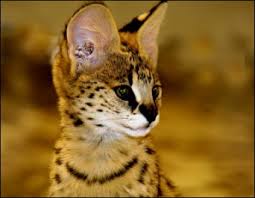
The throng–my personal rogue’s gallery whose roster includes reputables and reprobates alike–part like the Red Sea, making way for the noblest of all serval cats, The Duchess.
“An antidote? Have you been poisoned?” The Duchess queries as she saunters into the open space, a dollop of concern gleaming in her vivid blue eyes.
I try to not laugh, partly out of respect, but mostly due to the fact that though she is the eldest of my unused characters, she is technically still but a kitten. “No, Duchess, it’s an anecdote, as in a short, amusing, or interesting story about a person or an incident.“
“I know full well what an anecdote is, thank you kindly. I was merely attempting to lighten the dreadfully somber mood with a bit of levity.” Not her best faux pas cover, but it was swift, which should count for something. As casually as she could manage, the kitten turned to see if anyone found amusement at her expense. No one did. They knew better. “May I hold it?”
I hesitate and stare at the leapling. Created on February 29th all those many years ago, it was my rationale–on paper–for keeping her a kitten, seeing as she had fewer birthdays, she would naturally age at a decelerated rate. The actuality is I have an affinity for kittens. For full-grown cats? Not so much. And now the dilemma is if her kittenish nature should come into play, and without meaning to, cause injury to the anecdote, then all this would be for naught.
Her eyes plead with all the promise of being good and I have no choice but to relent. “It’s fragile, so be gentle. Take care not to crush it.” I gently place the anecdote in her cupped paws.
“Why does one need an anecdote?” The Duchess of Albion asked, her nose twitching whenever the creature moves its wings.
“To tell a proper story,” I answer. “More than just a sequence of actions, anecdotes are the purest form of the story itself.“
“But I thought characters are at the heart of every great story?“
“They are and anecdotes connect the hearts and minds of those characters to a story.” I try to feign calm but I can see the kitten’s body tensing up. Her eyes, those glorious baby blues, are studying the creature closely. Was I wrong in my decision to trust that she rules her instincts and not the other way around?
“They also add suspense to your story, giving the audience a sense that something is about to happen. If you use them right, you can start raising questions right at the beginning of your story—something that urges your audience to stay with you. By raising a question, you imply that you will provide your audience with the answers. And you can keep doing this as long as you remember to answer all the questions you raise.“
The kitten’s breath becomes rapid and her paws close in around the anecdote and I want to cry out, urge her to stop, but it’s far beyond that point now. She is in control of her own fate. Canines bare themselves, paws pulling the creature closer to her mouth.
“No!” she shakes her head violently. Her ears relax and her mouth closes as her breathing returns to normal. Then, the oddest thing happens…
The Duchess begins to vanish. All the characters look on in dazed silence, uncertain how to react.
“What is happening to me?” she shoots me a panicked glance as cohesion abandons her form.
“Haven’t you sussed it out yet?“
“No… I’m scared!“
“Don’t be,” I smile. “Look around you. You’re at the heart of a story. You’re free.“
“Truly?” she is suddenly overwhelmed with delight, her expression priceless. “But — but what do I do with the anecdote now?”
“Open your paws, let it fly off.”
She unfolds her paws. Tiny wings beat their path to freedom. Then someone from the back of the crowd gives The Duchess a slow clap. Soon, others join in, building into a tidal wave of applause.
The now translucent Duchess waves a tearful thank you to the crowd, before turning back to me with a request, “Say my name.“
“Why?“
“Because you always simply address me as Duchess and I want to hear you call me by my full name one last time before I g– —“
And just like that, she was gone.
I bid you a fond farewell, Your Grace the Duchess of Albion Gwenore del Septima Calvina Hilaria Urbana Felicitus-Jayne Verina y de Fannia. Enjoy your journey. You will be missed.






 MADD FICTIONAL