Stories Are the Creatures That Forage in the Wilderness of Our Minds

“Stories are the creatures that forage in the wilderness of our minds. Their claws pierce our curiosity, digging in deep to prevent our escape, as they force us into their maw, past razor sharp teeth of conflict.” —- Rhyan Scorpio-Rhys

Tell me a story.” the woman said, book opened to a blank page on her lap, graphite stick firmly in hand and at the ready. The reading chair in which she sat was, what appeared to my eyes, nothing more than a series of interwoven vines that had grown from the lush green carpet in the center of the room. This indoor library of hers smelled of petrichor, the scent of rain on dry earth, which would explain the moisture that dotted the spines of the books stacked in chaotic fashion on the recessed shelves lining the walls.

I — I don’t have any stories.” I shifted uncomfortably in a small puddle on the carpet—that was most assuredly grass—as the woman took in the sum of me.

Nonsense, everyone has stories, some more interesting than others, but they are stories nonetheless.” she said, gesturing with a nod for me to sit. “Everything is present for a story to exist: a teller, that would be you, and an audience, which would be me.”

My seat—a normal metal folding chair with padding—was as much out of place with the room’s décor as I. A reminder, no doubt, that although invited, I was still considered an interloper. The fact that the chair was bone dry despite the moist surroundings was of small consolation. I squirmed until I found the position that afforded the least amount of discomfort and said, “All right, then… I don’t know how to tell a story.”

Ah, a different matter altogether.” she said, placing the book and graphite aside. “The act of storytelling is as old as the creative spark that burns within us all. And though truly great storytellers are born, those lacking the unique gift may still acquire the skill.”

1. Keep it simple.

The first thing to bear in mind is if you have the choice between a complicated or simple telling, choose the simple approach. As marvelous as the brain may be, it can become overwhelmed if it attempts to process too much information at one time.

2. Open big.

Next, you mustn’t be afraid to grab your audience by the balls!” the woman smiled, amused by my unease. “And never apologize for doing so. You’re familiar with the saying, ‘you only get one chance to make a first impression,’ aren’t you? The same applies to your story. You need to carefully craft your opening line to grab your audience’s attention immediately, and represent the promise of your story by displaying a unique voice and perspective.

“There is no going soft here. Your opening line should possess the elements that make up the story as a whole, told in a distinctive voice, a point of view, a rudimentary plot and some hint of characterization. By the end of the first paragraph, your audience should know the setting and conflict… unless there is a particular reason to withhold this information.”

3. Be mindful of your story’s spine.

“Stories are the creatures that forage in the wilderness of our minds. Their claws pierce our curiosity, digging in deep to prevent our escape, as they force us into their maw, past razor sharp teeth of conflict. But despite outward appearances, these beasts are only as strong as their spine.

“Your duty is to support that spine by arranging your content in a logical order and supporting it with anecdotes that raise questions to keep up interest and moments of reflection to show your story’s appeal. We, as the audience, need a reason to care.

“And lop off the vestigial appendages of tangents where you find them. Going too far astray will only lose your audience’s attention.”

4. Don’t alienate your audience.

Some subjects require a delicate touch. You’ll know them by their appearance and the uneasy feeling they leave in your gut. By no means avoid them if they’re integral to your story, but instead find the best way to craft the tale so that you draw your audience in before revealing sensitive details. Invest them in the story before you shock them and then give them time to digest it.

5. End strong.

Whether you end your story on an upbeat note, allow your audience to fill in the blanks, come full circle with your lead, close with a relevant quote, provide a brief summary, or wrap things up with either a surprise or anecdotal ending… you need to come strong. Elevate your story’s effectiveness with a great ending and leave them with a lasting impression. The yang to your ‘first impression’ yin.

“You should also give your audience the proper space to appreciate your ending. A mere sentence or two in which you take a step back and let the story meaning steep in their mind.

And finally, allow your audience to hear the door click shut behind them, signifying that the story is well and truly over. Everything’s done and dusted. Thank you for visiting my world, now it’s time to return to your own.”

Got all that?” she asked. I nodded that I understood.

Good,” the woman rested the tip of the graphite stick on the book leaf, “now tell me a story.

Click.

Sally forth and be writeful.

©2013 Rhyan Scorpio-Rhys

Creative Commons License

Passage Through the Graveyard of Earthworms

dead-worms-in-ohio

My monotony needed twisting today, so I went for a stroll, sans iPod. You know, breathe in a bit of city fresh air, clear some cobwebs, that sort of deal.

There I was walking down the street, mind-sifting through character conversations and scene settings, when I looked down at the pavement and realized that I was traipsing through what looked like the aftermath of the Great Worm War of 2013. The sidewalk was a battlefield littered with the corpses of thousands of earthworms that coated an entire city block.

Logically I knew how this could have happened. I knew they came to the surface either during the heavy rains–but it’s been dry weather for the past week–or to pair off and mate only to get caught on things that are hard for them to crawl across, like sidewalks and subsequently fry on the surface from sun rays–but that normally occurs during spring.

So, what then? Had there actually been a battle? Warring clans pitched against one another over territorial disputes? Factions in conflict over the claiming of a throne? Families locked in a deadly dispute over an unholy union?

Or was it a warning?

As I stood there, staring at their dried remains, curled into runic shapes, I wondered if they had been somehow gifted with a vision of the approaching apocalypse and had sacrificed themselves in an effort to warn us in the only language they knew. The last Germanic language spoken to them by man before the two species went their separate ways.

In that moment I felt like Indiana Jones in the passageway to the Grail chamber, trying to decipher the worm cadavers’ possible portents of doom, only without the aid of a diary or Sean Connery whispering something about, “Only the penitent man will pass.” or like John Nash without an ounce of the mental code breaking ability.

And I stood there. Longer than I’m comfortable admitting. Frustrated by the limits of my linguistics. Finally, I forced myself to move on, but not before making a promise:

No more outdoor strolls without my iPod.

Sally forth and be writeful.

©2013 Rhyan Scorpio-Rhys

Creative Commons License

Screw the Fear and Write On

“Screw the fear.” — Jo Leigh

Be it anxiety over acceptance, concerns about misrepresentation, or indecisiveness on whether to delete or send out your latest labor of love and pain, fear has a nasty way of creeping into the writing process, and if you can use it to your advantage by allowing it to heighten your awareness and commit to the page the precise thoughts and ideas that need to be expressed, so much the better. It’s when fear snaps shut like a bear trap on your mind and prohibits you from pushing the pen on paper that’s the problem.

I would tell you to forget the fear, but we both know sometimes that just isn’t an actionable solution. The best I can manage is to share with you what works for me: I simply acknowledge it. I tip my hat to fear, slog through the uncertainty and self-doubt that it carries in abundance, and I write. To myself. For myself. I write without thought of sharing it with anyone, without the intention of submitting it for publication. Since the act I engage in is so personal and integral to my understanding the world around me, I refuse to let fear have any say in what or how I write. I write what I feel must be written. No one else has to agree. Because if I don’t write my mind, my view of the world perishes when I no longer exist.

It’s my marker. My proof I was here.

But, should you choose not to heed me advice, perhaps you’ll listen to those talented few, listed below, who are graced with a turn of phrase that far surpasses my own.

Sally forth and be fear ignoringly writeful.

— Rhyan Scorpio-Rhys

1. “There is no greater agony than bearing an untold story inside you.” ― Maya Angelou

2. “Lock up your libraries if you like; but there is no gate, no lock, no bolt that you can set upon the freedom of my mind.” ― Virginia Woolf, A Room of One’s Own

3. “You never have to change anything you got up in the middle of the night to write.” ― Saul Bellow

4. “Tomorrow may be hell, but today was a good writing day, and on the good writing days nothing else matters.” ― Neil Gaiman

5. “A word after a word after a word is power.” — Margaret Atwood

6. “Start writing, no matter what. The water does not flow until the faucet is turned on.” ― Louis L’Amour

7. “Let me live, love and say it well in good sentences.” — Sylvia Plath, The Bell Jar

8. “One of the few things I know about writing is this: Spend it all, shoot it, play it, lose it, all, right away, every time. Do not hoard what seems good for a later place in the book, or for another book, give it, give it all, give it now.” — Annie Dillard

9. “The role of a writer is not to say what we can all say, but what we are unable to say.” — Anaïs Nin

10. “The scariest moment is always just before you start. After that, things can only get better.” — Stephen King, On Writing

The Immortality of a Storyteller

“I am a storyteller.

In the course of my life, I will write something — SOMETHING, that will grow in the mind of a person who reads it. It will shape them. Perhaps while I live, perhaps a hundred years from now. SOMETHING I do will alter the course of their life. Perhaps it will be a tiny stone in a river, or perhaps it will be like a boulder. I will encourage them to love a bit more, or to stand against the darkness that haunts them.

Because of me.

Because I was a little brave one day. Because some morning a sunrise opened my heart, or my beloved kissed me as she never had before. I will, in some small way, shape the future. Shape the world.

This is my immortality.”

~ J.M. Guillen

My Final (I Promise) 20 Reasons You Might Be A Writer

“It’s never too late to be what you might have been.” — George Eliot

You very well might be a writer if…

  1. There are no innocent bystanders in your life. Everybody becomes a character in your writing, warts and all. Especially the warts.
  2. You read the same piece you’ve written over and over again and your inner critic vacillates between: “I can’t believe I wrote something so beautiful” and “What the hell was I thinking? That’s it! I’m done! Never again! It’s back to planespotting for me!”
  3. You lose your mind if anyone attempts to organize that untidy mound of paper on your floor beside your desk, because you know exactly where every piece of writing and research is located in the pile.
  4. You can’t read your old writing from the periods when you actually believed with all your heart and soul that you were a naturally gifted writer, especially during your teen years. You just can’t. It’s too cringe-inducing.
  5. Writers block is as real to you as one of your annoying family members, only this one lives inside your head, taking up valuable space, and refuses to pick up after itself, pitch in with the chores or pay its fair share of the rent.
  6. You casually insert words you’ve invented into conversation and totally ignore the “Wait… what?” expression on your friends’ faces.
  7. The slightest noise from the outside world, the off-tune ice cream truck jingle, kids playing in the street, dogs barking, pushes you off the precipice of sanity in a Tell Tale Heart manner.
  8. A telephone book or an office directory is your character name generator.
  9. The blank page is your personal version of the First Gate of Hell and the cursor taunts you by blinking in Morse code: “Lasciate ogne speranza, voi ch’intrate” and despite your fear, you’re slightly pleased with yourself because you know that translates as, “Abandon all hope, ye who enter here.”
  10. You call a pen without ink a dead soldier.
  11. Writers block makes you the most active person on the planet. Clean the fridge? No problem. Clear the leaves out of the rain gutter? Sure thing. Solve Goldbach’s conjecture (you know, every even integer greater than 2 can be expressed as the sum of two primes)? I’m on it. Spend quality time with the mother-in-law? Um, I think I might try my hand at writing, if you don’t mind.
  12. You hate the phrase, “Well, you’re the writer” whenever someone has to take notes or minutes or make a shopping list. Okay, maybe not the shopping list. It is a list, after all.
  13. You become a human spellcheck and thesaurus for your friends, family and co-workers.
  14. You’ve stubbed your toe or banged your shin in the dark, scrounging for a pen and piece of paper to jot down the absolutely brilliant idea that blindsided you in the middle of the night.
  15. You collect stories on the odd ways people have accidentally met their maker or have been murdered. For research purposes only, of course.
  16. You automatically rewrite the endings to disappointing movies or TV series in your head.
  17. You own more than ten novels that contain your own personal annotations and notes, but you don’t stop there. You also annotate .PDF files and have broken the cardinal sin of making notes in a borrowed book (shame on you).
  18. You own a box that contains old hotel card keys, movie, theater and airline ticket stubs, assorted restaurant and bar sundries (bar coasters, swizzel sticks, fruity drink umbrellas, menus), receipts, and the like, not only for future reference but for the tactile memories associated with each item.
  19. You hate your most embarrassing moments because they play over and over in the movie theater of your mind but revel in the fact that they’ll make great material for a future story.
  20. And finally, you very well might be a writer if writing is the beast that terrifies you to the very core of your being, yet you love it with all your heart, anyway.

Sally forth and be writeful.

— Rhyan Scorpio-Rhys

Snatched From the Heart of Stars: What’s Your Creative DNA?

“People they come together, People they fall apart,
No one can stop us now , ‘Cause we are all made of stars” — Moby

Ideas spark ideas, as I’m sure you well know, and while contemplating a previous post on the message I would send to my younger self, I was hit with another thought along similar lines, but the scenario requires a little theater of the mind setup first:

It begins with the SETI (Search for Extra-Terrestrial Intelligence) Institute detecting a radio signal that finally confirms the existence of extraterrestrial life. How did the aliens learn of our existence, you ask? You know the deal: Voyager 1 and 2 get swallowed up by a singularity and spit out in the middle of uncharted space and intercepted by a curious and as-yet-thought-to-be-benign alien race. Now quit bogging down my back story with unnecessary questions.

Top minds–including astrophysicists, cryptanalysts, linguists and mathematicians–are called in to decipher the message and after an exhaustive code-breaking session, the oddest thing is found imbedded in the communique: my name. Uh-uh, no questions, remember?

After being properly vetted—they’d have to make sure I’m not some wackadoo that’s gonna build himself an Interocitor using off-world schematics or sell the Earth off to the highest bidder—I’m brought in to begin a controlled dialogue with the alien. During the exchange my new intergalactic pen pal asks the question: “Who are you?” I answer with my personal history and the reply I get back is, “No, who are you?

We’re all stumped at this point.

Over a pint and some pub grub, me, Neil DeGrasse Tyson, Brian Cox, and Michio Kaku (let’s face it, they’re all my buds at this point) are trying to puzzle this out when I’m struck with an idea, “What if the extraterrestrials are utilizing fourth-dimensional, or higher, level thinking and need broader definitions in which to extrapolate the answers they seek?” The astro-brainiacs think I might be onto something.

[I need to pause the post at this point because I can hear your laughter and it’s a bit disruptive. And rude, if I’m honest. Out of everything so far, the only problem you have is that I offered a solution in an astrophysics think tank? Really?]

And now we get to the meat of the nutshell:

If I had to encode myself into a relatively short information sequence, what sources would I pick?

Since mathematics and I feud constantly and are court-ordered to remain at least 500 yards apart from one another at any given time, I know I can’t make this work on a fundamental science level. My only option is to go the artistic route.

Now, the chore becomes one of selecting 10 works that once read/viewed/listened to/etc., would allow an absolutely non-terran life form to know the essence of me. This is what I came up with:

1. Movie: The Lion in Winter

The film takes place in the year 1183 AD and tells the story of King Henry II’s three sons all of whom want to inherit the throne, but Henry won’t commit to a choice, so they and his wife, Eleanor of Aquitaine, variously plot to force him.

I’ve chosen this to illustrate the relationship between me and all my families (both birth and extended). It speaks to the complexities of familial love and how I tend to love what I destroy and destroy the things I love.

View The Trailer

2. Book: Stranger in a Strange Land by Robert A, Heinlein

In not so subtle Christ analogy, the book tells the story of Valentine Michael Smith, a human who comes to Earth in early adulthood after being born on the planet Mars and raised by Martians. It explores his interaction with—and eventual transformation of—terrestrial culture.

This was chosen to illustrate my social anxieties–that wax and wane in an unpredictable manner–and the fact that I never feel I properly fit in with any crowd that isn’t one of my making. There truly exists no place on Earth where I feel at home.

3. Poem: Desiderata by Max Ehrmann

Go placidly amid the noise and haste, and remember what peace there may be in silence.
As far as possible without surrender be on good terms with all persons.
Speak your truth quietly and clearly; and listen to others, even the dull and ignorant; they too have their story.
Avoid loud and aggressive persons, they are vexations to the spirit.
If you compare yourself with others, you may become vain and bitter;
for always there will be greater and lesser persons than yourself.

Enjoy your achievements as well as your plans.
Keep interested in your career, however humble; it is a real possession in the changing fortunes of time.
Exercise caution in your business affairs; for the world is full of trickery.
But let this not blind you to what virtue there is; many persons strive for high ideals;
and everywhere life is full of heroism.

Be yourself.
Especially, do not feign affection.
Neither be critical about love; for in the face of all aridity and disenchantment it is as perennial as the grass.

Take kindly the counsel of the years, gracefully surrendering the things of youth.
Nurture strength of spirit to shield you in sudden misfortune. But do not distress yourself with imaginings.
Many fears are born of fatigue and loneliness. Beyond a wholesome discipline, be gentle with yourself.

You are a child of the universe, no less than the trees and the stars;
you have a right to be here.
And whether or not it is clear to you, no doubt the universe is unfolding as it should.

Therefore be at peace with God, whatever you conceive Him to be,
and whatever your labors and aspirations, in the noisy confusion of life keep peace with your soul.
With all its sham, drudgery and broken dreams, it is still a beautiful world. Be careful. Strive to be happy.

Chosen to represent my attempt at zen thoughts. These are the inner things I strive for that always seem to exist just beyond the reach of my higher consciousness fingertips. One day, though. This and the lottery. Hope springs eternal.

4. Art: The Scream by Edvard Munch

In his diary in an entry headed, Nice 22 January 1892, Munch described his inspiration for the image:

One evening I was walking along a path, the city was on one side and the fjord below. I felt tired and ill. I stopped and looked out over the fjord—the sun was setting, and the clouds turning blood red. I sensed a scream passing through nature; it seemed to me that I heard the scream. I painted this picture, painted the clouds as actual blood. The color shrieked. This became The Scream.

This piece represents the insanity that lies just beneath my cool surface. The things I see and hear that apparently no one else acknowledges. But it’s real, dammit. It better be.

5. Sculpture: The Thinker by Auguste Rodin

The Thinker was originally meant to depict Dante in front of the Gates of Hell, pondering his great poem. This is precisely why I have chosen this, as I am well aware that I am the cause of most of the disasters that have occurred in my life and have often sat and pondered how I let things get to their current state.

6. Photography: Tank Man by by Jeff Widener

The iconic photo of Tank Man, the unknown rebel who stood in front of a column of Chinese tanks in an act of defiance following the Tiananmen Square protests of 1989. This is an obvious one as it represents my personal autonomy and contemptuous behavior/attitude towards authority figures to the point of appearing as a provocateur or just plain anti-social.

7. Music: Ágætis byrjun by Sigur Rós

This album is 72 minutes of sonically rich, emotionally pulverizing perfection. From the orchestral splendor of “Starálfur,” to the transcendent ache of “Ný batterí.” each decayed synth tone and cymbal splash conjures a world of endless possibilities. Jón Þór “Jónsi” Birgisson wrote the following mission statement:

“We are not a band, we are music… We are simply gonna change music forever, and the way people think about music. And don’t think we can’t do it, we will.” 14 years after the fact — Spin presented Birgisson with that quote. He responded with laughter, “You’re young and full of energy and have this cockiness,” he said. “I think it’s beautiful.”

This represents my initial mindset when I first began to write again.

View The Music Video for “Starálfur”

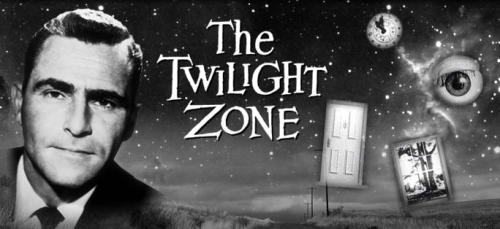
8. Television: The Twilight Zone (1959 series) by Rod Serling and various

This science-fiction/fantasy anthology series consisting of unrelated stories depicting paranormal, futuristic, kafkaesque, or otherwise disturbing or unusual events (typically featuring some sort of plot twist and moral), represents my imagination as it shaped the way I view fiction.

View The Episode, “Time Enough At Last”

9. Play: Sweeney Todd: The Demon Barber of Fleet Street by Stephen Sondheim

A 1979 musical thriller set in 19th century England tells the story of Benjamin Barker, aka Sweeney Todd, who returns to London after 15 years transportation on trumped-up charges. When he finds out that his wife poisoned herself after being raped by the judge who transported him, he vows revenge on the judge and, later, the whole world. He teams up with a piemaker, Mrs. Lovett, and opens a barbershop in which he slits the throats of customers and has them baked into pies.

This speaks to my scorpio nature of quietly holding a grudge with untold patience until the chance prevents itself to sting back. Not so much anymore, though. I’ve mellowed in my old age. Stop looking at me like you don’t believe me.

View The Original 1979 Commercial

10. Performance art: The invisible man: Liu Bolin’s camouflage artwork

Liu uses paint to camouflage him to make himself invisible in public. This represents the fact that I was born invisible and the only time I’m ever seen is when I write.

View The Video

Before you start nitpicking the logic of sending earth-logic/culture-bound works of art to an alien, I refer you to the Moby lyrics quoted at the top of the post and if we are all truly made of stars, there surely must be some commonality that binds us together, yes? Why can’t art be the universe’s language?

Sally forth and be creative DNA writeful.

–Rhyan Scorpio-Rhys

The Audience Has Spoken: They Want Stories

Kevin Spacey delivered the keynote James MacTaggart Memorial Lecture at the Edinburgh Television Festival, in which he challenged TV channels to give “control” to their audiences or risk losing them. Using as a model his recent foray into television, House Of Cards — a commercial and critical hit after it was released on streaming service Netflix – he warned there was a danger of “thinking that something which is working now will necessarily work a year from now.”

If you weren’t aware, Netflix released the entire season of House Of Cards at once, which in the actor’s words, “demonstrated that we have learned the lesson that the music industry didn’t learn — give people what they want, when they want it, in the form they want it in, at a reasonable price, and they’ll more likely pay for it rather than steal it.”

When you watch the clip you’ll notice that it’s heavily geared toward television content distribution but there’s a message for you, the writer, in there as well that isn’t limited to TV writing, and your inspirational takeaway from this should be:

“The audience has spoken. They want stories. They’re dying for them. All we have to do is give it to them.” — Kevin Spacey

Sally forth and be writeful.

— Rhyan Scorpio-Rhys

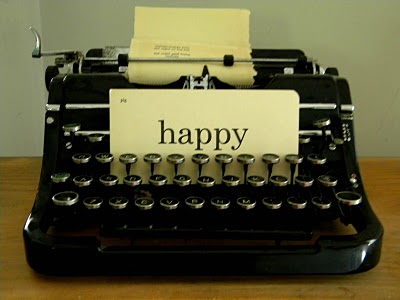
19 Habits of Happy Writers (you don’t really want to be miserable all your life, do you?)

https://maddfictional.com/wp-content/uploads/2013/08/b4784-happytypewriter.jpg

“Happiness is not something ready made. It comes from your own actions.” — Dalai Lama

As writers, it’ll come as no shock to any of you when I say my mood largely affects my writing. When I slide into the dark places, although I attempt to slog my way through the anguish and negativity that gets so thick sometimes as to suffocate me, my writing naturally suffers.

This post stems from an article I read recently on a Swedish study that suggested writers have a higher risk than the general population of anxiety and bipolar disorders, schizophrenia, unipolar depression, and substance abuse. And if that wasn’t enough, we’re also about twice as likely to commit suicide.

I don’t know about you, but I’d like to head this off at the pass. So, below are a few suggestions to help you live a happier existence, broaden your horizons, create a positive environment in which to write, and hopefully bring energy and verve into your projects:

1. Appreciate Life

Be thankful that you beat the odds and woke up alive this morning, some folks weren’t as lucky as you. Develop a childlike sense of wonder towards life and focus on the beauty of things. Learn to make the most of each day, and stop taking things for granted. And definitely don’t sweat the small stuff. It’s small for a reason.

2. Choose Your Friends Wisely

Do your best to surround yourself with happy, positive people who share your values and goals. Friends that have the same ethics as you will encourage you to achieve your writing dreams. They help you to feel good about yourself and are good for a morale boost when needed.

3. Be Considerate

Accept and respect others for who they are as well as where they are in life. With a generous spirit, help when you’re able, without trying to change the person. As a rule, you should try to brighten the day of everyone you come into contact with. Especially the difficult ones.

4. Learn Continuously

Try new and daring things to spark interests, gain experience, and that you can bring back into your writing.

5. Develop Creative Problem Solving Skills

Stop wallowing in self-pity as soon as you face a challenge and instead get busy finding a solution. Don’t let set backs affect your mood, instead see each new obstacle you face as an opportunity to make a positive change. Learn to trust your gut instincts – it’s almost always right.

6. Laugh Lots

Stop taking yourself – or life for that matter — so damned seriously. You can find humor in just about any situation, so learn to laugh at yourself, because, let’s face it, nobody’s perfect. When appropriate, laugh and make light of the circumstances. (Naturally there are times that you should be serious as it would be improper to laugh. Try not to that person.)

7. Forgive!!!

Holding a grudge hurts no one but you. Forgive others for your own peace of mind. When you make a mistake, own up to it, learn from it, and forgive yourself.

8. Be Grateful

Develop an attitude of gratitude by learning to count your blessings; All of them, even the things that seem trivial. Be grateful for your home, your work and most importantly your family and friends.

9. Invest in Relationships

Always make sure your loved ones know you love them even in times of conflict. Nurture and grow your relationships with your family and friends by making the time to spend with them. Don’t break your promises to them. Be supportive.

10. Keep Your Word

Honesty is the best policy. Every action and decision you make should be based on honesty. Be honest with yourself and with your loved ones.

11. Meditate

Meditation gives your very active brain a rest. When it’s rested you will have more writing energy and function at a higher level. Whether it’s yoga, hypnosis, relaxation tapes, affirmations, visualization or just sitting in complete silence, find something you enjoy and make the time to practice daily.

12. Mind Your Own Business

Concentrate on creating your life the way you want it and take care of you and your family. Don’t get overly concerned with what other people are doing or saying. Don’t get caught up with gossip or name calling. Don’t judge. Everyone has a right to live their own life the way they want to – including you.

13. Be Optimistic

See the glass as half full. Find the positive side of any given situation. It’s there – even though it may be hard to find. Know that everything happens for a reason, even though you may never know what the reason is. Steer clear of negative thoughts. If a negative thought creeps in – replace it with a positive thought.

14. Love Unconditionally

Don’t put limitations on your love, even though you may not always like the actions of your loved ones – continue to love them.

15. Be Persistent

Never give up. Face each new challenge with the attitude that it’ll bring you one step closer to your goal. You’ill never fail, as long as you never give up. Focus on what you want, learn the required skills, make a plan to succeed and take action. As humans, we’re always happiest while pursuing something of value to us.

16. Be Proactive

Accept what can’t be changed. Happy writers don’t waste energy on circumstances beyond their control. Accept your limitations as a human being. Determine how you can take control by creating the outcome you desire – rather than waiting to respond.

17. Take Care of Yourself

Take care of your mind, body and health. Get regular medical check ups. Eat healthy and work out. Get plenty of rest. Drink lots of water. Exercise your mind by continually energizing it with interesting and exciting challenges.

18. Build Self Confidence

Don’t try to be someone you’re not (no one likes a phony). You know who you are on the inside so be confident with that, do the best you can manage and don’t second guess yourself.

19. Take Responsibility

Happy writers know and understand that they are 100% responsible for their life. They take responsibility for their moods, attitude, thoughts, feelings, actions and words. They are the first to admit when they’ve made a mistake.

And there you have it. Simple, common sense suggestions to help you take responsibility for your own happiness. I realize that some of these are easier said than done, but could it really hurt to try to work on developing at least a few of these habits as you own? Who knows, the more you incorporate the above habits into your daily lifestyle, the happier you could be.

Being gifted with creativity comes at a price, but it doesn’t have to be a terrible one.

Sally forth and be true to yourself writeful.

— Rhyan Scorpio-Rhys

Of Air Returned

i.

I burned my soul to ash but the pain paled in comparison to the terror that struck my heart like a match, anticipating her arrival and the tirade she would carry in tow. An unwarranted fear, as she was calm when she saw what I had done. Calm and nurturing. Soothing my pain with herbs and aromas, and each early morning during the hour of the wolf, she laid an ear on my back and listened as my soul mended itself.

She never spoke the words of disappointment aloud but it registered in her eyes. Although residing within my body, this wounded thing, this unwanted soul, did not belong to me. She had laid claim to it many years past, and in my despondency, I had taken liberties with her property and attempted to destroy it. Again.

ii.

The first time, I threw my soul into a sinkhole and allowed the ground to swallow it whole. I made her acquaintance when she plucked it from the soil like a tattered tuber. “I saw what you did,” she said. “And since you would so recklessly toss this precious thing away, it is no longer yours, but mine, agreed?” I nodded and she handed my soul back to me for safekeeping.

I honored our pact for a few years, caring for it within my limited capacity, but during a particularly nasty bout of depression, I tied heavy stones to my soul and pushed it off the sea wall. For a second time she appeared, fishing my soul from the waves, and scolded me, “You are charged with protecting this thing that it mine, do you understand?” Again, I nodded. Again, I lied.

iii.

“Why do you want this worthless soul when it has been crushed by the earth? Why do you want it when it has been drowned in the sea? Why do you want it when it has been set alight like so much tinder?” I searched long and hard yet found no answer in her silence.

iv.

During the day, when she thought me preoccupied, she secreted herself in the shadows and slept. One day I followed her into the darkness and watched her body twitch from dreaming and listened as she muttered,

One more soul, once buried deep.
One more soul, in ocean steeped.
One more soul, by fire burned.
One more soul, of air returned.

v.

Under her care, my soul grew healthier and it frightened me. I was pitilessly plagued and badgered by the phrase, One more soul, of air returned, that repeated in my mind’s ear until it turned dogged and cacophonous. But she was unaware of my inner torment, in fact, she was in an exceptionally good mood today, her voice almost a song, “I know you don’t see it, but you are a gift, you are. You have no idea just how special.”

vi.

Today was the day. I felt it in my marrow. Something was destined to happen, something I most likely would not survive. I should have embraced this eerie premonition, for it was no secret that I did not want to continue in this manner, broken, detached, and alone. But the choice of how and when I departed this wretched life was mine to make and mine alone. So, I stalled by distracting her with trivialities. “May I have more broth? Have you seen my shoes? No, not that pair, the other ones? Can we go for a walk?” If she knew my plan, her expression never showed sign. No request was too large or small on this day. She granted them all.

vii.

We strolled along the pathway in the park that led to the duck pond, a place we visited often during my convalescence. Picked, naturally, as not to arouse suspicion as I searched for the proper diversion in order to make my escape. But I was so wrapped in my own thoughts, I failed to notice that she was walking slower than usual today. “Can we rest a moment?” she asked as we neared the benches. “I am a little short of breath.”

Her breathing became a labored and raspy thing before it hitched and became lodged in her throat. When her face went dusky blue and she slid off the park bench, I panicked. The opportunity had presented itself and there I stood like an idiot, frozen. Entangled in the decision of whose life to save, or more accurately, whose death I could live with.

There was no real choice.

viii.

Her breathing was a trembling, liquid sound as I pressed my mouth to hers and exhaled, but instead of me breathing air into her body, I felt her sucking air from my lungs, and not just air…

I tried desperately to pull away but her thin, vise-like hands clamped down on the nape of my neck and held me firm in a kiss that was collapsing me. My hold on life became dim and futile, but before I slipped away into emptiness, I noticed the oddest thing: her belly began to swell.

Every fiber of my actuality was drawn into her, and my soul, the object I had forever been so reckless with, was systematically being stripped of concern, of negativity, of identity. I fell further and further into a darkness that pressed on me from all sides. So tight, so constricted. I was still unable to breathe but the sensation was somehow different now.

At the very moment when it seemed the darkness was about to claim me for eternity, there came a burst of light so bright as to cut my eyes. Thankfully something soon blotted out the light – a face, slowly coming into focus but I knew her before I saw her. From the moment I heard her soft cooing, “You are a gift, you are. You have no idea just how special.”

Mother.

A Message to My Younger Self: Try Harder

I have no doubt that my story will end in very much the same manner as it began, with a secret. And as I stand at the crossroads, caught at the precise moment where a lifetime of secrets left untold should either be revealed or die forever, I stare at the younger man, eyes full of dreams that have not yet been crushed ‘neath the heel of reality, and find it difficult to believe that I was once him.” — Rhyan Scorpio-Rhys, The Very Fabric of Time Itself

I was riding the ferry today and it was one of those rare occasions when I wasn’t plugged into my iPod. I had just finished listening to an episode of The Afternoon Drama (a daily BBC radio play series) and as I was letting the weight of the story settle in, I overheard a conversation between a couple. They were talking about the five messages they would include in a letter if they were able to have it delivered to their younger selves.

This, of course, got me thinking about my own letter and how difficult a process it would be to write. The younger me, we’ll call him Li’l Rhy for the sake of this post, was a card carrying member of The Bronx Chapter of the International Skeptics Society who wouldn’t have believed 1) the letter came from the future, and more importantly, 2) that his future self had written it.

Also, I’m sure if I flat out told him of the obstacles he would face, that information would be redacted by some faceless wage slave at the Temporal Post Office, so the message would have to be as succinct as possible. And, if I’m honest, I wasn’t in love with the notion of sending five messages because that seemed a bit much to me. No one follows all five pieces of advice they receive. Humans just aren’t built that way. I’d either have to settle on offering Li’l Rhy three pieces of advice, hoping that at least one of them stuck, or offer one simple, yet key, bit of advice with a unifying thread. Most likely I’d go with the second option.

The next problem is offering the exact piece of advice Li’l Rhy would listen to. That’s a toughie, that one. Yup. Yes siree, Bob. Sigh. I guess it would all have to fall under the category of Try Harder, as in:

Love fiercely and try harder not to break hearts. Befriend the friendless and try harder not to burn bridges. Laugh more and try harder not to take life too seriously. Follow your bliss and try harder to stave off the darkness. Turn off the TV and try harder to think deeply. Take your time but try harder to avoid procrastination. Dream bigger and try harder to stop worrying about dreams not coming true. And stay away from Jane Hester. Sure, she’s pretty to look at but she’s nothing but trouble and It. Will. Not. End. Well.

I’m sure that last bit will get redacted, but here’s hoping!

Sally forth and be letter-to-your-younger-self writeful.

©2013 Rhyan Scorpio-Rhys

Creative Commons License