Savior Complex

“You have a messiah complex, got to save the world.” — Dean Koontz, Odd Thomas

I’ve never been much for crowds, not even as a child. People huddled en masse tended to embrace a hive mind of boorishness, which was why I tended to do all my necessities shopping early on Tuesday mornings. Fewer people and less hassle as I collected my weekly provisions, zipped through the express lane, out of the market and on to the next chore on my list that required social navigation. But something wasn’t quite right today. Tuesday? Of course. Early morning? Naturally. Empty supermarket? Not by a long shot.

The aisles were crawling with miscreants of every possible variety. Attention deficit disordered shoppers who treated their shopping cart like cars out of a Fast and Furious film, crashed into other carts and shoppers with reckless abandon in search of the ever elusive sale of nearing-their-sell-by-date items they probably had no practical use for; forsaken carts parked in the middle of aisles blocking throughways and creating bumper to bumper trolley traffic; and coupon carrying cretins stalling checkout lines because they hadn’t quite mastered the simple art of having payment in hand for their items and beating a hasty retreat out into the open plains of the parking lot.

I contemplated pivoting on my heels and leaving the shopping for another morning or possibly next Tuesday—surely I could have survived a week on basic rations. But had I left, I wouldn’t have run into Tatum.

It was seventeen years since I laid eyes on her last. She was still attractive, more so now, a slender Honduran with mocha skin, shoulder-length dreadlocks, and a disarming smile that tended to pull a bit to the right side of her face. Unlike previous times when I randomly encountered someone from my past on the street and immediately began flipping through my mental card catalog for any excuse to walk away, I was actually pleased to see her. In that moment of reciting the usual social pleasantries by rote, all the negative history hadn’t existed. We waded in a pool of heart-warming nostalgia.

Her smile never wavered as she told me how her life hadn’t turned out quite the way she planned. When we were together, she studied to be a lawyer. Now, she worked as a marketing senior manager for a cosmetics firm, was the mother of two, a girl and a boy, seven and nine years old respectively, who were fathered by a deadbeat boyfriend who ditched both the wedding and his kids in one fell swoop.

I had no idea how long we stood there blocking the aisle much to the ire of the other shoppers nor did I care. For the first time in quite a while, I honestly enjoyed exchanging words with a person who wasn’t trapped within the confines of a television set. But all good things, as they say—so, we exchanged numbers, promised each other we’d call and went our separate ways.

And on the way home, the strangest nagging notion crept up from the back of my mind: had we been able to work things out all those many years ago, her life might have turned out differently. Better. Then came the guilt as if my absence was somehow responsible for the direction her life took. And on the tail end of that guilt came the shame for not being a better boyfriend to her and a better person in general.

I promptly crumpled up her number and kicked it down a storm drain. Neither she nor I needed to be reminded of what might have been.

Less than a week later, once I had time to regret trashing her phone number, she called me out of the blue with an invitation to have lunch and meet her children. I wasn’t particularly keen on the latter, but I definitely wanted to see her again.

We met at a faux Italian restaurant, a fast food chain done up in dime store décor to give the eatery a stereotypical taste of Italy, and I had to admit that I didn’t mind her kids all that much. They were a bit unruly, but what children weren’t at those ages? Although I felt a little awkward being interrogated by her brood, it was nice being in Tatum’s company. I experienced a level of comfort in her presence that oddly felt like home.

That was, until her daughter, Tracie, asked, “Did you and Mommy have S-E-X?” as if spelling the word somehow made the question safe to ask.

Confirmed bachelor that I was, I wasn’t comfortable chatting with a nine-year-old about sex. I had no idea what the proper protocol was, so I turned to Tatum and with a look, asked, Did we have S-E-X, Mommy?

Without batting an eye, Tatum answered, “Yes. We had sex.”

Was that how it’s done nowadays? Was it the norm for ex-boyfriends to be brought to lunch with the kiddies to openly discuss their sexual history? I was still reeling from that exchange when her son, Lee, chimed in, “You could be our Dad!”

The old one-two punch. These kids worked me over like a speed bag. They laughed at my embarrassment and I tried to play it off, but it unnerved me on a deep level. The rest of the conversation was downhill after that in terms of my personal discomfort. We got on well enough, the four of us, better than expected and when we said our goodbyes after lunch, I was hit with another weird sensation—jealousy. Because her children weren’t our children and in her family, there was no place setting for me at the table. It only lasted an instant but long enough to have registered.

I tried to put things into perspective, tried to remember why our relationship ended in the first place, it wasn’t a build up of all the minor things, the petty annoyances that masked the underlying truth that people simply grew apart. If I was honest, it was the Santería, the Afro-Cuban ritualistic and ceremonial worship of saints her family practiced religiously that rubbed me the wrong way. She asked how I felt about it and I told her I didn’t believe in things like that and it was the truth, but the other truth, the deeper truth, was that it scared a part of me that I didn’t want to acknowledge.

To be clear, it wasn’t Tatum practicing rituals so much as her mother. That woman hated me from the moment she clapped eyes on me, no rhyme, no reason, just pure unadulterated hatred. For some reason, I hadn’t measured up to her exacting standards of what constituted a proper boyfriend for her daughter and she never bothered hiding that fact. She visited our apartment constantly and after she left, I would find things hidden around the house, under the bed, in the refrigerator. Little Santería objects tucked away everywhere.

One day when I arrived home early with the intention of whipping up a surprise dinner for Tatum when she got off from work, I walked in on Tatum’s mother and sisters in the middle of a Santeria ritual. There were others with them, perhaps family members I hadn’t met or just fellow practitioners, all clad in white. Drummers talked to the saints, playing their specific beat, eyes closed in a trance while robed dancers chanted in ancient Yoruba as they spun and shook off the evil eye.

And in the center of the living room, Tatum’s mother stared at me like I was a burglar, like I was the thing that didn’t belong in my own home. Before I knew it, the last of my resolve evaporated and I began yelling for her and everyone else to get the hell out of my apartment, jabbing my finger in the air at her for emphasis. The old woman ignored me and she walked in ever-expanding circles while smoking a cigar that smelled of things I’d never smelled before and blew smoke in my face as she spoke in tongues. It made me gag and start to cough. I clutched at my throat and lost consciousness to the sight of Tatum’s mother and sisters laughing at me.

When I came to, Tatum was home. I told her what happened and she called her mother on the phone. After a lengthy conversation, she said she understood how things must have seemed and apologized for not telling me she allowed them to use the apartment while we were out but ultimately she sided with her family over me.

That was all it took. I moved out of the apartment that night and never looked back. Depending on how you looked at it, if her mother was casting a spell to get rid of me, it actually worked because I was out of her daughter’s life.

I kept this firmly in mind when Tatum phoned and invited me around hers for dinner. I accepted the invitation, mind you, but I kept the incident with her mother firmly in mind. It had been a month of Sundays since I had a proper home-cooked meal because no one in their right mind would have called what I did cooking.

Tatum greeted me at the door, apron on, dusted with flour and seasonings, happy homemaking in full effect. The kids were in the kitchen and to my astonishment were finishing up washing the dishes. They dried their hands before they ran up and hugged me. I looked into their faces and something seemed off. Their smiles were too wide, teeth too white and there was something unnatural about the intensity in their eyes. And their faces looked different. They still possessed features that were reminiscent of Tatum but the rest was somehow different, incomplete, like faces in transition. I chalked it up to being overly tired and thought no more of it.

Dinner went well. Who knew Tatum could have been such a gracious hostess? The kids made the meal a pleasant experience, as well. They stopped bickering and playing with their food when I asked them to, laughed at my jokes and listened with rapt attention as I talked about the time I met their mother.

When dinner was over we sat in the living room. The apartment was too small for two growing kids but Tatum arranged everything in a way that made it feel roomy, as though it was a real house.

We sat on the sofa, all of us, Tatum paging through a family photo album on her lap. Pictures of vacations with the deadbeat boyfriend, of her during various stages of her pregnancy, of her and deadbeat holding a newborn Lee and later with Tatum holding a newborn Tracie while deadbeat lurked somewhere in the background. A life well documented.

Tatum told me how difficult things had been. Deadbeat had developed a drug habit and came around under the guise of seeing his children only to beg off some money to score and if that hadn’t worked, he stole things to sell or threatened to take the kids.

One time when Tatum refused to give him any more money, he made good on his threat and Stacie and Lee were taken from her by Child Services because of alleged abuse charges. She described the hell she had to go through to get her family back.

As if on cue, there was a knock at the door. It was deadbeat, whose Christian name was Oscar, most likely coming around again to score. She spoke with him in hushed tones through the space in the door allowed by the security chain. When his shouts turned to raged kicks on the door, I stepped up behind Tatum so that he could see me. “Everything all right, Tate?”

It was like trying to put out a fire with gasoline. Oscar lost his mind and no manner of reasoning calmed him. I showed him my cell phone, made sure he had seen me dial 911 and only then as he weighed the options in his mind did he leave, but not before he made his threats. He would be back, to kill me, get his kids and make Tatum pay.

Tatum convinced me not to involve the police but only after she agreed to let me stay the night in case Oscar decided to return. We tried to salvage the rest of the evening for the sake of Tracie and Lee but deadbeat’s presence lingered in the air.

The sofa was made up for me as comfortable as she could manage, but sleep was the furthest thing from my mind. I was afraid that Oscar would return, afraid that I wouldn’t be much use since I wasn’t a violent man. All I could have done was to block his attack while Tatum grabbed the kids and made their way to safety. And if that was what it took, then so be it.

When the tension of the evening finally loosened its grip and I began drifting off, Tatum came to me. Without uttering a word, she slid her nightgown off her shoulders and let it fall to her ankles. Why hadn’t I ever noticed just how perfect she was before? She stood there, naked and beautiful in the moonlight that poured in from the living room window, and I knew then and there that I would have done anything for her. Smiling, she climbed on top of me and it was paradise.

After we were done, after all the love I was capable of making had been made, after the pillow talk in which things were said that were sweet and emotional and ultimately meaningless, Tatum gathered her nightgown and went back to her bed. I understood her not wanting the children to find her in my arms in the morning, but a small piece of me was gutted.

My head swam with a million thoughts, my heart filled with far too many emotions, and that, combined with the feeling that something still wasn’t quite right, meant there was no sleep for me this night. And so preoccupied was I that I hadn’t heard it at first. The sound. The jingling of keys.

I strained my ears, trying to locate the noise again. After a few moments of silence, I wondered if it had just been my overactive imagination. It couldn’t have been him with a set of keys, surely Tatum would have changed the locks. Then it happened again. The sound of a key sliding into a lock. I sat bolt upright on the sofa, eyes scanning the darkness for a weapon. Remote controls, game console controllers, DVDs—the candy dish! It was no gun, but the glass was solid enough to crack a skull.

I stared into the dark hallway from the living room entranceway and heard the front doorknob turning. The door opened a crack and light spilled in from the apartment building’s hallway. An arm slipped in through the crack holding a hooked wire, perhaps a piece of a clothes hanger, that scratched at the door until it found purchase in the handle of the security chain which it then dragged along the track slowly until the chain fell away.

I should have acted then. I should have rushed the door, slammed his arm in it, put my full weight against the door, held him there and called the police for them to cart him away. But I was held in place by a tension that locked inside of me. Instinct had taken over. So had the fear.

The intruder’s silhouette appeared in the doorway before the door clicked shut behind him, plunging the hall back into darkness. Footsteps, slow and deliberate. The floorboards creaked as if they were screaming a warning. I threw the candy dish with all my might into the darkness and knew that I missed my target completely when I heard it crash off the front door and glass rained down on the floor.

Then I heard a rustling come from the kids’ room, obviously awakened by the noise. Were they coming to investigate? Something snapped inside me. This bastard wasn’t going to harm those kids!

I charged into the darkness until I collided with the intruder. But as angry and determined as I was, I was no match for his explosive violence. He heaved me into the air and threw me onto the floor, unleashing a hail of punches and kicks that knocked me senseless. I put my arms up to protect my face and instinctively curled into a ball but my defensive position blocked none of his attacks.

He must have sensed how weak I was, what a uselessly pathetic man he was dealing with because he stopped hitting me and chose instead to wrap his hands around my throat. I flailed spastically to get him off as I gasped for air but the intruder was having none of it. He slammed my head against the floor in a violent demonstration of his control over me as I gasped my last remaining breaths.

Then light flooded the room. Tatum and the children stood at the end of the hall, staring at me. My emotions were mixed. I wanted them to go away, I didn’t want them to see me like this. I wanted them to get to safety, but on the other hand, I wanted them to help me. I didn’t want to die.

But there was something in the way they looked at me, something that told me things weren’t right. And I looked up at the intruder—

Who was no longer there. And now I understood why they were staring at me. Here I was lying on the floor with my own hands wrapped around my neck. It took some effort for me to loosen my own grip. I staggered to my feet and tried to explain how Oscar had come back, how he had a key and he broke in and was going to do something terrible to them, but they didn’t understand.

“Who’s Oscar?” the kids asked and, “What’s wrong with Daddy?”

“Stop that! It isn’t funny anymore!” I tried to yell through a raw throat. “I’m not your father!”

A genuine look of pain danced across Tracie and Lee’s faces as they turned to Tatum, asking, “Why is he saying this, Mommy? Why is he acting so strange?”

And I was feeling strange like my entire world had suddenly shifted on its axis.

“I can prove it,” I said as I ran past them into the living room and grabbed the photo album for proof and flipped through the pages of—

Tatum and I on vacation. Me posing with her during various stages of both her pregnancies. The pair of us cradling a newborn Lee and later with us holding a newborn Tracie while Lee lurked in the background pulling a silly face.

These weren’t the pictures I had seen earlier and I had no recollection of having taken these photos, yet they existed.

And I looked at Tracie and Lee and they were different again, now a mixture of Tatum and I thought I actually saw bits of myself in their faces. The kids asked Tatum what was wrong and she explained that I, Daddy, just had a nightmare, that’s all. She told them that everything would be all right in the morning, everything back to normal.

After Tatum swept up the shattered candy dish, she began to usher me to the bedroom, grabbing the pillow off the sofa when something fell to the floor, something that had been resting under the pillow. It looked like a figure made of red-tinged folded palm leaves, bound together by hair but I couldn’t see it properly because she quickly brushed it under the sofa with her foot. I asked her what it was and she said it was just one of the kids’ toys and she would talk to them about picking up their things, or she suggested maybe I should do it, after I got back from Tuesday morning shopping, because she wouldn’t have time since she was staring at a monster of a day down at the law firm tomorrow.

Text and Audio ©2013-2021 Rhyan Scorpio-Rhys
Donor

low red blood cell count

There was a knock at Tim’s front door. Impossibly, there was a knock on a day there shouldn’t have been one. Not that it was a big disturbance, it had only interrupted his woolgathering. He began reading a book hours ago and somewhere along the way his mind drifted off to the point where he wouldn’t have been able, even with a gun pressed to his temple, to tell which page he was on or what part of the story he last read.

The knock again. Tim placed the book open face down on the side table. Next to it was the handheld trigger for the silent alarm which he picked up and let his thumb hover over the panic button. Should he press it or simply answer the door? Smart money was on activating the alarm but he had always been a slave to curiosity so he pocketed the remote, rose from his comfy chair, exited the living room and padded across the hardwood foyer floor on the balls of his feet.

The closer he got to the door he heard some sort of commotion going on outside and as his hand landed on the doorknob he drew in a deep breath and held it for a long moment to quell the anxious feeling hatching in the pit of his belly. Tim hadn’t realized just how unaccustomed he was to answering his own door, it had been so long.

As he turned the knob a thought crossed his mind, perhaps the person on the other side of the door, the lawbreaker, was a deranged lunatic or religious fanatic who saw it as their duty, their purpose, their God-given right to put an end to what they viewed as an abomination. He knew that wasn’t the case, though. The knock was far too polite. They were all so damned polite, the knockers. Lightly rapping on his door all day, all night, in any weather, even on holidays. Especially on holidays. The only time they didn’t knock was on Sunday, his sanctioned day of rest.

He opened the door to shouts and protests. A crowd of people clustered on his front porch began forming a semi-circle behind the woman who stood in the doorway directly in his face. They accused her of jumping the queue, shouted that what she was doing was illegal, and warned/threatened her with the prosecutable penalties of her actions. And the discontent was spreading along people of all ages, ethnicities, male and female alike who gathered in a line that ran the length of his front walk to the pavement, down the block, and most likely around the corner, who were waiting their turn for an audience. But all the chatter came to an abrupt halt the moment they caught sight of Tim.

The woman in front of him, the illegal knocker, had a familiar face but her features were too average, too face-in-the-crowd, to recall outright, Tim had to flip through his mental rolodex and play the association game. He twigged her face was connected to some sort of event that would have revealed a location that eventually would have produced a name. Taking a deep breath, he relaxed his mind and softened his focus and let his gears spin a bit until he came up with:

Fundraiser ~~> community center ~~> Dick Cole

This woman was a friend of Dick Cole. Linda something-or-other. Rhymed with seed. Greed? Mead? Plead?

“Linda Reid,” Tim smiled, more at the swiftness of the connection than the pleasure of seeing the woman. “It’s been a while. A couple of years, I think.”

“Settle down, everyone,” Tim addressed the throng beyond the woman. “You know I’m not allowed to accept appointments today so she’s not cutting in line ahead of any of you. She happens to be a friend.”

Tim gestured for Linda to step inside which prompted the grousing to recommence but he merely closed the door to let them vent amongst themselves.

“Sorry for causing a commotion,” Linda said, smiling a bit too much. “And for not keeping in touch. Things have been so hectic down at the center with budget cuts and understaffing…and other things, that I don’t socialize much anymore. And you’ve got a lot on your hands at the moment—”

Tim waved off the rest of the sentence. “No worries,” he said, leading her past the empty administrative desks and into the sitting room.

“Awful lot of furniture crowding your foyer,” Linda said.

“That’s for the staff, doormen, greeters, admin assistants, all government appointed. They see to visitors. There are also bodyguards posted at each of the house’s ingress and egress points but they all have the day off because it’s my day off.”

“I suppose that’s another thing I’m sorry for.”

“I don’t get many non-work related visitors so this is a welcomed change,” Tim said, gesturing for Linda to take a seat. “Can I get you anything? Water? Juice? Or I could put the kettle on?”

“Do you have anything stronger?” Linda asked sheepishly as she sat down.

“I don’t imbibe, I’m afraid. Rules of my employment and all.”

“Yes, of course, how foolish of me. Water’s fine, then.”

Tim popped into the kitchen and returned with two glasses and ice water in a silver pitcher dotted with dew-like condensation.

“Not to fret,” he said, sitting opposite Linda and filling her glass. “Most people never consider it when they drop by.”

She took the water glass and swallowed two gulps. “I–um–I think I have a slight confession to make.”

“This isn’t a social visit, is it?”

“I can explain.”

“Explain what exactly? That you’re a lawbreaker and you seek to make me complicit in your crime? Is this a trap? Did the organization send you? Are you here to test me? Well, I’m not having it so you can go back and tell your bosses that I don’t cut side deals to pocket a little extra cash. We made an arrangement and I’m honoring it to the best of my ability!”

“So, how does this go? Do I have to fill out an application? Sign a legal document? Do you need proof? I didn’t think to bring any with me but I can get whatever it is you need.”

“If your request is granted, you’ll need to sign a few documents, including one that absolves me of any blame should the outcome fail to have the desired effect,” he said automatically.

“Naturally, without a doubt,” Linda answered, a bit too eagerly.

They’re always so eager at this stage, before the harshness of reality sets in, Tim thought. “But for right now, all you have to do is tell me what brings you here.”

“Um, okay,” she adjusted herself in the seat and wondered how her breath could so suddenly get caught in her throat. “It isn’t for me, you understand, I’d never come to ask for myself.

It’s my fiancé, Dick, you’ve met him, in fact, he introduced us at a fundraiser two years ago.”

“Yes, I know Dick. What’s wrong with him?”

“He has amyotrophic lateral sclerosis,” Linda said in a quiet voice.

“Lou Gehrig’s disease.” Tim’s stomach turned over. He didn’t need her to elucidate further.

She nodded, her eyes fading down to the throw rug, absently tracing patterns. “It’s in the late stages now. I would have come sooner, but it’s taken me some time to talk Dick into this. He doesn’t think it seems right. Not what you do, that’s fine and he thinks you’re a saint for doing it. He doesn’t think it’s right asking you for help, especially this kind of help. Dick doesn’t want you or anyone else taking pity on him. He’s never taken a handout in his life and he can’t help but see this as charity.”

“Yes,” Tim said, not bothering to hear the rest of the pitch. That’s what they were, pitches. Not simple requests or implorations, these were stories designed to pull at his heartstrings. But who ever bothered to listen to his story? Not one of them. Not a single person among the many that crossed his threshold ever bothered asking him a personal question. As if he wasn’t human, as if he wasn’t allowed his own tragedy.

“What? I don’t understand.” She set the glass down on the nearby table, missing the coaster by half an inch. Tim either hadn’t noticed or decided not to comment.

“I’m saying, yes.”

“Yes, you’ll help?” Linda blinked and met the man’s gaze as a hopeful smile began to split her face.

“Yes.”

“I — I don’t know what to say,” she was on her feet before she knew what was happening, moving in for a hug. “I — thank you, Tim!”

Tim put his hand up, stopping the woman in her tracks. “Don’t thank me yet. There are still a few things you need to realize before you accept my offer.”

“It doesn’t matter. Anything! And I mean anything!” Interest colored her face.

“Please calm down for a moment and listen to me. This thing you’re asking of me, this gift of blood, it may not solve your problems and could possibly worsen matters for you.” Tim traced his finger around the rim of his glass.

“I’ll take that chance… we’ll take that chance!”

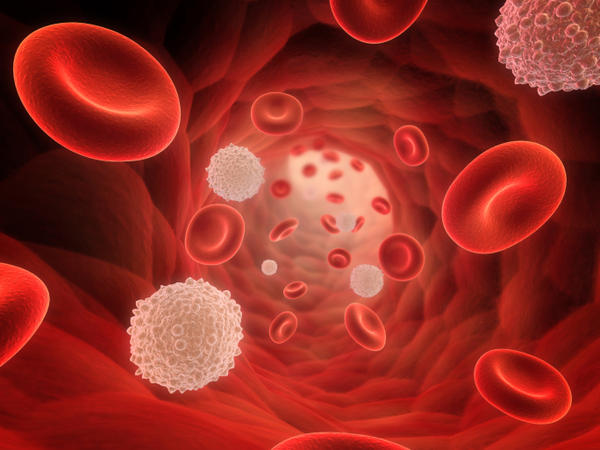
“Listen to me!” Tim brought the glass down on the table, just hard enough to startle and capture her full attention. At the cost of a wet sleeve and the water stains that would surely mark the cherry wood. “Ever since scientists discovered the curative properties of my blood, tests have been run. Mostly successful, I’m a match for all blood types, and my white blood cells haven’t encountered a disease it can’t cure—”

“Which is why I came to you. I did my research and you cured other ALS patients before—”

“The problem isn’t my blood,” he interrupted. “It’s Dick’s immune system reaction that’s the danger. If his body rejects my blood and tries to attack parts of it, there won’t be a second chance. He instantly becomes a non-match. On the other hand, if his body takes the transfusion, in a few month’s time, his white blood cells will resemble mine and he’ll automatically be enlisted in the same line of work as I am.”

The weight of Tim’s words slowly settled on Linda. “You mean, he’ll—?”

“He’ll never know another moment’s peace for the rest of his life. People will hound him, pleading for themselves or family or friends, day and night, night and day. Nonstop. Some gentle, others less so.”

“But why is that necessary?” Linda asked.

“My white blood cells can’t be synthesized. Top minds have tried and failed time and again. And although my blood can be stored, the white blood cells lose their miraculous properties over a period of thirty-six hours outside my body.

“I would have been strapped to a table in a laboratory for the rest of my natural life if I wasn’t for my brother. Hell of a lawyer. Fought his ass off to petition the quality of life rights that allow me the tiny bit of freedom I have. The stipulation is I must share my gift, triage the world, help the sickest among you. There are restrictions, legal hours when people have the right to approach me, but no one listens. How can they be expected to follow the rules when they or their loved ones are dying?

“I used to fight it. Turn people away when the established workday was through. Dealt with the angry mobs and the death threats. Then I asked myself, “Why?” Why fight my fate? If I’m meant to help people, why shouldn’t I do it when it needs to be done and not only when I want to do it? And there’s a selfish reason if I’m honest. You see, if I help enough people, if enough of the populace possesses my blood, I won’t be special anymore or alone in all this. Maybe then, when there’s enough blood to go around and my bit for the world is done, the price of my gift paid, maybe then I can be left alone to die in peace.”

Linda hesitated. She shook her head and turned to leave. “This… this is… “ She stumbled over the words, not knowing how to express her thoughts.

Tim realized too late that he said too much, chose the wrong person to unburden himself on. He regretted his action instantly. “It’s a lot to process, I know. Why don’t you go home and discuss it with Dick? You can contact me if you decide to go through with it.”

From his shirt pocket, he fished out a solid white business card, imprinted only with a faint phone number that had to be viewed at the proper angle in order to be seen. “A direct line, please don’t share it with anyone.”

“I won’t,” Linda muttered as she shambled to the doorway. “I — look, I know you can’t talk about the other people you’ve seen, but can you just tell me if anyone has ever turned down your help after you’ve explained everything to them?”

For a moment, Tim didn’t respond, he just watched as the hope drained from her face. “More people than you might imagine.” He noted she found no reassurance in his answer. He turned away, unable to look upon her sorrow any longer. He had his own to contend with.

Over his shoulder, he said, “Be sure you tell Dick everything I’ve told you, and if he refuses, try to understand. Sometimes there are worse things than death.”

Text and Audio ©1988 – 2021 Rhyan Scorpio-Rhys

Do Your Legwork… the Proper Way

Lately I seem to be coming across more and more authors who thumb their noses up at the thought of doing research, which makes me scratch my puzzler. Not only is it a fundamental part of the process, regardless of the type of fiction you write, it is also a chance to learn and grow as a person as well as a writer. The simple fact is, if research truly is the bane of your existence, then you’re not doing it right.

Yes, you are most likely creating an entire world from scratch, in your own image and the laws of reality obey whatever rules strike your fancy, but even the most fantastical setting must have a sturdy foundation. And that foundation must be built with bricks of solid facts in order for your story to have any sort of credence.

I personally enjoy the research stage almost as much as the construction stage, but I understand how daunting a task fact-finding can be, so I’ve jotted down a few of the steps I tend to use when I’m in that researching frame of mind:

1. Pinpoint the right questions. The assumption is that you either have a strong interest in or possess a rudimentary knowledge of the story you’re attempting to pen. And that’s all you need in the beginning when you’re plucking the idea from the ether and committing it to the page in the form of an outline. But as you rearrange the story sequentially and create scenes to flesh the idea out into proper story form, you should be asking yourself how you’re going to make the story mechanics work. If your story is a period piece, you should be knowledgeable of that era, if your main characters hold down specific jobs, you should be familiar with the basics of their occupations, if the story takes place in a different part of the world… you get the point. Your research begins when you write your outline because that’s where you’ll find the questions that need answering.

2. Locate your resources. You’re probably thinking this part’s a cinch as long as you’ve got internet access, and I can’t really argue the point. As I’ve stated in a previous post, the internet is the wise sage of our virtual village (see: Applying Life Lessons To Your Writing) but, as is true with a great deal of online content, the reliability of the source material found therein can be erroneous, so verify, verify, verify as best you can in order to avoid unnecessary embarrassment at a later date. Myself, I tend to be a bit old-fashioned in my approach to research and armed with my trusty dusty library card I visit ye olde public bibliotheca in search of books pertaining to the various subjects in my story. I only rely on the internet as a back-up resource if I come up empty at the library.

3. Make a treasure map for your gold. What good is that golden nugget bit of research that you’ve discovered if you can’t lay your hands on it when you need it? If you own the book, sure you can bookmark or dog-ear pages, underline or highlight passages–but only if you own the book, please, marking up someone else’s tome is utter book sacrilege. If the book isn’t yours to mar, you can create your own index system by jotting down the book title, page and paragraph numbers, and a few keywords on the passage’s content. Then when you’re done info-gathering, you can transfer the text to your computer (arranged by subject headings) or to a notepad if you prefer to write longhand.

4. Create a vision board. Sounds hokey, I know, but pictures have that magical ability to transport your fertile imagination to all the unfamiliar aspects within your story and adding a visual component to your research and writing can help to serve as inspiration for time periods, locales, era clothing, vehicles, weaponry, etc.

5. Walk around in your story like you own the place. Nothing worse than a writer who lacks the confidence to strut their stuff within the world they’ve created. Even if that world is rife with utter nonsense, your job is to sell that nonsense as truth. There’s a saying that used to be popular when I wore a younger man’s clothes, but I haven’t come across it in a dog’s age, “If you can’t blind them with brilliance, baffle them with bullshit.” Now, this doesn’t mean you should out-and-out lie to your audience, but if the moment arrives when research fails and you need to invent something in order to make your story work, you should endeavor to portray it with as much authenticity as possible.

All the rest of the time? You live up to the trust that your audience places in your hands by checking and double-checking your sources and making sure your facts are as accurate as they can be. Also, you need to keep in mind that despite your best efforts, you aren’t ever going to get the facts correct all the time, but that doesn’t give you a reason not to do your due diligence. And should you ever deliberately decide to ignore the facts, you should alert your audience either in the author’s notes or afterword.

One of a writer’s biggest attractions to the written art form can be best summed up as, ex nihilo omnia fiunt–from nothing, everything is created–but we owe a duty to our audience to make the lie of fiction as truthful as possible.

Sally forth and be researchful.

Songs As Stories: Stars Go Blue

When Stars Go Blue *Inspired by the song “When The Stars Go Blue” by Ryan Adams

It was a secret place, a quarter acre of Eden abandoned and erased from the mind of mankind the instant the original sin was committed, and I had stumbled upon it quite by accident.

No, that was a lie and I promised myself I would not defile the sanctity of the garden if it could be helped.

I was not proud of the actual reason of how I came to be in this place, simply because I was a stalker. In my defense, it was only the once, I hadn’t made a habit of following women around without their knowledge. Just one woman. The one I was currently spying on, crouched here in the bushes amongst the flower blossoms, berries and leaves.

Mari.

Coworkers called her Marionette behind her back and sometimes to her face, passing it off as good-natured teasing. There was nothing good-natured about it. She acquired the nickname because she was a gangly woman who moved about in a jerky fashion, as if the unseen wires that made her move were constantly in a tangle that the puppeteer hadn’t been able to sort.

Mari did as people of her ilk often do, she kept herself to herself, stared at her shoes rather than make eye contact, and accepted all the negativity heaped upon her shoulders with nary a complaint. But she couldn’t hide the fact that she was miserable, just as I couldn’t hide that I was somehow drawn to that misery.

Although I wanted to know her for a while, I was too shy to make an approach. Today, I told myself, would be the day. As I went through my daily grind, I slowly mustered all my courage and screwed it to the sticking place. Ten minutes to quitting time, I marched to Mari’s cubicle, prepared to make my intentions known…

But she wasn’t there.

I searched by the fax machine, in the kitchen near the coffee maker, I even bore the brunt of strange stares when I loitered outside the women’s restroom, but she wasn’t anywhere to be found. Completely and utterly defeated, I grabbed my coat and left for home.

Half a block before the entrance to the subway, something grabbed my attention out the corner of my eye. Across the street, Mari sat on a bench at a bus stop as the 5:17 pulled up. I wanted to run across the street, braving the crosstown traffic and hop on the bus to make my stand. Instead, I froze. All my former courage had long abandoned me.

For the second time today, my heart sank. And for the second time today it did so without merit. The bus pulled away to find Mari still seated. And she sat as bus after bus pulled up and away. She did not read a book. She did not listen to music. She simply sat patiently.

Then when sufficient time had passed, Mari stood and walked away. I couldn’t tell you what possessed me to follow her on the crooked path that weaved through narrow alleyways, towering overpasses, black as pitch underground tunnels. Eventually her journey came to a halt in front of a lot that appeared to have been vacant for centuries.

Mari stood at the perimeter of the lot and at the precise moment the evening woke and forced the daylight into hiding, a door appeared with seven locks. She stood absolutely still and waited. In the newborn evening sky, stars bloomed and seven of them twinkled blue in a sequence that repeated seven times. The locks tumbled one after the other and the door opened slowly.

Mari stepped through the door frame but hadn’t appeared in the lot on the other side. From my vantage point, she simply vanished.

I ran to the door and managed to squeeze through before it shut, but instead of finding myself in the overgrown and refuse-filled lot, I stepped into paradise. My clothes melted from my body and ashamed of my nakedness, I hid in a nearby bush.

In the very center of the garden stood a mammoth tree that bore unrecognizable fruit of various shapes and sizes, the roots of which branched out along the grass and touched two streams on either side, one that appeared to have been made of milk and the other honey.

Standing beside the tree was Mari, naked but no longer that gangly woman who was awkward in her skin and awkward in the world. Here, her jerky movements flowed gracefully, her normally dull and lifeless eyes were polished to a fine shine, and her crooked mouth straightened and nearly split her face in half when she unleashed that radiant smile.

Mari blew a kiss up to the tree and somehow that kiss became a breeze that rustled the leaves which made a sort of melody unlike any I had ever heard. A pure music played by nature itself.

She danced around the tree all night without tiring, in time with the tune, and sang in a voice that was different from her normal mousy tone, stronger now, more confident. And I watched all the sorrow and strife, all the hurt and anger, all that was wrong with her life evaporate from her body.

When she sensed it was time to leave, Mari reached up and plucked the smallest of the fruit from a low hanging branch and dipped it in the stream of honey before washing the meal down with a cupped hand from the stream of milk.

The door reappeared and her clothing was folded neatly in a pile beside it. With each layer she put on, the transformation to her old self, the Mari that people mocked, began.

I thought about following her, but how could I ever leave this place, this patch of perfection? I knew she would be back and the next time I would talk to her, for certain. Until then I was contented to wait until she returned to dance again. I would wait until the stars went blue.

Sally forth and be dancing where the stars go bluingly writeful.

©2014 Rhyan Scorpio-Rhys

Creative Commons License