Of Air Returned

images

i.

I burned my soul to ash but the pain paled in comparison to the terror that struck my heart like a match, anticipating her arrival and the tirade she would carry in tow. An unwarranted fear, as she was calm when she saw what I had done. Calm and nurturing. Soothing my pain with herbs and aromas, and each early morning during the hour of the wolf, she laid an ear on my back and listened as my soul mended itself.

She never spoke the words of disappointment aloud but it registered in her eyes. Although residing within my body, this wounded thing, this unwanted soul, did not belong to me. She had laid claim to it many years past, and in my despondency, I had taken liberties with her property and attempted to destroy it. Again.

ii.

The first time, I threw my soul into a sinkhole and allowed the ground to swallow it whole. I made her acquaintance when she plucked it from the soil like a tattered tuber. “I saw what you did,” she said. “And since you would so recklessly toss this precious thing away, it is no longer yours, but mine, agreed?” I nodded and she handed my soul back to me for safe keeping.

I honored our pact for a few years, caring for it within my limited capacity, but during a particularly nasty bout of depression, I tied heavy stones to my soul and pushed it off the sea wall. For a second time, she appeared, fishing my soul from the waves and scolded me, “You are charged with protecting this thing that is mine, do you understand?” Again, I nodded. Again, I lied.

iii.

“Why do you want this worthless soul when it has been crushed by the earth? Why do you want it when it has been drowned in the sea? Why do you want it when it has been set aflame like so much tinder?” I searched long and hard yet found no answer in her silence.

iv.

During the day, when she thought me preoccupied, she secreted herself in the shadows and slept. One day I followed her into the darkness and watched her body twitch from dreaming and listened as she muttered,

One more soul, once buried deep.
One more soul, in ocean steeped.
One more soul, by fire burned.
One more soul, of air returned.

v.

Under her care, my soul grew healthier and it frightened me. I was pitilessly plagued and badgered by the phrase, One more soul, of air returned, that repeated in my mind’s ear until it turned dogged and cacophonous. But she was unaware of my inner torment, in fact, she was in an exceptionally good mood today, her voice almost a song, “I know you don’t see it, but you are a gift, you are. You have no idea just how special.”

vi.

Today was the day. I felt it in my marrow. Something was destined to happen, something I most likely would not survive. I should have embraced this eerie premonition, for it was no secret that I did not want to continue in this manner, broken, detached and alone. But the choice of how and when I departed this wretched life was mine to make and mine alone. So, I stalled by distracting her with trivialities. “May I have more broth? Have you seen my shoes? No, not that pair, the other ones? Can we go for a walk?” If she knew my plan, her expression never showed sign. No request was too large or small on this day. She granted them all.

vii.

We strolled along the pathway in the park that led to the duck pond, a place we visited often during my convalescence. Picked, naturally, as not to arouse suspicion as I searched for the proper diversion in order to make my escape. But I was so wrapped in my own thoughts, I failed to notice that she was walking slower than usual today. “Can we rest a moment?” she asked as we neared the benches. “I am a little short of breath.”

Her breathing became a labored and raspy thing before it hitched and became lodged in her throat. When her face went dusky blue and she slid off the park bench, I panicked. The opportunity had presented itself and there I stood like an idiot, frozen. Entangled in the decision of whose life to save, or more accurately, whose death I could live with.

There was no real choice.

viii.

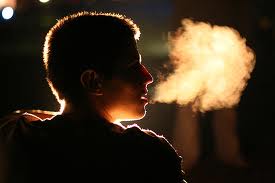
Her breathing was a trembling, liquid sound as I pressed my mouth to hers and exhaled, but instead of me breathing air into her body, I felt her sucking air from my lungs, and not just air…

I tried desperately to pull away but her thin, vise-like hands clamped down on the nape of my neck and held me firm in a kiss that was collapsing me. My hold on life became dim and futile, but before I slipped away into emptiness, I noticed the oddest thing: her belly began to swell.

Every fiber of my actuality was drawn into her, and my soul, the object I had forever been so reckless with, was systematically being stripped of concern, of negativity, of identity. I fell further and further into a darkness that pressed on me from all sides. So tight, so constricted. I was still unable to breathe but the sensation was somehow different now.

At the very moment when it seemed the darkness was about to claim me for eternity, there came a burst of light so bright as to cut my eyes. Thankfully something soon blotted out the light – a face, slowly coming into focus but I knew her before I saw her. From the moment I heard her soft cooing, “You are a gift, you are. You have no idea just how special.”

Mother.

Text and Audio ©1988 & 2021 Rhyan Scorpio-Rhys

About Of Air Returned: Delusion can be a scary thing, but it can also be wonderful at the same time. This piece was written in the early part of 1988, during a period when I swore I could do no wrong—it’s fine, you can laugh, I’ll just cringe quietly in the corner. I was heavily into both science and speculative fiction and had recently rediscovered the works of The Brothers Grimm, so I was determined to create my own collection of fairy tales for the—then—modern age.

Applying fairy tale rules, I could introduce the fantastic or the bizarre into any story with little or no explanation, and have all the characters in the tales accept everything as normal. Wishes as deus ex machina. Love as the ultimate cure-all. All the good stuff without all the fuss. Genius, right?

It would take the better part of six months for me to discover I wasn’t the groundbreaker I imagined myself to be. On the plus side, I followed my then idol, Harlan Ellison’s advice and was able to churn one of these puppies out a day.

Of course, most of them are unreadable. This one teeters on the edge. I kinda like it and it kinda embarrasses the hell out of me, but it was one of the three Rhyan Realm tales–yeah, I created my own sub-genre name for them, what of it?–that actually saw print… after 10-some-odd rejections.

You’ll laugh, you’ll cry, you’ll kiss a few minutes goodbye.

Aeton and Ioasephyn

Minds Eye

Aeton was made for Ioasephyn, and she him, of this there was never any doubt. Formed during The Great Making and united in an unbreakable union when the world was in its infancy, the couple consummated their love as the molten planet cooled. Theirs was the first love and the fulcrum on which all love that followed would be balanced.

In the days before there were others, Aeton and Ioasephyn relaxed in fields of spun gold and stared upward, watching as the void caught fire, pinprick flames burst into life throughout the inky black and became stars. As the land masses grew restless and pulled away from one another, separating the waters into greater and lesser portions, the pair frolicked while the planet went through its growing pains.

When others came, some as a byproduct of their union, and the rest molded from clay or evolved from simpler lifeforms, they watched as gatherings became villages became towns became cities, and those overpopulated cities became nations. There were those who sought to rule these nations, some successfully, others less so. Aeton and Ioasephyn had seen the noblest of endeavors corrupted by pettiness, jealousy and greed and wished to separate themselves from the inevitable outcomes.

Time passed for everyone but the young lovers. Their children grew older, as did friends. Not all were accepting of the fact, so they vanished from the daily workings of societies, and only visited occasionally when curiosity got the better of them.

One such visit proved disastrous for Ioasephyn when someone in a new city recognized her. She thought enough time had passed and the world had forgotten them. How could she have known that she and Aeton had become the stuff of legend? A legend planted in the soil of truth, watered by myth in each retelling until it sprouted the belief that their blood, the liquid of pure first love, granted eternal life.

They surrounded her, the entire city did, and forced her into a prison until they consulted with an elder on the precise details of the ritual needed to extract the blood for the immortality elixir.

Aeton was on the opposite side of the world when he felt Ioasephyn’s fear tug at his heart. He pleaded with the moon to create a tide that would carry him to his true love’s side. It obliged and he rode the waters day and night without rest until he arrived at the city that held her.

Without delay, he met with the officials who held his love and attempted to reason with them. With a father’s patience, he listened to their wild tales and struggled to dispel the myths. He told them the truth in the Voice of Authority, but they paid no heed and took him prisoner, as well.

The legend warned that the couple’s invincible power was only focused in their union, so the jailers locked Aeton and Ioasephyn in cages separated far enough apart so they could not touch. Upon seeing one another, the lovers wept for they knew their demise would soon come. But they were not angry, instead, they pitied those who could never have seen the world through their eyes. The love they declared for one another stood the test of the sometimes wondrous sometimes terrifying times they lived through, and it would survive this as well.

Though they had accepted their fates, Aeton could not bear the thought of Ioasephyn not existing, so he hid her away somewhere no one would ever think to find her. He hid her in plain sight, tucked away in the corner of the mind’s eye of everyone in existence. He spoke the words of the incantation in his native tongue, acquired at the dawn of language when words contained magic.

Unbeknownst to Aeton, Ioasephyn had done the same to him. They truly were of one mind.

So now they lived where visionaries and dreamers created and though they often tended to their own affairs, sometimes they could be glimpsed frolicking on the cusp of thoughts or relaxing in fields of gossamer daydreams, staring upward and watching as the void caught fire, pinprick flames bursting into life throughout the inky blackness to become ideas.

Text and Audio ©2014 – 2021 Rhyan Scorpio-Rhys

Stars Go Blue

It was a secret place, a quarter acre of Eden abandoned and erased from the mind of mankind the instant the original sin was committed, and I had stumbled upon it quite by accident.

No, that was a lie and I promised myself I would not defile the sanctity of the garden if it could be helped.

I was not proud of the actual reason of how I came to be in this place, simply because I was a stalker. In my defense, it was only the once, I hadn’t made a habit of following women around without their knowledge. Just one woman. The one I was currently spying on, crouched here in the bushes amongst the flower blossoms, berries and leaves.

Mari.

Coworkers called her Marionette behind her back and sometimes to her face, passing it off as good-natured teasing. There was nothing good-natured about it. She acquired the nickname because she was a gangly woman who moved about in a jerky fashion, as if the unseen wires that made her move were constantly in a tangle that the puppeteer hadn’t been able to sort.

Mari did as people of her ilk often do, she kept herself to herself, stared at her shoes rather than make eye contact, and accepted all the negativity heaped upon her shoulders with nary a complaint. But she couldn’t hide the fact that she was miserable, just as I couldn’t hide that I was somehow drawn to that misery.

Although I wanted to know her for a while, I was too shy to make an approach. Today, I told myself, would be the day. As I went through my daily grind, I slowly mustered all my courage and screwed it to the sticking place. Ten minutes to quitting time, I marched to Mari’s cubicle, prepared to make my intentions known…

But she wasn’t there.

I searched by the fax machine, in the kitchen near the coffee maker, I even bore the brunt of strange stares when I loitered outside the women’s restroom, but she wasn’t anywhere to be found. Completely and utterly defeated, I grabbed my coat and left for home.

Half a block before the entrance to the subway, something grabbed my attention out the corner of my eye. Across the street, Mari sat on a bench at a bus stop as the 5:17 pulled up. I wanted to run across the street, braving the crosstown traffic and hop on the bus to make my stand. Instead, I froze. All my former courage had long abandoned me.

For the second time today, my heart sank. And for the second time today it did so without merit. The bus pulled away to find Mari still seated. And she sat as bus after bus pulled up and away. She did not read a book. She did not listen to music. She simply sat patiently.

Then when sufficient time had passed, Mari stood and walked away. I couldn’t tell you what possessed me to follow her on the crooked path that weaved through narrow alleyways, towering overpasses, black as pitch underground tunnels. Eventually her journey came to a halt in front of a lot that appeared to have been vacant for centuries.

Mari stood at the perimeter of the lot and at the precise moment the evening woke and forced the daylight into hiding, a door appeared with seven locks. She stood absolutely still and waited. In the newborn evening sky, stars bloomed and seven of them twinkled blue in a sequence that repeated seven times. The locks tumbled one after the other and the door opened slowly.

Mari stepped through the door frame but hadn’t appeared in the lot on the other side. From my vantage point, she simply vanished.

I ran to the door and managed to squeeze through before it shut, but instead of finding myself in the overgrown and refuse-filled lot, I stepped into paradise. My clothes melted from my body and ashamed of my nakedness, I hid in a nearby bush.

In the very center of the garden stood a mammoth tree that bore unrecognizable fruit of various shapes and sizes, the roots of which branched out along the grass and touched two streams on either side, one that appeared to have been made of milk and the other honey.

Standing beside the tree was Mari, naked but no longer that gangly woman who was awkward in her skin and awkward in the world. Here, her jerky movements flowed gracefully, her normally dull and lifeless eyes were polished to a fine shine, and her crooked mouth straightened and nearly split her face in half when she unleashed that radiant smile.

Mari blew a kiss up to the tree and somehow that kiss became a breeze that rustled the leaves which made a sort of melody unlike any I had ever heard. A pure music played by nature itself.

She danced around the tree all night without tiring, in time with the tune, and sang in a voice that was different from her normal mousy tone, stronger now, more confident. And I watched all the sorrow and strife, all the hurt and anger, all that was wrong with her life evaporate from her body.

When she sensed it was time to leave, Mari reached up and plucked the smallest of the fruit from a low hanging branch and dipped it in the stream of honey before washing the meal down with a cupped hand from the stream of milk.

The door reappeared and her clothing was folded neatly in a pile beside it. With each layer she put on, the transformation to her old self, the Mari that people mocked, began.

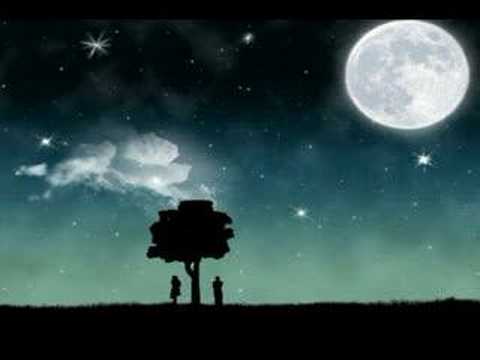
I thought about following her, but how could I ever leave this place, this patch of perfection? I knew she would be back and the next time I would talk to her, for certain. Until then I was contented to wait until she returned to dance again. I would wait until the stars went blue.

Text and Audio ©2014 & 2021 Rhyan Scorpio-Rhys

A Field Guide to Procrastinators

Yeah, I know, this has been around for a couple of weeks, but in true procrastination fashion, I put off sharing it until now because I’m 90% The Watcher, 5% The List Maker, 3% The Internet Researcher, and 2% The Napper. Which kind of procrastinator are you?

A Field Guide to Procrastinators - 12 Types of Procrastinators - Find the procrastinator in you

Amy Tan’s Lonely, ‘Pixel-by-Pixel’ Writing Method

c332e8337

Amy Tan, author of THE JOY LUCK CLUB on her writing process:

“As a result, I err on the side of going into too much detail when I do research and write. I abandon 95 percent of it. But I love it. It’s part of my writing process. I never consider it a waste of time. I never know where I’m going when I write. It’s the same reason I never come to conclusions about anything…. We have to turn it in—and at that point, you are guided by craft. You get to do your anarchy, try this and try that, try everything, and then apply craft.”

Read the entire article here.

Sally forth and be TANingly writeful.

— Rhyan Scorpio-Rhys

Greets The Lightning, Fears The Thunder

04a

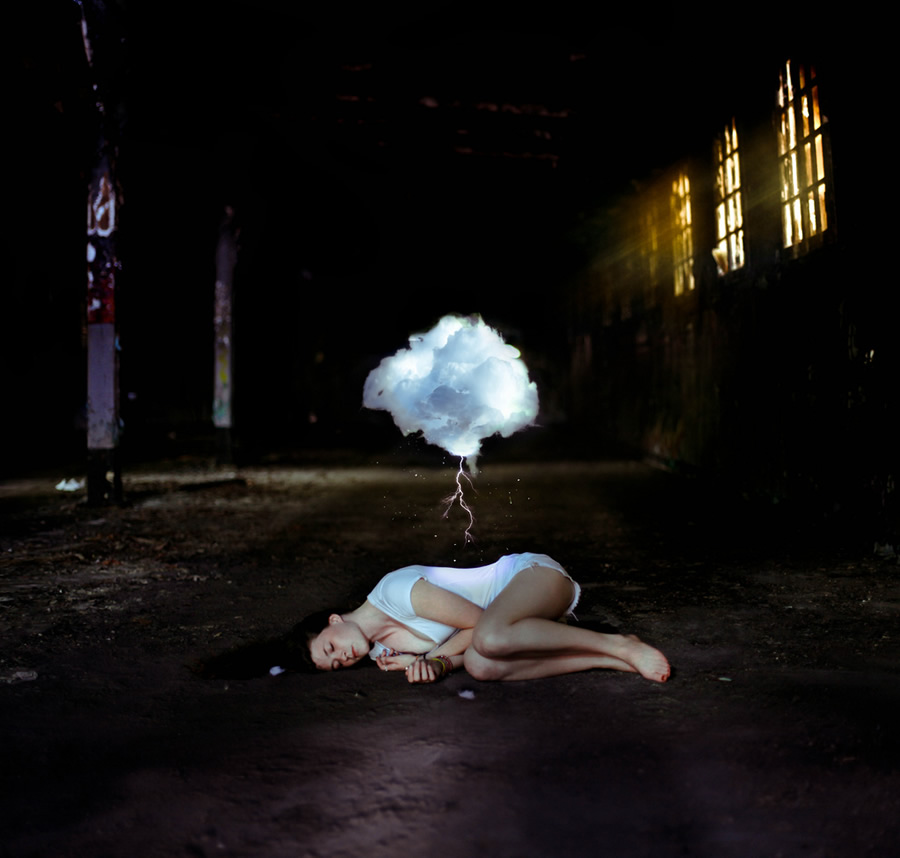
Although the rough draft was completed last year, I finally put the spit and polish touches on the official first draft of my latest horror screenplay, “Greets The Lightning, Fears The Thunder.” And while the screenplay might be new, the story isn’t. “Greets” first saw life as a short story written for a long-forgotten vanity press, Writerarium, way back in the Fall of 1988. It was loosely based on actual events involving my then girlfriend who suffered from a severe case of astraphobia and night terrors.

There’s a strange sense of satisfaction in breathing new life into old work that I wish I experienced more often, Most times, old stories lose their malleability, having found contentment in their original form. This work fought me a little as well, but in the end we were able to come to a suitable compromise.

— Rhyan Scorpio-Rhys

UPDATE: The first draft of “Greets” went up for review on the Trigger Street Labs site on May 15th and the first review was:

“This is an action packed, intense thriller!

I’d love to see this made into a movie. I feel like your dialogue and script feels well developed. I feel like maybe more comic relief would break up the intense moments. But overall really well written.

Your opening scene really sucked me in and I couldn’t stop reading. I couldn’t tell if it was a dream she was having or real at the beginning.

i liked the flashback scenes to Africa – so you get the background story. I feel like this was a perfect way to get the information you needed about Leyna.

The ending was awesome, gives you the notion that there was more to the elements than we knew. That maybe Gordon is now a catalyst of the bird… I loved the ending.”

UPDATE: “Greets” got the screenplay review treatment on June 3rd by the New York City Screenwriters Collective.

UPDATE: “Greets” was subjected to a third round of script review, this time in Los Angeles on February 2nd courtesy of Write Club.

UPDATE: “Greets” was subjected to a fourth round of script review, this time in Los Angeles on April 1 courtesy of the Malibu Screenwriting Group.

UPDATE: “Greets” was subjected to a fifth round of script review, this time in Los Angeles on April 20 courtesy of the Inktank Screenwriting Group.

A Dragon Tattoo By Any Other Name…

Ormr. Ddraig. Dreigiaw. Derkein. Derkomai. Drakon. Draca. Draco. Dragon.

Despite the language of the name given them, dragons inhabit the myth and legends of most ancient and modern cultures and have been portrayed throughout history as magical creatures possessing raw power and mystical might. This is the allure of the dragon tattoo design. No other tattoo art or tattoo design makes as distinctive and commanding an individual statement than a dragon tattoo.

Dragon tattoos also have the added advantage of being so fluid that they can conform to and flatter the contours of any part of the body. Many hardcore tattoo addicts have even gotten dragon designs whose tail begins at one ankle and winds its way up the leg and torso with the dragon’s head finally resting on the chest. Dragons can even coil themselves into intricate full and half sleeve tattoos, and a dragon in flight with its wings spread makes an excellent lower back tattoo.

Origin of the Word “Dragon”

The origin of the word “dragon” has been traced to a Greek word, “derkein,” meaning “sharp-sighted one,” which appears to describe a snake, so when it was converted to Latin, the word became “draco,” or “giant snake.”

The Popularity of Dragons

Dragons have always been the topic of fascination and mystery, as well as being a source of wonder, a symbol of hope and purity, and sometimes…jealousy, miserliness, maleficence and fierce rage.

Dragons have also been known to be notorious riddle-masters, sentinels of sacred shrines, and hoarders of treasures beyond imagining. It is even said that great philosophers would climb the highest mountains peaks or venture into the lowest caverns to seek the sage advice of dragons in secret.

When not out to slay dragons for immortality, like Sigfried, or for the golden apples of great happiness, like Hercules, we lowly mortals live under the ever-vigilant gaze of dragons. Sometimes we reside in the sphere of a dragon’s good fortune. And there are those lucky few who actually get to live under the wing of a dragon’s protection.

Dragons have even crossed over into the real world. Vikings carved dragon figureheads on the prow of their ships because they believed the dragons would endow keen sight and cunning to the Viking warriors. And in China, emperors think they are the real dragons and the sons of the heaven. They sleep on dragon beds, sit on thrones called the dragon seat, and their ceremonial dress is known as dragon robes.

Nowadays it’s quite common to hear parents tell their children bedtime stories about good and kindly dragons. For a fee you can hire the services of a dragon specialist who will tell you the name of your own personal guardian dragon and for an additional sum you may even obtain a sketch of your appointed guardian. There are even group therapy sessions that help you release the inner dragon that lies dormant in all of us.

With the success of Peter Jackson’s Lord of the Rings film trilogy, interest in dragons and the magical world created by J.R.R. Tolkien has renewed, just as it had back in 1973 when Gary Gygax of TSR, Inc. created a roleplaying game named Dungeons and Dragons (D&D).

D&D also goes into great length about dragon societies and the philosophy that revolves around the ancient Ceremony of Sublimation, where dragons aspire to reach a higher level of existence and possibly immortality unique to dragonkind.

And then there are the tattoos. Dragon tattoo designs come in many forms, Celtic dragon tattoos, tribal dragon tattoos, Asian dragon tattoos, and the list goes on. When it comes to body art, dragon tattoos are among the most popular tattoo designs.

What a Dragon Tattoo Represents on a Woman

A dragon tattoo on a woman usually acknowledges “woman as the creator.” Like the dragons of many mythologies, woman’s true body form is that of life, the world and the universe. It is this superior form that allows her to be without equal. Dragon body art also represents a flowing, fluid grace that conceals a reserve of power just beneath the cool surface. Studies have shown that women who get dragon tattoos become more self-confident and assertive.

What a Dragon Tattoo Represents on a Man

A dragon tattoo design on a man typically signifies raw power. Like dragons, men are the guardians of that which is sacred, such as women and objects of great wealth. But this must be tempered with wisdom, lest the greed of dragons overpower the man’s soul and turn him into a ravenous creature with an insatiable appetite. Men who get dragon tattoos view themselves as being revered for their wisdom but feared for their tremendous power.

Why All The Sudden Interest In Dragon Tattoo Designs?

Actually, the interest isn’t all that sudden at all. Dragons have always been an archetypal choice for a traditional tattoo design. Far more popular than tribal, butterfly, Celtic, and even cross tattoos, beautifully rendered coiling dragon tattoo flash can adorn any part of both the male and female body. Not to mention that tattoo designers have begun to take traditional dragon tattoo illustration to the next level, giving the dragon body art a stylized edge that is sure to keep people staring at your personal dragon tattoo design in awe and appreciation.

But before you rush out to get your dragon tattoo, you should familiarize yourself with the history of dragons to determine which tattoo design best represents your characteristics and strengths and beliefs.

THE HISTORY OF DRAGONS

Some of the first recorded stories involving dragons date back to the Sumerian civilization, located between the Tigris and Euphrates Rivers in an area once called Mesopotamia, which later became Persia, and is now better know as Iraq and Iran.

Mesopotamian Dragons

The earliest written dragon myth was carved onto clay tablets and depicts the story of a dragon named Asag, who battled the hero-god, Ninurta. Even in these stories, dragons guarded treasures, held back floods, and imparted great knowledge.

Babylonian Dragons

In Babylonian myth, a dragon was believed to have aided in the creation of the world and the gods, and although some of the dragons served as the guardians of god’s treasure and nature, most were depicted as evil creatures, who all too often angered the gods. It is believed that Asag and Ninurta, from the Mesopotamian myth, are introduced by the Babylonians as Tiamet and Marduk, though this may not be totally accurate as the preserved records are in poor condition and incomplete.

A story that did survive is the epic tale of Gilgamesh, who set out to slay Humbab, the dragon guardian of the forest, who was thought to be a threat to the nearby town.

Babylonian history also tells in the “Book of Bel and the Dragon,” that the ruler Nebuchadnezzar, kept a dragon in the temple of the god Bel, where the dragon was worshipped. When the Hebrew prophet, Daniel, began denouncing idols, Nebuchadnezzar told him of the dragon and argued that the dragon was real and Daniel must worship it. Daniel asked why the people worshipped such a creature, and when faced by the dragon, slew it.

Sumerian Dragons

Sumerian myth depicts several dragons, chief among them, Zu, a cunning and devious dragon who stole the Tupsimati, the tablets of law, from the god Enlil, who wore the tablets on him. Another popular dragon is Gandareva, an immense creature who was the guardian of another dragons and preyed upon humans for food.

ASIAN DRAGONS

The Differences in Asian Dragons:

The Chinese boast that their dragons are the “true dragons” and the proof of this lies in the number of claws on the dragon’s foot. The true Chinese dragons have five claws. The Japanese dragons have four claws, and the Vietnamese dragons have only three.

Chinese Dragons

In Chinese culture, the dragons are considered the governors of rain, entrusted with the power to decide where and when the rain falls. Dragons also play a significant role in Chinese Festivals and the dragon dance has a long history that dates back past the Song Dynasty, circa 960-1279 AD. Chinese even consider themselves “the descendants of the dragon” and their culture is rich with the presence of dragons, which is considered to be a symbol of imperial power.

Japanese Dragons

Ryujin, a Japanese Dragon King, who lived in a palace under the sea, loved his wife and daughter so much that he spoiled them both, often sending out sea creatures such as octopus and jellyfish on errands to retrieve odd things. In one version, Ryujin’s daughter, Otohime, wanted to dine on monkey liver and a handsome and strong-boned jellyfish was dispatched to retrieve the liver but was outwitted by the monkey. In rage, the dragon king beat the jellyfish to a pulp, a shape that they hold to this very day.

Korean Dragons

Tales of Korean dragon are fewer in number than their Chinese and Japanese counterparts. The most popular myth involves a poor fisherman who caught a Carp, and the Carp begged for its life so that he may return to his family. The fisherman obliged, and the Carp turned out to be one of the sons of the Dragon King, so the fisherman was rewarded greatly.

Vietnamese Dragons

The story of Slowcoach, involves a kindly man who fashions a fishhook out of a piece of enchanted wood. When he puts the hook into the lake, the water rises and the fishing pole and line disappear into the turbulence and the waves almost drown him. Then a beautiful woman walks out of the water and tells Slowcoach that she is the daughter of the dragon king and his enchanted fishhook is caught in her father’s mouth. When Slowcoach agrees to remove the fishhook, she turns him into a bubble and takes him to the underwater dragon palace. The fishhook is removed and the dragon king rewards Slowcoach with a bottle containing a little blue fish, which later turns out to be the dragon king’s daughter.

Hindu Dragons

Vitra is the dragon that comes from the Indian subcontinent. Vitra absorbed the cosmic waters from the universe and coiled around a great mountain. Vitra is sometimes described as the personification of winter.

A more fascinating Indian Dragon myth involves the only dragon ever to be converted to a human religion. The Dragon, Apalala, lived in the Swat River and was converted by Buddha himself. Apalala then set out to teach it to other dragons, who drove him away but allowed him to continue teaching the humans.

EUROPEAN DRAGONS

European dragons hold the honorary title of the “kings of evil.” And although these chaotic creatures have plagued mankind since the earliest remembrances with their malicious intent and insatiable battle-lust, still humans feel a strange sense of awe and respect for them.

The tale of St. George’s dragon is perhaps the most famous of the European dragons, in which a dragon appears at the village of Cappadocia and threatens to destroy the region. In fear the villagers offer sacrifices to the dragon in the form of sheep and later the village maidens. Eventually the only maiden left is the princess, who is tied to a stake. Before the dragon can devour her however, George wanders by and slays the dragon.

Another dragon can be found in the epic Anglo-Saxon poem, Beowulf, which chronicled the three battles of the hero of the same name. In the first battle, Beowulf slew Grendel. In the second, Beowulf battled Grendel’s larger, more fearsome mother. In the third and final battle, Beowulf fought a fierce and fiery dragon, that he managed to vanquish, but suffered wounds so lethal that he himself perished.

Greek Dragons

Greeks mythology views dragons as terrifying dark creatures, remnants of an earlier age, that needed to be slaughtered by a hero. Dragons were guardians of underground sources of power, and often guarded springs, where the watery underworld burst to the surface.

Austrian Dragons

In the Vorarlbeg area of West Austria dragons were not considered supernatural but rather simply an unwanted part of nature like wolves, bears, and mountain cats. The annoying dragons occasionally took a horse, cow, or some sheep but were rather shy about confronting mankind and were thus never seriously feared or hunted.

French Dragons

Tarasque is a dragon of a different kind. Reputed to be the daughter of the giant serpent, Onachus, and the water dragon, Leviathan, Tarasque came from the sea up the river Rhone and decided to make her home in Southern France. She terrorized the region for many years, despite the attempt by many knights and heroes to slay her. That was until St. Martha faced the dragoness alone in a white dress and armed only with her faith and a jar of holy water. Apparently that was enough as she led Tarasque back to the town where the now docile and trusting creature was hacked to pieces.

German Dragons

The village of Brand in Germany hosts a dragon who appeared and began eating cattle and tormenting the villagers. Every effort to destroy the dragon ended in failure, until a traveling scholar arrived and created a tempest that completely covered the valley in a landslide of rocks, trees, giant boulders, and mud. The dragon was never spotted again and the area became known as the “dragons grave.”

Norse Dragons

Nidhogger was a famous Norse dragon, who lived at the foot of Yggdrasil, the tree of life. Nidhogger was, in reality, Fafnir whose greed for the gold he horded slowly turned him into the great dragon.

English Dragons

In Sussex England there is a deep cleft in the ground named after the dragon who had resided there, Knucker, who in true dragon fashion caused the usual sort of mischief. This dragon, however, wasn’t slain by a knight. It was killed by a local farmer’s son, Jim Pulk, who put poison in a pie and offered it to Knucker as a meal.

Irish Dragons

Ollipeist is the most famous Irish dragon, who fled Ireland when St. Patrick started imprisoning dragons. It is said that he left a mark with his tail in what is now called the Shannon Valley.

Swiss Dragons

The historical figure St. Magnus (1698-1772), credited with founding several notable churches and monasteries, had his first encounter with a dragon at the city of Kempton, which was said to be empty of men and filled with dragons. He lured the dragons out by sleeping in the open and managed to slay the lead dragon, Boas, by calling on the power of his god.

Russian Dragons

Gorynytch, three-headed dragon with seven tails knew of the prophecy involving the hero, Dobrynja, who would slay him, but was still defeated despite having this information.

Did You Know?

Did you know that the name “Dracula” is linked with dragons” In 1410, the holy Roman Emperor, King Sigismund of Hungary, established a clandestine fraternal order of knights which he named the Order of the Dragon to advocate Christianity and protect the Empire against the Ottoman Turks. At Sigismund’s behest, an emblem was created depicting a dragon clutching a cross with its wings extended.

In 1431, Vlad Tepes II demonstrated great bravery in battling the Turks and as a result was inducted into the Order. His name became “Vlad Dracul” which translated to “Vlad the Dragon.” His son, Vlad Tepes III, inherited his father’s name as well as his lust for battle and was called “Vlad Dracula.” The Romanian word “ulea” translates as “son of the,” which means his name was meant to be “the son of the dragon,” however, “drac” has a second meaning, “devil,” which is one his enemies believed was more accurate.

OTHER DRAGONS OF NOTE

Borneo Dragons

From the Island of Borneo comes the myth of a dragon named Kinabalu, who lived at the summit of a mountain of the same name, and possessed a fabled pearl of immense size. The Emperor of China heard about the pearl and sent an army to get it for him but the dragon killed all but a few. These survivors return and told the emperor about the disaster and said he could not be overcome by strength of arms. So the emperor sent his two clever sons named Wee San and Wee Ping to get the pearl.

Hawaiian Dragons

Mo-O-Inanea is considered to be the mother of all dragons, but little is known about her since natives are very reluctant to talk about this dragon. Some speculate she may still exist and is being protected by the Hawaiians.

Australian & New Zealand Dragons

Dragons in this region are called “taniwha” and the most famous is a dragon named Hotu-puku, who is credited with the mysterious disappearances of travelers going between Rotorua and Taupo.

African Dragons

In West African mythology, it is said that the world was formed by the genderless one god, Nana-Buluku. Out of loneliness, Nana-Buluku created a rainbow dragon companion named Aido-Hwedo, whose dung created mountains across the flat surface of the Earth and nourished the land so that plants and life could grow. But soon, the planet became so congested with plants and animals and mountains that Nana-Buluku feared the earth would collapse.

In gratitude for being created, Aido-Hwedo offered to help remold the planet, so the great dragon traveled across the earth, its massive dragon tail writhed with so much force and fury that it created the rivers and valleys, until its body formed an immense circular ring with its tail in its mouth, and enfolding the world.

IN SUMMARY

Whether you’re attracted to the history, mythology or pure fantasy of these mysterious creatures, a dragon tattoo can reveal aspects of your true character or serve as a potential warning to those who cross you. Whether you choose a solid black tribal, Asian, Celtic or any of the many other dragon designs, your tattoo will make a powerful statement for the rest of your life.

Shhh, be quiet for a moment. Do you hear that sound” It’s the call of the dragon tattoo beckoning you to take that first step toward fulfilling your destiny.

Copyright ©2005 Rhyan Scorpio Rhys

Viva Mi Raza! A Brief Look at Aztec Art and Tattoo Body Art Design

Aztec/Mexican tattoos have seen a remarkable boom of late, which shouldn’t be too surprising seeing as the mark- ing of skin was an integral part of the ancient Aztec culture. Since religion was essential to their daily lives, Aztecs worshipped myriad gods and goddesses, and would tattoo the chest, wrist, and stomach of children with very specific designs and symbolic patterns in order to show dedication to gods such as Chalchiuhtlicue, Huitzilo- pochtli, Uitzilopochtle, and the more popularly known Quetzalcoatl.

Unfortunately, the true meaning of a great deal of Aztec art is lost it was written in the ancient script of Natuatl, which was a language so complex that it defies proper translation to this very day. This, of course, is a minor setback for the tattoo artists of today who have created interesting and unique tattoos revolving around sun designs. Why the sun, you ask? For the simple fact that the sun was extremely vital to the Aztecs as it was worshipped as the giver of life. They even designed their calendar with the sun in mind, decorating it with various images including skulls, gods and animals.

Another popular design is the Coat of Arms found on the Mexican flag, which is an eagle, holding a serpent in its talon. The serpent is perched on top of a nopal which is situated on a rock that rises above a lake. This image actually stems from the legend of Tenochtitlán, which tells us that the Aztec people were sent on a quest by the war god Huitzilopochtli to travel across Mexico in search of the divine sign that would let them know where to build their new home. The sign, of course, was the eagle and serpent on a prickly pear cactus that grew on a rock in the center of a lake. In case you’re curious, the Aztecs finally came across the divine sign two hundred years later on a small island in Lake Texcoco, and their built their home that today is called Mexico City.

And rounding out the most popular Mexican/Aztec tattoo designs is the scripted phrase, “Viva Mi Raza” which loosely translates to “long live my race”. A variant of this is “Viva La Raza” (“long live the race”). “La Raza” as a proper noun which refers to the Mestizo (or Mestiço) race, a term that usually refers to persons with mixed Latin, European and Amerindian ancestry.

Copyright ©2005 Rhyan Scorpio Rhys

O Butterfly, Beautiful Butterfly

In the brotherhood, or in this case sisterhood, of ink (once you get a tattoo…you’re a card-carrying member) the most popular design sported by women of all walks of life from all over the world is the butterfly. Whether combined with a flower tattoo design (roses, lilies, daisies or sunflowers) or a vine tattoo design (typically done as a butterfly armband) or a wispy-thin tribal tattoo design, butterfly tattoos have a versatility that few tattoo designs have. Aside from the beauty of symmetry, shape, hue and infinite variety in pattern (like snowflakes, no two butterflies are totally alike) of these imaginative designs, butterfly tattoos can literally be placed anywhere on the body.

Why Do So Many People Get Butterfly Tattoo Designs?

The main reason is the human/butterfly connection that has existed for centuries and recanted in the mythologies of many ancient civilizations. It’s a widely held belief that that butterflies are the physical symbols of the human soul and just as the night butterfly is attracted by flame, the human soul is attracted by heavenly truths.

But even when you look at butterflies scientifically, the metamorphosis of butterflies and moths is one of the great mysteries of Nature. Think about it, these insects have the ability to change from crawling caterpillars to flying adults. If that isn’t magical, then I don’t know what is. In fact, many people are so awe inspired by the metamorphosis that they believe that butterflies and moths could never have evolved over millions of years without the power of God behind it.

What a Butterfly Tattoo Represents on a Woman

A butterfly tattoo on a woman usually acknowledges “woman as the free spirit.” Like butterflies in nature, the female “blossoms” from a girl to a woman, equipped with the gift to create and harvest new life. No matter where the butterfly tattoo is placed on the body, it serves as a portal to release and draw in the energies of life, the essences of human souls. A butterfly tattoo is a talisman that focuses the awesome power that is contained within all women.

Now, the types of women who get butterfly tattoo designs are as diverse as the patterns on the butterfly’s wings. These women can be creative, delicately lovely, patient, observant, and intelligent, in tune with nature, deeply committed to friendships and virginal. But they can also be pedantic, shrewd, judicious, aristocratic and reserved.

Does a Butterfly Tattoo Represent Different Meanings On Different Parts Of The Body?

Most definitely. What’s amazing is that a good number of women tend to place butterflies on one of the seven chakra points without even realizing it. The seven points are: the crown (the top of the head), third eye (the forehead above and between the eyebrows), throat, heart, solar plexus, reproduction (lower belly or lower back), and tribal root (beneath the groin). Now, some of you might not think of placing a butterfly tattoo on your crown, third eye or throat, but we have seen it and depending on the design, it can look pretty hot.

On the shoulder blade, the butterfly tattoo represents the dreamer, whose head is usually in the clouds. On the chest, butterfly body art signifies unconditional love for all living things. On the lower back, the butterfly symbolizes stability, survival, self-preservation, physical health, prosperity, and trust.

Below the belly, the butterfly tattoo design typically represents virginity. This stems from the longstanding tradition of branding virginal maidens as an act of tribute and respect to the gods (and not always as a sacrifice or offering, either). Later, a butterfly tattoo in this area came to mean a vow of celibacy or a “return to innocence”. It has since been modified to designate the reproductive region as a vessel of true love. Love enters and love is produced from this area.

WHAT BUTTERFLY TATTOOS MEAN THROUGHOUT THE WORLD

Greek and Irish Butterfly Mythology

In Greece the belief is that a new human soul is born each time a butterfly emerges from its cocoon, while in Ireland, people believe that butterflies are the souls of the dead waiting to pass through purgatory, and while Germans have a similar belief, they hold that the dead are reborn as children who fly about as butterflies, bringing childbirth to childless parents.

European Butterfly Mythology

Believe it or not, early Europeans viewed the butterfly with great respect and fear because they thought that the human soul took the form of a butterfly (and fearing a butterfly isn’t as crazy as it sounds. To this day, people still fear moths, especially in their homes, because they believe moths are an omen of death).

Asian Butterfly Mythology

Butterflies have been used by the Chinese and Japanese cultures for centuries as symbols of joy and the essence of happiness.

Native American Butterfly Tattoos

In general Native American legends speak of the belief that butterflies would carry the wishes to the Great Spirit in heaven to be granted. Individual tribe beliefs include:

  • The Shoshone believe that butterflies were originally pebbles into which the Great Spirit blew the precious breath of life.
  • Zuni tribes believe that butterflies can predict the weather. The Zuni also believe that the white butterfly predicts the beginning of summer.
  • The Blackfeet believe that dreams are brought to us in sleep by a butterfly.

Aztec, Mayan And Mexican Butterfly Mythology

Born out of the caterpillar in the chrysalis, butterflies are a symbol of fertility, rebirth, regeneration, happiness, and joy to Native Americans in Mexico.

  • The Aztecs believed that “the happy dead” visited their relatives in the form of beautiful butterflies to assure the family that all was well. These butterflies flew around the house and around bouquets of flowers, which were carried by Aztec men of social rank.
  • The Mayans looked upon butterflies as the spirits of dead warriors in disguise descending to earth.

Indian Butterfly Mythology

Among the Nagas of Assam the dead are believed to go through a series of transformations in the underworld and are finally reborn as butterflies. When the butterfly dies, that is the end of the soul forever.

Did You Know?

Did you know that butterflies have a connection to the Holocaust? Concentration camps contained barracks designated for children and the walls of these barracks are covered with butterflies. Hundreds and hundreds of butterflies, all scratched into the walls with fingernails and pebbles. It turns out that the children, knowing they were going to die, decided to leave a message of hope. Although their bodies would not survive, their immortal souls would live on in the form of butterflies.

So what are you waiting for? Find the perfect butterfly tattoo design and set you immortal soul free on a wondrous journey of metamorphosis. You will be transformed!

Copyright ©2005 Rhyan Scorpio Rhys

A Star, You Are – Selecting The Right Star Tattoo

Understanding Star Symbols And How They Relate To Star Tattoos.

“I am a star which goes with thee and shines out of the depths” —– Mithraic Saying

What is that light shining in the darkness? A star, of course. The star has long been considered a symbol of truth, spirit and of hope. Their very existence speaks to the struggle against the forces of darkness and the unknown, and their fixed nature brings the suggestion of order and destiny, and it is on this structure that astrology is founded. In the Tarot, “The Star” is the seventeenth card in the Major Arcana, which signifies hope and the uniting of spirit with matter though the mediation of the soul.

So, how does this relate to you and me? Just ask Aleister Crowley, who once wrote, “every man and every woman is a star”, which is a concept that associates the symbol of the star with the divine spark within each of us.

Does The Number Of Points On A Star Tattoo Change Its Meaning?

Most definitely. A star design’s meaning depends on the number and sometimes orientation of its points. The differences are as follows:

Four Point Star, depicted as an equilateral cross with sharpened ends, was especially popular with various early Native American tribes. The star design appeared in their rock art, tipis, shields, clothing, robes, and pottery. People who choose the four point star tattoo tend to be trustworthy, practical, and down-to-earth individuals. They are the cornerstone members of society, who perform their duties with dedication and perseverance, and have the kind of will power that is often mistaken for sheer stubbornness. Once a decision is made, it will be followed through to the conclusion, right, wrong, or indifferent. “Four star tattoo” people are very set in their ways and determined to handle things the way they know they should be handled and their tenacity of purpose and ability to get the job done borders on obsession.

Five Point Star, also known as a pentacle or pentagram, is commonly depicted with a circle enclosing the star and is a popular symbol among pagans and wiccans. The five points typically represent earth, wind, fire, water, and our spirit, which takes its proper place above the four elements. The pentacle (the five-point star drawn as overlapping outlines) is considered a potent sigil of protection and balance and is worn as an adornment by pagans just as the crucifix is worn by Christians. There is also something called a “pentagrammaton” (a Greek word that means “five-lettered name”, which refers to Yeheshuah, the Hebrew name of Jesus) that has many representations, one of which is a pentagram that incorporates a yin-yang symbol to emphasize its harmonizing nature.

People who are attracted to a five point star tattoo are usually very versatile, adventurous, progressive, and always striving to find answers to the many questions that life poses. Since the five point star is the sign of freedom and independence (just take a look at the American flag), these people want to be totally unrestrained, and know how to motivate people around them. Five point star tattoo design people also love adventure, are apt to be multi-talented and happy-go-lucky, and have an innate ability to think through complex matters and analyze them quickly.

The Six Point Star, can be drawn two different ways, as an upside-down triangle overlapping an upright triangle or as one continuous line that angles to create six points (credited to Aleister Crowley). In the first example, when used in alchemy, the upright triangle represents fire, the upside-down triangle is the symbol for water and together they symbolize the unity of opposites.

Although the pentagram is widely recognized as the symbol of witchcraft, the hexagram is actually a very ancient and one of the most powerful symbols used in occultism and the casting of zodiacal horoscopes by astrologers. In fact, magicians and alchemists believed that the hexagram was actually the footprint of a demon called a “trud”, which they used in ceremonies to both attract and repel demons. It is believed that the word “hex” or “curse” comes from the hexagon.

The hexagram, in addition to appearing in the Great Seal of Solomon, is also a common symbol in Judaism, as there supposedly was a 6-pointed star on the shield that David carried to battle Goliath. However, despite the popularity of the Star of David, there is no Biblical or historical evidence that connects the hexagram with King David of Israel, although it can be traced to King Solomon when he turned to pagan gods in his later years.

People who get a six point star tattoo design tend to be idealistic and have a strong sense of responsibility. Quick to offer advice, these people often take on the burden of leadership, which they temper with strength, compassion, wisdom and sympathy. They are always willing to carry far more than their fair share of the load and feel that the most important thing in their life is the home, family and friends.

The Seven Point Star, aside from being a septagram or septacle, is also known as the “elven” of “fairy” star, since it is the star associated with the magick and spiritual realms. Not surprising, the septacle is a sacred symbol to Wiccans who follow the “Faery” tradition, and is also important in Western Qaballah, where it symbolizes the sphere of Netzach, the seven planets, the seven alchemical metals, and the seven days of the week. The seven pointed star is also a significant component of the seal of the Astrum Argentum, the inner order of Aleister Crowley’s esoteric magickal order Ordo Templi Orientis.

Seven point star tattoo people are peaceful and affectionate souls, who are by nature rather reserved and analytical. Intellectual, scientific and studious, these people don’t accept a premise until they have dissected the subject and arrived at their own independent conclusion. Since this is a spiritual star, it often denotes a sort of spiritual wisdom that becomes apparent at a fairly early age.

The Eight Point Star or the octagram represents completeness and the regenerative cycle, which is also seen in the eight Sabbats of the Pagan year, and the eight-fold systems such as the trigrams of the I Ching, the pagan wheel of the year and the Ogdoad (the eight deities of the creation myth) of ancient Egypt.

Eight point star tattoo people are apt to be very independent, forceful, competitive, powerful, confident and materially successful individuals. These people are involved in practical, down-to-earth affairs, and they use their ambitions, organizational ability, and efficient approach to carve a satisfying niche for themselves.

The nonagram or Nine Point Star is a symbol of achievement and stability, and is related to nine-fold systems, such as kundalini power and the nine Taoist kanji (psychic centers) which are similar to the seven Hindu bodily charkas plus the Earth-star and Soul-star. In Qaballah, the nonagram symbolizes Yesod, the Earth, the Moon and the power of imagination.

People who choose nine point star tattoo designs are compassionate, generous, very trustworthy, honorable, and unlikely to harbor any sort of prejudice. These people feel very deeply for individuals less fortunate than themselves, and if they are in a position to help, they certainly will. Generally equipped with an artistic nature, nine point star tattoo people are able to express their deep emotional feelings through painting, writing, music, or other art forms.

In closing, now you realize that there’s more to browsing through a selection and picking the right star tattoo design for your personality than it just looking pretty, spiritual or patriotic on your body. As stated above, stars connect us to the celestial aspect of creation and speaks to that soul-spark that exists in each and every one of us. Remember, you are a child of the stars, a product of the heavens and you should be proud express to the world… the star you are.

Copyright ©2005 Rhyan Scorpio Rhys