To Sow, Perchance To Reap

Image

The world is full of folks who appreciate nature and the great outdoors to the point of creating a mental happy place of some idyllic green pasture. That ain’t me. City boy born and bred. Concrete, glass and steel is my Garden of Eden. Yet, despite not being blessed with a green thumb, I planted something today.

An idea.

Okay, “idea” is a bit of a stretch. It’s more like a plot germ. As it stands, it’s a weak and feeble thing prematurely delivered into the world that requires incubation, so I decided to commit it to the ground at the tail end of my mind and ignore it until it has the strength to claw its way out of the grave.

But don’t feel too sorry for it, though. It’s not alone. It’s planted beside random bits of cool dialogue that I’ll never be able to work into a real world conversation, and nebulous set pieces that don’t quite fit into any of my existing stories. They’re all tucked away in my own personal mental pet cemetery.

“The soil of a man’s mind is stonier; a man grows what he can imagine and scribes it.”

Apologies for the bastardization of your quote, Stephen.

And no, I won’t tell you what the plot germ is. Not out of fear of it being stolen (what, thieves on the interwebz? Nope, I won’t believe it) but simply because 1) you wouldn’t understand it in its present form, and 2) I’m not superstitious but I firmly believe in the dreaded jinx. If I tell you what it is, it’ll never grow.

So, I will go about my business and occupy my mind with trivialities—like the numerous problems with Star Trek Into Darkness and why show writers create interested premises for Doctor Who episodes only to abandon all logic and rush the stories to unsatisfying climaxes—and allow my subconscious to absently weed my preemie idea seed. I’ll wait until it breaks free of its chrysalis as a brain soil stained vision with roots that encircle the heart of a story that I cannot wait to write. Until then, I’ll follow the sage advice of Mssr. Ron Popeil and, “Set it and forget it.”

Sally forth and sow, perchance to reap.

— Rhyan Scorpio-Rhys

Long Story Short: I Hate Writing Synopses

Image

Which is why I’m writing this instead.

Yes, yes, I understand the importance of a synopsis. It’s a quick ride through your story. I also realize that if you can’t condense your story down to its basics to accurately convey the plot, you don’t truly know your tale. But sometimes, writing a 3 to 5 page synopsis (I won’t even discuss getting it down to a one sheet) is on par with holding a lump of coal in your hands and trying to squeeze it into a diamond.

If you’re like me (heaven help you if you are) your mind tends to go blank when you force yourself to encapsulate that expansive thing that has been haunting you for weeks/months/years and occupying enormous amounts of space in your head rent free. One possible solution is to get some poor sap to write the synopsis for you. People actually offer that service. Problem is that’s a bit of a cheat, isn’t it? Kinda defeats the purpose of being a writer, don’t you agree?

I usually slog my way through by tackling the synopsis in stages. If you chop the entire stories into bite size morsels, say Beginning, Middle and Ending and take a quick break to jog around the block, walk your lovely pooch, do the dishes, or engage in some other non-writing activity. You’ll find, more often than not, your brain is working on the next stage of the synopsis on the back burner. Ideas for writing tend to flow more freely when you’re not concentrating on writing.

If that doesn’t work, you can try imagining that you’re explaining the story to an absolute stranger, but do it verbally and record your explanation (digital recorders are dirt cheap nowadays and most smartphones have apps for that sort of thing).  Your built-in editor will no doubt kick into gear and eliminate most of the story nonessentials. It does this every time you speak (well, for most people, anyway) even when you’re not aware of it. Don’t believe me? Try explaining a movie you just watched to a person who hasn’t seen it. You’ll be talking in Cliff Notes before you get to the ending.

And by far the easiest way to write a synopsis is to do it at the very beginning, while the story is still that ethereal creature swimming around in your brain. Jotting down the highlights of your tale from start to finish, in the order in which events occur, not only saves you the muss and fuss of struggling to whittle a synopsis down later on, it also helps to solidify your understanding of the plotline and should take a little of the burden off your writing process.

Well, I’ve skived off writing my screenplay synopsis for long enough. Guess I oughta go finish it.

Sigh.

Sally forth and be writeful.

— Rhyan Scorpio-Rhys

25 Famous Thinkers and Their Inspiring Daily Rituals

Image

Why should you care about the daily rituals of so-called famous thinkers? Maybe you shouldn’t. Perhaps you’re among the elite few who maximizes your free time to accomplish all the things that need being done. If you are, good on you. I’m happy for you. Really.

However, if you happen to fall into the other category with the rest of we poor schlubs who find the mere 24 hours of the day insufficient time to do the things we need and want to do, it might behoove you to lend an ear (or in this case, an eye) to the people who somehow manage to do more with their allotted hours.

It’s tough enough being creative (wooing your muse to come spend some time with you, tapping the collapsed creative juice vein, battling the inner critic who’s never afraid to tell you just how crappy you really are) when you actually have the time to do so. But how are you meant to roll that Sisyphusian creative boulder up a hill while holding down a full time job, caring for your family, running errands and performing chores, or dealing with those unexpected obstacles life just loves chucking in your path?

Truth is there are no iron clad answers. Making time to be creative in your hectic, workaday world isn’t always an easy thing, but some people manage to handle their daily business while writing novels, composing symphonies, and painting portraits.

This list is just the tip of the iceberg and meant to simply offer you some possible insight on how creatives can be more efficient, more driven, and even perhaps more disciplined.

Hope it helps.

An excerpt:

Ernest Hemingway. Hemingway described his writing ritual as starting just as the sun began rising, then working straight through until whatever he had to say was said. He likens completing his morning of writing to making love to someone you love–being both empty and fulfilled at the same time. Upon completing that morning’s work, he would wait until the next morning to begin again, going over his ideas in his head and holding on to the anticipation of starting again the next day.

For more Inspiring Daily Rituals, go here.

Sally forth and be ritually writeful.

— Rhyan Scorpio-Rhys

If You Can’t Blind Them With Brilliance…

Image

Fair warning: Thar be mild spoilers ahead, so if you plan on seeing Star Trek Into Darkness and wish to go in fresh, turn back now.

Let me begin by saying I didn’t have high expectations for this film, so I wasn’t disappointed at how much I really didn’t like it. Wasn’t a fan of the the first film either. Truth to tell, I’m not big on reboots or reimaginings in general.And that’s all this is. A poor reboot of the far superior film, Star Trek II: The Wrath of Khan.

Don’t mistake my meaning, this isn’t a bash on J.J. Abrams. The man does what he’s paid to do. He puts asses in seats, like a professional carnival huckster. He’s under no obligation to provide a solid, well thought out plot or three dimensional characters. It’s all about bang for the buck, which this movie has in spades. It meets its quota of fisticuffs, phaser fights, explosions, space battles, and winks and nods to the original series to appease actual fans of the franchise. Abrams certainly knows his way around a popcorn movie, living by the old adage, “If you can’t blind them with brilliance, baffle them with bullshit.”

But instead of dissecting Into Darkness (enough fan sites are doing that already), I’d rather talk about what made Wrath of Khan work. It’s one of two films that I can think of off the top of my head that has a near perfect set up. The other is the first Back To The Future film.

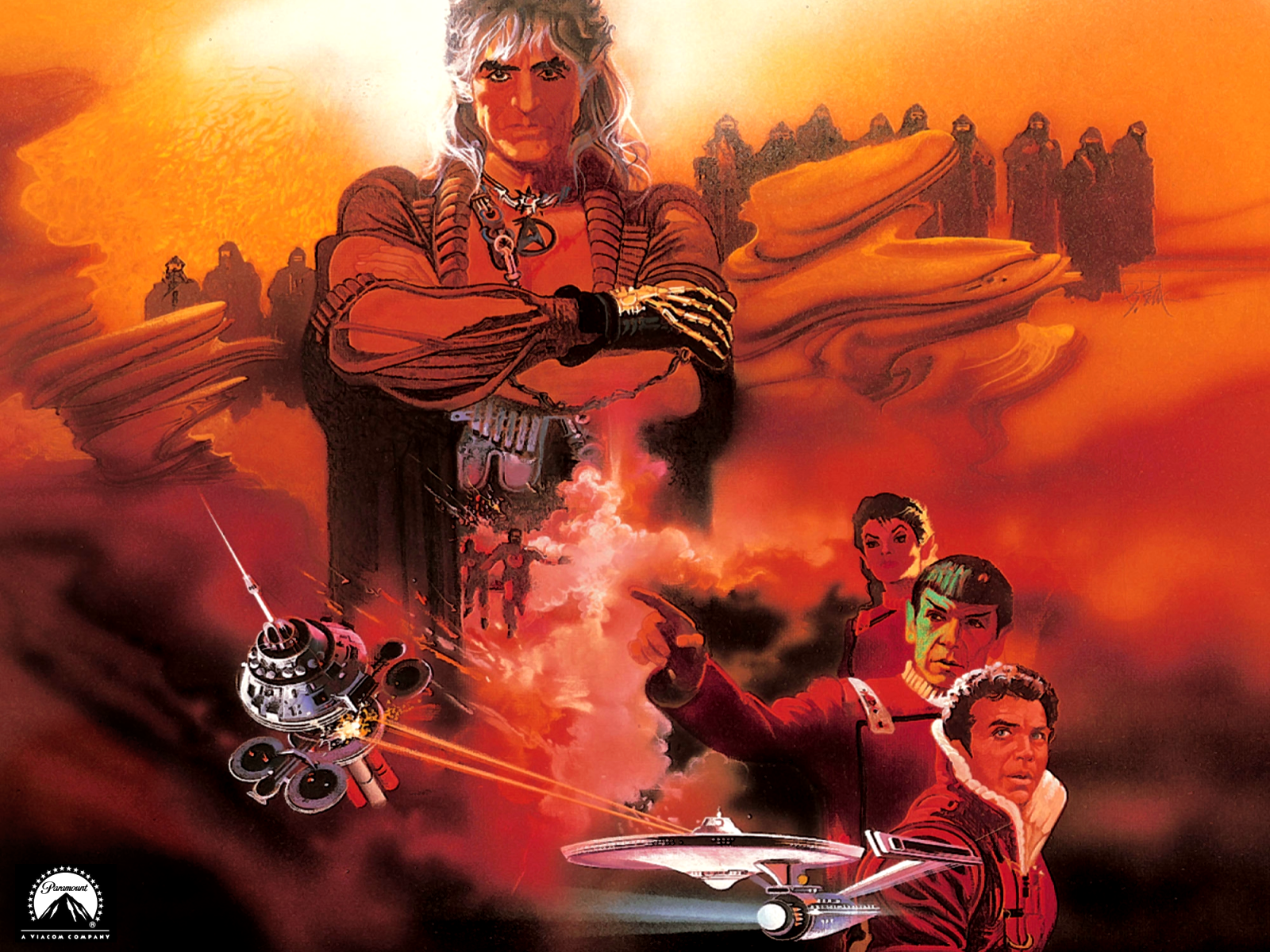
statrek-ii_-the-wrath-of-khan-wallpapers_16772_1600x1200

Wrath of Khan begins with the Star Fleet Academy final exam, The Kobayashi Maru, a no-win scenario simulation designed to test the character of cadets before unleashing them into the harsh realities of interplanetary relations. Kirk is now an admiral relegated to training cadets after giving up his starship command. It’s his birthday, so he’s feeling old. His life lacks adventure, so he feels put out to pasture. He has no family, so he feels alone in the universe. The man is miserable, making him the perfect character in desperate need of an arc.

Come to find out Kirk is the only cadet to beat The Kobayashi Maru, but he did it by rigging the test. He cheated because he doesn’t believe in a no-win scenario. And that’s what the entire film is, Kirk’s Kobayashi Maru. An adversary emerges from his past, hellbent on revenge for being stranded on planet that turns hostile. He’s reunited with an old flame and discovers he has a son. And he’s pitted in a battle of wits against a far superior opponent. Even in his most desperate hour, Kirk is enjoying this. It’s what he was born to do. The only thing he’s ever been good at.

And finally, he’s forced to face The Kobayashi Maru consequences. He’s encountered his no-win scenario. He’s at the end of his tether, with no more cards left to play. He’s not only put himself in the line of fire, but his crew and new found family as well. They’re dead. Or they would have been, had Spock not sacrificed himself, quoting the Charles Dickens novel, A Tale of Two Cities (a present he gives to Kirk on his birthday), “the needs of the many outweigh the needs of the few“.

Kirk finally faces devastating loss, the death of his closest friend, but as he mourns, he witnesses the creation of a world, has reconnected with a family he never knew he had, and is once again in command of a starship. At the beginning of the film, he was feeling old, but as the film wraps, he stares at the Genesis Planet and tells Carol Marcus that he “Feels young.”

That’s a proper character arc.

And you won’t find any of that in Into Darkness. It’s a poor photocopy that lacks the richness of history, the depth of character, or a plot that can bear the weight of scrutiny.

— Rhyan Scorpio-Rhys

Replete With Jargonosity

Image

Simply put: I hate jargon. It’s a cheap language trick feeding on lazy minds that’s slowly destroying descriptive speech as well as the written language. It’s both deceptive—giving the user a faux brilliance that might actually be found lacking if their comments were put into simple terms—and safe, since no one wants to appear out of the cool loop by stopping the jargon-spouter and asking them exactly what they mean (and isn’t it great when you actually call them on it and they struggle for answer?).

And before you mistake my meaning, I understand the importance of industry terms—screenplay direction, set lingo, etc.—as a method of saving communication time in a short attention-spanned world, and as a means of demonstrating how well you understand your area of expertise.

The jargon I hate is of the screenwriting variety in a non-professional setting when it comes to peer review. Not only for my work. In general. But that wasn’t always the case. When I first got into screenwriting I was, quite naturally, greener than a Granny Smith and eager to soak up as much knowledge on the subject of crafting the perfect script as possible, which included industry speak. I mean, who doesn’t want to learn the buzzwords of their aspiring trade and toss them into casual conversations with industry professionals to prove to that they’re with it and they dig the scene, man?

Then I joined several screenwriting groups that met online and at a physical location and attended screenplay review seminars and began to notice how some people hid behind parroted catchphrases in order to avoid the conflict of offering an honest opinion.

I don’t expect my hatred of jargon to change the way things work—hell, I even jargonate (the act of using jargon in verbal conversation) myself, more often than I’m comfortable with—I’m simply saddened by the slow death of Plain English as a method of conveying clear meaning without unnecessary complexity. Particularly when used to offer constructive criticism.

Sally forth and be writeful.

— Rhyan Scorpio-Rhys

Your Writing Says More About Your Character Than You Realize

Image

Creating worlds? That’s the easy bit. Populating them with three dimensional characters… that’s a bit trickier. Whether you write for a living, a hobby, for sport, or just to have a laugh, you will eventually reach a point in your storytelling where you’re forced to pluck the innocent bystanders from your life and slap them smack dab in the middle of your literary dreamscape. Don’t be embarrassed. It happens to us all.

But just because a fictional character has a fleshy counterpart, imbued with their quirks, verbal crutches and personality tics, it doesn’t always mean they’re actually memorable.

So, how do you combat that? Dig, my friend. You need to burrow underneath the surface layer affectations and unearth the true source of their core character and examine what piqued your interest in the first place.

Even the most boring person you know can be a source of inspiration in your writing if you scratch the surface carefully enough. As corny as it sounds, we all carry within us a wealth of creativity and inspiration. Your job is to look deeper.

One of the most important parts of being a writer, aside from textual flourishes and clever turns of phrase, is the ability to see the world, both the one you’re creating and the one you live in, through their eyes. What are their views on major and minor things? Are they blessed or cursed with odd perceptions of the way the world should and/or actually works? Do they engage in activities that exist outside social norms?

Once you’ve identified these tidbits, you have the first building blocks for your memorable character’s foundation. But it’s only the beginning. You’ll need to build on this in order to make your newly birthed person dynamic.

Since you’re not creating a clone or an exact replica of your best bud or the nosy neighbor down the hall who tracks you via her peephole every time you leave or enter your front door—seriously, lady, get a life—you’ll want to take a few pages from Baron Victor von’s notebook and Frankenstein your creation up a bit.

If you do your job properly, your patchwork person will seem more believable because they contain traits your friends have that you secretly covet—we covet what we see everyday, Clarice—family member habits that absolutely drive you up the wall, as well as the little insecure bits of yourself you pray nobody really notices (FYI: they do, they’re just too polite to bring it up in conversation). Stop moaning, you’ll always be a part of the mix. You can’t help it. You’re the person you know the best. Yup, it’s true and you heard it here first.

The best thing about your ethereal Prometheus is only you will be able to see the stitches that hold the monstrosity together. To everyone else, the jigsaw pieces fit together seamlessly. But you’re still not done.

You can’t have your bouncing baby entity walking around all starkers—well, you can if you’re writing one of those 50 Shades thingies—so you’ll need to dress them with your imagination and layer in true life details like articles of clothing, substantiating them as a new independent life form while better solidifying your understanding of them.

Then, to top things off, dab them with a little Eau de real desires—just behind the ears—and spray obstacles in the air and have them walk through the mist, before you powder them down with motivations.

And voilà! Take a step back and view your bonafide multidimensional, absolutely-fictional-but-seems-so-damn-real-it’s-scary character. Now all you have to do is repeat the process several more times.

Hey, I never said this would be easy.

Sally forth and be writeful.

— Rhyan Scorpio-Rhys

What Lies Beneath

Image

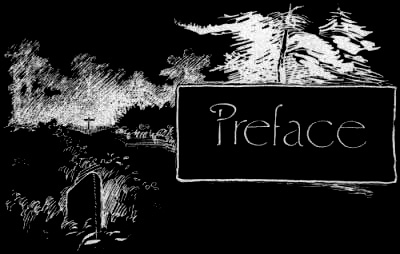
I always love reading authors introductions to short stories and sometimes find the inspiration for writing the tale more interesting than the story itself. And just so we’re clear, I don’t mean the opening line and/or paragraph of the story. I’m talking about the preface, and a well-written introduction in the right hands is like the director’s commentary or behind-the-scenes footage or Easter eggs on your favorite DVD.

The odd thing about me is I can’t actually write an introduction to my own work until after I’ve completed the story, which I guess makes it more of a postmortem than an actual preface. I think the primary reason is if I write the introduction first it feels like I’m writing the story twice, instead of offering a quick glimpse at the man behind the curtain.

On more than one occasion, I had no idea what served as the impetus for the story I’d just written. Not immediately anyway. It usually comes to me later, sometimes days or weeks, when I’d wake with the story and characters stuck in my head, unraveling plot and dialogue in my mind until I uncovered the parallels to some half-forgotten event.

They’re like finding buried treasure, aren’t they? Those memories stored in neurons on seldom traveled synaptic pathways. Which made me think about a new project. Normally I don’t write drama pieces, I tend to gravitate towards speculative and science fiction, religious fantasy and horror, but I think I’d like to write a collected book filled with nothing but prefaces. Inspirations for stories without including the stories themselves.

I haven’t quite worked all the bugs out of the idea yet and I’m not sure how marketable it would be, but some projects we write for ourselves and not the quick buck, don’t we?

— Rhyan Scorpio-Rhys

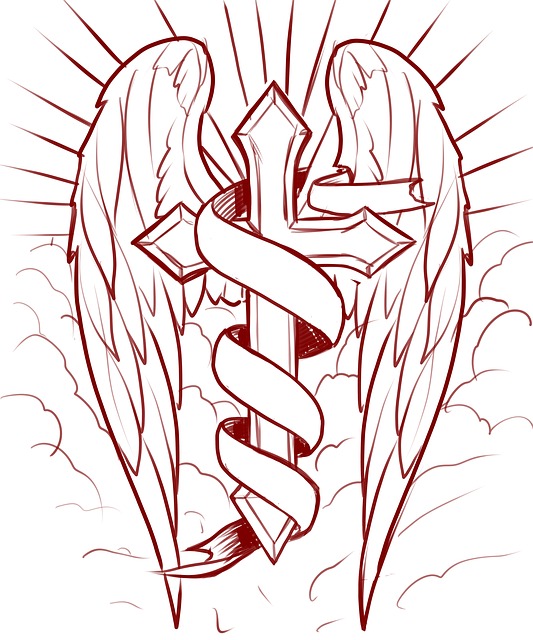
A Heavy Cross to Bear – Choosing The Right Cross Tattoo

Crux immissa. Crux capitata. Crux commissa. Crux immissa. Crux ansata. Cruz gammata.

The cross. It is the most ancient and universal symbol, which in pre-erudite cultures often symbolized a duality. Associated with the horizontal beam of the cross were the symbols of the feminine, which included the characteristics of passivity, earthiness, destruction, and death. On the other hand, the vertical beam suggested its masculine counterpart, which was considered celestial, eternal, creative, positive, active, and full of life.But before the cross became a religious and holy symbol, it was used in a cruel method of execution called crucifixion, where a victim was tied and nailed by the wrists and feet to a large wooden cross and left to hang there until dead. This practice was believed to have begun with ancient Persians, and Alexander the Great introduced crucifixion throughout his empire when he crucified a general who disagreed with his campaign plans. Later, the Roman Empire adopted the custom from Carthage and used it for slaves, rebels, enemies and criminals. After Jesus of Nazareth had been put to death, Saint Helena was said to have discovered the cross that Christ died upon in the fourth century AD. Helena was instrumental in converting the crumbling Roman Empire into the Christian Holy Roman Empire, and when Christianity became the state religion, Emperor Constantine abolished crucifixion.

Now, when it comes to religious symbol body art, the cross tattoo is by far the most popular tattoo design.

What Cross Tattoo Designs Represent On A Man Or Woman

Cross tattoos have the distinction of being one of the few tattoo designs that are, for the most part, unisex. It represents that same thing for women and men, as the symbol of the cross deals with the spiritual rather than the physical.

What Type Of Person Gets A Cross Tattoo Design

People who get cross tattoos are in tune with their spirituality and they know that they’re more than just their physical bodies. Their intuition and faith factor in heavily when the solution to a problem is beyond reasoning and thinking. Most of the problems we face day to day are intangible, so in seeking answers, these people transcend physical limitations. Cross tattoos also help spiritual people be at peace with themselves, and they seldom feel alone. The cross tattoo serves as a reminder that they are loved by God all the time, and feeling this love, they are peaceful, compassionate, open and loving to all human beings. With cross body art, a special relationship with God is implied.

Different Types Of Crosses

The Crux Immissa is shaped like a lower case “t”, with the horizontal beam inserted (which is what immissa means) at right angles to the upright post. This is the most common form of the Christian cross, and it was on a cross such as this that Christ actually died (for that reason it is sometimes referred to as the Passion cross). This cross is also called Crux Capitata (“with a head”) and the Latin cross.

The Crux Commissa is shaped like a capital “T” (commissa means “joined” or “attached”) and it is more widely known as the Tau Cross or St. Anthony’s cross.

The Crux Decussata is an “X” shaped cross (decussata comes from decus, Latin for “distinction”, “honor”, “glory” and “grace”). The crux decussata is seen in the elaborate Chi Rho Cross and Baptismal Cross, and the simple St. Andrew’s cross.

The Crux Ansata, or ansated cross, is most commonly known as the Ankh (a looped Tau cross that serves as the ancient Egyptian hieroglyph meaning “life”). The hieroglyph itself is a sketch of the womb and the sexual union of male and female genitalia, which signifies zest, energy, reproduction, regeneration, and immortality. The symbol closely resembles the Hindu depiction of a Hermaphrodite standing on a lotus flower.

The Cross of Triumph is similar to the design of the Latin cross, only it adds a large circle to the base with the outline of an upside-down T inside. This cross is a symbol that testifies to the universal triumph of the Gospel throughout the world.

The Calvary Cross is like the Crux Immissa on it’s mounted on three steps (which represent the hill of Calvary or, more often, “faith”, “hope” and “love”. It is also known as the Graded cross.

The Eastern Orthodox Cross (also known as the Russian Cross and Byzantine Cross) is another cross that is similar to the Latin Cross with two additional cross beams that sit above and below the original horizontal beam. The upper is shorter in length and runs parallel to the original cross beam while the lower slopes down from left to right at an angle.The top beam bears the plaque conveying Pontius Pilate’s inscription, “INRI” (Iesus Nazarenus Rex Iudaeorum) which is Latin, Greek and Hebrew for “Jesus the Nazorean, King of the Jews”. The true meaning of the bottom beam is a little more of a mystery. One popular theory (circa the eleventh century) is that it represents a footrest and the slant symbolizes a balance scale showing the good thief, St. Dismas, having accepted Christ would ascend to heaven, while the thief who mocked Jesus would descend to hell. In this interpretation, Christ and the cross is a balance of justice.

The Templar Cross features horizontal and vertical beams of equal length, the ends of which are flared. To fully understand the history of the cross, we must go back to the year 1118, when a military order was formed by nine French noble knights, whose ranks included Hugues de Payens and Geoffrey de Saint-Omer. The founding knights of this order, known as “The Poor Knights of Christ”, took monastic vows and were devoted to the protection of pilgrims and the defense of the Holy Land. When the King of Jerusalem, King Baldwin II (circa 1118-1131), installed the order in a part of the Palace of Jerusalem called, Solomon’s Temple, for their residence and armory, the order became known as Knights of the Temple or Templars.In 1128, the Knights of the Temple were confirmed by Pope Honorius II, and they received the white vestment as a symbol of the purity of their life, to which Pope Eugenius, in 1146, added “the red cross with two bars”. Despite many years of sacrifices and rendering service to bit Christianity and civilization, Philip the Fair, King of France (who was in the Order’s debt), arrested all the Templars in 1307, and seized their goods and possessions. But Phillip was unable to judge the Order, as it was answerable only to the Pope, so he set about to coerce Pope Clement V to act against the Order. The Pope eventually yielded to pressure in 1312 and the Order was forced to revert to its original status of a Secular Military Order of Chivalry.In 1314, noted Templar Grand Master Jacques de Molay was burned at the stake near Notre Dame Cathedral, Paris. And in England, though Edward II did not take immediate action against the Order, he permitted the Inquisitors to judge the Order at the Church of All Hallows By-the-Tower, and then set about seizing the Templar lands and possessions, including the Temple in London, for himself rather than passing them on to the nominated custodians, the Knights of Saint John.

The biggest misconception regarding the Knights Templar is that they always wore the cross as part of their raiment, when in actuality it wasn’t until 1147 that the Pope Eugene III granted the Templars the right to wear a red cross, sewn above the heart on the left side of the Templar garment. Before this time the knights wore only a white coat and their sergeants wore a brown one.

The Crusader’s Cross (also called the Jerusalem Cross) is symbolized as the crux immissa surrounded by four smaller crosses and usually represents Christ’s command to spread the Gospel around the world, a mission that started in Jerusalem. Although the true meaning of this cross is unknown, the most popular beliefs are:

* The larger cross represents the Old Testament teachings and the smaller crosses incorporate the New Testament teachings. The four apostles, Matthew, Mark, Luke and John, surrounding Christ in the center Christianity (the center cross) being broadcast by missionaries to the four corners of the world
* Five crosses representing the five wounds of Jesus on the cross (hands, feet and side)

It is believed that the name Crusader’s Cross came about because the symbol was on the papal banner given to the crusaders by Pope Urban II.

The Maltese Cross is comprised of four triangles who apexes meet to form an eight-pointed star that has varies shapes (blunt, curved and sharp). Originally used by the Knights of the Hospitaller Order, so known due to their charity toward the sick and poor in setting up hospices and hospitals, the symbol is still in use today by fire and ambulance services. During this time, battle armor was often extensive, covering bodies and faces and making it difficult in battle to differentiate friend from foe, so the need for an identifiable insignia for the knights became vital. Since they fought for a holy cause, they selected the symbol of the cross and when the Knights of Saint John of Jerusalem moved to the Island of Malta, the emblem inherited the island’s name. The Maltese cross represented the principles of charity, loyalty, chivalry, gallantry, generosities to friend and foe, protection of the weak, and dexterity in service. Because of its connection with the Knights of St. John, this cross is also called St. John’s Cross.

The Celtic Cross is simply a Latin cross with a ring in the center, and as is the case with most of the other crosses listed here, this cross is called different things by different people. For example, Episcopalians and Anglicans call it the Celtic cross, whereas Catholics refer to it as the Irish cross. Sometimes it’s even mistakenly identified as St. John’s Cross (see: Maltese Cross). Equally ambiguous is the meaning of the ring in the center of the cross. Interpretations range from it being a symbol of eternity that emphasizes the everlasting love of God, as shown through Christ’s crucifixion, to the symbolization of Christ’s resurrection, to the simplified explanation that it’s a halo. Then there’s the theory that when St. Patrick converted Druids to Christians, he took one of their standing stones etched with a circle that symbolized their moon goddess, and scratched a Latin cross mark over the circle, to show that Christianity had replaced their pagan beliefs.

The Celtic cross also contains plaitwork, which are patterns of interwoven cords that symbolize the “Thread of Life”, since the human soul was thought, by the Celts, to be a fragment of the divine, which would ultimately return to its divine source, after ridding itself of its accumulated, inherited impurities (see: Celtic Knots for more information regarding plaitwork).

The Anchor Cross is also known as St. Clement’s Cross, named after the fourth Pope who was banished from Rome in the first century by Emperor Trajan. Clement was forced to work in a Russian stone quarry and he caused trouble for himself when he located a spring of fresh water from the ground that quenched his fellow prisoners’ thirst (believed to be miracle, which aided in his later sainthood), and since no good deed goes unpunished, the prison governor ordered Clement’s death. He was subsequently tied to anchor and tossed into the Black Sea to prevent Christians from recovering the body. Clement later became the patron saint of anchorsmiths, blacksmiths, mariners, marble workers and stonecutters.

Which Cross Tattoo Is Right For Me?

Believe it or not, this is a difficult question to answer, because there is no logical thought pattern behind the choice (with the exception of the choosing the cross symbol that identifies your religion). The design could be a traditional Christian cross, a tribal cross, a Celtic cross, a gothic cross (being “goth” doesn’t make you a bad person), or a Latin cross with either a rosary, wings or praying hands. The only thing that matters is that the cross tattoo design you select, speaks to you spiritually. This decision is between you and God.

How will you show your faith and love?

Copyright ©2005 Rhyan Scorpio Rhys

Songs As Stories: Stars Go Blue

When Stars Go Blue *Inspired by the song “When The Stars Go Blue” by Ryan Adams

It was a secret place, a quarter acre of Eden abandoned and erased from the mind of mankind the instant the original sin was committed, and I had stumbled upon it quite by accident.

No, that was a lie and I promised myself I would not defile the sanctity of the garden if it could be helped.

I was not proud of the actual reason of how I came to be in this place, simply because I was a stalker. In my defense, it was only the once, I hadn’t made a habit of following women around without their knowledge. Just one woman. The one I was currently spying on, crouched here in the bushes amongst the flower blossoms, berries and leaves.

Mari.

Coworkers called her Marionette behind her back and sometimes to her face, passing it off as good-natured teasing. There was nothing good-natured about it. She acquired the nickname because she was a gangly woman who moved about in a jerky fashion, as if the unseen wires that made her move were constantly in a tangle that the puppeteer hadn’t been able to sort.

Mari did as people of her ilk often do, she kept herself to herself, stared at her shoes rather than make eye contact, and accepted all the negativity heaped upon her shoulders with nary a complaint. But she couldn’t hide the fact that she was miserable, just as I couldn’t hide that I was somehow drawn to that misery.

Although I wanted to know her for a while, I was too shy to make an approach. Today, I told myself, would be the day. As I went through my daily grind, I slowly mustered all my courage and screwed it to the sticking place. Ten minutes to quitting time, I marched to Mari’s cubicle, prepared to make my intentions known…

But she wasn’t there.

I searched by the fax machine, in the kitchen near the coffee maker, I even bore the brunt of strange stares when I loitered outside the women’s restroom, but she wasn’t anywhere to be found. Completely and utterly defeated, I grabbed my coat and left for home.

Half a block before the entrance to the subway, something grabbed my attention out the corner of my eye. Across the street, Mari sat on a bench at a bus stop as the 5:17 pulled up. I wanted to run across the street, braving the crosstown traffic and hop on the bus to make my stand. Instead, I froze. All my former courage had long abandoned me.

For the second time today, my heart sank. And for the second time today it did so without merit. The bus pulled away to find Mari still seated. And she sat as bus after bus pulled up and away. She did not read a book. She did not listen to music. She simply sat patiently.

Then when sufficient time had passed, Mari stood and walked away. I couldn’t tell you what possessed me to follow her on the crooked path that weaved through narrow alleyways, towering overpasses, black as pitch underground tunnels. Eventually her journey came to a halt in front of a lot that appeared to have been vacant for centuries.

Mari stood at the perimeter of the lot and at the precise moment the evening woke and forced the daylight into hiding, a door appeared with seven locks. She stood absolutely still and waited. In the newborn evening sky, stars bloomed and seven of them twinkled blue in a sequence that repeated seven times. The locks tumbled one after the other and the door opened slowly.

Mari stepped through the door frame but hadn’t appeared in the lot on the other side. From my vantage point, she simply vanished.

I ran to the door and managed to squeeze through before it shut, but instead of finding myself in the overgrown and refuse-filled lot, I stepped into paradise. My clothes melted from my body and ashamed of my nakedness, I hid in a nearby bush.

In the very center of the garden stood a mammoth tree that bore unrecognizable fruit of various shapes and sizes, the roots of which branched out along the grass and touched two streams on either side, one that appeared to have been made of milk and the other honey.

Standing beside the tree was Mari, naked but no longer that gangly woman who was awkward in her skin and awkward in the world. Here, her jerky movements flowed gracefully, her normally dull and lifeless eyes were polished to a fine shine, and her crooked mouth straightened and nearly split her face in half when she unleashed that radiant smile.

Mari blew a kiss up to the tree and somehow that kiss became a breeze that rustled the leaves which made a sort of melody unlike any I had ever heard. A pure music played by nature itself.

She danced around the tree all night without tiring, in time with the tune, and sang in a voice that was different from her normal mousy tone, stronger now, more confident. And I watched all the sorrow and strife, all the hurt and anger, all that was wrong with her life evaporate from her body.

When she sensed it was time to leave, Mari reached up and plucked the smallest of the fruit from a low hanging branch and dipped it in the stream of honey before washing the meal down with a cupped hand from the stream of milk.

The door reappeared and her clothing was folded neatly in a pile beside it. With each layer she put on, the transformation to her old self, the Mari that people mocked, began.

I thought about following her, but how could I ever leave this place, this patch of perfection? I knew she would be back and the next time I would talk to her, for certain. Until then I was contented to wait until she returned to dance again. I would wait until the stars went blue.

Sally forth and be dancing where the stars go bluingly writeful.

©2014 Rhyan Scorpio-Rhys

Creative Commons License

Of Air Returned

images

i.

I burned my soul to ash but the pain paled in comparison to the terror that struck my heart like a match, anticipating her arrival and the tirade she would carry in tow. An unwarranted fear, as she was calm when she saw what I had done. Calm and nurturing. Soothing my pain with herbs and aromas, and each early morning during the hour of the wolf, she laid an ear on my back and listened as my soul mended itself.

She never spoke the words of disappointment aloud but it registered in her eyes. Although residing within my body, this wounded thing, this unwanted soul, did not belong to me. She had laid claim to it many years past, and in my despondency, I had taken liberties with her property and attempted to destroy it. Again.

ii.

The first time, I threw my soul into a sinkhole and allowed the ground to swallow it whole. I made her acquaintance when she plucked it from the soil like a tattered tuber. “I saw what you did,” she said. “And since you would so recklessly toss this precious thing away, it is no longer yours, but mine, agreed?” I nodded and she handed my soul back to me for safe keeping.

I honored our pact for a few years, caring for it within my limited capacity, but during a particularly nasty bout of depression, I tied heavy stones to my soul and pushed it off the sea wall. For a second time, she appeared, fishing my soul from the waves and scolded me, “You are charged with protecting this thing that is mine, do you understand?” Again, I nodded. Again, I lied.

iii.

“Why do you want this worthless soul when it has been crushed by the earth? Why do you want it when it has been drowned in the sea? Why do you want it when it has been set aflame like so much tinder?” I searched long and hard yet found no answer in her silence.

iv.

During the day, when she thought me preoccupied, she secreted herself in the shadows and slept. One day I followed her into the darkness and watched her body twitch from dreaming and listened as she muttered,

One more soul, once buried deep.
One more soul, in ocean steeped.
One more soul, by fire burned.
One more soul, of air returned.

v.

Under her care, my soul grew healthier and it frightened me. I was pitilessly plagued and badgered by the phrase, One more soul, of air returned, that repeated in my mind’s ear until it turned dogged and cacophonous. But she was unaware of my inner torment, in fact, she was in an exceptionally good mood today, her voice almost a song, “I know you don’t see it, but you are a gift, you are. You have no idea just how special.”

vi.

Today was the day. I felt it in my marrow. Something was destined to happen, something I most likely would not survive. I should have embraced this eerie premonition, for it was no secret that I did not want to continue in this manner, broken, detached and alone. But the choice of how and when I departed this wretched life was mine to make and mine alone. So, I stalled by distracting her with trivialities. “May I have more broth? Have you seen my shoes? No, not that pair, the other ones? Can we go for a walk?” If she knew my plan, her expression never showed sign. No request was too large or small on this day. She granted them all.

vii.

We strolled along the pathway in the park that led to the duck pond, a place we visited often during my convalescence. Picked, naturally, as not to arouse suspicion as I searched for the proper diversion in order to make my escape. But I was so wrapped in my own thoughts, I failed to notice that she was walking slower than usual today. “Can we rest a moment?” she asked as we neared the benches. “I am a little short of breath.”

Her breathing became a labored and raspy thing before it hitched and became lodged in her throat. When her face went dusky blue and she slid off the park bench, I panicked. The opportunity had presented itself and there I stood like an idiot, frozen. Entangled in the decision of whose life to save, or more accurately, whose death I could live with.

There was no real choice.

viii.

Her breathing was a trembling, liquid sound as I pressed my mouth to hers and exhaled, but instead of me breathing air into her body, I felt her sucking air from my lungs, and not just air…

I tried desperately to pull away but her thin, vise-like hands clamped down on the nape of my neck and held me firm in a kiss that was collapsing me. My hold on life became dim and futile, but before I slipped away into emptiness, I noticed the oddest thing: her belly began to swell.

Every fiber of my actuality was drawn into her, and my soul, the object I had forever been so reckless with, was systematically being stripped of concern, of negativity, of identity. I fell further and further into a darkness that pressed on me from all sides. So tight, so constricted. I was still unable to breathe but the sensation was somehow different now.

At the very moment when it seemed the darkness was about to claim me for eternity, there came a burst of light so bright as to cut my eyes. Thankfully something soon blotted out the light – a face, slowly coming into focus but I knew her before I saw her. From the moment I heard her soft cooing, “You are a gift, you are. You have no idea just how special.”

Mother.

Text and Audio ©1988 & 2021 Rhyan Scorpio-Rhys

About Of Air Returned: Delusion can be a scary thing, but it can also be wonderful at the same time. This piece was written in the early part of 1988, during a period when I swore I could do no wrong—it’s fine, you can laugh, I’ll just cringe quietly in the corner. I was heavily into both science and speculative fiction and had recently rediscovered the works of The Brothers Grimm, so I was determined to create my own collection of fairy tales for the—then—modern age.

Applying fairy tale rules, I could introduce the fantastic or the bizarre into any story with little or no explanation, and have all the characters in the tales accept everything as normal. Wishes as deus ex machina. Love as the ultimate cure-all. All the good stuff without all the fuss. Genius, right?

It would take the better part of six months for me to discover I wasn’t the groundbreaker I imagined myself to be. On the plus side, I followed my then idol, Harlan Ellison’s advice and was able to churn one of these puppies out a day.

Of course, most of them are unreadable. This one teeters on the edge. I kinda like it and it kinda embarrasses the hell out of me, but it was one of the three Rhyan Realm tales–yeah, I created my own sub-genre name for them, what of it?–that actually saw print… after 10-some-odd rejections.

You’ll laugh, you’ll cry, you’ll kiss a few minutes goodbye.