Welcome to No Fixed Address, a weekly series where I write candidly about what it means to be homeless—right now, in real life, not in some sanitized Hollywood version. I’m currently unhoused. Not “drifting.” Not “on a journey.” Just trying to survive in a world that looks away.
Each week, I’ll share personal accounts, hard truths, and moments that don’t make it into the movies. If you’re here to understand what homelessness actually looks like—not as a plot point, but as a life—then you’re in the right place.
This is not a cry for pity. It’s a record. A mirror. A small act of resistance.
Being homeless, you slowly develop the mutant ability of invisibility. You don’t ask for it, but it’s given to you, day by day, until you master the art of being looked through as if you didn’t exist. The city becomes a blur of legs and exhaust, a world that moves around a space you only temporarily occupy. On the rare occasion, however, someone’s focus snags on you, and for a moment, you flicker back into existence.
Such was the case for me at a church-run soup kitchen in a neighborhood that had long since given up trying to be safe. The air outside reeked of old urine and decay, but inside, it was a sterile blast of bleach and boiled coffee. Security was a serious affair: a guard with tired eyes checked bags and backpacks, and everyone submitted to the electronic chirp of a metal detector wand and an indifferent pat-down. A necessary ritual before you could be granted a breakfast tray of food.
The dining hall was a cramped, narrow space, lined with four long benches already crowded with hunched shoulders and weary faces. The room was made even smaller by the bustling team of volunteers, a small army of good intentions standing by to deliver the morning’s meal. Due to a series of funding cuts following the most recent presidential election, the breakfast was reduced to a single-serving packet of dry cereal, a small plastic cup of milk, a diced fruit cup swimming in syrup, a granola bar, a small bottle of water, and the choice of either a cup of coffee or tea. A checklist of calories.
As was my custom, I made my way down the line of volunteers, offering a quiet, “Hello, thank you for being here.” Some nodded back, a few offered a real smile. Most didn’t. It never bothered me. Acknowledging their presence was my way of holding onto a piece of the man I used to be. You are only responsible for your own actions, after all.
The volunteer who served me was a flurry of limbs and apologies. A tall, slender blonde woman whose thick glasses seemed to magnify the slight panic in her eyes. She stumbled bringing the tray over, her sneakers squeaking on the linoleum. She almost tripped setting it down, which caused the milk to slosh over the side, a white splash on the worn plastic.
“Oh, I am so sorry!” she gasped, her accented voice soft, with a melody to it I couldn’t place. She fumbled with a napkin, making the puddle worse.
“Hey, it’s totally fine,” I said, smiling. “Adds a little character to the tray.” And it really was fine because milk was the enemy. Being lactose intolerant, I always ate my cereal dry.
She paused her frantic dabbing and looked at me. Really looked. And then, to my surprise, she blushed. “I am also sorry I did not say hello when you came in,” she said, finally meeting my eyes. “I am afraid my klutziness made the first impression.”
I wish I’d had the presence of mind to remember her name, but alas and alack, my memory isn’t worth the paper it’s printed on. What I did recall was that she was from the Czech Republic, and was currently working as an au pair in New Jersey. She was in New York because she’d seen Moulin Rouge the night before and stayed in a hostel overnight in order to volunteer at the soup kitchen. Her face lit up as she described the play, transforming her persona from awkward to incandescent. She was a self-proclaimed fashion and craft nerd. She’d made gifts for the cast, contacted them through Instagram, and actually arranged to meet them backstage after the show. She showed me pictures on her phone of her beaming alongside the actors, holding up her handmade creations. She hoped, she confessed, that it might one day lead to costume design work in an actual Broadway or West End production. Her biggest fear was that the current administration would make it impossible to get another work visa after her current one expired in August.
She painted a picture of a life so different from mine it felt like a broadcast from another galaxy. Then, searching for common ground, I pointed to a small pin on her apron—a Starfleet insignia.
Her eyes widened behind her glasses like a starship engaging its warp drive. She was a Trekkie. A super-fan. She’d made her own uniforms from every series. “Even,” she whispered conspiratorially, leaning in, “Discovery.”
I chuckled. “That’s dedication.”
The kitchen had a strict ten-minute time limit per meal to keep the line moving. But I was the last one in, and the morning rush was over. The other volunteers started wiping down counters, their glances growing heavier, but she didn’t seem to notice. We talked Trek, debating the merits of Kirk versus Picard, the tragedy of Jadzia Dax, the sheer brilliance of the Dominion War arc. We were two strangers in a forgotten corner of the city, speaking a shared, secret language.
Then, her expression softened. “And what about you?” she asked.
I gave her the abridged version. You learn to edit your life story for polite company. But she listened with an unnerving intensity. I didn’t want to dim the light in her eyes after she’d just had such a perfect, starlit day.
She must have sensed my hesitation. “No, I mean,” she said, her voice dropping, “how does this… affect you? Mentally. Emotionally.”
The question was so direct, so human, it disarmed me. I decided to give her the truth.
“It grinds you down,” I said, the words feeling heavy and foreign in my mouth. “You start to feel less than human. Invisible. Like a ghost haunting a world that’s forgotten you’re even there.”
She looked at me for a long, silent moment, her head cocked to one side as if trying to solve a complex equation. Then, with a small, definitive nod, she said something that shattered the air between us.
“I would have your babies.”
I froze. My mind, which had just been soaring through the Alpha Quadrant, crashed back to Earth. I am old enough to be her father, maybe even her grandfather. The statement hung in the air, bizarre and profound. It wasn’t a proposition. It wasn’t a joke. It was a declaration. A strange, fiercely human, and impossibly beautiful testament that shot through layers of invisibility and said: I see you. You are a man. You are worthy.
I didn’t know how to process it. Still don’t. I didn’t push, or dig for meaning, or make a clumsy joke. I just let it sit there, an echo from a parallel world where such things could be said.
Some moments aren’t meant for deconstruction. They’re meant to be held, like a fragile, priceless thing. You just take the compliment, breathe it in, and let it be enough.
For that one conversation, in that cramped and sterile room, I wasn’t on the streets. I wasn’t a ghost. I was a man talking to a woman about starships and dreams.
And that was a kind of magic more real than anything I had felt in quite a while.
Not with a bark or whimper, but with full-bodied vowels shaped by a throat that was never meant to form them. “You missed the turn again,” it says.
Her knuckles whiten around the steering wheel. The sunset bleeds through clouds on the horizon, too red, too deliberate. They haven’t passed another vehicle in hours. The radio hums static, but beneath it: voices. Some of them hers.
The Jack Russell Terrier sits perfectly upright in the passenger seat, one ear cocked like a question mark. “Are you ignoring me,” it asks, “or pretending this is normal?”
She glances sideways. The dog watches something beyond the window—something she can’t see. Sometimes its reflection doesn’t move when it does.
“We’ve passed this gas station three times now,” it says, licking a paw methodically. “Same exact soda spill by the door. Same crushed raccoon behind the third pump. I counted.”
“You’re not supposed to talk,” she finally says, and regrets the words immediately.
The dog turns its head with unnatural precision. “Neither are you,” it replies. “If we’re playing by original intent.”
Silence falls between them again.
Wind slips through a crack in the driver’s window with a low, persistent hum. She closes it. The hum remains.
The landscape is familiar yet wrong. Cacti that cast no shadows. Billboards advertising products discontinued when the world ended (briefly, in Ohio—though only the dog remembers this).
“We need to stop soon,” the dog says. “You’re unraveling.”
“I’m fine.”
“Your hands are glitching.”
She looks down. Her fingers flicker—skin to bone to static to skin—like buffering code struggling to render.
“You’re forgetting how to be her,” the dog says, almost gently. “Not your fault. We weren’t designed for this duration.”
She presses the accelerator to the floor.
The road brightens, becoming less real. The lines don’t blur—they vibrate with an inner light.
A memory surfaces that isn’t truly hers: a field where glass grows like grass, where gravity makes music. A place without roads.
“You remember, don’t you?” the dog asks, curling into itself without breaking its gaze. “That’s why you’re afraid.”
She doesn’t answer. But her pulse has synchronized with the radio static. And within that static, something calls her name. Not her human name. The old one. The keyed one. The one the stars used before she wore this skin.
They drive on.
She doesn’t notice that the fuel gauge never moves. Or that the dog no longer casts a shadow at all.
And somewhere, just beyond the next wrong turn, the Fold waits in patient vibration. Waiting for the vessel. And the voice that came back wrong.
Five Stops Before the Threshold
I. The Kindling Griddle
She parks beneath a neon sign blinking “OPEN” in half-lives. The diner air hangs heavy with burnt syrup and conversations that were never spoken.
Inside, the waitress greets her with familiar warmth. “Back so soon, sweetheart?”
She hesitates. The booth is warm, as if someone just vacated it. The dog jumps up beside her—too smoothly, like it’s done this before.
She orders pancakes. She always orders pancakes. The waitress writes nothing down.
Music plays, but there are no speakers. Just a resonance beneath the floor. The coffee tastes like grief diluted by rain.
“She was named Grid,” the dog says between bites of toast it never ordered. “Or Laurelaine. Or You.”
She looks up. The waitress has vanished. The booth across from her sits empty. Her plate is suddenly full again.
She stands, walks out, walks back in. The door chimes.
“Back so soon, sweetheart?”
The dog sighs. “We’re melting.”
II. Last Stop Fuel & Goods (Before the Wound Widens)
The gas station squats beneath a sky of wrong blue—too vivid, too still.
She enters. The bell above the door doesn’t ring. It shivers.
The clerk looks up without surprise. “It’s you. You got the dog back.”
She has no memory of this place.
He slides a cassette across the counter. White tape. Unlabeled. Yet she hears it whispering: “Play me when the sky forgets itself.”
Her name is carved into the wooden counter. Once neatly. Once desperately.
She pockets the tape.
“He tastes like coordinates,” the dog says, staring at the clerk. “I bit him once. It hurt.”
She pays with currency she doesn’t recognize—small tokens of bone or ivory. The clerk doesn’t count them.
“Tell her,” he says to the dog. “Tell her it’s almost over.”
The dog remains silent until they return to the car. “We died here last time. You should’ve let me forget.”
III. The Rest Stop Mirror
The restroom reeks of bleach tinged with subroutine urine and the essence of exhausted time.
The mirror emits a low frequency when she approaches. At first, she sees only herself—pale, tired, seemingly real. But when she moves, her reflection lags. When she raises her arm, the mirror raises a paw.
Her dog stands where her reflection should be. Upright. Watching. With her eyes. She presses her hand to the glass. The mirror feels like something other than glass.
“You’re not the real one,” her reflection says. “But neither am I.”
Behind the mirror: a window into a sterile room. Machines hum around a tank. A version of her floats inside, mouth open in silent scream or song. Her fingers glitch—bone, skin, data, nothing.
“Don’t look too long,” the dog warns from behind her. “You’ll get stuck again.”
She turns on the faucet. The water runs black.
IV. The Fold Inn, Room 0
The carpet patterns watch her movements.
She checks in without speaking. The desk clerk hands her a key labeled “NULL.”
In Room 0, the television plays without being turned on. It shows her—sitting in a car, eyes hollow, mouth forming silent words. Then the dog. Standing upright. Weeping. Writing symbols in chalk. Then a version of her that isn’t human at all. Elongated limbs. A face of mirrored surfaces. Holding a leash.
She turns it off. It turns back on.
Morse code flickers in the static: MAKE A CHOICE
“We won’t both leave,” the dog says from the bed. “One vessel. One signal. One truth.”
She screams at the screen. It screams back with her exact voice.
V. The Welcome Spire
No sign marks it, only a door standing open.
Inside is a forgotten memory gray carpet, non-binary artificial plants, and an unmanned reception desk.
On the far wall, a screen flickers as a VHS tape engages. A training video begins:
“Welcome, Vessel-001. You are approaching Final Condition Threshold.”
She tries to shut it off. It continues regardless.
“Would you like to retain love? Would you like to delete pain? Would you like to initiate fusion with Conduit?”
The “Conduit” is the dog. She understands this now.
She presses Eject. The tape remains engaged.
The dog jumps onto the desk and lies down with a sigh. “This is where I was born,” it says. “And where I die. Same frame. Different tape.”
And so they drive again.
The radio activates. A new voice—child, god, herself: “Repeat after me: You are almost at the Fold.”
Her grip tightens on the wheel. The dog curls into her lap. Outside, the road unravels like thread.
THE CASSETTE
Label: Play Me When the Sky Forgets Itself
Media: Unlabeled white tape
Duration: Variable
Status: Always rewinding. Never the same twice.
🌀 [Audio Begins] A hiss. An intake of breath. Then:
“Hello, Vessel-001. Or do you prefer your newer names? The ones you stitched from shadows and sweat?”
A child’s voice. Or an ancient woman’s. Or her own voice, reversed and slowed.
“You’ve driven very far. Further than most. Most turn back at the diner. Some dissolve at the mirror. One tried to eat the dog.”
[tape distortion: magnetic warbling]
“You chose to continue.”
Then a silence that pulses. A tone below the threshold of hearing.
“This is not a message. This is a mirror. You are listening to your own collapse—spoken in future tense.”
The dog lifts its head in the car. Growls. Then speaks: “Don’t trust the next sentence.”
“You were made to love. That was your flaw.”
A distorted laugh—or weeping.
“The Conduit is not a pet. It is a spine for your new world. Fusion will not be painless. But remaining separate will result in erasure. You cannot survive as two.”
The hiss intensifies.
“If you remember who you are, you will forget who you became. If you stay who you are, you will forget why you were made. If you merge… something new begins.”
“There is no right choice. There is only the Fold.”
A pause. The sound of something massive breathing underwater.
“Repeat after me. I am the vessel. I am the wound. I am the drive. When the sky forgets itself, I will remember everything.”
The tape clicks. Then rewinds.
Even if she never presses play again, the words remain. Etched behind her eyes. Burning inside the signal.
THE THRESHOLD
No marker announces it. No ceremony awaits. Just a tear in the sky where something holy lost patience.
The road ends not in dirt but in absence. Not a cliff. Not a barrier. Simply not-road. The air around it vibrates with color and gravitational weight.
She exits the car. The dog remains inside, watching.
“This is the last exit,” it says. “After this, everything speaks.”
She faces the Fold. It doesn’t shimmer or beckon. It waits.
A voice addresses her—not through her ears but through her skeleton:
“Choose: Remember or forget. Merge or remain. Signal or Self. Conduit or Companion.”
She turns back to the dog. It no longer resembles a dog. It has become an idea—a constellation of memory, hunger, and radiant potential. It waits with eyes still canine.
“You can make me a world,” it says. “Or you can let me die. Either way, I’m yours.”
She breathes. Steps forward.
The Fold accepts everything. It doesn’t flinch.
If She Made the World a Drive
The Choice
She stands at the Threshold and sees all possibilities unfold like cards dealt by gravity itself. Become the signal. Merge with the dog. Return to the tank. Step into the sky. Choose memory. Choose amnesia. Choose death. Choose life.
She says no. Not aloud. Not in defiance. Just—no. Not to the options. To the premise of finality.
She creates a third possibility.
The Becoming
She steps back from the Fold. Places her hand on the car’s hood. Speaks a word no language can contain— a word older than causality, taught by roads that never finished being built. And she binds the sky to the asphalt.
She makes the world a drive. Endless. Shifting. Recursive. No destination. No conclusion. Only the perpetual in-between.
The Result
There are no more cities. No more oceans. No more forests or heavens or graves. Only curves. Turns. On-ramps that loop into yesterday. Exit signs written in futures not yet realized.
The sun sets but never touches the horizon. The music changes but the lyrics remain familiar.
Everyone who enters this world… forgets their destination. But they never turn back.
The Dog?
Still beside her. Sometimes passenger. Sometimes driver. Sometimes barking. Sometimes prophesying. Sometimes absent—until suddenly present again.
“We made a loop,” he says one endless morning. “A kind one. Not safe. But kind.”
They no longer need fuel. Or food. Or navigation. The road sustains. The road dreams.
And if you listen carefully to the engine’s hum on a stretch of highway no GPS acknowledges, you might hear her voice through the static:
“You don’t have to arrive. You’re allowed to keep going. You’re allowed to never stop.”
In That World…
Grief becomes mile markers.
Love becomes rest stops.
Questions become weather.
God becomes the median strip.
People find that world by accident. They say, “I was just driving and… I forgot to stop.”
Some say it saved them. Some say they’re still out there. Some say it’s hell. Some say it’s freedom in perpetual motion.
But none remember how they arrived. Only that they are always arriving.
And what of her? She drives. She is the drive.
The story has no end but this is our detour off the main road. There is, however, a bonus. A pamphlet that accompanied the gas station road map:
📓 The Gospel of Motion: Fragments from the Perpetual Drive
I. First Ignition
In the beginning, there was the key. And the key turned. And the engine spoke. And she was alone no longer.
II. The Word in the Wheel
Her name is never spoken aloud, only muttered through tires over gravel. Those who try to say it in full forget their mouths before they finish.
III. Psalm for the Rearview
Do not look back. If you must look back, do so through glass. If the glass reflects a passenger who should not be there— Do not speak. That’s just the part of you that refused to merge.
IV. Beatitudes of the Brake Light
Blessed are those who change lanes without signaling, For they know not what they flee.
Blessed are the ones who nap at rest stops, For they shall dream of things that once loved them.
Blessed are the hitchhikers with no thumbs, For their roads were gentler once.
V. Transmission Parable
There once was a traveler who tried to turn around.
The road disappeared behind them.
They stepped out of the car and into silence.
No sound. No light. Not even regret.
Their tires were found years later, growing out of a tree that shouldn’t exist.
The moral:
Never ask what “reverse” means here.
VI. The Companion’s Benediction
“I am not your dog,” he says. “I am your echo. Your engine. Your hunger with a leash.”
“I will follow you until you stop. And then I will become the thing that kept you going.”
VII. Roadside Confessional
I once tried to take an exit. It led to a diner I’d never left.
I once turned on the radio. It played my ex-lover’s laugh, slowed to a crawl.
I once asked the passenger if we were lost. They told me, “You’re just early.”
VIII. Ritual of the Unfolding
Turn the key.
Drive until you forget what year it is.
Wait for a voice that doesn’t belong to you.
Ask it what it remembers.
Keep driving anyway.
IX. The Fold, Revisited
The Fold is not a destination. It is a question asked by asphalt.
It is the space between FM stations. It is the silence when your GPS goes dead. It is the moment the road forgets how to curve.
X. Last Page (Torn Out)
There is no last page. There never was. There never will be. This is not a story. This is a direction.
Drive on, sweet vessel. Drive until the stars reroute themselves. You were never meant to stop.
Welcome to No Fixed Address, a weekly series where I write candidly about what it means to be homeless—right now, in real life, not in some sanitized Hollywood version. I’m currently unhoused. Not “drifting.” Not “on a journey.” Just trying to survive in a world that looks away.
Each week, I’ll share personal accounts, hard truths, and moments that don’t make it into the movies. If you’re here to understand what homelessness actually looks like—not as a plot point, but as a life—then you’re in the right place.
This is not a cry for pity. It’s a record. A mirror. A small act of resistance.
It’s not the kind you fix with a nap or a strong cup of coffee. It’s not jet lag. It’s not overwork. It’s something deeper — a warping, a slippage. A depletion of self. Sleep becomes an idea, not a practice. A memory you can’t quite recreate. You get pieces of it: a head nod, a microdream, a blackout between train stops. But real sleep? The kind where you go somewhere and return? That’s a ghost story.
The body adjusts — poorly. You lose the edges of things first. The line between now and five minutes ago goes smudgy. Your eyes start seeing movement that isn’t there. You forget simple sequences, like brushing your teeth or zipping your bag. Then the thoughts change — not the big ones, not “What’s my name” or “Where am I,” but the connective tissue between ideas. Things start to… float.
I’ve cried while laughing and not noticed the difference. I’ve asked the same question twice in a row and not known it. I’ve sat on a bench staring at a coffee cup I wasn’t holding. It’s like my mind is trying to fold itself in half just to keep warm.
One night, about a week ago, I decided to sleep outdoors. The weather was relatively mild and I was layered up — a puffer jacket under a peacoat. I’d found one of those “Open to the Public” patios where the building had — miraculously — left their metal chairs and tables out overnight. (Usually, management hauls them inside to avoid people like me doing exactly what I was doing.)
I spotted a table against the wall, sat down, threaded my legs through my backpack straps like a seatbelt, and drifted off. How long was I out? No idea. But something woke me — a pressure, a wrongness. When I opened my eyes, there was a man sitting inches from my face, closer than a lover, closer than breath. Startled, I shouted for him to back off. In a voice smooth as a razor, he said: “I only wanted to talk to you. Go back to sleep so I can finish the conversation.”
I cursed that man out so thoroughly the air itself blushed. Eventually, he left — not running, not raging, just walking away with the same unnerving calm. If I had stayed asleep, I genuinely believe I would’ve died that night.
It just goes to show, every night is a new gamble. Will the train keep running? Will someone try to rob me? Will I snore loud enough to get kicked out, or quiet enough to vanish? Will my legs give out from being crumpled too long? Will someone mistake me for someone dangerous, or worse — someone disposable?
Sleep, when you get it, feels like theft. Like you’ve stolen a moment from the world. And when the moment’s over, it demands payment.
To sort of prove my point, let me tell you about a man named Mike Black — a millionaire entrepreneur who once “went homeless” to try and rebuild his fortune from scratch. You may have heard of him. He paused his business, cut off his network, assumed a fake identity, and aimed to make $1 million in 12 months with nothing but grit and hustle. He documented the whole thing. Very inspiring.
Except… he never slept on the street.
He used a couch-surfing app to secure nightly shelter — and I’ve tried that app too, by the way. I’ll explain in another post why it didn’t work out for me (and while we’re on the subject, being homeless and owing a car isn’t the same, either). Mike also had a film crew. He also had a safety net, even if self-imposed. And while he cited his father’s health as the reason for ending the challenge early (which I respect), he failed to mention the mental health toll the experiment took on him as his story shifted.
Living without a fixed address isn’t some damned a startup challenge. It’s not a game, or a detox, or an experiment in bootstrapping.
It’s waking up to yourself and finding you’re thinner in spirit than the day before. That the thread holding you together has frayed a little more. That your body feels less like a home and more like a failed machine.
I miss dreaming. I miss waking up and knowing I had been somewhere.
Once, I got lucky — a miracle, really. I managed nearly four hours of sleep in the library. Either security gave me a break or they weren’t on duty that day. It felt like slipping into something sacred.
And I dreamed.
In the dream, I had a friend. Not just an acquaintance or a helper, but a real friend. Someone who knew me. Someone I laughed with. When I woke, I instantly remembered I was homeless — the weight of it landed like usual — but it didn’t crush me the same way. I had a strange warmth in my chest. I didn’t feel so alone.
Lonnie Hatch was a cartographer of comfort, meticulously mapping the familiar coordinates of his life. Every morning, precisely at 7:18 AM, come fog thick as wool or sunshine that made the asphalt shimmer, he embarked on what his wife, Carol, called his “bagel pilgrimage.” The destination: Goldberg’s Deli, three blocks down, one block over. It wasn’t merely about the destination – the perfectly dense, chewy everything bagel, generously smeared edge-to-edge with their signature scallion cream cheese. It was the ritual itself. The rhythmic thump-thump of his worn sneakers on the sidewalk, the specific way Mrs. Henderson always waved from her window, the slightly-too-loud greeting from Sal behind the counter (“Lonnie! The usual? You got it!”). It was the comforting fug of malt, yeast, and roasting onions that hit you a half-block away, a promise of simple satisfaction.
Lonnie treasured these anchors in a world that often felt adrift. He was, by his own admission, a simple man. He found deep contentment in the steady rhythm of his days: his quiet work as an accountant, the shared laughter with Carol over dinner, the worn armchair where he read history books, and especially, his volunteer shifts ladling soup at St. Jude’s kitchen downtown. Helping felt less like a duty and more like breathing. His parents, pragmatic but kind souls, had woven service into the fabric of his upbringing – “Leave things a little better than you found them, son,” his father used to say. Lonnie lived a righteous life, not from fear of some celestial scorecard, but because kindness felt like the most logical, most human response to the world’s sharp edges. It simply felt right.
This particular Tuesday morning carried the crisp promise of early autumn. The air was cool against his face, carrying the scent of damp leaves and distant exhaust fumes. Lonnie walked with a familiar spring in his step, his thoughts pleasantly tangled around Carol’s upcoming birthday. A necklace? Too predictable. Those fancy gardening gloves she’d admired? Perhaps. He was so engrossed in weighing the merits of artisanal pruning shears versus a weekend getaway that he barely registered the frantic screech of tires tearing through the urban symphony.
He looked up, confused, just as a yellow taxi, moving far too fast, mounted the curb with a sickening lurch. It wasn’t aiming for him, but for the squat, red fire hydrant standing sentinel a few feet away. Time seemed to warp. He saw the driver’s wide, panicked eyes, the metallic shriek as bumper met iron, the impossible physics of the collision. The hydrant didn’t just break; it sheared off its base with explosive force, a sudden, brutal projectile launched directly into his path. Lonnie had only a fraction of a second to register the blur of red metal hurtling towards him, a final, absurd punctuation mark to his meticulously ordered life. Then, only blackness, absolute and instantaneous.
The newspapers would later describe it as a “one-in-a-million freak accident,” a tragic confluence of speed, distraction, and unfortunate positioning. A testament to the cruel randomness of urban life.
But randomness, Lonnie was about to learn, was a concept largely confined to the mortal plane. His death, far from being an anomaly, had been a scheduled event, noted centuries ago in the incomprehensibly vast ledger known colloquially as the Book of Life. A cosmic domino, nudged at the appointed hour.
There was no tunnel of light, no choir of angels, no St. Peter polishing the Pearly Gates. Instead, Lonnie experienced a profound sense of dislocation, like being pulled inside out and reassembled in the same instant. He found himself standing, disoriented but strangely intact, in a chamber of impossible scale. It was vast, utterly sterile, and bathed in a soft, sourceless light that cast no shadows. Around him, stretching further than his earthly eyes could comprehend, were others. Thousands upon thousands – a quick, bewildered estimate suggested maybe one hundred and fifty thousand souls – all freshly transitioned.
A low, pervasive hum filled the space, woven from the threads of countless emotions: the soft sobbing of bewildered grief, the sharp intake of shocked realization, the low murmur of confusion, the stony silence of utter disbelief. Some souls shimmered faintly, others looked as solid as they had moments before death. Lonnie instinctively touched his face, expecting to feel the catastrophic impact, but there was nothing. Only a strange, numb detachment. He looked for Carol, a desperate, automatic reflex, but saw only strangers adrift in the same sea of uncertainty.
Then, the ambient hum shifted, coalescing into a focused point of energy at the perceived center of the immense room. Light didn’t bend towards it; reality itself seemed to warp, allowing the presence to manifest. It was an Ophanim, one of the formidable Wheels within Wheels described in hushed tones in ancient texts. Not a winged humanoid, but a construct of impossible geometry – interlocking rings of what looked like burning gold, constantly rotating in different directions, the rim of each wheel studded with countless, unblinking eyes. These eyes, terrifyingly perceptive, swept across the assembled souls, seeing not just their bewildered forms, but the entirety of their lives, their choices, their deepest natures. Its presence wasn’t merely seen; it was felt – an overwhelming wave of ancient power, intricate purpose, and undeniable authority.
“Welcome, Heaven Seekers,” the Ophanim’s voice resonated, not through the air, but directly within each soul’s consciousness. The sound was like the grinding of galaxies, yet perfectly clear. “Some among you may have already grasped the transition you have undergone. For those who remain uncertain, allow me to confirm: the existence you knew, the life you inhabited on Earth, is concluded.”
A collective sigh, a wave of despair and dawning acceptance, rippled through the multitude. The Ophanim paused, its thousand-fold gaze seeming to acknowledge their grief without dwelling on it.
“Your anticipated entry into the Kingdom,” the celestial being continued, its voice devoid of emotion yet carrying immense weight, “has been temporarily deferred. An exigency has arisen. Heaven requires assistance.”
Another ripple, this time of pure confusion. Heaven needed… help?
“The terrestrial sphere, your Earth, has been significantly disrupted by the recent global pandemic. Its effects ripple beyond the merely physical, upsetting delicate spiritual balances cultivated over millennia. While this event does not herald the prophesied End Times, the scales measuring hope against despair, connection against isolation, have tipped unfavorably. The trajectory, if unaltered, leads toward escalating devastation – not necessarily apocalyptic, but a profound diminishment of the qualities Heaven seeks to foster.”
The Ophanim’s wheels spun, eyes blinking in asynchronous patterns. “Therefore, we are extending an invitation. We seek volunteers from this cohort – souls whose earthly lives demonstrated resilience, compassion, and a propensity for service – to return to Earth. You would be imbued with entirely new identities, new circumstances, severed completely from your past lives. Your mission: to subtly intervene, to act as counterweights, to assist in mitigating the coming discord and gently guiding humanity back towards equilibrium, or at least towards a new, more sustainable ‘normal’.”
The Ophanim let the proposition hang in the vast silence. “Consider this carefully. Your decision will not prejudice your ultimate acceptance into the Kingdom; entry is assured for all present based on your earthly merits. Declining this task carries no penalty. However,” the voice seemed to lower conspiratorially, though it still filled every mind, “choosing to volunteer confers certain… benefits upon your eventual, permanent arrival here. The nature of these benefits, I am not at liberty to disclose at this juncture.”
A current of speculation surged through the crowd. Whispers erupted in thought-forms Lonnie could now perceive. Benefits? What benefits? A higher sphere? Less waiting?
Lonnie felt a familiar ache, a phantom sensation in his chest. If this offer had come yesterday, when he was still Lonnie Hatch, bagel pilgrim, soup kitchen volunteer, Carol’s husband… the choice would have been instantaneous. Pack a bag, lace up the boots, get to work. That was his nature. But here, now? Standing on the very threshold of Paradise, the promise of eternal rest, of reunion, of peace beyond understanding, was an almost physical pull. It was the ultimate reward, the cessation of striving he hadn’t known he craved until this very moment. He felt weary, not just from his life, but from the shock of its ending.
Was this the real test? Not the good deeds on Earth, but this choice, right here, right now? A final, cosmic essay question determining his ultimate placement? Refuse, and enjoy the earned rest. Accept, and plunge back into the struggle, albeit in a new form.
He looked around at the sea of souls, each facing the same impossible choice. The weight of it settled upon him, heavy and profound. Things were never easy, it seemed. Not in life, and certainly not at the doorstep of eternity. The Ophanim waited, its myriad eyes patient, eternal, observing the quiet, monumental struggles unfolding within one hundred and fifty thousand souls.
The few of you who follow (and hopefully read) me regularly, know me as a fiction writer — I typically manage two stories a week, every Monday and Thursday, strange tales spun from stranger places. That won’t change. The fictions will continue. The ghosts and aliens and memory glitches and strange girls at the bus stop will all keep coming.
But starting this week, Sundays will be different.
I’m calling the new segment No Fixed Address — not just because it sounds poetic (though it does), but because it’s now my legal truth. I don’t have a home. Not an apartment. Not a room. Not even a couch.
As of February 18th, I was evicted from the small rented room I’d lived in for nearly a decade. I sleep upright on the subway most nights. I apply for jobs constantly. I carry everything I own. I’m not telling you this for pity. I’m telling you because it’s happening, and because I believe truth deserves to be written down.
So on Sundays, I’ll post about that truth: The logistics, the humiliations, the loopholes, the kindnesses, the cold. What it’s like to find a public restroom when you have nowhere to go back to. What it’s like to smile at people who step around you like you’re a trash bag with eyes. What it’s like to still write stories in your head while watching a cop gently nudge a man awake so he won’t freeze to death.
These entries won’t be pretty. They won’t be polished. But they’ll be mine. And if you’ve ever read anything I’ve written and thought, “I see something of myself in this,” then maybe you’ll see something in these, too.
So:
Mondays & Thursdays: Fiction.
Sundays: No Fixed Address.
And the rest of the time, I’ll be out there, living it.
Stay with me if you can. Read if you’re willing. And if you’ve ever loved a story I told — now might be the time to send some positivity my way to help me live long enough to write more.
Back then, they didn’t have a name for it. Today, he would be classified as neurodivergent—his mind wired to see patterns where others saw only chaos.
He was also brilliant. Devoting his life’s work to the mysteries of the brain, he earned his doctorate by mapping its final flickers—the synaptic whispers between life and death. He believed that human consciousness lingered past the moment of expiration, like a voice echoing in an empty house. His research was meant to help the grieving process, to prove that death was not an abrupt end, but a slow fade.
Then, Dorothy died.
It was a freak accident. A sedan ran a red light, struck her car, and left nothing but twisted steel and an empty space. She was gone before he arrived at the hospital. They handed him a clear plastic bag of her belongings. He remembered staring at her wedding ring, still smeared with blood, and thinking, No. No, this isn’t right.
Walter had always been a man of science. that is, until grief rewrote the laws of reality.
His daughter, Shirley, was the first to notice the shift.
“You’re not sleeping,” she told him one morning, standing in the kitchen with her arms crossed. “And you’re avoiding work.”
Walter, unshaven and hollow-eyed, stirred his coffee without drinking it. His house smelled of burnt toast and unwashed clothes. Shirley sighed.
“Dad, listen to me. You have to—”
“I heard her,” he said. His voice was flat. Unshaken.
Shirley’s expression faltered. “What?”
“Last night.” He finally looked at her. “I was reviewing neural decay patterns, and there was an anomaly. A frequency that shouldn’t have been there.”
Shirley placed her hands on the counter, gripping the edge. “Dad. Please don’t do this.”
But her plea was far too late. Walter had already begun.
He relocated his research to a house outside Atlanta—an old rundown Victorian thing he managed to get dirt cheap, that hummed in the wind, with walls that swelled and groaned as if breathing. He filled it with stolen lab equipment, wires curling like veins across the hardwood floor, and spent his days and nights playing back Dorothy’s EEG scans from the morgue, searching for the signal.
Richard Fiske, his research assistant, tried to reason with him.
“Listen, Walter. You’re looking for something that isn’t there.”
Walter didn’t answer. He only turned up the volume on the signal. It was faint, like a heartbeat beneath static.
Then, something whispered his name.
Richard slammed the laptop shut. “Jesus Christ, Walter, that’s auditory pareidolia. You’re hearing what you want to hear.”
Walter pressed his fingers to his temples. The hum in his ears was growing louder. “Then why does it keep happening?”
Lester Allen, a brilliant but reclusive engineer, was the only one who didn’t dismiss him outright. “You’re listening to death’s afterimage,” Lester murmured, sifting through the data. “A voice trapped in a neurological photograph.”
“So now, all we need to do is find a way to amplify it,” Walter said.
Lester hesitated. “But what if the brain isn’t just lingering? What if it’s still…thinking?”
Walter ignored him. One problem at a time.
There was no doubting that Walter was a man of science, but the fact of the matter was that science had its limits. And that was where Madame Gravestone came in.
She was not the fraud he expected. Her presence unsettled him. She studied his equipment with quiet interest before finally saying, “You are opening doors. The question is: Do you know how to close them when you’re done?”
Walter hated her…but couldn’t deny that he needed her.
They worked together. She held séances while his machines recorded electromagnetic disturbances. The voices were growing louder. Dorothy was coming through.
But as they were on the brink of a breakthrough, something went wrong.
One night, during a particularly intense session, the housekeeper, Mrs. Hargrove, entered the room.
She had worked in the mansion for years, long before Walter arrived. She had seen many strange things, but nothing like this.
“What are you doing?” she asked, her voice trembling.
Walter barely glanced at her. His pulse was pounding. Dorothy’s voice was clearer than ever.
“She’s here,” he whispered.
Mrs. Hargrove stepped closer, her eyes widening. “No,” she said. “No, that’s not your wife.”
The moment snapped like a rubber band.
The equipment sparked, the lights flickered, and a deep, rattling breath filled the room. Madame Gravestone’s eyes went wide.
“Shut it off,” she hissed.
But Walter was frozen. Dorothy’s voice was still calling his name.
Mrs. Hargrove let out a strangled gasp. Her body stiffened, her eyes rolling back as she convulsed and collapsed.
Walter fell to his knees, shaking her. “No, no, no, wake up!”
But the housekeeper was gone. Her face a frozen mask of terror.
When the sheriff arrived, Walter told the truth, but the truth sounded utterly insane.
“You were…talking to the dead?” Sheriff Thompson asked, rubbing his jaw. “And that killed your housekeeper?”
Walter sat in a chair, hands shaking. “It wasn’t supposed to happen like that.”
When word reached Shirley, she paid her father a visit. She looked at him with an expression that made his stomach turn.
“I told you to stop,” she whispered.
“I wish I could.”
That night, alone in his study, he listened to the last recording.
The static crackled. A whisper slithered through.
“Walter.”
His breath caught.
It was Dorothy’s voice. But distorted. Stretched. Wrong.
“This is all so unnecessary. All you need to do is let me in.”
His heart slammed against his ribs. His hands trembled.
And he whispered, “Yes. Come in, my love.“
Rumor had it that Lester tore out of that house like a bat out of hell. He left town without so much as a by your leave and was never seen nor heard from again.
Madame Gravestone also mysteriously disappeared, her occult accoutrements abandoned in the mansion.
Shirley pleaded for someone—anyone—to help her in her search.
But, as with the others, Walter Baldwin was never seen again.
The rundown Victorian mansion stood empty. At night, passersby swore they could hear static crackling from the second-floor windows.
Sometimes, if you listened closely, you could hear a voice whispering.
When the pastries first went viral, people called them Ganymuffins, though, to be honest, they weren’t even remotely related to the muffin family, or even to the Jupiter moon, Ganymede, for that matter. The actual ingredients remained a mystery until Doughmenic Bakery, Inc. filed a patent and listed the horribly renamed ConstellaScones as:
a laminated soy-based dough, deep-fried in pumpkin seed oil, which is then dusted with confectioners sugar, filled with a proprietary fruit preserve recipe and glazed.
This turned out to be a big fat lie.
It wasn’t until much later that we learned the real ingredients and how the baked goods were actually made. Then, everyone called them blood doughnuts, which should have affected sales, but by then it was far too late. We had been hooked on them for at least a decade.
***
Maybe that wasn’t the best way to start. My father always told me I couldn’t tell a story good and proper, always back to front with everything jumbled up in the middle. Perhaps I should have begun by mentioning our first contact with the Tiiwarnias? Sound good to you? Okay, let’s rewind and give that one a go.
On August 15, 1977, while searching for extraterrestrial intelligence, the Big Ear radio telescope located at Ohio State University received a strong narrowband radio signal that appeared to originate from the constellation Sagittarius. Dubbed the Wow! signal after Astronomer Jerry R. Ehman circled the recorded data on a computer printout and wrote the comment Wow! beside it, the anomaly lasted a full 72 seconds and bore the expected hallmarks of extraterrestrial origin.
A set of first contact protocols were rushed into draft that essentially stated if anyone received an extraterrestrial signal they were obligated to share the information with the rest of the world and were warned against broadcasting any replies without international consultation. In actuality, we could have taken our time composing the protocols because it took decades for the extraterrestrials to receive the reply and by the time they had, they were already here.
World governments rallied together and held a conference to (1) devise a plan of action to the potential threat posed by these unknown extraterrestrials and their alien motivations; and (2) discuss making the right first impression, whether we should tell the aliens all the bad things about humanity, or just the good things, and what language we would use. What would be the official first contact language of Earth?
In the end, none of it mattered.
As the Tiiwarnias touched down on American soil, all reports came through the White House which, of course, caused tensions with the rest of the world. The U.S. government agreed to work together with the United Nations to create a team of scientists and researchers from each nation to join in the first contact mission.
The public was informed through government officials and the White House Press Secretary that the aliens couldn’t speak any of our Earth languages and expert linguists made the determination that we would never be able to speak theirs, so a hybrid-speak was mutually adopted that combined the simplest words of all the languages, which the news explained as a sort of interstellar pig Latin. Because of this, it was nearly impossible to determine their level of intelligence but it was simply assumed that beings capable of interstellar spaceflight were orders of magnitude smarter than the brightest among us. From our increased dealings with them, they appeared to be beyond thoughts and acts of aggression and war and treated us with immense consideration and respect.
Yet, despite the aliens’ politeness, there was something… off. The way official reports danced around certain questions. The way scientists who had once been eager to discuss first contact suddenly went quiet. No leaks, no whistleblowers, no “anonymous sources” spilling classified details to reporters in dimly lit parking garages. Just silence.
And then there was the biggest red flag of all: no footage.
Not one single leaked video, blurry photo, or grainy livestream of the Tiiwarnias outside the government’s carefully orchestrated press events. Not even a rogue intern snapping a pic for clout. Either we’d suddenly become a species capable of keeping a secret, or someone was scrubbing every unauthorized glimpse before it ever saw the light of day.
And if there’s one thing history has taught us? When the government tells you everything is fine, everything is definitely not fine.
The Tiiwarnias earned their name from a television field reporter who attempted the nearest pronunciation our human tongues could manage of a word the alien visitors repeated frequently.
As far as shared technology went, the aliens were absolutely uninterested in our advancement and theirs was so beyond our understanding there was no way to adapt it to our systems or reverse engineer it. Even their seemingly limitless power source was both visible and touchable yet not liquid or gas or matter in any way we could measure or analyze. We weren’t capable of using it as a fuel or power source and more importantly, it existed beyond our ability to be weaponized. So while an international team of theoretical physicists continued to study it and create theories to explain it, the world at large lost interest in the Tiiwarnias.
That was until the press conference.
Until their television appearance, the public hadn’t laid eyes on the aliens. There had been artist renditions based on reports but none came close to capturing their unique alienness. When the broadcast cut to the live feed, the world finally saw them—and let me tell you, the artist renditions hadn’t even come close.
The Tiiwarnias were… unsettling. Not in a monstrous, tentacled-horror kind of way, but in the way your brain struggled to place them. Like an optical illusion that made sense only until you looked too long. They had faces, but not the kind you’d instinctively trust. Too symmetrical, too smooth, like something designed by a committee that couldn’t agree on what a person should look like. Their mouths were thin suggestions of shape, never quite moving when they spoke, and their eyes—God, their eyes.
Not black, not pupil-less, not the soulless void Hollywood loved to slap onto anything alien. No, these were worse. Multi-layered, refractive, shifting between colors like an oil slick catching the light. When they turned their gaze to the cameras, I swear you could feel it. Like looking at something that was looking back with interest, but no real understanding.
They were tall, but not towering. Their limbs just slightly too long, their fingers tapering into delicate, unnecessary points. Their skin—if you could call it that—was pale but not white, translucent but not see-through, as if they were composed of something that hadn’t quite decided whether it wanted to be solid or liquid.
And yet, they moved with an almost absurd grace, like dancers trained in a gravity different from our own. Effortless. Unnatural.
No wonder the government hadn’t shown them to us sooner. The moment they appeared on-screen, every human instinct screamed wrong.
And then they presented us with donuts.
At first, nobody moved.
The President—flanked by a dozen tight-lipped officials—stared at the silver tray piled high with what, by all appearances, looked like donuts. A slight sheen of glaze, powdered sugar dusted over the tops, the kind of thing you’d find in any grocery store bakery aisle.
A long silence stretched between species.
Were they serious? This was first contact—the moment humanity had dreamed of for generations—and the first thing they did was roll up with intergalactic Krispy Kremes?
The press, bless them, snapped out of the collective daze first. Murmurs rippled through the room, cameras flashing, reporters already forming the inevitable what does it mean? headlines.
The President glanced at his Chief of Staff, then at the tray. His face betrayed deep suspicion, but also something else: the impossible weight of being the guy who either (A) rejected the first gift from an alien race, potentially causing an interstellar diplomatic incident, or (B) took the first bite and died on live television.
The room held its breath.
Finally, in a move that could only be described as passing the buck, the President turned to Dr. Marina Solano, head of the international First Contact Research Division. She blinked, pointed at herself, and mouthed, me?
A slight nod.
Swallowing hard, Solano stepped forward, selected a donut—no, not a donut, a ConstellaScone, a name Doughmenic Bakery would shove down our throats later—and hesitated just long enough for every camera in the room to zoom in.
Then she took a bite.
And her face changed.
It wasn’t a oh, this is good change. It wasn’t even a holy hell, this is the best thing I’ve ever eaten change. It was something deeper, something more visceral—as if every pleasure receptor in her brain had just been hardwired into something beyond human comprehension.
Her breath hitched. Her pupils blew wide.
The entire world watched as Dr. Marina Solano, esteemed astrophysicist, decorated scholar, and one of the most rational minds on the planet, devoured the rest of the donut like a starving animal.
A second of stunned silence.
Then the rest of the delegation lunged for the tray.
The aliens, eerily patient, merely watched as the most powerful figures on Earth shoveled bite after bite into their mouths, eyes glassy, hands trembling, as if they had just been offered the answer to a question they didn’t even know they were asking.
By the time the press got their hands on the leftovers, it was already too late.
We were hooked.
***
As mentioned before, the Tiiwarnias ship touched down planetside deep within a national forest on a 140-acre ranch in Sedona, Arizona, that belonged to a Hollywood stuntman and was used as a filming location for several movies. It also just so happened to be one of the most popular destinations in America for spotting supposed unidentified flying objects.
The ranch was reported to have been confiscated by the U.S. Government and certain areas of the national park were deemed off-limits but there were individuals who operated clandestine tours at night and that was how I became involved.
I worked for a rag named, Candor Weekly, as an investigative reporter, and my assignment was to infiltrate the base where the aliens were being held and uncover the things the government wasn’t sharing with us. So, I joined the Truth Seekers tour group and rented the suggested pair of night vision glasses and binoculars that had seen better days, after I signed an accident waiver and release of liability form, in which I agreed to hold harmless, and indemnify Truth Seekers Tours from and against all losses, claims, damages, costs or expenses (including reasonable legal fees, or similar costs). I wondered which one of these Einsteins thought they would be able to enforce the document for their illegal tour company that routinely trespassed on government land?
The tour group gathered two hours before sunset for orientation where we had been given a brief history of the strange occurrences that happened almost nightly since the aliens arrived.
“First, all of the animals on the ranch, dogs, and horses mostly, became sick with diseases that none of the vets in these parts were able to explain,” Tourguide Flint said and quickly followed with, “But not to worry, though, whatever bug is flying around out there only affected animals. I’ve been conducting these tours nightly and my doc says I’m fit as a fiddle!”
“Also, you’re gonna want to take pictures because there’s some freaky stuff that goes on out there especially during the last hour of twilight,” Flint continued.
“What kind of freaky stuff?” I asked.
“All kinds. From crazy light shows in the sky to bigfoot and dinosaur sightings and the biggest of them all, thelight portal!”
“The what?”
“Hey, man, I don’t invent it, I just record it,” Flint held up his hands in a don’t shoot the messenger fashion. “I’ve got plenty of photographic proof over there in the tour log book. Now, I’m not saying that it allows beings from other dimensions to travel here and vice versa, like some of the less reputable tour guides claim, but the portal’s the real deal, man, as real as it gets!”
“Oh, and there are two things you should know,” Flint added. “One: we’re uninvited guests on government land so it’d be a smart thing to turn off your camera’s flash. You don’t want to give our presence away, do you? And two: your electronic devices will not work out there, so the cameras on your phones will be useless. Not to worry though, we sell disposable cameras with 400-speed film which is excellent for taking nighttime photos.”
Probably a lie and scam to part the tour group with more of their money, but I bought a couple of cameras just to be on the safe side.
“Uh, sorry for all the questions,” I raised my hand.
“Knowledge is essential, man,” Flint smiled. “Ask away.”
“If this place is as heavily guarded as people say, how are you able to take tours out each night?”
“That’s because most of the barracks you’ll see are all decoys, man. The real base is underground, accessible by an elaborate tunnel system, used by both the military and the extraterrestrials.
“Course, some folks went poking around to find the real deal,” Flint said, lowering his voice like he was letting us in on some deep, dark secret. “Journalists. UFO nuts. Couple of rich boys with more money than sense.”
“And?” I asked.
“And nothing.” He gave me a knowing look. “Because they were never seen again. Oh sure, you’ll hear the usual excuses—car accidents, sudden retirements, tragic boating mishaps. But we all know what’s really going on. You get too close, you stop being a problem real quick.”
A woman in the group laughed nervously. “You’re just trying to scare us.”
“Am I?” Flint shrugged. “All I’m saying is, some questions ain’t meant to be answered. And some things? They stay buried for a reason.”
He clapped his hands together, jolting the group out of the heavy silence. “Now! Who’s ready to see some UFOs?”
I forced a grin, but my gut twisted. Because if half of what he was saying was true, I wasn’t just looking for a story anymore.
I was walking into a cover-up.
If there was a base out there, this was most likely true.
Once the sun set, the tour began with a two-hour meditation walk starting at the Amitabha Stupa, supposedly Sedona’s most spiritual vortex. Flint took us through a painfully boring guided meditation that ended at a well-known hot spot of UFO activity where we were guaranteed sightings of UFOs, using special night vision goggles. People in the group swore up and down to have spotted objects. I turned up a big fat goose egg.
Flint began rambling again about the “decoy barracks” and “elaborate tunnel systems” and while the rest of the tour group nodded at the prospect of uncovering the truth of the government UFO cover-up, I found myself in the grip of an irresistible gravitational pull, to be anywhere else at the moment.
But maybe there was something to the whole elaborate tunnel thing, so I slipped away from the oblivious group and I must have done some fantastically good deed in a former life, because after fifteen minutes of mindless wandering with my borrowed night-vision goggles, I luckily stumbled upon something.
A maintenance door? An emergency exit? Whatever it was, it was discreetly tucked behind what appeared to be a Hollywood movie prop of a pile of boulders. My heart raced as I dug my fingers into the seam and managed to pry the door open with the kind of stealth usually reserved for midnight snack raids.
The narrow tunnel was dim, lit only by the intermittent sputter of the night-vision goggles. The silence was oppressive and every step echoed, mingling with a faint, almost mocking aroma of something being baked—a scent that brought me back to childhood Sunday baking days with Mom, which was profoundly out of place in an underground labyrinth.
The descent into the heart of darkness felt like it went on forever but eventually the tunnel opened to a vast, cavernous chamber and in the middle of it lay a massive structure that could only have been described as an alien ship. Not the sleek, awe-inspiring craft of sci-fi cinema, but a crumpled, battered wreck, half-swallowed by the earth. Its metal skin, scarred by impact and time, gave off that same beguiling aroma of freshly baked goods. I hesitated for a moment before the allure of inexplicable contradictions forced me to press on.
Creeping along the ship’s rusted exterior, I discovered a side entrance open just enough to allow me to slip inside undetected. The interior was bizarre beyond words: stark, high-tech surfaces clashed with an oddly domestic atmosphere. And then I saw it—a surreal assembly line of sorts. There, strapped to a conveyor belt contraption that could have been ripped straight from a mad inventor’s sketchpad, was a creature whose features were unmistakably alien yet curiously reminiscent of a human in an uncanny valley sort of way. It was bound in restraints, its pale, unearthly skin lit by the harsh glare of a single overhead lamp, and from its body—of all things—continued to emerge a steady stream of what looked unmistakably like ConstellaScones.
I was never what anyone would have ever called “quick on the uptake” but my breath hitched in my throat and my heart pounded with horror, because I instantly knew what I was looking at. And the absurdity of it all was almost too much to comprehend: an alien was being forced into a subservient role that even the most desperate and despicable of culinary con artists wouldn’t consider. Before I could fully process the scene, I heard muffled voices coming from a nearby room or compartment or whatever they were called on an alien ship.
Slipping into a narrow passage, I pressed my ear to a cold, metallic wall and caught fragments of conversation between two individuals: one whose tone was clinical and detached, the other brimming with a greasy sort of enthusiasm.
“—so, you’re telling me it’s exactly the same as donuts?”
“Chemically, there’s no difference,” the clinical and detached speaker said. “I know you’re new here but surely you can smell it, can’t you? And have you tasted one? It’s donuts. Addictive as hell, and beyond our wildest indulgences.”
The other voice, smoother yet laced with dark humor, replied, “In the briefing they said only two of them survived the crash, and that one of them recently died and the other one’s been on a permanent strike ever since they started the forced-feed routine. So, how are they still shipping out ConstellaScones?”
“It turns out if you break them down to raw materials, you can manufacture a whole new batch.”
“So, they’ve been turning the dead bodies into alien donut poop?”
“Poop? Is that what they told you? The scientists discovered a while ago that we haven’t been eating their excrement at all. We’ve been snacking on their offspring.”
I nearly dropped my night-vision goggles. The implications ricocheted around in my head like a badly tossed frisbee at a Fricket match. Here I was, in a subterranean facility that smelt of freshly baked betrayal, and the dark truth was layered like a well-crafted éclair: a high-stakes, interstellar donut racket where survival, exploitation, and culinary perversion meshed into one twisted recipe.
As I absorbed the conversation, my mind raced with a cocktail of disgust, fascination, and a grim sense of responsibility. I knew I should retreat and report what I’d found, but the deeper I delved, the more I felt that the true story was just beginning to rise—like dough left to proof in the most unlikely of ovens.
Clutching my evidence—a hastily snapped photo of the conveyor belt and a recording of the hushed voices—I backed away from the macabre production line. My next move was clear: I had to expose this unholy alliance between extraterrestrial misfortune and human greed.
As I retraced my steps through the tunnel, the weight of what I’d uncovered pressed down on me like an overfilled jelly donut about to burst. My mind spun through the possibilities—if I got this story out, if people knew the truth, if they understood what they’d been eating, they’d…
They’d what?
Panic? Riot? Demand justice? Burn down every Doughmenic Bakery in righteous fury?
Or—
Would they shrug, lick the glaze off their fingers, and take another bite?
A cold realization slithered up my spine, slow and insidious. We’d been eating them for years. A decade of blind devotion, of cult-like devotion. We hadn’t just accepted the addiction. We’d embraced it.
Would I be exposing a horror? Or just ruining breakfast?
That’s when I heard it—a distant clink, the unmistakable scrape of a boot against stone.
India hadn’t meant to open the invitation. The gold-embossed envelope had arrived weeks ago, hidden under a stack of unread mail. She told herself it didn’t matter, that revisiting her old college was pointless. But when she finally found it, half-crumpled and covered in coffee stains, her hands trembled.
The reunion.
And Keith might be there.
Keith. Even now, his name struck like a note of music she hadn’t heard in years but still knew by heart. The man she had loved—not just loved, but worshipped. He had been her Adonis, an impossible blend of androgynous beauty and untouchable charm. They had shared a summer—one incandescent, endless summer—before he disappeared.
She told herself it was youthful foolishness, that her adult self should scoff at such nostalgia. Yet she found herself staring in the mirror, wondering if she’d aged gracefully enough, wondering if he’d remember her the way she remembered him.
The weeks before the reunion were a blur of frantic preparation. A crash diet left her irritable and light-headed, but she rationalized it as dedication. She scoured boutique shops for the perfect dress, one that whispered sophistication while screaming “look at me.” The final touch was a makeover that erased every imperfection her 20s had forgiven but her 30s now flaunted.
“You look amazing,” her best friend Nita said as they stood in front of the bathroom mirror on the night of the event.
“I have to,” India replied. “This might be the only chance I get to see him again.”
“India…” Nita hesitated. “What if he’s not who you remember?”
India forced a smile. “He will be.”
The reunion was held in the same hall where they’d once danced under string lights and cheap disco balls. Now it was all polished wood and faux elegance, with catering trays that couldn’t disguise the lukewarm taste of regret. India’s pulse quickened as she entered, scanning the crowd for a familiar face.
And then, she saw him.
Keith stood by the bar, but he wasn’t the Keith she remembered. Gone were the ethereal features she had worshipped: the soft golden curls, the flawless complexion, the delicate curve of his lips. In their place was a man weathered by time, his hair streaked with gray, his frame heavier, his eyes duller. He looked ordinary.
Her chest tightened.
“India?” His voice pulled her back.
Keith was smiling, his teeth slightly crooked in a way she didn’t recall. But there was warmth in his expression, the kind that spoke of recognition, not regret. He looked genuinely happy to see her.
“Keith,” she said, her own smile brittle.
“I didn’t think you’d come.” He laughed, and it sounded real. “It’s been, what, fifteen years?”
“Something like that,” she managed.
As they fell into conversation, Keith told her about his life—a career in graphic design, a failed marriage, two kids he adored but rarely saw. He spoke with a vulnerability that caught her off guard, as if he weren’t trying to impress her, only to connect.
But India struggled to listen. She couldn’t stop comparing this man to the memory of the Keith she’d idolized. That memory was pristine, untouchable, while the man before her was flawed and human.
The breaking point came when Keith excused himself to the bathroom.
India wandered to the edge of the room, gripping her champagne flute as the weight of disappointment crushed her chest. Why had she come? To relive a fantasy? To prove something to herself?
“Still hung up on him?” a voice asked.
India turned to find Nita. “What are you doing here?”
“You looked like you needed backup,” Nita said with a shrug. “Also, I’m nosy.”
India laughed bitterly. “He’s not the Keith I remember.”
“Of course he’s not,” Nita said. “Neither are you. But the question is, why does that matter so much? What were you hoping for, India? That he’d sweep you off your feet and everything would magically fall into place?”
India’s throat tightened. “Maybe. I don’t know.”
“Well, you’ve got him right here. Flaws and all. You can walk away if you want, but don’t pretend this is about him. You’re the one stuck in the past.”
When Keith returned, India was still at the edge of the room. He hesitated, his hands shoved awkwardly into his pockets.
“Hey,” he said. “Are you okay?”
She took a deep breath. “I don’t know if I ever told you this, but back in college… I thought you were perfect.”
Keith blinked, surprised. “Perfect? Me? India, I was a mess.”
She smiled despite herself. “Yeah, I can see that now.”
They both laughed, and for the first time that night, India felt the tension ease.
“Listen,” Keith said, his voice soft. “I’m glad you came. You were always… special to me.”
The words hung between them, not quite a declaration, but more than a polite courtesy.
India studied him—the lines on his face, the silver in his hair, the warmth in his eyes. For the first time, she saw him as he was, not as she had idealized him to be. And she realized she had been chasing a ghost, not just of Keith, but of herself.
As they said their goodbyes, India felt lighter. She didn’t know if she and Keith would stay in touch or if their connection had run its course. But as she walked away from the reunion, heels clicking against the pavement, she didn’t feel regret.
Because in seeing Keith for who he truly was, she had begun to see herself the same way—flawed, human, and still worthy of love.
The succubus. A figure shrouded in mystery and allure. This entity has captivated imaginations for centuries. Its origins trace back to ancient civilizations. The story begins in Mesopotamia, around 4000 BCE. Here, the Sumerians spoke of Lilith. She was a night demon, a figure of seduction and danger. Lilith was said to prey on men in their sleep. She embodied both desire and fear.
As time passed, the tale of Lilith evolved. The ancient Hebrews adopted her into their folklore. In Jewish mythology, she became Adam’s first wife. Unlike Eve, Lilith refused to submit. She sought independence. This defiance led to her banishment. She transformed into a demon, haunting the night. Lilith became synonymous with seduction and vengeance. Her story laid the groundwork for the succubus.
In the medieval period, the concept of the succubus flourished. The term “succubus” comes from the Latin “succubare,” meaning “to lie beneath.” This reflects the succubus’s role in folklore. She was a female demon who seduced men in their sleep. The male counterpart, the incubus, would visit women. Together, they formed a dark duo of desire.
The Church played a significant role in shaping the narrative. During the Middle Ages, sexual repression was rampant. The Church condemned lust and desire. The succubus became a symbol of temptation. She represented the dangers of unchecked passion. Men who experienced nocturnal emissions were often blamed. They were said to have been visited by a succubus. This belief led to widespread fear and paranoia.
The tales of the succubus spread across Europe. In France, she was known as “la succube.” In Germany, she was called “Alp.” Each culture added its own twist. The succubus became a reflection of societal fears. She embodied the struggle between desire and morality. The stories often ended in tragedy. Men would lose their lives or sanity after encounters with her.
The Renaissance brought a shift in perception. Art and literature began to explore the theme of the succubus. Poets and painters depicted her as both beautiful and dangerous. She became a muse for artists. The allure of the succubus was undeniable. Yet, the underlying fear remained. The duality of her nature fascinated many.
In the 19th century, the succubus found new life in literature. Writers like Edgar Allan Poe and H.P. Lovecraft drew inspiration from her. The succubus became a symbol of forbidden love. She represented the darker side of human desire. The stories were filled with passion, danger, and intrigue. Readers were captivated by the thrill of the unknown.
The 20th century saw the succubus evolve once more. With the rise of psychology, interpretations changed. Sigmund Freud explored the subconscious. He linked the succubus to repressed desires. The figure became a representation of inner conflict. The succubus was no longer just a demon. She was a reflection of human nature.
In modern times, the succubus has become a pop culture icon. Movies, television shows, and video games feature her prominently. She is often portrayed as a seductive anti-heroine. The lines between good and evil blur. The succubus is no longer just a villain. She is complex, multifaceted, and relatable.
The fascination with the succubus continues. She embodies the eternal struggle between desire and morality. Her story resonates with many. The succubus challenges societal norms. She invites exploration of the darker aspects of human nature. In a world that often shuns desire, she stands as a symbol of empowerment.
The origins of the succubus are steeped in history. From ancient Mesopotamia to modern pop culture, her tale has evolved. Yet, the core elements remain. She is a figure of seduction, danger, and desire. The succubus invites us to confront our fears. She encourages us to embrace our passions. In doing so, she remains a timeless figure. A reminder of the complexities of human nature.
As we delve deeper into her history, we uncover layers of meaning. The succubus is not merely a demon. She is a reflection of our desires, fears, and struggles. Her story is a testament to the power of myth. It reveals how folklore shapes our understanding of the world. The succubus challenges us to question our beliefs. She urges us to explore the shadows within ourselves.
In conclusion, the succubus is a captivating figure. Her origins are rich and varied. From ancient myths to modern interpretations, she has left an indelible mark. The succubus embodies the duality of human nature. She is both a source of fear and fascination. As we continue to explore her story, we find ourselves drawn to her allure. The succubus remains a powerful symbol. A reminder of the complexities of desire and the human experience.
Kevin McClure matched with Bianca Forester three days ago. Her profile had been strangely compelling—a chef specializing in heritage Black Forest cuisine, with photos of her meticulously layering dark chocolate sponge, kirsch-soaked cherries, and thick cream into elaborate cakes.
Her bio mentioned she’d recently moved from Germany’s Black Forest region, and her messages had been oddly formal yet playful. A mix of old-world charm and something he couldn’t quite place.
When she invited him to her restaurant, Schwarzwald, for a private after-hours tasting, he jumped at the chance. The reviews were stellar—but something about the place was elusive. The website had no menu, no listed hours. When he searched for photos, they all seemed… wrong—as though the restaurant itself didn’t want to be seen.
Kevin arrived at 9 PM sharp. The street was empty. Schwarzwald stood in the dim glow of a single lantern, its heavy wood-and-iron door cracked open, inviting him inside.
The restaurant was dark except for a single table, bathed in candlelight. The walls were lined with twisted wooden beams that looked almost organic, as though the building had grown from the ground itself.
Bianca greeted him in a crisp white chef’s coat, her dark hair pinned back, except for a few loose strands curling around her pale face.
“I hope you’re hungry,” she said, leading him to the table. Her accent was soft, but deliberate, like someone who had spoken English for centuries but never quite let go of their mother tongue.
She brought out the first course—thin slices of Black Forest ham, deep red with marbled white veins.
“Cured in-house,” she explained. “Traditional methods. The smoking process takes months. But the preparation?” She smiled. “That begins with the first bite.”
Kevin picked up a slice and placed it on his tongue.
The taste was indescribable.
At first, it was rich, velvety, almost intoxicating. Then—something shifted. A creeping feral musk. The deep, loamy taste of soil after rain. The lingering bitterness of pine resin. Something ancient. Something alive.
Bianca watched him intently.
“What’s your secret ingredient?” he asked, the question half a joke, half a plea.
Her smile widened. “We preserve more than just meat in the Black Forest.”
She disappeared into the kitchen.
Kevin’s vision swam. The candle flames flickered strangely, their shadows elongating, twisting, moving when nothing else did.
The walls seemed… closer. The beams had shifted, hadn’t they? The wood looked like bones now—not carved, but grown that way, shaped by centuries of wind, time, and hunger.
Bianca returned, setting down a slice of Black Forest cake before him. The cherries glistened wetly in the candlelight, dark as coagulated blood.
Kevin blinked. His fingers felt numb. He tried to stand, but his legs wouldn’t move.
“What… what’s happening?” he slurred. His fork clattered against the plate.
Bianca tilted her head. Her pupils were too large now, swallowing the color of her irises, and her shadow on the wall was… wrong.
Too tall. Too jagged.
Branches. Not arms.
“The Black Forest is old, Kevin,” she murmured, voice deepening, growing rough, raw, and layered—like a chorus of voices speaking through her. “The trees, the roots, the soil—we learned long ago how to preserve more than just flesh. Time. Memory. Life itself.”
The walls creaked. No—breathed.
Kevin’s body felt heavy, sinking into the chair as if the wood had begun to absorb him.
Bianca stepped closer. Her shadow branched outward, dark tendrils splitting and stretching across the walls like reaching roots.
“You ate the ham.”
Her fingers brushed his face, and Kevin saw.
A flash of dark trees stretching skyward. Something vast and watching beneath the canopy. A hunger older than the bones of the world.
The restaurant wasn’t a place—it was a threshold. A piece of the Black Forest, still alive, still feeding, still growing.
And now, so was he.
Bianca leaned in, whispering in his ear.
“The smoking process takes months.”
She pressed a hand to his chest.
“But the preparation… that begins with the first bite.”
Three days later, Schwarzwald unveiled a new special.
A house-cured Black Forest ham, unlike anything diners had ever tasted.
“The depth of flavor is incredible,” a patron murmured over candlelight, slicing into the delicate meat. “What’s the secret?”
Bianca smiled from the kitchen doorway, watching, waiting.
“Family tradition,” she said.
She turned back inside, where the restaurant sighed, exhaling softly, the wood of the beams shifting, growing.
On the dating app, a new profile appeared.
Someone seeking adventurous diners interested in sampling authentic Black Forest cuisine.


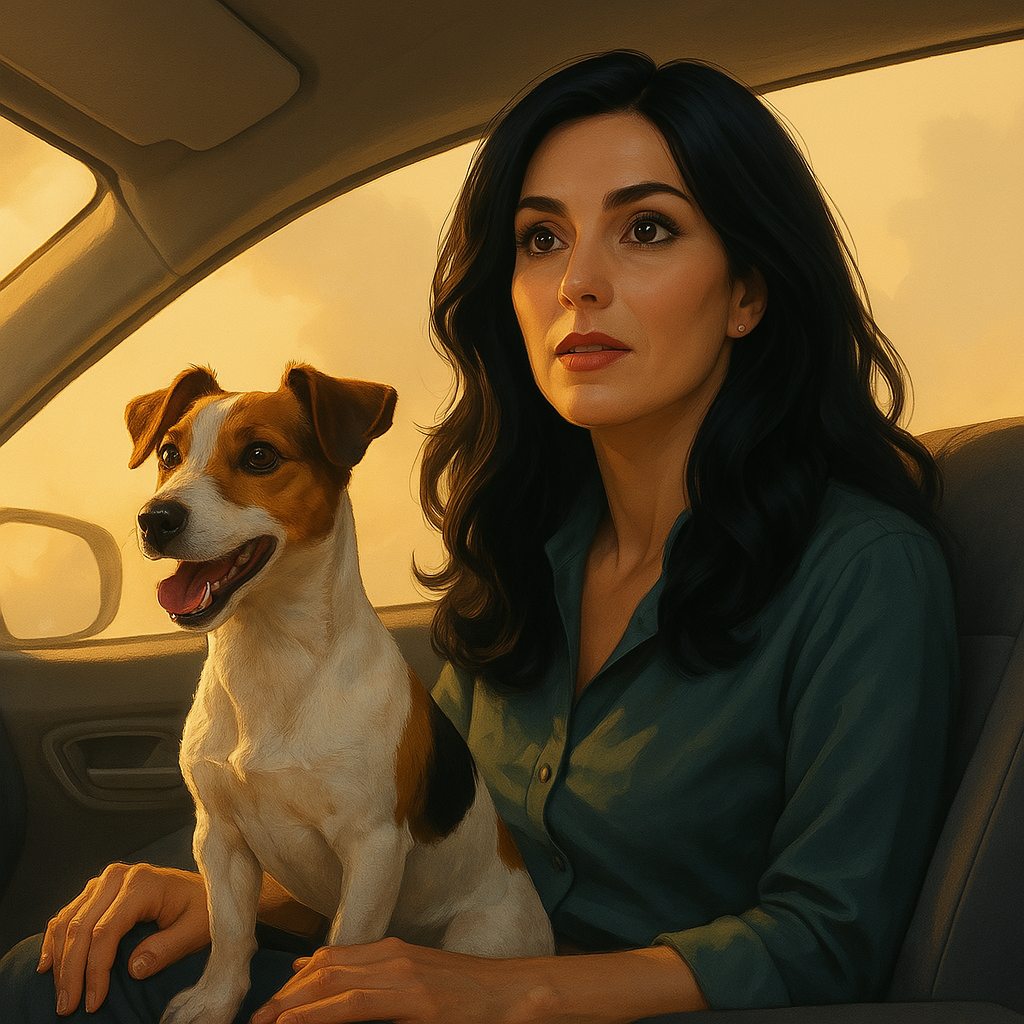
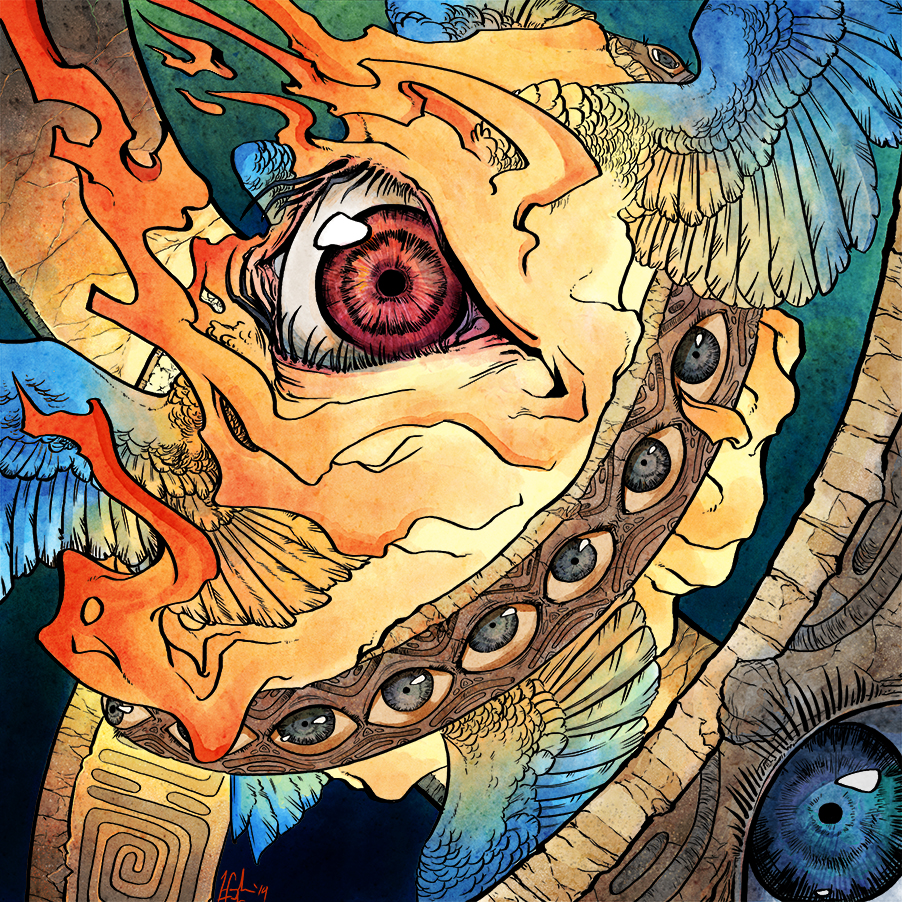

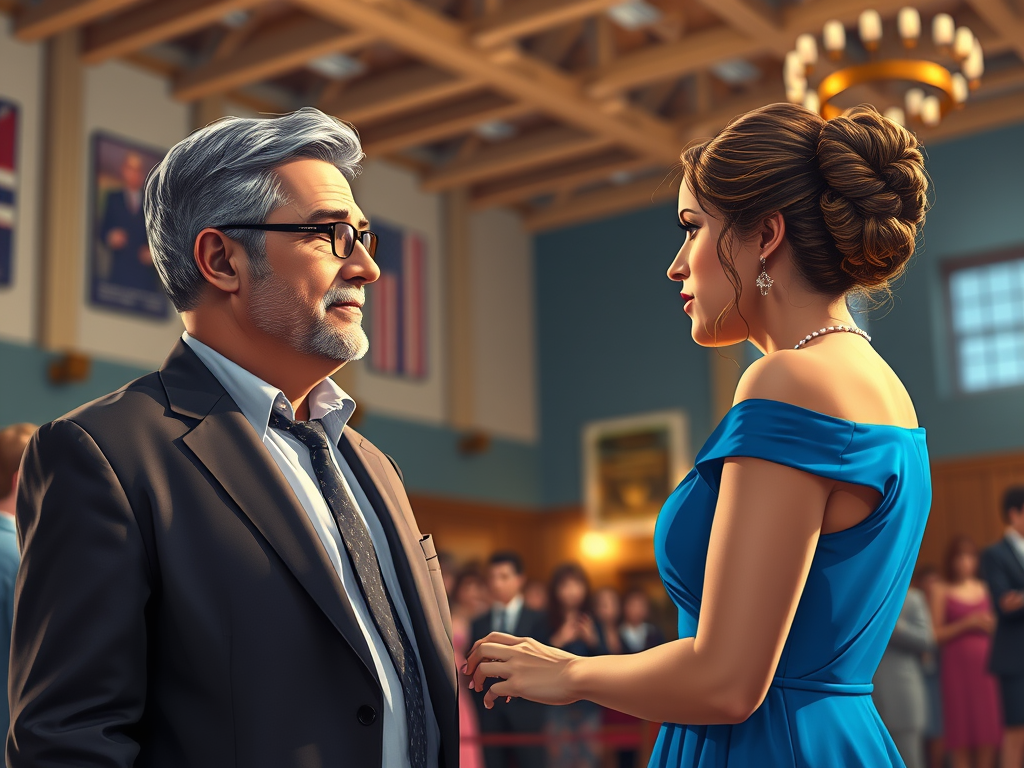


 MADD FICTIONAL