The White Reaper (Version 1)

The first time I saw her, the White Reaper, I was sitting on the edge of my bed, trying to find sleep in a restless night. My old neighborhood creaked with life—distant traffic, the hum of streetlights, and the occasional bark of a stray dog echoed through the thin walls of my apartment. There was nothing particularly strange about that night, nothing to suggest the boundary between the living and the dead was about to fracture.

But then, she appeared.

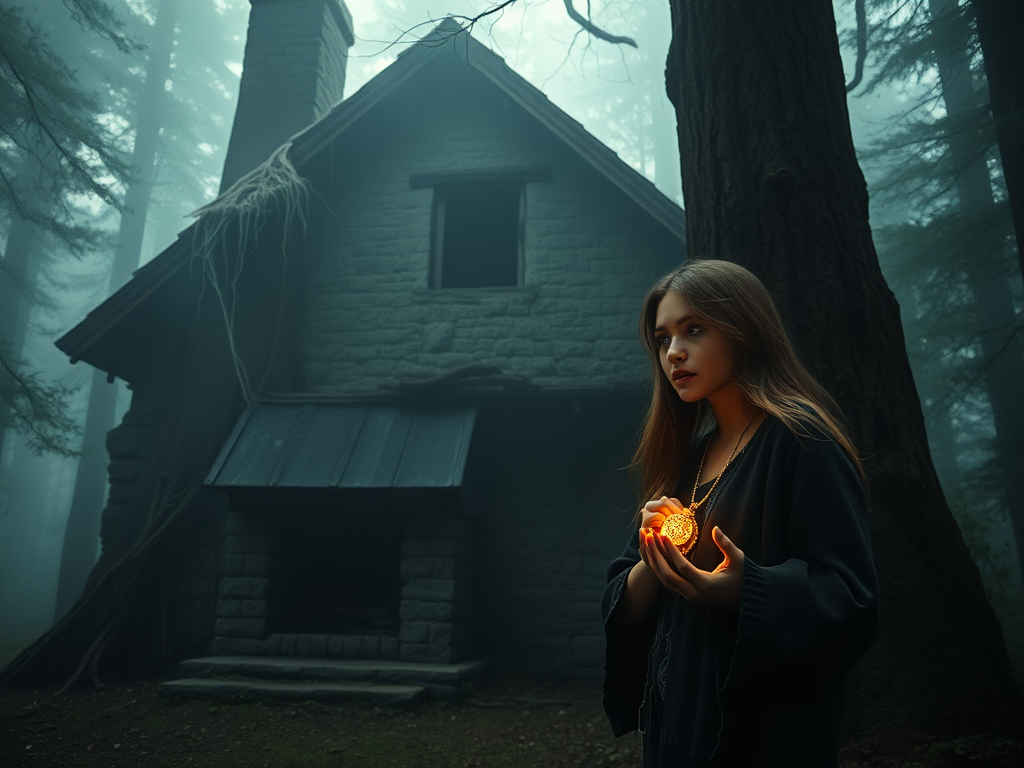
Out of the mist that curled around the edges of my dim-lit window, she emerged, riding a horse as pale as bone, its hooves making no sound as they touched the pavement. Her robes weren’t black, like in all the stories—no, they were white, flowing like smoke, blending with the night mist until it seemed like she was part of it. She sat upright, her face concealed in shadows beneath her hood, yet there was a quiet dignity to her presence. She wasn’t fearsome, like death is supposed to be.

She was beautiful in a way I didn’t understand.

I rubbed my eyes, thinking I was still caught between dream and wakefulness. But when I looked again, she was still there, silent, waiting.

Most people imagine Death—when they think of it at all—as a final, terrifying moment. But what if death was nothing more than a guide? What if it wasn’t the end, but the start of a new journey, led by something, or someone, we weren’t supposed to fear?

My heart beat harder in my chest as I stood, drawn to the window. She seemed to watch me without looking directly at me, as if she was aware of my curiosity but had no interest in answering questions I wasn’t ready to ask.

Then, her hand—a hand more delicate than I had expected, pale and slender—rose from beneath her robes. She gestured toward me with an elegant wave, a motion more like an invitation than a command. And I understood. This wasn’t a demand for my soul or a sign that my time had come. This was an offer. A choice.

I shivered, but it wasn’t from fear. It was from something much deeper—a sense of possibility, of inevitability wrapped in grace.

“Who are you?” I whispered, my breath fogging the cold glass.

She didn’t answer, but I felt the word in the back of my mind, as if she had placed it there herself: “The White Reaper.”

She waited, and the mist swirled around her, carrying with it a silence so profound it swallowed the world outside. Cars passed by in the distance, but their headlights didn’t cut through the fog. Nothing touched her, this ghostly woman astride her spectral horse.

“Are you here for me?” My voice trembled slightly. I wasn’t afraid to ask, but the answer still felt like a thread connecting me to a truth I didn’t want to know.

She lowered her hand, the motion gentle but definitive. The air felt lighter, as if the tension between life and death had loosened. Her silence answered more than words ever could. She was not here to take, not tonight.

But she had come for someone.

I don’t know what possessed me to leave my apartment, but the pull was undeniable. I descended the stairs, stepping out into the cold night, my breath mingling with the mist. The street felt deserted, an unnatural quiet blanketing the city as if the world itself had paused for this moment.

I followed her. She guided me through narrow alleys and across forgotten streets, never looking back, her white robes fluttering like a ghostly flame. Her horse moved with the grace of a creature that had never known the constraints of flesh or bone. It was a being of pure spirit, as silent as its rider.

After what felt like an eternity, we stopped in front of a small house, modest and unremarkable. There was a light on in one window, flickering like a candle struggling to stay lit.

It was then I saw the man. He stood on the threshold of his own home, pale and gaunt, his body shaking with the weight of too many years and too many regrets. He looked up as she approached, and in that moment, I saw the recognition in his eyes—the acceptance.

He was ready.

The White Reaper said nothing, did nothing. She merely extended her hand once more, and he took it, his grip frail but steady. He was pulled effortlessly onto the horse behind her, and together, they rode into the mist, vanishing as though they had never existed.

I was left standing alone on the street, my breath hitching in my throat as I tried to comprehend what I had witnessed. This was death, not as an ending, but as a passage. A quiet guide in white, leading souls with dignity, not force.

As I turned to walk back to my apartment, I realized something. One day, she would return. Not just for the old man or the sick, but for all of us. She was inevitable, patient. But there was no need to fear her. Not now, not ever.

The White Reaper would come when it was time, and she would lead me, too—into the mist, into the unknown.

And for the first time in my life, I wasn’t afraid.

The Alchemy of Anger

The first sign of trouble is in her eyes. They harden, storm clouds gathering, and I know the thunder is coming. Her anger doesn’t roar; it simmers. Quiet. Controlled. It’s the kind that seeps through the cracks of silence, heating the air between us until it feels unbearable.

“What did you mean by that?” Her voice is low but sharp, a knife grazing the surface.

I pause, caught off-guard. My reply—half-hearted, careless—had been an attempt at humor. But now, in the reflection of her anger, it looks like cruelty.

“I didn’t mean it like that,” I say carefully, but her gaze sharpens. The explanation feels hollow even to me.

Her anger ignites. “You never mean it, do you?” she snaps, and the words pour out, each one like kindling tossed into the fire. “You don’t think. You don’t care how it makes me feel.”

The urge to fight back swells in me, hot and insistent. I could argue, could lay out all the times I’ve been careful, attentive. All the times I’ve held my tongue. The words press against my teeth, demanding release.

But I see the hurt behind her anger, the way it burns brightest not in her voice but in the quiver of her hands. I force myself to pause. To look.

“It’s not that I don’t care,” I say, softer now. “I just... didn’t think it would hurt you. I wasn’t trying to.”

Her expression falters, just slightly, but her anger holds. “That doesn’t make it better.”

No, it doesn’t. I know it doesn’t. Still, I want her to see me, not as the enemy but as someone trying—fumbling, failing, but trying. I take a slow breath, swallowing the instinct to defend myself.

“It was thoughtless,” I admit. “I’m sorry.”

The words hang in the air, a tentative bridge between us. For a moment, I think she won’t take it. That her anger will keep burning, too strong to douse. But then she exhales, long and shaky, like a storm rolling past. Her hands fall to her sides.

“You always say that,” she murmurs, but there’s no venom in her tone now. Just weariness.

Her anger has ebbed, but the tension still lingers. I step closer, careful not to push too far too fast. “I mean it,” I say. “I’ll try to do better.”

The space between us shrinks, and I reach for her hand. She doesn’t pull away, though her grip is hesitant, loose. “I know I mess up sometimes,” I say, “but I don’t want to hurt you. Ever.”

Her eyes meet mine, and something shifts—subtle, like a tide turning. The hurt is still there, but the anger has given way to something quieter. She squeezes my hand, just once, and it feels like permission.

I pull her gently into my arms, feeling the tension in her body slowly ease. My chin rests against her hair, and I whisper, “I love you.”

She doesn’t say it back right away, and that’s okay. The silence between us feels fragile but whole, like something delicate being mended. I hold her until the weight in the air lightens, until the warmth of her presence replaces the heat of her anger.

When she finally looks up, her expression is softer, her eyes clearer. “I’m tired,” she says.

“Me too.”

But we’re still here, together. And that’s enough for now.

The Mirror in the Glass

The First Breath

The maternity ward at St. Katherine’s was unusually quiet for a Thursday night. The spring rain pattered against the windows, and the world outside seemed to breathe in sync with the women laboring within. In a small, sterile room tucked away at the end of a long hallway, Mrs. Madeleine Ainsworth let out a strangled cry as she delivered her daughter into the world, her fingers clenched tight around her husband’s hand.

A minute later, in another room down the corridor, Heather Larken let her head fall back against the pillow with a sigh of relief. Her daughter, too, had arrived.

The nursery filled as the night wore on, small cradles lined in neat rows beneath soft fluorescents. Nurses in crisp uniforms bustled from bed to bed, cradling newborns, cooing to restless mothers, and finally lowering two identical infants side by side. It was in that moment, under the hum of tired machines and the distant sound of a lullaby playing somewhere down the hall, that Nurse Blackwell felt a prickling sense of unease.

She called over a colleague with a quick wave, her voice lowered, betraying her bewilderment. “Did you see these two?”

Nurse Harper squinted down, noticing the identical curve of the infants’ noses, the same small freckle beneath each right eye, and the identical dark tufts of hair peeking from under their caps. She glanced back at her chart, flipping between pages with a frown. “They’re not…related, are they?”

“It says here one’s a Larken. The other’s an Ainsworth,” Blackwell murmured. She leaned closer, as if the answer might lie somewhere in their tiny, clenched fists or rosebud mouths. “But look at them. They could be the same child.”

The two women exchanged a glance, tinged with an odd mix of excitement and worry. A medical resident joined them, and soon an attending doctor arrived, peering down with furrowed brows as the two identical babies blinked back at them.

“They couldn’t be identical twins born to separate mothers,” the doctor muttered, brushing a hand across his jaw in thought. “It’s scientifically improbable.”


A Mother’s Suspicion

Hours later, Mrs. Ainsworth leaned against her hospital bed, cradling her daughter. A nurse had discreetly advised her that another baby born nearby bore an uncanny resemblance to her own. And while she didn’t quite understand what they meant, curiosity tugged her out of bed, and she slowly made her way down the corridor to the door of Heather Larken’s room.

The two mothers’ eyes met across the sterile room, each holding their newborn as though some part of them instinctively recognized a strange bond between them. Heather, disheveled but radiant in the way only new mothers could be, held her baby close, but her gaze was drawn to the identical infant swaddled in Mrs. Ainsworth’s arms.

“They…mentioned to me…how alike they are,” Mrs. Ainsworth started, her words tentative but probing.

Heather offered a weary smile. “Yes, they’re nearly the same. It’s strange, isn’t it? Like something out of a novel.”

There was a brief, uncomfortable silence. Madeleine felt an urge to ask more—questions that hinted at the absurd: Had Heather known her husband? Could they, however remotely, share ancestry? But politeness held her back, so she merely studied the woman before her, trying to shake off the strange, insistent feeling that fate had twisted them together.


The Doppelgänger

Years passed in quiet oblivion. Lia Ainsworth and Kara Larken grew up in separate homes, miles apart, each a daughter cherished, a beloved center of her own small universe.

Until one day, at the age of sixteen, Lia stood in line at a small café on the east side of the city, drumming her fingers on the counter as she waited for her order. She was nearly scrolling through her phone when she caught sight of herself in the mirror—or so she thought. But her reflection was doing things she wasn’t: adjusting a strand of hair, squinting at a menu.

The girl turned, and Lia’s breath caught in her throat.

It was like looking at a reflection that had a mind of its own, or watching a film where reality flickers and skips, making the familiar suddenly strange. They blinked at each other, both going still as if their brains were recalibrating. The resemblance was undeniable—impossible.

“Um…are you…” Lia stammered, her voice barely above a whisper.

The girl laughed nervously. “I’m Kara. Do…do we know each other?”

They sat down with their coffees, testing each other with little questions that grew more probing and breathless as the minutes wore on. They discovered they had the same freckle beneath their right eye, the same cowlick that wouldn’t stay down. And more than anything, they felt the same: like they were staring down at a piece of themselves they never knew had existed.

By the time they exchanged phone numbers and parted ways, each girl felt as though a door had opened to a place they weren’t sure they were ready to enter.


Unearthing Secrets

Back at home, Lia lay awake that night, her mind whirring. She needed answers. After a week of sleepless nights and hushed conversations with Kara, she finally sat her mother down. Madeleine’s face grew tight, her mouth a thin line, but she took a steadying breath before recounting a story Lia had never heard.

“There was another baby, born just after you…looked just like you. We thought it was impossible. The doctors did, too.”

Lia listened in stunned silence as her mother spoke about that surreal night in the maternity ward, the hurried discussions, the lingering confusion. Her mother explained it clinically, scientifically, but her voice softened at the edges as though confessing something both wondrous and haunted.

She told her daughter about Mrs. Larken, about the brief, awkward conversation, and about how the doctors had eventually let both mothers go home with nothing more than the strangest of memories.

“It’s as if…they didn’t know what to do with the two of you,” Madeleine admitted, her voice barely a whisper. “So we just…went home.”


Unbreakable Bond

A week later, Lia and Kara met on a park bench overlooking the city skyline. The late afternoon light cast their identical profiles into silhouette, and for a moment they sat in silence, each gathering up the threads of the lives that had brought them to this improbable place.

“So…” Kara began. “I guess we’re… sisters?”

“Something like that.” Lia managed a shaky laugh, though tears brimmed in her eyes. “More than sisters. I don’t think we’ll ever fully understand.”

They sat together, sharing stories, memories, and quirks, filling in gaps in each other’s lives. It was as if a part of them that had been stretched across years and miles had finally snapped back into place, whole and unbroken.

And as they rose to leave, a shared look passed between them—one that promised that, no matter how strange the circumstances or how rare the connection, they were each other’s family now. A family that fate had bound together in a single, inexplicable breath.

Threads of Hunger

Brent Gordon’s fingers tremble as he holds the paper cup between them, the metal clinking of spare coins from indifferent passersby barely registering in his awareness anymore. The city churns around him, an incessant hum of engines, footsteps, and distant sirens. Sixty years of life, now distilled to this: a gray figure slumped on the pavement, waiting for what the world might toss his way, if anything.

He watches feet shuffle by. Expensive leather, worn-down sneakers, stilettos that tap out a rhythm he can no longer follow. His sign, written with a marker borrowed from a tired clerk weeks ago, hangs crookedly around his neck. Spare change? Anything helps. But the streets of this city, brutal in their indifference, have little left to give.

That is, until they stop.

Two women—one young, one older—stand in front of him, their presence breaking through the fog that has enveloped Brent’s senses. He blinks and squints, the sun casting a harsh glow behind their figures. One woman, slender, probably in her thirties, with dark hair that catches the light in jagged waves. The other, older, but not elderly, her presence more solid, her lined face unreadable. They do not move.

The younger one, her voice lilting in a language Brent does not immediately place, speaks first. Her words dance with the harsh edges of German, though he can’t understand them. But her tone is neither cruel nor dismissive. It holds something foreign to him now—care.

“We have no money to give you,” Mae says again, though Brent only recognizes the sounds much later. “But if you’re hungry, my mother is a decent cook.”

Before Brent can even try to respond, the older woman’s voice joins, softer but firm, the syllables rich with the cadence of French. She gazes at him with eyes that seem to pierce through the skin of his present misfortune. “She exaggerates,” Joan says. “I cook well enough to keep us alive, but you are welcome to dine with us.”

Brent stares up at them, processing the offer through layers of confusion and hunger. No one speaks English. No one should speak to him at all. Yet here they are, standing in front of him as though the world had not turned him invisible months ago.

He opens his mouth to speak, but his words are trapped somewhere deep, far beyond the reach of his parched throat. He glances down at his hand, cradling the cup, his lifeline, as if letting go would sever the last tether holding him to the city.

The younger woman holds out her hand. She waits, her arm outstretched for what seems like an eternity, unbothered by the scornful glances of passing strangers. Her fingers are thin, delicate, yet they seem to have more strength than his entire body could muster.

Brent’s own hand rises before his mind fully commits. His fingers brush hers, and she grips them lightly, pulling him to his feet. The world wavers as he stands, his legs weak from weeks of disuse. He stumbles but remains upright. It is as if they are tethered to something he cannot name.

They begin to walk. Slowly at first, through the crowded sidewalk and then into streets Brent never knew existed. He’s lived in this city for over twenty years, but it’s as if they’ve unlocked a hidden map he was never privy to. They move in strange, zigzagging patterns, doubling back, taking alleys Brent would have dismissed as dead-ends or spaces of no consequence. The rhythm is disorienting, almost dreamlike.

There’s a sense of being led somewhere that’s not part of the city Brent once knew. This place feels forgotten, a backwater of time, where glass towers and buzzing lights fade into cracked brick and iron fences overtaken by vines. No one seems to notice them. The women talk quietly to each other in their own languages, and occasionally Mae glances back at Brent, her eyes sharp, as if checking to make sure he’s still following. The older woman remains silent, her face closed.

Finally, they reach it.

A structure—not quite a home, but something that holds shelter. A shanty, precariously built near the city reservoir, where the water laps at its edges in dark, brackish waves. It is a place of contradictions: makeshift walls patched with materials Brent can’t identify, windows that are merely holes in the wood, but inside there is light—warm, flickering. It feels lived in, but also like it exists outside of time, as if it has always been here, hidden just beyond sight.

“Come in,” Mae says, her German once again breaking the air between them. She motions toward the door, and Brent hesitates before stepping inside.

The air is thick with the scent of something cooking, though not pleasant—more like the smell of sustenance, of things boiled until soft. Joan moves to the pot simmering on a rusty stove, stirring it with a large wooden spoon. Brent notices her movements are deliberate, steady. The steam rises from the pot in curling tendrils, like smoke signals to a part of him that has been dead for a long time.

He sits at the table, a rough slab of wood supported by mismatched legs. It wobbles when he rests his elbows on it, and he quickly withdraws, feeling out of place. Mae watches him from the corner, her arms crossed, her dark eyes unreadable.

The food arrives, ladled out into chipped bowls. It’s unrecognizable—something between a stew and porridge, thick and gray. Joan sets it before him with a nod, not offering words but a look that says everything. Eat, or don’t. It’s up to you now.

Brent lifts the spoon to his mouth, hesitating as the smell invades his senses. He eats, slowly at first, the warmth surprising him. The taste is strange, metallic almost, but his hunger overrides any hesitation. He eats, and they watch him.

As he swallows, the edges of his vision blur, just for a moment. He pauses, the spoon halfway to his lips, wondering if he’s imagining things. But no—the blurring intensifies. His body feels heavy, yet light at the same time, a weightlessness pulling at him from deep within. He puts the spoon down.

Mae speaks again, this time her words clear though he doesn’t understand them. There is a rhythm in her voice, an old chant, a melody that seems to hum in the very air around him. Joan’s voice joins hers, soft but deliberate, each word measured and weighted.

Brent tries to speak, but his tongue feels thick, his throat dry. His heart beats in his chest with increasing speed, a drum pounding louder than anything he’s felt in months.

The women’s voices intertwine, flowing like the reservoir’s dark water outside, pulling him deeper into their current. The city seems to dissolve around him, the streets, the noise, even the light itself fading. All that remains is the sound of their voices, the faint taste of metal on his tongue, and a deep, inescapable hunger clawing its way up from his stomach.

He tries to stand, but his legs won’t listen. Mae and Joan watch him as he struggles, their faces calm, impassive. The room grows darker, the walls seeming to stretch, to warp. Brent blinks rapidly, trying to focus, but the harder he tries, the more everything unravels.

In the silence between their words, Brent realizes something. This was never about the meal. This was about something much deeper, something hidden in the twisted paths they’d taken to reach this place. The hunger was never his alone.

When the darkness fully claims him, there is no ending, no resolution, only the sound of their voices, now a part of him forever.


The city continues to move outside. It does not notice Brent Gordon is gone. It never noticed him at all.

The Sacrifice of Attraction

Raymond Donnelly had always drifted through life like an observer, comfortably detached from the churn of causes and movements. He marveled at people who felt so deeply, who gave themselves to something larger, but none of it had ever seemed to tug at his own soul—until he saw her.

Frances Kelly stood at the epicenter of a protest, a beacon of passion and light. But it wasn’t her fiery words that stirred something in him. It was her hair. Long, glowing strands that moved as though alive, catching the air and the sun as if conspiring to mesmerize. It refracted the world around her, weaving through the space between them like a veil of divinity. From the moment Raymond laid eyes on her, he knew that something had shifted inside him. He was pulled into orbit by this radiance, not by her words.

Weeks passed, and the gravitational pull of Frances’s presence drew him into places he’d never imagined himself. Rallies, fundraisers, gatherings filled with zealots and believers. He stood on the edges, mouthing slogans, nodding at speeches he half-listened to, but in truth, he was always waiting for Frances. To see her hair fall across her face as she turned to greet someone. To catch the flash of golden strands in the fading light of late afternoon protests. He began to imagine her hair as some kind of force, a living thing, curling and reaching into his thoughts, pulling him deeper into this world that wasn’t his. He never questioned this attraction, this obsession, because it felt as inevitable as the moon pulling the tide.

They grew close. Too close, he sometimes thought. Frances, passionate and articulate, was everything Raymond knew he wasn’t, and she embraced him in a way that made him believe he could be. Their conversations moved from the movements in the streets to late-night talks about everything and nothing. But even as their bond deepened, he remained haunted by a silent truth: it wasn’t just Frances he was drawn to. It was her hair—the way it moved, the way it shimmered, the way it seemed to have a life all its own.

Then, one afternoon, it all changed.

Frances appeared at his door without warning, her usual warmth in her eyes, but there was something different about her. Her head, once crowned with that glorious mane, was now bare. Bald. Smooth and reflective, her scalp gleamed like an alien landscape under the overhead light. She stood in front of him, smiling, oblivious to the shift that had just occurred between them.

“I did it for charity,” she said, her voice full of joy. “We raised over ten thousand dollars. Can you believe that?”

He blinked, staring at the place where her hair should have been. The silence stretched uncomfortably between them.

“Isn’t it amazing?” she continued, stepping forward, oblivious to his discomfort. “I feel… free. Like I’ve shed something I didn’t need anymore.”

Raymond’s mouth went dry, the words he should say—I’m proud of you, you’re incredible—caught in the back of his throat. He could see her lips moving, but her words blurred as the absence of her hair became a presence of its own, overwhelming him with a sensation he couldn’t name. He nodded dumbly, muttering something that barely resembled agreement.

As the evening wore on, he struggled to feel the same connection that had once been effortless. Frances laughed and talked as if everything was normal, but to Raymond, nothing was. It was as if her hair had been some kind of tether between them, and now that it was gone, he was drifting. Every time he looked at her, he felt… nothing. The realization settled into his stomach like a cold stone.

Days passed, and Raymond found himself avoiding her calls, inventing excuses to be alone. Frances noticed, of course—she always noticed. But when she finally confronted him, it wasn’t with anger. It was with that same calm intensity that had once drawn him in.

“Ray, what’s going on? You’ve been distant.” Her voice was soft, as if she already knew the answer.

He struggled to find the words, his throat tightening. How could he tell her that it wasn’t her? That it was something so shallow, so absurd, that he could barely admit it to himself?

“I… I don’t know what to say.” He stared at his hands, unable to meet her gaze. “I thought… I thought I could handle it, but I can’t. When you had your hair, I was…” He paused, the weight of his confession growing heavier with each word. “I was so attracted to you, Frances. But now, it’s different. And I hate myself for it.”

Frances didn’t flinch. She remained still, her face expressionless as she absorbed his words. When she finally spoke, her voice was low, steady. “So, you were only ever attracted to my hair? Was that it?”

“No, it’s not just that,” he protested, though even as he said the words, he knew they rang hollow.

She shook her head slowly, more in resignation than anger. “You know, I thought you were different.”

The silence between them grew, expanding into something vast, unknowable. Raymond could feel the distance stretching, and yet he remained frozen, paralyzed by the weight of his own shallowness. He watched as Frances gathered her things, her movements deliberate and calm, like someone resigned to the inevitable. She didn’t slam the door when she left. There was no dramatic exit, no final words of fury. Only the soft click of the door latching shut, as if marking the quiet end of something fragile.

Raymond sat alone in the dim light of his apartment, the stillness around him suffocating. He had lost something. Not Frances. No, it was something deeper, something he couldn’t name. The feeling gnawed at him, hollowing him out from the inside, leaving behind a silence that echoed with questions he didn’t know how to answer.

Outside, the wind stirred. It tugged at the trees, sending leaves spiraling into the dark. It was a quiet reminder that everything, no matter how beautiful or seemingly eternal, could be swept away in an instant. And Raymond, sitting in the emptiness of his own making, could only watch as it slipped from his grasp.

The Hollow Echo

In the autumn of 1998, when the sky was ablaze with falling stars, Suzanne and Eli Whitaker witnessed a celestial event that would haunt their lives in unimaginable ways. They stood together in their small backyard, Suzanne eight months pregnant, hand resting lightly on her belly. The meteor shower painted the dark expanse above with streaks of fire, a spectacle so extraordinary it made the air hum with something ancient, something heavy. But it was not the heavens that would deliver their fate—it was what fell to Earth in silence.

They found it at dawn, a small metallic cocoon nestled in the grass, still warm from reentry. It could have been a piece of debris, a fragment of some forgotten satellite. But Suzanne knew instinctively, even as Eli stared in disbelief, that this thing was alive. When they pried it open, an infant-like creature emerged, ethereal and still, suspended in a state of cold sleep. Its flesh was pale, translucent, and its face held features that defied immediate comprehension—shifting, unfinished.

Suzanne was the first to speak. “We can’t report this.”

“Are you out of your mind?” Eli whispered, his voice shaking. “They’ll come for it—they’ll… dissect it, study it. They’ll tear it apart.”

It was an unspoken pact, forged in that fragile moment of fear and curiosity. They would keep the alien. The government couldn’t be trusted, and neither could the world. And soon after, when Suzanne gave birth to their son, Roger, the creature stirred. Its eyes blinked open for the first time, locking onto the newborn as though it had been waiting for this arrival.

From that moment, the alien, whom they would later name Richard, began to mimic Roger in ways both innocent and disturbing. It crawled when Roger crawled, learned to walk when Roger did, and over time, its form shifted subtly, blending into something approximating human. But it was always… off. Its face hovered in that unsettling space between imitation and incompletion—the eyes too large, the skin too smooth, the smile just a fraction too wide. It was as if Richard was trying to be human but could never quite reach the finish line.

Yet, to the Whitakers, Richard was family.


Twenty-one years later, Richard, now an adult, stood in front of the mirror in his bedroom, examining his reflection with an intensity bordering on obsession. The lines of his face had settled into something distinctly human-like, though that strange smoothness persisted. The hairline was correct, the nose, almost right, but there was always a slight shimmer around his edges, a vague wrongness that unsettled those who looked at him for too long. Richard had tried, for so many years, to fit in. He wore the same clothes as Roger, talked in the same easy tone. But nothing changed the fact that no matter what he did, he remained an echo—an approximation of something he could never fully become.

Roger, on the other hand, was every bit the human Richard aspired to be. Charismatic, easy-going, tall and athletic, Roger moved through life with a sense of effortless belonging that Richard both admired and resented. As the brothers entered their twenties, Roger was dating constantly, finding connections with women who adored his smile, his confidence, the way he filled a room with energy. Richard, by contrast, remained isolated, stranded in his own peculiar body. Despite his best efforts, women recoiled from his gaze, his strange mannerisms. They couldn’t put their finger on it, but they felt it—an uncanny wrongness that prickled beneath the surface.

Roger noticed. He always noticed.

One evening, Roger found Richard hunched over his computer, scrolling through dating apps in frustrated silence. The glow from the screen cast harsh shadows on his face, exaggerating the already awkward angles of his jawline.

“Hey,” Roger said softly, sitting beside him. “You’ve been on those sites for months now. What’s going on?”

Richard didn’t answer at first. His pale eyes scanned through profile after profile of smiling, carefree faces, all of them worlds apart from the hollow reflection staring back at him. “They never respond. Not once.”

Roger sighed, a sympathetic frown tugging at his lips. “Maybe they just don’t… you know… get you.”

“No one gets me,” Richard muttered, his voice tinged with a bitterness he rarely allowed to surface. “It’s like they can sense it. That I’m not… real.”

For a long moment, the room was silent. Then Roger, always the problem-solver, offered what he thought was a solution: “Look, I’ve been thinking. What if we start slow? Build up your confidence a little, you know? There are ways to—uh—hire someone to give you some practice. Just a conversation or a dance, nothing more.”

Richard’s face twisted, his disgust palpable. “I don’t want to pay for someone to pretend. I want something real. I want love.”

Roger was quiet, unsure of how to respond. He had always taken love, or at least the pursuit of it, for granted. But Richard had been different from the start—his needs deeper, his isolation a constant shadow over their lives.

Still, Roger couldn’t stand to see his brother like this. “Okay,” he said finally. “Let’s do something else then. We’ll go out, hit a few clubs, meet some real women. I’ll… help you.”


That night, they stepped into the pulsating haze of a downtown nightclub, the air thick with sweat and neon. Roger, as always, fit in immediately, his easy charm disarming the crowd, while Richard lingered on the fringes, a figure of silent observation. Roger began approaching women, introducing them to Richard, but the results were predictable—polite smiles turned to puzzled frowns, then quiet rejection.

By the fifth attempt, Roger resorted to what he had hoped he wouldn’t have to do: offering money. Whispering softly to the women, slipping bills into their hands, hoping that just a conversation would help his brother feel something like normal. But even that failed. The women backed away, some outright refusing, others turning their glances into judgmental whispers.

Richard stood alone in the corner, watching it all unfold. The flicker of his uncanny smile, stretched too thin, faded entirely. He saw what Roger could never admit aloud: he was not meant to be part of this world, not in the way he had hoped. His attempts at connection were futile. He would never experience love in the way humans did, because he wasn’t one of them. He had been shaped by them, taught by them, but he remained a hollow reflection of their lives—an echo of something he could never fully possess.


In the early hours of the morning, after the night had dissolved into failure, Richard stood on the balcony of their apartment, gazing out over the city. The wind was cold, brushing against his skin, though he couldn’t feel it the same way a human might. Roger joined him, quiet for once, leaning against the railing.

“I’m sorry,” Roger said, finally. “I thought I could help.”

Richard didn’t respond. He watched the distant horizon where the stars—those same stars that had brought him here—burned with the same distant indifference they always had. He realized, in that moment, that his search for love had been a futile quest for something he wasn’t entitled to. And maybe that was the lesson he had to learn.

He was here, but he didn’t belong.

And the stars—silent, eternal witnesses—seemed to agree.

Thirteen For Halloween: The Summer of Shattered Innocence

When it was Joanie Hayden’s turn, she strode proudly to the head of the classroom with her school writing assignment written neatly in cursive in blue ink on lined loose-leaf paper. Despite her confident posture, she looked a bit of a mess. She was noticeably thinner and paler since last semester, and her hair wasn’t quite as neat, her dress was on the rumpled side, and her patent leather shoes lacked their normal shine.

As she began to read, her voice echoed through the room, a haunting melody that spoke of unspeakable truths. “How I Spent My Summer Vacation,” she announced, the words dripping with a bitter irony that only she could fully comprehend.

Joanie moved through the open space, her steps measured and deliberate, each gesture a silent scream of the agony that had been etched into her very being. She spoke of the cellar, a dank and oppressive prison where she had been locked away, left to waste away in the shadows of her own despair.

The hunger had gnawed at her, a constant companion in her solitary confinement. She spoke of the cheese, stolen from rat traps in a desperate bid for survival, the taste of desperation and decay lingering on her tongue long after the last morsel had been consumed.

But it was the beatings that truly shattered her innocence, each blow a cruel reminder of the twisted love her mother had found in the arms of a monster. Joanie had endured in silence, her cries swallowed by the darkness, lest she incur the wrath of the man who had stolen her mother’s affection and shattered their once-happy home.

As she neared the end of her tale, Joanie held up the final page of her assignment, a splash of color amidst the monochromatic horror of her words. The map, meticulously crafted in vibrant hues, was a twisted treasure map, guiding the way to the remains of her tormentors.

The classroom fell silent, the weight of Joanie’s revelation settling upon them like a suffocating blanket. Her teacher and classmates, once so eager to hear of carefree summer adventures, now sat stunned, their faces etched with a mixture of shock, horror, and pity.

But Joanie stood tall, her eyes blazing with a fire that had been forged in the crucible of her suffering. She had endured the unimaginable, her innocence ripped away by the very people who were meant to protect her. And in the end, when the darkness had threatened to consume her entirely, she had found the strength to fight back, to reclaim her shattered soul from the abyss.

As the authorities descended upon the classroom, their sirens a discordant symphony outside the windows, Joanie felt a strange sense of peace wash over her. She had spoken her truth, laid bare the horrors of her summer, and in doing so, had finally set herself free.

In the years that followed, Joanie’s story would serve as a reminder of the monsters that lurk in the shadows of even the most idyllic homes. But for Joanie herself, the summer of her shattered innocence would forever be the defining moment of her unbreakable spirit, a reminder that even in the darkest of nights, a single spark of hope can illuminate the way to redemption.

And so, as she stepped down from the head of the classroom, her assignment clutched tightly to her chest, Joanie Hayden knew that she had not merely survived her summer vacation, but had emerged from the depths of hell itself, a phoenix rising from the ashes of her own destruction.

Thirteen tales of terror, woven in the night,
Guided by the flickering jack-o'-lantern's light.
From haunted playgrounds to twisted dreams,
We've explored the darkness, or so it seems.

Mad mothers and lost souls, a writer's deadly prose,
Innocence shattered, and secrets no one knows.
Each story a glimpse into the abyss,
Where horrors lurk, and shadows kiss.

But through it all, you've been by my side,
Brave readers, willing to take this eerie ride.
Your courage and curiosity, a guiding star,
Illuminating the path, both near and far.

As the veil grows thin, and the witching hour draws near,
I thank you for facing each tale without fear.
For delving deep into the macabre and grim,
And letting these stories seep beneath your skin.

Now, as the harvest moon hangs high above,
And the night is filled with a chilling sort of love,
I bid you a Happy All Hallow's Eve, my friends,
May your night be filled with spooks and delightful ends.

So light your candles, and carve your pumpkins with care,
For the spirits of Thirteen For Halloween are always there.
In the whispers of the wind, and the creaks of the floor,
Ready to haunt and thrill you, forevermore.

HAPPY HALLOWEEN!

Thirteen For Halloween: The Eternal Lullaby of Wilhelmina Soames

Every city has its ghosts, but few linger like Wilhelmina Soames. She haunted Main Street with her empty pram, its wheels squeaking on the cracked pavement, her presence as constant as the rising sun. The locals knew her by a hundred cruel names—The Mad Mother, The Lady in Rags—but her true title was whispered only by the bravest and the most foolish: The Collector.

“Nelda, Farley, Aubrey…” Wilhelmina’s voice rasped, a croak that slid down the city’s alleys like smoke. The names flowed from her lips in a ceaseless chant, each one spoken with the reverence of a mother calling her child home. Yet there were no children. Only the pram, and her eyes—wide and fever-bright—scanning the empty streets.

“Vance, Giselle, Wesley…” She called out to names long forgotten, her cracked lips curling into a smile that unsettled anyone who dared to listen too long.

The city had become numb to her presence, indifferent to the sight of her skeletal frame and wild hair, matted with dirt and debris. It was easier that way, to pretend she didn’t exist, to step over her as they did the other broken things the city swallowed whole. But those who whispered behind her back never lingered long near the places Wilhelmina wandered after dark.

Because Wilhelmina didn’t just push an empty pram. She collected.

At dusk, she ventured beyond the crowds, beyond the reach of streetlights, into forgotten corners of the city, the places where the shadows lingered thickest. Those who had been desperate enough to follow—whether out of morbid curiosity or cruel delight—never spoke about what they saw. Some said she rummaged through dumpsters, sifting through filth as if seeking something precious among the discarded refuse. Others claimed to hear her speaking softly to things unseen, her voice a strange lullaby meant to soothe the dead. But always, they said, she found something—someone. And when she did, she would cradle it in her arms, rocking it gently as if it weighed more than air.

Those few who dared to peer too long into her pram swore they caught a glimpse of something terrible. Tiny, disfigured shadows, twisting and writhing inside the carriage as if desperate to escape.

The rumors spread fast, and the stories became more elaborate with each retelling. Some claimed Wilhelmina had once been a nanny to a wealthy family, that she’d lost her charge in a tragic accident—a baby slipping from her grasp and into traffic, her mind snapping in two with the sound of that child’s body beneath tires. Others whispered of ancient curses, that Wilhelmina was cursed to roam the city, forever collecting the souls of the young who died before their time. She wasn’t just a madwoman, they said. She was a harbinger. A guardian of lost souls, condemned to ferry them to a place no living eyes could see.

And so, every night, her eerie refrain echoed through the streets, searching.

But the stories were never enough to explain what happened next.

On the night of her death, Wilhelmina entered the vacant lot, the one space in the city untouched by developers—a place where the air always felt cold, no matter the season. There, among the rubble and weeds, she bent low, her fingers sifting through the earth, frantic, searching as though time itself was running out.

And then she found it. Something unseen yet tangible to her alone. A bundle, light as air, and in her joy, she lifted it high, cradling it to her chest. But in her haste, she didn’t notice the jagged brick half-buried in the dirt.

She tripped. Her skull met the brick with a sickening crack, and the last breath of air left her body in a wet, gurgling gasp. Blood oozed into the soil, darkening the ground beneath her.

But Wilhelmina didn’t die—not in the way most do.

She awoke standing over her own body, her lifeless shell sprawled on the cold earth. The sight didn’t startle her. In fact, it comforted her. The years of madness, the endless wandering, the voices of lost children—she finally understood. She had been preparing for this moment all along.

Around her, the shadows deepened. Small, pale hands reached for her, dozens of tiny figures emerging from the gloom. Children, their faces contorted in silent screams, their eyes hollow and unblinking. They had waited for her, lost in the dark, and now they were ready to be guided to wherever it was that the forgotten dead go.

Wilhelmina smiled, her lips parting to release a lullaby that no living ear could hear. She gathered the children to her, one by one, her touch soothing the fear in their eyes. Her pram was no longer empty—it brimmed with the restless spirits of the city’s lost.

And so, Wilhelmina Soames, the Mad Mother of Main Street, became what she was always meant to be. No longer bound by flesh, she pushed her pram through the vacant lot, her song rising with the wind, a lullaby for the dead. Her voice drifted through the city, a melody of grief and longing, chilling the blood of those who walked too close.

She was no longer just a madwoman; she was their keeper. And the children of the city—those lost and forgotten—would forever hear the eternal lullaby of Wilhelmina Soames, calling them home.

Thirteen For Halloween: Her First Time Redux

Vanessa’s eyes locked onto the swinging pocket watch, its brass glinting in the low candlelight, the rhythmic ticking sinking deeper into her mind. Each pendulum swing seemed to pull her further from the present and hurl her back to that night—the one she’d buried beneath layers of false memory, beneath years of carefully constructed lies.

She had rewritten the story so many times. In her version, the ’67 Chevy Impala was a haven, its worn leather seats a cradle of budding romance, and Jimmy Erler, her first, was tender, patient. But as Doc Halley’s hypnotic voice probed deeper, the truth began to surface, a nightmare she had kept locked away in the darkest corners of her mind.

Her breath quickened. The rain. She could hear it again, hammering the car’s roof, relentless as the truth clawed its way out. The soft whispers Jimmy once murmured in her ear weren’t sweet at all—they were commands, demands, filled with malice, punctuated by the scrape of his teeth against her skin. He wasn’t patient. He wasn’t tender. He was hungry.

Vanessa felt herself spiraling, the fragile mask of memory shattering, each fragment revealing the brutal reality she had long denied. There were no stolen kisses beneath the rain-soaked windows, no shy fumblings of young love. Instead, there was pain—her pain—and Jimmy’s mocking laughter as he forced her against the seat. His hands, once remembered as gentle, had clawed at her clothes with savage urgency.

And then… something had broken inside her.

In the shifting candlelight of Doc Halley’s office, Vanessa’s hands clenched involuntarily, her nails digging into her palms. The image in her mind grew sharper, crueler. Jimmy’s face—twisted with something darker than desire, eyes gleaming with cruelty—blurred, then fractured. Her own hands—those hands—were the ones clawing at him now, tearing at his skin, his clothes, anything she could reach.

She could still hear his voice, the smug bravado crumbling into panic as her fingernails raked his face, drawing blood, her teeth sinking into his shoulder. She had fought back. No, not fought—she had become something else, something feral, her rage drowning out all sense, all fear, until there was only the violence, the raw power coursing through her limbs.

Jimmy had screamed. But the more he screamed, the more alive she felt.

When the fog lifted, she remembered the silence. Jimmy had been curled up, his breath ragged, bloodied and trembling, his once cocky smile twisted into a grimace of terror. He was no longer the predator—he was prey, and she had tasted his fear.

The watch ticked on, its steady rhythm pulling her back to the present, but the weight of that night lingered, suffocating. The realization hit her like a fist to the gut. She hadn’t been the victim, not entirely. The real horror wasn’t Jimmy, or what he had done. It was what she had unleashed in herself.

Vanessa blinked, her mouth dry, her body rigid in the chair. Doc Halley’s voice cut through the silence like a knife, gentle but probing.

“What did you see, Vanessa?”

Her gaze shifted to the pocket watch again. The ticking was louder now, deafening.

“I… I didn’t stop,” she whispered, her voice barely audible. “I wanted to. But I didn’t.”

Doc Halley leaned closer, the candlelight casting strange shadows across his face. “What didn’t you stop?”

Her breath hitched. The memory had become a living thing, growing inside her, feeding off her guilt and her need for absolution. But there was none to be had. Not for this.

“I didn’t stop… hurting him.”

The room seemed to shrink, the darkness pressing in. She had lied to herself for years, convinced herself that Jimmy had been the monster, that she had been the innocent. But as the truth bubbled up, she knew it had been something else. She had felt good—terrifyingly, exhilaratingly good—when she tore him apart.

Doc Halley’s voice was distant now, almost drowned out by the watch’s ticking. “Do you think you can forgive yourself?”

Vanessa closed her eyes, but the image of Jimmy’s broken body wouldn’t fade. She hadn’t just taken back control that night. She had destroyed him.

The candle flickered and died, plunging the room into cold darkness.

“No,” she whispered into the void. “I don’t think I can.”

And in the silence that followed, she realized the monster she feared wasn’t lurking in Jimmy’s memory, or in some dark corner of her past. It had always been inside her—waiting.

Thirteen For Halloween: The Unwritten Chapters

The Cracked Spine was a secondhand bookstore that smelled of old paper from a bygone era. The air was thick with the weight of hardcover and paperback editions in search of new owners, each containing stories begging to be reread. We reached for the same copy of Proust’s In Search of Lost Time, fingers brushing in that intimate, fleeting way that only strangers can experience. It should have been a harmless moment, a serendipitous encounter, but instead, it marked the beginning of a descent into madness.

Nora, a figure swathed in the quiet allure of mystery, captivated me immediately. Her dark eyes, a shade too deep to be entirely human, held an intensity that unsettled as much as it intrigued. Our love for literature wove an initial bond, yet there was something deeper, an unspoken tension lurking beneath her every word. While I bared the pages of my soul, Nora remained an unread novel, her secrets bound in leather, sealed by something much darker than ink.

I should have known something was wrong when she invited me into her home. There was a weight to the atmosphere in her flat, a heaviness that pressed against my chest, making it hard to breathe. Rows of books lined every wall, like a silent congregation of forgotten lives watching my every move. But one book stood apart, a volume so ancient that its spine seemed to pulse with something… alive.

Nora noticed my gaze, and in an instant, her demeanor changed. She moved to block my path, her movements too quick, too desperate. “It’s not ready,” she said, her voice trembling—fearful, even. “It’s only a draft.”

But I couldn’t stop myself. My curiosity had taken root, festering into an obsession, and despite her protests, I reached for the book. The leather binding was unnaturally warm, as though the cover itself was alive, pulsing beneath my fingertips. The moment I opened it, I felt the floor beneath me tilt, the world spinning as the words leapt off the page, twisting and coiling around my mind like serpents.

The first few pages were innocuous enough—rough sketches, half-formed ideas, fragments of what could be—but the further I read, the more a terrifying pattern began to emerge. The protagonist was a man. He was a writer. He was me.

Each chapter chronicled intimate details of my life, moments no one else could possibly know. The way I always kept my pens organized by color. The whiskey I drank when I couldn’t sleep. The thoughts I only admitted to myself in the dead of night. But the horror didn’t end there—no, the final chapters were something else entirely.

They told of a slow, creeping descent into terror. Each word described how this man—how I—would die, alone and forgotten, hunted by something far more dangerous than Nora’s simple mystery. There were no metaphors here. No clever narrative tricks. This was a blueprint. A death sentence.

I looked up from the book to find Nora watching me, her expression unreadable. But there was something in her eyes, something dark and predatory. The warmth I had once seen was gone, replaced by an emptiness so cold it turned my blood to ice. She smiled—a slow, curling smile that never reached her eyes.

“I’ve been working on that for a long time,” she whispered, stepping closer. Her voice was low, intimate, as though we were lovers sharing a secret. “It’s my best work yet, don’t you think? The final chapter is… exquisite.”

The realization hit me with sickening clarity—this wasn’t fiction. It wasn’t a story. It was a prophecy. Nora had been crafting my death with the precision of a master artist, every detail sharpened to perfection, every emotion honed for the ultimate cut. And I was the masterpiece.

I stumbled back, dropping the book as though it had burned me, but there was nowhere to run. The walls of her apartment seemed to close in, the shadows stretching, growing, until they swallowed everything in their path. Nora’s figure loomed before me, her face twisted with something feral, something no human could ever possess.

“You were always meant to be the final chapter,” she breathed, her lips brushing my ear like a lover’s caress. “My magnum opus, completed in flesh and blood.”

I turned to flee, but the shadows reached out, cold fingers clawing at my ankles, dragging me down. My mind screamed, but my body betrayed me, frozen in place as she knelt beside me, her fingers tracing the outline of my throat.

“You’ll die beautifully,” she promised, her voice soft and soothing, like a lullaby sung by the damned. “I’ll make sure of it.”

The last thing I saw before the darkness consumed me was her smile—a perfect, serene smile, as though she had written this moment a thousand times before. And in that final, terrible instant, I realized the truth: Nora hadn’t just been writing my story.

She had been living it.

The unwritten chapters would be scrawled in blood, a story of obsession, murder, and twisted love. And I, the unwitting protagonist, had already lost my chance to rewrite the ending.