By the time you read this, this version of me will be dead, but your version will just have been born, but before you become dismayed, know that I have lived a long and prosperous life, just as you had. I realize how unbelievable this will seem to you in your present, but in my past and your future, time travel has/will become a reality. I wish I could tell you more, but although time has opened for humankind greatly, my own time is extremely limited.
There are many blessings to being a member of The Time Guild, but the most important to me has to be the ability to tell you the things I never had the opportunity to say while you were alive. I admire your ability to be both mother and father to me, as well as my best friend, and so I wanted to let you know a few things.
Encouraging me to be an outspoken independent thinker was the best thing you could have done for me. Thank you very much for that. The money that you hide in that ratty old sock in your sock drawer, take a portion of it and invest in a startup company called ReTempus. I know this will put a financial burden on us in the short run, but it will pay off when we need it most. Not to mention ReTempus will eventually become the Time Guild. Please be discreet in your investments as feeding you this information is a strict violation of the Guild’s bylaws, but it should be fine if you fly under the radar.
My final gift to you, embedded in this chronal parchment, is a holographic image. These are your grandchildren, born after you passed away. My daughter is named after you. I am sure I do not have to warn you to keep the letter and its contents hidden from everyone, including me. Just raise me to the best of your ability and time will sort out the rest.
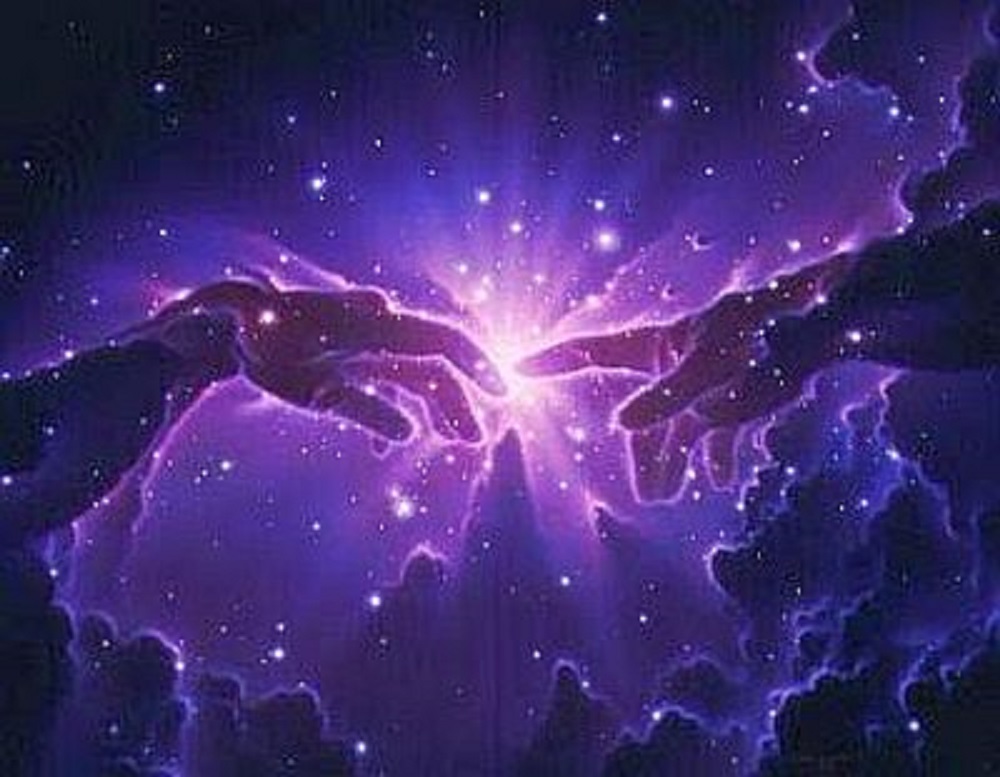
It was there, hidden in plain sight amongst the stars, the cipher that contained the answer to the meaning of all existence, and after Nialla decoded it, she climbed to the roof of her house and breathed the solution to the riddle into the night air. Creation made itself visible to mortal eyes for the first time since the invention of vision and reached out with a stardust arm to greet her.
The touch of the cosmic hand tumbled the locks set in place to limit human perception and knowledge, and she was instantly gravid with omniscience. She stepped off the roof and sailed up past the troposphere, stratosphere, and mesosphere, past the thermosphere, ionosphere, exosphere, and finally into space, where the tiny particles that made up solar wind swarmed around her now naked form.
“Welcome home,” the Voice of All Voices whispered into her ever-expanding mind, which caused her heart to open like a flower.
Although air and breathing were no longer a necessity, she sighed a lifetime of relief and drifted peacefully into the arms of eternity.
My father died when I was young and I was the last person in the family to find out. Everyone thought they were protecting me, shielding me from the bad news and the sorrow and pain that would follow, but I knew something was wrong, even though I didn’t know what had happened. It’s like Nana Bettie used to say, I felt it in my waters.
When my mother finally broke the news to me, I didn’t cry, trying to prove that I was a big girl. I just shut down, and I think that scared my family more than if I had gone into hysterics. I didn’t eat, couldn’t sleep, refused to go to school, and ignored every therapist that came to see me. The brilliance I had once appreciated in life began to fade, colors running together like a painting left out in the rain.
I was wasting away, and not just physically. My soul had begun to atrophy to the point where no one or no thing held interest for me anymore. And that was when my body finally gave out and I collapsed, finding myself falling, falling through stages of grief, which was actually like falling back through time, back to when my father initially sparked the kindling that would ignite the flame that would eventually become my passion.
I landed on a white beach with sand soft as clouds and an endless aquamarine ocean, and standing at the very edge of the shoreline was my father. The entire universe lay open before me.
“Is this heaven?” I asked.
My father laughed and said, “No, sweetheart. Paradise is much cooler than this.”
“Is that where you live?”
“Sure is.”
“Can I stay there with you? I promise I’ll be good.”
“You will one day, but not until you’re older, much older.”
“It’s not fair!”
“Life isn’t fair sometimes,” he shrugged. “But what if I make you a promise?”
“What kind of promise?”
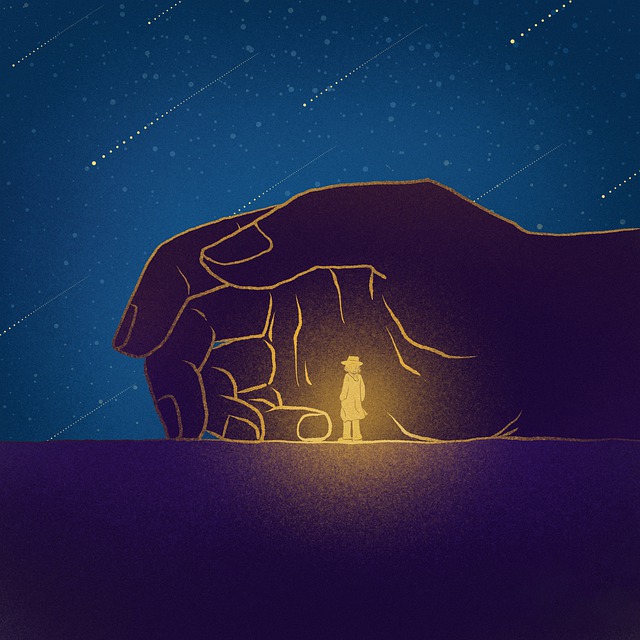
My father held up his right hand. “Do you see this? It may not look like much to you, but I promise this hand is strong enough to protect you all the days of your life. So, while you may not be able to see me, you can trust that I’ll always be with you.”
And before I could plead my case to stay with him again, he leaned down and gently kissed my forehead, and I woke up in my bed, eyes filled with tears and surrounded by my family. I never told them what I saw because I didn’t want them to try to explain it away.
And whether you believe me or not, there have been times in my life where I survived circumstances that were impossible to bear because I felt I was in the grip of the protective hand of love.
The heavens. Once an object of superstition, awe, and fear, now a vast region for growing knowledge. The distance of Venus, the atmosphere of Mars, the size of Jupiter, and the speed of Mercury. All this and more we know. But their greatest mystery the heavens have kept a secret. What sort of life, if any, inhabits these other planets? Human life, like ours? Or life extremely lower in the scale? Or dangerously higher? Seeking the answer to this timeless question, forever seeking, is the constant preoccupation of scientists everywhere. Scientists famous and unknown. Scientists in great universities, and in modest homes. Scientists of all ages.
That was the opening narration of an alien invasion film that predates “Independence Day”, “District 9”, and even “Invasion of the Body Snatchers”. Hello, and welcome to Madd Fictional Media, where today we’ll be taking a look at the 1953 science fiction classic, “Invaders From Mars.”
Oh, and if you haven’t guessed, we intend to walk you through the film, and that’s as close to a spoiler warning as we’re prepared to give you for a movie that’s been out since the 50s. If you’d rather not have the plot ruined for you, you know what to do.
Please note: If this is your first exposure to “Invaders From Mars” and you choose to stay, you’ll no doubt find it outdated and corny, but, if you can step outside of that mindset, and take a look at what the movie gets right, who knows, you just might enjoy yourself, and add a new classic sci-fi film to your watch list.
Now, any film buff worth their salt knows that the mark of a good film begins with a snapshot of the world the movie is set in, so that the audience can get their footing before the plot kicks in. And when you come across a great film, you’ll discover the same effect is achieved with little to no expository dialogue.
As low budget as Invaders appears to be, it does a fantastic job of providing a proper backdrop for the film. We understand instantly the reality in which this story takes place, with the family profession, the placement of the Rockwellian farmhouse, and our young protagonist’s interest, without any of the worldbuilding getting in the way. It’s a very barebones approach to a film that wastes no time getting the audience stuck in.
After the opening credits, our focus turns to the bedroom of 10-year-old David MacLean, played by Jimmy Hunt. His window is wide open, with a telescope poking out of it, which suggests that he’s an amateur astronomer.
His alarm clock goes off at 4 AM, and he’s startled out of sleep, fumbles to shut it off, and quickly stuffs it under his pillow to muffle the noise.
George MacLean, played by Leif Erickson, hears the alarm, and assumes it’s time to get up, but his wife, Mary, played by Hillary Brooke, points out that it’s only 4 in the morning.
George figures out that it’s his son, and as he enters the boy’s room, prepared to give him a good talking to, he sees David with his eye pressed to the telescope, examining an astronomical event that won’t happen again for six years.
And George is immediately invested! Which shows us they’re not just father and son, they’re best buds! And David has probably taken up aspects of his father’s scientific profession as a hobby. And the pair would have probably stayed up all night long, if Mary didn’t show up to put both her boys to bed.
It’s a simple show don’t tell bonding moment that illustrates the family norm. Yes, it’s inconvenient that David woke the entire household, but his parents aren’t angry. They understand, and support, his scientific interests, the way good parents should.
Roughly 40 minutes later, David is awakened again, this time by a noise that sounds like a thunderstorm, and when he looks out the window, he sees a flying saucer land in the sandpit on the hill just behind the house.
When David wakes his dad, and tells him about what he saw, the important thing to note is that George doesn’t disbelieve David, even though he tries to calm his son down by telling him it was just a dream. But unbeknownst to David, George is part of a scientific research team working on a secret project, and he feels what David saw might be related to it, so he goes out to the sandpit to investigate.
Morning comes, and George hasn’t returned, so Mary calls the police, and two officers (played by Charles Cane and Douglas Kennedy) conduct a search, and they wind up disappearing as well.
George eventually returns home but from the moment we first lock eyes on him, we can tell he’s a totally different man. He has a thousand-yard stare that would spook a zombie, and he’s disconnected and irritable, not at all like the affable man we saw earlier.
When questioned about his whereabouts, he curtly states that he stopped over to see their neighbor, Bill Wilson. But when George sits down, David spots a puncture wound on the back of his father’s neck.
When he asks about it, George backhands him hard enough to knock the young boy to the floor. And you can tell by David’s shocked expression that his father has never raised a hand to him before in his life.
Before Mary can question what happened, the policemen return, and they’re also noticeably different, robotic and distant, and although we don’t see it, David spots puncture wounds on the back of their necks, identical to his father’s.
I wasn’t fortunate enough to catch this in the theater when the film first opened. It was a little before my time. I watched it as a young boy in the mid 1960’s on late night television, after sneaking into the living room while my family was asleep.
This scene is where the first real fear came into play, because the film introduced a new concept to my young mind. I was used to monsters looking like the creature from the black lagoon, or something easily identifiable. But I was totally unprepared for the idea that monsters could wear the faces of the people you loved and cared about most in the world. That they could be changed into cold, unfeeling strangers overnight without your knowledge.
Yes, I know now that it was a popular theme during the cold war era of science fiction films, but as kid I didn’t know anything about the Red Scare. All I knew with a certainty was that monsters were real, and aliens existed and their only purpose was to take over our world.
But I digress.
Later, David, having a scientific mindset, takes his telescope outside, and trains it on the sandpit, where he witnesses the disappearance of a young girl, Kathy Wilson, played by Janine Perreau. He runs to tell the girl’s mother, played by an uncredited Fay Baker, but in the middle of his story, Kathy returns.
And she’s perfectly cast in this role, because she has the creepiest expression ever witnessed by human eyes. If you woke up in the middle of the night and found her staring at you, you’d instinctively reach for a weapon, or holy water and a crucifix. And maybe even a stake, if you had one handy.
This is not meant to be a slight on the actor’s looks at all, she grew up to be a very beautiful woman. All I’m saying is that stare was visually the creepiest thing about the film. It still gives me chills to this day. Good job, Janine.
Meanwhile, George and Mary are heading into town, but first, he wants to show his wife something out by the sandpit. This leads to another scary event. I mean, who wouldn’t be frightened by a sandpit sinkhole that sang a tune in the eerie vocal effect of a chorus as the swirling sand swallowed you whole?
Nothing’s been right since he saw the saucer land, so David decides to go to the police station to get help, but Police Chief Barrows (played by an uncredited Bert Freed) also has that strange puncture wound on the back of his neck. And David winds up being locked in detention until his father can pick him up.
Desk Sergeant Finlay (played by an uncredited Walter Sande) is concerned about David’s mental wellbeing and puts a call through to Dr. Pat Blake (played by Helena Carter) from the city health department.
David asks to see the back of Dr. Blake’s neck and I have to admit that for at least a solid week and a half after watching this movie, I asked to see the backs of everyone’s neck who spoke to me. They must have thought I was crazy, and they were right, just not on this occasion.
David tells Dr. Blake the entire story and in another amazing turn of events, she doesn’t automatically dismiss the boy’s claims. Instead, she calls her astronomer friend, Dr. Stuart Kelston (played by Arthur Franz) to validate David’s story.
While Dr. Blake is on the phone, Mary arrives at the station to pick up her son, and David is happy to see her, unaware that she now has that same thousand-yard stare. Then George shows up and David tries to resist them taking him home.
Re-enter Dr. Blake who stops them from taking David from the police station under the guise that the boy is showing possible signs of having the poliovirus and must be taken to the hospital isolation ward for observation.
Dr. Blake takes David to the observatory and Dr. Kelston describes a theory that the Martians have developed a race of slaves called MYU-Tants, not mutants, MYU-Tants to travel to Earth and stop us from developing space flight (which is the top-secret project that David’s father is a part of) in order to maintain an existence on their dying planet.
In a bit of lucky coincidence, they turn the telescope to David’s house and spot George MacLean leading General Mayberry (played by an uncredited William Forrest) and pushing him into the sandpit. Now Drs. Blake and Kelston are 100% on David’s side. Kelston immediately calls his contact, Colonel Fielding (played by Morris Ankrum) to get the army on the case.
Kelston postulates that the Martian ship is hiding beneath the sandpit, having used a radioactive ray that can melt right through the earth. In another stroke of coincidence, one of Fielding’s officer’s, Sergeant Rinaldi (played by Max Wagner) strikes off on his own to investigate the sandpit and gets sucked in while the military watches, offering proof that the threat is real.
Word comes through that Kathy Wilson died suddenly of a cerebral hemorrhage, and Dr. Blake attends the autopsy and uncovers a strange bit of technology buried in the little girl’s brain that they assume to be a mind control device. By reverse engineering the device, the military figures they stands a chance of locating the broadcast’s point of origin.
While the Army tanks are en route to the sandpit. The mind-controlled humans begin destroying facilities connected to the top secret space rocket project, and those who successfully complete their mission, die from cerebral hemorrhages due to the control crystal exploding in their heads.
Other mind-slaves are not so lucky. General Mayberry is killed while attempting to blow up a rocket scheduled for launch, and David’s parents are apprehended as they unsuccessfully try to kill one of the secret project’s top scientists, Dr. Bill Wilson (played by an uncredited Robert Shayne) who happens to be Kathy’s father. Hearing the fate of the other mind-slaves, David is naturally worried about what will happen to his parents.
The army tanks arrive and surround the field around the sandpit. Then a unit determines the approximate spot where people have been sucked into the sand, dig a hole, pack it with explosives, and blast a pathway into the Martians’ underground lair.
Dr. Blake receives a call telling her that David’s parents are on the operating table. When she walks the boy to a secluded spot to break the news to him, the pair are sucked into the sandpit and carried by MYU-Tants to the Martian Intelligence (played by and uncredited Luce Potter). The being, described as “mankind developed to its ultimate intelligence,” is interrogating them through a mind-controlled Sergeant Rinaldi and when Dr. Blake refuses to answer any questions, she is forced onto a table and the drill machine used to implant the mind-control device inches toward the nape of her neck.
Fielding, Kelston and a small detachment breach the tunnel beneath the sandpit and make their way to the Martian ship, fighting MYU-Tants along the way. They manage to save Dr. Blake before she’s enslaved but the ship is preparing for take-off, so Fielding orders his men to pack the saucer with explosives.
The problem is, David’s missing, having been carted off by Rinaldi. Fielding orders all available men to go looking for the boy.
The timer is set and starts counting down, but the MYU-Tants use the radioactive ray to seal off the tunnel leading to the escape route.
David is rescued. And he suggests using the Martian radioactive ray to burn a hole to the outside. The tension builds as the explosive timer ticks down to zero and everyone has evacuated the tunnels and are running for cover. David’s run feels like an eternity just like in a dream when you’re running for dear life and not getting anywhere. And the events of the movie are playing out over his frightened face, almost as if his life is flashing before his eyes.
That scene, expertly done, made me nervous and had me chanting under my breath for him to run!
The spaceship lifts off and explodes and David wakes up in his bed during a thunderstorm. He races to his parents’ bedroom, confused and frightened. They’re both alive and back to their normal selves. They reassure him that he was just having a bad dream, and George puts him back to bed.
But at 4:40 AM, David hears a loud noise like thunder, goes to his window, and the movie ends with him witnessing the very same flying saucer from his nightmare, slowly descending into the sandpit.
As previously mentioned, Invaders from Mars was released in 1953 just when science fiction was becoming a major Hollywood genre, adapted from John Tucker Battle’s original screenplay which was based on a nightmare that terrified his wife.
The script found its way to producer Edward L. Alperson and the original intention was to go for a 3D shoot, but the 3D craze was beginning to die down by the time filming began, so that idea was abandoned. And as it was delegated to the Saturday matinee class of space thrillers aimed at children the budget shrank to $290,000.
This meant the script needed an overhaul, so Richard Blake was brought in to downscale the global invasion into something that would fit within the tinier budget. Blake’s solution was to turn the story into a dream, a change that upset John Tucker Battle so much that he had his name removed from the credits.
I think this was a mistake on Battle’s part. Having read Battle’s 1950 revised draft, most of the key elements remained intact. All Blake did, besides adding the dream element, was tighten up the pace by removing unnecessary elements (like David’s dog, Cricket) and tweaking the initial interaction between David and his father. In Battle’s script, George MacLean, was a little gruffer about his sleep being disturbed, disbelieved David’s U-F-O sighting, and fed his son leftover flu medication to put the boy to sleep, even though David wasn’t sick. I don’t know about you, but slipping your kid a mickey finn at 4 in the morning hardly qualifies you for parent of the year, in my book. Also, the thing that leads George to investigate the sandpit in the early morning, was the disturbing noises made by their cow that was being a nosey parker on the hill. Maybe my bias is showing but I prefer Blake’s take on the story.
Again, I digress.
The film was then rushed into production in an attempt to beat George Pal’s “War of the Worlds” to theaters, making it the first feature film to show flying saucers and aliens in color.
Other budgetary changes Included Alperson hiring an all B-List cast and assigning the directing chores to William Cameron Menzies, who had directed before but was primarily known for his ingenious work on production design (a concept he practically invented) at the time.
As you can imagine, the special effects were done on the cheap. The effect of the Martian radioactive wave melting the tunnel walls was achieved by an overhead angle of oatmeal boiling in a pot, with red food coloring mixed in and shot with a red light. The cooled bubble tunnel walls were actually thousands of latex condoms blown up and pasted to the walls (and if you pay close attention, you can see them wobbling whenever anyone runs past). And the MYU-Tants were plush velour jump-suited extras with visible zipper seams running down their spines.
Jack Cosgrove created matte paintings of the MacLean house and the telescopic view of the atomic rocket, as well as glass paintings of a number of saucer interiors, including the angle down the glass tube above the Martian operating table.
The scenes of the military regiments rolling in when Colonel Fielding summoned troops to surround the sandpit, were accomplished by Edward Alperson using stock footage of a World War 2 training film on how to transport tanks by rail.
And then there was the infamous repetition of shots. In the underground tunnels leading to the Martian ship, the scenes of shuffling MYU-Tants and running soldiers are reused and disguised by flipping the scenes horizontally, to make it appear that there are more than six MYU-Tants present. The same trick is used when David’s parents attempt to flee from the army soldiers, when Rinaldi drags David out of the Martian operation room, when the soldiers open fire on a MYU-Tant and drop it in its tracks, only to have the fallen MYU-Tant rise and get shot again by reusing the same shot from seconds before, and when the army tanks open fire on the spot in the sandpit that the Martian ship is launching from.
Despite all this, one of the things that impresses me today is, even though it’s all a dream, David is somehow grounded in reality. He never overpowers an adult or goes toe to toe with a MYU-Tant. He’s constrained by the laws of physics of what a boy his age and size can do. That doesn’t make him any less a hero. His actions are responsible for mobilizing an armed response to an alien invasion and he’s in the thick of the action every step of the way. He’s a 10-year-old boy who marches with soldiers and manages to keep stride.
Once you realize that the story is being dreamed, all of the odd camerawork and effects make sense, as they added flourishes of dreamlike surrealism. David’s house was the most elaborate indoor set because it was a place he was most familiar with. Other indoor sets, the ones David hadn’t seen every day (the police station, the observatory, and the Martian saucer) were spartan, consisting of elongated structures with stark, unadorned walls, sometimes much taller than necessary to emphasize David’s smallness in the face of authority and the unknown.
Oh, I should mention Raoul Kraushaar’s curious musical score, especially the Martian chorus as people are sucked into the whirlpool of the sandpit. What’s even creepier than the eerie and foreboding melody is that fact that David and Dr. Blake can actually hear it just before the sandpit swallows them.
A year later, the film was scheduled to be released in the UK, but the run time was too short, and the dream narrative didn’t meet the demanding standards of the British film distributor, so additional footage was shot to expand the planetarium scene (causing wardrobe and background set continuity errors, not to mention new Jimmy Hunt’s growth spurt and older appearance) the U.S. ending was replaced with a more straightforward conclusion of David, Blake and Kelston seeking cover behind an army tank before the Martian saucer explodes overhead, and Dr. Blake assuring David that his parents are safe now that the Martian saucer was destroyed. This version ends in David’s bedroom, where he’s been put to bed by Kelston and Blake. Standing at his door, they wish him a good night.
In my humble opinion, the U-S ending stands head and shoulders above this, but hey, to each their own. Different bikes for different likes as they say.
Have you seen the film? If so, which version, American or British? Let us know your thoughts in the comments.
Nostalgia certainly plays a big part of my love for Invaders From Mars. Seeing it at a young age helped me to relate to this compelling tale set in an adult world heading into the crisis of an alien invasion, mainly because it was told from a boy’s point of view, and a good portion of the key scenes are filmed from a low angle to enhance the dramatic and visual impact. It was easy to put myself in David’s helpless shoes, and imagining how I would feel, and what could I do, if the logic of the world shifted on its axis, and the people I knew and authority figures could no longer be trusted. After the movie was over, I spent a long time thinking about how I would deal with a sandpit that became a living, sinister place that fed on humans, swallowing them whole into the bowels of the earth. I wasn’t as fortunate as David, because I didn’t know an astronomer with military connection, and I doubted that I could have convinced a single, solitary soul of the impending peril of an alien invasion that utilized our own people as weapons of mass destruction.
Which begs the question: How would the 10-year-old version of you be able to safeguard the planet? Let us know in the comments.
If you’ve made it all the way through this video, bless you, you’re a rock star. As this is our first video, asking you to subscribe is a bit premature (but if you’re willing to take a leap of faith, we certainly won’t stop you). If you enjoyed yourself, why not leave a like and share the video.
If you hated the video, be the bigger person and leave a like anyway. That will teach us a valuable lesson about the kindness of strangers.
My mother warned me to guard the things I held precious by keeping them hidden inside me. The only thing I held precious was her and I found it impossible to place her inside my body. I was too young to understand she was talking about love. Too young to save the best parts of my mother’s love in my heart. Too consumed by the hate caused by her leaving me on my own. Too young to accept that death comes to us all.
It was hard to hold onto her love. Hard because I watched her body decay and rot away to nothingness. I watched to see the precious things she kept inside her and where she managed to hide them so I could do the same. I never found them. I watched as I picked vermin from her flesh and fought away carrion from her decaying form, until the day she was unrecognizable to me.
In particular, I watched her heart. Who knew what was inside there but I knew it was fragile because my mother spoke many times about how it had been broken. She said, “Sometimes you have to break a heart to find out how strong it really is.”
But when her heart became visible, I couldn’t see any cracks. I watched it as it bruised like an apple and disintegrated away. Nothing inside it but emptiness. I was hoping to see love—even though I had no idea what love looked like—or at least be privy to some secret that would explain the world to me. I found none of those things.
Her heart was a chamber for maggots. That was what my mother kept precious. Little disgusting creatures that fed off her body. They were everywhere. Stripping my mother of her beauty.
It grew harder to remember her face. I tried to recall the last time I saw her eyes or her smile but that memory was too distant in the past, lost in the forest of forgetfulness.
Occasionally I dreamt of my mother, standing in a room somewhere I had never been but yet felt so familiar to me, her face was a storm. Clouds roiled where features should have been. When she spoke, her voice was a swarm of black bees the drained the life of anything it touched. The bees blotted out the room and ate a pet dog I only had in dreams and never in real life, before coming for me.
I would run from the house and through the trees, down a dirt path that led to a black pond of brackish water. The water called to me and I was torn for the water was frightening, but so too were the bees who devoured trees on their way to eat me.
No real choice at all, I dove into the pond and discovered the water was actually tar and I was being pulled in, just as other creatures foolish enough to make the same mistake, the same fear-based choice as I had.
My nose and mouth filled with hot thick liquid, bitter molasses that scorched my insides, and melted me like butter on the griddle.
I woke alone in the dark, choking for air, my chest weighted with the heaviness of fear. My breathing was a thick, wet noise like someone sloshing through mud — or tar! — and I no longer felt safe in this world, so I did the only thing I could think to do.
I crawled inside the remains of my mother’s body and wrapped her tight around me so that I could be the thing she kept precious.
Tuesday night book club ended much the same as any other week. The women read and discussed Leslie Meier’s latest whodunit, “Irish Parade,” which dealt with a reporter trying to uncover the truth about a case in which her office rival was charged with the murder of a corrections officer. Well, everyone read the book aside from Irene Beaumont, who cribbed her notes from Wikipedia, despite having been caught and called out on it on several occasions. Afterwards, someone posed the question:
“If you could wake up to one wish, what would it be?”
Cynthia Granger wanted clarity of mind in order to be closer to God. Sarah Clemmens desired a meaningful life, one lived in service to others, especially those in emotional need. Delores Babcock wanted to be more intimate in her relationships and less afraid of life. Brenda Trotter wanted to know, without the shadow of a doubt, what her purpose was in the world, because she felt rudderless for so very long now. When it was Geneviève’s turn to answer, she shrugged off the question, offering some lame excuse, because she wasn’t comfortable explaining that she was actively working on fulfilling her wish.
What she desired more than anything else in the world, was a fairytale romance, and she was determined to get it by hook or by crook.
Geneviève decided to attend a mixer one night, without alerting her friends and family in case it went horribly wrong, and, to her astonishment, she met a man who ticked all the boxes on her potential suitor checklist. So, she implemented a plan to stretch the wooing period in an elaborate game of chase, dodged his attempts at popping the question until she was sure that he had fallen in love with her madly, truly, deeply, withheld sex throughout the entire courting and engagement process, and the list went on.
When they were finally wed, Geneviève realized her wish had come true. She moved into his palatial estate, which he shared with his six older brothers, who had either gone missing or were all dead; her husband’s servants were all either animated household items that would burst into song spontaneously, or woodland creatures gifted with human speech; she had to leave a trail of breadcrumbs whenever she left the house alone in order to find her way home again; she had access to every room in the mansion, except one, which was always locked and possessed no keyhole or doorknob or other mechanism in which to open it; and the biggest clue was that her mother-in-law dabbled in some sort of ancient arcane religion, and was always involved in some project or other that always almost accidentally killed Geneviève.
It began with a campfire, built to provide light and warmth against the chill night air, and of course, to toast s’mores. But proper precautions were neglected by the campers and a sudden gust of strong wind caught the flames rising off the burning wood and spread into the surrounding forest, setting fire to the tree that housed Bluella’s nest.
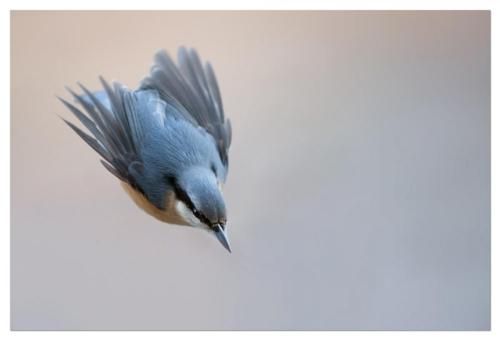
The mother bird took up both eggs in her talons and beat her wings as hard as she could, in an attempt to escape the raging wildfire. She flew without direction or destination, farther than she had ever flown before in a single trip, and just as her eggs began slipping from her talons and her travel-weary wings were about to give out, Bluella was fortunate enough to find a nest outside the path of fire… but it already contained an egg of its own and she caught sight of the parent bird in the middle of its dive bomb assault.
“There’s something you need to know about me. I was born with an extraordinary ability that allows me to see into the future. I know, it sounds a bit mad, but I swear it’s the God’s honest truth. This gift has given me the unfair advantage of always avoiding imminent danger by selecting the best possible outcome in any given situation. But the strongest vision I ever had involved you. Although you don’t know me yet, we have an incredible future in store for us, happy marriage, wonderful children, charmed life, the whole nine yards. We will have a connection like no other couple on the planet. Our auras have the capability to overlap in order to create a psychic rapport. The only hiccup in all this coming true is that you must initiate first contact or our fairytale relationship will never happen, so I desperately need you to lift your eyes from your phone and see me!” I shouted in silence until my emotions were hoarse.
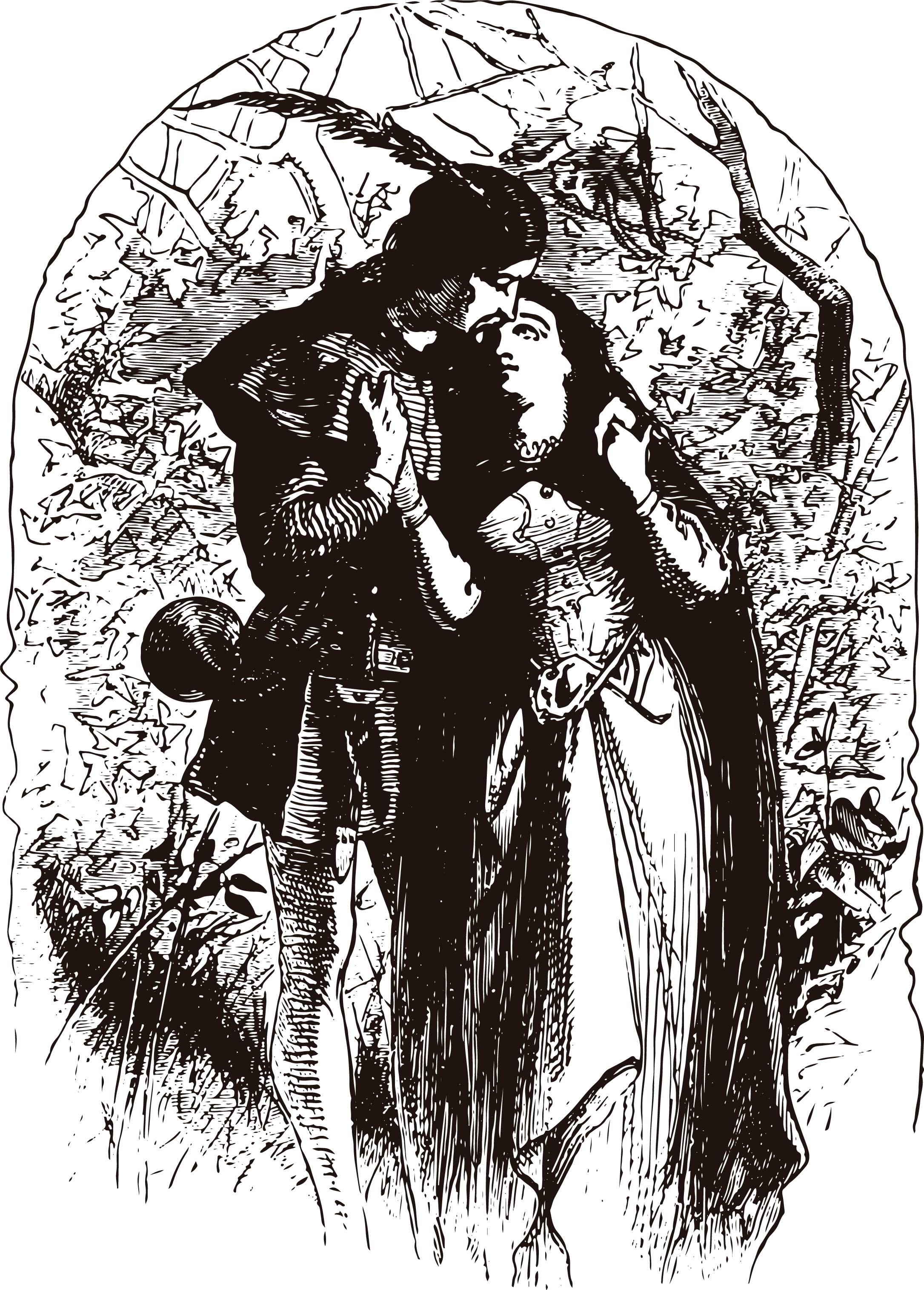
In my sock drawer, there is a hiding space behind a row of what my father calls grave socks as in one foot in the grave because they either do not have a match, are riddled with holes, threadbare at the toes and heels, or the ankle elastic has given up their hold on life. In that hiding space, there is a letter written carefully in a mixture of cursive and print. In that letter, are words, feelings, emotions, and admissions that a boy would never say directly to a girl’s face, not even on a double dog dare.
On a bicycle, there is a shy paperboy who, even though I have not responded to his first letter yet, would write me another letter, I am sure of it, reminding me of our time in the park. In that park, there is a rum cherry tree under which I made a promise to the shy paperboy of seven minutes in heaven.
In my closet, on an afternoon when no one is home, I make good on my promise with the shy paperboy. In the dark, my mind is filled with a sort of scary, sort of awkward fireworks that I can see but cannot hear because my heart is pounding so fast and loud that I swear the shy paperboy can hear it.
In that kiss, there is something I do not have words for, something that drops my guard completely, makes me feel truly comfortable with the shy paperboy and I am desperate to let him see me in my entirety.
In that feeling, I am crying harder than I ever have before, harder than I even knew I could, crying past the point when I run out of tears. In the tearless sobs, my breath is hitching and I realize that this is most likely the happiest and most terrified I will ever feel in my life.
In the silence, after the kiss and the tears, the overwhelming and slightly painful joy is replaced by the sound of a key sliding into a lock, the tumbling of a bolt and the jangling of a woman’s metal bracelets.
In the house, there is a mother who will tan not only my hide but the shy paperboy’s as well, if she ever finds out I have company without permission and especially if my room door is closed and that company is a boy who is in my room.
In the window, there is a scared paperboy climbing out and mumbling a prayer that he does not hurt himself or makes a sound when he drops a story to the ground below.
In my mother’s eyes, there is suspicion when she opens the door and enters my room, catching me rushing to shut the window, cutting off the cool breeze even though I am dripping with sweat.
In my mind, there is a list of excuses that I cannot find in the clutter of thoughts so I just stare at my mother as innocently as I can manage, as she walks past me and opens the window, about to stick her head out to inspect the backyard.
In my mouth, there is a fib, “A wasp!” I say just a bit too forcefully and I build on it by telling her there was a wasp in the room so I closed the door to stop it from getting into the rest of the house and I managed to chase it out and shut the window behind it.
In the moments that tick by too slowly, my mother glances at the window again, then at my face before turning to leave but as she reaches the door, she stops and says, “You should probably find a better hiding place. Your father’s been talking about throwing out your grave socks and you wouldn’t want him finding that letter, would you? And the no company without permission rule stands no matter how sweet a boy’s words are or how much your heart aches for him, understood?”
In the end, I realize I am not as clever as I think I am, nor is my mother that foolish or unreasonable and I discover a newfound respect for her as I answer, “Yes, ma’am.”
When I was six years old, my father left me in the family car to pop into a shop real quick to grab us some snacks for our road trip, but he forgot to apply the parking brakes, and while he was in the store, the car rolled backward and over the edge of a three hundred foot ravine. Instead of losing my life that day, I gained an ability.
I could relive a dead person’s murder.
You’ll notice that I called it an ability and not a gift, because living through the experience of dying was no day at the beach. From a young age, all I had to do was physically stand in a crime scene and I knew what it felt like to be shot, stabbed, strangled, drowned, poisoned, immolated, crushed beneath a rockslide, mauled by wild animals…you get the picture. And if I ever got sick, a hospital would be the last place I’d ever go to. Worst experience of my life.
I tried all manner of drugs to dampen the ability, legal and otherwise, to no avail, so I learned to live with it as best I could manage, and decided to turn lemons into whiskey lemonade by becoming the first and only afterdeath scene investigator. The guy you hired, when all the evidence led to a dead end, to tell you exactly who offed your favorite aunty, philandering spouse, or even your precious little pooch. And yes, I also felt animal murders, as well. Lucky me.
In this line of work, I got my fair share of skeptics, people who doubted that I could do what I claimed I could do, but hired me out of desperation. Such was my current client, Mrs. Marjorie Lydell, whose husband was found dead in a hotel room, in an unsavory part of town, nowhere near his home or place of employment.
Mrs. Lydell asked me to meet her at the hotel room, which she rented, after it had been given the once over by crime scene cleaners and reopened for public use. It was a small room filled with the almost imperceptible cheap hotel scents of old sex and distant natural death, to which I was gratefully immune, both emanating from a bed that dipped in the center like a swayback horse. On a table beside it was a wash basin and pitcher that passed for the en suite bathroom.
As I looked at Mrs. Lydell, a handsome woman in her late forties, I was overcome with a sensation, and for a split second, I thought I was in love because my body got tingly all over, goosebumps sprouting everywhere, and my pulse crackled like lightning. Then I glanced over my shoulder and saw the ghostly after image of Marjorie Lydell, dressed in different clothes and I realized before I passed out, that she was holding a translucent live wire. I, or rather Mr. Lydell, was being electrocuted.






 MADD FICTIONAL