Thirteen For Halloween: Requiem for the Living: A Ghost’s Vengeance

The sky split open, unleashing a torrent of rain that cut like shards of glass. Snow mixed with the downpour, falling in jagged flurries as if the heavens were weeping for a forgotten soul. A damp chill clung to the bones of the living, but I felt none of it. My cold was deeper—a frost of the soul, bound in chains that death had only tightened.

I hovered above my open grave, an intruder among the living. A field of black umbrellas swayed like wilted flowers in the wind, their owners clutching them in vain against the storm. I had no need for shelter, but their grief—their muted cries—clawed at my mind. A grotesque dance, these mourners, caught in the rhythm of loss they didn’t understand.

Below, a mahogany coffin waited—an empty vessel where my body should have rested. But it wasn’t my body they mourned. I watched with a hollow, burning rage, invisible to all but the darkness itself. My killer had orchestrated it all—ensuring I watched the false ritual, ensuring I would know my body would never rest in peace.

The truth of my death unfolded slowly, a cruel revelation whispered from beyond the veil. My death had not been an accident. No, it had been carefully crafted, and now I, the ghost, was left to wander—a pawn who had been cut from the board too soon.

I was not free. I was trapped between realms, tethered to the world by an insatiable need for vengeance. My ethereal form moved with the wind, silent and unseen, but I knew I wasn’t powerless. The hunt was mine to begin.

The first sign was the cold. A creeping, unnatural chill that followed my murderer, sinking into their skin, gnawing at the edges of their sanity. It started as a discomfort, a breath of cold air in a warm room. But soon, the chill grew deeper—frost on their breath, ice in their veins. Their windows, no matter how tightly shut, let in the biting air. They couldn’t sleep, their nights haunted by the gnawing sense of being watched.

I made sure of it.

I watched as their unease grew, as the world twisted around them. Shadows clung longer than they should, stretching into shapes that whispered my name. The clocks, once steady, began to tick out of rhythm, a maddening staccato of time unraveling. Their reflection in the mirror became distorted, the faintest hint of me—a flicker in the corner of their eye. I was always there. They could never be alone.

The trail of their guilt led me to their doorstep, each step heavy with the weight of their betrayal. They had been my friend once—trusted, loved even. Now, they were nothing more than prey, the target of a justice that death could not erase. I stood outside their door, a figure in the rain, invisible to the world but all too real to the one who had wronged me. The night pressed in, thick with tension.

I reached out with a thought, and the door creaked open.

Inside, they sat alone, clutching a glass of whiskey, its amber contents trembling in their hand. They had aged in a way that wasn’t natural. Fear had stolen the vitality from their face, replaced by the hollow-eyed look of someone who knew they were damned.

“Show yourself!” they cried, their voice cracking in desperation. They knew. They had always known it was me.

I made them wait. The silence stretched on, filling the room with the weight of the grave. Then, slowly, I let myself manifest—a cold breath on their neck, a shift in the air. My form flickered into view, pale and translucent, but unmistakable.

Their eyes widened, filling with terror as they scrambled backward, knocking over the chair in their haste. “It wasn’t supposed to happen like this,” they stammered, their voice barely above a whisper. “It was an accident—”

But I knew the truth. The memory of that knife, cold and final, sinking into my back, burned within me like a wound that would never heal. They had plunged it in with purpose, a betrayal as sharp as the blade itself.

The room around us warped as my anger flared—walls groaning, lights flickering, the air thick with the stench of death. “You took my life,” I hissed, my voice hollow and echoing. “Now, I’ll take yours.”

Their breath quickened, coming in ragged gasps. I watched as their face contorted in panic, as they stumbled and fell, crawling away on their hands and knees. But there was no escape. I was everywhere—the creaking floorboards, the rustling curtains, the reflection in the shattered glass. My presence filled the space, choking the life from the air.

I could feel their pulse, frantic and wild, pounding in their chest as they tried to flee. I let them run, let them feel the hopelessness of it. My vengeance would not be swift—it would be slow, drawn out, until they begged for the end.

“You won’t outrun me,” I whispered, my voice curling in the shadows. “Death is inevitable. And so is my revenge.”

They stumbled into the bedroom, slamming the door behind them. But doors could not keep me out. I was the darkness, the cold, the thing they feared in their nightmares. I drifted through the walls, a cold fog filling the room as they cowered in the corner.

I could hear their whispered prayers, desperate and incoherent. Prayers that would go unanswered.

When I finally moved, it was with the force of all the fury I had held back. I surged forward, grasping their throat with icy hands, feeling the warmth of life beneath my fingers. They gasped, choked, clawing at nothing as the air left their lungs.

Their wide, pleading eyes locked onto mine, but I offered no mercy. Only the cold, hard truth—revenge was all I had left.

As their body went limp and the light faded from their eyes, I felt a release. The storm outside ceased, the wind falling silent. The room was still once more, and my killer lay at my feet, lifeless. The final chapter of their betrayal had been written in blood.

I turned away, drifting back into the night. The world no longer called to me. My task was done. The tether that bound me to this place unraveled, and with it, the bitterness that had gripped my soul for so long.

I returned to my grave, to the coffin that had once been empty, but now held the weight of my vengeance. The snowflakes continued to fall, a blanket of white, covering the earth in silence. I lay down in the earth, finally at peace, my story etched in the annals of the afterlife.


Thirteen For Halloween: The Fault of the Nightlight Redux

Darkness descends, not gently but with weight—a suffocating shroud. The click of the light switch, the thud of the closing door. Sounds that, in the daylight, are small, meaningless. But at night, they grow loud, like the ticking of a clock running out of time.

Parental abandonment
The nightly ritual
Leaving little Evan
To face the shadows’ revival

The nightlight flickers, its glow pale and inconsistent, the kind that hides more than it reveals. The soft yellow light twists the room’s familiar shapes into sinister figures—elongated, contorted, twitching as if ready to leap off the walls.

Shadows stretch and swell
A puppet show of terror
Hinting at horrors
Lurking beyond the veil

Evan pulls the covers to his chin, eyes darting to every shifting corner. He tries to pretend it’s just his imagination, but he knows better. The flickering of the nightlight is more than a malfunction. It’s a signal, a summoning. The witching hour approaches, when the boundary between worlds grows thin, and what hides in the dark comes forth.

The witching hour strikes
Whispers, scratches
Nightmares stir
In the waking world’s cracks

The first sound is always the scuttling—tiny legs, hundreds of them. Evan presses his hands over his ears, but it’s no use. He feels them first, their brittle bodies brushing against his skin beneath the covers. Cockroaches. Feral. Their exoskeletons scrape like nails on glass, filling the air with a cacophony of insectile chatter.

Chitinous swarms
A living tide
Engulfing innocence
In their crawling pride

But they aren’t the worst of it. Not by far. The rats come next, skeletal things with gaping sockets where eyes should be, noses twitching as they search, search for something to devour. Evan’s breath hitches as he feels the cold, wet slap of a rat’s tail against his ankle. He stifles a scream.

Eye-less vermin
Scavengers of sanity
Gnawing at the fragile edges
Of reality

The air grows colder. Evan’s breath fogs in front of him, though the window remains shut. From the ceiling, something moves, a shape more felt than seen—spectral, weightless, like a wisp of mist that curls down toward his bed. The bedsheet-wraiths, as Evan calls them. They glide silently, their touch icy and wrong, as if they feed off warmth and leave only cold despair in their wake.

Soul-sucking specters
Hungry for life’s heat
Draining vitality
Leaving hollow defeat

A shadow flickers to his left. Evan turns his head just in time to see them—the toys. His toys. The plastic dinosaurs he once played with, now standing on twisted legs, their eyes glowing red. They stalk forward with slow, deliberate steps, jaws snapping, eager to taste his skin.

Childhood whimsy, perverted
A Jurassic nightmare
Toys turned predators
In their colorful, carnivorous snare

And then, the sound that undoes him. The rapid, chattering clack of the windup teeth. They move faster than they should, crossing the floor in mechanical bursts. They leap onto the bed, gnashing with mechanical hunger, a mindless frenzy.

Grinning monstrosities
Gears grinding in delight
Seeking to strip identity
To devour his fight

Evan wants to scream. His mouth opens, but no sound escapes. His heart pounds in his throat, tightening like a noose. He reaches for the nightlight. Maybe if he shakes it, the glow will strengthen, will hold them back. But as his fingers brush its plastic surface, the light flickers again—once, twice, before dimming to nearly nothing.

That’s when he hears it. Not a noise, but a voice. It slithers into his mind, oily and cold.

“You brought us here.”

Evan’s hand jerks back. His breath is ragged now, eyes wide as the realization dawns.

The nightlight wasn’t protection. It never was. Its flickering was an invitation. He turns, wide-eyed, as the shadows close in around him, their voices growing louder, their forms more solid, more real.

A cold touch grazes his cheek. A windup tooth clatters onto his pillow.

His hand trembles as he reaches to switch the nightlight off. His last hope—darkness, silence, anything to stop the nightmare. But his fingers hover over the switch, frozen.

Because in the dark, they would still be there. And in the dark, he wouldn’t see them coming.

The light flickers once more, and the last thing Evan hears is the low, cruel laughter from the shadows.

The nightlight’s glow—
A cruel trick
Not safety, but the key
To the Nightmare Realm’s thick

Thirteen For Halloween: The Reaping Kiss

Soledad drifts in fevered twilight, her mind unraveling at the edges of a brittle reality. The air, thick with weightless shadows, hums with something—something ancient, something eager. The room bends with a rhythm it should not possess, a slow twisting of perception as the walls pulse in time with the erratic beats of her heart.

She can no longer tell where her body ends and the shadows begin.

In her final hours, her sanity unwinds like thread caught on a rusted nail, taut one moment and fraying the next. She stares at the cracks in the ceiling, but the cracks stare back, widening, breathing.

The whispers are the worst. A sickening rasp, crawling just beneath the audible. It claws through the air, finding her, winding around her, each syllable a thread tightening around her throat.

“Soledad…”

It’s more than a voice. It’s a presence—no, a hunger, murmuring her name like a forbidden prayer.

“Soledad…”

The voice coils, pulls her downward. She’s drowning, gasping, but the room is bone-dry. She reaches for something, anything to hold onto, her hands grasping at nothing, clawing at phantoms in the air.

“Soledad.”

She is falling, slowly, eternally, sinking through her own skin, lost in the spaces between each labored breath. The sound of her heartbeat stretches, drags her with it, beats colliding with moments that feel like centuries.

Each second an eternity.

Then, something touches her.

Not skin. Not flesh. A pressure, like the weight of a world pressing against her lips—no, like something beneath the world. A kiss, cold as the void itself, yet burning her from the inside out. The air collapses in on itself, and her body stiffens, every nerve alight with raw sensation.

She gasps, and it takes her in deeper.

In that kiss, everything ceases to be what it was. The world dissolves. Her thoughts, her fears, her memories—they become irrelevant, unmade, as if they had only been dreams borrowed from someone else’s life.

The kiss devours her, and she opens herself to it, the desire, the need, blending with pain so sharp it is indistinguishable from pleasure. She melts, becomes less than human. She becomes the kiss itself.

Her self, her Soledad, drains away, slipping into the void with the remnants of her soul. She doesn’t fight it. Why would she? This has always been her path.

It was always leading here.

It was always leading to him.

The voice—the lips—they aren’t human. She understands now. The reaper had been patient, silent, waiting for the moment her walls would finally collapse. All those years spent running, all the pointless resistance. It had known. It had always known.

“My Soledad…”

The rasping voice caresses her, full of mockery, full of possession. She is not her own anymore. She was never her own. This, this terrible moment, this is the truth of her existence, the only truth that matters.

Soledad had been courting death all along, chasing the inevitable with every heartbeat, every breath, until there were no more to give. She sees it now. A lover that was always waiting, just beyond the edge of sight, behind every decision she had ever made.

The kiss has taken everything, and yet it remains. It is eternal, lingering long after her name, her mind, her essence, have vanished into the dark. Her body—a hollow shell—is the only testament left, a discarded relic of the woman she once was.

But that laugh—oh, that laugh.

The laugh bubbles up from somewhere deep in the void, cruel and knowing, echoing in the places where the light never touches. It doesn’t fade; it only grows louder, spreading like frost over her vacant form, seeping into the marrow of her discarded bones.

And the kiss waits there, too. Lingering. Watching.

Soledad is gone. A husk, a work of macabre art left behind, but this story isn’t over. The kiss isn’t finished.

There will be others. There are always others.

Another will stumble into its grasp, another lost soul, another broken defense. And when they do, the kiss will be waiting, ravenous, timeless.

It always has been.

Thirteen For Halloween: The Tiniest Evil Redux

Heat clung to the air, a suffocating mantle of humidity that pressed down upon the monastery walls. The stone, cold and resolute in winter, seemed to weep in the oppressive warmth, beads of moisture trickling down its ancient surface like the sweat of some great, troubled beast. Somewhere in the courtyard, birds sang, their carefree notes dancing against the unease that permeated the earth, a mocking celebration of life amidst what felt like the stirring of something wrong.

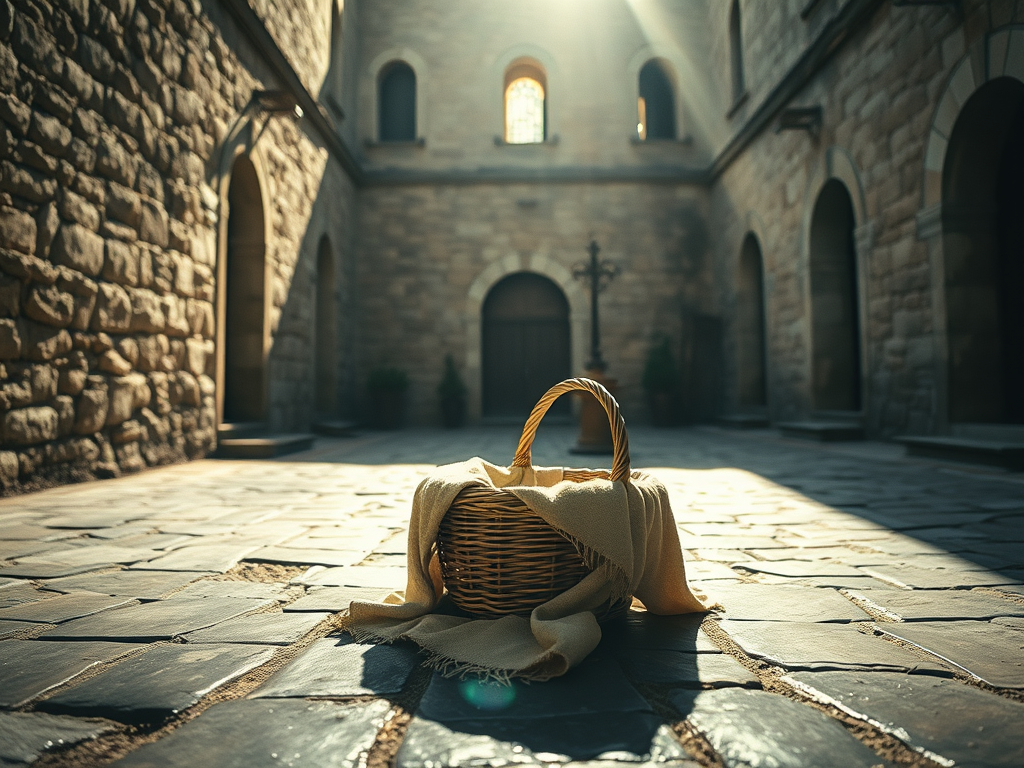
At the door, a wicker basket sat, alone in the glaring sun, a foul-smelling blanket draped over its edges. The abbot stood before it, hands trembling, unable to reconcile the weight of what lay hidden beneath the coarse weave. The note—crumpled, ink smeared by an unsteady hand—spoke of failure and dread.

“Evil exists
Untimely wrenched
Unholy mark
I fail in faith
You must not”

His throat tightened. The words clawed at him with the desperation of someone who had glimpsed something far beyond human understanding. But there were no instructions, no guidance, only the certainty of horror. Slowly, almost unwillingly, the abbot bent down and touched the blanket. His hands shook as he peeled back the layers, each fold heavy with dread, each moment stretching into a timeless horror.

And then, there it was. Tiny. Innocent, wrapped in the fragile guise of a newborn. Yet nothing felt innocent here.

The mark—impossibly intricate, disturbingly alive—glowed faintly on the infant’s palm. It throbbed with a dark pulse, a sickening rhythm out of sync with the world around it. He had never seen such a thing before, but something in the deepest recesses of his mind whispered that it was old, far older than this monastery, older than humankind.

The baby lay motionless, unnaturally still, its breaths shallow, its form too quiet, too delicate for the vast, unknowable malice that seemed to coil beneath its skin.

His hand hovered above the child, caught between fear and a twisted compulsion. He knew this was no ordinary infant—no mere child of sin or sorrow. Something monstrous, something grotesque in its scale, slumbered here, waiting.

The baby’s fingers twitched.

A small, simple motion, almost too minute to notice. Yet it drew his gaze, ensnaring him in its quiet malevolence. The abbot’s breath caught in his throat.

Tiny digits danced, curling and uncurling as though grasping at invisible strings.

Twitch. Twitch.
Fingers in cadence.
An unseen puppeteer.
A silent mockery.

The baby’s eyes snapped open, black as the void. They weren’t eyes—they were holes, abysses that sucked the light from the room, leaving only an emptiness, a gnawing hunger that peered into him and beyond him, into places he did not know existed. He staggered back, his mind reeling, trying to comprehend the sheer vastness of what he was staring into.

His mouth opened in a silent scream. A cold sweat slicked his body, and the world around him seemed to warp and stretch, bending to the will of the creature that gazed out from behind that infant’s face.

Faith faltered.
Truth unraveled.
All he had ever known lay bare,
Stripped of its illusions.

Somehow, he forced his trembling hand to the vial of holy water hanging at his side. His fingers closed around it with the same desperation of a man holding onto the last thread of sanity. But as he moved to douse the child in its purifying touch, the baby’s mouth opened—a soundless cry, a void that swallowed everything. The world itself seemed to collapse inward.

He was falling.

Darkness surrounded him, a torrent of nightmares spilling into his mind. He was no longer in the monastery; he was nowhere. All around him, there were voices—whispers in languages he could not comprehend, hissing promises of suffering, of truths that would tear at the seams of the universe itself.

Beyond the veil
Truth awaits
But at what cost?

The darkness spiraled deeper, infinite, maddening. He tried to hold onto something, anything—his faith, his training, the name of his God—but the whispers drowned them all. Everything he had ever known seemed absurd, feeble, in the face of this terrible, cosmic truth.

He landed hard, back in the monastery, but the air was different now—thicker, saturated with an unseen malice. The wicker basket remained before him, but it was no longer just an innocent object. It radiated a terrible power, the baby inside a grotesque contradiction, too human and too inhuman all at once.

A lingering dread hung in the air, like smoke that could not be dispelled. The mark on the baby’s hand glowed once more, faint but relentless, and for the first time, he noticed something chillingly familiar.

His own hand, where it had grazed the infant, now bore the same mark, its lines burning themselves into his flesh, pulsing with the same unholy light.

The child stirred, its inky eyes half-lidded but watchful, as if it were no longer just the helpless thing in the basket but something far more ancient, far more deliberate. The abbot recoiled.

There was no redemption. No exorcism. No prayer that could unravel this evil.

The mark was spreading. It crawled over his skin, twisting up his arm, searing into his bones. He could feel it now—its influence burrowing into his mind, into his soul, and with it, the gnawing certainty that he had become something else.

The wicker basket.
The cursed child.
The abbot.
A vessel, now shared.

In the silence that followed, there was no salvation. Only the quiet certainty of what had begun. The tiniest evil, but not confined. Never confined.

And it would grow.

The Overdraft Agency

You have been called to this office because you have exceeded your allowance of luck and good fortune, which has put you in arrears. But fear not, all is not lost. You are entitled to enroll in our Overdraft Program, an initiative designed to address precisely such situations. You may have heard of the program; it’s been discussed in the media and, naturally, the subject of much online speculation.

Before we proceed, I’d like to clarify the misinformation surrounding The Overdraft Agency. Many see us as an organization that preys on misfortune. That, however, is far from the truth. In fact, once, I sat where you are now—frightened, confused, and unsure of how my life had spiraled to this point. I, too, had reached the end of my rope, teetering on the edge of an abyss.

Unlike you, I refused to accept my situation. I became belligerent, lashing out at the agent who laid before me the cards of my life and misfortune. I accused him of manipulation, deception, of trying to profit from my bad luck. But the agent was patient, as they all are, and skillfully dispelled the untruths I had clung to while extolling the benefits of membership in The Agency.

Now, I stand before you as proof that acceptance is the first step to transformation.

Once your membership application is approved, your good fortune is guaranteed. You will be protected from the forces that mentally enslave humanity—the endless doubts, the second-guessing, the paralysis of indecision. If fame or power is your goal, The Agency can arrange that for you. All of it will be within your grasp.

However, there are a few key points I must emphasize. First and foremost, The Agency does not provide salaries, stipends, or any other form of ongoing monetary support. Instead, upon initiation, you will be offered the Seed of Good Fortune. This is the only currency The Agency provides. With this seed, you can embark on any venture, and success is virtually guaranteed.

But there’s more—along with the seed, you will be blessed with the Plot Germ. The Plot Germ is an idea, a spark of inspiration that will form the foundation of your future success. It is not something that can be taught or earned. It is a gift, a whisper of divine insight that will unlock wisdom, power, and influence in ways you cannot yet imagine. This is what truly separates members of The Agency from the rest of humanity.

Now, let me address another misconception: there is no registration fee. No hidden costs or fine print. Donations are accepted and appreciated, but never mandatory. Let your conscience be your guide. You are free to give—or not give—as you see fit.

Becoming a member is a personal decision. The Agency does not coerce or plead. The door is open, but it’s up to you to walk through it. I joined because I wanted to, not because anyone forced me. And now, as one of the world’s leading businesswomen, I stand as a testament to the life-changing benefits The Agency offers.

But before you decide, let me tell you the part that no one ever mentions—the part that, once revealed, tends to separate the committed from the cautious.

Once you accept The Seed of Good Fortune, you are bound to The Agency for life. Not in the way you might think; there are no contracts to sign, no legal bindings. The bond is metaphysical, woven into the very fabric of your existence. The Seed will grow within you, taking root in your ambitions, feeding off your desires. And as your fortunes rise, you will feel its presence more and more—guiding you, steering you.

But be warned: The Agency’s generosity is not limitless. The Seed must be nourished. Every time you reap the benefits of its power, you must give back—whether through your wealth, your influence, or something more precious. What you give need not always be tangible, but it must be heartfelt.

I have given much, and I do not regret it. Yet I would be lying if I said the price wasn’t steep. There are moments—rare, fleeting moments—when I feel a tug in my soul, a longing for the life I left behind. But then I look at what I’ve built, and the whispers quiet once more.

So, the question remains: Will you accept our offer?

Take your time. But know this—The Seed waits for no one. If you walk out of this office today without it, it will find someone else. And once it does, there will be no second chances.

Marks

The marks started after the first year.

At first, Leah dismissed the bruises as accidental—sleeping funny, bumping into door frames, too much caffeine. Her partner, Mark, would tease her about being clumsy. She’d laugh it off, brushing her fingertips over the faint bluish stains on her thighs or arms, wondering if she’d knocked into something in her sleep.

But the bruises spread. They darkened, deepened, and began appearing in places she couldn’t explain—her back, the curve of her neck, inside her knees. And then came the bites. Small at first, like someone had nipped her skin just a little too hard.

Leah woke one morning to find a ring of them circling her wrist, as if a mouth had latched on while she slept.

“Did you do this?” she asked Mark that morning, holding her wrist up, the small, purpling indentations fresh and obvious.

He stared at her, bewildered. “Of course not. Leah, you’d know if I’d done something like that.”

And the terrifying thing was, she believed him.

He never raised a hand to her in anger. He was calm, collected—annoyingly rational, even when their arguments spiraled out of control. She would scream, and he would wait, let her rage wash over him like rain on concrete, never cracking, never biting back. And when it was over, Leah would retreat to bed, exhausted and empty, only to wake up hours later with more marks.

It wasn’t just bites. Burns appeared on her forearms, angry red patches that blistered as if someone had pressed a cigarette into her flesh while she slept. One morning, she woke up to find a patch of her hair scorched, strands crumbling between her fingers. The stench of burnt hair clung to her skin for hours.

“Leah, you’re hurting yourself in your sleep,” Mark insisted one night after finding her in the bathroom, staring into the mirror, touching the spot where her hair had been cut to the scalp. “You don’t remember it, but you’re doing this to yourself.”

She wanted to believe him, but there were too many nights when she woke gasping, paralyzed by fear, her muscles stiff, unable to move, as if someone—or something—was holding her down. She’d feel a cold presence lingering above her, a pressure on her chest, and then the sting of teeth or the sear of something hot against her skin.

For six years, Leah stayed with him, too afraid to leave. What if he was right? What if she was losing her mind? But it didn’t feel like madness. It felt like violation—like something was feeding on her.

She finally left after the needle marks appeared.

Small punctures dotted her thighs, her stomach, and the insides of her elbows. Some mornings, she woke up with fresh bloodstains on the sheets, tiny pinpricks that left her weak and nauseous. Mark swore he wasn’t responsible—he never wavered from his story. But Leah could no longer trust him. She couldn’t trust the bed they shared, or the house they lived in. She packed a bag, moved across town, and vowed to rebuild her life on her own.

For a while, she thought it worked. The marks stopped, and she started to believe that leaving him had broken whatever cycle she’d been trapped in. She kept her distance from Mark, ignored his calls, and threw herself into her work, focusing on a future without him.

But then the bruises returned.

At first, it was just a small one, a faint yellowing circle on her ankle. She told herself it was nothing—maybe she had knocked it against a table leg. But then the bites came back. Large, deliberate ones, as if someone had been gnawing on her shoulder. The burns followed soon after. And the hair—her hair started falling out in patches, blackened at the ends, charred like it had been set on fire while she slept.

She started locking her doors, setting up cameras in her apartment, convinced that Mark had somehow found her and was breaking in at night. He must be, she thought. Who else could be doing this? It had to be him.

One night, after another restless, painful sleep, Leah stormed into the police station with photos of her injuries. She demanded an investigation, telling the officer on duty that her ex was stalking her, breaking into her home, hurting her in ways she couldn’t explain.

The officer looked at her with a practiced calm. He asked her to wait. Twenty minutes later, they confirmed it: Mark had an airtight alibi. He had been across town, having dinner with his sister, his whereabouts fully accounted for. He hadn’t left the restaurant all night.

Leah left the station in a daze. She couldn’t understand it. Mark couldn’t have done this—he wasn’t even near her. But the marks were still there. The pain was still real.

That night, she tried staying awake, keeping herself upright in bed, forcing her eyes open even as exhaustion clawed at her. She placed a small mirror on her bedside table, facing the bed. She needed to see what was happening. She needed proof, something tangible to explain the nightmare her life had become.

But sleep eventually won.

She woke hours later to the sensation of something burning against her skin—hot, searing pain flaring on her stomach. She tried to scream, but her voice wouldn’t come. Her arms wouldn’t move. Her body was paralyzed. And in the reflection of the mirror, she saw something.

It wasn’t Mark.

It wasn’t anyone.

It was her own hand, clutching a lighter, pressed against her flesh.

The marks, the burns, the bites—they were hers. They had always been hers. But how? How could she have done this to herself?

Leah thrashed in bed, her limbs still locked in place. The lighter in her hand clicked off, but the pain lingered, searing deep into her nerves. She wanted to move, to scream, to throw the lighter across the room—but she couldn’t. Her body wasn’t hers to command anymore.

Her hand dropped the lighter, reached under the pillow, and pulled out a pair of scissors.

Slowly, methodically, her fingers curled around a thick lock of hair and began snipping away. Each cut was deliberate, clean, as strands of her hair fell onto the bed, the floor. The room spun as tears welled up in her eyes.

She wasn’t doing this. She couldn’t be.

But the reflection showed only her own hands, her own face, her own body betraying her.

When she finally broke free from the paralysis, Leah’s hands were trembling, the scissors lying next to her on the bed. Her reflection stared back, wide-eyed and unblinking, but something about the woman in the mirror felt wrong. It wasn’t her—not really.

The marks, the burns, the bites—they wouldn’t stop. They had never stopped. And as Leah stood there, her heart pounding in her chest, she realized with a sickening certainty that no matter how far she ran, no matter where she moved, she could never escape the violence that lived within her.

The monster had always been inside.

Every Masterpiece Begins with the Right Canvas

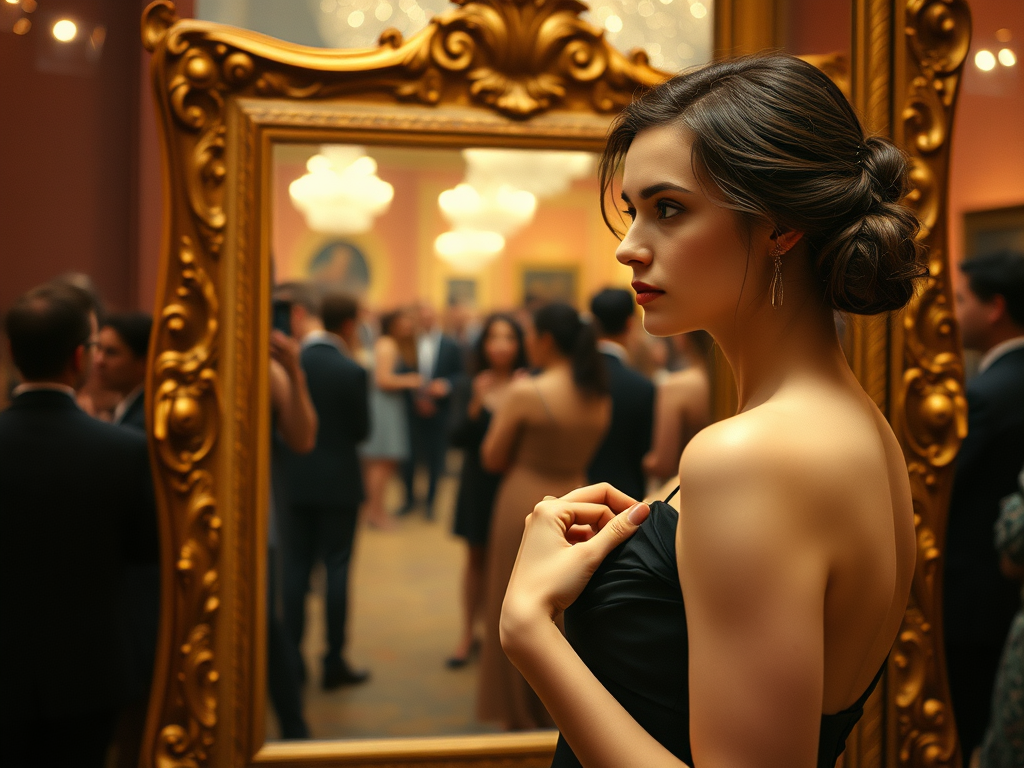
Anna stood in front of the long, gold-framed mirror in the corner of the gallery, adjusting the strap of her black dress. The event was buzzing, filled with people who floated through life effortlessly—those whose presence commanded rooms, whose smiles dazzled crowds. People like him.

She spotted him across the room, deep in conversation with a small group of high-profile collectors. He wore his success easily, like the perfectly tailored suit that clung to his tall frame. Her fingers nervously brushed a stray lock of hair behind her ear. She didn’t belong here.

The gallery walls were draped with the work of new artists, and everyone in attendance seemed to radiate a certain confidence she could never quite touch. She had never felt like she fit into these circles, like someone who had fallen through the cracks and now found herself in the wrong place, with the wrong people.

What am I doing here? she thought.

She had asked herself that question a thousand times since the night she first met Robert, six months ago. He had swept into her life as if fate had a wild sense of humor. He could have chosen anyone, and yet, somehow, he had chosen her.

Anna had always been last. Last to be picked in school, last to leave the office when everyone else had moved on to better things. She was the quiet one in the back of every photograph, barely noticed in the blur of someone else’s story.

So, when Robert had walked into that tiny café where she worked, flashing a smile that could light up a room, she didn’t believe it when he stayed to talk. Not to her. She assumed he was just being kind, maybe waiting for someone else. But as the weeks turned into dates and the casual conversations turned into deeper confessions, Anna found herself drawn into a world she never thought she’d see. A world where people like him thrived.

And yet, she never stopped feeling like the outsider. The imposter.

“Anna.” His voice pulled her from her thoughts, gentle but commanding, like everything else about him. She hadn’t even noticed him crossing the room toward her. “You okay?”

She nodded quickly, forcing a smile. “Yeah, I’m fine. Just… taking it all in.”

He reached out and lightly touched her arm, his eyes searching her face. “You don’t have to do that, you know.”

“Do what?”

“Pretend like you’re not enough.”

Her heart caught in her chest. He had a way of seeing through her, as if every doubt, every insecurity she tried to hide was written on her skin in ink only he could read.

“I don’t understand why you’re with me,” she blurted, the words tumbling out before she could stop them. She swallowed hard, the embarrassment burning in her throat. “I mean, look at you… and look at me.”

Robert tilted his head, considering her. Then, in that calm, self-assured way he always had, he said, “Look at you.”

She crossed her arms, defensive. “I have looked. And I don’t see what you see.”

He glanced around at the people mingling in the gallery, the polished world he lived in. “Anna, you think these people are any different from you?”

She couldn’t help but laugh, though it came out bitter and sharp. “Yes. Very.”

Robert stepped closer, lowering his voice. “Let me tell you something about all of this—about success, confidence, whatever you want to call it. It doesn’t make a person better. It just means they’ve learned how to hide their fears behind shiny things.”

She looked up at him, her disbelief plain on her face.

He smiled softly and reached for her hand, taking it in his. “You see yourself as this blank slate, someone who’s been overlooked or left behind. But that’s just where the story starts. Anna, every masterpiece begins with the right canvas. It’s not about being perfect. It’s about the potential to create something extraordinary.”

She stared at him, searching his eyes for any hint of pretense. But there was none. He was serious.

He squeezed her hand gently. “You’re not broken. You’re not less than anyone here. You’re the foundation. And with the right foundation, the right person, you can create something unforgettable.”

Anna wanted to believe him, but years of being told she wasn’t enough were hard to shake off in an instant. “But why me?” she whispered, barely trusting her own voice.

“Because I see you,” Robert said, his voice warm and steady. “Not just the version of you you’ve been told to believe in. I see the woman who has more strength, more depth, than you give yourself credit for. And I choose you because I know what we can create together.”

Her heart ached at the sincerity in his words, at the way he made her feel seen in a way no one else ever had. She had spent so long shrinking herself down, trying to avoid the spotlight, that she didn’t know how to stand tall anymore.

But maybe, just maybe, he was right. Maybe she wasn’t meant to be in the shadows, after all.

She took a deep breath and let herself lean into the moment. Into him.

Robert smiled again, his eyes lighting up with a quiet confidence that was now just as much hers as his. “Let’s go home,” he said softly. “The night doesn’t need to impress anyone.”

And for the first time in a long time, Anna felt like she could breathe. Like the weight of her own self-doubt was lifting, if only a little. As they left the gallery, she realized that she didn’t need to compare herself to the people around her. She wasn’t perfect, but maybe that didn’t matter.

Every masterpiece begins with the right canvas. And for once, she started to believe she could be one too.

The Devil Was Surprised (By The Things My Ex-Wife Pulled Off Every Day)

It was a hot, thick night, the kind that sticks to your skin and pulls out all the secrets you’ve been trying to bury. The sun had gone down hours ago, but the heat still clung to the air like an uninvited guest. I sat on my porch, a tumbler of whiskey in my hand, staring at nothing in particular. The cicadas hummed in the distance, offering a strange sense of calm, when I saw him—just a dark shape coming down the dirt road. I should’ve known right away, but I didn’t.

When he got closer, I realized it wasn’t just any old wanderer.

It was the Devil.

And hell, he didn’t look any different than he did in the stories. Sharp black suit, slicked-back hair, and eyes like coal. He had the same confidence that makes you think he knows something you don’t—because, let’s face it, he does.

He sauntered up, nodded like we were old friends, and plopped himself down on the empty chair next to mine. “Evenin’,” he said, like this was normal.

I raised an eyebrow, but kept my cool. “Evening.”

He glanced over at my whiskey, smirked. “Mind if I get a glass of that?”

Now, call it southern hospitality or just plain stupidity, but I went inside and grabbed him a drink. After all, it’s not every day the Devil shows up at your doorstep.

We sat there in silence for a moment, sipping. He stared off into the night like he was contemplating the universe. Finally, he turned to me and said, “You know, I’ve seen a lot in my time. More than you could ever imagine.”

I nodded, unsure where he was going with this.

“But I gotta tell you something,” he continued. “Your ex-wife… Well, she’s somethin’ else.”

I choked on my whiskey. “Come again?”

The Devil chuckled. “Oh, you heard me right. That woman of yours—” He shook his head like he was genuinely impressed. “She’s a force of nature. Hell, she’s out there doing things even I wouldn’t dare pull off.”

Now, you’d think I’d be scared, right? But when he said that, I wasn’t. I laughed. Really laughed. “That sounds about right,” I said, leaning back in my chair. “She’s been giving me hell for years.”

The Devil smirked, but his eyes darkened. “No, boy. You don’t get it. I deal with liars, cheats, and thieves on a daily basis. But your ex? She could outwit the best of ‘em. I’m tellin’ you—half the folks down in my domain would follow her if she ever decided to set foot there.”

I let out a low whistle. “So, she’s that bad?”

“Bad?” He raised an eyebrow. “Depends on how you define it. She’s clever, ruthless when she wants to be. She’s got charm too, dangerous charm. Can make you believe anything if she sets her mind to it.” He took a sip, swirling the whiskey around his mouth before swallowing. “Hell, even I couldn’t have pulled some of the stunts she did.”

I sat there, speechless.

He leaned in closer, his voice dropping to a conspiratorial whisper. “Let me tell you a story. There was this man—rich, powerful, thought he had it all. She walks in, sweet as pie, makes him fall head over heels. And just like that, she’s in control. Took him for everything he had, and he still smiled at her while she walked out the door. Left him with nothing but his own stupidity to keep him company.”

I stared at the Devil, my mind racing. That was her, alright. She had a way of making you think you were in control, when really, she’d been pulling the strings all along.

The Devil shook his head, like he still couldn’t quite believe it. “I’ve seen every trick in the book, but your ex—she’s writing new chapters. I tell you, boy, if she ever wanted to, she could run my operation better than I ever could.”

I couldn’t help but grin, despite the knot forming in my stomach. “You’re telling me she’s worse than you?”

“Oh, worse isn’t the word I’d use. But she’s more unpredictable. And that, my friend, is dangerous.” He drained his glass, setting it down with a soft clink. “She’s a storm in a pretty package. Could tear a man apart and leave him smiling, thinking it was his idea all along.”

We sat in silence for a while, the cicadas still buzzing in the background. I poured myself another drink, offering the bottle to the Devil, but he shook his head.

“Don’t get me wrong,” he said after a long pause. “I’m not here to warn you. She’s out of your life now, right?”

I nodded. “Years ago.”

“Good,” he said, standing up. “Because I’d hate to see what she’d do if you crossed her again.”

He adjusted his suit, gave me a nod, and started walking back down the road.

Before he disappeared into the night, he turned around and said, “You know, I’ve been around a long time, seen it all. But I’ll admit—your ex-wife surprised even me.”

And just like that, he was gone.

I sat there for a long while after that, nursing my drink, the weight of his words settling in. My ex-wife, the one who had caused me more headaches than I cared to count, had impressed the Devil himself. Maybe that should’ve terrified me.

But somehow, it didn’t.

I just laughed again, raised my glass to the stars, and thought, Well, ain’t that somethin’?

The First Cut

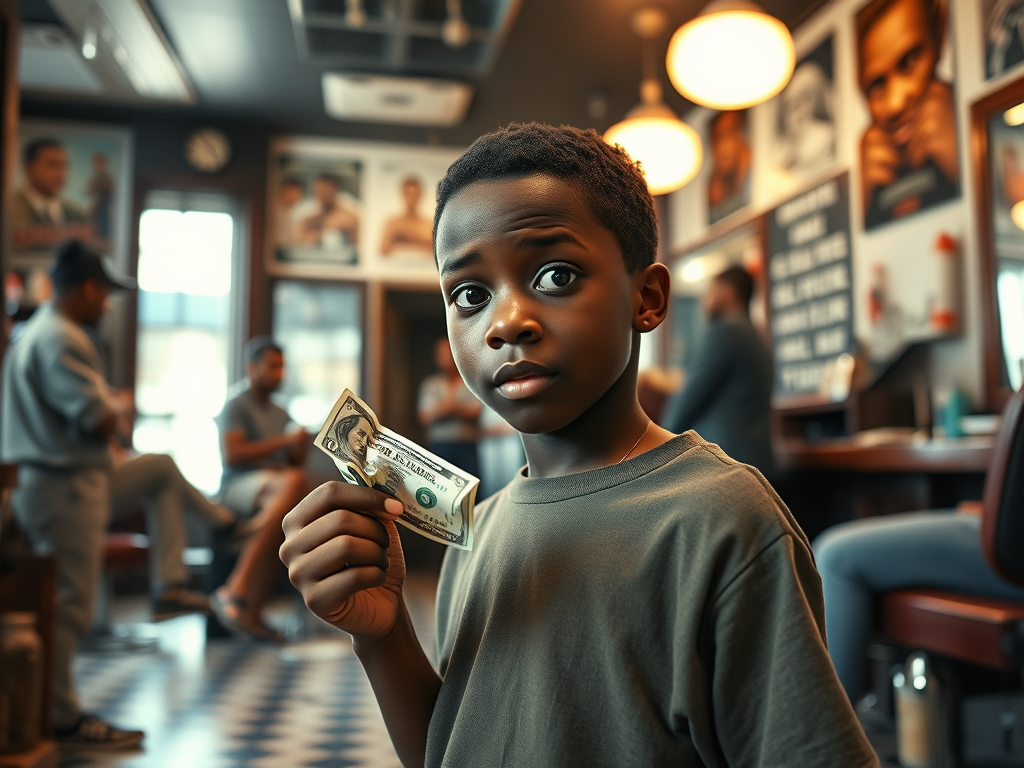
Isaiah pushed the barbershop door open with a nervous, almost hesitant grip. The jingle of the small bell above the door caught everyone’s attention, including his own. For a moment, the bustling conversation inside paused as eyes turned to the unfamiliar face in the doorway. But just as quickly, the chatter resumed, filling the space with lively banter and laughter. Isaiah stepped inside, clutching a crumpled ten-dollar bill his mother had given him for the cut.

This was his first time coming to a barbershop without his father.

The shop was nothing like the clean, clinical places he had been to before. The floor was scattered with clippings of hair in various shades, the air thick with the scent of aftershave, cocoa butter, and the faintest whiff of Jamaican jerk spices. Posters of famous boxers and faded photos of men with sharp, intricate fades lined the walls. Each station had its own personality—worn leather seats that looked like they had stories to tell, framed mirrors with cracks around the edges, and tools laid out like a surgeon’s instruments, ready for the next head of hair.

Isaiah’s eyes were drawn to the far corner where an old Jamaican man sat. His skin was dark like polished mahogany, and his face was marked with deep, thoughtful lines. He was eating a plate of yams and chicken feet, his slow, deliberate movements a stark contrast to the lively conversations around him. He didn’t seem like a barber, nor did he look like he was there for a haircut. His presence was just another piece of the shop’s peculiar charm, one Isaiah was struggling to understand.

“You good, youngblood?” A voice boomed from the chair closest to the door.

Isaiah looked up to see his barber—Dre, as his father had called him—standing with clippers in hand. Dre had a smile that was too easy, and a silver chain that reflected the sunlight streaming in through the window. He was lean, with arms covered in tattoos that told a story Isaiah hadn’t yet learned. Dre nodded toward an empty chair, and Isaiah made his way over, taking a seat that felt too big, too adult.

“You new in town, huh?” Dre asked, snapping the barber’s cape around Isaiah’s neck.

“Yeah,” Isaiah mumbled, unsure of how loud his voice should be in a place like this.

“Don’t be shy, lil’ man,” Dre said, adjusting the clippers. “We don’t bite… well, most of us don’t.”

A chorus of laughter erupted from the other barbers and their clients. Isaiah grinned awkwardly, trying to fit into the rhythm of the shop. The conversations flowed around him—talk of basketball, politics, and life in the neighborhood. It was all new to him, like stepping into a world he had only glimpsed from a distance.

“Yo, what’s your take, lil’ man?” Dre’s voice pulled him back to the moment.

Isaiah blinked. “On what?”

“The world, man! You gotta be aware of what’s going on out here,” Dre said, his voice dipping with seriousness. “They got us all caught up in the system, you feel me? They make it hard for us to rise. Ain’t that right, Ras?”

The old Jamaican man in the corner, Ras, looked up from his plate of yams and chicken feet. His eyes, sharp despite his years, focused on Isaiah. “De youth dem don’t know nuttin’ about de world yet. But dey will. Dey will see, same as we did.” His thick accent rolled over the words, giving them weight.

Isaiah didn’t know what to say, so he just nodded, feeling like he was suddenly part of a conversation he didn’t understand. Dre chuckled, sensing the boy’s discomfort, and slapped a hand on his shoulder.

“It’s cool, you gon’ learn,” Dre said with a wink, turning back to the clippers. “First, let’s get you right.”

Isaiah felt the hum of the clippers near his scalp, the vibration grounding him in the present. As the clippers buzzed over his head, Dre kept talking, but now his voice was softer, as if he was giving Isaiah a lesson in more than just cutting hair.

“See, a barbershop ain’t just where you get a cut,” Dre said, his tone almost fatherly now. “It’s where you hear about the world. Where you hear about yourself. You start comin’ here enough, you’ll see. This place, it’ll teach you things.”

Isaiah felt the weight of those words as Dre expertly shaped his fade. He could hear the easy flow of conversation all around him, clients sharing stories about their families, their jobs, their frustrations. It was a place where men could speak freely, laugh loudly, and think deeply.

After a while, Dre stopped and turned to a small mini-fridge next to his station. It was crammed with hair products on the top shelf, and the bottom shelf held protein drinks and water bottles. Dre grabbed a cold drink and held it out to Isaiah.

“Here, take one. Helps keep your muscles right,” Dre joked, though Isaiah noticed the care in his eyes as he passed the drink.

Isaiah took the bottle, the coolness of it refreshing against his palms. He sipped, not caring what it tasted like, only that it felt like a small, silent welcome into this new world.

As Dre finished up, he spun the chair around, showing Isaiah his new cut in the mirror. The boy barely recognized himself. His fresh fade was sharp, and for the first time, he felt like he belonged in this place.

“You lookin’ good, youngblood,” Dre said, brushing off the last few stray hairs. “Next time you come in, you’ll be one of us.”

Isaiah nodded, a small smile creeping onto his face. He slipped the ten-dollar bill into Dre’s hand, feeling a sense of pride in doing something on his own.

As he walked toward the door, the conversations continued behind him, the barbershop’s energy wrapping around him like a second skin. He wasn’t just a boy getting a haircut anymore. He was part of something bigger now.

And it felt good.

Sisters in Adversity: A Symphony of Liberation

Disparate lives, woven together by the cruel threads of fate. Strangers, yet kindred spirits, united in their suffering, their resilience, their indomitable will to survive.

Persecution's chains
Binding them tight
In a sisterhood
Forged in the fires of plight


Each woman, a unique melody, her story a haunting refrain. Verses of pain, of loss, of shattered dreams and broken promises. A dissonant chorus of oppression's unyielding grip.

Objectification's discordant tune
Echoing through their days
Reducing vibrant souls
To mere puppets in men's plays


But in the depths of their shared despair, a glimmer of hope, a whisper of defiance. A realization that even in the darkest of nights, a single spark can ignite the flames of change.

Solidarity's embers
Glowing beneath the ash
Awaiting the breath
Of unity's passion to stoke the flash


And so, they began to explore, to delve deep within themselves, seeking the keys to their own liberation. Each woman, a lock waiting to be opened, a potential waiting to be unleashed.

Introspection's journey
A quest for inner truth
Unearthing the strength
Long buried beneath abuse's uncouth


One by one, they discovered their unique gifts, their hidden melodies. Notes of resilience, chords of courage, harmonies of hope. A symphony waiting to be sung.

Empowerment's aria
Rising from the depths
As each woman finds
Her voice, her breath


Together, they raised their voices, a choir of change, a song of liberation. Their melodies intertwined, weaving a tapestry of strength, of unity, of unbreakable bonds.

Harmonizing their pain
Into a battle cry
A declaration of freedom
Soaring to the sky

And with each note, each verse, each chorus, they felt the chains of their oppression begin to crack, to crumble, to disintegrate under the power of their shared song.

The tyranny of evil men
Powerless against their might
As they sing into existence
A future, radiant and bright


In their music, they found their freedom, their identity, their purpose. No longer objects, no longer prisoners, but queens of their own destinies, architects of their own lives.

Liberation's symphony
A masterpiece, complete
As they step into the world
Victorious, their triumph sweet


And though the echoes of their past may linger, like ghostly refrains in the night, they know that together, they can face any challenge, overcome any obstacle. For they are sisters, bound by the unbreakable ties of shared struggle and shared triumph.

A sisterhood, eternal
Forged in adversity's fire
Their song of change
An everlasting, empowering choir.