Unlock Your Inner Story

Photo: Unlock your inner story ...

They say, “Everyone has at least one good book in them” and while I think book might be a bit of a stretch, I wholeheartedly believe that everyone has at least one good story in them. The natural length—the pure story without padding or the encumbrance of unnecessary detail or description—of which can range from flash fiction (under 1,000 words) to short story (under 7,500 words) to novelette (7,500 to 17,500 words) to novella (17,500 to 40,000 words) to a proper novel (over 40,000 words).

No matter how non-creative you believe yourself to be, your brain is nonetheless gifted with the special ability of imagination, and regardless of how infrequently you put it to use, you still are able to dream up intricate realities, despite your age or IQ level. Haven’t we all, at one time or another, projected a new reality in our minds in the form of daydreaming our desires? And no two daydreams are exactly the same since we each possess unique preferences, points of view, wants and needs.

Yet, even armed with the knowledge of this gift, we, as writers, tend to suffer because we either do not fully believe in or properly comprehend our true nature as creators. Sure, we continue to imagine “what if” scenarios but sometimes we find it difficult to allow those thoughts to flow through us—the conduit—and blossom into the stories they need to become.

The following list isn’t a step-by-step “how to” guide, because no one can tell you precisely what you need to do to access your inner story. You are a totally unique entity, after all. View it more as a broom to help you sweep away the clutter piled up on the footpath to your personal tale.

1. Examine your self-image.

The first battle you must face is the one against your self-image. You are more than pen and paper, more than a keyboard, more than “just another writer” or more than whatever obstacle your past or conditioning has placed in your path. The main reason why most writers fail to connect with their inner story is because of their limited knowledge of who they truly are.

As flawed human beings we are so engrossed with the perceptions of who we are that we fail to see that we are usually the source for the reality we have created for ourselves. Sure, the walls of the prison may have been constructed by events of the past, by family, peers or environment, but we continue to fortify the walls and never once open the lock–the key is always in our possession–push the cell door to step out into freedom.

This in no way suggests you have to deconstruct your self-image–unless that’s your goal, then by all means, have at it. You’re merely peeling away the layers of the identity you’ve created for yourself for societal purposes and exposing your core self, the real you. Don’t worry, it’s only for the exercise of writing. You can reapply your layers once you’re done.

Your secret identity is safe with me.

2. Take note of your gifts.

Different from writer traits–talent, the hunger for knowledge, and diligence–a writer’s gift can range from an eye for detail, to a flair for description, to a talent for dialogue. Or, you might not even be aware of your talents, so I want you to grab a piece of paper and something to write with and in 60 seconds jot down a list of what you’re good at. Don’t think about it. Simply jot down, off the top of your head, the things that come easiest to you when you write.

All done? Now take a long, hard, honest look at your list. The things you don’t concentrate on, those bits and bobs that just sort of come naturally to you when you write… those are your gifts. You’d be surprised to discover how many writers aren’t aware of their innate skills because they aren’t utilized in their everyday work lives and wind up being placed in the “Hobby” category.

3. Exploit your strengths. 

Since you’re bothering to read this, my guess is that you’ve written a couple of pieces already and maybe even finished a few of them. Now, if you’re an avid reader, you will have no doubt compared your piece to your author idols, and have developed the brutally honest ability to cast a critical eye upon your own work and spot areas in your writing that aren’t as strong as others. And since the writing isn’t perfect, you are therefore a horrible writer who should no longer legally be allowed to string a sentence together in an email, let alone write a story.

Maybe it’s true. Maybe you really are a bad writer–hey, they exist–but that’s not my call to make. I don’t know you, so I’ll assume you at least have some fundamental writing potential. However, no matter how good you are, there is one basic truth you must learn to face: Your writing will never be perfect. Why? As stated in a previous post: Because wunderkind wasn’t conveniently inserted into your backstory, and perfection isn’t DNA-encodable at this point in time. Still, you should always strive to get your writing as close to perfection as you can manage, and accept the fact that: It. Will. Not. Be. Perfect.

Maybe you can’t write a convincing love scene. Maybe you struggle with organic dialogue. Maybe you get stumped when attempting to create a character’s internal arc. Maybe you’re rubbish at tying up all your story’s loose threads. Console yourself in the knowledge that you wouldn’t be the first. A few of these “weaknesses” and more are true for authors of published works, some of which even make bestseller lists.

And because, as a writer, you are always a student and ever pushing yourself and learning new ways to hone your craft, you will eventually learn to strengthen your weaknesses. In the meantime, put all of the aspects of your writing into perspective, make a deal to stop beating yourself up so much, and focus on your strengths. They’re your “A” game.

4. Gird your loins against the enemy.

In addition to dealing with possible self-image barriers, there are other obstacles that can block your path: Fear, intimidation, procrastination, and self-doubt. The problem with these buggers is that they often take the form of lies you tell yourself. And they happen to be effective as hell because they insulate your brain from facing unpleasantries, in this case the difficult portions of the writing process that you need to slog through in order to strike gold.

The biggest lie you can tell yourself as a writer is, “I’ll do it later.” It’s a dishonest postponement because later never comes. If you don’t confront the enemies that keep you from your writing and tamp the bastards down long enough to complete your piece, then you don’t have what it takes to be a writer. Staring into the gaping maw of the harsh realities that terrify you is one of the most important parts of the process.

Slap a “H” on your chest and “Handle” it.

5. Identify your genre.

At this point, you arch an eyebrow and ask, “Rhyan, how can anyone not know the genre of their story?”

The answer lies within the fact that writers are creators. Some are resistant to the notion of placing labels or classifications on their work. For others, classification difficulties arise when their piece contains elements from several genres as some writers disagree with the act of limiting creative freedom in order to adhere to strictly delineated genre segregation.

For your audience, knowing the genre sets not only the stage, but their expectations as well, and puts them in the proper mindset to both understand and accept the rules of your story.

At this stage in the process, the importance of identifying your genre has to do with story mechanics. Certain elements step to the forefront and operate differently depending on genre, so you should be aware of the rules of the category–even if you decide to break them because of the maverick you are–as you’re arranging your idea into the proper story structure (see: Simple Anatomy of a Plot Outline).

6. Plant your feet firmly in the soil of your story.

This is your story. First and foremost, it must feel natural to you. No matter how fantastical the environment, how outrageous the yarn you’re spinning, if you don’t feel confident in the pocket dimension you’ve created, there’s little chance of you selling the story as being credible. Your job is to take utter nonsense and portray it with as much authenticity as possible.

7. Go with your gut.

Some people seek permission to write. Thinly disguised under the “Oh, it’s just an idea I’m toying with” veil, they will ask family and friends if they should write about such-and-such or if this-that-or-the-other-thing would make an interesting topic.

I urge you not to be this person.

I’m reminded of a quote by Jerome Lawrence, “The whole point of writing is to have something in your gut or in your soul or in your mind that’s burning to be written.” So, if you can actually feel inspiration or instinct churning like hot snakes in your gut to write, forget the opinions of those around you, disregard the idea of “should” and just go for it.

Never live with regret, if you can help it.

8. Do it now. No better time than the present. 

To snatch a line from Pixar’s Ratatouille “Why not here? Why not now?”

By now you know you must show up for writing everyday, and there’s no time like the present. So, why not find yourself a quiet spot, practice listening, and trust what you hear. That’s your inner story talking to you, and it not only has to be unlocked but it must be accessible at will.

I know it’s become hackneyed to instruct you to follow your bliss, but if you deny your instincts to do what you truly want to do, then the problem becomes one of trust. Do you trust the voice within you or do you trust reality as you are made to perceive it? Or, are you willing to trust the voice and write what you hear, no matter how crazy it sounds?

You have to learn to be compassionate with yourself, as well as having compassion for yourself. Especially during the vulnerable times when you’re blocked and can’t bring yourself to write because you’re scared you’ll be rejected. Take some small comfort in knowing you’re not alone in this.

Since all art must be criticized, every single published author had to overcome fear of rejection. What you need to keep in mind is that your audience–human, just the same as you–can only relate to your writing from their own experience, and sometimes their feedback will be negative. That doesn’t necessarily indicate problems in your writing, and may simply reflect a varying viewpoint.

But fear of rejection has no business rearing its ugly head right now as it’s time for you to honor your inner story by listening to the words it shares with you and writing about it. Trust me, if you’re willing to enjoy the process, you can write damn near anything.

So, why not sally forth and be inner story writeful?

— Rhyan Scorpio-Rhys
The Short and Short of Flash Fiction

flash-fiction
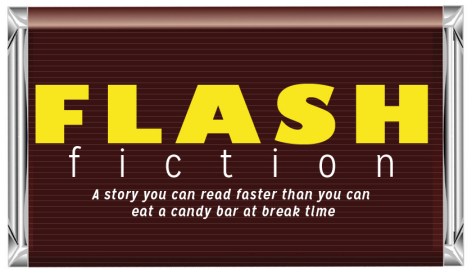
Flash fiction is defined as a style of fictional literature or fiction of extreme brevity. And while there’s no widely accepted rule as to the proper length of a flash fiction piece, I’ve seen word counts cap between three hundred and a thousand words. Although usually containing standard story elements such as a protagonist, conflict, obstacles, complications, and resolution, the limited word length can result in some of these elements to be merely hinted at or implied in the storyline.

David Gaffney wrote an interesting article for The Guardian entitled, Stories in your pocket: how to write flash fiction, which included the following six steps:

1. Start in the middle. You don’t have time in this very short form to set scenes and build character.

2. Don’t use too many characters. You won’t have time to describe your characters when you’re writing ultra-short. Even a name may not be useful in a micro-story unless it conveys a lot of additional story information or saves you words elsewhere.

3. Make sure the ending isn’t at the end. In micro-fiction there’s a danger that much of the engagement with the story takes place when the reader has stopped reading. To avoid this, place the denouement in the middle of the story, allowing us time, as the rest of the text spins out, to consider the situation along with the narrator, and ruminate on the decisions his characters have taken. If you’re not careful, micro-stories can lean towards punchline-based or “pull back to reveal” endings which have a one-note, gag-a-minute feel – the drum roll and cymbal crash. Avoid this by giving us almost all the information we need in the first few lines, using the next few paragraphs to take us on a journey below the surface.

4. Sweat your title. Make it work for a living.

5. Make your last line ring like a bell. The last line is not the ending – we had that in the middle, remember – but it should leave the reader with something which will continue to sound after the story has finished. It should not complete the story but rather take us into a new place; a place where we can continue to think about the ideas in the story and wonder what it all meant. A story that gives itself up in the last line is no story at all, and after reading a piece of good micro-fiction we should be struggling to understand it, and, in this way, will grow to love it as a beautiful enigma. And this is also another of the dangers of micro-fiction; micro-stories can be too rich and offer too much emotion in a powerful one-off injection, overwhelming the reader, flooding the mind. A few micro-shorts now and again will amaze and delight – one after another and you feel like you’ve been run over by a lorry full of fridges.

6. Write long, then go short. Create a lump of stone from which you chip out your story sculpture. Stories can live much more cheaply than you realise, with little deterioration in lifestyle. But do beware: writing micro-fiction is for some like holidaying in a caravan – the grill may well fold out to become an extra bed, but you wouldn’t sleep in a fold-out grill for the rest of your life.

And if I might add a few tips to Mr. Gaffney’s list:

  • Do your homework and read a ton of flash fiction stories. Stop groaning, they’re ultra-short.
  • Pay close attention to story settings and character development
  • Tell a proper story. Having a character deliver a monolog or go off on a diatribe, or spending the word count describing a setting, doesn’t help you hone your brevity writing skills.
  • Do not toss away your story if it happens to be too big and you just can’t whittle it down to size. Instead, pat yourself on the back for creating a short story. Every cloud, right?
  • If you’re using a word processing program, make use of the built-in word count feature.

For the record, extremely short fiction isn’t a brand spanking new concept. In fact, Ernest Hemingway once wrote the following six-word story:

“For sale: baby shoes, never worn.”

According to sources, the author considered it to be the finest prose he had ever written. Even more remarkable, it comes in under the stringent 140 character count of Twitter’s tweet fiction (see: To Make A Long Story Shortest). Way to go, Hemmy!

Sally forth and be flash writeful.

— Rhyan Scorpio-Rhys

To Make a Long Story Shortest: #TwitterFiction

First there was the micro novel, or microblogging novel, a work of fiction intended as a full-length novel written and distributed in chunks, varying in size, depending on the social media site it was being published on. Then, flash fiction burst onto the scene (see: The Short and Short of Flash Fiction) and dared to tell big stories with extreme brevity. Not to be undone, a new arrival,Twitter fiction (aka tweet fiction), tossed its hat into the ring, boasting its ability to tell a story within 140 characters.

Thumb your literary nose up at it, if you will, but surely you can see the art in concise writing. Catching the key moment of a story and carefully selecting the proper words so that your audience infers your meaning and does all the heavy lifting of filling in the details themselves requires a level of skill and finesse. Not to mention the challenge of drawing laughter or tears from your reader, or filling them with horror or dread as you build suspense in such a confined space.

And this latest sub-genre hasn’t escaped the notice of well-known writers who have tried their hand at 140-character novels:

Geoff Dyer – I know I said that if I lived to 100 I’d not regret what happened last night. But I woke up this morning and a century had passed. Sorry.

James Meek – He said he was leaving her. “But I love you,” she said. “I know,” he said. “Thanks. It’s what gave me the strength to love somebody else.”

Ian Rankin – I opened the door to our flat and you were standing there, cleaver raised. Somehow you’d found out about the photos. My jaw hit the floor.

Andrew O’Hagan – Clyde stole a lychee and ate it in the shower. Then his brother took a bottle of pills believing character is just a luxury. God. The twins.

Jeffrey Archer – “It’s a miracle he survived,” said the doctor. “It was God’s will,” said Mrs Schicklgruber. “What will you call him?” “Adolf,” she replied.

SJ Watson – She thanks me for the drink, but says we’re not suited. I’m a little “intense”. So what? I followed her home. She hasn’t seen anything yet.

Charlie Higson – Jack was sad in the orphanage til he befriended a talking rat who showed him a hoard of gold under the floor. Then the rat bit him & he died.

India Knight – Soften, my arse. I’m a geezer. I’m a rock-hard little bastard. Until I go mushy overnight for you, babe. #pears

Rachel Johnson – Rose went to Eve’s house but she wasn’t there. But Eve’s father was. Alone. One thing led to another. He got 10 years.

Inspired and curious, I even took a stab at Twitter narrative one idle Sunday and among my favorites are:

A large stone, the opportunity, a swampside grave; all that was needed to end a lifelong sibling rivalry. Guess who’s Daddy’s favorite now?

Mother warned him not to look but curiosity was his master. Now he struggles to reverse the time of eye to unsee the horror.

Regardless of your personal views on Twitter and tweet fiction, I honestly think you should give it a go. If nothing else, you can consider it a warm-up exercise to get your mental juices flowing. Can you think of a better way to hone your craft than practicing clear, clean and concise writing? And what have you got to lose? Surely not time. In the moments wasted complaining about the artform, you could have written several magnum opuses.

Sally forth and be tweetful.

— Rhyan Scorpio-Rhys

PS. If you’re looking for more famous author tweet novels, you can find them by searching #140novel on Twitter.

P.P.S. Not exactly #tweetfiction-related, but dealing with creating fiction, the NY Times ran an article on the importance of Twitter in today’s pop-culture era: How To Make a TV Drama in the Twitter Age.

Songs As Stories: Stars Go Blue

When Stars Go Blue *Inspired by the song “When The Stars Go Blue” by Ryan Adams

It was a secret place, a quarter acre of Eden abandoned and erased from the mind of mankind the instant the original sin was committed, and I had stumbled upon it quite by accident.

No, that was a lie and I promised myself I would not defile the sanctity of the garden if it could be helped.

I was not proud of the actual reason of how I came to be in this place, simply because I was a stalker. In my defense, it was only the once, I hadn’t made a habit of following women around without their knowledge. Just one woman. The one I was currently spying on, crouched here in the bushes amongst the flower blossoms, berries and leaves.

Mari.

Coworkers called her Marionette behind her back and sometimes to her face, passing it off as good-natured teasing. There was nothing good-natured about it. She acquired the nickname because she was a gangly woman who moved about in a jerky fashion, as if the unseen wires that made her move were constantly in a tangle that the puppeteer hadn’t been able to sort.

Mari did as people of her ilk often do, she kept herself to herself, stared at her shoes rather than make eye contact, and accepted all the negativity heaped upon her shoulders with nary a complaint. But she couldn’t hide the fact that she was miserable, just as I couldn’t hide that I was somehow drawn to that misery.

Although I wanted to know her for a while, I was too shy to make an approach. Today, I told myself, would be the day. As I went through my daily grind, I slowly mustered all my courage and screwed it to the sticking place. Ten minutes to quitting time, I marched to Mari’s cubicle, prepared to make my intentions known…

But she wasn’t there.

I searched by the fax machine, in the kitchen near the coffee maker, I even bore the brunt of strange stares when I loitered outside the women’s restroom, but she wasn’t anywhere to be found. Completely and utterly defeated, I grabbed my coat and left for home.

Half a block before the entrance to the subway, something grabbed my attention out the corner of my eye. Across the street, Mari sat on a bench at a bus stop as the 5:17 pulled up. I wanted to run across the street, braving the crosstown traffic and hop on the bus to make my stand. Instead, I froze. All my former courage had long abandoned me.

For the second time today, my heart sank. And for the second time today it did so without merit. The bus pulled away to find Mari still seated. And she sat as bus after bus pulled up and away. She did not read a book. She did not listen to music. She simply sat patiently.

Then when sufficient time had passed, Mari stood and walked away. I couldn’t tell you what possessed me to follow her on the crooked path that weaved through narrow alleyways, towering overpasses, black as pitch underground tunnels. Eventually her journey came to a halt in front of a lot that appeared to have been vacant for centuries.

Mari stood at the perimeter of the lot and at the precise moment the evening woke and forced the daylight into hiding, a door appeared with seven locks. She stood absolutely still and waited. In the newborn evening sky, stars bloomed and seven of them twinkled blue in a sequence that repeated seven times. The locks tumbled one after the other and the door opened slowly.

Mari stepped through the door frame but hadn’t appeared in the lot on the other side. From my vantage point, she simply vanished.

I ran to the door and managed to squeeze through before it shut, but instead of finding myself in the overgrown and refuse-filled lot, I stepped into paradise. My clothes melted from my body and ashamed of my nakedness, I hid in a nearby bush.

In the very center of the garden stood a mammoth tree that bore unrecognizable fruit of various shapes and sizes, the roots of which branched out along the grass and touched two streams on either side, one that appeared to have been made of milk and the other honey.

Standing beside the tree was Mari, naked but no longer that gangly woman who was awkward in her skin and awkward in the world. Here, her jerky movements flowed gracefully, her normally dull and lifeless eyes were polished to a fine shine, and her crooked mouth straightened and nearly split her face in half when she unleashed that radiant smile.

Mari blew a kiss up to the tree and somehow that kiss became a breeze that rustled the leaves which made a sort of melody unlike any I had ever heard. A pure music played by nature itself.

She danced around the tree all night without tiring, in time with the tune, and sang in a voice that was different from her normal mousy tone, stronger now, more confident. And I watched all the sorrow and strife, all the hurt and anger, all that was wrong with her life evaporate from her body.

When she sensed it was time to leave, Mari reached up and plucked the smallest of the fruit from a low hanging branch and dipped it in the stream of honey before washing the meal down with a cupped hand from the stream of milk.

The door reappeared and her clothing was folded neatly in a pile beside it. With each layer she put on, the transformation to her old self, the Mari that people mocked, began.

I thought about following her, but how could I ever leave this place, this patch of perfection? I knew she would be back and the next time I would talk to her, for certain. Until then I was contented to wait until she returned to dance again. I would wait until the stars went blue.

Sally forth and be dancing where the stars go bluingly writeful.

©2014 Rhyan Scorpio-Rhys

Creative Commons License

Of Air Returned

images

i.

I burned my soul to ash but the pain paled in comparison to the terror that struck my heart like a match, anticipating her arrival and the tirade she would carry in tow. An unwarranted fear, as she was calm when she saw what I had done. Calm and nurturing. Soothing my pain with herbs and aromas, and each early morning during the hour of the wolf, she laid an ear on my back and listened as my soul mended itself.

She never spoke the words of disappointment aloud but it registered in her eyes. Although residing within my body, this wounded thing, this unwanted soul, did not belong to me. She had laid claim to it many years past, and in my despondency, I had taken liberties with her property and attempted to destroy it. Again.

ii.

The first time, I threw my soul into a sinkhole and allowed the ground to swallow it whole. I made her acquaintance when she plucked it from the soil like a tattered tuber. “I saw what you did,” she said. “And since you would so recklessly toss this precious thing away, it is no longer yours, but mine, agreed?” I nodded and she handed my soul back to me for safe keeping.

I honored our pact for a few years, caring for it within my limited capacity, but during a particularly nasty bout of depression, I tied heavy stones to my soul and pushed it off the sea wall. For a second time, she appeared, fishing my soul from the waves and scolded me, “You are charged with protecting this thing that is mine, do you understand?” Again, I nodded. Again, I lied.

iii.

“Why do you want this worthless soul when it has been crushed by the earth? Why do you want it when it has been drowned in the sea? Why do you want it when it has been set aflame like so much tinder?” I searched long and hard yet found no answer in her silence.

iv.

During the day, when she thought me preoccupied, she secreted herself in the shadows and slept. One day I followed her into the darkness and watched her body twitch from dreaming and listened as she muttered,

One more soul, once buried deep.
One more soul, in ocean steeped.
One more soul, by fire burned.
One more soul, of air returned.

v.

Under her care, my soul grew healthier and it frightened me. I was pitilessly plagued and badgered by the phrase, One more soul, of air returned, that repeated in my mind’s ear until it turned dogged and cacophonous. But she was unaware of my inner torment, in fact, she was in an exceptionally good mood today, her voice almost a song, “I know you don’t see it, but you are a gift, you are. You have no idea just how special.”

vi.

Today was the day. I felt it in my marrow. Something was destined to happen, something I most likely would not survive. I should have embraced this eerie premonition, for it was no secret that I did not want to continue in this manner, broken, detached and alone. But the choice of how and when I departed this wretched life was mine to make and mine alone. So, I stalled by distracting her with trivialities. “May I have more broth? Have you seen my shoes? No, not that pair, the other ones? Can we go for a walk?” If she knew my plan, her expression never showed sign. No request was too large or small on this day. She granted them all.

vii.

We strolled along the pathway in the park that led to the duck pond, a place we visited often during my convalescence. Picked, naturally, as not to arouse suspicion as I searched for the proper diversion in order to make my escape. But I was so wrapped in my own thoughts, I failed to notice that she was walking slower than usual today. “Can we rest a moment?” she asked as we neared the benches. “I am a little short of breath.”

Her breathing became a labored and raspy thing before it hitched and became lodged in her throat. When her face went dusky blue and she slid off the park bench, I panicked. The opportunity had presented itself and there I stood like an idiot, frozen. Entangled in the decision of whose life to save, or more accurately, whose death I could live with.

There was no real choice.

viii.

Her breathing was a trembling, liquid sound as I pressed my mouth to hers and exhaled, but instead of me breathing air into her body, I felt her sucking air from my lungs, and not just air…

I tried desperately to pull away but her thin, vise-like hands clamped down on the nape of my neck and held me firm in a kiss that was collapsing me. My hold on life became dim and futile, but before I slipped away into emptiness, I noticed the oddest thing: her belly began to swell.

Every fiber of my actuality was drawn into her, and my soul, the object I had forever been so reckless with, was systematically being stripped of concern, of negativity, of identity. I fell further and further into a darkness that pressed on me from all sides. So tight, so constricted. I was still unable to breathe but the sensation was somehow different now.

At the very moment when it seemed the darkness was about to claim me for eternity, there came a burst of light so bright as to cut my eyes. Thankfully something soon blotted out the light – a face, slowly coming into focus but I knew her before I saw her. From the moment I heard her soft cooing, “You are a gift, you are. You have no idea just how special.”

Mother.

Text and Audio ©1988 & 2021 Rhyan Scorpio-Rhys

About Of Air Returned: Delusion can be a scary thing, but it can also be wonderful at the same time. This piece was written in the early part of 1988, during a period when I swore I could do no wrong—it’s fine, you can laugh, I’ll just cringe quietly in the corner. I was heavily into both science and speculative fiction and had recently rediscovered the works of The Brothers Grimm, so I was determined to create my own collection of fairy tales for the—then—modern age.

Applying fairy tale rules, I could introduce the fantastic or the bizarre into any story with little or no explanation, and have all the characters in the tales accept everything as normal. Wishes as deus ex machina. Love as the ultimate cure-all. All the good stuff without all the fuss. Genius, right?

It would take the better part of six months for me to discover I wasn’t the groundbreaker I imagined myself to be. On the plus side, I followed my then idol, Harlan Ellison’s advice and was able to churn one of these puppies out a day.

Of course, most of them are unreadable. This one teeters on the edge. I kinda like it and it kinda embarrasses the hell out of me, but it was one of the three Rhyan Realm tales–yeah, I created my own sub-genre name for them, what of it?–that actually saw print… after 10-some-odd rejections.

You’ll laugh, you’ll cry, you’ll kiss a few minutes goodbye.

The Web and the Too Close Crescent Moon

Sadder than any person I’ve ever seen, Madam Ostelinda greets me with a weak handshake before taking the seat across the table and begins to remove the cloth from her crystal ball.

“That won’t be necessary, “ I say. “Your sign out front says you’re a dream interpreter as well, is that right?”

“I am,” says the fortune teller and I’m surprised at how much her accent doesn’t match her garish Roma garb, as if she can’t be bothered putting on the full routine anymore. In fact, her office or workspace or inner sanctum or whatever you call the place a woman in her line of work plies their craft seems a bit underdone, like a cheap curio shop that isn’t ready to open for business because it’s not fully stocked.

“I’d like to tell you about this dream I’ve been having.”

“Whenever you’re ready,” she says, repositioning the deep velvet cloth over the glass orb and locking eyes but still not properly seeing me.

“Okay, so, I’m looking up at this crescent moon in a night sky filled with stars and it’s too big, the moon, like I can almost reach out and touch it, except my arms won’t move. Then I realize I can’t move my entire body because I’m tangled up in some sort of giant spiderweb which for some reason is at the mouth of a cave. And before I can make sense of it, I hear a noise, a scrabbling or scratching sound that’s getting closer and it’s clear that something is approaching behind me and because I’m immobilized I can’t see it but I know beyond the shadow of a doubt that it’s the thing that made this web.

“I try calling out for help but my lips and my teeth have these hooks and hollows that have been locked together like a flesh and bone zipper. All seems lost when out of the corner of my eye I spot a pair of scissors stuck to the web near my right hand and if I can only reach it I can cut myself free…but try as I might my fingers just aren’t long enough and the creature is right behind me, and just when I sense it’s about to strike…I wake up.”

I study Madam Ostelinda’s face, who is clearly preoccupied with other matters, and I do not rush her interpretation so we sit in her shabby mystic lair in silence for a long moment until the time the impatience I attempt to tamp down forces a biological urge to clear my throat.

The faux gypsy returns from her woolgathering and asks, “How many times have you had this dream?”

“There have been at least eleven instances in the past two weeks,” I reply. “Any idea what it all means?”

It is now Madam Ostelinda’s turn to clear her throat as she leans forward on the table, lacing her fingers in an academic professorial manner, and explains, “Well, a crescent moon indicates cyclic changes, renewal, and possibly progressing smoothly toward a new life path. The web could either suggest that you’re being held back from fully expressing yourself or you feel trapped and don’t know what to do or where to go. The scissors could denote a need to become decisive and take control in the real world, or you need to cut things or people out of your life.”

“I suppose I can agree with some of that,” I nod. “Not to change the subject but you seemed a little distracted after I finished telling you my dream. What were you thinking about?”

“You noticed that, huh? My apologies. It just seemed familiar to me, that’s all, like I’ve heard something similar to it before.”

“From your daughter, perhaps?”

And there is the look I have been waiting for, the dawning recognition.

“Amy?” she says my name and I am triggered, losing my footing in the present and falling back through the calendar of my life to the days when my younger self delighted in having my mother’s undivided attention.

“Hi, Mom,” I say, smiling despite myself.

This woman, who looks nothing like I remembered; who looks nothing like me because I take after my father, struggles to find words and when she eventually does, all she can muster is, “How did you find me?”

“A private investigator. Dad told me it was a waste of money and time but sometimes I’m like a dog with a bone, a trait he says I get from you. It took the private eye a while to find you because you did one hell of a job changing your identity.”

And any satisfaction I thought I’d feel at finally confronting her is lost when ages-long regret strips away the gypsy mask to reveal the sad, small woman beneath.

“You must think I’m a horrible person,” she turns away as she says this as to hide the tears welling in her eyes.

“I did, for a long time,” I admit. “But now, all I want are answers.”

“You’re not going to understand.”

“Try me. And as for the scissors thing, I’m not trying to cut you out of my life,” I say and proceed to ask all the questions a parent who abandons their child dreads.

Text and Audio ©2019 & 2021 Rhyan Scorpio-Rhys

One Last Thing, Before I Go

Photo by Robert Lawton

They gather at my wake, my family and friends do, and I am surprised to find they are not alone. For in the crowd of mournful faces I spy the many acquaintances I have made along the way, long lost playmates from my childhood, as well as the beautiful women who I recognize immediately as the pretty girls I loved in my youth, each with children not much younger than we were when we courted.

Each of the assembled grievers tell a story, most of which I remember fondly and some I have forgotten with age, stories that make me laugh at how foolish I had been when I was at my most serious and some touching enough to make the eye water at the perceived kindnesses I bestowed upon others without even being aware.

And when the time for remembrances both affectionate and painful has past, my loved ones—and yes, even the acquaintances are loved now—raise a parting glass to wish me safe passage on my unearthly travels to where I do not know and as I feel myself being gently pulled away from this realm, I swim against the current of my final destiny and pass through each body gathered in this place to leave a personalized vivid memory in an effort to ensure I am not forgotten.

©2019 Rhyan Scorpio-Rhys

Aeton and Ioasephyn

Minds Eye

Aeton was made for Ioasephyn, and she him, of this there was never any doubt. Formed during The Great Making and united in an unbreakable union when the world was in its infancy, the couple consummated their love as the molten planet cooled. Theirs was the first love and the fulcrum on which all love that followed would be balanced.

In the days before there were others, Aeton and Ioasephyn relaxed in fields of spun gold and stared upward, watching as the void caught fire, pinprick flames burst into life throughout the inky black and became stars. As the land masses grew restless and pulled away from one another, separating the waters into greater and lesser portions, the pair frolicked while the planet went through its growing pains.

When others came, some as a byproduct of their union, and the rest molded from clay or evolved from simpler lifeforms, they watched as gatherings became villages became towns became cities, and those overpopulated cities became nations. There were those who sought to rule these nations, some successfully, others less so. Aeton and Ioasephyn had seen the noblest of endeavors corrupted by pettiness, jealousy and greed and wished to separate themselves from the inevitable outcomes.

Time passed for everyone but the young lovers. Their children grew older, as did friends. Not all were accepting of the fact, so they vanished from the daily workings of societies, and only visited occasionally when curiosity got the better of them.

One such visit proved disastrous for Ioasephyn when someone in a new city recognized her. She thought enough time had passed and the world had forgotten them. How could she have known that she and Aeton had become the stuff of legend? A legend planted in the soil of truth, watered by myth in each retelling until it sprouted the belief that their blood, the liquid of pure first love, granted eternal life.

They surrounded her, the entire city did, and forced her into a prison until they consulted with an elder on the precise details of the ritual needed to extract the blood for the immortality elixir.

Aeton was on the opposite side of the world when he felt Ioasephyn’s fear tug at his heart. He pleaded with the moon to create a tide that would carry him to his true love’s side. It obliged and he rode the waters day and night without rest until he arrived at the city that held her.

Without delay, he met with the officials who held his love and attempted to reason with them. With a father’s patience, he listened to their wild tales and struggled to dispel the myths. He told them the truth in the Voice of Authority, but they paid no heed and took him prisoner, as well.

The legend warned that the couple’s invincible power was only focused in their union, so the jailers locked Aeton and Ioasephyn in cages separated far enough apart so they could not touch. Upon seeing one another, the lovers wept for they knew their demise would soon come. But they were not angry, instead, they pitied those who could never have seen the world through their eyes. The love they declared for one another stood the test of the sometimes wondrous sometimes terrifying times they lived through, and it would survive this as well.

Though they had accepted their fates, Aeton could not bear the thought of Ioasephyn not existing, so he hid her away somewhere no one would ever think to find her. He hid her in plain sight, tucked away in the corner of the mind’s eye of everyone in existence. He spoke the words of the incantation in his native tongue, acquired at the dawn of language when words contained magic.

Unbeknownst to Aeton, Ioasephyn had done the same to him. They truly were of one mind.

So now they lived where visionaries and dreamers created and though they often tended to their own affairs, sometimes they could be glimpsed frolicking on the cusp of thoughts or relaxing in fields of gossamer daydreams, staring upward and watching as the void caught fire, pinprick flames bursting into life throughout the inky blackness to become ideas.

Text and Audio ©2014 – 2021 Rhyan Scorpio-Rhys

The Next Now

Next Now

Though he swore to himself that he would never ever in a million years be caught dead doing it again, Clayton Jacobson wound up working late. Nearly four and a half hours past his quitting time, according to the clock, whose disinterested face stared down upon him from its lofty perch above the office door. Which made it two hundred and seventy minutes since his co-workers abandoned him without a second thought, retreating to the comfort of their homes, leaving him to pick up the slack.

Traitors, all of them.

Experts claimed that it was impossible to put a dollar value on a human life. But Clayton knew that to be a lie. He was aware exactly what his life was worth at current market value between the weekday hours of nine-to-six, or better yet, nine-to-ten thirty. He was a salaried employee that wasn’t eligible for overtime pay, so rounded up, his life was worth twenty-six dollars and fifty cents an hour. That boiled down to forty-four cents a second that he collected as he sat at his desk completely inundated with work and wasting his life away doing something that held his interest not in the least. Forty-four cents for each precious second of his life that he had exhausted and could never reclaim ever again. And as he inched ever closer to his own inevitable demise, he couldn’t help but think how cheaply he’d sold a portion of his life to a faceless entity that wouldn’t be able to recall his name in the fiscal quarter that followed his inevitable termination date.

Clayton Jacobson was a corporate cheap date.

As a reward for his continued loyalty, he had been given what was considered to be the reasonable and customary stock options package, which made him the proud owner of five thousand shares of complete and absolute boredom. Every day at approximately this very instant, he cracked his investment portfolio wide and contemplated his stock, and as always, he came to the realization that he was wealthier than he thought. He personally owned more boredom than he knew what to do with.

Cursing himself for being a corporate lackey, he rubbed his tired eyes, yawned, stretched, and began the protocol for closing up shop. It’s not like he could simply get up and leave. His position as office manager included the responsibility of backing up the entire day’s work onto the server, which would cost him another half hour, at least.

While the backup chugged away at its steady pace, Clayton impatiently packed his briefcase with files stacked in his Incoming tray under the guise of finishing the work at home. But he knew all too well that once he stepped foot into his apartment, he would ignore the work like an overdue bill or a random bit of junk mail. Physically taking work home was just a force of habit. It made him feel like he was making a dent, which was the lie he told himself every evening.

After all the computers and office equipment were shut down, he shrugged on his coat, locked the front door and tripled checked that it was secure. That was the one and only OCD that Clayton had. Is the door locked? Did I lock the door? were the questions he would ask himself every time he left the building. And he realized that this problem of his wasn’t founded in reality since never once in all his years had he not successfully locked a door upon leaving a place, but still, he found himself constantly returning to check locked doors. Tonight wasn’t a particularly bad night. He only went back and checked the door three times. His standing record was twenty-seven, which was probably due to the fact that he was not only exhausted that night but also on a heavy dose of cold medication.

Clayton Jacobson did not take sick days.

On his fourth time exiting the building, Clayton lost his footing and hit the concrete pavement like a baseball player sliding home. The briefcase slipped from his grasp during the fall and popped open, scattering files and papers all over the sidewalk. Embarrassed, he looked around quickly to see if anyone caught his fall. Not a soul in sight. Good. He slowly got to his feet, dusted himself off and looked at the spot in front of the building where he had tripped. He half expected to see a patch of ice, grease or something, but there was nothing there.

That’s odd, he thought as he began scooping the papers back into his briefcase. Although it was a cold night, it wasn’t particularly windy, which was a good thing, since Clayton hadn’t fancied the idea of chasing paper down the street.

As he fastened the last latch on his briefcase, Clayton rose to see his bus pull away from the bus stop. He chased after it, hoping that the stoplight at the corner would turn red, giving him the chance to catch up with the bus and plead his way aboard. Usually, the bus drivers were more lenient about picking up passengers outside designated areas after ten o’clock at night. Unfortunately, the stoplight and Clayton were not in accord as it allowed the bus to escape him.

At the bus stop Clayton didn’t even bother reading the schedule because he knew the next bus was a half hour away and it was far too cold to stand out on the street and wait and if he went back into the office, he would get caught up in work and miss the next bus and most likely fall asleep at his desk. Since there were no open coffee shops at this time of night, he resigned himself to walk home. He lived close enough to his job so that walking wasn’t out of the question, which was the only real perk that was associated with his employment. Twenty minutes by foot if he hustled, a half-hour if he took a more leisurely pace. Theoretically, he could have been home before the next bus arrived, so he hoofed it.

At the corner, his nemesis, the streetlight, turned red and he was forced to wait his turn against the traffic. A man sidled up to Clayton’s elbow so silently he could have been a shadow.

“Excuse me,” the man said and Clayton tried to suppress the urge to jump out of his skin. “May I have a moment of your time?”

“Sorry. I have someplace to be.” Clayton didn’t even meet the man’s gaze.

“Surely you have a moment to spare, in one of your pockets, perhaps?” the man’s manner was polite and seemed completely genuine.

“Is this about money?” Clayton shot him a glance.

“No.”

“Cigarettes? Because I don’t smoke.”

“Neither do I. Not for some time now.” A fact the man seemed to find rather amusing.

“Okay, so are you some kind of cop or something? Am I under arrest? Are you looking for sex? Are you initiating into a gang and need to cut a complete stranger? A serial killer cruising for a little late night murder?”

“No, no, no, no, and no.” the man smiled.

“Then what, for God’s sake?”

“As I said initially, a moment of your time.”

“For what?” Clayton spat.

“I think you dropped something.” The man said, pointing in the direction of the office building.

Clayton assumed it was a sheet of paper that he missed when he was scooping up his papers, but what he saw instead was— well, at first he thought it was a pile of garbage. But that wasn’t right. It was a body. Strewn on the sidewalk like a rag doll.

Convinced that his eyes were playing tricks on him, he walked slowly to the body that looked strangely familiar. Well, it ought to have looked familiar, it was wearing the exact same outfit Clayton had on, identical down to the shoes. Even the open briefcase was the same.

“Who is that?” Clayton asked.

“You know who it is.” The man was suddenly behind Clayton again, but this time he didn’t jump.

“How?”

“Heart attack.”

“But I didn’t feel anything.”

“Some people never do. Perhaps you were too preoccupied?”

“Oh come on, is this some kind of sick joke?” Clayton tasted the fear in his own voice. “I slipped and hit my head, didn’t I? And now I’m hallucinating, right? Or maybe I’m still upstairs in the office asleep at my desk, or better yet at home in bed having a bad dream?”

“No, no, no, no and no.”

“Then I’m–” he couldn’t bring himself to say the word.

“Well and truly dead, I am afraid.”

“And you are?”

“Your travel companion,” the man offered Clayton another smile.

“Oh, I get it! You’re going to point out all the wrong I’ve done and give me the chance to rectify it, that’s what this is, right?” Clayton hadn’t meant it to sound so sarcastic.

The man shook his head. “You have not done any wrong.”

“Then maybe there was something I was supposed to do, some potential I was supposed to live up to that I didn’t…”

“No, you lived your life accordingly.”

“So, this is it? No ceremony? No pomp and circumstance? Just heart attack, boom, I’m dead?”

The man seemed confused. “Would you prefer there be a penance? A punishment?”

“Not exactly, but something more than this.”

“Oh, but there is more. Your mind simply has not adjusted to your new reality just yet, which is perfectly normal in the beginning. You are clinging to the shadows of your old life, but all this will fade and you will begin to see anew, once you have accepted the fact that what is done cannot be undone.”

“So, what do I do now?” Clayton asked.

“Travel with me for a moment.” The man gestured at a car that Clayton could have sworn was not there before.

“You drive a car?”

“It is my conveyance. Your mind views it as a car, as that is what you are accustomed to,” the man said patiently. “For your comfort, you may wish to remove your coat.”

“But it’s freezing out here—” and as soon as Clayton heard the words, he felt foolish. “Oh, right.”

“Let me help you.” The man took Clayton’s briefcase, slid the overcoat off his shoulders, and let both items fall to the ground. As they landed, there was a deafening boom, which cracked the pavement and shattered the windows in the surrounding area. Or Clayton thought the windows shattered. When he looked up again, the windows were whole, as if nothing happened.

“I feel so much lighter now.” Clayton bounced on his toes like a little boy.

“You have just stripped yourself of your biggest encumbrances.”

“Which were?”

“Labor and haste.”

This answer made Clayton stop bouncing for some reason and he turned to look at his body crumpled on the sidewalk. “Can we do something about this?” he pointed at his former shell.

“Like what?” the man asked.

“I don’t know.” Clayton scratched his head. “Rearrange it? Move it inside the building maybe? Something more dignified than this. This isn’t how I want people to remember me.”

“Those who remember you will do so in their own manner. You cannot change that,” the man said as he opened the door for Clayton, who looked at his lifeless body one last time with a twinge of regret for not having lived a richer more fulfilling life, before he slipped into the passenger seat.

The man entered the driver’s side and took the wheel. And they drove, so slowly that it seemed to Clayton they were not moving at all, but instead, time moved around them. Not through them, Clayton noticed, around them. There was no time within this conveyance. One moment, the time the man asked of Clayton, was the same as eternity in here.

“Where are we headed?” Clayton asked.

“The next now.” The man answered and said no more. And he hadn’t needed to because somehow Clayton understood. For the first time in his life, or more accurately his death, he understood perfectly.

Text and Audio ©2013 & 2021 Rhyan Scorpio-Rhys

About The Next Now: One night I was working on a short story that I’ve been toying with for the better part of a year. I was knee-deep in the rising action stage, typing away—and even happy with most of it—when it happened: The Click.

It’s a magical moment. Your pupils dilate. Your breathing slows. The fog in your head clears. Time slows to a crawl. And for one shining moment, everything is perfect. Every sinewy thread of plot comes together. It may be a mess, but it’s all there. It can be fixed and made whole—we have the technology.

And then the world speeds back up and it’s a race against the clock to type out as much as you can before the perfect purring of a well-oiled machine becomes a sputter and you lose something—or worse—the machine takes a great big dump.

That’s this one right here. A simple story about a wage slave that dies, unappreciated. No fanfare, no glorious reward for living his life correctly and doing no harm. A simple leave your things behind and move on to the next phase of your existence, or the next now.

Stars Go Blue

It was a secret place, a quarter acre of Eden abandoned and erased from the mind of mankind the instant the original sin was committed, and I had stumbled upon it quite by accident.

No, that was a lie and I promised myself I would not defile the sanctity of the garden if it could be helped.

I was not proud of the actual reason of how I came to be in this place, simply because I was a stalker. In my defense, it was only the once, I hadn’t made a habit of following women around without their knowledge. Just one woman. The one I was currently spying on, crouched here in the bushes amongst the flower blossoms, berries and leaves.

Mari.

Coworkers called her Marionette behind her back and sometimes to her face, passing it off as good-natured teasing. There was nothing good-natured about it. She acquired the nickname because she was a gangly woman who moved about in a jerky fashion, as if the unseen wires that made her move were constantly in a tangle that the puppeteer hadn’t been able to sort.

Mari did as people of her ilk often do, she kept herself to herself, stared at her shoes rather than make eye contact, and accepted all the negativity heaped upon her shoulders with nary a complaint. But she couldn’t hide the fact that she was miserable, just as I couldn’t hide that I was somehow drawn to that misery.

Although I wanted to know her for a while, I was too shy to make an approach. Today, I told myself, would be the day. As I went through my daily grind, I slowly mustered all my courage and screwed it to the sticking place. Ten minutes to quitting time, I marched to Mari’s cubicle, prepared to make my intentions known…

But she wasn’t there.

I searched by the fax machine, in the kitchen near the coffee maker, I even bore the brunt of strange stares when I loitered outside the women’s restroom, but she wasn’t anywhere to be found. Completely and utterly defeated, I grabbed my coat and left for home.

Half a block before the entrance to the subway, something grabbed my attention out the corner of my eye. Across the street, Mari sat on a bench at a bus stop as the 5:17 pulled up. I wanted to run across the street, braving the crosstown traffic and hop on the bus to make my stand. Instead, I froze. All my former courage had long abandoned me.

For the second time today, my heart sank. And for the second time today it did so without merit. The bus pulled away to find Mari still seated. And she sat as bus after bus pulled up and away. She did not read a book. She did not listen to music. She simply sat patiently.

Then when sufficient time had passed, Mari stood and walked away. I couldn’t tell you what possessed me to follow her on the crooked path that weaved through narrow alleyways, towering overpasses, black as pitch underground tunnels. Eventually her journey came to a halt in front of a lot that appeared to have been vacant for centuries.

Mari stood at the perimeter of the lot and at the precise moment the evening woke and forced the daylight into hiding, a door appeared with seven locks. She stood absolutely still and waited. In the newborn evening sky, stars bloomed and seven of them twinkled blue in a sequence that repeated seven times. The locks tumbled one after the other and the door opened slowly.

Mari stepped through the door frame but hadn’t appeared in the lot on the other side. From my vantage point, she simply vanished.

I ran to the door and managed to squeeze through before it shut, but instead of finding myself in the overgrown and refuse-filled lot, I stepped into paradise. My clothes melted from my body and ashamed of my nakedness, I hid in a nearby bush.

In the very center of the garden stood a mammoth tree that bore unrecognizable fruit of various shapes and sizes, the roots of which branched out along the grass and touched two streams on either side, one that appeared to have been made of milk and the other honey.

Standing beside the tree was Mari, naked but no longer that gangly woman who was awkward in her skin and awkward in the world. Here, her jerky movements flowed gracefully, her normally dull and lifeless eyes were polished to a fine shine, and her crooked mouth straightened and nearly split her face in half when she unleashed that radiant smile.

Mari blew a kiss up to the tree and somehow that kiss became a breeze that rustled the leaves which made a sort of melody unlike any I had ever heard. A pure music played by nature itself.

She danced around the tree all night without tiring, in time with the tune, and sang in a voice that was different from her normal mousy tone, stronger now, more confident. And I watched all the sorrow and strife, all the hurt and anger, all that was wrong with her life evaporate from her body.

When she sensed it was time to leave, Mari reached up and plucked the smallest of the fruit from a low hanging branch and dipped it in the stream of honey before washing the meal down with a cupped hand from the stream of milk.

The door reappeared and her clothing was folded neatly in a pile beside it. With each layer she put on, the transformation to her old self, the Mari that people mocked, began.

I thought about following her, but how could I ever leave this place, this patch of perfection? I knew she would be back and the next time I would talk to her, for certain. Until then I was contented to wait until she returned to dance again. I would wait until the stars went blue.

Text and Audio ©2014 & 2021 Rhyan Scorpio-Rhys