All The World Will Be Your Enemy 2: Coffee And Conversation

The words refused to come. Beverly sat before the glaring beacon of a blank document on her laptop screen. The cursor blinked back at her, a rhythmic pulse that seemed to mock her. Each flash was a reminder of every untapped idea that refused to spill onto the page. The novel she had been nurturing for months now seemed to wither in the drought of inspiration.

With a sigh heavy with unspoken stories, she closed her laptop, her fingers brushing over the smooth surface like a farewell. Her gaze wandered to the soft morning light filtering through the sheer curtains of her living room, and her heart whispered for a change of scenery—a breath of life outside the confines of her condo, a place where words might find her again.

The Coffee Nook beckoned just a block away from Willow Creek, a sanctuary of warmth and nostalgia. She had fallen in love with its vintage charm: the mismatched armchairs that bore the imprints of countless visitors, the wooden tables scarred with the histories of conversations long past, and the intoxicating aroma of freshly roasted coffee beans that lingered like an old, familiar friend. It was her refuge, her muse.

Stepping inside, Beverly was greeted by the soft hum of activity—the hiss of the espresso machine, the muted chatter of patrons, and the occasional clink of ceramic mugs meeting saucers. The air was thick with the scents of cinnamon, cocoa, and the faint musk of aged wood. She smiled at the barista, a lanky young man with a friendly grin, as she queued for her usual: a cappuccino with an extra dusting of cocoa and a warm blueberry scone that promised comfort in every bite.

As she waited, a flicker of familiarity caught her eye. Her new neighbors, Angele and Joanna, sat in a cozy corner, their heads bent together in what appeared to be an intense yet animated conversation. Their presence added an unexpected note to the symphony of her morning—a curiosity she couldn’t quite place.

Angele’s golden hair shimmered in the muted sunlight streaming through the window, her laughter a soft, bell-like sound that floated above the ambient noise. Joanna, with her cropped dark hair and expressive emerald eyes, leaned closer to whisper something that made them both smile conspiratorially.

It was Angele who noticed Beverly first. Her face brightened with recognition, and she lifted a hand in a graceful wave. “Hey there, neighbor!” she called out, her voice carrying easily across the space.

Caught off guard but pleasantly so, Beverly returned the wave, her cheeks warming. With her cappuccino in one hand and her scone balanced precariously on a saucer in the other, she approached their table.

“Mind if I join you?” Beverly asked, her voice tentative but hopeful.

“Of course not!” Angele’s smile widened, and she gestured to an empty chair. Joanna nodded in agreement, her smile a touch more reserved but no less welcoming.

Settling into the chair, Beverly found herself enveloped by their warmth. The scent of Angele’s floral perfume mingled with Joanna’s faint trace of citrus, a sensory marker of their vibrant yet distinct personalities.

“We keep running into each other, don’t we?” Joanna said, her tone light with a hint of amusement.

“Seems like fate,” Beverly replied, smiling as she stirred her cappuccino.

Conversation flowed as effortlessly as the coffee in their cups. Beverly learned that her neighbors had only just begun unpacking the chaos of their move. Angele joked about the “monumental task” of organizing their shared library, while Joanna teased her about hoarding travel guides from places they might never visit again.

When the spotlight shifted to Beverly, she hesitated, then confessed her struggles with writer’s block. “The Coffee Nook has always been my go-to spot when I need to shake things loose,” she said, her fingers tracing absent patterns on the rim of her cup.

“A writer!” Angele’s eyes lit up. “What kind of stories do you write?”

“Mostly fiction,” Beverly replied. “I like to explore the small, quiet moments in life and how they connect to bigger truths. Lately, though, the words just… aren’t coming.”

“Maybe you’re waiting for the right spark,” Joanna said, her gaze steady and thoughtful. “Sometimes inspiration finds you in the most unexpected places.”

Beverly nodded, taking in the quiet wisdom of Joanna’s words.

The conversation meandered into their travels. Angele spoke with sweeping gestures of places Beverly could only dream of—deserts under endless skies, ancient cities whispering secrets through cobblestones, and forests alive with colors that defied the imagination. Joanna, in contrast, offered fewer details, her stories hinted at rather than told, as though guarding something too precious or too perilous to reveal.

“Maybe you’ll write about us one day,” Angele said, her smile playful yet strangely pointed.

“Maybe,” Beverly replied, feeling the tug of intrigue once more.

As the morning stretched on, Beverly found herself drawn deeper into the orbit of her new neighbors. Angele’s openhearted charm and Joanna’s quiet intensity were magnetic, and their stories—half-told and half-hidden—seemed to promise not just friendship but a world of inspiration waiting to unfold.

By the time they parted ways, Beverly’s heart was lighter, her mind alight with possibilities. In the warmth of The Coffee Nook, amid conversations laced with the ordinary and extraordinary, she felt the first stirrings of a spark. Perhaps Angele and Joanna were the key to unlocking not just the next chapter of her novel but something far greater—a story that hadn’t yet revealed itself.

Not. The. End.

All The World Will Be Your Enemy 1: New Neighbors

Beverly Anderson had grown accustomed to the solitude that gently wrapped around her life like a well-loved shawl. At 35, she had woven comfort into the quiet routines that painted her days in the quaint embrace of Willow Creek Condos. Her mornings blossomed with the aroma of freshly brewed coffee on the balcony, swathed in the tender caress of the early sun. Evenings unfolded like a sacred ritual, her body moving in harmony with the shadows on her living room floor during yoga, her spirit aligning with the tranquil symphony of twilight. Nights were a silent communion with the souls entwined in the pages of a good book, each story a whisper in the vast expanse of her quiet world.

But change, with its unpredictable heart, was drifting toward Willow Creek, heralded by the arrival of new neighbors.

Beverly first caught sight of the moving van on a radiant Saturday morning, its rumbling engine breaking the tranquil rhythm of her weekend. From her balcony—her sanctuary—she observed the scene below. The movers moved like ants in orchestrated chaos, hefting boxes and furniture, the occasional sharp clang of metal against pavement punctuating the crisp autumn air. She tightened her cardigan around her shoulders against a slight breeze as her gaze zeroed in on the duo standing amid the bustling scene.

They were an arresting pair, as if plucked from the pages of a novel too peculiar to shelve neatly into any genre. One was ethereal, tall and willowy, her long blonde hair cascading in a golden waterfall that seemed to drink in the sunlight. Her movements were slow, deliberate, as though she existed on a wavelength apart from the frenetic energy of the movers. The other was her foil: petite and vivid, a storm compacted into a human frame. Her dark pixie-cut framed sharp, mischievous green eyes that darted about with an intensity that made Beverly wonder if she was taking notes on every detail of her surroundings.

As if some invisible thread connected them, the petite woman’s eyes suddenly snapped upward, locking onto Beverly’s. The contact was startling, as though a spotlight had been swung her way. The woman’s lips quirked into a sly grin, and she leaned toward her taller companion, nudging her with an elbow and tilting her head toward Beverly’s perch.

Beverly froze, her coffee mug paused halfway to her lips. Caught in her unintentional voyeurism, she scrambled for a response, raising a hand in a small, awkward wave. It felt inadequate—an anticlimax to the electric charge of the moment.

The blonde looked up as well, her smile warm and bright, smoothing away any potential awkwardness. Her voice carried easily across the courtyard, light yet commanding. “Hello, neighbor! We’ll have to introduce ourselves properly once we’re settled.”

Beverly’s answering smile was hesitant but genuine. “Welcome to Willow Creek!” Her voice sounded higher than she intended, and she cleared her throat, trying again. “It’s a great place to live.”

The shorter woman grinned wider, her green eyes glinting with what Beverly could only describe as playful knowingness. With a casual wave, she grabbed a box and disappeared through the open doorway, her taller counterpart following with a glance that lingered just a moment too long.

When the door shut behind them, Beverly exhaled and leaned on the balcony railing. She had seen neighbors come and go over the years, but none had ever struck her quite like this. There was something magnetic about them, a presence that didn’t quite fit the serene mundanity of Willow Creek.

Her gaze lingered on the now-empty courtyard, where the movers bustled with the remnants of the duo’s belongings. A peculiar chill brushed against her skin, though the sun still shone brightly. Shaking it off as her imagination, she returned to her coffee, savoring its warmth while her thoughts danced around the newcomers.

Yet, as the day wore on, she couldn’t shake the feeling that something had shifted. The air itself seemed heavier, humming with possibilities she couldn’t name. It was as if the arrival of these two strangers had struck a chord deep within the heart of the condo complex, a note of intrigue reverberating through its walls.

Not. The. End.

Home, At Long Last [Audio Drama]

[Video Transcript]

The car pulls into the driveway. It’s called an Uber and at first I think it’s the make and model of the car but the driver tells me it’s the name of a car service and although he’s patient and friendly in his explanation, I can feel my face flush red hot in embarrassment. There are so many things I don’t know that I don’t know. The entire world has a steep learning curve for me.

I wouldn’t have recognized the house, couldn’t have picked it out among the others because I haven’t seen it in over sixteen years and the memories are fuzzy because those years haven’t been kind. I’ve been told that it’s the house I grew up in and I nod with no acceptance or conviction because when I think about where I grew up all I can picture is being trapped in a dark and cold basement in a strange location. This house has never once appeared in my mind not even in my dreams.

From the moment the car arrives, people surge out of the front door but they don’t approach the car, perhaps because they’ve been advised not to or perhaps they’re as afraid to meet me as I am to meet them.

I thank the driver as I close the rear driver side door and walk toward the crying and smiling crowd, desperately trying to untwist the constrictor knot my stomach has become. I’m sure they don’t mean to be but each and every one of them is too loud and although they’re careful not to touch me, they’re too close and I want to run. I want to run into the basement and lock the door behind me and go down as far as I can manage and find the darkest corner to curl up into and if that place doesn’t exist, I want to dig a hole into the earth and bury myself in it until the world becomes a quiet place again.

It’s unmistakable, the feeling of warmth and comfort and community that exists in this place and I hate it almost instantly. I’m not supposed to as I’m a human being and we’re known to be social animals but if truth be known the only peace I’ve ever experienced has always been in complete isolation.

Nothing seems right. The sound of people’s voices expressing gratitude and the low volume music in the background blend into some abnormal din that assaults my ears like the opposite of white noise, even though I know that isn’t right because the other end of the spectrum from a combination of all of the different frequencies of sound would be silence and silence would be a welcome change at this point.

Even faces are foreign and I’ve known most of these faces for the first nine years of my life but the arrangement of their features is wrong. Even my own reflection is out of place and unfamiliar. I want to leave, to pivot on my heels and push past this closeness of flesh, flag down a police officer and ask them to take me back to where I was found a fortnight ago.

I miss that basement because it’s the only home I know.

I want to back away but there are too many people behind so I push forward looking for a little elbow room, a safe barrier of personal space where I don’t have to feel the nearness of otherness or fight off a wave of nausea when someone’s aura scrapes against mine and makes a teeth-clenching noise like God raking His fingernails across the skin of the universe.

In the crowd I spot a face I don’t know and because I don’t know this woman and have no expectations of the way she must look she appears less odd than the rest. I lock onto her eyes and feel a transfer of knowledge between us. She is like me. She understands the words I’m unable to speak, words that will never be uttered by me in my entire life even if I live for two centuries. I want to move to her, to be closer to her, to stand within the sphere of her understanding but another woman, an aunt, I think, appears from nowhere and pulls me into an unwanted embrace and whispers into my ear with hot breath laced with wine, “You are such a brave girl.”

Brave? I want to say. What’s so brave about being afraid to let myself die? But instead, it comes out as, “Thank you.” I’m not even sure that’s a proper response, I simply need to say something to break the hold and by the time I manage it, the other woman, the woman with the understanding gaze, is gone.

And I’m aware of the people behind me again moving in closer pushing me forward without making contact with me when I come to the realization that their action is purposeful, they’re urging me forward from the front door through the foyer and into the living room for a reason and that reason being my mother and father standing in the center of the empty living room. I step in eagerly, not because I’m particularly glad to see them, I love them but the real reason I’m eager to get into the room is for the space so my soul can breathe again.

There’s this moment of silence and it’s like heaven and my mother takes on the form of Lucifer Morningstar by attempting to shatter paradise with the calling of my name that turns into a shriek that eventually ends in tears and hitching breath. Before I realize what’s happening, she’s on me wrapping her arms around me and lifting me off my feet. I am nearly as tall as she is and outweigh her by thirty pounds easily but this thin woman lifts me as though I was still the same nine-year-old who went outside to play and missed her curfew by more than a decade and a half. My face is buried in her hair and unlike this place that used to be and is once again my home, unlike the matured faces of the people I vaguely recognize as family, the smell of my mother’s hair, the scent of her coconut shampoo smashes through the floodgates of my mind and I am buried beneath wave after wave of memories which scare me and my eyes leak tears because I now realize how much emptier my life has been without this woman, although the world she inhabits still feels alien to me.

I say, “Hi, Mom,” and the word Mom feels distant, like I understand what the word means but the direct connection with it has faded and I don’t want to call her Mom at the moment, I want to call her by her first name but I have no idea what my mother’s name actually is.

She sets me down gently and her arms loosen and slide from around me but her fingers never leave me as they trace sweaty contrails across my back, under my armpits up to my neck where she cups my face in both hands. A move only mastered by a mother. “Hi, baby,” she says and I both resent it because I’m not a baby anymore and miss it because I would give the remaining years of my life for the chance to be nine again in the company of this woman if only for one day.

She calls my father over while carrying on a constant stream of nervous and excited chatter in an attempt to catch me up on all the events that occurred since the last time we laid eyes on each other.

My father approaches with caution as if I come with a warning. He has undoubtedly been told what has been done to me while I was in captivity and probably some of the things I had to do to myself in order to stay alive. He doesn’t know everything because I am the only survivor, there’s no one else to bear witness and I will never tell another soul everything that I’ve been through in order to be here today. And it would break him to hear it so it becomes one of the many burdens I must bear alone.

His haunted eyes are misted with tears that he fights to control as he offers me that sidewinder smile of his–a name Mom gave him because he only smiles and talks out of one side of his mouth as if he’s a stroke victim. “Hi, kiddo,” he says.

All the others unknowingly crowd me and the only person I would not mind that of, my father, does not. He sees it, the invisible property lines that mark my personal space and respects the boundaries. I want to tell him, forget the signposts, just come hug me, Daddy but those are words I don’t know how to speak so I say, “Hi, Dad,” and I manage to dig up a smile from the recesses of some long forgotten happiness. At least I hope it looks like a smile, I haven’t done it in so long, I fear I might’ve lost the knack.

Mom is still babbling away nonstop when she remembers her basic etiquette, “Oh! Are you hungry? You must be famished!” And before I can answer,

“Get her something to drink,” Dad says. “Something cold.” And Mom takes off like a shot into the kitchen.

My father just stands there looking at me, taking in the measure of me. I can’t see the missing years on my mother but on him, I see every second, minute, hour, day, month and year. Beneath his thinning hair, deep wrinkles crease his face. He’s worried and afraid of me and for me but he manages a smile.

In a voice low enough for my ears only, he says, “It’s gonna bother you, what you did, but just know you did the right thing. You ended the man who stole you from us and found your way home again. That’s my girl.”

I’m stunned. Of all the things I expected from this moment straightforward acceptance was never in the running. I rush to my daddy and throw my arms around him and break down and cry and he squeezes me tight and all the things that I can’t say and all the things he can’t say, they’re all there, transmitted on a biological level and he doesn’t move, doesn’t speak, doesn’t loosen his grip on me until my body stops shaking, until I have no more sobs and no more strength left.

He scoops me up into his arms and for the second time today I am nine years old again. “I think she’s had enough excitement for one day, so thank you all for coming but now it’s time for us to be alone,” Dad says, as he pushes through the crowd and carries me upstairs to my old room.

He sets me down gently on my bed that’s now too small for me, brushes the hair matted by tears and snot from my face, kisses my forehead and says, “When you’re ready.” and I know exactly what he means.

He leaves, taking Mom with him, assuring her it’s the right thing to do and as their voices get smaller I get up from the bed, lock my bedroom door, draw the blinds shut and crawl under my bed and ball up fetal, relishing the dark and the quiet.

Tomorrow I’ll begin trying to locate the house I was rescued from because although this house is nice, it’s no longer a place for me.

I want to go home.

©2018 Rhyan Scorpio-Rhys

Levels of Laura – Part 3

Part 1 HERE * Part 2 HERE

The atmosphere in Café Lila had an ironic familiarity as if it were some stage set up for the actors in this intricate, heart-wrenching drama. It was the kind of place that was supposed to make people feel at ease, but now it bore witness to their complicated stories.

Carol found herself sitting across from Mark. They had met by chance, but the air was thick with unspoken understanding. “So, this is where they meet?” Carol asked as she looked around the shop.

“Before they go back to Laura’s studio,” Mark nodded. “But they burn through each other quickly, which is why they keep us around. We’re the fallback plan, Carol, the safe choices, right? You ever wonder why we let them keep doing this to us? Why we’re almost complicit in our own heartache?”

Carol sighed. “I ask myself that every time Rudy comes home late or is distant for days. I tell myself that maybe this time, it’s different. Maybe he’s realized what he’s about to lose. But deep down, I know I’m fooling myself. Whatever he finds in her bed is a siren’s call he can’t resist, no matter the cost.”

Mark’s face was a canvas of empathy and understanding. “I think it’s the same for Laura. Somehow, Rudy’s that unfinished painting, the masterpiece she’s convinced lies in the chaos they share. But each time they crash into each other’s lives, they tear away a piece of us, don’t they? Leaving us a little more fragmented, a little more incomplete.”

Carol’s fingers absentmindedly turned her engagement ring round and round. “I thought love was about building something together, you know? Brick by brick, layer by layer. But with Rudy, it feels like I’m trying to build on quicksand.”

“Same,” Mark said softly. “You fantasize about a love that’s solid, stable, but also passionate and all-encompassing. But then you wake up to realize that while you’re their anchor, they’re your shackles.”

A silence fell between them. For a moment, they both got lost in their thoughts, each considering the complicated web their partners had spun, and they’d allowed themselves to be caught in. The ambient sounds of the coffee shop seemed to swell and fill the void as if nature abhors a vacuum.

“You know,” Carol broke the silence, “We can’t control them, but we can control our own choices. We don’t have to be their safety nets forever. Maybe it’s time we cut the strings and let them fall or fly on their own.”

“And maybe it’s time we find someone who looks at us the way they look at each other,” Mark added, the thought surprisingly liberating. “Someone who doesn’t see us as an option but as a priority.”

There was a newfound clarity between Carol and Mark, a resolution crystallizing between them. “Exactly. We may be their ‘safe’ choices, but we’re also the smart ones because we know that love isn’t just about chaos and passion; it’s about choice every single day. And it’s high time we make some choices of our own.”

The air between them felt different now, charged with new energy, a shared understanding that while they may be caught in a story they didn’t write, they had the power to pen their own endings. The weight of the reality began to lift, making room for a possibility neither had considered before but suddenly seemed worth exploring.

***

Physically, Rudy was walking the streets; mentally, he was wading through a labyrinth of his own choices and fears. On one side of this emotional scale was Laura—enigmatic, consuming, and the catalyst for untapped depths of raw emotion he’d never encountered anywhere else. She was the missing pigment in the otherwise grayscale canvas of his life. On the other end was Carol—reliable, nurturing, and the stabilizing force he’d consistently underestimated. She was the foundational sketch to his chaotic, colorful overlay, a balancing element in a life he realized was precariously close to losing all equilibrium.

When he finally came to his decision, Rudy wound up at Laura’s studio. “We can’t keep doing this,” Rudy finally said.

Laura’s face was an impassive mask, making it impossible to gauge her reaction. “I agree. It’s time,” she said simply.

“You’re not upset?” Rudy asked, caught off guard by her calm.

She shook her head. “No, Rudy. Every time we’ve met, we’ve pushed each other towards something different, something new. We’ve been agents of change for each other. Now it’s time for the next chapter.”

Rudy was taken aback. This was his decision, his crossroads. Yet, Laura was framing it as if she had made a choice already. “What are you saying?”

“I’m leaving the country, Rudy. Starting anew. It’s time for you to figure out your own path without me as a distraction,” Laura revealed.

The room seemed to sway around Rudy as though it were pulling away from him. “You’re leaving? Laura, don’t go. I… I choose you!”

Laura’s eyes softened, a rare moment of vulnerability crossing her features. “Rudy, sometimes choosing isn’t enough. My mind is made up. It’s time for you to decide what life you want, but I won’t be a part of it.”

The walls of the studio suddenly felt suffocating. Rudy was losing her, losing the untamed energy that had broken his monotonous rhythm, and there was nothing he could do to stop it. The studio transformed from a sanctuary into a chamber of painful realizations at that moment. The artworks around him seemed to jeer as if saying, “Too late.”

As he made his way to the door, Rudy felt a hollow emptiness replace the tumultuous emotions that had plagued him for so long. “Goodbye, Laura.”

“Goodbye, Rudy,” she echoed, the finality in her voice resounding long after he’d stepped out into the New York night, a man left to ponder the complexities of choices made and opportunities lost.

***

There was nowhere left to go but home. It was time to face the music. Rudy sat across from Carol in their living room, his eyes awash with regret and resolution. This was the moment—his moment of reckoning.

“Carol, I’ve been unfaithful, and there’s no excuse. I’ve been seeing Laura on and off for years,” he began, his voice quivering with emotion.

Carol’s eyes widened, but she silently waited for him to continue.

“I need to explain something to you, not as a justification but as an attempt to offer some insight into my confusion,” Rudy continued. “I’ve been in relationships, chased after women obsessively, but none of them—not a single one—compares to how I feel about Laura.”

Carol clenched her jaw but remained silent, prompting him to delve deeper.

“I’ve been trying to understand why Laura elicits these feelings in me. I’ve been looking at the grand canvas of my life and all the women I’ve been with, and what I’ve realized is that Laura stands out not just because she’s ‘good’ but because she’s compelling in a way that’s hard to articulate.”

He paused, searching Carol’s face for some glimmer of understanding, but found only an abyss of hurt.

“All relationships come with baggage,” Rudy continued, “Emotional micromanagement and inevitable alienation. With most women, I’ve felt like we’re just trying to wring as much attention from each other as we can until it’s over. And it always ends poorly.”

“But with Laura,” he hesitated, grappling with the words, “It was like we were two separate jigsaw puzzles that were never meant to be combined, yet somehow, our edges lock together. When I was with her, it was as if I was in this state where everything else faded away, and I was racing toward something unexplainable—like I had caught a glimpse of the universe’s core, of life’s meaning.”

Carol’s eyes were filled with tears, but she had not spoken.

“Ours was a fragmented relationship, segmented into missions. Once we achieved our objectives, it ended… until the next mission. But there are no more missions, I promise you. Laura and I and through, and I choose you if you can find it in your heart to forgive me. We can start over again and build something new, better, and stronger. What do you say? Do you love me enough to give me another chance?”

Finally, Rudy fell silent, looking into Carol’s eyes, awash in a sea of regret, a man drowning in his folly.

Carol took a deep breath, her voice cracking as she spoke. “No. But I love myself enough to let you go. I deserve better, and I hope you finally get what you deserve.” She picked up her bag, took one final, lingering look at the man she had wasted years of her life with, and walked away.

In that moment, Rudy was left truly alone, reckoning with the weight of his revelations and the two loves he had just lost. It was a profound isolation but one tinged with a bitter clarity: he had been on a quest for meaning in the wrong places, and it had cost him dearly.

***

Laura sat in the crowded airport lounge, a sea of people swirling around her. But within that sea, she was an island, an oasis of focus and creativity. Her tablet was her canvas, her stylus, her brush, as she worked diligently to complete the portrait of Rudy. Unlike before, when her strokes were imbued with chaos, tension, and emotional turbulence, the lines now were softer, more deliberate. This time, Rudy’s features were not distorted but calm and filled with a sense of peace and possibility.

She exhaled deeply as she hit save and snapped the tablet’s cover closed. Her mind, so long a storm of chaotic thoughts and tangled emotions, was now a clear sky, ready for a new journey. And this one she would take alone, a mission of personal growth, untethered from the complicated webs she’d been weaving for years.

As she collected her thoughts, ready to embrace her next chapter, she felt a tap on her shoulder. She turned to find Mark standing there with a small bouquet of sunflowers.

“I heard you were leaving. I wanted to say goodbye,” he said, his eyes sincere, his words carrying a weight of unspoken emotions. “And, maybe it’s cliché, but sunflowers always seemed to represent you to me—standing tall, seeking light.”

Laura was taken aback. Mark’s unexpected appearance was a reminder that love could be full of surprises, sometimes beautiful, often painful. But as she looked into his eyes, she realized that sometimes love was also the act of letting go.

“I didn’t do right by you,” Laura admitted.

Mark agreed, “No, you certainly did not.”

“I can only thank you, Mark, for being you,” she said, taking the bouquet from his hands. “Don’t you ever settle for someone like me? Aim higher.”

They hugged, a final embrace filled with a sense of an ending but also the hope for new beginnings—for both of them.

Mark watched as Laura walked toward her boarding gate, sunflowers in hand, stepping into a future unknown but full of potential. As she disappeared into the crowd, he realized that sometimes the best way to hold on to someone was to let them go.

Laura settled into her airplane seat, looking out the window at the shrinking world below. The engines roared, and as the plane ascended, she felt herself leave behind not just a city, not just people, but a chapter of her life. And as she drifted above the clouds, she knew she was ready for whatever came next. A new mission, a new puzzle to solve, and this time, she was the missing piece.

She leaned back in her seat, closed her eyes, and felt genuinely free for the first time in years. And somehow, she knew that the pieces would finally fall into place wherever her next mission took her.

The. End.

Levels of Laura – Part 2

Read the first part HERE

The soft lighting of the bar cast shadows that seemed to match the murkiness of Mark’s feelings. Across from him in the booth sat Rudy’s sister, Wendy, who was searching Laura’s on-again, off-again boyfriend’s face as if trying to read a complex novel in one glance.

“I think I’m falling in love with her,” Mark confessed.

Wendy sighed, setting down her cocktail. “Mark, you know that’s not going to end up anywhere good, not as long as Rudy’s still in the picture. They’re like fire and gasoline, except neither knows who’s who, and neither of them cares who gets caught in the backdraft.”

Mark nodded, his fingers tracing the rim of his whiskey glass. His thoughts drifted to an unfinished painting sitting in his small art studio at home—a surreptitious passion he had kept hidden even from Wendy. Inspired by Laura’s fearlessness, he started to paint again. She had brought color and vibrance into his otherwise monochrome existence, but at what cost?

“And yet,” he said, hesitating, “There’s something magnetic about her complexity, something that makes me feel more alive than I’ve ever been.”

“You’re attracted to what you can’t have. Now, I’m not saying this to be mean, but she’ll never be yours, never be what you need her to be, never be what you deserve, and trust me, you deserve better.”

“But she makes me better!”

Wendy’s eyes narrowed. “You don’t get it, Mark. You don’t make her better. Laura thrives on chaos, and as much as I love my brother, he’s an absolute train wreck waiting to happen. When they get together, it’s like watching two stars collide—beautiful but devastating.”

Mark considered this, sipping his whiskey. “I can be a train wreck; I can collide.”

Wendy looked at Mark, her eyes softening. “What you are is a beautiful dreamer, Mark. Don’t let Laura turn your dreams into nightmares. As for Rudy, I plan on telling Carol about this whole affair. I think it’s time for everyone involved to make a clean sweep of things. If Rudy and Laura want to be together and ruin each other’s lives, maybe I can help minimize the collateral damage.”

***

Laura’s studio had become more than just a space lined with canvases and dotted with paint; it had evolved into a sanctuary, a realm of endless possibility, where the lines between past and future blurred. Over the years, this room witnessed their laughter, arguments, and unspoken tensions, and today was no exception.

Laura turned away from her latest work—a distorted portrait of Rudy that seemed to catch his essence better than any photograph ever could. Especially the eyes. Her brushstrokes locked onto the complexities deep within him.

“I kill you in my dreams, you know,” Laura said out of nowhere.

“I think that’s my cue to leave,” Rudy replied, yet made no actual movement toward the door.

“You don’t understand. I had to. You have this nasty habit of invading my dreams, and every time your hands are like knives, they slice into me. You keep peeling me like an onion, cutting away what you call the ‘Levels of Laura,’ and I know what you really want is to get at my core, to put an end to me so that you can finally be free.”

“What if you’ve got it all wrong? What if I don’t want to be free? What if I’m looking for a way to understand you better, to understand us better, so we can finally be together like we both know we’re meant to be?” Rudy questioned.

“But why knives, Rudy?”

“It’s your dream; ask yourself, ‘Why knives?’ I’ve never laid a hand on you in anger; it’s never even crossed my mind,” Rudy paused momentarily. “Was it easy for you to kill me? How many times did you do it?”

“It’s not about it being easy; it’s about protecting myself,” Laura snapped defensively.

“I wasn’t being accusatory. I guess I wanted to know how easy it is in your mind to get rid of me.”

“Easy? You think this is easy? You’re on my mind so much you invade my dreams! Take a look around you; you appear in everything I paint! ‘Levels of Laura’? More like ‘Levels of Rudy’! Why won’t you get out of my head and leave me alone?” Laura screamed.

After a long moment of uncomfortable silence, Rudy stood from the time-worn stool and said, “I guess this is it, then? Until the next time we meet.”

“No, please don’t go,” Laura said softly. There was a vulnerability that tugged at Rudy’s heartstrings. “We’re not at that point yet. We still have time before we need to part ways again.”

“I was being honest when I said I never thought about hurting you,” Rudy said with a resigned realization, a reflection of their recurring pattern that seemed to drive them back to each other and then apart, over and over.

“I know,” Laura said, taking him by the hand and leading him to the bed.

***

When Rudy arrived home, the sky turned an inkier blue as dusk settled. The front door closed with a soft click behind him, but the sound that greeted him inside was electric, a thick tension that seemed to buzz in the air. He found Carol on the couch, her posture rigid, her eyes tinged with red but blazing defiantly.

“Who’s Laura?” she demanded, thrusting Rudy’s open laptop toward him. An email was displayed on the screen—innocuous at a glance but deadly in its implications. The message read, “Today was enlightening.”

Carol had been marinating in a stew of suspicions and unasked questions for years. Today, the dam had burst. Her demand was more than an inquiry; it was a war cry, her moment of reclaiming the life she had put on hold for the illusion of their relationship. As she stared into Rudy’s eyes, searching for an answer, she also found herself confronting her past—a younger, more ambitious version of herself who had willingly traded a promising career for emotional security, only to discover she had ended up with neither.

Rudy felt the walls close in on him, a suffocating enclosure of his own making. He had navigated close calls in the past, his life a tightrope walk between what he desired and what he could lose. But this moment felt different. The gravity of the situation crystallized as Carol’s eyes met his, a swirling cocktail of hurt, suspicion, and a scintilla of hope.

“Do you love her?” she finally asked. Her voice was no louder than a whisper, but it ricocheted around the room, filling the vacant spaces that had gradually wedged themselves between them over the years.

He opened his mouth to speak, but words failed him. It was as if the room had been vacuumed of air, leaving him struggling for breath. His eyes met Carol’s, and in that instant, they both realized the severity of the crossroads they had reached. There was no turning back now.

For the first time, Rudy felt he was standing on the precipice of losing something genuinely irreplaceable, something he had taken for granted until now—his home, his partner, his sanctuary from the chaos that Laura often drew him into. As he looked into Carol’s eyes, he realized she was standing on the edge of a cliff, one she had not chosen but was forced upon her by his actions.

The air between them thickened, heavy with the weight of their collective years, choices, regrets, and unspoken words. At that moment, Rudy knew that his next words could either salvage the remains of their relationship or destroy it forever.

***

The studio door creaked open, and Laura looked up, expecting Rudy to have returned. But instead, Wendy stood there, her eyes locking onto Laura’s with a blend of desperation and determination.

“Wendy, this is a surprise,” Laura said, feigning nonchalance, though her mind raced with thoughts of how much Wendy might know.

“We need to talk,” Wendy replied, stepping into the studio. Her eyes darted briefly to a painting of Rudy, then back to Laura.

“About?”

“Rudy and you, of course. What else could bring me to your sanctum uninvited?”

Laura paused, contemplating the audacity. “Alright, you’ve got my attention. What’s so important that you couldn’t wait for an invitation?”

Wendy sighed. “I think it’s time you two stopped this, whatever this is. My brother is on the verge of ruining his life over you. Again.”

Laura narrowed her eyes. “And what makes you think you have any say in this?”

“Because, unlike you two, I don’t enjoy watching the world burn,” Wendy retorted. “Look, I get it, the passion, the connection—”

“Do you? Do you really get it?” Laura interrupted. “I doubt it.”

“Maybe not,” Wendy admitted. “But what I do know is that Rudy has a good thing going with Carol, and if he throws that away for another one of your rendezvous, he may lose something he’ll never find again.”

Laura stared at Wendy, contemplating her words. For a split second, she considered the possibility that Wendy might be right. But then her natural defiance kicked in.

“And what about me? What do I lose or gain in all of this?”

Wendy hesitated for a moment before continuing, “You also have Mark. Despite everything, he seems like he genuinely cares about you. Would you really sacrifice a good relationship with him for a destructive one with Rudy?”

Laura laughed a bit too loudly. “A mature choice? Who’s to say what’s mature and what’s not? Life is made up of moments, Wendy. Moments of passion, of recklessness, even moments of regret. But they’re ours to make.”

“But not yours to hoard,” Wendy shot back. “Rudy’s choices affect more lives than just yours and his. And if he continues down this path with you, he’s going to cause a lot of people a lot of pain.”

The room grew quiet, tension thrumming like a plucked guitar string. Laura considered Wendy’s words, but her rebellious spirit rebelled at the idea of anyone dictating her choices, even if that person had Rudy’s and Mark’s best interests at heart.

“I won’t make any promises,” Laura finally said. “But I will think about it.”

“Thinking’s a start,” Wendy replied. “But sometimes we have to act against our nature for the greater good. Just consider whether all this is worth the destruction it will inevitably bring.” With that, Wendy turned and walked out of the studio, leaving Laura alone among her paintings and sculptures, a queen in her realm yet suddenly unsure of her dominion.

Not. The. End.

Levels of Laura – Part 1

Rudy sipped his coffee and noticed how the morning sun filtered through the curtains and cast a warm glow on Carol, who sat opposite him at the breakfast table.

“Anything big on the agenda today?” Carol asked.

“A meeting, but nothing to worry about. Everything’s lined up perfectly.”

“Always in control,” Carol beamed at him with eyes full of admiration. “One day, you need to teach me your secret.”

As they shared a warm breakfast banter, Rudy took a moment to appreciate how his home and work lives finally found their balance. It had been a long, hard, uphill struggle just to get to a point in his life where he could honestly say that life was good.

Later in the day, Rudy sat at his sleek home office desk, scrolling through emails on his laptop, when one subject line caught his eye: “Long Time, No See – Unveiling My Latest Work – Invitation Inside.”

He clicked on it. It was from his college girlfriend, Laura. She was inviting him to an unveiling ceremony for her latest portrait. Rudy found himself curiously excited, even as a knot of unease began to form in his stomach. His gaze was constantly drawn to the photo frame beside the laptop—he and Carol, all smiles on their recent vacation. The juxtaposition was a silent tug-of-war for his conscience.

As he pondered his RSVP, Carol walked in, her eyes lighting up when she saw him. “Working late?” she asked, subtly trying to read his emotions.

“Something like that,” Rudy muttered, minimizing the email window.

A tense silence filled the room. Carol thought about her career and how she had once been on the fast track to becoming a department head before she chose a more stable path to support their life together. Even though their relationship was on the uptick, there was always an invisible wall between them, a lingering question she had never dared to ask. Was Rudy wholly invested in their relationship, or was he holding something back?

Carol opened her mouth to broach the subject, but what came out was, “Well, dinner’s almost ready, so maybe it’s time to call it a day.”

“Clocking out now, boss lady,” Rudy smiled.

***

The sharp aroma of espresso enveloped Rudy as he stepped into the gallery, mingling with the faintly sweet scent of oil paint. His eyes swept over the polished marble floors and sleek spotlights that cast dynamic shadows across the canvases lining the walls.

The humid air felt electric with creative excitement as he moved through the space lined with vivid hues that leaped off showpieces. Laura’s distinct style was unmistakable. Patrons mingled and gazed at the artworks while sipping wine from plastic cups. The muted sound of chatter filled the room. Rudy paused in front of what appeared to be an empty canvas, bathed in the soft glow of art gallery lighting. The blank expanse was the centerpiece of the exhibition, a collection she’d titled “Levels of Laura.”

His eyes roamed over the empty canvas, but it was far from blank in his mind. Each invisible brushstroke triggered memories that spanned decades—stolen glances, fervent touches, lingering goodbyes. Despite the emptiness before him, the canvas reflected a past both empty and filled with possibility. His memory took him back to a college classroom. The Rudy of twenty years ago was far less weary than he was now but equally lost and clumsy. He had accidentally knocked a pile of books off a desk. Gleaming with mischief and curiosity, Laura helped him collect the scattered pages.

“So, you’re the new guy in Philosophy 101,” Laura said, handing him a rescued textbook.

“And you’re the artist everyone’s talking about,” Rudy replied. Their eyes met, and the chemistry was immediate—like mixing two volatile elements that knew they could create something beautiful or explode.

“We should get coffee sometime,” Laura suggested.

“I can do coffee,” Rudy added a bit too hurriedly.

Rudy’s attention drifted back to the present when his phone chirped with a message from Carol: “Where are you? Dinner’s getting cold.” A pang of guilt pierced through the anticipation building since he learned of this show. He had told Carol he needed to meet with a client.

He was about to type he was coming home when he spotted Laura across the room. Her fiery auburn hair drew his eyes first. She wore it shorter now, cropped at her shoulders. Two brightly-colored tattoos snaked down her forearms. When their eyes met, Rudy felt that familiar, breathless tension – like two volatile elements coming together, both creating and destroying in an endless loop.

Guilt cut his gallery reunion with Laura short, but as Rudy walked up to his front door, his thoughts echoed in the solitude of the night. The gallery event had been an eye-opener; he had watched Laura, sensing the dissonance between her public persona and the artist he always believed she could be.

Just before he slid his key into the lock, his phone buzzed. A message from Laura: “Want to talk? Café Lila, tomorrow, 11 am.”

His thumb hovered over the phone screen, debating his reply. Could he actually see Laura on a purely platonic basis? Was he risking his stable relationship with Carol? Or was he overthinking that matter when all Laura wanted was a friendly catch-up? With a resigned sigh, he typed, “See you there.”

Meanwhile, Laura sat in her studio loft before a blank canvas. She stared at the message she had just sent Rudy. Why did she invite him to coffee? Better still, why did she invite him to the gallery in the first place? She knew damned well what was going to happen. They had a habit of running into each other every few years since they first met in college nearly twenty years ago.

Each time, Laura foolishly thought, “We’ll just meet up for coffee and catch up on what’s been going on in each other’s lives.” But the moment they met in person, their chemistry ignited a spark that lit a passion that destroyed their relationships with partners, friends, and family members. And when the fire finally consumed itself, it was time to part ways again.

Her eyes fell upon her art supplies. She often mixed Bright hues of paint into diluted, pleasing shades to satisfy her clients. She picked up a bold red and slapped it onto the palette—no mixing, no diluting. “Tomorrow,” she thought, “I end it, once and for all.”

***

Café Lila was the same, a time capsule that refused to change even as Rudy and Laura did. The aroma of freshly brewed coffee was an instant catalyst. The moment their eyes locked, the years melted away. The tension was palpable, and the air buzzed with an electricity that neither could ignore.

“Is this a bad idea?” Rudy broke the silence.

“Definitely. The worst,” Laura replied, her eyes never leaving his.

“Why do bad ideas always make for good stories?”

“And why are we addicted to the stories we tell ourselves about what could be? My art has never felt more alive than when you’re in my life, and I think you know you’re a different man when I’m around.”

“But it never lasts.”

“The best things never do.”

The world outside the coffee shop window ceased to exist. All that remained were the unspoken words and emotions hanging thickly between them.

“Would you like to come to my studio?” Laura finally asked. She didn’t want to ask. Well, that wasn’t entirely true. She didn’t want to want to ask.

Rudy knew it was a bad idea and had every intention of saying “No,” but there he was, breathing in the air in Laura’s studio thick with the scent of paint and turpentine, a heady mix that seemed to mirror the complexity of their relationship.

Laura’s art studio was a sanctuary of creative chaos. Easels and paintbrushes were haphazardly strewn about, almost like an artistic tornado had passed through. A single, dusty window allowed streams of sunlight to pierce through, illuminating particles of floating dust and creating an ethereal atmosphere. Palettes splashed with vibrant colors lay on the tables, their hues somewhat muted under the raw, exposed lightbulb hanging from the ceiling. The scent of turpentine filled the air, mingling with the aroma of aged, cracked leather from a worn couch pushed against one wall. As she stared at her unfinished painting inspired by Rudy, her emotions bled onto the canvas, as vivid and messy as the colors she chose.

The funny thing about undeniable, old chemistry was that it didn’t require any effort to reignite. And here, in a private corner of the universe, there was no holding back as they gave in to the passion that had lain dormant several times over the years but never extinguished. The fire of their union burned away the studio and the rest of the world until all that was left was the two of them.

Afterward, Rudy noticed a portrait leaning against the far wall as he dressed. It was him—or rather, a grotesque version of him, depicted with distorted features and unsettling details. The painting struck a chord, its inexplicable elements fueling Rudy’s sense of unease. What did it signify?

“What’s this?” he asked.

“It’s a work in progress,” Laura replied, avoiding his eyes. “The problem is that I don’t know if it’s you I’m painting, Rudy, or if it’s me.”

Rudy stared at his distorted reflection on canvas—a mishmash of darkness and light, a monstrous beauty. “You’ve made me a monster,” he said softly. “Or maybe I’ve made you more human,” Laura replied, her voice tinged with vulnerability and defiance.

Not. The. End.

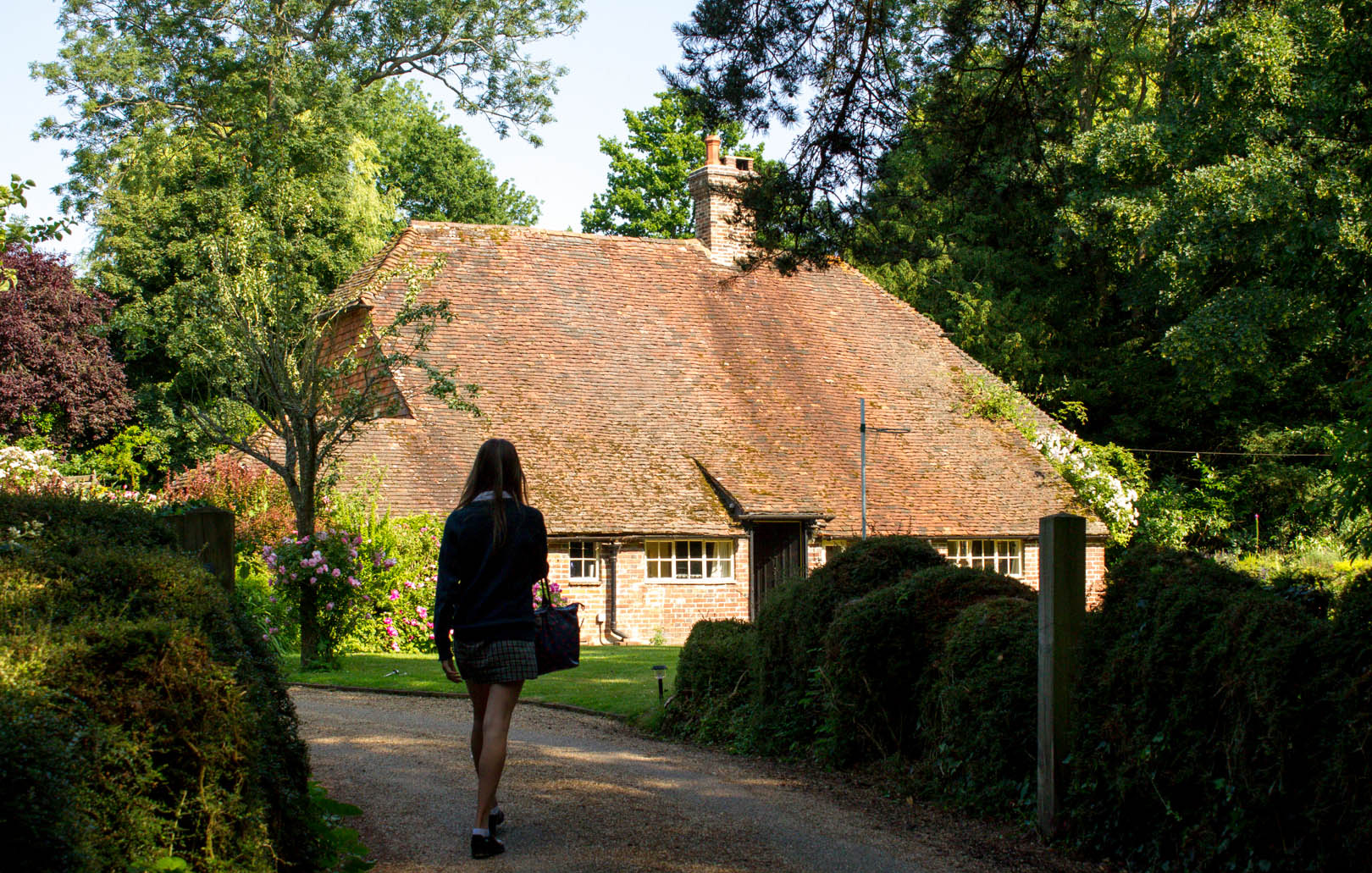
Home, At Long Last

girl returning home to high roofed house

The car pulls into the driveway. It’s called an Uber and at first, I think it’s the make and model of the car but the driver tells me it’s the name of a car service and although he’s patient and friendly in his explanation, I can feel my face flush red hot in embarrassment. There are so many things I don’t know that I don’t know. The entire world has a steep learning curve for me.

I wouldn’t have recognized the house, couldn’t have picked it out among the others because I haven’t seen it in over sixteen years and the memories are fuzzy because those years haven’t been kind. I’ve been told that it’s the house I grew up in and I nod with no acceptance or conviction because when I think about where I grew up all I can picture is being trapped in a dark and cold basement in a strange location. This house has never once appeared in my mind not even in my dreams.

From the moment the car arrives, people surge out of the front door but they don’t approach the car, perhaps because they’ve been advised not to, or perhaps they’re as afraid to meet me as I am to meet them.

I thank the driver as I close the rear driver side door and walk toward the crying and smiling crowd, desperately trying to untwist the constrictor knot my stomach has become. I’m sure they don’t mean to be but each and every one of them is too loud and although they’re careful not to touch me, they’re too close and I want to run. I want to run into the basement and lock the door behind me and go down as far as I can manage and find the darkest corner to curl up into and if that place doesn’t exist, I want to dig a hole into the earth and bury myself in it until the world becomes a quiet place again.

It’s unmistakable, the feeling of warmth and comfort and community that exists in this place and I hate it almost instantly. I’m not supposed to as I’m a human being and we’re known to be social animals but if truth be known the only peace I’ve ever experienced has always been in complete isolation.

Nothing seems right. The sound of people’s voices expressing gratitude and the low volume music in the background blend into some abnormal din that assaults my ears like the opposite of white noise, even though I know that isn’t right because the other end of the spectrum from a combination of all of the different frequencies of sound would be silence and silence would be a welcome change at this point.

Even faces are foreign and I’ve known most of these faces for the first nine years of my life but the arrangement of their features is wrong. Even my own reflection is out of place and unfamiliar. I want to leave, to pivot on my heels and push past this closeness of flesh, flag down a police officer and ask them to take me back to where I was found a fortnight ago.

I miss that basement because it’s the only home I know.

I want to back away but there are too many people behind so I push forward looking for a little elbow room, a safe barrier of personal space where I don’t have to feel the nearness of others or fight off a wave of nausea when someone’s aura scrapes against mine and makes a teeth-clenching noise like God raking His fingernails across the skin of the universe.

In the crowd I spot a face I don’t know and because I don’t know this woman and have no expectations of the way she must look she appears less odd than the rest. I lock onto her eyes and feel a transfer of knowledge between us. She is like me. She understands the words I’m unable to speak, words that will never be uttered by me in my entire life even if I live for two centuries. I want to move to her, to be closer to her, to stand within the sphere of her understanding but another woman, an aunt, I think, appears from nowhere and pulls me into an unwanted embrace and whispers into my ear with hot breath laced with wine, “You are such a brave girl.”

Brave? I want to say. What’s so brave about being afraid to let myself die? But instead, it comes out as, “Thank you.” I’m not even sure that’s a proper response, I simply need to say something to break the hold and by the time I manage it, the other woman, the woman with the understanding gaze, is gone.

And I’m aware of the people behind me again moving in closer pushing me forward without making contact with me when I come to the realization that their action is purposeful, they’re urging me forward from the front door through the foyer and into the living room for a reason and that reason being my mother and father are standing in the center of the empty room. I step in eagerly, not because I’m particularly glad to see them, I love them but the real reason I’m eager to get into the room is for the space so my soul can breathe again.

There’s this moment of silence and it’s like heaven and my mother takes on the form of Lucifer Morningstar by attempting to shatter paradise with the calling of my name that turns into a shriek that eventually ends in tears and hitching breath. Before I realize what’s happening, she’s on me wrapping her arms around me and lifting me off my feet. I am nearly as tall as she is and outweigh her by thirty pounds easily but this thin woman lifts me as though I was still the same nine-year-old who went outside to play and missed her curfew by more than a decade and a half. My face is buried in her hair and unlike this place that used to be and is once again my home, unlike the matured faces of the people I vaguely recognize as family, the smell of my mother’s hair, the scent of her coconut shampoo smashes through the floodgates of my mind and I am buried beneath wave after wave of memories which scare me and my eyes leak tears because I now realize how much emptier my life has been without this woman, although the world she inhabits still feels alien to me.

I say, “Hi, Mom,” and the word Mom feels distant, like I understand what the word means but the direct connection with it has faded and I don’t want to call her Mom at the moment, I want to call her by her first name but I have no idea what my mother’s name actually is.

She sets me down gently and her arms loosen and slide from around me but her fingers never leave me as they trace sweaty contrails across my back, under my armpits up to my neck where she cups my face in both hands. A move only mastered by a mother.

“Hi, baby,” she says and I both resent it because I’m not a baby anymore and miss it because I would give the remaining years of my life for the chance to be nine again in the company of this woman if only for one day.

She calls my father over while carrying on a constant stream of nervous and excited chatter in an attempt to catch me up on all the events that occurred since the last time we laid eyes on each other.

My father approaches with caution as if I come with a warning. He has undoubtedly been told what has been done to me while I was in captivity and probably some of the things I had to do to myself in order to stay alive. He doesn’t know everything because I am the only survivor, there’s no one else to bear witness and I will never tell another soul everything that I’ve been through in order to be here today. And it would break him to hear it so it becomes one of the many burdens I must bear alone.

His haunted eyes are misted with tears that he fights to control as he offers me that sidewinder smile of his–a name Mom gave him because he only smiles and talks out of one side of his mouth as if he’s a stroke victim. “Hi, kiddo,” he says.

All the others unknowingly crowd me and the only person I would not mind that of, my father, does not. He sees it, the invisible property lines that mark my personal space and respects the boundaries. I want to tell him, forget the signposts, just come hug me, Daddy, but those are words I don’t know how to speak so I say, “Hi, Dad,” and I manage to dig up a smile from the recesses of some long-forgotten happiness. At least I hope it looks like a smile, I haven’t done it in so long, I fear I might’ve lost the knack.

Mom is still babbling away nonstop when she remembers her basic etiquette, “Oh! Are you hungry? You must be famished!” And before I can answer,

“Get her something to drink,” Dad says. “Something cold.” And Mom takes off like a shot into the kitchen.

My father just stands there looking at me, taking in my measure. I can’t see the missing years on my mother but on him, I see every second, minute, hour, day, month, and year. Beneath his thinning hair, deep wrinkles crease his face. He’s worried and afraid of me and for me but he manages a smile.

In a voice low enough for my ears only, he says, “It’s gonna bother you, what you did, but just know you did the right thing. You ended the man who stole you from us and found your way home again. That’s my girl.”

I’m stunned. Of all the things I expected from this moment straightforward acceptance was never in the running. I rush to my daddy and throw my arms around him and break down and cry and he squeezes me tight and all the things that I can’t say and all the things he can’t say, they’re all there, transmitted on a biological level and he doesn’t move, doesn’t speak, doesn’t loosen his grip on me until my body stops shaking, until I have no more sobs and no more strength left.

He scoops me up into his arms and for the second time today, I am nine years old again. “I think she’s had enough excitement for one day, so thank you all for coming but now it’s time for us to be alone,” Dad says, as he pushes through the crowd and carries me upstairs to my old room.

He sets me down gently on the bed that’s now too small for me, brushes the hair matted by tears and snot from my face, kisses my forehead, and says, “When you’re ready.” and I know exactly what he means.

He leaves, taking Mom with him, assuring her it’s the right thing to do and as their voices get smaller I get up from the bed, lock my bedroom door, draw the blinds shut and crawl until my bed and ball up fetal, relishing the dark and the quiet.

Tomorrow I’ll begin trying to locate the house I was rescued from because although this house is nice, it’s no longer a place for me.

I want to go home.

12 Plays of Christmas: When The Snow Fell

When the snow fell, a man and woman became lost and wandered into the village where I was born. They were aware of just how fragile the planet was with too many people packed too close together. Human beings were hurting Earth and this village was one of those tiny and oh so very poor places in the world unknown to cartographers that was struggling with overpopulation.

The couple had been on an excursion to find their souls and instead found a half-frozen little orphan girl whom no one could afford to take in, and that day I found a family because even though the man and woman hadn’t planned on having children themselves, they believed in their hearts that it was the right thing to do.

They’d both been bitten by the wanderlust bug at early ages, so when I became old enough to truly appreciate presents, my adoptive parents gave me the two greatest gifts they could think of: a passport and an ear for languages.

From a young age, I trekked across the globe several times over, first with them, and then on my own when I became mature and worldly enough to claim the freedom to make my own pathway. And it was an exciting adventure for a while, but I eventually reached a point where the only place left to visit was home, or more precisely, the place where I was born.

Thanks to Google Earth, uncovering the location of the village, whose name was not translatable into English in written or verbal form, was easier for me than my folks but even in this age of digital information, the only reference I was able to pull up was a Christmas urban legend regarding a mysterious woman, a snow witch called, Dame Donatore, the giver of gifts.

According to myth, she was an eight-armed sorceress who had been tragically separated from her offspring during a snowstorm on the night before Christmas. Grief made her wander aimlessly into the mountains where she became a hermit. One of her many talents was that of a skilled craftswoman and in order to cope with her loss, she built knickknacks and toys by hand, things she would have made for her children. When these items began cluttering up her cave, she carried them down from the mountain and handed them out to the poor girls and boys, which happened to be on the anniversary of the loss of her children. And so began the tradition. It was said that she would spend the whole of Christmas Day with brooms in her many hands sweeping the snowcapped mountains clean, showering the village below in a blanket of white on that most special of days.

***

Reaching the village had proven more arduous than I thought, requiring passage on several modes of transportation over land and sea and air. I wound up having to travel farther than I initially planned and when I ultimately arrived at my destination, it was the twenty-fourth of December, a surprisingly mild weathered night, and to my great fortune, I bore witness to the arrival of the legend herself, Dame Donatore, who sat her gift-laden sack on the bench-like flat stone in the village square.

The snow witch appeared to be in her sixties, possibly older, and was cloaked in the infamous magical red robe that made six of her supposed extra arms invisible to mortal eyes. Beside her sack, she placed a pile of coal and as the children approached one by one, she asked,

“Have you remembered to be good?”

and upon hearing the child’s answer, she would sometimes fake reaching for a lump of coal, much to the child’s dismay, before pulling one of her bespoke presents from the sack. After the children had collected their gifts, she handed the coal lumps to the parents to be added to their home fires.

I spied all this from afar, hidden in the shadows, and only decided to approach the woman when everyone had retreated to their homes. Upon seeing me, Dame Donatore said,

“Oh, hel—beg pardon,” she caught herself. “I thought I knew you for a moment. You have a face like a forgotten memory, but clearly, we have never met.”

I had no idea what that meant but before I could question it, she continued, “I am afraid I have no gift for your little one.” Her tone was regretful as she held up her empty burlap sack. “They have all been given out.”

I waved away her concern, “I have no children.”

She sighed, and more to herself, said, “A pity that. I can think of no greater tragedy than to be childless, especially during the holidays, for children are the greatest gifts of all.”

From a distance, this mysterious giver of gifts seemed an almost ethereal being conjured by Christmas magic, but up close, with no children present, she was the saddest person I had ever laid eyes on and her magnificent cloak was nothing more than a ratty old blanket draped over her shoulders and held in place with a rusty pin.

“I don’t think being a mother suits me,” I said for no apparent reason. Why would this woman be interested in knowing that having children wasn’t part of my life plan?

“Well, what you think and what I know are two different things,” she offered a weak smile. “I could tell you.”

“Tell me what?”

“Girl or boy,” she answered. “Motherhood is indeed a part of your destiny. I have a sense of these things.”

“So, you’re a fortune-teller?”

“Everyone has a path which has been mapped out on their bodies from birth. I do not tell fortunes but I can see auras and have been known to trace the roads yet untraveled on a palm.”

Although a disbeliever in a great many things, I was standing in the presence of an urban legend, so how could I not extend my palm and accept the challenge? “Tell me.”

Donatore clasped my hand in a feeble handshake, closed her eyes and explained, “First, I must make your acquaintance.”

“Oh, of course, pardon me. My name is—” I started.

“Unnecessary,” she interrupted. “Your vibrations will tell me everything I need to know.”

Her hand began to tremble as if palsied but her grip grew tighter and tighter. Trance-like, she said, “I sense turmoil…a maelstrom…” and as she spoke the words, I caught flashes in my mind’s eye of a very heavy snowfall and I could actually feel icy winds cutting across my face.

And suddenly I am in a storm…

and the snow keeps coming…

it never stops…

until nothing exists except the snow…

and that isn’t right because I’m missing something…

something I lost in the snow…

was I holding a hand?

Was that real and if it was…

whose hand was it…

and where was it now?

Someone is calling to me…

“Keep up!”…

and as I try to push forward…

I realize that I have no shoes…

and the cold is everywhere…

even inside me…

hollowing me out…

and I am being buffeted by the wind…

turning around again and again…

I try to keep moving forward…

but I know I am going the wrong way…

I no longer know the right way…

because the entire world is killer frost white…

where am I now that I have turned the wrong way…

I can’t call out because the wind steals my voice…

I am lost and alone…

and the only thing I know is that I am going to die…

And just before I was about to cry out in pain, the witch of the snow allowed my hand to slip from her grasp. The all-encompassing whiteness that was so thick as to choke me…began to evaporate and time held its breath as reality reset itself around me.

“…a face like a forgotten memory…” Donatore muttered sotto voce, and a look of dawning recognition crossed her features. I was certain that I mirrored her expression.

“Are you…are you…my mother?”

“Ameliatta,” she whispered, and I lost my footing in the present, falling back through the calendar of my life to the misty days of forgotten memories when a younger version of myself that I barely recognized delighted in having my mother’s undivided attention.

“I go by Amelia now,” I said, unable to stop the spread of a smile for this woman whom I bore little resemblance to and who was and was not a stranger at the same time.

The giver of gifts struggled to find words and when she finally did, all she could muster was, “How did you find me?”

“I wanted to see where I was born.”

“I knew in my heart of hearts that you would return to me,” Donatore said as she turned away to hide the tears welling in her eyes. “In my quiet moments, I talked to the heavens to let you know that I was still alive and waiting for you at home.”

I hadn’t the heart to reveal that I hadn’t come in search of her, at least not consciously. Truth be known, I had never given much thought to finding my birth mother. I knew that sounded cruel but I wasn’t suffering from abandonment issues. I accepted that life happened the way it did, and I had a happy childhood surrounded and supported by people who loved me.

“You must think horrible things of me,” she said, her eyes unable to land on mine.

“I don’t, honestly.”

“It was my fault that I lost you, but you must understand I was doing what I thought was right.”

“I don’t blame you.”

She wasn’t acknowledging what I was saying and appeared to be lost in remembrance. “We owned nothing but poverty but that did not stop your father from scrounging around for materials to build us a home. If only his heart was as strong as his intention. He died before the house was finished. It was only you and I alone and a violent storm was on its way. I needed to find materials to patch the holes in the roof. It would have been faster if I went by myself but you were so terrified of being left alone after your father died, so against my better judgment, I took you with me. We collected bits of wood and tree bark and raced back home, but we were not faster than the storm. Trying to hold on to the wood that the wind was whipping out of my grip, I lost hold of you. If you believe nothing else I tell you, know that I searched for you day and night for how long I cannot tell, digging through the snow until I could no longer feel my hands, but you were gone.”

“I believe you.”

If she heard me, she gave no indication. “I wanted to curl up in that snow and die, but I kept pushing on. It was what my parents did and what they taught me to do, day after day, you just pushed on. In the same year, I had lost my husband and my precious daughter. There was nothing to keep me here but I stayed because I had a belief that if I left this place, I would never see you again, and I would not have been able to survive that. I needed to keep my mind and hands busy so I began building things, which turned out to be toys, probably because your return was always on my mind.”

At that moment I was able to see beyond myself and considered the stages of her life, of our lives, before and after the storm. There were paths each of us had taken that would fill in the gaps of our individual travels and maybe, just maybe, we could start walking a new path together.

“This might sound strange but can I hug you?” I asked.

“For as long as you like,” Donatore smiled and the years seemed to melt from her face.

We threw our arms around each other and it seemed so natural and so right, so much like a home I never knew existed. She whispered in my ear, “Life is filled with little miracles and I knew one day I would receive one.”

We stood there locked in an embrace, taking turns weeping. It was strange to discover just how much I missed this woman, my mother. When we eventually separated, she folded her empty sack and tucked it beneath one arm. “Would you like to see the house? It took me longer than I thought but I finally finished it.”

“That would be nice.”

“I must warn you that it is a little crowded in there.”

“You have a family?”

“Of sorts, I take in homeless children, especially this time of year, because this is a horrific place for young children to be isolated, and as I said before children are the best gifts one can have. In exchange for food and shelter, they help me build toys. You think I did all this by myself?”

Clearly, my work was cut out for me, separating my mother from the myth from the woman she became without me.

I wasn’t sure how long we had been standing out in the cold, which oddly enough hadn’t really affected me, but I had a sense that it was after midnight, Christmas Day, and as we held hands and walked the path to her home, the snow began to fall.

I Watched: 7500

In 7500, directed by Patrick Vollrath, written by Vollrath and Senad Halilbasic, and starring Joseph Gordon-Levitt, a soft-spoken young American co-pilot aboard a Berlin-Paris flight struggles to save the lives of the passengers and crew when terrorists try to seize control of the plane.

Captain Michael Lutzmann (Carlo Kitzlinger) and First Officer Tobias Ellis (Joseph Gordon-Levitt) board an airplane and begin pre-flight checks before embarking on the flight from Berlin to Paris. Also on board is Tobias’ girlfriend, Nathalie (Aurélie Thépaut), who is one of the flight attendants and they have a brief conversation about which school their son should attend.

Once the plane takes off, a terrorist forces his way into the cockpit and although Tobias is able to shove the cockpit door closed before anyone else can enter, he suffers a bad wound to his arm by the terrorist inside the cockpit who stabs Lutzmann repeatedly before Tobias can knock out and tie up the hijacker.

Tobias signals Air Traffic Control and is ordered to divert to Hannover. Lutzman loses consciousness so Tobias attempts CPR but is unsuccessful. All the while, the remaining terrorists continuously attempt to break into the cockpit. Tobias informs ground control of the situation and is informed under no circumstance is he permitted to allow the terrorists inside. And the terrorists test his resolve by taking a hostage and threatening to kill the man unless they’re granted access to the cockpit. Tobias pleads with the terrorists in vain as they execute the hostage.

Tobias is visibly shaken. He attempts to render first aid to himself when the terrorists return with another hostage, this time a member of the flight crew. You guessed it, it’s Nathalie, Tobias’ girlfriend. Over the PA system, Tobias tells the passengers to fasten their seatbelts as he tries an aerial maneuver to make the terrorists release Nathalie. She manages to get free and struggles with the terrorists but they gains the upper hand and she is once again taken hostage. One of the terrorists holds a glass shard to Nathalie’s jugular and is going to kill her if Tobias doesn’t open the door. Tobias relents and agrees to open the cockpit door but Nathalie tells him not to, repeating, “It’s going to be all right! It’s going to be all right!”

What happens then? You’ll have to head over to Amazon Prime to find that out because I’ve reached the limit of my spoiler reveal for this film.

So, would I recommend it? Actually, I would. 7500 (which is airline code for a hijacking) is one of those fly-on-the-wall-almost-documentary-style films that takes place in a single location, in this case, the cockpit of a commercial airliner which is equipped with a monitor so we’re able to see the terrorists on the other side of the locked door. Joseph Gordon-Levitt gives an excellent performance as he cycles through a range of emotions in attempting to deal with a situation he is clearly not adequately trained to handle. There are a few logic issues I have with the plot but I can’t mention them without getting into spoiler territory, but I can say they weren’t so severe as to affect my enjoyment of the movie. So, if you’re the type of person who likes a thriller that slowly ratchets up the tension as events unfold in real time, progressing the situation from bad to worse, this film just might be worth your time.

Ciao til next now.

Home, At Long Last

girl returning home to high roofed house

The car pulls into the driveway. It’s called an Uber and at first I think it’s the make and model of the car but the driver tells me it’s the name of a car service and although he’s patient and friendly in his explanation, I can feel my face flush red hot in embarrassment. There are so many things I don’t know that I don’t know. The entire world has a steep learning curve for me.

I wouldn’t have recognized the house, couldn’t have picked it out among the others because I haven’t seen it in over sixteen years and the memories are fuzzy because those years haven’t been kind. I’ve been told that it’s the house I grew up in and I nod with no acceptance or conviction because when I think about where I grew up all I can picture is being trapped in a dark and cold basement in a strange location. This house has never once appeared in my mind not even in my dreams.

From the moment the car arrives, people surge out of the front door but they don’t approach the car, perhaps because they’ve been advised not to or perhaps they’re as afraid to meet me as I am to meet them.

I thank the driver as I close the rear driver side door and walk toward the crying and smiling crowd, desperately trying to untwist the constrictor knot my stomach has become. I’m sure they don’t mean to be but each and every one of them is too loud and although they’re careful not to touch me, they’re too close and I want to run. I want to run into the basement and lock the door behind me and go down as far as I can manage and find the darkest corner to curl up into and if that place doesn’t exist, I want to dig a hole into the earth and bury myself in it until the world becomes a quiet place again.

It’s unmistakable, the feeling of warmth and comfort and community that exists in this place and I hate it almost instantly. I’m not supposed to as I’m a human being and we’re known to be social animals but if truth be known the only peace I’ve ever experienced has always been in complete isolation.

Nothing seems right. The sound of people’s voices expressing gratitude and the low volume music in the background blend into some abnormal din that assaults my ears like the opposite of white noise, even though I know that isn’t right because the other end of the spectrum from a combination of all of the different frequencies of sound would be silence and silence would be a welcome change at this point.

Even faces are foreign and I’ve known most of these faces for the first nine years of my life but the arrangement of their features is wrong. Even my own reflection is out of place and unfamiliar. I want to leave, to pivot on my heels and push past this closeness of flesh, flag down a police officer and ask them to take me back to where I was found a fortnight ago.

I miss that basement because it’s the only home I know.

I want to back away but there are too many people behind so I push forward looking for a little elbow room, a safe barrier of personal space where I don’t have to feel the nearness of otherness or fight off a wave of nausea when someone’s aura scrapes against mine and makes a teeth-clenching noise like God raking His fingernails across the skin of the universe.

In the crowd I spot a face I don’t know and because I don’t know this woman and have no expectations of the way she must look she appears less odd than the rest. I lock onto her eyes and feel a transfer of knowledge between us. She is like me. She understands the words I’m unable to speak, words that will never be uttered by me in my entire life even if I live for two centuries. I want to move to her, to be closer to her, to stand within the sphere of her understanding but another woman, an aunt, I think, appears from nowhere and pulls me into an unwanted embrace and whispers into my ear with hot breath laced with wine, “You are such a brave girl.”

Brave? I want to say. What’s so brave about being afraid to let myself die? But instead, it comes out as, “Thank you.” I’m not even sure that’s a proper response, I simply need to say something to break the hold and by the time I manage it, the other woman, the woman with the understanding gaze, is gone.

And I’m aware of the people behind me again moving in closer pushing me forward without making contact with me when I come to the realization that their action is purposeful, they’re urging me forward from the front door through the foyer and into the living room for a reason and that reason being my mother and father standing in the center of the empty living room. I step in eagerly, not because I’m particularly glad to see them, I love them but the real reason I’m eager to get into the room is for the space so my soul can breathe again.

There’s this moment of silence and it’s like heaven and my mother takes on the form of Lucifer Morningstar by attempting to shatter paradise with the calling of my name that turns into a shriek that eventually ends in tears and hitching breath. Before I realize what’s happening, she’s on me wrapping her arms around me and lifting me off my feet. I am nearly as tall as she is and outweigh her by thirty pounds easily but this thin woman lifts me as though I was still the same nine-year-old who went outside to play and missed her curfew by more than a decade and a half. My face is buried in her hair and unlike this place that used to be and is once again my home, unlike the matured faces of the people I vaguely recognize as family, the smell of my mother’s hair, the scent of her coconut shampoo smashes through the floodgates of my mind and I am buried beneath wave after wave of memories which scare me and my eyes leak tears because I now realize how much emptier my life has been without this woman, although the world she inhabits still feels alien to me.

I say, “Hi, Mom,” and the word Mom feels distant, like I understand what the word means but the direct connection with it has faded and I don’t want to call her Mom at the moment, I want to call her by her first name but I have no idea what my mother’s name actually is.

She sets me down gently and her arms loosen and slide from around me but her fingers never leave me as they trace sweaty contrails across my back, under my armpits up to my neck where she cups my face in both hands. A move only mastered by a mother. “Hi, baby,” she says and I both resent it because I’m not a baby anymore and miss it because I would give the remaining years of my life for the chance to be nine again in the company of this woman if only for one day.

She calls my father over while carrying on a constant stream of nervous and excited chatter in an attempt to catch me up on all the events that occurred since the last time we laid eyes on each other.

My father approaches with caution as if I come with a warning. He has undoubtedly been told what has been done to me while I was in captivity and probably some of the things I had to do to myself in order to stay alive. He doesn’t know everything because I am the only survivor, there’s no one else to bear witness and I will never tell another soul everything that I’ve been through in order to be here today. And it would break him to hear it so it becomes one of the many burdens I must bear alone.

His haunted eyes are misted with tears that he fights to control as he offers me that sidewinder smile of his–a name Mom gave him because he only smiles and talks out of one side of his mouth as if he’s a stroke victim. “Hi, kiddo,” he says.

All the others unknowingly crowd me and the only person I would not mind that of, my father, does not. He sees it, the invisible property lines that mark my personal space and respects the boundaries. I want to tell him, forget the signposts, just come hug me, Daddy but those are words I don’t know how to speak so I say, “Hi, Dad,” and I manage to dig up a smile from the recesses of some long forgotten happiness. At least I hope it looks like a smile, I haven’t done it in so long, I fear I might’ve lost the knack.

Mom is still babbling away nonstop when she remembers her basic etiquette, “Oh! Are you hungry? You must be famished!” And before I can answer,

“Get her something to drink,” Dad says. “Something cold.” And Mom takes off like a shot into the kitchen.

My father just stands there looking at me, taking in the measure of me. I can’t see the missing years on my mother but on him, I see every second, minute, hour, day, month and year. Beneath his thinning hair, deep wrinkles crease his face. He’s worried and afraid of me and for me but he manages a smile.

In a voice low enough for my ears only, he says, “It’s gonna bother you, what you did, but just know you did the right thing. You ended the man who stole you from us and found your way home again. That’s my girl.”

I’m stunned. Of all the things I expected from this moment straightforward acceptance was never in the running. I rush to my daddy and throw my arms around him and break down and cry and he squeezes me tight and all the things that I can’t say and all the things he can’t say, they’re all there, transmitted on a biological level and he doesn’t move, doesn’t speak, doesn’t loosen his grip on me until my body stops shaking, until I have no more sobs and no more strength left.

He scoops me up into his arms and for the second time today I am nine years old again. “I think she’s had enough excitement for one day, so thank you all for coming but now it’s time for us to be alone,” Dad says, as he pushes through the crowd and carries me upstairs to my old room.

He sets me down gently on my bed that’s now too small for me, brushes the hair matted by tears and snot from my face, kisses my forehead and says, “When you’re ready.” and I know exactly what he means.

He leaves, taking Mom with him, assuring her it’s the right thing to do and as their voices get smaller I get up from the bed, lock my bedroom door, draw the blinds shut and crawl under my bed and ball up fetal, relishing the dark and the quiet.

Tomorrow I’ll begin trying to locate the house I was rescued from because although this house is nice, it’s no longer a place for me.

I want to go home.

©2018 Rhyan Scorpio-Rhys

Creative Commons License