The Alchemy of Anger

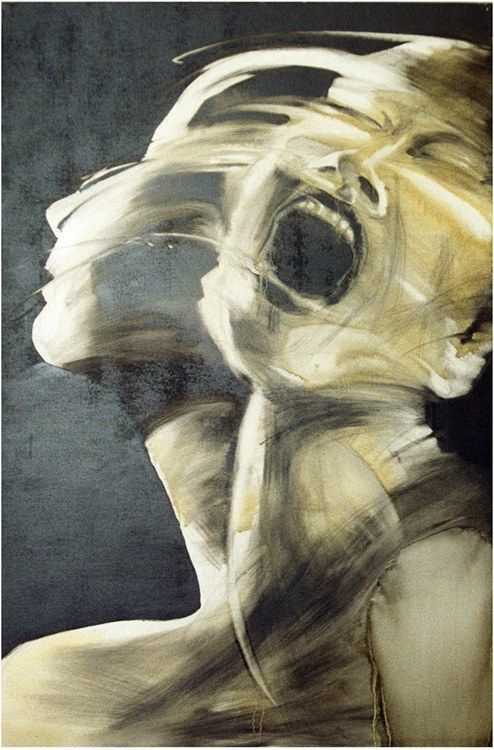
The first sign of trouble is in her eyes. They harden, storm clouds gathering, and I know the thunder is coming. Her anger doesn’t roar; it simmers. Quiet. Controlled. It’s the kind that seeps through the cracks of silence, heating the air between us until it feels unbearable.

“What did you mean by that?” Her voice is low but sharp, a knife grazing the surface.

I pause, caught off-guard. My reply—half-hearted, careless—had been an attempt at humor. But now, in the reflection of her anger, it looks like cruelty.

“I didn’t mean it like that,” I say carefully, but her gaze sharpens. The explanation feels hollow even to me.

Her anger ignites. “You never mean it, do you?” she snaps, and the words pour out, each one like kindling tossed into the fire. “You don’t think. You don’t care how it makes me feel.”

The urge to fight back swells in me, hot and insistent. I could argue, could lay out all the times I’ve been careful, attentive. All the times I’ve held my tongue. The words press against my teeth, demanding release.

But I see the hurt behind her anger, the way it burns brightest not in her voice but in the quiver of her hands. I force myself to pause. To look.

“It’s not that I don’t care,” I say, softer now. “I just... didn’t think it would hurt you. I wasn’t trying to.”

Her expression falters, just slightly, but her anger holds. “That doesn’t make it better.”

No, it doesn’t. I know it doesn’t. Still, I want her to see me, not as the enemy but as someone trying—fumbling, failing, but trying. I take a slow breath, swallowing the instinct to defend myself.

“It was thoughtless,” I admit. “I’m sorry.”

The words hang in the air, a tentative bridge between us. For a moment, I think she won’t take it. That her anger will keep burning, too strong to douse. But then she exhales, long and shaky, like a storm rolling past. Her hands fall to her sides.

“You always say that,” she murmurs, but there’s no venom in her tone now. Just weariness.

Her anger has ebbed, but the tension still lingers. I step closer, careful not to push too far too fast. “I mean it,” I say. “I’ll try to do better.”

The space between us shrinks, and I reach for her hand. She doesn’t pull away, though her grip is hesitant, loose. “I know I mess up sometimes,” I say, “but I don’t want to hurt you. Ever.”

Her eyes meet mine, and something shifts—subtle, like a tide turning. The hurt is still there, but the anger has given way to something quieter. She squeezes my hand, just once, and it feels like permission.

I pull her gently into my arms, feeling the tension in her body slowly ease. My chin rests against her hair, and I whisper, “I love you.”

She doesn’t say it back right away, and that’s okay. The silence between us feels fragile but whole, like something delicate being mended. I hold her until the weight in the air lightens, until the warmth of her presence replaces the heat of her anger.

When she finally looks up, her expression is softer, her eyes clearer. “I’m tired,” she says.

“Me too.”

But we’re still here, together. And that’s enough for now.

Thirteen For Halloween: The Eternal Lullaby of Wilhelmina Soames

Every city has its ghosts, but few linger like Wilhelmina Soames. She haunted Main Street with her empty pram, its wheels squeaking on the cracked pavement, her presence as constant as the rising sun. The locals knew her by a hundred cruel names—The Mad Mother, The Lady in Rags—but her true title was whispered only by the bravest and the most foolish: The Collector.

“Nelda, Farley, Aubrey…” Wilhelmina’s voice rasped, a croak that slid down the city’s alleys like smoke. The names flowed from her lips in a ceaseless chant, each one spoken with the reverence of a mother calling her child home. Yet there were no children. Only the pram, and her eyes—wide and fever-bright—scanning the empty streets.

“Vance, Giselle, Wesley…” She called out to names long forgotten, her cracked lips curling into a smile that unsettled anyone who dared to listen too long.

The city had become numb to her presence, indifferent to the sight of her skeletal frame and wild hair, matted with dirt and debris. It was easier that way, to pretend she didn’t exist, to step over her as they did the other broken things the city swallowed whole. But those who whispered behind her back never lingered long near the places Wilhelmina wandered after dark.

Because Wilhelmina didn’t just push an empty pram. She collected.

At dusk, she ventured beyond the crowds, beyond the reach of streetlights, into forgotten corners of the city, the places where the shadows lingered thickest. Those who had been desperate enough to follow—whether out of morbid curiosity or cruel delight—never spoke about what they saw. Some said she rummaged through dumpsters, sifting through filth as if seeking something precious among the discarded refuse. Others claimed to hear her speaking softly to things unseen, her voice a strange lullaby meant to soothe the dead. But always, they said, she found something—someone. And when she did, she would cradle it in her arms, rocking it gently as if it weighed more than air.

Those few who dared to peer too long into her pram swore they caught a glimpse of something terrible. Tiny, disfigured shadows, twisting and writhing inside the carriage as if desperate to escape.

The rumors spread fast, and the stories became more elaborate with each retelling. Some claimed Wilhelmina had once been a nanny to a wealthy family, that she’d lost her charge in a tragic accident—a baby slipping from her grasp and into traffic, her mind snapping in two with the sound of that child’s body beneath tires. Others whispered of ancient curses, that Wilhelmina was cursed to roam the city, forever collecting the souls of the young who died before their time. She wasn’t just a madwoman, they said. She was a harbinger. A guardian of lost souls, condemned to ferry them to a place no living eyes could see.

And so, every night, her eerie refrain echoed through the streets, searching.

But the stories were never enough to explain what happened next.

On the night of her death, Wilhelmina entered the vacant lot, the one space in the city untouched by developers—a place where the air always felt cold, no matter the season. There, among the rubble and weeds, she bent low, her fingers sifting through the earth, frantic, searching as though time itself was running out.

And then she found it. Something unseen yet tangible to her alone. A bundle, light as air, and in her joy, she lifted it high, cradling it to her chest. But in her haste, she didn’t notice the jagged brick half-buried in the dirt.

She tripped. Her skull met the brick with a sickening crack, and the last breath of air left her body in a wet, gurgling gasp. Blood oozed into the soil, darkening the ground beneath her.

But Wilhelmina didn’t die—not in the way most do.

She awoke standing over her own body, her lifeless shell sprawled on the cold earth. The sight didn’t startle her. In fact, it comforted her. The years of madness, the endless wandering, the voices of lost children—she finally understood. She had been preparing for this moment all along.

Around her, the shadows deepened. Small, pale hands reached for her, dozens of tiny figures emerging from the gloom. Children, their faces contorted in silent screams, their eyes hollow and unblinking. They had waited for her, lost in the dark, and now they were ready to be guided to wherever it was that the forgotten dead go.

Wilhelmina smiled, her lips parting to release a lullaby that no living ear could hear. She gathered the children to her, one by one, her touch soothing the fear in their eyes. Her pram was no longer empty—it brimmed with the restless spirits of the city’s lost.

And so, Wilhelmina Soames, the Mad Mother of Main Street, became what she was always meant to be. No longer bound by flesh, she pushed her pram through the vacant lot, her song rising with the wind, a lullaby for the dead. Her voice drifted through the city, a melody of grief and longing, chilling the blood of those who walked too close.

She was no longer just a madwoman; she was their keeper. And the children of the city—those lost and forgotten—would forever hear the eternal lullaby of Wilhelmina Soames, calling them home.

Thirteen For Halloween: The Demon’s Lament

Alethea stood at the edge of twilight, a figure straddling the sacred and profane, cloaked in human flesh that barely concealed the infernal fires beneath. Her beauty was a mask, her voice a siren's call, lilting with promises of protection and devotion. She breathed lies as easily as air, each word slipping like silk around the throat of her chosen prey.

"Calvin," she whispered, the sound curling through the gloom. "You need not fear me. I only seek to keep you safe."

The air grew thick with the scent of decay, the cloying perfume of ancient temptation. Calvin, a man anchored in faith, clutched his rosary so hard his knuckles paled. His heart beat against his ribs like a frantic animal, but his thoughts held firm, fortified by the Scriptures that warned against the Beast's seductive touch.

“Stay back,” he stammered, eyes wide, the cross held between them like a blade. “You are not of this world. You are a creature of darkness.”

Alethea's gaze softened with an almost imperceptible sadness, a crack in the veneer of her monstrous facade. "You speak of darkness as if you truly understand it," she said, her voice as cold as the grave. "You cling to your faith, your symbols, as though they could protect you from the reality that lies beneath your skin. We are not so different, you and I."

Her eyes, black pools that swallowed the light, seemed to plead with him to see beyond the horror, to recognize the fractured soul trapped within the demon's form. But Calvin’s grip tightened, and his lips moved silently, reciting prayers he had learned as a child. The holy words fell from his tongue like ash.

“Get thee behind me, Satan,” he spat, though his voice quivered. “I will not succumb to your wiles.”

Alethea’s expression darkened, the illusion of warmth draining from her face like a sunset giving way to the night. Her features sharpened, revealing the contours of something ancient and hungry lurking just beneath the surface of her skin. The sadness in her eyes flared into rage, a cold flame that burned without heat.

“You fool,” she hissed, her voice reverberating like the tolling of a funeral bell. “You speak of salvation, but you have damned yourself by your own hand. Had you not recoiled in fear, I would have shielded you from the evils of this world until the stars themselves burned out.”

The shadows around her twisted and writhed, alive with malice. Calvin stumbled back, his faith wavering as an icy dread clawed its way up his spine. In that instant, the mask fell away, and the full horror of her true form unfurled before him: a thing forged in the abyss, its skin a darkened marble streaked with cracks through which a hellish glow seeped. Her mouth split wide, revealing rows of needle-like teeth slick with hunger.

A scream clawed its way from Calvin's throat as she descended upon him. Her nails, sharp as daggers, raked his flesh, and her mouth, unhinged and yawning like a pit to oblivion, latched onto his throat. As she fed, the life drained from his eyes, the rosary slipping from his limp fingers to the cold earth below. His soul, severed from its mortal tether, slipped into darkness, vanishing like a final breath on the chill wind.

When the feeding was done, Alethea stood amidst the carnage, her hunger sated but her heart hollow. She knelt beside Calvin's body, her bloodstained lips trembling as she whispered, “I would have loved you.” Her words fell into the night, unanswered and unheard, a lament carried away by the wind.

The silence that followed was suffocating, and Alethea found herself staring into the void, a creature born of darkness yet grieved by a love that had been poisoned by the prejudice of mortal men. In the end, she was left with nothing but the taste of regret and the certainty that true damnation lay not in her infernal nature, but in the hearts of those who could only see her as a monster.

The night wore on, and the demon wept tears of blood over a love that had died before it had ever truly lived.

Thirteen For Halloween: The Skin Thief

The sterile air of the hospital was heavy, tinged with the scent of antiseptic and decay. Karl lay there, a fragile wisp of the child he had once been, his skin pale, stretched taut over bones that should have still been growing. The disease had whittled him down to something less than a boy, more like a flickering candle, guttering on the edge of darkness.

The heart monitor beeped in slow, shallow rhythms—each sound a metronome counting down his final hours. His parents sat nearby, hollow-eyed, their hands trembling as they held his, as if their love alone could keep him tethered to this world. But their love was powerless against the ravenous hunger that lurked unseen.

In the corner of the room, Karl’s imaginary friend, King Koda, waited. He was a tall figure, clothed in shimmering robes that only Karl could see, with a face that radiated kindness. Or, at least, it had once. Lately, something about the king's eyes had changed—becoming darker, hungrier.

Karl didn’t notice. He saw only his beloved companion, the king who had been with him through lonely nights and hospital stays. King Koda had always promised to protect him, to shield him from pain. But tonight, there was something wrong with that smile.

The boy dreamed of worlds
Where kings were friends and nightmares were myths
But some monsters wear familiar faces
And not all imaginary friends are safe


As his breaths grew shallow, Karl’s vision blurred. His parents whispered soothing words, but their voices seemed distant. And in the fog of his fading consciousness, Karl felt King Koda’s hand touch his—warm, far too warm, almost burning.

"Don’t be afraid," King Koda said, his voice soft, like silk sliding over a blade. "I will take care of you. I’ll make sure you live forever."

The words should have comforted Karl. But something was wrong. The touch of the king’s hand felt different now—too solid, too real. The air around the bed felt thick, oppressive, like the room itself was closing in, trapping him.

A promise laced with venom
The king whispers his dark command
In the shadow of death
There is a hunger older than time


Karl’s breath hitched, and for the first time in weeks, fear coursed through his frail body. He tried to call for his parents, but his voice was caught in his throat. His eyes darted toward them, desperate—but they sat, heads bowed, oblivious, as if some unseen force held them in a trance.

King Koda leaned closer, his once regal face now twisted into something grotesque, his teeth too sharp, his eyes too hollow. “It’s time, Karl. You have something I need.”

A coldness crept into the room, a suffocating weight. Karl’s skin prickled, and the little light left in his eyes began to dim as Koda’s true nature unveiled itself. The king wasn’t a friend. He wasn’t even human. He was something ancient, something that had fed on the minds of the vulnerable for centuries.

And now, he would take Karl’s life as his own.

Innocence devoured by shadows
A king of nightmares sheds his guise
A child’s light extinguished
As the Skin Thief claims his prize


With a sickening crack, King Koda’s form began to shift. His once-fantastical body twisted, growing taller, the flesh warping and tearing until it was no longer robes and crowns, but sinew and bone, stealing Karl’s shape. The frail child beneath him gasped, his last breath a shallow wheeze as the boy’s form slipped away—just another hollow shell for the creature to wear.

The heart monitor flatlined, its shrill scream blending with the rising wind of the creature’s birth. The room was filled with a gust that seemed to come from nowhere, scattering the tokens of love—the toys, the blankets, the flowers—as though they had never mattered.

And then, in the stillness, it stood—no longer King Koda, but Karl. Or something that wore Karl’s face.

The parents rushed to their son’s side, but it was too late. The thing that stood before them blinked with the same blue eyes, smiled with the same soft lips—but it was not their son. Not anymore.

Beneath the skin, something else watched them, something ravenous. The creature’s lips curled up, just slightly, as it settled into its new form. A wave of terror washed over the parents, though they didn’t understand why. Not yet.

“Mom? Dad?” the thing that was not Karl said, its voice innocent, perfect.

They wept with joy, not knowing that what they embraced was a monster.

In the mask of a child’s flesh
The Skin Thief walks the earth
Preying on those who see only what they wish


The hospital lights flickered as the creature left, hand in hand with Karl’s parents, their hearts too broken to sense the wrongness beside them. But deep inside, the thing smiled. It had taken Karl’s skin, his life, and now it would take more—because hunger like this is never satisfied.

And out in the night, a shadow passed across the moon, as another innocent life was claimed by the Skin Thief.

Thirteen For Halloween: Requiem for the Living: A Ghost’s Vengeance

The sky split open, unleashing a torrent of rain that cut like shards of glass. Snow mixed with the downpour, falling in jagged flurries as if the heavens were weeping for a forgotten soul. A damp chill clung to the bones of the living, but I felt none of it. My cold was deeper—a frost of the soul, bound in chains that death had only tightened.

I hovered above my open grave, an intruder among the living. A field of black umbrellas swayed like wilted flowers in the wind, their owners clutching them in vain against the storm. I had no need for shelter, but their grief—their muted cries—clawed at my mind. A grotesque dance, these mourners, caught in the rhythm of loss they didn’t understand.

Below, a mahogany coffin waited—an empty vessel where my body should have rested. But it wasn’t my body they mourned. I watched with a hollow, burning rage, invisible to all but the darkness itself. My killer had orchestrated it all—ensuring I watched the false ritual, ensuring I would know my body would never rest in peace.

The truth of my death unfolded slowly, a cruel revelation whispered from beyond the veil. My death had not been an accident. No, it had been carefully crafted, and now I, the ghost, was left to wander—a pawn who had been cut from the board too soon.

I was not free. I was trapped between realms, tethered to the world by an insatiable need for vengeance. My ethereal form moved with the wind, silent and unseen, but I knew I wasn’t powerless. The hunt was mine to begin.

The first sign was the cold. A creeping, unnatural chill that followed my murderer, sinking into their skin, gnawing at the edges of their sanity. It started as a discomfort, a breath of cold air in a warm room. But soon, the chill grew deeper—frost on their breath, ice in their veins. Their windows, no matter how tightly shut, let in the biting air. They couldn’t sleep, their nights haunted by the gnawing sense of being watched.

I made sure of it.

I watched as their unease grew, as the world twisted around them. Shadows clung longer than they should, stretching into shapes that whispered my name. The clocks, once steady, began to tick out of rhythm, a maddening staccato of time unraveling. Their reflection in the mirror became distorted, the faintest hint of me—a flicker in the corner of their eye. I was always there. They could never be alone.

The trail of their guilt led me to their doorstep, each step heavy with the weight of their betrayal. They had been my friend once—trusted, loved even. Now, they were nothing more than prey, the target of a justice that death could not erase. I stood outside their door, a figure in the rain, invisible to the world but all too real to the one who had wronged me. The night pressed in, thick with tension.

I reached out with a thought, and the door creaked open.

Inside, they sat alone, clutching a glass of whiskey, its amber contents trembling in their hand. They had aged in a way that wasn’t natural. Fear had stolen the vitality from their face, replaced by the hollow-eyed look of someone who knew they were damned.

“Show yourself!” they cried, their voice cracking in desperation. They knew. They had always known it was me.

I made them wait. The silence stretched on, filling the room with the weight of the grave. Then, slowly, I let myself manifest—a cold breath on their neck, a shift in the air. My form flickered into view, pale and translucent, but unmistakable.

Their eyes widened, filling with terror as they scrambled backward, knocking over the chair in their haste. “It wasn’t supposed to happen like this,” they stammered, their voice barely above a whisper. “It was an accident—”

But I knew the truth. The memory of that knife, cold and final, sinking into my back, burned within me like a wound that would never heal. They had plunged it in with purpose, a betrayal as sharp as the blade itself.

The room around us warped as my anger flared—walls groaning, lights flickering, the air thick with the stench of death. “You took my life,” I hissed, my voice hollow and echoing. “Now, I’ll take yours.”

Their breath quickened, coming in ragged gasps. I watched as their face contorted in panic, as they stumbled and fell, crawling away on their hands and knees. But there was no escape. I was everywhere—the creaking floorboards, the rustling curtains, the reflection in the shattered glass. My presence filled the space, choking the life from the air.

I could feel their pulse, frantic and wild, pounding in their chest as they tried to flee. I let them run, let them feel the hopelessness of it. My vengeance would not be swift—it would be slow, drawn out, until they begged for the end.

“You won’t outrun me,” I whispered, my voice curling in the shadows. “Death is inevitable. And so is my revenge.”

They stumbled into the bedroom, slamming the door behind them. But doors could not keep me out. I was the darkness, the cold, the thing they feared in their nightmares. I drifted through the walls, a cold fog filling the room as they cowered in the corner.

I could hear their whispered prayers, desperate and incoherent. Prayers that would go unanswered.

When I finally moved, it was with the force of all the fury I had held back. I surged forward, grasping their throat with icy hands, feeling the warmth of life beneath my fingers. They gasped, choked, clawing at nothing as the air left their lungs.

Their wide, pleading eyes locked onto mine, but I offered no mercy. Only the cold, hard truth—revenge was all I had left.

As their body went limp and the light faded from their eyes, I felt a release. The storm outside ceased, the wind falling silent. The room was still once more, and my killer lay at my feet, lifeless. The final chapter of their betrayal had been written in blood.

I turned away, drifting back into the night. The world no longer called to me. My task was done. The tether that bound me to this place unraveled, and with it, the bitterness that had gripped my soul for so long.

I returned to my grave, to the coffin that had once been empty, but now held the weight of my vengeance. The snowflakes continued to fall, a blanket of white, covering the earth in silence. I lay down in the earth, finally at peace, my story etched in the annals of the afterlife.

Thirteen For Halloween: The Fault of the Nightlight Redux

Darkness descends, not gently but with weight—a suffocating shroud. The click of the light switch, the thud of the closing door. Sounds that, in the daylight, are small, meaningless. But at night, they grow loud, like the ticking of a clock running out of time.

Parental abandonment
The nightly ritual
Leaving little Evan
To face the shadows’ revival

The nightlight flickers, its glow pale and inconsistent, the kind that hides more than it reveals. The soft yellow light twists the room’s familiar shapes into sinister figures—elongated, contorted, twitching as if ready to leap off the walls.

Shadows stretch and swell
A puppet show of terror
Hinting at horrors
Lurking beyond the veil

Evan pulls the covers to his chin, eyes darting to every shifting corner. He tries to pretend it’s just his imagination, but he knows better. The flickering of the nightlight is more than a malfunction. It’s a signal, a summoning. The witching hour approaches, when the boundary between worlds grows thin, and what hides in the dark comes forth.

The witching hour strikes
Whispers, scratches
Nightmares stir
In the waking world’s cracks

The first sound is always the scuttling—tiny legs, hundreds of them. Evan presses his hands over his ears, but it’s no use. He feels them first, their brittle bodies brushing against his skin beneath the covers. Cockroaches. Feral. Their exoskeletons scrape like nails on glass, filling the air with a cacophony of insectile chatter.

Chitinous swarms
A living tide
Engulfing innocence
In their crawling pride

But they aren’t the worst of it. Not by far. The rats come next, skeletal things with gaping sockets where eyes should be, noses twitching as they search, search for something to devour. Evan’s breath hitches as he feels the cold, wet slap of a rat’s tail against his ankle. He stifles a scream.

Eye-less vermin
Scavengers of sanity
Gnawing at the fragile edges
Of reality

The air grows colder. Evan’s breath fogs in front of him, though the window remains shut. From the ceiling, something moves, a shape more felt than seen—spectral, weightless, like a wisp of mist that curls down toward his bed. The bedsheet-wraiths, as Evan calls them. They glide silently, their touch icy and wrong, as if they feed off warmth and leave only cold despair in their wake.

Soul-sucking specters
Hungry for life’s heat
Draining vitality
Leaving hollow defeat

A shadow flickers to his left. Evan turns his head just in time to see them—the toys. His toys. The plastic dinosaurs he once played with, now standing on twisted legs, their eyes glowing red. They stalk forward with slow, deliberate steps, jaws snapping, eager to taste his skin.

Childhood whimsy, perverted
A Jurassic nightmare
Toys turned predators
In their colorful, carnivorous snare

And then, the sound that undoes him. The rapid, chattering clack of the windup teeth. They move faster than they should, crossing the floor in mechanical bursts. They leap onto the bed, gnashing with mechanical hunger, a mindless frenzy.

Grinning monstrosities
Gears grinding in delight
Seeking to strip identity
To devour his fight

Evan wants to scream. His mouth opens, but no sound escapes. His heart pounds in his throat, tightening like a noose. He reaches for the nightlight. Maybe if he shakes it, the glow will strengthen, will hold them back. But as his fingers brush its plastic surface, the light flickers again—once, twice, before dimming to nearly nothing.

That’s when he hears it. Not a noise, but a voice. It slithers into his mind, oily and cold.

“You brought us here.”

Evan’s hand jerks back. His breath is ragged now, eyes wide as the realization dawns.

The nightlight wasn’t protection. It never was. Its flickering was an invitation. He turns, wide-eyed, as the shadows close in around him, their voices growing louder, their forms more solid, more real.

A cold touch grazes his cheek. A windup tooth clatters onto his pillow.

His hand trembles as he reaches to switch the nightlight off. His last hope—darkness, silence, anything to stop the nightmare. But his fingers hover over the switch, frozen.

Because in the dark, they would still be there. And in the dark, he wouldn’t see them coming.

The light flickers once more, and the last thing Evan hears is the low, cruel laughter from the shadows.

The nightlight’s glow—
A cruel trick
Not safety, but the key
To the Nightmare Realm’s thick

Thirteen For Halloween: The Reaping Kiss

Soledad drifts in fevered twilight, her mind unraveling at the edges of a brittle reality. The air, thick with weightless shadows, hums with something—something ancient, something eager. The room bends with a rhythm it should not possess, a slow twisting of perception as the walls pulse in time with the erratic beats of her heart.

She can no longer tell where her body ends and the shadows begin.

In her final hours, her sanity unwinds like thread caught on a rusted nail, taut one moment and fraying the next. She stares at the cracks in the ceiling, but the cracks stare back, widening, breathing.

The whispers are the worst. A sickening rasp, crawling just beneath the audible. It claws through the air, finding her, winding around her, each syllable a thread tightening around her throat.

“Soledad…”

It’s more than a voice. It’s a presence—no, a hunger, murmuring her name like a forbidden prayer.

“Soledad…”

The voice coils, pulls her downward. She’s drowning, gasping, but the room is bone-dry. She reaches for something, anything to hold onto, her hands grasping at nothing, clawing at phantoms in the air.

“Soledad.”

She is falling, slowly, eternally, sinking through her own skin, lost in the spaces between each labored breath. The sound of her heartbeat stretches, drags her with it, beats colliding with moments that feel like centuries.

Each second an eternity.

Then, something touches her.

Not skin. Not flesh. A pressure, like the weight of a world pressing against her lips—no, like something beneath the world. A kiss, cold as the void itself, yet burning her from the inside out. The air collapses in on itself, and her body stiffens, every nerve alight with raw sensation.

She gasps, and it takes her in deeper.

In that kiss, everything ceases to be what it was. The world dissolves. Her thoughts, her fears, her memories—they become irrelevant, unmade, as if they had only been dreams borrowed from someone else’s life.

The kiss devours her, and she opens herself to it, the desire, the need, blending with pain so sharp it is indistinguishable from pleasure. She melts, becomes less than human. She becomes the kiss itself.

Her self, her Soledad, drains away, slipping into the void with the remnants of her soul. She doesn’t fight it. Why would she? This has always been her path.

It was always leading here.

It was always leading to him.

The voice—the lips—they aren’t human. She understands now. The reaper had been patient, silent, waiting for the moment her walls would finally collapse. All those years spent running, all the pointless resistance. It had known. It had always known.

“My Soledad…”

The rasping voice caresses her, full of mockery, full of possession. She is not her own anymore. She was never her own. This, this terrible moment, this is the truth of her existence, the only truth that matters.

Soledad had been courting death all along, chasing the inevitable with every heartbeat, every breath, until there were no more to give. She sees it now. A lover that was always waiting, just beyond the edge of sight, behind every decision she had ever made.

The kiss has taken everything, and yet it remains. It is eternal, lingering long after her name, her mind, her essence, have vanished into the dark. Her body—a hollow shell—is the only testament left, a discarded relic of the woman she once was.

But that laugh—oh, that laugh.

The laugh bubbles up from somewhere deep in the void, cruel and knowing, echoing in the places where the light never touches. It doesn’t fade; it only grows louder, spreading like frost over her vacant form, seeping into the marrow of her discarded bones.

And the kiss waits there, too. Lingering. Watching.

Soledad is gone. A husk, a work of macabre art left behind, but this story isn’t over. The kiss isn’t finished.

There will be others. There are always others.

Another will stumble into its grasp, another lost soul, another broken defense. And when they do, the kiss will be waiting, ravenous, timeless.

It always has been.

Thirteen For Halloween: The Tiniest Evil Redux

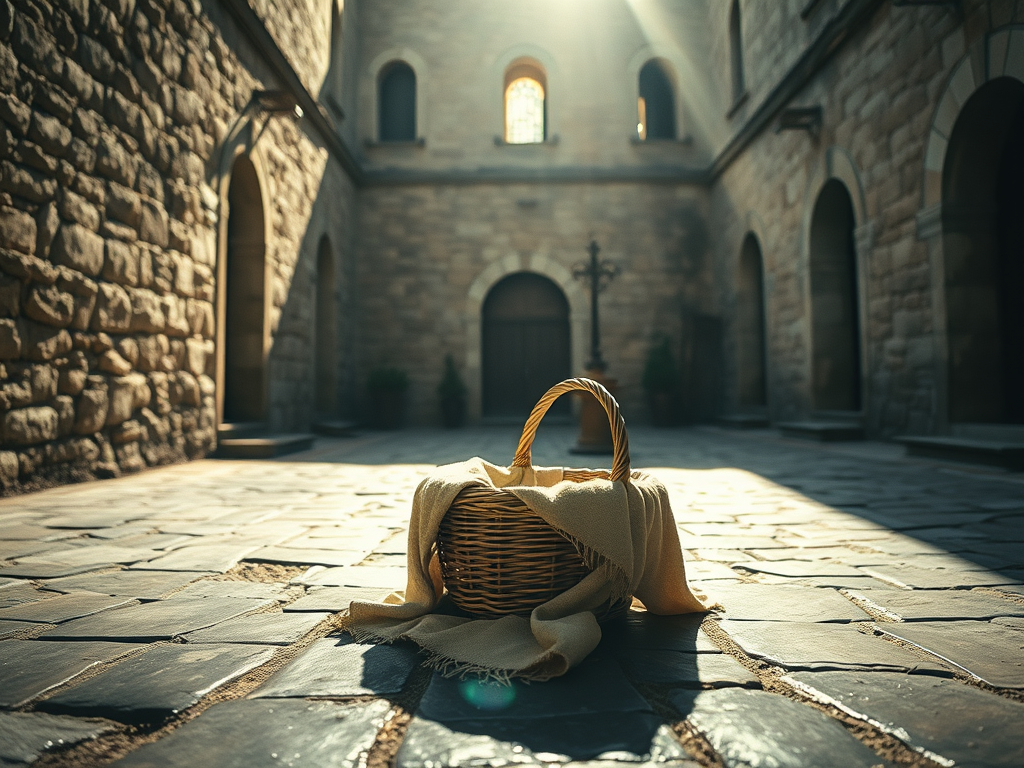
Heat clung to the air, a suffocating mantle of humidity that pressed down upon the monastery walls. The stone, cold and resolute in winter, seemed to weep in the oppressive warmth, beads of moisture trickling down its ancient surface like the sweat of some great, troubled beast. Somewhere in the courtyard, birds sang, their carefree notes dancing against the unease that permeated the earth, a mocking celebration of life amidst what felt like the stirring of something wrong.

At the door, a wicker basket sat, alone in the glaring sun, a foul-smelling blanket draped over its edges. The abbot stood before it, hands trembling, unable to reconcile the weight of what lay hidden beneath the coarse weave. The note—crumpled, ink smeared by an unsteady hand—spoke of failure and dread.

“Evil exists
Untimely wrenched
Unholy mark
I fail in faith
You must not”

His throat tightened. The words clawed at him with the desperation of someone who had glimpsed something far beyond human understanding. But there were no instructions, no guidance, only the certainty of horror. Slowly, almost unwillingly, the abbot bent down and touched the blanket. His hands shook as he peeled back the layers, each fold heavy with dread, each moment stretching into a timeless horror.

And then, there it was. Tiny. Innocent, wrapped in the fragile guise of a newborn. Yet nothing felt innocent here.

The mark—impossibly intricate, disturbingly alive—glowed faintly on the infant’s palm. It throbbed with a dark pulse, a sickening rhythm out of sync with the world around it. He had never seen such a thing before, but something in the deepest recesses of his mind whispered that it was old, far older than this monastery, older than humankind.

The baby lay motionless, unnaturally still, its breaths shallow, its form too quiet, too delicate for the vast, unknowable malice that seemed to coil beneath its skin.

His hand hovered above the child, caught between fear and a twisted compulsion. He knew this was no ordinary infant—no mere child of sin or sorrow. Something monstrous, something grotesque in its scale, slumbered here, waiting.

The baby’s fingers twitched.

A small, simple motion, almost too minute to notice. Yet it drew his gaze, ensnaring him in its quiet malevolence. The abbot’s breath caught in his throat.

Tiny digits danced, curling and uncurling as though grasping at invisible strings.

Twitch. Twitch.
Fingers in cadence.
An unseen puppeteer.
A silent mockery.

The baby’s eyes snapped open, black as the void. They weren’t eyes—they were holes, abysses that sucked the light from the room, leaving only an emptiness, a gnawing hunger that peered into him and beyond him, into places he did not know existed. He staggered back, his mind reeling, trying to comprehend the sheer vastness of what he was staring into.

His mouth opened in a silent scream. A cold sweat slicked his body, and the world around him seemed to warp and stretch, bending to the will of the creature that gazed out from behind that infant’s face.

Faith faltered.
Truth unraveled.
All he had ever known lay bare,
Stripped of its illusions.

Somehow, he forced his trembling hand to the vial of holy water hanging at his side. His fingers closed around it with the same desperation of a man holding onto the last thread of sanity. But as he moved to douse the child in its purifying touch, the baby’s mouth opened—a soundless cry, a void that swallowed everything. The world itself seemed to collapse inward.

He was falling.

Darkness surrounded him, a torrent of nightmares spilling into his mind. He was no longer in the monastery; he was nowhere. All around him, there were voices—whispers in languages he could not comprehend, hissing promises of suffering, of truths that would tear at the seams of the universe itself.

Beyond the veil
Truth awaits
But at what cost?

The darkness spiraled deeper, infinite, maddening. He tried to hold onto something, anything—his faith, his training, the name of his God—but the whispers drowned them all. Everything he had ever known seemed absurd, feeble, in the face of this terrible, cosmic truth.

He landed hard, back in the monastery, but the air was different now—thicker, saturated with an unseen malice. The wicker basket remained before him, but it was no longer just an innocent object. It radiated a terrible power, the baby inside a grotesque contradiction, too human and too inhuman all at once.

A lingering dread hung in the air, like smoke that could not be dispelled. The mark on the baby’s hand glowed once more, faint but relentless, and for the first time, he noticed something chillingly familiar.

His own hand, where it had grazed the infant, now bore the same mark, its lines burning themselves into his flesh, pulsing with the same unholy light.

The child stirred, its inky eyes half-lidded but watchful, as if it were no longer just the helpless thing in the basket but something far more ancient, far more deliberate. The abbot recoiled.

There was no redemption. No exorcism. No prayer that could unravel this evil.

The mark was spreading. It crawled over his skin, twisting up his arm, searing into his bones. He could feel it now—its influence burrowing into his mind, into his soul, and with it, the gnawing certainty that he had become something else.

The wicker basket.
The cursed child.
The abbot.
A vessel, now shared.

In the silence that followed, there was no salvation. Only the quiet certainty of what had begun. The tiniest evil, but not confined. Never confined.

And it would grow.

Sisters in Adversity: A Symphony of Liberation

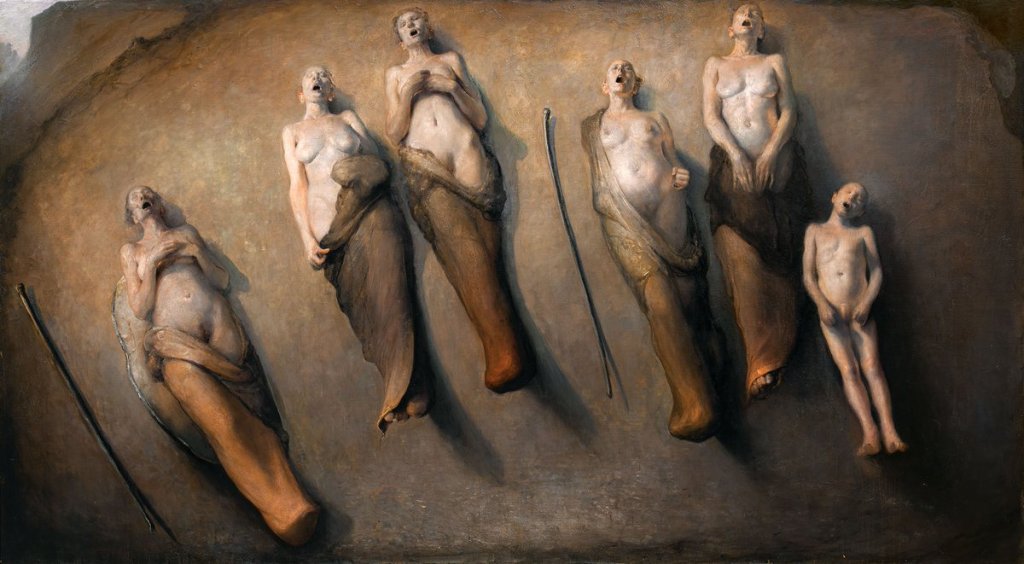
Disparate lives, woven together by the cruel threads of fate. Strangers, yet kindred spirits, united in their suffering, their resilience, their indomitable will to survive.

Persecution's chains
Binding them tight
In a sisterhood
Forged in the fires of plight


Each woman, a unique melody, her story a haunting refrain. Verses of pain, of loss, of shattered dreams and broken promises. A dissonant chorus of oppression's unyielding grip.

Objectification's discordant tune
Echoing through their days
Reducing vibrant souls
To mere puppets in men's plays


But in the depths of their shared despair, a glimmer of hope, a whisper of defiance. A realization that even in the darkest of nights, a single spark can ignite the flames of change.

Solidarity's embers
Glowing beneath the ash
Awaiting the breath
Of unity's passion to stoke the flash


And so, they began to explore, to delve deep within themselves, seeking the keys to their own liberation. Each woman, a lock waiting to be opened, a potential waiting to be unleashed.

Introspection's journey
A quest for inner truth
Unearthing the strength
Long buried beneath abuse's uncouth


One by one, they discovered their unique gifts, their hidden melodies. Notes of resilience, chords of courage, harmonies of hope. A symphony waiting to be sung.

Empowerment's aria
Rising from the depths
As each woman finds
Her voice, her breath


Together, they raised their voices, a choir of change, a song of liberation. Their melodies intertwined, weaving a tapestry of strength, of unity, of unbreakable bonds.

Harmonizing their pain
Into a battle cry
A declaration of freedom
Soaring to the sky

And with each note, each verse, each chorus, they felt the chains of their oppression begin to crack, to crumble, to disintegrate under the power of their shared song.

The tyranny of evil men
Powerless against their might
As they sing into existence
A future, radiant and bright


In their music, they found their freedom, their identity, their purpose. No longer objects, no longer prisoners, but queens of their own destinies, architects of their own lives.

Liberation's symphony
A masterpiece, complete
As they step into the world
Victorious, their triumph sweet


And though the echoes of their past may linger, like ghostly refrains in the night, they know that together, they can face any challenge, overcome any obstacle. For they are sisters, bound by the unbreakable ties of shared struggle and shared triumph.

A sisterhood, eternal
Forged in adversity's fire
Their song of change
An everlasting, empowering choir.

Reality Never Did Run Smooth – Brand New Sci-Fi Novel by Yours Truly

In a world where everything seems perfect, Jeffrey discovers that his idyllic existence is nothing more than a meticulously crafted illusion. When two otherworldly beings, Saša and Višnja, reveal the truth behind the simulation, he’s forced to confront the harsh reality of a post-invasion Earth, now left in desolation and despair.

As the last hope for humanity, Jeffrey must make a heart-wrenching decision: remain in the solace of the virtual world, free from the hardships and destruction of his former life, or return to the shattered remnants of Earth, knowing that the survival of the human race hangs in the balance. The choice isn’t as simple as it seems; each option comes with its own set of ethical dilemmas and profound consequences.

In “Reality Never Did Run Smooth,” author Rhyan Scorpio-Rhys masterfully explores the depths of human emotion, the resilience of the human spirit, and the complexities of the choices we make. Through Jeffrey’s journey, readers will be challenged to examine their own beliefs about love, loss, and the true meaning of existence.

Join Jeffrey as he navigates the blurred lines between reality and illusion, grappling with the responsibility that comes with being humanity’s last hope. This thought-provoking, emotionally-charged science fiction novel will leave readers questioning the very nature of reality and the ultimate cost of happiness.

Embark on an unforgettable journey through the ruins of a post-invasion world, where the fate of humanity rests on one man’s shoulders. “Reality Never Did Run Smooth” is a must-read for fans of thought-provoking science fiction and gripping tales of survival against all odds.

Available Here: https://amzn.to/3SZqQtQ