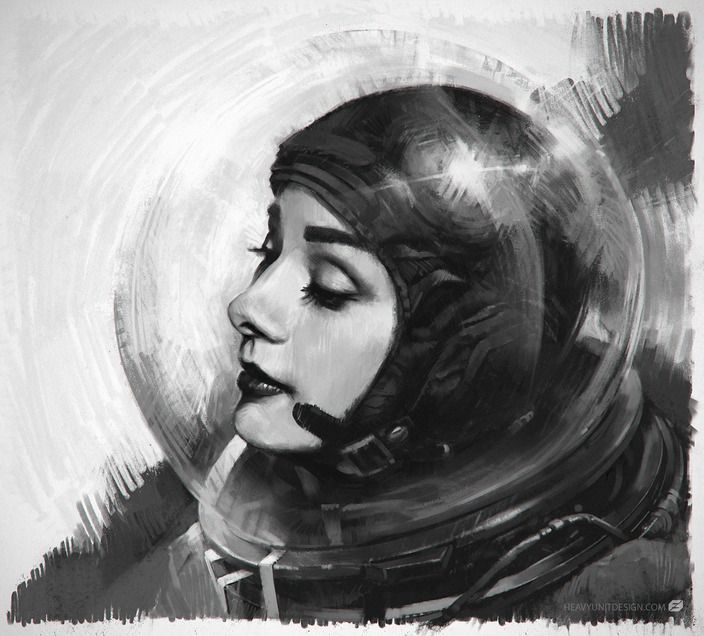
All The World Will Be Your Enemy 14: Uncharted Territory

Beverly drifted in and out of consciousness as the ambulance raced through the city streets, sirens blaring. The EMTs hovered over her, their faces obscured by masks and protective gear, their voices muffled and distant. She caught snippets of their conversation, words like “unknown pathogen” and “biosafety level 4” that sent chills down her spine.

When they arrived at the hospital, Beverly was immediately whisked away to a secure wing, far from the bustle of the main floors. She was placed in a sealed room, its walls lined with plastic sheeting and its air filled with the hum of negative pressure ventilation.

For hours, she lay there, barely aware of her surroundings, as a parade of doctors and specialists filed in and out. They took endless samples – blood, skin, saliva, even spinal fluid – and subjected her to a battery of tests and scans. All the while, they spoke in hushed, urgent tones, their expressions ranging from fascination to outright fear.

Beverly caught glimpses of herself in the reflections of their face shields, and each time, she had to stifle a scream. Her body was almost unrecognizable now, a twisted mass of writhing tentacles and mottled, pulsating flesh. The sight filled her with a horror so profound it bordered on madness.

As the days stretched into weeks, Beverly became a fixture of the hospital’s research wing. Teams of specialists from around the world were brought in to study her case, each one more baffled than the last. Geneticists sequenced her DNA, looking for mutations or anomalies that could explain her transformation. Dermatologists examined her skin, marveling at its strange texture and properties. Infectious disease experts tested her for every known pathogen, but found nothing.

Through it all, Beverly remained in a state of numb detachment, her mind retreating deeper and deeper into itself. She spoke little, ate only when prompted, and spent most of her time staring blankly at the ceiling, lost in a haze of drugs and despair.

The doctors tried everything they could think of to halt or reverse her condition. They pumped her full of antibiotics, antivirals, and experimental drugs. They subjected her to radiation and chemotherapy, hoping to kill off the aberrant cells that were taking over her body. But nothing seemed to make a difference.

As the weeks turned into months, the initial fervor surrounding Beverly’s case began to fade. The specialists drifted away, moving on to other projects and priorities. The hospital staff grew accustomed to her presence, no longer whispering or staring when they entered her room.

But for Beverly, the nightmare never ended. Each day brought new horrors, new reminders of the creature she had become. She watched in mute anguish as her body continued to change and warp, her humanity slipping away piece by piece.

And through it all, one thought haunted her, circling endlessly in her mind. What if this was only the beginning? What if her transformation was not an end, but a prelude to something even more terrifying and unknown?

In her darkest moments, Beverly found herself longing for death, for an end to the suffering and the fear. But even that seemed like a distant dream now, an escape that was forever beyond her reach.

For she knew, with a certainty that chilled her to the bone, that whatever she was becoming, it would not let her go so easily. She was being remade, forged in the crucible of her own flesh, for a purpose she could not yet comprehend.

And as the doctors and researchers continued to pore over her case, searching in vain for answers, Beverly could only lie there, a prisoner in her own body, and wait for the next phase of her transformation to begin.

Not. The. End.

All The World Will Be Your Enemy 13: The Deluge

Beverly awoke to a searing pain in her abdomen. She blinked, momentarily disoriented, before the events of the past few weeks came rushing back. The rings, the mottled skin, the fleshy growths around her waist…

Groaning, Beverly tried to sit up, only to collapse back onto the bed as a wave of dizziness washed over her. She looked down at her body and let out a choked sob at what she saw.

The growths on her waist had continued to lengthen, now resembling thick, ropy tentacles that coiled around her midsection. They pulsed and twitched with a life of their own, as if straining to break free from her skin.

But even more alarming was the state of her legs. They looked thin and atrophied, the muscles wasted away to almost nothing. As Beverly tried to stand, she found that they could no longer support her weight, buckling uselessly beneath her.

Panic rose in her throat as she clawed at the sheets, trying to pull herself upright. Her skin felt tight and itchy, flaking off in large, papery sheets as she moved. The sensation was maddening, an all-consuming discomfort that left her feeling raw and exposed.

Desperate for some kind of relief, Beverly began to crawl towards the bathroom, dragging her useless legs behind her. Each movement sent shockwaves of pain through her body, but she gritted her teeth and pushed on, driven by an instinctive need for water.

When she finally reached the bathtub, Beverly hauled herself over the edge with trembling arms. She fumbled with the faucet, her fingers clumsy and uncoordinated, until finally, blessedly, water began to flow.

As the tub filled, Beverly slumped against the cool porcelain, her eyes fluttering closed. The water rose around her, lapping at her skin like a balm, soothing the incessant itching and burning.

Time seemed to blur and stretch as Beverly drifted in and out of consciousness. The world narrowed to the sensation of the water, the gentle slosh of it against the sides of the tub, the way it buoyed her aching body.

She was only dimly aware of the sound of the water overflowing, spilling onto the bathroom floor in a steady stream. It mingled with the pounding in her head, the rush of blood in her ears, until all of it faded into a distant, meaningless hum.

Beverly had no idea how long she lay there, hovering on the edge of oblivion. But gradually, another sound began to penetrate the haze – a sharp, insistent knocking, coming from the direction of her front door.

She tried to call out, to respond in some way, but her tongue felt thick and heavy in her mouth, her words slurred and unintelligible. The knocking grew louder, more urgent, until finally, Beverly heard the unmistakable sound of a key turning in the lock.

Footsteps echoed through the apartment, accompanied by voices – unfamiliar at first, then shockingly, blessedly recognizable. Angele. Joanna. They were here. They had come for her.

But as the bathroom door swung open, as the concerned faces of the building management and her beloved friends came into view, Beverly felt a surge of shame and horror so intense it stole the breath from her lungs.

“Don’t look at me!” she screamed, her voice raw and ragged. “Don’t look at me!”

She cowered in the tub, trying to cover herself, to hide the grotesque changes that had ravaged her body. But it was too late. They had seen. They knew.

Beverly was only vaguely aware of the flurry of activity that followed – the gasps of shock, the hurried phone calls, the arrival of the EMTs. She slipped in and out of consciousness as they lifted her from the tub, her waterlogged tentacles trailing behind her like macabre streamers.

As she was strapped onto the gurney, Beverly’s gaze locked with Angele’s. In her friend’s eyes, she saw a swirl of emotions – fear, confusion, but also something else. Something that looked almost like…recognition. Understanding.

It was a fleeting impression, gone as quickly as it had come. But as Beverly was wheeled out of the apartment, as the world began to fade away once more, she clung to that look, to the faint glimmer of hope it represented.

Not. The. End.

All The World Will Be Your Enemy 12: Inconclusive Results and New Developments

Beverly sat in the doctor’s office, her heart pounding as she waited for the results of her medical tests. She had hoped that the battery of bloodwork, skin scrapings, and imaging would provide some answers, some explanation for the strange changes happening to her body.

But as Dr. Patel entered the room, her expression grave, Beverly felt her hopes sinking.

“I’m afraid the tests were inconclusive, Ms. Anderson,” Dr. Patel said, settling into the chair across from Beverly. “We couldn’t find any clear cause for your symptoms. No known allergies, no autoimmune markers, no signs of infection.”

Beverly’s hands clenched in her lap, the raised rings on her fingers feeling more prominent than ever. “So what does that mean? What’s happening to me?”

Dr. Patel sighed, her eyes sympathetic. “At this point, our best option is to do a skin biopsy. We’ll take a small sample of the affected tissue and examine it under a microscope. That should give us more information about what’s going on at a cellular level.”

Beverly nodded numbly, trying to process the news. A part of her had been hoping for a clear diagnosis, a name for the condition that was turning her body into a stranger. But another part of her feared what the biopsy might reveal, what new horrors might be lurking beneath her skin.

As she left the doctor’s office, Beverly couldn’t shake the sense of dread that clung to her like a second skin. And in the days that followed, her fears only grew as her physical symptoms continued to worsen.

The rings on her skin, once flat and discolored, now rose from her flesh like strange, fleshy ridges. They itched constantly, a maddening sensation that left Beverly clawing at her skin until it was raw and bleeding.

And then there was the mottling, the way her skin seemed to be changing color and texture before her very eyes. Patches of it took on a grayish, almost translucent hue, while other areas became rough and scaly, like the hide of some prehistoric creature.

But the most disturbing development came one morning when Beverly was getting dressed. As she pulled on her shirt, she felt a strange sensation around her waist, a tightness and pressure that made her gasp.

Looking down, Beverly’s eyes widened in horror at what she saw. Four small, fleshy nubs had sprouted from her skin, evenly spaced around her midsection. They were no more than an inch long, but they were unmistakably there, pulsing slightly with each beat of her heart.

Beverly’s mind reeled as she stared at the growths, trying to make sense of what she was seeing. Were they some kind of tumor? A side effect of whatever was causing her other symptoms?

She thought of the biopsy, of the tiny piece of herself that would soon be under a microscope, dissected and analyzed. Would it hold the answers she so desperately needed? Or would it only reveal new depths of strangeness, new levels of aberration?

Beverly closed her eyes, fighting back the panic that threatened to engulf her. She felt like she was losing herself, like her very identity was being erased and rewritten by the changes happening to her body.

And yet, even in the midst of her fear and confusion, Beverly couldn’t shake the sense that there was something else at work, some greater purpose or meaning behind her transformation. It was a feeling that had been growing steadily over the past weeks, a whisper in the back of her mind that spoke of destiny and transcendence.

She ran her fingers over the raised rings and fleshy nubs that now adorned her skin, and as much as the changes terrified her, as much as she longed for a return to normalcy, Beverly couldn’t deny the strange, electric thrill that ran through her at the thought of what she might be becoming. It was a feeling that both exhilarated and terrified her, a dance on the edge of the unknown.

Not. The. End.

All The World Will Be Your Enemy 11: Diagnosis/Isolation

Beverly sat on the examination table, her legs dangling over the edge, the crinkle of the paper gown sharp and grating in the sterile hush of the room. The overhead fluorescent lights buzzed faintly, their cold glow leaching warmth from her skin. Her fingers twisted together in her lap—pale, trembling, and marked.

The red rings stared back at her, angry and swollen, as if burned into her flesh. They weren’t smooth like rashes or welts. The edges were raised in tiny, curling ridges, irregular and almost… organic.

She traced one absently, shuddering at the wrongness of it. The texture was off—not rough, not soft, but something in between, something yielding yet firm. It didn’t feel like her. Not anymore.

Rubbery. Alien.

The door creaked open, and Beverly flinched, pulling the flimsy paper gown tighter around herself.

Dr. Patel stepped in, clipboard in hand, her crisp white coat a contrast to the warmth in her smile. She was a reassuring presence—calm, collected, the kind of person who had seen it all before.

“So, Ms. Anderson,” Dr. Patel said, scanning the chart. “Tell me what’s been going on.”

Beverly swallowed, her throat dry. Slowly, she turned her hands palm-up, revealing the grotesque red rings.

“They started about a week ago,” she said, voice barely above a whisper. “At first, just my hands and feet. But now…” She hesitated, then tugged up the hem of the gown, exposing her calves. The rings climbed her skin in irregular patterns, curling up her legs like invasive vines.

Dr. Patel frowned slightly, pulling on a pair of gloves. “May I?”

Beverly nodded, biting her lip as the doctor ran her fingertips over the raised edges of one of the rings.

The contact sent a ripple through her nerves—something between a shiver and a recoil. She twitched involuntarily, an unpleasant heat prickling under her skin.

“They itch, don’t they?” Dr. Patel asked, her voice calm but attentive.

Beverly let out a breath she hadn’t realized she was holding. “Yes, but it’s more than that. My skin… it feels wrong. Rough, like rubber or plastic. And sometimes I swear—” She cut herself off, shaking her head.

“Swear what?” Dr. Patel prompted.

Beverly hesitated. “It doesn’t feel attached. Like my body is…” She clenched her jaw. Saying it out loud felt ridiculous. “Like it’s turning into something else.”

Dr. Patel’s pen scratched against the chart. “You say this started suddenly? No previous conditions—eczema, allergies, autoimmune issues?”

“No,” Beverly said firmly. “Nothing. It just… started.”

The doctor leaned back, studying her thoughtfully. “It could be a few things—lichen planus, granuloma annulare, or even an unusual autoimmune response. We’ll run some tests.”

Tests. A slow, twisting dread coiled in Beverly’s stomach. She had wanted immediate answers, something solid. Not this.

“I’m prescribing a topical corticosteroid cream for now,” Dr. Patel continued. “It should help with the inflammation and itching. But Beverly…” Her gaze softened. “I know this must be frightening. We’ll figure it out, okay?”

Beverly nodded numbly. The words barely registered. A hollow reassurance, spoken through a thick pane of glass.


Back at her condo, Beverly stood in front of the bathroom mirror, staring at herself. She looked… wrong.

Her skin was pale, the rings stark against it like brands. Her once-lustrous hair hung limp around her face, and dark shadows rimmed her eyes. She barely recognized the woman in the glass.

With slow, careful movements, she uncapped the tube of cream and spread it over her arms and legs. The coolness was a brief relief—but the moment she stopped, the itching returned worse. It crawled beneath her skin, relentless, like something alive.

Her fingers twitched. She clenched them into fists. It was getting worse.

Her phone buzzed on the counter. She didn’t need to look to know it was Angele or Joanna. They had been calling, texting, reaching out all week. But Beverly had ignored every attempt. How could she face them now, after what she had done?

She sank onto the couch, pulling a blanket around herself like armor. The room was dark except for the flickering glow of the TV, its muted images blending into meaningless shapes. Finally, in desperation, she called her mother.

“Beverly, honey? What’s wrong?” Her mother’s voice was warm, familiar—a lifeline.

Beverly clutched the phone tighter. “Mom… is there anything in our family medical history I should know about? Allergies, diseases, anything strange?”

A pause. “Not that I can think of. Why? Are you feeling sick?”

“No,” Beverly lied. “Just a work thing. A medical questionnaire.”

Her mother hummed thoughtfully. “Well, your great-aunt Mildred had rheumatoid arthritis. And one of your cousins is gluten-intolerant. But nothing unusual.”

Nothing that explained this.

“Mom,” she asked hesitantly, “was I… normal? When I was little?”

Her mother laughed softly. “Of course you were, sweetheart. You were a bright, happy little girl. Why would you ask that?”

Beverly opened her mouth, then closed it again. How could she explain the storm inside her? The fear, the shame, the certainty that something was deeply, irreversibly wrong?

“I don’t know,” she mumbled. “I guess I’m just feeling lost.”

Her mother’s tone softened. “Oh, honey. Everyone feels that way sometimes. But you’re my beautiful, perfect daughter. No matter what, I will always love you.”

Tears welled in Beverly’s eyes, spilling down her cheeks. “Thanks, Mom. I love you too.”

After the call, she curled up on the couch, hugging a pillow to her chest. The longing for comfort, for connection, was unbearable. She thought of Angele and Joanna, of their warmth and laughter, and the ache in her chest deepened. She had ruined everything. And it was getting worse.

She tried to sleep, but at some point, she woke with a start. The room was silent except for her own breathing. Something felt off.

She shifted beneath the blanket—and froze. Her arms… felt different. Slowly, she lifted her hand to the dim light of the TV. Her fingers looked longer. More flexible. The joints—had they moved?

She turned her hand over. Her skin shone faintly in the low light. Smooth. Slick. Like something that belonged in water.

A chill ran through her.

Beverly curled her fingers into a fist, pressing them against her chest as if trying to hold herself together.

She didn’t know what was happening to her. But she knew one thing for certain. This wasn’t going to stop.

It was only the beginning.

Not. The. End.

All The World Will Be Your Enemy 10: Actions and Reactions

Beverly found herself adrift in the cozy ambiance of Angele and Joanna’s living room, a realm where laughter danced freely through the air and the warmth of companionship seemed to permeate every corner. The space, illuminated by the soft, golden glow of string lights artfully arranged by Joanna, felt like a haven from the storm of her own emotions. Lavender-scented candles flickered gently on the coffee table, their light casting playful shadows on the walls and infusing the air with a calming, fragrant haze.

Angele and Joanna moved through the space with effortless grace, their laughter a melody that harmonized with the clink of dishes and the rustle of conversation. But for Beverly, every sound seemed muffled, every moment surreal, as though she were a spectator in her own life. Beneath the veneer of idyllic gathering, she wrestled with a tumult of unsaid words, her meticulously rehearsed confessions dissolving into the ether.

Angele, with an empathy as intuitive as her smile was gentle, approached Beverly and sat beside her on the couch. Her presence was a balm, her luminous green eyes searching Beverly’s face with quiet concern. “Is everything okay, Bev? You seem a little… distant tonight.” Her voice, soft and soothing, carried the weight of genuine care.

In those verdant depths, Beverly saw her fears reflected back at her but also an unwavering kindness that beckoned her to abandon the safety of silence. Her mouth opened, a string of words tumbling forward in her mind, but none made it past her lips. Instead, compelled by a force greater than fear, she leaned into the space between them, her lips finding Angele’s in a kiss that was both a question and an answer.

The world narrowed to the warmth of Angele’s lips, the faint taste of wine mingling with the softness of her skin. Beverly’s heart thundered, and for a brief, suspended moment, it felt as though everything had fallen into place. But reality, with its cruel penchant for timing, intruded abruptly. Angele withdrew, her expression a canvas of shock and confusion, her hands hovering near Beverly’s shoulders as if unsure whether to push away or pull closer.

“I… I’m so sorry,” Beverly faltered, retreating into the shell of her anxieties. Her voice cracked under the weight of regret. “I shouldn’t have… I don’t know what I was thinking.”

Joanna, who had been setting down a tray of drinks, froze mid-step. Her dark eyes darted between the two women, her face a mixture of surprise and concern. “Beverly, wait—”

But Beverly was already retreating, propelled by a maelstrom of embarrassment and self-reproach. The sound of Angele calling after her rang in her ears, but it only spurred her legs to move faster. She stumbled out of the condo, her vision blurring with unshed tears.

By the time Beverly reached her own place, her breath was coming in ragged gasps. She slammed the door behind her and leaned against it, her trembling hands pressed to the cool wood. Her heart was a wild drumbeat, her mind a cacophony of conflicting thoughts.

What had she done? Had she just ruined everything, destroyed the most meaningful friendship she’d ever had, all because she couldn’t control her own emotions?

Sliding down the door to the floor, Beverly buried her face in her hands. She felt like she was coming apart at the seams, her carefully constructed life unraveling before her eyes.

She kissed a woman. For the first time in her life, she had crossed that invisible line, acted on feelings she had been trying so hard to ignore. And now, in the aftermath, Beverly felt like her entire world had been turned upside down.

It was one thing to fantasize about Angele and Joanna, to imagine what it might be like to hold them, touch them, to be with them in a way that went beyond friendship. But actually doing it—feeling the warmth of Angele’s breath, the way her lips trembled against Beverly’s—was something else entirely. It was electric, exhilarating… and terrifying.

Beverly considered herself straight. She had dated men, loved a few of them. The idea of being attracted to a woman, of wanting to kiss and touch and be with another female, had never even crossed her mind. Until Angele. Until Joanna. Until now.

And now, with a single impulsive action, Beverly had shattered the illusion of her own certainty and crossed a line she could never uncross. She felt like a stranger in her own skin, like everything she had ever known about herself was suddenly called into question.

But even worse than the confusion and self-doubt was the crushing weight of rejection. The look on Angele’s face—shock, confusion, and something unreadable—was seared into Beverly’s mind, a painful reminder of her own foolishness.

How could she have been so reckless? So stupid? How could she have risked everything—thrown away the most important friendship of her life—for a fleeting impulse?

Beverly’s chest heaved with silent sobs, her tears hot and relentless. As she curled into herself, a prickling sensation began to creep across her skin, starting in the soles of her feet and the palms of her hands. It was faint at first, like the brush of tiny needles, but it quickly grew into a persistent itch.

Frowning, Beverly held up her hands, squinting at them in the dim light of the living room. At first, they looked normal. But as she turned them over, her breath caught. Faint, red rings were forming on her palms, thin and perfectly circular. The skin beneath them tingled with an unnatural warmth.

A chill ran down her spine. Were they hives? Some kind of allergic reaction to the stress? Or something worse?

Her mind raced with possibilities, each more terrifying than the last. Ringworm, eczema, a rare autoimmune disorder… The red rings seemed to mock her, a physical manifestation of the chaos within. As her tears subsided, her focus sharpened on the patterns spreading across her skin. She couldn’t shake the sensation that this was more than a coincidence.

Her breath hitched as the faint red lines began to pulse, the rhythm matching the frantic beat of her heart.

Beverly hugged her knees to her chest, rocking back and forth. She had never felt so alone, so lost in the sea of her own making. She knew she should call someone, but the thought of explaining what had happened was too much to bear. For now, all she could do was sit in the darkness, nursing her broken heart and shattered illusions, and pray that somehow, someday, she would find a way to put the pieces back together.

Even if she knew, deep down, that nothing would ever be the same again.

Not. The. End.

All The World Will Be Your Enemy 9: Missed Connections

In the subsequent days after her heartfelt revelation to Samantha, Beverly found herself ensnared in a tempest of anticipation and trepidation. It was as if she were a stringed instrument, each nerve within her tightened to a pitch, resonating with the slightest touch. She understood the path that lay before her, a route carved out by her burgeoning feelings, yet each attempt to traverse it saw her courage scattering like leaves in the wind.

Inviting Angele and Joanna to dinner had been a decision born of determination. As she maneuvered around her kitchen, the simmering sauce before her a mirror to the bubbling anxiety within, Beverly rehearsed the confession locked within her heart. Yet, the closer the moment of revelation drew, the more entangled her thoughts became, a knotted mess from which no clear thread could be drawn.

Angele and Joanna’s arrival, cloaked in their effortless grace, seemed to dissolve Beverly’s resolve into wisps of smoke. Their laughter, a melody that had become the sweetest refrain in Beverly’s life, filled the spaces of her home, leaving little room for the weight of her confession.

“I… I actually wanted to talk to you both about something,” Beverly ventured, her voice a fragile whisper against the clink of wine glasses and the warmth of shared smiles. Her heart was a wild creature within her chest, pounding against the confines of her ribcage with a desperate intensity.

The exchange of looks between Angele and Joanna, a silent communication laced with curiosity and support, was a balm to Beverly’s frayed edges.

“Of course, Bev,” Joanna’s voice was a soft encouragement, a beacon in the tumultuous seas of Beverly’s emotions. “You know you can tell us anything.”

Yet, as Beverly teetered on the precipice of her confession, a knock at the door shattered the moment, a rude intrusion that sent her heart skittering into the recesses of her throat.

“Beverly, dear, I’m so sorry to bother you, but I just had a new stove installed, and I have no idea how to work it, and now I smell gas. Could you come take a look?” Mrs. Goldstein, her neighbor, stood as a harbinger of interruption, her plea for assistance pulling Beverly away from the sanctuary of her imminent confession.

Beverly glanced back at the table, where Angele and Joanna were watching with concerned expressions. “I… of course, Mrs. Goldstein. Just give me one moment.”

She hurried back to the table, an apology already forming on her lips. “I’m so sorry, I need to go help Mrs. Goldstein with something. I’ll be right back, I promise.”

Angele and Joanna nodded understandingly, but Beverly could see the curiosity still lingering in their eyes. She cursed herself for not speaking up sooner, for letting the moment slip away.

The shift in atmosphere upon Beverly’s return was palpable, the thread of intimacy frayed by the interruption. Angele’s laughter and Joanna’s vibrant storytelling filled the air, a reminder of the missed opportunity that hung heavy around Beverly.

The remainder of the evening unfolded like a play in which Beverly was a spectator rather than a participant. Each attempt to steer the conversation back to the shores of her confession was thwarted by the ebb and flow of dialogue, leaving her stranded in the silence of her unspoken words.

As Angele and Joanna departed, their warm embraces were a reminder of the confession that remained caged within Beverly’s heart. “I’ll call you tomorrow,” she promised, a vow to herself as much as to them. “There’s… there’s something I really need to talk to you about.”

The enigmatic exchange of glances between them offered no solace to Beverly’s tumultuous heart. Closing the door behind them, she was left to confront the reflections of her hesitation, a silent echo of the words that had gone unsaid.

In the solitude of her home, Beverly faced the reality of her situation. Tomorrow, she told herself. Tomorrow, there would be no interruptions, no excuses, no holding back.

Not. The. End.

All The World Will Be Your Enemy 8: Unwritten Lines

Beverly sat amidst the soft symphony of the bustling coffee shop, the world around her a blur of murmured conversations, hissing steam from the espresso machine, and the occasional clink of ceramic mugs. The warm aroma of roasted coffee beans enveloped her, but it did little to calm the storm within. Samantha Sturtz, her publisher and confidant, sat across the small wooden table, a beacon of expectation and curiosity.

Beverly’s fingers danced nervously around her ceramic cup, tracing the edge as though it might reveal some hidden answer. Months had passed since she had last added to the manuscript, and the weight of that silence loomed between them, an unspoken tension carried in the air.

“So,” Samantha began, cutting through the ambient noise with her crisp yet warm voice. Her piercing eyes sparkled with a mix of curiosity and amusement, as though she were savoring a delicious secret. “I read the chapters you sent me last night.” She leaned forward, elbows on the table, her gaze unwavering. “Beverly, this is incredible stuff. The depth of emotion, the vivid imagery… it’s like nothing I’ve seen from you before. What’s your secret?”

Beverly’s cheeks flushed with a heat that spread like wildfire. She ducked her head, trying to disguise her embarrassment in the steam rising from her coffee. Her muses—Angele and Joanna—swirled at the edges of her thoughts. Their laughter, their kindness, the way they made her feel alive again… it was all tangled up in the pages Samantha had praised. But saying it out loud? That felt impossible.

“I… I guess I’ve just been feeling really inspired lately,” she murmured, her voice trembling like the leaf of a sapling in a storm. She toyed with the hem of her sleeve, her gaze flickering to the swirling latte art in her cup. “I’ve been spending a lot of time with my new neighbors, Angele and Joanna. They’ve really helped me break through my writer’s block.”

Samantha’s eyebrow arched slightly, her expression curious but kind. “Angele and Joanna, huh? The way you write about the connection between these characters… it’s so intimate, so charged. If I didn’t know better, I’d say you had feelings for them.”

Beverly’s heart skipped a beat, her pulse drumming in her ears. She tried to laugh, but it came out thin, almost brittle. “That’s… that’s not…” Her words faltered, crumbling under the weight of the truth she had buried.

Samantha’s hand reached across the table, warm and steady, anchoring Beverly in the moment. Her voice softened, coaxing rather than pressing. “Hey, it’s okay. I didn’t mean to put you on the spot. But as your friend, not just your publisher, I want you to know there’s no judgment here. The heart wants what it wants, you know?”

Beverly felt her defenses crumbling, the walls she’d carefully constructed beginning to yield. Tears welled in her eyes, unbidden but unstoppable, and her voice cracked under their weight. “I… I think I’m falling for them, Sam. Both of them. But I’m scared. I’ve never felt this way about women before, and I don’t know if they feel the same way. What if I’m wrong? What if I ruin everything?”

Samantha’s gaze was steady, her tone firm but compassionate. “From what you’ve told me about Angele and Joanna, it sounds like they care about you a great deal. And the way you write about them… it’s clear that your connection is something special. I can’t tell you what to do, but I think you owe it to yourself to be honest about your feelings. Even if it’s scary, even if it’s unfamiliar. You deserve to be happy, Beverly.”

Beverly let out a shaky exhale, Samantha’s words like a hand pulling her from the depths. She nodded, the beginnings of a fragile smile tugging at her lips. “Thanks, Sam. I… I’ll think about it.”

As Beverly left the coffee shop, the cool evening air kissed her cheeks, grounding her in the present. Her thoughts churned, a blend of fear and tentative hope swirling like autumn leaves in the wind.

Not. The. End.

The Smoldering Ember

Millie Poole trudged home from her second-shift cashier job, the soles of her discount sneakers slapping against wet pavement. The fluorescent lights of the 24-hour diner across the street buzzed faintly in the misty air. She paused for a moment, staring at the sign—a plate of pancakes frozen mid-flip—and imagined herself walking in, sitting at the counter, and ordering a coffee she couldn’t afford. But instead, she turned toward her apartment building, where every bulb in the hallway flickered like a dying firefly.

Inside her tiny studio, Millie kicked off her shoes and sank onto the couch that doubled as her bed. Another day down. Another paycheck already spent. She had once dreamed of doing more, of being more, but life had ground those ambitions into dust years ago.

The heat started that night.

At first, it was subtle—a faint warmth blooming in her chest, like the embers of a campfire stirring under ashes. She pressed her hand to her sternum, expecting to find some physical sign, but her skin was cool to the touch. It wasn’t pain, exactly, but it was persistent, radiating outward in rhythmic pulses.

By the third day, it became impossible to ignore.

“Stress,” the urgent care doctor said, barely looking up from her clipboard. “Take some time off work. Maybe try yoga.”

Millie almost laughed. Time off meant unpaid bills, and yoga was for people who didn’t count every dollar at the grocery store. She left the clinic with a pamphlet about mindfulness and a gnawing sense that something deeper was wrong.


Weeks passed, and the heat grew unbearable. Her skin flushed red at odd moments, her breath carried the faint smell of smoke, and her clothes clung to her like they’d been left too close to a radiator. Millie called off work more often, claiming flu symptoms to avoid questions. She stayed inside, curtains drawn, watching the lines of sunlight stretch and shrink across her floor.

Her neighbor, Carmen, knocked one evening.

“Millie, I smelled burning. You okay in there?”

“Fine,” Millie called back, her voice hoarse. “Just burned toast.”

But there was no toast. Only her.

One sleepless night, she searched online for anything that might explain her condition. Among the usual hypochondriac fodder and conspiracy theories, she found something that chilled her to the bone.

“The Ember Phenomenon,” the blog post was titled. Written by a self-proclaimed “afterlife specialist,” it described cases eerily similar to hers: people experiencing unexplainable heat, smoke-scented breath, and eventual combustion. The author claimed it was a sign of impending death—not as a victim, but as a catalyst. A living spark meant to ignite something greater.

Millie slammed her laptop shut. It was ridiculous, like something out of a horror movie.

Yet when she lifted her hand to her chest, she felt the ember pulse beneath her palm, hotter than ever.


She wasn’t alone.

The afterlife specialist had left a contact email, and in desperation, Millie reached out. A week later, she met Dr. Albright in a coffee shop. He was a wiry man with sunken eyes, a constant tremor in his hands, and a briefcase that looked older than she was.

“I’ve only seen this a handful of times,” Albright said, sliding a folder across the table. “But every case ended the same way.”

Millie flipped through the photographs—charred remains, blackened silhouettes where people had stood moments before. Her stomach churned.

“Why me?” she whispered.

Albright leaned forward, his expression grim. “You’ve been chosen. The ember is… a tool. A weapon. But whether you use it—or let it consume you—is up to you.”

The words clung to her like smoke.


In the weeks that followed, Millie began noticing things she hadn’t before. The way Carmen shielded her kids from their father’s temper. The old man on the corner who begged for spare change, his eyes sunken with hunger. The teenage girl in the apartment above her who came home every night with fresh bruises she tried to hide.

The ember burned hotter whenever she saw them, as if urging her to act.

One night, she couldn’t ignore it any longer. The screams from upstairs tore through the thin walls, and before she realized what she was doing, Millie was at the door, pounding with her fist.

When the man answered, his face twisted in anger, the ember flared. For the first time, Millie felt its power ripple through her veins, filling her lungs with fire. The man stepped back, his anger replaced with fear as smoke rose from her skin, her eyes glowing like coals.

“Leave,” she said, her voice crackling with heat. “Now.”

He ran.


The ember’s demands grew insatiable. Millie became a quiet force in her neighborhood, stepping in where others wouldn’t. But with every act of intervention, the fire inside her consumed more of her. Her reflection in the mirror became gaunt, her hair singed at the tips, her skin ashen.

One night, Albright called.

“It’s time,” he said.

Millie stood on the rooftop of her apartment building, the city sprawling below her like a patchwork quilt. She could feel it now—the ember wasn’t just inside her. It was her. A living flame, destined to burn away the rot of the world.

As the first tendrils of fire licked at her skin, she smiled. For the first time in her life, she felt alive.


When the firestorm came, it didn’t just take Millie. It spread, igniting change across the city. Her neighbors spoke of her as a hero, a savior who burned herself to save others.

And somewhere, in the ashes of her old life, the ember smoldered still—waiting for the next soul to carry its flame.

All The World Will Be Your Enemy 7: Stargazing

Beverly stared at her phone, the faint glow illuminating her face as the last rays of sunlight filtered through her window. Joanna’s message danced on the screen, simple but brimming with invitation:

“Hey Bev, Angele and I are going stargazing tonight at the park. We’d love for you to join us if you’re free. Bring a blanket and some snacks to share!”

Her chest tightened with an odd mix of joy and trepidation. The thought of spending the evening with Angele and Joanna beneath the vast night sky thrilled her in a way she hadn’t anticipated. Yet the pull she felt toward them—a magnetic, unspoken connection—was tinged with uncertainty. Was this an innocent gathering among neighbors, or did the undercurrents she felt coursing between them hint at something more?

Pushing aside her doubts, she tapped out a reply, her fingers moving faster than her second-guessing thoughts. “Sounds great! I’ll bring some cookies. See you at 8!”

By the time she arrived at the park, the sky had transformed into a watercolor masterpiece, streaked with fiery oranges melting into soft indigos. She spotted Angele and Joanna on a grassy knoll, silhouetted by the waning light. They were a tableau of effortless connection—Angele reclining on an oversized blanket, her auburn hair catching the last blush of sunset, while Joanna rummaged through a picnic basket, her laughter carrying on the cool evening breeze.

“Perfect timing!” Angele’s voice rang out, warm and inviting. She gestured for Beverly to join them.

Joanna looked up and smiled, offering a wine glass filled with ruby-red liquid. “Glad you could make it. I hope you’re ready for the best stargazing spot in the city.”

“Absolutely,” Beverly replied, her voice soft but eager. She spread her blanket beside theirs and settled in, the cool grass beneath her a grounding contrast to the electricity thrumming in her veins.

As twilight gave way to darkness, the first stars emerged, faint at first but soon multiplying in breathtaking clusters. Beverly tilted her head back, her eyes tracing the constellations. The world seemed to shrink, leaving only the three of them and the infinite sky.

“It’s beautiful, isn’t it?” Joanna’s voice broke the silence, her tone reverent. She lay stretched out beside Beverly, her head resting on her palm. “Every time I look up at the stars, I’m reminded how small we are. It’s humbling, in the best way.”

Beverly nodded, her gaze fixed on the heavens. “It’s strange. Looking up, I feel both insignificant and… connected. Like I’m part of something vast and unknowable.”

Angele, who had been lying back with her hands behind her head, turned to them with a grin. “That’s the magic of it, isn’t it? The stars hold so many stories—some we know, and some we’ll never understand. That mystery… it’s what inspires my art.”

“What do you mean?” Beverly asked, curious.

Angele propped herself up on one elbow, her green eyes catching the faint starlight. “When I paint, I think about the universe—how chaotic and unpredictable it is. I try to capture a fraction of that energy on canvas. It’s messy, but it feels real.”

Joanna chuckled. “Her studio looks like a supernova exploded in it. Paint everywhere.”

“Art’s not meant to be tidy,” Angele quipped, nudging Joanna playfully.

The banter between them was easy and unforced, but Beverly couldn’t ignore the way their touches lingered, the unspoken language that passed between them. She felt both like an intruder and an honored guest, caught in the gravitational pull of their world.

As the night deepened, their conversation turned to dreams and fears. Joanna spoke of her travels, weaving vivid tales of mountain peaks kissed by clouds and bustling markets steeped in spice-scented air. Angele shared her hopes for her next gallery show, her voice tinged with both excitement and vulnerability.

When the conversation circled to Beverly, she hesitated, her words faltering like a flickering flame. “I… I’ve always dreamed of writing something that matters. Something people connect with. But sometimes, it feels like I’m just shouting into the void.”

Angele placed a hand on Beverly’s knee, her touch grounding. “Your voice matters, Beverly. Never doubt that.”

Joanna’s smile was soft but certain. “And shouting into the void? That’s how stars are born.”

The warmth of their presence enveloped Beverly, a balm to the raw edges of her self-doubt. She lay back, her head resting against Angele’s shoulder, while Joanna’s fingers absentmindedly traced patterns on her arm. Together, they watched as a meteor streaked across the sky, its brief brilliance a testament to fleeting beauty.

Beverly exhaled slowly and allowed herself to simply be—to exist in the moment, unburdened by the weight of her questions.

As the night stretched on, the stars seemed to whisper promises of wonder and possibility. And Beverly dared to believe them.

Not. The. End.

Polly’s Cosmic Burden

Polly Blethyn stood on her doorstep, the weight of infinite worlds pressing down on her. The silence of the suburban cul-de-sac felt deafening after years among the stars. Her husband, Bob, opened the door, his face a mixture of relief and disbelief.

“You’re home,” he whispered.

“I’m home,” she replied, her voice a fragile thread, threatening to unravel.

Bob embraced her, and she let herself sink into his arms. For the first time since her return, she felt tethered. But even as his warmth seeped into her, Polly couldn’t shake the cold certainty that her homecoming would end in ruin.

The house was the same, but Polly was not. She moved through the rooms like a ghost, haunted by the knowledge she carried. Bob cooked dinner, asking questions about her mission, her years away. She deflected with half-truths, the answers caught in her throat like thorns.

At bedtime, she lay beside him, staring at the ceiling. He turned to her, his hand resting on her arm.

“You’re not really back, are you?” he asked.

Polly hesitated. “There’s something I need to tell you. But once I do, you can’t unhear it.”

Bob studied her. “Pol, whatever it is, I can take it. We don’t keep secrets, remember?”

Her chest tightened at the words. She almost told him then—but fear stopped her. Instead, she kissed him, desperate to lose herself in their shared warmth, knowing it couldn’t last.

The next day, Polly sat in the backyard, staring at the sky. The secret clawed at her, demanding release. Bob joined her, two steaming mugs of coffee in hand.

“You’re carrying something,” he said. “Something big. Let me help.”

She looked at him, her heart breaking. “It’s not that simple. Knowing it will change everything.”

“Change doesn’t scare me. Losing you does.”

His words cut through her defenses. Polly drew a shaky breath. “The universe… it isn’t what we think it is. Everything—life, existence—hinges on delicate threads. When I was out there, I learned the truth. I saw how it all works, how fragile it is.”

Bob leaned in, his brow furrowed. “Fragile how?”

Polly hesitated, then spoke the words that had burned in her mind since her return. As she explained, Bob’s expression shifted from curiosity to horror.

“The universe keeps its balance,” she said. “For every gift, there’s a cost. For every truth revealed, a life must be taken.”

“And you learned the truth,” he said, his voice trembling.

She nodded, tears welling in her eyes. “I didn’t understand the cost until now.”

Polly drew a deep breath, her hands trembling as she continued, “The secret is… everything. It’s not something I can summarize. It’s the why behind every why, the how behind every how. It’s… the pattern, the symmetry.”

Bob leaned in, his brow furrowed, as she continued, her voice a low, urgent whisper. The words tumbled out, strange and incomprehensible, resonating with a cadence that seemed to echo in the air around them.

But as the sounds reached Bob’s ears, they fragmented. The syllables melted into gibberish, slipping through his mind like water through cupped hands. He winced, clutching his head.

“What… what was that?” he asked, his voice strained.

Polly’s face fell. “The universe must have applied some sort of safeguard. It wasn’t meant for you to understand, wasn’t meant for your ears. It’s why the cost has to be paid. I wasn’t supposed to bring this knowledge back. I broke the rules.”

Bob shook his head, trying to process. “This doesn’t make sense. It’s just knowledge. What, the universe punishes curiosity?”

“It’s not punishment,” Polly said. “It’s… equilibrium. The scales must balance. And now that you know—”

The realization hit him. “You’re saying I’m the cost?”

Polly nodded, her tears spilling over. “If I don’t act, the balance will shift. The consequences could destroy everything.”

Bob recoiled. “So that’s it? You’re supposed to kill me?”

“I don’t want to!” she cried. “I’ve been searching for another way. But there’s no escaping it. The universe doesn’t care about us, Bob. It only cares about balance.”

“Then let it fall apart,” he said, his voice breaking. “Let it burn. Don’t do this, Pol. We can fight it.”

Polly looked at him, a desperate hope flickering in her chest. “Do you really believe that?”

He didn’t answer.


Night fell, and Polly sat alone in the living room. Bob was upstairs, packing a bag. She knew he was planning to leave, to give her a way out. But it wouldn’t work. The universe would find him, no matter where he ran.

The front door opened, and Bob stood there, duffel bag in hand. “I’m giving you a choice. Don’t follow me. Let me go, and if the universe wants me, it can take me itself.”

Polly stood, her hands trembling. “Bob, please don’t do this.”

“I love you,” he said, his voice steady. “But I can’t be part of this.”

As he stepped out the door, Polly felt the shift—a ripple in the fabric of existence. She saw the threads unraveling, felt the chaos rushing in like a storm. The universe would not wait.

“Bob!” she screamed, running after him.

Polly caught up to him on the empty street. The stars above seemed brighter, harsher, as if watching. She grabbed his arm, tears streaming down her face.

“You don’t understand,” she said. “It’s happening now. The universe is unraveling. If I don’t do this, billions will die.”

Bob turned to her, his expression softening. “I’m not afraid, Pol. If this is my fate, I accept it. But I can’t let you carry this burden forever.”

Her knees buckled, and she fell into his arms. “I can’t do it,” she sobbed. “I can’t lose you.”

“You’re not losing me,” he whispered. “I’ll always be with you.”

Polly pulled back, searching his face for doubt or fear, but found only love. With shaking hands, she raised the small device—the one designed for a painless end.

“I’m so sorry,” she said.

“I know.”

The light faded from his eyes, and Polly screamed, collapsing beside him as the stars seemed to dim. She felt the balance restore itself, the threads tightening—but the victory was hollow.


Polly sat alone in the cockpit of her ship, the Earth a blue marble behind her. The universe was safe, its secrets intact, but she was broken.

She activated the ship’s log. “This is Polly Blethyn. Explorer. Guardian. Murderer. I saved the universe today, but I lost my world.”

Her hand hovered over the controls. The stars beckoned her, an endless expanse of cold indifference. She set a course for the unknown, hoping to find meaning—or absolution—in the void.