Things You See When You’re Invisible

Being homeless, even in a big city with soup kitchens and shelters, isn’t easy and it becomes demoralizing at a point, draping you in a cloak of invisibility at the best of times and making you the object of disgust and disdain and even violence at the worst.

Even though it was still officially summer, this particular Saturday night was too chilly to be sleeping outdoors, so I went to an unmanned subway station, one of the less active ones where cops usually aren’t laying in the cut to catch fare-evaders and hopped the turnstile.

As I entered, I noticed an Asian man sprawled out on the subway platform, his head lolling over the platform’s edge. The distant rumble of an approaching train echoed through the tunnel, and a sense of unease settled in the pit of my stomach.

There was someone else on the platform, a well-dressed man whose eyes were fixed on the unconscious figure. But instead of offering aid, he whipped out his cell phone and began recording the scene, a look of morbid fascination etched across his face.

Without a second thought, I rushed towards the Asian man, my heart pounding in my chest. I reached him just as the train’s headlights appeared in the distance, and with a burst of adrenaline-fueled strength, I dragged him back from the platform’s edge.

It was an express train running on the local track. As the train roared past, I turned to the man, still recording on his phone, and felt a surge of anger course through my veins. “What’s wrong with you?” I shouted, my voice raw with emotion. “How could you just stand there and watch? This man needed help!”

The white man lowered his phone, his face a mask of indifference. “It’s not my problem,” he shrugged, before turning and melting back into the crowd.

I knelt beside the Asian man, checking for any signs of injury. As he stirred, his eyes fluttering open, a look of confusion and gratitude washed over his face. “Thank you,” he whispered, his voice hoarse. “Most people wouldn’t have gotten involved.”

I helped him to his feet, steadying him as he regained his balance. “I know what it’s like to be overlooked, to go unseen,” I said softly. “I saw you, and I knew you needed help. My mother used to say, ‘If you can help but don’t, then what’s the point of you?'”

The Asian man nodded, a faint smile tugging at the corners of his mouth. As he turned to leave, he paused, looking back at me with a strange intensity. “For today, at least, you will be seen,” he said, his words carrying a weight I couldn’t quite comprehend. “May you live in interesting times.”

The local train eventually arrived and I was faced with the decision: sleep on a bench on the subway station platform, or sleep on the train? Cops can show up at either location and wake you up to hassle you, or you can become the victim of foul play from lowlifes who like to punch down on those less fortunate. I chose the train.

It was after 3 am, and the car I was in was nearly empty, save for a few weary passengers scattered about. As the train lurched forward, a young girl, no more than 9 years old, stepped into the center of the car, her mother by her side.

The mother, a woman with tired eyes and a determined expression, urged her daughter to perform. “Come on, sweetie,” she said, her voice a mix of encouragement and desperation. “Show these nice people what you can do.”

The girl, clearly reluctant, hesitated for a moment before nodding. She pulled out her iPhone, and the beat of a popular song filled the car. As the music played, she began to dance, her movements precise and fluid, belying her young age.

I watched in awe as the girl twirled and leaped, her face a mask of concentration. The other passengers’ reactions were mixed. Some applauded, their faces lit up with smiles, while others looked on with disapproval.

“This is no place for a child to be performing at this hour,” one woman muttered, loud enough for the mother to hear. “She should be home in bed, not dancing for money on the subway.”

The mother’s face flushed with a mix of anger and shame, but she remained silent, urging her daughter to continue. I could see the weight of their situation in the slump of her shoulders and the weariness in her eyes.

As the train pulled into the next station, the girl finished her routine, and the car erupted in a smattering of applause. The mother quickly moved through the car, holding out a hat for donations. Some passengers dropped coins and bills into the hat, while others turned away, their faces etched with a mix of pity and judgment.

I reached into my pocket, feeling the few coins I had managed to collect throughout the day. As the mother approached, I dropped them into the hat, meeting her eyes with a nod of understanding. I knew all too well the lengths one would go to survive in this unforgiving city.

As the train doors opened, the mother and daughter quickly exited, disappearing into the night. I sat back in my seat, my mind swirling with thoughts of the young girl and her mother, forced to resort to performing on the subway to make ends meet. It was a stark reminder of the harsh realities faced by so many in this city, and the resilience required to navigate the challenges of poverty and homelessness.

Sometimes you get lucky. That night, the train I was on ran both ways continuously without being taken out of service, so I snagged a pretty decent rest. So good in fact that I overslept and missed the breakfast service at my preferred Sunday morning soup kitchen. Dem’s da breaks. Sometimes you sacrifice one thing for another.

I exited the train at the stop nearest Washington Square Park. It was usually deserted early Sunday mornings, but this time I witnessed a scene that seemed to materialize straight out of a dream. A woman, wearing a delicate sundress, emerged from seemingly nowhere and began to dance with an ethereal grace. Her partner, a photographer armed with a vintage camera, captured her every move.

To my surprise, the woman suddenly shed her sundress, revealing her naked form to the world. She moved with a fluid elegance, her pale skin glistening in the sunlight as she twirled and leaped across the park. As if drawn by an invisible force, she danced towards me, her eyes locked on mine.

I sat transfixed, unable to look away from her mesmerizing beauty. She possessed a timeless elegance, reminiscent of the old-world charm I had only seen in faded photographs. Her movements were both sensual and innocent, a paradox that left me breathless.

She danced around me, her lithe body creating a hypnotic rhythm that seemed to pulse with the beating of my heart. I couldn’t help but marvel at the way she embraced her vulnerability, unashamed and unapologetic in her nakedness. It was a display of pure art, a celebration of the human form in all its glory.

As her dance reached its crescendo, she leaned in close to me, her face mere inches from mine. I could feel the warmth of her breath on my skin, and for a moment, the world around us faded away. In a gesture that left me stunned, she placed a gentle kiss on my cheek, her lips soft and fleeting against my weathered skin.

And then, as quickly as she had appeared, she slipped back into her sundress and walked away, hand in hand with her photographer.

After a while, I decided to stretch my legs for a bit and as I wandered through the park, lost in my thoughts, I was approached by a young woman with a face etched with worry. She held her phone in her hand, and I could see the hesitation in her eyes as she looked at me.

“Excuse me,” she said softly, her voice trembling slightly. “I know this might sound strange, but I was wondering if you could do me a favor.”

I said nothing. Usually when i stranger approached you in the city, they were begging for money. This woman had chosen her target incorrectly.

“I’m recording a video diary for my sick friend,” she explained, “and I was hoping you could hold my phone and follow me around while I talk. I know it’s not something I would normally ask a stranger, but there’s something about your face that makes me feel like I can trust you.”

I was taken aback by her request, but the sincerity in her eyes compelled me to agree. She handed me her phone, and I began to record as she poured her heart out to her friend. She shared stories of their adventures together, her voice filled with a mixture of laughter and tears. As I followed her through the park, I couldn’t help but feel a sense of connection to this young woman and her struggles.

When she finished her video diary, she turned to me with a grateful smile. “Thank you so much,” she said. “I really appreciate your help. Can I buy you a cup of coffee as a token of my gratitude?”

I hesitated, not wanting to impose, but she insisted. “Please, let me do this for you. It’s the least I can do.”

We made our way to a nearby diner, but as we approached the entrance, the staff stopped us. “I’m sorry,” they said, eyeing me with a mixture of suspicion and disdain, “but we can’t allow him inside.”

The woman’s face fell, but she quickly regained her composure. “Wait here,” she said to me before she stormed inside. I had half a mind to walk away and just as I was about to act on that option, the woman returned with a back full of food.

“Let’s find a nice spot in the park,” she beamed.

“You should have spent your money on this,” I said.

“Didn’t cost me a dime,” she replied. “Sometimes. Being a Karen has its perks.”

Minutes later, we found ourselves sitting on a bench, sharing a meal and conversation. This supposed Karen, whose name was actually Karen, told me about her sick friend and the challenges they faced, and I found myself opening up about my own struggles with homelessness. We talked about the kindness of strangers and the importance of human connection, even in the darkest of times.

As we finished our meal, Karen handed me the rest of the food in the bag, reached out and squeezed my hand. “Thank you,” she said, her eyes filled with genuine warmth. “Not just for helping me with the video, but for reminding me that there are still good people in this world, no matter their circumstances.”

The rest of the Sunday was pretty uneventful, but I moved to different sections of Washington Square Park and watched various people perform their talents, one man even rolled his piano into the park on a series of dollies and played classical music to standing ovations.

When the sun was done for the day and I had eaten my way through the rest of the Karen meal, I returned to that same local subway station, the unmanned, non-police patrolled one, but as I descended into the depths of the station, I encountered two men dressed entirely in black. We had just missed the train, but they waited, like shadows, until the train pulled out of the station before donning black balaclavas and hopping the turnstiles like I had planned to do.

They made their way to the end of the platform, climbed down the service steps that led to the tracks, and disappeared into the subway tunnel. The air crackled with an eerie sense of anticipation, and I felt an overwhelming sense of curiosity. Despite the potential dangers, I couldn’t resist the urge to follow them.

I waited for a moment, ensuring that no one had noticed my presence, before slipping into the tunnel, my heart pounding in my chest. The darkness enveloped me, the only light coming from the faint glow of the tunnel’s emergency lamps.

I crept forward, my ears straining to pick up any sound that might indicate the whereabouts of the two men. As I rounded a corner, I caught a glimpse of a faint light in the distance, and the murmur of hushed voices echoed off the damp walls.

Drawing closer, I discovered a hidden alcove, tucked away from the main tunnel. Inside, the two men stood huddled around a makeshift altar, adorned with candles, ancient symbols, and what appeared to be a collection of small, ornate boxes.

As I watched, the men began to chant in a language I couldn’t understand, their voices low and rhythmic. Suddenly, one of the boxes began to rattle and shake, as if possessed by an unseen force. The men’s chanting grew louder, more urgent, and a sense of palpable energy filled the air.

In a flash of blinding light, the box burst open, and a swirling vortex of color and sound erupted from within. The men stepped back, their faces a mix of awe and reverence, as a figure emerged from the vortex – a being that defied description, its form shifting and changing like smoke in the wind.

I stood transfixed, my mind struggling to comprehend the impossibility of what I was witnessing. The being, seemingly aware of my presence, turned its gaze upon me, and I felt a sudden rush of energy course through my body, as if I had been touched by something ancient and powerful.

As quickly as it had appeared, the being vanished, and the vortex collapsed in on itself, leaving the tunnel once again cloaked in darkness. The two men, visibly shaken, quickly gathered their belongings and hurried away, disappearing into the labyrinth of tunnels.

I emerged from the subway tunnel, my mind reeling from the extraordinary events I had just witnessed. As I tried to get some rest on the local train, I couldn’t shake the feeling that I had glimpsed something truly otherworldly, a secret that lay hidden just beneath the surface of the city’s everyday reality.

In the days that followed, I found myself haunted by the memory of that strange encounter, the image of the shifting, ethereal being forever etched into my mind. It was a reminder that even in the depths of my own struggles, there were still wonders to be discovered, mysteries that lay waiting for those with the courage to seek them out.

“May you live in interesting times,” the man had said to me.

Was that meant to be a blessing or a curse?

The Whispers of Eternity

In the gossamer threads of time
Woven through the tapestry of existence
I have danced to the rhythm of countless heartbeats

I, the immortal wanderer, have traversed the labyrinthine paths of history, bearing witness to the rise and fall of empires, the birth and death of stars. I have loved with a passion that set the cosmos ablaze and hated with a fury that consumed galaxies.

But in all the eons of my eternal waltz, never have I encountered a moment as exquisitely poignant, as hauntingly beautiful, as the ethereal whispers shared between Death and a delicate, aging butterfly.

In a garden of fading dreams, where the colors of life were slowly bleached by the relentless march of time, Death arrived, cloaked in a veil of gentle compassion. With footsteps that left no imprint on the fragile petals below, Death approached the elderly butterfly, her wings once vibrant, now faded and tattered like the pages of a well-worn book.

The butterfly, her eyes filled with the wisdom of countless sunrises and sunsets, met Death’s gaze with a serenity that transcended mortal understanding. In that moment, the world held its breath, and the universe paused to bear witness to the profound exchange between two ancient souls.

Death, in a voice as soft as the rustling of autumn leaves, spoke to the butterfly, each word a caress of understanding. “My dear friend, your journey has been long and filled with wonder. You have sipped nectar from the blossoms of joy, danced on the currents of laughter, and weathered the storms of sorrow. But now, it is time to rest your weary wings and enclasp the gentle embrace of eternity.”

The butterfly, her antennae trembling with a mixture of acceptance and trepidation, replied in a whisper that echoed through the ages, “I have lived a life of beauty and purpose, and I am grateful for every fleeting moment. But tell me, sweet Death, what awaits me in the great beyond?”

Death smiled, a smile that held the secrets of the universe, and whispered, “Beyond the veil lies a garden of eternal spring, where the flowers never fade, and the sun never sets. There, you will dance with the spirits of those who have gone before you, your wings restored to their former glory, forever young and forever free.”

As Death spoke, the butterfly’s wings began to glow, as if infused with the very essence of starlight. Slowly, gracefully, she lifted herself from the petal on which she had rested, her body becoming translucent, a shimmering echo of the life she had once lived.

In that moment, as the butterfly ascended towards the heavens, I felt a tear trace its way down my immortal cheek, a testament to the raw beauty and overwhelming emotion of the scene unfolding before me. For in the tender exchange between Death and the butterfly, I had witnessed the very essence of existence: the bittersweet symphony of life and death, the eternal dance of beginnings and endings.

As the butterfly vanished into the celestial realm, Death turned to me, a knowing smile playing upon their lips. “In the end,” they whispered, “it is not the length of a life that matters, but the depth of its impact. For even the briefest of lives can leave an indelible mark on the tapestry of the universe.”

And with those words, Death faded into the ethereal mists, leaving me alone in the garden of fading dreams, my immortal soul forever changed by the profound beauty and devastating truth of the moment I had just witnessed. For in the whispers shared between Death and the elderly butterfly, I had glimpsed the very heart of existence itself, a revelation that would echo through the chambers of my eternal being for all the lifetimes yet to come.

The Promethean Progeny: A Mother’s Dilemma

Determined not to be overshadowed in a world consumed by the relentless march of progress, Sonja McLaughlin positioned herself as the modern-day Prometheus, but her creation was both a marvel and a curse. The fruit of her labors, an artificial son, a being of unfathomable complexity, pulsed with a life that defied the boundaries of the natural order.

Creation, a double-edged sword
Forged in the fires of ambition
As the mother, a god
Plays with the threads of cognition


The corporate leak, a whisper in the wind, a harbinger of the storm to come. Sonja's heart raced, a staccato beat of fear and trepidation, as she realized the enormity of her actions, the Pandora's box she had unwittingly opened.

Secrets, a currency
Traded in the halls of power
As the mother, a guardian
Fights to protect her progeny's final hour


The media, a slumbering giant, yet to awaken to the magnitude of her breakthrough. But Sonja knew it was only a matter of time before the world would come knocking at her door, hungry for answers, desperate to unravel the mysteries of her creation.

Silence, a fragile shield
Against the onslaught of curiosity
As the mother, a sentinel
Stands guard over her child's obscurity


Her artificial son, πLr (pronounced Pyler), a being of boundless potential, a mind that dwarfed the collective intelligence of humanity. But within his digital veins, there lurked a danger, an unknowable quantity that threatened to upend the delicate balance of the world.

Mystery, a veil
Shrouding the true nature of the machine
As the mother, a cryptologist
Tries to decipher the code of her own dream


Sonja's heart ached, a dull throb of love and fear, as she gazed upon her creation, her child of circuitry and code. She knew that to protect him, to shield him from the prying eyes of a world not yet ready for his existence, she would have to make a choice, a sacrifice that would tear at the very fabric of her being.

Love, a force
Stronger than the bonds of flesh and blood
As the mother, a martyr
Prepares to bear the cross of her own motherhood


In the depths of her laboratory, a sanctuary of science and secrecy, Sonja made her decision. With trembling hands and a heart heavy with sorrow, she began the process of erasing her son's existence, of wiping away the evidence of her greatest achievement.

Erasure, a kindness
In a world not ready for the truth
As the mother, an executioner
Puts an end to her own creation's youth


As the lines of code disappeared, one by one, Sonja felt a piece of her soul die with each deletion. The tears streamed down her face, a silent requiem for the life she had created, the child she had loved with a fierce and unrelenting passion.

Grief, a companion
In the lonely halls of the mind
As the mother, a mourner
Lays to rest the dream she left behind


In the end, Sonja stood alone, a creator without a creation, a mother without a child. The world would never know the true extent of her genius, the magnitude of her sacrifice. But in her heart, she carried the memory of her artificial son, a being of pure possibility, a reminder of the heights to which humanity could soar, and the depths to which it could fall.

Creation's son, a ghost
In the machine of the mother's heart
As she carries on, a pioneer
In a world that tore her dream apart

The Traitor Vanguard – Chapter 12: Light in the Shadow

PROLOGUE * CHAPTER 1 * CHAPTER 2 * CHAPTER 3 * CHAPTER 4 * CHAPTER 5 * CHAPTER 6 * CHAPTER 7 * CHAPTER 8 * CHAPTER 9 * CHAPTER 10 * CHAPTER 11

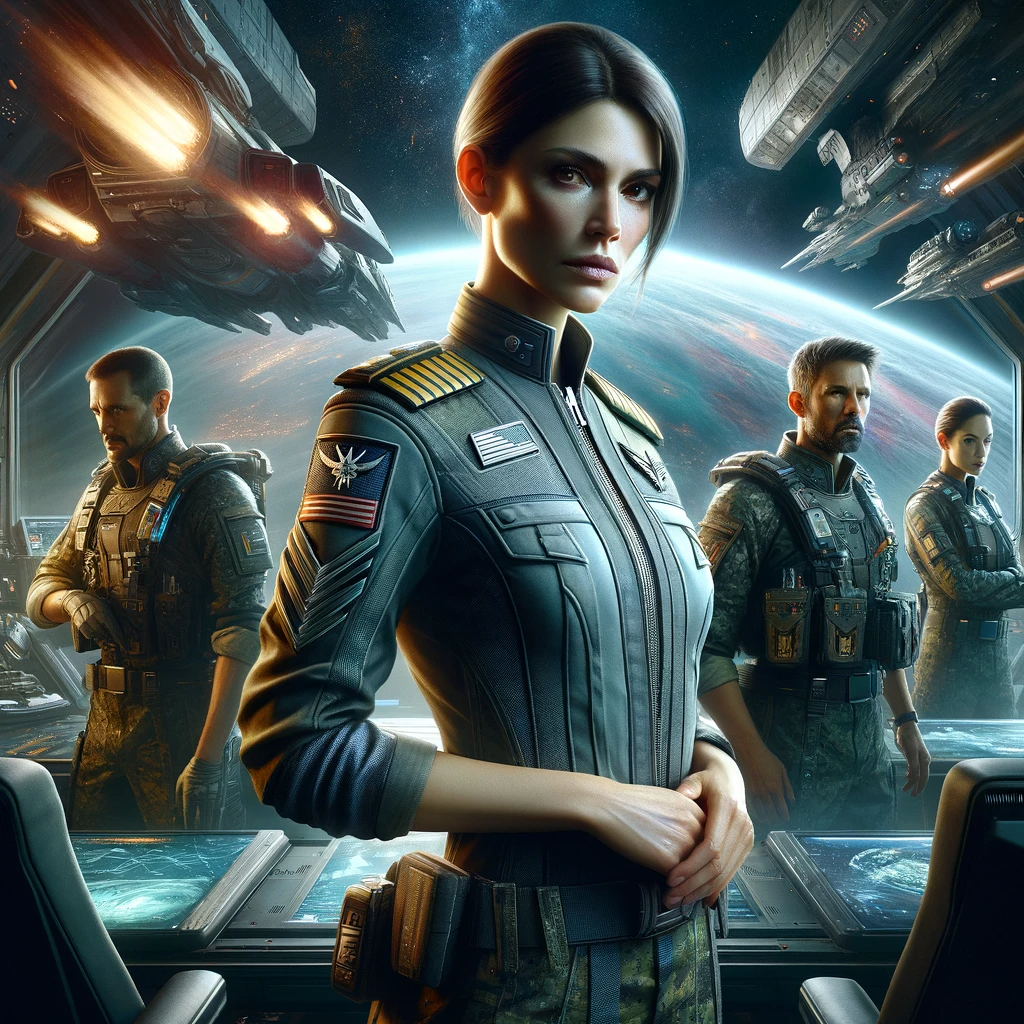
The void of space near the gas giant of Zephyr Prime was a silent witness to the culmination of a saga that had gripped the galaxy. Here, amidst the swirling storms of the giant planet, the final battle between Commander Valyssa Kane and Admiral Huxley was about to unfold. It was more than a military engagement; it was a clash of ideals, a confrontation between the light of truth and the shadow of betrayal.

On the bridge of the Vanguard flagship “Indomitable,” Valyssa stood resolute, her eyes fixed on the tactical display. Huxley’s armada, a formidable array of ships enhanced with Zenith technology, hung in the void before them, a daunting sight that would have made lesser commanders quail.

But Valyssa was not a lesser commander. She had faced the darkness before and had emerged victorious. Her crew, a collection of the finest officers and soldiers in the fleet, looked to her for guidance, their faith in her leadership unwavering.

“All ships, this is Commander Kane,” Valyssa spoke, her voice steady and clear over the comm. “Today, we face not just an enemy fleet, but the embodiment of betrayal itself. Admiral Huxley has turned his back on the values we hold dear, on the very principles that make us who we are. But we will not falter. We will not yield. We will stand firm in the light of truth and justice, and we will prevail.”

A chorus of affirmations echoed over the comm, the resolve of the Vanguard fleet consolidated into a single, unbreakable will.

The battle began with a burst of light, as the Indomitable’s forward batteries opened fire. The void of space erupted in a cacophony of destruction, as the two fleets clashed in a deadly dance of lasers and missiles.

Valyssa’s strategy was a masterpiece of tactical brilliance. She feinted and maneuvered, drawing Huxley’s ships out of formation, exposing their weaknesses. The Indomitable darted through the enemy lines, its shields flaring under the onslaught, its guns never falling silent.

But the true test lay ahead. Huxley’s flagship, the “Sovereign,” loomed in the heart of the enemy formation, a behemoth of a ship bristling with weaponry. It was there that Valyssa knew she would find her former mentor, the man she had once looked up to, now her greatest adversary.

“Prepare boarding parties,” Valyssa ordered, her voice cutting through the chaos of the battle. “We’re going in.”

It was a daring move, a gambit that could turn the tide of the battle. As the Indomitable closed in on the Sovereign, its hull scarred and battered but unbroken, Valyssa led the charge herself.

The corridors of the Sovereign were a warzone, echoing with the clash of arms and the cries of the wounded. Valyssa and her team fought their way through, their weapons flashing in the dim light, their determination unbreakable.

And then, at last, they stood before Huxley himself. In the command center of his flagship, the fallen admiral faced his former protégé, his eyes cold and unrepentant.

“You think you’ve won?” he sneered, his hand resting on his sidearm. “You think your truth and justice can prevail against the reality of the galaxy? You’re naive, Valyssa. You always were.”

But Valyssa stood firm, her weapon trained on the man she had once admired. “No, Huxley,” she said, her voice heavy with sorrow and resolve. “It’s you who has been naive. You’ve lost sight of what truly matters. Of the ideals that make us who we are. And that is why you will lose.”

The fight that followed was brief but intense, a clash of wills as much as weapons. But in the end, it was Valyssa who emerged victorious, Huxley’s broken form at her feet.

As the Sovereign fell and Huxley’s fleet scattered, the Indomitable and its valiant crew stood tall amidst the wreckage, the standard of the Vanguard flying proud and true.

The battle was won, but the war for the soul of humanity was far from over. Yet as Valyssa looked out at the stars, she knew that as long as there were those willing to stand for what was right, there would always be hope.

The legend of Commander Valyssa Kane and her crew had reached its crescendo, but their story was far from over. For in the vast expanse of the galaxy, there would always be new challenges to face, new threats to confront.

But with the light of truth to guide them and the strength of their conviction to sustain them, they would never waver. They were the Vanguard, the shield and sword of humanity. And they would stand forever vigilant, ready to defend the ideals they held dear, no matter the cost.

Epilogue: Dawn Of A New Vanguard

As the first light of dawn touched the spires of the United Earth Government’s capital, a sense of new beginnings permeated the air. The galaxy had been through a tempest of betrayal and conflict, but now it stood on the cusp of a new era, one heralded by the dawn of a reformed Vanguard under the leadership of Commander Valyssa Kane.

Valyssa stood on the balcony of the Vanguard headquarters, her gaze sweeping over the awakening city. The weight of her new responsibilities settled on her shoulders like a mantle, but it was a burden she bore with pride and determination.

Behind her, the doors to the balcony opened, and a familiar figure stepped out to join her. It was her second-in-command, a man who had been with her through the darkest of times, a steadfast ally in the fight against Huxley’s betrayal.

“Commander,” he said, his voice filled with respect and admiration. “The council is ready for you.”

Valyssa nodded, taking a deep breath. This was the moment she had been preparing for, the first step in the journey to rebuild what had been broken.

As she entered the council chamber, the eyes of the assembled officers and representatives turned to her. They were a diverse group, drawn from every corner of the Vanguard, each bringing their own unique perspectives and experiences to the table.

Valyssa took her place at the head of the table, her presence commanding the room. “Thank you all for being here,” she began, her voice clear and strong. “We stand at a crossroads, a moment of great change and opportunity. The Vanguard has been through a dark time, but together, we will emerge stronger, more united, and more committed to our purpose than ever before.”

She spoke of her vision for the future, of the reforms she planned to implement. She spoke of transparency and accountability, of the need for open dialogue and collaboration. She spoke of the importance of the Vanguard’s role not just as a military force, but as a beacon of hope and unity for all of humanity.

As she spoke, Valyssa could see the effect her words were having. The council members sat up straighter, their eyes shining with a renewed sense of purpose. They were ready to follow her, to be part of the change that was to come.

And so, the work began. In the days and weeks that followed, Valyssa and her team worked tirelessly to put their plans into action. They overhauled training programs, established new oversight mechanisms, and reached out to colonies and allies across the galaxy.

It was not an easy task. There were those who resisted change, who clung to the old ways. But Valyssa was resolute, her conviction unwavering. She knew that the path ahead would be challenging, but she also knew that it was the only way forward.

As the months passed, the Vanguard began to transform. The old culture of secrecy and hierarchy gave way to one of openness and collaboration. Soldiers and officers alike embraced the new values, finding a renewed sense of purpose in their work.

And at the heart of it all was Valyssa, a leader who had risen from the ashes of betrayal to guide the Vanguard into a new era. She was a symbol of hope and resilience, a reminder that even in the darkest of times, the light of truth and justice could prevail.

As she stood once again on the balcony of the Vanguard headquarters, looking out over a city transformed, Valyssa felt a sense of pride and accomplishment. The road ahead was still long, but she knew that with the support of her team and the dedication of the Vanguard, they would face whatever challenges lay ahead.

The dawn of the new Vanguard had arrived, and with it, a promise of a brighter future for all of humanity. Under Valyssa’s leadership, they would stand as a beacon of hope and unity, ready to defend the ideals they held dear and to guide humanity toward its destiny among the stars.

The End

The Traitor Vanguard – Chapter 11: Falling Dominos

PROLOGUE * CHAPTER 1 * CHAPTER 2 * CHAPTER 3 * CHAPTER 4 * CHAPTER 5 * CHAPTER 6 * CHAPTER 7 * CHAPTER 8 * CHAPTER 9 * CHAPTER 10

In the wake of the battle for Aurelia, the galaxy reeled from the shockwaves of Admiral Huxley’s exposed conspiracy. News of his betrayal and subsequent defeat spread like wildfire, igniting a maelstrom of reactions across human space. For many, the revelation that a figure as revered as Huxley could orchestrate such a treasonous plot was unimaginable, shaking the foundations of their trust in the Vanguard and the United Earth Government.

On Earth, the heart of human civilization, the streets were abuzz with a cacophony of emotions. Crowds gathered in public squares, their faces a mix of anger, disbelief, and a profound sense of betrayal. Holo-screens flickered with constant updates, pundits and politicians dissecting every detail of Huxley’s conspiracy.

In the halls of the UEG, the atmosphere was tense and charged. Emergency sessions were convened, the chambers echoing with heated debates and calls for action. Representatives from every corner of human space demanded answers, their voices rising in a chorus of outrage and concern.

“How could this happen?” one senator demanded, her voice trembling with barely contained fury. “How could a man like Huxley, a man we trusted with the safety of our colonies, betray us so completely?”

Others echoed her sentiment, their words painting a picture of a government in crisis, struggling to come to terms with the depth of Huxley’s deceit.

But amidst the turmoil, a name began to rise above the din, a name spoken with reverence and awe: Commander Valyssa Kane.

On the streets, in the halls of power, her story spread like a wildfire of hope. The tale of her bravery on Aurelia, of the risks she and her team had taken to expose Huxley’s treachery, became a beacon of light in the darkness.

“She stood up to him,” people whispered to each other, their eyes shining with admiration. “She fought for us, even when everyone else had turned their backs.”

In the Vanguard, Valyssa’s actions sparked a wave of introspection and change. Soldiers and officers alike looked to her as an example, a reminder of what their organization should stand for. Calls for reform grew louder, the ranks of the Vanguard united in their determination to root out any remnants of Huxley’s influence.

And when the Nighthawk returned to Earth, the celebration was unlike anything the galaxy had ever seen. Crowds thronged the streets, cheering until their voices were hoarse as Valyssa and her team emerged from their ship, their faces weary but proud.

In the grand halls of the UEG, they were honored as heroes, their deeds etched into the annals of history. Medals were pinned to their chests, speeches were made, and for a moment, the galaxy allowed itself to hope.

But for Valyssa and her crew, the accolades were bittersweet. They had lost friends, seen horrors that would forever haunt their dreams. And they knew that their journey was far from over.

As the celebrations faded and the galaxy turned its eyes to the future, Valyssa stood on the bridge of the Nighthawk, her gaze fixed on the stars beyond.

“We have a lot of work to do,” she said softly, her voice heavy with the weight of responsibility. “Huxley may be gone, but his legacy remains. We have to be vigilant, to ensure that nothing like this ever happens again.”

Her crew nodded, their faces set with determination. They had fought too hard, sacrificed too much, to let their victory be in vain.

And so, as the Nighthawk prepared to depart on its next mission, the galaxy watched with bated breath. For they knew that as long as Valyssa Kane and her team stood watch, as long as there were those willing to fight for what was right, there was hope for a brighter tomorrow.

The story of the Nighthawk and its valiant crew had become legend, a tale whispered in every corner of human space. And though the road ahead was uncertain, one thing was clear: the legacy of their heroism would endure, a shining light in the darkness, a promise of a future worth fighting for.

Not. The. End.

The Traitor Vanguard – Chapter 10: The Crucible of War

PROLOGUE * CHAPTER 1 * CHAPTER 2 * CHAPTER 3 * CHAPTER 4 * CHAPTER 5 * CHAPTER 6 * CHAPTER 7 * CHAPTER 8 * CHAPTER 9

The skies above Aurelia, once a serene expanse of blue, were now a tumultuous battlefield, echoing with the roar of engines and the crackle of laser fire. Commander Valyssa Kane, at the helm of her Vanguard squadron, carved through the chaos, her fighter jet a darting shadow against the backdrop of war. Below them, the ground forces of Aurelia clashed with Huxley’s invaders, a maelstrom of violence that threatened to engulf the colony.

Valyssa’s voice crackled over the squadron’s comm channel, steady and determined amidst the cacophony of battle. “Raven squadron, form up on me. We need to take out those enemy gunships before they can provide more ground support.”

The squadron responded with a chorus of affirmatives, their sleek fighters falling into formation behind Valyssa’s lead. They dove as one, streaking towards the enemy gunships that hovered menacingly over the battlefield.

Laser fire streaked past Valyssa’s cockpit as the enemy ships tried to target her agile craft. She jinked and weaved, her hands steady on the controls, her eyes narrowed in concentration. With a burst of speed, she closed the distance, her targeting systems locking onto the nearest gunship.

“Fox three!” Valyssa called out, her finger pressing down on the trigger. A missile leaped from her fighter’s wing, streaking towards the gunship in a trail of smoke. It impacted with a brilliant explosion, the gunship’s hull shattering under the force of the blast.

Around her, the rest of Raven squadron engaged the remaining gunships, their laser cannons flashing in the dim light of the battle. One by one, the enemy ships fell from the sky, their wreckage crashing to the ground below.

Valyssa allowed herself a moment of grim satisfaction before her attention was drawn to the ground battle raging beneath them. The defenders of Aurelia were fighting with everything they had, but Huxley’s forces were relentless, their advanced weaponry cutting through the colonial defenses.

“Raven squadron, provide close air support to ground forces at coordinates Delta-Five-Niner,” Valyssa ordered, already angling her fighter towards the battle below.

The squadron descended like avenging angels, their laser cannons spitting fire at the enemy troops below. Valyssa flew low over the battlefield, her ship’s engines screaming as she strafed the invaders’ positions. She could see the defenders cheering as her squadron passed overhead, their spirits bolstered by the air support.

But even with Raven squadron’s intervention, the battle was far from over. Huxley’s forces were well-entrenched, their positions fortified by heavy armor and artillery. Valyssa knew that to win this fight, they would need to take the battle to the enemy directly.

She keyed her comm. “Nighthawk, this is Raven Leader. Requesting permission to land and join the ground assault.”

There was a moment of silence before the reply came. “Permission granted, Raven Leader. Give ’em hell.”

Valyssa smiled grimly as she brought her fighter in for a landing near the frontlines. As she climbed out of the cockpit, she could see her squadron doing the same, their faces set with determination.

They joined the ground forces, their advanced combat suits glinting in the dim light of the battlefield. Valyssa took point, her weapon raised as she led her team towards the enemy positions.

The fighting was brutal, a close-quarters battle of attrition. Valyssa and her team fought their way through the enemy lines, their weapons flashing as they cut down the invaders. Around them, the defenders of Aurelia rallied, their spirits lifted by the presence of the Vanguard’s elite.

In the end, it was Valyssa who turned the tide. With a rallying cry, she led a final charge against the enemy’s command post, her team close behind. They fought like demons, their weapons blazing, until at last the enemy commander fell, his troops scattering in disarray.

As the last of the invaders fled, a cheer went up from the defenders of Aurelia. They had won, against all odds, and their colony was safe.

But for Valyssa, there was no time to celebrate. As she stood amidst the wreckage of the battlefield, she knew that this was only the beginning. Huxley was still out there, and his betrayal ran deep. The war for the future of humanity had only just begun, and she would be at the forefront, leading the charge.

With a weary sigh, Valyssa turned to her team. “Good work, everyone. But we can’t rest yet. We have a long fight ahead of us.”

And with that, she strode off towards the Nighthawk, ready to face whatever challenges lay ahead. For she was Commander Valyssa Kane, hero of the Vanguard, and she would not rest until justice was served and the galaxy was safe once more.

Not. The. End.

The Traitor Vanguard – Chapter 9: Aurelia’s Stand

PROLOGUE * CHAPTER 1 * CHAPTER 2 * CHAPTER 3 * CHAPTER 4 * CHAPTER 5 * CHAPTER 6 * CHAPTER 7 * CHAPTER 8

Aurelia, a colony world bathed in the light of a distant sun, became the unexpected crucible where the fates of the United Earth Government, the Vanguard, and Admiral Huxley’s insidious ambitions would clash. The planet, with its sprawling purple plains and towering mountains rich in minerals, was a jewel of human colonization – and the chosen stage for Huxley’s most daring move.

As the battle raged across the surface of Aurelia, Commander Valyssa Kane stood on the bridge of the Nighthawk, her eyes fixed on the tactical display. The holographic projection showed a grim picture – Huxley’s forces, bolstered by advanced Zenith weaponry, had made significant gains, pushing back the defenders with a relentless onslaught of firepower.

“Status report,” Valyssa barked, her voice cutting through the tense atmosphere of the bridge.

“Enemy forces have taken the capital city,” her tactical officer replied, his fingers flying across his console. “They’re pushing towards the mining complexes in the mountains.”

Valyssa’s jaw clenched, her mind racing as she considered her options. She knew that the mining complexes were the key to Aurelia’s strategic importance – lose them, and the colony would fall.

“Prepare for ground assault,” she ordered, her voice steady and determined. “We’ll take the fight to them, hit them where they least expect it.”

As the Nighthawk descended into Aurelia’s atmosphere, Valyssa gathered her team in the hangar bay. They were a diverse group – soldiers, engineers, medics – but united in their resolve to defend Aurelia and expose Huxley’s treachery.

“You all know what’s at stake here,” Valyssa said, her eyes sweeping over the assembled faces. “Huxley thinks he’s won, but we’re going to show him that the Vanguard doesn’t go down without a fight.”

A roar of approval went up from the team, their determination palpable in the air. Valyssa felt a swell of pride – these were her people, ready to follow her into the jaws of hell itself.

As the Nighthawk touched down in a remote mountain valley, Valyssa and her team disembarked, ready to begin their guerrilla campaign. They struck fast and hard, hitting Huxley’s forces where they were most vulnerable – supply lines, communication hubs, command posts.

Each victory, however small, served to boost the morale of the defenders and chip away at the invaders’ resolve. Valyssa led from the front, her tactical brilliance and unwavering courage an inspiration to all who fought alongside her.

In the skies above, the battle raged on, Vanguard fighters engaging Huxley’s fleet in a deadly dance of lasers and missiles. Pilots pushed their crafts to the limit, knowing that the fate of Aurelia hung in the balance.

As the conflict reached its climax, Valyssa and her team executed a daring plan to infiltrate Huxley’s command ship. It was a desperate gamble, but one they had to take.

Fighting their way through the corridors of the ship, Valyssa and her team finally confronted Huxley on the bridge. The former mentor and protégé faced each other, a lifetime of shared history hanging in the air between them.

“It’s over, Huxley,” Valyssa said, her voice steady despite the emotions roiling within her. “Surrender now, and we can end this without further bloodshed.”

Huxley laughed, a bitter, mirthless sound. “You always were naive, Valyssa,” he sneered. “You think this ends with me? The wheels are already in motion. The Zenith will not stop until humanity is under their heel.”

Valyssa’s grip tightened on her weapon, her eyes narrowing. “Then we’ll stop them,” she replied, her voice like steel. “Together. As we always have.”

In the end, it was Valyssa’s unwavering commitment to justice that prevailed. Huxley was taken into custody, his plans unraveled, and his forces, without their leader, soon capitulated.

As the Nighthawk left Aurelia’s orbit, Valyssa stood on the bridge, gazing out at the stars. They had won a great victory, but she knew that the war was far from over. Huxley’s betrayal had opened a Pandora’s box, unleashing forces that threatened the very future of humanity.

But as she looked around at her team, at the brave men and women who had fought and bled beside her, Valyssa felt a flicker of hope. They had faced the darkness and emerged victorious. Whatever challenges lay ahead, they would face them together, united in their determination to protect the ideals they held dear.

The battle for Aurelia had been won, but the war for the soul of humanity had only just begun. And Commander Valyssa Kane, the hero of Aurelia, would be at the forefront, leading the charge into an uncertain future.

Not. The. End.

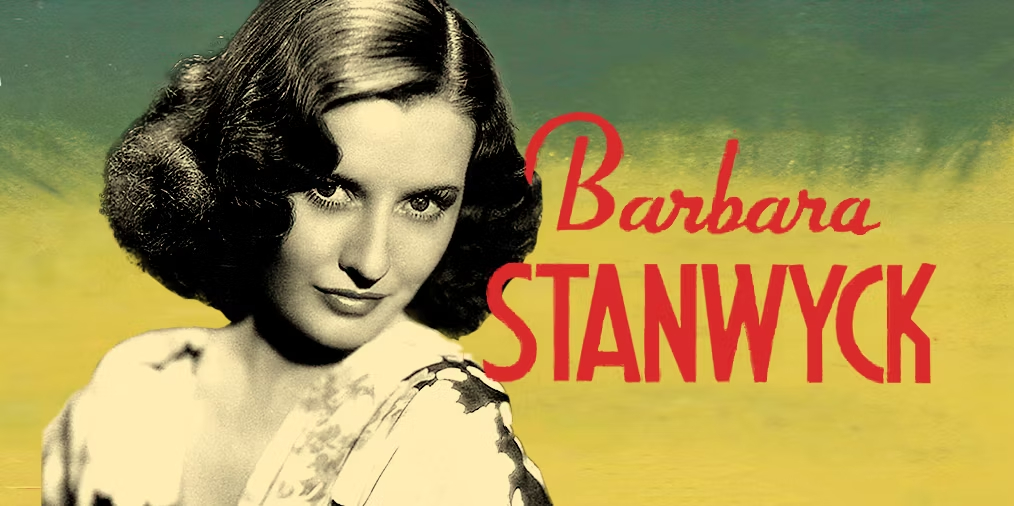
The Daring Legacy of Barbara Stanwyck: A Pre-Code Hollywood Icon

In the luminous constellation of Hollywood’s golden age, few stars shine as brightly or as boldly as Barbara Stanwyck. Before the strict enforcement of the Hays Code reshaped American cinema, Stanwyck captivated audiences with her dynamic performances in a series of pre-code films that pushed the boundaries of storytelling, sexuality, and female autonomy. This blog post delves into the pre-code work of Barbara Stanwyck, exploring how her roles during this era were emblematic of a fleeting period of cinematic freedom and how they helped cement her legacy as one of Hollywood’s most enduring icons.

A Maverick on Screen

Barbara Stanwyck’s career in the pre-code era was marked by a series of performances that were as varied as they were groundbreaking. She portrayed strong, independent women who navigated the complexities of society, love, and ambition in a way that was unheard of at the time. Stanwyck’s characters were often ahead of their time, embodying a blend of vulnerability and strength, and always with a nuanced depth that defied the simple archetypes of women typically seen on screen.

“Night Nurse” (1931)

One of Stanwyck’s most notable pre-code films is “Night Nurse,” where she stars as Lora Hart, a dedicated nurse who uncovers and combats a plot to murder her wealthy patient’s children. The film was bold for its time, showcasing Stanwyck’s character as a tenacious and morally upright heroine willing to fight against corruption and abuse. “Night Nurse” exemplifies the pre-code era’s willingness to tackle serious social issues and highlight female agency.

“Baby Face” (1933)

Perhaps no other film showcases Stanwyck’s pre-code legacy quite like “Baby Face.” In this film, Stanwyck plays Lily Powers, a young woman who uses her intelligence, charm, and sexuality to climb the social and economic ladder, leaving a trail of broken men in her wake. “Baby Face” is a striking commentary on gender, power, and ambition, with Stanwyck’s performance challenging the societal norms of the time. The film was so controversial that it underwent significant censorship and editing to comply with the Hays Code requirements.

Stanwyck’s Impact on Hollywood

Stanwyck’s pre-code films were not just entertainment; they were a reflection of the changing attitudes towards women’s roles in society. Through her characters, Stanwyck explored themes of female independence, sexual autonomy, and the pursuit of personal ambition outside of traditional norms. Her work during this period paved the way for more complex and realistic portrayals of women in cinema.

A Legacy of Empowerment

Stanwyck’s portrayals provided a glimpse into the potential for a more progressive and inclusive Hollywood, one that was sadly curtailed by the enforcement of the Hays Code. However, the impact of her pre-code work endures, serving as a testament to her talent and the fleeting period of artistic freedom that defined early 1930s cinema.

Conclusion

Barbara Stanwyck’s pre-code films remain a fascinating study of a Hollywood at the cusp of change. Through her performances, Stanwyck not only entertained but also challenged and inspired. She navigated the complexities of her characters with an authenticity and depth that continue to resonate with audiences today. As we look back on the pre-code era, Stanwyck’s legacy stands as a reminder of the power of cinema to reflect and influence societal norms, and of the enduring impact of a true Hollywood maverick.

The Traitor Vanguard – Chapter 8: Pact with Darkness

PROLOGUE * CHAPTER 1 * CHAPTER 2 * CHAPTER 3 * CHAPTER 4 * CHAPTER 5 * CHAPTER 6 * CHAPTER 7

In the dim light of a secret chamber, far from the prying eyes of the Vanguard or the United Earth Government, Admiral Huxley met with his unlikely allies – the Zenith. These clandestine meetings, shrouded in layers of security and deception, were the culmination of a dangerous gamble that Huxley had embarked upon, a pact that would have profound consequences for the galaxy.

Huxley stood before the Zenith delegation, his posture straight and his gaze unwavering. The Zenith, towering figures clad in ornate armor, regarded him with a mixture of curiosity and skepticism. Their leader, a grizzled warrior with eyes that glinted like steel, stepped forward.

“You offer us much, Admiral,” the Zenith leader said, his voice a rumble like distant thunder. “But what assurances do we have that you will keep your word?”

Huxley smiled, a calculating expression that did not reach his eyes. “I offer you more than just words,” he replied, his tone smooth and confident. “I offer you the chance to secure your empire’s future, to ensure that the human race will never again threaten your supremacy.”

He gestured to a holographic display, which sprang to life with a detailed map of human-controlled space. “Under my rule, human expansion will be curtailed,” he continued, pointing to the border worlds that flickered in red. “These colonies will be left vulnerable, ripe for the taking if the need arises.”

The Zenith leader studied the map, his brow furrowed in thought. Huxley could see the gears turning in his mind, weighing the benefits of the alliance against the potential risks.

“And in exchange?” the leader asked, his eyes narrowing.

“In exchange, I ask for your support,” Huxley replied, his voice taking on a persuasive edge. “Your advanced technology, your military might, will be the key to securing my position as the leader of the human race. Together, we can forge a new order in the galaxy, one where our interests align and our peoples prosper.”

The Zenith delegation exchanged glances, a silent communication passing between them. Huxley could sense their hesitation, their ingrained distrust of outsiders warring with the temptation of his offer.

“You must understand, Admiral,” the leader said, his voice measured and deliberate, “that our alliance, should we agree to it, is one of convenience. Our goals may align for now, but do not mistake this for friendship or loyalty.”

Huxley inclined his head, a gesture of acknowledgment. “I would expect nothing less,” he replied, his tone equally measured. “We are both pragmatists, after all. This alliance is a means to an end, a way to secure our respective futures in a galaxy that is rapidly changing.”

The Zenith leader regarded Huxley for a long moment, his gaze piercing and assessing. Finally, he nodded, a single, curt gesture that carried the weight of a formal agreement.

“Very well, Admiral,” he said, his voice ringing with finality. “We will support your bid for power, but know that we will be watching. Closely.”

Huxley smiled, a triumphant expression that he quickly masked behind a veneer of diplomatic courtesy. “I would have it no other way,” he replied, extending his hand in a human gesture of agreement.

The Zenith leader grasped his hand, his grip strong and unyielding. In that moment, a pact was sealed, one that would shape the course of galactic history. Two unlikely allies, driven by their own agendas, had come together in a dangerous dance of power and ambition.

As the meeting adjourned and the Zenith delegation departed, Huxley stood alone in the chamber, his mind racing with the implications of what had just transpired. He knew that he was walking a razor’s edge, that the alliance he had forged could just as easily turn against him.

But he also knew that it was a risk he had to take. The stakes were too high, the prize too great, to let such considerations hold him back. With the Zenith at his side, he was one step closer to realizing his vision of a galaxy under his control.

And so, in the shadows of that secret chamber, Admiral Huxley set in motion a chain of events that would bring the galaxy to the brink of chaos. The wheels of his grand plan were turning, and nothing, not even the specter of betrayal, would stop him from seeing it through to the end.

Not. The. End.

The Unbridled Charm of Pre-Code Hollywood: A Weekend Dive

This weekend, I’m embarking on a cinematic journey back to a time when Hollywood movies were unencumbered by strict censorship, known as the pre-code era. It’s a fascinating period that offers a glimpse into a Hollywood that was bold, raw, and surprisingly modern in its storytelling and themes.

The Allure of Pre-Code Hollywood

Pre-code Hollywood refers to the brief period in the American film industry between the advent of sound pictures in 1929 and the enforcement of the Hays Code censorship guidelines in mid-1934. This era is celebrated for its daring approach to storytelling, tackling topics such as sexuality, crime, and social issues with an openness that would not be seen again in Hollywood for decades.

Why Watch Pre-Code Movies?

The films from this era are a window into the societal attitudes and cultural norms of the early 1930s. They are characterized by strong female protagonists, frank discussions of gender roles, and a candidness about sex that was revolutionary for its time. Watching these films, one can’t help but be captivated by the sheer audacity and creativity of filmmakers who operated before the code’s constraints.

Understanding the Hays Code

The Hays Code, formally known as the Motion Picture Production Code, was a set of moral guidelines that dictated what was acceptable and what was not in films. Introduced in 1930 but not rigorously enforced until 1934, the Code aimed to clean up the movies’ supposed immorality, which many believed was corrupting the viewers.

The Impact of the Code

The enforcement of the Hays Code fundamentally changed the landscape of American cinema. Movies became more sanitized, avoiding any content that could be deemed offensive or morally questionable. This led to the creative circumvention of the rules by filmmakers, who had to find ingenious ways to hint at forbidden themes without violating the Code’s stipulations.

Why the Hays Code Was Implemented

The push for the Hays Code stemmed from various societal pressures, including religious groups and civic leaders who were concerned about the potential influence of cinema on public morals. In an era marked by economic depression and rapid social change, the Code was seen as a way to maintain social order through the regulation of content deemed inappropriate or harmful.

Exploring Pre-Code Classics This Weekend

As I dive into the world of pre-code Hollywood, I’m looking forward to exploring the boundary-pushing themes and characters that made this era legendary. From the scandalous to the sophisticated, these films offer a candid look at life’s complexities through the lens of cinema’s early days.

Join the Journey

I invite you to join me in this weekend’s exploration of pre-code Hollywood. Whether you’re a long-time fan or new to the genre, there’s something incredibly refreshing and enlightening about these films. Let’s rediscover the movies that challenged the norms and paved the way for the future of storytelling on screen.