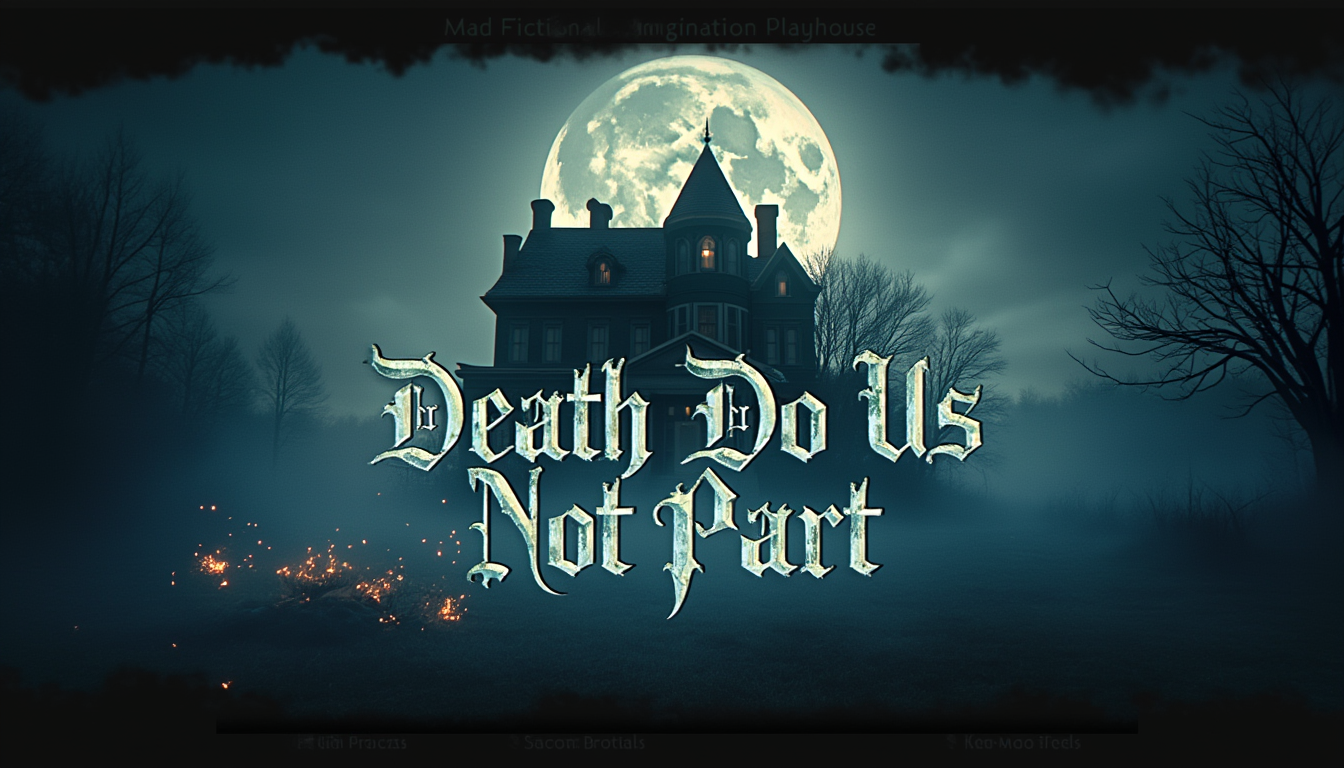
Death Do Us Not Part

Walter Baldwin had always been different.

Back then, they didn’t have a name for it. Today, he would be classified as neurodivergent—his mind wired to see patterns where others saw only chaos.

He was also brilliant. Devoting his life’s work to the mysteries of the brain, he earned his doctorate by mapping its final flickers—the synaptic whispers between life and death. He believed that human consciousness lingered past the moment of expiration, like a voice echoing in an empty house. His research was meant to help the grieving process, to prove that death was not an abrupt end, but a slow fade.

Then, Dorothy died.

It was a freak accident. A sedan ran a red light, struck her car, and left nothing but twisted steel and an empty space. She was gone before he arrived at the hospital. They handed him a clear plastic bag of her belongings. He remembered staring at her wedding ring, still smeared with blood, and thinking, No. No, this isn’t right.

Walter had always been a man of science. that is, until grief rewrote the laws of reality.

His daughter, Shirley, was the first to notice the shift.

“You’re not sleeping,” she told him one morning, standing in the kitchen with her arms crossed. “And you’re avoiding work.”

Walter, unshaven and hollow-eyed, stirred his coffee without drinking it. His house smelled of burnt toast and unwashed clothes. Shirley sighed.

“Dad, listen to me. You have to—”

“I heard her,” he said. His voice was flat. Unshaken.

Shirley’s expression faltered. “What?”

“Last night.” He finally looked at her. “I was reviewing neural decay patterns, and there was an anomaly. A frequency that shouldn’t have been there.”

Shirley placed her hands on the counter, gripping the edge. “Dad. Please don’t do this.”

But her plea was far too late. Walter had already begun.


He relocated his research to a house outside Atlanta—an old rundown Victorian thing he managed to get dirt cheap, that hummed in the wind, with walls that swelled and groaned as if breathing. He filled it with stolen lab equipment, wires curling like veins across the hardwood floor, and spent his days and nights playing back Dorothy’s EEG scans from the morgue, searching for the signal.

Richard Fiske, his research assistant, tried to reason with him.

“Listen, Walter. You’re looking for something that isn’t there.”

Walter didn’t answer. He only turned up the volume on the signal. It was faint, like a heartbeat beneath static.

Then, something whispered his name.

Richard slammed the laptop shut. “Jesus Christ, Walter, that’s auditory pareidolia. You’re hearing what you want to hear.”

Walter pressed his fingers to his temples. The hum in his ears was growing louder. “Then why does it keep happening?”

Lester Allen, a brilliant but reclusive engineer, was the only one who didn’t dismiss him outright. “You’re listening to death’s afterimage,” Lester murmured, sifting through the data. “A voice trapped in a neurological photograph.”

“So now, all we need to do is find a way to amplify it,” Walter said.

Lester hesitated. “But what if the brain isn’t just lingering? What if it’s still…thinking?”

Walter ignored him. One problem at a time.


There was no doubting that Walter was a man of science, but the fact of the matter was that science had its limits. And that was where Madame Gravestone came in.

She was not the fraud he expected. Her presence unsettled him. She studied his equipment with quiet interest before finally saying, “You are opening doors. The question is: Do you know how to close them when you’re done?”

Walter hated her…but couldn’t deny that he needed her.

They worked together. She held séances while his machines recorded electromagnetic disturbances. The voices were growing louder. Dorothy was coming through.

But as they were on the brink of a breakthrough, something went wrong.

One night, during a particularly intense session, the housekeeper, Mrs. Hargrove, entered the room.

She had worked in the mansion for years, long before Walter arrived. She had seen many strange things, but nothing like this.

“What are you doing?” she asked, her voice trembling.

Walter barely glanced at her. His pulse was pounding. Dorothy’s voice was clearer than ever.

“She’s here,” he whispered.

Mrs. Hargrove stepped closer, her eyes widening. “No,” she said. “No, that’s not your wife.”

The moment snapped like a rubber band.

The equipment sparked, the lights flickered, and a deep, rattling breath filled the room. Madame Gravestone’s eyes went wide.

“Shut it off,” she hissed.

But Walter was frozen. Dorothy’s voice was still calling his name.

Mrs. Hargrove let out a strangled gasp. Her body stiffened, her eyes rolling back as she convulsed and collapsed.

Walter fell to his knees, shaking her. “No, no, no, wake up!”

But the housekeeper was gone. Her face a frozen mask of terror.


When the sheriff arrived, Walter told the truth, but the truth sounded utterly insane.

“You were…talking to the dead?” Sheriff Thompson asked, rubbing his jaw. “And that killed your housekeeper?”

Walter sat in a chair, hands shaking. “It wasn’t supposed to happen like that.”

When word reached Shirley, she paid her father a visit. She looked at him with an expression that made his stomach turn.

“I told you to stop,” she whispered.

“I wish I could.”

That night, alone in his study, he listened to the last recording.

The static crackled. A whisper slithered through.

“Walter.”

His breath caught.

It was Dorothy’s voice. But distorted. Stretched. Wrong.

“This is all so unnecessary. All you need to do is let me in.”

His heart slammed against his ribs. His hands trembled.

And he whispered, “Yes. Come in, my love.


Rumor had it that Lester tore out of that house like a bat out of hell. He left town without so much as a by your leave and was never seen nor heard from again.

Madame Gravestone also mysteriously disappeared, her occult accoutrements abandoned in the mansion.

Shirley pleaded for someone—anyone—to help her in her search.

But, as with the others, Walter Baldwin was never seen again.

The rundown Victorian mansion stood empty. At night, passersby swore they could hear static crackling from the second-floor windows.

Sometimes, if you listened closely, you could hear a voice whispering.

“Let me in.”

And if you answered, the door would open.

©2025 Rhyan Scorpio-Rhys
A Leap Day Repost: Duchess and the Anecdote

Duchess

They come from miles around, my characters do, traveling the great distance from the fringes of my mind’s eye, some even making the long and arduous haul from my childhood, just to sit and talk. They do this whenever I’m alone.

As they gather ’round, I cast an eye upon their many and various faces and can’t help but feel the slightest twinge of remorse. Being in my company, locked within the confines of my imagination, is not wholly unlike a purgatory for them. A holding pattern, a waiting room, where they converse amongst themselves in voices audible only to myself, trying to catch my attention in the slimmest hope of being set free. Birthed into a story.

Some are fresh meat, the rest lifers, each easily spotted by the differences in their appearance and the strength of their voices. Fresh meats are gossamers—newly formed characters, little more than a stack of traits—who shout in whispers. Lifers, on the other hand, are as fleshed out as you or I, perhaps even more so, who have acquired the proper pitch and turn of phrase to catch me unawares during the times when my mind idles.

Before the talks begin–serious conversation, not the normal natterings they engage in–a flying thing the size of a butterfly, jewel-toned blue stripes, greenish-gold spots, with flecks of silver on the wings, lands in the palm of my outstretched hand.

“What is that then?” a childlike voice asks from somewhere deep in the crowd, low to the ground. I recognize it instantly.

“It’s an anecdote, Duchess. Come see for yourself.” I reply as the creature’s wings beat softly on my palm.

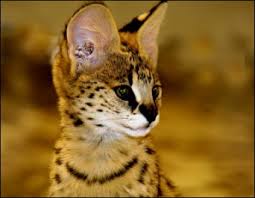
The throng–my personal rogue’s gallery whose roster includes reputables and reprobates alike–part like the Red Sea, making way for the noblest of all serval cats, The Duchess.

“An antidote? Have you been poisoned?” The Duchess queries as she saunters into the open space, a dollop of concern gleaming in her vivid blue eyes.

I try to not laugh, partly out of respect, but mostly due to the fact that though she is the eldest of my unused characters, she is technically still but a kitten. “No, Duchess, it’s an anecdote, as in a short, amusing, or interesting story about a person or an incident.“

“I know full well what an anecdote is, thank you kindly. I was merely attempting to lighten the dreadfully somber mood with a bit of levity.” Not her best faux pas cover, but it was swift, which should count for something. As casually as she could manage, the kitten turned to see if anyone found amusement at her expense. No one did. They knew better. “May I hold it?”

I hesitate and stare at the leapling. Created on February 29th all those many years ago, it was my rationale–on paper–for keeping her a kitten, seeing as she had fewer birthdays, she would naturally age at a decelerated rate. The actuality is I have an affinity for kittens. For full-grown cats? Not so much. And now the dilemma is if her kittenish nature should come into play, and without meaning to, cause injury to the anecdote, then all this would be for naught.

Her eyes plead with all the promise of being good and I have no choice but to relent. “It’s fragile, so be gentle. Take care not to crush it.” I gently place the anecdote in her cupped paws.

“Why does one need an anecdote?” The Duchess of Albion asked, her nose twitching whenever the creature moves its wings.

“To tell a proper story,” I answer. “More than just a sequence of actions, anecdotes are the purest form of the story itself.“

“But I thought characters are at the heart of every great story?“

“They are and anecdotes connect the hearts and minds of those characters to a story.” I try to feign calm but I can see the kitten’s body tensing up. Her eyes, those glorious baby blues, are studying the creature closely. Was I wrong in my decision to trust that she rules her instincts and not the other way around?

“They also add suspense to your story, giving the audience a sense that something is about to happen. If you use them right, you can start raising questions right at the beginning of your story—something that urges your audience to stay with you. By raising a question, you imply that you will provide your audience with the answers. And you can keep doing this as long as you remember to answer all the questions you raise.“

The kitten’s breath becomes rapid and her paws close in around the anecdote and I want to cry out, urge her to stop, but it’s far beyond that point now. She is in control of her own fate. Canines bare themselves, paws pulling the creature closer to her mouth.

“No!” she shakes her head violently. Her ears relax and her mouth closes as her breathing returns to normal. Then, the oddest thing happens…

The Duchess begins to vanish. All the characters look on in dazed silence, uncertain how to react.

“What is happening to me?” she shoots me a panicked glance as cohesion abandons her form.

“Haven’t you sussed it out yet?“

“No… I’m scared!“

“Don’t be,” I smile. “Look around you. You’re at the heart of a story. You’re free.“

“Truly?” she is suddenly overwhelmed with delight, her expression priceless. “But — but what do I do with the anecdote now?”

“Open your paws, let it fly off.”

She unfolds her paws. Tiny wings beat their path to freedom. Then someone from the back of the crowd gives The Duchess a slow clap. Soon, others join in, building into a tidal wave of applause.

The now translucent Duchess waves a tearful thank you to the crowd, before turning back to me with a request, “Say my name.“

“Why?“

“Because you always simply address me as Duchess and I want to hear you call me by my full name one last time before I g– —“

And just like that, she was gone.

I bid you a fond farewell, Your Grace the Duchess of Albion Gwenore del Septima Calvina Hilaria Urbana Felicitus-Jayne Verina y de Fannia. Enjoy your journey. You will be missed.

HAPPY LEAP DAY, FOLKS!


My Oh So Very Imaginary TED Talk: Becoming A Storylistener

This one’s gonna require you to stretch your imagination a bit (and pop a Dramamine) as we take a dizzying sidestep into an alternate reality in which my indisputable awesomeness has been recognized and I have been asked to do a Ted Talk.

ted

Did you know that a secret ingredient to becoming a master storyteller is right here, right now? You’re all using it! That’s right, I’m talking about your ears. Welcome to my TED Talk on “Becoming A Storylistener”, where we’re about to embark on a journey of listening our way to storytelling greatness.

As the famous poet Maya Angelou once said, “There is no greater agony than bearing an untold story inside you.” Stories are everywhere, in books, movies, and even in the simple anecdotes we share with friends. But how do we become skilled storytellers ourselves? The answer is surprisingly simple: become a storylistener first.

Every day, stories are swirling around us like leaves in a gust of wind. We absorb them through conversations, TV shows, and various media. But to truly harness their power, we need to actively listen and learn from them. By doing so, we gain insights on crafting compelling narratives, building tension, and keeping our audience captivated.

Listening to stories not only helps us refine our storytelling skills but also fosters empathy. As we immerse ourselves in someone else’s tale, we begin to see the world through their eyes, sharing their emotions and experiences. This newfound understanding helps us create stories that resonate with our listeners on a deeper level.

So, how do we become proficient storylisteners? It starts with being present. While someone narrates their story, resist the urge to plan your next witty remark or judge their actions. Instead, focus on their words, emotions, and imagery. As Atticus Finch said in Harper Lee’s “To Kill a Mockingbird,” “You never really understand a person until you consider things from his point of view…until you climb into his skin and walk around in it.”

Another crucial aspect of story listening is asking questions. This shows genuine interest and allows us to delve deeper into the story. Questions clarify confusion, reveal key elements, and give us ideas for our own storytelling adventures.

Lastly, embrace an open mind. Not every story will resonate with us, and that’s okay. Even when we don’t agree, there’s always something to learn, be it a different perspective, an unfamiliar experience, or a previously unconsidered aspect of human nature. These insights help us create stories that speak to diverse audiences.

To sum it up, the path to becoming a master storyteller begins with attentive story listening. By honing our listening skills, we can develop our storytelling prowess, cultivate empathy, and create content that strikes a chord with our listeners. I challenge each of you to actively listen to someone’s story today, and see how it transforms your storytelling abilities.

Thank you for being storylisteners today, and may you continue to grow as both storytellers and listeners!

Fending Off Them Pesky Writing Demons

photo-11

There will be days, despite all the brilliant advice you’ve collected up to this point and your very best intentions, when you will not be able to write a single word. I just need you to realize:

You. Are. Not. Alone. In. This.

Every writer falls victim to these pesky writing demons at some point, but what marks your ability as a serious writer is how you rise to the challenge and get your writing back on track, secure in the knowledge that you have the power to keep the negative mental beasties at bay. As always, I offer a few tips for you to stuff inside your writing rucksack for a rainy day:

  1. When you pluck an idea from the ether, jot it down immediately. Ideas arrive without warning and evaporate from your mind like a dream upon waking. When you’re hit with an idea, you’re always sure you’ll remember it. Foolish mortal. How many story ideas have you lost relying solely on your overtaxed memory? When an idea hits, take a moment to put it in writing—we tend to remember things we physically write down—or carry around a digital voice recorder or use that recording app on your smartphone that you forgot you have.
  2. Don’t start on a blank page. La página en blanco. La page vierge. Die leere seite. La malplenan paĝon. Den tomma sidan. Built entirely of writers’ blocks, the blank page is the fire in which writers burn. The abyss that stares back and makes us overthink committing words to the page. The way to combat it? Don’t start with a blank page. Put something at the top of the page. Anything. A random sentence, the story’s mission statement, or ask a question. Better yet, have a character ask a question and then set out to answer it. Whatever you put there isn’t set in stone and can be altered or eliminated entirely once you work out what you truly want to write.
  3. You don’t always have to begin at the beginning. Sometimes you’re hit with a juicy dialogue exchange, a powerful scene, or an intense interaction…but it belongs somewhere in the middle of a story that you haven’t quite sussed out yet. That’s all right. Take what you have and get it down on paper without worrying about the order in which scenes are written. Once you have that, you can begin fleshing out other connecting scenes and when your basic draft is done, you can go back, reshuffle the order and polish it.
  4. Stop waiting for the perfect word. When you sit down to write, write. Flipping through your mental thesaurus is not part of the creative process of capturing your ethereal ideas and solidifying them on the page. Keep writing. Don’t let anything take you away from the act of committing words to the page. Write first, and show your brilliance later.
  5. Cheat on your favorite writing spot. Yes, yes, cheating is a bad thing and I would never condone it anywhere else, for any other reason (honest), but sometimes you can become so comfortable writing in one particular place that it ends up being the only place you can get your writing done. By venturing out and writing in new locations—the park, public library, coffee shop, public atriums—you’re training yourself to put words on paper wherever you are. The ideal location doesn’t make you a writer, your ability to write no matter where you are situated does.
  6. Know when to hold ’em, know when to fold ’em. There’s only so much revision, re-editing, and perfecting a story can take. There comes a time in each story’s life when you’re going to have to accept that your baby is all grown up now and it’s about as perfect as you can make it. Also, continuously reworking a story is a little mind game you play with yourself. It’s an excuse for not starting on the next story, the one that really needs your attention. Stop holding yourself back. On to the next one.
  7. Develop agitation towards procrastination. It’s not your friend, really, it’s not. Despite how clever you think you’re being by justifying your reasons for not writing, you’re only hurting yourself because writing doesn’t get easier the more you fob it off. It simply means you have less time to do it. Writing isn’t the enemy here, time is. Make time to be heard.

There are many other writing demons and sometime in the future I’ll address the more serious ones—insecurity, self-doubt, jealousy—but I will leave you with two parting thoughts: 1) Part of maturing as a writer is coming to the realization that your writing will never be the perfect little darling in the real world as it is in your mind, and 2) Writing something that’s acceptable (but not quite perfect) is a damn sight better than not writing anything at all.

Sally forth and be demon fend offingly writeful.

Climbing The Freytag Pyramid (or getting on top of dramatic structure)

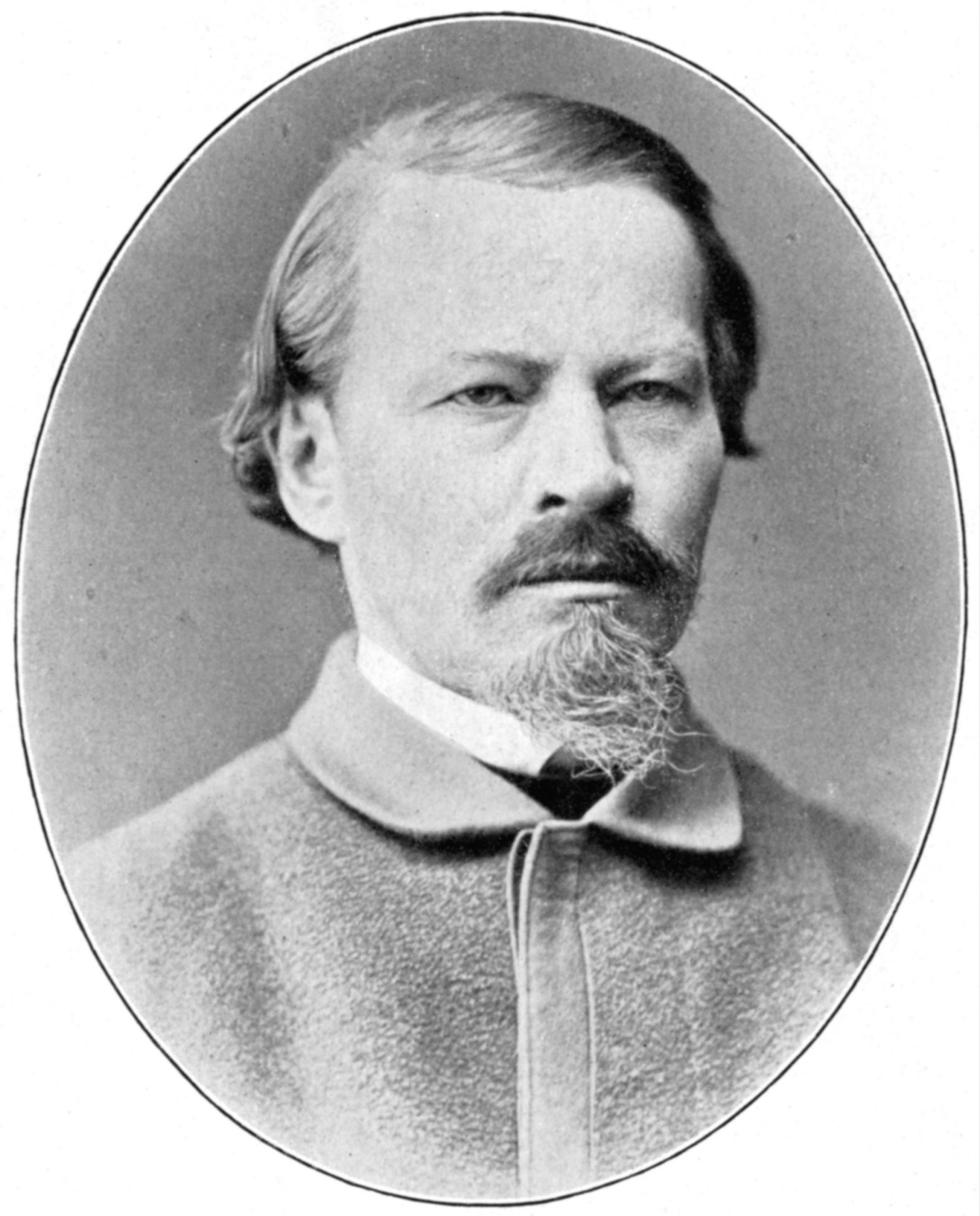
ImageScholars have been analyzing the structure of drama for nearly as long as it’s been written or performed. One of the more notable studies belongs to nineteenth-century German playwright and novelist, Gustav Freytag and his “Die Technik des Dramas” (Technique of the Drama).

Image

He didn’t originate the concept, mind you, Aristotle introduced the idea of the protasis, epitasis, and catastrophe—beginning, middle, and ending—three-act plot structure, which was later replaced with drama critic Horace’s five-act structure.

But creators are never satisfied with the status quo, so when playwrights began toying around with three and four-act plays, Freytag wrote a definitive structure study—referred to as Freytag Pyramid—that explained the necessity of dividing a standard drama into the following five acts:

Image

Stage 1: Exposition—as discussed in an earlier post—introduces the setting of the story, the characters, their situation, atmosphere, theme, and the circumstances of the conflict. Traditionally, exposition occurs during the opening scenes of a story, and when expertly executed background information is only gradually revealed through dialogue between major and minor characters.

Stage 2: Rising action—sometimes called complication and development—begins with the point of attack that sets a chain of actions in motion by either initiating or accelerating conflict. Difficulties arise, which intensifies the conflict while narrowing the possible outcomes at the same time. Complications usually come in the form of the discovery of new information, the unexpected opposition to a plan, the necessity of making a choice, characters acting out of ignorance or from outside sources such as war or natural disasters.

In this stage, the related series of incidents always build toward the point of greatest interest.

Stage 3: Climax—is the turning point, where the protagonist’s journey is changed, for the better or the worse. In comedies, the protagonist’s luck changes from bad to good, due to their drawing on hidden inner strengths. Drama is the other side of the coin, where things take a turn for the worse and reveal the protagonist’s hidden weaknesses.

Stage 4: Falling action—during this stage, the conflict unravels and the protagonist either wins or loses against the antagonist. This is also where a moment of final suspense might be found, in which the final outcome of the conflict is in doubt.

Stage 5: Dénouement—also known as resolution, or catastrophe— in drama, brings the events from the end of the falling action stage to the actual closing scene. Conflicts are resolved in a manner that either creates normality and a sense of catharsis for the characters, or release of tension and anxiety for the audience. In comedy, the protagonist is always better off than they were at the beginning of the story. And in tragedy, the protagonist is worse off in the end—hence the alternate title for this stage, catastrophe.

As I’m sure you’re well aware, Freytag’s analysis wasn’t meant for modern drama. For starters, front-loading your story with exposition is usually the kiss of death for your audience’s declining attention span. If exposition is truly needed, it should occur naturally within your story in the smallest fragments possible.

Also, modern storytellers tend to use falling action to raise the stakes of the climax for dramatic impact, having the protagonist fall short of their goal, encountering their greatest fear of losing something or someone important to them. And when they’re at their lowest point, they’re struck with an epiphany, giving the protagonist the courage to take on the final obstacle, resulting in the classic climax.

And there you have it.

Sally forth and dramatic structuringly writeful.

Do You Blindside Yourself With Your Writing? If Not, Why Not?

“Surprise yourself.  If you can bring the story—or let it bring you—to a place that amazes you, then you can surprise your reader.” — Chuck Palahniuk

Has your writing ever blindsided you? Have your characters ever caught you off guard by saying or doing something clever or revealing a bit of information that you yourself didn’t know? When re-reading a piece that you set aside to cool, have you ever wondered where the ideas, voices, and speculative elements came from and if you have any more of that inside you?

The answer is: Of course, there’s more.

Writing is a journey of discovery, and one of the great pleasures of storytelling is that you discover the amazing things that dwell in your brain, things about yourself and your thought processes that you might not otherwise uncover. And besides self-expression, isn’t that the major point of writing?

So, how do you blindside yourself with your talent? You simply let go.

Get out of your own head and write on instinct. Park the perfectionist on the soft shoulder and write your ever-loving heart out. This is part and parcel of learning to be kind to yourself as you write. Your genius can’t flow steadily with someone backseat editing the entire trip. You can always swing back around and pick up the bugger when you’re ready to begin the rewrite.

And don’t begin your story fretting about how it will end. Your story is smarter than you give it credit for. When it’s done, you’ll see the pop-up timer.

It’s essential to keep in mind whenever you pick up a pen or touch fingertips to keyboard that you’re doing it from a position on the shoulders of the literary giants who came before you, the ones who surprised you with their words, so every time you write, you should follow their lead and surprise yourself.

Until next time, sally forth and be surprising yourselfingly writeful.

PS. If you have roughly an hour to kill—I know, it’s the internet and you’ve got memes to see and threads to troll—you could do a lot worse than lending an ear to Ray Bradbury’s 2001 “Telling the Truth” keynote address of The Sixth Annual Writer’s Symposium by the Sea.

Not only does he counsel aspiring writers to spend their time writing lots of short stories—even if they’re mostly bad, there’s gotta be a couple of good ones in the bunchbut he also suggests to write with joy and for fun, and to let yourself be surprised by your writing and by life.

The Island of Misfit Posts #2: No Enemy But Time

Like its predecessor, Discouraged by Discouragement, this pesky fella here is another one of those posts that didn’t quite turn out as expected and ended up on the cutting room floor (though a part of its sentiment made its way into You’re Where You Are). Caught somewhere between my musings of growing older while still struggling with the craft and my intent of advising impatient writers to slow down, the post started taking the shape of something neither fish, flesh, nor good red herring:

“Do you think, I have not just cause to weep, when I consider that Alexander at my age had conquered so many nations, and I have all this time done nothing that is memorable!” — Julius Caesar

When you reach a certain age, you become acutely aware of time, how much you’ve squandered on things you swore were important at the moment, and how little you still have left in your account. Whenever I get the time brain bug, I’m always brought back to the line from Delmore Schwartz’s poem, Calmly We Walk through This April’s Day (quoted in that horrendous film Star Trek: Generations), “Time is the fire in which we burn.” I love that line. It resonates within me.

But I digress.

Many aspiring authors feel the pressures of time, either believing because of their age that they’ve gotten a late start in the writing process and need to play catch up, or simply haven’t got the proper time to devote to a writing regime, so they attempt to bang out herculean writing tasks without bothering to first learn the rules. They assume because they’ve taken on board the advice to write everyday that their skill set automatically improves and mistakes auto-correct themselves. They read, as instructed, but fail to apply storytelling rules—plotting, story goals, scenes and sequences, the purpose of characters, effective use of dialogue—to their own work.

That’s not to say their writing is bad, it simply lacks a consistent quality. A beautiful bit of prose or a dynamic character can easily get lost in the quagmire of weak grammar, poor pacing, and a meandering plot. Recognizing it can sometimes be hard to turn an objective eye on your own writing, here are a few questions to ask yourself, to see if you need to go back to writers boot camp:

1. Do you tell a story?

I assume you’re familiar with the phrase, “You can’t see the forest for the trees.” This applies to your writing as well, especially when you’re concentrating on your piece at the word choice and sentence structure level. Sometimes it helps to take a step back and get a big picture view of what you’re attempting to do, what it is you’re really trying to write about. The answer isn’t always as clear cut as you’d imagine.

2. Is your writing concise?

This one’s a toughie, because it calls on you to chuck out everything you learned in school about the proper way to write an essay. Well, this ain’t about writing essays, bub (or bubette, no gender discrimination here) and the rules of pacing language are different in fiction. The first rule you need to learn is: Never use a long sentence when a short one does the same job.

3. Are you addicted to adjectives and adverbs?

Adjectives and adverbs are among the more hotly debated issues in the writing community, and while opinions vary, the common rule of thumb is less is more. It can be hard to spot over usage while writing so when you’re done with your piece, look for chains–a string of adjective and adverb two or greater—and whittle it down until you’re left with one or two essential ones. Also worth bearing in mind, when you feel the need to modify a noun or a verb, make sure they need to be modified. If they do, select the best word to convey your meaning.

4. Are you familiar with the word “subtle?”

Your audience is smarter than you realize. There’s no need for you to spell everything out in exacting detail. And, believe it or not, some folks actually enjoy interpreting things for themselves.

5. Should you be shifting viewpoints?

Hopping from one character’s head to another without causing audience confusion requires a certain level of skill, and I’m certainly not suggesting that you shouldn’t be doing it (and if I told you not to, you’d rush out and do it anyway) but why not baby step your way towards it? Work on mastering the one character viewpoint first.

6. Do you show too much?

Yes, the standard rule is “show, don’t tell” but you don’t need to show everything. When in doubt, refer to Elmore Leonard’s rule,”Try to leave out the part that readers tend to skip.”

7. Do you create apathetic characters?

You’re an artist, your work is all about the truth, even in fiction. I get it. I’ve been there. But creating a realistic character based on your current bout of apathy, depression, or (heaven forbid) suicidal thoughts, often doesn’t make for good reading. Your characters must have wants and needs to push the plot forward. Audiences have no need to read stories where the characters have no desire to live or accomplish something.

8. Is your antagonist one dimensional?

Villains that are evil for evil’s sake are boring. Flesh them out with wants and needs like you would your main character. And remember, every villain is a hero in their own mind.

9. Does your dialogue matter?

Yes, leaving white on the page is a good thing as no one like slogging through dense blocks of description, but are you breaking up paragraphs with bits of meaningless chatter? Dialogue should be used as a communication between characters that evokes reaction. One characters says something that another character reacts to, which sparks a reaction, and so on, until the scene concludes. If you have no idea what your character has to say, then you don’t know your character well enough.

10. Can you write an ending?

Some people excel at writing beginnings, and that all they’re good at. Each chapter is a new beginning, with no middle to be found and as for an ending? I’m sure you can work out the answer to that. Other people get off to a slow start in the beginning, come into their own in the middle and peter out at the finish line. Let’s face it, endings are tough. Not only must you keep it clear and simple while you deliver on the promise of the premise (without being didactic), but you have to tie up all your story’s loose ends, and if you’re planning to surprise your audience, it shouldn’t be with an inappropriate twist, added for shock value. Keep in mind that writing the words “The End” doesn’t finish a story if it has no resolution.

In truth, I couldn’t finish it because I wasn’t in the proper frame of mind at the time. Although it might not be visible in the post, that damned time brain bug kept nagging at me, not with words, but with a feeling — the feeling of being left behind in the race for achievement. Before you say a word, I know better. In fact, one of my favorite quotes on this matter comes from the now-famous commencement speech, Ladies and gentlemen of the class of ’97:

“The race is long and, in the end, it’s only with yourself.”

But we’re human, aren’t we? And sometimes knowing a truth doesn’t prevent you from feeling the exact opposite.

Sally forth and be time-ignoringly writeful.

The Island of Misfit Posts #1: Discouraged by Discouragement

When I sit down to write these posts, I never know what they’ll be about beforehand. It’s a first-thought-that-hits-me-stream-of-consciousness sort of thing. Sometimes they’re on point, other times they meander a bit, but as stated in the About This Site section, the posts are less about me attempting to appear clever or knowledgeable (what are the odds, really?), and more about getting myself into a proper writing frame of mind with a warm-up exercise. Mental calisthenics, if you will.

As you might imagine, it doesn’t always go to plan. Case in point: the post below. Inspired in part by Susannah Breslin’s Forbes article, Why You Shouldn’t Be A Writer, and Martin Levin’s, You Suck And So Does Your Writing—which is more about petty squabbles between notable literary figures (how I would have combined the two ideas is anyone’s guess)—it was meant to be a discouragement piece, you know, separating the wheat from the chaff, and all that, that started out like this:

Of All the Things You Could Do With Your Life, Why On Earth Would You Purposely Choose To Be A Writer?

Don’t worry, it’s not a trick question, but one you should be prepared to ask yourself and answer before undertaking writing in any fashion as a serious profession. Among the more common reasons I’ve come across in my travels are:

1. No commuting and every day is Pajama Friday!

I can’t fault your logic here because commuting is generally a nightmare and what’s better than tooling around your house in a onesie all day long like an agoraphobic superhero? Sadly, it isn’t a good enough reason to want to be a writer, especially since there other telecommuting positions that offer more stability and better chances at becoming a career.

2. What better way is there to make a ton of dough and roll around in my piles of cash?

Well, you could try your hand at playing the lottery or betting the ponies, for starters. Rich writers are the exception to the rule. The majority of people who claim writing as a profession, work their mental fingers to the bone, producing material for years before they even get a glimpse at recognition, let alone a healthy paycheck. Instead of rolling in piles of cash, you’ll most likely be rolling up your coins, praying your landlord accepts pennies for rent.

3. Nothing better than being my own boss with flexible hours!

Flexible hours? Been writing long? Writing is a huge commitment that commandeers your entire life with absolutely no guarantee of any sort of financial gain. As stated earlier, there are other work-from-home opportunities that are far more secure and come equipped with a steady payday. And being your own boss isn’t the sipping Mai Tais under a beach umbrella fantasy you imagine it to be. First off, there’s no one to delegate all the donkey work to, and your brain doesn’t simply punch out when the working day has ended. Writing–and the guilt of not writing–never leaves you in peace until the article/book/screenplay/project has been completed.

4. It would be amazing to see my best-selling book in a bookstore/my script turned into a blockbuster feature film/win the Pulitzer Prize for my groundbreaking article series.

Who wouldn’t want any of those things? While we’re daydreaming, I’d also like to be an astronaut so that I can save the planet from extraterrestrial threats, be the smartest man in any room I’m in so that I can solve all the world’s problems and become Earth President, and build a safe-box time machine–that protects me from any sort of injury–equipped with a high end movie camera in order to jump back and forth in time to make the ultimate series of historical documentaries.

Now that my feet have touched terra firma and I’m once again grounded in reality, I can tell you that while it’s great to dream big, fame is one of the worst reasons to choose writing as a profession.

But the post wasn’t really working for me because I could feel myself getting snarkier as the piece went on, which wasn’t my intent going in. So, I decided to step off my soapbox and kill the post. And there it sat in my trash for days, forgotten like Charlie-In-The-Box, Dolly, Spotted Elephant, and King Moonracer. But it miraculously survived deletion during my numerous trash emptying sessions. This had to be a sign. What sign, I hadn’t the faintest, but I decided to attempt recycling it into a less judgmental, more positive message:

Writers are born critics who will criticize any and everything that crosses their paths, especially fellow writers. They will issue their assessments and commentary with the righteousness of having had their opinions validated by the Mount Horeb burning bush. These are the writers who cut open veins and bleed for the love of the craft, whose skulls ring with haunting voices that cannot be silenced until exorcized onto the page, who believe in their heart of hearts that the only words that deserve to be written are the truths that need to be told.

I can’t lie, sometimes I feel the same way.

But I’m not as bothered by it anymore because I know firsthand that the writing process has its own way of weeding out the fly-by-night scribblers, posers, and pretenders with the obstacles it scatters on the long and winding path to a completed project. Whether your driving force is money, fame, to impress a person/people, burning need, or love of the art form, you will still experience your fair share of procrastination, anxiety, writer’s block, time crunches, lack of motivation, fear of rejection, judgment of peers, and impatience of selling a piece.

If you can repeatedly bash your head into these walls, get up, dust yourself off and continue to write, who am I to question your motives? That, my friends, is the best I can do fer ya, today.

Sally forth and be encouragely writeful.

Make Art (particularly Writing) Your Life

Out on my daily walkabout through adjacent neighborhoods, I spotted a young lady wearing a t-shirt that read, “Make Smart Choices In Your Life” but the “sm” in smart and the words “choices in” were grayed out so that the message that stood out read:

Make Art Your Life

A quick internet search at home revealed it to be a popular slogan (as made evident by my ability to find the above image) but it was the first time I came across it and it sparked an idea, so naturally I had to blog about it.

Art somehow resonates with us on a positive level, permeating the pleasure centers of our brains to alleviate stress, aid in mental and emotional healing, and alter our thoughts and perceptions of the world around us. It’s also a valuable tool for increasing creativity as well as productivity.

Art offers an escape from everyday life and is, in my humble opinion, the best holistic medicine because it opens your heart and feeds your mind. Art enables us to look within and to listen to ourselves, to realize who we truly are, and what we actually care about. And the right work of art allows us to have an appreciation and gratification for the things that exist in our lives.

Now, when the average person talks about “art” they’re typically referring to pigments brushed on canvas or images molded in clay or carved from stone, but we, as writers, know better than that, don’t we? Art, as defined by the dictionary is:

the expression or application of human creative skill and imagination

which means your writing, be it acrostic, a six-word or six-sentence story, flash or micro fiction, haiku, tanka, or somonka, a drabble, musing or journal entry, is a work of art. So, how do you make art your life, or better yet, make your life a work of art? Why, by following a few of the suggestions below (oh come on now, you knew there had to be a list, didn’t you?):

  1. Make time to sit in solitude and just imagine. Henry David Thoreau once said, “I never found a companion that was so companionable as solitude” and I have to agree that there is a simple kind of joy in taking a break from human beings (spoken like a true introvert, I know). Solitude-by-choice not only gives your soul a chance to recharge, but it also opens the imagination gates and lets your mind run barefoot in the garden of creativity. And while you’re there, feel free to explore and be willing to get lost in the undiscovered country (don’t worry, you’ll somehow find your way home again).
  2. Let unnecessary things slip through your fingers. We all have our own special brand of toxicity (anger, self-loathing, self-doubt, etc.) that sometimes prevents us from starting or completing a writing project. Learn to treat it like you would any other bit of clutter and bin it in order to make space for something a little more productive. And yes, I realize that’s easier said than done, but nothing beats a failure like a try, and don’t you owe it to yourself to at least make the attempt?
  3. Be bold in your intention to write. I know I keep banging on about this but commitment is what transforms an idea floating around in your noggin into reality. Putting pen to paper speaks boldly of your intentions and are the actions which speak louder than the words. It’s making the time when there is none. Coming through time after time after time, year after year after year. Commitment is the stuff character is made of; the power to shape ethereal things. It’s the daily triumph of integrity over skepticism. You can do it. I believe in you.
  4. Become your own best audience. Sometimes you have to ignore what’s popular at the moment and what you think people want to read and simply write something that you want to read. Write something that makes you happy, that makes you cry, that makes you angry enough to want to scream it to the world, as long as what you write makes you proud that you’ve written it. And if you really enjoy the finished product, because we’re more alike than we are different, chances are that someone out there will appreciate it, too.
  5. Embrace the act of self-attaboys<—(gender-neutral). Wake up to the truth that praise need not only come from an outside source. When you’ve sculpted the quintessential sentence or paragraph, you know what? That deserves a pat on the back. Created a clever turn of phrase? Found an ingenious way to yank your protagonist’s butt out of an impossible situation? Painted pivotal poetic pictures of pure perfection? Pat, pat, and pat. Acknowledging and complimenting yourself on even a minor accomplishment gives you an emotional boost that will make you happy and hopefully encourages you to continue creating greatness (yeah, I called your work greatness, wanna make something of it?).
  6. Stop being afraid of change. It’s oh so easy to get stuck in a writer’s rut, the telltale sign of which is Oculos Computator, better known as The Stare, and you know exactly what I’m talking about. When you’re parked in your favorite writing chair, knuckles cracked, fingers nimble and hovering above your keyboard…and nothing happens. Your brain vapor-locks and creativity has hung a “Gone Fishing” sign on the door. Now, I know I don’t need to tell you this because you’re much smarter than I am (I can see it in your eyes) but your tummy (how dare you mock my use of the word tummy!) isn’t the only thing that requires sustenance. If you want to keep the creativity engine running, you have to get in the habit of feeding your grey matter and the best way to do this is to try something different. Visit a new place, try new food, hell, even take a stab at an activity you think you wouldn’t like or that holds no interest for you. Inspiration sometimes comes from the damnedest places and when you least expect it and like that old saying goes: If you always do what you’ve always done, you’ll always get what you’ve always got. So, I double-dog dare you to put a twist on your average day (that oughta motivate you).
  7. Hang your expectations on a hook outside, and concentrate on creating. You’ve done all your research, you’ve studied the rules of writing, and that’s all well and good. But when you first begin a new writing project, put all that stuff to the side, as well as your determination to create the bestest thing ever written in the history of writing, and just let go and have fun. Embrace your inner child and mess around! Throw yourself into the process of being a creative entity and just play. Right about now, the author in you is giving me pushback because you want to be viewed as a professional and taken seriously, but take it from a guy who turns off the editor and perfectionist and starts his writing day with stream of consciousness freewriting (which I usually post on this blog). The act of uninhibited writing, of making art, induces feelings of stress relief and positive energy, and once my positive mood is achieved, then I turn my attention to “serious” writing. I began this practice because of the two essential phrases I came across while taking various writing courses. The first is:

Nothing is written, it’s rewritten.

and the second:

First you get it written, then you get it right.

“But what does this have to do with making art your life?” I hear you ask.

Patience, Grasshopper, patience.

The above list was designed to help you achieve what mystics describe as being in ecstasy (get your mind out of the gutter, this is a family channel), which is just another way of saying getting into the flow or being in the zone. It’s when you become completely absorbed in the act of writing, when concentration and enjoyment become one and time simply vanishes.

To make art your life, you need to become an artist, which means you need to master the skill of writing to the degree where you don’t consciously think about it, thus giving you the freedom to focus on creating something from nothingness. And the best way to develop your craft is to ease your foot off the gas pedal, quiet your mind, and allow the process to swallow you whole. At this point of the process, your concern shouldn’t be about creating a masterpiece, but instead finding that sweet spot where creative imagination begins to rise to the surface.

A few of you are probably going to take me to task for using the phrase, “creating something from nothingness” because we all know our writing comes from somewhere. Emotional truths, cultural values, sensory experiences, any and every thing that forces us to dig beneath the surface appearance down to the bone where honesty and inevitability exist.

And we’re the perfect one’s for the job because writers pay attention. We have the ability to alter our senses and perceptions to see through new pairs of eyes and find the beauty in ugliness, the elegance in coarseness, the rhythm in incoordination, the harmony in discord, and the composition in imbalance.

Making art your life or living artfully is about finding ways to transform the mundane things in this sometimes gray and frustrating world into the beautiful and awe-inspiring things that we often overlook or ignore completely. But simply being imaginative, picturing things in your mind, isn’t enough. To truly be creative you have to act, because actions bring ideas to life.

Sally forth and be making-art-your-lifingly writeful.

21 Writing Lessons A Wise Man Would Share (and no, I’m not calling myself wise)

270497_5510453_lz

  1. Commitment is what transforms an idea floating around in your head into reality. Putting pen to paper speaks boldly of your intentions to write and are the actions which speak louder than the words. It is making the time when there is none. Coming through time after time after time, year after year after year. Commitment is the stuff character is made of; the power to shape ethereal things. It is the daily triumph of integrity over skepticism.
  2. No one is perfect. The quicker this is realized the faster you can get on with being excellent. Start every morning ready to write harder than you did the day before and plot further than you ever imagine.
  3. Avoid over-explaining yourself in writing. Be confident that your audience is intelligent enough to understand.
  4. Write down what’s most important to you in your writing career and the steps to accomplish that goal and show up for it. Sometimes we tend to do the things that are most important to us when it’s written down.
  5. Play the hand you’re dealt. Stop envying someone else’s talent or success. Have the courage to face your own writing challenges head-on. It builds character. Start looking for a way through instead of a way out.
  6. Become a student of life. Learn something new every day. The day you stop learning is the day you become obsolete so keep learning and keep writing.
  7. No more excuses. Stop making excuses for not writing and replace them with ways to do better writing. Excuses are a waste of time and energy.
  8. Never be ashamed to tell anyone you’re a writer, whether you’re published or not. The definition of a writer is a person who writes or is able to write. Being ashamed to acknowledge this fact to people speaks to self-doubt, which is a desire killer.
  9. Never be afraid of a writing challenge. If you never strive to be more than what you are, you’ll never truly know what you can become.
  10. Be of service to other writers. Pointing people in the right direction is such a small thing. Give advice to those who ask for it. Offer support to those who want it. We’re all here to teach as well as learn.
  11. Work like hell. If you want to earn a living as a writer, that is. Treat it like a profession, put your absolute best foot forward and be thorough. Cross every “T” and dot every “I”.
  12. Discover yourself. Find your passion, and life purpose, and pursue them…then write about them.
  13. Don’t take it personally. Don’t be afraid to acknowledge and laugh at something that you’ve written in the past that’s just plain awful. Self-awareness and self-confidence show that you’re comfortable in your own skin.
  14. Manage your time. Our situation and environment are ever-changing so be careful not to confuse the things that are urgent with the things that are important. Look for time wasters and eliminate them.
  15. Ask for help. Writing can be tough and although you do a majority of it alone, you should never write in a total vacuum and there’s no shame in seeking advice when you’re stuck.
  16. Do your homework. Know what you’re getting into before you start writing in a particular field, format, or genre. Doing your homework reduces uncertainty and fear.
  17. Daydream often. Your imagination is a muscle that requires exercise and daydreaming is an excellent way to flex it. Embrace and preserve your daydreams at all costs.
  18. Forgive and set free. Freeing your mind to write is almost as important as actually sitting down to write, so cultivate a healthy dose of forgiveness and set someone free. Learn to forgive others and stop carrying those bags of hate, guilt, or regret.
  19. Stay one step ahead. Avoid big fish/small pond thinking if at all possible. If you’ve mastered a particular style of writing, why not be proactive, take the initiative, and see what other types of writing challenges are out there for you?
  20. Love yourself. Become your own priority. Strive to be the you, you want to be. Once you accomplish this, it will show in your writing, trust me.
  21. Finish what you’ve started. Avoid the urge to stray. Distractions are the writer’s most fearsome adversary. Avoid jumping off a project because a better idea has come along. Jot the better idea down, set it aside, and come back to it when you’re done with your current project.

Sally forth and be wisely writeful.