The New Thanksgiving

The November wind howled through the shattered windows of the abandoned shopping mall, cutting to the bone. A small group of survivors huddled around a makeshift fire, their faces hollow with exhaustion, their gazes fixed on the flickering flames. Outside, the world lay in ruins, torn apart by a man-made virus that had turned most of humanity into mindless predators—“maulers,” as they were grimly called. For these few, every breath was an act of defiance against extinction.

Jack stood, his frame stooped but his presence commanding. The firelight etched deep lines into his weathered face as he surveyed the group: Irina, with her quiet resolve; Danny, sharp-jawed and skeptical; Sarah, pale and shivering under a moth-eaten blanket. They and all the rest were his family now, the last remnants of hope in a world gone dark.

“Today is Thanksgiving,” Jack began, his voice steady despite the weight in his chest. “And I know what you’re thinking—what’s left to be thankful for? But we’re alive. We have each other. That’s something. And as long as we have that, there’s a chance we can fight for more.”

His voice caught, the words a reminder of everything they’d lost. His gaze drifted to the shattered storefronts and the long-empty corridors of the mall. “I remember Thanksgivings when my mom’s house was so packed you couldn’t hear yourself think. Too much food, too much noise, too much everything. It was chaos. I thought it’d never end. Now I’d give anything for that kind of chaos again.”

The silence that followed was heavy, punctuated only by the crackle of the fire. Then, from the shadows of a long-abandoned storefront, came a voice.

“Hope is a powerful thing.”

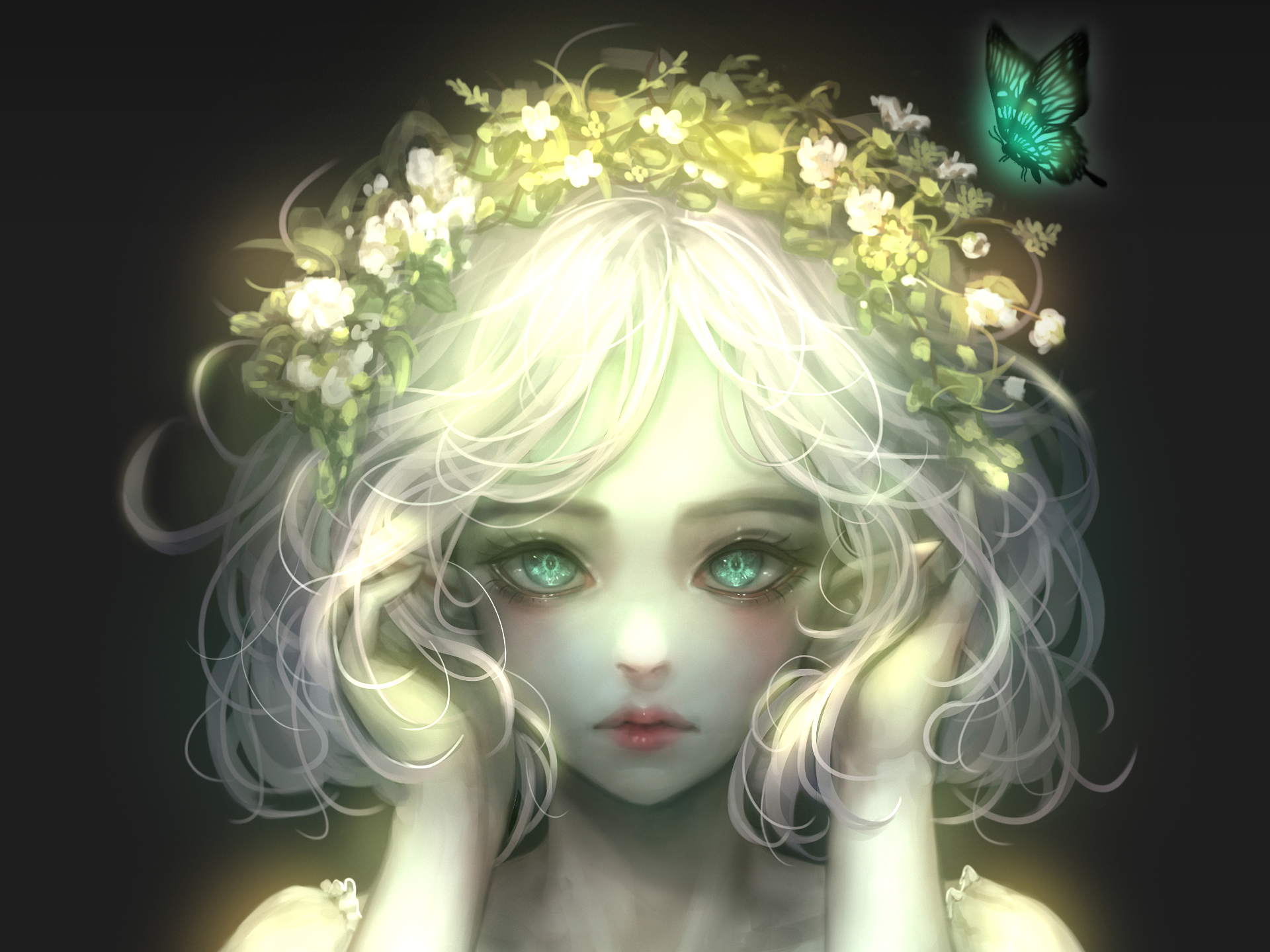
Every head snapped toward the sound. A woman stepped into the light, her movements unnervingly fluid, her pale skin almost luminous in the dim glow. Her eyes, an unnatural green, shone like lanterns in the dark.

“Who the hell are you?” Danny barked, rising to his feet, a length of rebar clutched tightly in his hand. Around him, the others scrambled for their makeshift weapons, muscles tensed to fight or flee.

The woman raised her hands in a gesture of peace, her expression calm but urgent. “Wait. I’m not your enemy. My name is Yulia. I came to help.”

“Help?” Danny spat. “You look like one of them.”

“I’m not a mauler,” Yulia said firmly. “But I am…changed. And so are all of you, whether you realize it or not.”

Jack stepped forward, putting himself between Yulia and the others. “Changed how exactly?”

Yulia hesitated, her luminous eyes softening as she looked at him. “You’re special. Every one of you carries something in your blood—something we’ve been able to synthesize and augment in my time. It’s the key to saving what’s left of the world.”

“Your time?” Irina’s voice was sharp with disbelief. “What are you saying?”

“I’m from the future,” Yulia said simply. “I know it’s hard to believe, but I’m here because of you. My future, our future, depends on what you do now.”

As her words settled over the group, a distant, guttural howl echoed through the corridors, raising the hair on their necks. Irina clutched her crowbar tighter, her knuckles white.

Danny’s lip curled. “Right. And while we sit here listening to her fairy tale, they’re closing in.”

Yulia stepped closer, undeterred. “I’m telling the truth. Without you, humanity won’t survive the mutations to come. Your blood carries an immunity we’ve never been able to replicate—one we can use to create a vaccine. This serum…” She pulled a small vial of glowing liquid from her jacket. “It will make you stronger, faster, and resistant to new strains of the virus. It might even reverse early mauler transformations. It’s not an easy process, but it’s the best hope we have.”

Jack’s gaze narrowed. “And why risk coming back here? If your future survives, why not leave us to…whatever this is?”

Yulia’s composure faltered, her voice breaking. “Because we’re not going to survive in my time. Not like this. Your children won’t inherit your immunities, and when the virus mutates…” Her gaze flicked to Irina, her voice softening. “I won’t be able to give you the grandchildren you want. All our babies are stillborn.”

The group froze. Irina’s sharp intake of breath cut through the silence. “What?”

“It’s true,” Yulia said, stepping closer. Her voice trembled. “Mom, Dad—this could be the moment that changes everything. I know it’s hard to believe, but I’ve risked everything coming here. Believing you will save us all.”

Jack turned to Irina, his voice low and strained. “We have a daughter? How is that even possible?”

Irina shook her head, her face a mix of disbelief and hope. “I can figure out how it happens…I just never thought you and I would…you know. No offense.”

“None taken,” Jack said. “And, same.”

Danny stepped forward, his rebar tapping against the floor. “Her story’s insane. We don’t even have a clue what that stuff is, and you’re going to trust her just because she says she’s your kid…from the future?”

“She’s not lying,” Irina said quietly, her eyes fixed on Yulia. “Look at her. She’s…us.”

Jack stared at the vial in Yulia’s hand, the glow casting eerie shadows on her face. Every instinct told him to turn away, to reject this impossible story. But something in Yulia’s eyes—something familiar—pulled at him.

“If there’s even a chance she’s right,” he said finally, his voice heavy, “we have to try. Because if we don’t, what’s left?”

Irina stepped beside him, her hand brushing his. “We do it together.”

Jack and Irina took the vial, sharing a long, steady look. Then, as the others watched, they drank.

The transformation was immediate. Jack doubled over, a wave of searing heat coursing through his veins. Irina fell to her knees, her body convulsing. Around them, the survivors froze, too horrified to intervene. The pain was excruciating, every nerve aflame as the serum worked through them, tearing apart and rebuilding.

When it was over, they staggered to their feet, gasping. Their eyes glowed green, the world sharper and more vivid. They looked at each other, something unspoken passing between them—a shared pulse, a connection deeper than words.

Yulia stepped forward, her smile tinged with sadness. “This is just the beginning. Together, you’ll create a future where humanity thrives again.”

Danny muttered, “If this kills me, at least I won’t have to deal with the next Thanksgiving speech,” before finally drinking his dose.

Later, around the fire, the group shared what little they had, thankful for each other, for hope, and for the strange new path before them. For the first time in years, they allowed themselves to dream—not just of survival, but of something greater. Something worth fighting for.

On this New Thanksgiving, they were grateful not for what they’d lost, but for what might still be.

In this world of diverse traditions,
Where cultures blend and intertwine,
We pause to share a simple mission,
A heartfelt wish, a thought divine.

Whether you gather 'round the table,
With family, friends, or loved ones dear,
Or simply cherish moments stable,
In quiet solitude this year.

May gratitude fill every corner,
Of hearts and homes, both far and wide,
Let kindness be the reigning order,
And peace the guest that does abide.

For those who celebrate Thanksgiving,
We wish you joy, a feast to savor,
May blessings flow, forever living,
In memories you'll fondly favor.

And if this day holds no tradition,
Within your land or in your home,
Know that our wish is no partition,
But sent to all, wherever they roam.

So on this day, let's lift each other,
With words of thanks and acts of grace,
For in this world, we're all one another,
United in this human race.
Happy Thanksgiving, one and all, Whether near or far, let love call.

The Dragon’s Requiem

In the golden light of the royal court, Eldred knelt before the king. The ceremonial sword tapped his shoulder, each touch a reminder of the burden he now bore. A knight’s duty was honor. A knight’s heart was steel. Eldred had trained for this moment, but as the spurs were fastened to his boots, he felt not pride but a creeping weight in his chest.

“The realm calls upon you,” the king intoned, his voice a sonorous echo in the grand hall. “Rid us of the beast that haunts the forbidden forest. Do this, and your name will live forever.”

Eldred bowed, though the words felt hollow. The dragon was a legend, a specter of fear and awe. To slay such a creature would prove his worth—but to whom?

The forest swallowed him whole. For three moons, Eldred wandered its winding paths, his sword a cold comfort against the suffocating green. The trees whispered dark fates for foolish trespassers, and shadows danced menacingly just beyond the reach of his torchlight.

It was on the fourth day, when exhaustion gnawed at his resolve, that he found something unexpected.

A woman stood in a clearing, sunlight cascading through the canopy to gild her form. Her hair glinted like molten gold, and her eyes shone with an unnatural fire. She seemed a creature of dreams, too beautiful to belong to this world.

“Are you lost, knight?” she asked, her voice a melody that wove through the trees.

Eldred dismounted, his heart pounding. He should have questioned her presence, her purpose in this forbidden place. Instead, he found himself drawn forward, his sword slack in his grip.

“I seek the dragon,” he said, though the words felt distant, as if spoken by someone else.

She smiled, and the air between them shimmered like heat rising from a forge. “Then you have found her.”

The transformation was swift and terrible. The maiden fair's form twisted, golden hair replaced by gleaming scales, delicate hands by talons sharp enough to rend steel. She rose before him, a towering figure of power and frightening beauty, her emerald eyes now blazing with fire.

Eldred stumbled back, his breath catching. The dragon loomed over him, and yet he could not raise his blade. The creature was no monster, no mindless beast. She was exquisite. Terrible. Alive.

“Strike, knight,” she said, her voice still rich with melody, though it now carried an edge of mockery. “Is that not your purpose?”

He hesitated. This was his moment—his chance to prove his worth, to fulfill his oath. But the longer he stared into those piercing eyes, the more his resolve wavered. This creature was not what he had imagined. She was no mindless beast, but something ancient, intelligent, and impossibly beautiful.

“I... can’t,” he whispered, his voice breaking.

The dragon lowered her head, her gaze softening. “And why is that?”

“Because... you are not what I was taught to hate.”

For a moment, there was silence. Then the dragon shifted, her massive form shrinking back into that of the maiden. She stepped toward him, her movements slow and deliberate. “And yet you came to kill me.”

Eldred lowered his sword, the weight of his quest crushing him. “I didn’t understand,” he said, his voice barely audible.

“And now?” she asked, standing before him once more, her hand reaching out to brush the edge of his blade.

“I see you,” he said.

The sword slipped from his fingers, landing with a dull thud on the forest floor.

Eldred returned to the kingdom not as a hero but as a man changed. He spoke not of victory but of truth, of the folly of fearing what we do not understand. And though his name was not etched into the annals of legend, the tale of the knight who laid down his sword for the dragon who taught him to see lived on, whispered in the halls of power and the quiet of the woods.

The White Reaper (Version 1)

The first time I saw her, the White Reaper, I was sitting on the edge of my bed, trying to find sleep in a restless night. My old neighborhood creaked with life—distant traffic, the hum of streetlights, and the occasional bark of a stray dog echoed through the thin walls of my apartment. There was nothing particularly strange about that night, nothing to suggest the boundary between the living and the dead was about to fracture.

But then, she appeared.

Out of the mist that curled around the edges of my dim-lit window, she emerged, riding a horse as pale as bone, its hooves making no sound as they touched the pavement. Her robes weren’t black, like in all the stories—no, they were white, flowing like smoke, blending with the night mist until it seemed like she was part of it. She sat upright, her face concealed in shadows beneath her hood, yet there was a quiet dignity to her presence. She wasn’t fearsome, like death is supposed to be.

She was beautiful in a way I didn’t understand.

I rubbed my eyes, thinking I was still caught between dream and wakefulness. But when I looked again, she was still there, silent, waiting.

Most people imagine Death—when they think of it at all—as a final, terrifying moment. But what if death was nothing more than a guide? What if it wasn’t the end, but the start of a new journey, led by something, or someone, we weren’t supposed to fear?

My heart beat harder in my chest as I stood, drawn to the window. She seemed to watch me without looking directly at me, as if she was aware of my curiosity but had no interest in answering questions I wasn’t ready to ask.

Then, her hand—a hand more delicate than I had expected, pale and slender—rose from beneath her robes. She gestured toward me with an elegant wave, a motion more like an invitation than a command. And I understood. This wasn’t a demand for my soul or a sign that my time had come. This was an offer. A choice.

I shivered, but it wasn’t from fear. It was from something much deeper—a sense of possibility, of inevitability wrapped in grace.

“Who are you?” I whispered, my breath fogging the cold glass.

She didn’t answer, but I felt the word in the back of my mind, as if she had placed it there herself: “The White Reaper.”

She waited, and the mist swirled around her, carrying with it a silence so profound it swallowed the world outside. Cars passed by in the distance, but their headlights didn’t cut through the fog. Nothing touched her, this ghostly woman astride her spectral horse.

“Are you here for me?” My voice trembled slightly. I wasn’t afraid to ask, but the answer still felt like a thread connecting me to a truth I didn’t want to know.

She lowered her hand, the motion gentle but definitive. The air felt lighter, as if the tension between life and death had loosened. Her silence answered more than words ever could. She was not here to take, not tonight.

But she had come for someone.

I don’t know what possessed me to leave my apartment, but the pull was undeniable. I descended the stairs, stepping out into the cold night, my breath mingling with the mist. The street felt deserted, an unnatural quiet blanketing the city as if the world itself had paused for this moment.

I followed her. She guided me through narrow alleys and across forgotten streets, never looking back, her white robes fluttering like a ghostly flame. Her horse moved with the grace of a creature that had never known the constraints of flesh or bone. It was a being of pure spirit, as silent as its rider.

After what felt like an eternity, we stopped in front of a small house, modest and unremarkable. There was a light on in one window, flickering like a candle struggling to stay lit.

It was then I saw the man. He stood on the threshold of his own home, pale and gaunt, his body shaking with the weight of too many years and too many regrets. He looked up as she approached, and in that moment, I saw the recognition in his eyes—the acceptance.

He was ready.

The White Reaper said nothing, did nothing. She merely extended her hand once more, and he took it, his grip frail but steady. He was pulled effortlessly onto the horse behind her, and together, they rode into the mist, vanishing as though they had never existed.

I was left standing alone on the street, my breath hitching in my throat as I tried to comprehend what I had witnessed. This was death, not as an ending, but as a passage. A quiet guide in white, leading souls with dignity, not force.

As I turned to walk back to my apartment, I realized something. One day, she would return. Not just for the old man or the sick, but for all of us. She was inevitable, patient. But there was no need to fear her. Not now, not ever.

The White Reaper would come when it was time, and she would lead me, too—into the mist, into the unknown.

And for the first time in my life, I wasn’t afraid.

The Alchemy of Anger

The first sign of trouble is in her eyes. They harden, storm clouds gathering, and I know the thunder is coming. Her anger doesn’t roar; it simmers. Quiet. Controlled. It’s the kind that seeps through the cracks of silence, heating the air between us until it feels unbearable.

“What did you mean by that?” Her voice is low but sharp, a knife grazing the surface.

I pause, caught off-guard. My reply—half-hearted, careless—had been an attempt at humor. But now, in the reflection of her anger, it looks like cruelty.

“I didn’t mean it like that,” I say carefully, but her gaze sharpens. The explanation feels hollow even to me.

Her anger ignites. “You never mean it, do you?” she snaps, and the words pour out, each one like kindling tossed into the fire. “You don’t think. You don’t care how it makes me feel.”

The urge to fight back swells in me, hot and insistent. I could argue, could lay out all the times I’ve been careful, attentive. All the times I’ve held my tongue. The words press against my teeth, demanding release.

But I see the hurt behind her anger, the way it burns brightest not in her voice but in the quiver of her hands. I force myself to pause. To look.

“It’s not that I don’t care,” I say, softer now. “I just... didn’t think it would hurt you. I wasn’t trying to.”

Her expression falters, just slightly, but her anger holds. “That doesn’t make it better.”

No, it doesn’t. I know it doesn’t. Still, I want her to see me, not as the enemy but as someone trying—fumbling, failing, but trying. I take a slow breath, swallowing the instinct to defend myself.

“It was thoughtless,” I admit. “I’m sorry.”

The words hang in the air, a tentative bridge between us. For a moment, I think she won’t take it. That her anger will keep burning, too strong to douse. But then she exhales, long and shaky, like a storm rolling past. Her hands fall to her sides.

“You always say that,” she murmurs, but there’s no venom in her tone now. Just weariness.

Her anger has ebbed, but the tension still lingers. I step closer, careful not to push too far too fast. “I mean it,” I say. “I’ll try to do better.”

The space between us shrinks, and I reach for her hand. She doesn’t pull away, though her grip is hesitant, loose. “I know I mess up sometimes,” I say, “but I don’t want to hurt you. Ever.”

Her eyes meet mine, and something shifts—subtle, like a tide turning. The hurt is still there, but the anger has given way to something quieter. She squeezes my hand, just once, and it feels like permission.

I pull her gently into my arms, feeling the tension in her body slowly ease. My chin rests against her hair, and I whisper, “I love you.”

She doesn’t say it back right away, and that’s okay. The silence between us feels fragile but whole, like something delicate being mended. I hold her until the weight in the air lightens, until the warmth of her presence replaces the heat of her anger.

When she finally looks up, her expression is softer, her eyes clearer. “I’m tired,” she says.

“Me too.”

But we’re still here, together. And that’s enough for now.

The Mirror in the Glass

The First Breath

The maternity ward at St. Katherine’s was unusually quiet for a Thursday night. The spring rain pattered against the windows, and the world outside seemed to breathe in sync with the women laboring within. In a small, sterile room tucked away at the end of a long hallway, Mrs. Madeleine Ainsworth let out a strangled cry as she delivered her daughter into the world, her fingers clenched tight around her husband’s hand.

A minute later, in another room down the corridor, Heather Larken let her head fall back against the pillow with a sigh of relief. Her daughter, too, had arrived.

The nursery filled as the night wore on, small cradles lined in neat rows beneath soft fluorescents. Nurses in crisp uniforms bustled from bed to bed, cradling newborns, cooing to restless mothers, and finally lowering two identical infants side by side. It was in that moment, under the hum of tired machines and the distant sound of a lullaby playing somewhere down the hall, that Nurse Blackwell felt a prickling sense of unease.

She called over a colleague with a quick wave, her voice lowered, betraying her bewilderment. “Did you see these two?”

Nurse Harper squinted down, noticing the identical curve of the infants’ noses, the same small freckle beneath each right eye, and the identical dark tufts of hair peeking from under their caps. She glanced back at her chart, flipping between pages with a frown. “They’re not…related, are they?”

“It says here one’s a Larken. The other’s an Ainsworth,” Blackwell murmured. She leaned closer, as if the answer might lie somewhere in their tiny, clenched fists or rosebud mouths. “But look at them. They could be the same child.”

The two women exchanged a glance, tinged with an odd mix of excitement and worry. A medical resident joined them, and soon an attending doctor arrived, peering down with furrowed brows as the two identical babies blinked back at them.

“They couldn’t be identical twins born to separate mothers,” the doctor muttered, brushing a hand across his jaw in thought. “It’s scientifically improbable.”


A Mother’s Suspicion

Hours later, Mrs. Ainsworth leaned against her hospital bed, cradling her daughter. A nurse had discreetly advised her that another baby born nearby bore an uncanny resemblance to her own. And while she didn’t quite understand what they meant, curiosity tugged her out of bed, and she slowly made her way down the corridor to the door of Heather Larken’s room.

The two mothers’ eyes met across the sterile room, each holding their newborn as though some part of them instinctively recognized a strange bond between them. Heather, disheveled but radiant in the way only new mothers could be, held her baby close, but her gaze was drawn to the identical infant swaddled in Mrs. Ainsworth’s arms.

“They…mentioned to me…how alike they are,” Mrs. Ainsworth started, her words tentative but probing.

Heather offered a weary smile. “Yes, they’re nearly the same. It’s strange, isn’t it? Like something out of a novel.”

There was a brief, uncomfortable silence. Madeleine felt an urge to ask more—questions that hinted at the absurd: Had Heather known her husband? Could they, however remotely, share ancestry? But politeness held her back, so she merely studied the woman before her, trying to shake off the strange, insistent feeling that fate had twisted them together.


The Doppelgänger

Years passed in quiet oblivion. Lia Ainsworth and Kara Larken grew up in separate homes, miles apart, each a daughter cherished, a beloved center of her own small universe.

Until one day, at the age of sixteen, Lia stood in line at a small café on the east side of the city, drumming her fingers on the counter as she waited for her order. She was nearly scrolling through her phone when she caught sight of herself in the mirror—or so she thought. But her reflection was doing things she wasn’t: adjusting a strand of hair, squinting at a menu.

The girl turned, and Lia’s breath caught in her throat.

It was like looking at a reflection that had a mind of its own, or watching a film where reality flickers and skips, making the familiar suddenly strange. They blinked at each other, both going still as if their brains were recalibrating. The resemblance was undeniable—impossible.

“Um…are you…” Lia stammered, her voice barely above a whisper.

The girl laughed nervously. “I’m Kara. Do…do we know each other?”

They sat down with their coffees, testing each other with little questions that grew more probing and breathless as the minutes wore on. They discovered they had the same freckle beneath their right eye, the same cowlick that wouldn’t stay down. And more than anything, they felt the same: like they were staring down at a piece of themselves they never knew had existed.

By the time they exchanged phone numbers and parted ways, each girl felt as though a door had opened to a place they weren’t sure they were ready to enter.


Unearthing Secrets

Back at home, Lia lay awake that night, her mind whirring. She needed answers. After a week of sleepless nights and hushed conversations with Kara, she finally sat her mother down. Madeleine’s face grew tight, her mouth a thin line, but she took a steadying breath before recounting a story Lia had never heard.

“There was another baby, born just after you…looked just like you. We thought it was impossible. The doctors did, too.”

Lia listened in stunned silence as her mother spoke about that surreal night in the maternity ward, the hurried discussions, the lingering confusion. Her mother explained it clinically, scientifically, but her voice softened at the edges as though confessing something both wondrous and haunted.

She told her daughter about Mrs. Larken, about the brief, awkward conversation, and about how the doctors had eventually let both mothers go home with nothing more than the strangest of memories.

“It’s as if…they didn’t know what to do with the two of you,” Madeleine admitted, her voice barely a whisper. “So we just…went home.”


Unbreakable Bond

A week later, Lia and Kara met on a park bench overlooking the city skyline. The late afternoon light cast their identical profiles into silhouette, and for a moment they sat in silence, each gathering up the threads of the lives that had brought them to this improbable place.

“So…” Kara began. “I guess we’re… sisters?”

“Something like that.” Lia managed a shaky laugh, though tears brimmed in her eyes. “More than sisters. I don’t think we’ll ever fully understand.”

They sat together, sharing stories, memories, and quirks, filling in gaps in each other’s lives. It was as if a part of them that had been stretched across years and miles had finally snapped back into place, whole and unbroken.

And as they rose to leave, a shared look passed between them—one that promised that, no matter how strange the circumstances or how rare the connection, they were each other’s family now. A family that fate had bound together in a single, inexplicable breath.

Threads of Hunger

Brent Gordon’s fingers tremble as he holds the paper cup between them, the metal clinking of spare coins from indifferent passersby barely registering in his awareness anymore. The city churns around him, an incessant hum of engines, footsteps, and distant sirens. Sixty years of life, now distilled to this: a gray figure slumped on the pavement, waiting for what the world might toss his way, if anything.

He watches feet shuffle by. Expensive leather, worn-down sneakers, stilettos that tap out a rhythm he can no longer follow. His sign, written with a marker borrowed from a tired clerk weeks ago, hangs crookedly around his neck. Spare change? Anything helps. But the streets of this city, brutal in their indifference, have little left to give.

That is, until they stop.

Two women—one young, one older—stand in front of him, their presence breaking through the fog that has enveloped Brent’s senses. He blinks and squints, the sun casting a harsh glow behind their figures. One woman, slender, probably in her thirties, with dark hair that catches the light in jagged waves. The other, older, but not elderly, her presence more solid, her lined face unreadable. They do not move.

The younger one, her voice lilting in a language Brent does not immediately place, speaks first. Her words dance with the harsh edges of German, though he can’t understand them. But her tone is neither cruel nor dismissive. It holds something foreign to him now—care.

“We have no money to give you,” Mae says again, though Brent only recognizes the sounds much later. “But if you’re hungry, my mother is a decent cook.”

Before Brent can even try to respond, the older woman’s voice joins, softer but firm, the syllables rich with the cadence of French. She gazes at him with eyes that seem to pierce through the skin of his present misfortune. “She exaggerates,” Joan says. “I cook well enough to keep us alive, but you are welcome to dine with us.”

Brent stares up at them, processing the offer through layers of confusion and hunger. No one speaks English. No one should speak to him at all. Yet here they are, standing in front of him as though the world had not turned him invisible months ago.

He opens his mouth to speak, but his words are trapped somewhere deep, far beyond the reach of his parched throat. He glances down at his hand, cradling the cup, his lifeline, as if letting go would sever the last tether holding him to the city.

The younger woman holds out her hand. She waits, her arm outstretched for what seems like an eternity, unbothered by the scornful glances of passing strangers. Her fingers are thin, delicate, yet they seem to have more strength than his entire body could muster.

Brent’s own hand rises before his mind fully commits. His fingers brush hers, and she grips them lightly, pulling him to his feet. The world wavers as he stands, his legs weak from weeks of disuse. He stumbles but remains upright. It is as if they are tethered to something he cannot name.

They begin to walk. Slowly at first, through the crowded sidewalk and then into streets Brent never knew existed. He’s lived in this city for over twenty years, but it’s as if they’ve unlocked a hidden map he was never privy to. They move in strange, zigzagging patterns, doubling back, taking alleys Brent would have dismissed as dead-ends or spaces of no consequence. The rhythm is disorienting, almost dreamlike.

There’s a sense of being led somewhere that’s not part of the city Brent once knew. This place feels forgotten, a backwater of time, where glass towers and buzzing lights fade into cracked brick and iron fences overtaken by vines. No one seems to notice them. The women talk quietly to each other in their own languages, and occasionally Mae glances back at Brent, her eyes sharp, as if checking to make sure he’s still following. The older woman remains silent, her face closed.

Finally, they reach it.

A structure—not quite a home, but something that holds shelter. A shanty, precariously built near the city reservoir, where the water laps at its edges in dark, brackish waves. It is a place of contradictions: makeshift walls patched with materials Brent can’t identify, windows that are merely holes in the wood, but inside there is light—warm, flickering. It feels lived in, but also like it exists outside of time, as if it has always been here, hidden just beyond sight.

“Come in,” Mae says, her German once again breaking the air between them. She motions toward the door, and Brent hesitates before stepping inside.

The air is thick with the scent of something cooking, though not pleasant—more like the smell of sustenance, of things boiled until soft. Joan moves to the pot simmering on a rusty stove, stirring it with a large wooden spoon. Brent notices her movements are deliberate, steady. The steam rises from the pot in curling tendrils, like smoke signals to a part of him that has been dead for a long time.

He sits at the table, a rough slab of wood supported by mismatched legs. It wobbles when he rests his elbows on it, and he quickly withdraws, feeling out of place. Mae watches him from the corner, her arms crossed, her dark eyes unreadable.

The food arrives, ladled out into chipped bowls. It’s unrecognizable—something between a stew and porridge, thick and gray. Joan sets it before him with a nod, not offering words but a look that says everything. Eat, or don’t. It’s up to you now.

Brent lifts the spoon to his mouth, hesitating as the smell invades his senses. He eats, slowly at first, the warmth surprising him. The taste is strange, metallic almost, but his hunger overrides any hesitation. He eats, and they watch him.

As he swallows, the edges of his vision blur, just for a moment. He pauses, the spoon halfway to his lips, wondering if he’s imagining things. But no—the blurring intensifies. His body feels heavy, yet light at the same time, a weightlessness pulling at him from deep within. He puts the spoon down.

Mae speaks again, this time her words clear though he doesn’t understand them. There is a rhythm in her voice, an old chant, a melody that seems to hum in the very air around him. Joan’s voice joins hers, soft but deliberate, each word measured and weighted.

Brent tries to speak, but his tongue feels thick, his throat dry. His heart beats in his chest with increasing speed, a drum pounding louder than anything he’s felt in months.

The women’s voices intertwine, flowing like the reservoir’s dark water outside, pulling him deeper into their current. The city seems to dissolve around him, the streets, the noise, even the light itself fading. All that remains is the sound of their voices, the faint taste of metal on his tongue, and a deep, inescapable hunger clawing its way up from his stomach.

He tries to stand, but his legs won’t listen. Mae and Joan watch him as he struggles, their faces calm, impassive. The room grows darker, the walls seeming to stretch, to warp. Brent blinks rapidly, trying to focus, but the harder he tries, the more everything unravels.

In the silence between their words, Brent realizes something. This was never about the meal. This was about something much deeper, something hidden in the twisted paths they’d taken to reach this place. The hunger was never his alone.

When the darkness fully claims him, there is no ending, no resolution, only the sound of their voices, now a part of him forever.


The city continues to move outside. It does not notice Brent Gordon is gone. It never noticed him at all.

The Sacrifice of Attraction

Raymond Donnelly had always drifted through life like an observer, comfortably detached from the churn of causes and movements. He marveled at people who felt so deeply, who gave themselves to something larger, but none of it had ever seemed to tug at his own soul—until he saw her.

Frances Kelly stood at the epicenter of a protest, a beacon of passion and light. But it wasn’t her fiery words that stirred something in him. It was her hair. Long, glowing strands that moved as though alive, catching the air and the sun as if conspiring to mesmerize. It refracted the world around her, weaving through the space between them like a veil of divinity. From the moment Raymond laid eyes on her, he knew that something had shifted inside him. He was pulled into orbit by this radiance, not by her words.

Weeks passed, and the gravitational pull of Frances’s presence drew him into places he’d never imagined himself. Rallies, fundraisers, gatherings filled with zealots and believers. He stood on the edges, mouthing slogans, nodding at speeches he half-listened to, but in truth, he was always waiting for Frances. To see her hair fall across her face as she turned to greet someone. To catch the flash of golden strands in the fading light of late afternoon protests. He began to imagine her hair as some kind of force, a living thing, curling and reaching into his thoughts, pulling him deeper into this world that wasn’t his. He never questioned this attraction, this obsession, because it felt as inevitable as the moon pulling the tide.

They grew close. Too close, he sometimes thought. Frances, passionate and articulate, was everything Raymond knew he wasn’t, and she embraced him in a way that made him believe he could be. Their conversations moved from the movements in the streets to late-night talks about everything and nothing. But even as their bond deepened, he remained haunted by a silent truth: it wasn’t just Frances he was drawn to. It was her hair—the way it moved, the way it shimmered, the way it seemed to have a life all its own.

Then, one afternoon, it all changed.

Frances appeared at his door without warning, her usual warmth in her eyes, but there was something different about her. Her head, once crowned with that glorious mane, was now bare. Bald. Smooth and reflective, her scalp gleamed like an alien landscape under the overhead light. She stood in front of him, smiling, oblivious to the shift that had just occurred between them.

“I did it for charity,” she said, her voice full of joy. “We raised over ten thousand dollars. Can you believe that?”

He blinked, staring at the place where her hair should have been. The silence stretched uncomfortably between them.

“Isn’t it amazing?” she continued, stepping forward, oblivious to his discomfort. “I feel… free. Like I’ve shed something I didn’t need anymore.”

Raymond’s mouth went dry, the words he should say—I’m proud of you, you’re incredible—caught in the back of his throat. He could see her lips moving, but her words blurred as the absence of her hair became a presence of its own, overwhelming him with a sensation he couldn’t name. He nodded dumbly, muttering something that barely resembled agreement.

As the evening wore on, he struggled to feel the same connection that had once been effortless. Frances laughed and talked as if everything was normal, but to Raymond, nothing was. It was as if her hair had been some kind of tether between them, and now that it was gone, he was drifting. Every time he looked at her, he felt… nothing. The realization settled into his stomach like a cold stone.

Days passed, and Raymond found himself avoiding her calls, inventing excuses to be alone. Frances noticed, of course—she always noticed. But when she finally confronted him, it wasn’t with anger. It was with that same calm intensity that had once drawn him in.

“Ray, what’s going on? You’ve been distant.” Her voice was soft, as if she already knew the answer.

He struggled to find the words, his throat tightening. How could he tell her that it wasn’t her? That it was something so shallow, so absurd, that he could barely admit it to himself?

“I… I don’t know what to say.” He stared at his hands, unable to meet her gaze. “I thought… I thought I could handle it, but I can’t. When you had your hair, I was…” He paused, the weight of his confession growing heavier with each word. “I was so attracted to you, Frances. But now, it’s different. And I hate myself for it.”

Frances didn’t flinch. She remained still, her face expressionless as she absorbed his words. When she finally spoke, her voice was low, steady. “So, you were only ever attracted to my hair? Was that it?”

“No, it’s not just that,” he protested, though even as he said the words, he knew they rang hollow.

She shook her head slowly, more in resignation than anger. “You know, I thought you were different.”

The silence between them grew, expanding into something vast, unknowable. Raymond could feel the distance stretching, and yet he remained frozen, paralyzed by the weight of his own shallowness. He watched as Frances gathered her things, her movements deliberate and calm, like someone resigned to the inevitable. She didn’t slam the door when she left. There was no dramatic exit, no final words of fury. Only the soft click of the door latching shut, as if marking the quiet end of something fragile.

Raymond sat alone in the dim light of his apartment, the stillness around him suffocating. He had lost something. Not Frances. No, it was something deeper, something he couldn’t name. The feeling gnawed at him, hollowing him out from the inside, leaving behind a silence that echoed with questions he didn’t know how to answer.

Outside, the wind stirred. It tugged at the trees, sending leaves spiraling into the dark. It was a quiet reminder that everything, no matter how beautiful or seemingly eternal, could be swept away in an instant. And Raymond, sitting in the emptiness of his own making, could only watch as it slipped from his grasp.

The Hollow Echo

In the autumn of 1998, when the sky was ablaze with falling stars, Suzanne and Eli Whitaker witnessed a celestial event that would haunt their lives in unimaginable ways. They stood together in their small backyard, Suzanne eight months pregnant, hand resting lightly on her belly. The meteor shower painted the dark expanse above with streaks of fire, a spectacle so extraordinary it made the air hum with something ancient, something heavy. But it was not the heavens that would deliver their fate—it was what fell to Earth in silence.

They found it at dawn, a small metallic cocoon nestled in the grass, still warm from reentry. It could have been a piece of debris, a fragment of some forgotten satellite. But Suzanne knew instinctively, even as Eli stared in disbelief, that this thing was alive. When they pried it open, an infant-like creature emerged, ethereal and still, suspended in a state of cold sleep. Its flesh was pale, translucent, and its face held features that defied immediate comprehension—shifting, unfinished.

Suzanne was the first to speak. “We can’t report this.”

“Are you out of your mind?” Eli whispered, his voice shaking. “They’ll come for it—they’ll… dissect it, study it. They’ll tear it apart.”

It was an unspoken pact, forged in that fragile moment of fear and curiosity. They would keep the alien. The government couldn’t be trusted, and neither could the world. And soon after, when Suzanne gave birth to their son, Roger, the creature stirred. Its eyes blinked open for the first time, locking onto the newborn as though it had been waiting for this arrival.

From that moment, the alien, whom they would later name Richard, began to mimic Roger in ways both innocent and disturbing. It crawled when Roger crawled, learned to walk when Roger did, and over time, its form shifted subtly, blending into something approximating human. But it was always… off. Its face hovered in that unsettling space between imitation and incompletion—the eyes too large, the skin too smooth, the smile just a fraction too wide. It was as if Richard was trying to be human but could never quite reach the finish line.

Yet, to the Whitakers, Richard was family.


Twenty-one years later, Richard, now an adult, stood in front of the mirror in his bedroom, examining his reflection with an intensity bordering on obsession. The lines of his face had settled into something distinctly human-like, though that strange smoothness persisted. The hairline was correct, the nose, almost right, but there was always a slight shimmer around his edges, a vague wrongness that unsettled those who looked at him for too long. Richard had tried, for so many years, to fit in. He wore the same clothes as Roger, talked in the same easy tone. But nothing changed the fact that no matter what he did, he remained an echo—an approximation of something he could never fully become.

Roger, on the other hand, was every bit the human Richard aspired to be. Charismatic, easy-going, tall and athletic, Roger moved through life with a sense of effortless belonging that Richard both admired and resented. As the brothers entered their twenties, Roger was dating constantly, finding connections with women who adored his smile, his confidence, the way he filled a room with energy. Richard, by contrast, remained isolated, stranded in his own peculiar body. Despite his best efforts, women recoiled from his gaze, his strange mannerisms. They couldn’t put their finger on it, but they felt it—an uncanny wrongness that prickled beneath the surface.

Roger noticed. He always noticed.

One evening, Roger found Richard hunched over his computer, scrolling through dating apps in frustrated silence. The glow from the screen cast harsh shadows on his face, exaggerating the already awkward angles of his jawline.

“Hey,” Roger said softly, sitting beside him. “You’ve been on those sites for months now. What’s going on?”

Richard didn’t answer at first. His pale eyes scanned through profile after profile of smiling, carefree faces, all of them worlds apart from the hollow reflection staring back at him. “They never respond. Not once.”

Roger sighed, a sympathetic frown tugging at his lips. “Maybe they just don’t… you know… get you.”

“No one gets me,” Richard muttered, his voice tinged with a bitterness he rarely allowed to surface. “It’s like they can sense it. That I’m not… real.”

For a long moment, the room was silent. Then Roger, always the problem-solver, offered what he thought was a solution: “Look, I’ve been thinking. What if we start slow? Build up your confidence a little, you know? There are ways to—uh—hire someone to give you some practice. Just a conversation or a dance, nothing more.”

Richard’s face twisted, his disgust palpable. “I don’t want to pay for someone to pretend. I want something real. I want love.”

Roger was quiet, unsure of how to respond. He had always taken love, or at least the pursuit of it, for granted. But Richard had been different from the start—his needs deeper, his isolation a constant shadow over their lives.

Still, Roger couldn’t stand to see his brother like this. “Okay,” he said finally. “Let’s do something else then. We’ll go out, hit a few clubs, meet some real women. I’ll… help you.”


That night, they stepped into the pulsating haze of a downtown nightclub, the air thick with sweat and neon. Roger, as always, fit in immediately, his easy charm disarming the crowd, while Richard lingered on the fringes, a figure of silent observation. Roger began approaching women, introducing them to Richard, but the results were predictable—polite smiles turned to puzzled frowns, then quiet rejection.

By the fifth attempt, Roger resorted to what he had hoped he wouldn’t have to do: offering money. Whispering softly to the women, slipping bills into their hands, hoping that just a conversation would help his brother feel something like normal. But even that failed. The women backed away, some outright refusing, others turning their glances into judgmental whispers.

Richard stood alone in the corner, watching it all unfold. The flicker of his uncanny smile, stretched too thin, faded entirely. He saw what Roger could never admit aloud: he was not meant to be part of this world, not in the way he had hoped. His attempts at connection were futile. He would never experience love in the way humans did, because he wasn’t one of them. He had been shaped by them, taught by them, but he remained a hollow reflection of their lives—an echo of something he could never fully possess.


In the early hours of the morning, after the night had dissolved into failure, Richard stood on the balcony of their apartment, gazing out over the city. The wind was cold, brushing against his skin, though he couldn’t feel it the same way a human might. Roger joined him, quiet for once, leaning against the railing.

“I’m sorry,” Roger said, finally. “I thought I could help.”

Richard didn’t respond. He watched the distant horizon where the stars—those same stars that had brought him here—burned with the same distant indifference they always had. He realized, in that moment, that his search for love had been a futile quest for something he wasn’t entitled to. And maybe that was the lesson he had to learn.

He was here, but he didn’t belong.

And the stars—silent, eternal witnesses—seemed to agree.