11 Things Every Writer Needs to Know (More About You and Less About the Writing)

“Write like you’ll live forever — fear is a bad editor. Write like you’ll croak today — death is the best editor. Fooling others is fun. Fooling yourself is a lethal mistake. Pick one — fame or delight.” ― Ron Dakron

  1. Writing is a steep, uphill battle but it’s fierce and it’s beautiful and you’ll regret walking away from it before you’ve seen it reach its potential.
  2. New people, experiences and opportunities to write about won’t stop coming into your life but you need to make space for them. Reexamine all your current relationships, obligations and habits and if you find value in them, hold onto them tighter. If their value escapes you, it’s time to let something go.
  3. Resolve to be awesome for the rest of your life, starting right now. Just because.
  4. Writing goals are not reserved for January 1st. Get in the habit of setting them monthly, hell, even weekly. Set them so that you’re moving forward and always trying to progress. Your writing can grow stagnant without them. Beware.
  5. Confidence is an attractive thing. Readers dig it. Non-readers dig it. We all dig it.
  6. Negative people chip away at your spirit. Flush the toxins and get yourself into a better writing head space.
  7. And if you slag off another writer because their abilities fail to impress or interest you, maybe you’re on the road to toxicity. Peer relationships are too valuable to muddy with what you perceive to be the shortcomings of other writers. If you can’t find enjoyment in someone’s writing, don’t read it. Plain and simple.
  8. You’re human and as such you’re going to waste many hours focusing on who you aren’t, or who you want to secretly be. But you won’t ever wake up and magically become that person. You’ve got to embrace what you bring to the table. If you don’t like what that is, have the courage to change it.
  9. Regret is a very real thing. It’s going to happen to you at some point. Don’t hold onto things forever but learn from them and let the past go. The past will be a dictator if you let it.
  10. Yes, when we write we create worlds, but the world doesn’t revolve around us. Turns out we’re just punctuations in a much larger story littered with periods and commas and dashes. How are you helping that story to be better? How are you being the best punctuation you can be?
  11. Tech advancement is coming at us fast and furious and it’s all too easy to let an emoticon laden text do the talking for you, too easy to click a Like or +1 button instead of engaging people in an actual dialogue. Never lose sight of the beauty of a conversation where you can watch a person’s face express actual emotions. Let a person know that they are worth your words. They are worth your presence. They are worth more than just letters on a screen. Face to face connections are fading faster everyday. Please don’t let the machines win.

Sally forth and be writeful.

— Rhyan Scorpio-Rhys

What Dreams May Come — Journaling Your Sleep Inspired Stories

“Even today I keep a Dream Journal. It’s whatever’s going on in my subconscious, or things from dreams or even interesting items that pop into my head. I have thousands of pages of notes which I hope someday will turn into stories, or movies.” — Clive Barker

I had the craziest dream last night—which is why you’re reading this—more lucid than any dream I can remember having for quite a while now. It was strangely reminiscent of World War Z—the Brad Pitt movie, not the far superior book—where I was trying to make my way to Washington, DC to avert a catastrophe brought about by the government shut down and hot on my trail was a dinosaur assassin. And not just any dinosaur assassin, THE dinosaur assassin. Only the best is hired to bring about the expedient demise of yours truly. Yeah, I know… it’s a dream, gimme a break here.

Anyhoo, when I woke up—before the dinosaur pulled the trigger—I did something I hadn’t done in a long time: I dusted off the old dream journal.

I’ve been dream journaling for a number of years, mainly to collect source material for future writings but I soon discovered that exploring my dreams in this fashion helped me connect with different dimensions of myself, mainly the way my subconscious communicated with my conscious mind through metaphor and emotion.

And I know at least one of you is going to come at me with, “Well, that’s great for you, but I can’t keep a dream journal because I don’t dream.

That is so not the case.

Everyone dreams—with the exception of those suffering from extreme psychological disorders—even the blind. A good thing, too, as studies show that dreams help prevent psychosis. The bad part is that upon waking, half of your dream evaporates from your memory within 5 minutes and 90% is gone by the 10-minute mark.

Is dream journaling for you? Well, I think it’s an interesting experiment that’ll cost you no more than a few minutes a day, a notebook and a pen. All you need to do is capture the dream when you wake up. Hell, you can even keep a voice recorder by your bed and dictate everything you recall. And if you have a hard time remembering it, one mnemonic trick is to go through the alphabet and assign a word for each letter. You’ll be surprised how many times this will actually jog your memory. And the more you do it, the stronger your intention, the stronger your connection becomes.

If you do decide to explore your dreams and nightmares in order to pull yourself out of a creative rut and get cracking on a brand new piece of writing, you would be in good company. The following famous books were inspired when the authors’ bodies were at rest and their minds were at play:

The Strange Case of Dr. Jekyll and Mr. Hyde by Robert Louis Stevenson: This horror classic sprang into existence because of Stevenson’s graphic nightmares. In this case, a “fine bogey tale” tormenting him as he slept grew into one of the most famous and genuinely scary English-language novels ever penned — most especially considering its all-too-human antagonist and protagonist.

Frankenstein by Mary Shelley: After the death of her 12 day old daughter, the heartbroken Mary Wollstonecroft Godwin dreamt of her child coming back to life after being massaged near a fire. She wrote about it in the collaborative journal she kept with her husband-to-be, Percy Bysshe Shelley, which grew into one of the most iconic, influential horror novels of all time.

Jonathan Livingston Seagull by Richard Bach: This story initially sprung from Richard Bach’s daydreams of a drifting seabird. In fact, he could only finish the original draft following another series of subconscious visions.

Misery by Stephen King: While dozing off on a flight to London, King found inspiration in a chilling nightmare about a crazed woman killing and mutilating a favorite writer and binding a book in his skin.

Stuart Little by E.B. White: The tiny boy with the face and fur of a mouse sauntered into White’s subconscious in the 1920s, though he didn’t transition from notes to novel until over two decades later.

Twelve Stories and a Dream by H.G. Wells: The title says it all. “A Dream of Armageddon,” sprouted from a dream that speculated on the dangerous directions in which mankind’s technology could ultimately lead it.

“Kubla Khan” from Christabel by Samuel Taylor Coleridge: Coleridge, woke one morning after having a—-believed to be opium induced—-fantastic dream. He transcribed his vision in a dream in the form of the now famous poem. 54 lines in, he was interrupted by a Person from Porlock and when he returned to the poem, he couldn’t remember the rest of his dream and thus the poem was never completed.

H.P. Lovecraft’s Works: Lovecraft pulled much of his inspiration from the vivid nightmares he suffered most nights. A shock to anyone? In particular, the novels and short story featuring the Great Old Ones drew themselves from the more twisted corners of his subconscious.

Book of Dreams by Jack Kerouac: A book that does as it says on the tin. Kerouac kept and published a book comprised entirely of his dreams, spanning from 1952 to 1960 and starring characters from many of his other works.

The Twilight Series by Stephenie Meyer: In Meyer’s own words, the dream “was two people in kind of a little circular meadow with really bright sunlight, and one of them was a beautiful, sparkly boy and one was just a girl who was human and normal, and they were having this conversation. The boy was a vampire, which is so bizarre that I’d be dreaming about vampires, and he was trying to explain to her how much he cared about her and yet at the same time how much he wanted to kill her,”

Fantasia of the Unconscious by D.H. Lawrence: Lawrence so perfectly maps out dream experiences and explains their importance and inspiration in such great detail it edges out any other competing works.

The Apprenticeship of Big Toe P by Reiko Matsuura: Adapted from Matsuura’s most unusual dream, the novel tells the story of a woman who wakes up with a penis for a toe and explores gender identity and relations.

And before the Sandman returns to slip me another Mickey Finn, here are a few additional interesting factoids about dreams:

  • Your mind doesn’t create faces for the strangers in your dreams. Each one is an actual person you’ve encountered, even if only briefly. Your noggin is mug book filled with hundreds of thousands of faces.
  • You don’t dream when you snore.
  • People who quit smoking have more vivid dreams.
  • While asleep, your body is virtually paralyzed.
  • The real world invades your dreams through sounds, scents, and bodily sensations.
  • Toddlers don’t dream about themselves until they’re at least 3 years old.
  • Children from 3 to 8 years old usually have more nightmares than adults.
  • You’re more likely to remember your dreams vividly if you’re awakened out of REM sleep.

Sally forth and be dream storily writeful.

— Rhyan Scorpio-Rhys

24 Truths About Being a Writer

Danbo’s Sadness ©2011 Error-23

“The great thing about being a writer is that you have a long, perhaps frighteningly long time in which to do your work.” —- Julia Leigh

  1. Your writing will mature (mature should not be mistaken for get better).
  2. You will receive a rejection letter once in your life (it will actually be more than once, much more, but I wanted to break the news to you gently).
  3. You will be asked to write outside your genre/comfort zone and the criticism you receive from it will cause you to doubt your talent.
  4. You will eventually write something that you will regret.
  5. You will be envious of a hot new fad writer whose name you won’t remember in 20 years.
  6. Your friends will think one of your characters was modeled on them and will reevaluate your friendship based on how the character is treated in the story.
  7. The content of your writing will isolate you once in a while.
  8. Your opinions of writers whose work you dislike will change once you get to know them.
  9. You’re going to run into someone who absolutely despises your work.
  10. You’re going to regret letting an editor pressure you into chopping down what you consider to be a perfect story.
  11. You’re going to read one book in a genre that holds no interest for you that you actually enjoy.
  12. Some people are going to think you’re a talentless hack, and other people are going to think you’re a genius. Either take both camps or neither one seriously.
  13. You’re never going to finish all your stories. Despite your best efforts.
  14. Someone’s opinion of your work will tear out your soul and you’re going to need a hug from your mom, significant other, or a really good friend.
  15. You’re going to bullshit your way through at least one writing assignment and pray that you sound like you know what you’re talking about.
  16. You’re going to get lost in the middle of a story you’re writing and meander through the plot until you find your direction again.
  17. You’re going to reenact a scene from your story all alone in your room when no one else is around.
  18. You’re going to write the most raw and unapologetic story ever that will make you cringe in five years.
  19. You’re never going to stop looking for yourself.
  20. You’re a writer, so stop trying so hard to be famous, expecting success to happen so quickly (or at all), and getting down on yourself so often.
  21. You’re going to be ashamed to tell people you’re a writer. Break that habit and walk with your head held high.
  22. You’re going to talk shit about other writers. Quit it. Yes, Stevie King, I’m looking at you. Put your pea shooter away.
  23. You’re going to become a hermit. Take a walk outside.
  24. You’re going to fall in love with your stories, characters, ideas, and speculative elements and one day you might really figure out how to love yourself the same way.

Sally forth and be writeful.

— Rhyan Scorpio-Rhys

Setting Your Mind the Write Way

Empty-frame

“Discipline allows magic. To be a writer is to be the very best of assassins. You do not sit down and write every day to force the Muse to show up. You get into the habit of writing every day so that when she shows up, you have the maximum chance of catching her, bashing her on the head, and squeezing every last drop out of that bitch.” — Lili St. Crow

The simple definition of what constitutes being a writer is:

A writer writes.

While I find this answer simple, honest and direct, it is not wholly true. You can, in fact, be a frustrated writer, a person who has writing on their minds but hasn’t yet made the time to commit their words to the page. That’s okay because it’s never too late to start. While I can’t speak to why you personally need to write, I can offer my opinion of why you should write.

It’s life changing.

Writing helps you reflect on your life and the changes you’re making. It clarifies your thinking. Doing it regularly makes you better at it. Crafting words for an audience helps you think from a reader’s perspective. Writing daily stimulates the brain into coming up with new ideas regularly and helps you work on your problem-solving skills.

The only thing standing between the thought of writing and the act of writing — is you. You need to plant your butt in the chair and put yourself into the proper frame of mind to write. It’s as easy as following these simple suggestions:

  1. Open yourself up to the wonder that surrounds you. Reconnect with that childlike curiosity. Be present and engaged in your life and the world.
  2. Understand that criticism isn’t your enemy. Accept it as it comes, learn from it and grow.
  3. Be passionate. About people. About life. About yourself.
  4. Stop hiding from fear. Face it, experience it, overcome it, then write about it.
  5. Stop trying to be normal. There’s no such creature.
  6. There isn’t a reason not to write. Don’t make excuses. Don’t accept them either.
  7. Pack your bags and move out of your comfort zone.
  8. Learn to approach writing with an attitude of gratitude. It’s a pleasure to write, not a chore.
  9. That person who stares back at you in the mirror? That’s not who you are, it’s who you used to be. Make a habit out of shocking yourself by taking risks.
  10. Fall in love with reading and the act of writing. Whenever you push the pen on paper, do it like you’re on your first date.
  11. New experiences create new story ideas. Expose yourself to as many as possible.
  12. You have a darkness inside you. We all do. Step boldly into the dark corners and explore the traits and characteristics you tamp down in an effort to fit into society. There’s juicy material just waiting to be excavated.
  13. Recognize when it’s time to take a breather. Stepping away and occupying your mind with something else allows you to return with a fresh perspective. Don’t stay away too long, though.
  14. Creatio ex interitus. From destruction comes creation. Make a habit of destroying something when you write, then build something new from the debris.
  15. Take no experience for granted, not even the mundane ones.
  16. Stop envying what other people have or what they’re doing with their lives. Concentrate on being you and be happy with yourself. Seriously.
  17. No retreat, no surrender. If I may be so bold as to quote Ed Harris from James Cameron’s The Abyss, “You never backed away from anything in your life! Now fight!” Never Give up, no matter what.

Sally forth and be writeful.

— Rhyan Scorpio-Rhys

A Writer Must Be Like God in the Universe

“The author, in his work, must be like God in the Universe, present everywhere and visible nowhere.” —- Gustave Flaubert

In your ordinary everyday existence, you’re merely a person, be it lawful, chaotic, neutral, friendly or antisocial. But when you write, you become something far greater than self. You ascend to the highest self possible and become the god of the universe(s) you create. You know all there is to know and have the ability to think anything into being, and being omniscient, you know full well the folly of making a personal appearance to your characters.

On occasion you may opt to visit your world in the form of a raisonneur or Author Avatar—-a fictionalized version of yourself who is called upon to comment on a given situation, deliver your verdict, and possibly break the Fourth Wall in a self-deprecating fashion, but should never influence the plot and should only be loosely tied to events.

Because you’re god of your universe(s), you also work in mysterious ways by playing the role of The Adversary. You are the force that opposes you. With regards to your characters, in this role you are duplicitous, traitorous, hindersome, curmudgeonly, vindictive, mutinous, licentious, and profane. How can that not sound exciting?

What are you waiting for? Sally forth and be god playingly writeful.

— Rhyan Scorpio-Rhys

PS. If you’re experiencing difficulty accessing your inner godhood, perhaps a quick pep talk from Alan Watts will help you on your path:

Speak Boldly of Your Intention to Write

“There’s a difference between interest and commitment. When you’re interested in doing something, you do it only when it’s convenient. When you’re committed to something, you accept no excuses – only results.”  —–Kenneth H. Blanchard

Commitment is what transforms an idea floating around in your head into reality. Putting pen to paper speaks boldly of your intentions and are the actions which speak louder than the words. It’s making the time when there is none. Coming through time after time after time, year after year after year. Commitment is the stuff character is made of; the power to shape ethereal things. It’s the daily triumph of integrity over skepticism.

So, how committed are you?

Sally forth and be writeful.

— Rhyan Scorpio-Rhys

Sometimes Ya Just Gotta Write Badly in Order to Write Goodly

“The first draft of anything is shit.” ― Ernest Hemingway

Story ideas are like Christmas come early. You just can’t wait to unwrap them to reveal the goodies they hold. They also have the distinction of being a brand-spanking-new toy to play with. Your interest and enthusiasm levels are high and you’re chomping at the bit to transcribe your brilliant newborn onto paper. Life doesn’t get much better than this.

Then, somewhere along the way—-usually in the middle of Act 2—-the bloom is off the rose and finishing the piece becomes an arduous, nigh impossible task because either your interest has changed or your inspiration got a flat tire and you don’t have a spare in the trunk. The first telltale sign of trouble is that very last sentence you wrote that just doesn’t seem to work, no matter how you tweak it.

My advice? Let it be bad.

Your goal at this stage should be to get through your first draft as quickly as possible. It’s like that saying, you can’t see the forest for the trees. Well, that sentence or paragraph that you’re stuck writing and re-writing is the tree and you still have plenty more trees to clear before worrying about how pretty and perfect your forest is.

So, write through to the end, then you can take a step back, see the real shape of your story, and go about the process of polishing it to perfection—-or as close to that as you’re able to manage. But in order to get to that place, you first have to give yourself permission to write badly.

You can start by promising yourself you won’t tell anyone just how eye-burningly awful the first draft was and we’ll all be none the wiser. You can keep a secret, can’t you?

Sally forth and be courageously bad writeful.

— Rhyan Scorpio-Rhys

Drop From the Sky to Rescue You

tumblr_msy43iq40b1r0i205o3_400 tumblr_msy43iq40b1r0i205o6_400

“I’d run my whole life long to reach you; paddle my way across Atlantic and Pacific; traverse Jungle and Desert to find you; climb cliffs and drop from the sky to rescue you. Anything to be close to you. Any way to say I love you.” ― Heather Kris Thomas, A Place for You and Me

I was sitting around today, lamenting the upcoming series finale of Breaking Bad, while admiring the writing staff’s brilliant ability to jam the show’s characters up in impossible situations and finding creative ways to extricate them from no-way-out scenarios. Which, of course, got me thinking about The Art of the Rescue.

Don’t worry, this post is gonna be a light one. No how-to instructions—-although there is a list, I’m a writer, it’s in my blood, sue me—-or tips and tricks. Just a brief look at a few of the more common variety rescue archetypes:

Damsel/Dude in Distress

The person in distress is essentially a beloved character who has been rendered helpless and placed in danger in order to distract or delay the protagonist, leaving the villain to get on with their nefarious scheme.

Save the Girl/Guy

Different from the example above, here the person in danger is the love interest of the protagonist and when it comes time for the hero to make the sadistic choice of whether to save the life of the one she/he loves over anybody (companions, friends, family) or anything (a city, the world, the universe) else, there’s a moment of hesitation.

The trick is to have your main character struggle with the choice for the right length of time. Too short and your protagonist can come across as cold-hearted. Too long and they wallow in a pool of wishy-washiness.

A possible workaround would be for your hero to come up with a third option where both rescues can be achieved, and if you can pull this off properly, your main character wins the coveted medal for the clever badassdom.

The Dive Rescue

You’ve seen this time and time again.

A young child chases their runaway ball or some poor, unsuspecting sod wanders out into the street and lands smack dab in the path of a speeding semi-truck—whose horn works but the brakes don’t— and a character rushes out to snatch the child from impending doom, or dive-shoves the person out of harm’s way.

The variant of this is a character on the sidelines who dives into the path of a bullet or knife or other projectile weapon. This character tends to yell, “No!”, often in slow motion and lives long enough to confess their true feelings for the protagonist or to offer the one crucial piece of advice needed for the hero to complete their task.

If You Go, We All Go

Hand in hand—no pun intended—with the dive save, this rescue occurs when someone falls off a roof or a cliff to their most certain death… but, just before they slip out of reach, another character dives and catches them by the wrist. Then, as they both start slipping over the edge, another person catches the last person’s wrist, and so on and so on…

One Last Thing Before I Die

One of the protagonist’s friends or allies is presumably killed in the midst of a struggle and now the hero is on the ropes and is about to meet their end… when, just in the nick of time, the but-I-thought-you-were-dead-friend/ally intervenes and saves the main character’s life, giving them the Heroic Resolve to keep fighting. This risen from the dead character actually survives about fifty percent of the time.

The Big Guns Arrive

When a character—who can also be the protagonist in this scenario—is staring certain death in the face, and resigns themselves to it, because they know nothing can save him/her now…

BOOM! The door kicks in and standing in the doorway is the cavalry, ready to chew bubblegum and kick some ass! And they’re all out of… you get the drift.

Typically a ragtag bunch of minor characters whom the protagonist has saved in the past have banded together to mount a rescue. The great thing about these guys is that they don’t always succeed in stomping a new mudhole in the baddie’s keister. Their primary function is to free the protagonist and let her/him do all the heavy lifting.

One final thought before i let you go, the thing you need to be mindful of when penning your last minute rescue is avoiding the dreaded pit of Deus ex Machina:

Latin for god out of the machine, the term stems from ancient Greek theater and refers to scenes in which a crane (machine) was used to lower actors or statues playing a god or gods (deus) onto the stage to set things right, often near the end of the play.

Modern day Deus Ex Machina occurs when some new event, character, ability, or object solves a seemingly unsolvable problem in a sudden, unexpected way. Classic examples include:

  • In Homer’s The Odyssey, after Odysseus and Telemachus slaughter the suitors, the families of the suitors show up at the farm of Laertes seeking vengeance. As a battle is about to begin, Athena appears in the last few lines of the poem and tells both parties to stop, to which they comply.
  • In William Golding’s novel Lord of the Flies, just as the protagonist Ralph is about to be killed by the band of “hunters” at the end of the story, a ship appears from nowhere onto the island, drawn by the smoke produced by the wildfire on the island. One of the ship’s officers rescues Ralph. He and the rest of the boys are then taken from the island.
  • In Mark Twain’s The Adventures of Huckleberry Finn, with Jim apprehended in the heart of the South and Huck unable to rescue him, Tom Sawyer reenters the story, having come hundreds of miles downriver to visit a relative. Huck’s reunion with Tom gives him the opportunity to free Jim and allows a channel for the resolution of all dangling storylines that the book had left behind in St. Petersburg, Missouri.
  • In Molière’s The School for Wives, Agnès is suddenly found out to have been betrothed all along to another man, which spares her from having to marry Arnolphe.
  • In Michael Crichton’s The Andromeda Strain, scientists race to find a way to contain an extremely dangerous extraterrestrial virus. In the end, they fail and the virus escapes into the atmosphere, but conveniently for mankind the virus mutates into a completely harmless form.

Sometimes it’s unavoidable. You will inevitably come to a place in one of your many and various stories where you’ve painted yourself into a corner with no other way out. If this should happen and you decide to coax god out of the machine, make sure your surprise solution not only moves the story forward but also causes minimal damage to the overall tone and ambiance of your piece.

Sally forth and be rescuingly writeful.

— Rhyan Scorpio-Rhys

A Poignant Story, Simply Told

In my daily ‘net wanderings I tripped and fell over the above ad from Thailand for a mobile phone company—which really doesn’t factor into the story at all—that serves as a prime example of simple story telling.

All the elements of dramatic structure are present. But instead of creating a long-winded post that most wouldn’t read, I’ve decided to take my own advice and keep it simple. Though not a poet, I wrote my thoughts on the subject in verse:

I have banged on ad nauseum in some previous post
About the best stories told are where less is the most
Abandon complex words you once deem so refined
As it tends to leave more than a few readers behind
Complication wasn’t missed or mourned when it died
As people pursued minimalism, a life more simplified
Leave the clutter behind and your work unpolluted
And remember the old adage:

I said I wasn’t a poet, now you see that it’s true, not only does mama know it, but my daddy do, too.

Sally forth and be writeful.

— Rhyan Scorpio-Rhys

Duchess and the Anecdote

Duchess“Art to me is an anecdote of the spirit, and the only means of making concrete the purpose of its varied quickness and stillness.” —– Mark Rothko

They come from miles around, my characters do, traveling the great distance from the fringes of my minds eye, some even making the long and arduous haul from my childhood, just to sit and talk. They do this whenever I’m alone.

As they gather ’round, I cast an eye upon their many and various faces and can’t help but feel the slightest twinge of remorse. Being in my company, locked within the confines of my imagination, is not wholly unlike a purgatory for them. A holding pattern, a waiting room, where they converse amongst themselves in voices audible only to myself, trying to catch my attention in the slimmest hope of being set free. Birthed into a story.

Some are fresh meat, the rest lifers, each easily spotted by the differences in their appearance and the strength of their voices. Fresh meats are gossamers—newly formed characters, little more than a stack of traits—who shout in whispers. Lifers, on the other hand, are as fleshed out as you or I, perhaps even more so, who have acquired the proper pitch and turn of phrase to catch me unawares during the times when my mind idles.

Before the talks begin–serious conversation, not the normal natterings they engage in–a flying thing the size of a butterfly, jewel toned blue stripes, greenish gold spots, with flecks of silver on the wings, lands in the palm of my outstretched hand.

What is that, then?” a childlike voice asks from somewhere deep in the crowd, low to the ground. I recognize it instantly.

It’s an anecdote, Duchess. Come see for yourself.” I reply, as the creature’s wings beat softly on my palm.

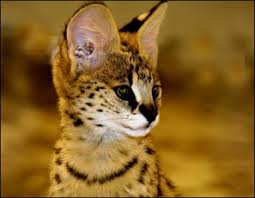
The throng–my personal rogues gallery whose roster includes reputables and reprobates alike–part like the Red Sea, making way for the most noble of all serval cats, The Duchess.

An antidote? Have you been poisoned?” The Duchess queries as she saunters into the open space, a dollop of concern gleaming in her vivid blue eyes.

I try to not laugh, partly out of respect, but mostly due to the fact that though she is the eldest of my unused characters, she is technically still but a kitten. “No, Duchess, it’s an anecdote, as in a short, amusing or interesting story about a person or an incident.

I know full well what an anecdote is, thank you kindly. I was merely attempting to lighten the dreadfully somber mood with a bit of levity.” Not her best faux pas cover, but it was swift, which should count for something. As casually as she could manage, the kitten turned to see if anyone found amusement at her expense. No one did. They knew better. “May I hold it?

I hesitate and stare at the leapling. Created on February 29th all those many years ago, it was my rationale–on paper–for keeping her a kitten, seeing as she had fewer birthdays, she would naturally age at a decelerated rate. The actuality is I have an affinity for kittens. For full grown cats? Not so much. And now the dilemma is if her kittenish nature should come into play and, without meaning to, cause injury to the anecdote, then all this would be for naught.

Her eyes plead with all the promise of being good and I have no choice but to relent. “It’s fragile, so be gentle. Take care not to crush it.” I gently place the anecdote in her cupped paws.

Why does one need an anecdote?” The Duchess of Albion asked, her nose twitching whenever the creature moves its wings.

To tell a proper story.” I answer. “More than just a sequence of actions, anecdotes are the purest form of the story itself.

But I thought characters are at the heart of every great story?

They are and anecdotes connect the hearts and minds of those characters to a story.” I try to feign calm but I can see the kitten’s body tensing up. Her eyes, those glorious baby blues, are studying the creature closely. Was I wrong in my decision to trust that she rules her instincts and not the other way around?

They also add suspense to your story, giving the audience a sense that something is about to happen. If you use them right, you can start raising questions right at the beginning of your story—something that urges your audience to stay with you. By raising a question, you imply that you will provide your audience with the answers. And you can keep doing this as long as you remember to answer all the questions you raise.

The kitten’s breath becomes rapid and her paws close in around the anecdote and I want to cry out, urge her to stop, but it’s far beyond that point now. She is in control of her own fate. Canines bare themselves, paws pulling the creature closer to her mouth.

No!” she shakes her head violently. Her ears relax and her mouth closes as her breathing returns to normal. Then, the oddest thing happens…

The Duchess begins to vanish. All the characters look on in a dazed silence, uncertain how to react.

What is happening to me?” she shoots me a panicked glance as cohesion abandons her form.

Haven’t you sussed it out yet?

No… I’m scared!

Don’t be.” I smile. “Look around you. You’re at the heart of a story. You’re free.

Truly?” she is suddenly overwhelmed with delight, her expression priceless. “But — but what do I do with the anecdote now?

Open your paws, let it fly off.

She unfolds her paws. Tiny wings beat their path to freedom. Then someone from the back of the crowd gives The Duchess a slow clap. Soon, others join in, building into a tidal wave of applause.

The now translucent Duchess waves a tearful thank you to the crowd, before turning back to me with a request, “Say my name.

Why?

Because you always simply address me Duchess and I want to hear you call me by my full name one last time before I g– —

And just like that, she was gone.

I bid you a fond farewell, Your Grace the Duchess of Albion Gwenore del Septima Calvina Hilaria Urbana Felicitus-Jayne Verina y de Fannia. Enjoy your journey. You will be missed.

Sally forth and be writeful.

©2013 Rhyan Scorpio-Rhys

Creative Commons License