Prodigy. Genius. Talented. Gifted. Blessed. While it’s true these words describe yours truly to a T, there are times when greatness does not come easily (no, really, it’s true) and some of the ideas that spill forth from my gray matter fall far afield of the greatness for which I am currently known (if I have to label this as sarcasm you are instructed to take a seat at the back of the class until such time as you are able to purchase a clue).
Most of these hideas (hideous ideas) are forgotten as quickly as they appear, but there are a handful, a select few, that hang around and claim squatter’s rights on mental real estate better suited to my magnum opus(es).
This post shall serve as an eviction notice, with the hope that given some minor attention, the ideas will pack their belongings and fuck the fuck off back to obscurity.
Venusian Gender Non-Specific Martians From The Moon
The year is 1938 and the United States launches a rocketship with the secret mission of sending settlers to stake claim to Earth’s moon for America. Upon their arrival, the lunar settlers stumble upon the satellite’s indigenous lifeform, Venusian Martians (the exiled offspring which resulted from the great Venus Mars Conflict) who do not identify by gender. The settlers also learn of a Venusian Gender Non-Specific Martian plot to invade Earth and mine the planet for the most precious energy source in the galaxy… human sex chromosomes!
Trouser Snakes On A Dame
Samantha Jackson, an asexual parking enforcement officer, is trapped in an interplanetary shuttle full of horny extraterrestrial businessmen during the rush hour commute and is forced to take on car after car of deadly, one-eyed snakes, deliberately unzipped to deflower any virgin who dares stand in their way of spacejacking the shuttle to the nearest pleasure planet!
“I am sick and tired of these masturfapping trouser snakes on this mother loving dame!”
Pocket Rocket To TheStars
It’s 1937 and America is looking for alternative fuel and power sources. Enter female rocket scientist, Hedda DiClasse, who builds a rocketship powered by the ever elusive and once thought to be mythical female orgasm. Problems arise when Captain Manuel “All Man” Hardbody is brought aboard to pilot the vessel despite the fact he possesses too much testosterone. Can he and Dr. DiClasse put aside their differences and come together to ride that rocket into the Milky Way?
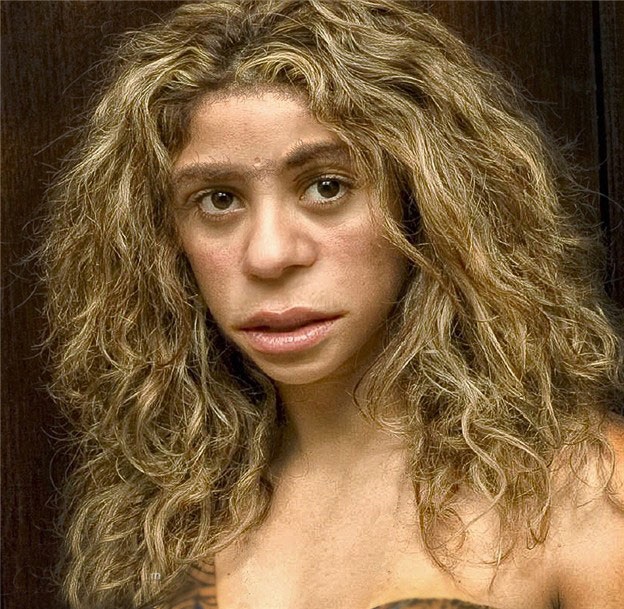
I Was A Teenage Neanderthal Bride
Ooba wan’t going to be told whom she would marry, especially with all the potential Cro Magnon suitors running around, with their promises of a newer, better way of life. But even as she discovers the perfect homo erectus, she finds herself torn between pursuing her wondrous new life or saving her old life and her family from extinction.
If Books Could Kill
A single mother gives her daughter a popular children’s book, only to discover that it is possessed with the soul of her recently murdered serial killer husband who’s out for revenge.
Firstborn
A viral outbreak renders the human race infertile and in order to cheat death, the top scientists and surgeons turn to the works of Victor Frankenstein until generations later, the world is nothing but frankenpeople, but when a frankenwoman gets pregnant and gives birth, the planet will stop at nothing to dissect the newborn.
Gym Rat Blue
Five unbelievably attractive rookie cops who look as though they spend every waking moment at the gym, have just graduated from the police academy in a nondescript city that could be New York but is probably somewhere in Canada. Now that training’s over and the rough and tumble life of a beat cop begins, they must learn not only to deal with their duties as police officers, but also deal with the problems and expectation of their severely dysfunctional families and friends, while maintaining their unnatural good looks, even after being shot. Pose, pout, protect and serve is the name of the game at the One-Oh-Sex Precinct.
Let Go Of My Ears, I Know What I’m Doing
We never need talk about this story or its title ever again. Sorry I even mentioned it Move along, nothing to see here.
Sally forth and be repurposing your less than stellar story ideasingly writeful.
Lazy bastard mode is still in effect so here are more of my previous week’s Twitter story tweets. Hopefully, a new short story will be forthcoming next week.
And in the snow I saw a girl staring at me with leery, violet eyes, a kind I had never seen before: broad, cylindrical, heavy-lidded, the pupils slit like a cat’s but oriented with the horizon. They were also deeply expressive, without artifice and absolutely vulnerable. #vss365
Cass flashed a smile so inviting that I couldn't avoid stealing a kiss. Her breath smelled of Butterscotch Schnapps and her skin felt warm beneath my hands. Sadly, we didn't have enough money to rent a room, but she would #improvise and make do, for she was a clever girl. #vss365
My mother died just before midnight and it was a senseless death, not one brought about by illness but self-medication for a disease she never had. I pleaded with her to get help as I watched her grow weaker and weaker.
And now I miss her and can only cry angry tears.#btr2sday
Like clockwork, the baby cries at 3:45am and my wife and I go through the ritual fight over who has to get up to do the changing and feeding. She wins, as always and tends to our daughter. She says it's a mother's duty and it drives me nuts at present not to be a woman. #tuesline
Despite all the chaos and destruction brought about by the blossoming apocalypse, the two of us, Marnie and me, shared post-coital giggles and pillow fights as we pretended to believe we still had a future. #bookishtues
And it was so that the pacifists divorced themselves from society and adopted and adapted to an alien way of life, praying the extraterrestrials would #overlook them when the invasion culling began.
They'd assimilated so long they had forgotten they were once human.#vss365
Problem was, I only had the time and resources to make one costume which wasn't water resistant or thermally insulated so I wasn’t sure what I was going to do when the weather turned. I couldn’t very well swing from rooftops in a parka and snow pants when winter came. #talesnoirpic.twitter.com/5LmklVj8g0
I shot my panicking daughter a harsh look to stay quiet and keep cover as the blind, bony-limbed critter moved forward, its hooves scraping softly across the cobblestones, bifurcated nose testing the air for trace scents of fear, inching ever closer to Amy's hidey hole. #1linewed
I went looking for my Build-A-Bride, and also for the repo man with the default payment notice. I found the scuffed place in the trash beneath the window where she had jumped. I followed a series of freshly broken flakes of rust across the city to an abandoned junkyard. #wordwhim
The day before her 18th birthday, Chloe carelessly stepped out of the shower. Slipping, she cracked her head on the sink and woke in an alternate reality where her mother hadn't died during childbirth, her father was alcohol-free and she even had a kid sister, to boot. #thurds
Kharon handed the coin back and said, "Your soul is a rare gift. it #belongs to you and cannot be taken away except with your permission. It is therefore the decree of Olympus that the price to cross the river is a year off your daughter's life."
After Agent Denholm geared up the search party to investigate the woods, #she locked eyes with me and said, "I promise, we are going to find your little girl…" and I knew the rest of the clipped off sentence was, "…one way or another" which meant either alive or dead. #vss365
Catching a heavy gust of wind and skidding sideways across the silent dubstep of turbulence in the air around her, Edrei was the #epitome of grace and confidence as she flew after the bank robber's getaway car to the sound of the pedestrian crowd going wild. #SlapDashSat#vss365
"I know how crazy this sounds but somebody from my past is trying to destroy me! They're recreating every traumatic event in my life, trying to hurt me, to make me suffer and the only possible conclusion is they're going to kill me and make it look like a suicide!"#SlapDashSat
Yes, I have returned from my glorious two weeks off but, no, I have not created a new short story so you’ll just have to cut your teeth on my past week’s story tweets.
It was a bizarre sight to behold as the hellspawn who knew no humility was suddenly humbled by the preteen girl who was pure of heart enough to lift and brandish the celestial flaming sword of a fallen cherub without harm to her physical self. #btr2sday
"Grampy, tell us a story!" "Yeah! Tell us about how you cheated death!" "That old chestnut? Okay. It was a bitterly cold day in July, and I was scheduled to die by lethal injection when all the technology in the world stopped working chiefly because the sun went black." #tuesline
“Why do you want this worthless soul when it has been crushed by the earth? Why do you want it when it has been drowned in the sea? Why do you want it when it has been set aflame like so much tinder?” I searched long and hard yet found no answer in her silence. #bookishtues
Paige pressed her face and hands against the window, weeping and wailing as she helplessly watched Bernadine spinning in the tornado, her eye sockets empty, the flesh of her long, tender body peeling away like tree bark, bones stripped bare by the harsh wind. #talesnoir
She kissed me and her breath was like a predatory flower, its sickly-sweet vapors made me so cold the marrow in my bones chattered. Her tongue felt like a misshapen creature, dead but still moving, as I wriggled to free myself from the tongue burrowing inside my mouth. #1linewed
Ugh. I used “tongue” twice in the same sentence. When will I learn to stop tweeting past my bedtime? It’s 2019…where’s the damn EDIT button, Twitter???
For a brief moment, she was actually pleased to see him again after all these years but after the heart-warming nostalgia faded, the shine in her eyes dulled as she recounted the story of their life together: the sham marriage, his betrayal, and her attempt at suicide. #wordwhim
“Mr. Hinton, I was told to find you. I’m new in town.” “Came for the celebrations?” “Um, sure, I guess that's why I was invited. What celebrations, may I ask?” "It's Slaughter Day." "Okaaaay. And what will you be slaughtering?" “Newcomers. To appease the gods, of course.”#vss365
Oscar was ecstatic when his cousin, a TimeTravelCelebrityDate employee, set him up with Sade. But when he arrived at the restaurant, things got weird fast. His date wasn't the British Nigerian singer. It was actually the Marquis de Sade.
I’d rather keep company with fictional characters, lost within my own imagination. But there were three occasions in my admittedly light romantic past when my interest had been piqued, resulting in a couple of aromantic crushes and one extreme French kiss. #flashthursday
Garth scarfed down the last of his bacon cheeseburger and chugged the entire pint of Guinness, the breakfast of champions, before answering the vidscreen.
Friends and family viewed Edna as his wife but Jay saw her as his possible escape hatch from the sins of his past lives and past experiences for he truly believed marriage held all the answers to the future questions that stood in the path of his one true destiny. #vss365
Mssr. Gilad pressed his lips, cold as liquid nitrogen, against the back of my hand in a gesture that was meant to show courtesy and extreme politeness but heat seared my tender skin. When he released me, I drew the spot up to my mouth, trying to blow off the burning. #SlapDashSat
Her eyebrows thinned and turned angry, uncompromising, jagging down the canvas of her brow like lightning bolts. Tendrils of dark, oily hair stretched down and tangled in the sharp corners of her snarling mouth that revealed too-white teeth determined to rend flesh. #SlapDashSat
I made excellent time on the freeway and knocked on the door earlier than planned. An older man, obviously my date's father, with loose chalky skin, a red nose and matching lips answered and he struck me as a clown employed by a particularly seedy traveling circus. #SlapDashSat
Although she sat safely in her comfy chair she found herself falling, falling through memories which was actually like falling back through time, back to when she initially sparked the kindling that would ignite the flame that would eventually reduce her life to ash. #SlapDashSat
Yep, still on vacation, so my story tweets for the past week are gonna have to hold you until I return to scratch out new short stories. Enjoy!
"You're the Messiah, Chae, people already know what you can do. They don't come to these exhibition thingies because they want to see a miracle. They can see miracles without you any day of the week. They come to see you. They pay to see you."#MichaelaMassive#Page19#btr2sdaypic.twitter.com/AFF228qHoH
It was a small room filled with the almost imperceptible cheap hotel scents of old sex and distant death both emanating from a bed that dipped in the center like a swayback horse. On a table beside it was a wash basin and pitcher that passed for the en suite bathroom. #tuesline
From behind me, Kevin touches my shoulder and for a split second, I think I'm in love because my body gets tingly all over, goosebumps sprout everywhere, and my pulse crackles like lightning. Then I realize he's holding a live wire. I'm being electrocuted. #bookishtues
Gingergirl struggled into her clothes, splashed water on her freckled face, and gulped down a scalding cup of tea. Flinging open the door to the garden, she felt a breeze wash over her face. It had rained overnight and the air was damp with expectation. #1linewed
He was well aware that his dream profession of being a full-time writer would a solitary and lonely venture, so he joined the social media site, putting time and effort into every single post yet his best efforts went unnoticed for he remained invisible to the world.#SlapDashSat
"I love the all," John said as if that explained everything. "What the hell does that mean?" I asked. "The all of you! In the end, when my time is up, I hope I'll have achieved the divine…a lifetime spent with you!" "That's actually kind of sweet but oddly worded."#SlapDashSat
It’s vacation time and I could have planned ahead and scheduled a couple of short stories to keep my blog parking space warm during my absence but I’m a lazy writer so what you get is a sampling of my Twitter story tweets from the past week instead.
Sorry, not sorry.
"You say we have a connection, our auras supposedly overlap to create a psychic rapport. I want to believe you but I'm sitting across from you at dinner and I need you to look up from your phone and see me!" I shout in silence until my emotions are hoarse. #tuesline#btr2sday
The past crashes in on itself behind me in the time tunnel. Choking back panic, I struggle forward in the vortex, away from the destruction. I force myself to keep moving forward, past the present into the unknowable future.
Just as her eggs began slipping from her talons and her travel-weary wings were about to give out, Bluella was fortunate enough to find a nest…but it already contained an egg of its own and she caught sight of the parent bird in the middle of its dive bomb. #talesnoir#1linewedpic.twitter.com/Pmg6qfMYFZ
"I think you've been on your own long enough. It's time for you to get yourself out there and meet somebody who's going to make you happy. Don't you want to fall in love again?"
It tore me to bits when I woke up from the fairytale fantasy and learned that my first love wasn't the perfect one, my soul mate, and that I was not talented enough to do what I love for a living, but it broke me into a better shape to complete the puzzle that is us. #SlapDashSat
Each dawns Beckah tries to begin afresh, to be a more polished versions of herself, better, beyond reproach, perfect. That is, until she runs into her mother who dashes her hopes on the rocks, leaving no doubt in her mind that everything she dreams for is impossible. #SlapDashSat
A lifetime of tiny deceits, petty deceptions and random, unnecessary acts of selfishness slowly inched me so far afield from the good person I foolishly imagined I was that I can no longer spot the path back to being a better or even halfway decent human being. #SlapDashSat
In my sock drawer, there is a hiding space behind a row what my father calls grave socks as in one foot in the grave because they either do not have a match, are riddled with holes, threadbare at the toes and heels, or the ankle elastic has given up their hold on life. In that hiding space, there is a letter written carefully in a mixture of cursive and print. In that letter, are words, feelings, emotions, and admissions that a boy would never say directly to a girl’s face, not even on a double dog dare.
On a bicycle, there is a shy paperboy who, even though I have not responded to his first letter yet, would write me another letter, I am sure of it, reminding me of our time in the park. In that park, there is a rum cherry tree under which I made a promise to the shy paperboy of seven minutes in heaven.
In my closet, on an afternoon when no one is home, I make good on my promise with the shy paperboy. In the dark, my mind is filled with a sort of scary, sort of awkward fireworks that I can see but cannot hear because my heart is pounding so fast and loud that I swear the shy paperboy can hear it.
In that kiss, there is something I do not have words for, something that drops my guard completely, makes me feel truly comfortable with the shy paperboy and I am desperate to let him see me in my entirety.
In that feeling, I am crying harder than I ever have before, harder than I even knew I could, crying past the point when I run out of tears. In the tearless sobs, my breath is hitching and I realize that this is most likely the happiest and most terrified I will ever feel in my life.
In the silence, after the kiss and the tears, the overwhelming and slightly painful joy is replaced by the sound of a key sliding into a lock, the tumbling of a bolt and the jangling of a woman’s metal bracelets.
In the house, there is a mother who will tan not only my hide but the shy paperboy’s as well, if she ever finds out I have company without permission and especially if my room door is closed and that company is a boy who is in my room.
In the window, there is a scared paperboy climbing out and mumbling a prayer that he does not hurt himself or makes a sound when he drops a story to the ground below.
In my mother’s eyes, there is suspicion when she opens the door and enters my room, catching me rushing to shut the window, cutting off the cool breeze even though I am dripping with sweat.
In my mind, there is a list of excuses that I cannot find in the clutter of thoughts so I just stare at my mother as innocently as walks past me and opens the window, about to stick her head out to inspect the backyard.
In my mouth, there is a fib, “A wasp!” I say just a bit too forcefully and I build on it by telling her there was a wasp in the room so I closed the door to stop it from getting into the rest of the house and I managed to chase it out and shut the window behind it.
In the moments that tick by too slowly, my mother glances at the window again, then at my face before turning to leave but as she reaches the door, she stops and says, “You should probably find a better hiding place. Your father’s been talking about throwing out your grave socks and you wouldn’t want him finding that letter, would you? And the no company without permission rule stands no matter how sweet a boy’s words are or how much your heart aches for him, understood?”
In the end, I realize I am not as clever as I think I am, nor is my mother that foolish or unreasonable and I discover a newfound respect for her as I answer, “Yes, ma’am.”
About There is a Letter: The story began life as this sneaky tweet for a Wednesday Twitter hashtag game called 1LineWed (hosted by Kiss of Death @RWAKissofDeath) that I banged out while I was working my day job:
In my sock drawer, there is a letter. On a bicycle, there is a paperboy who would write me another letter. In the park, there is a tree under which I made a promise of seven minutes in heaven. At home, there is a mother who will tan my hide if she ever finds out. #1linewed
Welcome back to the Infobahn Chronicle Channel! My name is Kari R. Wade and I’m coming to you live from Staten Island with a local news story that’s gaining national and international attention.
Before I begin, I need to issue the following warning: Tonight’s news story contains adult themes, possible sexual content, and strong language. If you are sensitive to any of these, please proceed at your own discretion. Furthermore, the opinions expressed during this broadcast, especially those from the people joining the live chat, do not necessarily reflect the views of the channel.
As previously mentioned, there’s a local story and by local I mean Staten Island, New York, where I broadcast from, involving a wife and husband, both of them nudists and professional photographers, who took nude photographs of their 10-year-old daughter and had them framed and placed on various walls of their house along with other photographs which were not all nudes and no there were other underage models. One day, one of the girl’s friends from school visits the house and sees her friend’s naked photos and when she gets home she tells her mother who promptly calls the police. With a warrant, the police confiscate the nude photos of the little girl and the couple is now facing child pornography charges.
Do you agree with this? Or can you see the parents’ point of view that the nude photographs of their daughter were art?
As I consider all of you my cohosts, I’m opening up the chatline to get your thoughts on the matter. As always, while I do believe in the freedom of expression and will air your content as is, this is a safe space everyone to express their opinions and hate speech and bully will not be tolerated.
Ah, we have our first contributor:
***
Casino_Royale: I have photos of all my children in the tub at play when they were younger. I love the shots. I think they are joyful and innocent and all things good concerning childhood but I wouldn’t hang those photos in a public space for anyone walking around my home to view for several reasons.
First among them being my children’s embarrassment. Second, the fact that the world we live in is full of some very strange humans that may not think them so harmless. Maybe someone looking at them isn’t seeing them in the light for which they were meant. Bringing attention to my child to that person is easily avoided by not displaying the photos. Artistically it sucks, I know, but it is as it is.
GILF57: I agree but let’s not forget the child is 10. That’s usually past the age that you refer to as joyful tub photos. I have a 13-year-old girl and we stopped taking those kinds of photos at around age 5. A big part of the law surrounding child porn has to do with the fact that the victim cannot legally give consent. I think if the parents weren’t into child porn, they showed remarkably poor judgment.
LarrytheAbleGuy: Like pornography, I can’t define art, but I know it when I see it. Without seeing it, I am with GILF57. Naked baby, maybe. Naked 10-year-old, fishy, or at least, remarkably imprudent, given the current climate.
NYCer4evr: How about giving those folks the benefit of the doubt? Having said that, Art is incredibly subjective, as is common sense at times, unfortunately.
Grimly: They should have known better but like Batman once said: “Hindsight is often better than foresight.” It’s hard for me to speak to the judgment of those parents. Perhaps they have strong convictions that conflict with the prevailing social standard. It wouldn’t be the first time that happened.
Sisterectomy: It’s child pornography.
Spam_I_Am: As Larry implies, the “current climate” is pretty puritanical when it comes to this sort of thing. Like Grimly, I cannot presume to know the parents’ philosophy and attitude from this distant vantage point. Nonetheless, I do agree with some others who suggest that their judgment about displaying them in a place potentially open to viewing by non-family-members may have not been particularly wise, given the puritanical attitudes that are so prevalent these days in the USA.
But I really cannot fathom how someone can immediately proclaim “child pornography” without any better insight than I into this matter. I presume that such a person would automatically assume that a child raised in a naturist environment is automatically and continuously a victim of sexual abuse then? That is an unfathomable position to me.
The mere fact that a child is photographed unclothed does not mean that photograph is child porn, any more than a nude picture of an adult is automatically pornographic. To me, the demarcation between “art/document” and “abuse” is a lot higher than the mere existence of the private image.
More than 20 some odd years ago a fine-art photographer by the name of Jock Sturges was raided and investigated by the FBI over allegations that some of his work was child porn. The charges were eventually dropped. Ironically he became a bit of a lightning-rod for silly attempts to censor artists and gained quite a bit of notoriety over this.
Bottom line for me: people need to tone down the hysteria and do a lot more to establish motive and intent before jumping to crazy premature conclusions.
Kindhrtd: Not having any children of my own, I can more easily be broadminded about some of these issues without feeling either of my knees jerking. I’m not sure how much weight I would put on the parents intent…its the end result that to me is important. I think a better solution to the problem would be to take the parents aside and strongly suggest that any such photos remain away from public view.
And of course, someone needs to have a conversation with the child. I agree with a number of commenters who feel like we don’t have enough information to make a determination. Just saying that the photos were of a nude child is not in and of itself enough. There have been many tasteful full nude photos on the covers of magazines in recent years (such as the expectant mothers on Vanity Fair) and I don’t think we can immediately claim that such photos are porn.
mommie_mia: I have two children of my own and also some “cute” pictures like the ones mentioned here, I believe all parents can appreciate proud parents wanting to display pics, but nude child photos are a parents memento, not for anyone who walks down the hall. Children are to be cherished and protected not displayed for all.
WitchrBadSelf: I am sure the parents did not mean ill, or pedophilia. However, 10 is too old, I didn’t take any naked shots after age 2. And hanging them in the house is a mistake, also. However, I hope it isn’t a mistake they have to pay too dearly for.
Grimly: Sally Mann is another prominent artist who has been challenged for photographing (her own) children in the nude, as has Bill Hensen, an Australian photographer who earned the wrath of the then prime minister, Kevin Rudd:
This is simply not an issue that can be disposed of easily or in a glib manner. Children should be protected. The freedom of artistic expression should be protected. Whenever our values come into conflict with each other, as inevitably they will, our response should not be to throw down gauntlets or prosecute, our response should be to come together, speak, listen, and collaborate.
Felicity: At age 10 it was, at the very least, wildly inappropriate. Art, perhaps, but the needs of the child are far more important than the artistic needs of the parents. It is a question of precedence.
DoverClover: Very poor taste and I question the parents’ sanity. Would they have their daughter walk nude into a room with people outside the family in it?
FromtheHip: There is no way this is legitimate “child porn” under any valid interpretation of laws in the USA, though twisting laws to perpetuate false arrests and malicious persecutions is a tactical goal of Rabid Religious wRong (RRR) organizations and those who arrogantly or cluelessly act on their instigation.
Kari, message me privately if these are friends who’d like help contacting any of the public interest law organizations or naturist and nudist activist leaders I know who may be able to help with legal resources, tactical advice, or filing Amicus support if they end up engaged in serious litigation.
What needs to happen in a case like this isn’t generally possible, but the friend and her parents who went to police, the cops involved, and the judge signing the warrant, need to be prosecuted as felons for conspiracy to deprive civil rights under color of law, and relevant parties sued for damages for false arrest or malicious prosecution or impeached and disbarred, ending government careers. The parents deserve a child abuse investigation for indoctrinating a kid to be incapable of respecting neighbor’s civil rights and likely to lack coping skills for our diverse society, quite possibly due to active parental and possible church or similar abuse and not merely negligent parenting.
As others have mentioned, there is a certain amount of case law that treats images like this as protected speech, not just in private noncommercial family surroundings or under some age, but as commercially published coffee table book or gallery quality life figure art, where lesser civil rights tests may attach (“intermediate scrutiny” rather than “strict scrutiny”) because of court interpretations of businesses not being citizens. That exists both for artists and photographers, and for book importers (eg, ALESSANDRA’S SMILE) and resellers, as well as private persons. Some of that case law can be found in this specialized law library, including cases not widely known to most counsel:
Kari, in what jurisdiction did this case occur? Do you know what specific charges have been filed? Is the Gestapo-like abuse of child protective services common to many jurisdictions also involved?
Of course law is strategic, tactical, and often deals with corrupt parties in all of black robes, blue suits we hand badges, guns, and truncheons, and prosecutor’s offices, especially in states where judges and prosecutors are elected rather than appointed employees, or where RRR related bigotry and subversion of government is common.
What is nothing more than a barely tolerable outcome in terms of Constitutional law may involve various time, money, and stress limits as well as the risk of a malfunctioning court not upholding the law due to various defects and prejudices prompting legal tactics that are far from adequate. Ideally, this kind of case calls for aggressive action against its instigators and perpetrators, from the other kid and her parents, through government agents largely immune due to sovereign immunity as if some king’s henchmen. A not guilty or dismissal, followed by a civil suit for false arrest, and recovery of legal costs and fees, plus the record of having done that to protect others (albeit only slightly), is likely a best possible real-world outcome. How far are these victims willing to go upholding the rule of law, versus just trying to cut and run?
It’s ludicrous to have laws that are so susceptible to abuse as are present kiddie porn laws. It sounds as if this is a case of hyper-aggressive bigots and thugs acting to lynch an entire family, as a result of prejudices and bigotry contrary to the rule of civil rights law for the USA. It’s fully legal for the acts of modeling or family lives or nudists and naturists to exist regardless of age and to photograph those.
Persons whose bigotry is so incompatible with respecting or at least tolerating neighbors living within their rights deserve to be prevented from abusing kids with those pathologies. Our government has an obligation to prevent this kind of lynching and never engage in malicious or reckless conspiracies to use violent force or threat thereof to create chilling illegal prior restraint against legal and protected speech or actions, as this case appears to be.
I also note that the most disrespectful of civil rights and clueless about US law comment so far in this thread comes from a government agent, who we fund and trust to use violent force potentially depriving other victims of civil rights. It’s overdue that corrupt criminal gangs we fund as the government be treated as worse crime problems, both personally and as organizations, than far less abusive non-government gangs of thugs or their members. End sovereign immunity and those willing to uphold the rule of civil rights law can be empowered to drive malicious thugs out of positions of power if they seriously abuse them.
Kindhrtd: I’m not at all sure I agree with everything that FromtheHip said…cuz he said A LOT…but DAMN, that boy has balls with a capital B!
Spam_I_Am: I should add to my last comment about establishing “motive and intent” and the word “harm.” Surely you can harm your children despite having good intentions, and it’s still child abuse. I just don’t see any evidence for jumping to that conclusion here based on the information we’ve been given so far.
For the same reasons I think it’s inadvisable to go bombing foreign countries just because they thumbed their nose at you once, I agree with Grimly that the first reaction in these sorts of cases should be dialogue, fact-finding and collaboration, instead of trying to be the first and loudest one to scream “off with their heads!”
Grimly: The bedrock of this issue is not a legal dispute, it’s a human one. Legal remedies seduce us because they promise a decisive outcome. They promise justice. The real stakes here cannot ever be decided in a court, however.
Baroness: I have to say I am with FromtheHip. If this was a situation where the child was or felt abused it would be different.
Topaz: Agree with Grimly’s point of view, not enough info.
Quietasitzkept: If anyone has actually seen Sally Mann’s work, it clearly isn’t pornographic. Disturbing, but by no means abusive or sexual. Sturges walks a much finer line, much more charged imagery, and was still let off. Photos of your own prepubescent child? As presented, it sure doesn’t sound pornographic. Stupid to hang on your wall, probably, but the parents’ sense of judgment isn’t the issue. Did it harm the kids? That’s the important question, which isn’t answered here.
FromtheHip: The fact that this has been already made a serious legal case means that it needs resolution as a legal case. It became something that is far from ideal and reflects pathologies of our society itself to tolerate the way hate cults endorse abusive parents indoctrinating kids in ways fundamentally incompatible with any diverse Western society, and authorities willing to turn into adrenalin junkies on any excuse to abuse power.
A lawyer friend calls me a tusked boar for some of the focused tactical redress I find needed in cases like this. To tolerate an atmosphere of chilling prior restraint this kind of case reflects can amount to an overall higher level of violence than taking out the thugs causing it, with one wrongful violence in small pieces, the other more concentrated force to uphold core legal standards.
It’s needed to do that to other parents who millions would view as normal for indoctrinating EITHER overt RRR hate cult OR institutionalized bigotry counterparts they may not consciously recognize themselves doing, such that the friend had the reactions she did. It’s needed to show that cops when they act as little more than mercenary thugs, politicians as mob bosses, and intermediate bureaucrats, can be held personally liable under the SAME legal standards that limit protections to corporate employees and officers, rather than be above the law. “Bivens” precedent for when it’s legal to personally as well as officially sue criminal cops, or exterminate bad cops perpetrating felonies many state laws say don’t qualify for lawful self-defense against cop perp’s, is far from adequate legal process.
It takes 3-5 generations to help masses of people adapt to small chunks of social changes as became overdue in full overnight in 1868 when the 14th Amendment extended the Bill of Rights inside states before our society diversified exponentially before ever catching up to 1868 law. In law on these issues, justice delayed is justice denied, yesterday, today, and tomorrow. That’s a chicken and egg mess, where legal remedies need to enable and pressure expedited social progress, but where social progress is needed before legal remedies are fully functional.
Anthony Romero’s boyfriend’s dad had an interesting experience at his business with his efforts to simply display what he thought was interesting art to make for a less dreary workplace. He found that insurance clerks complained that abstract life form pastels on the walls caused them to feel the workplace was hostile (not so clearly expressed, of course), while moving the same art to a boardroom and executive suites resulted in either no responses or positive comments from generally better educated and more intelligent employees or visitors to his large insurance company.
Besides Progressive Insurance’s general support of arts, they’ve also been a benefactor to the ACLU of over $30 million in donations, and that along with the Bush regime’s abuses motivating a more than doubling of ACLU membership have increased resources to assist this kind of victim of abuse of legal process.
Difficult as it may be, full enforcement of long-standing civil rights law interpreted based on current and honest societal fact, needs to be the yardstick for what kids need to be raised to have skills to live within and around. Monoculture supremacists, whether from hate cult dogma or gross lack of challenging adult and parenting skills, push an impossible paradox that civil rights should be restricted to reduce conflicts between their dictum and their kids lacking skills to deal in the real world of many conflicting life practices of neighbors (resulting in dysphoria & cognitive dissonance).
Alongside the obligation to use broad civil rights-related actions existing openly in society, religious or equivalent monoculture coercion cannot work in a diverse society, as even groups like Baptists or Mormons or Muslims have vicious feuds within themselves over which version of hate cult dogma to coerce on others. The best options for those who lack core parenting skills for the severe challenges of adapting kids to a diverse society with much chaos and complexity is to either not have kids, or pick their favorite Sharia court country and move there.
As to legal process, of course, a detailed finding and creation of a record of fact is important to this kind of case. In theory that’s what cops were required to do before filing for a warrant, and could not have done honestly based on the OP’s stated issues above. There are serious legal seminars on child porn with some rather disgusting examples that these cops should have attended before this kind of action.
There are also tactical seminars for prosecutors and cops to learn dirty tricks to circumvent the law and perpetrate malicious actions over legal speech, which arguably deserve to be found having a nexus to this kind of abuse and treated as instrumentalities of civil rights felonies, rather than protected religious or political speech. This result being an abuse of power backed by gunpoint gang is wrong whether the cops acted based on malice or negligence in professional and legal competency.
GILF57: Most of you have skipped the important fact here: these laws are made to protect the child(ren). The parents are collateral damage. While I can sympathize with them and hope that this is all a big misunderstanding or witch-hunting, the fact is that the child cannot ever give consent and any damage to her may not be known for years. I have known several victims of child sexual abuse. The damage may not show up for a decade and they never get over it.
Spam_I_Am: None of which excuses rushing to judgment. The real debatable issue here, to me, is what constitutes “harm.” I believe certain factions expand the definition of it to help them promulgate their personal agenda.
I think it would serve us all well to try to come up with a concrete definition, something other than “it might show up 10 years later, maybe.” Sounds like a blank check to me.
I also find it somewhat offensive to excuse any over-reaching legal action by claiming that it’s OK to breach this person or group’s rights (who have not been proven to have done anything illegal) in order to allegedly protect this other individual or group.
EVERYONE’s civil, legal and human rights should be respected and protected, until such time as it is very clear that someone has squandered certain of those rights by committing a crime.
Nana:@Spam_I_Am, I am astonished that you do not see the harm to a 10-year-old girl in this scenario. As a parent of a 12-year-old male, I think these parents should have put the photos under wraps years ago. Like, when they were 6-ish, and no longer babies.
@FromtheHip, you are an ass. And probably a pedophile, since you seem to have thought this issue through so seriously.
Sisterectomy: AMEN, Nana!
GILF57: I also find it somewhat offensive to excuse any over-reaching legal action by claiming that it’s OK to breach this person or group’s rights (In best Georgian accent) Like Jimmy Carter used to say, “Life, is unfair.”
Sisterectomy: @Grimly – The mental & physical damage a pedophile inflicts on a child in the pursuit of pleasure and what he calls “Love” and often “Art” is PERSONAL when you have children of your own. There’s not a parent out there who doesn’t feel a tug on their heart when they hear of a case and they don’t even get the real story. The real life facts are hideous and frightening. So Hell Yeah Man, it’s Personal.
Spam_I_Am: I don’t see the harm unless it is apparent the child feels harmed. I already said it was probably bad judgment on the part of the parents to have those photos in a place accessible to non-family-members.
I have known many victims of child sexual abuse – a number of them among my closest friends. Assuming that I have no compassion for people who’ve been through such things, simply because of what has been said here is dangerously presumptuous.
However, I draw massive distinctions between someone who, for example, was systematically and brutally raped by a parent for years on end, and some superficial hearsay about some nude pictures on some family’s wall, without knowing the slightest about the family, it’s history and dynamics.
If people think that presumptively and traumatically tearing up a family over such things – without any consideration about how healthy the overall environment was and how happy the children are, is better than simply sitting down with the parents and discussing, for example, the wisdom of having such photos on public display, then I don’t think there’s anything left I can say.
Spam_I_Am: The problem with that last point, Sisterectomy, is that you don’t have the facts in this case. Why you act like you do is a mystery.
No one is trying to argue that pedophilia is wrong or damaging to children. The point in this discussion is whether this case seems to meet the definition of pedophilia. I would like to see someone discuss in detail why they think it does, and how one ascertains damage/harm.
Because if it’s going to be a legal issue (as it already has become apparent and must be if the adult’s parental rights are being taken away), then it presumably has to meet the legal standard of either “pedophilia” or “child endangerment”. If someone would care to quote the legal definitions as applies to the locale in question, and how this case qualifies, I’d be interested to hear that.
Baroness: You’re opening a can of worms by deciding as an outside party that something relatively neutral is automatically a sign of abuse. Maybe it can raise a flag, but it is not an indication of abuse alone. By creating a tone of indecency around what might have been perceived as perfectly natural for the child, you’re completely warping any concept of normalcy or happiness in her future. It is not the place of outside parties (particularly uninformed ones on the internet) to decide children have been abused – and a lot of these crazy cases that turn out to be false are precisely that: outside parties who don’t listen to the children.
By no means am I somehow trying to minimize abuse victims, and I personally have a lot to say about the topic, but realistically Kari is very neutral. She doesn’t go into detail about the situation and to see people not only assume, but take up arms about something they don’t know anything about is a little disturbing.
Nana: This seems stupid. Can we meet the child? See the photos? Baring that, this is all kind of a joke.
IMO, displaying nude pictures of my 12-year-old child to anyone who happens to be in the room is just wrong. Anyone who does this should be reprimanded, hopefully by their own family and not by the state. Oh and sorry, my family is really fucked up and dysfunctional, so it can’t or will not control itself.
Spam_I_Am: I think it’s safe to say that opinions differ on the general appropriateness of nudity in the home. For example, naturism, as a lifestyle, is perfectly legal across the country. It would seem that the simple adoption of that lifestyle would automatically breach ana’s standard stated above.
So the challenge here, it seems to me, is how to reconcile these disparate views and standards, so that the various members of the community are satisfied. I also think it would be great if someone in the family were to bring up the question of whether the public display of the photos was a good idea. But even if the community/state got involved, it seems like the reasonable thing to do first is to, as Grimly said earlier, engage in a dialogue, rather than rushing to snap judgments.
None of us here have the details, so in a sense, as Baroness says, we’re all just sort of blowing a lot of hot air about it. Clearly, discussions like this are inclined to get emotional and inflammatory and make people quickly take sides, without actually resolving much in terms of specifics.
Baroness: What kind of people do you let in your house? I mean the daughter is inviting friends over and doesn’t display any behavior indication she has a problem with this. I find that to be an interesting indicator of tone. Even if you somehow think these photos would trigger an incident of abuse, you should still question what kind of “display” your private dwelling is on.
GILF57: I have known many victims of child sexual abuse – a number of them among my closest friends. Assuming that I have no compassion for people who’ve been through such things, simply because of what has been said here is dangerously presumptuous.
I didn’t assume you had no compassion if it came across that way, I apologize. What I am trying to get across, is that the needs of the child are paramount and if a mistake is going to be made by the State, it will be made in the child’s favor. Generally speaking, I can live with that.
I mean, the daughter is inviting friends over and doesn’t display any behavior indication she has a problem with this. I find that to be an interesting indicator of tone.
I cannot understand how her behavior is of any consequence. Lots of abuse victims find the situation normal and as I have said now many times, they cannot legally give consent anyway.
There does seem to be a big difference of opinion here by those who are parents and those who are not.
Baroness: This discussion is pointless. Let’s all teach our daughters to fear their bodies and feel only shame.
FromtheHip: One of the problems with lynch mobs rather than responsible citizens addressing these issues, is that the lynch mobs of emotive so-called adults and politicians pandering to them cause NAMBLA to become a legitimate and needed civil rights organization, in addition to a cover for real criminals. Clean up bad laws and the lynch mob mentality behind them, as well as address messy issues of post-pubescent sexuality and consent, plus a side dish of gay bashing, and most of the legitimate public purpose and need for NAMBLA or similar groups disappears. In effect, what many reckless religious or political predators espouse as if “protecting children” becomes a mode of abuse of kids and adults alike.
Pedophilia cannot legitimately be a crime. It’s a medical pathology, that crosses both sides of what’s necessarily a serious boundary for Constitutionally valid law, between thoughts that are legal even if warped, and crimes of actual molestation of specific victims. Beyond that, the term pedophilia is frequently used as an excuse for religiously biased laws to censor openly visible normal human sexuality of post-pubescents and to discriminate on the basis of sexual orientation, rather than restricted to its long-standing medical definition to depict only adults with an unnatural sexual interest in pre-pubescents. To be valid, laws must be narrowly constructed when they deal with issues of conflicting rights as sexuality relates to both privacy and religion, and must be based on real harm to specific victims rather than pander to broad prejudices of bigots and irrational masses.
As a long term naturist who’s reviewed developmental psychology and social psychology studies of child development comparing nudist and “textile fetishist” raised kids, I know that social prejudices coercing costume compulsion do on average harm kids, whereas nudist parenting practices on average result in teens with 18 months greater developmental maturity in several key areas (personal identity concept, boundaries awareness, decision-making skills) than for their costume-compulsive peers. In fact, indoctrinating kids to be costume-compulsive is a cause of teen suicides and lesser emotional pathologies, when in a “too much is never enough” economics driven culture many teens expect themselves to be not just models with specific body types and huge costume and makeup and salon services budgets, but airbrushed modifications of those. Reliance on Nikes or mall textile costumes to define oneself is far less healthy than mature concepts of a functional human.
I have assisted victims of bad laws defend fraudulent molestation complaints, including one divorce related extortion case where a friend was prosecuted after a psycho girlfriend of the X2B had her husband show the young kids porn videos on what was later found to be stolen video gear that husband was fencing, to enable the sick mother and friend to take the kids to police with the trigger for cops gone wild, worse than Joe Francis rapes, and plant the suggestion, “how would they know this (porn video scenes) unless daddy did something to them?”
I’ve also known “convicted sexual offenders” whose “crime” was having a boyfriend over the state age of sexual consent as teens, a year before unConstitutional laws were repealed or overturned, but not invalidating lynch mob convictions essentially where the crime was being a normal gay teen rather than having same ages heterosexual partners.
Lesbians have less often been targets of equivalent due process and other rights violations, also a form of due process violation by corrupt politicians and lynch mob voters and jurors. That’s not to say there isn’t long term harm decades later to victims of real molestation, and I’ve known some of those too, but that use of legal process for malicious or wantonly negligent civil rights abuses is unjustifiable subversion of government into the role of violent criminals.
For nudist and naturist families, as well as liberal arts involved communities, costumes are no more than that, or occupational task safety tools. To presume otherwise as many people do is often an excuse to wrongfully attempt to impose personal prejudices on others, or sidestep responsible parenting of kids who almost necessarily will be exposed and have to live alongside people of very different ideologies and practices than their own families.
That’s where sorting out legitimate causes of cognitive dissonance and dysphoria as real emotional consequences of values conflicts and life skills, from presumed religious or social bigotry based “standards” that are little more than personal or subculture preferences or prejudices, is essential to the rational development of legitimate public policy and law. Most people never spend adequate time inspecting their own issues of that nature, never mind looking at society broadly. As such, they’re less than competent as parents, or citizens. As our society continues to diversify, the importance of changing that grows rapidly.
It’s an old quote from a dead guy, but remains true: “Few people are capable of expressing with equanimity opinions which differ from the prejudices of their social environment. Most people are not even capable of forming such opinions.” — Albert Einstein, Ideas and Opinions
In our society, we need to see most people doing what old Albert suggested most people are incapable of doing. Were we to restrict baby hatching to adults with those developed faculties, we could easily reverse overpopulation related aspects of global warming. That kind of bias could be far more easily justified in public policies in tax codes and otherwise, than present ones that result in de facto dysgenics, where the only current USA positive birth rates are to the lowest IQ demographics of baby hatchers unlikely to be competent parents in this complex society.
BTW, presumably, you meant no one is claiming “pedophilia” (in the commonly used erroneous definition?) is NOT wrong or damaging? As discussed above, IMHO that needs to be refined among medical pathology and thought policing versus criminal law restricted to actual molestation of pre-pubescents, also separating out consent issues for teens who under many religious and cultural standards even if not some legal “bright lines” are sexual adults entitled to rights as such.
Spam_I_Am: What I see is certain people refusing to support their position other than trying to be divisive (by trying to divide the participants into opposing teams), or by throwing out non-sequiturs like “life is unfair sometimes”, or “it’s just collateral damage”.
I have a funny feeling that the writer of those things would be rather outraged if I had used the same phrases in response to the idea that children should be protected from pedophiles.
Grimly: Count me as an experienced parent, for what that’s worth.
@FromtheHip, I have to confess that I struggle with the long monologue form as an effective way to connect with someone who might not see eye to eye with you. I mean, we could spend hours just on the issue of how society might shift behavior from the legal to the medical arena, but you bring up a whole lot more than that in a single post.
Nana: ok, as far as sexism goes, I say again: MY SON (12) DOES NOT THINK THAT NUDE PICTURES PAST 3 YEARS OF AGE SHOULD BE DISPLAYED IN PUBLIC. We are a progressive, liberal, way more tolerant family than most in the Midwest. WE LISTEN TO OUR SON WHEN HE TELLS US WHAT IS APPROPRIATE.
Baroness: That’s your son’s opinion. And good for you for listening to him. But frankly, it does sound like you have influenced his opinion.
It is not a premise for judging this situation. Who here asked the girl how she felt about it?
JJBirdy: My son (who is 2) has many naked pics because he’s my nature boy who enjoys a good undressed romp in the well-enclosed backyard of his grandparents’ house. That said, I haven’t posted any of these exposed pictures on the walls nor have I posted them on any of my social sites where I post many pictures. I think the taking of the photos was not for the intent of being pornographic but it wasn’t a good idea to use them as art on the wall, especially since the child is 10. So calling them child pornographers is a bit much.
FeelTheForce: Interesting. I’d say that if the couple were to hide the photos and only look at them secretly and in private then it would be porn. Having them hanging in their home, I bet they viewed them as art.
As others have pointed out, It is difficult to say without seeing the photos. Maybe it was obvious in the photos that she was nude, but no “private” parts were showing? we just don’t know all the facts here.
As a side note, I am appalled at the fact that we’re calling each other pedophiles based upon a few comments in this thread. Can’t we have a simple discussion without name calling? Good lord people.
TeaLibby: I don’t think this is pornography. Any parent has taken a picture of their children nude. I have a few of my own. I have to agree with FromtheHip on this issue as well. What’s done in my house, dammit, leave it alone. Now if I sell the photos or post them on the internet for perverts to check out, in the sense, it might be porn. Otherwise, leave my photos alone.
Petalblossom: Simply said: None of us can determine the nature of these pictures since we cannot see them. That said, it’s doubtful they’re pornographic since they were on display in public areas of the home. See, no emotion first.
Ivy_Inverness: Petal is correct. The presumption of innocence has been lost here altogether. Also, I believe in protecting children, but the “moralistic” swing away from individual rights is appalling. As many others have stated, insufficient information to make an informed judgment. Those who jumped up and screamed, “pornography” with such scanty evidence are the same folks who believe in lynching without a trial.
Valkyrie: I think there are several issues to untangle here, and I’ll try and do that, and give my opinion on each.
1) Is taking nude photos of a 10 year old automatically pornographic?
I would say, no. Depends on the context, what the child is doing in the photo, whether the image is sexualized and whether the child feels comfortable.
2) Is it a good idea to take such photos?
Probably not.
3) Is it a good idea to publicly display and/or distribute the photos?
Definitely not, and very possibly illegal as well. Not sure how child pornography is legally defined.
Someone I know is now on the sex offenders register because she took a photo of her 7-year-old nephew playing in the garden in the nude, and had it reported by the developer.
4) Is it damaging for children to be photographed in the nude?
If they are comfortable with it, and not because they are victims of sexual abuse and so conditioned to it, if it is not a sexual picture, and if it is not displayed or distributed to cause them embarrassment, then I don’t see why it should be damaging.
Grimly: Kari actually presented a choice, and we are focusing on one side at the expense of the other. Would it be helpful to use an example that anyone can see for themselves? The photographs of Sally Mann are for sale at artnet.com.
Valkyrie: I wouldn’t class the Sally Mann’s as pornographic, although I imagine there are pedophiles who would find them arousing. Personally, I find things like children wearing t-shirts saying things like ‘boy toy’ much more disturbing.
DrinkenDrive: It strikes me as quite a strange thing to do and possibly embarrassing for the kids to have those pictures hanging up but child pornography it isn’t unless the kids have more to say about the way the pictures were taken.
Unfortunately, it looks like the US will head the same way as the UK with adults being scared to interact with kids in any way. You only have to look at this discussion to see that it didn’t take long for someone to be implicitly accused of being a pedophile.
CoffeeCopper: There is one small but CRUCIAL detail I didn’t get in the original story. Were these pictures of a naked child, or were they pictures in which the child was naked?
There is a difference between ‘nude’ and ‘naked’. One can pose without their clothes and convey something entirely different than sex, while some women are clothed when they pose in overtly sexual images.
What is pornography? If you define it merely by nudity, Anne Geddes should be arrested, and Betty Page is appropriate for children.
DrinkenDrive: “What is pornography?” To most people, it seems to be “Someone somewhere might get off on it” hence the hysteria over filthy pedophiles hanging out in every conceivable public space possibly recording children.
RunWild: I have children and they are often naked, I think nothing of it. I sometimes have baths with them and they often sleep naked in my bed with me. YIKES! Does that make me a pedophile? Er… I hope not!
I think the police should question the woman who reported them for having a mind that automatically thinks a photo of a naked child is “perverted.” What a sad world we live in.
Warrior_Princess: Ummm, a 10-year-old child’s naked photos, displayed in a place accessible to people other than family members…something sounds wrong in here. Freedom, alternate lifestyle…all that is fine… but are there some limits, somewhere? The world is not a nudist camp…so why display pics in public view? Nope, something wrong with the parents, for sure. I am not saying that they’re pedophiles but they need to develop their social sensitivities and common graces.
Adieu_Mluv: There’s not a parent out there who doesn’t feel a tug on their heart when they hear of a case and they don’t even get the real story.
Regarding legal consents etc, the problem (if there is one) is that until a kid has reached a certain age, it’s their parents that are charged with making decisions in her interest. That’s what society decided is fair. Sadly, too often parents fail to cope appropriately with this important duty. (One could perhaps say their decision making is as poor as that involved in them becoming parents in the first place.) I’m not sure why the parent-child relationship is so hallowed.
If the child is happy to invite people into her home where she knows there’s a picture of herself displayed, and doesn’t cover it up, then I’d have a hard time believing she is remotely affected let alone traumatized, but overblown PC reactions might start to make her feel guilty about not having been ashamed of it, and thus, in fact, cause trauma. True, lots of abuse victims find the situation normal, but lots of people who were not victims also find their situation normal and would be incensed to have others insist otherwise. It’s possible she’s one of those.
It’s sad that even when a kid goes on international TV to say she’s totally fine with her nude photos (as happened in the Australia case), she still gets dismissed as ‘just a kid’ as if she’s too young to know any better.
Underneath our fur and feathers, we are all completely naked, to quote a muppetism! There’s nothing inherently wrong with it. An additional factor in the cases mentioned is that they all involved established professionals. Would it have been better had they taken pictures of someone else’s child instead? What of other professionals who happen to be parents? Could professional doctors be had up for abuse for examining their offspring’s genitals?
I think the issue is not that the parents took photos of their kid and displayed them, it’s that some people are generally uncomfortable with ANY nude pictures of humans between certain ages. It seems to be between about 5 and the age of legal consent for everything. Oh, unless they are pictures in adolescent development texts.
I think naked photos of humans can be artistic, but most attempts at them (moody black and whites) are nothing more than snaps. It was possibly a bit tasteless to display them but plenty of people display tasteless pictures in their homes.
You know what’s even more tasteless, possibly even disgusting, yet widespread, being displayed in millions of homes? Images of a man being tortured to death.
Someone, I forget who, posted: “WE LISTEN TO OUR SON WHEN HE TELLS US WHAT IS APPROPRIATE.”
Really? So then can’t these other parents also listen to their kids when they tell them what they think is appropriate? Or is it that what is ‘appropriate’ for any kid to tell their parents or other adults actually depends entirely on what you think?
PEARL_NEKLESS: I think its also important to note, given the numerous mentions of concern about these pictures being ‘on public display’, that they do in fact appear to be on display only in the privacy of the parents home.
So, the ‘public’ are not exposed to the photographs, only invited guests and friends.
Which, of course, brings up the issue of what is permissible for us to display within the private confines of our own homes and whether or not people who take offense at what we might have hanging on our walls etc, have a right to pursue a legal action against us just because they feel offended as a result of entering our space.
Now knowing that the family are naturists also suggests to me the photographs were almost certainly not ‘pornographic’ in nature. That some people, nonetheless, might find sexual stimulation by viewing said photographs is no reason to charge the photographer with a crime, nor outlaw the taking of such imagery.
Adieu_Mluv: why display pics in public view? Inside one’s own home is “in public view?” Maybe to peeping toms and paparazzi.
Angieplastie: I haven’t read all the comments, so sorry if I repeat anything. Without seeing the pictures, nobody can judge this. If it’s full-frontal, legs-spread, porno-posed nudity, then yes, it’s child porn.
But it could be that you can only see her bare back, for example.
Adieu_Mluv: Is it fair to say that pornography is anything that has been created for the express purposes of sexually titillating or arousing others?
Wonky_Waiter: I lack time, alas, to read all of the comments, but what I’ve read always made sense, as in, there is the principle and the reality. When you make a law for the country, you have to set up some borders, well, some ahead of the real danger.
Like: if you prohibit shooting someone with a gun, you can’t allow people pointing guns at others, even if they won’t ever shoot: how do you know in advance? Then, they had to regulate the toys faking guys: they’ve been used to threaten people and rob them. See what I mean? I can’t say I’m any happier to see any pic of me nude as a baby. I don’t see the point of it: the genitals can be easily covered without making it an ugly photo.
Is murder an art? Is stealing an art? Is torture an art? Is horror an art? Gore? Concentration camps? See? The question is not here. Art is not a cover for just anything. Yes, in these troubled times, let’s be just simple and prudent, instead of getting lost through stupid attempt for philosophy.
If you really want to care about philosophy, search if you should not do something about the poor, the sick, the enslaved people, the homeless, war, etc. That’d make more sense in my eyes than the elitist thinking about such things, like “should we allow nude pics of any kind provided someone finds it’s art?” By luck, the basic worker has better to do of his time, and is, for such matters, smarter than middle-class people, lol.
Kargy_Korvette: It’s pretty much impossible to judge without seeing the photos. Nude doesn’t have to mean pornographic or even erotic.
Grimly: But you can see the photos that Sally Mann took of her children, and not only in the privacy of her home but online. Should Ms. Mann be arrested? It seems to me that the law is inadequate for serving the needs of all concerned.
CoffeeCopper: “Is it fair to say that pornography is anything that has been created for the express purposes of sexually titillating or arousing others?” Only if you want to be sensible or rational about it, Adieu_Mluv. As far as I can tell, people have little interest in rationality.
FromtheHip:“It is no measure of sanity to be well-adjusted to a profoundly sick society.” – Jeddu Krishnamurti
It was 1964 that saw Supreme Court Justice Potter Stewart become the brunt of jokes that “porn is whatever gives the judge a hard-on” after he penned an opinion in Jacobellis v Ohio explaining why the notion of pornography is so arbitrary and subjective as to evade any valid means of being defined under core principles of US law in common with British law, without reaching additional issues of religious bias that make a later case like FCC v Pacifica Foundation judicial error or malice, as that court later pretended “indecency” was somehow a legal concept rather than an issue of subjective religious prejudice to its roots. Convicted felon-founded Citizens for Decent Literature, inc. was an Amicus party to Jacobellis, and was the first in a string of successor RRR organizations including NFLF, CDC, and ADF that have advocated legal tactics to censor Constitutionally protected speech of others, or Operation Rescue that advocated and organized regional campaigns to send criminal operatives (bastions of national morality) into bookstores and libraries with magic markers and razor knives to vandalize books and art, including among other targets those of Jock Sturges, David Hamilton, and Robert Maplethorpe. At one point, Operation Rescue was convicted under RICO statutes as a criminal mob operation rather than a legitimate religious advocacy group, along with its principals personally, though that mostly reflected their criminal terrorism and lesser crimes against women’s health clinics and their patients.
It’s interesting that most of those calling for criminal persecution of legal speech, or violating THIS SITE and likely their own ISP TOS with libelous accusations of pedophilia, are from the region of the US that brought us Hess v IN and Barnes v Glen Theatre inc, both lynch mob cases of RRR tactical censorship of legal speech, in the region whose Appellate court competes with Texas for 2nd worst in the nation for civil rights protection. Raising kids in such regions is often more challenging than in less RRR infested regions, as they need to be trained in skills that recognize most neighbors and friends as pathological, while still being functionally socialized to deal with them. The easier course of indoctrinating kids to be like sick neighbors is overdue to be treated as serious child abuse, difficult to enforce on such a large scale.
Under core principles of US law, all mala prohibita, what are loosely called “victimless crimes”, are Constitutionally suspect as reflecting prejudices of some advocacy group to marginalize and deny rights to neighbors. That generally includes speech content censorship, drug laws, “nudity” laws (try to define “nudity” in a substantive, neutral manner), and sexuality based laws. A reversal of archaic Puritan/Calvinist bigotry in US laws and roots in Common Law would call for protecting au naturel persons on Main Street equally as those with funny hats, sideburns, or other costumes related to their religions, both for persons for who naturism unto itself is a religion or others for whom it’s an element of religious practice that harms none, and for those entitled to merely be free of oppressive laws based on other people’s dirty dogma. There’s no valid reason to oppress a passive state of being that doesn’t affect others via law, even if many immature people have personal issues where they need to grow the fuck up and deal with human diversity.
This includes the use of White House regime FCC process to harass and intimidate broadcasters, who for commercial reasons in catering to audiences full of intolerant bigots already tend to self-censor heavily. Courts have recently reversed some large FCC fines driven by rabid fundy organizations, ruling that RRR tactics to use the FCC to impose chilling prior restraint by broad brush means and using amorphous legalese definitions designed to be impossible to clearly understand is fundamentally not legal. The importance of broadcast censorship isn’t whether Janet Jackson has good taste in non-piercing nipple jewelry, or whether war is cruel (Private Ryan). This is a question of whether censorship is tolerated to marginalize and subordinate real people and their real lives, by public policy that declares their values and lifestyles squashed from visibility in order to favor dogma of hate cults.
American Family Association, Don Wildmon’s organization, and its members who’ve joined his campaigns to file FCC complaints about programs and FCC licensees in markets those filing the complaints could not possibly have personally viewed, deserve to be prosecuted for large numbers of felonies they’ve perpetrated in their censorship campaigns. In addition to various regulatory violations, filing a false complaint about alleged broadcast “indecency” as AFA in one case managed to instigate 17,000 individual complaints, is a Federal felony under 18 USC 1001. When most people filing via AFA could not possibly have watched the programs on the stations against which they filed, those AFA members’ and supporters’ actions were clearly felonies. Unfortunately, a non-GOP FCC Commissioner with whom I’ve discussed these issues in public on the hearing record and in the shadows is likely correct, that the FCC nor DOJ (Justice) will not do their duty and pursue criminal investigations of AFA false filings absent marching orders from Congress.
I’ve made many filings with the FCC over the years, and never had an application denied, while in the two cases where I’ve filed petitions to deny renewal of broadcast licenses, both licensees were driven out of the industry along with facing serious legal costs and FCC fines.
People need to have their rights to visibly and opening live lives without censoring public existence of themselves meaningfully protected, unless by personal choice and not coercion of illegal laws or abuse of legal process they opt to maintain greater privacy. Anything less means some people are subordinated to pretending to be what they’re not, over issues of core civil rights. That results in any and every supremacist hate cult and its members being criminal child abusers, and not operating within religious or parental rights, when they indoctrinate kids to have the kinds of disabling dysphoria or cognitive dissonance reactions it appears the friend and her parents of this OP had, while lacking skills to cope with not just witnessing the diversity of skyclad pagans and alternate sexualities in private homes, but front and center on Main Street and on broadcast TV. Anything less is unworkable if we’re to uphold core standards of equal protection of religious and other rights for all citizens.
TeaLibby: Sally Mann’s photos of her children can be purchased for use by some sick pedophile who likes to be titillated and aroused by the sight of a naked child. Be it porn or not. To think that some sick a–hole can purchase this picture, get all excited and then go snatch a child off the street and molest or abuse them is just plain wrong. It’s just plain sick.
And believe me, being a child advocate, some of the a–holes do exactly that. Whether it be her right to photograph and display her child’s naked body is one thing, but what happens when like I said, the pedophile is let loose on the streets with a hard on looking for a child to molest? Or if it’s a horny ass woman. Girls do it too. Some people just don’t think about what a photo like Sally Mann’s might do to any of our neighborhood children just trying to play outside.
Spam_I_Am: @TeaLibby: If prohibiting such images in any form is your idea of saving humanity, then I say why stop at that? The logical extension of that would be to just dress all our children up in full burkas since clearly the sight of them doing innocent children stuff in public is way too titillating to tolerate in a proper society.
Adieu_Mluv: Sick a-holes can also purchase pictures of clothed children and get off on them. They can also purchase fashion magazines. They could also just look outside and see plenty of children, titillatingly running around merely being alive. That’s sick. We should anesthetize all children and keep them locked up in boxes in our own homes for their own safety.
Tommy_Tripod: Why the hell would you want nude photos of your 10-year-old? Maybe an infant or toddler… but a 10-year-old? That’s pretty creepy. What 10-year-old would be ok with that anyway?
Grimly: Censorship is not an effective way to prevent the exploitation of children.
Pompadoor: “We should anesthetize all children and keep them locked up in boxes in our own homes for their own safety.”
Exactly! Finally somebody who agrees with me. Soon as the cuteness wears off babies should be put in boxes and fed government approved medication and media.
That’s right kids, enjoy your time, soon as I take my position as benevolent and all knowing dictator y’all be on Ritalin and Fox News 24/7.
TeaLibby:@Spam_I_Am – I’m not saying prohibit the images. I’m saying not putting them out there for sale or for the public taking. I know many people who have nude photos of their children but they’re not displayed as art for sale.
I also know that if a pedophile wants to molest a child that it would happen without looking at photos first and would perhaps do it if the child was dressed in a burka. But do you call naked children outside doing innocent children stuff? Not in this society.
When we reach a proper society (as you call it) then I suppose it won’t be so titillating anymore. But in the meantime, while we are in a not-so-proper-society, I still say protect the children by any means possible. This is all about protecting the children.
Those who don’t live in the “proper society” just yet. Don’t get me wrong on the issue of naturism or one being a nudist either. I go nude. But in the society that we live in now, going nude outside of the proper place is unacceptable because we still have crazies who get so turned on by the naked body that they become violent. Until the tables turn, we have to protect the children. If we don’t they may grow up to live in some psych ward living off yours and my tax dollars. It’s all about the children.
FromtheHip: We’d better prevent kids from playing sports since they’re far more likely to be hurt seriously doing so than to hook up with a real pedophile (as opposed to the fictitious everywhere boogeymen of lynch mobs).
We’d better ban kids from watching TV, since so many do so instead of sports they become seriously unhealthy. That, of course, is prolific, and a cause of considering many parents unfit. It’s no excuse that some homes are in bad neighborhoods where it’s unsafe to go outside when staying inside causes harm to minors.
If kids were raised as most nudist kids are raised, the kids would be less susceptible to pedophiles than those who are raised as costume-reliant kids not taught to deal seriously with real-world issues. Nudist raised kids usually have a healthier balance of athletic risks and benefits than many peers, as well. Costume-compulsive indoctrinated kids are developmentally stunted on average 10% compared to peers by mid-teens, clearly a form of child abuse to those who are NOT raised as nudists.
While we’re banning stuff to protect kids, better ban toilets and bathtubs, where kids drown. Better ban cars and doctors, both causes of many avoidable deaths, even if they serve other legitimate functions too. Better ban blunt objects and personal weapons too, since NCIC data (FBI compiled police reports) shows they’re the tools of most violent felonies and homicides, unlike firearms or knives which together are a minority of tools used in serious crimes.
BTW, “personal weapons” in DOJ-speak means human body parts, and to ban those dangerous weapons requires converting humans to headless quadriplegics. All to protect us, rather than deal with complex social problems, and avoid illegal prior restraint, or substitute it for developing mature humans?
Tommy_Tripod: The real pedophiles are the people you would never suspect. The soccer coach with a wife and kids of his own… the “youth pastor” at your local church… grandpa… uncle… all the nice good-looking people who you would never suspect until their faces are all over the news.
Action_Junkie: Aside from verbose name-calling against people who have different philosophies than he does in the name of societal change and cloaked behind the constitutional grounds of allowable actions, FromtheHip makes valid claims.
I simply disagree with him. After all, community standards generally dictate what is considered porn. If you do not like the standards in your community then go elsewhere.
It would be interesting to see a study of how many people interested in violence have large collections of violent materials, how many bigots have bigoted material, how many robbers actually know about robbery, and how many pedophiles have collections of naked children.
You can bust my balls all you want, but I don’t belong to a single organization you mentioned and I still think the laws to protect children should unequivocally take precedence over the right of grownups to do what they wish with their art.
Tommy_Tripod: I’m sick of hearing about how nudity is not sexual. Of course, it’s fucking sexual… you’re displaying your sex organs for everyone to see.
DrinkenDrive: No it’s sexual to you perhaps but not everyone. You associate being able to see someone’s genitals with sex but that’s your problem. You know they even have beaches where people go naked and they don’t suddenly start humping each other.
Valkyrie: Of course nudity isn’t always sexual. I’m nude (or at least naked) at the moment. If I’m in the privacy of my own home, on my own, in the summer I often don’t bother to put on clothes. It’s about comfort. There’s nothing inherently sexual about nudity, it’s a social convention.
Is it only sexual if there is an observer? Because I also did life modeling when I was at university (and occasionally afterward). I certainly didn’t find that sexual, and I doubt whether the artists did.
I was asked to pose nude for a photographer once, one who was doing a series of studies of large women. I did consider it, but decided not to, because I didn’t want to be identifiable for professional reasons (or rather, for social reasons).
Tommy_Tripod: I’ve been to nude beaches… I had to sit down the whole time. I have a hard enough time not getting aroused at regular beaches.
Spam_I_Am: Nudity is not sexual. The perception of the viewer is what makes it sexual.
Surely it is understandable why viewing genitals tends to be viewed sexually in many cultures, but that is mostly social indoctrination-related. In cultures or environments where public nudity is widespread, this connection is not made in the same way.
And BTW – technically the definition of “nude” is “unclothed”. Thus you could have a business suit on, thus not meeting that definition, but have holes cutout for the genitals. And what about the female chest/breasts? Those aren’t genitals. What about the male chest? What makes those sexual or not sexual depends on cultural perceptions.
I don’t have a problem with the general concept that Action_Junkie presented, the idea of the safety of children to some extent trumping adult freedoms. But the real question is what people think is necessary to assure “safety”, and what constitutes “harm.” I’ve asked people to define this in this discussion several times now and there have been precious few responses to that.
Liberty_Belle: Wut? Nudity is not always about sex. I personally think that was a good idea. Like someone said there are nude beaches. There are even nude ranches. Some people just feel more comfortable in their nude state. Shit, I feel more comfortable in my nude state. Especially now. It is so damn hot.
Tommy_Tripod: Nudity isn’t sexual? Ok, let’s take a woman and put her in front of a man. Now let’s strip her naked, and see if he looks at her the same way.
DrinkenDrive: And how is this hypothetical man supposed to now see this hypothetical nude woman?
Pompadoor: Nude beaches are great. I also get a lot of exercise running to the water every time a hot woman walks by. And every now and then I run into the water for no apparent reason just to mess with people’s minds.
“Nudity isn’t sexual? Ok, let’s take a woman and put her in front of a man. Now let’s strip her naked, and see if he looks at her the same way.”
This only proves there’s a difference between a naked and a clothed person. There are several native Indian tribes that walk around naked all day. The relationship between nudity and sex is purely cultural.. or those naked native Indian tribe females are butt ugly, cuz they ain’t giving me no hard-on.
Grimly: I have a problem with “by any means possible.” I have a problem with “should unequivocally take precedence.” It is a pain in the ass to question the means we take, and it’s a pain in the ass to equivocate, but this is the work that must be done, that cannot be shirked.
PEARL_NEKLESS: “If you do not like the standards in your community then go elsewhere.”
This comes in several forms and is a classic fail of an argument.
“Nudity is not sexual. The perception of the viewer is what makes it sexual.”
The problem comes for some when the images are of children below the local age of consent but who are entering or going through puberty and therefore are displaying physical characteristics that have evolved both to indicate the readiness for mating and elicit arousal in potential mates.
If these physical characteristics go on to induce arousal (as they have evolved to do) in a viewer of the pictures, does this mean the images should never be taken or displayed in the first place?
Is it wrong that such arousal might occur?
Tommy_Tripod: Perception is everything. Why do you think it’s illegal to go outside naked?
Action_Junkie: There is one solution to a problem in the United States. That solution is political. Pass a law or statute that changes the law.
What really irritates me is the people who are too lazy to help change the law. They instantly want to go to the judicial (court) system, because this circumvents the will of the people. When people have no say, then you might as well have a government run not by the people but by a select few who think they know better than everyone or almost everyone else. Sure, there are numerous things that need to be addressed and redressed in the law, but this is what the judicial branch is made for.
Community standards are in place because communities are, uh, different. What plays in San Diego might not play in San Antonio. If you want a homogeneous society in a large country, then you might as well vilify the western cowboys, the Cajuns, the Alaskan natives, the Maine woodsmen & women, the metropolitan New Yorkers, the prairie pioneers, et al.
Valkyrie: PEARL_NEKLESS’s question is a good one, “Is it wrong to be aroused at images of children (at, or even before, puberty)?
Is it the arousal itself that is wrong, or the acting on such arousal? Does accepting that people will be aroused by acts/object choices that are illegal mean that they are more likely to commit those acts?
That’s a difficult question. Should a pedophile who is aroused by images of children, but who never acts on that arousal, be criminalized? With current virtual imaging, it is perfectly possible to produce sexual images of children that involve no actual children (so no harm of individual children in the production). But would this encourage ‘normalization’ of the act of having sexual contact with those children? I don’t know. That’s a question that can be asked of all pornographic images.
People who support pornography in general often state that it can provide a sexual outlet for people and thus prevent rape. People who oppose pornography say that it actually encourages rape. Neither side has actually proved their case, from what I’ve read (and I’ve read a lot more than the average person on this subject).
Tommy_Tripod: Pornography isn’t much of an outlet… it only exacerbates the problem. If I’m single and horny, and I look at porn… it doesn’t solve the problem. It makes it worse. It just makes me want to go out and get laid.
DrinkenDrive: People who oppose pornography say that it actually encourages rape. Neither side has actually proved their case, from what I’ve read (and I’ve read a lot more than the average person on this subject).
From what I’ve read the availability of pornography is negatively correlated with violent sexual crime.
As for whether arousal by such images should be illegal – it pretty much already is at least in the UK. I think this is perilously close to thought crime.
Tommy_Tripod: If you’re referring to child porn, it’s illegal because it’s depicting child abuse. In order to produce these images, some child had to suffer. So in a sense, it’s not being aroused that’s necessarily the crime, but being in possession of something illegal.
DrinkenDrive: I’m referring to computer generated images.
Spam_I_Am: I guess it’s somehow fitting that Orwell was British, eh? England is also now the proud home to the highest number of public security cameras per-capita in the world these days if I recall correctly.
I will accept that pornography doesn’t help you with your personal sexual stresses. But please don’t try to extrapolate your single personal/anecdotal experience to the rest of humanity.
Val makes a good point about “thoughts” versus actions. It is my observation that we have long since criminalized “thoughts” in the USA, England and much of the west, when it comes to alleged pedophilia. Now you can get thrown in jail just for having images on your computer. In regards to her point about virtual imaging, I recall that in the USA people were trying to ban “child porn” based on these computer-generated images as well. I don’t remember if that was part of the “COPA” legislation or some other court case. I find such things bizarre to the extreme.
Valkyrie: Depends on how you define correlation. I know there were figures from Sweden suggesting rape figures went down with the freer availability with porn, but I think that there may be other factors at work, for example, attitudes to women in general, type of porn considered, etc.
The best psychological research comes up with is that men who already have a negative view of women will have it reinforced by watching porn, and men who have a positive view of women will not. So if you think all women are sluts and there for your own gratification (whether or not they want to be) then porn may make you act on that, and help you justify that view. If you think women are wonderful creatures, then porn won’t make you more likely to rape.
Spam_I_Am: There are also vast differences in how women or any other actors or acts are portrayed in pornography. Some purveyors can be relied-upon for consistently portraying women in a negative light, in subservient, demeaning roles, and others the opposite. You can’t just lump everything with nude people in it under one big giant “pornography” umbrella.
TeaLibby: @Action_Junkie: I have to agree with you. We have to protect the children. I must admit Sally Mann’s photo of her daughter is lovely because the child is beautiful. She shows a perfect innocence about her, but that’s what pedophiles like. That’s what turns them on more than seeing the naked child. As far as nudity being sexual, Oh my gosh, if you think that it is, there’s a lot you must learn about sex and your own sexuality. The naked body is a beautiful thing and I don’t think that it was created to be clothed. Lust takes over and makes nudity sexual to some.
Valkyrie: Let me state that I am in total opposition to the sexual (ab)use of children. But I also think that the ‘protection’ of children has gone too far. Many children are so overprotected because of the culture of fear that they miss out on the freedoms I had as a child. That’s sad. In many ways, kids are more at risk from the crap that’s on TV and in video games. TV stations are clearly pedophiles since they frequently sexualize pre-teen girls (I haven’t seen so much sexualization of boys).
I don’t think that there are necessarily more pedophiles around today than in the past, just that the issue is more talked-about. Sexual abuse in the family is not a new phenomenon either. Good sex education at an early (but appropriate ) age, and making it clear to kids that they do have the right to say no to adults when they feel uncomfortable about what the adult is doing is a far better plan, in my view, than wrapping them in cotton wool so that they can never learn to make judgments.
When I was 10 or 11 my mum had to work in London for the day, and left me to look around Westminster Abbey (I was an archeology geek even then). I was actually sexually assaulted in a minor way by some youngish foreign guy in the cloisters. There is clearly a limit to how seriously someone can be assaulted in a public place full of tourists, and the memory is pretty faint for me, but I think it included words I did not understand and some groping I felt uncomfortable with. I didn’t tell my mother, because I didn’t really know how to process it, we didn’t talk about sex in our household. If we had, I might have been able to discuss it with her. I think I was also afraid that my freedom would be curtailed because I knew it was wrong what happened to me.
Was it wrong for my mum to leave me like that? Many would consider it so these days, I guess. But a century ago, kids were working full-time in field and factory and contributing to the family economy. While it’s a good thing that they don’t have that responsibility (in the developed world, anyway) I sometimes think that the balance has gone too far in the other direction.
Tommy_Tripod: Wow, you were molested in Westminster Abbey? That’s one of my favorite spots on London… I’ll never look at it the same way again.
twistontheside: Nudity in no way equals pornography. In most jurisdictions, a nude image of a child is not considered child pornography unless the child is depicted in some sort of sex act.
bowlingreen: “In most jurisdictions” Unfortunately, twist, “most” jurisdictions don’t account for America’s twatwafflishly puritanical and also perversely hyperfocused view on sex/art/childhood, whatever. In general, America just makes itself a laughingstock IMHO.
Which is why I insist on remaining a Canadian citizen until more people pull their heads out of their asses and start thinking for themselves (including those in government).
TwinkleToes: The first point seems to be: has anyone consulted the child in question? (Parents who took the photos, police who confiscated them, people who comment on this thread?) It seems a nonsense to talk about “child protection” when everyone assumes they know better than the child what’s good for her (or him). Is nudity inherently sexual?
I would guess one reason, in a naturist household, for displaying naked photos is to teach the important lesson that the answer is emphatically “no”. I’ve seen plenty of women in clothes which are titillating and arousing. I’ve also been in plenty of naturist groups which are extraordinarily UNsexual, even when we hug and caress affectionately while naked. Intention is everything.
Is there not room for difference between households, without imposing uniform standards on all? In many families, naked photos of children are not on display, and children would be embarrassed if they were. In some families, the children are relaxed about having their nude photos on display. Why do we have to impose one group’s standards on everyone else?
Obviously, some level of protection for children is important. The question is, are children protected by being taught shame about their naked bodies? I would say not. I understand the principle of an age of consent (although I find it odd that in UK, where the age of sexual consent is 16, children as young as 10 can be convicted for murder, as capable of criminal intent and understanding.)
I think there is an important discussion to be had, however, about the principle of saying a child cannot give consent, and their interests are best protected by parents. Does this mean children cannot withhold consent either? So, what do they do when they meet a real abuser? (eg, a father who wants sex, and says “your no doesn’t count, because you’re a child, and I know what’s good for you?)
It seems to me, if one really wants to prevent child abuse, the first step is to teach children that they have the right, and the capacity, to choose to say yes or no to who touches them and how, and to how their body is displayed. And to make a huge fuss if their “no” around these matters is ignored. If I genuinely believed my 10-year-old could not give or withhold consent about a photo of them I had on display (clothed or otherwise), I would think I had done a poor job of protecting them from any potential abuser.
As it happens, I have known a case of a family who had a photo of their naked daughter (aged about 8) on display just inside their front door. I knew the family quite well, their 2 daughters were good friends with my daughter, and I had no reason to believe the girl in question was upset, or incapable of complaining if she was.
Adieu_Mluv: Ok, let’s take a woman and put her in front of a man. Now let’s strip her naked, and see if he looks at her the same way.
Pity all the poor gynecologists having to stare at and probe women’s sexual organs all day. They must be ever so frustrated. Let’s not forget that one of the visible components (on a nude man) also doubles as an excretory organ. Ewwwww!
***
And that’s about all we have time for tonight. What an interesting debate and it’s a shame we have to leave it but even though the broadcast has ended that doesn’t mean the conversation has to stop.
Please feel free to leave your comments below and if you’ve found this interesting, don’t forget to click “Subscribe,” hit the “Bell” icon for notification so you don’t miss our next broadcast and if you’re so inclined, visit our Patreon account and consider making a donation so that we can continue creating interest content.
This is me, Kari R. Wade, thanking you and wishing you nothing but the best from the bottom of my heart. Remember you’re magnificent no matter what they write about you on the bathroom walls! Good Night!
She had the nerve to ask me, “Just who do you think you are?” and my temper spiked. Zero to sixty, I got hotter than the hinges on the gates of Hell, and I was fixing to tell her just who I thought I was.
I was going to tell her I’m the person she wants to have near when she’s dying, and whom she likes to be with while she’s alive. The certain someone she can spontaneously turn to for help when she’s in trouble, and who’s the first to hear the good news when she has good fortune.
The guy whose counsel she seeks when she’s perplexed and my congratulations when the perplexity is solved. The person in whom she can confide the secrets she wants no other living soul to know, and yet will never pry into her heart to discover whether there are any more secrets to be revealed.
The pillar on which she can lean when her heart aches, but who will never complain or take advantage of her leaning. Someone who will get down on my knees beside her when she’s down, and forget that I did so when she’s on her feet again.
The shoulder she can weep on when she’s sad and with whom she enjoys laughing when she’s glad. Always there with a tear on my cheek when she suffers and a twinkle in my eye when the sun shines on her again. Also, I’m the one with pain in my voice when she’s in distress and melody in my tone when her heart is happy.
Besides her family, I’m the one who admires her for her strong points and loves her in spite of her weak ones. I can laugh at her foibles without despising her for having them as well as make allowances for her limitations without allowing them to obscure her talents.
I’m that fella who’s proud of her when fortune favors her but not ashamed of her when she fails. I will contribute to her success without claiming any share in it. I feel and show satisfaction when she pleases me but never resentment when she disappoints me.
The stand-up guy that tells her the truth even when it hurts and without her taking offense. And yes, I am not ashamed to grant her a favor even at the risk of being imposed upon and can extend a helping hand to lighten her load without expecting any other reward than having had the privilege of so doing.
I give all I can whenever I can without ever keeping a record of what I have given and who says the best about her when everybody else is saying the worst.
I want to say all this and make her feel it, make her understand, but the anger passes and all I say is, “I am your friend,” and it’s all that’s needed to be said because it encompasses everything.
I watched him discreetly to see how he adjusted and was surprised at just how easily he accepted change. Don’t get me wrong, things were awkward at first.
Normally a surefooted man, he began stumbling into things and tripping constantly. Somehow, the growth of the additional eye must have thrown off his depth perception. This only lasted a few days, though. In no time at all, he returned to his usual graceful self, more so in fact. In recent times, I couldn’t recall him having a single episode of clumsiness.
His innate ability to adapt was a huge advantage and the more comfortable he became with his condition, perhaps the more likely he would finally feel comfortable to confide in me. I knew this wouldn’t happen any time soon because he was preoccupied with the advantages and shortcomings of his newly altered state.
Besides the obviously improved eyesight, his reading skill and speed increased one hundredfold. Magazines that he initially glanced through, the ones instantly bundled for the recycled trash day, he started tearing through, reading them cover to cover no matter what they were–Omni, Scientific American, Good Housekeeping, Cosmopolitan.
Once he conquered magazines, he moved on to books. At first, my little trashy paperbacks and dime novels, but then he moved onto more serious fiction. One time he even polished off Moby Dick and War and Peace in the same night. Many was the night that I tossed and turned to the sound of him in the den flipping through the pages of some book or other at a breakneck pace.
As fate would have it, just when I was beginning to adjust to his third eye, I discovered that his nose had changed. Nothing drastic, just a slight flaring of the nostrils. With this minute alteration came a sensitive sense of smell. Now I thought he’d have no choice but to talk with me about it, but he didn’t, he just became reclusive. It was obvious to me that this was just the beginning—of what? I had no idea. Concerned at this point, I began dropping hints. Asking how he was feeling. If he had an allergy or a head cold. When was the last time he had his eyes checked, surely reading for long periods under that dim reading lamp couldn’t be easy on the eyes.
He began to become irritated with my prying, so I stopped, convincing myself if he could live with the changes then so could I and maybe that would have been true if it stopped at his nose.
His ears were next. First the right and then a week later, the left. Sprouting upward to a point. The result was enhanced hearing. Accompanied by migraine headaches from sounds that even our dog couldn’t pick up.
Then his mouth. Bleeding gums that resulted from a second row of teeth that pushed their way to the surface over his original set. Tongue followed a short time later. Elongating. Forking.
After that, I couldn’t tell you what was next. I never saw him again. Not that he moved or I left him. He just kept himself forever on the other side of a locked door. Part of me was thankful. I was spared the sight of the monster he was becoming. And he was spared the look of revulsion that I could no longer hide. That didn’t curb my curiosity, however. I still peeked through keyholes and drilled tiny holes in the wall. Why? He was changing into a wholly new person and I had to see what the end result was. After all, he was the man I married.
On the few occasions when he caught me spying, he flew into a rage, demanding to know what my problem was. My problem? Like I was the one who looked like an inhabitant from the Island of Dr. Moreau.
And that’s all I know. Whatever loyalty I felt towards him, whatever love I had for him, was gone. Gone the moment I got a clear look at what he’d become and witnessed his potential for violence. I was probably an idiot for remaining as long as I did, but then, love blinds sometimes. All that was gone now. The very next morning I packed a change of clothes in a rucksack, emptied the bank account, gassed up the car and left. Without a backward glance.
And I avoided mirrors, afraid that I had contracted whenever disease afflicted my husband, terrified of looking into the face of my own change.
“Where have all the living people disappeared to?” Sally asks and I’m not quite sure whether she’s addressing the question to me or merely ruminating out loud as she is sometimes known to do. “I mean the real-life people, not the walking dead with their heads buried in electronics that fight to live in overcrowded cities only to isolate themselves in public and form fake surface relationships on the internet.”
I make the assumption she is talking to me and I’m about to reply, but either I’m wrong in thinking the conversation included me or I took too long to speak up, because she continues, “I am so tired of dealing with avatars,” this is the name Sally applies to all sentient lifeforms capable of effectively communicating with her who ignore her for text messages and Instagram videos. “There must have been some shift in the social axis that I wasn’t made aware of that suddenly made every avatar I encounter uber unfriendly, discourteous and unkind. It’s like I’ve suddenly become a stranger to my neighbors, the city—hell, the whole goddamned societal globe. How is a person supposed to exist today without someone, anyone, offering up a bit of emotional support or maybe even just a helping hand? Am I the insane one here?”
I don’t answer, chiefly because my truth and her truth are rarely in alignment and I have no desire to hurt her feelings or open up a can of worms. I decide it’s a safer bet all around to allow her to vent her frustrations.
“And now everyone tosses the term friend around so haphazardly,” Sally gestures broadly into the open air as if delivering a sermon to an unseen congregation. “Slapping it onto a multitude of undeserving random strangers so that the original meaning of being someone that shares trust, confidence, and support, despite the odds and no matter the situation. And if an expert were to examine current day friendships, they would find that the relationships only last as long the favors derived from the friendship continue to exist.”
“Well, I’m your friend,” I finally chime in. “And none of that applies to me.”
“I’m not talking about you, of course.”
“You’re not talking to me, either. This is the verbal equivalent of a thread rant and I’m not saying that I don’t understand how you feel and agree with what you’re saying in part but I’d like to address this topic in a broader sense, if I may?”
Sally is visibly put-off by my interruption but gestures, “By all means, fill your boots.”
And I explain to her that one of my pet peeves with social media profiles and posts is the rampant negativity that prevails. After touting how happy, friendly, down to earth they are, individuals will proceed to run off a list of don’ts and other things that they absolutely positively will not stand for.
“But why not simply concentrate on the positive? And that includes you,” I pause to gauge her reaction. Her face is expressionless, perhaps I should stop but to be honest I want her to hear what I have to say, so I press on.
“As overused as the Gandhi quote is, why not try to Be the change you want to see in the world? Which means, perhaps instead of expecting people to immediately conform to your desired way of being—”
“Desired?”
“Yes, desired. Are you really being the type of person to the avatars that you want them to be to you? Why not pay it forward and set the example by walking the walk in addition to talking the talk? You want people to wave Hi to you on the street? Try waving first.”
“So, the responsibility rests solely on my shoulders?”
“Do I even have to answer that, Sally? If you want the people within your sphere of influence to treat you differently, who better than you to take on the responsibility?”
Sally opens her mouth, closes it, then opens it again but says nothing, obviously attempting to formulate her response. In the silence, I continue.
“What if all the avatars you pass every day, the ones who somehow seem familiar for no apparent reason, the ones who brush past you without so much as an Excuse me, were all meant to cross your path for a reason?
“What if a soulmate—yes, I believe you can have more than one—someone who held a message for your life and possible insights into your future, was lost because you were too deeply into your righteous indignation to catch their gaze?
“Or better yet, what if every bump was meant to be a chance for an avatar to share something they know that might help you on your path, or maybe even better still, you happen to be one of those people holding onto a piece of their life that needs to be let go or needs to be passed on like a story you need to share?
“Think about it, haven’t you ever come across people in your life you think will be there forever, and then they just fade away? Moving onto their own journeys, their own paths only to find them in your life again, stronger and more beautiful?
“And speaking of beautiful, this is a crazy, beautiful world, but you only get to see how wonderful it all is if you take chances. Don’t let opportunities pass you by. You do you, live your life and stay angry and vigilant if you’re comfortable with that but pay attention to the signs that maybe there are messages out there for you. Maybe there are people you need to meet, souls that can add to your journey through life. Souls to help you grow, souls to make you cry. Adding strength to your life and your soul. Just maybe for everything, there is a reason.”
“And you accused me of going on a rant? What the hell was that and where did it come from? That’s the most you’ve said to me in the two years I’ve known you,” Sally says, raising one eyebrow, then lowered them both suspiciously. “Wait a minute. You mean you, don’t you? You think you’re the person that’s meant to be my soulmate?”
I can feel the blush rising from my collar, up my neck and enveloping my face and I am powerless to stop it.
“Is that such a crazy idea?” I ask in a voice that cracks like I’ve regressed to puberty.
“I-I don’t know,” Sally shakes her head like she’s trying to shift the idea into place. “This is all so left field. Maybe we can discuss it over a cup of coffee?”
I pull my phone out of my belt clip, unlock it and begin scrolling, “Um, okay, friend, but just let me check my messages to see if I missed an important text or something.”
Sally’s face flushes with anger but before she can rage at me, I throw my hands up in surrender.
“Just kidding! It’s a joke! I’m joking!” I smile as I put my phone away.
Sally whacks me on the arm hard enough to sting, but she’s smiling, too, so maybe, just maybe, things might work out for the both of us.