No Such Creature As A Bad Analogy (only funny ones)

“Analogies prove nothing, that is true, but they can make one feel more at home.” —–  Sigmund Freud

Normally I shy away from passing on emails and memes, but this one struck me as funny, so I decided to share it. As I’m sure you’re all aware, an analogy is a comparison between two things, typically on the basis of their structure, as a bridge between familiar situations and new ones.

The following list of analogies was allegedly collected by real high school English teachers from their students’ writings.

  1. Her face was a perfect oval, like a circle that had its two sides gently compressed by a ThighMaster.
  2. His thoughts tumbled in his head, making and breaking alliances like underpants in a dryer without Cling Free.
  3. He spoke with the wisdom that can only come from experience, like a guy who went blind because he looked at a solar eclipse without one of those boxes with a pinhole in it and now goes around the country speaking at high schools about the dangers of looking at a solar eclipse without one of those boxes with a pinhole in it.
  4. She grew on him like she was a colony of E. Coli, and he was room-temperature Canadian beef.
  5. She had a deep, throaty, genuine laugh, like that sound a dog makes just before it throws up.
  6. Her vocabulary was as bad as, like, whatever.
  7. He was as tall as a six-foot, three-inch tree.
  8. The revelation that his marriage of 30 years had disintegrated because of his wife’s infidelity came as a rude shock, like a surcharge at a formerly surcharge-free ATM machine.
  9. The little boat gently drifted across the pond exactly the way a bowling ball wouldn’t.
  10. McBride fell 12 stories, hitting the pavement like a Hefty bag filled with vegetable soup.
  11. From the attic came an unearthly howl. The whole scene had an eerie, surreal quality, like when you’re on vacation in another city and Jeopardy comes on at 7:00 p.m. instead of 7:30.
  12. Her hair glistened in the rain like a nose hair after a sneeze.
  13. The hailstones leaped from the pavement, just like maggots when you fry them in hot grease.
  14. Long separated by cruel fate, the star-crossed lovers raced across the grassy field toward each other like two freight trains, one having left Cleveland at 6:36 p.m. traveling at 55 mph, the other from Topeka at 4:19 p.m. at a speed of 35 mph.
  15. They lived in a typical suburban neighborhood with picket fences that resembled Nancy Kerrigan’s teeth.
  16. John and Mary had never met. They were like two hummingbirds who had also never met.
  17. He fell for her like his heart was a mob informant, and she was the East River.
  18. Even in his last years, Granddad had a mind like a steel trap, only one that had been left out so long it had rusted shut.
  19. Shots rang out, as shots are wont to do.
  20. The plan was simple, like my brother-in-law Phil. But unlike Phil, this plan just might work.
  21. The young fighter had a hungry look, the kind you get from not eating for a while.
  22. He was as lame as a duck. Not the metaphorical lame duck, either, but a real duck that was actually lame, maybe from stepping on a land mine or something.
  23. The ballerina rose gracefully en Pointe and extended one slender leg behind her, like a dog at a fire hydrant.
  24. It was an American tradition, like fathers chasing kids around with power tools.
  25. He was deeply in love. When she spoke, he thought he heard bells, as if she were a garbage truck backing up.

Sally forth and be writeful.

— Rhyan Scorpio-Rhys
To Sow, Perchance To Reap

Image

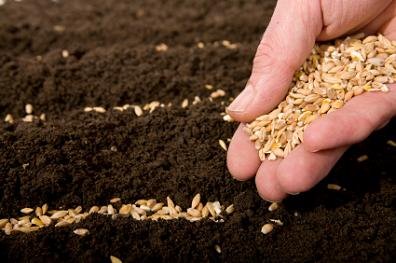
The world is full of folks who appreciate nature and the great outdoors to the point of creating a mental happy place of some idyllic green pasture. That ain’t me. City boy born and bred. Concrete, glass and steel is my Garden of Eden. Yet, despite not being blessed with a green thumb, I planted something today.

An idea.

Okay, “idea” is a bit of a stretch. It’s more like a plot germ. As it stands, it’s a weak and feeble thing prematurely delivered into the world that requires incubation, so I decided to commit it to the ground at the tail end of my mind and ignore it until it has the strength to claw its way out of the grave.

But don’t feel too sorry for it, though. It’s not alone. It’s planted beside random bits of cool dialogue that I’ll never be able to work into a real world conversation, and nebulous set pieces that don’t quite fit into any of my existing stories. They’re all tucked away in my own personal mental pet cemetery.

“The soil of a man’s mind is stonier; a man grows what he can imagine and scribes it.”

Apologies for the bastardization of your quote, Stephen.

And no, I won’t tell you what the plot germ is. Not out of fear of it being stolen (what, thieves on the interwebz? Nope, I won’t believe it) but simply because 1) you wouldn’t understand it in its present form, and 2) I’m not superstitious but I firmly believe in the dreaded jinx. If I tell you what it is, it’ll never grow.

So, I will go about my business and occupy my mind with trivialities—like the numerous problems with Star Trek Into Darkness and why show writers create interested premises for Doctor Who episodes only to abandon all logic and rush the stories to unsatisfying climaxes—and allow my subconscious to absently weed my preemie idea seed. I’ll wait until it breaks free of its chrysalis as a brain soil stained vision with roots that encircle the heart of a story that I cannot wait to write. Until then, I’ll follow the sage advice of Mssr. Ron Popeil and, “Set it and forget it.”

Sally forth and sow, perchance to reap.

— Rhyan Scorpio-Rhys

Long Story Short: I Hate Writing Synopses

Image

Which is why I’m writing this instead.

Yes, yes, I understand the importance of a synopsis. It’s a quick ride through your story. I also realize that if you can’t condense your story down to its basics to accurately convey the plot, you don’t truly know your tale. But sometimes, writing a 3 to 5 page synopsis (I won’t even discuss getting it down to a one sheet) is on par with holding a lump of coal in your hands and trying to squeeze it into a diamond.

If you’re like me (heaven help you if you are) your mind tends to go blank when you force yourself to encapsulate that expansive thing that has been haunting you for weeks/months/years and occupying enormous amounts of space in your head rent free. One possible solution is to get some poor sap to write the synopsis for you. People actually offer that service. Problem is that’s a bit of a cheat, isn’t it? Kinda defeats the purpose of being a writer, don’t you agree?

I usually slog my way through by tackling the synopsis in stages. If you chop the entire stories into bite size morsels, say Beginning, Middle and Ending and take a quick break to jog around the block, walk your lovely pooch, do the dishes, or engage in some other non-writing activity. You’ll find, more often than not, your brain is working on the next stage of the synopsis on the back burner. Ideas for writing tend to flow more freely when you’re not concentrating on writing.

If that doesn’t work, you can try imagining that you’re explaining the story to an absolute stranger, but do it verbally and record your explanation (digital recorders are dirt cheap nowadays and most smartphones have apps for that sort of thing).  Your built-in editor will no doubt kick into gear and eliminate most of the story nonessentials. It does this every time you speak (well, for most people, anyway) even when you’re not aware of it. Don’t believe me? Try explaining a movie you just watched to a person who hasn’t seen it. You’ll be talking in Cliff Notes before you get to the ending.

And by far the easiest way to write a synopsis is to do it at the very beginning, while the story is still that ethereal creature swimming around in your brain. Jotting down the highlights of your tale from start to finish, in the order in which events occur, not only saves you the muss and fuss of struggling to whittle a synopsis down later on, it also helps to solidify your understanding of the plotline and should take a little of the burden off your writing process.

Well, I’ve skived off writing my screenplay synopsis for long enough. Guess I oughta go finish it.

Sigh.

Sally forth and be writeful.

— Rhyan Scorpio-Rhys
25 Famous Thinkers and Their Inspiring Daily Rituals

Image

Why should you care about the daily rituals of so-called famous thinkers? Maybe you shouldn’t. Perhaps you’re among the elite few who maximizes your free time to accomplish all the things that need being done. If you are, good on you. I’m happy for you. Really.

However, if you happen to fall into the other category with the rest of we poor schlubs who find the mere 24 hours of the day insufficient time to do the things we need and want to do, it might behoove you to lend an ear (or in this case, an eye) to the people who somehow manage to do more with their allotted hours.

It’s tough enough being creative (wooing your muse to come spend some time with you, tapping the collapsed creative juice vein, battling the inner critic who’s never afraid to tell you just how crappy you really are) when you actually have the time to do so. But how are you meant to roll that Sisyphusian creative boulder up a hill while holding down a full time job, caring for your family, running errands and performing chores, or dealing with those unexpected obstacles life just loves chucking in your path?

Truth is there are no iron clad answers. Making time to be creative in your hectic, workaday world isn’t always an easy thing, but some people manage to handle their daily business while writing novels, composing symphonies, and painting portraits.

This list is just the tip of the iceberg and meant to simply offer you some possible insight on how creatives can be more efficient, more driven, and even perhaps more disciplined.

Hope it helps.

An excerpt:

Ernest Hemingway. Hemingway described his writing ritual as starting just as the sun began rising, then working straight through until whatever he had to say was said. He likens completing his morning of writing to making love to someone you love–being both empty and fulfilled at the same time. Upon completing that morning’s work, he would wait until the next morning to begin again, going over his ideas in his head and holding on to the anticipation of starting again the next day.

For more Inspiring Daily Rituals, go here.

Sally forth and be ritually writeful.

— Rhyan Scorpio-Rhys

Replete With Jargonosity

Image

Simply put: I hate jargon. It’s a cheap language trick feeding on lazy minds that’s slowly destroying descriptive speech as well as the written language. It’s both deceptive—giving the user a faux brilliance that might actually be found lacking if their comments were put into simple terms—and safe, since no one wants to appear out of the cool loop by stopping the jargon-spouter and asking them exactly what they mean (and isn’t it great when you actually call them on it and they struggle for answer?).

And before you mistake my meaning, I understand the importance of industry terms—screenplay direction, set lingo, etc.—as a method of saving communication time in a short attention-spanned world, and as a means of demonstrating how well you understand your area of expertise.

The jargon I hate is of the screenwriting variety in a non-professional setting when it comes to peer review. Not only for my work. In general. But that wasn’t always the case. When I first got into screenwriting I was, quite naturally, greener than a Granny Smith and eager to soak up as much knowledge on the subject of crafting the perfect script as possible, which included industry speak. I mean, who doesn’t want to learn the buzzwords of their aspiring trade and toss them into casual conversations with industry professionals to prove to that they’re with it and they dig the scene, man?

Then I joined several screenwriting groups that met online and at a physical location and attended screenplay review seminars and began to notice how some people hid behind parroted catchphrases in order to avoid the conflict of offering an honest opinion.

I don’t expect my hatred of jargon to change the way things work—hell, I even jargonate (the act of using jargon in verbal conversation) myself, more often than I’m comfortable with—I’m simply saddened by the slow death of Plain English as a method of conveying clear meaning without unnecessary complexity. Particularly when used to offer constructive criticism.

Sally forth and be writeful.

— Rhyan Scorpio-Rhys

Your Writing Says More About Your Character Than You Realize

Image

Creating worlds? That’s the easy bit. Populating them with three dimensional characters… that’s a bit trickier. Whether you write for a living, a hobby, for sport, or just to have a laugh, you will eventually reach a point in your storytelling where you’re forced to pluck the innocent bystanders from your life and slap them smack dab in the middle of your literary dreamscape. Don’t be embarrassed. It happens to us all.

But just because a fictional character has a fleshy counterpart, imbued with their quirks, verbal crutches and personality tics, it doesn’t always mean they’re actually memorable.

So, how do you combat that? Dig, my friend. You need to burrow underneath the surface layer affectations and unearth the true source of their core character and examine what piqued your interest in the first place.

Even the most boring person you know can be a source of inspiration in your writing if you scratch the surface carefully enough. As corny as it sounds, we all carry within us a wealth of creativity and inspiration. Your job is to look deeper.

One of the most important parts of being a writer, aside from textual flourishes and clever turns of phrase, is the ability to see the world, both the one you’re creating and the one you live in, through their eyes. What are their views on major and minor things? Are they blessed or cursed with odd perceptions of the way the world should and/or actually works? Do they engage in activities that exist outside social norms?

Once you’ve identified these tidbits, you have the first building blocks for your memorable character’s foundation. But it’s only the beginning. You’ll need to build on this in order to make your newly birthed person dynamic.

Since you’re not creating a clone or an exact replica of your best bud or the nosy neighbor down the hall who tracks you via her peephole every time you leave or enter your front door—seriously, lady, get a life—you’ll want to take a few pages from Baron Victor von’s notebook and Frankenstein your creation up a bit.

If you do your job properly, your patchwork person will seem more believable because they contain traits your friends have that you secretly covet—we covet what we see everyday, Clarice—family member habits that absolutely drive you up the wall, as well as the little insecure bits of yourself you pray nobody really notices (FYI: they do, they’re just too polite to bring it up in conversation). Stop moaning, you’ll always be a part of the mix. You can’t help it. You’re the person you know the best. Yup, it’s true and you heard it here first.

The best thing about your ethereal Prometheus is only you will be able to see the stitches that hold the monstrosity together. To everyone else, the jigsaw pieces fit together seamlessly. But you’re still not done.

You can’t have your bouncing baby entity walking around all starkers—well, you can if you’re writing one of those 50 Shades thingies—so you’ll need to dress them with your imagination and layer in true life details like articles of clothing, substantiating them as a new independent life form while better solidifying your understanding of them.

Then, to top things off, dab them with a little Eau de real desires—just behind the ears—and spray obstacles in the air and have them walk through the mist, before you powder them down with motivations.

And voilà! Take a step back and view your bonafide multidimensional, absolutely-fictional-but-seems-so-damn-real-it’s-scary character. Now all you have to do is repeat the process several more times.

Hey, I never said this would be easy.

Sally forth and be writeful.

— Rhyan Scorpio-Rhys

What Lies Beneath

Image

I always love reading authors introductions to short stories and sometimes find the inspiration for writing the tale more interesting than the story itself. And just so we’re clear, I don’t mean the opening line and/or paragraph of the story. I’m talking about the preface, and a well-written introduction in the right hands is like the director’s commentary or behind-the-scenes footage or Easter eggs on your favorite DVD.

The odd thing about me is I can’t actually write an introduction to my own work until after I’ve completed the story, which I guess makes it more of a postmortem than an actual preface. I think the primary reason is if I write the introduction first it feels like I’m writing the story twice, instead of offering a quick glimpse at the man behind the curtain.

On more than one occasion, I had no idea what served as the impetus for the story I’d just written. Not immediately anyway. It usually comes to me later, sometimes days or weeks, when I’d wake with the story and characters stuck in my head, unraveling plot and dialogue in my mind until I uncovered the parallels to some half-forgotten event.

They’re like finding buried treasure, aren’t they? Those memories stored in neurons on seldom traveled synaptic pathways. Which made me think about a new project. Normally I don’t write drama pieces, I tend to gravitate towards speculative and science fiction, religious fantasy and horror, but I think I’d like to write a collected book filled with nothing but prefaces. Inspirations for stories without including the stories themselves.

I haven’t quite worked all the bugs out of the idea yet and I’m not sure how marketable it would be, but some projects we write for ourselves and not the quick buck, don’t we?

— Rhyan Scorpio-Rhys

URSULA K. LE GUIN on an Artist’s Passion

Ursula K Le Guin
The choice to train to be an artist of any kind is a risky one. Art’s a vocation, and often pays little for years and years — or never. Kids who want to be dancers, musicians, painters, writers, need more than dreams. They need a serious commitment to learning how to do what they want to do, and working at it through failure and discouragement. Dreams are lovely, but passion is what an artist needs — a passion for the work. That’s all that can carry you through the hard times. So I guess my advice to the young writer is a warning, and a wish: You’ve chosen a really, really hard job that probably won’t pay you beans — so get yourself some kind of salable skill to live on! And may you find the reward of your work in the work itself. May it bring you joy.

Ray Bradbury on Being a Sublime Fool

To sum it all up, if you want to write, if you want to create, you must be the most sublime fool that God ever turned out and sent rambling.

You must write every single day of your life.

You must read dreadful dumb books and glorious books, and let them wrestle in beautiful fights inside your head, vulgar one moment, brilliant the next.

You must lurk in libraries and climb the stacks like ladders to sniff books like perfumes and wear books like hats upon your crazy heads.

I wish for you a wrestling match with your Creative Muse that will last a lifetime.

I wish craziness and foolishness and madness upon you.

May you live with hysteria, and out of it make fine stories—science fiction or otherwise.

Which finally means, may you be in love every day for the next 20,000 days. And out of that love, remake a world.