

The first time Judith Engel made lemonade, she was five years old, standing on a stool in her mother’s sunlit kitchen. The scent of fresh lemons and sugar hung in the air, as familiar and comforting as her mother’s voice.
“You have to put your heart into it,” her mother said, her hands guiding Judith’s small ones as they squeezed juice from the lemons. “That’s the secret.”
Judith didn’t understand what her mother meant, but she nodded seriously. She wanted nothing more than to make her mother proud. When the lemonade turned out too sour, her mother only smiled and kissed the top of her head. “You’ll get it someday,” she said, her voice warm as sunlight.
Someday never came. Her mother’s laughter faded from the house, leaving behind an aching silence that Judith couldn’t fill, no matter how many glasses of lemonade she made.
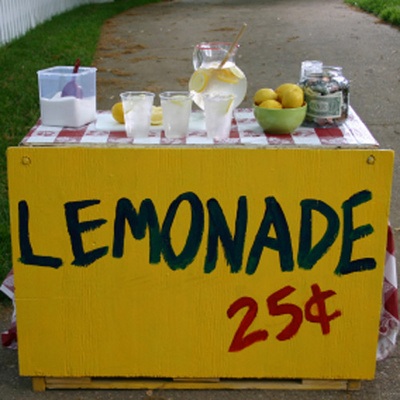
Now, at nine years old, Judith stood behind a makeshift lemonade stand in front of her house. The wooden sign, painted with uneven letters, read: 25 cents. A jar of coins sat on the table, the product of neighbors’ polite purchases. They sipped the lemonade, their faces carefully neutral, offering gentle words of encouragement Judith barely heard.
The lemonade wasn’t very good. She knew that. But it was all she had left of her late mother, and she made it every day, hoping that somehow, she could pour her grief into the pitcher and sweeten it into something better.
One afternoon, as the sleepy sun blushed orange, beginning its daily routine of tucking itself into the horizon, and shadows stretched across the street, Judith stirred a new batch of lemonade. Her thoughts drifted to her mother, the sound of her voice, the way she would hum as she worked in the kitchen. Tears welled in Judith’s eyes, and before she could stop them, they spilled over, falling into the pitcher. She wiped her face quickly, embarrassed, though no one was there to see.
When the next customer, an elderly woman from two houses down, took a sip, her eyes widened. A single tear rolled down her cheek.
“Oh, my,” the woman whispered, clutching the cup as if it were something precious. “It’s like I can feel it all over again. My Henry…” Her voice broke, and she handed Judith a dollar before hurrying away, dabbing at her eyes with a handkerchief.
Judith stared after her, the dollar bill crumpled in her hand. She tasted the lemonade herself, and for a moment, it was as if her mother’s absence swelled inside her, sharp and all-consuming. But when she set the glass down, she felt lighter, as though the weight of her grief had shifted. She didn’t understand it, but she knew one thing: the lemonade had changed.
Word spread quickly. The neighbors came in droves, sipping the lemonade and leaving with red-rimmed eyes. They whispered about Judith’s stand, about how her lemonade could unearth old memories and long-buried sorrows. Some left generous tips; others lingered, thanking her softly before walking away.
Judith’s father noticed the change, too. He’d been a shadow of himself since her mother’s death, retreating into his armchair and barely speaking. But now, he watched the parade of visitors from the living room window, his face clouded with something Judith couldn’t name.
One evening, after the last customer had gone, the doorbell rang. Judith opened the door to find a man in a gray coat standing on the porch. He was tall and thin, with sharp features and eyes that seemed to see too much.
“Judith Engel?” he asked, his voice smooth and polite.
Judith nodded, gripping the doorframe.
“My name is Mr. Carrick. I’ve heard about your lemonade.” He glanced at the stand, now empty, and smiled faintly. “May I come in?”
Her father appeared behind her, his voice firm. “What do you want?”
“To help,” Mr. Carrick said, his gaze flicking between them. “Your daughter has a remarkable gift. One that others like her have learned to refine.”
Judith stepped back, her heart pounding. “Others like me?”
Mr. Carrick nodded. “People who can take emotions—grief, pain, even joy—and distill them into something tangible. Something transformative. It’s rare, but not unheard of.”
Her father’s face darkened. “She’s just a child. Leave her alone.”
But Mr. Carrick’s attention was on Judith. “You’ve already felt it, haven’t you? The way the sadness lifts, just a little, when you pour it into the lemonade. Imagine what you could do with guidance. You could help people, Judith. Not just your neighbors, but so many others.”
Judith hesitated. She thought of the strangers who came to her stand, the way they left lighter, as though she’d taken something heavy from them. She thought of her mother’s words: You have to put your heart into it.
Her father’s voice cut through her thoughts. “She doesn’t need your help. Get out.”
Mr. Carrick sighed and reached into his coat, pulling out a small glass vial. Inside was a liquid the color of sunlight, swirling gently as though alive. “This is what’s possible,” he said, setting the vial on the table. “Think about it, Judith. When you’re ready, I’ll find you.”
He left without another word, the door clicking shut behind him. Judith and her father stood in silence, staring at the vial. The room felt heavier, the air thick with unspoken questions.
Finally, her father spoke, his voice low and weary. “You don’t need him. Or anyone else. You’re my daughter, and that’s enough.”
Judith picked up the vial, its warmth surprising against her skin. She thought of her mother, of the lemonade, of the way the sadness seemed to flow from her and into the pitcher. She thought of the neighbors, their tears, their gratitude. And she wondered: Was this enough? Or was there more she could do?
That night, as she lay in bed, the vial sat on her nightstand, catching the moonlight. Judith closed her eyes, the echo of her mother’s voice in her ears. You’ll get it someday.
Someday, she promised herself, she would.
 MADD FICTIONAL