Popular belief has it that the universe is comprised of atoms. In reality, the universe is actually made up of…
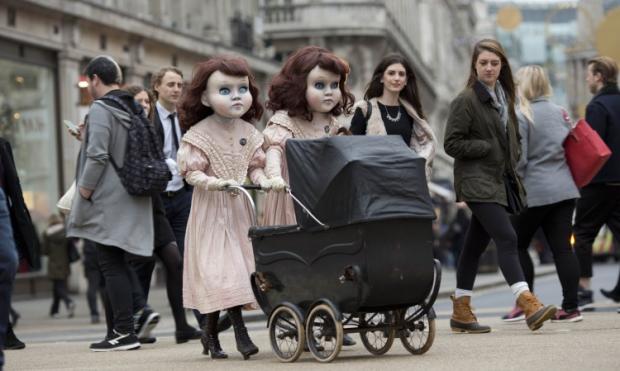
Adelaide and Agatha Bechtel were born different from the rest of humanity but their parents did their level best to raise them with a sense of pride and dignity.
The twins were taught to ignore the stares of the ignorant masses, for evolution was on their side.
Soon the world would know the shocking truth and come to acknowledge and appreciate them as pioneers in the next stage of genetic advancement.
Popular belief has it that the universe is comprised of atoms. In reality, the universe is actually made up of…
“Do you hate animals,” Florence asked her boyfriend. “I mean, no judgments if you do, it’s just you know how much I love them, right?”
“Yeah, I know you do,” answered Frank. “And no, I don’t have anything against animals.”
“Then why don’t you want a pet? They’re great companions, filled with love and affection, and studies show that pet owners tend to live longer, healthier lives.”
“I can’t tell you.”
“Why not?”
“You’ll laugh.”
Florence made the sign of the cross on her left breast with her index finger. “Cross my heart, hope to die, stick a needle in my eye. I promise, I won’t.”
Frank left out a long, slow breath and said, “I grew up poor…”
“There’s no shame in that.”
“And my childhood home was a one-bedroom apartment that was so small that you had to open a window if you wanted to change your mind…”
“I’ve lived in a few of those,” Florence nodded in understanding.
“And I wanted to have a pet so badly, but there just wasn’t enough room, and we couldn’t have afforded to feed one anyway…”
Florence gave a soft grunt and nodded again.
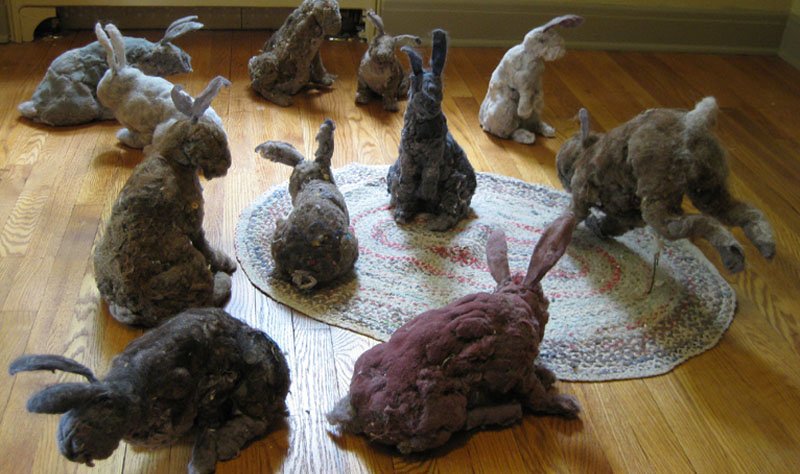
“But like I said,” Frank continued. “I wanted a pet so badly…so I made my own pets out of dust bunnies who lived under my bed. I built them a warren and everything, and we used to go on imaginary adventures…”
“Awww, that’s so adorable,” invisible heart emojis beamed from Florence’s eyes.
“But my mother would always ruin it each time she came through for a quick tidy-up with the Dustbuster. All those bunny deaths…all those bunny deaths…”
Florence wrapped her arms around her boyfriend and held him as he wept softly into her shoulder. If they remained together, she knew they would live in a pet-free home.
Popular belief has it that the universe is comprised of atoms. In reality, the universe is actually made up of…
Kink emerged the victor over smooth in the 100 Degree Summer Hair Skirmish, Poppy thought, glaring into the cheap, non-glass mirror disgusted by the fact that the sheen of the hair salon had abandoned her fiery locks on the humid walk home.
Her hair, that wild and unruly jungle that looked like a cat had puked a bird’s nest up, was now so untameable that it would have taken even the most talented beautician pit crew hours to brush out.
Her only recourse was the dreaded metal hot comb heating up in the gas-powered flames of the stove, as the countdown to prom commenced.
As trite as it sounds, I wholeheartedly believe that certain individuals are born for a life of servitude. That was our Qara. Cursed with a helper gene inherited from her father’s side of the family, she was raised on the principles of being steadfast always and to carry honor and glory everywhere and at all times. These disciplines were non-negotiable. And when she became old enough to properly comprehend their importance, Qara was taught how to be strong alone as well as stronger as part of a unit.
Many of you have asked what was she like as a child and the one moment that stands out in my mind was the time I found her watching the streams of her father charging into battle. The soundless images of war looped over and again and Qara sat transfixed studying his actions, mimicking his motions. When she finally noticed me in the room, she turned and said, “I know what I want to be.”
I had my own dreams for my daughter. What parent doesn’t? I envisioned her as a diplomat because she always had such a gifted way with words, so convincing, so compelling, and able to see other’s points of view while gently persuading them to see hers as well. I pictured her initiating the peace talks that would finally put an end to this decades-old war with a relentless extraterrestrial enemy hellbent on our total annihilation. But seldom do the dreams of parents and that of their children align themselves. So, instead of voicing my objections, I simply answered, “Fine.”
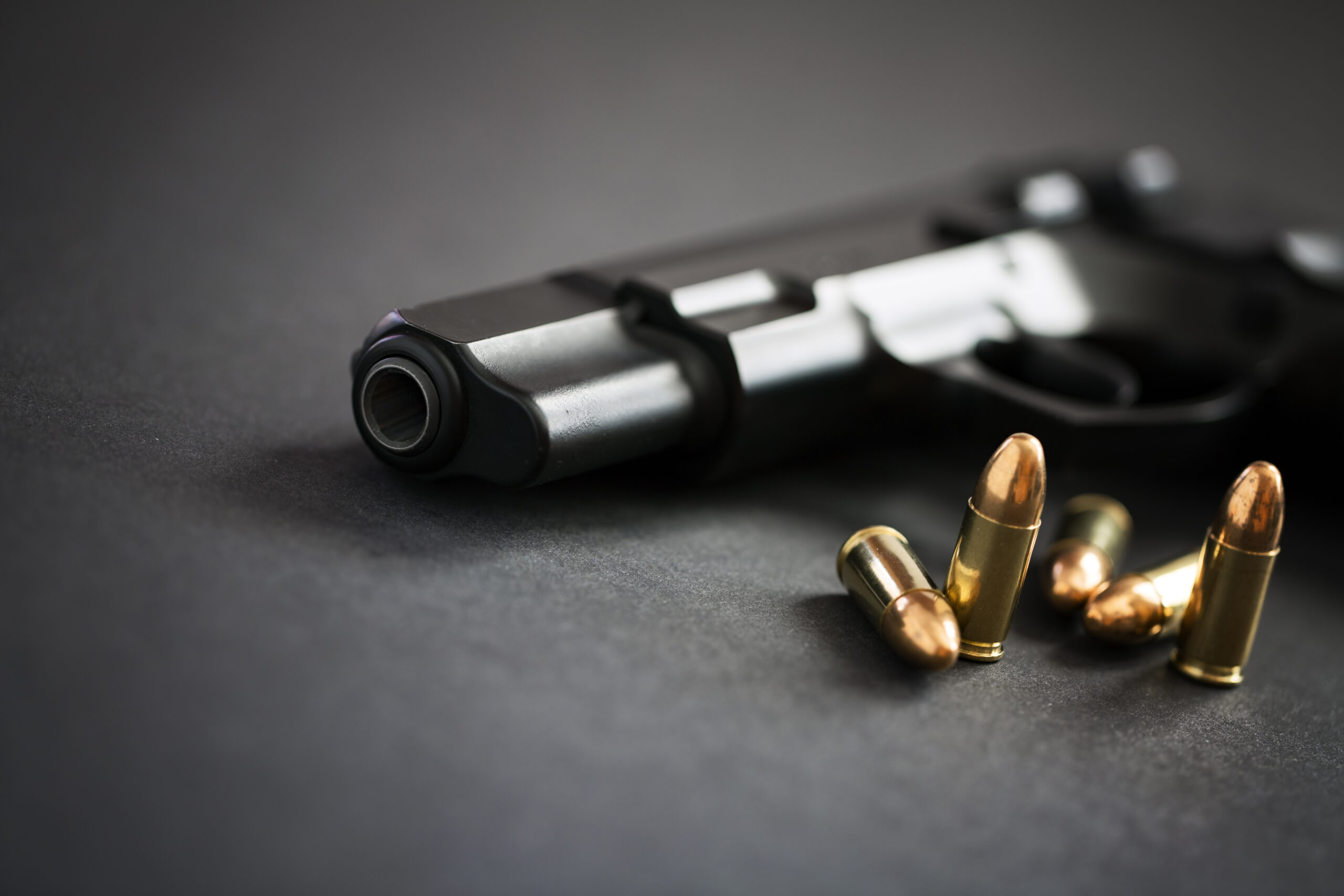
I pulled her father’s old, battered, unloaded service weapon from storage and laid it on a table before Qara.
“Dismantle it.” I said, offering no instruction on where and how to begin. “If you plan to use a weapon, you should know how it operates.” I secretly hoped she would have become frustrated, abandon the effort and move on to other interests.
But there was a spark in her young eyes as she turned the weapon over in her hands, searching for connection points, latches, catches and switches. She only managed to get a third of the way before being unable to proceed any further, but it was a mighty fine effort for her first attempt.
I then sat Qara with her brother, elder by three years, who showed her the correct way to field strip the weapon and reassemble it. He only needed to perform the act once. The weapon had become a puzzle game and Qara memorized the moves to solve it. She practiced stripping and reassembling the weapon each morning before the family rose and each night before she went to sleep. She became so proficient at it that she performed the act blindfolded, and in a head to head competition with her brother was able to beat his fastest time.
In her free time, Qara rummaged through her father’s possessions, sent home to us after he lost his life on the battlefield while trying to defend the moon. She devoured material on military strategy, ran herself through a homemade obstacle course, practiced combat techniques with her brother, and though I still was not happy with her choice, I had to admit I was proud at how quickly she progressed.
Then the day came when I received the letter. Behind my back, Qara had registered for armed service. More precisely, she sought placement in the same unit her father had served in. When she returned home, I held the letter out, a mixture of anger and pride in my voice as I announced, “Drafted.” Her squeal was the last remnant of the daughter on whom I had fashioned my dreams.
Qara began studying and idolizing the veterans of the unit, most of them fought alongside her father. It was like a dream for her that came true. More than that, it was another link to her father’s past, another piece of the puzzle that completed the image of him in her mind.
The next two weeks went by too swiftly for me to properly show Qara how much I loved her. When she left, the following four months went by too slowly before I could see her again at the ceremony that marked the completion of her training. In less than a week, my daughter would be protecting our world from alien invaders, as her father did before her.
The ceremony ended with a complex weapon exhibition that was more for show and less for survival and during the maneuver, Qara’s weapon misfired. I couldn’t have been happier. I know how that sounds and how it makes me look but let me reassure you, I am far from being a cold-hearted parent and an unpatriotic civilian. I care for my daughter more than words can express and would never want any harm to befall her, but the injuries she suffered from the misfire explosion put her on inactive status, and to me it was a blessing in disguise.
When I was allowed to see Qara, the only thing she repeated was how devastated she felt at having something that was within her reach suddenly snatched away. It was the only time since her father’s funeral that I recalled seeing her cry. It hurt to see her tears, but I believed the disappointment would fade over time, even if it vanished slower than the scars on her arms. Selfish, I know, but I didn’t care. She was alive, which meant she was with me, and I wasn’t ready to relinquish custody to her late father.
To my surprise, Qara was nearly in agreement, and what I mean by that is she told me of her plans to contact the academy and inform them that she would be withdrawing from the program altogether. If she couldn’t fight, the least she could do was to make her spot in the unit available to some other able-bodied applicant.
She did it the following day, without hesitation, without a crack in her voice, but neither of us were prepared for the response she received from the commander of her father’s former unit. “You petitioned us, not the other way around. We kept a spot open for you, in memory of your father. The spot belongs to you. Be the warrior your father was and fill it.”
Qara gained a new sense of determination while I was sinking in a quagmire of dread.
She attacked her therapy to improve mobility in her weapon arm and retested for qualification. It was her dream and her passion to fight for her planet. Qara had done well before the accident, but now, driven to not only live up to her father’s example but surpass it and make him proud, she beat her previous personal best and made the top ten percentile in the academy.
Qara joined her father’s unit and fought well. She was shorter than average height and thin but few could rival her inner strength. For saving the lives of her unit during the Atmospheric Offensive, and Operation Orbital Push, she received honors, but none higher than when she sacrificed her own life during the campaign to retake the moon. The same mission that killed her father.
Qara saved the lives of the five soldiers riding with her on a reconnaissance mission in orbit around the moon. She was piloting the ship when a satellite mine attached itself to the hull.
I have been told that the satellite was one of ours that had been rigged by the enemy with enough military grade explosives to wipe out an armada. Once close enough to activate the magnetic clamp, the device began an automated countdown upon impact. Qara instructed the soldiers to evacuate to the escape pods. She could have left herself, but the propulsion units on the pods wouldn’t have escaped the blast radius. She stayed behind and piloted the craft away from the soldiers, away from the moon and away from her home.
One of the soldiers once said to me quietly, “We promised to sacrifice the one for the good of the whole. Your daughter delivered on that promise.”
Her unit paid their final respects at a private ceremony for the family. Each soldier had nothing but praise for Qara. She was professional. Dedicated. A morale booster. Quick to cut the tension by making you laugh. In line for a promotion. A hero. The compliments went on throughout the service.
Standing here in front of you all on the one-year anniversary of my daughter’s death, I tell you this story not to dissuade you from joining the military but instead to join the fight and do your part. Qara was wiser than I gave her credit for. She somehow knew that peace was not the answer, that these barbarians must not only be pushed back but crushed so that they never again think to visit our world.
If you take nothing else from his speech, embrace my family’s principles. Be steadfast in the defense of our planet always and to carry honor and glory into battle. These disciplines are not negotiable. Train yourself to be strong alone, but never forget that we are stronger as a unit.
For the sake of our homeworld and in memory of all those who have fallen, including my husband and my daughter, the humans must die!
Under the fluorescent lights, Marv Quinton looked considerably worse than Talitha had expected.
His face was thin and pale beneath a patchwork of scars, scabbed lesions, and recent abrasions. A ragged cut below his left eye had dried into a dark streak that disappeared beneath his jaw. Purple shadows surrounded his storm-gray eyes, and his hair hung in uneven clumps against a forehead glistening with perspiration. The clothes draped over his emaciated frame appeared several sizes too large.
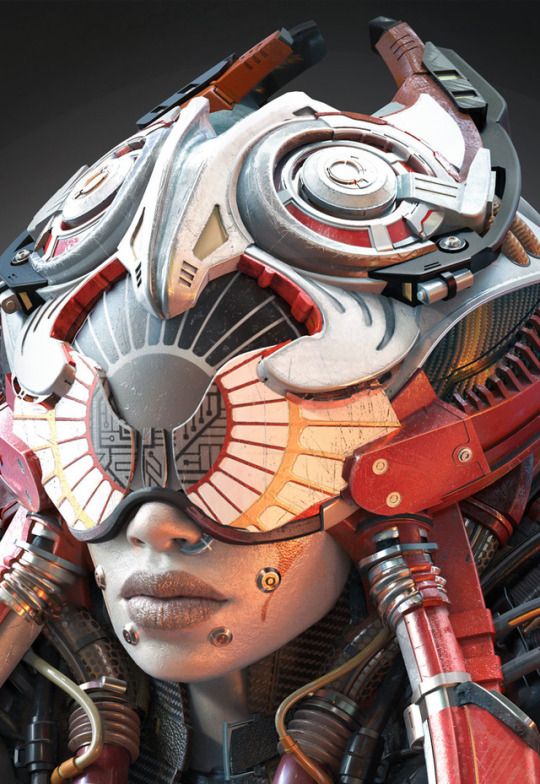
Only the interface sockets looked new. Four polished chrome fittings, one in each temple and one at each wrist, reflected the fluorescent light with a brilliance that seemed almost obscene against the condition of the flesh surrounding them.
He caught her examining him.
“Hate to say I told you so, but I did warn you about the face.”
Talitha kept her Glock trained on his chest while taking stock of the room. The studio was little more than a rectangular box containing a stove, a sink, two stools, and an unrolled sleepmat. An alcove to her right housed a toilet without the courtesy of a door. The walls were stained, the ceiling discolored by years of cigarette smoke, and the wooden floorboards showed the abuse of generations of tenants.
Candles occupied nearly every available surface. Half-melted pillars stood on the stove, the sink, and the table, while others had been arranged in a loose pattern across the floor. Hardened wax had spilled down the furniture and pooled between the boards. A battered cybermodem rested beside an aluminum-foil ashtray and an overturned can of Albanian beer.
Someone had made a considerable mess of the place.
Then she noticed the pistol.
A Browning Hi-Power lay beside the stool Quinton had recently vacated, within reach of his right foot.
“Kick the nine-mike-mike over here. Slowly.”
Quinton glanced down, but his expression changed before he moved. His eyes traveled toward the corner behind the stool, focusing on something Talitha couldn’t see.
“Mr. Quinton.”
He flinched at the sound of his name.
“The pistol,” she repeated. “Move it away from you.”
He extended his foot cautiously, as though uncertain how much distance separated him from the weapon. The toe of his shoe touched the Browning. He pushed it across the boards, sending it sliding toward Talitha.
She intercepted it with her boot.
“Now turn around and put your hands against the wall.”
“You’re going to have to give me a moment.”
“You’ve had several.”
“I know. They’ve been memorable.”
He made a deliberate effort to turn, but his left knee buckled before he completed the movement. His shoulder struck the plaster, and he remained leaning against it, drawing air through clenched teeth.
Talitha watched him carefully. The weakness could have been genuine, although she had encountered fugitives who could simulate a seizure convincingly enough to secure a temporary advantage.
“Hands on the wall. Feet apart.”
He complied.
She retrieved the Browning, removed its magazine, cleared the chamber, and secured both weapon and ammunition in separate compartments of her advantage belt. She approached Quinton from behind, maintaining control of his right arm while searching his pockets, waistband, and ankles. Her hand briefly passed over the chrome fitting at his left wrist.
The surrounding skin was inflamed.
Quinton jerked violently.
“Easy,” she warned.
“Don’t touch the socket.”
“Then stop moving.”
“I’ll do my best.”
Talitha produced four narrow metal bracelets from her belt. Two bore green markings, two red. She instructed him to lower himself into a crouch, but his legs failed halfway down and she was obliged to support his weight until his knees reached the floor.
She secured the bracelets around his wrists and ankles, positioning each wrist opposite the corresponding restraint on the other leg. A signal from her control unit activated their magnetic couplings, drawing the green and red bands together with two sharp metallic clinks.
The restraints pulled his body into an awkward seated crouch.
Quinton toppled sideways, overturning the stool.
His reaction startled her.
He screamed.
It was a raw, involuntary sound, utterly unlike the sarcastic remarks he’d been making since she entered. His head snapped backward, and both legs strained against the magnetic restraints as though he were trying to escape something bearing down upon him.
Talitha stepped clear and raised her Glock.
“Quinton! Stop fighting the cuffs!”
He twisted onto one hip, his mouth opening and closing without producing words. The muscles of his neck stood out beneath the skin. His eyes remained fixed on the empty space above him, following something that appeared to be descending toward his face.
Talitha could see the full distance between his head and the ceiling.
He evidently could not.
“There’s nothing above you,” she said, moving closer while keeping the pistol pointed away from his head. “You’re on the floor. You’re restrained. Nobody’s touching you.”
Quinton’s back arched.
The magnetized bands clattered as he struggled against them.
“Can’t—”
He sucked in a ragged breath.
“Can’t get—”
Talitha crouched beyond his reach.
“Look at me.”
He continued staring upward.
She raised her voice.
“Marv! Look at my face!”
His eyes shifted toward her.
For a few seconds, he seemed incapable of focusing. Then recognition returned, followed by a fresh expression of horror as he looked down at the restraints joining his wrists to his ankles.
“Get them off.”
“You’re under arrest.”
“You’re folding me into it.”
Talitha frowned.
“Into what?”
“The room.”
She followed his gaze toward the nearest wall. It was an ordinary stretch of damaged plaster, stained brown near the baseboard.
Quinton shook his head, sweating heavily.
“Please. I can’t straighten up.”
She considered the situation. His body was resisting the restraints in ways that could dislocate a joint, and his breathing had become dangerously irregular. Whatever he was experiencing, the crossed magnacuffs were making it worse.
Talitha took out her controller and deactivated the magnetic attraction long enough to change his position. She kept the bracelets locked around his limbs but reconfigured them to couple his wrists together and his ankles together. The adjustment permitted him to extend his legs and lean against the wall without folding his torso over his knees.
She reactivated the restraints and withdrew to a safe distance.
“Better?”
Quinton’s breathing slowed.
He closed his eyes, feeling along the floorboards with his cuffed hands until his fingertips encountered the base of the wall.
“Better than it was.”
“These things take five hundred pounds of opposing force to separate. You’re wasting your energy fighting them.”
He gave a weak, humorless laugh.
“I wasn’t fighting your cuffs.”
Talitha pulled the fallen stool upright and sat facing him, her Glock resting against her thigh.
“Then you’d better tell me what the hell is happening to you.”
Quinton glanced toward the cybermodem.
“Somebody’s running a fear-conditioning routine through my implants. Got into the local buffer through the head shunts. Disconnecting from the Labyrinth didn’t clear it.”
“Who?”
“If I knew, I’d be considerably less interested in staying alive long enough to find out.”
Talitha studied him.
“What sort of routine?”
“Neural response modulation. Artificial panic, corrupted sensory information, induced pain. It keeps adjusting itself according to whatever frightens me most. I’ve been stuck in a room that keeps getting smaller, except apparently I’m the only one who can see it.”
She glanced at the walls again.
“And the candles?”
“Something to keep track of. The program can change what I think I’m seeing, but it has a harder time keeping several objects consistent when I’m concentrating on them. At least, that’s what I’m hoping.”
The explanation sounded plausible enough to trouble her. She knew that neural-interface failures could cause severe perceptual distortions, but the degree of control Quinton was describing suggested deliberate interference.
He seemed to recognize her skepticism.
“There’s a diagnostic record in the modem. You can look at it without connecting to my implants.”
Talitha didn’t approach the machine.
“You’re an expert hacker. I have no reason to trust anything you put on a computer screen.”
“Fair enough. You can watch me get crushed to death by a wall that isn’t there. Might be more convincing.”
“You’re still talking.”
“That’s becoming something of an achievement.”
She looked at the fresh blood on his shirt, the bruises along his forearms, and the broken skin around the chrome shunts.
The injuries were consistent with someone repeatedly colliding with objects while attempting to escape imaginary barriers. They were also consistent with someone who had been beaten.
“Have you been interrogated?”
Quinton looked at her sharply.
“By whom?”
“That’s what I’m asking.”
He lowered his eyes toward his restrained hands.
“Not in the conventional sense. Somebody appears interested in making me compliant, though I haven’t the faintest idea what I’m supposed to comply with.”
Talitha absorbed that information without lowering her guard. A neural attack capable of forcing a prisoner to obey could explain why a fugitive with Quinton’s reputation had remained in one hiding place for so long.
She examined the room again.
The overturned beer, the scattered candles, the unused interface leads, and the splintered furniture all suggested a man fighting something that had no physical presence.
“Why didn’t you shoot me when I came through the door?”
Quinton lifted his head.
“I thought you might be my mother.”
Talitha’s expression changed.
“Your mother?”
“For a few seconds, yes. Then I thought you were someone I’d killed. Then the program got creative.”
He looked toward the dark opening of the toilet alcove.
“I had the Browning in my hand. Could’ve put a round through the door before you even got inside.”
“Thirty-five people found out you’re capable of that.”
“Thirty-five people came looking for me with weapons and contracts. You weren’t the first one who expected to collect a reward.”
“And they were people, Quinton. Whatever you thought of their employers.”
A muscle tightened in his jaw.
“That’s a generous assessment of some of them.”
“Did they have families?”
He didn’t answer.
Talitha leaned forward.
“Friends? Children? Anybody who expected to see them again?”
“I know where you’re going with this.”
“Good. Saves me the trouble of explaining.”
He stared at the floor.
For several seconds, the room contained only the hum of the fluorescent lighting and the intermittent rattle of the hotel’s ventilation system.
Then Quinton spoke.
“One of them had a photograph in his hand when I shot him. Two children. I remember the picture better than I remember his face.”
Talitha had not expected the admission.
“Did you know who they were?”
“No. Didn’t have time to ask.”
“Did you try to find out afterward?”
His eyes remained on the floorboards.
“No.”
Talitha allowed the silence to settle between them.
“Then don’t tell me those people stopped being human because somebody paid them to find you.”
Quinton shifted against the wall, testing the limits of his new restraints.
“I’ve been thinking about that photograph a great deal tonight.”
“Perhaps you should’ve started sooner.”
He raised his head, and she saw the anger gathering behind his exhaustion.
“You think I don’t know what I’ve done? You think I enjoy remembering every person I put in the ground? Those trackers came after me because some corporation decided my life was an acceptable expense. They knew what the contract involved. They came anyway.”
“So did I.”
“Yes, you did.”
“And you chose not to shoot me.”
Quinton looked at her for a long moment.
“I couldn’t trust what I was seeing. But even when I started recognizing you, I remembered the photograph. I couldn’t take the chance that whoever was standing in my doorway might be another mistake I’d spend the rest of my life remembering.”
Talitha regarded him without speaking.
She had entered the room expecting an ideological fanatic who would justify every death as a necessary contribution to some grand political cause. Instead, she’d found a frightened, injured man who seemed to have lost control of the very technology that had made him so dangerous.
None of that absolved him.
But it complicated the picture.
Talitha returned her attention to the cybermodem.
“Show me what you found.”
Quinton nodded toward the machine.
“Display control on the right. Pull up the last diagnostic session. You shouldn’t need my interface to open the record.”
She approached the table cautiously, keeping the Glock in her right hand while manipulating the controls with her left. The display brightened, revealing a diagnostic summary from an earlier session. Several warnings occupied the upper portion of the screen.
NEURAL RESPONSE MODULATION: ACTIVE.
AUTONOMIC FEAR RESPONSE: ELEVATED.
COMPLIANCE RESPONSE: INSUFFICIENT.
Talitha scrolled through the remaining entries. Most of the technical information meant little to her, although she recognized references to the autonomic nervous system and the hardware responsible for processing sensory input from external interfaces.
“You could have written this yourself.”
“Certainly. I’m very good at that sort of thing.”
“Then why show me?”
“Because I want you to know what to look for when somebody examines my implants. Assuming I live that long.”
She examined the timestamp.
The diagnostic had been recorded before her arrival.
Talitha could not establish whether the information was genuine, but the warning about compliance interested her. It suggested an attempt to influence behavior rather than merely induce hallucinations. Whoever had written the program apparently expected Quinton to do something he was resisting.
“What would happen if somebody connected you to another machine?”
“Depends on the machine. A basic monitor might tell you how close I am to dying. Something with a two-way neural interface could give the program another route into my head.”
“You don’t know for certain?”
“I haven’t been eager to experiment.”
Talitha switched off the display.
“Is it contagious?”
Quinton shook his head, then winced at the resulting pain.
“Not in the biological sense. Someone would need to compromise your interface. Your comm implant is probably safe, provided it doesn’t have direct access to your sensory processors.”
“Probably?”
“Welcome to my evening.”
Talitha returned to the stool and holstered her Glock. Quinton had stopped struggling against the restraints, and his hands now rested together in his lap. His gaze traveled periodically toward the fluorescent fixtures, but he appeared capable of following the conversation without difficulty.
She decided it was time to notify her dispatcher.
Double-tapping her right temple, Talitha activated her communications implant and held her thumb against her ear while speaking into the extended little finger. She transmitted her identification, the location, and confirmation that Marv Quinton was in custody.
Quinton flinched at the faint electronic chirp.
Talitha glanced at him before continuing.
“I need a secured transport wagon at the Forgotten Realm Hotel, Slummer Paradise. Twenty-third floor. One prisoner, conscious and restrained, with possible neural-interface interference and significant physiological distress.”
She listened to the reply.
“Medical assessment required. No invasive neural diagnostics until the equipment has been checked for malicious code.”
The dispatcher acknowledged the request. A transport wagon would be assigned, although the arrival time remained uncertain.
Talitha ended the transmission.
“Pickup’s coming.”
Quinton looked toward the door.
“Did you tell them about the program?”
“I told them enough to keep somebody from plugging a diagnostic cable straight into your skull.”
“That was considerate.”
“Don’t make me regret it.”
Talitha settled back on the stool. The air in the room had become stifling, and the fluorescent lighting added a faint electrical buzz that was beginning to irritate her. She removed a handkerchief from her pocket, folded it into a narrow strip, and tied it around her forehead to keep the sweat out of her eyes.
Across from her, Quinton watched the movement with an expression she couldn’t interpret.
“You don’t believe a word I’ve told you, do you?”
“I believe you’re injured. I believe you’re experiencing some kind of neurological disturbance. The rest requires evidence.”
“And the thirty-five dead slamtrackers?”
“Those don’t require much imagination. Their bodies were recovered.”
Quinton’s expression hardened.
“Fair enough.”
Talitha leaned forward, resting her forearms against her knees.
“What I don’t understand is why you and your people think killing anybody who comes after you makes you defenders of the oppressed. You’ve turned yourselves into the largest terrorist organization on three continents, and you keep talking about freedom as though it’s something you’ve been appointed to distribute.”
Quinton considered her words.
“You’re talking about the Midnight Raiders.”
“That’s what your organization calls itself, isn’t it?”
“That’s what the corporate news services call us. It’s a convenient name to attach to anything they want to blame on the movement. My father belonged to a group that used it, but there are thousands of people fighting these companies now, and they don’t all belong to the same organization.”
“Doesn’t change what you’ve done.”
“No. But you asked me why people fight.”
He shifted his weight against the wall, finding a position that placed less strain on his injured shoulder.
“When the movement began, people marched against the corporate laws. They organized boycotts, occupied government buildings, and petitioned the legislatures to stop selling public assets to private interests. They wanted a say in how the resources of the EA Nations were being distributed.”
“And the corporations responded by trying to crush them. I’ve heard the story.”
“Have you heard what happened to the people who couldn’t afford to protest?”
Talitha said nothing.
“The corporations siphoned billions from public programs meant to provide food, housing, and medical care. When homelessness became too visible, they offered the governments a solution. Round up the people living on the streets, classify them as public dependents, and assign them to experimental rehabilitation programs.”
He lifted his cuffed wrists.
“They implanted software, wetware, storage chips, and communication equipment into people who couldn’t afford to refuse. Some were turned into data couriers. Others carried experimental systems inside their bodies until the equipment failed. They even fitted some of them with toxin reservoirs connected to vital organs so they couldn’t run away without permission.”
Talitha remembered the customer in the hotel’s lobby, the blood spreading beneath his shirt while Trent’s companions kicked him.
She had seen more than enough people selling pieces of themselves to survive another week.
“Those are serious accusations,” she said. “There are regulations governing medical experimentation.”
“There were regulations governing the use of public funds, too. You can see how well those worked.”
“Regulations are supposed to be enforced. If someone broke the law, they should be prosecuted.”
Quinton gave her a weary look.
“Who’s going to prosecute them? The police whose equipment they supply? The judges whose campaigns they finance? The governments that signed the contracts?”
“Then you expose them. You produce evidence. You force the issue into the courts, the press, whatever institutions are still willing to listen.”
“We tried. Some people are still trying.”
“And others decided murder was more efficient.”
He didn’t answer immediately.
Talitha watched his expression change. Whatever reply he was preparing appeared to require more thought than his earlier arguments.
“I’ve never claimed everybody in the movement is innocent,” he said eventually. “There are people who joined because they wanted an excuse to hurt somebody. There are others who started out with decent intentions and became the very things they hated. Some of them should be in prison.”
“Including you?”
He looked down at his restrained wrists.
“Possibly.”
Talitha had expected a more elaborate defense.
That single admission unsettled her.
“Then why keep fighting?”
“Because the people responsible for creating the conditions that started all this are still sitting in their offices, collecting salaries, and deciding which parts of the population are expendable.”
He lifted his head.
“My people are the ones who sleep beneath the transit platforms, who sell their blood to buy groceries, who disappear into laboratories because somebody promises their families a benefits allowance. They aren’t all revolutionaries. Most of them would be perfectly happy to live ordinary lives.”
His eyes moved toward the candles.
“They’re the kindling that keeps the flame alive. Someone has to protect them.”
Talitha rested a hand on her advantage belt.
“You’re very good at making violence sound noble.”
“I’ve had practice.”
“Thirty-five opportunities, by my count.”
Quinton’s face tightened.
The reminder had landed where she intended.
He opened his mouth to respond, but the words never emerged.
His entire body went rigid.
Talitha recognized the change immediately. His eyes widened, his shoulders pressed against the wall, and the muscles of his abdomen contracted so violently that his knees jerked upward.
He began breathing through his mouth.
“Quinton?”
His gaze darted toward the ceiling.
The fluorescent rings continued humming overhead.
“What’s happening?”
He made a strangled sound.
Talitha moved the stool aside and crouched beyond the reach of his legs. His cuffed hands were pressed tightly against his chest, the fingers opening and closing as though he were trying to find something to hold.
“Marv, can you hear me?”
He nodded once.
“Tell me what you’re experiencing.”
His lips moved.
She leaned closer.
“Stone,” he managed. “It’s coming down.”
Talitha looked upward.
There was nothing there.
Quinton’s breathing accelerated. The veins in his neck stood out, and a thin line of saliva escaped the corner of his mouth. His head tilted to one side as if he were attempting to squeeze through an opening too narrow to accommodate his shoulders.
Talitha caught him before his forehead struck the floor.
His skin was hot and slick with perspiration.
“Listen to me. You’re in the hotel room. I’m holding your shoulder. The ceiling hasn’t moved.”
He tried to pull away from her.
“Can’t get out.”
“The doorway is six feet to your left. I came through it. You saw me.”
He shook his head.
Talitha followed his gaze toward the space beyond the stove. She had no idea what he was seeing, but his response was terrifyingly genuine.
His chest contracted again.
He drew in a breath that seemed to stop somewhere above his lungs.
“You’re breathing, Marv. I can hear you.”
He struggled to speak.
“Pressure’s—”
Another contraction interrupted him.
Talitha adjusted her grip, supporting his shoulders while moving him away from the table. She had no way to stop the neurological interference, but she could at least prevent him from injuring himself against the furniture.
“Tell me something you can feel.”
His eyes remained fixed on the invisible obstruction.
“Wall.”
“Something real. Something I’m touching, too.”
A few seconds passed.
“Floor,” he whispered.
“Good. What else?”
He moved his cuffed hands slowly across the boards.
“Your hand.”
“That’s right. I’m holding your shoulder. You’re on the floor, and the room’s exactly where it was when I came in.”
His breathing began to slow.
Talitha remained beside him until the worst of the muscular spasms subsided. She helped him sit against the wall again, then moved the stool within reach so he could brace himself if he began losing his balance.
For several minutes, neither spoke.
Quinton’s face had acquired a grayish cast, and his eyes were reddened by burst blood vessels. The muscles around his mouth continued twitching long after the rest of his body had relaxed.
Talitha considered activating her communicator again.
“You need a hospital.”
He closed his eyes.
“Probably.”
“I’m serious.”
“So am I. But if whoever planted that thing has access to the medical networks, taking me to the nearest corporate clinic might be the fastest way to finish the job.”
“You don’t know who planted it.”
“Exactly.”
Talitha regarded him with irritation that was beginning to conceal something closer to concern.
“You’re making it damned difficult to keep you alive.”
He opened his eyes.
“Most of the people in your line of work haven’t been particularly interested in that.”
“Most of the people in my line of work haven’t been asked to keep somebody alive while his own brain tries to kill him.”
“First time for everything.”
She rose and moved back to the stool.
“Tell me about Arinthia Simpson.”
Quinton looked surprised.
“Where’d you hear that name?”
“I’ve heard it in connection with the Labyrinth. Something about the first direct-interface experiments.”
He stared at her for several seconds.
“You’re not entirely ignorant of history, then.”
“Don’t sound so disappointed.”
Quinton shifted into a more comfortable position, taking care not to press his injured shoulder against the wall.
“Arinthia Simpson was a woman on welfare. Four children, no steady income, and barely enough money to keep them fed. She volunteered for a government-sponsored medical program because her family would receive benefits she couldn’t get any other way.”
Talitha listened.
“The program was developing direct neural communication. Before that, downloading large quantities of information into the brain required invasive procedures, datachips implanted inside the skull, and enough surgery to leave people permanently damaged. The researchers wanted a way to connect the nervous system to a computer through the major nerve trunks in the wrists and at the base of the skull.”
He turned his wrists slightly, exposing the chrome sockets.
“Arinthia was fitted with the first working prototype. The equipment established a connection, but the experiment damaged her brain so severely that she never regained consciousness.”
“What happened to her?”
“They took her apart to find out why the interface failed.”
Talitha frowned.
“You mean they performed an autopsy?”
“She was still alive when they started. According to the records the movement recovered, the researchers considered the condition irreversible and decided that preserving the experimental results mattered more than preserving her life.”
Talitha examined his face.
“Those records could have been falsified.”
“They could have been. But there are names, dates, payment records, equipment inventories, and the testimony of technicians who worked on the project. They’re out there if someone wants to look.”
He paused to catch his breath.
“The researchers eventually perfected the interface. They created an entirely new way for human beings to interact with digital information, and they named the network after her. Sort of.”
“Arinthia?”
“Labyrinth. The tribute was hidden in the name and in the slang that grew around it. The first ‘Rinthjock was a woman whose children needed food. That’s the part most people have forgotten.”
Talitha considered the history.
“And you’re telling me this because you think your experience is another version of what happened to her.”
“I’m telling you because somebody took a technology designed to give people access to information and used it to turn my own nervous system into a prison. I suspect Arinthia would recognize the principle.”
He looked toward the cybermodem.
“There’s an entire industry devoted to finding new ways to make human beings obey.”
Talitha leaned forward.
“That brings us back to something you still haven’t explained. Why would anyone spend money developing a sophisticated neurological weapon just to torture you in a hotel room?”
Quinton stared at her.
“I’ve spent years breaking into private networks, stealing internal records, and making people with very expensive secrets extremely uncomfortable. Several corporations have offered a great deal of money to have me removed.”
“Your bounty file says you’ve been responsible for attacks that killed civilians.”
“Some of those incidents were ours. Some weren’t. A few happened while I was locked inside detention facilities. The people who write the reports aren’t always particular about which is which.”
“Convenient.”
“Infuriating, actually.”
Talitha studied him.
“Would you admit it if you had killed civilians?”
He looked genuinely offended by the question, then seemed to reconsider his reaction.
“I’ve killed people who weren’t carrying weapons when I shot them. I told myself they were working with the armed trackers, and sometimes I was right. I can’t swear I was right every time.”
The answer disturbed her more than another furious declaration of innocence would have.
She looked toward the door.
The pickup wagon had still not arrived.
Talitha activated her communicator and requested an update. The dispatcher confirmed that the transport request remained active but could provide no revised arrival time. Medical assistance had been attached to the pickup order, although she was advised that specialized neural equipment might not be available.
She ended the call.
“Apparently we’re going to be here awhile.”
Quinton leaned his head against the wall.
“Wonderful. The accommodations are lovely, but I was hoping to check out.”
Talitha sat again.
She had been inside the room long enough for her shirt to cling to her back, and the oppressive heat showed no signs of diminishing. The ventilation system made occasional noises behind the walls but produced nothing resembling a breeze.
Quinton glanced at her damp handkerchief.
“You’re not enjoying the Paradise?”
“Your hotel needs to be condemned.”
“Get in line.”
She examined the empty beer can and the stained sleepmat.
“Why stay here? There must be a hundred places you could’ve gone where the rooms are larger and the plumbing works.”
“Used to be I could go anywhere I wanted. Then somebody put a price on my head, and every public camera became another set of eyes looking for me. I came here because the building’s surveillance system hasn’t worked properly in years.”
“And yet somebody found you.”
“Yes. That’s the part that bothers me.”
He shifted his cuffed hands toward his chest.
“Somebody got close enough to infect my interface. That’s a great deal more impressive than discovering my room number.”
Talitha considered Adel’s cooperation downstairs. The clerk had sold the information for a finder’s fee, apparently believing Quinton’s capture was a straightforward business transaction.
She wondered whether Adel had been the first person to report him.
“Do you think the program’s meant to kill you?”
Quinton regarded the cybermodem.
“If they wanted me dead, there are easier methods. A seizure routine would probably do it, given enough time. This thing seems designed to keep me frightened until I start doing whatever somebody wants.”
“What would that be?”
“Could be information. Could be a confession. Could be making me agree to something I wouldn’t otherwise consider.”
He examined the swelling around his wrists.
“Or maybe they’re testing it. Maybe they wanted to see how long a human being could endure a simulated environment that keeps crushing him before he either breaks psychologically or destroys his own body trying to escape.”
Talitha remembered the diagnostic warning.
COMPLIANCE RESPONSE: INSUFFICIENT.
She looked at him.
“How long can you hold out?”
“I don’t know.”
“Have you tried shutting down the implants?”
“The emergency suspension doesn’t work. The program’s using the protected buffer that keeps the interface stable during power interruptions. A hard reset might clear it, but I can’t initiate one without specialized equipment, and anything that forces the wrong shutdown sequence could leave me with permanent brain damage.”
“Then whoever installed the code knew exactly how your system works.”
“Better than I do, apparently.”
For the first time since entering the room, Talitha found herself wondering whether the bounty represented an opportunity or an elaborate trap.
She’d assumed Quinton was hiding from the authorities.
It hadn’t occurred to her that someone might be using the authorities to collect him after a private experiment had already begun.
The possibility remained speculative. She had no evidence connecting the neurological assault to the corporation financing the bounty. But she had seen enough irregularities in the tracking business to know that a legal warrant didn’t always guarantee an honest employer.
She glanced at the Browning secured in her belt.
“Suppose you survive this. Suppose somebody manages to remove the program. What happens then?”
Quinton considered the question.
“Presumably you collect your money and I find out how many charges they’ve managed to attach to my name.”
“And afterward?”
“That depends on what they do with me.”
“You have a choice about what happens afterward.”
He looked at her without speaking.
“You chose to become a rebel,” Talitha continued. “You chose to arm yourself. You chose to fight. Whatever happened to your family, whatever those corporations have done, you made decisions that left thirty-five people dead.”
Quinton adjusted his position against the wall, searching for a way to relieve the stiffness developing in his legs.
“You’re talking as though everybody begins life with the same choices.”
“I didn’t say that.”
“You said I chose this life.”
“You chose what you did with it.”
Talitha folded her arms.
“I’ve met people who came out of places worse than this and never picked up a weapon. I’ve met people who lost everything and still managed to avoid killing somebody because they were angry about it. You don’t get to dismiss them because their decisions weren’t the same as yours.”
Quinton watched her carefully.
“How many people have you killed, Ms. Manchand?”
“Enough.”
“How many were trying to kill you?”
“Most.”
“And the others?”
Her expression hardened.
Quinton continued before she could answer.
“You said earlier that you’d done enough killing to know there’s nothing noble about it. I believe you. But you’ve made your peace with what you do because somebody gave you a license and a set of rules.”
“I answer for the people I kill.”
“To whom?”
“To the law.”
“Who writes the law?”
“People who are supposed to be accountable for it.”
“And when they’re not?”
Talitha leaned forward.
“Then somebody has to make them accountable. That doesn’t give you the right to execute every person who disagrees with you.”
Quinton looked down at his hands.
“There’s a device the Eurasian Alliance Science Guild developed for foreign security services. A neurological interrogation apparatus shaped like a skullcap. It uses tiny electrodes driven through the skull to deliver controlled electrical impulses into the forebrain.”
Talitha watched him with mounting irritation.
“Are we changing the subject?”
“I’ve seen photographs of the results. The device can damage selected memory centers, leaving a person incapable of remembering large parts of their life. Once enough of the original personality has been destroyed, the interrogators can introduce new behavioral patterns.”
He raised his head.
“Turn somebody into a compliant servant, a political informer, even a killer who doesn’t remember the people he used to love. All without the inconvenience of having to convince him.”
“You’re describing another alleged atrocity committed by the same people you blame for everything.”
“I’m describing a piece of equipment that exists. It was manufactured in corporate factories and sold to governments that wanted more efficient methods of interrogation.”
He glanced toward his temple.
“What somebody has put in my head is doing something similar without the skullcap. The program can make me see people who aren’t here. It can make me feel my bones breaking when there’s nothing touching me. It can reach into memories I haven’t thought about in years and turn them into punishments.”
Talitha remained silent.
“Last night, it showed me my mother being taken away by the police. Then it put me inside the van with her, even though I was never there. I watched her ask me to help her. I could see the blood on her face.”
His voice faltered.
“I don’t know whether the image was invented from my memories or whether somebody found records I never saw. I don’t know what else it might have changed.”
He looked at Talitha.
“How much of yourself can somebody rewrite before there’s nothing left worth calling you?”
She found herself unable to answer immediately.
Quinton’s eyes traveled toward the candle stubs scattered around the room.
“I saw a photograph once of a chair used for interrogations in Chad. Ordinary wooden chair, bolted to the floor. There were no people in the picture, just stains across the seat and backrest and a set of restraints hanging from the arms.”
He swallowed.
“You could tell what had happened there without seeing the victims.”
Talitha listened despite herself.
“People were tortured in that chair because somebody with authority wanted them frightened enough to obey. Didn’t matter whether they were rebels, criminals, political opponents, or innocent people who happened to know something. The chair didn’t care.”
Quinton lowered his eyes toward the magnetic bracelets encircling his wrists.
“Chad, Nova Scotia, Cuba. Doesn’t matter where you put the room if the person inside can’t leave.”
Talitha glanced at her controller.
The cuffs were secure. She’d used the same equipment on dozens of prisoners without giving much thought to its resemblance to the restraints attached to an interrogation chair.
“I didn’t put that program in your head,” she said.
“I know.”
“And I’m not going to torture you.”
“I’d prefer to keep believing that.”
“Then stop treating me like I’m responsible for everything that’s happened to you.”
Quinton regarded her with an expression of exhausted curiosity.
“Tell me something. What’s the difference between a freedom fighter and a terrorist?”
Talitha exhaled.
“I imagine you’re about to tell me.”
“It’s usually determined by who’s writing the history.”
“That’s a lovely sentiment. It also happens to be an excellent excuse for people who want to kill strangers.”
Quinton’s mouth tightened.
“Sometimes the people called terrorists are fighting governments that have made peaceful opposition impossible.”
“And sometimes they’re murdering civilians and pretending it’s a political necessity. If you’re going to argue that labels are unreliable, you don’t get to assume your preferred label makes your actions acceptable.”
He studied her.
“You’ve thought about this.”
“I arrest people for a living. It would be irresponsible not to.”
“Then I have to ask where you draw the line. If the government ordered you to arrest people simply because they couldn’t afford housing, would you do it?”
“No.”
“What if they passed a law authorizing it?”
“I’d want to know what the law said and who’d written it.”
“And if you knew it was wrong?”
Talitha stared at him.
“I would refuse.”
“Even if refusing meant losing your livelihood?”
Her eyes narrowed.
“You’re getting very close to asking questions about my personal life that don’t concern you.”
Quinton studied her expression, then inclined his head.
“Fair enough.”
She looked at the clock on her communicator.
Nearly half an hour had passed since she’d called for transportation.
No wagon.
No medical team.
Outside, a distant siren rose above the constant industrial hum of Slummer Paradise before fading into the night.
Talitha considered her options. She could attempt to move Quinton downstairs herself, but his neurological condition made twenty-three flights of stairs dangerous, and carrying an armed fugitive through a building full of people who disliked slamtrackers seemed an excellent way to get both of them killed.
She decided to wait a little longer.
Quinton was watching her.
“You’re not going to let me go, are you?”
“No.”
“Even after everything I’ve told you?”
“You’re under arrest for murder, among other things. If someone has been torturing you, I’ll report it. I’ll get you medical treatment, and I’ll record whatever evidence can be recovered from your implants.”
She paused.
“But I’m still taking you in.”
Quinton lowered his head.
“I figured as much.”
Talitha settled on the stool again, resisting the temptation to check her communicator for another status update.
She was tired, overheated, and increasingly concerned that her prisoner might die before the authorities arrived. His political arguments had done little to improve her opinion of his methods, although she could no longer dismiss everything he’d said as propaganda.
The men she’d encountered in the lobby had offered their own demonstration of what happened when power went unchecked. They operated outside the law, but their victims had no more effective protection than the people Quinton claimed to defend.
She looked toward the man sitting against the wall.
“There’s something I still don’t understand.”
Quinton raised his head.
“What?”
“You’re intelligent. You understand systems. You know how to manipulate information and find weaknesses in institutions that most people never even notice. You could have made an extraordinary amount of money working legally.”
He smiled faintly.
“Probably.”
“So why choose a life that ends with you hiding in a place like this, shooting people who come after you, and waiting for somebody to drag you off to prison?”
Quinton examined the pale indentations the magnacuffs had left around his wrists.
“You’re asking why I became a rebel.”
“I’m asking why you decided killing people was a legitimate way to change the world.”
He looked toward the candles again.
A faint tremor traveled through his right hand.
The program was still active. He could feel pressure building behind his eyes, followed by the familiar sensation of the room losing its proper dimensions. The wall at Talitha’s back appeared to move several inches closer, and the fluorescent fixtures began receding into a darkness that seemed to stretch impossibly far above them.
He concentrated on her face.
Her expression remained stable, although the space around her continued to distort.
He wanted to tell her that the walls were moving again, but he was tired of hearing himself describe things nobody else could see.
Talitha noticed his discomfort.
“Marv?”
He blinked.
“I’m all right.”
“You look like you’re about to pass out.”
“I’m considering it. Might be the most sensible thing I’ve done all day.”
She didn’t smile.
Quinton shifted his weight against the wall, careful not to provoke another muscular spasm. He could feel the program searching for a fear response, testing the boundaries of the control he’d managed to establish.
It had shown him his father. His mother. The people he’d killed.
Perhaps the most dangerous thing it had done was force him to confront parts of his life he’d spent years refusing to examine.
Talitha leaned forward.
“You don’t have to give me another speech about corporate tyranny. I understand what you believe happened. I want to know what made you decide that violence was the answer.”
Quinton studied her for several seconds.
He thought about his father’s old computer, the police transport, the blood on his mother’s nightgown, and the photograph that had fallen from the dead slamtracker’s hand.
Then he remembered something his mother had told him long before the police came.
Something he’d believed he understood when he was a boy.
He was no longer certain he’d understood it at all.
“I’ll explain it to you,” he said, keeping his voice even despite the pressure gathering inside his skull. “The way my mother explained it to me.”
The last night of July had brought the worst heat of the season to Slummer Paradise, and Talitha Manchand was beginning to regret accepting a bounty that required her to enter the district after sunset.
Avenue B was crowded with petty consignees conducting business beneath the sickly glow of failing holographic advertisements. Organ brokers, prosthetic surgeons, boosterware dealers, gambling houses, and barter firms competed for the attention of customers whose needs often exceeded their purchasing power. From the entrance of a DNA bank came the antiseptic odor of chemical disinfectants, fighting a losing battle against the street’s accumulated sewage, industrial exhaust, and human perspiration.
Talitha guided her ’13 GeoPlymouth Cloudburst through the congestion, narrowly avoiding a delivery drone that descended without warning in front of her windshield. She swore at the machine, received a burst of electronic profanity from its operator, and maneuvered into a narrower side street where the commercial traffic thinned.
The Forgotten Realm Hotel stood three-quarters of the way down the block, its upper floors disappearing into the smog beneath the containment dome. Twenty-three stories of patched concrete, salvaged steel, and windows so thoroughly stained that it was difficult to determine whether anyone occupied the rooms behind them. A vertical sign had once illuminated the building’s name, but most of its letters had gone dark years ago.
Talitha made a left turn into the alley behind the hotel and eased the Cloudburst between a pair of overflowing dumpsters. Its lasertracking system negotiated the final few feet without assistance, the hovercar settling onto its flexible skirt as the engines powered down.
She switched on the dome light and retrieved the Glock 19 from its compartment beneath the dashboard.
The magazine was full. She chambered a round, performed a final check, and secured the pistol in her advantage belt before extinguishing the interior light. The weapon would be her last resort, although she suspected that particular resolution might be unavoidable.
Marv Quinton had killed thirty-five slamtrackers.
Thirty-five trained professionals who had presumably approached the assignment with the same confidence she was trying to manufacture for herself.
Talitha considered the number while examining the hotel’s rear entrance. The information attached to the bounty described Quinton as a terrorist, cybercriminal, murderer, and member of an international organization responsible for attacking corporate installations throughout the Eurasian Alliance. Accompanying the description were photographs of dead trackers, destroyed security equipment, and the aftermath of several encounters attributed to him.
She had accepted dangerous assignments before, but the file contained an unusual amount of information about what Quinton had done and remarkably little about how he’d managed to do it.
For the money being offered, someone wanted him badly.
And the money was very good.
Talitha stepped out into the alley, checked the surrounding windows, and approached the rear entrance. The sonic padlock was an antique, its protective housing cracked and repaired with mismatched screws. She extracted a high-frequency whistle from her belt, adjusted its output, and directed a sustained pulse toward the locking mechanism.
The padlock clicked.
She entered the Forgotten Realm through a service stairwell that smelled of urine, mildew, and the stale chemical residue of industrial cleaning compounds. A broken service trolley lay overturned beside the stairs, its contents long since scavenged. Somewhere overhead, an ancient ventilation unit made a noise resembling a man clearing his throat.
Talitha followed a passage into the lobby.
The room was crowded, although few of its occupants appeared to have any particular business with the hotel. Small groups occupied the corners, conducting private transactions beneath malfunctioning fluorescent panels. A pair of jonniegirls argued over the contents of a shopping bag while three neurobikers shared a smoking apparatus fashioned from automobile exhaust components.
Nobody paid Talitha much attention.
She preferred it that way.
Near the reception desk, a rail-thin stimfella in an offensively bright green leisure suit was conducting a transaction with a customer who looked incapable of standing without assistance. The customer had the hollow cheeks and trembling hands of someone in advanced chemical dependency, and he kept pressing a palm against the left side of his abdomen.
Talitha noticed the bloodstain spreading beneath his shirt.
The man had recently undergone surgery. Considering the neighborhood, she’d have wagered he had sold something he couldn’t afford to lose.
The dealer pocketed the customer’s money and began walking away.
“Hey, Trent! What about my stash?” the customer demanded, lurching after him. “You took my cash, man. I paid you.”
The dealer ignored him.
The customer grabbed his sleeve.
Two heavily built men emerged from the shadows beside the reception desk. One struck the customer across the mouth, sending him backward into a chair. Before he could recover, the second man caught him by the shirt and drove a fist into his abdomen.
The customer’s scream was thin and desperate.
Talitha watched him collapse, curling around the fresh surgical wound while both men continued kicking him. Around the lobby, conversations resumed at a slightly higher volume. Nobody wanted to become involved.
She couldn’t particularly blame them.
Still, she disliked watching somebody get beaten after paying for the privilege.
Trent noticed her attention.
“Something interesting, jodie?”
Talitha continued toward the elevators, hoping he would interpret her silence as a lack of interest.
He didn’t.
“You deaf? I’m talking to you.”
She stopped several feet away and faced him.
Trent was tall, narrow-shouldered, and possessed of the restless confidence that came from having two large men available to enforce his opinions. His blond hair hung across his forehead in greasy strands, and a raised blemish occupied one side of his nose. The lime-green suit appeared to have been tailored for someone with a considerably broader chest.
He moved closer, looking her over with a familiarity he had done nothing to earn.
“You don’t look like you belong around here. Pretty little thing like you ought to have somebody looking after her.”
“I’ve managed so far.”
“Maybe your luck’s about to improve.” Trent glanced toward his companions, inviting their amusement. “I could show you a good time, provided you know how to behave.”
Talitha glanced at the elevator doors. An OUT OF ORDER sign hung crookedly across the controls.
Naturally.
She would have to take the stairs.
“Move,” she said.
Trent’s amusement disappeared.
He reached into his breast pocket and withdrew a yellow inhaler, administering two sharp bursts of stimulant into his nostrils. His pupils expanded, and he rolled his shoulders while the drug circulated. He passed the inhaler backward, allowing his companions to share what remained.
Talitha watched their reactions. The nearest man flexed his hands and began breathing more rapidly. The other shifted his weight onto the balls of his feet, readying himself for movement.
They were preparing to hurt her.
And they believed they would enjoy it.
Trent reached toward her face, his open hand swinging in a contemptuous slap.
Talitha intercepted his wrist before the blow landed.
She stepped inside his reach, twisted his arm across his body, and drove her palm against the outside of his elbow. The joint gave with a wet pop. Trent screamed and folded toward the floor, clutching an arm that no longer bent in the proper direction.
The first billyboy lunged from behind.
Talitha heard the movement too late to turn fully. His forearm caught her across the throat, and he pulled her backward, trying to secure a chokehold. She drove her heel down onto his instep, then snapped her head backward into his face.
Cartilage cracked against the back of her skull.
The man grunted and loosened his grip.
Talitha hooked her foot behind his knee, twisted, and used his momentum to bring them both down. They struck the floor hard enough to scatter the contents of a nearby table. Her shoulder absorbed much of the impact, sending a sharp pain into her collarbone, but the man’s head struck the tiles.
He released her.
She rolled clear before he could recover.
The third attacker came toward her with a heavy, swinging kick. Talitha shifted inside its arc and drove the heel of her palm beneath his ribs. He folded forward, and she struck him again, lower this time, putting her full weight behind the blow.
He dropped beside Trent, struggling to breathe.
Talitha rose and backed away, bringing her Glock clear of the holster.
The fight had lasted only seconds.
Her shoulder hurt, the back of her head throbbed, and the narrow space between her thumb and forefinger had begun to swell. She maintained her aim while checking that the three men were no longer capable of continuing.
Trent lay on his side, whimpering over the ruined elbow.
The second man had blood pouring from his nose.
The third remained curled near the overturned table, both hands pressed against his abdomen.
Talitha’s breathing was louder than she liked.
Nobody in the lobby moved.
She looked around, searching for another attack, and saw the realization spreading across the faces of the onlookers. The precise movements, the advantage belt, the speed with which she had incapacitated three opponents.
They knew what she was.
A slamtracker.
Several people collected their belongings and headed for the door.
Talitha holstered the Glock.
“Anybody else?”
Nobody answered.
“Wonderful.”
She turned toward the reception desk.
A voice emerged from behind its cracked security partition.
“That was impressive. Stupid, considering where you are, but impressive.”
The desk clerk regarded her with an expression that suggested the altercation had been the evening’s most entertaining diversion. A plastic nametag identified the clerk as ADEL.
“Those three have friends,” Adel continued. “You’ll probably meet them if you’re foolish enough to use the front entrance when you leave.”
“Then I’ll use the back.”
“Very sensible.”
Behind Talitha, the injured customer had managed to regain his feet. He approached Trent’s body and began searching the pockets of the green leisure suit. The dealer made a weak attempt to resist, earning a vicious stomp against his broken arm.
Talitha considered intervening.
The customer extracted a fistful of currency and several packets of stimulants, then hobbled toward the exit. Blood continued seeping through his shirt, but his expression had acquired a satisfaction that Talitha suspected would last only until his next dose wore off.
She returned her attention to Adel.
“I’m looking for Marv Quinton.”
Adel’s amusement vanished.
“I figured you were. You lot never come here for the accommodations.”
Talitha withdrew her credentials and positioned them where the clerk could see.
“The information your office provided had better be accurate. I’m not interested in climbing this building for somebody who checked out last week.”
“He hasn’t checked out.”
“How certain are you?”
Adel reached beneath the desk and retrieved a folded slip of paper.
“Certain enough to call in a bounty on him.”
The clerk slid the paper across the counter.
Talitha read the room number.
“Twenty-third floor?”
“You expected the penthouse?”
“I expected an elevator that worked.”
“We all have dreams.”
She pocketed the paper.
Adel leaned forward.
“Before you start making assumptions, I needed that finder’s fee for an emergency. I don’t usually sell out the people staying here.”
Talitha glanced toward the wounded customer disappearing through the front entrance.
“Everybody’s got an emergency.”
The clerk’s face hardened.
“Some of us have more than one.”
Talitha considered asking what the money was needed for, then decided she didn’t want to know. A justification wouldn’t change the information she had purchased.
She started toward the stairs.
“One more thing,” Adel called.
Talitha turned.
“Nobody’s heard from Quinton since he took the room, but he makes a hell of a racket some nights. I thought he was beating somebody in there until I realized he never had visitors.”
“What sort of racket?”
“Furniture dragging. Things falling over. Sometimes screaming. Not the usual sort of screaming you get in a place like this.”
Talitha studied the clerk.
“Did you check on him?”
“People come here because they don’t want anyone checking on them.”
That was apparently the end of the matter.
Talitha entered the stairwell.
Twenty-three flights.
The Forgotten Realm had evidently been constructed by people who regarded ventilation as an extravagance. The stairwell trapped the day’s heat, and each successive landing seemed warmer than the one below it. By the tenth floor, Talitha had loosened her collar. By the fifteenth, sweat had soaked the back of her shirt.
She maintained a steady pace, resisting the temptation to rush.
Quinton’s file indicated that he rarely remained in one location for long, and the bounty had already attracted other interested parties. If he had learned that someone had discovered his hiding place, the entire climb might prove pointless.
Yet the clerk had been confident he was still upstairs.
That bothered her.
Marv Quinton had survived years of pursuit by remaining unpredictable. He’d killed trackers in environments where they had superior weapons, greater numbers, and the advantage of knowing the terrain.
A man like that didn’t hide in a single room for three weeks unless he had a very good reason.
Or unless something prevented him from leaving.
By the nineteenth floor, she could hear a faint thumping through the stairwell walls.
She stopped to listen.
The noise continued for several seconds, followed by a scraping sound and a dull impact.
It seemed to originate somewhere above her.
Talitha rested a hand on the Glock.
Another impact.
Then silence.
She resumed climbing.
At the twenty-third floor, she paused to recover her breathing and examine the hallway through the narrow window in the fire door. A row of aging fluorescent tubes illuminated the passage, leaving alternating stretches of dirty yellow light and shadow.
There was nobody outside.
She eased the door open and stepped into the hall.
The worn floorboards shifted beneath her weight, producing a faint creak that seemed indecently loud after the relative quiet of the stairwell. Several doors bore additional locks installed by their occupants, and two had security cameras wired directly into the frames.
Quinton’s room stood near the far end.
Talitha approached carefully, avoiding the center of the passage. Her right hand rested against the Glock, and she kept her left free to operate the equipment in her advantage belt.
The hallway smelled of cigarettes, boiled cabbage, and the chemical tang of overheated circuitry.
Outside Quinton’s door, she noticed a faint noise coming from within.
Breathing.
Someone was drawing air in short, irregular bursts.
Then came a scraping sound, followed by what might have been a chair leg moving across the floor.
Talitha examined the door.
Three electronic finger-ident locks had been installed around the pneumatic mechanism. Their casings were old but serviceable, and the lock status indicators showed that all three were engaged.
No additional security devices were visible.
That didn’t reassure her.
A hacker with Quinton’s reputation could have concealed surveillance equipment inside the woodwork. He could have wired the controls to an explosive device, configured the door to discharge current into an intruder, or arranged any number of unpleasant surprises for someone foolish enough to approach without caution.
She stepped to one side of the frame and pressed the bell.
The chime sounded inside.
No answer.
She waited, listening for movement.
“Marv Quinton?”
Her voice carried through the intercom.
There was a slight rustling sound behind the door.
Talitha held her position.
“My name is Talitha Manchand. I need to speak with you.”
Silence.
She tried again.
“Mr. Quinton, I have authorization to take you into custody. I would prefer to do this without damaging your door or anybody attached to it.”
A faint metallic click came from inside.
She couldn’t identify it.
The sound might have been a piece of furniture shifting.
It might also have been a weapon being prepared.
Talitha extracted a small electronic override from her belt and fitted it to the upper finger-ident panel. The device resembled a miniature calculator, its tiny display flickering through combinations faster than she could follow.
The first lock disengaged.
She moved the override to the second panel.
A scrape sounded from inside the room.
Talitha paused, listening.
The noise continued for several seconds, then ceased.
The second lock opened.
She positioned the device against the final panel, her free hand settling around the Glock’s grip.
Fifteen seconds after she’d started, all three locks were disengaged.
Talitha stepped away from the doorway and allowed the pneumatic mechanism to retract the door into its housing.
Hot air rolled into the hallway.
The room beyond was completely dark.
“Mr. Quinton?”
No response.
She moved through the entrance, keeping her weapon low but ready, and allowed the door to close behind her.
The locks engaged automatically.
The darkness seemed unusually complete.
Even the weak hallway illumination disappeared, leaving Talitha with no reliable sense of the room’s size or the placement of its furniture.
She could smell cigarettes, spilled alcohol, and something sharper beneath them.
Blood.
A bead of sweat traveled down the side of her face.
“Lights on.”
Nothing happened.
She repeated the command, then realized she was probably wasting her breath. The building’s remaining systems looked decades beyond their recommended service life. Voice-activated lighting might never have been installed.
She reached toward her belt for a portable light.
A match scraped across the floorboards somewhere to her left.
The sudden flare illuminated a narrow section of the room.
Talitha swung the Glock toward it, extending her arms and setting her feet apart.
A man sat on a stool near the wall.
He held the match between trembling fingers, allowing its flame to illuminate the cigarette clamped between his lips. The light touched his cheek, revealing a streak of dried blood and the faint glimmer of chrome beside one temple.
His face was otherwise concealed.
The man watched her without moving.
Then he laughed.
The sound was rough and exhausted, and it ended in a brief fit of coughing that made him bend forward.
Talitha maintained her aim.
“Hands where I can see them.”
He raised the hand holding the match, followed by the other, which shook more noticeably. A thin red line crossed his knuckles, and his sleeve bore a dark stain.
“You’re going to make a terrible mess if you shoot me in here,” he said. “The management’s very particular about cleaning charges.”
“You Marv Quinton?”
“Depends on who’s asking.”
“Talitha Manchand. ‘Rinth police.”
He drew on the cigarette, the ember brightening beneath his nose.
“You’re a slamtracker. The ‘Rinth police don’t come this far into the Paradise unless somebody’s paying a local to do the walking.”
Talitha adjusted her grip.
“Call me whatever you want. I’m authorized to bring you in, and you’ve already made the procedure more difficult than it needs to be.”
“Funny. I was about to say the same thing.”
He extinguished the match.
Darkness reclaimed the room, leaving only the small orange point of his cigarette.
Talitha moved sideways to change her position. The floor creaked beneath her boot, producing a low, prolonged complaint.
The cigarette ember tilted toward the sound.
“Be careful,” Quinton said. “There’s broken glass near the table. A couple of other things you probably don’t want to step on, either.”
“Then turn on the lights.”
He didn’t answer immediately.
Talitha heard his breathing change, becoming shallow and strained. The cigarette ember shifted toward the floor, and the stool creaked beneath his weight.
Something struck the wooden boards.
A small object, perhaps.
Then came a sound like a shoe scraping against a wall.
“Mr. Quinton?”
“I’m here.”
“I can hear that. I want the lights on so I can see whether you’re doing something stupid.”
A faint chuckle came from the corner.
“I’ve already done something stupid. Several somethings, actually. At the moment I’m trying very hard not to add to the collection.”
Talitha considered activating her own light, but the prospect of briefly illuminating herself while Quinton remained familiar with the room was unappealing. She knew he had access to firearms. The file suggested he would use them without hesitation.
Yet the man seated in front of her was behaving strangely.
She had expected defiance. Violence, perhaps. The confident insolence of someone accustomed to surviving encounters with the authorities.
Quinton sounded like a man desperately attempting to remain awake.
He shifted on the stool again.
The movement was followed by an involuntary gasp.
Talitha tightened her grip on the Glock.
“Are you injured?”
“Probably.”
“Probably?”
“I’ve been having some trouble keeping track.”
She waited for an explanation.
None came.
A cigarette ember could reveal very little, but she had noticed the trembling of his hands and the dried blood on his face. The man’s breathing was irregular, and every few seconds his muscles seemed to tighten against some unseen pressure.
Withdrawal, perhaps.
Or neurological damage.
The bounty file mentioned altered metabolism and extensive cybernetic modifications. A ‘Rinthjock living alone in a sweltering room with an aging cybermodem could develop any number of unpleasant conditions.
Then Quinton spoke again.
“Tell me something, Ms. Manchand. When you came through the door, did you notice anything unusual about the room?”
Talitha felt the hairs rise along her forearms.
“Besides the temperature and the fact that I can’t see a damned thing?”
“The walls.”
“What about them?”
He took another drag on his cigarette.
“Never mind. Forget I asked.”
Talitha stared into the dark corner.
She had encountered people suffering from severe implant malfunction before. Their symptoms ranged from involuntary movements and auditory distortions to prolonged hallucinations. Some became violent when they lost the ability to distinguish perceived threats from actual ones.
Quinton’s posture suddenly seemed less like deliberate intimidation.
His head was tilted to one side, and the hand holding the cigarette remained unnaturally still. The other hand moved slowly against his thigh, feeling along the fabric as if he were checking that something remained where it belonged.
She heard a faint, mechanical ticking.
Then she recognized the sound.
A cybermodem.
It was operating somewhere in the room, although its owner had apparently disconnected from it.
Talitha remembered Adel’s description of the noises coming from upstairs.
Furniture scraping.
Things falling.
Screaming.
A man who rarely left the room.
Something had happened to Marv Quinton.
She couldn’t afford to let that realization make her careless.
“Listen carefully,” she said. “I’m going to give you one opportunity to make this easy. Switch on the lights, keep your hands visible, and follow my instructions. If you reach for anything without telling me first, I’ll assume you’re reaching for a weapon.”
Quinton’s cigarette glowed briefly.
“There’s a weapon here already.”
Talitha’s finger remained clear of the trigger, but every muscle in her arms tightened.
“Where?”
“Close enough that I could’ve used it when you came through the door.”
“Then why didn’t you?”
He shifted forward on the stool.
The sound that escaped him was almost a groan.
“Because I wasn’t certain what I was looking at.”
Talitha frowned.
“What does that mean?”
“It means I’ve had a very unpleasant evening, and when you came through that door, I couldn’t be certain you were actually there.”
The words troubled her.
A moment passed before she responded.
“Are you telling me you’re hallucinating?”
“I’d be a damned sight happier if that were the whole problem.”
He laughed again, although there was little amusement in it.
Then his breath caught.
Talitha heard his heel scrape across the floorboards.
For several seconds, he made no sound at all.
“Mr. Quinton?”
He inhaled sharply.
“I’m still here. Just give me a second.”
She heard the stool shift.
The man appeared to be struggling against something, although there was no corresponding noise from another person. His breathing became rapid, and he made a strained, frustrated sound before forcing himself into silence.
Talitha considered whether she should call for medical assistance.
A prisoner with malfunctioning implants could die before reaching a holding facility, leaving her to explain why she’d ignored obvious signs of neurological distress. She had little desire to add that complication to the evening.
“Do you need a medic?”
Quinton’s cigarette ember moved.
“Wouldn’t recommend it.”
“Why?”
“Depends who’s paying the medic.”
Talitha almost smiled.
Whatever else was happening to him, his paranoia remained fully operational.
She glanced toward the darkened doorway, considering the locks that had engaged behind her. She could reopen them with her override, but doing so would require removing one hand from the Glock.
She had entered the room voluntarily.
Quinton had been sitting inside it for weeks.
And the more she listened to him, the less certain she became that he had been free to leave.
“Mr. Quinton, I need to see your face.”
“I don’t think you’ll enjoy the experience.”
“I’ll manage.”
“The years haven’t been particularly generous.”
“I’m not here to judge your appearance. I’m here to make sure you’re who you’re supposed to be and that you aren’t about to do something dangerous.”
He drew in another breath.
“You’re standing there with a pistol aimed at me, Ms. Manchand. I’m sitting on a stool trying to finish a cigarette. I’d say our definitions of dangerous are somewhat different.”
“Thirty-five dead trackers would disagree with you.”
For the first time, he offered no immediate response.
Talitha listened to the faint ticking of the cybermodem.
Then Quinton spoke.
“Yeah. I suppose they would.”
There was something in his tone that disturbed her more than his earlier laughter. She had expected him to dismiss the killings, to offer the customary justifications that appeared in the statements of so many captured fugitives.
Instead, he sounded tired.
Almost defeated.
She refused to mistake exhaustion for harmlessness.
“Turn on the lights.”
Quinton shifted on the stool, and his silhouette appeared briefly as the cigarette ember passed near his face.
“Look, I have reasons for keeping them off. The light makes certain things worse.”
“What things?”
He reached toward his temple.
Talitha raised the Glock.
“Hands away from your head.”
His arm froze.
“All right.”
He lowered his hand.
A muscle jumped along his jaw.
Talitha waited while he collected himself.
“How about this?” he said. “I’ll stand up, move two steps to my left, and switch on the overheads. You keep your weapon aimed at me if that’s what makes you comfortable. Fair arrangement?”
“Provided you move slowly.”
“I don’t think moving quickly is much of an option right now.”
He placed the cigarette between his lips and braced his palms against the stool.
Talitha heard the wood creak as he pushed himself upright.
His first attempt failed.
He lowered himself again, breathing heavily.
She considered ordering him to remain seated, but the darkness had become intolerable. Every additional second inside the room gave him another opportunity to use its layout against her.
Quinton tried again.
This time he managed to stand.
He swayed slightly, one hand reaching toward the wall for support.
Talitha adjusted her aim.
“Keep your hands where I can see them.”
“I’m reaching for the switch.”
“Then tell me before you move.”
He gave a short, bitter laugh.
“Understood.”
The cigarette ember traveled slowly through the darkness as Quinton moved along the wall.
His footsteps were hesitant.
At one point he flinched violently and ducked, as though something had passed just above his head. His shoulder struck the plaster, and he cursed beneath his breath.
Talitha watched the movement with growing unease.
There had been nothing above him.
Nothing she could see, at any rate.
He remained pressed against the wall for several seconds before straightening.
“Nearly there,” he said.
A click sounded beneath his fingers.
Two dusty fluorescent rings flickered overhead.
Talitha squinted as the sudden light flooded the room, the glare stabbing at eyes that had grown accustomed to darkness.
She blinked repeatedly, struggling to bring the figure before her into focus.
Marv Quinton knew the dimensions of his room. He’d measured them on the day he moved in, partly to determine where to put his few possessions, mostly because he disliked surprises. Seven steps from the entrance to the toilet alcove, four from the stove to the opposite wall, and a ceiling low enough that he could touch it by stretching his arm overhead. None of those measurements had changed in the three weeks he’d been hiding in the Forgotten Realm Hotel.
So why was his right shoulder brushing the wall when he stood beside the table?
He shifted his weight and reached sideways, feeling along the blistered plaster until his fingers encountered the corner. The table stood exactly where he’d left it, with his scratched cybermodem, an ashtray fashioned from aluminum foil, and an open can of Albanian beer arranged across its stained surface. A candle burned beside the can, sending a thin thread of soot toward the ceiling.
Marv took a cautious step backward. His heel struck the sleepmat, which appeared to extend several inches farther across the floor than he remembered. He glanced at the doorway, then at the wall behind him, trying to determine whether his exhaustion was making him misjudge distances.
The room seemed to contract again.
A sharp pain traveled through the chrome interface sockets drilled into his temples. He winced, putting his hand against the left shunt while a succession of electrical impulses fluttered beneath the skin. The sensation reminded him of a loose connection, although nothing was plugged into the sockets anymore.
He had disconnected from the Labyrinth forty minutes earlier.
Marv returned to the table and examined the cybermodem. Its indicator remained dark, and the cables lay in a tangled heap beside the ashtray. He inspected each connector, looking for damaged insulation, scorched contacts, anything that might explain the intermittent discharges.
Nothing.
He turned toward the wall, and the ceiling dropped another inch.
This time, he felt it.
A cold, unyielding surface pressed against the top of his head, forcing him to bend his knees. He recoiled, struck the table with his hip, and knocked the beer can onto the floor. Liquid spilled across the boards while he stared upward at a ceiling that remained several feet above him.
His scalp continued to register the pressure.
“What the fuck?”
The words sounded muffled, as though he were speaking through a thick blanket. Marv opened his mouth to repeat them, but his tongue felt swollen and his jaw resisted the movement. He pressed two fingers against his throat and swallowed, confirming that nothing was obstructing his airway.
His body was telling him otherwise.
For nearly two decades, Marv Quinton had made his living manipulating systems that were never designed to be manipulated. He had rewritten educational software at nine, cracked government databases before he could legally purchase liquor, and developed a working knowledge of neural interfaces that rivaled the people who manufactured them. At twelve, his mother had financed his first chrome sockets, a birthday present that opened the Labyrinth to him with an intimacy no external terminal could provide.
He understood what happened when an electrical signal reached the wrong part of the brain.
The implications of what was happening now frightened him more than the room itself.
He picked up the cybermodem and reconnected a single diagnostic lead to the socket in his right wrist. The machine’s display flickered to life, filling with rapidly changing strings of hexadecimal characters. For several seconds, its onboard processor struggled to identify the source of the activity.
Then a maintenance warning appeared.
NEURAL RESPONSE MODULATION: ACTIVE.
Marv stared at the message.
He accessed the underlying process, bypassed its identification header, and examined the operations running beneath the diagnostic routine. Someone had concealed a set of executable instructions inside the sensory-management functions of his implants. The code was cycling through several neurological pathways, measuring his reactions and modifying its output accordingly.
Fear subroutines.
His stomach contracted.
The program was feeding manufactured terror directly into his cerebral cortex through the head shunts, stimulating the same neural pathways responsible for recognizing danger. Every involuntary response supplied the program with information about what frightened him, allowing it to adjust the intensity and character of the next stimulus.
The result was a runaway neurological condition known among ‘Rinthjocks as cyberhysteria.
Marv had encountered references to it in black-market technical journals, usually buried among warnings about experimental wetware and unauthorized military-grade sensory applications. An affected person could experience debilitating panic, hallucinated injuries, paralysis, or violent defensive reactions without any external threat being present.
The subroutines were supposed to require an active connection.
He checked the communications port again.
Nothing was coming in.
The code had established itself inside the implant’s local processing buffer, a protected region designed to preserve neural-interface stability during unexpected disconnections. Pulling the cables had severed his connection to the Labyrinth, but the malicious instructions continued operating independently.
He could disconnect the diagnostic lead, shut down the cybermodem, smash the thing against the floor if he wanted. The program would continue running until its instructions expired, something interrupted its execution, or his nervous system failed.
Marv backed away from the table.
The room followed him.
What had been a cramped but serviceable hiding place became a narrow concrete passage. The wooden floor seemed to dip beneath his feet, and the walls acquired the wet, irregular texture of underground stonework. He blinked repeatedly, attempting to clear the distortion, but every time his eyes reopened, the corridor had grown smaller.
He was captive inside a simulated rathole prison, constructed from corrupted sensory information and operated by something that knew precisely how to hurt him.
The ceiling moved downward in slow increments, accompanied by a scraping noise that resembled a tremendous weight dragging across masonry. The opposing walls advanced with the measured precision of a medieval torture device, leaving him enough space to anticipate what would happen when they finally met.
Marv tried to turn sideways.
The corridor narrowed to accommodate the movement.
He lunged toward the doorway, expecting to reach the old pneumatic door and its three finger-ident locks. Instead, his outstretched hands encountered a surface that felt like coarse stone. He pressed harder, then slammed his palms against it, searching for an opening that his eyes insisted had never existed.
The impact sent a jolt up his arms.
He could hear the bones in his wrists grinding under pressure.
There was no corresponding obstacle in the actual room. When he staggered sideways, his shoulder struck the stove with enough force to send him sprawling. His cheek hit the wooden floor, and something sharp split the skin below his eye.
The pain was real.
He lay there for several seconds, tasting blood, while the simulated ceiling descended toward his face.
Somewhere beyond the distortion, a candle continued burning.
Marv caught sight of its flame through a narrow opening in the phantom stonework. He focused on the orange point, following the delicate movements of its blackened wick. The light remained steady while the surrounding surfaces shifted, its heat reaching him in faint pulses that suggested he was still lying near the table.
He reached toward it.
The simulated wall pressed against his shoulder, convincing his muscles that movement was impossible. His arm trembled, but he forced it forward until his fingers brushed a patch of warm floorboards.
The sensation changed immediately.
His hand was free.
Marv pushed himself upright, colliding with the actual table as the illusion fought to maintain its geometry. The candle toppled, spilling hot wax across the wood. He snatched it up before the flame reached the spilled beer, then planted it firmly on the stove.
The room returned to its original dimensions for several seconds.
He used the interval to catch his breath and examine the damage. His cheek was bleeding, his shoulder throbbed, and a spreading bruise darkened the side of his abdomen where he had struck the table.
Whatever the program couldn’t accomplish directly through manufactured pain, it could accomplish by manipulating his responses to imaginary obstacles.
It could make him break his own neck trying to escape a wall that wasn’t there.
Marv wiped his face with the sleeve of his shirt. He needed to interrupt the feedback process before the simulated confinement provoked a seizure, a cardiac event, or some equally permanent neurological failure.
The cybermodem remained on the table, diagnostic lead attached. He considered reconnecting his head shunts, then rejected the idea. Giving the program another open channel seemed an excellent way to make an already miserable situation considerably worse.
A familiar odor reached him.
Burned coffee.
There was no coffee in the room.
He turned toward the stove, but the appliance had disappeared. In its place stood a heavy wooden desk with an obsolete IBM terminal sitting on top. Its beige casing had yellowed with age, and the holoplate flickered with the pale green characters of an ancient operating system.
Marv recognized it.
His father had given him the machine for his third birthday, an enormous hand-me-down that weighed nearly as much as he did. He remembered the rough texture of his father’s hands when they passed the keyboard into his tiny fingers, the laughter when he nearly dropped it, and the warm smell of coffee filling their apartment.
The memory had always pleased him.
Now the keyboard was changing.
Its keys rose from their sockets, stretching into crooked white teeth. The terminal’s display filled with illegible characters, then cleared to reveal a single line of text.
POLYGENOM CORPORATION.
Marv’s chest tightened.
His father appeared behind the desk, dressed in the dark suit Marv remembered from the funeral. The man’s face carried the chalky brown coloring applied by an undertaker who had never known him alive. His expression remained fixed in the stiff, unnatural approximation of repose that had disturbed Marv for years afterward.
The ceiling began descending again.
His father opened his eyes.
Marv recoiled from the figure, knowing that it was an artificial reconstruction, a corrupted memory assembled from his own recollections. The knowledge offered little protection against the expression on the dead man’s face.
He could still hear his mother’s frightened voice explaining what had happened.
His father had belonged to the Midnight Raiders, a rebel organization that specialized in illegal incursions into the Labyrinth. During an attempted raid on Polygenom, the group had triggered an anti-intrusion defense that destroyed their neural activity and stopped their hearts.
The official report described his father’s death as a stroke.
Marv had believed it until his mother told him the truth.
The dead man’s mouth opened, and a high-frequency tone flooded the room. Marv clamped his hands over his ears, but the sound continued at the same intensity. It had entered his auditory processing pathways directly, bypassing the damaged eardrums he was half convinced he could feel rupturing.
His father’s face began to collapse inward.
The ceiling followed.
Marv scrambled backward, his heels sliding across the boards. The passage grew narrower, and the figure advanced through it without bending or making contact with the walls. He could see the man’s hands reaching for him, the same hands that had given him the keyboard.
For one irrational instant, he wanted to take them.
Then the figure dissolved, leaving behind the smell of funeral flowers and the chemical sweetness of embalming fluid.
The program had discovered something more effective than physical pain.
It could make him want what he feared.
Marv crouched beside the table, clutching its leg while the remnants of his father’s image faded from his vision. He tried concentrating on the feel of the wood, following a long splinter with his fingertips. Every few seconds, the surface seemed to become rough stone, but the splinter remained in the same place.
He counted the breaths between each distortion.
One. Two. Three.
On the fourth, he heard his mother screaming.
The sound dragged him out of the room and into the apartment where he’d lived before the police came. He was fourteen again, only hours from his fifteenth birthday, standing barefoot in the hallway while armed ‘Rinth officers hauled his mother from her bed.
Her nightgown was torn. Blood ran from a cut above her eyebrow, and one officer had twisted her arm behind her back so violently that she could barely remain upright.
Marv remembered fighting them.
He remembered the crack of a pistol butt against his mouth, the taste of his own blood, and the terrible sensation of being pinned beneath a man’s boot while his mother was dragged into the street.
The nightmare ordinarily ended when the van doors closed.
This time, they remained open.
The simulated corridor expanded into the interior of a police transport, its metal benches stained with rust and old bodily fluids. His mother sat across from him, shaking uncontrollably, her bound wrists resting in her lap.
Marv could see every detail of her face.
The swollen lips. The bruises. The narrow line of blood running along her jaw.
She raised her head and looked directly at him.
He wanted to speak, but the program had seized the muscles controlling his jaw. His throat tightened until he could produce only a thin, ragged sound.
His mother leaned forward.
Her mouth moved.
He couldn’t hear what she was saying, but he recognized the shape of the words.
Help me.
Marv shut his eyes.
He had never been inside that van.
He’d watched the officers force his mother into it before being handcuffed in the back of a squad car. The two policemen seated in front had discussed placing him in foster care with the indifference of men arranging a routine delivery.
He remembered kicking the wire partition until his legs gave out. He remembered them laughing at him.
But he had never seen what happened to his mother after the van doors closed.
The image was an invention.
Whether the program had constructed it from his memories or incorporated information from some outside source, it was showing him something he could not verify. It could make him remember an event that had never occurred, and the recollection might remain long after the program terminated.
That possibility frightened him in a way the shrinking walls had not.
What else had been altered?
The question opened a fresh surge of panic, and the prison responded.
The van’s interior narrowed around him. Its benches folded inward, bending at the joints like enormous metal fingers. Marv could feel the cold surfaces against his hips, the pressure spreading up his ribs as the vehicle compressed into a coffin.
He tried to brace himself.
His arms refused to move.
The program was suppressing his motor responses while maintaining the sensation of movement, trapping him within a body that no longer obeyed his intentions.
The pressure increased.
Something cracked.
Marv screamed, convinced that one of his ribs had fractured, and the sound emerged from his actual throat with enough force to leave it raw.
The van vanished.
He was back on the floor of the Forgotten Realm, curled beneath the table, both arms wrapped tightly around his chest. He could breathe, although the muscles between his ribs ached from the force of their contractions.
A thread of saliva hung from his lower lip.
He wiped it away and dragged himself upright.
The cybermodem’s diagnostic display was still functioning.
Across the screen, numerical values climbed in uneven increments, then dropped whenever he managed to regain control of his breathing. He watched long enough to recognize the relationship. His fear responses were being monitored and reinforced, turning every attempt to escape into another opportunity for the program to intensify the confinement.
The process had no apparent endpoint.
Someone had designed it to keep him frightened.
Someone had chosen him.
Marv felt a surge of anger strong enough to briefly displace his terror. He thought about the people who manufactured neural interfaces, the corporate laboratories that tested experimental wetware on welfare recipients, and the security divisions that treated human consciousness as another exploitable resource.
There were plenty of people who would enjoy watching him endure this.
He had spent years disrupting their operations, exposing their secrets, and eliminating the hired trackers they sent after him.
Thirty-five of them.
He remembered their faces.
The program remembered them, too.
The walls opened to reveal a line of people standing beyond the simulated doorway. Men and women of different ages, their expressions frozen at the instant he had last seen them alive. Some were bleeding. Others bore the injuries inflicted by his Browning, their clothing stiff with dark stains.
One man held a photograph.
Marv remembered him particularly well.
The slamtracker had approached him outside a transit depot, attempting to convince him to surrender before anyone got hurt. Marv had interpreted the warning as a delaying tactic while the man’s associates moved into position. He fired before they could close the distance.
The tracker had dropped the photograph when he fell.
Marv never learned whether the children pictured in it were his.
For years, he had defended the killing as necessary. Perhaps it was. The man had come to collect a bounty, and Marv had no reason to believe the authorities intended to take him alive.
Nevertheless, there had been children in that photograph.
The simulation brought them forward.
Their faces were indistinct, generated from the photograph as he remembered it. They advanced between the dead trackers, stepping over the bodies while the passage contracted around them.
Marv understood the manipulation.
Understanding it did little to diminish the effect.
He backed away until his calves struck the stool beside the table. Behind him, the wall seemed to bulge inward, closing the remaining space between his body and the approaching figures.
His breathing accelerated.
The diagnostic values rose.
He needed to break the cycle.
Marv grabbed the stool and lowered himself onto it, gripping its edges until his hands hurt. His eyes followed the figures advancing through the corridor, but he made no attempt to escape. He let the phantom wall press against his back, enduring the impossible sensation of his shoulder blades being forced together.
The program intensified the pressure.
He felt vertebrae grind beneath his skin.
A new warning flashed across the diagnostic display.
STRESS RESPONSE ABOVE ACCEPTABLE THRESHOLD.
Marv forced his attention toward the candle.
Its flame was still burning on the stove, a stubborn little point of orange light that the simulation had repeatedly failed to incorporate into its changing architecture. He stared at it until he could distinguish the darkened wick, the molten wax gathering in a shallow depression, and the occasional minute movement caused by the room’s poor ventilation.
He tried to remember how much wax remained when he’d lit it.
Not much.
The candle had been burning for more than an hour. Its slow consumption suggested a duration that the program’s rapidly changing environments could not easily erase.
He reached for another candle beneath the table.
The simulated passage narrowed until his face seemed inches from the opposing wall. He felt pressure against his nose and lips, followed by the sickening impression that his teeth were being driven backward into his skull.
His hand continued moving.
His fingers found the candle.
Marv struck a match against the floor and lit it, then set the candle beside his foot. He watched the flame grow, its heat faint against his knuckles.
Another light.
He found a third candle, then a fourth, arranging them around the room as the hallucination shifted through stone corridors, metal compartments, and cramped passages that seemed to extend endlessly into darkness.
Each movement cost him effort.
The subroutines continued stimulating his fear response, and he could feel his nervous system struggling to reconcile what his eyes saw with what his hands touched. Several times, he nearly overturned the candles while reacting to obstacles that weren’t there.
But he persisted.
The room acquired a scattering of small flames.
He knew they might be illusions, too. The program controlled enough of his sensory processing to reproduce a candle, its heat, and even the pain of touching molten wax if it wanted. Still, maintaining several ordinary objects in fixed positions required him to concentrate on details unrelated to the fear scenarios.
The simulation responded by increasing its aggression.
The ceiling slammed downward.
Marv ducked instinctively, then caught himself before his forehead struck the table. He remained crouched, shaking, while his scalp registered the crushing weight of a slab that did not exist.
A terrible pressure gathered inside his skull.
His vision flashed white.
For several seconds, he could see neither the room nor the prison.
Then the pressure began to recede.
The diagnostic display showed the fear response falling, slowly and unevenly, below its previous peaks. The subroutines were still active, but their attempts to provoke further panic were no longer producing the same immediate reactions.
Marv understood that he had not defeated the program.
He was exhausting himself resisting its instructions, and there was a limit to how long he could continue. Eventually, another sensation would catch him off guard, another memory would overwhelm his defenses, or his body would simply collapse.
But for the moment, he could move.
He could breathe.
And the walls were where they belonged.
Marv leaned forward, his elbows resting on his knees, and examined the room.
The spilled beer had seeped into the floorboards. Blood marked the edge of the table where he’d struck his face, and a fresh patch of skin had been scraped from his shoulder. The candles cast wavering shadows across the stained walls, revealing cracks, old water damage, and the scars left by previous tenants.
He tried standing.
His knees nearly buckled.
He caught the stool and lowered himself back onto it, furious at the weakness in his legs. The program had worn him down more thoroughly than any physical beating he’d endured while running from the authorities.
He reached for the cybermodem, intending to examine the diagnostic records before they were overwritten.
The display changed.
The scrolling numbers disappeared, replaced by a narrow rectangle resembling the doorway of his childhood bedroom.
Beyond it stood his mother.
Her appearance was different this time.
She wore the same torn nightgown, but the injuries were gone. Her hair was neatly arranged, and she smiled at him with the familiar expression he remembered from birthdays and mornings before school.
She lifted one hand.
Marv felt tears gather in his eyes.
He had spent years trying to remember his mother’s face without seeing her as she appeared on the night of her abduction. The program had found an earlier memory, one that carried tenderness rather than terror, and placed it within reach.
He wanted to go to her.
Every part of him wanted to cross the room, take her hand, and discover what she’d been trying to tell him all those years ago.
The diagnostic display flickered.
For an instant, he saw a series of new instructions pass through the neural interface.
COMPLIANCE RESPONSE: INSUFFICIENT.
His mother’s smile widened.
“Come here, Marvin.”
He rose halfway from the stool.
A fierce electrical impulse struck both temples, followed by a sensation of movement beneath the skin. He felt something crawling along the interior of his skull, a mechanical pressure traveling toward the base of his brain.
Marv froze.
His mother waited beside the doorway.
The expression on her face remained unchanged.
He slowly lowered himself back onto the stool.
“Whoever you are,” he said, his voice hoarse, “you don’t get to use her.”
The image vanished.
The room contracted once more, but the movement was less convincing now. Marv could see the actual wall beyond the simulated surface, its blistered paint visible through a translucent layer of moving stone.
He concentrated on the candles.
The program continued attacking his nervous system, generating phantom pressure against his chest and sending brief spasms through his arms. Marv endured the sensations without attempting to escape them, although sweat ran into his eyes and his hands trembled uncontrollably.
He counted the spaces between the flames.
One near the stove. Two on the table. Three along the floor beside the toilet alcove.
The numbers changed whenever his visual perception distorted, but he continued checking them against the positions he’d established.
Time became difficult to measure.
He could have been sitting there for ten minutes or an hour when a faint metallic noise interrupted the simulation.
Marv lifted his head.
Someone was moving through the hallway outside.
He listened carefully, distinguishing the sound of footsteps from the irregular knocking produced by pipes inside the walls. The steps were controlled and deliberate, approaching from the stairwell at the far end of the corridor.
The program reacted.
A fresh wave of fear swept through him, accompanied by an image of a heavily armored figure advancing through the simulated prison. The figure carried an indistinct weapon, its silhouette shifting with each pulse of pain from the head shunts.
Marv closed his eyes.
The footsteps continued.
He opened them again.
The figure disappeared.
This time, he could hear the tread of shoes on the actual floorboards beyond his door. Whoever was approaching had made it through the Forgotten Realm’s neglected security and up twenty-three flights of stairs.
That required determination.
Or a substantial bounty.
Marv reached beneath his pillow and retrieved the Browning Hi-Power. His hands were unsteady, but the familiar weight settled against his palm. He racked the slide, chambering a nine-millimeter round, and brought the pistol toward the door.
The hallucinated figure returned.
It stood inside the doorway now, its head nearly touching the simulated ceiling.
Marv’s finger moved toward the trigger.
He remembered the thirty-five faces.
He remembered the photograph that had fallen from the slamtracker’s hand.
And he considered how easily the program might persuade him to fire at an innocent person.
He lowered the pistol.
The approaching footsteps ceased.
A moment later, the doorbell sounded.
Marv stared at the door, trying to separate the physical object from the dark opening the program had superimposed upon it. He could make out the three finger-ident locks and the old pneumatic seals around the frame, although their positions wavered whenever the simulated walls advanced.
A woman’s voice came through the intercom.
“Marv Quinton?”
He remained silent.
She called again.
Marv considered answering, then decided against it. He had no reliable way of knowing whether the voice belonged to someone outside or was another stimulus introduced into his auditory cortex.
He disconnected the diagnostic lead from his wrist.
The cybermodem went dark.
The fear continued.
The woman outside moved closer to the lock panel, and Marv heard a faint electronic chirp as some device attempted to access the mechanism. He knew the sound. Someone was bypassing the finger-idents.
He could have stopped her.
The Browning was loaded, the doorway offered a narrow field of fire, and anyone crossing the threshold would be exposed before they could properly assess the room.
He’d survived more than thirty bounty hunters by exploiting advantages exactly like that.
But the simulated prison was still closing in, and a portion of his mind insisted that the person beyond the door was his mother.
Marv placed the Browning on the floor beside his right foot.
He extinguished the nearest candles, leaving the room in darkness.
Without the flames to distract him, the simulated walls pressed inward again. He felt the ceiling descending toward his shoulders, the invisible pressure increasing until his lungs struggled to expand.
He gripped the edges of the stool and concentrated on the chair beneath him, the wooden boards against his bare feet, and the small cigarette he removed from his crumpled pack.
After what’s been done to us, it’d be easy to wallowin bitterness and self-pity, but both grief and insecurityhave to be faced, dealt with and exorcised. There’s more,you know, there has to be more to life than simplytrudging through daily hassles, waiting to die. We have a role, a purpose, far greater than self.We have to set examples, lead the way. We represent what weshould be, what we dream of becoming and not the thing we’re forced to become.Yes, we as a race screwed up. That’s to be expected sometimes,it’s only human. What’s also human is the ability to learn from those mistakes. To grow. To mature. If you do that, even alittle, then perhaps what we went through will have apositive meaning. Don’t let me die in vain.
-The final words of Cheyenne Willys
To Be Continued…
Author’s note: Once again, I’ve gone scrounging around in my box of old first draft/half-finished stories, which is the writer’s version of taking a walk down memory lane. This story was written on the tale end of my fascination with cyberpunk, a sub-genre I was sure was going to take over the market and launch science fiction into bold, new territories. Anyhoo, the above passage may not make loads of sense but it’s the quote I opened the novella with that ties into the backstory of the piece. Why I chose to isolate it in this post is anybody’s guess, but here it is nonetheless. Hope you enjoy it and come back for the rest.
Even before the Uber came to a complete halt, Katie Solomon had the back passenger-side door open ready to hop out, and was pushing her way through the crowded airport with her wheeled carry-on case in tow. Her phone rang and she struggled to fish it out of her coat pocket.
The phone screen read: GRACE.
Katie rolled her eyes and exhaled sharply as she pressed IGNORE and shoved the phone back into her pocket. Not watching where she was going, she collided with someone and was about to apologize when she looked up and saw Grace Brewer holding out her phone.
“Did you just ignore me?” Grace asked, face like a thunderstorm.
“What? No!” Katie lied. “What are you doing here?”
“Um, trying to speak with my supposed best friend who’s been avoiding me for the past week?”
“I wasn’t avoiding. Things are just hectic at the moment and I’m running late for a conference but if I get through screening like right this minute, I can just make my flight.”
“A week, Katie. Not one returned call or text in a week.”
“But it’s never just a week with you, is it, Grace?”
“What’s that supposed to mean?”
“It means when your life begins a downward spiral, it’s months of consoling, months of advice, months of talking you down off all the ledges. Months that I don’t have right now.”
“Oh, didn’t realize my misery was such an inconvenience to you. Go on to your conference-thingie, then.”
“I am,” Katie said, as she made a beeline for the escalators.
Grace stood there in shocked disbelief, ready to let out a scream of rage that her best friend couldn’t even spare a few minutes of her time, when her phone rang. It was Katie.
“You’ve got some nerve,” Grace started.
Katie cut her off. “You’ve got a few minutes until I board the plane, so you’re on the clock, talk!”
“What? How can you just put me on the spot like that? It’s too much pressure.”
“Okay, then I’ll go,” Katie said. “Here’s the real reason we haven’t had this conversation yet: You’re. Not. Ready. You’re in the first stage of separation: denial.”
“I’m not in denial, in fact, I think I’m being very mature about things. Colin and I are talking, actually talking, for the first time in a long time.”
“Grace…”
“I’m sure you think it’s a mistake, but I still love him. There’s a lot going on. We have history.”
“Germany has a history, too. Nazis, the SS, Panzers. You learn from history, you don’t repeat it.”
“I just need to know if we have a future. Odds are this will fail miserably and leave me more devastated than I already am, but I’ve got to try. Who wants to live the rest of their life wondering what if?”
Katie said, “That feeling of betrayal? That doesn’t go away. Trust? You can toss that out the window. And every time you two get into even the smallest argument, guess what gets tossed into the mix?”
“I hear what you’re saying, Katie, but I…”
“But nothing. You said the sex stopped months ago. He bought new clothes, started spending more time at work, that’s all the classic signs. Were you really surprised when he asked for his keys back? Doesn’t take Holmesian intuition to work out that he met someone else and it was over between the two of you.”
“But I asked him if he was cheating on me and he said no. Granted maybe nothing was going on between them while we were still together, but he was starting to develop feelings for her that he didn’t want to admit to.”
Off the escalator, Katie located the arrow pointing to her gate and headed in that direction. To Grace, she said, “Okay, here’s the part you’re not going to want to hear, the friendship breaker. Yes, Colin is a vile creature who’s sleeping with the office slut, but he’s not in the wrong here, you are.”
“What do you mean?”
“There’s one name that hasn’t come up during all this.”
“Whose?”
“Mark. Your husband.”
“That’s not fair. You know my marriage means nothing to me, obviously, or I wouldn’t have gotten involved with Colin. The only respect I have for Mark is that he’s Lucy’s father. He doesn’t deserve anything else from me. He lost that right before Colin ever came into the picture. Mark is my legal husband, Colin is the husband of my heart.”
“So, what do you hope to get out of all this, a reconciliation? Even if you pull a miracle out of your ass, are you going to leave Mark? Wait until Lucy’s old enough to understand? How many years until she’s off the college? Nine? You really think you can keep a guy like Colin on the side for that long?”
“What am I supposed to do? Financially and logistically, I can’t care for Lucy alone right now. And Mark would flip if I moved her in with Colin. Should she go without or live in a dangerous neighborhood because I’m not in love with her father anymore? There’s no family for me to turn to for help and support. I’m not looking for another father for her, she’s got one. I just wish that we could live under a separate roof. I need to be able to care for her by myself. This situation is unfair to everyone involved.”
“I’m not blaming you for doing right by Lucy, I’m just saying if you plan on winning Colin back, you need to start filling sandbags and shoring up your castle to protect the queen. And be prepared not to let him into your heart again until he proves himself over time. And if you do let him back in, be shrewd, be careful and keep your eyes open wide. Listen for the wrong answers. Remember, in his eyes, regardless of your shared relationship, he’s sleeping with a married woman. After a while you cheapen yourself by staying with him and he’ll value you less. And that’s unacceptable,” Katie said, and off Grace’s silence, added, “I’ve said too much, please be careful, I know what you’re going through and it’s hard to let something close to you go… probably the hardest thing anyone can do. “
“Cheapen myself? He can’t possibly see me that way, can he?”
Katie shrugged. “Don’t know what to tell you, Grace, you’re still kind of unavailable to him. Marriage has a way of doing that to the third party.”
“I just not willing to accept the fact that all the time we’ve spent together was for nothing.”
“There are no number of years together or history or whatever that’s worth your peace of mind,” Katie said, reaching a security checkpoint, She presented her ticket and boarding pass. “He’s violated that by sleeping with someone else and it’s something he can never repair. No matter how good he may be or become. You are the only one who can give yourself peace of mind. I highly recommend you wean yourself from him, as difficult as it may be. There’s more out there. Yes, he’s familiar, but take a good look at that word: fami-LIAR.”
“All I can say is this. I know with everything that I am that I was meant to be with Colin.” Grace said. “For how long, I can’t say, but I know we’re not done. This is not a desperate cry, this is a maturity that’s awakening in me. I won’t forgive him for what he’s done, but I have to work past it. It’s like gutting a house, sometimes the foundation is strong enough so that you just have to replace the innards and resurface the exterior. You combine the old and the new into something better.”
“Look, if Colin’s indiscretion is something you can live with fine, but for me, personally, I can’t deal with infidelity. If the person I’m with starts messing with someone else, it’s adiós muchacho.”
“Don’t you understand? This is about more than just him being attracted to someone else. It’s been a long time since I felt free, an eternity since I let someone really see all of who I am. You were there, Katie, you knew me when. Not to sound vain or anything but I’m beautiful. I’m a unique vision of creation, a work of art, who’s trying to get back in touch with the person I was, who I still am, not the golem that my life experiences are trying to carve me out to be.”
There was silence on the other end of the line and Grace thought the connection had dropped. Katie’s voice finally broke the silence, her tone a little softer. “I get that.”
“Well, you must be close to your gate by now, so don’t let me keep you. I really just needed to say the words out loud before they consumed me. Thanks for being a friend,” Grace said as she ended the call.
Dejected, Grace walked out of the terminal and stared at the long queue for the taxi stand. She resigned herself to her fate of waiting, when a hand hooked the crook of her arm, pulling her in the opposite direction.
It was Katie.
“What the hell are you doing?” Grace asked, confused.
“Being the friend I should have been in the first place.”
“But your flight—”
“I’ll catch the red eye. So, liquid or frozen?”
“What?”
“Name your comfort poison, booze or ice cream.”
“Both?”
“Wow, you really do suck at making decisions.”
“I make decisions all the time,” Grace said, indignant.
“Yeah, the wrong ones.”
“This is being a friend? You know, it’s probably not too late to catch your plane.”
“Still got a little fight in you. Nice to know,” Katie smiled. “Now, where can we grab a froyo mojito?”
Normally, one touch was all it took for Aaron. Even an accidental finger brush on his arm sent electricity coursing through his body and activating hormones that effectively shut down his higher brain functions and picked the lock on the cage of his animal self. But that wasn’t the case with Sarah. Oh, she was beautiful, to be sure, just his type physically, but like the wrong puzzle pieces, they hadn’t connected in the right way, their passion, intensity, and the things that made sex intoxicating, a drug, an escape from reality, just wasn’t there. At least not for him.
All of Sarah’s switches had flicked on from the first time they met and their chemistry was incredible and she was well and truly smitten and on a ride down the road of true love. She was so head over heels that she experimented in sexual activities that she once found sinfully inappropriate and hadn’t minded one bit making the sacrifice.
In the midst of the questionable acts, Sarah let judgment, inhibition, and all the pretense she dressed herself in to conform to societal norms simply fall away. She melted into decadence and let her body express her true feelings in a way her words never could. Aaron made her beg for it at times when she was unable to articulate a response with anything other than throaty moans.
And when they were both spent, and the room was filled with nothing but twilight shadows and their combined scent, Sarah rested her chin on her husband’s chest, examining his face while running her fingers absently through his hair.
“You understand me,” Sarah said. “You see me like no one else in the world. As I truly am. Don’t you feel the same way?”
“Of course, I do,” Aaron locked in on her eyes, careful not to blink or give away the fact that he was lying.
“I think you should paint me, you know, the way you really see me. Don’t you think that’s a good idea?”
“Absolutely,” Aaron smiled half-heartedly, brushing a lock of hair from her face.
“Are you just saying that or do you really mean it? Because you don’t have to if you don’t want to.”
“It’s a great idea, darling.”
“I don’t want to force you.”
“I want to paint you. I should have done it years ago.”
“Really? I feel so close to you right now. Like I don’t know where I end and you begin,” Sarah smiled and leaned in for a kiss.
Aaron should have been concentrating on the kiss but he was aware of the sound of the rain outside, tapping a soft symphony on the window glass. He felt crushed beneath the pressure of her lips and the weight of her stare. The sheer density of her love caused him to sink into the mattress, straining the bedframe until it gave way and shattered, crashing him through the floorboards beneath, into the living room below and down still through the basement.
Sarah, of course, was blissfully unaware of this.
The next morning Aaron awoke to find Sarah gone, but she left a text message on his phone:
Remember, you promised, it read, followed by an emoji he couldn’t quite make heads or tails of without his glasses and an electron microscope.
She meant the painting, of course. The one Aaron never actually promised he would do of her but arguing that point would have revealed him to be the lying, heartless ogre that all men were genetically predisposed to become. So, he placed his current work aside and prepped a brand-new canvas for the masterpiece that would prove his so-called love.
He stretched the canvas, applied the gesso, and gathered all the photos he had of her, the ones in which he thought she looked most beautiful, and… his paintbrush hovered just above the canvas surface. For hours. Until the cramp in his arm forced him to step away.
That night he had a dream that he painted the most beautiful portrait of his wife. It was so wondrous that it brought tears of joy to the eyes of everyone who viewed it. And when he woke up, the memory of the painting was so vividly implanted in his mind that he was sure he could finally paint it.
But the brush hovered again. All day long.
Sarah asked how the portrait was coming along and in a rare moment of complete honesty, Aaron revealed his dream about the painting and his inability to replicate it in real life. Sarah interpreted the dream as his artistic genius pushing him to do his best work ever. She was convinced this was the beginning of a bold new step in his creative process.
A week later, after running a few errands, Aaron returned home and found Sarah sitting at the dinner table, her face tighter than a newly stretched canvas.
“What’s wrong?” Aaron asked.
“I just got off the phone with my mother,” Sarah said. “I’m going to stay with her for a while.”
“My God, did something happen to her? Is she all right?” The concern in Aaron’s voice was genuine. Sarah’s mother was the kindest and friendliest person he had ever met and it was clear that Sarah hadn’t fallen far from the tree.
“My mother’s fine,” said Sarah, but her distant eyes were focused on a point far past where Aaron stood.
“Then what’s the matter? And don’t give me that nothing nonsense. I can clearly see that something’s upset you.”
He hadn’t realized that Sarah’s hands were under the table until she lifted them and she was holding one of the preliminary sketches he had drawn for the portrait.
“This is what I look like to you?” Sarah asked.
Aaron let out a relieved chuckle. “Is that what’s bothering you? Honey—”
“It’s not funny!” Sarah crumpled the sketch into a ball and hurled it at him before storming out of the room. He stood there for a long moment, stunned, trying to puzzle out what was happening and the best he could figure was apparently, her vision of the painting far exceeded Aaron’s crude charcoal doodle.
He tried explaining that he was only working out shapes, angles, and compositions but his wife was in such a state of hysterics that he doubted there was anything he could have possibly said to get her to stop packing her travel bag.
As confused as he was at how something so small could have escalated so drastically, the moment Sarah slammed the front door behind her, Aaron felt lighter. The unending weight of her love was being lifted from his shoulders and now he finally had the freedom he desired since the beginning of their marriage. And he intended to enjoy his newfound weightlessness while it lasted because he knew she would return eventually. His wife loved him too much to stay away for long.
But he wasn’t exactly in the clear, either. Because he knew she would eventually return, he was still going to have to produce her portrait and it needed to be the best thing he had ever painted.
After his initial relaxation period, Aaron began losing a sense of time. Hours turned to days turned to weeks turned to months and even seasons, and in all that time, Sarah never once attempted to contact him. Then he began to realize that his weightlessness had transformed into emptiness and he began missing little things about his wife. Her gentle and never mean-spirited teasing about his odd habits. Her witty retorts to his sneaky jibes. The little noises of satisfaction she made while enjoying a meal, a program, or a good book. It was at that moment that he realized he actually loved her for more than just her money, her patronage, he had simply been a fool for looking at it from the wrong angle. And that was the impetus he needed to push through the barrier of artist’s block.
***
A year after the day that Sarah left her husband, she finally returned home, thanks mostly to her mother’s sage advice, but she wasn’t coming back without a fight. In the year she spent away, never once had he tried to contact her, send flowers or apology notes. Now it was her time to make him beg.
But when she opened the front door, she found the house in such a state of disarray that her anger turned into concern. Room after room she searched for Aaron until she finally found his dead body in his studio, surrounded by hundreds of canvases of varying size, littered across the room in various stages of completion. All abandoned. All rejected. All quite not right. His face was hollow, a pale mask of emptiness, and his painting hand was gnarled and twisted from a year of abuse.