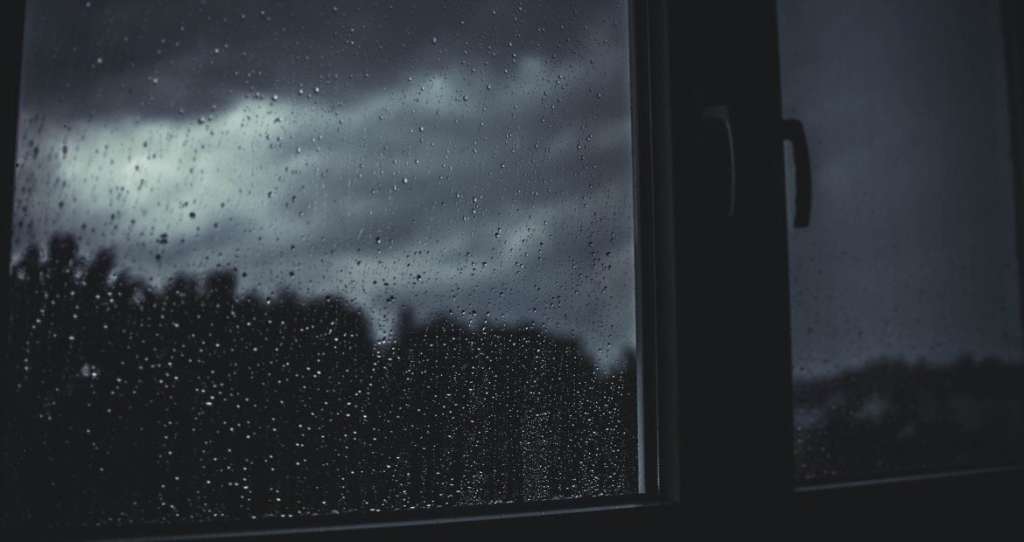
It was a dark and stormy night, the type of night I had grown all too familiar with of late—when all my estranged family and distant friends slept but I couldn’t because all the regrets of my life raged in my mind with an unbearable intensity along with the enduring question—
Why am I alone?
Religion had given me assurances that I was never truly alone and family swore up and down that someone would always be there for me, yet despite all this, one dreary day I slipped on a patch of sadness and plunged into a depression so deep, so far out of human reach that not one single person, a collective of people, or even an all-powerful, all-knowing deity was able to catch my fall.
There was a saying along the lines of “what doesn’t kill you, makes you stronger” which was true I suppose but it wasn’t always in a positive way. I adapted to my loneliness and was now quite capable of being alone in a crowded room. I could not find camaraderie or companionship with the people around me, and as a writer, not even with the people in my mind, the ones that I had breathed life into.
Even my own reflection couldn’t be bothered to be in my company. Instead, it turned its back on me, facing the mirror-image room behind itself and whispered, “You have been lonely your entire life and now you will be all alone until the day you eventually die.”
And with this simple truth, slick sheets of tears poured from the storm clouds of azure eyes, streaking black and violet lightning across the alabaster plain of the loneliest face on the planet.
By the time you read this, this version of me will be dead, but your version will just have been born, but before you become dismayed, know that I have lived a long and prosperous life, just as you had. I realize how unbelievable this will seem to you in your present, but in my past and your future, time travel has/will become a reality. I wish I could tell you more, but although time has opened for humankind greatly, my own time is extremely limited.
There are many blessings to being a member of The Time Guild, but the most important to me has to be the ability to tell you the things I never had the opportunity to say while you were alive. I admire your ability to be both mother and father to me, as well as my best friend, and so I wanted to let you know a few things.
Encouraging me to be an outspoken independent thinker was the best thing you could have done for me. Thank you very much for that. The money that you hide in that ratty old sock in your sock drawer, take a portion of it and invest in a startup company called ReTempus. I know this will put a financial burden on us in the short run, but it will pay off when we need it most. Not to mention ReTempus will eventually become the Time Guild. Please be discreet in your investments as feeding you this information is a strict violation of the Guild’s bylaws, but it should be fine if you fly under the radar.
My final gift to you, embedded in this chronal parchment, is a holographic image. These are your grandchildren, born after you passed away. My daughter is named after you. I am sure I do not have to warn you to keep the letter and its contents hidden from everyone, including me. Just raise me to the best of your ability and time will sort out the rest.
It was there, hidden in plain sight amongst the stars, the cipher that contained the answer to the meaning of all existence, and after Nialla decoded it, she climbed to the roof of her house and breathed the solution to the riddle into the night air. Creation made itself visible to mortal eyes for the first time since the invention of vision and reached out with a stardust arm to greet her.
The touch of the cosmic hand tumbled the locks set in place to limit human perception and knowledge, and she was instantly gravid with omniscience. She stepped off the roof and sailed up past the troposphere, stratosphere, and mesosphere, past the thermosphere, ionosphere, exosphere, and finally into space, where the tiny particles that made up solar wind swarmed around her now naked form.
“Welcome home,” the Voice of All Voices whispered into her ever-expanding mind, which caused her heart to open like a flower.
Although air and breathing were no longer a necessity, she sighed a lifetime of relief and drifted peacefully into the arms of eternity.
My father died when I was young and I was the last person in the family to find out. Everyone thought they were protecting me, shielding me from the bad news and the sorrow and pain that would follow, but I knew something was wrong, even though I didn’t know what had happened. It’s like Nana Bettie used to say, I felt it in my waters.
When my mother finally broke the news to me, I didn’t cry, trying to prove that I was a big girl. I just shut down, and I think that scared my family more than if I had gone into hysterics. I didn’t eat, couldn’t sleep, refused to go to school, and ignored every therapist that came to see me. The brilliance I had once appreciated in life began to fade, colors running together like a painting left out in the rain.
I was wasting away, and not just physically. My soul had begun to atrophy to the point where no one or no thing held interest for me anymore. And that was when my body finally gave out and I collapsed, finding myself falling, falling through stages of grief, which was actually like falling back through time, back to when my father initially sparked the kindling that would ignite the flame that would eventually become my passion.
I landed on a white beach with sand soft as clouds and an endless aquamarine ocean, and standing at the very edge of the shoreline was my father. The entire universe lay open before me.
“Is this heaven?” I asked.
My father laughed and said, “No, sweetheart. Paradise is much cooler than this.”
“Is that where you live?”
“Sure is.”
“Can I stay there with you? I promise I’ll be good.”
“You will one day, but not until you’re older, much older.”
“It’s not fair!”
“Life isn’t fair sometimes,” he shrugged. “But what if I make you a promise?”
“What kind of promise?”
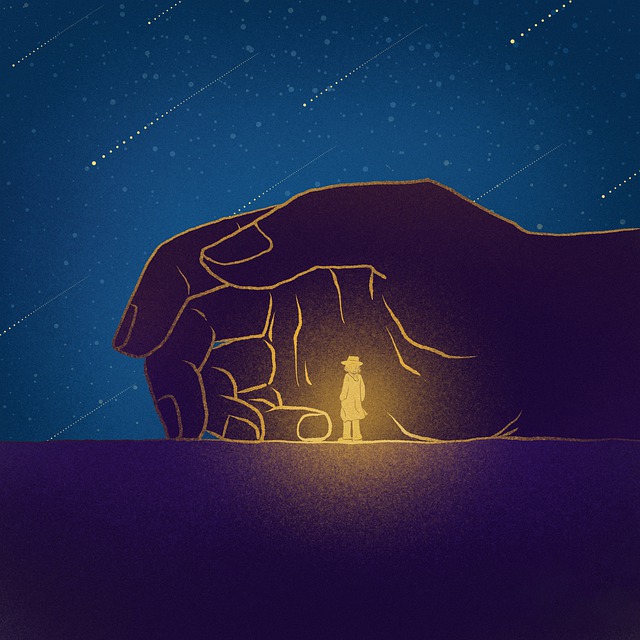
My father held up his right hand. “Do you see this? It may not look like much to you, but I promise this hand is strong enough to protect you all the days of your life. So, while you may not be able to see me, you can trust that I’ll always be with you.”
And before I could plead my case to stay with him again, he leaned down and gently kissed my forehead, and I woke up in my bed, eyes filled with tears and surrounded by my family. I never told them what I saw because I didn’t want them to try to explain it away.
And whether you believe me or not, there have been times in my life where I survived circumstances that were impossible to bear because I felt I was in the grip of the protective hand of love.
My mother warned me to guard the things I held precious by keeping them hidden inside me. The only thing I held precious was her and I found it impossible to place her inside my body. I was too young to understand she was talking about love. Too young to save the best parts of my mother’s love in my heart. Too consumed by the hate caused by her leaving me on my own. Too young to accept that death comes to us all.
It was hard to hold onto her love. Hard because I watched her body decay and rot away to nothingness. I watched to see the precious things she kept inside her and where she managed to hide them so I could do the same. I never found them. I watched as I picked vermin from her flesh and fought away carrion from her decaying form, until the day she was unrecognizable to me.
In particular, I watched her heart. Who knew what was inside there but I knew it was fragile because my mother spoke many times about how it had been broken. She said, “Sometimes you have to break a heart to find out how strong it really is.”
But when her heart became visible, I couldn’t see any cracks. I watched it as it bruised like an apple and disintegrated away. Nothing inside it but emptiness. I was hoping to see love—even though I had no idea what love looked like—or at least be privy to some secret that would explain the world to me. I found none of those things.
Her heart was a chamber for maggots. That was what my mother kept precious. Little disgusting creatures that fed off her body. They were everywhere. Stripping my mother of her beauty.
It grew harder to remember her face. I tried to recall the last time I saw her eyes or her smile but that memory was too distant in the past, lost in the forest of forgetfulness.
Occasionally I dreamt of my mother, standing in a room somewhere I had never been but yet felt so familiar to me, her face was a storm. Clouds roiled where features should have been. When she spoke, her voice was a swarm of black bees the drained the life of anything it touched. The bees blotted out the room and ate a pet dog I only had in dreams and never in real life, before coming for me.
I would run from the house and through the trees, down a dirt path that led to a black pond of brackish water. The water called to me and I was torn for the water was frightening, but so too were the bees who devoured trees on their way to eat me.
No real choice at all, I dove into the pond and discovered the water was actually tar and I was being pulled in, just as other creatures foolish enough to make the same mistake, the same fear-based choice as I had.
My nose and mouth filled with hot thick liquid, bitter molasses that scorched my insides, and melted me like butter on the griddle.
I woke alone in the dark, choking for air, my chest weighted with the heaviness of fear. My breathing was a thick, wet noise like someone sloshing through mud — or tar! — and I no longer felt safe in this world, so I did the only thing I could think to do.
I crawled inside the remains of my mother’s body and wrapped her tight around me so that I could be the thing she kept precious.
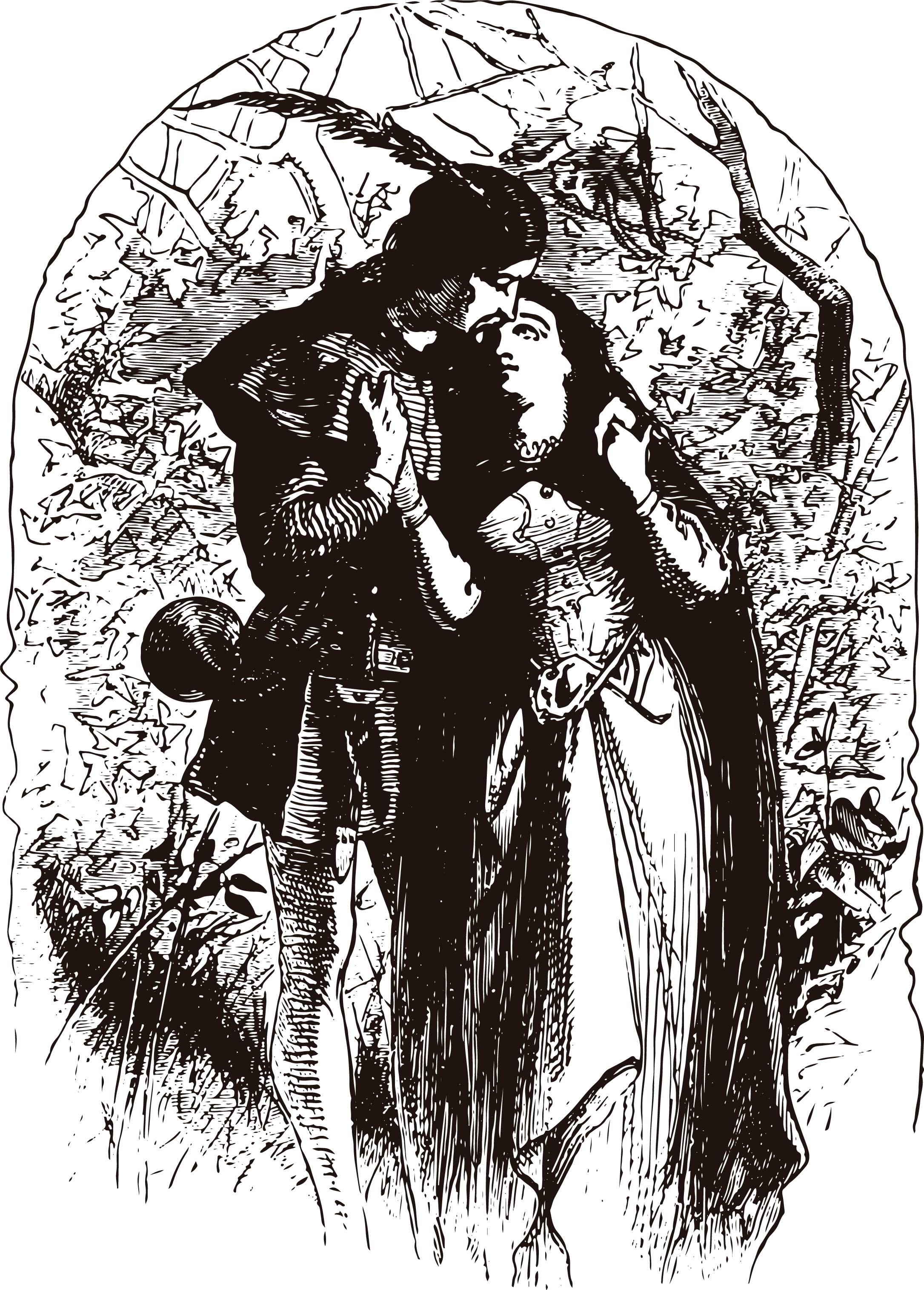
It tore Beckah to bits when she woke up from the fairytale fantasy and learned that true love was a long shot gamble rather than a certainty and that she was not talented enough to do what she loved for a living, but each dawn she tried to begin afresh, to be a more polished version of herself, better, beyond reproach, perfect. That was until she met her mother at the breakfast table, who dashed her hopes on the rocks, leaving no doubt in her mind that everything she dreamt for was impossible.
Gladys Hofstadter, née Cummings, was a woman who practiced a lifetime of tiny deceits, petty deceptions, and random, unnecessary acts of selfishness which slowly inched her so far afield from the good person she foolishly imagined she was that she could no longer spot the path back to being a better or even halfway decent human being. And she made the decision that she wouldn’t remain lost by the wayside alone. After all, what use was it to have a daughter that didn’t share in her mother’s misery?
Tuesday night book club ended much the same as any other week. The women read and discussed Leslie Meier’s latest whodunit, “Irish Parade,” which dealt with a reporter trying to uncover the truth about a case in which her office rival was charged with the murder of a corrections officer. Well, everyone read the book aside from Irene Beaumont, who cribbed her notes from Wikipedia, despite having been caught and called out on it on several occasions. Afterwards, someone posed the question:
“If you could wake up to one wish, what would it be?”
Cynthia Granger wanted clarity of mind in order to be closer to God. Sarah Clemmens desired a meaningful life, one lived in service to others, especially those in emotional need. Delores Babcock wanted to be more intimate in her relationships and less afraid of life. Brenda Trotter wanted to know, without the shadow of a doubt, what her purpose was in the world, because she felt rudderless for so very long now. When it was Geneviève’s turn to answer, she shrugged off the question, offering some lame excuse, because she wasn’t comfortable explaining that she was actively working on fulfilling her wish.
What she desired more than anything else in the world, was a fairytale romance, and she was determined to get it by hook or by crook.
Geneviève decided to attend a mixer one night, without alerting her friends and family in case it went horribly wrong, and, to her astonishment, she met a man who ticked all the boxes on her potential suitor checklist. So, she implemented a plan to stretch the wooing period in an elaborate game of chase, dodged his attempts at popping the question until she was sure that he had fallen in love with her madly, truly, deeply, withheld sex throughout the entire courting and engagement process, and the list went on.
When they were finally wed, Geneviève realized her wish had come true. She moved into his palatial estate, which he shared with his six older brothers, who had either gone missing or were all dead; her husband’s servants were all either animated household items that would burst into song spontaneously, or woodland creatures gifted with human speech; she had to leave a trail of breadcrumbs whenever she left the house alone in order to find her way home again; she had access to every room in the mansion, except one, which was always locked and possessed no keyhole or doorknob or other mechanism in which to open it; and the biggest clue was that her mother-in-law dabbled in some sort of ancient arcane religion, and was always involved in some project or other that always almost accidentally killed Geneviève.
It began with a campfire, built to provide light and warmth against the chill night air, and of course, to toast s’mores. But proper precautions were neglected by the campers and a sudden gust of strong wind caught the flames rising off the burning wood and spread into the surrounding forest, setting fire to the tree that housed Bluella’s nest.
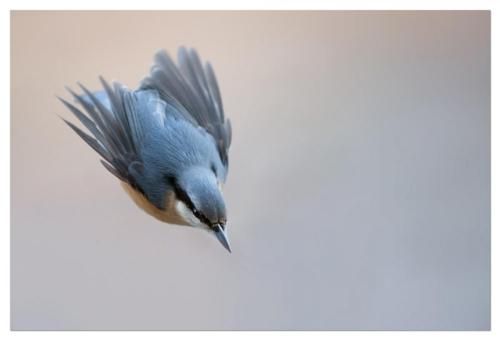
The mother bird took up both eggs in her talons and beat her wings as hard as she could, in an attempt to escape the raging wildfire. She flew without direction or destination, farther than she had ever flown before in a single trip, and just as her eggs began slipping from her talons and her travel-weary wings were about to give out, Bluella was fortunate enough to find a nest outside the path of fire… but it already contained an egg of its own and she caught sight of the parent bird in the middle of its dive bomb assault.
“There’s something you need to know about me. I was born with an extraordinary ability that allows me to see into the future. I know, it sounds a bit mad, but I swear it’s the God’s honest truth. This gift has given me the unfair advantage of always avoiding imminent danger by selecting the best possible outcome in any given situation. But the strongest vision I ever had involved you. Although you don’t know me yet, we have an incredible future in store for us, happy marriage, wonderful children, charmed life, the whole nine yards. We will have a connection like no other couple on the planet. Our auras have the capability to overlap in order to create a psychic rapport. The only hiccup in all this coming true is that you must initiate first contact or our fairytale relationship will never happen, so I desperately need you to lift your eyes from your phone and see me!” I shouted in silence until my emotions were hoarse.
In my sock drawer, there is a hiding space behind a row of what my father calls grave socks as in one foot in the grave because they either do not have a match, are riddled with holes, threadbare at the toes and heels, or the ankle elastic has given up their hold on life. In that hiding space, there is a letter written carefully in a mixture of cursive and print. In that letter, are words, feelings, emotions, and admissions that a boy would never say directly to a girl’s face, not even on a double dog dare.
On a bicycle, there is a shy paperboy who, even though I have not responded to his first letter yet, would write me another letter, I am sure of it, reminding me of our time in the park. In that park, there is a rum cherry tree under which I made a promise to the shy paperboy of seven minutes in heaven.
In my closet, on an afternoon when no one is home, I make good on my promise with the shy paperboy. In the dark, my mind is filled with a sort of scary, sort of awkward fireworks that I can see but cannot hear because my heart is pounding so fast and loud that I swear the shy paperboy can hear it.
In that kiss, there is something I do not have words for, something that drops my guard completely, makes me feel truly comfortable with the shy paperboy and I am desperate to let him see me in my entirety.
In that feeling, I am crying harder than I ever have before, harder than I even knew I could, crying past the point when I run out of tears. In the tearless sobs, my breath is hitching and I realize that this is most likely the happiest and most terrified I will ever feel in my life.
In the silence, after the kiss and the tears, the overwhelming and slightly painful joy is replaced by the sound of a key sliding into a lock, the tumbling of a bolt and the jangling of a woman’s metal bracelets.
In the house, there is a mother who will tan not only my hide but the shy paperboy’s as well, if she ever finds out I have company without permission and especially if my room door is closed and that company is a boy who is in my room.
In the window, there is a scared paperboy climbing out and mumbling a prayer that he does not hurt himself or makes a sound when he drops a story to the ground below.
In my mother’s eyes, there is suspicion when she opens the door and enters my room, catching me rushing to shut the window, cutting off the cool breeze even though I am dripping with sweat.
In my mind, there is a list of excuses that I cannot find in the clutter of thoughts so I just stare at my mother as innocently as I can manage, as she walks past me and opens the window, about to stick her head out to inspect the backyard.
In my mouth, there is a fib, “A wasp!” I say just a bit too forcefully and I build on it by telling her there was a wasp in the room so I closed the door to stop it from getting into the rest of the house and I managed to chase it out and shut the window behind it.
In the moments that tick by too slowly, my mother glances at the window again, then at my face before turning to leave but as she reaches the door, she stops and says, “You should probably find a better hiding place. Your father’s been talking about throwing out your grave socks and you wouldn’t want him finding that letter, would you? And the no company without permission rule stands no matter how sweet a boy’s words are or how much your heart aches for him, understood?”
In the end, I realize I am not as clever as I think I am, nor is my mother that foolish or unreasonable and I discover a newfound respect for her as I answer, “Yes, ma’am.”







 MADD FICTIONAL