Stories Are the Creatures That Forage in the Wilderness of Our Minds

“Stories are the creatures that forage in the wilderness of our minds. Their claws pierce our curiosity, digging in deep to prevent our escape, as they force us into their maw, past razor sharp teeth of conflict.” —- Rhyan Scorpio-Rhys

Tell me a story.” the woman said, book opened to a blank page on her lap, graphite stick firmly in hand and at the ready. The reading chair in which she sat was, what appeared to my eyes, nothing more than a series of interwoven vines that had grown from the lush green carpet in the center of the room. This indoor library of hers smelled of petrichor, the scent of rain on dry earth, which would explain the moisture that dotted the spines of the books stacked in chaotic fashion on the recessed shelves lining the walls.

I — I don’t have any stories.” I shifted uncomfortably in a small puddle on the carpet—that was most assuredly grass—as the woman took in the sum of me.

Nonsense, everyone has stories, some more interesting than others, but they are stories nonetheless.” she said, gesturing with a nod for me to sit. “Everything is present for a story to exist: a teller, that would be you, and an audience, which would be me.”

My seat—a normal metal folding chair with padding—was as much out of place with the room’s décor as I. A reminder, no doubt, that although invited, I was still considered an interloper. The fact that the chair was bone dry despite the moist surroundings was of small consolation. I squirmed until I found the position that afforded the least amount of discomfort and said, “All right, then… I don’t know how to tell a story.”

Ah, a different matter altogether.” she said, placing the book and graphite aside. “The act of storytelling is as old as the creative spark that burns within us all. And though truly great storytellers are born, those lacking the unique gift may still acquire the skill.”

1. Keep it simple.

The first thing to bear in mind is if you have the choice between a complicated or simple telling, choose the simple approach. As marvelous as the brain may be, it can become overwhelmed if it attempts to process too much information at one time.

2. Open big.

Next, you mustn’t be afraid to grab your audience by the balls!” the woman smiled, amused by my unease. “And never apologize for doing so. You’re familiar with the saying, ‘you only get one chance to make a first impression,’ aren’t you? The same applies to your story. You need to carefully craft your opening line to grab your audience’s attention immediately, and represent the promise of your story by displaying a unique voice and perspective.

“There is no going soft here. Your opening line should possess the elements that make up the story as a whole, told in a distinctive voice, a point of view, a rudimentary plot and some hint of characterization. By the end of the first paragraph, your audience should know the setting and conflict… unless there is a particular reason to withhold this information.”

3. Be mindful of your story’s spine.

“Stories are the creatures that forage in the wilderness of our minds. Their claws pierce our curiosity, digging in deep to prevent our escape, as they force us into their maw, past razor sharp teeth of conflict. But despite outward appearances, these beasts are only as strong as their spine.

“Your duty is to support that spine by arranging your content in a logical order and supporting it with anecdotes that raise questions to keep up interest and moments of reflection to show your story’s appeal. We, as the audience, need a reason to care.

“And lop off the vestigial appendages of tangents where you find them. Going too far astray will only lose your audience’s attention.”

4. Don’t alienate your audience.

Some subjects require a delicate touch. You’ll know them by their appearance and the uneasy feeling they leave in your gut. By no means avoid them if they’re integral to your story, but instead find the best way to craft the tale so that you draw your audience in before revealing sensitive details. Invest them in the story before you shock them and then give them time to digest it.

5. End strong.

Whether you end your story on an upbeat note, allow your audience to fill in the blanks, come full circle with your lead, close with a relevant quote, provide a brief summary, or wrap things up with either a surprise or anecdotal ending… you need to come strong. Elevate your story’s effectiveness with a great ending and leave them with a lasting impression. The yang to your ‘first impression’ yin.

“You should also give your audience the proper space to appreciate your ending. A mere sentence or two in which you take a step back and let the story meaning steep in their mind.

And finally, allow your audience to hear the door click shut behind them, signifying that the story is well and truly over. Everything’s done and dusted. Thank you for visiting my world, now it’s time to return to your own.”

Got all that?” she asked. I nodded that I understood.

Good,” the woman rested the tip of the graphite stick on the book leaf, “now tell me a story.

Click.

Sally forth and be writeful.

©2013 Rhyan Scorpio-Rhys

Creative Commons License

Screw the Fear and Write On

“Screw the fear.” — Jo Leigh

Be it anxiety over acceptance, concerns about misrepresentation, or indecisiveness on whether to delete or send out your latest labor of love and pain, fear has a nasty way of creeping into the writing process, and if you can use it to your advantage by allowing it to heighten your awareness and commit to the page the precise thoughts and ideas that need to be expressed, so much the better. It’s when fear snaps shut like a bear trap on your mind and prohibits you from pushing the pen on paper that’s the problem.

I would tell you to forget the fear, but we both know sometimes that just isn’t an actionable solution. The best I can manage is to share with you what works for me: I simply acknowledge it. I tip my hat to fear, slog through the uncertainty and self-doubt that it carries in abundance, and I write. To myself. For myself. I write without thought of sharing it with anyone, without the intention of submitting it for publication. Since the act I engage in is so personal and integral to my understanding the world around me, I refuse to let fear have any say in what or how I write. I write what I feel must be written. No one else has to agree. Because if I don’t write my mind, my view of the world perishes when I no longer exist.

It’s my marker. My proof I was here.

But, should you choose not to heed me advice, perhaps you’ll listen to those talented few, listed below, who are graced with a turn of phrase that far surpasses my own.

Sally forth and be fear ignoringly writeful.

— Rhyan Scorpio-Rhys

1. “There is no greater agony than bearing an untold story inside you.” ― Maya Angelou

2. “Lock up your libraries if you like; but there is no gate, no lock, no bolt that you can set upon the freedom of my mind.” ― Virginia Woolf, A Room of One’s Own

3. “You never have to change anything you got up in the middle of the night to write.” ― Saul Bellow

4. “Tomorrow may be hell, but today was a good writing day, and on the good writing days nothing else matters.” ― Neil Gaiman

5. “A word after a word after a word is power.” — Margaret Atwood

6. “Start writing, no matter what. The water does not flow until the faucet is turned on.” ― Louis L’Amour

7. “Let me live, love and say it well in good sentences.” — Sylvia Plath, The Bell Jar

8. “One of the few things I know about writing is this: Spend it all, shoot it, play it, lose it, all, right away, every time. Do not hoard what seems good for a later place in the book, or for another book, give it, give it all, give it now.” — Annie Dillard

9. “The role of a writer is not to say what we can all say, but what we are unable to say.” — Anaïs Nin

10. “The scariest moment is always just before you start. After that, things can only get better.” — Stephen King, On Writing

We Live and Breathe the Power of Words

I just watched the above trailer for the upcoming documentary “Salinger” on YouTube without meaning to. It was one of those ad-thingies that pop up before the content you actually want to watch. Normally I click SKIP AD, but this time I’m glad I didn’t. The doc professes to be “An unprecedented look inside the private world of J.D. Salinger, the reclusive author of The Catcher in the Rye.” and while I’m not the hugest fan of documentaries (a good deal of them are padded waaay too much to meet feature length requirements, in my opinion) I’ll probably give this one a go when it hits a theater near me.

But I digress…

The reason I brought this trailer up was because it spoke to me on the power words have to manipulate our emotions, provide the motivation to become better people and do great things, and sadly, sometimes to take us by the hand and lead us down darker paths.

You can never truly predict how someone will interpret your work, as words offer unique triggers in each of your readers’ minds. Ideas, concepts, situations, memories, actions, circumstances, feelings and thoughts vary as they flow from the subconscious mind to the corresponding emotional responses of the subject at hand.

In honor of Labor Day, I’d like to take a moment of your precious time and acknowledge the labors of wordsmiths by having them share their opinions on the power written words have over us all:

“Sometimes, you read a book and it fills you with this weird evangelical zeal, and you become convinced that the shattered world will never be put back together unless and until all living humans read the book.” ― John Green, The Fault in Our Stars

“We live and breathe words. It was books that made me feel that perhaps I was not completely alone. They could be honest with me, and I with them. Reading your words, what you wrote, how you were lonely sometimes and afraid, but always brave; the way you saw the world, its colors and textures and sounds, I felt–I felt the way you thought, hoped, felt, dreamt. I felt I was dreaming and thinking and feeling with you. I dreamed what you dreamed, wanted what you wanted–and then I realized that truly I just wanted you.” ― Cassandra Clare, Clockwork Prince

“I spent my life folded between the pages of books. In the absence of human relationships I formed bonds with paper characters. I lived love and loss through stories threaded in history; I experienced adolescence by association. My world is one interwoven web of words, stringing limb to limb, bone to sinew, thoughts and images all together. I am a being comprised of letters, a character created by sentences, a figment of imagination formed through fiction.” ― Tahereh Mafi, Shatter Me

“There is something about words. In expert hands, manipulated deftly, they take you prisoner. Wind themselves around your limbs like spider silk, and when you are so enthralled you cannot move, they pierce your skin, enter your blood, numb your thoughts. Inside you they work their magic.” ― Diane Setterfield, The Thirteenth Tale

“If I read a book and it makes my whole body so cold no fire can warm me, I know that is poetry. If I feel physically as if the top of my head were taken off, I know that is poetry. These are the only ways I know it. Is there any other way?” ― Emily Dickinson, Selected Letters

“But if thought corrupts language, language can also corrupt thought.” ― George Orwell, 1984

“We seldom realize, for example that our most private thoughts and emotions are not actually our own. For we think in terms of languages and images which we did not invent, but which were given to us by our society.” ― Alan Wilson Watts

“There exists, for everyone, a sentence – a series of words – that has the power to destroy you. Another sentence exists, another series of words, that could heal you. If you’re lucky you will get the second, but you can be certain of getting the first.” ― Philip K. Dick, VALIS

“Words… They’re innocent, neutral, precise, standing for this, describing that, meaning the other, so if you look after them you can build bridges across incomprehension and chaos. But when they get their corners knocked off, they’re no good any more… I don’t think writers are sacred, but words are. They deserve respect. If you get the right ones in the right order, you can nudge the world a little or make a poem which children will speak for you when you’re dead.” ― Tom Stoppard, The Real Thing: A Play

“It doesn’t matter if you and everyone else in the room are thinking it. You don’t say the words. Words are weapons. They blast big bloody holes in the world. And words are bricks. Say something out loud and it starts turning solid. Say it loud enough and it becomes a wall you can’t get through.” ― Richard Kadrey, Kill the Dead

“To see evil and call it good, mocks God. Worse, it makes goodness meaningless. A word without meaning is an abomination, for when the word passes beyond understanding the very thing the word stands for passes out of the world and cannot be recalled.” ― Stephen R. Lawhead, Arthur

Sally forth and be Labor Dayingly writeful.

— Rhyan Scorpio-Rhys

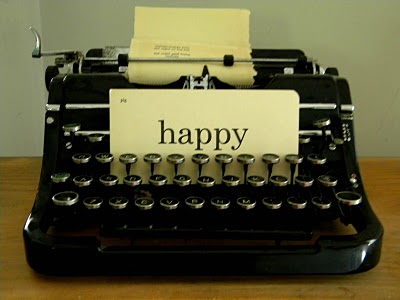
19 Habits of Happy Writers (you don’t really want to be miserable all your life, do you?)

https://maddfictional.com/wp-content/uploads/2013/08/b4784-happytypewriter.jpg

“Happiness is not something ready made. It comes from your own actions.” — Dalai Lama

As writers, it’ll come as no shock to any of you when I say my mood largely affects my writing. When I slide into the dark places, although I attempt to slog my way through the anguish and negativity that gets so thick sometimes as to suffocate me, my writing naturally suffers.

This post stems from an article I read recently on a Swedish study that suggested writers have a higher risk than the general population of anxiety and bipolar disorders, schizophrenia, unipolar depression, and substance abuse. And if that wasn’t enough, we’re also about twice as likely to commit suicide.

I don’t know about you, but I’d like to head this off at the pass. So, below are a few suggestions to help you live a happier existence, broaden your horizons, create a positive environment in which to write, and hopefully bring energy and verve into your projects:

1. Appreciate Life

Be thankful that you beat the odds and woke up alive this morning, some folks weren’t as lucky as you. Develop a childlike sense of wonder towards life and focus on the beauty of things. Learn to make the most of each day, and stop taking things for granted. And definitely don’t sweat the small stuff. It’s small for a reason.

2. Choose Your Friends Wisely

Do your best to surround yourself with happy, positive people who share your values and goals. Friends that have the same ethics as you will encourage you to achieve your writing dreams. They help you to feel good about yourself and are good for a morale boost when needed.

3. Be Considerate

Accept and respect others for who they are as well as where they are in life. With a generous spirit, help when you’re able, without trying to change the person. As a rule, you should try to brighten the day of everyone you come into contact with. Especially the difficult ones.

4. Learn Continuously

Try new and daring things to spark interests, gain experience, and that you can bring back into your writing.

5. Develop Creative Problem Solving Skills

Stop wallowing in self-pity as soon as you face a challenge and instead get busy finding a solution. Don’t let set backs affect your mood, instead see each new obstacle you face as an opportunity to make a positive change. Learn to trust your gut instincts – it’s almost always right.

6. Laugh Lots

Stop taking yourself – or life for that matter — so damned seriously. You can find humor in just about any situation, so learn to laugh at yourself, because, let’s face it, nobody’s perfect. When appropriate, laugh and make light of the circumstances. (Naturally there are times that you should be serious as it would be improper to laugh. Try not to that person.)

7. Forgive!!!

Holding a grudge hurts no one but you. Forgive others for your own peace of mind. When you make a mistake, own up to it, learn from it, and forgive yourself.

8. Be Grateful

Develop an attitude of gratitude by learning to count your blessings; All of them, even the things that seem trivial. Be grateful for your home, your work and most importantly your family and friends.

9. Invest in Relationships

Always make sure your loved ones know you love them even in times of conflict. Nurture and grow your relationships with your family and friends by making the time to spend with them. Don’t break your promises to them. Be supportive.

10. Keep Your Word

Honesty is the best policy. Every action and decision you make should be based on honesty. Be honest with yourself and with your loved ones.

11. Meditate

Meditation gives your very active brain a rest. When it’s rested you will have more writing energy and function at a higher level. Whether it’s yoga, hypnosis, relaxation tapes, affirmations, visualization or just sitting in complete silence, find something you enjoy and make the time to practice daily.

12. Mind Your Own Business

Concentrate on creating your life the way you want it and take care of you and your family. Don’t get overly concerned with what other people are doing or saying. Don’t get caught up with gossip or name calling. Don’t judge. Everyone has a right to live their own life the way they want to – including you.

13. Be Optimistic

See the glass as half full. Find the positive side of any given situation. It’s there – even though it may be hard to find. Know that everything happens for a reason, even though you may never know what the reason is. Steer clear of negative thoughts. If a negative thought creeps in – replace it with a positive thought.

14. Love Unconditionally

Don’t put limitations on your love, even though you may not always like the actions of your loved ones – continue to love them.

15. Be Persistent

Never give up. Face each new challenge with the attitude that it’ll bring you one step closer to your goal. You’ill never fail, as long as you never give up. Focus on what you want, learn the required skills, make a plan to succeed and take action. As humans, we’re always happiest while pursuing something of value to us.

16. Be Proactive

Accept what can’t be changed. Happy writers don’t waste energy on circumstances beyond their control. Accept your limitations as a human being. Determine how you can take control by creating the outcome you desire – rather than waiting to respond.

17. Take Care of Yourself

Take care of your mind, body and health. Get regular medical check ups. Eat healthy and work out. Get plenty of rest. Drink lots of water. Exercise your mind by continually energizing it with interesting and exciting challenges.

18. Build Self Confidence

Don’t try to be someone you’re not (no one likes a phony). You know who you are on the inside so be confident with that, do the best you can manage and don’t second guess yourself.

19. Take Responsibility

Happy writers know and understand that they are 100% responsible for their life. They take responsibility for their moods, attitude, thoughts, feelings, actions and words. They are the first to admit when they’ve made a mistake.

And there you have it. Simple, common sense suggestions to help you take responsibility for your own happiness. I realize that some of these are easier said than done, but could it really hurt to try to work on developing at least a few of these habits as you own? Who knows, the more you incorporate the above habits into your daily lifestyle, the happier you could be.

Being gifted with creativity comes at a price, but it doesn’t have to be a terrible one.

Sally forth and be true to yourself writeful.

— Rhyan Scorpio-Rhys

The Island of Misfit Posts #2: No Enemy But Time

Like its predecessor, Discouraged by Discouragement, this pesky fella here is another one of those posts that didn’t quite turn out as expected and ended up on the cutting room floor (though a part of its sentiment made its way into You’re Where You Are). Caught somewhere between my musings of growing older while still struggling with the craft and my intent of advising impatient writers to slow down, the post started taking the shape of something neither fish, flesh, nor good red herring:

“Do you think, I have not just cause to weep, when I consider that Alexander at my age had conquered so many nations, and I have all this time done nothing that is memorable!” — Julius Caesar

When you reach a certain age, you become acutely aware of time, how much you’ve squandered on things you swore were important at the moment, and how little you still have left in your account. Whenever I get the time brain bug, I’m always brought back to the line from Delmore Schwartz’s poem, Calmly We Walk through This April’s Day (quoted in that horrendous film Star Trek: Generations), “Time is the fire in which we burn.” I love that line. It resonates within me.

But I digress.

Many aspiring authors feel the pressures of time, either believing because of their age that they’ve gotten a late start in the writing process and need to play catch up, or simply haven’t got the proper time to devote to a writing regime, so they attempt to bang out herculean writing tasks without bothering to first learn the rules. They assume because they’ve taken on board the advice to write everyday that their skill set automatically improves and mistakes auto-correct themselves. They read, as instructed, but fail to apply storytelling rules–plotting, story goals, scenes and sequences, the purpose of characters, effective use of dialogue–to their own work.

That’s not to say their writing is bad, it simply lacks a consistent quality. A beautiful bit of prose or a dynamic character can easily get lost in the quagmire of weak grammar, poor pacing, and a meandering plot. Recognizing it can sometimes be hard to turn an objective eye on your own writing, here are a few questions to ask yourself, to see if you need to go back to writers boot camp:

1. Do you tell a story?

I assume you’re familiar with the phrase, “You can’t see the forest for the trees.” This applies to your writing as well, especially when you’re concentrating on your piece at the word choice and sentence structure level. Sometimes it helps to take a step back and get a big picture view of what you’re attempting to do, what it is you’re really trying to write about. The answer isn’t always as clear cut as you’d imagine.

2. Is your writing concise?

This one’s a toughie, because it calls on you to chuck out everything you learned in school about the proper way to write an essay. Well, this ain’t about writing essays, bub (or bubette, no gender discrimination here) and the rules of pacing language are different in fiction. The first rule you need to learn is: Never use a long sentence when a short one does the same job.

3. Are you addicted to adjectives and adverbs?

Adjectives and adverbs are among the more hotly debated issues in the writing community, and while opinions vary, the common rule of thumb is less is more. It can be hard to spot over usage while writing so when you’re done with your piece, look for chains–a string of adjective and adverb two or greater–and whittle it down until you’re left with one or two essential ones. Also worth bearing in mind, when you feel the need to modify a noun or a verb, make sure they need to be modified. If they do, select the best word to convey your meaning.

4. Are you familiar with the word “subtle?”

Your audience is smarter than you realize. There’s no need for you to spell everything out in exacting detail. And, believe it or not, some folks actually enjoy interpreting things for themselves.

5. Should you be shifting viewpoints?

Hopping from one character’s head to another without causing audience confusion requires a certain level of skill, and I’m certainly not suggesting that you shouldn’t be doing it (and if I told you not to, you’d rush out and do it anyway) but why not baby step your way towards it? Work on mastering the one character viewpoint first.

6. Do you show too much?

Yes, the standard rule is “show, don’t tell” but you don’t need to show everything. When in doubt, refer to Elmore Leonard’s rule,”Try to leave out the part that readers tend to skip.”

7. Do you create apathetic characters?

You’re an artist, your work is all about the truth, even in fiction. I get it. I’ve been there. But creating a realistic character based on your current bout of apathy, depression, or (heaven forbid) suicidal thoughts, often doesn’t make for good reading. Your characters must have wants and needs to push the plot forward. Audiences have no need to read stories where the characters have no desire to live or accomplish something.

8. Is your antagonist one dimensional?

Villains that are evil for evil’s sake are boring. Flesh them out with wants and needs like you would your main character. And remember, every villain is a hero in their own mind.

9. Does your dialogue matter?

Yes, leaving white on the page is a good thing as no one like slogging through dense blocks of description, but are you breaking up paragraphs with bits of meaningless chatter? Dialogue should be used as a communication between characters that evokes reaction. One characters says something that another character reacts to, which sparks a reaction, and so on, until the scene concludes. If you have no idea what your character has to say, then you don’t know your character well enough.

10. Can you write an ending?

Some people excel at writing beginnings, and that all they’re good at. Each chapter is a new beginning, with no middle to be found and as for an ending? I’m sure you can work out the answer to that. Other people get off to a slow start in the beginning, come into their own in the middle and peter out at the finish line. Let’s face it, endings are tough. Not only must you keep it clear and simple while you deliver on the promise of the premise (without being didactic), but you have to tie up all your story’s loose ends, and if you’re planning to surprise your audience, it shouldn’t be with an inappropriate twist, added for shock value. Keep in mind that writing the words “The End” doesn’t finish a story if it has no resolution.

In truth, I couldn’t finish it because I wasn’t in the proper frame of mind at the time. Although it might not be visible in the post, that damned time brain bug kept nagging at me, not with words, but with a feeling – the feeling of being left behind in the race for achievement. Before you say a word, I know better. In fact, one of my favorite quotes on this matter comes from the now famous commencement speech, Ladies and gentlemen of the class of ’97:

“The race is long and, in the end, it’s only with yourself.”

But we’re human, aren’t we? And sometimes knowing a truth doesn’t prevent you from feeling the exact opposite.

Sally forth and be writeful.

— Rhyan Scorpio-Rhys

You’re Where You Are Because of Who You Are (but that ain’t necessarily a bad thing)

This one’s dedicated to the older crowd who aren’t quite sure they’re meant to be a writer, despite the deep down sense that urges them to touch pen to page. Doubt is a bastard of a beast that silently creeps in and builds its nest in your confidence and only rears its ugly head when you look at your writing and whispers, “You aren’t where you should be for someone your age. Maybe you’re just not good at it because a great writer–hell, even a competent one–would be further along by now, don’t you think?

This couldn’t be further from the truth.

Writing doesn’t come with a sell by date and it doesn’t give a damn how long in the tooth you are. Don’t believe me? Do your research. In your info gathering you’ll no doubt discover that Laura Ingalls Wilder was 60 when she first published her “Little House” series, Raymond Chandler sold his first pulp crime short story at 45, Richard Adams was 50 when “Watership Down” went to press, and that’s just the tip of the iceberg. So, the question I put to you is, if they can do it, why can’t you as well?

The mere fact that you’re questioning yourself and your abilities probably means you’re meant to be a writer. And who knows, maybe the words you write will help change the world in some small way or impact the lives of your audience. And even if that isn’t the case, should you feel that something is missing and recognize that the world, in spite of its diversity and splendor, simply is not enough and that your dreams are so much bigger than the reality that surrounds you… why not write about it?

If the yearning is gnawing at your sanity, the onus is on you to hang your self-doubt on the coat rack (don’t worry, you can pick it up on your way out), stuff your excuses in an old cigar box, give perfectionism the night off, mine your soul for inspiration and when you hit a gold vein, start writing. And embrace what comes out. If it’s messy, let it be messy, or chaotic, or terrifying, just turn the editor off and keep moving forward. You’ll have plenty of time to edit your piece after you’ve finished writing it.

One last thing before I sign off, whenever I got myself into trouble and grounded as a kid, my mother used to say, “You’re where you are, because of who you are” and maybe that applies to you when it comes to writing. Perhaps you’re meant to be the age you are at this very moment, filled with your own unique life experiences, to start writing that project that’s been pestering you for so long.

So, push the ages of the recent crop of bestselling authors out of your mind and follow your calling. Comparing the fruits of their labor to your current lack of same is ridiculous (and frankly, their success is none of your business). All you can do is your best, so get to writing, will ya?

I wish you nothing but the very best of luck in completing your piece (and enjoy the process while you’re at it).

Sally forth and be agelessly writeful.

©2013 Rhyan Scorpio-Rhys

Creative Commons License

The Island of Misfit Posts #1: Discouraged by Discouragement

When I sit down to write these posts, I never know what they’ll be about beforehand. It’s a first-thought-that-hits-me-stream-of-consciousness sort of thing. Sometimes they’re on point, other times they meander a bit, but as stated in the About This Blog section, the posts are less about me attempting to appear clever or knowledgeable (what are the odds, really?), and more about getting myself into a proper writing frame of mind with a warm up exercise. Mental calisthenics, if you will.

As you might imagine, it doesn’t always go to plan. Case in point: the post below. Inspired in part by Susannah Breslin’s Forbes article, Why You Shouldn’t Be A Writer, and Martin Levin’s, You Suck And So Does Your Writing–which is more about petty squabbles between notable literary figures (how I would have combined the two ideas is anyone’s guess)–it was meant to be a discouragement piece, you know, separating the wheat from the chaff, and all that, that started out like this:

Of All the Things You Could Do With Your Life, Why On Earth Would You Purposely Choose To Be A Writer?

Don’t worry, it’s not a trick question, but one you should be prepared to ask yourself and answer before undertaking writing in any fashion as a serious profession. Among the more common reasons I’ve come across in my travels are:

1. No commuting and every day is Pajama Friday!

I can’t fault your logic here because commuting is generally a nightmare and what’s better than tooling around your house in a onesie all day long like an agoraphobic superhero? Sadly, it isn’t a good enough reason to want to be a writer, especially since there other telecommuting positions that offer more stability and better chances at becoming a career.

2. What better way is there to make a ton of dough and roll around in my piles of cash?

Well, you could try your hand at playing the lottery or betting the ponies, for starters. Rich writers are the exception to the rule. The majority of people who claim writing as a profession, work their mental fingers to the bone, producing material for years before they even get a glimpse at recognition, let alone a healthy paycheck. Instead of rolling in piles of cash, you’ll most likely be rolling up your coins, praying your landlord accepts pennies for rent.

3. Nothing better than being my own boss with flexible hours!

Flexible hours? Been writing long? Writing is a huge commitment that commandeers your entire life with absolutely no guarantee of any sort of financial gain. As stated earlier, there are other work-from-home opportunities that are far more secure and come equipped with a steady payday. And being your own boss isn’t the sipping Mai Tais under a beach umbrella fantasy you imagine it to be. First off, there’s no one to delegate all the donkey work to, and your brain doesn’t simply punch out when the working day has ended. Writing–and the guilt of not writing–never leaves you in peace until the article/book/screenplay/project has been completed.

4. It would be amazing to see my best-selling book in a bookstore/my script turned into a blockbuster feature film/win the Pulitzer Prize for my groundbreaking article series.

Who wouldn’t want any of those things? While we’re daydreaming, I’d also like to be an astronaut so that I can save the planet from extraterrestrial threats, be the smartest man in any room I’m in so that I can solve all the world’s problems and become Earth President, and build a safe-box time machine–that protects me from any sort of injury–equipped with a high end movie camera in order to jump back and forth in time to make the ultimate series of historical documentaries.

Now that my feet have touched terra firma and I’m once again grounded in reality, I can tell you that while it’s great to dream big, fame is one of the worst reasons to choose writing as a profession.

But the post wasn’t really working for me because I could feel myself getting snarkier as the piece went on, which wasn’t my intent going in. So, I decided to step off my soapbox and kill the post. And there it sat in my trash for days, forgotten like Charlie-In-The-Box, Dolly, Spotted Elephant, and King Moonracer. But it miraculously survived deletion during my numerous trash emptying sessions. This had to be a sign. What sign, I hadn’t the faintest, but I decided to attempt recycling it into a less judgmental, more positive message:

Writers are born critics who will criticize any and everything that crosses their paths, especially fellow writers. They will issue their assessments and commentary with the righteousness of having had their opinions validated by the Mount Horeb burning bush. These are the writers who cut open veins and bleed for love of the craft, whose skulls ring with haunting voices that cannot be silenced until exorcized onto the page, who believe in their heart of hearts that the only words that deserve to be written are the truths that need to be told.

I can’t lie, sometimes I feel the same way.

But I’m not as bothered by it anymore, because I know first hand that the writing process has it’s own way of weeding out the fly-by-night scribblers, posers and pretenders with the obstacles it scatters on the long and winding path to a completed project. Whether your driving force is money, fame. to impress a person/people, burning need, or love of the artform, you will still experience your fair share of procrastination, anxiety, writers block, time crunches, lack of motivation, fear of rejection, judgement of peers, and impatience of selling a piece.

If you can repeatedly bash your head into these walls, get up, dust yourself off and continue to write, who am I to question your motives? That, my friends, is the best I can do fer ya, today.

Sally forth and be writeful.

— Rhyan Scorpio-Rhys

A Penny For Your Thoughts: My Two Cents on Internal Monologue

I was talking to a friend yesterday about one of the housemates in this year’s Big Brother UK (how dare you judge me!) who had the annoying nonstop habit of thinking aloud in a random, babbling manner that made me sometimes feel as if I was reading her unfiltered thoughts. This, naturally, brought the topic of internal monologue to mind.

Whether you refer to it as verbal stream of consciousness, internal speech, or inner voice, internal monologue occurs when your characters engage in conversations with themselves, thinking in words at a conscious or semi-conscious level.

When used properly, making your audience privy to your character’s thoughts and internal struggles can add levels of emotion and intrigue that deepen your story nicely. But it’s not an easy skill to master, and in the hands of an inexperienced writer, the piece can quickly become a quagmire of unnecessary narrative.

Here are a few things you might want to bear in mind:

  • Mind your thoughts. The first thing to keep in mind–which should be obvious–internal monologues are always written from a character’s point of view, and the thoughts should match their personality and speech patterns.
  • Act first, think later. Avoid the temptation of beginning your story with expositional monologue. Sure, you’re eager to set the scene and establish characters, location, time period, etc., but you should consider capturing your audience’s attention from the onset by thrusting them into a riveting bit of dialogue, intrigue or action, before introducing the necessary exposition.
  • Don’t tip your hand, but don’t wait too long, either. You should never let a character’s thoughts introduce vitals details before they’re relevant to your story. Also, make sure you’ve provided your audience with everything they need to know before any tense scenes and definitely before you reach the climax. Never put a pitstop in your action sequence to sandwich in a bit of explanatory monologuing. Ick. Makes me shiver just thinking about it.
  • Back the right horse. If you have a choice between using dialogue or internal monologue, go with the dialogue–if, of course, it can properly explain pertinent information or convey the internal battles of your character. When doing this, however, there’s a trope you need to avoid, affectionately known as the dreaded “As you know, Bob” where one character tells another character something they already know.
  • Show, don’t tell still applies… somewhat. If you utilize enough internal monologuing in your writing, you’ll come to realize that sometimes, despite your best efforts, you’ll need to tell what a character’s thinking instead of showing it. Just don’t make a habit out of it.
  • Everything you know, not everything I know. I watch a lot of martial arts flicks, especially the old Shaw Brothers chop socky ones, and a recurrent theme was of an undeserving young student turning his newly acquired martial arts skills on the old master. I only bring this up because of a line I heard during a showdown where the young buck is boasting that he not only knows all the old man’s techniques, but he also has the advantage of youth on his side. The old master shakes his head and corrects the younger aggressor, “I taught you everything you know, not everything I know.” This should be the same with your character. There is no reason on this green earth for your audience to know everything your character knows. Everyone likes a little bit of mystery and in your audience’s case, it’s what keeps them turning pages.
  • Thoughts do not drive a story. Chiefly because they’re a poor substitute for conflict. This is another one of those things that should be evident, since I assume you’re an avid reader. So think on the last book that really held your attention, I’m talking about the one you continued to read even though your eyes were burning because you were fighting off sleep. What kept you invested in the book? The character’s thoughts? The answer you’re searching for should be conveniently located in the “Hell, no” aisle. More likely than not, the things that held your interest–writing style aside–were the story’s action and dialogue, because they’re what defines your character best.

In closing, interior monologue is one of the more useful writing tools at your disposal, and if you economically pepper it amongst action sequences, and dialogue, it should serve you and your story well.

Sally forth and be internal monologue writeful.

— Rhyan Scorpio-Rhys

An Idea is Great, But it Ain’t a Story… Yet.

Don’t you just love the feeling when a thought or concept tickles your mind in the right way and the longer you contemplate it, the greater the potential it has for existing as a piece of writing? And it always blindsides you, doesn’t it? On some idle Thursday whilst you’re hip-deep in work or chores and too preoccupied to be overly critical of it. And in its purest form, untested by experts, it’s a thing of beauty–this idea of yours–but as the title of this post suggests… it doesn’t even live in the neighborhood of being a story.

So, despite the fact that you were clever enough to have jotted the idea down on paper–preventing it from pulling a Papillon-esque escapeand attempted to workshop it somewhat, tacking on the odd bits of reality to make it less ethereal, in the end all your efforts amounted to were pages of writing that eventually found their way into a file folder or a desk drawer.

That’s because you haven’t moved your idea into the development stage yet. What you’ve done up to this point is commonly referred to as seat-of-your-pants writing. It’s all fun and loosey-goosey and noncommittal and some writers are actually able to complete stories in this fashion with nary a problem. The rest of us, however, tend to run out of steam, write ourselves into a corner, or worse yet, discover that our idea lacks staying power.

The workaround is to create an outline for your idea. This is where some writers begin to whinge that outlining is boring, it locks the brain into rigid thinking, it creates too much anxiety, and makes your story sound just plain silly. If you’re that writer, there’s nothing more I can offer you here other than a good luck handshake and a pat on the back. I wish you well.

For everyone remaining, before we get to the outline, I’m going to tear a page out of the screenwriters’ bible and suggest you create a logline (for more details see: At Loggerheads With Loglines) which in this case will be a single sentence synopsis of your story’s plot with an emotional hook to stimulate interest.

Why a single sentence? I think Albert Einstein summed it up best, “If you can’t explain it simply, you don’t understand it well enough.” It’s really not that hard once you get the hang of it and to prove it to you. I’ll create loglines right here on the spot, from the first three ideas that pop into my head, so that you can better understand what I’m talking about:

“After her parents die in a tornado that destroys her isolated small farm, an agoraphobic girl struggles to survive in the harsh wilderness as the frost approaches.”

“A wife returns home from grocery shopping and finds that her husband is married to another woman and her own children no longer recognize her.”

“A twenty-something virgin with a week left to live races to fulfill her dying wish to find true love in her small town.”

These representative concepts aren’t the best, granted, but they serve their purpose in showing how your idea would look explained in a concise manner that would plant recognizable images in your audience’s mind.

The first concept sets up not only the tragedy but also the protagonist’s weakness and the ordeal she must overcome in order to survive. The second is more in the speculative fiction vein, as normal events take a sharp left turn and create a reality-bending mystery for the protagonist to solve. And the third, while seeming a bit unrealistic and extreme, introduces the notion of a ticking clock which implies a sense of urgency.

You’ll notice that character names and details are missing from the above sentences, and that’s because they have no place here. Your goal is to introduce the protagonist (by gender and sometimes following an adjective and/or job title if absolutely essential to the story), establish their goal and set up an obstacle, preferably with a hook to answer the unspoken yet ever-present audience question, “Why should I read this?

If your initial attempts fail to net the desired results, rework the sentence, and keep reworking it until your idea sounds like a solid story. Once you’re satisfied, you’re ready to begin the precursor to building an outline by examining the overall structure of your story. The easiest way to accomplish this is by answering:

  • Who is the protagonist and what is their goal?
  • Who is the antagonist and what is their goal?
  • Who are the supporting cast and what are their main wants.
  • What are the major events and sequences and in what order should they appear to properly convey the story?

With these answered, you can safely move onto plotting your concept by applying the five stages of dramatic structure (see: Climbing the Freytag Pyramid), which are:

  1. Exposition – Where you introduce the setting of your story, the characters, their situation, the atmosphere, theme, and the circumstances of the conflict.
  2. Rising action – Difficulties arise that intensifies the conflict while narrowing the possible outcomes at the same time.
  3. Climax – The turning point of your story, where your protagonist has changed and their hidden weaknesses are revealed.
  4. Falling action – The conflict finally unravels and your protagonist either wins or loses to your antagonist. Also where the final suspense is usually located when the final outcome of the conflict is in doubt.
  5. Dénouement – The satisfying ending to your story in which the conflict is resolved—or not.

The great thing about this stage is you don’t have to fill these stages in any particular order. Not really sure what your rising action is yet, but have a lock on your dénouement? Jot it down. In fact, feel free to move around and provide details as they come to you. And give your inner critic a little free reign as you get in the habit of asking yourself a ton of questions, because each answer you give is a baby step towards fleshing the whole megillah out.

After that’s done, congratulations, your idea is now a plot. In order to turn it into a story, all you need to do is…

Sally forth and be writeful.

— Rhyan Scorpio-Rhys

PS. For anyone still reading this that felt the off-the-cuff writers got short shrift in this post, allow me to apologize and offer this one quick piece of advice:

Start your story off with that touchstone moment–a powerful situation–something that thrusts your character(s) into the deep end of the problem pool of an injustice or imbalance, something that possibly pisses you off in real life (allowing your rage to carry you through to the end), something that signifies there’ll be plenty of conflict and tension coming down the pike. And deny your character(s). No easy solutions. Let them wrestle with the problems in their own unique manner. And toss additional problems in their path for good measure.

(This is where you accept the good luck handshake and pat on the back).

I wish you well.

My Mad Fat Brain Bug: A Story Box Full of Regret

storyboxside_comicbookpoems

The damnedest thing can place a bug in your brain. Rod Serling is the source of one of mine.

It happened while I was deep within my Twilight Zone infatuation phase, in the prehistoric information days before civilian access to the internet, when I devoured every Serling-related book, article or fanzine I could lay my grubby little mitts on. In one of the pieces, I read how Rod’s widow, Carol, found a number of scripts and stories amongst her late husband’s possessions that were unproduced at the time.

And thus the bug found a home in my grey matter.

I pictured Rod in the final moments before he shuffled off this mortal coil, his gaze sliding across the room until it fell on the closet door, eyes filled with that unique brand of sadness only known to writers. Carol would remember that stare and later be drawn to the closet by a mysterious force that urged her to dig out a box buried deep beneath the material remnants of Rod’s life, shed like so much old skin. A box filled with his regrets, the stories that remained untold, that never found a proper home.

You don’t have to say it, I know that’s all rubbish. Simply me fictionally placing myself in the position of a man I never met. If Rod had any regrets at all, I certainly wasn’t privy to them. But that doesn’t make my brain bug any less real.

You see, I have a box–well, it started off as a file folder and grew into a box–filled with stories in various stages of development. Ideas written on scraps of paper, composition notebooks loaded with concepts and outlines, and completed stories that only exist in paper form–written pre-computer on an Underwood typewriter, circa 1950–as I haven’t gotten down to the laborious task of transferring them to my computer.

I don’t discuss my box much and I only brought it up to respond to an email I recently received (copied and answered here with permission):

I want to write a blog but I’m scared of being exposed and having people judge or attack me because of my opinions and I don’t think I have the writing skills to get my point across in the right way. What gives you the courage to write?

Guess what? Self-doubt and anxiety regarding humiliation and criticism is all part of the process and grist for the mill, so welcome to the club. What separates writers from non-writers is that instead of running away from that fear, we invite it in for wine and cheese. Befriend the beast that frightens you most because there’s a story just waiting to be revealed in that encounter.

It’s true that honest writing takes courage, as does sharing your writing with people who may not be kind in their opinion of it, but you also have to realize that it’s not your job to make people like your writing. Some people will flat out hate it because of your views (see: The Opinions Expressed) or your writing style, and because they may not know any better, can possibly hate you because of it. Hopefully, it’ll be the minority. Accept it as an unavoidable truth and move on.

As for the question, “What gives [me] the courage to write?” Everyone has their own reason for writing, and fear of acceptance isn’t high on my list. Sure, it’d be great if the unwashed masses loved my work, but the simple truth is all writing has its audience, whether infinite or infinitesimal, and if you never put your writing out there, there’s no chance in hell of your audience ever finding it.

The real reason I write is because of the aforementioned box. I just don’t want to be lying on my deathbed–hopefully many, many, many years from now–and staring at that damned box full of unwritten stories. I no doubt will have my fair share of regrets in my final days, but I’m determined not to have that box be one of them.

And since we’re on the topic of regrets, I recently read a book, “The Top Five Regrets of the Dying: A Life Transformed by the Dearly Departing” by Bronnie Ware, a palliative care nurse who cited the most common lamentations as being:

  1. I wish I’d had the courage to live a life true to myself, not the life others expected of me.
  2. I wish I hadn’t worked so hard.
  3. I wish I’d had the courage to express my feelings.
  4. I wish I had stayed in touch with my friends.
  5. I wish that I had let myself be happier.

So, while I can’t offer you reasons why you should write, I can tell you that most of the regrets listed above factor heavily in my need to write.

In closing, someone once wrote, “writing is like getting into a small boat with a wonky paddle and busted compass and setting out on rough waters in search of unknown lands.

Paddle forth and be regret-freely writeful.

©2013 Rhyan Scorpio-Rhys

Creative Commons License

Author’s note: Since I’m never at a loss for ideas, I don’t dip into my story box as much as I’d like to, though I occasionally slip one or two of them into or in between current projects. The story idea folder on my computer… that’s a whole different story.