Author: Madd Fictional

  • Thirteen for Halloween: Found Heirs

    Thirteen for Halloween: Found Heirs

    Monica Szarek found the first living descendant before lunch and the seventh before anybody told her the land might be poisoned.

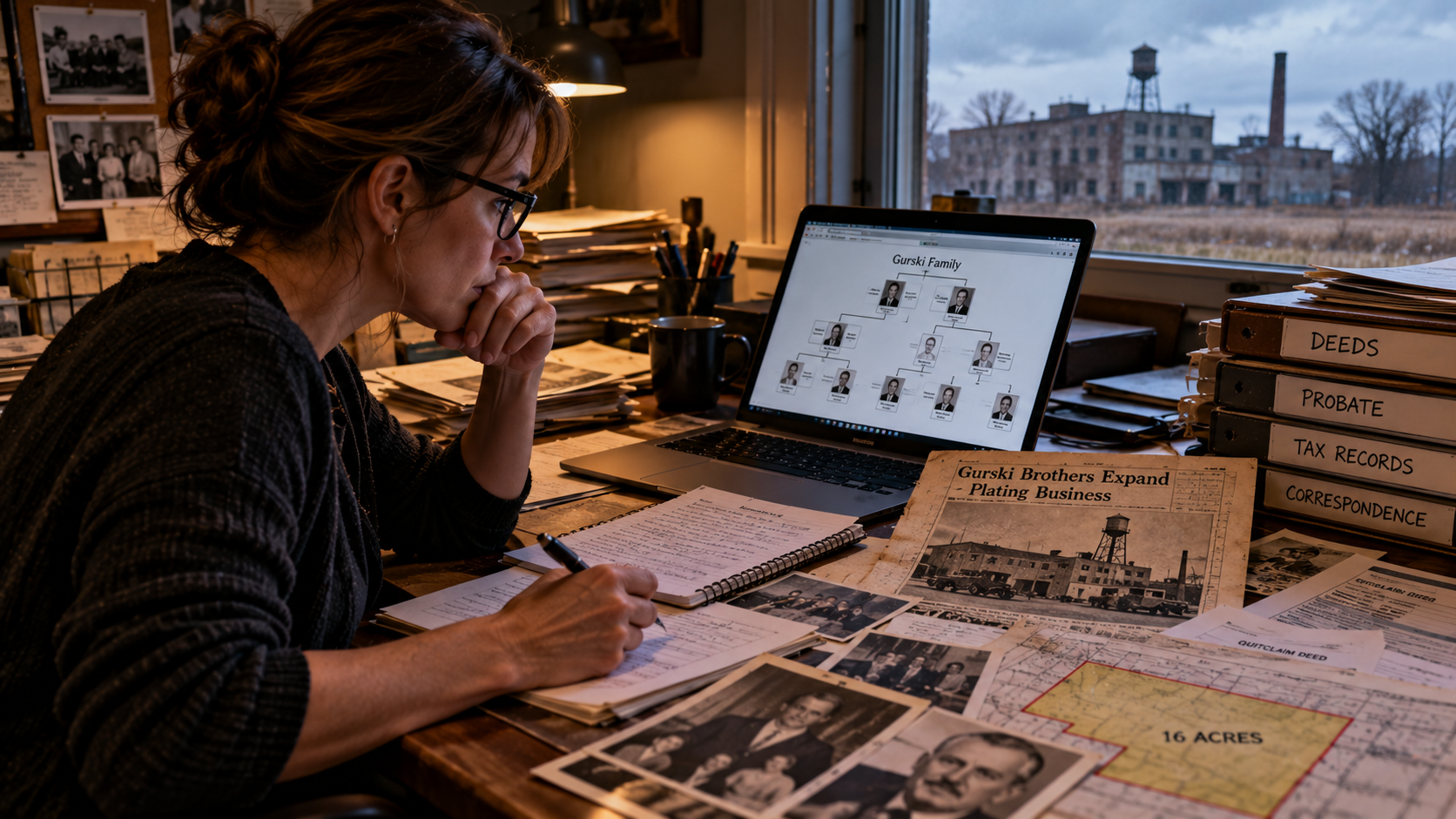
    The assignment arrived from Kelton Title Curative with forty-three pages of deed copies, probate indexes, tax-sale records, and a one-page instruction sheet describing the work as an heirship cleanup. A developer wanted sixteen acres outside New Castle for a warehouse and cold-storage complex. The county redevelopment authority could convey most of the tract, but its title insurer objected to an interest that might have survived a defective tax sale more than thirty years earlier.

    Monica had handled worse.

    Her work rarely resembled the genealogy people performed for television programs. Nobody cried over sepia photographs while a piano played. Monica spent her days reading death certificates, obituaries, marriage notices, assessment cards, docket sheets, cemetery records, and social-media pages belonging to people who posted enough birthday photographs to reconstruct an entire family without realizing it. She found missing owners, heirs, former spouses, dissolved partnerships, and whoever inherited the legal fragment everybody else wanted removed from a title report.

    The New Castle file began with Raymond Gurski.

    Raymond and his brother Stanley bought the industrial tract in 1961, each holding an undivided half interest. Stanley conveyed his share to the operating company years later. Raymond never did. The plating business failed in the 1980s, Raymond died in 1987, and the county eventually sold the property for unpaid taxes.

    The tax sale should have ended the problem.

    The title insurer disagreed.

    Notice went to Raymond at an address where he no longer lived. His estate had never been opened for the industrial parcel. No proof in the tax file established that his heirs received statutory notice. Subsequent transactions carried the same exception forward until everyone treated the county as owner while the unresolved half interest remained buried in schedules nobody wanted to litigate.

    Kelton’s client preferred signatures to litigation.

    Each verified descendant would receive seven hundred fifty dollars for executing a quitclaim deed and heirship affidavit. The documents made no promise that an heir actually owned anything. They simply conveyed whatever interest, if any, had descended through Raymond Gurski.

    Monica had done dozens of those.

    She built Raymond’s family from the obituary first. Two daughters. One son who died without children.

    The older daughter had three children. The younger had two. One grandchild died young but left a daughter. Another moved to Arizona and disappeared from the family’s online trail after a divorce. By ten thirty, Monica had a spreadsheet with names, dates of birth, death dates, marriages, addresses, and confidence levels.

    At eleven twelve she called Marla Sedor in Erie.

    “Mrs. Sedor, my name is Monica Szarek. I’m doing title research involving property that may have descended through your grandfather, Raymond Gurski.”

    Silence followed.

    “My grandfather?”

    “Raymond Gurski.”

    “He died when I was a kid.”

    “Yes, ma’am. I’m calling about an old real-estate interest in Lawrence County.”

    Marla laughed softly. “If Grandpa owned something valuable, everybody missed the memo.”

    Monica had heard versions of that response many times.

    “A redevelopment transaction has brought up a possible inherited interest. The buyer is offering compensation for a quitclaim deed so the title can be cleared.”

    “How much compensation?”

    “Seven hundred fifty dollars.”

    “That answers the valuable part.”

    Monica smiled despite herself. “The paperwork will explain that the amount is consideration for releasing any interest you may have. It doesn’t establish that you definitely own part of the property.”

    “What property?”

    Monica read the parcel description and gave the road.

    Marla went quiet again.

    “That old factory?”

    “You know it?”

    “My mother called it the chrome place. We weren’t allowed near it when we visited my aunt.”

    “Do you know anything about your grandfather’s ownership?”

    “Only that he and Uncle Stanley fought over something before Grandpa died.”

    Monica entered that into her notes.

    Marla asked, “If I sign this, I’m not taking ownership of anything, right?”

    Monica used the wording Kelton required.

    “The deed conveys any possible interest away from you. I can explain the purpose of the documents, but I can’t give legal advice about their effect on your individual rights. The package includes a recommendation that you consult your own attorney if you have questions.”

    “That means nobody actually does.”

    “I can’t speak for other people.”

    Marla laughed again. “At least you’re honest.”

    Monica took down her email address.

    Todd Kmetz was easier.

    He lived outside Youngstown and wanted to know whether the seven hundred fifty dollars would be taxed. Monica told him to ask a tax professional. He asked whether everyone received the same amount. She confirmed the offer was uniform. He supplied his email before she finished explaining the heirship affidavit.

    The third descendant, Phyllis Goral, refused immediately.

    “I don’t sign things about property I’ve never seen.”

    “That’s perfectly fine.”

    “You people always say that until the letters start.”

    “There’s no requirement that you sign.”

    “What happens if I don’t?”

    “The title exception remains unresolved as to whatever interest you may have.”

    “Then leave it unresolved.”

    Monica marked Phyllis DECLINED — NO FURTHER CONTACT WITHOUT CLIENT INSTRUCTION.

    By four, she had reached six descendants and confirmed contact information for another. Two agreed to receive documents. One declined. Three wanted paper copies before discussing anything further.

    A routine day.

    The environmental report arrived the following morning because someone copied the wrong distribution list.

    Monica almost deleted it.

    The subject line read GURSKI TRACT — PHASE II SUMMARY / CLIENT REVIEW, and the attachment belonged to the developer’s due-diligence file. She recognized the parcel number from her heirship assignment.

    Monica opened the email only far enough to determine whether it affected her work.

    Three minutes later, she printed the executive summary.

    The former plant had operated metal-finishing and electroplating lines for decades. Sampling identified chromium, nickel, chlorinated solvents, and other contaminants in soil and groundwater. A solvent plume extended beyond the central building footprint. Several monitoring points showed concentrations requiring further investigation, and the consultant recommended additional delineation before acquisition.

    The abandoned structures had problems of their own. Roof failure. Open floor penetrations. A partially collapsed annex. Unsecured areas despite fencing.

    The estimated remediation costs were not final. The preliminary range began well above the projected land value.

    Monica reopened her instruction sheet.

    Obtain heirship affidavits and quitclaim deeds from all verified descendants. Consideration: $750 per executed package.

    Nothing mentioned contamination.

    She called her project contact at Kelton.

    Arden Vesely answered while eating something crunchy.

    “I think I got copied on an environmental report by mistake.”

    “For Gurski?”

    “Yes.”

    “Delete it.”

    “Does the client still want signatures?”

    “As far as I know.”

    “The heirs know what the site is?”

    “They’re quitclaiming out.”

    “That wasn’t my question.”

    Arden stopped chewing.

    “What exactly are you asking?”

    “Are we disclosing the environmental condition before they sign?”

    “We don’t provide property-condition representations. Our letter already says they may have an interest and should get independent counsel.”

    “One woman asked me directly whether signing meant she wasn’t taking ownership.”

    “And you gave the script?”

    “Yes.”

    “Then you handled it correctly.”

    Monica looked at the report.

    “What happens if the developer walks?”

    “Why would they walk?”

    “Have you read this?”

    “No.”

    “The cleanup estimate is ugly.”

    Arden sighed. “Monica, we’re title researchers. Environmental diligence belongs to the buyer.”

    “The people I’m calling may already own part of it.”

    “They may hold a title interest. That’s why we’re curing it.”

    “And we’re paying them to sign something.”

    “Yes. That’s generally how consideration works.”

    Monica disliked his tone because it made her question sound naive when she knew it was not.

    “Hold my outbound packages until I talk to counsel.”

    “You don’t need counsel.”

    “I want the effect of these documents confirmed.”

    “Kelton’s counsel drafted them.”

    “Good. He can answer quickly.”

    Arden told her to email the question.

    Monica did.

    The response came at 1:17 p.m. from Howard Laska, outside counsel for the title-curative firm.

    He answered carefully.

    An heir who possessed a potential inherited interest could, under Pennsylvania law, have disclaimer rights depending upon the facts. A valid disclaimer made before acceptance could relate back to the decedent’s death. Certain actions could constitute acceptance, including a conveyance or a contract to convey. Whether the Kelton documents would bar a later disclaimer depended on the circumstances and was not a question Monica should answer for any heir.

    She read the message again more slowly. Then she opened Pennsylvania’s disclaimer statute herself.

    The language was plain enough in the section that mattered. Acceptance could be express. It could also be inferred. Taking possession. Written waiver. Assignment. Conveyance. A contract to transfer. A representation that the interest had been or would be accepted when someone relied on it.

    Monica printed that page too.

    At two thirty, Marla Sedor called.

    “I got the documents.”

    Monica closed the statute window.

    “All right.”

    “This says I’m one of Raymond Gurski’s heirs.”

    “The affidavit states the family relationship we documented.”

    “And the deed says I quitclaim my interest.”

    “Yes.”

    “What if I don’t have an interest?”

    “Then the deed conveys whatever you have, including none.”

    Marla shuffled paper near the phone.

    “Why does the buyer need all this if the county owns the property?”

    “The title company found a defect in the old tax-sale chain.”

    “You said that yesterday.”

    “Yes.”

    “What you didn’t say is the place is contaminated.”

    Monica sat straighter.

    “Where did you hear that?”

    “My brother searched the address.”

    Public records. Old news coverage. Environmental filings.

    The information had never been secret.

    Marla continued. “He found something about groundwater.”

    “The property does have documented environmental issues.”

    “That sounds like an important sentence to leave out.”

    “I learned more about the current investigation this morning.”

    “Would you have told me if I hadn’t called?”

    Monica looked at the instruction sheet.

    “Yes.”

    She knew immediately that the answer committed her to more than a conversation.

    Marla asked, “Am I responsible for that place?”

    “I can’t tell you.”

    “Can anybody at your company?”

    “I can give you the name of counsel, but he represents our company and the transaction. You need someone who represents you.”

    “I’m supposed to hire a lawyer over seven hundred fifty dollars?”

    “That may be the sensible thing to do before signing.”

    Marla stopped shuffling the papers.

    “You’re not very good at selling this.”

    “I’m not selling it.”

    The call ended with Marla promising nothing.

    Monica contacted every heir who had received documents and told them the redevelopment parcel had documented environmental contamination. She stayed within facts she could verify. She recommended independent legal advice before anyone executed the package.

    Todd Kmetz had already signed.

    A mobile notary met him that morning.

    He had also deposited the electronic payment.

    “What does that mean?” he asked.

    “It means you signed the quitclaim and affidavit.”

    “I understand that part. Does it mean I own the factory?”

    “I can’t answer that for you.”

    “You called me.”

    “Yes.”

    “You told me they were paying me to give up whatever piece I might have.”

    “That’s what the transaction was designed to do.”

    “Was?”

    Monica heard herself use the past tense.

    “The developer is still conducting due diligence.”

    “You’re making this sound worse every thirty seconds.”

    “I’m trying to give you information I didn’t have yesterday.”

    Todd’s voice hardened. “Then why were you calling people yesterday?”

    She had no answer that would improve the conversation.

    Todd asked for Howard Laska’s number.

    Monica gave it to him.

    By five, Arden Vesely knew what she had done.

    He came into her office carrying no paperwork, which usually meant the conversation itself was the document he intended to create afterward.

    “You stopped outreach.”

    “I paused signature solicitation.”

    “You called people who were already contacted and introduced an issue outside our scope.”

    “It affects what they’re signing.”

    “They are conveying away a possible inherited interest. Environmental liability belongs with counsel.”

    “Exactly.”

    Arden shut the door.

    “Then let counsel handle it.”

    “Counsel wasn’t talking to them.”

    “The letter tells them to obtain counsel.”

    “After offering seven hundred fifty dollars for a document our own lawyer says could affect disclaimer rights.”

    Arden sat across from her desk. “You are drifting into legal advice.”

    “I told them to get legal advice.”

    “You characterized the property.”

    “I told them it has documented contamination.”

    “You received that report accidentally.”

    “The contamination is also public.”

    “That doesn’t make you authorized to discuss the buyer’s due diligence.”

    Monica pushed Howard’s email toward him.

    “Are these people potentially giving up a right to disclaim?”

    Arden did not read the page.

    “That depends on their circumstances.”

    “Then the answer was important before we mailed deeds.”

    “Our job is to clear title.”

    Monica looked at the family chart hanging beside her monitor.

    Seven living descendants confirmed.

    Four more probable.

    Two lines still incomplete.

    The chart had seemed like progress yesterday.

    “Put me off the assignment,” she said.

    “I might have to.”

    “Good.”

    Arden left without taking Howard’s email.

    The developer terminated the acquisition agreement three days later.

    The Phase II work did not establish a final cleanup cost, but it established enough. The planned warehouse required extensive subsurface work, stormwater construction, utilities, and foundation excavation through areas the consultant did not consider sufficiently characterized. The developer exercised its due-diligence termination right.

    Kelton stopped all title-curative work.

    The deeds already signed by Todd Kmetz and two other heirs were never recorded.

    Their option agreements and heirship affidavits remained executed.

    Marla never signed.

    Neither did Phyllis.

    Monica received the termination notice at 8:06 Monday morning.

    Todd called at 8:19.

    “My lawyer says I may have screwed myself.”

    Monica closed her office door.

    “What did he tell you?”

    “That I might have been able to disclaim this thing before I signed your papers.”

    “I’m sorry.”

    “He says signing the agreement could count as accepting the inheritance.”

    “That is one of the issues I raised with our counsel.”

    “After I signed.”

    “Yes.”

    Todd breathed into the phone for several seconds.

    “What happens now?”

    “I can’t give you that answer.”

    “Can your company undo it?”

    “I don’t know.”

    “You sent the documents.”

    “Yes.”

    “You sent the money.”

    “The client funded the payment through Kelton.”

    “I don’t care whose checking account it came from.”

    Monica had nothing useful to offer him.

    Todd’s lawyer had already advised him to return the money and preserve every document. He was evaluating whether the quitclaim and agreement could be rescinded, whether acceptance had occurred, whether a disclaimer remained available, and what environmental protections might apply to an inherited interest.

    Todd kept returning to one question.

    “How can I inherit a factory from a man who died when I was six?”

    Monica explained that the old interest might have descended through his mother before reaching him.

    “That’s worse.”

    “I know.”

    “No, you deal with this all day. You don’t know what this sounds like when somebody calls and tells you your dead mother might have left you part of a poisoned building.”

    Monica accepted the correction.

    The municipality entered the story on Wednesday.

    Marla called first.

    “I got a certified letter from Baines Township.”

    Monica put down the title abstract she was reviewing for another job.

    “What does it say?”

    “It says I’m a possible owner or party in interest and they’re inspecting the site for code violations.”

    “Does it order you to do anything?”

    “Not yet. It says they’re updating responsible-party records.”

    “How did they get your name?”

    “I was hoping you could tell me.”

    Monica opened the Gurski file.

    The redevelopment authority had obtained Kelton’s heirship chart as part of the title-curative package. Once the development agreement died, the authority still possessed the research identifying descendants associated with the unresolved ownership exception.

    The chart did not create their property interests.

    It made the people behind those interests findable.

    That difference felt academic when certified mail reached their homes.

    Monica contacted the redevelopment authority and learned that the township had requested the title materials because the abandoned plant’s roof deteriorated further during a recent storm. Officials wanted every potentially responsible owner or claimant identified before issuing formal notices.

    Nobody had been billed for cleanup. Nobody had been ordered to remediate groundwater. No agency had declared the located heirs personally liable for environmental costs.

    The problem remained less dramatic and more durable than that.

    Their names now existed inside the property’s active administrative life.

    Marla called again that evening.

    “My attorney says I can probably disclaim because I never signed anything.”

    “That’s good.”

    “He says Pennsylvania doesn’t make me lose the right just because I found out about the property.”

    “Yes.”

    “He also says I should do it properly and record the disclaimer because real estate is involved.”

    Monica wrote the information down although she already knew the statute.

    Marla continued. “My cousin Todd may not be able to.”

    “I know.”

    “You people paid him to make himself an owner.”

    Monica chose her answer carefully.

    “We paid him for a conveyance of whatever interest he already possessed. The problem is that executing the conveyance may affect whether he can now disclaim that inherited interest.”

    “That sounds like the lawyer version.”

    “It’s the accurate version.”

    “It still leaves him with the factory.”

    “His attorney is working on that.”

    Marla became quiet.

    “Are you still finding people?”

    “No.”

    “Good.”

    The next probable heir on Monica’s chart was Maribeth Ulan, thirty-nine, living in Grand Rapids. She descended from Raymond’s younger daughter through a son who died in 2014. Monica had already verified the family line and located her address, but the first letter had not gone out before she suspended outreach.

    A mobile-notary request remained in the canceled work queue anyway.

    Monica checked the timestamp.

    It had been created Friday morning, before the developer terminated, by an automated workflow that generated signing appointments once an heir’s identity score passed the firm’s verification threshold. Maribeth’s contact package had apparently advanced farther than Monica realized.

    The appointment was scheduled for Thursday at six.

    Monica called the notary vendor and canceled it.

    Then she called Maribeth.

    The woman answered from somewhere noisy.

    “Hello?”

    “Ms. Ulan, my name is Monica Szarek. I’m a title researcher in Pennsylvania. I’m calling about an old property interest that may have descended through your great-grandfather, Raymond Gurski.”

    “That sounds like spam.”

    “Fair.”

    “Do I owe somebody money?”

    “I don’t know.”

    That stopped her.

    “What kind of property?”

    “Former industrial land near New Castle. There’s an unresolved title issue, and our firm was retained to locate descendants.”

    “Why?”

    “A developer intended to acquire the site. That deal has ended.”

    “So why are you calling me?”

    “Because a signing appointment was generated before the project stopped. I canceled it. If anyone contacts you asking you to sign an heirship affidavit, quitclaim deed, option agreement, or anything else concerning that property, I recommend you speak with a Pennsylvania attorney who represents you before signing.”

    Maribeth moved away from the noise at her end.

    “What’s wrong with the property?”

    “It’s a former metal-plating site with documented environmental contamination and serious building deterioration.”

    A long silence followed.

    “My mother never owned property in Pennsylvania.”

    “There may be an interest that came through her family without anybody administering it.”

    “How much is it worth?”

    “I don’t have a valuation.”

    “Is that the careful answer?”

    “Yes.”

    “What’s the uncareful answer?”

    Monica looked at the Phase II summary.

    “The last buyer walked away.”

    Maribeth thanked her for calling.

    Nobody from Kelton had authorized the conversation.

    Monica documented it anyway.

    Arden appeared in her doorway fifteen minutes later.

    “You contacted Ulan.”

    “Yes.”

    “After the client terminated us.”

    “A notary appointment was still active.”

    “You cancel the appointment and stop.”

    “I canceled it. Then I warned her why she shouldn’t sign stray paperwork if the automation sent anything else.”

    Arden stepped into the office.

    “You are making this firm responsible for advice we were never retained to give.”

    “I told her to obtain her own lawyer.”

    “You disclosed client information.”

    “The sale termination is in our file, and the contamination is public.”

    “You’re finished on Gurski.”

    “I told you that last week.”

    “I mean completely. No more contacts, no more research, no more calls to agencies, heirs, notaries, counsel, anybody.”

    Monica turned toward the family chart.

    “What happens to the eight people we haven’t found yet?”

    “Nothing.”

    “Until the township hires somebody else.”

    “That is no longer our concern.”

    Arden left.

    Monica removed the Gurski chart from the wall.

    She did not destroy it.

    Destroying title research after a dispute would be idiotic.

    She scanned her handwritten notes, saved the call log, preserved the original instruction sheet, Howard Laska’s legal email, the environmental report she had received, and the developer’s termination notice. She wrote a memorandum explaining when she learned of the contamination, which descendants received documents before that date, which people signed, which people declined, and which contacts she made afterward.

    Then she opened Kelton’s old title-production system.

    Most current files ended with ordinary statuses: CLEARED, INSURABLE, CLOSED, CANCELED. Older files contained another status left over from a predecessor company whose database Kelton acquired in the 1990s.

    SUSP meant the exception remained unresolved and should survive any automated closing or archival process.

    Monica had used it perhaps six times in eleven years.

    She changed the Gurski ownership exception from CURATIVE IN PROGRESS to SUSP — UNRESOLVED HEIRSHIP / TRANSACTION TERMINATED.

    The system required a reason.

    Monica entered the developer’s termination date and the instruction that no further heir solicitation occur without new counsel review.

    She attached the memorandum.

    By Friday, Todd Kmetz’s attorney had sent Kelton a preservation letter.

    Marla Sedor filed a disclaimer in Lawrence County the following week. Phyllis Goral hired the same lawyer after Marla gave her the number. Monica heard nothing further from Maribeth.

    The Gurski plant remained where it had been for decades.

    The township erected new fencing after part of the annex roof collapsed. State environmental personnel continued reviewing the groundwater investigation. The redevelopment authority postponed marketing the parcel while counsel reconsidered how to address the ownership defect.

    Nobody inherited a cleanup invoice because Monica found their phone number.

    Three people still had executed documents they wished they had never seen.

    Their lawyers would decide what those signatures meant.

    Months later, Monica searched the title system while working an unrelated parcel in the same township. The old Gurski exception appeared beneath the county’s ownership entry because the system still refused to archive it as cleared.

    The status remained SUSP.

    Monica left it there and returned to the parcel she had been hired to resolve.

    ©2026 Rhyan Scorpio-Rhys
  • Thirteen for Halloween: Witness Marks

    Thirteen for Halloween: Witness Marks

    Gary Lunsford knew somebody adjusted the kitchen cabinet because the hinge screws no longer agreed with his pencil marks.

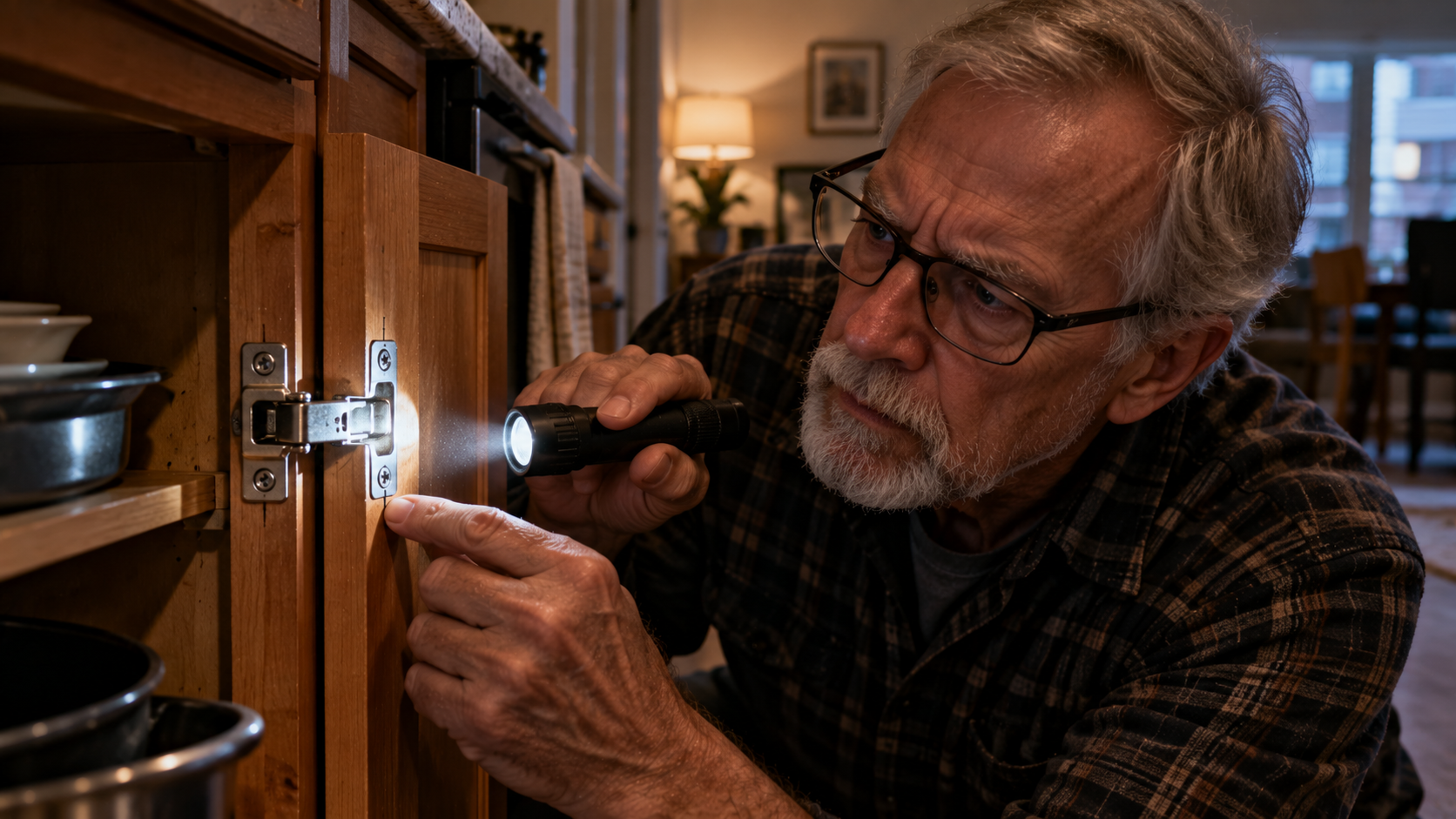
    He found it after breakfast while returning a skillet to the lower cabinet beside the stove. The left door dragged slightly across the face frame, enough to change the sound when it closed. Gary opened it again and crouched as far as his knees comfortably allowed.

    Two weeks earlier, he put a short pencil line across each hinge screw and onto the metal plate after the same door began sagging. He meant to tighten the screws himself, then remembered Northfield Senior Apartments prohibited residents from making repairs involving mounted hardware. The rule irritated him on principle, but Gary spent thirty-eight years maintaining commercial buildings and knew exactly how quickly a harmless adjustment became management’s excuse to blame a tenant for later damage.

    The upper screw now sat nearly a quarter turn clockwise from its witness mark.

    Gary touched the screw head with one fingertip. The Phillips recess showed fresh wear.

    He opened the work-order application on his phone and checked the maintenance history for Apartment 412. His last request concerned a slow bathroom drain six weeks earlier. Nothing mentioned cabinetry.

    Gary photographed the hinge.

    He measured the cabinet door gap with the small steel rule kept in his kitchen junk drawer, wrote the measurement on a grocery receipt, then continued putting dishes away. The door worked better than it did yesterday.

    That was inconvenient.

    At ten, Gary went downstairs for mail. Northfield occupied a six-story former insurance office converted into apartments for residents sixty-two and older. The conversion gave the place wide corridors, two elevators, lever handles, automatic lobby doors, a community room nobody called by the sponsor’s branded name, and kitchens with cabinets installed slightly too high for half the tenants.

    Gary moved there four years earlier after maintaining his three-bedroom house became more work than living in it justified. He liked Northfield more than he expected. The rent was manageable. The building stayed clean. Somebody else shoveled snow. He could complain about management while recognizing that management generally performed the job.

    A poster beside the mailboxes announced another visit from the Home Independence Partnership, the voluntary aging-in-place program Northfield introduced that summer. The program was funded through a regional health plan and a nonprofit grant. Residents received home-safety assessments, minor accessibility improvements, and recommendations intended to help them remain independent longer.

    Gary signed up because the first flyer offered free bathroom grab bars.

    He got the grab bars.

    He also got Asha Menon.

    Asha was an occupational therapist in her forties who arrived with a tablet, tape measure, clipboard, and no visible interest in treating him like an old man for sport. She watched Gary move through the apartment, asked which daily activities gave him trouble, checked the bathroom layout, measured door clearances, discussed lighting, and asked about falls.

    Gary told her about slipping on ice outside a hardware store the previous winter.

    “That counts,” she said.

    “That was ice.”

    “It counts as a fall.”

    “Then gravity has been collecting data on me since 1952.”

    Asha smiled and entered something into the tablet.

    She tested his balance, watched him get into and out of the shower, asked about medications, and ran through a brief set of memory and attention questions that Gary found more annoying than difficult. He remembered the words she gave him, drew the clock, and resisted the urge to improve the poorly printed floor plan she used during the home tour.

    Her recommendations were sensible. Better lighting near the entry. A second handrail where the short change in level near the community laundry created problems for several residents. Two grab bars in Gary’s bathroom. A contrasting strip along the shower threshold.

    Gary approved the bars and declined everything inside the apartment that he did not need.

    The cabinet adjustment happened six days after Asha’s third visit.

    Gary mentioned it to Veda Smoot, Northfield’s property administrator, when he returned from checking the mail.

    “Maintenance come into my unit yesterday?”

    Veda worked behind a glass-fronted office near the lobby, though the glass remained open unless she was discussing rent, illness, or somebody’s relatives. She checked her computer.

    “I don’t have an entry for 412.”

    “Anybody from the Independence program?”

    “They’re scheduled Thursday.”

    “Somebody adjusted my cabinet.”

    “Maybe housekeeping?”

    “I don’t use housekeeping.”

    Veda typed again. “No access record yesterday.”

    Gary nodded. “All right.”

    “You want maintenance to check it?”

    “It works.”

    Veda laughed. “You came down here to report a repair that fixed itself?”

    “I came down to find out who entered my apartment.”

    The laugh disappeared. “Nobody should be entering without documentation.”

    “I know.”

    “I’ll check the electronic lock report.”

    “Send me a copy.”

    Veda agreed.

    Gary continued to the mailboxes.

    The lock report arrived that afternoon. His apartment door recorded Gary’s entries and exits, one visit from Asha nine days earlier, and no management access since then.

    Gary printed the report anyway.

    On Wednesday, the living-room chair moved.

    He kept a square oak side chair near the bookcase because it served mostly as a place to leave newspapers before recycling them. The chair normally sat with its rear legs aligned to the edge of a floorboard seam. Gary noticed the change because one leg now covered the seam.

    Three inches, perhaps four.

    He placed the chair where it belonged and checked beneath the feet. No fresh scratches marked the floor.

    The apartment contained nobody else.

    Gary photographed the chair, measured its position from the bookcase, and put a tiny piece of blue painter’s tape beneath the rear rail where it could not be seen without getting close to the floor.

    On Thursday morning, the chair remained where he placed it.

    The silverware drawer did not.

    Gary always kept forks in the left compartment, spoons in the middle, knives on the right. The organizer now sat reversed.

    He removed it and inspected the drawer. Nothing else changed. The apartment door log showed no entry.

    Gary telephoned his daughter Tracy after lunch. “You’re going to ask me whether I moved my own silverware.”

    “Were you cleaning?”

    “No.”

    “Did somebody come in?”

    “Door says nobody did.”

    “What do you mean the door says?”

    “Electronic access record.”

    “You asked management for the access log?”

    “I asked them who came into my apartment.”

    Tracy paused. “Why?”

    “Somebody adjusted the cabinet, moved a chair, and turned the silverware tray around.”

    Another pause followed. Gary disliked that one.

    “I’m not forgetting where I put silverware.”

    “I didn’t say you were.”

    “You were deciding how to ask.”

    “I was deciding whether this is worth driving up there over.”

    “It isn’t.”

    “You called me.”

    “Calling isn’t asking you to come.”

    Tracy worked as a payroll administrator outside Cincinnati and lived forty-five minutes away when traffic cooperated. Gary loved her and knew she could turn concern into project management before anybody granted permission.

    “Dad, you’re in that home-safety program, right?”

    “Yes.”

    “Could they be doing something?”

    “Without entering the apartment?”

    “I don’t know. Maybe they have another key that isn’t logging.”

    “That would be worse.”

    “I agree.”

    Gary accepted that.

    On Thursday afternoon, Asha arrived for the scheduled program visit with a young man Gary had not met. His badge identified him as a program field coordinator.

    Asha introduced him as Malcolm and said they were reviewing environmental recommendations.

    Gary let them inside.

    “I have a question before we start,” he said. “Does your program alter anything in the apartment between visits?”

    Asha’s expression changed enough for Gary to notice.

    “What kind of alteration?”

    “Move furniture. Reorganize a drawer. Adjust cabinet hardware.”

    Malcolm answered first. “Some environmental observations can include household setup.”

    “That wasn’t my question.”

    Asha placed her tablet on the kitchen counter. “Gary, I don’t personally change residents’ belongings outside a scheduled visit.”

    “Does somebody else?”

    Malcolm shifted the folder under his arm. “The program uses environmental-response measures in participating properties.”

    Gary turned toward him. “Explain that in regular English.”

    “It evaluates how residents respond to changes in their living environment.”

    “What changes?”

    “Low-risk alterations. Object placement, furniture orientation, routine household organization. Nothing intended to create a hazard.”

    Gary let several seconds pass because Malcolm appeared capable of continuing if nobody rescued him.

    “You moved my chair.”

    “The program may introduce minor environmental variations.”

    “You reversed my silverware tray.”

    “I don’t have the individual intervention list.”

    “You adjusted a cabinet hinge.”

    Malcolm’s confidence weakened. “Hardware adjustments aren’t usually part of it.”

    Gary faced Asha. “Did you know they were doing this?”

    “I knew the pilot included environmental-response observations. I understood those to occur during assessment visits.”

    “Did you know people were entering apartments?”

    “I did not know staff were making changes between my visits.”

    Malcolm began, “Entry procedures are coordinated through property management under the participation agreement.”

    Gary reached for the folder. “Show me.”

    Malcolm did not give it to him.

    Gary held out his hand until the younger man placed the participation packet there.

    The consent form ran six pages.

    Gary recognized his signature on the last one.

    He read the section Malcolm indicated.

    The program could conduct scheduled assessments, review safety conditions, document functional performance, and implement temporary environmental adjustments associated with program evaluation.

    “Where does this say somebody can enter when I’m gone?”

    Malcolm pointed to another paragraph allowing property personnel to facilitate program access consistent with building policy.

    “Building policy requires notice except emergencies and scheduled maintenance.”

    “We were told management cleared access.”

    Gary went to the door.

    “Visit’s over.”

    Malcolm began explaining the program’s safeguards.

    Gary opened the door wider.

    Asha picked up her tablet. “I’m going to report this from my side too.”

    “I’d appreciate that.”

    Malcolm followed her into the corridor.

    Gary closed the door and immediately called Veda.

    She came upstairs twenty minutes later carrying printed access records and a face that told Gary she already knew why he called.

    “They had a building master credential,” she said.

    “That isn’t in my door report.”

    “No. It logs under the mechanical-room system because the credential belongs to the facilities vendor.”

    “Why?”

    “The pilot contractor requested access for environmental checks. We were told participating residents consented.”

    “You gave strangers a key that doesn’t show on resident access reports.”

    “They aren’t strangers. They’re contracted personnel.”

    “That explanation should make the insurance company feel wonderful.”

    Veda pulled a chair away from the kitchen table.

    Gary pointed at it. “Leave it where it was.”

    She pushed it back exactly.

    “I’m serious, Veda.”

    “So am I.”

    She opened the packet she carried. “I started going through their access dates after you called downstairs Tuesday. They entered your unit three times outside scheduled visits.”

    “When?”

    Veda gave him the dates. One matched the cabinet. Another matched the chair. The third matched the silverware.

    Gary wrote them down. “What did they do?”

    “I requested the intervention logs.”

    “And?”

    “They sent me codes.”

    “What codes?”

    Veda showed him the page.

    EO-2: LOW-SALIENCE OBJECT RELOCATION
    HO-1: HOUSEHOLD ORGANIZATION VARIATION
    FM-3: MINOR FIXTURE MODIFICATION

    Gary tapped the last line. “They did the hinge.”

    “Apparently.”

    “How does changing a hinge tell anybody whether I can live alone?”

    “I don’t know.”

    “Did they do this to everybody?”

    “Everyone enrolled in the pilot received some version.”

    Gary turned the page.

    A scoring column recorded whether each resident noticed a change, corrected it, reported it, adapted without complaint, or showed no observed response.

    Gary’s entries read:

    FM-3 — CORRECTED? UNKNOWN / NO REPORT WITHIN 24 HRS
    EO-2 — CORRECTED / NO REPORT
    HO-1 — REPORTED INDIRECTLY THROUGH MANAGEMENT

    The sheet assigned him an Environmental Awareness Index.

    Gary laughed once.

    Veda rubbed one side of her forehead. “I already suspended all unscheduled access for the program.”

    “Suspend my participation.”

    “I can withdraw you.”

    “Do it.”

    “I’m also sending this to ownership and counsel.”

    “Good.”

    She gathered the papers, then left him copies.

    Gary called Tracy afterward.

    She drove up that evening despite his telling her she did not need to.

    For once, he did not complain.

    Tracy spent an hour photographing the consent packet, intervention logs, door records, cabinet hinge, chair location, and silverware drawer. Her anger was less theatrical than Gary’s and therefore lasted longer.

    “They’re scoring whether people complain,” she said.

    “Apparently.”

    “So somebody who doesn’t notice gets marked down, somebody who notices and says nothing gets marked differently, and somebody who complains becomes evidence too.”

    “That’s usually how forms work. Every answer earns another box.”

    “This could affect whether the building thinks people need services.”

    “Maybe.”

    “Insurance?”

    “Maybe.”

    “Whether somebody can stay here?”

    Gary put the intervention sheet down. “That’s the question I want answered.”

    The next morning, Veda emailed confirmation that Gary was withdrawn from the pilot and that no program personnel were permitted to enter 412. Northfield’s ownership group announced an immediate internal review of the Home Independence Partnership. Asha called privately and told Gary she had filed her own complaint with the program’s clinical director because the between-visit alterations were never part of the assessment method she agreed to perform.

    Gary believed her.

    The changes ceased for three days.

    He spent those days creating his own baseline.

    He photographed every cabinet hinge, door latch, grab bar, thermostat, light switch, window lock, shelf, and major piece of furniture. He measured the bathroom doorway at thirty inches clear, the kitchen passage at thirty-four and three-eighths, and the distance from the bedroom dresser to the wall at eleven and one-quarter. Pencil witness marks crossed selected hinge screws. Small pieces of removable tape sat beneath furniture feet. Gary stored the photographs on his computer and copied them to a flash drive Tracy took home.

    She told him he was overdoing it.

    Gary agreed.

    He continued.

    On Monday morning, the bathroom doorway measured thirty-two inches.

    Gary kept the tape measure extended across the opening for a long time.

    He measured again from jamb to jamb.

    Thirty-two.

    The door itself had changed.

    A thirty-inch opening could not accept the slab now hanging there. The new door measured thirty-two inches nominal width, with the clear opening slightly less depending on hinge projection. Gary removed the hinge-side casing carefully enough to avoid damaging paint.

    The framing beneath it showed no fresh work. No cut studs. No patched drywall. No new fasteners. No difference in paint layers.

    He removed the strike-side casing. Same result.

    The doorway had been built at its current width.

    Gary fetched the photograph from Saturday. The image showed his tape measure stretched across the opening. Thirty inches.

    He compared details around it. Same trim. Same paint nick near the lower hinge. Same small knot in the wood casing. Same screw heads.

    The opening in the photograph was thirty inches. The opening in front of him was thirty-two.

    Gary called Veda upstairs.

    She brought the maintenance supervisor.

    Neither had entered since Friday. The building’s access system showed no one except Gary.

    The supervisor examined the exposed framing. “This isn’t new work.”

    “I know.”

    “You sure your old measurement was clear opening versus frame?”

    Gary handed him the Saturday photograph.

    The supervisor enlarged it on his phone. He measured the doorway himself. Then he checked the building renovation plans stored electronically.

    The plan called for a thirty-two-inch bathroom door.

    Gary felt a small movement beneath his ribs that had nothing to do with fear and everything to do with becoming very tired of evidence changing categories.

    “Pull my Home Independence recommendations,” he said.

    Veda opened the program portal from her tablet.

    Gary’s final assessment remained accessible despite his withdrawal.

    Most recommendations were familiar: lighting, entry contrast, laundry handrail.

    One item appeared under FUTURE ACCESSIBILITY MODIFICATIONS.

    Bathroom doorway: widen existing 30-inch opening to 32 inches where structurally feasible.

    Veda lowered the tablet.

    The maintenance supervisor measured the opening once more.

    “When was that recommendation entered?” Gary asked.

    Veda checked the metadata. “Thursday.”

    “Was there a work order?”

    “No.”

    “Permit?”

    “No.”

    “Contractor access?”

    “No.”

    Gary turned toward the exposed casing and framing. “Put the trim back.”

    The supervisor did.

    Gary filed a written complaint with Northfield ownership that afternoon. He included the covert intervention documents, his withdrawal confirmation, the access records, the photographs, and the bathroom-door discrepancy. He described the first part as unauthorized environmental manipulation and the second as an unexplained alteration for which no work record existed.

    He did not use the word impossible.

    The complaint system required a category.

    Gary chose UNAUTHORIZED UNIT MODIFICATION.

    Two days later, the housing company’s regional office contacted him. An investigator interviewed Gary, Veda, the maintenance supervisor, Asha, and several residents enrolled in the pilot. The company suspended the entire program at Northfield and disabled the contractor’s building credentials.

    The investigator understood the cabinet, chair, and silverware.

    She could not explain the doorway.

    A building engineer inspected it. His report stated that the opening appeared consistent with the original 2011 senior-housing conversion. Historical photographs available to ownership were inconclusive. The architectural drawing called for thirty-two inches.

    Gary supplied his Saturday photograph.

    The engineer verified that the image metadata preceded the complaint.

    Her report used the phrase measurement discrepancy.

    Gary disliked the phrase and understood why she used it.

    Northfield ownership offered him a meeting with regional management, legal counsel, and the program administrator. Gary declined the first proposed date and attended the second with Tracy.

    The program administrator apologized for the environmental-response protocol.

    She explained that it originated with a subcontractor responsible for evaluating behavioral adaptation to low-risk household changes. The method was never supposed to affect clinical determinations independently, though Gary’s score did enter a broader resident-risk profile.

    Tracy asked whether that profile went to the health plan.

    It did.

    She asked whether residents were told.

    The administrator pointed to the consent language.

    Gary pushed the copy back across the table.

    “You can keep explaining that paragraph until retirement. I’m still leaving.”

    Veda had already helped him obtain a transfer option, though the available unit was in another property across town and cost more each month. It lacked Northfield’s enclosed parking and put Gary farther from his grocery store, doctor, barber, and the diner where he met two former coworkers on Fridays.

    He took it anyway.

    The housing company waived the transfer fee and moving charge.

    Tracy wanted him to move closer to her.

    Gary declined.

    He had no intention of answering one badly managed loss of independence by surrendering another voluntarily.

    Packing took nine days.

    The apartment accumulated boxes without mystery for once. Books went into small cartons because Gary knew better than to load forty pounds of hardcovers into something labeled LARGE. Tools occupied two plastic cases. Kitchenware went last.

    On the morning the movers arrived, Gary removed the last of his witness tape from beneath the furniture.

    The cabinet hinge marks still aligned.

    The bathroom doorway remained thirty-two inches.

    Veda brought the final unit-condition form upstairs.

    They went room by room. Walls acceptable. Flooring acceptable. Appliances functional. Grab bars to remain in place. No tenant-caused damage beyond two picture-hook holes Gary agreed to patch before surrendering the keys.

    At the bottom of the form was a section for unresolved maintenance issues.

    Gary wrote:

    Bathroom doorway dimensions inconsistent with resident documentation. No authorized work order located.

    Veda made a copy for him.

    When she entered the item into the property system, a status appeared beside it.

    SUSP

    Gary pointed toward the screen. “What’s that?”

    “Suspended pending review.”

    “Does it make anything happen?”

    “It keeps the ticket open without assigning work.”

    “Leave it there.”

    Veda did.

    The movers carried the final boxes out shortly after noon.

    Gary’s new apartment was smaller and fifteen minutes farther west. The building was ordinary market-rate senior housing without a health-plan pilot, an environmental-awareness score, or free grab bars. His monthly expenses increased enough that he would notice, though not enough to send him back.

    He unpacked the tool cases first because they contained the screwdriver needed to assemble the bed frame.

    After the movers left, Gary worked through the rooms with a tape measure and pencil.

    He recorded the bathroom doorway, kitchen opening, window widths, cabinet heights, and the distance between the bedroom wall and closet jamb. He photographed the measurements and emailed a copy to Tracy before she could ask.

    The kitchen cabinet doors were square.

    Gary opened the one beneath the sink and examined its hinges. Each plate carried two ordinary Phillips screws driven cleanly into the cabinet frame.

    He drew a short pencil line across the upper screw and onto the metal hinge.

    Then he unpacked the dishes.

    ©2026 Rhyan Scorpio-Rhys

  • Thirteen for Halloween: The Storm Chair

    Thirteen for Halloween: The Storm Chair

    The chair appeared beside Doreen Gaskins’s mailbox while Melinda was inside packing medications.

    It was an ordinary kitchen chair, one of four that belonged to a maple dining set her mother bought sometime during Melinda’s adolescence. Two coats of white paint covered the wood, both chipped along the seat edge, and one rear spindle had been glued years ago after somebody leaned back too far. The chair sat on the sandy shoulder facing the road, visible from either direction beneath a sky already stripped of the bright blue the morning began with.

    Melinda saw it through the front window and knew immediately who put it there.

    She carried the pill organizer into the kitchen.

    “Mother.”

    Doreen remained at the table with a mug of coffee, reading the hurricane updates on her tablet. At eighty-one, she had the same narrow face Melinda remembered from childhood, though age softened the cheeks and silvered the hair she still set every Friday whether she planned to see anyone or not. A walker stood beside her chair.

    “You put that chair out?”

    “I can’t put a chair anywhere with this knee.”

    “Who did?”

    “Opal came by.”

    Melinda set the pill organizer on the counter. “I told Mrs. Briley we weren’t using the chair.”

    “You told her. I didn’t.”

    “The county van is picking you up at two.”

    Doreen returned her attention to the tablet. “I canceled that.”

    Melinda remained beside the counter until the sentence completed itself in her head.

    “You canceled what?”

    “That van.”

    “Why?”

    “I’m not riding forty miles with strangers coughing all over me.”

    “You’re going to the medical-support shelter.”

    “I know where they said they were taking me.”

    “Then why did you cancel?”

    Doreen enlarged the weather map with two fingers. “Opal says the church volunteers are taking people to the high school first. Earl has his truck. If the shelter fills, they’ll know where else to go.”

    Melinda went to the front window again.

    The chair remained beside the mailbox.

    Along Folly Creek Road, other chairs were appearing.

    The custom predated Melinda’s childhood. Nobody agreed when it began. Older residents said people put chairs along the roadside before Hazel, which made the story old enough to acquire embellishments. Houses along the low roads often contained someone who could not drive, someone who needed help walking, someone dependent on oxygen, or someone whose relatives lived too far away to reach the coast before a storm. A chair at the road meant the household required assistance before conditions became dangerous.

    Years ago, volunteers drove the roads and loaded people into pickups, station wagons, church vans, whatever would run. Modern evacuation plans supplied phone alerts, shelters, county transportation, accessibility registries, and online zone maps. The chairs persisted because cell towers failed, batteries died, landlines went out, and everyone trusted something they could see while driving past.

    Melinda understood why people kept doing it.

    She still wanted her mother’s chair back inside.

    She opened the front door.

    Wind moved the live-oak branches in irregular bursts. The air already carried the warm damp heaviness that came before tropical weather reached land. Across the road, Opal Briley was helping her husband tie down the lid on a plastic storage box.

    Melinda called, “Mrs. Briley.”

    Opal raised one hand.

    “Did you put Mom’s chair out?”

    “She asked me.”

    “I had transportation arranged.”

    Opal crossed the road without hurrying. She was seventy-four, compact and capable, dressed in shorts, rubber garden clogs, and a T-shirt from a church barbecue held six years earlier. “Doreen said she canceled it.”

    “She did that after I arranged it.”

    “Well, she’s stubborn.”

    Melinda kept her voice low. “Please take the chair back in.”

    Opal’s face changed enough to register confusion. “Why?”

    “Because she doesn’t need the volunteer pickup.”

    “Who’s taking her?”

    “The county was.”

    Opal studied Melinda.

    “She canceled because she wants Earl to come get her,” Melinda said. “I’m calling the county again.”

    “Earl’s already doing the road.”

    “That’s beside the point.”

    “What point?”

    Melinda had no interest in having this conversation beneath her mother’s front window. “I arranged transportation. She canceled it because she prefers the chair.”

    Opal glanced toward the house. “She can’t manage those shelter steps by herself.”

    “The medical shelter has accessible transport.”

    “I know that.”

    “Then let me handle it.”

    Opal wiped one palm against her shorts. “Nobody’s trying to interfere.”

    Melinda almost laughed.

    Instead, she walked to the mailbox, lifted the chair, and carried it toward the house.

    Opal followed several steps behind. “If you take it in, tell Earl she’s covered. He’ll have her on the list.”

    “Fine.”

    “Melinda, where are you evacuating?”

    “Raleigh.”

    “With her?”

    “No.”

    Opal stopped.

    Melinda continued to the porch.

    “When are you leaving?”

    “As soon as she’s on county transport.”

    The silence behind her changed shape. Melinda could feel it without turning around.

    She set the chair inside the foyer.

    Opal spoke from the walkway. “Does Doreen know that?”

    “She knows I’m going home.”

    “I thought you lived in Charlotte.”

    “I did. I moved last year.”

    “Your mother said Charlotte.”

    “My mother says whatever version she last learned.”

    Opal glanced toward the kitchen doorway, where Doreen now stood with one hand on her walker.

    “Opal,” Doreen said, “don’t get in the middle.”

    Melinda closed her eyes for a second.

    Opal immediately took one step backward. “I’m not.”

    Doreen smiled at her. “I know you mean well.”

    Melinda picked up the medication list and went outside.

    The county transportation number played a recorded announcement before routing her to a dispatcher. Evacuation assistance remained active for their zone, though demand was increasing. Melinda supplied her mother’s registration information, explained that the earlier ride had been canceled by the passenger, and requested reinstatement.

    The dispatcher found the record.

    “Pickup window would be between three thirty and five.”

    “That’s later than before.”

    “Yes, ma’am. We can put her back in the queue, but we can’t guarantee the original time.”

    “When do winds become a problem for the buses?”

    “Transportation will suspend when emergency management directs us. Right now pickups are continuing.”

    “My mother uses a walker.”

    “That’s noted.”

    “Medical shelter?”

    “That’s what I have.”

    Melinda gave the dispatcher her phone number and confirmed the address.

    When she returned inside, Doreen was at the kitchen table again.

    “They can come between three thirty and five.”

    “I won’t be here.”

    “Where are you going?”

    “With Earl.”

    “Earl has other people to move.”

    “He’s known me forty years.”

    “That doesn’t make his truck an ambulance.”

    “I don’t need an ambulance.”

    “Then the county van should be fine.”

    Doreen’s mouth compressed. Melinda remembered that expression from report cards, missed curfews, college applications, divorce papers, and every occasion when her mother believed another person’s choice reflected badly on her.

    “You’re in an awful hurry to get rid of me.”

    “I’ve been here seven weeks.”

    “I didn’t ask you to come.”

    “Carl did.”

    “Your brother worries.”

    “From Ohio.”

    “He has a business.”

    “So do I.”

    “You work from a computer.”

    Melinda picked up the medication list again because holding paper gave her hands something practical to do. “Your knee replacement is healed enough for outpatient therapy. You have meals arranged through next week. Mrs. Briley has the emergency key. Carl’s coming down after the storm. I’m leaving today.”

    Doreen stared past her toward the window.

    “There,” she said quietly. “You finally said it.”

    “What did you think I’ve been saying?”

    “That you were staying until I could manage.”

    “You can manage.”

    “I can barely get to the bathroom.”

    “You walked onto the porch yesterday to tell the lawn man he missed a strip.”

    “That’s different.”

    “How?”

    Doreen turned her coffee mug by the handle. “You always were impatient with weakness.”

    Melinda put the medication list down before she tore it.

    The remark worked because Doreen knew which old argument to summon. At fourteen, Melinda was selfish because she complained after being kept home from a school trip to watch Carl when Doreen had a migraine. At twenty-six, she was cold because she refused to loan Doreen money after discovering the last loan paid for new living-room furniture. During Melinda’s marriage, every disagreement became proof that she lacked loyalty. After the divorce, Doreen converted the failure into evidence that she warned everyone correctly from the beginning.

    The seven weeks after knee surgery contained smaller versions of the same machinery.

    Doreen could walk farther than she admitted when nobody watched. Physical-therapy exercises became impossible whenever Melinda asked about them and surprisingly manageable when the therapist arrived. She misplaced pain medication twice, accused Melinda of moving it, then found the bottle inside her own handbag. She told Carl she was being left alone for hours when Melinda went grocery shopping.

    None of those events made Doreen helpless.

    None made Melinda doubt that her mother needed assistance during an evacuation.

    Both circumstances occupied the same house without becoming friends.

    At noon, Earl Tyndall arrived in a county volunteer vest over his work shirt.

    Melinda saw his pickup turn into the drive and muttered something that made Doreen smile.

    Earl was sixty-two, broad through the shoulders, with a sun-reddened neck and reading glasses clipped to his shirt pocket. A magnetic sign on the truck door read COMMUNITY STORM CHECK — VOLUNTEER. Sandbags, bottled water, folded tarps, and two wheelchairs filled the bed beneath a tied cover.

    “Afternoon,” he said when Melinda opened the door. “Checking the chair houses.”

    “There isn’t a chair house here.”

    Earl glanced toward the foyer.

    The white chair stood where Melinda left it.

    “Doreen called.”

    “Of course she did.”

    He lowered his voice. “She says county transport isn’t coming.”

    “It is. I reinstated her.”

    “When?”

    “Three thirty to five.”

    Earl frowned toward the sky. “Five’s later than I like for this road.”

    “I don’t like it either.”

    “I can take her now.”

    “That’s what she wants.”

    “Would that be a problem?”

    Melinda stepped onto the porch and pulled the door partly closed behind her.

    “My mother canceled the county ride because she knew if she put the chair out, you’d come.”

    Earl rested both hands on his belt. “I would.”

    “She wants the version where neighbors rescue her.”

    “I’m not sure I understand.”

    “You don’t need to.”

    He absorbed that without offense. “I’m trying to move folks before the weather gets worse.”

    “I appreciate that. She already has a ride.”

    “Later.”

    “Yes.”

    “And you’re leaving before then?”

    “After she gets picked up.”

    Doreen opened the door behind Melinda.

    “Earl, don’t let her chew on you. She’s angry because I canceled the bus.”

    Earl gave Melinda an apologetic look.

    Doreen continued. “I told her I’d rather ride with people I know.”

    “You can ride with me,” Earl said.

    “Thank you.”

    Melinda turned. “Mom.”

    “I’ve made up my mind.”

    “It isn’t only your ride. Earl has a route.”

    “He offered.”

    Earl said, “I have room.”

    “See?”

    Melinda walked past her mother into the house.

    Doreen followed more slowly with the walker. “You’ve been determined to leave since yesterday.”

    “I’ve been planning to leave for three weeks.”

    “Because everything here inconveniences you.”

    Melinda went into the bedroom where her suitcase stood open on a chair. She folded the last two shirts and placed them inside.

    Doreen stayed in the doorway.

    “If your father could see this.”

    “Dad left you twelve years before he died.”

    “He still cared what happened to me.”

    “He moved to Arizona.”

    “He called.”

    “Good for him.”

    Doreen’s hands gripped the walker handles. “You know what people are going to think.”

    There it was.

    Melinda zipped the suitcase.

    “I know exactly what people are going to think.”

    “You’re willing to leave your elderly mother during a hurricane because we’ve had disagreements.”

    Melinda lifted the suitcase from the bed. “You have transportation, medication, shelter registration, neighbors, a volunteer pickup you arranged behind my back, and a son arriving after the storm. Nobody is leaving you in a burning building.”

    “You always reduce everything to logistics.”

    “Logistics are keeping you alive today.”

    Doreen’s face reddened. “You make helping me sound like a job.”

    “It became one.”

    Melinda regretted the sentence only because it gave her mother something useful.

    Doreen began crying.

    She did it quietly, which was worse. No dramatic sobbing, no raised voice. Tears gathered along her lower eyelids while she remained behind the walker, looking older than she had five minutes earlier.

    Earl appeared at the end of the hall and stopped.

    Melinda saw the entire future conversation arrange itself in his face.

    She carried the suitcase into the living room.

    “I’ll load her things.”

    Earl said, “Melinda, nobody wants you driving angry with weather coming.”

    “I’m not leaving until she’s secured.”

    “We can take her now.”

    “That’s secured.”

    Doreen wiped her face with a tissue. “I don’t want to cause trouble.”

    Melinda nearly dropped the suitcase.

    Earl moved toward Doreen. “You’re not causing trouble.”

    Doreen shook her head. “She’s given up enough time.”

    “Mother.”

    “What? It’s true.”

    Opal Briley entered through the still-open front door carrying a canvas tote.

    “I packed crackers, water, and that ginger candy you like.”

    She noticed Doreen’s face. “What happened?”

    “Nothing,” Doreen said.

    Melinda walked outside before the answer became a group project.

    Wind drove the tops of the pines inland. The road remained dry, though water had begun rising in the drainage ditch where the creek backed up on high tide. Farther down Folly Creek Road, volunteers loaded an older man into a church van while his daughter carried an oxygen concentrator behind him. A white chair stood beside their mailbox until a volunteer folded it into the van.

    The custom worked.

    Melinda hated that fact at the moment.

    She loaded her suitcase into her car.

    Earl came outside several minutes later.

    “I’m taking Doreen to the high school reception point. They’ll transfer medical-support evacuees from there.”

    “Thank you.”

    “She has her medications.”

    “They’re in the blue bag. Morning and evening are labeled. The list is inside the front pocket.”

    “Walker?”

    “In the house.”

    “Phone charger?”

    “Side pouch.”

    Earl nodded. “You’ve got her organized.”

    Melinda looked toward the front door, where Opal was helping Doreen into a rain jacket.

    “I know.”

    Earl shifted his weight. “Folks around here aren’t trying to judge your family.”

    “You don’t know my family.”

    “No, ma’am.”

    “I’m not asking you to.”

    He nodded again.

    That restraint almost made her like him.

    Then he said, “I just hate seeing somebody leave with hard feelings when weather’s coming.”

    Melinda opened the driver’s door. “Weather doesn’t improve them.”

    Earl returned to the house.

    Within ten minutes, Doreen was outside.

    Opal carried the blue medication bag. Earl pushed the walker toward the truck. Another volunteer had arrived with a church van after learning Doreen might need easier access, and they decided the van made more sense than Earl’s pickup.

    Doreen moved slowly down the porch steps.

    Melinda went over despite herself.

    “Watch the second step.”

    “I know my own porch.”

    “You missed it Tuesday.”

    “I was tired Tuesday.”

    Melinda took her elbow through the last two steps. Doreen allowed the help without acknowledging it.

    At the van, Opal opened the side door.

    Doreen turned to Melinda.

    “You’re really going.”

    “Yes.”

    “Call when you get there.”

    “I will.”

    “Carl thinks you should wait until morning.”

    “Carl isn’t here.”

    Doreen glanced toward Opal.

    Melinda caught it.

    That tiny movement contained years.

    She stepped away before her mother could produce another sentence for the audience.

    Opal helped Doreen into the van.

    Earl loaded the walker.

    One of the volunteers carried the white kitchen chair from the foyer and set it beside the mailbox again.

    Melinda called, “Why are you putting that back?”

    “So the sweep team knows pickup’s active,” Earl said. “They collect the chairs after the house clears.”

    The explanation was ordinary.

    Melinda watched the van leave with her mother inside.

    She remained until it reached the bend.

    Then she got into her car and headed inland.

    Traffic slowed near the highway. Evacuation lanes filled with pickups carrying coolers, sedans packed to the roof, utility trucks, horse trailers, and families who waited too long because every storm before this one turned north or weakened or became somebody else’s problem.

    Melinda passed eleven chairs before leaving Folly Creek Road.

    Some were wooden kitchen chairs like Doreen’s. One was plastic. Another was a folding lawn chair tied to a mailbox post so wind would not carry it away. Volunteers worked house by house, loading people who needed help and recording addresses on clipboards.

    At the intersection with County Route 14, a volunteer traffic team directed evacuation vehicles around standing water.

    Earl’s pickup sat beside them.

    Melinda lowered her window when he approached.

    “Doreen’s checked in at the high school,” he said. “Medical transport’s moving her to the shelter shortly.”

    “Thank you.”

    “No trouble.”

    He held a clipboard against his vest and checked one line.

    “Need your destination for the household record.”

    “My destination?”

    “We track where the primary drivers are going when families split up. Helps if somebody calls looking.”

    “I’m not her evacuation driver.”

    “I know. I just need to close the house entry.”

    Melinda looked at the sheet.

    GASKINS — 1187 FOLLY CREEK RD

    Beside the address, someone had written:

    1 ELDERLY / MOBILITY ASSIST

    Below that:

    CAREGIVER DEPARTED SEPARATELY

    The words irritated her more than they should have.

    “I’m her daughter.”

    Earl looked at the form. “I know.”

    “That says caregiver.”

    “That’s what Doreen gave us when she registered.”

    “I didn’t register.”

    “I can change it.”

    Melinda almost told him to.

    Cars lined up behind her. A deputy several yards away motioned traffic through whenever the opposite lane cleared. Wind shook Earl’s vest against his shirt.

    “What would you change it to?” he asked.

    Melinda considered the available categories.

    Daughter. Temporary caregiver. Emergency contact. Former caregiver. Family member leaving separately. None of them would describe seven weeks in the house, the thirteen years before she stopped answering every call, the medication schedule in the blue bag, the things Doreen told neighbors, the things neighbors never saw, or the fact that Melinda still waited beside the van until her mother was safely inside.

    “Leave it,” she said.

    Earl wrote RALEIGH in the destination column.

    The deputy waved Melinda forward.

    She raised the window and joined the evacuation traffic.

    Behind her, Earl carried the clipboard toward the next car while another volunteer drove back down Folly Creek Road to collect the remaining chairs.

    ©2026 Rhyan Scorpio-Rhys

  • Thirteen for Halloween: Proof of Delivery

    Thirteen for Halloween: Proof of Delivery

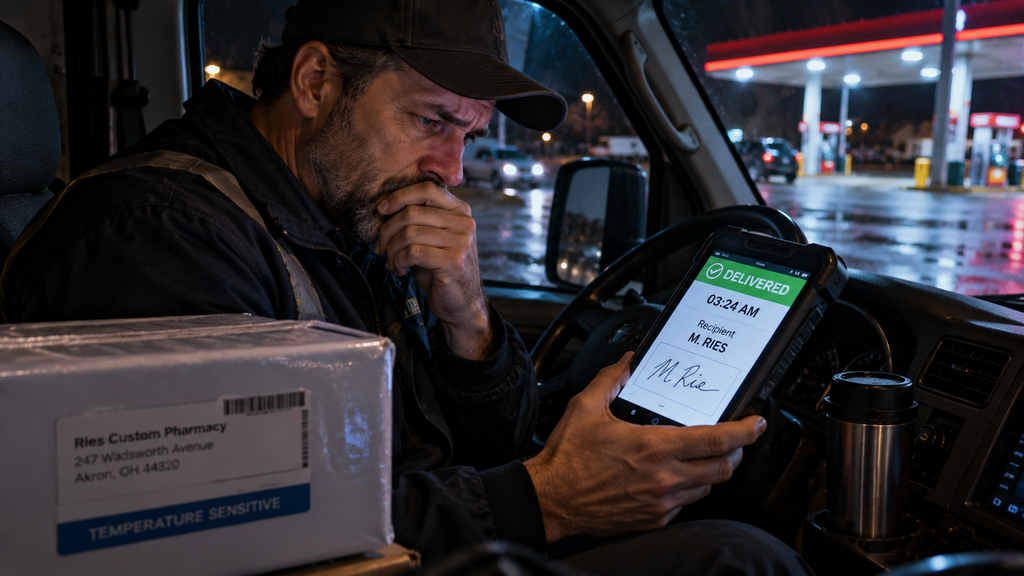
    Darryl Beranek knew Mrs. Ries’s signature well enough to recognize it at 3:07 in the morning, which presented a problem because her package was still beside him in the van.

    He was parked outside a twenty-four-hour gas station south of Akron when the handheld displayed the completed delivery: the barcode from the insulated carton on his passenger-side shelf, the correct Wadsworth Avenue address, recipient M. RIES, and a signature shaped like a crooked capital M followed by the descending slash she used for most of her surname.

    The completion time showed 03:24. Darryl checked the dashboard clock, then the carton label, then returned to the delivery record without finding anything that made the seventeen-minute discrepancy less absurd.

    The route map had already shaded Mrs. Ries’s stop green and promoted the next destination to the top of the sequence. Darryl reopened the completed stop, but the application offered no ordinary delivery controls anymore. It regarded the matter as finished.

    He called dispatch.

    “Eastline overnight,” Inez Paprocki said on the second ring.

    “It’s Beranek. Route sixteen. My Ries stop closed itself.”

    “Closed how?”

    “Delivered and signed. I’m still fifteen minutes away.”

    Keyboard noise came through the van speaker while Inez pulled up his route. Darryl drove Eastline’s overnight run five nights a week, carrying pharmacy orders, machine parts, laboratory materials, legal packets, and whatever else businesses paid extra to move while most people slept. Route sixteen began at the regional depot in Copley, ran south and east through industrial parks and suburbs, then curled toward Akron before returning after dawn. Seventeen years on variations of that route taught Darryl which receiving doors opened early, which security guards required identification every time, and which loading docks became impossible once daytime traffic arrived.

    “I see delivery at three twenty-four,” Inez said.

    “What time do you have right now?”

    “Three oh-eight.”

    “Then somebody’s doing excellent work ahead of schedule.”

    “Could you have hit complete by accident?”

    “The proof includes her signature.”

    Inez became quieter. “Where’s the parcel?”

    “Passenger shelf.”

    “Truck GPS has you at the gas station.”

    “Good. At least one machine knows where I am.”

    She tried reopening the stop and failed because the system considered proof complete. Darryl asked where the signature came from. The audit trail identified his driver device, which he was holding while the parcel remained beside him. Inez flagged the stop for operations and told him to deliver normally, using exception notes if the application refused another signature.

    At 3:22, Darryl backed into the narrow space beside Ries Custom Pharmacy. Margaret Ries opened the side entrance before he reached it, wearing blue scrubs beneath a cardigan and carrying a mug that read ASK YOUR PHARMACIST, NOT FACEBOOK.

    “You’re early,” she said.

    “By about two minutes. I need you to humor me.”

    “That sentence usually costs money.”

    He scanned the carton. The handheld vibrated and displayed ITEM ALREADY DELIVERED, exactly as expected. Darryl showed Margaret the existing proof, then opened the exception-note screen and asked her to sign there instead.

    She wrote quickly and handed the device back. “What happened?”

    Darryl placed the two signatures beside each other on the screen. The first carried the crooked M and long descending stroke he knew from years of deliveries. The second matched closely enough that Margaret’s amusement faded.

    “Did I sign something for you earlier?” she asked.

    “You opened that door about thirty seconds ago.”

    Margaret enlarged both images and studied the lower portion. “They aren’t exact. This one is what I just wrote. My hand dragged against the edge of the screen.”

    “So the earlier one isn’t a straight copy.”

    “Could still be software pulling an older signature and cleaning it up.”

    “Maybe.”

    The pharmacy wall clock read 3:25. Darryl placed the carton on the counter, entered an exception note, and returned to the van because the route still contained more than thirty stops and software defects rarely improved when stared at.

    The next seven deliveries behaved normally. A machine shop in Barberton accepted two small crates through its receiving cage, a rehabilitation facility signed for four parcels at the night desk, and an industrial laboratory required both a signature and a photograph of a sealed specimen case inside its receiving refrigerator. Every event appeared afterward with the expected timestamp and GPS coordinates. By 4:18, Mrs. Ries’s signature had begun shrinking into the category of system failure Darryl could complain about later.

    At 4:21, the handheld announced his next stop complete while he was driving. Darryl entered an empty bank lot before checking the notification.

    JAREK MOTION SYSTEMS — DELIVERED

    Scheduled arrival: 4:36.

    Completion time: 04:39.

    Proof consisted of a photograph showing a rectangular Eastline carton on the concrete ledge beside Jarek’s employee entrance. A chipped yellow bollard occupied the left edge, and the bottom of the steel door appeared behind the parcel. Darryl reached into the cargo area and touched the Jarek box, still secured on its assigned shelf.

    He called Inez again.

    “Jarek completed itself too.”

    “Where are you?”

    “Fourteen minutes west.”

    “I can see the van.”

    “Open the proof photo.”

    “I have it.”

    “The carton in that picture is physically behind my seat.”

    Inez verified the tracking number with him and confirmed that the metadata claimed the image came from Darryl’s device at 4:39. His handheld gallery contained no such photograph. Operations had begun checking for software testing or corruption, but nobody offered an explanation that accounted for a picture taken in a place Darryl had not reached.

    He drove to Jarek.

    At 4:37, Darryl entered the industrial park and rounded the building toward the employee entrance. The chipped yellow bollard, concrete ledge, and lower portion of the steel door matched the proof image closely. He placed the carton on the ledge, then shifted it to the opposite side of the doorway simply because the existing photograph showed the other position.

    Using his personal phone, he photographed the actual delivery. The Eastline application still refused another completion event, so Darryl typed an exception note with the physical placement and returned to the van. When he refreshed the original proof at 4:43, the stored photograph changed. The carton now sat on the opposite side of the doorway, with Darryl’s legs faintly reflected in the steel.

    His personal photograph came from chest height and included more wall. The delivery proof came from the lower angle he normally used with the company handheld.

    Darryl called dispatch a third time. Inez transferred him to Oren Bisek, the overnight operations supervisor, who began with the practical information instead of questions Darryl had already answered.

    “Your next clean handoff point is Fairlawn. Tomko can meet you there in about forty minutes and take the remaining route.”

    “That leaves freight sitting while we wait.”

    “We have completed delivery records originating from your device before arrival. I need the handheld and the route history preserved.”

    “The truck GPS shows where I actually went?”

    “It does.”

    “Then we agree on one useful fact.”

    Oren instructed him to avoid resetting or signing out of the device. Darryl could complete physical stops while they remained open, photograph exceptions on his personal phone, and meet Tomko at Fairlawn by 5:15. Darryl disliked returning freight or surrendering a route halfway through because somebody else would inherit businesses they did not know, but he agreed.

    His next stop behaved properly. The following one completed six minutes before his arrival with the signature of Franklin Wojtas, a night receiving clerk Darryl knew by sight.

    When Darryl reached the warehouse, Franklin came through the receiving door with a clipboard.

    “You already signed for this.”

    “Then I hope I liked it.”

    Darryl showed him the screen. Franklin identified the first scribble as his own without much confidence until Darryl asked him to sign the exception note. The second signature differed naturally in several places, but both carried the same basic movement.

    “Could the first be an old one?” Darryl asked.

    Franklin scratched his beard with the back of one hand. “Could be. I sign so much garbage every night I wouldn’t swear which one came from which day.”

    Darryl recorded the real handoff and departed.

    At 5:02, his route reorganized itself. Optimization changes happened regularly when traffic, delivery windows, or delayed stops made another sequence more efficient, and Darryl often ignored minor rearrangements because he knew the territory better than the software at that hour. This time the application inserted an address that had not appeared on the manifest when he left the depot.

    3874 WALDEN SERVICE ROAD

    No recipient name appeared. Package count was blank. The stop details showed a completed delivery scheduled for 05:41, with proof identified as DRIVER ACKNOWLEDGMENT.

    The signature beneath it belonged to Darryl.

    He had signed thousands of route forms over the years. His normal signature began with a large D, compressed the remainder into a running line, and ended with an upward kick developed through years of signing against counters, clipboards, steering wheels, doorframes, and occasionally the back of his own hand. The signature on the screen contained every habit.

    Walden Service Road ran through an old distribution district east of Fairlawn. Darryl knew the area well enough to picture several warehouses, a plumbing supplier, an equipment-rental yard, and a freight terminal that sat vacant the last time he passed it. He had no memory of 3874.

    Inez found no Eastline delivery scheduled there. Oren joined the call after she told him what had appeared.

    “Do not go to that address,” he said.

    “I wasn’t volunteering.”

    “Drive directly to Fairlawn.”

    “The application is already trying to put Walden first.”

    “Let it complain.”

    Darryl selected the next actual delivery manually. The application returned to Walden. He chose another stop and received the same result. He turned navigation off and drove west from memory.

    At 5:09, the handheld warned of route deviation. Three minutes later it labeled the new stop AT RISK. By 5:16, it reported that the delivery window would be compromised even though the listed completion time remained twenty-five minutes away. Darryl continued toward Fairlawn and reached the shopping center transfer point with the handheld still insisting he should be somewhere else.

    Tomko was running late.

    While waiting, Darryl climbed into the cargo area and checked every remaining parcel against the manifest. The first shelf matched. The second matched. Beneath two pharmacy totes near the rear door sat a padded archive carton that did not belong to route sixteen.

    It carried no Eastline label.

    A white shipping label read:

    MIDVALE RECORD STORAGE
    3874 WALDEN SERVICE ROAD

    Darryl took the carton forward and called Oren.

    “I found something addressed to Walden.”

    “Tracking number?”

    “None of ours.”

    “Barcode?”

    Darryl read the smaller number printed along the lower edge of the label. Inez searched the company system and found nothing.

    “Return address?” Oren asked.

    “Lanning County Records Services, Pennsylvania.”

    The name meant nothing to Darryl, and he had no interest in making it mean something. What mattered was that an unmanifested carton entered his van without a scan and matched the stop his route software created later.

    “Was it in your load when you departed?” Oren asked.

    “I scanned every route piece myself.”

    “Could it have been buried under a tote?”

    “Anything could be buried under something. It still isn’t ours.”

    “Leave it sealed.”

    Darryl put the carton on the passenger floor.

    At 5:26, Tomko texted that he was fifteen minutes away. The handheld recalculated again and preserved Walden at the top of the route, still marked for completion at 5:41. Darryl reopened the proof and discovered a new field beneath his signature.

    GPS VERIFIED

    Coordinates placed the vehicle directly on 3874 Walden Service Road.

    His actual van remained in Fairlawn, which Eastline’s independent telematics also confirmed. Darryl put the handheld face down on the passenger seat and kept the mystery carton beside it.

    Tomko arrived shortly before 5:40. They transferred all thirty-two legitimate delivery pieces by scanning them from one vehicle to the other with Tomko’s handheld while Darryl’s device remained untouched for preservation. The final tote crossed into the replacement van at 5:40.

    At 5:41 exactly, Darryl’s handheld chimed.

    The Walden stop now displayed DELIVERED, along with his signature and the GPS verification.

    The padded archive carton remained beneath Darryl’s passenger seat.

    Oren confirmed that Eastline’s route server recorded the Walden delivery while fleet telematics continued placing Darryl in Fairlawn. Tomko witnessed the transfer and his own handheld contained scans proving the remaining route freight had been handed over at the shopping center. The company now maintained two incompatible records of one van’s location without either system reporting a fault.

    Darryl opened the Walden proof details. The route history showed a segment from Fairlawn to Walden Service Road that he never drove, followed by no corresponding return. According to the delivery application, he existed in the industrial district. According to the truck, security cameras, Tomko, and Darryl himself, he remained thirty miles away.

    Tomko leaned through the passenger doorway. “You want me taking the mystery box?”

    “Absolutely not.”

    “That is the best answer I’ve heard all morning.”

    Tomko left with route sixteen. Oren told Darryl to return directly to the depot with the handheld and unmanifested carton.

    During the drive back, earlier delivery records began correcting themselves. Ries Pharmacy shifted from 3:24 to 3:25, matching the approximate time Margaret actually signed. Jarek moved from 4:39 to 4:43. Franklin Wojtas’s warehouse changed to Darryl’s physical arrival time. Whatever process created the advance proofs seemed capable of revising most of them after the real event occurred.

    Walden remained unchanged.

    Darryl reached the depot at 6:18. Oren met him inside the security gate with Inez and Carey Gluski from systems support. Darryl surrendered the handheld before anyone asked, and Carey sealed it in a clear evidence pouch normally used for damaged or disputed equipment.

    “You think I altered it?” Darryl asked.

    “I think nobody updates that device until I have the logs.”

    “Pull the truck data too.”

    “Already exported.”

    Oren took possession of the carton. Carey scanned its printed barcode with a separate reader and received no result from Eastline inventory. Inez entered the destination manually, but 3874 Walden Service Road did not exist as an Eastline customer location.

    A public map showed the address and a rectangular warehouse identified as Midvale Record Storage.

    Oren called the facility.

    Someone answered at 6:31.

    “This is Oren Bisek with Eastline Overnight. I’m calling about a parcel addressed to your facility.”

    “Tracking number?”

    “It doesn’t appear to be moving through our network. We’re trying to determine how it entered our vehicle.”

    “What sender?”

    “Lanning County Records Services.”

    The employee asked him to hold while checking transfer information. Darryl leaned against the dispatch counter with both hands behind him, keeping them away from the carton because touching it had begun to feel like participation.

    A different Midvale employee came onto the line.

    “We do receive archive transfers from Lanning County.”

    “Were you expecting one today?”

    “I’d need the transfer number.”

    Oren read the reference numbers from the label. The Midvale employee found one that matched.

    “Transfer RC-18427.”

    Oren wrote it down. “What status do you show?”

    “Received.”

    The dispatch room became very quiet.

    “When?” Oren asked.

    “Five forty-one this morning.”

    “Who accepted it?”

    “Driver release.”

    “Name?”

    “D. Beranek.”

    Darryl shifted his weight away from the counter.

    Oren’s voice stayed even. “Is the carton physically at your facility?”

    “Let me check.”

    The Midvale employee put the phone down instead of using hold. Voices moved in the distance, followed by a door opening and the rattle of a cart over concrete. Darryl’s carton sat in front of Oren throughout the search, sealed with the original tape.

    The employee returned.

    “Receiving cage three. It’s here.”

    Oren asked him to repeat the transfer number. RC-18427. Same number.

    “What does the carton look like?”

    “Brown padded archive carton. White county transfer label.”

    “Any handwriting?”

    “Blue marker on top. Twenty-six slash B.”

    Darryl turned the carton on the counter. Blue marker crossed the upper flap.

    26/B

    Carey photographed the label and writing without moving anything else. Oren told the Midvale employee they might call again and ended the conversation.

    Inez backed away from the counter. “So there are two.”

    Carey answered carefully. “We have one here and a facility employee reporting one there with the same transfer identity. I’m comfortable saying that much.”

    “We should open this,” Darryl said.

    “County property,” Oren replied. “We call the sender first.”

    Lanning County Records Services did not open until eight. Oren locked the carton inside the damaged-freight cage and placed numbered seals through the mesh door while Carey collected route histories, device records, vehicle telematics, and the exception photographs Darryl took on his personal phone. Darryl completed an incident statement describing the sequence without trying to explain it.

    When he signed the form at 7:04, the shape pulled his attention immediately. Large D, compressed middle, upward finish.

    Carey compared it with the Walden proof on a printout.

    “Would you identify that as your signature?” he asked.

    “It looks like mine.”

    “Did you make the one attached to the delivery?”

    “I was standing in Fairlawn when your system says I made it.”

    Carey attached the statement to the logs without arguing over terminology.

    Darryl still had to complete the ordinary vehicle-return process. Fuel level, mileage, exterior condition, undelivered freight. The system rejected his attempt to report the mystery carton because route sixteen showed every assigned package delivered and the carton had never been assigned to Eastline in the first place.

    He entered RC-18427 manually.

    The terminal returned:

    ITEM ALREADY RECEIVED AT DESTINATION

    Darryl showed Oren, who printed that screen with the rest.

    By then the first day-shift drivers were entering the building carrying coffee and complaining about traffic, faulty heaters, lost charging cables, and route assignments. The depot maintained its ordinary morning rhythm around a carton that Midvale Record Storage also claimed to possess.

    Darryl collected his coat from the locker room before leaving. On the way out, he passed the damaged-freight cage and checked the numbered seals because he knew he would wonder later whether he had.

    Both remained intact.

    The carton sat behind the mesh beneath fluorescent light, county label turned outward. The blue 26/B crossed the top flap exactly where it appeared on the box described thirty miles away.

    On the operations server, route sixteen remained complete.

    ©2026 Rhyan Scorpio-Rhys

  • Thirteen for Halloween: Lifetime Warranty

    Thirteen for Halloween: Lifetime Warranty

    The first replacement window arrived eleven days after Colleen Zurek inherited the house, three days before she moved into it, and approximately twenty years before she expected the window to need replacing.

    The installer called while she was at work.

    “Ms. Zurek? I’m at the property on Hetzel Avenue. Nobody’s answering.”

    Colleen turned away from the elementary-school attendance counter and pressed the phone closer to her ear. “What property?”

    “Hetzel. Window service.”

    “I didn’t schedule window service.”

    A pause followed while the man checked something. Colleen could hear a truck idling at his end.

    “Work order says transferred warranty claim. Front kitchen unit.”

    “What’s wrong with it?”

    “Seal failure.”

    “There’s nothing wrong with that window.”

    “Could be early-stage. I’d have to inspect it.”

    “You’re at the house now?”

    “Yes, ma’am.”

    Colleen checked the wall clock. Twenty-two minutes remained before afternoon dismissal, and leaving the school during dismissal required a better reason than an unsolicited window.

    “Don’t touch anything. I can be there after four.”

    “I have another job in New Berlin.”

    “Then do that one.”

    “The unit’s already on my truck.”

    “Take it sightseeing.”

    The man laughed despite trying not to. “I’ll have dispatch reschedule.”

    Colleen ended the call and returned to the attendance screen. A fifth-grader stood across the counter holding a note from his mother and staring at her with the stunned patience children reserved for adults who spoke aggressively into telephones.

    “Dentist?” Colleen asked.

    He nodded.

    “Lucky you.”

    He frowned.

    “Sorry. That was a grown-up joke. They’re usually bad.”

    She signed him out.

    Her aunt’s house occupied a corner lot in West Allis, Wisconsin, a 1968 ranch with aluminum siding, three bedrooms, one and a half bathrooms, an attached garage, and an astonishing quantity of documentation. The documentation mattered because Colleen’s aunt saved receipts for everything larger than a lightbulb and many things smaller. Appliance manuals filled two kitchen drawers. Contractor invoices lived chronologically in accordion files. Product registrations remained stapled to warranties long after several manufacturers ceased to exist.

    The house itself was worth more than anything Colleen expected to inherit. It also carried property taxes, insurance, utilities, and enough deferred cosmetic work to consume most of what her aunt left in checking and savings. Colleen planned to leave her apartment when the lease expired, move into Hetzel Avenue, and spend several years improving the place slowly.

    Free window replacement sounded useful.

    Unrequested free window replacement sounded less useful.

    She reached the house at four thirty and went directly to the kitchen.

    The window above the sink looked fine.

    Colleen unlocked it, raised the lower sash, lowered it, checked the latch, and inspected the glass from inside and outside. No moisture clouded the insulated unit. No crack showed in the frame. The weatherstripping remained flexible. Her aunt installed the windows in 2007 according to a sticker inside the utility-room cabinet.

    Colleen found the window warranty before dinner.

    LIMITED LIFETIME — TRANSFERABLE TO ONE SUBSEQUENT OWNER.

    Her aunt had completed the original registration and stapled the confirmation behind the brochure. A handwritten note in the margin listed a customer number.

    Colleen called the manufacturer the following morning during her planning period.

    The representative found the warranty immediately.

    “Yes, I see the ownership transfer.”

    “Who transferred it?”

    “It processed through our property-change service.”

    “I never contacted you.”

    “Transfer can initiate through participating warranty administrators after recorded ownership changes. Let me check the notes.”

    Keyboard noise filled several seconds.

    “Kitchen picture window, unit K-3, insulated glass seal deterioration.”

    “That window is clear.”

    “The claim has already been authorized.”

    “Who filed the claim?”

    The representative hesitated. “It doesn’t show a customer-submitted claim.”

    “Then how did you authorize one?”

    “I can send this to warranty review.”

    “Please do.”

    “Would you like me to cancel the service appointment while they review it?”

    “Yes.”

    Colleen received a cancellation email twelve minutes later.

    That evening the kitchen window contained a pale crescent of condensation between the panes.

    She noticed it while washing a coffee mug. At first she assumed moisture sat on the interior surface. Her fingertip passed over dry glass.

    The fog remained.

    Colleen stepped outside in slippers and wiped the exterior pane with her sleeve.

    The crescent remained there too, trapped between the layers.

    She stood in the yard long enough for cold pavement to reach her feet.

    The installer returned two days later.

    He removed the sash, confirmed seal failure, replaced the insulated unit, and asked Colleen to sign a service completion form.

    “You see these before they go bad?” she asked.

    “Sometimes somebody notices haze only in certain light.”

    “The company issued the claim before there was haze.”

    He lifted one shoulder. “They know their products better than I do.”

    “What happens to the old glass?”

    “Goes back through the distributor.”

    “Why?”

    “Warranty return. Manufacturer wants defective material.”

    The language matched the contract. Covered components replaced under warranty became property of the warrantor for inspection, disposal, or recovery.

    Colleen signed.

    The installer carried the failed glass away.

    Three days later, a roofing contractor telephoned.

    “Transfer inspection on Hetzel Avenue.”

    Colleen was standing in the school copier room clearing a paper jam. “No.”

    The man waited.

    “I’m sorry,” she said. “That came out ahead of the rest of the conversation. What are you inspecting?”

    “Roof system. Warranty transferred after estate conveyance.”

    “I did not request an inspection.”

    “It’s already approved.”

    “Is something wrong with the roof?”

    “Claim notes say north-side flashing separation at furnace penetration.”

    Colleen closed her eyes.

    “Can you send me the claim?”

    “I can send the work order.”

    “Send everything you have.”

    The roofing company emailed six pages.

    Her aunt replaced the roof in 2016. The manufacturer’s extended system warranty transferred once to a subsequent homeowner if properly registered. Colleen found the original paperwork in the house.

    The work order contained her name, the property address, product line, installation date, installer number, and a photograph of the roof from an aerial service.

    It also contained a claim description dated four days earlier.

    FLASHING / VENT PENETRATION — SEALANT SEPARATION, NORTH SLOPE.

    Colleen borrowed a ladder from the neighbor and stopped after climbing high enough to see the vent.

    The flashing looked intact from below.

    She did not climb onto the roof.

    That night it rained.

    At 2:13 a.m., a drop of water struck the metal furnace duct in the utility room.

    Colleen woke because the second drop landed louder than the first.

    She found a wet ring around the vent penetration.

    The roofing contractor arrived the following morning.

    He climbed onto the roof, took photographs, and came back down carrying a cracked strip of sealant.

    “Caught it early.”

    “When did it crack?”

    He studied the strip. “Couldn’t tell you.”

    “Was it cracked yesterday?”

    “I wasn’t here yesterday.”

    “Your company had a claim saying it was.”

    “That came from the warranty administrator.”

    “Who inspected it?”

    He checked the work order. “Nobody listed.”

    “How does somebody file a roof claim without inspecting the roof?”

    “You’d have to ask them.”

    “I have.”

    “What’d they say?”

    “They’d review it.”

    The roofer gave her the expression of a man familiar with corporate review.

    He repaired the flashing.

    The next envelope arrived by mail.

    TRANSFER CONFIRMATION — MECHANICAL SYSTEM COVERAGE.

    Colleen opened it at the kitchen counter and found coverage information for the furnace. Her aunt installed it in 2019 and purchased an extended service agreement through a third-party administrator. The agreement remained effective for another eighteen months.

    A work-order number appeared at the bottom.

    Colleen called before anyone could call her.

    The service administrator found the order.

    “What defect?”

    “Heat exchanger inspection.”

    “Why?”

    “One moment.”

    Colleen heard typing.

    “Possible fracture.”

    “Has anybody inspected the furnace?”

    “I can’t see technician notes yet.”

    “There hasn’t been a technician.”

    “Then this may be a preauthorization.”

    “For a crack nobody found?”

    “I can place the request into review.”

    “That phrase is becoming very popular.”

    “Would you like service suspended pending review?”

    Colleen stopped.

    “What does suspended mean?”

    “No contractor dispatch until warranty review clears the claim.”

    “Yes. Suspend it.”

    The representative entered something.

    “What status does it show now?”

    “Claim is SUSP.”

    Colleen wrote the four letters on the envelope.

    “S-U-S-P?”

    “Correct.”

    “How long does that last?”

    “Until review releases or closes the claim.”

    “Leave it there.”

    For two days, nothing happened.

    The furnace ran normally.

    On the third afternoon the administrator emailed asking Colleen to schedule inspection.

    The status still read SUSP when she logged into the customer portal.

    She called.

    A different representative answered.

    “It shouldn’t be dispatching while suspended,” he said.

    “That has been my experience with the word.”

    “I can see the inspection order, though.”

    “Who released it?”

    “No release appears.”

    “Cancel it.”

    “I can close the service order.”

    “Will that close the warranty claim?”

    “No. Those are separate.”

    “Then close the service order.”

    The furnace stopped heating at 4:40 the next morning.

    The blower ran. The thermostat called for heat. The burners ignited and shut down shortly afterward.

    Colleen called the same service company whose appointment she canceled.

    The technician removed the access panels, tested the system, and spent twenty minutes examining the heat exchanger.

    He called her into the basement.

    A crack ran along a seam.

    “How long does that take to happen?” Colleen asked.

    He sat back on his heels. “Could develop gradually. Could become visible once thermal cycling opens it.”

    “Could it have appeared yesterday?”

    “I can’t date a crack.”

    “Your warranty administrator did.”

    “I don’t work for them.”

    He disabled the furnace.

    That part was not negotiable.

    The replacement heat exchanger arrived under warranty. Labor was partly covered. The defective component went back to the distributor.

    Colleen paid $412.

    Free had become conditional.

    She created a spreadsheet.

    WINDOW — claim before visible failure.

    ROOF — claim before visible leak.

    FURNACE — claim before shutdown.

    She added dates, companies, work-order numbers, warranty numbers, claim status, service dates, and whether she had reported a problem.

    In the next column she entered NO three times.

    The house contained more warranties.

    Garage door opener.

    Water heater.

    Gutters.

    Basement waterproofing.

    Sump pump.

    Replacement doors.

    Electrical panel.

    Attic insulation.

    Kitchen flooring.

    Some expired. Some covered only the original purchaser. Others transferred automatically or permitted one transfer.

    Her aunt’s accordion files became less charming.

    Colleen took them to the dining table and began sorting.

    A pink folder held home-improvement paperwork from the previous fifteen years. Her aunt wrote completion dates on the front of each contract and kept business cards clipped inside. Several companies still existed under different names. Others routed service through national administrators Colleen recognized from recent calls.

    The same third-party warranty administrator appeared on three unrelated products.

    Furnace.

    Water heater.

    Sump pump.

    Colleen logged into its portal.

    The furnace claim showed COMPLETE.

    The water heater displayed OPEN — AUTHORIZED INSPECTION.

    The sump pump displayed PENDING REPLACEMENT.

    Colleen went downstairs.

    The water heater produced hot water.

    The sump pump sat dry in its crock.

    She unplugged the sump pump, lifted the float manually, and plugged it back in.

    The motor started.

    She logged into the warranty portal and opened the sump claim.

    FAILURE MODE: MOTOR SEIZURE.

    “Absolutely not.”

    She changed the claim status to DISPUTE using the customer menu.

    The portal refused the request.

    CLAIM ELIGIBLE FOR COVERED REPLACEMENT. CUSTOMER ACTION NOT REQUIRED.

    Colleen called.

    The representative confirmed that a replacement pump had already shipped.

    “I don’t need a pump.”

    “There’s no charge.”

    “Mine works.”

    “Then you can keep using it until service arrives.”

    “What happens to my pump?”

    “Authorized service removes the covered unit.”

    “Why?”

    “Replaced components are returned under the service agreement.”

    “So your company is sending me a replacement for a working pump and taking mine.”

    “According to the claim, the existing pump has failed.”

    “It is running while we’re speaking.”

    The representative went silent long enough to suggest she was rereading the record.

    “I can place it in SUSP pending verification.”

    “Yes.”

    The status changed.

    Colleen refreshed the page.

    SUSP.

    The replacement pump arrived anyway.

    A delivery driver left the box outside the garage because no signature was required.

    Colleen carried it inside and did not open it.

    The existing sump pump continued working.

    By then she understood enough to become superstitious about administrative states.

    She disliked being superstitious.

    On Friday, the water heater claim disappeared from the portal without explanation.

    On Saturday, a damp spot appeared at the base of the tank.

    Colleen shut the supply, called a plumber, and learned the tank was beginning to leak at a welded fitting.

    The plumber checked the manufacture date.

    “Warranty?”

    “I know.”

    He seemed pleased for her.

    Colleen was not.

    The replacement water heater triggered another problem.

    The newer model differed in height and vent configuration. The installer needed to modify the flue connector.

    That modification required removing a section of nearby duct enclosure.

    Behind the enclosure, the installer found discoloration on the basement wall.

    Colleen called the basement-waterproofing company because her aunt’s contract promised transferable coverage against seepage.

    They already had a claim.

    The technician on the phone read it to her.

    “North foundation wall, localized moisture intrusion adjacent mechanical area.”

    Colleen stood facing the exact wall.

    It was dry.

    “Put it in SUSP.”

    “Excuse me?”

    “Whatever your system calls suspended review. No dispatch. No authorization. No repair.”

    “I need to check whether that status is available.”

    “It is somewhere.”

    The technician placed her on hold.

    While music played, Colleen pressed her palm against the concrete wall.

    Dry.

    The technician returned. “I can suspend service activity pending documentation.”

    “Do it.”

    “What documentation will you provide?”

    “None.”

    “Then they may close the claim.”

    “Excellent.”

    “They could also deny future coverage if the condition worsens after you decline inspection.”

    Colleen kept her hand on the wall.

    “How long do I have before that happens?”

    “I can’t tell you.”

    She suspended it anyway.

    The wall remained dry for six days.

    Meanwhile the house filled with boxes.

    Replacement sump pump.

    Warranty water heater accessories the installer did not use.

    A new garage-door control board nobody ordered.

    Two replacement window balances.

    A gutter end cap.

    A package labeled ATTIC VENTILATION COMPONENT — WARRANTY REMEDY.

    Colleen moved everything into the garage and refused appointments.

    Then the garage door stopped halfway down.

    She stood beneath it with the remote in one hand and the unopened control board six feet away.

    “Fine.”

    The authorized company came Tuesday.

    The technician installed the board.

    The old one became company property under the warranty claim.

    Colleen watched him carry it to the truck.

    “Was it bad?”

    “Intermittent fault.”

    “Could you reproduce it?”

    “Door stopped halfway.”

    “I know what the door did. Did the board test bad?”

    He checked his tablet. “Claim already had diagnostic authorization.”

    “From whom?”

    “Warranty administrator.”

    “Before you came?”

    “Yes.” He seemed confused by the question.

    Colleen no longer was.

    The house did not contain a curse. She refused to give the situation the dignity of that word.

    It contained paperwork. Paperwork could be fought. So she took Monday off from work.

    At eight ten she sat at the dining table with coffee, the accordion files, her laptop, printer paper, sticky notes, three phone numbers, and the determination of a woman who spent twenty years persuading parents that unexplained absence required more than the phrase family thing.

    She called every active warranty administrator.

    She requested account histories, claim histories, transfer records, service authorizations, disclosure documents, and dispute procedures.

    Some emailed them. Others mailed them. One required a written request. Another sent a seventy-eight-page PDF.

    Colleen printed nothing she could search electronically.

    At eleven forty-six, she found the first useful inconsistency.

    The basement-waterproofing claim showed a creation date nine days before ownership formally transferred to her. The claimant field contained no person.

    SOURCE: PROPERTY TRANSFER RECONCILIATION.

    She searched the furnace records. Same source. Water heater. Same. Sump pump. Same.

    The window company used different wording.

    TRANSFER AUDIT / CONDITION EXCEPTION.

    Roofing used:

    ASSET TRANSITION REVIEW.

    Colleen wrote each phrase on paper. Different systems. Different companies. Same behavior.

    Her aunt’s death and the transfer of the house had triggered some kind of reconciliation process among warranty records. Each system reviewed covered products attached to the address and identified claims without anyone reporting failures.

    Colleen called the third-party administrator again and eventually reached a supervisor named Mrs. Peavy.

    “This property-transfer reconciliation,” Colleen said. “What is it comparing?”

    “I would need to review the account.”

    “I have three accounts with you.”

    Mrs. Peavy spent several minutes moving between screens. “I see the transfers.”

    “And the claims?”

    “Yes.”

    “Who initiated them?”

    “The system received exception records during transfer validation.”

    “From where?”

    “I don’t have source detail beyond the transfer process.”

    “What does the process know about the physical condition of my water heater?”

    “It shouldn’t know anything beyond coverage and registration.”

    “Then why did it create a leak claim before the tank leaked?”

    Mrs. Peavy did not answer immediately.

    Colleen continued. “Why did it create a seized-motor claim for my sump pump while the motor still worked?”

    “I can’t explain that.”

    “Can you stop it?”

    “I can place the remaining transferred records into manual review.”

    “What status?”

    “Suspense.”

    Colleen leaned back.

    “Do it.”

    “All of them?”

    “Every warranty associated with Hetzel Avenue that your system administers.”

    Mrs. Peavy entered the request.

    One after another, the active records changed.

    SUSP.

    Furnace remained complete because the work was finished. Water heater complete.

    Sump pump changed from pending replacement to SUSP. Basement waterproofing changed to SUSP. A garage-door follow-up she did not know existed changed to SUSP.

    Then Mrs. Peavy stopped. “I have another record here.”

    “What?”

    “Whole-property service covenant.”

    Colleen sat forward. “What is that?”

    “I’m not familiar with the product code.”

    “Who sold it?”

    “Original administrator appears to have been MidStates Residential Assurance.”

    Colleen searched the files around her. A thin gray folder lay near the bottom of the oldest stack. MidStates Residential Assurance. The agreement was dated 1998.

    Her aunt purchased it during a refinance.

    The brochure described a home systems protection program that coordinated manufacturer warranties, service agreements, and participating contractor guarantees. Most of the listed benefits expired years ago.

    One paragraph remained effective for the property owner so long as covered component warranties continued to exist.

    CONTINUITY ADMINISTRATION.

    The service promised to maintain records of transferred or replaced components and reconcile overlapping coverage when repairs altered related systems.

    Colleen read the paragraph twice in her head, caught herself, and started again more carefully because the language was designed to make simple things sound defensible.

    “Is this active?” she asked.

    Mrs. Peavy said, “Our system says yes.”

    “The company doesn’t exist.”

    “We may have acquired administration rights through another portfolio.”

    “Put it in suspense.”

    “I’m trying.”

    Keyboard sounds followed.

    Mrs. Peavy stopped typing. “It won’t accept the status.”

    “Why not?”

    “Active reconciliation dependency.”

    “What does that mean?”

    “I haven’t seen that message before.”

    “Can you close it?”

    “No.”

    “Cancel it?”

    “No cancellation option appears.”

    “What can you do?”

    “Escalate it.”

    “That word sounds expensive.”

    “For us, hopefully.” Mrs. Peavy opened an internal ticket.

    The whole-property record remained active.

    At 2:19 that afternoon, Colleen received an email from a contractor she had never heard of.

    AUTHORIZED ACCESS REQUIRED — ROOF DECK / VENTILATION REMEDIATION.

    She opened the attachment.

    The warranty claim concerned attic ventilation. The remedy required replacement of three roof vents.

    The contractor proposed removing shingles around each vent, replacing roof decking where moisture damage was present, installing new vents, and restoring the roofing system afterward.

    The claim contained photographs.

    Colleen recognized her roof. The photographs showed dark staining on plywood beneath one vent, but nobody had entered her attic.

    She went upstairs with a flashlight.

    The attic access panel sat in the hallway ceiling. Colleen unfolded the ladder, climbed through, and crawled toward the north side.

    The plywood around the vent was clean.

    She compared it with the photograph on her phone. Same framing. Same nail pattern. Same electrical cable crossing beneath the rafters.

    No stain.

    Colleen backed out. She called the contractor and canceled.

    He warned that declining authorized remediation could affect coverage for consequential water damage.

    “Put that in writing.”

    He did.

    The following morning, a brown mark appeared on the attic plywood.

    By evening it had spread beyond the shape in the warranty photograph.

    Colleen called Mrs. Peavy from the attic. “The roof claim was correct again.”

    “I saw your escalation notes.”

    “It was correct before the defect existed.”

    “I can’t verify the timing.”

    “I can.”

    “We’re trying to identify the legacy administrator attached to the covenant.”

    “How long?”

    “I don’t have a date.”

    Colleen moved the flashlight across the damp plywood. “I need you to put the property covenant in SUSP.”

    “The system still rejects it.”

    “Then make the system think you don’t know who owns it.”

    Mrs. Peavy went quiet. “What?”

    “The agreement.”

    “I heard you.”

    “Your system won’t suspend it because it thinks the agreement is active and valid. What happens when ownership is disputed?”

    “I can’t manufacture a dispute.”

    “I can.”

    Colleen climbed down from the attic.

    She pulled the 1998 agreement from the gray folder and found the ownership language. The contract named her aunt as purchaser.

    Transfer occurred automatically to a successor owner only where the successor accepted the agreement.

    Colleen found no acceptance form, signature, transfer notice, or clause allowing an administrator to accept on her behalf.

    She scanned the relevant pages and emailed them to Mrs. Peavy. “I dispute transfer of the covenant.”

    “That may suspend associated processing.”

    “Good.”

    “You could lose whatever remaining benefits exist.”

    “Better.”

    “I need a signed statement.”

    “Send it.”

    The form arrived ten minutes later.

    Colleen signed electronically.

    The portal refreshed.

    WHOLE-PROPERTY SERVICE COVENANT

    STATUS: SUSP — OWNERSHIP DISPUTE

    The roofing claim changed seconds later.

    SERVICE HOLD.

    The attic stain did not disappear, but Colleen never expected it to.

    She called the roofing contractor herself and paid for the repair without invoking the warranty.

    The roofer replaced a small section of damaged decking and one vent. He found no broader moisture problem.

    No new claim appeared.

    The sump pump remained operational. The basement wall remained dry. No packages arrived for the next two weeks.

    Colleen moved into the house on November first.

    The garage still contained a replacement sump pump she did not order, an attic-vent component nobody wanted back, window parts, and several boxes whose return labels expired while she argued with administrators.

    She kept them, because free was free, within limits.

    The accordion files went into a plastic storage bin in the basement. Colleen added her own folder at the front.

    She labeled it 2026 — WARRANTY TRANSFER MESS.

    Inside she kept the claims, photographs, emails, invoices, and the disputed 1998 covenant.

    She also kept the final account summary from Mrs. Peavy.

    Most entries ended in ordinary statuses: COMPLETE, CLOSED, EXPIRED, TRANSFERRED.

    The old covenant remained unresolved.

    Colleen preferred it that way.

    The last line carried the same four-letter status that stopped the replacement pump, the basement claim, the attic service, and every automated reconciliation attached to the house.

    SUSP.

    ©2026 Rhyan Scorpio-Rhys

  • Thirteen for Halloween: Weight Bearing

    Thirteen for Halloween: Weight Bearing

    Janelle Wrobel knew the new socket was wrong before she reached the clinic elevator.

    The pressure sat high on the inside of her residual leg, several inches below the knee, where every step pushed the same hard edge through the liner. It did not feel like skin friction. Janelle knew that burn well enough after thirteen years with a transtibial prosthesis. This came from somewhere deeper and announced itself most sharply when she transferred weight forward.

    She returned to the prosthetics department instead of going downstairs.

    Tessa Cieslak was still at the fabrication bench, grinding the edge of a test socket for another patient. She switched off the machine when Janelle came through the doorway.

    “You made it to the elevator.”

    “And achieved enlightenment.”

    “That bad?”

    “Inside, high up. Same place as Tuesday, only sharper.”

    Tessa wheeled a stool toward the fitting platform. “Take it off.”

    Janelle sat and released the suspension. The prosthetic foot and socket came away together. She rolled the liner down her residual limb and inspected the skin while Tessa washed her hands.

    Nothing dramatic showed there. A pink oval remained near the medial side, but the skin was intact. Janelle pressed around it herself and found the spot immediately.

    “Right there.”

    Tessa palpated around the area with practiced pressure. “Still feels firm underneath.”

    “It feels firmer than last week.”

    “You’ve been checking it?”

    “I own the leg.”

    “Fair enough.”

    Janelle’s residual limb ended several inches below the knee. A motorcycle crash thirteen years earlier destroyed the lower portion of her left leg, followed by surgeries, rehabilitation, socket fittings, more socket fittings, and eventually enough routine that most days she thought about her prosthesis only when something went wrong with it. Last winter, a bony prominence near the end of the tibia started making that routine increasingly difficult. Socket modifications bought months. Padding bought weeks. By spring, walking across the concrete floor at work felt like driving a nail through the end of her leg.

    The orthopedic team removed the spur in May and revised a small amount of scar tissue. Janelle spent the summer healing, strengthening, and using a temporary prosthesis. The definitive socket arrived in September.

    It was supposed to end the problem.

    Tessa drew a washable mark on the liner corresponding to the tender area and had Janelle put everything back on. They repeated the pressure scan used during the initial fitting, thin sensors recording how force distributed between the socket and residual limb while Janelle stood, shifted weight, and walked several passes between two taped lines on the floor.

    Tessa studied the display.

    “Your high-pressure area moved.”

    “Toward the pain?”

    “Close.”

    “You sound thrilled.”

    “I like data when it agrees with a complaint.”

    “That must make healthcare exciting.”

    Tessa enlarged the pressure map and compared it with one from the previous week. “I can relieve the socket here. Before I do much, I want an X-ray.”

    Janelle stepped down from the platform. “Why?”

    “Because the tissue feels different.”

    “You think the spur came back?”

    “I think we should find out what I’m accommodating before I start carving space around it.”

    That answer sent Janelle upstairs to radiology.

    The X-ray did not show recurrence at the surgical site.

    It showed something new.

    Dr. Pavan Deshmukh pulled the image onto a larger monitor when Janelle returned two days later. The revised end of the tibia looked much as it did after surgery. A separate pale density sat within the soft tissue along the medial side of the residual limb.

    “Is that bone?” Janelle asked.

    “It’s mineralized tissue. It may be developing heterotopic ossification.”

    Janelle pointed at the screen. “In English.”

    “Bone forming where bone normally shouldn’t form.”

    “How?”

    “It can occur after major trauma or surgery. You’ve had both.”

    “Thirteen years apart.”

    “The revision was five months ago.”

    “So the surgery woke something up?”

    “Possibly. We’re early.”

    Janelle shifted in the chair. “Is that what hurts?”

    “It matches the location.”

    “How do we get rid of it?”

    “We don’t rush to operate on a small area just because it exists. Tessa can modify your socket. We follow it clinically and with imaging. If it matures, becomes symptomatic enough, interferes with prosthetic use, or threatens the skin, then we discuss excision.”

    “So I keep walking on it.”

    “Within what your limb tolerates. Check your skin. If the pain increases significantly, stop using the prosthesis and contact us.”

    Janelle studied the X-ray again. The pale area resembled a short smear against the darker soft tissue.

    It was unpleasant to see something solid occupying a place she understood as flesh. She had spent years becoming bored with radiographs of her own leg. That one restored novelty.

    Tessa relieved the socket over the tender area and adjusted Janelle’s alignment slightly.

    Two days later, the pain diminished.

    Within a week, it disappeared.

    Janelle went back to twelve-hour event days at the catering company where she managed logistics for conferences, weddings, fundraisers, and corporate dinners. Her job involved considerably more walking than the title suggested. Venues placed loading entrances at opposite ends from kitchens, kitchens at opposite ends from service elevators, and somebody invariably needed Janelle wherever she was not. During the months before surgery she delegated more floor work and resented nearly every minute of it.

    By mid-October, she was covering venues again herself.

    At a university fundraiser on a Thursday night, she crossed a ballroom carrying revised seating cards to the banquet captain and realized she had spent six hours on the prosthesis without checking the time.

    The realization pleased her enough that she kept it to herself.

    Her follow-up pressure scan the next morning pleased Tessa less.

    “You didn’t change anything?” Tessa asked.

    “Unless I learned socket fabrication in my sleep.”

    “No extra socks?”

    “Same ply.”

    “Weight change?”

    “Three pounds since the fitting, maybe four.”

    Tessa repeated the scan.

    The medial pressure peak that caused the first complaint had flattened considerably. Load now spread across a broader area.

    Janelle stepped off the platform. “Isn’t that what you wanted?”

    “With a socket adjustment, yes.”

    “You adjusted it.”

    “I relieved pressure. I didn’t add support.”

    “So my leg changed.”

    “Residual limbs change all the time. Volume fluctuates with activity, heat, weight, fluid, plenty of things.”

    “You’re saying this isn’t weird.”

    Tessa kept examining the maps. “I’m saying there are ordinary explanations to eliminate before we shop for strange ones.”

    Janelle pulled the liner down far enough to expose the medial side. The firm area beneath the skin was easier to find now. It covered more space than she remembered.

    Tessa found it too.

    Another X-ray followed.

    The mineralized area had enlarged.

    Deshmukh displayed the previous image beside the new one. Three weeks separated them. The first showed the short isolated density. The second showed a longer, thicker plate of ossification extending along the region where socket pressure had previously concentrated.

    Janelle leaned forward.

    “That grew fast.”

    “Yes.”

    “You said these things mature.”

    “They do.”

    “Over three weeks?”

    “The amount of change here is concerning.”

    “Concerning beats interesting?”

    “In medicine, usually.”

    Deshmukh ordered a CT scan and blood work, then referred her to orthopedic surgery for another opinion. He also told her to reduce prosthetic use until they understood the progression.

    Janelle disliked that instruction enough to negotiate.

    “How much reduction?”

    “Use it for necessary mobility and shorten prolonged periods if you can.”

    “I work on my feet.”

    “I understand.”

    “I just got back to doing my job normally.”

    “Then make whatever accommodations are realistic for a couple of weeks.”

    She almost asked what counted as realistic inside a business where six hundred dinners could be moved forty minutes earlier because somebody with a title disliked the original schedule. Instead, she asked for written restrictions and took them to work.

    Her operations director assigned another manager to large events.

    Janelle accepted the change and became increasingly foul-tempered about it.

    The CT scan made the problem harder to dismiss.

    The new bone sat in soft tissue separate from the tibia. Some regions were dense enough to resemble mature cortical bone; others formed a porous network. It curved along the inside of the residual limb in an orientation Deshmukh described as unusual.

    The orthopedic surgeon, Dr. Felicia Oduro, studied the images while Janelle sat across from her.

    “How unusual?”

    “Most heterotopic bone doesn’t arrange itself this neatly.”

    “Neatly?”

    Oduro rotated the three-dimensional reconstruction.

    The ossification widened where Janelle’s socket carried higher loads. Narrow extensions followed adjoining pressure regions. Compared beside Tessa’s pressure maps, the relationship was difficult to dismiss.

    Janelle traced one region in the air above the monitor. “It’s growing where I put weight.”

    “That appears to be what happened.”

    “Bone responds to load.”

    “Normal bone remodels in response to mechanical stress. Heterotopic ossification is a different process.”

    “Mine didn’t get the memo.”

    Oduro gave her a brief smile. “I’m not comfortable assuming the socket caused this simply because the patterns correspond.”

    “What else could shape it that way?”

    “I don’t have a better explanation yet.”

    That answer frightened Janelle more effectively than confidence would have.

    They arranged another scan in two weeks and modified the prosthetic socket again.

    Tessa also fitted a pressure-sensing liner for several monitored walking sessions. Janelle walked at her normal speed, climbed practice stairs, stood for extended periods, and carried a weighted box to simulate work.

    The numbers improved.

    Areas that previously carried high pressure now carried less. The strange plate of bone seemed to broaden the surface receiving load beneath the socket.

    Tessa finished the third test and removed the sensor equipment.

    “This is the most even pressure distribution you’ve had since the revision.”

    Janelle flexed her knee. “So the horrible bone is helping.”

    “It appears to be changing the interface.”

    “Helping is a shorter sentence.”

    “I don’t know if it will keep helping.”

    Janelle put her prosthesis back on, and the following week was the easiest walking she had experienced in years. That was the problem.

    She knew she should reduce use. She also knew the limb felt good. Better than good, sometimes. The socket no longer concentrated pressure around tender areas. Stairs required less attention. Standing through a four-hour reception stopped producing the familiar ache she managed by shifting weight.

    Her body had apparently solved a fitting problem by manufacturing a new surface beneath the skin.

    At home she began checking the residual limb every night. The medial side remained firm. Another hard region developed toward the back. Neither hurt.

    Janelle told herself she was monitoring it.

    On Tuesday, she worked an awards banquet at a downtown hotel despite the restriction. Her replacement on the event called in sick, two servers arrived an hour late, and the loading dock rejected one of their vans because someone entered the wrong license plate on a security form. By dessert service, Janelle had walked nearly nine miles according to her phone.

    She felt terrific.

    That evening she removed the prosthesis and found a new ridge under the skin. It ran obliquely across the posterior portion of the residual limb.

    Janelle pressed it gently. It was hard. No swelling surrounded it. No abrasion marked the skin.

    She called Tessa the next morning.

    The new CT occurred sooner than planned.

    Oduro entered the examination room with Deshmukh, which saved Janelle the trouble of asking how worried she should be.

    The new ossification extended around more of the residual limb. Several sections had thickened. Thin bony projections approached the underside of the skin in areas corresponding to socket contact.

    Oduro placed the pressure map beside the scan. The match was more exact than before.

    Janelle studied the paired images.

    High pressure at the posterior-lateral region corresponded with the ridge she found after the banquet. Smaller pressure concentrations matched smaller branches of new bone.

    “How fast is it growing?” she asked.

    “Too fast for us to recommend continued loading.”

    “And if I stop using the socket?”

    “We see whether progression slows.”

    “You think it might.”

    “Yes.”

    Janelle caught the caution in the word.

    “And if it doesn’t?”

    “We plan excision once we’re satisfied we can remove it safely.”

    “How much?”

    Oduro indicated the largest section. “Potentially all symptomatic and mechanically problematic bone.”

    “That’s most of what we’re looking at.”

    “It may be.”

    “What happens to the fit afterward?”

    “You’ll need a new socket.”

    Janelle laughed once, without amusement. “Of course I will.”

    Oduro continued explaining vascularity, surgical planning, wound healing, recurrence risk, and the possibility that the new bone could compress nerves or break down the skin if it continued toward the surface. Janelle followed enough of it to understand that improved walking had ceased to be evidence of improvement.

    She left the clinic on crutches with the prosthesis in a carrying bag.

    For the first two days she was obedient. By the third, she despised the crutches.

    Her shoulders hurt. Carrying coffee became logistical work. The steps at her building entrance took longer. At the office she used a rolling chair badly enough that facilities brought her a proper mobility chair before lunchtime.

    She thanked them, and she hated that too.

    The pain was not the issue. She had very little residual-limb pain now. That made abstaining from the prosthesis feel absurd.

    A week later, imaging showed slower progression. The bone still grew, but it grew less.

    Oduro recommended continued unloading and scheduled excision planning.

    Janelle asked to see the pressure maps again.

    Tessa brought them into the appointment.

    Janelle spread the printed pages beside the CT images. “What happens if I use a different socket shape?”

    Tessa frowned. “Right now?”

    “Hypothetically.”

    “We change where the load goes.”

    “And then what?”

    Nobody answered immediately.

    Janelle tapped the newest scan. “Does this follow?”

    Deshmukh leaned closer to the images. “We aren’t testing that.”

    “I didn’t ask you to.”

    “Good, because deliberately loading another area would be unsafe.”

    Janelle pushed the papers away. “I wanted to hear somebody say it.”

    They scheduled surgery.

    Three nights before the operation, Janelle dreamed nothing about bones, amputations, hospitals, or walking. She dreamed she was at work arguing with a florist over linen delivery times. She woke irritated about a problem that did not exist and remained annoyed until breakfast.

    The normality of that pleased her.

    Surgery lasted longer than Oduro expected.

    The bone was more extensive than the scans suggested in one area and highly vascular in another. Oduro removed the formations threatening the skin and the structures most likely to interfere with future prosthetic use. Tissue went to pathology.

    Janelle woke with her residual limb dressed, elevated, and once again altered by people trying to make it usable.

    Oduro visited the following morning.

    “Pathology looks like bone.”

    Janelle gave her several seconds.

    “That was worth medical school.”

    “Mature lamellar bone in areas. Developing bone in others. No malignancy. No infection in the preliminary results.”

    “Any reason it grew like that?”

    “No answer from pathology.”

    “Did it look like the pressure maps?”

    “Once you’re inside the tissue, geometry is less tidy than a scan.”

    That was the first reassuring thing anyone told her.

    Recovery returned Janelle to familiar annoyances: incision checks, shrinking volume, temporary compression, strengthening, scheduling, insurance authorization, prosthetic planning. The wound healed. Follow-up imaging showed no rapid new formation.

    Six weeks after surgery, Tessa began fitting a new temporary socket.

    Janelle stood between the parallel bars while Tessa adjusted the height.

    The first step hurt and Janelle stopped.

    “Where?” Tessa asked.

    “Distal-medial.”

    Tessa marked the socket and took it away for adjustment.

    Janelle remained between the bars, weight on her right leg, while another patient practiced several yards away with a physical therapist. The room contained the ordinary sounds she remembered from years earlier: rubber tips against flooring, Velcro separating, metal components clicking, therapists giving practical instructions.

    Tessa returned and refitted the prosthesis.

    Janelle took another step. It was better. She took a third step.

    The socket felt broad and clumsy compared with the one her body had briefly modified from the inside. Pressure returned to places she preferred not to feel it. Her stride shortened.

    Tessa watched the sensor display. “Distribution’s rough.”

    “It feels rough.”

    “We can work with this.”

    “How long?”

    “However many adjustments it takes.”

    Janelle took another pass between the bars.

    At the far end, she turned carefully and started back.

    Her left side carried less weight than it did before surgery. The pressure map on Tessa’s screen showed uneven colors across the socket interface, full of peaks they would spend the next several appointments reducing by millimeters.

    Janelle completed the return trip and lowered herself onto the fitting bench.

    Tessa removed the temporary socket and circled two areas on the liner with a washable marker.

    Janelle examined the marks.

    “Those are the worst spots?”

    “For today.”

    “Fine.”

    Tessa carried the socket back toward the fabrication room.

    Janelle rolled the liner into place over her residual limb and ran her palm once across the healed surgical area. Beneath the skin she could feel the contours Oduro left behind, irregular in ways her hands would eventually memorize.

    The socket grinder started in the next room.

    Janelle stayed on the bench until Tessa called her back for another fitting.

    ©2026 Rhyan Scorpio-Rhys

  • Thirteen for Halloween: Dye Test

    Thirteen for Halloween: Dye Test

    Roxanne Wojnar found the water stain in Apartment 3D larger than the photograph the property manager sent her, which was hardly unusual. Managers photographed leaks when they first noticed them and called plumbers after towels, buckets, phone calls, and arguments failed to improve the situation. By then the ceiling usually supplied a more accurate diagram.

    The brown crescent above the kitchen cabinets measured almost four feet across. Its lower edge followed the plaster seam before turning toward the outside wall, and the center remained damp enough to darken Roxanne’s fingertip when she pressed it.

    Morris Keppel, manager of the Marsten Apartments, hovered beside the refrigerator. “Tenant upstairs says everything is dry.”

    “They usually do.”

    “You want to see four?”

    “In a minute.”

    The tenant in 3D had already removed everything from the cabinets and arranged her dishes in cardboard boxes across the dining table. Roxanne asked when the stain first appeared, whether it worsened during rain, whether anyone ran a washing machine above her kitchen, and whether the upstairs bathroom shared the same wall.

    “Saturday night,” the tenant said. “Then Sunday afternoon it spread another foot. No rain either day.”

    “Smell?”

    “Just wet plaster.”

    “Any color?”

    “Water color.”

    Roxanne smiled despite herself. “Fair.”

    She checked the cabinet tops, wall penetrations, radiator piping, and the pipe chase beside the sink. The building used a mixture of original galvanized supply lines, later copper replacements, cast-iron stacks, PVC repairs, and several stretches of workmanship that belonged to no recognizable era. None of that surprised her in a building constructed in 1928 and remodeled whenever someone found money.

    Apartment 4D belonged to a man named Ephraim Scola, who greeted them with an expression suggesting Roxanne arrived to seize furniture. He had already placed paper towels beneath the kitchen sink and around the toilet.

    “Everything’s dry,” he said.

    “So Morris told me.”

    “I checked.”

    “You saved me ten seconds.”

    Roxanne ran the kitchen faucet, filled both basins, released them together, and inspected below. She flushed the toilet twice, ran the bathtub, checked the lavatory trap, and tested the dishwasher discharge. The kitchen plumbing sat almost directly above the stain downstairs, but nothing leaked visibly.

    “You have a washing machine?” she asked.

    Scola pointed toward a narrow closet off the kitchen. A compact washer sat beneath shelves crowded with detergent and canned food.

    “Approved installation?” Morris asked.

    Scola turned toward him. “You approved it three years ago.”

    “I’m asking for her.”

    “You were standing here when they installed it.”

    Roxanne opened the closet and inspected the supply hoses and standpipe. “Run a short cycle.”

    Scola complied.

    The washer filled and drained normally. Roxanne listened at the wall while discharge moved through the piping, then checked 3D again. The ceiling remained damp but produced no visible change.

    “I want to dye the fixtures separately,” she told Morris.

    “What does that involve?”

    “Color in the drains and somebody downstairs watching for it. Saves us opening every wall because the building feels mysterious today.”

    Scola crossed his arms. “Does it stain?”

    “The product I use doesn’t under normal conditions. If your plumbing throws it across the ceiling, staining becomes lower on the problem list.”

    Morris gave Scola an apologetic shrug that irritated Roxanne more than the tenant’s question.

    She returned to the truck for tracer dye, a UV light, inspection camera, gloves, and additional drop cloths. Back upstairs she started with fluorescent green in the kitchen sink, flushing enough water behind it to move the tracer through the branch. Morris remained in 3D while Roxanne monitored the accessible cleanout in the basement.

    The green arrived downstairs where she expected it. No trace appeared in 3D.

    Next came red through the dishwasher connection. Again the tracer reached the waste stack cleanly.

    Blue went through the washing-machine standpipe. That color did not appear in the basement.

    Roxanne gave it another flush. Still nothing.

    She climbed back to 4D and repeated the washer test with a stronger concentration, then returned to the basement while Morris stayed beside the stain.

    The blue never reached the expected stack.

    “That mean you found it?” Morris asked when she came upstairs.

    “It means we found something worth following.”

    She fed the inspection camera into the washer standpipe. The first several feet showed PVC, then a coupling into older pipe. The camera passed through a turn she expected from the floor plan and continued downward.

    At twelve feet, it encountered another turn. Roxanne checked the camera length.

    “Where should that be?” Morris asked.

    “Inside somebody’s wall.”

    “Whose?”

    “That’s what I’m working out.”

    She advanced farther. The image showed the inside of an ordinary drain line: residue, mineral buildup, joints, occasional droplets. At eighteen feet, the pipe turned again.

    Roxanne withdrew the camera slowly and marked each change in direction on a rough sketch.

    Morris leaned over the paper. “That doesn’t match the drawings.”

    “I know.”

    “The renovation drawings are downstairs.”

    “I saw them.”

    “So somebody changed it.”

    “Probably.”

    That answer satisfied him. Roxanne wished it satisfied her as easily.

    They opened the plumbing-access panel in 3D’s kitchen. A vertical cast-iron stack occupied the chase, along with copper supply lines and a newer PVC branch coming from above. Roxanne ran water through the washer again while holding one hand against each accessible pipe.

    The PVC branch carried flow. Blue tracer appeared at a threaded cleanout twenty seconds later. Roxanne collected a sample in a clear cup.

    Morris brightened. “So it does come down here.”

    “Into this branch.”

    “Which goes where?”

    Roxanne followed it visually until it entered the wall six inches above the floor.

    According to the building drawings, that branch joined the main waste stack less than three feet away.

    The basement test point remained clear.

    Roxanne went downstairs and opened a second cleanout farther along the main. No blue.

    She returned to 3D.

    The clear cup on the counter contained bright blue water.

    “That pipe has to join something,” Morris said.

    “Logically, yes.”

    “So where does it go?”

    “I’m running out of building.”

    Morris laughed because he thought she was exaggerating.

    Roxanne measured from the outside wall to the chase, then measured the corresponding distance in the basement. She checked again from the hallway side. The dimensions agreed within the sort of tolerance expected from an old building.

    There was no hidden cavity large enough to contain several feet of extra drainage line.

    She called Aaron Pietrzyk, another plumber from the company, and asked him to bring a second camera and a pipe locator.

    “You stuck?” he asked.

    “I want another set of measurements.”

    “That means stuck.”

    “Bring the locator.”

    He arrived an hour later, carrying enough equipment to turn Morris’s concern into optimism. Aaron was forty-four, methodical, and irritatingly cheerful when other people’s assumptions failed. Roxanne showed him the measurements but withheld her conclusion.

    He ran his camera independently. At eighteen feet, he frowned. “Your footage do this?”

    “Keep going.”

    The camera turned.

    Aaron checked the length marker. “No.”

    “No what?”

    “No room.”

    “Good.”

    “Good?”

    “I wanted to hear you say it.”

    He ran the camera another six feet. The pipe appeared to continue normally.

    Aaron withdrew it, attached the locator transmitter, and fed the head back into the line while Roxanne tracked from the hallway with the receiver.

    The signal traveled toward 3D’s kitchen. Then it crossed the hallway.

    Roxanne paused.

    The pipe should have remained entirely within the apartment stack.

    She followed the locator signal into the corridor, where it moved beneath the floor toward 3C.

    Morris unlocked 3C after calling the tenant, who was at work. The signal continued through the living room floor, curved near an interior wall, and returned toward 3D.

    Aaron checked the transmitter distance. “That makes a loop.”

    “There isn’t a loop.”

    “I’m holding the machine that says there is.”

    “There’s nowhere to put it.”

    Morris shifted between them. “Could it be under the floor?”

    Roxanne pointed toward the ceiling of 2C visible through the open stairwell landing. “Floor assembly gives you maybe fourteen inches. This signal moved thirty feet.”

    “Basement?”

    “We’re on three.”

    “I mean maybe the pipe drops and comes back.”

    “The camera length says otherwise.”

    Morris rubbed his jaw. “I’m going to pretend I understood that.”

    Roxanne retrieved the drawings again. The original plans showed a conventional waste stack. A 1976 plumbing alteration rerouted several kitchen branches during a modernization. A 1999 permit added dishwasher connections. The washer standpipe appeared in a 2018 alteration set, connected directly to the existing kitchen branch.

    Every drawing disagreed with the locator.

    Aaron returned to 4D and introduced yellow dye into the washer standpipe. Roxanne remained with the access panel in 3D.

    Yellow arrived. She marked the time.

    Aaron switched to green in 4C’s kitchen sink, directly across the corridor.

    Green appeared in the same pipe eight seconds later. Roxanne stared into the access opening.

    Two fixtures in separate apartments, connected to different stacks on every available drawing, now discharged through the same branch.

    “Run 4C again,” she called.

    Aaron did. Green passed.

    “Now 4D washer.”

    Yellow followed.

    Morris spoke from behind her. “Illegal tie-in?”

    “Wouldn’t be the first.”

    “Can you fix it?”

    “Once I know what I’m fixing.”

    They tested 5D. Red tracer entered the same branch.

    Then 2D. Purple joined it from below.

    Aaron came downstairs carrying the dye bottles. “Okay.”

    Roxanne capped the sample cup. “Say the rest.”

    “The branch receives flow from upstairs and downstairs.”

    “Correct.”

    “Gravity continues to have contractual obligations, last I checked.”

    “Usually.”

    Morris did not laugh this time.

    Roxanne ordered everyone to stop using the tested fixtures while they investigated. She posted temporary notices with Morris and called her office to move the rest of her schedule.

    They opened a section of wall in 3D where the PVC branch should have joined the cast-iron stack.

    The pipe entered the plaster and continued horizontally. Roxanne cut another opening two feet farther along. The same pipe continued.

    A third opening brought them to the outside masonry wall. The PVC did not appear there.

    Aaron measured the spacing again. “It should be in this stud bay.”

    “It isn’t.”

    “Camera says straight.”

    “Locator says straight.”

    “Wall says no.”

    Morris crouched beside the openings. “Could it turn between them?”

    “Camera would show it.”

    “Could there be two pipes?”

    “The dye says this one.”

    Roxanne felt impatience building, though none of it belonged to Morris. Every tool gave a coherent answer. The answers did not belong to the same building.

    They accessed 2D and 4D, then opened smaller exploratory sections where measurements indicated the branch should travel. No pipe appeared.

    At four thirty, Aaron suggested pressure testing the isolated branch, and Roxanne agreed.

    They capped accessible connections, introduced low test pressure appropriate to the setup, and monitored it. The pressure held.

    “No leak,” Morris said.

    Roxanne checked the gauge. “That only tells me the section we isolated holds pressure.”

    “Which is good.”

    “It would be better if I knew where the section was.”

    Aaron wandered toward the open wall and crouched beside the PVC entering plaster. “Cut it.”

    Morris reacted immediately. “Cut what?”

    “The branch. We cap both sides, run the fixtures again, and see which side receives flow.”

    Roxanne considered the possible damage. The apartments were already restricted from using those drains, and the pipe would need repair regardless.

    “Do it.”

    Aaron cut the PVC.

    A small amount of blue-tinted water drained from the upper side into the bucket. He capped both ends temporarily.

    Roxanne went to 4D and poured green tracer into the washer standpipe and flushed it.

    Back in 3D, Aaron waited beside the cut line. Nothing entered the upstream cap or the downstream cap.

    “Good,” Morris said. “We disconnected it.”

    Roxanne went to the basement. Green dye flowed through the main stack. She watched it pass the cleanout in a bright fluorescent ribbon.

    Aaron joined her several minutes later after Roxanne called him down.

    “You uncapped it?”

    “Nope.”

    “Morris?”

    “He was with me.”

    They returned to 3D and both cut ends remained capped.

    Roxanne removed the upstream cap carefully. Bone dry.

    She removed the downstream cap, and green water spilled into the bucket.

    Aaron stared at the pipe.

    Roxanne recapped it.

    Neither spoke for several seconds.

    Morris broke first. “Explain that one.”

    “I can’t.”

    “I’m paying by the hour.”

    “Then you’re getting excellent value today.”

    He did not appreciate the joke.

    They repeated the test. Red dye went into 4D. The cut upstream end remained dry. Red arrived downstream.

    They reversed colors, flushed larger volumes, inspected the caps, checked for concealed bypass connections, and ran cameras from both directions.

    The physical separation remained. Flow continued across it.

    By six, Roxanne ended the testing.

    Morris followed her into the hallway. “You can’t leave it like this.”

    “I’m leaving the fixtures out of service.”

    “That’s four apartments.”

    “Then give them temporary arrangements.”

    “For how long?”

    “Until tomorrow, minimum.”

    “What happens tomorrow?”

    “I come back with equipment that tells me the same impossible thing more expensively.”

    Morris folded his arms. “That’s your professional opinion?”

    “My professional opinion is that continuing to send water through a system I cannot trace is irresponsible.”

    That answer quieted him.

    Roxanne returned at seven the next morning with Aaron, a second locator, fresh dye, and a drainage specialist from another company named Darlene Czepiga. Roxanne told Darlene only that they had conflicting trace results and wanted independent verification.

    Darlene began from the basement and worked upward.

    She checked the main sanitary connection, branch stacks, accessible cleanouts, roof vent alignment, and the building plans. She ran her own tracer sequence.

    By ten thirty, she sat on the floor in 3D beside the cut pipe. “Who capped this?”

    “I did,” Aaron said.

    “Since yesterday?”

    “Yes.”

    Darlene tapped the downstream section. “I’m getting everything through here.”

    “We know.”

    “From four?”

    “Four, five, two, and possibly three.”

    “Three makes sense.”

    “Enjoy it while it lasts.”

    Darlene ran a camera downstream from the cut.

    The image traveled through ordinary white PVC for fourteen feet, entered cast iron, and descended.

    She marked the distance on the floor. The camera claimed the cast-iron transition lay beneath 2D’s kitchen. The locator placed it six feet outside the building footprint.

    Nobody said anything clever.

    They took measurements. Again.

    Darlene checked exterior wall thickness, foundation line, basement dimensions, and camera calibration. Again.

    The pipe remained physically longer than the available building.

    At eleven fifteen, Morris arrived carrying coffee for everyone. “What’s the verdict?”

    Darlene accepted a cup. “You have a drainage connection I can trace and cannot locate.”

    “That sounds expensive.”

    “It’s free so far. I’m fascinated.”

    Roxanne disliked that answer because she understood it.

    They spent the afternoon eliminating possibilities. Old abandoned chase. Buried exterior reroute. Incorrect floor plan. Camera odometer error. Signal bounce. Cross-connection through another stack. Siphoning. Shared trap arm. Hidden vertical offset.

    Each explanation survived for several minutes and died under measurement.

    At three, Morris received a complaint from 7B. Water stained the bathroom ceiling.

    Roxanne went upstairs.

    The stain appeared around a recessed light fixture near the tub. She checked 8B. Everything was dry.

    Morris gave a weary laugh from the doorway. “Want another color?”

    Roxanne almost told him to call someone else. Instead, she inspected the ceiling. The moisture fluoresced faint yellow beneath her UV light. Yellow was yesterday’s first dye in the 4D washer.

    She returned to 3D and checked the open wall. The cut pipe contained no visible yellow.

    Aaron joined her with the camera. “You thinking what I’m thinking?”

    “I hope not.”

    They sampled moisture from 7B and compared it under UV. Yellow.

    Darlene found traces of the same dye at a roof drain two floors higher.

    The building’s sanitary and storm systems were separate. Every drawing agreed on that.

    Roxanne went to the basement mechanical room and found Morris beside the water meters. “Close 4D’s washer supply.”

    “It’s already off.”

    “Close it at the branch valve anyway.”

    Morris complied.

    Roxanne checked the meter serving the D-line apartments. Flow continued.

    “Somebody using water?”

    Morris called each affected apartment. No one was. But the meter advanced nonetheless.

    Roxanne shut the branch isolation valve feeding the stack. The meter stopped.

    Three seconds later, water ran through the capped downstream drain in 3D.

    Aaron heard it from the hallway and called her.

    Roxanne returned upstairs.

    The pipe carried clear water now. No fixture supplied it. No branch line showed consumption.

    The water entered a drainage section physically separated from its source and left through a route the building could not contain.

    Darlene set her flashlight on the floor. “I’m done making theories.”

    Morris pressed both palms against his hips. “What am I supposed to tell the owners?”

    “The truth.”

    “What truth?”

    Roxanne pointed toward the open wall. “You have an untraceable drainage condition affecting multiple units. We can document what it does. We cannot document the route.”

    “They’ll fire me.”

    “Maybe.”

    “They’ll sue your company.”

    “Maybe.”

    “What do I do with the building?”

    Roxanne reviewed what they actually knew.

    Flow remained stable while the existing branch configuration stayed intact. Cutting the pipe altered nothing except access. Attempts to isolate routes caused water to appear elsewhere. The original ceiling leak in 3D worsened after aggressive testing, and yellow dye now occupied parts of the building no conventional connection could reach.

    Every investigation disturbed the system more than ordinary use did.

    “Restore what we opened,” she said.

    Aaron turned toward her. “You serious?”

    “As a heart attack.”

    “We still don’t know where it goes.”

    “We know enough to stop chasing it today.”

    Darlene nodded slowly. “Monitor instead.”

    Morris seized on the word. “Monitor what?”

    “Usage. Leaks. Pressure. Meter behavior. Anything measurable.”

    Roxanne added, “And you keep the affected branch on its own maintenance record. Any future plumber gets the documentation before they open a wall.”

    “You’re telling me to leave impossible pipes in my building.”

    “I’m telling you the pipes are carrying water now. Every attempt we made to force them into a normal route created another problem.”

    Over the next two days, they repaired the exploratory openings, replaced the cut section in 3D, and installed accessible monitoring points where possible. Roxanne drew a new plumbing schematic.

    She used solid lines for verified pipe.

    Dashed lines marked documented historical routes that no longer matched field conditions.

    For the branch serving the D apartments, she drew the pipe only as far as she could physically confirm it. Then she resumed the line where it could physically be confirmed again.

    Between the two sections, she left empty paper.

    Morris examined the drawing in his office. “You forgot the connection.”

    “No, I didn’t.”

    “You left a gap.”

    “That’s where our measurements fail.”

    “I can’t submit this.”

    “You asked for an accurate drawing.”

    “It shows a pipe going nowhere and coming back.”

    “That’s what I can verify.”

    Morris placed the sheet on his desk. “What happens when the city inspector sees it?”

    “You explain the investigation.”

    “He’ll think we’re idiots.”

    “Invite him to dye test it.”

    Three weeks passed before Roxanne returned to Marsten Apartments.

    Morris called about the original stain in 3D. It had dried. No new leaks appeared.

    Water usage returned to the building’s normal range. The affected apartments drained normally. No fixture backed up. Nothing fluoresced beneath Roxanne’s UV light.

    Morris met her in the basement carrying a folder. “The owners approved the monitoring plan.”

    “That surprise you?”

    “They approved it after the engineer refused to sign a demolition recommendation.”

    “Smart engineer.”

    “He charged six thousand dollars to say he couldn’t explain your drawing.”

    “Smarter than me.”

    Morris opened the folder. “They want this kept as the official plumbing record for the D stack.”

    Inside lay Roxanne’s schematic, now stamped by the property-management office. The solid pipe ended near 3D. Several inches of blank page followed. The line resumed beneath the basement slab.

    Someone in the office added a typed note beside the gap:

    ROUTE UNVERIFIED — DO NOT ALTER WITHOUT FLOW TESTING.

    Roxanne signed the updated maintenance record.

    Morris pointed toward the blank portion. “Still bothers you?”

    “Of course.”

    “You going to keep trying to solve it?”

    Roxanne folded her copy of the drawing and put it into the job folder. “If it leaks again.”

    He seemed disappointed.

    She packed the UV lamp and dye bottles into her case. The building had enough ordinary plumbing problems to keep several companies employed for years, and none of those problems cared whether the impossible branch received an explanation.

    Before leaving, Roxanne went through 3D one last time.

    The tenant had returned her dishes to the cabinets. Fresh paint covered the repaired ceiling. The access panel closed cleanly over the stack.

    Roxanne ran the kitchen faucet for thirty seconds and listened to the water leave. It drained quickly.

    In the basement, Aaron confirmed flow at the main.

    They wrote down the time, the fixture, and the result.

    Then Roxanne closed the job.

    ©2026 Rhyan Scorpio-Rhys
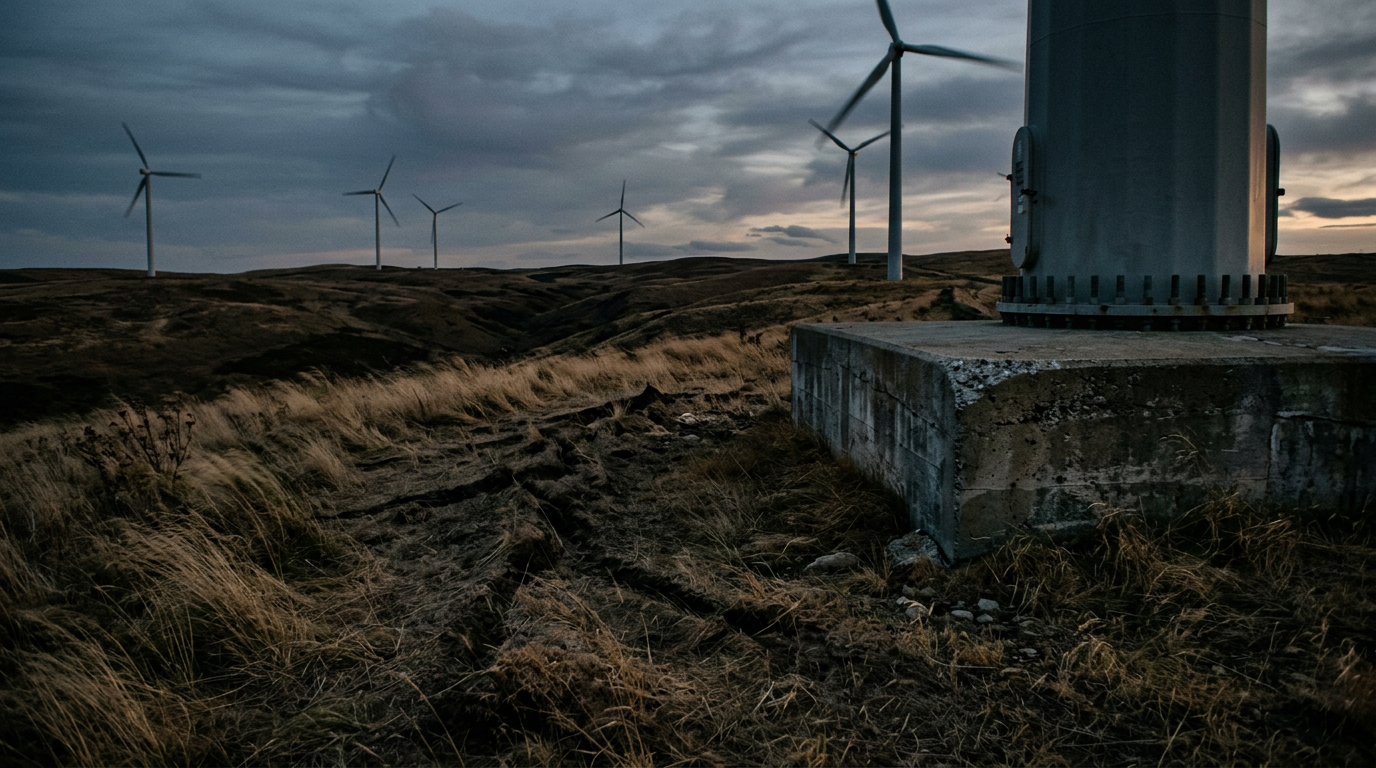
  • Thirteen for Halloween: The Quiet Floor

    Thirteen for Halloween: The Quiet Floor

    A tense leaking Manhattan apartment corridor

    Janice Palumbo took three photographs of the cardboard before moving any of it.

    Two flattened shipping boxes leaned against the wall outside 8F, and a third sat beneath the fire-stair sign with its top torn open. Nothing actually blocked the stairwell door. The wider box narrowed the corridor enough to irritate Janice because residents received reminders every few months about keeping hallways clear, and Kurt Madsen received more reminders than anyone else on the eighth floor.

    She sent the photographs to Gerald Kwan with the time in the message.

    7:18 a.m. Boxes outside 8F again.

    Gerald replied while Janice carried the flattened cardboard toward the refuse room.

    Thanks. Add it to the log when you get a chance.

    The log began six weeks earlier after Kurt sent the managing agent a four-page email accusing the cooperative of selective enforcement. Gerald wanted documentation showing that complaints about 8F arose from actual conduct rather than personal dislike, and Janice agreed that documentation was sensible. She served three years as board secretary before deciding that unpaid governance occupied too many evenings, so she knew what happened when a building remembered events through whoever spoke most confidently at the next meeting.

    Kurt supplied plenty to document.

    He left packages in the corridor. He smoked on his terrace despite the building policy prohibiting it. His television reached Janice’s bedroom wall after midnight at least twice a week, although he insisted the problem came from inadequate soundproofing between apartments. He argued with the porter about recycling, accused the superintendent of entering 8F without permission after a radiator inspection, and installed a compact washing machine without alteration approval. When management sent notices, he answered each one in enough detail to create a second dispute about the wording of the first.

    Janice did not like him.

    That fact bothered her less than it probably should have.

    She entered the photographs into the shared spreadsheet from her kitchen table, recorded CARD / HALLWAY STORAGE, and left the comment field empty. The sheet already contained thirty-eight entries from residents, staff, and board members: smoke odor, excessive television volume, unapproved appliance delivery, hostile exchange with porter, garbage left outside collection hours, packages obstructing corridor.

    Some were legitimate building problems. Others had acquired legitimacy through accumulation.

    At nine, while Janice washed her coffee cup, someone knocked twice on her apartment door.

    Kurt stood outside in sweatpants and a navy T-shirt. His hair was wet from the shower.

    “Did you move my boxes?”

    “I put them by recycling.”

    “I was taking them down.”

    “They were in the hall overnight.”

    “They were there forty minutes.”

    “They were there when I came home last night.”

    Kurt opened his mouth, reconsidered whatever he intended to say, and shifted his weight toward the elevator. “Gerald sent another violation notice before eight this morning.”

    “I don’t send the notices.”

    “You send him pictures.”

    Janice kept one hand on the inside edge of her door. “The hallway rule applies to everybody.”

    “Great. Send him a picture next time the Feldmans leave their grocery cart outside for six hours.”

    “I have.”

    That was true. Gerald told the Feldmans to remove it, and the matter ended without a log entry because nobody had created the log yet.

    Kurt gave a dry little laugh. “Of course you have.”

    “Anything else?”

    “You people are making a file because you want one.”

    “They’re your boxes.”

    He left before Janice found a less stupid thing to say.

    She closed the door and disliked the exchange mostly because Kurt’s accusation contained enough truth to remain irritating.

    The building occupied a wide corner lot in central Queens, thirteen stories of brown brick built in 1963 and converted to cooperative ownership twenty-four years later. Janice moved into 8C in 2004, when her mother told her buying a co-op meant paying rent to yourself and then spent the next decade complaining about the maintenance increases. The apartment was paid off now. Janice expected to stay until stairs, money, health, or death produced another arrangement.

    She knew most people on eight by first name and several by old grievances.

    Marcia Rubenstein in 8A objected whenever anyone propped the service door. Priya Nair in 8D borrowed Janice’s folding cart often enough that neither woman remembered who bought it. The Feldmans in 8H watched two grandchildren after school and generated an astonishing amount of recycling. Gerald lived in 8J with his husband and had served as board president for nearly seven years because nobody qualified wanted the position badly enough to challenge him.

    People watered plants during vacations. They signed for one another’s packages before the building installed lockers. Someone always knew which elevator was out before management sent the email. During the pandemic, eight maintained a group text that became permanent afterward, though Kurt left it the previous winter following an argument about cigarette smoke.

    Janice helped build the version without him.

    The first genuinely uncomfortable message arrived that afternoon.

    Marcia posted a photograph of Kurt speaking with a delivery worker in the lobby.

    Another appliance?

    Gerald answered that management had not approved any installation.

    Priya wrote, Maybe it’s just a delivery.

    Marcia responded with a shrugging emoji and With him nothing is ever just anything.

    Janice typed a reply, deleted it, and put the phone away.

    That evening she found the same photograph attached to the incident spreadsheet with the description POSSIBLE UNAPPROVED APPLIANCE DELIVERY.

    No appliance entered the building. The delivery worker carried away a return.

    Janice changed the entry to NO VIOLATION OBSERVED.

    Gerald restored it the next morning.

    When she called him, he answered while walking somewhere outdoors. Traffic moved loudly behind his voice.

    “Why did you put Marcia’s entry back?”

    “Because it documents the interaction.”

    “What interaction?”

    “He had a delivery truck outside.”

    “So did four other people yesterday.”

    “This is why we keep the log. Management needs a record of activity around 8F.”

    “There was nothing wrong with the activity.”

    “Then the entry shows that.”

    Janice leaned against her kitchen counter. “Why record it?”

    “His lawyer says we target him without evidence. We preserve everything and let counsel decide what matters.”

    “Marcia photographed him talking to a delivery guy.”

    “She photographed something she thought was relevant.”

    Janice disliked how reasonable each sentence sounded separately.

    Gerald continued before she answered. “You remember Pullman?”

    “The court case?”

    “Exactly. Boards get into trouble when they can’t establish a pattern. We have governing documents for a reason.”

    “We also have neighbors.”

    “Tell Kurt that.”

    The line went quiet for a moment except for passing traffic.

    Gerald said, “I have to get back upstairs. Leave the log alone unless something is factually wrong.”

    Janice ended the call.

    She changed POSSIBLE UNAPPROVED APPLIANCE DELIVERY to DELIVERY / ITEM RETURNED WITH DRIVER and saved it before Gerald could object.

    Two days later, the managing agent circulated a notice reminding residents that building staff could not perform personal errands during working hours. Nobody’s apartment number appeared on it.

    Everyone on eight knew why it went out.

    Kurt routinely asked Luis Ortega, the superintendent, to accept hardware deliveries when Kurt was at work. Luis used to do it if the package fit in the basement office. After Kurt accused him of unauthorized entry during the radiator inspection, Luis stopped accepting anything for 8F unless the package room system covered it.

    That decision made sense.

    The evening porter stopped holding Kurt’s dry cleaning behind the desk.

    That also made sense.

    Marcia quit taking in packages for him. Priya stopped lending him the folding cart after he kept it for four days. Gerald advised residents to avoid direct arguments and send concerns through management.

    Each decision required no conspiracy because each person could explain it without mentioning anybody else.

    By the end of October’s third week, Kurt could live in the building perfectly well as long as he needed nothing that was not guaranteed by the proprietary lease, house rules, municipal law, or a paid service.

    Janice began noticing the precision of it.

    On Thursday, management’s attorney requested copies of historical nuisance-enforcement files. Kurt’s lawyer apparently intended to argue that the co-op applied minor rules selectively and escalated ordinary neighbor disputes into a campaign to force him out.

    Gerald called Janice because she knew the old board archives better than the current secretary.

    “You remember where we put pre-2020 executive-session minutes?”

    “Restricted drive. Folder called Board Legal.”

    “Current secretary can’t find anything before 2019.”

    “The old folders were migrated separately.”

    “Can you help her?”

    Janice almost said she no longer served on the board. Then Gerald reminded her that her archival access had never been removed, which was exactly the sort of thing she used to nag people about correcting.

    She agreed to spend an hour on it.

    The building’s records were less orderly than Gerald liked to imagine. Financial folders contained contractor bids. Contractor folders contained shareholder correspondence. Meeting minutes existed as PDFs, Word files, scans, and photographs of paper someone apparently decided counted as scanning.

    Janice found the 2018 legal archive under a former managing agent’s initials.

    Most of it concerned a façade project.

    One subfolder carried the name KARP, HOWARD — 6B.

    Janice remembered Howard Karp.

    Everybody who lived in the building then remembered him.

    He complained about elevator machinery, radiator banging, cooking odors, lobby furniture, children in the courtyard, delivery bicycles chained to the fence, people talking beneath his windows, and once the color temperature of new hallway bulbs. He attended board meetings with printed packets. He sent certified letters about matters that could have been emails and emails about matters that could have been ignored.

    Janice served as secretary during his final year in the building.

    She remembered typing minutes that referred to “continuing objectionable conduct” and “staff disruption.”

    She opened the file.

    The documents reconstructed a campaign she recognized before she wanted to.

    Management instructed staff to document every contact with Karp. Residents were asked to submit noise complaints in writing. The superintendent was told not to enter 6B except for building emergencies or scheduled repairs. The front desk stopped providing informal assistance because Karp repeatedly turned favors into disputes over what staff promised.

    Janice read board emails she once received and barely remembered.

    One contained her own reply.

    Agreed. We need everything on paper from now on.

    She stared at the sentence longer than the rest because she could not remember writing it.

    The next folder contained correspondence from the cooperative’s insurer.

    Janice opened the first letter and found a reference to September 17, 2018.

    Something stirred in memory. An ambulance in front of the building. Marcia saying Howard finally worked himself into the hospital. Somebody repeating that he collapsed because he spent all day screaming at people.

    Janice opened the incident report.

    At 9:14 p.m., Howard Karp called the lobby desk and asked for Luis. The evening doorman recorded that Karp complained of dizziness and wanted someone to come upstairs. Luis had gone home. The doorman reminded Karp that staff could not provide medical assistance and advised him to call 911 if he was experiencing an emergency.

    At 9:22, Karp called again.

    According to the log, his speech was difficult to understand.

    The doorman contacted the managing agent’s after-hours number.

    At 9:31, the managing agent responded by email: Do not send staff to 6B. Mr. Karp has repeatedly characterized routine matters as emergencies. If he requires medical assistance he should contact 911. Document all further calls.

    There were no further calls.

    At 6:48 the following morning, Karp’s home-care aide arrived, received no answer, and asked the superintendent to open the apartment.

    They found him on the kitchen floor.

    Janice stopped scrolling.

    She remembered that part differently.

    In her memory, Howard suffered a stroke overnight and nobody knew until morning. The sequence felt unfortunate, sad, and largely inevitable. She did not remember anyone knowing he was ill the night before.

    The insurer’s correspondence described a fractured hip, prolonged compression injury to one arm, dehydration, and complications requiring extended rehabilitation. Karp’s daughter alleged that building staff knowingly denied assistance because of the board’s campaign against him.

    The cooperative denied wrongdoing.

    A later document referenced a confidential settlement.

    Janice opened executive-session minutes from three weeks after the incident.

    She found herself listed among those present.

    The minutes were spare. Counsel advised the board not to discuss fault. The managing agent stated that staff acted according to policy. Several directors expressed concern that any admission would undermine the building’s position in pending enforcement proceedings against Karp.

    Janice’s name appeared beside one motion.

    J. PALUMBO MOVED THAT ALL CONTACT WITH SHAREHOLDER CONTINUE THROUGH MANAGEMENT AND COUNSEL UNTIL FURTHER NOTICE.

    The motion passed unanimously.

    Howard Karp sold 6B the following spring.

    Janice sat with her hands away from the keyboard.

    She could remember making the motion once she saw it written down. The board’s attorney warned them that informal contact created risk. Janice repeated the recommendation in formal language because she was secretary and accustomed to turning messy conversation into motions somebody could vote on.

    At the time, the decision seemed administrative.

    She copied the incident report and insurer correspondence into a temporary folder, then deleted the copies.

    The originals remained where they were.

    Gerald answered on her second call.

    “I found the Karp file.”

    “Good. Send the relevant enforcement material to the secretary.”

    “There’s an incident in it.”

    “What incident?”

    “September 2018.”

    Silence lasted several seconds.

    Gerald’s voice changed slightly when he resumed. “That file should be privileged.”

    “Some of it is insurer correspondence. Some is board minutes.”

    “Don’t send anything to the secretary yet.”

    “You knew about this?”

    “I knew there was litigation.”

    “You were on the board.”

    “So were you.”

    Janice got up from the table and walked toward the window. The apartment across the courtyard had already put a plastic skeleton on its terrace for Halloween.

    “Karp called downstairs twice before they found him.”

    “I remember what happened.”

    “The second call says they could barely understand him.”

    “Janice, counsel handled that six years ago.”

    “Seven.”

    “Fine, seven.”

    “The managing agent told staff not to go upstairs.”

    “Because Karp weaponized staff responses for months. You were there.”

    “I know I was there.”

    “Then you also remember the settlement closed the matter.”

    Janice turned away from the window. “Kurt’s lawyer asked about selective enforcement.”

    “Howard Karp has no relevance to Kurt Madsen’s washing machine, smoking, packages, noise, or confrontations with staff.”

    “It shows what we do once everybody decides someone’s a problem.”

    Gerald exhaled. “You’re reading old litigation material in the middle of current litigation. Stop digging around without counsel directing you.”

    “You asked me to find the archive.”

    “And now I’m telling you to leave it alone.”

    He ended the call.

    At seven thirteen that evening, Janice’s phone began vibrating across the dining table.

    The eighth-floor group text had become busy.

    Marcia reported that Kurt and Luis were arguing near the service elevator. Priya asked what happened. Gerald wrote that nobody should engage and management would handle it.

    Then Marcia posted an audio clip.

    Kurt’s voice came faintly through her apartment door.

    “…paid for the goddamn valve myself. You people won’t send anyone when I call.”

    Luis answered from farther away. Janice could not make out the words.

    Marcia followed with: Here we go again.

    A laughing emoji appeared from somebody Janice could not immediately identify.

    Priya wrote: Maybe don’t record them.

    Gerald responded: Everyone stay out of it please.

    Janice put on her shoes.

    Kurt’s apartment door stood open when she entered the hallway. Luis knelt beside the radiator in 8F’s entryway with a bucket beneath the valve. Water streaked across the parquet toward the threshold.

    Kurt noticed Janice first.

    “Come for pictures?”

    “No.”

    “You sure? I can hold the bucket higher.”

    Luis shut off the radiator supply and spoke without turning around. “Valve packing failed. He called the emergency line, but management told him regular-hours repair because the leak sounded minor.”

    “It was minor twenty minutes ago,” Kurt said.

    Luis wiped water from his forearm with a rag. “I came back.”

    “You live downstairs.”

    “I was off duty.”

    “Which means I’m supposed to let the floor flood until morning?”

    “It isn’t flooding.”

    Kurt pointed at the wet parquet. “Fantastic. We’re measuring vocabulary now.”

    Janice stepped around the water and took the second bucket from beside the door. “Where do you want this?”

    Luis pointed toward the radiator.

    Kurt stared at her. “Gerald authorize you to touch it?”

    “Do you want help or an audience?”

    His expression remained sour, but he moved aside.

    They spent ten minutes with towels, buckets, and a wet vacuum Luis retrieved from the basement. The leak stopped. The parquet would probably cup near the wall, though Luis said maintenance could put a fan on it overnight.

    Nothing about the incident justified the drama surrounding it.

    That bothered Janice more than a spectacular emergency would have.

    Kurt’s radiator leaked. Management underestimated the leak. Luis returned after hours because he was decent enough to do so. The eighth floor converted the event into another installment of Kurt being Kurt before anyone knew what happened.

    When Janice returned to her apartment, the group chat showed twelve unread messages.

    Marcia asked whether Kurt caused the leak himself while working on the valve.

    Someone else wondered whether his unapproved washing machine affected the plumbing.

    Gerald told everyone to stop speculating.

    Janice scrolled farther up and found herself beginning a reply.

    She erased it.

    Instead, she opened the Karp archive again.

    The cooperative’s legal correspondence contained a preservation notice from the 2018 claim. Attached to it was a staff memorandum Janice missed earlier. The memo instructed employees to document Karp’s contacts and avoid “nonessential personal interaction” until management advised otherwise.

    Janice recognized the language because the current managing agent used almost the same phrase in its guidance concerning Kurt.

    She exported the 2018 board minutes, the staff memorandum, the incident report, and the insurer letter referencing the claim. She did not include privileged attorney correspondence. She did not alter filenames or strip metadata.

    Then she sat for nearly twenty minutes with the files on her desktop.

    Sending them to Kurt directly would make the source obvious and drag him into an argument about authenticity before his lawyer saw anything. Sending them anonymously would be cowardly and probably useless.

    Janice found the attorney’s address on a letter Kurt circulated to shareholders two weeks earlier.

    She wrote a short email stating that she was a former board secretary, that the attached building records concerned a prior shareholder enforcement campaign and subsequent incident, and that she believed they might be responsive to issues raised in his client’s dispute.

    She included her name and apartment number.

    The message left her outbox at 10:36 p.m.

    Gerald called before nine the next morning.

    Janice let it ring until voicemail picked up.

    He called again.

    Then the managing agent called.

    At 9:22, an email reached all board members and former board members with archive access, instructing them to preserve electronic records and refrain from further dissemination of corporate documents.

    At 9:41, Janice’s access to the board drive stopped working.

    At 10:03, Priya texted her privately.

    Did you send Kurt’s lawyer the Karp stuff?

    Janice answered that she did.

    The typing indicator appeared, disappeared, returned, and vanished again. No message followed.

    By lunchtime, nobody on eight posted anything in the group chat.

    At two, the cooperative’s insurance broker requested copies of current nuisance-enforcement procedures. At three seventeen, management postponed the hearing concerning Kurt’s alleged objectionable conduct. The postponement notice cited review by counsel and contained no new date.

    Kurt knocked on Janice’s door shortly before six.

    She opened it far enough to speak without inviting him inside.

    “My lawyer told me what you sent.”

    “I assumed he would.”

    “Why?”

    “Because it happened.”

    “That hasn’t stopped anybody around here before.”

    Janice had no useful response to that.

    Kurt shifted his weight and pushed his hands into his jacket pockets. “He says it helps. Doesn’t mean they can’t come after me for the stuff I actually did.”

    “You did plenty.”

    “Thanks, Janice.”

    “You’re welcome.”

    He laughed despite himself, then grew serious again. “You know they’re going to make your life miserable.”

    “They’re not allowed to.”

    Kurt glanced down the corridor toward the elevator. “Sure.”

    He walked back to 8F.

    Janice closed her door.

    The eighth-floor chat remained silent through the evening.

    On Saturday morning, Janice went downstairs with two bags of laundry and found the larger rolling cart missing from its usual place beside the service elevator. She asked Luis whether someone borrowed it.

    “Marcia has it.”

    “She’s had it since yesterday?”

    Luis folded a maintenance cloth over one hand. “She said she needed it through the weekend.”

    Janice knew Marcia owned two carts.

    “All right.”

    She carried the laundry herself.

    The laundry room was empty except for Priya, who was transferring towels into a dryer. For several seconds both women concentrated on their machines.

    Priya finally said, “Gerald’s furious.”

    “I know.”

    “Marcia thinks you gave Kurt confidential documents.”

    “Some were board records. Counsel can argue about what I was allowed to send.”

    “I’m not asking about the legal part.”

    Janice loaded the washer. “What part are you asking about?”

    Priya pushed the dryer door closed. “I don’t know yet.”

    That answer, at least, sounded like one person talking instead of a committee issuing findings.

    They discussed detergent for another minute. Priya left first.

    When Janice returned upstairs, the eighth-floor corridor was unusually quiet. The Feldman grandchildren were gone for the weekend. No television reached the hallway. Nobody stood near the elevators talking.

    Outside 8F, nothing occupied the floor or walls.

    Janice unlocked 8C.

    A folded sheet of paper lay beneath her door.

    She assumed Gerald left it until she opened it and recognized Marcia’s handwriting. The page contained dates and times in two columns. At the top, Marcia had written 8C — INCIDENTS / CONTACT.

    The first entry documented Thursday evening.

    7:31 PM — J. Palumbo entered 8F during active maintenance issue without board or management authorization.

    The second recorded Kurt’s visit to Janice’s apartment the previous evening.

    5:48 PM — Madsen at 8C approx. 6 minutes. Purpose unknown.

    A third entry carried that morning’s time.

    9:16 AM — Conversation with P. Nair in laundry room following disclosure of corporate records.

    Janice read the page once and set it on the kitchen counter.

    Her phone remained on the table where she left it before doing laundry. The eighth-floor group no longer appeared in her message list.

    She opened the cooperative’s resident portal instead.

    The board had posted a reminder thirty minutes earlier asking shareholders to report conduct affecting building operations through official channels and to avoid direct involvement in ongoing disputes.

    Janice placed Marcia’s sheet beside the old photographs of Kurt’s boxes that she had never deleted.

    Then she took out her phone, photographed the incident log, and emailed the image to herself.

    ©2026 Rhyan Scorpio-Rhys

  • Thirteen for Halloween: Carcass Persistence

    Thirteen for Halloween: Carcass Persistence

    Wind turbines across rugged grassland beneath a cloudy sky
    Carcass Persistence

    Denise Yost found the first wooden stake twelve feet from turbine C-17, its orange survey ribbon snapping above a patch of flattened buffalo grass. The stake marked a carcass location, though the carcass itself was gone. A laminated tag lay beneath the grass where something had pulled it free of the wire used to secure it.

    Maribel Soto photographed the stake before picking up the tag. “Third one this month.”

    “You sure nobody collected it?”

    “My people know these are persistence trials. They record anything they remove.”

    Denise crouched beside the depression. The ground around the stake showed no tire marks, boot prints, coyote tracks, feathers, blood, or drag marks. Wind had dried the upper inch of soil into a hard crust, and whatever removed the carcass left that crust mostly intact.

    “What was here?”

    “Quail surrogate. Placed at six twenty yesterday morning.”

    “Whole bird?”

    “Whole.”

    Denise pressed the end of a screwdriver into the soil near the stake. The crust broke over loose earth.

    Maribel photographed that too. “Camera got nothing.”

    “What kind of camera?”

    “The kind people ask that about when they hope I bought garbage.”

    “Did you?”

    “Six hundred dollars apiece.”

    “Then I’ll find another excuse.”

    Bryce Ketterman came around the concrete foundation carrying a tool bag and a handheld vibration meter. At thirty-one, he had six years on wind turbines and still possessed enough enthusiasm to climb three hundred feet before breakfast without resenting the person who assigned the work. Denise remembered possessing something similar, though she no longer trusted the memory.

    “Tower readings are normal,” he said. “Gearbox trend is clean. Generator bearing looks good. Foundation bolts aren’t giving us anything.”

    Denise rose and brushed dirt from her knee. “Maribel lost another trial carcass.”

    “Coyotes?”

    “No tracks.”

    “Badger?”

    “Maybe.”

    Maribel held up the torn tag. “A badger with wire cutters.”

    The thin stainless tie had separated close to the eyelet. Denise took it and bent the broken end between her fingers. It showed no clean shear. The metal had stretched before parting.

    “Could still be an animal,” she said.

    “That’s why I called you instead of the newspaper.”

    The three of them crossed the pad toward the service truck. C-17 turned above them at eleven revolutions per minute, the rotor making its broad sweep against a pale October sky. Denise felt the machine mostly through habit. The nacelle produced vibrations she could identify from instrument traces far better than through her boots, yet certain conditions sent a faint repeating tremor into the concrete apron beneath the tower.

    Maribel opened a tablet and showed her the monitoring map.

    C-17 sat near the center of a cluster of five turbines marked with red circles. The wildlife contractor searched designated plots beneath selected turbines during migration season, recording actual bird and bat fatalities along with controlled carcass trials used to estimate how quickly scavengers removed remains before searchers could find them. Losing a trial carcass was expected. Losing several within hours was information.

    “C-17, C-18, C-23,” Maribel said. “Everything else is within the normal persistence range. At these three, small carcasses disappear fast. Two large-bird surrogates moved between checks. One was thirty-seven feet from placement.”

    “Camera?”

    “Nothing useful. Grass moves. Image skips. Bird is gone.”

    Bryce enlarged the map. “Those three form a triangle.”

    “So do any three points,” Denise said.

    “They’re adjacent.”

    “That part matters.”

    C-18 rotated half a mile south. C-23 stood farther east across grazing land leased from a cattle operation. All three belonged to the same collector circuit, though four other turbines shared it and showed no wildlife anomaly.

    Denise asked Maribel to send the carcass data and camera footage. She promised to check foundation inspections, construction records, and maintenance history for anything the three turbines shared.

    Maribel closed the tablet. “I also need you to see something at twenty-three.”

    “Mechanical?”

    “I don’t know.”

    “That answer usually costs somebody money.”

    “It’s your company today.”

    They drove east.

    C-23 occupied a slightly lower stretch of prairie where the access road followed a shallow drainage. Cattle watched the service truck from behind a wire fence, their interest fading once nobody produced feed. Denise parked on the gravel pad and noticed the soil disturbance before Maribel pointed it out.

    A shallow furrow ran from the edge of the search plot toward the turbine foundation.

    It was eighteen inches wide in places and narrower elsewhere, with broken grass leaning inward. Denise followed it for thirty feet. No spoil pile lined either side. Whatever displaced the soil had done so from below and left the surface sagging afterward.

    Bryce planted one boot beside the furrow. “Prairie dog tunnel collapse?”

    “Too wide.”

    “Badger chasing one?”

    “Maybe.”

    Denise disliked the number of maybes already accumulating.

    Maribel led them around the foundation. Another depression appeared near a junction box, then vanished beneath gravel. She had marked the end with a flag.

    “We found a kestrel here Tuesday,” she said. “Actual fatality. Fresh. Wing injury consistent with collision. I photographed it, recorded it, bagged it, and put it in the freezer according to protocol.”

    “So this isn’t where it disappeared.”

    “No. This is where I found feathers yesterday.”

    Maribel opened a photograph on her tablet. Seven small feathers protruded from a crack in the soil. The bird in Tuesday’s photograph possessed the same barred coloration.

    “You sure they’re from the kestrel?” Bryce asked.

    “Reasonably. We’ve sent them for confirmation.”

    Denise moved toward the furrow again. “Something cached part of another carcass.”

    “Could be.”

    “You hate saying that.”

    “I hate having explanations that fit until I walk ten feet farther.”

    Maribel showed her the next photograph.

    The soil had opened around the feathers after the picture was taken. Inside the narrow cavity lay the remains of a small bird, compressed and dirty, several feet below the original ground surface.

    Denise returned the tablet. “Badger.”

    “Badgers leave excavated dirt.”

    “Sinkhole.”

    “Three of them?”

    “Burrowing animal using an old construction void.”

    “That one I’d take.”

    Denise contacted site operations and requested subsurface inspection around C-23 before anybody drove heavy equipment over the disturbed ground. Until then, she marked an exclusion area around the furrow and photographed it for the maintenance record.

    The issue would probably become geotechnical. Wind-farm foundations tolerated enormous cyclic loads, and nobody wanted unexplained voids developing beside one. Denise cared more about that than the missing birds.

    By Wednesday afternoon, she cared about both.

    The construction records showed no meaningful difference among C-17, C-18, and C-23. Their foundations came from the same design package as eleven surrounding turbines. Concrete batches differed. Installation crews overlapped. Cable trenches followed different routes. Soil borings showed variations expected across the site, with layers of silt, clay, and weathered limestone depending upon location.

    The three turbines shared one operational habit.

    They ran more consistently than their neighbors.

    A software restriction on several nearby units reduced production during certain grid conditions. C-17, C-18, and C-23 fell outside that control group because of how their collector circuit was configured. During the previous six weeks, each accumulated substantially more operating hours than the surrounding turbines.

    Denise found the correlation interesting and useless.

    Maribel found it interesting enough to call.

    “Scavengers like spinning turbines now?”

    “I didn’t say that.”

    “You called me with a spreadsheet.”

    “I’m giving you something the three have in common.”

    “Anything underneath them?”

    “Nothing in the construction records.”

    “You believe the voids are animal?”

    “I believe you found disturbed soil.”

    “That’s diplomatic.”

    “It’s maintenance.”

    Thursday morning brought a planned collector-system inspection that required C-17, C-18, C-22, C-23, and C-24 to remain offline for several hours. Denise intended to use the outage to inspect C-23 more closely after electrical isolation was established.

    She met Bryce at the operations building before seven.

    Maribel arrived carrying two hard plastic cases and a paper sack from a bakery thirty miles away.

    “You aren’t on the maintenance permit,” Denise told her.

    “I’m not climbing anything.”

    “You’re also not going inside the tower.”

    “I brought doughnuts.”

    “That gives you parking privileges.”

    Bryce took the bakery sack. “I’ll supervise these.”

    Denise signed the energy-control documentation, reviewed the shutdown boundaries with control, and drove them to C-23 after the affected turbines were isolated. The rotor overhead was motionless, blades feathered out of the wind. Several neighboring turbines beyond the maintenance group continued turning.

    The pad felt different under Denise’s boots.

    She noticed because she spent enough time around operating turbines for their absence to register physically. No rotational pulse traveled through the foundation. Wind moved over the prairie and through grass with plenty of noise above ground, while the concrete itself felt inert.

    Bryce unpacked the vibration meter.

    “You want baseline readings?”

    “Foundation and ground. Same points you did Tuesday.”

    Maribel headed toward the flagged furrow.

    Denise called after her. “Stay off the disturbed section.”

    “I’m beside it.”

    “That sentence creates paperwork.”

    Maribel moved farther away.

    Bryce placed the sensor against the foundation and began logging measurements. Denise inspected the base flange, grout line, drainage, and surrounding pad while he worked. Nothing showed settlement severe enough to explain the furrows.

    Maribel crouched twenty yards away and raised one hand.

    Denise walked toward her.

    The surface depression had lengthened.

    It extended beyond Tuesday’s flag, crossed several feet of intact grass, and ended near the edge of the gravel pad.

    “Could’ve developed yesterday,” Denise said.

    “I checked it at four thirty.”

    “So overnight.”

    Maribel pointed at the ground.

    A second narrow depression branched from the first.

    Denise measured both with her eyes. “Nobody drives here?”

    “Searchers park on the pad.”

    “Livestock?”

    “Fence has been closed.”

    Bryce joined them with the meter. “Background vibration is way down.”

    “The machine is off.”

    “I know why.”

    “Then congratulations.”

    “I mean soil readings. Tuesday I was picking up operating harmonics sixty feet out. Here, almost nothing.”

    Maribel straightened. “Do that at the furrow.”

    Denise started to tell her a vibration meter would not diagnose burrowing animals, then decided watching Bryce test it would cost less time than arguing.

    He planted the sensor beside the depression.

    The reading remained low.

    Maribel walked ten paces away and stamped one boot.

    A faint movement passed along the furrow.

    Nobody spoke for several seconds.

    Denise focused on the grass where she thought she saw it. The surface remained still.

    “Do that again,” Bryce said.

    Maribel stamped.

    This time Denise caught it clearly. Loose soil at the furrow’s end shifted toward Maribel by perhaps an inch, then settled.

    “Back up,” Denise said.

    Maribel retreated to the gravel pad.

    Bryce stared at the sensor. “That transmitted.”

    “Of course it transmitted.”

    “The movement followed it.”

    “Possibly.”

    Maribel removed a half-full water bottle from her pack and threw it into the grass.

    It struck fifteen feet beyond the depression.

    The furrow extended.

    The movement resembled a seam opening beneath cloth. Soil lifted, traveled several feet toward the bottle, and fell behind whatever passed underneath. The progression ended short of the bottle.

    Bryce said, “Prairie dogs don’t do that.”

    Denise took out her radio. “Control, Yost at C-23. I want the ground exclusion expanded around this turbine. Hold vehicle access.”

    The operator asked whether she had identified a foundation defect.

    “No. Potential subsurface void and animal activity.”

    “Animal?”

    “Put that on the temporary restriction.”

    She ended the call.

    Maribel spoke quietly. “Tuesday’s carcass was down there.”

    “Probably.”

    “What waits under an operating turbine for dead birds?”

    Denise had no useful answer.

    Bryce tossed a small wrench into the grass before Denise could prevent him.

    “Bryce.”

    The wrench struck twenty feet from the furrow.

    Two patches of ground moved.

    One followed the original depression. The other began six feet away where the surface had appeared undisturbed.

    Bryce’s satisfaction disappeared. “Okay.”

    Denise pointed toward the pad. “Nobody throws anything else.”

    They returned to the concrete foundation.

    Denise radioed control again and asked whether any operating-state changes occurred at neighboring units during the past ten minutes.

    “Maintenance group is locked out. Everything outside it normal.”

    “How close is the nearest running turbine?”

    “C-19, about eight-tenths mile northwest.”

    “Any reason we can’t bring C-22 back later if we clear the lock and maintenance release?”

    “Collector inspection includes twenty-two. Why?”

    “Checking something.”

    “You’ll need the electrical lead to release it.”

    “I know.”

    A dry snapping sound came from the grass.

    The water bottle disappeared.

    The ground opened beneath it and closed badly, leaving a shallow oval depression.

    Maribel moved several feet farther onto the concrete.

    Bryce used the vibration meter again. “Whatever it is, it’s below our range.”

    “You measured movement from the impact.”

    “I measured vibration. I can’t tell you what received it.”

    Denise called the site manager and described what they observed in plain terms: subsurface animal activity responding to surface impacts, multiple disturbances, unknown voiding near the foundation. She requested wildlife and geotechnical response and suspended their ground inspection.

    The manager agreed immediately, which Denise appreciated.

    They only needed to leave.

    Bryce gathered equipment from the pad. Maribel packed her camera cases. Denise retrieved the lockout paperwork from the tower doorway and started toward the truck.

    The ground shifted beside the access road.

    She changed direction before thinking about it.

    “Back to the foundation.”

    Bryce had taken three steps off concrete. Soil broke under his right boot, and his leg dropped to the knee.

    He shouted and fell sideways.

    Denise caught the back of his harness before his other leg entered the collapse. Maribel grabbed his shoulder strap. Together they dragged him onto gravel as the hole widened behind him.

    Something struck the underside of the crust.

    Bryce kicked free.

    A pale surface rolled through the opening, visible for less than a second: wet, segmented or folded, thick enough that Denise could not fit what she saw into any animal she knew. The cavity collapsed before a head or limb appeared.

    Bryce scrambled onto the concrete apron under his own power.

    His boot remained on his foot. Three shallow cuts crossed the leather above the ankle, parallel and clean enough to expose lighter material beneath the black outer layer.

    Denise checked his leg through the boot opening. “Skin broken?”

    “I don’t think so.”

    “You don’t think or you checked?”

    Bryce pulled his pant leg up. Red pressure marks showed above his sock, with no blood.

    Maribel took several photographs of the collapsed hole from the concrete.

    Denise keyed the radio.

    “Control, Yost at C-23. We have an employee near miss involving subsurface animal activity. Nobody injured. We are sheltering at the tower foundation and need vehicle approach suspended.”

    The operator’s response came immediately. “Do you need emergency medical?”

    “Negative. Keep vehicles out until we determine a safe approach.”

    Bryce lowered himself against the tower door, breathing hard. “I’m going to hate that phrase when I read the report.”

    “You can write your own version.”

    “Mine says the ground bit me.”

    “Put that in and safety will make you pee in a cup.”

    Maribel moved the camera lens toward the grass beyond the pad.

    Three separate tracks now marked the surface.

    All pointed toward the concrete.

    Denise watched them advance by increments when someone shifted weight.

    “Stay where you are.”

    Bryce held up both hands. “Very committed to that.”

    The foundation gave them a circle roughly twenty meters across. The truck sat forty yards away on the gravel access spur. That distance had been trivial six minutes earlier.

    Denise opened the turbine operating display on her work tablet.

    C-19 continued producing northwest of them. C-20, farther north, also ran. The five-turbine maintenance group formed a quiet patch between those machines and the crew at C-23.

    She opened historical vibration traces Bryce sent earlier in the week.

    C-23 operating.

    C-23 offline.

    The difference was obvious.

    Maribel spoke from several feet away. “You think the turbine keeps them down?”

    “No.”

    “You’re pulling up vibration data.”

    “I think the turbine makes it harder for them to find smaller movement.”

    Bryce shifted carefully against the tower. “Sensory masking.”

    Denise enlarged the operational map. “Maybe.”

    “Turn this one on.”

    “Our locks are on it.”

    “Take them off.”

    “Electrical work is still inside the collector boundary.”

    “Then one next to us.”

    C-22 sat about half a mile west. It shared the maintenance isolation and could not return until the electrical lead released it. C-21 lay farther southwest and remained operational but was producing poorly because of wind position.

    Denise radioed control.

    “I need operating status on C-21.”

    “Online, nine hundred kilowatts.”

    “Can you increase output?”

    “Wind sets that.”

    “Any curtailment?”

    “None.”

    “Give me vibration trend at the tower base if you have structural monitoring.”

    The operator needed a minute to pull it up.

    While they waited, Maribel placed her camera case on the concrete and removed a monopod.

    “Whatever you’re thinking, don’t hit the ground with that.”

    “I’m thinking I paid nine hundred dollars for a lens I left beside the truck.”

    “You’re abandoning it.”

    “I already decided that.”

    The operator returned. C-21 showed ordinary operating vibration. C-19 and C-20 did as well.

    Denise asked for C-22’s work status.

    “Electrical lead says they can clear twenty-two from the collector inspection in about fifteen minutes. Your mechanical lock still applies.”

    “We haven’t entered the tower past the base. Bryce, confirm your personal lock.”

    He pulled the key from his pocket. “Mine’s on.”

    Denise’s was beside it on the isolation point.

    Removing their locks would require leaving the concrete only briefly because the relevant isolation equipment was inside the tower base. They could clear their own maintenance scope, but energization would still wait on electrical release and the formal restart sequence.

    Denise told control to prepare C-22 for return once all authorized employees cleared.

    The tracks in the grass reached the gravel.

    Movement slowed there.

    Loose stones clicked against one another while something passed beneath them.

    Maribel heard it too. “How many?”

    “At least three.”

    “That’s encouraging.”

    “How?”

    “I was worried it was one enormous thing.”

    Bryce gave a strained laugh.

    Denise entered the tower with Bryce to remove their maintenance locks and certify their portion of the work clear. They shut the door again and remained outside on the foundation afterward because the steel tower offered no useful escape once C-22 restarted; their immediate problem involved reaching the truck rather than surviving inside a cylinder for several hours.

    Control called eleven minutes later.

    “Electrical has released twenty-two. Confirm all personnel clear of C-22.”

    Denise confirmed.

    “Restart sequence beginning.”

    C-22’s rotor blades slowly changed pitch in the distance.

    The machine aligned into the wind. Rotation began reluctantly, one blade descending before another gathered enough aerodynamic force to follow. The rotor accelerated over the next several minutes.

    Bryce monitored the vibration meter against the concrete.

    “Nothing yet.”

    C-22 increased speed.

    “Getting something.”

    The nearest track beneath the gravel changed direction.

    Denise saw the movement veer several degrees west.

    Bryce raised the meter. “Amplitude’s coming up.”

    Maribel watched the second furrow falter. Its advance no longer followed every change in their footing.

    Denise keyed the radio. “Bring C-24 back if maintenance can release it.”

    Control told her another crew still held locks.

    “Leave it. How about C-18?”

    “Same electrical group as twenty-two. Available once your site manager approves.”

    “Get approval.”

    The site manager was already listening and authorized the return.

    C-18 began its restart several minutes later.

    The effect became unmistakable.

    Movement around the pad turned erratic. One shallow ridge traveled toward the access road, paused, then curved toward the operating turbine half a mile away. Another disappeared entirely beneath gravel.

    Denise retrieved three steel nuts from the tool bag.

    Bryce watched her. “I thought nobody was throwing anything.”

    “I changed the rule.”

    She tossed one into the grass away from the truck.

    The nut struck.

    No response followed.

    She threw another farther.

    A patch of ground moved toward it, overshot by several feet, and continued in the wrong direction.

    “Masking,” Bryce said.

    “Looks that way.”

    “Service truck is going to make more vibration than we do.”

    “Which means we don’t start it until we’re inside.”

    Getting there remained the dangerous part.

    Denise radioed control and told them nobody should change the operating state of C-18 or C-22 until she reported clear. She gave Maribel the lightest camera case and made Bryce leave the tool bag. Tools could be replaced. None of them argued.

    They left the foundation together.

    Denise kept them on the gravel because it showed movement better than grass. Her boots produced crunching impacts she could feel through the soles, each one louder to her now that she knew something underneath might be listening.

    No furrow turned toward them.

    Halfway to the truck, Maribel pointed toward the south edge of the pad.

    Soil lifted.

    The movement began crossing toward their path.

    C-18 slowed.

    Denise heard the difference before control called.

    “Yost, eighteen just tripped on a converter fault.”

    “Can you reset remotely?”

    “Checking.”

    The furrow gained direction.

    “Keep moving,” Denise said.

    Bryce reached the truck first and opened the rear passenger door. Maribel climbed in. Denise followed, pulled the door shut, and slapped the back of the driver’s seat.

    Bryce was already behind the wheel.

    “Start it.”

    The diesel turned over.

    The ground disturbance vanished under a scatter of gravel as the truck’s engine vibration entered the roadbed.

    Bryce drove.

    Denise kept the radio in her hand until they reached the next operating turbine. Control restored C-18 before they entered the main service road, but by then C-22’s steady rotation remained behind them and C-19 turned ahead.

    Nobody followed the truck out of the maintenance cluster.

    The site shut ground access to five turbines for the rest of the day.

    By evening, the restricted area expanded to eight.

    Maribel’s wildlife team sent photographs from earlier carcass-persistence trials. Several missing carcasses clustered near the three turbines with the highest operating hours. Search cameras showed coyotes, ravens, beetles, one feral cat, maintenance vehicles, survey crews, and thousands of empty frames containing grass.

    None showed what removed the birds.

    A geotechnical contractor arrived the following morning and refused to drill after Denise explained what happened. The refusal saved everyone several hours of pretending a bore rig was an intelligent first response.

    State wildlife officials received Maribel’s records. The company notified occupational safety personnel and began preparing an incident report describing Bryce’s near miss. Someone higher in the organization asked whether the pale material Denise saw could have been exposed conduit wrap, geotextile, plastic drainage material, or an optical effect inside collapsing soil.

    Denise answered each possibility seriously.

    Then she sent photographs of the cuts in Bryce’s boot.

    For the next three days, the wind center operated under temporary restrictions. Adjacent turbines remained online during ground-level work whenever conditions allowed. No technician approached C-17, C-18, or C-23 alone. Cluster shutdowns required a ground-access review. Wildlife crews discontinued carcass placement in the affected area.

    The policy solved nothing about nights with insufficient wind.

    Nobody pretended otherwise.

    On Friday afternoon, Denise met Maribel at the operations building to review the week’s records. Bryce was inside writing his third version of the near-miss narrative because safety wanted him to replace “something grabbed my boot” with an observable description.

    Maribel placed a freezer inventory sheet on the table.

    “One more problem.”

    “Of course.”

    “The trial carcasses we used around those turbines came from the same freezer stock we used everywhere else.”

    Denise read the inventory numbers. “Meaning?”

    “If something learned to associate turbine sites with food, we helped.”

    “You put dead birds there.”

    “That is how persistence trials work.”

    “I know.”

    “We put them at turbines, came back on predictable schedules, replaced them in new trials, and documented what disappeared.”

    Denise returned the sheet. “You didn’t create whatever is under there.”

    “I fed it.”

    “Probably.”

    Maribel seemed relieved by the lack of reassurance.

    Bryce emerged from the safety office carrying several pages. “They changed ‘grabbed’ to ‘experienced sudden resistance at lower right leg.’”

    “Beautiful,” Denise said.

    “I feel safer already.”

    He dropped the paperwork onto the table. His replacement boots were newer and more expensive than the pair in the evidence locker.

    Denise opened the operating map.

    Wind speeds were forecast to fall after midnight.

    C-17, C-18, and C-23 would likely remain online for several more hours before output dropped naturally. No maintenance crews were scheduled nearby. The exclusion zone would remain empty until morning.

    Maribel leaned over the map. “What happens when all three quit turning?”

    Denise checked the overnight work schedule, then the ranch parcels surrounding the site. Cattle occupied the section east of C-23. A farmhouse sat more than a mile south. County Road 8 crossed the wind center along its northern boundary.

    She called operations control and requested temporary fencing around the affected access roads before dusk. She added wildlife notification, rancher contact, and a prohibition on overnight foot access.

    The operator entered the restrictions.

    Before Denise closed the map, C-17’s production dropped slightly with the weakening wind.

    On the wildlife monitor beside her, the carcass-persistence report still listed Tuesday’s missing kestrel among the fatalities whose final disposition could not be determined.

    The field contained a standard code for scavenger removal.

    Maribel left it blank.

    ©2026 Rhyan Scorpio-Rhys
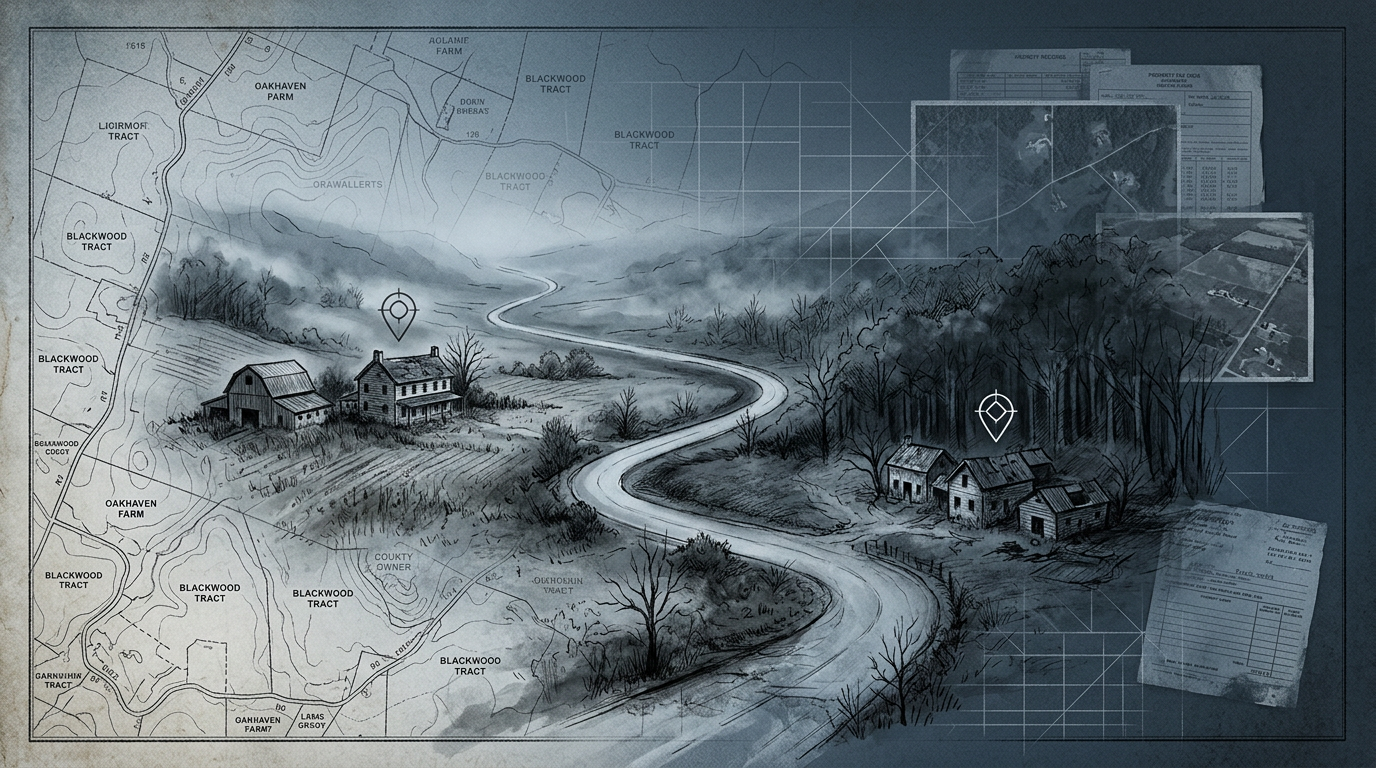
  • Thirteen for Halloween: The Duplicate Address

    Thirteen for Halloween: The Duplicate Address

    Illustrated rural map with winding road, farms, forest, and location markers
    The Duplicate Address

    Lori Bender found the duplicate at 8:43 on Monday morning, thirty-seven records into a quality-control report that contained 1,126 errors and approximately nine hundred reasons for people to blame someone else.

    Most were harmless. A private road lacked a suffix in one layer and carried it in another. Four mobile homes shared coordinates because an old conversion placed every unit at the park entrance. A township boundary clipped the corner of a garage. Several addresses contained directional prefixes that nobody living on the roads actually used. The county’s transition work for Next Generation 911 had collected twenty years of such debris and presented it back to Lori as though every inconsistency represented a fresh discovery.

    The duplicate was different only because both records appeared clean.

    214 Harris Run Road.

    Two site points. Two occupied structures. Two parcel numbers. Two driveways separated by nearly a quarter mile. Both belonged to Wexler Township, both passed road-name validation, and neither contained the apartment, unit, rear, or secondary-structure information that sometimes explained apparent duplicates.

    Lori opened the first record. The house sat close to Harris Run Road on a narrow parcel stretching uphill toward woods. County imagery showed a two-story farmhouse, detached garage, vegetable beds, and a shed that had moved three times between aerial surveys. Assessor records belonged to Blaine Turocy, who purchased the property in 1978.

    The other 214 sat farther south, beyond a bend where Harris Run crossed under a transmission corridor. Sheryl Danner owned that parcel. Her single-story house dated from 1986, though the county did not create a separate parcel for it until several years later.

    Lori checked the road centerline ranges. The second property should never have been 214. Based on the established sequence, 226 fit cleanly between its neighbors.

    She opened the address history.

    The oldest electronic record for Turocy showed 214 Harris Run Road from the first countywide conversion. Danner’s property entered the current database during a 2004 migration, also as 214. No change order appeared in the scanned folder attached to the record.

    Lori picked up the desk phone.

    Blaine Turocy answered after enough rings for her to assume voicemail would take over.

    “Mr. Turocy? Lori Bender with Lanning County Public Safety. I work with the county addressing office.”

    “If you’re selling signs, I bought one off you people already.”

    “We don’t sell signs. I’m calling about your house number.”

    “That better not cost anything either.”

    Lori opened his parcel map while he spoke. “I’m cleaning up an address conflict on Harris Run. I need to confirm the number displayed at your driveway.”

    “Two-fourteen. Big black numbers on a white board. Been two-fourteen longer than you’ve been working there.”

    “That’s probably true. Do you remember when the county assigned it?”

    “The county didn’t assign me anything. That address was there when we bought the place.”

    “Do you still have paperwork from the purchase?”

    A chair or table scraped at his end of the call. “Lady, I got paperwork from Nixon.”

    “That could make you very useful to me.”

    Turocy laughed once. “My wife called it hoarding. You county people finally found a respectable name for it.”

    He agreed to search for an old tax notice or deed showing the address. Lori thanked him and called Sheryl Danner.

    Danner answered quickly and knew why the county might be calling before Lori finished introducing herself.

    “This is about the address again, isn’t it?”

    Lori moved her hand away from the keyboard. “Again?”

    “They tried changing it when my mother lived here. Nineteen ninety-something. She raised hell until somebody told her to forget about it.”

    “Do you remember what number they wanted to give her?”

    “No. She kept the letter, though. It should be with the house papers.”

    “That would help. The current county system shows your property and another house as 214 Harris Run.”

    “I know the other house. The old place before the bend.”

    “Yes.”

    “He gets our mail sometimes.”

    “How often?”

    “Christmas cards mostly. Once I got his new checks. He brought them down himself and told me if I spent any he wanted half.”

    Lori entered a note. “Have you ever had trouble with emergency services finding your house?”

    “Ambulance came here for my mother in 2019. They found us.”

    “Any trouble with deliveries, utilities, permits?”

    “GPS sends people up to him once in a while. Amazon figured it out years ago.”

    None of that surprised Lori. Residents often compensated for defective addresses so successfully that bad records survived for decades. They gave drivers landmarks, added instructions to online orders, learned which version of an address each company preferred, and eventually forgot they were maintaining a private correction layer around themselves.

    “I may need to assign your property a different civic number,” Lori said. “Nothing is changing today. I’m researching the history first.”

    Danner became quiet for a few seconds. “How much trouble does that make for me?”

    “Some. Driver’s license, insurance, utilities, deliveries, banks. We provide an official change notice, and there’s usually a transition period.”

    “You said nothing’s changing today.”

    “Correct.”

    “Then research away. I’ll find Mom’s letter after work.”

    Lori ended the call and created a case.

    By ten fifteen, Blaine Turocy emailed photographs of three documents taken on a kitchen table covered by a red-checkered cloth. A 1981 property-tax notice used 214 Harris Run Road. So did a homeowner’s insurance declaration from 1984 and a faded piece of correspondence from the township concerning a drainage complaint.

    Turocy’s claim was settled as far as Lori was concerned.

    At 10:28, she created 226 Harris Run Road in the staging layer for Danner’s parcel. Staging records existed for review and quality control before publication to the county’s authoritative address layer. She adjusted the point to the center of the habitable structure, checked the driveway connection, confirmed the odd-even sequence, added a note explaining the duplicate, and saved the proposed assignment.

    She did not approve it.

    At 10:51, her desk phone rang.

    Sheryl Danner did not bother with a greeting. “What did you change?”

    “I haven’t changed anything.”

    “My grocery account says 226 Harris Run now.”

    Lori reopened the case. “Which grocery account?”

    “Faber Market. I’ve used their delivery service since COVID. They emailed me twenty minutes ago asking me to confirm my corrected service address.”

    “Can you forward the email?”

    “I thought you said nothing was changing today.”

    “Nothing was supposed to.”

    “Those sound like different sentences from where I’m sitting.”

    Lori gave her county email address and kept Danner on the line while she checked the production layer. Danner remained 214. The nightly export had not run. The staging record for 226 showed Lori as creator, with no approval user and no publication timestamp.

    The forwarded email arrived.

    We’ve updated your delivery location to improve service accuracy. Please verify: 226 Harris Run Road.

    The message time was 10:46.

    Lori checked the county application logs. Nobody besides her had opened the proposed record. No public API exposed staging data. The grocery company was not among the county’s address-data subscribers anyway.

    “Mrs. Danner, did you enter 226 anywhere yourself?”

    “Why would I do that?”

    “I have to rule it out.”

    “You gave me that number for the first time just now.”

    Lori had not. She mentioned a possible new civic number during the earlier call and deliberately withheld the number because it had not been approved.

    “You’re right,” she said. “Please don’t confirm anything in that email. I’m going to find out where they got it.”

    “That was already my plan.”

    Danner disconnected.

    Lori checked the assessor’s public property search next, mostly because it was convenient. The parcel still belonged to Sheryl Danner. The parcel number, acreage, assessed value, deed reference, and structure details remained unchanged.

    The situs address displayed 226 Harris Run Road.

    Lori opened the internal assessor database. Same result.

    She called downstairs.

    A property-records technician answered and searched the parcel while Lori explained what she was seeing.

    “Shows 226 here.”

    “Who changed it?”

    “System says address refresh.”

    “From what source?”

    “County address layer, I assume.”

    “It isn’t in the county address layer.”

    Keys clicked at the other end. “Well, something fed it.”

    “When?”

    “Ten thirty-three.”

    Five minutes after Lori saved the proposed record.

    “Can you restore 214?”

    “I can overwrite the situs field manually, but if your next refresh sends 226 again, we’ll be right back here.”

    “My next refresh won’t send it. We never sent the first one.”

    The technician gave a small, uncertain laugh. “Then I’ve got nothing useful for you.”

    By eleven thirty, Lori had enough useful information to become deeply annoyed.

    The staging server showed no outbound transaction. The production database showed no change. The county integration logs contained no reference to 226 Harris Run Road. The GIS administrator checked replication jobs and found nothing. Assessor staff restored Danner’s situs address to 214 manually.

    At 11:42, the county utility liaison called Lori directly.

    “I’ve got Penn Allegheny asking whether you renumbered something on Harris Run.”

    Lori pinched the bridge of her nose and immediately became irritated with herself for doing it. “Which address?”

    “Two-fourteen to two-twenty-six.”

    “We haven’t issued the change.”

    “They have a service-location update dated this morning.”

    “Who sent it?”

    “That’s what they’re asking us.”

    Lori pulled Danner’s utility-service map onto a second monitor. The meter identifier remained attached to the correct parcel.

    “Tell them to hold the existing address.”

    “I already did. You want the request ticket?”

    “Yes. Send the whole thing.”

    The service-location update showed a source category Lori did not recognize. It did not name Lanning County. It did not name the utility. A generic field labeled ADDRESS AUTHORITY contained the county’s standard jurisdiction code, but the format belonged to neither organization.

    The timestamp was 10:36.

    Lori printed the page.

    At noon, she ate half a turkey sandwich while comparing system logs. By twelve twenty, she had forgotten where she placed the other half and found it beneath a road-centerline printout. She threw it away rather than decide whether toner dust counted as seasoning.

    A building-code clerk called shortly afterward.

    “You doing something with Harris Run?”

    Lori lowered the receiver slightly before answering. “Apparently everybody is.”

    “We got an online permit inquiry for 214. System attached it to the Turocy parcel, but the applicant lives at the Danner property.”

    “What kind of permit?”

    “Deck repair. Nothing submitted yet. He searched the address, and the parcel lookup gave him the other house.”

    “That has happened before.”

    “Probably. The weird part is the alternate-address field. It lists 226 for Danner now.”

    “Where did it get that?”

    “If I knew, I’d be telling you instead of asking.”

    Lori opened the countywide address QC report again.

    The duplicate error remained.

    She refreshed.

    The two 214 points vanished from the duplicate list.

    Her first reaction was relief. Then she searched the map.

    Both structures remained visible. Turocy’s point existed exactly where it belonged. Danner’s point existed exactly where it belonged. Each record still displayed 214 Harris Run Road.

    The QC application now treated them as one feature.

    Lori opened the raw geometry table. Two unique identifiers remained. Two coordinate pairs remained. Two parcel links remained. The quality-control system returned a single record count.

    She exported the features into a local project disconnected from the county network.

    Two points appeared.

    She ran her own duplicate query.

    Two records.

    The enterprise QC tool returned one.

    Lori called the GIS administrator and asked him to run the same check from his workstation. He got one.

    “Could be indexing corruption,” he said.

    “Only on these two records?”

    “Weird things happen.”

    “They usually happen in batches.”

    “I can rebuild the index tonight.”

    Lori closed the report. “Leave it alone for now.”

    She withdrew 226 Harris Run Road from staging at 1:07.

    The proposed record disappeared cleanly.

    At 1:19, Faber Market emailed Sheryl Danner again and restored her delivery address to 214.

    At 1:31, the assessor’s situs field changed from 214 to 226 a second time.

    At 1:38, Penn Allegheny’s service record reverted to 214.

    At 1:46, the building-code system removed 226 from its alternate-address field and attached Danner’s pending inquiry to Turocy’s parcel permanently.

    Lori called the building department and asked them to delete the inquiry.

    “We can’t delete an applicant session,” the clerk said. “He has to abandon it or submit it.”

    “Can you detach the parcel?”

    “I tried.”

    “What happened?”

    “It attached again.”

    Lori considered another round of logs, calls, and screenshots. None would tell her why a deleted staging record continued to exist elsewhere or why independent systems were choosing different versions of it.

    She took the county vehicle keys instead.

    Harris Run Road left the borough fringe behind within five minutes and narrowed between hills covered in second-growth woods. October had reached the stage when half the trees were bare enough to show houses previously concealed by leaves. Lori passed 188, 196, and 202 before finding a gravel drive marked with black numerals on a white board.

    Blaine Turocy’s farmhouse sat thirty yards from the road. He was in the garage when she arrived, wearing work pants and a sweatshirt with the sleeves shoved toward his elbows. He came down the drive carrying a yellow folder.

    “You’re younger than I pictured.”

    “I’m fifty.”

    “So’s my daughter. I picture her young too.”

    Turocy handed over the folder before she could answer. “That’s everything I found with the number on it. You taking my address away?”

    “No. Your assignment fits the road sequence and predates the other record.”

    “Good. I already memorized this one.”

    Lori photographed two older documents, thanked him, and continued south.

    The second 214 appeared after the bend exactly where the map placed it. A green reflective plate displaying the number stood beside a paved driveway. Sheryl Danner’s house occupied a shallow rise behind several mature maples, close enough to the road that no ambulance crew could confuse it with Turocy’s farmhouse unless somebody gave them the wrong coordinates.

    Danner came out carrying a clear plastic document envelope.

    “I found Mom’s letter.”

    Lori took it on the hood of the county vehicle.

    The paper carried the old Lanning County Public Safety letterhead and a date from May 1998. The text informed the property owner that, as part of the county’s enhanced emergency addressing project, the residence formerly identified by a rural-route box number would thereafter be recognized as 214 Harris Run Road.

    “So the county assigned it,” Danner said.

    “Yes.”

    “And now the county says it shouldn’t have.”

    “It appears we assigned the same number twice.”

    “My mother told them that.”

    Lori lifted her attention from the page. “In 1998?”

    “She knew the Turocys. Everybody out here did. She called whatever office sent that letter and said there was already a 214. Somebody came out. After that, she never heard another word.”

    “Do you have anything from the follow-up?”

    “That’s all I found.”

    Lori turned the letter over.

    A faded routing stamp occupied the lower corner on the back. Most of it was illegible. A handwritten case number remained visible beside an abbreviated status.

    SUSP

    Lori knew the value.

    She had seen it in old records during the current cleanup, usually attached to addresses carrying incomplete geometry or unresolved road information. The current software translated the field as Suspended. Nobody used it anymore because the NG911 workflow offered more precise exception categories.

    “When did your mother die?” Lori asked.

    “2021.”

    “Did she ever mention this after 1998?”

    “She complained whenever somebody’s package showed up here. Otherwise, no.”

    Lori photographed the back of the letter.

    Before leaving, she drove both approaches again. Turocy’s mailbox, Danner’s reflective marker, the spacing of neighboring numbers, and both driveways matched county imagery. Nothing on Harris Run itself had become uncertain.

    Back at the office, she searched the legacy table for SUSP.

    There were forty-three address records carrying the value.

    Most belonged to places she expected to be troublesome: seasonal camps, properties reached through neighboring municipalities, houses on private lanes, old industrial parcels, structures demolished before an addressing case closed. Eight were occupied residences.

    Lori sampled them.

    One had conflicting municipality names between postal and civic records. Another shared a number with a detached structure that later became a separate residence. A third sat on a road renamed in one township and left unchanged in the next.

    None had generated a duplicate-address complaint during the NG911 cleanup.

    She checked their migration history.

    The records survived the 2004 conversion. They survived the 2011 GIS rebuild. They survived a database replacement in 2018 and the current NG911 staging process.

    Their data was ugly.

    It was also stable.

    Lori reopened the Harris Run records.

    The modern system offered several ways to resolve duplicates. Retire one point. Renumber a structure. Merge records. Mark an approved exception. Each choice demanded that somebody define which record represented the authoritative condition.

    The old SUSP field demanded nothing beyond admitting that the county had not settled the question.

    She restored Danner’s point to the authoritative layer, confirmed both parcel relationships, and changed the status on each record to SUSP.

    The application displayed a warning:

    LEGACY STATUS. RECORD EXCLUDED FROM AUTOMATED PROVISIONING.

    Lori accepted it.

    Both address points remained on the map.

    The duplicate counter increased by one.

    For the first time all day, nothing else happened.

    At 3:12, she checked the assessor. Danner remained 214.

    At 3:28, Penn Allegheny still showed 214.

    At 3:51, the grocery account had not changed.

    Lori scheduled an address-verification test with the county 911 center for the following morning. She also opened a formal readdressing case for Danner’s property. Whatever else was happening, two occupied houses on one road could not permanently share one emergency address.

    Sheryl Danner called at four.

    “My grocery people haven’t emailed me again. Is that good?”

    “For today.”

    “You changing me to 226 eventually?”

    “Probably. You’ll receive a written notice before anything becomes official.”

    “Can I fight it?”

    “You can request review.”

    “My mother would.”

    “I gathered that.”

    Danner laughed. “All right. Send me whatever I have to complain about.”

    The next morning, Lori joined a 911 addressing technician for the scheduled verification. Sheryl Danner placed a test call according to the center’s procedure while Lori monitored the GIS display from the county office.

    The call plotted on Harris Run.

    A warning box opened beside it:

    DUPLICATE CIVIC ADDRESS — VERIFY SITE ACCESS

    Below the warning were two separate location points.

    The call-taker asked Danner which driveway responders should use. Danner described the green reflective marker beyond the transmission crossing. The technician selected the southern point and confirmed the coordinates.

    Nothing merged. Nothing renumbered itself. No outside account changed while they watched.

    After the test, Lori prepared the field-verification packet for the formal readdressing. She attached photographs of both number signs, copies of Turocy’s historical documents, Danner’s 1998 assignment letter, the road-range map, and screenshots documenting the systems that acquired 226 before publication.

    The screenshots created the worst part of the file because Lori could explain every field on them except how the information arrived.

    She wrote no theory.

    The proposed number remained 226. Turocy remained 214. Danner remained 214 pending notice, review, and final assignment. Both records carried the same legacy status until the county could coordinate the change with public safety, property records, utilities, postal services, and the residents themselves.

    Lori saved the case and returned to the quality-control report.

    There were 1,089 errors left.

    Harris Run no longer appeared among the items demanding automatic correction. It had moved into the exception queue, where the two houses remained separately mapped, separately owned, separately occupied, and temporarily allowed to disagree with the county’s desire for one clean answer.

    Beside each record, the status column contained four letters.

    SUSP.

    ©2026 Rhyan Scorpio-Rhys