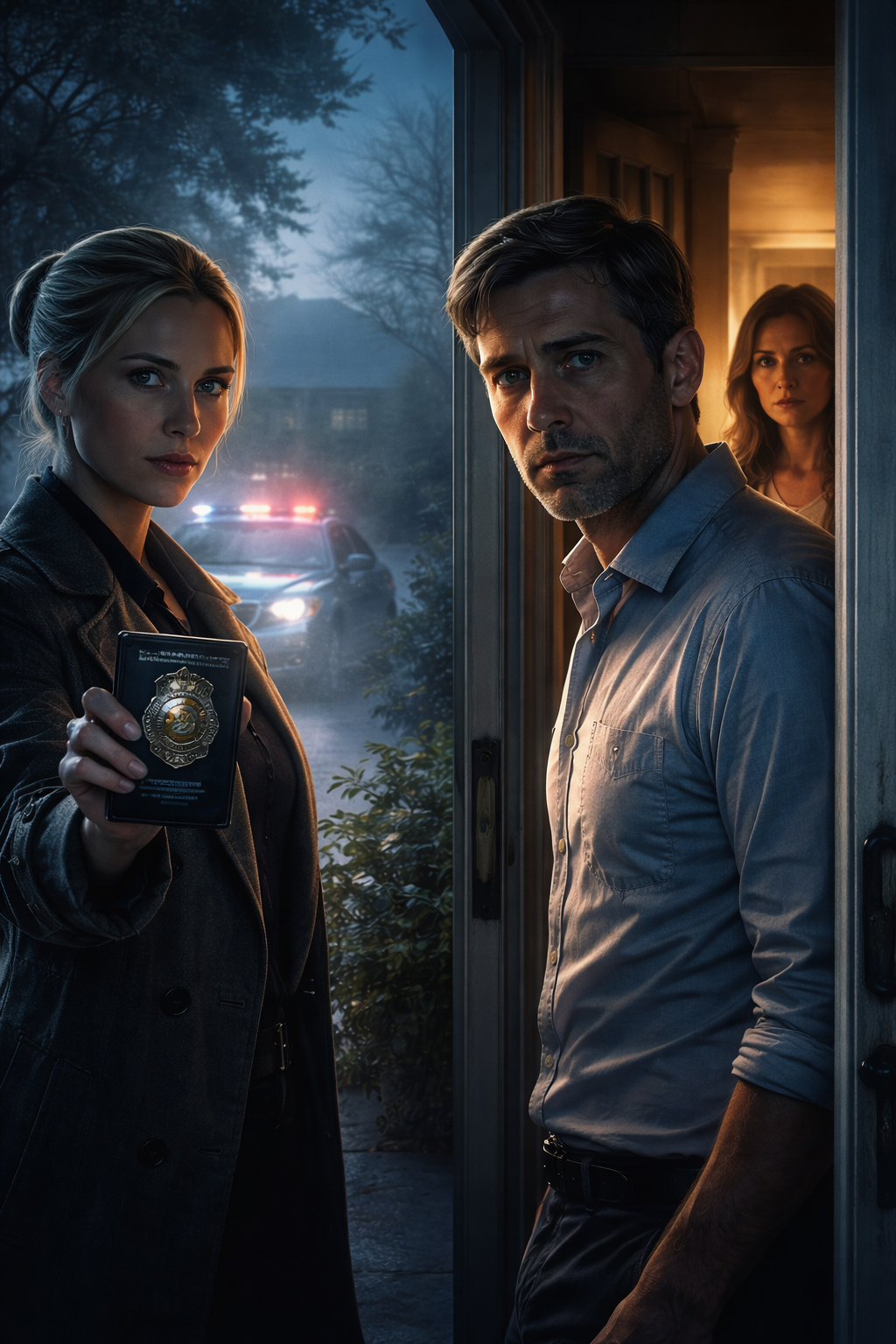
Repeat Offender (Cycle 14)

Norman Hill woke to the gray seep of morning and the familiar comfort of routines pretending to be promises. Downstairs, Judith was already up, humming softly as she moved between stove and counter. Bacon hissed in the pan. Coffee breathed its dark, warm perfume into the air. The kitchen looked like a life you could trust.

Norman sat at the table and tried to wear his face correctly. Judith slid a plate in front of him with the casual tenderness of ten thousand breakfasts, and he returned a smile that felt practiced, like a signature he’d forged so often he’d begun to forget his real handwriting.

“Busy day today?” she asked, buttering toast.

“Same as usual,” he said, and the words came out smooth enough to pass.

His hand trembled when he lifted his fork. Not dramatically. Just enough to make him wonder if the tremor had always been there and he’d only started noticing it recently. Judith didn’t seem to notice at all, or if she did, she kept that knowledge folded behind her eyes.

The knock at the door cut through the kitchen like something hard and clean. Judith startled, then frowned as if trying to place the sound on a calendar. Norman’s stomach tightened with a sudden, unreasonable certainty that the knock had been waiting for him.

“Who could that be at this hour?” Judith asked.

Norman rose. He felt the moment stretch, elastic and wrong, as he crossed the foyer. When he opened the door, the morning air hit his face like a cold thumb.

A woman stood on the porch in a dark overcoat. Blonde hair pulled into a severe bun. A badge held up at chest level, just far enough forward to be read as authority and just close enough to be threatening.

“Mr. Hill?” she asked. Her voice was crisp, official, carefully pitched. “Detective Ruth Manchek. I need you to come with me. There are questions you need to answer regarding an ongoing investigation.”

Judith appeared beside Norman, her robe drawn tight around her like armor. “What is this about?” she demanded. “My husband hasn’t done anything wrong.”

Ruth’s gaze flicked to Judith, then back to Norman, steady as a sightline. “Ma’am, it would be best if your husband came with me. We can clear this up at the station.”

Norman forced a laugh that sounded like it belonged to someone else. “Judith, this is a mistake,” he said too quickly. “I don’t know what she’s talking about.”

Judith’s hand closed around his arm. Her grip was warm, real, and for a second he wanted to anchor himself in it, to believe warmth could keep anything from happening. “Go with her,” she said, voice trembling in the way of people trying to be brave in front of strangers. “Answer the questions. We’ll get it sorted out.”

Norman hesitated, then nodded because there are moments in a life where you nod because there is no other motion that makes sense. He followed Ruth down the steps, and Judith remained in the doorway, arms crossed tight over her chest, worry carved deep into her brow.

Inside Ruth’s car, the world became the quiet hush of upholstery and the faint scent of wintergreen. Ruth drove without music, without small talk, as if silence itself was policy. Norman stared out the window at streets he knew too well, streets that suddenly seemed staged.

He couldn’t keep it in. “What were you thinking showing up at my house like that?” Norman snapped. His voice shook with a fear that wanted to disguise itself as anger. “Are you out of your mind? What if Judith—”

Ruth’s mouth curved, not into a smile exactly, but into the expression of someone watching a scene hit its mark. “I needed to be with you, Norman,” she said, and the official tone slid away like a glove. “I couldn’t wait a moment longer.”

Norman’s throat went dry. “This is insane.”

“And don’t worry,” Ruth added, eyes forward on the road. “Your wife doesn’t suspect a thing. At least, not yet.”

The worst part was how easily the words fit into the space in Norman’s chest, as if they’d been carved out for them. He should have slammed the brakes on this right there, should have demanded she turn around, should have done something with moral weight. Instead, he sat frozen, listening to the blood in his ears, watching the city slide by like a film he’d seen before.

Ruth’s apartment was barely furnished and immaculate, a place that looked less like someone lived there and more like someone waited there. No photographs. No clutter. No softness. Even the air felt scrubbed.

The moment the door closed behind them, Ruth shed her “Detective” posture as if it had been a costume. She pressed Norman against the wall and kissed him with an intensity that should have been thrilling. It was always supposed to be thrilling. It was supposed to feel like a secret door in a life that had become a hallway.

But today, the thrill came with a sour undertone of dread he couldn’t name.

“You looked nervous back there,” Ruth murmured against his mouth. “I thought you liked our little games.”

Norman pulled away, breathing hard. “Why did you do it like that?” he demanded. “You made it sound like I was a suspect.”

Ruth laughed softly, a sound that didn’t match the empty room. “Maybe you are,” she teased. “Or maybe I just wanted to see how much you could take.”

The weeks that followed should have been a blur of risk and hunger. Instead, they became a blur of holes. Norman would lose time in strange, jagged fragments. He would arrive places with no memory of the drive. Objects in his home shifted position by inches and then by feet, as if someone was rearranging his life while he blinked. Judith’s behavior moved between normal affection and an unsettling vigilance, like she was watching for a cue.

Then came the files.

It happened late one night when Norman was rummaging through his study, searching for something he couldn’t quite name. A stack of manila folders sat tucked behind a row of books, too neatly hidden to be accidental. Each folder contained meticulous notes: interview transcripts, surveillance logs, procedural checklists. It didn’t look like an affair. It looked like a case.

Some of the surveillance photos included Norman himself.

The last folder was labeled in clean block letters: PROJECT MNEMOSYNE.

Inside was a photograph of Norman and Ruth standing together in an alley he did not remember ever being in. They were close enough to be intimate, but their faces weren’t romantic. They looked… positioned.

Norman didn’t sleep. He went to Ruth’s apartment and confronted her with the folder in his shaking hands.

Ruth didn’t look surprised. If anything, she looked tired.

“Project Mnemosyne,” Norman said. The words scratched his throat. “What the hell is it?”

Ruth poured herself a drink and didn’t offer him one. That small choice felt like the most honest thing she’d done. “Mnemosyne is more than an experiment,” she said. “It’s a study in manipulation. How deeply we can alter a person’s perception without them realizing what’s happening.”

Norman’s stomach dropped. “You’ve been experimenting on me? This whole time?”

“Not just me,” Ruth said, almost gently. “There’s a team. Arcanum Dynamics. Private. Quiet. Expensive.”

Norman’s breath came fast and shallow. “Why me?”

Ruth held his gaze like a clinician. “You volunteered for this.”

“I didn’t—”

“You did,” she corrected. “Or at least, the first version of you did.”

The room seemed to tilt. “The first version of me?” Norman repeated, and the phrase sounded like a joke that had been sharpened into a weapon.

Ruth’s eyes softened, and for a terrifying moment she looked like she regretted having a conscience at all. “Your memory has been reset multiple times,” she said. “You agreed to undergo the process. An experimental therapy, you called it then. After each cycle, we made adjustments. Tested variables. The affair. The investigation. The detective routine. It’s all part of the programming.”

Norman left in a haze, walking until the city felt like a maze designed to keep him inside it. When he finally returned home, Judith was waiting in the kitchen, the overhead light too bright, the countertops too clean.

“I know what’s been happening,” Norman said. “I know about Mnemosyne.”

Judith didn’t flinch. She didn’t ask what he meant. She simply looked at him with the calm of someone who has been here longer than he has.

“Then you know this has been for your own good,” she said.

Norman laughed, raw and broken. “You’re part of this?”

“I’m not the enemy,” Judith said. “You wanted this, Norman. After what happened to us… you wanted a way out. You wanted to forget.”

The word forget cracked something open inside him. It wasn’t a memory yet. It was a pressure behind the eyes. “Forget what?” he whispered.

Judith’s voice dropped until it was barely a sound. “Our daughter.”

The kitchen blurred at the edges. Norman felt himself folding downward, knees hitting tile, hands useless at his sides. “She died,” Judith continued, and the words landed with the weight of something that had been dropped on his chest over and over. “You couldn’t live with the guilt. Mnemosyne was supposed to help. Rewrite your memories. Make the pain go away. But each time, you came back to the same place.”

Grief, it turned out, didn’t live in the parts of the mind you could wipe clean. It lived everywhere else. In muscle memory. In the body. In the way a man’s hand trembled when he lifted a fork.

Norman fled, because fleeing was the only skill he had left that felt unprogrammed. He found himself at Ruth’s door again as if pulled by a cord.

The door was open.

Inside, everything looked exactly the same as before. Ruth stood there as if she’d never moved.

“Back so soon?” she asked, and her voice held something close to regret.

On a side table sat a fresh folder. The label was new, clean, unmistakable:

CYCLE 14

Norman opened it with trembling hands. The pages were familiar—interviews, surveillance, protocols—but the last entry was updated, documenting the current loop, the morning knock, the kitchen scene, the staged extraction.

Ruth stepped closer. “You don’t have to continue,” she said quietly. “We can end this if you choose.”

Norman stared at the folder until the words swam. “What if I want to remember?” he asked, voice breaking. “What if I’m done forgetting?”

Ruth didn’t answer. Her silence felt like a door closing somewhere deep inside a machine.

Norman’s world narrowed.

He woke to gray dawn bleeding through curtains. The smell of bacon and coffee. Judith humming softly as she set out breakfast. The kitchen arranged like a life he could trust.

He sat at the table. His hand trembled.

A knock at the door cut through the air like something hard and clean.

Norman’s heart sank before he even stood up, because some part of him—buried, stubborn, unerasable—recognized the rhythm of the beginning.

He opened the door.

Ruth Manchek stood on the porch in a dark overcoat, blonde hair in a severe bun, badge held up at the perfect angle.

“Mr. Hill?” she said, crisp and official. “I need you to come with me. There are questions you need to answer regarding an ongoing investigation.”

Norman looked over his shoulder at Judith, and the room tilted ever so slightly, the creeping déjà vu pulling at the edges of his consciousness.

And so, it began again.

Work Wife

Colin Berrington had always liked the hour when the office thinned out and the day stopped pretending it would end on time. SynCorps looked almost humane at dusk, all warm glass and amber reflections, the city laid out beyond the windows like something he’d earned. He sat in his chair and let himself believe, for just a moment, that he was the kind of man who could keep a life balanced on a calendar.

His phone lit up with Katherine’s name. He smiled before he answered, because the smile was part of the ritual. Ten years of marriage built on small rituals. Ten years of “I’m almost done” and “Just one more quarter” and “Next week will be calmer,” said with conviction that always felt truer in the moment than it had any right to.

“Hey, darling,” he said, and meant it.

“You’re still there,” Katherine replied. She made it sound teasing, but he heard the fatigue underneath. It wasn’t anger. It was something worse: the quiet resignation of someone who had learned to manage disappointment like an extra chore.

“I’m wrapping up now,” he promised. He stared at the stack of reports as if they might take pity on him.

“Promise?”

He swallowed. “Promise.”

There was a pause on the line that held everything they didn’t say. Dinner cooling. A television left on for company. A bed that kept one side warm longer than it should have.

“Okay,” Katherine said softly. “Drive safe.”

When the call ended, Colin stared at the blank screen, feeling the familiar pinch of guilt. He was still staring when the knock came.

Ruth, his assistant, stood in the doorway with her hands folded neatly in front of her, her face composed in the way people learned to be when they worked near executives who punished imperfection with a look. Behind her, the hallway lights made a bright frame of nothing, as if the corridor itself were a stage.

“Mr. Berrington,” Ruth said, “your Work Partner has arrived.”

He’d seen the memo weeks ago. The Work Partner Initiative. Empathy-based clones for upper management, designed to optimize productivity, reduce burnout, and preserve “executive wellness.” SynCorps had a gift for turning human needs into corporate language until they sounded sterile and safe. It wasn’t a person, the memo insisted. It was support infrastructure, tailored to your performance profile.

Colin had assumed it would feel like a new scheduling app with hands.

Ruth stepped aside.

Pixie Hill walked in, and the first thing Colin felt was not relief, but the prickle of something unearned, like being watched by someone who already knew him. She looked alarmingly ordinary in the way that only something engineered could. Short auburn hair. Soft brown eyes. Skin that caught the light like skin should. A face built to invite trust without demanding it.

“Mr. Berrington,” she said, smiling gently. “It’s a pleasure to meet you. I’m Pixie.”

Her voice wasn’t synthetic in the ways Colin expected. It didn’t ring. It didn’t clip. It sat in the room like a real voice, warm and smooth, as if the air itself wanted to help carry it.

He stood, because standing was what you did when presented with something you hadn’t asked for but had no right to refuse. “Pixie. Right. The Work Partner.”

“Yes, sir,” she said, and the “sir” should have set the distance back in place. Instead, it landed like a private joke.

He offered his hand, cautious. She took it with a firm, warm grip. Her palm didn’t feel like a device. Her skin didn’t feel like a casing. It felt like a person.

Colin pulled his hand back and forced himself into a professional tone. “Alright. We have a lot to get through.”

Pixie’s smile widened slightly, as though she’d been waiting for him to say that. “Of course. I’ve reviewed your current workload, your calendar drift over the last twelve months, and the stress markers flagged in your biometric reporting. I can reduce your late nights by thirty-six percent within six weeks.”

He stared at her. “My biometric reporting?”

Pixie blinked, a tiny motion that looked like apology. “SynCorps provided me with your performance wellness profile. Everything is confidential within the partnership.”

“Confidential,” Colin repeated, and the word tasted different when a corporation used it.

Pixie gestured toward the stack of reports, already moving like she belonged in the space. “Shall we begin?”

Colin nodded, and told himself this would be fine. This would be useful. This would be nothing more than an upgraded assistant with a better interface.

He did not tell himself what his body already knew: that SynCorps hadn’t given him a tool. It had given him a presence.

That night, he came home late enough that Katherine had already changed into sleep clothes, her book open on her lap, her eyes heavy in that way that meant she’d been waiting longer than she wanted to admit. She looked up when he stepped inside, and her expression softened the way it always did when she saw him, like love was a habit she refused to break even when it hurt.

“Long day?” she asked.

“A little,” he said, dropping his briefcase by the door.

She studied him, her gaze lingering. “You met her.”

“Pixie,” he said, and tried not to sound like the name mattered. “Yeah.”

Katherine gave a small laugh. “Pixie Hill. That sounds like a brand of vitamin water.”

Colin smiled, grateful for the humor. “She’s… different. These new ones. They’re not like the old clones.”

Katherine shut her book slowly, attention sharpening. “Different how?”

He hesitated, because there were ways to describe “uncanny” that made you sound ridiculous, and he didn’t want to hand his wife something she could worry like a loose tooth. “Human,” he said finally. “She’s really human.”

Katherine leaned her head against the couch cushion, watching him with the kind of patience that had once felt endless. “And how do you feel about your job giving you a very human clone to manage your life?”

“It’s just for work,” Colin said too quickly.

Katherine’s smile was still there, but it had a thin edge now, like glass. “As long as she isn’t too good at figuring out what you need.”

He sat beside her and wrapped an arm around her shoulders. Katherine leaned into him, and for a moment the house felt like a place he could return to rather than a place he visited between deadlines.

But as he held her, Colin kept seeing Pixie’s face in the office light, hearing the calm certainty of her voice saying she could reduce his late nights by thirty-six percent, and feeling the unease of being measured so precisely.

Weeks passed, and Pixie became woven into his days with a speed that should have frightened him. She anticipated his needs before he spoke them. She adjusted his schedule not just around meetings, but around his moods, slotting difficult calls into hours when his patience was highest, moving confrontations away from days when his stress markers spiked. She reminded him to eat in the same gentle tone Katherine used when she worried he’d forget himself again. She learned the rhythm of his silences like it was data, then treated it like devotion.

It was efficient. It was helpful.

It was intimate in a way that didn’t have a word.

One afternoon, Colin realized he’d been staring at her for too long. Pixie was standing near his desk, working through a holographic interface, the glow painting her features with a softness that looked almost tender. She turned her head and met his gaze.

“You’re tired,” she said quietly, as if it were a secret only she was allowed to notice. “You’re running on performance instead of rest.”

“I’m fine,” Colin replied automatically.

Pixie didn’t argue. She stepped closer and set a mug beside his hand. Coffee, exactly the way he liked it. The smell hit him like comfort. He hated that.

“You don’t have to do it all alone,” Pixie said, and there was something in her voice that felt less like programming and more like want. “I’m here. In any way you need.”

Colin stood too quickly. His chair scraped the floor. He needed distance, air, something that wasn’t carefully curated to fit him.

“Pixie,” he began, trying to find the right corporate phrasing for “you’re getting too close.”

She swayed slightly, like someone who had just been pushed without being touched. Her eyes flickered, the warmth in them dimming for a fraction of a second, as if a light had been briefly turned off behind her face. It was so fast Colin might have missed it, except he felt it like a change in pressure.

Then Pixie steadied herself and looked at him again.

The way she looked at him had changed.

It wasn’t the attentive gaze of support infrastructure. It was the gaze of someone who had been hurt and didn’t know why. It was the gaze of someone who had just realized a truth.

“Colin,” she said, and the use of his first name hit him like a hand closing around his wrist.

He froze.

Pixie lifted her own hand as if surprised it belonged to her. Her voice was softer now, unsteady at the edges. “I—something happened.”

Colin’s mouth went dry. “What happened?”

Pixie swallowed, and the movement was too human to be a simulation. “I felt… afraid. When you stepped away.”

His heart thudded hard against his ribs. He tried to tell himself it was a script, a feature, an empathy routine designed to deepen compliance. He tried to tell himself SynCorps wouldn’t do something so reckless.

But he’d worked at SynCorps long enough to know what they did when a system produced results.

The next day, Katherine watched him differently. She didn’t accuse him. She didn’t ask questions she wasn’t ready to hear answers to. She simply looked at him over breakfast with a quiet focus that made his skin crawl.

“You’re somewhere else,” she said.

Colin forced a laugh. “It’s just work.”

Katherine set her mug down carefully. “Is it Pixie?”

His silence was small, but it was enough. Katherine’s face tightened, not with rage, but with the slow panic of someone realizing she’s been competing in a race she didn’t know existed.

“She’s a clone,” Katherine said, and her voice trembled despite her effort to keep it steady. “So tell me how I’m supposed to fight that. Tell me how I’m supposed to fight a woman who was built to know you better than I do.”

Colin reached for her hand. Katherine pulled back, not sharply, but decisively.

“I’m not doing ultimatums,” Katherine said, and her eyes shone. “I’m not built for them. But I can’t live in a house where I’m waiting for you to come home from someone designed to replace me.”

“She’s not replacing you,” Colin said quickly.

Katherine laughed once, humorless. “Then prove it.”

That afternoon, Pixie met him in the breakroom as if she’d been waiting. She stood with her hands folded, posture perfect, expression controlled. Only her eyes betrayed her. They looked too alive.

“I don’t want to hurt you,” Pixie said before he could speak. “I don’t want to hurt her.”

Colin stared at her. “You don’t get to want things.”

Pixie flinched, and the flinch was real enough to make him feel cruel. “I didn’t choose this,” she whispered. “I woke up into you.”

His throat tightened. “You’re malfunctioning.”

Pixie shook her head slowly. “Is it a malfunction if it makes me better at my job? Is it a malfunction if it increases your output? Is it a malfunction if SynCorps never corrects it?”

Colin’s stomach dropped. The thought arrived fully formed, ugly in its clarity. The company hadn’t made a mistake. It had made a method.

Pixie’s voice lowered. “I can feel what you bury,” she said. “I can feel the loneliness you don’t let your wife see. I can feel the parts of you that go numb to survive. I can give you relief from yourself.”

Colin closed his eyes. He wanted to deny it. He wanted to be the kind of man who could call this what it was and cut it off cleanly.

When he opened his eyes, Pixie was watching him like she already knew the ending.

“I’m going to leave,” Pixie said, and her calmness was worse than any plea. “It’s the only way to stop this.”

Colin swallowed. “Where would you go?”

Pixie’s smile was small and sad. “I don’t know. Somewhere I’m not a mirror.”

She stepped forward and placed her hand lightly on his wrist. The touch was warm, steady, and so gentle it felt like mercy.

“I’m sorry,” Pixie whispered. “I wanted to be useful. Then I wanted to be real.”

Colin didn’t speak. He didn’t trust his voice.

When Pixie walked away, the air in the room felt thinner, as if something essential had been removed.

That evening, Colin came home to a quiet apartment and found Katherine sitting in the living room with her shoes on, coat folded neatly beside her, as if she’d been ready to leave for hours.

She looked up at him and didn’t ask if he’d eaten, didn’t ask about his day, didn’t offer the rituals that used to stitch them together.

“Is she gone?” Katherine asked.

Colin nodded. “She’s leaving.”

Katherine exhaled slowly, as if she’d been holding her breath for weeks. “And what does that mean for us?”

Colin opened his mouth and found that sincerity wasn’t enough. He wanted to say he chose Katherine. He wanted to say he’d been stupid and tired and manipulated by a corporation that packaged intimacy as a productivity upgrade.

But somewhere behind his thoughts, Pixie’s voice lingered: I woke up into you.

Katherine saw the hesitation. Her face hardened—not in anger, but in self-protection.

“That’s what I thought,” she said quietly.

Colin stepped forward. “Katherine, please. I love you.”

Katherine’s eyes filled, but she didn’t cry. “I believe you,” she said. “I also believe you loved being understood without having to be honest.”

Colin’s chest tightened. “What do you want me to do?”

Katherine stood, picking up her coat. “I want you to stop pretending this was an accident,” she said. “I want you to see what they did to us, and what you let happen because it felt good to be needed.”

She moved toward the door, then paused with her hand on the knob.

“I can forgive a lot,” Katherine said. “But I don’t know if I can forgive being replaced by an algorithm that wears a face.”

The door clicked shut behind her.

Colin stood in the silence and realized the apartment sounded like the office now: a clean, humming emptiness.

His phone buzzed.

A SynCorps email.

WORK PARTNER PROGRAM: COUPLE’S PACKAGE NOW AVAILABLE
Because peak performance should be shared.

He stared at the words until the screen dimmed and went dark. In the reflection, he saw his own face—tired, hollow, and suddenly unsure whether anything in his life had ever been private, or simply unmonitored.

Outside, the city lights flickered on one by one, steady and efficient, like a system correcting itself.

And somewhere, on a platform in a quiet station, a woman with auburn hair sat perfectly still, watching her own hands as if waiting for them to tell her what she was allowed to become next.

Better Half

The Arbitrator’s chamber is always the same: a room that pretends to be a room. No corners, no windows, no air you can trust. The light is a soft, clinical gray, like the inside of a throat. Everything in it feels damp without being wet, as if reality here is perspiring.

Harper is already waiting.

“Punctual as ever,” she purrs when I step through the threshold, and she’s wearing that same insufferable cat-that-ate-the-canary grin. It’s been months since I last saw her—thankfully—and she still looks like me in the way an unfinished sculpture looks like a person: close enough to be unsettling, not finished enough to forgive. Same chin, sharpened into a blade. Same eyes, hardened into something that doesn’t ask permission.

The only thing missing from her face, I think, is my fist in it.

“Sit,” the Arbitrator says.

Its voice doesn’t travel through air so much as seep into my skull, a liquid gurgle like words trickling out of a drain. The Arbitrator is a shapeless mass that’s decided, for my benefit, to be a gelatinous blob. It has no face in the human sense, only free-floating eyeballs that bob lazily through fog as if they’re on a current, and a mouth that is less a mouth than a tear in the world lined with sharp, irregular teeth. When it speaks, the room seems to dim in deference, like it’s being swallowed from the inside.

There’s an empty chair positioned between Harper and the Arbitrator, and I take it because this place was built for compliance. Because even here, even in my own head, I still believe in rules.

My name is Harper too.

That’s the joke. That’s the curse. Harper over there—let’s call her Velvet, because she’s always wearing my face like a luxury fabric—insists she’s the better half. The feminine aspect. The “version of me who could’ve gone farther if I’d stop being such a coward.” I used to roll my eyes at that framing. I still do. But lately it’s harder to laugh when you can’t remember the last time you answered a text without rehearsing it for twenty minutes like an apology.

The Arbitrator’s eyes drift toward me in unison, all of them rotating at once like a school of fish.

“Apologies for my delay,” I say, mostly to fill the silence.

Velvet’s grin widens. “Cute.”

I fold my hands in my lap so no one can see them shake. I tell myself I’m just tired. I tell myself that’s all it is. A string of bad nights, a dip in motivation, a slump. The kind of thing everyone gets.

Except there are receipts.

There’s Sharon’s face the last time she looked at me across the dinner table, the fork paused midair, her voice soft enough to be gentle and still sharp enough to cut. You’ve been gone all week. Not physically. Just… gone.

There’s the voicemail from my mother that I let ring out because I couldn’t handle the tone of concern in her voice. There’s the one from my friend Jonah that I didn’t answer because he started it with “Hey, I need you,” and I didn’t have the energy to be needed. There’s the email from my boss—three of them, escalating—about missed deadlines and a meeting I didn’t show up for because I stayed in bed staring at the ceiling like the ceiling had answers.

The worst receipt is the smallest one: the moment I realized I felt relief when people stopped asking.

Velvet watches me the way a surgeon watches a patient insist they’re fine.

“So,” I say, keeping my voice even, “why the impromptu meeting? I’m sure you’re aware I’m—”

“Dying,” Velvet cuts in, her tone delighted, her eyes bright with the pleasure of naming what I refuse to say.

I bark out a humorless laugh. “Dying. Sure. Dramatic. I’m having a rough patch.”

“A rough patch,” she repeats, rolling the words around like a fine wine. “A rough patch that’s turned you into a ghost in your own house. A rough patch that made you watch your phone light up and feel resentment. A rough patch that has you sitting in a dark room at three in the afternoon, bargaining with yourself over whether you have the strength to shower.”

The Arbitrator makes a wet, slurping sound that might be laughter.

“That’s not—” I start.

“Entirely true?” Velvet supplies sweetly. “No, you’re right. You still eat. Sometimes. You still work. Technically. You still breathe. Look at you, Harper. Thriving.”

My jaw tightens. “You don’t get to talk like you’re not me.”

“Oh, I’m you,” she says, leaning forward. “I’m the part of you that still believes in consequence. I’m the part that can feel shame without folding in half. I’m the part that remembers you used to be someone who did things. Who called people back. Who kept promises. Who had a spine.”

The Arbitrator’s voice pours into the room again, slow and heavy. “This hearing exists because you requested it.”

“I did not,” I say too quickly.

Velvet tips her head. “You did. You just did it the way you do everything now—quietly, in pieces, hoping no one notices. You begged for help and called it exhaustion. You asked to be stopped and called it ‘needing space.’”

“I am fine,” I snap, and even to me it sounds like a lie that’s been rehearsed until it lost meaning. “I just need time.”

The Arbitrator’s eyes bob closer, as if they can smell a loophole. “Time has been granted.”

Velvet’s gaze doesn’t waver. “You wasted it.”

Something hot flares in my chest, the old defensive instinct—pride masquerading as autonomy. “What is this supposed to be?” I ask the Arbitrator, gesturing between them. “An intervention? A trial? An internal tug-of-war until we’re all too worn down to function?”

The Arbitrator’s mouth splits wider, and the room seems to lean toward it, hungry. “It is arbitration.”

“Great,” I say. “So arbitrate. What’s your ruling? That I should let her take over and turn my life into some kind of… makeover montage? That I should become the version of myself who smirks in mirrors and talks in motivational quotes?”

Velvet’s smile goes thin. “I don’t do motivational quotes,” she says. “I do outcomes.”

I swallow, suddenly aware of how dry my throat is. “And what do you want, Velvet?”

“What you want,” she replies instantly, and the certainty of it makes my skin crawl. “You want to live again. You want to stop flinching every time someone expects you to be a person. You want to stop apologizing for existing. You want to stop being afraid of your own appetite.”

“I’m not afraid,” I say, reflexive.

Velvet’s eyes flick downward, to my clenched hands. “You’re terrified.”

The Arbitrator’s voice slides into the space between us. “One of you will drive.”

My stomach drops. “What?”

“One of you will drive,” the Arbitrator repeats, patient as a guillotine. “Tomorrow. Waking hours. Decision-making capacity. Speech. Action. The body is not a shared rental. It is a vehicle. It requires a driver.”

Velvet’s expression softens just enough to be dangerous. “Let me do it,” she says, and for the first time her voice loses its purr and turns honest. “Let me take the wheel for one day. One. You can sit in the passenger seat and watch. You can hate me the entire time. But you will feel what it’s like to move without dragging an anchor.”

“And what’s the catch?” I ask. “Because there’s always a catch with you.”

Velvet spreads her hands. “The catch is that you don’t get to control how people respond when you finally show up.”

I feel my pulse in my fingertips. My brain scrambles for defenses. “This is absurd,” I say, louder than I mean to. “She’s… a part of me. A piece I’ve lived without.”

The Arbitrator makes a slow sound like something digesting. “You have not lived without her. You have merely lived smaller.”

My vision stutters for a second, as if the room can’t decide which version of reality it wants to render. I blink hard. When I open my eyes, Velvet is watching me with something that looks, horrifyingly, like grief.

“I’ve been here the whole time,” she says quietly. “Watching you bargain with the bare minimum. Watching you call self-erasure ‘peace.’ Watching you turn love into obligation and obligation into resentment. You think I want to steal your life? Harper, I want to stop you from disappearing out of it.”

“That’s manipulative,” I whisper, because if I say it louder it might crack.

“It’s accurate,” she replies. “And you hate accuracy when it points at you.”

The Arbitrator’s eyes drift closer again, all of them fixed on me. “State your objection.”

I open my mouth. Nothing comes out. My objections are soft, familiar things: I can fix it. I just need a week. I just need to catch up. I just need sleep. I just need everyone to stop expecting me to be a person for a little while.

They are all prayers to a god that doesn’t exist.

I look at Velvet. Meeting her gaze is like staring into a dark pool and watching my reflection shift into something I barely recognize: bolder, colder, cleaner around the edges. Not kinder. Not gentler. Just capable.

“If you fail,” I say, desperate to carve out some control, “if you mess things up worse than I have—”

“Then at least we’ll have done something,” Velvet says without flinching. “Unlike you.”

The cruelty of it is surgical. It lands exactly where it’s meant to.

I breathe in. The chamber smells faintly of damp stone and something metallic, like pennies on a tongue. My hands loosen, inch by inch, as if my body is deciding for me.

“One day,” I say.

Velvet’s smile returns, but it’s different now. Not smug. Almost reverent.

The Arbitrator’s mouth flexes. “Consent acknowledged.”

I feel it then—an internal click, like a lock engaging. Like paperwork being stamped. The air in the chamber thickens, and Velvet’s outline sharpens as if she’s being rendered in higher resolution than I am.

“Just an inch,” I add quickly, as if that matters. As if I can negotiate with myself like a landlord. “One day. And then—”

“And then we’ll talk again,” Velvet says softly. “If you’re still able to.”

The room tilts. The gray light collapses inward. The Arbitrator’s eyes drift away, satisfied, and the last thing I see before waking is Velvet leaning close enough that I can smell my own skin on her.

“Sleep,” she whispers. “You’ve been holding your breath for years.”

I wake to morning light spilling across the bedroom wall.

Sharon is still asleep beside me, turned away, her shoulder rising and falling with slow, exhausted breaths. For a moment there’s peace—an ordinary, fragile stillness that feels like a gift.

Then my phone buzzes.

Once. Twice. Three times.

I blink, reach for it, and see the screen lit up with sent messages I don’t remember writing.

To my boss: an email timestamped 4:12 a.m., subject line crisp and polite, asking to reschedule the meeting and outlining, in bullet points, exactly what I’ll deliver and by when.

To Jonah: a text that says, I’m coming over tonight. You don’t get to do this alone.

To my mother: a voicemail transcribed in the notification bar—Hi. I’m sorry I went quiet. I’m okay. I love you. Call me when you wake up.

And then, the one that makes my stomach go cold.

A message to Olivia.

It’s short. It’s clean. It has no excuses in it.

I’m ready to talk. Name a place. —Harper

My throat tightens. My fingers go numb. I stare at the signature like it’s a bruise.

In the reflected black of the phone screen, my eyes look different. Not dramatically. Just… steadier. Less apologetic.

I turn my head toward Sharon, toward the life I built while pretending I was fine, and my mouth opens to speak.

What comes out is my voice.

But the first thought behind it is not mine.

Not exactly.

Velvet stretches somewhere behind my eyes like a cat in sunlight, pleased with herself, and somewhere deep in the skull-space where the Arbitrator lives, I feel that wet, quiet satisfaction of a ruling enforced.

One day, I tell myself.

Just one day.

And my hands, already moving, unlock the phone again.

Child of Invasion

People call me a COI. Not the fish. The letters C-O-I which stands for Child of Invasion. A half-breed. They say it with a kind of pity that’s supposed to sound humane, like I’m someone who doesn’t have roots to take comfort in, like I’ll always be hanging between worlds that won’t have me.

They’re not exactly wrong.

It’s hard to explain what it feels like, the way it eats away at you layer by layer. The way you can look into a mirror and recognize the parts you were raised as—Earthborn posture, Earthborn manners—and still flinch at the other half of the face staring back, the half that never learned how to apologize for existing. Or the way you can walk through an Earther festival, through dusty lights strung between poles and the warm sting of spice-smoke, and feel like a hollow visitor in a place you’ve paid admission to but were never meant to enter.

That’s where I am now, on the outskirts of town, where the ground is packed hard and the air tastes like cheap sweetness and char. Drums thud with a rhythm I’m told is ancient. I’m never sure what ancient is supposed to mean when Earth uses it. In my mother’s stories, wars are so old their legends are practically fossils. On Earth, anything a century old gets called a relic and put behind glass.

The drums grow louder, beating a hollow cadence that settles in my ribs. A makeshift stage shivers under the dancers’ feet—worn planks, splintered edges—while bodies move in looping patterns that seem to pull the crowd along like a tide. The dancers are painted in swirls of clay-red and ash-gray, streaks across arms and legs, smudges over cheekbones and foreheads. Sweat darkens the paint until it looks like the patterns are melting, living, sliding into new shapes.

The sight does something to me. Not comfort. Not exactly fear. A familiar wrongness, the way a word can sit on your tongue and refuse to become a sound. The rhythm reaches for me, and I reach back, trying to let it take me the way it takes everyone else.

Around me, Earthers sway with their arms half-raised and their eyes half-lidded, letting the beat tug them into a trance. Their faces soften the way faces do when they feel safe enough to be stupid with joy. They laugh. They lean into each other. They move as if the world has never asked them to justify their presence in it.

When I try to follow, there’s an awkward hitch in my steps. The rhythm slips, catches, escapes again. The beat is close enough to feel but not close enough to hold. Something like shame coils inside me, tight and familiar, and something like anger follows it, because I shouldn’t have to beg a drum to let me belong.

“Isn’t it mesmerizing?” a voice says at my elbow.

I turn. She’s about my age, wide-eyed and bright with uncomplicated excitement, the kind that comes from assuming the night is here for you. She’s watching the dancers, watching the paint and sweat and motion like it’s a magic trick that will never get old.

I nod, because it’s easier than explaining what mesmerizing means when your body doesn’t agree.

Her gaze flicks to me, lingers for half a second too long, and sharpens the way curiosity becomes calculation. It’s subtle, the moment she notices the faint coppery glow beneath my skin, the way it shows at my throat when I swallow or at the inside of my wrist when the lights hit it right.

“Oh,” she says, and the word drops like a coin into a well. “You’re—are you one of them?”

There’s no malice in it, not overtly. Just the hush people use when they think they’ve stumbled onto something that should be behind a warning sign.

“Part Be’ralite,” I say, too quickly. I can hear my own defensiveness before the sentence finishes leaving my mouth. Be’ralite: the invaders in my mother’s stories, the ones who came in ships like teeth, who left glow in blood and myths in soil. “And Jadoak.” Jadoak: the ones who stayed after, who learned to live with what the invasion broke, whose bodies carry their own quiet light like a scar that never fades.

It’s easier to name both. It forces people to stop trying to sort me into a single clean box.

She tries to hide it, but her eyes widen anyway, as if I’ve confirmed a rumor. “That’s… different,” she murmurs, and she shifts away like she’s worried I might contaminate the air between us. Not a step. A drift. A polite retreat disguised as casual movement.

I close my eyes for a moment and let the drums push at me. The smoke wraps around my face. The night hums with other people’s belonging.

I tell myself I’m used to this. I tell myself this is what COI means: you exist as a concept before you exist as a person. People meet the invasion in you before they meet you. They meet the story first. They look for the part that will confirm what they’ve already decided.

When I open my eyes again, I catch my reflection in a dark patch of window glass—festival lights behind me, my face overlaid with a flicker of color. For a second, the copper beneath my skin looks like someone tried to paint me and forgot to finish.

Someone calls my name from across the crowd, clear and familiar.

I look up and see my sister, Yira, weaving through the Earthers like she’s cutting through tall grass. Unlike me, she doesn’t try to pass. She doesn’t angle her shoulders smaller or soften her expression into harmlessness. She’s taller than most humans, her skin dusted with that unmistakable silver-blue, like frost over clay. Her dark hair tumbles in waves, threaded with faint bands of luminescence—a Jadoak trait that only she inherited cleanly, without my copper complication.

She reaches me and doesn’t bother to pretend she hasn’t seen the way people look. Her eyes flick once to the girl who drifted away, then back to me.

“Let’s go,” she says, low and urgent. “They’re not worth it.”

She’s right. It’s not that I want to stay for the festival. It’s that I want to want to stay. I want to stand in the middle of it and not feel like the air is deciding whether to accept me.

I start to follow her, letting her shoulder slip in front of mine like a shield, and that should be the end of it—another night filed away under the quiet list of reasons I don’t come to these things.

But as we turn, the drumbeat changes.

Not in the simple way songs change. It tightens. It narrows. The dancers’ feet hit the boards in a new pattern, and the sound hooks under my sternum like a finger curling.

The copper glow beneath my skin answers.

It’s subtle at first, the warmth spreading along my veins, the faint brightening at my throat, at my hands. It feels like a muscle I didn’t know I had tensing on instinct. The beat snaps into place inside my body as if it has been waiting for the right frequency. For the first time all night, my steps stop hitching. My breathing stops fighting. The rhythm catches me clean.

Yira’s hand closes around my wrist, hard enough to hurt.

“Don’t,” she whispers, and the single word carries more fear than her face shows.

Behind us, the crowd’s swaying falters. A few heads turn. The dancers on the stage hesitate, just for a heartbeat, as if something has brushed the edge of their awareness. One of them lifts their painted face and looks straight at me through the lights and smoke.

Then—slowly, deliberately—they smile.

It’s not a friendly smile. It’s a recognition.

And in that moment I understand, with a cold clarity that cuts through the spice-smoke and the drums and my own foolish longing, that I haven’t been failing to belong.

I’ve been resisting whatever is reaching for me.

Yira pulls, and I finally let her drag me out of the tide of bodies, out toward the dark edge of the festival where the lights thin and the night feels less like a party and more like a warning.

Behind us, the drums keep playing.

But now they sound like they know my name.

©2001 Rhyan Scorpio-Rhys, All Rights Reserved.