
Walter Baldwin had always been different.
Back then, they didn’t have a name for it. Today, he would be classified as neurodivergent—his mind wired to see patterns where others saw only chaos.
He was also brilliant. Devoting his life’s work to the mysteries of the brain, he earned his doctorate by mapping its final flickers—the synaptic whispers between life and death. He believed that human consciousness lingered past the moment of expiration, like a voice echoing in an empty house. His research was meant to help the grieving process, to prove that death was not an abrupt end, but a slow fade.
Then, Dorothy died.
It was a freak accident. A sedan ran a red light, struck her car, and left nothing but twisted steel and an empty space. She was gone before he arrived at the hospital. They handed him a clear plastic bag of her belongings. He remembered staring at her wedding ring, still smeared with blood, and thinking, No. No, this isn’t right.
Walter had always been a man of science. that is, until grief rewrote the laws of reality.
His daughter, Shirley, was the first to notice the shift.
“You’re not sleeping,” she told him one morning, standing in the kitchen with her arms crossed. “And you’re avoiding work.”
Walter, unshaven and hollow-eyed, stirred his coffee without drinking it. His house smelled of burnt toast and unwashed clothes. Shirley sighed.
“Dad, listen to me. You have to—”
“I heard her,” he said. His voice was flat. Unshaken.
Shirley’s expression faltered. “What?”
“Last night.” He finally looked at her. “I was reviewing neural decay patterns, and there was an anomaly. A frequency that shouldn’t have been there.”
Shirley placed her hands on the counter, gripping the edge. “Dad. Please don’t do this.”
But her plea was far too late. Walter had already begun.
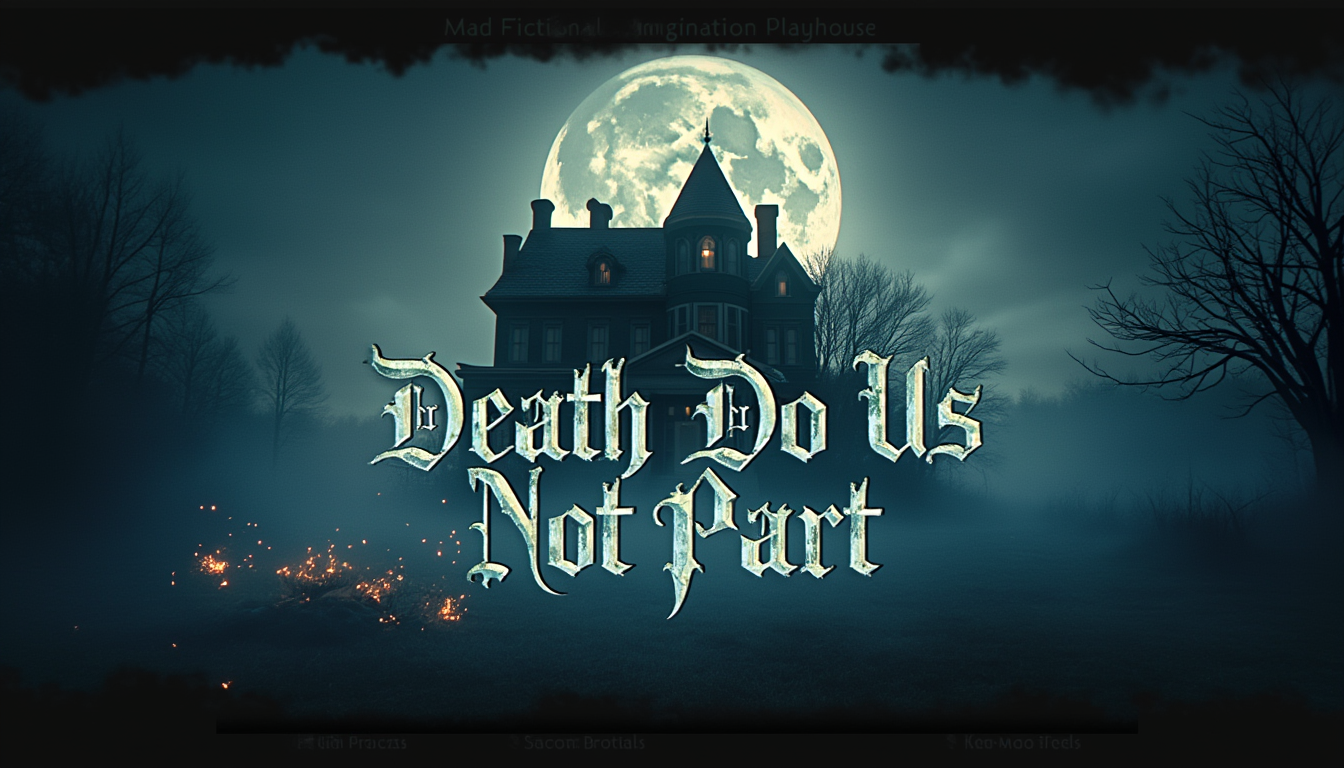
He relocated his research to a house outside Atlanta—an old rundown Victorian thing he managed to get dirt cheap, that hummed in the wind, with walls that swelled and groaned as if breathing. He filled it with stolen lab equipment, wires curling like veins across the hardwood floor, and spent his days and nights playing back Dorothy’s EEG scans from the morgue, searching for the signal.
Richard Fiske, his research assistant, tried to reason with him.
“Listen, Walter. You’re looking for something that isn’t there.”
Walter didn’t answer. He only turned up the volume on the signal. It was faint, like a heartbeat beneath static.
Then, something whispered his name.
Richard slammed the laptop shut. “Jesus Christ, Walter, that’s auditory pareidolia. You’re hearing what you want to hear.”
Walter pressed his fingers to his temples. The hum in his ears was growing louder. “Then why does it keep happening?”
Lester Allen, a brilliant but reclusive engineer, was the only one who didn’t dismiss him outright. “You’re listening to death’s afterimage,” Lester murmured, sifting through the data. “A voice trapped in a neurological photograph.”
“So now, all we need to do is find a way to amplify it,” Walter said.
Lester hesitated. “But what if the brain isn’t just lingering? What if it’s still…thinking?”
Walter ignored him. One problem at a time.
There was no doubting that Walter was a man of science, but the fact of the matter was that science had its limits. And that was where Madame Gravestone came in.
She was not the fraud he expected. Her presence unsettled him. She studied his equipment with quiet interest before finally saying, “You are opening doors. The question is: Do you know how to close them when you’re done?”
Walter hated her…but couldn’t deny that he needed her.
They worked together. She held séances while his machines recorded electromagnetic disturbances. The voices were growing louder. Dorothy was coming through.
But as they were on the brink of a breakthrough, something went wrong.
One night, during a particularly intense session, the housekeeper, Mrs. Hargrove, entered the room.
She had worked in the mansion for years, long before Walter arrived. She had seen many strange things, but nothing like this.
“What are you doing?” she asked, her voice trembling.
Walter barely glanced at her. His pulse was pounding. Dorothy’s voice was clearer than ever.
“She’s here,” he whispered.
Mrs. Hargrove stepped closer, her eyes widening. “No,” she said. “No, that’s not your wife.”
The moment snapped like a rubber band.
The equipment sparked, the lights flickered, and a deep, rattling breath filled the room. Madame Gravestone’s eyes went wide.
“Shut it off,” she hissed.
But Walter was frozen. Dorothy’s voice was still calling his name.
Mrs. Hargrove let out a strangled gasp. Her body stiffened, her eyes rolling back as she convulsed and collapsed.
Walter fell to his knees, shaking her. “No, no, no, wake up!”
But the housekeeper was gone. Her face a frozen mask of terror.
When the sheriff arrived, Walter told the truth, but the truth sounded utterly insane.
“You were…talking to the dead?” Sheriff Thompson asked, rubbing his jaw. “And that killed your housekeeper?”
Walter sat in a chair, hands shaking. “It wasn’t supposed to happen like that.”
When word reached Shirley, she paid her father a visit. She looked at him with an expression that made his stomach turn.
“I told you to stop,” she whispered.
“I wish I could.”
That night, alone in his study, he listened to the last recording.
The static crackled. A whisper slithered through.
“Walter.”
His breath caught.
It was Dorothy’s voice. But distorted. Stretched. Wrong.
“This is all so unnecessary. All you need to do is let me in.”
His heart slammed against his ribs. His hands trembled.
And he whispered, “Yes. Come in, my love.“
Rumor had it that Lester tore out of that house like a bat out of hell. He left town without so much as a by your leave and was never seen nor heard from again.
Madame Gravestone also mysteriously disappeared, her occult accoutrements abandoned in the mansion.
Shirley pleaded for someone—anyone—to help her in her search.
But, as with the others, Walter Baldwin was never seen again.
The rundown Victorian mansion stood empty. At night, passersby swore they could hear static crackling from the second-floor windows.
Sometimes, if you listened closely, you could hear a voice whispering.
“Let me in.”
And if you answered, the door would open.
©2025 Rhyan Scorpio-Rhys
 MADD FICTIONAL
Oh great story!
LikeLiked by 1 person
Thank you!
LikeLiked by 1 person
This is really good! It was headed in another direction in the beginning to me and my mind. I much rather love what you did with it, especially here:
“She studied his equipment with quiet interest before finally saying, “You are opening doors. The question is: Do you know how to close them when you’re done?”
Walter hated her…but couldn’t deny that he needed her.”
This is phenomenal writing, Rhyan!
LikeLiked by 1 person
Look at you, being kind. Thank you, trE, for the read, comment and compliment…all very much appreciated!
LikeLiked by 1 person
You’re most welcome!
LikeLiked by 1 person