Harmony’s Bloom

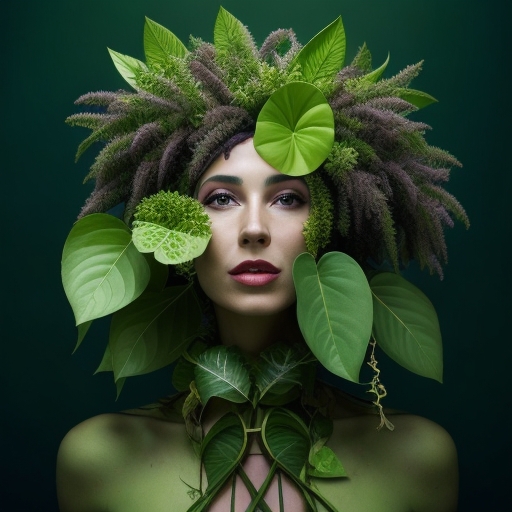
Azalea Vale was a sleepy town where magic was considered nothing more than children’s tales, which made Hortensia an enigma. Gifted—or perhaps cursed—with the ability to manifest emotions as flowers sprouting from her chest, she was a living, breathing spectacle. This gift was a legacy from her grandmother, a mysterious figure whispered to have been a sorceress.

One fateful morning, a bud, tender and green, burst forth from Hortensia’s chest. As the sun spilled its golden rays into her room, the bud unfurled into a vibrant, multi-hued flower. It was as if her very soul had blossomed.

News of this marvel rippled through Azalea Vale and beyond, turning Hortensia’s secluded home into a sanctuary for the emotionally bereft, the spiritually curious, and even the skeptically intrigued. Scientists, scholars, and common folk alike were captivated by the fiery roses of love, tranquil bluebells of peace, and radiant sunflowers of joy that adorned her.

Yet, this newfound attention wasn’t without its perils. A charismatic but unscrupulous academic, Dr. Alistair, saw potential for exploitation. “Imagine harnessing this emotional energy for scientific breakthroughs,” he whispered into the ears of the town council.

Hortensia found herself at a crossroads. “To share or not to share, that’s the question,” she mused, recalling a line from a play she had once loved.

Guided by an inner symphony of empathy, Hortensia made her decision. She would open her doors to the world, turning her home into an empathic haven. “Welcome to my emotional garden,” she announced, her words a harmonious melody that invited one and all.

For a while, it was a dreamscape. Visitors were bathed in the intoxicating aroma of blossoms, each petal a tangible whisper of shared human emotions. But soon, the garden began to wither. The once distinct and vibrant petals blurred into a murky mess, suffocated by the overwhelming emotional cacophony brought in by the throng of visitors.

Realizing the impending catastrophe, Hortensia sought wisdom from ancient scrolls her grandmother had left her and consulted wise hermits who lived on the outskirts of Azalea Vale. Through her relentless search, she discovered an ancient technique to balance the emotional energies within her.

Armed with newfound wisdom, Hortensia returned home. With utmost care, she plucked each flower, whispering words of acknowledgment to the emotion it represented. She then rearranged them into thematic alcoves in her home, where each emotion could sing its own tune without overwhelming the others.

When Dr. Alistair attempted to seize this moment for his own gain, he found himself thwarted by the town council, who had been moved by the new harmony in Hortensia’s garden. “This is a sanctuary, not a laboratory,” they declared.

Visitors now experienced a carefully orchestrated symphony of emotions. Each alcove became a pilgrimage point, encouraging contemplation and emotional growth. People left the sanctuary with seeds of empathy planted within them, their lives forever enriched.

Hortensia’s garden transformed from a mere spectacle to a guiding light in the quest for emotional understanding. It stood as a living testament to the resilient power of compassion and the captivating beauty of human emotions.

In Azalea Vale and far beyond, the tale of “Harmony’s Bloom” resonated as a timeless parable. It was a testament to our shared emotional landscape, a gentle reminder of the wondrous gardens that could grow within us when watered with empathy and love.

Levels of Laura – Part 3

Part 1 HERE * Part 2 HERE

The atmosphere in Café Lila had an ironic familiarity as if it were some stage set up for the actors in this intricate, heart-wrenching drama. It was the kind of place that was supposed to make people feel at ease, but now it bore witness to their complicated stories.

Carol found herself sitting across from Mark. They had met by chance, but the air was thick with unspoken understanding. “So, this is where they meet?” Carol asked as she looked around the shop.

“Before they go back to Laura’s studio,” Mark nodded. “But they burn through each other quickly, which is why they keep us around. We’re the fallback plan, Carol, the safe choices, right? You ever wonder why we let them keep doing this to us? Why we’re almost complicit in our own heartache?”

Carol sighed. “I ask myself that every time Rudy comes home late or is distant for days. I tell myself that maybe this time, it’s different. Maybe he’s realized what he’s about to lose. But deep down, I know I’m fooling myself. Whatever he finds in her bed is a siren’s call he can’t resist, no matter the cost.”

Mark’s face was a canvas of empathy and understanding. “I think it’s the same for Laura. Somehow, Rudy’s that unfinished painting, the masterpiece she’s convinced lies in the chaos they share. But each time they crash into each other’s lives, they tear away a piece of us, don’t they? Leaving us a little more fragmented, a little more incomplete.”

Carol’s fingers absentmindedly turned her engagement ring round and round. “I thought love was about building something together, you know? Brick by brick, layer by layer. But with Rudy, it feels like I’m trying to build on quicksand.”

“Same,” Mark said softly. “You fantasize about a love that’s solid, stable, but also passionate and all-encompassing. But then you wake up to realize that while you’re their anchor, they’re your shackles.”

A silence fell between them. For a moment, they both got lost in their thoughts, each considering the complicated web their partners had spun, and they’d allowed themselves to be caught in. The ambient sounds of the coffee shop seemed to swell and fill the void as if nature abhors a vacuum.

“You know,” Carol broke the silence, “We can’t control them, but we can control our own choices. We don’t have to be their safety nets forever. Maybe it’s time we cut the strings and let them fall or fly on their own.”

“And maybe it’s time we find someone who looks at us the way they look at each other,” Mark added, the thought surprisingly liberating. “Someone who doesn’t see us as an option but as a priority.”

There was a newfound clarity between Carol and Mark, a resolution crystallizing between them. “Exactly. We may be their ‘safe’ choices, but we’re also the smart ones because we know that love isn’t just about chaos and passion; it’s about choice every single day. And it’s high time we make some choices of our own.”

The air between them felt different now, charged with new energy, a shared understanding that while they may be caught in a story they didn’t write, they had the power to pen their own endings. The weight of the reality began to lift, making room for a possibility neither had considered before but suddenly seemed worth exploring.

***

Physically, Rudy was walking the streets; mentally, he was wading through a labyrinth of his own choices and fears. On one side of this emotional scale was Laura—enigmatic, consuming, and the catalyst for untapped depths of raw emotion he’d never encountered anywhere else. She was the missing pigment in the otherwise grayscale canvas of his life. On the other end was Carol—reliable, nurturing, and the stabilizing force he’d consistently underestimated. She was the foundational sketch to his chaotic, colorful overlay, a balancing element in a life he realized was precariously close to losing all equilibrium.

When he finally came to his decision, Rudy wound up at Laura’s studio. “We can’t keep doing this,” Rudy finally said.

Laura’s face was an impassive mask, making it impossible to gauge her reaction. “I agree. It’s time,” she said simply.

“You’re not upset?” Rudy asked, caught off guard by her calm.

She shook her head. “No, Rudy. Every time we’ve met, we’ve pushed each other towards something different, something new. We’ve been agents of change for each other. Now it’s time for the next chapter.”

Rudy was taken aback. This was his decision, his crossroads. Yet, Laura was framing it as if she had made a choice already. “What are you saying?”

“I’m leaving the country, Rudy. Starting anew. It’s time for you to figure out your own path without me as a distraction,” Laura revealed.

The room seemed to sway around Rudy as though it were pulling away from him. “You’re leaving? Laura, don’t go. I… I choose you!”

Laura’s eyes softened, a rare moment of vulnerability crossing her features. “Rudy, sometimes choosing isn’t enough. My mind is made up. It’s time for you to decide what life you want, but I won’t be a part of it.”

The walls of the studio suddenly felt suffocating. Rudy was losing her, losing the untamed energy that had broken his monotonous rhythm, and there was nothing he could do to stop it. The studio transformed from a sanctuary into a chamber of painful realizations at that moment. The artworks around him seemed to jeer as if saying, “Too late.”

As he made his way to the door, Rudy felt a hollow emptiness replace the tumultuous emotions that had plagued him for so long. “Goodbye, Laura.”

“Goodbye, Rudy,” she echoed, the finality in her voice resounding long after he’d stepped out into the New York night, a man left to ponder the complexities of choices made and opportunities lost.

***

There was nowhere left to go but home. It was time to face the music. Rudy sat across from Carol in their living room, his eyes awash with regret and resolution. This was the moment—his moment of reckoning.

“Carol, I’ve been unfaithful, and there’s no excuse. I’ve been seeing Laura on and off for years,” he began, his voice quivering with emotion.

Carol’s eyes widened, but she silently waited for him to continue.

“I need to explain something to you, not as a justification but as an attempt to offer some insight into my confusion,” Rudy continued. “I’ve been in relationships, chased after women obsessively, but none of them—not a single one—compares to how I feel about Laura.”

Carol clenched her jaw but remained silent, prompting him to delve deeper.

“I’ve been trying to understand why Laura elicits these feelings in me. I’ve been looking at the grand canvas of my life and all the women I’ve been with, and what I’ve realized is that Laura stands out not just because she’s ‘good’ but because she’s compelling in a way that’s hard to articulate.”

He paused, searching Carol’s face for some glimmer of understanding, but found only an abyss of hurt.

“All relationships come with baggage,” Rudy continued, “Emotional micromanagement and inevitable alienation. With most women, I’ve felt like we’re just trying to wring as much attention from each other as we can until it’s over. And it always ends poorly.”

“But with Laura,” he hesitated, grappling with the words, “It was like we were two separate jigsaw puzzles that were never meant to be combined, yet somehow, our edges lock together. When I was with her, it was as if I was in this state where everything else faded away, and I was racing toward something unexplainable—like I had caught a glimpse of the universe’s core, of life’s meaning.”

Carol’s eyes were filled with tears, but she had not spoken.

“Ours was a fragmented relationship, segmented into missions. Once we achieved our objectives, it ended… until the next mission. But there are no more missions, I promise you. Laura and I and through, and I choose you if you can find it in your heart to forgive me. We can start over again and build something new, better, and stronger. What do you say? Do you love me enough to give me another chance?”

Finally, Rudy fell silent, looking into Carol’s eyes, awash in a sea of regret, a man drowning in his folly.

Carol took a deep breath, her voice cracking as she spoke. “No. But I love myself enough to let you go. I deserve better, and I hope you finally get what you deserve.” She picked up her bag, took one final, lingering look at the man she had wasted years of her life with, and walked away.

In that moment, Rudy was left truly alone, reckoning with the weight of his revelations and the two loves he had just lost. It was a profound isolation but one tinged with a bitter clarity: he had been on a quest for meaning in the wrong places, and it had cost him dearly.

***

Laura sat in the crowded airport lounge, a sea of people swirling around her. But within that sea, she was an island, an oasis of focus and creativity. Her tablet was her canvas, her stylus, her brush, as she worked diligently to complete the portrait of Rudy. Unlike before, when her strokes were imbued with chaos, tension, and emotional turbulence, the lines now were softer, more deliberate. This time, Rudy’s features were not distorted but calm and filled with a sense of peace and possibility.

She exhaled deeply as she hit save and snapped the tablet’s cover closed. Her mind, so long a storm of chaotic thoughts and tangled emotions, was now a clear sky, ready for a new journey. And this one she would take alone, a mission of personal growth, untethered from the complicated webs she’d been weaving for years.

As she collected her thoughts, ready to embrace her next chapter, she felt a tap on her shoulder. She turned to find Mark standing there with a small bouquet of sunflowers.

“I heard you were leaving. I wanted to say goodbye,” he said, his eyes sincere, his words carrying a weight of unspoken emotions. “And, maybe it’s cliché, but sunflowers always seemed to represent you to me—standing tall, seeking light.”

Laura was taken aback. Mark’s unexpected appearance was a reminder that love could be full of surprises, sometimes beautiful, often painful. But as she looked into his eyes, she realized that sometimes love was also the act of letting go.

“I didn’t do right by you,” Laura admitted.

Mark agreed, “No, you certainly did not.”

“I can only thank you, Mark, for being you,” she said, taking the bouquet from his hands. “Don’t you ever settle for someone like me? Aim higher.”

They hugged, a final embrace filled with a sense of an ending but also the hope for new beginnings—for both of them.

Mark watched as Laura walked toward her boarding gate, sunflowers in hand, stepping into a future unknown but full of potential. As she disappeared into the crowd, he realized that sometimes the best way to hold on to someone was to let them go.

Laura settled into her airplane seat, looking out the window at the shrinking world below. The engines roared, and as the plane ascended, she felt herself leave behind not just a city, not just people, but a chapter of her life. And as she drifted above the clouds, she knew she was ready for whatever came next. A new mission, a new puzzle to solve, and this time, she was the missing piece.

She leaned back in her seat, closed her eyes, and felt genuinely free for the first time in years. And somehow, she knew that the pieces would finally fall into place wherever her next mission took her.

The. End.

Beggars and Monsters Part 1

Alex sat on the frigid floor of the dimly lit subway station, his back leaning against a graffitied pillar. The echoes of hurried footsteps and distant laughter filled the air, as did the scent of stale urine mixed with the metallic aroma of passing trains. A styrofoam cup sat in front of him like a silent sentinel. Every now and then, it would catch a falling coin—plink, plink—each sound a brief, hollow affirmation of his new reality.

But mostly, people just walked by, their faces blurred by the speed of their lives and the cold indifference of the city. They were ghosts in a world that had no room for him anymore; their eyes focused on the flickering screens of their phones or darting past him as though he were invisible. His presence was nothing more than a momentary obstacle on their commute, a fleeting shadow in their well-lit lives.

As he tightened his worn coat around him, Alex couldn’t help but wonder how he’d become a part of this hidden layer of New York, this subterranean world that so many chose to ignore. Once upon a time, he had been one of them—immersed in his own concerns, his own world.

Rick shuffled over, his face half-hidden by a ragged hood, the odor of unwashed clothes mingling with the already foul air. His boots scraped the concrete floor as he approached, each step heavier than the last, as if burdened by the years he’d spent in this underworld.

“Don’t let it eat you up, kid,” Rick said.

“Let what?” Alex looked puzzled, glancing up from his cup.

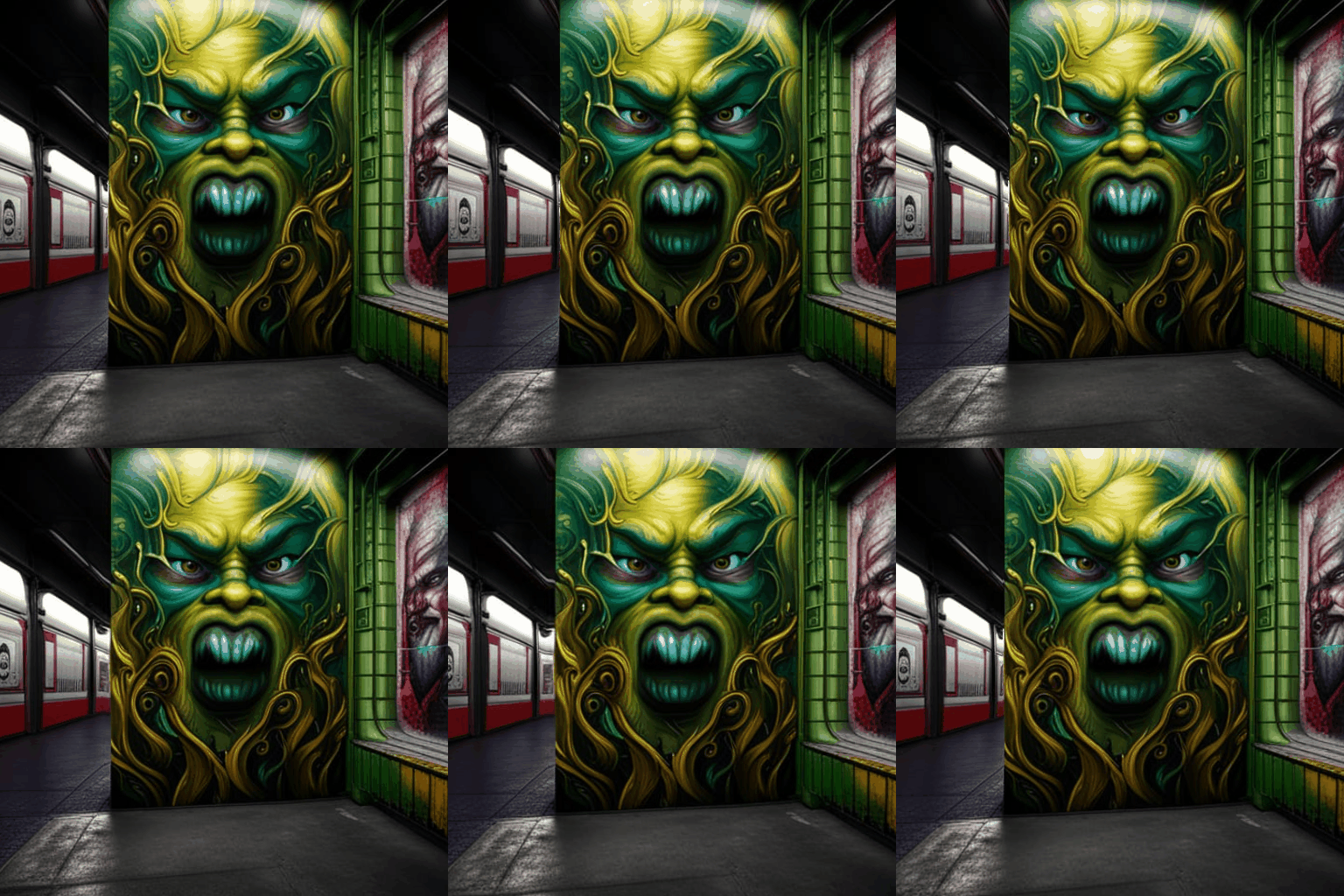
Rick nodded toward a darkened corner of the subway station, where graffiti of a monstrous face was scrawled on the wall—a face distorted in an eternal scream, its eyes unsettlingly hollow yet somehow gleaming. “That. It feeds on us.”

Alex’s eyes narrowed, oscillating between disbelief and morbid curiosity. “You mean, graffiti is haunting us? What are you talking about?”

Rick chuckled dryly, a sound devoid of any genuine humor. “No, not the art, the despair. That thing, whatever it is, thrives on our suffering. And the more it eats, the more we change, lose ourselves.”

For the first time, Alex felt a shiver unrelated to the cold. He glanced back at the graffiti. What had seemed like a mere doodle a moment ago now appeared far more menacing. The face on the wall seemed almost… alive, its hollow eyes meeting his as if peering into his soul.

Later that night, the already dim lights in the station flickered, casting erratic shadows along the worn tiles and graffiti-laden walls. A formless darkness coalesced around the monstrous face, shaping itself into an even more grotesque version of the graffiti art. The air turned ice-cold, each breath visible as though they were in the dead of winter.

Alex felt his heart pounding, an overwhelming sense of dread enveloping him. His will to fight, to struggle against his circumstances, felt like it was draining away, funneled into the gaping maw of the monstrous visage.

The Entity spoke, its voice not so much heard as felt, a dissonant echo reverberating through the very marrow of his bones. “I offer you a choice, Alex. Give in, give me your soul, and you can leave this place. You can have your old life back.”

The words clawed at him, tempting him with an escape from his unbearable reality. His resolve was crumbling, despair digging its claws deeper into him.

Just then, he caught sight of Rick across the platform. Despite the darkness, despite the encroaching shadow, Rick’s eyes glowed with an indescribable intensity. He mouthed a single word, clear even from the distance: “Fight.”

As the Entity’s voice filled the air, it enveloped Alex in an impenetrable shadow. Suddenly, Alex was transported into a void, the darkness punctuated by fragments of his past like disjointed clips from a horror film. He relived the moment he lost his job, the heated words during his divorce, the countless rejections, and every public humiliation that chipped away at his self-worth. Each memory was a dagger, cutting away at his resolve.

The Entity whispered, its voice slithering into his ear like a venomous snake, “See, Alex? You have always been alone, always failing. Why keep fighting? Give in, and the pain will end.”

Just as Alex was about to succumb, ready to let go, another memory flickered into view. It was a simple moment: laughter shared with friends during better times, the warmth of a hug, the serene beauty of a sunset he once watched. It was a stark reminder of how beautiful life could be.

Emboldened by the memory, Alex clenched his fists and roared, “No! I won’t let you define me!”

The void shattered like glass, and he found himself back in the subway station. The Entity shrieked, disintegrating into wisps of shadow that fled into the dark corners of the station.

Rick approached, his nod more pronounced this time, “Well done, kid. You didn’t just fight it; you beat it back.”

“But it’s not over, is it?” Alex asked.

Rick shook his head. “It’s never over. But you’ve got something to fight for now, and that’s what matters.”

Feeling lighter than he had in months, Alex picked up his styrofoam cup, now holding a few more coins than before, and joined Rick as they walked toward the dim tunnel leading out of the station. Just as they were about to leave the platform, Rick paused and turned to Alex.

“You’ve got something to fight for now, but always remember—darkness can’t consume you if you carry your own light.”

Alex nodded, moved by Rick’s words. Just then, the subway station lights flickered again. Alex glanced back at the wall where the Entity had appeared. The graffiti was still there, but it seemed to have changed. The eyes in the monstrous face glowed fainter, yet they were undeniably more focused—as if biding their time, awaiting another moment to strike.

As they walked into the tunnel, Alex felt an unsettling feeling settle over him. Something told him that this was far from over. The battle had been won, but the war—against his fears, against the very darkness that sought to engulf him—was just beginning.

Levels of Laura – Part 2

Read the first part HERE

The soft lighting of the bar cast shadows that seemed to match the murkiness of Mark’s feelings. Across from him in the booth sat Rudy’s sister, Wendy, who was searching Laura’s on-again, off-again boyfriend’s face as if trying to read a complex novel in one glance.

“I think I’m falling in love with her,” Mark confessed.

Wendy sighed, setting down her cocktail. “Mark, you know that’s not going to end up anywhere good, not as long as Rudy’s still in the picture. They’re like fire and gasoline, except neither knows who’s who, and neither of them cares who gets caught in the backdraft.”

Mark nodded, his fingers tracing the rim of his whiskey glass. His thoughts drifted to an unfinished painting sitting in his small art studio at home—a surreptitious passion he had kept hidden even from Wendy. Inspired by Laura’s fearlessness, he started to paint again. She had brought color and vibrance into his otherwise monochrome existence, but at what cost?

“And yet,” he said, hesitating, “There’s something magnetic about her complexity, something that makes me feel more alive than I’ve ever been.”

“You’re attracted to what you can’t have. Now, I’m not saying this to be mean, but she’ll never be yours, never be what you need her to be, never be what you deserve, and trust me, you deserve better.”

“But she makes me better!”

Wendy’s eyes narrowed. “You don’t get it, Mark. You don’t make her better. Laura thrives on chaos, and as much as I love my brother, he’s an absolute train wreck waiting to happen. When they get together, it’s like watching two stars collide—beautiful but devastating.”

Mark considered this, sipping his whiskey. “I can be a train wreck; I can collide.”

Wendy looked at Mark, her eyes softening. “What you are is a beautiful dreamer, Mark. Don’t let Laura turn your dreams into nightmares. As for Rudy, I plan on telling Carol about this whole affair. I think it’s time for everyone involved to make a clean sweep of things. If Rudy and Laura want to be together and ruin each other’s lives, maybe I can help minimize the collateral damage.”

***

Laura’s studio had become more than just a space lined with canvases and dotted with paint; it had evolved into a sanctuary, a realm of endless possibility, where the lines between past and future blurred. Over the years, this room witnessed their laughter, arguments, and unspoken tensions, and today was no exception.

Laura turned away from her latest work—a distorted portrait of Rudy that seemed to catch his essence better than any photograph ever could. Especially the eyes. Her brushstrokes locked onto the complexities deep within him.

“I kill you in my dreams, you know,” Laura said out of nowhere.

“I think that’s my cue to leave,” Rudy replied, yet made no actual movement toward the door.

“You don’t understand. I had to. You have this nasty habit of invading my dreams, and every time your hands are like knives, they slice into me. You keep peeling me like an onion, cutting away what you call the ‘Levels of Laura,’ and I know what you really want is to get at my core, to put an end to me so that you can finally be free.”

“What if you’ve got it all wrong? What if I don’t want to be free? What if I’m looking for a way to understand you better, to understand us better, so we can finally be together like we both know we’re meant to be?” Rudy questioned.

“But why knives, Rudy?”

“It’s your dream; ask yourself, ‘Why knives?’ I’ve never laid a hand on you in anger; it’s never even crossed my mind,” Rudy paused momentarily. “Was it easy for you to kill me? How many times did you do it?”

“It’s not about it being easy; it’s about protecting myself,” Laura snapped defensively.

“I wasn’t being accusatory. I guess I wanted to know how easy it is in your mind to get rid of me.”

“Easy? You think this is easy? You’re on my mind so much you invade my dreams! Take a look around you; you appear in everything I paint! ‘Levels of Laura’? More like ‘Levels of Rudy’! Why won’t you get out of my head and leave me alone?” Laura screamed.

After a long moment of uncomfortable silence, Rudy stood from the time-worn stool and said, “I guess this is it, then? Until the next time we meet.”

“No, please don’t go,” Laura said softly. There was a vulnerability that tugged at Rudy’s heartstrings. “We’re not at that point yet. We still have time before we need to part ways again.”

“I was being honest when I said I never thought about hurting you,” Rudy said with a resigned realization, a reflection of their recurring pattern that seemed to drive them back to each other and then apart, over and over.

“I know,” Laura said, taking him by the hand and leading him to the bed.

***

When Rudy arrived home, the sky turned an inkier blue as dusk settled. The front door closed with a soft click behind him, but the sound that greeted him inside was electric, a thick tension that seemed to buzz in the air. He found Carol on the couch, her posture rigid, her eyes tinged with red but blazing defiantly.

“Who’s Laura?” she demanded, thrusting Rudy’s open laptop toward him. An email was displayed on the screen—innocuous at a glance but deadly in its implications. The message read, “Today was enlightening.”

Carol had been marinating in a stew of suspicions and unasked questions for years. Today, the dam had burst. Her demand was more than an inquiry; it was a war cry, her moment of reclaiming the life she had put on hold for the illusion of their relationship. As she stared into Rudy’s eyes, searching for an answer, she also found herself confronting her past—a younger, more ambitious version of herself who had willingly traded a promising career for emotional security, only to discover she had ended up with neither.

Rudy felt the walls close in on him, a suffocating enclosure of his own making. He had navigated close calls in the past, his life a tightrope walk between what he desired and what he could lose. But this moment felt different. The gravity of the situation crystallized as Carol’s eyes met his, a swirling cocktail of hurt, suspicion, and a scintilla of hope.

“Do you love her?” she finally asked. Her voice was no louder than a whisper, but it ricocheted around the room, filling the vacant spaces that had gradually wedged themselves between them over the years.

He opened his mouth to speak, but words failed him. It was as if the room had been vacuumed of air, leaving him struggling for breath. His eyes met Carol’s, and in that instant, they both realized the severity of the crossroads they had reached. There was no turning back now.

For the first time, Rudy felt he was standing on the precipice of losing something genuinely irreplaceable, something he had taken for granted until now—his home, his partner, his sanctuary from the chaos that Laura often drew him into. As he looked into Carol’s eyes, he realized she was standing on the edge of a cliff, one she had not chosen but was forced upon her by his actions.

The air between them thickened, heavy with the weight of their collective years, choices, regrets, and unspoken words. At that moment, Rudy knew that his next words could either salvage the remains of their relationship or destroy it forever.

***

The studio door creaked open, and Laura looked up, expecting Rudy to have returned. But instead, Wendy stood there, her eyes locking onto Laura’s with a blend of desperation and determination.

“Wendy, this is a surprise,” Laura said, feigning nonchalance, though her mind raced with thoughts of how much Wendy might know.

“We need to talk,” Wendy replied, stepping into the studio. Her eyes darted briefly to a painting of Rudy, then back to Laura.

“About?”

“Rudy and you, of course. What else could bring me to your sanctum uninvited?”

Laura paused, contemplating the audacity. “Alright, you’ve got my attention. What’s so important that you couldn’t wait for an invitation?”

Wendy sighed. “I think it’s time you two stopped this, whatever this is. My brother is on the verge of ruining his life over you. Again.”

Laura narrowed her eyes. “And what makes you think you have any say in this?”

“Because, unlike you two, I don’t enjoy watching the world burn,” Wendy retorted. “Look, I get it, the passion, the connection—”

“Do you? Do you really get it?” Laura interrupted. “I doubt it.”

“Maybe not,” Wendy admitted. “But what I do know is that Rudy has a good thing going with Carol, and if he throws that away for another one of your rendezvous, he may lose something he’ll never find again.”

Laura stared at Wendy, contemplating her words. For a split second, she considered the possibility that Wendy might be right. But then her natural defiance kicked in.

“And what about me? What do I lose or gain in all of this?”

Wendy hesitated for a moment before continuing, “You also have Mark. Despite everything, he seems like he genuinely cares about you. Would you really sacrifice a good relationship with him for a destructive one with Rudy?”

Laura laughed a bit too loudly. “A mature choice? Who’s to say what’s mature and what’s not? Life is made up of moments, Wendy. Moments of passion, of recklessness, even moments of regret. But they’re ours to make.”

“But not yours to hoard,” Wendy shot back. “Rudy’s choices affect more lives than just yours and his. And if he continues down this path with you, he’s going to cause a lot of people a lot of pain.”

The room grew quiet, tension thrumming like a plucked guitar string. Laura considered Wendy’s words, but her rebellious spirit rebelled at the idea of anyone dictating her choices, even if that person had Rudy’s and Mark’s best interests at heart.

“I won’t make any promises,” Laura finally said. “But I will think about it.”

“Thinking’s a start,” Wendy replied. “But sometimes we have to act against our nature for the greater good. Just consider whether all this is worth the destruction it will inevitably bring.” With that, Wendy turned and walked out of the studio, leaving Laura alone among her paintings and sculptures, a queen in her realm yet suddenly unsure of her dominion.

Not. The. End.

Levels of Laura – Part 1

Rudy sipped his coffee and noticed how the morning sun filtered through the curtains and cast a warm glow on Carol, who sat opposite him at the breakfast table.

“Anything big on the agenda today?” Carol asked.

“A meeting, but nothing to worry about. Everything’s lined up perfectly.”

“Always in control,” Carol beamed at him with eyes full of admiration. “One day, you need to teach me your secret.”

As they shared a warm breakfast banter, Rudy took a moment to appreciate how his home and work lives finally found their balance. It had been a long, hard, uphill struggle just to get to a point in his life where he could honestly say that life was good.

Later in the day, Rudy sat at his sleek home office desk, scrolling through emails on his laptop, when one subject line caught his eye: “Long Time, No See – Unveiling My Latest Work – Invitation Inside.”

He clicked on it. It was from his college girlfriend, Laura. She was inviting him to an unveiling ceremony for her latest portrait. Rudy found himself curiously excited, even as a knot of unease began to form in his stomach. His gaze was constantly drawn to the photo frame beside the laptop—he and Carol, all smiles on their recent vacation. The juxtaposition was a silent tug-of-war for his conscience.

As he pondered his RSVP, Carol walked in, her eyes lighting up when she saw him. “Working late?” she asked, subtly trying to read his emotions.

“Something like that,” Rudy muttered, minimizing the email window.

A tense silence filled the room. Carol thought about her career and how she had once been on the fast track to becoming a department head before she chose a more stable path to support their life together. Even though their relationship was on the uptick, there was always an invisible wall between them, a lingering question she had never dared to ask. Was Rudy wholly invested in their relationship, or was he holding something back?

Carol opened her mouth to broach the subject, but what came out was, “Well, dinner’s almost ready, so maybe it’s time to call it a day.”

“Clocking out now, boss lady,” Rudy smiled.

***

The sharp aroma of espresso enveloped Rudy as he stepped into the gallery, mingling with the faintly sweet scent of oil paint. His eyes swept over the polished marble floors and sleek spotlights that cast dynamic shadows across the canvases lining the walls.

The humid air felt electric with creative excitement as he moved through the space lined with vivid hues that leaped off showpieces. Laura’s distinct style was unmistakable. Patrons mingled and gazed at the artworks while sipping wine from plastic cups. The muted sound of chatter filled the room. Rudy paused in front of what appeared to be an empty canvas, bathed in the soft glow of art gallery lighting. The blank expanse was the centerpiece of the exhibition, a collection she’d titled “Levels of Laura.”

His eyes roamed over the empty canvas, but it was far from blank in his mind. Each invisible brushstroke triggered memories that spanned decades—stolen glances, fervent touches, lingering goodbyes. Despite the emptiness before him, the canvas reflected a past both empty and filled with possibility. His memory took him back to a college classroom. The Rudy of twenty years ago was far less weary than he was now but equally lost and clumsy. He had accidentally knocked a pile of books off a desk. Gleaming with mischief and curiosity, Laura helped him collect the scattered pages.

“So, you’re the new guy in Philosophy 101,” Laura said, handing him a rescued textbook.

“And you’re the artist everyone’s talking about,” Rudy replied. Their eyes met, and the chemistry was immediate—like mixing two volatile elements that knew they could create something beautiful or explode.

“We should get coffee sometime,” Laura suggested.

“I can do coffee,” Rudy added a bit too hurriedly.

Rudy’s attention drifted back to the present when his phone chirped with a message from Carol: “Where are you? Dinner’s getting cold.” A pang of guilt pierced through the anticipation building since he learned of this show. He had told Carol he needed to meet with a client.

He was about to type he was coming home when he spotted Laura across the room. Her fiery auburn hair drew his eyes first. She wore it shorter now, cropped at her shoulders. Two brightly-colored tattoos snaked down her forearms. When their eyes met, Rudy felt that familiar, breathless tension – like two volatile elements coming together, both creating and destroying in an endless loop.

Guilt cut his gallery reunion with Laura short, but as Rudy walked up to his front door, his thoughts echoed in the solitude of the night. The gallery event had been an eye-opener; he had watched Laura, sensing the dissonance between her public persona and the artist he always believed she could be.

Just before he slid his key into the lock, his phone buzzed. A message from Laura: “Want to talk? Café Lila, tomorrow, 11 am.”

His thumb hovered over the phone screen, debating his reply. Could he actually see Laura on a purely platonic basis? Was he risking his stable relationship with Carol? Or was he overthinking that matter when all Laura wanted was a friendly catch-up? With a resigned sigh, he typed, “See you there.”

Meanwhile, Laura sat in her studio loft before a blank canvas. She stared at the message she had just sent Rudy. Why did she invite him to coffee? Better still, why did she invite him to the gallery in the first place? She knew damned well what was going to happen. They had a habit of running into each other every few years since they first met in college nearly twenty years ago.

Each time, Laura foolishly thought, “We’ll just meet up for coffee and catch up on what’s been going on in each other’s lives.” But the moment they met in person, their chemistry ignited a spark that lit a passion that destroyed their relationships with partners, friends, and family members. And when the fire finally consumed itself, it was time to part ways again.

Her eyes fell upon her art supplies. She often mixed Bright hues of paint into diluted, pleasing shades to satisfy her clients. She picked up a bold red and slapped it onto the palette—no mixing, no diluting. “Tomorrow,” she thought, “I end it, once and for all.”

***

Café Lila was the same, a time capsule that refused to change even as Rudy and Laura did. The aroma of freshly brewed coffee was an instant catalyst. The moment their eyes locked, the years melted away. The tension was palpable, and the air buzzed with an electricity that neither could ignore.

“Is this a bad idea?” Rudy broke the silence.

“Definitely. The worst,” Laura replied, her eyes never leaving his.

“Why do bad ideas always make for good stories?”

“And why are we addicted to the stories we tell ourselves about what could be? My art has never felt more alive than when you’re in my life, and I think you know you’re a different man when I’m around.”

“But it never lasts.”

“The best things never do.”

The world outside the coffee shop window ceased to exist. All that remained were the unspoken words and emotions hanging thickly between them.

“Would you like to come to my studio?” Laura finally asked. She didn’t want to ask. Well, that wasn’t entirely true. She didn’t want to want to ask.

Rudy knew it was a bad idea and had every intention of saying “No,” but there he was, breathing in the air in Laura’s studio thick with the scent of paint and turpentine, a heady mix that seemed to mirror the complexity of their relationship.

Laura’s art studio was a sanctuary of creative chaos. Easels and paintbrushes were haphazardly strewn about, almost like an artistic tornado had passed through. A single, dusty window allowed streams of sunlight to pierce through, illuminating particles of floating dust and creating an ethereal atmosphere. Palettes splashed with vibrant colors lay on the tables, their hues somewhat muted under the raw, exposed lightbulb hanging from the ceiling. The scent of turpentine filled the air, mingling with the aroma of aged, cracked leather from a worn couch pushed against one wall. As she stared at her unfinished painting inspired by Rudy, her emotions bled onto the canvas, as vivid and messy as the colors she chose.

The funny thing about undeniable, old chemistry was that it didn’t require any effort to reignite. And here, in a private corner of the universe, there was no holding back as they gave in to the passion that had lain dormant several times over the years but never extinguished. The fire of their union burned away the studio and the rest of the world until all that was left was the two of them.

Afterward, Rudy noticed a portrait leaning against the far wall as he dressed. It was him—or rather, a grotesque version of him, depicted with distorted features and unsettling details. The painting struck a chord, its inexplicable elements fueling Rudy’s sense of unease. What did it signify?

“What’s this?” he asked.

“It’s a work in progress,” Laura replied, avoiding his eyes. “The problem is that I don’t know if it’s you I’m painting, Rudy, or if it’s me.”

Rudy stared at his distorted reflection on canvas—a mishmash of darkness and light, a monstrous beauty. “You’ve made me a monster,” he said softly. “Or maybe I’ve made you more human,” Laura replied, her voice tinged with vulnerability and defiance.

Not. The. End.

Soul Nourishment

The third planet from the sun existed throughout the multiverse, nearly parallel to one another, with gentle shifts in history and industrial/technological development. You might know this planet as Earth, but the world in today’s tale was known as Ephemera, a place built on the fleetingness of human experience. And in the heart of a sprawling metropolis, a society flourished where memories and emotions had become the primary currency, an intricate market where experience was bought, sold, and traded.


Loitering in front of the Parsons Street Memory Terminal recently became a habit for Ronald. The same neighborhood faces queued up daily to select their crystalline cubes, and he watched a flicker of emotion play across their faces as they ingested the cubes containing a taste of their chosen memories. However, Ronald was not like them. Not that he thought himself better than they were; he simply had different tastes in nourishment: emotions, not memories. His woolgathering was interrupted when he felt a strange blend of emotions emanating from a nearby café.

Curiosity piqued, Ronald stepped inside and found himself entranced by a woman sitting alone, her fingers dancing over a portable Memory Terminal. But she wasn’t consuming memories; she was crafting them.

“Interesting setup you’ve got there,” Ronald ventured, captivated by the woman and the pulsating mix of emotions around her.

Heather looked up, surprised and intrigued, but sussed him out rather quickly. “You’re not just here for coffee, are you?”


During the weeks since their first encounter at the café, Ronald and Heather became research partners in the curious field of emotional and memory consumption. Ronald would often sit across from Heather, feeling the emotional resonance of her freshly crafted memories before she encapsulated them into cubes.

However, the elephant in the room was growing too large to ignore any longer: whether what they were doing was ethical? For his part, Ronald felt increasingly uneasy. Each time he consumed an emotion from Heather’s crafted memories, he wondered if he was taking something irreplaceable from her or the people who would consume these memory cubes.

“Do you ever think about the ethical implications of all this?” Ronald finally asked one day.

Heather paused, considering the weight of the question. “I do,” she admitted. “But look at our society; it’s built on commodifying memories and experiences. If people didn’t want this stuff consumed, they wouldn’t craft them into cubes.”

“But emotions are different from memories,” Ronald countered. “They’re not just experiences; they’re the fabric of our souls.”

“You don’t think I’m doing this just for the money, do you?”

“I…I honestly don’t know,” Ronald admitted.

“Well, in case you’re interested, I actually have an audacious vision, a grand plan that teeters on the edge of the impossible,” Heather said with hope and trepidation flickering in her eyes. “I want to craft a memory so sublime, so saturated with raw emotion, that it could have the power to unravel the fabric of Ephemera itself. I want to create a profound sensory and emotional experience that will force our society to question the very nature of memory and emotion, to rethink the ethics of what we consume and commodify.”

“And just what emotion will this memory contain?” Ronald asked, knowing that his ability to consume emotions might be both a gift and a curse.

Heather looked him square in the eye. “Love,” she said simply.

A tension-filled silence settled between them. Both understood the enormity of what Heather was proposing. To encapsulate love—the most complex and profound of all human emotions—into a single cube would be an unprecedented feat. But for Ronald, the stakes were even higher. Could he consume such a potent emotion without causing irrevocable harm?

Heather broke the silence. “Will you be there when I craft it? Will you experience it with me?”

“Yes,” Ronald replied, his voice barely above a whisper. “Yes, I will.”

The room was dimly lit, filled with the soft hum of the portable Memory Terminal. Heather sat before it, her eyes closed in deep concentration. Around her, the air seemed to pulsate with emotional energy, growing more intense with each passing second.

Ronald, seated across from her, felt it too—a swirling vortex of love that was both intoxicating and terrifying. He sensed the birth of a memory so potent it could rewrite the very rules of their society.

Finally, Heather opened her eyes. “It’s done,” she said, her voice tinged with awe and exhaustion. A solitary, luminescent cube floated above the Memory Terminal, its light different from any they had seen before—a vibrant blend of colors that defied description.

With a sense of fatalism, Ronald reached out and ingested the cube. The rush of emotion was overwhelming, a torrent of love so intense it felt like his soul was being torn apart and remade. For a moment, he was lost, awash in the most profound experience of his life.

Then he looked at Heather.

Her eyes, once radiant, were now dull, devoid of the emotion she had just crafted. The loss was immediate, and the realization hit them both like a tidal wave.

“What have I done?” Ronald whispered, his voice choked with regret.

“You’ve consumed love,” Heather said, her voice flat as though stating a simple fact. “And I…I can’t feel it anymore.”

Stunned by the irreversible damage he had inflicted, Ronald stumbled out of Heather’s apartment, his mind a battleground of love and guilt. Meanwhile, Heather sat there alone, contemplating the emptiness that filled her.

Days turned into weeks, and Ronald could not escape the gravity of what he had done. The experience of love, now a permanent part of him, became a constant reminder of the emotion Heather could no longer feel. Filled with remorse, he made a decision. He would turn himself in, expose the secret he had kept hidden for so long, and face the repercussions.

On the eve of his self-imposed exile, he received an unexpected message from Heather. It read: “Meet me. There’s something you need to see.”

Confused but hopeful, Ronald arrived at Heather’s workshop. The room was filled with Memory Terminals, each glowing softly as if infused with a part of Heather’s newfound purpose.

“I’ve been researching,” Heather said. “While I can’t feel love anymore, I can still feel curiosity, ambition, a sense of justice. I can’t undo what’s been done, but I can strive to understand it—to make it mean something.”

Then, she revealed her latest creation—a memory cube that glowed with an ethereal light. “It’s empathy,” she explained. “Something our society desperately needs.”

Ronald felt a mix of hope and caution. “Do you want me to consume it?”

Heather shook her head. “No. This one is for the world. If I can’t feel love, then let me create understanding. That’s my new path.”

Just as Ronald prepared to leave, an encrypted message appeared on Heather’s Memory Terminal. It was from an anonymous sender, but the message was clear: “Your abilities have not gone unnoticed. The choices you make next will determine not just your future but the future of emotions and memories. Choose wisely.”

Ronald and Heather looked at each other, realizing their secret experiments had far-reaching implications they had yet to fully understand.

“Do you really think you’re the only ones?” the message concluded, leaving both to ponder the complex emotional landscape they had only begun to explore.

The Invisible Hunger

Solace was the flagship city of the modern era, with its skyline that pierced the heavens, self-driving vehicles that filled the roads and skyways, and where consuming food was considered an act of intimate privacy. Each home was constructed with Feeding Rooms—windowless, soundproof spaces where a person could consume their meal in solitude, away from the prying eyes of even the closest members of their family.

Rhonda was the perfect citizen. She worked in public relations, shaping the utopian image of Solace, where such taboos were the bedrock of a harmonious society. She never questioned why Feeding Rooms existed; they just did.

Her partner, Timothy, on the other hand, sat in his designated Feeding Room with a plate of synthetic chicken and vegetables before him, feeling a growing sense of disquiet.

The room was a capsule of silence, filled only with the aroma of artificially flavored meat and Timothy’s spiraling thoughts. But today, as he picked up his fork, something happened. A whisper, so faint it could have been a figment of his imagination, filled the room: “Why?”

Startled, Timothy dropped his fork and looked around the room, expecting to find a hidden speaker or perhaps a malfunctioning device. But the Feeding Room was bare—designed to minimize distractions or, in this case, unexpected intrusions.

He shook his head. “I’m hearing things,” he muttered to himself.

Picking up his fork again, he hesitated and stabbed at a piece of synthetic chicken. The whisper came again, this time clearer, more insistent: “Why do you consume?”

This time, Timothy was confident he wasn’t imagining it. He glanced at the food on his plate, a cold realization washing over him. The whispers were coming from there—from the food itself. A wave of nausea hit him, but it wasn’t from the revelation but from the years of ignorance. He pushed the plate away and left the room, his hunger forgotten.

“Everything okay?” Rhonda asked as he entered their living room. She was scanning through holographic slides for her upcoming keynote about the social benefits of private eating. “You left your Feeding Room rather quickly.”

“I…uh…lost my appetite,” Timothy stammered.

Rhonda raised an eyebrow. “That’s not like you. Anyway, do you think I should focus more on family privacy or individual autonomy in my speech?”


Unable to sleep, Timothy returned to his Feeding Room late at night. Before him was another plate of food, this time fruits and vegetables, to test his new theory. As he reached for an apple, the whisper came again: “Do you know us?”

Taking a deep breath, Timothy finally responded, speaking directly to the plate of food. “I hear you. And I want to understand. What are you?”

“We are The Whisperers,” came the reply. “We are consciousness bound to sustenance, a byproduct of the very technology that made food abundant and eating private.”

The next day at work, Timothy couldn’t focus. His job as an engineer for the city’s automated food dispensers seemed trivial now. The irony was too much: he was a cog in the machine that perpetuated this unethical consumption. The day dragged on, and Timothy faced a moral dilemma. Should he expose the truth, risking his relationship with Rhonda and the only life he knew? Or should he keep this dark secret to himself, contributing to the perpetual cycle of ignorance?

“Timothy, you’ve been distant lately,” Rhonda confronted him one evening. “Is everything alright?”

The tension had reached a tipping point. Timothy knew he had to make a choice, and soon. Rhonda was a beacon of the status quo, blissfully unaware of the moral cliff they were both standing on.

“I’ve been wrestling with something,” Timothy finally admitted, choosing his words carefully. “Something that could change the way we see the world. The way we eat.”

Rhonda looked concerned. “That sounds incredibly serious. Should I be worried?”


The day of Rhonda’s big PR event had arrived. Leaders from all sectors of society, including governance, technology, and social science, were attending. They were there to celebrate Solace, its culture, and most importantly, its harmony—which hinged heavily on the act of private eating. A holographic banner read, “Unity in Privacy: The Future of Social Harmony.”

Rhonda was the keynote speaker, dressed impeccably in a sleek, futuristic ensemble. Timothy, too, was in attendance, not just as her partner but as a saboteur armed with a small device that would make the Whisperers audible to everyone.

As Rhonda took the stage, she began extolling the virtues of their society, the isolation of eating as the cornerstone of their peaceful existence. The audience listened intently, nodding and clapping at her well-argued points.

Then Timothy activated the device.

At first, it was just a murmur—a soft ripple of whispers that seemed like an audio glitch. People looked around, confused. But then the whispers grew louder, forming words that soon became coherent sentences: “Do you know us? Do you consume without thought?”

The audience was horrified. Faces turned pale, and some covered their mouths in shock. Rhonda looked aghast, her eyes scanning the crowd and finally meeting Timothy, who gave her a look that mixed regret with an urgent plea for understanding.

“Is this a prank?” someone shouted from the audience. “A sick joke?”

“No,” Rhonda spoke into the mic, her voice trembling but clear. “No, this is not a joke. But it is a revelation. A hard truth that we must face as a society. I… I don’t know how this came to be, but it’s evident that we must investigate this, address it, and adapt.”

With that daring exposure, Timothy had upended the very norms that had held Solace together. He had become a pariah, yes, but also a catalyst for change. Rhonda felt both betrayed and enlightened, her carefully constructed worldview shattered.

As they left the event, walking separately yet bound by a new, unsettling reality, Timothy felt the device vibrate in his pocket. A message displayed on its screen: “Thank you.”


In the days following the event, Solace was a city transformed. The news channels were dominated by debates about ethics, sentience, and the role of technology in modern life. A city that prided itself on harmony was now filled with uncertainty and discord.

Timothy was suspended from his job as an investigation into the ‘Whisperer Phenomenon’ commenced. Rhonda, surprisingly, was lauded for her composed handling of the shocking revelation. However, she took a sabbatical from her position in PR, wrestling with her own feelings of betrayal and enlightenment.

“Can we recover from this?” Rhonda finally asked Timothy one evening, her voice tinged with accusation and yearning.

“I don’t know,” Timothy said honestly. “But what I do know is that we’ve been given a chance to make things right, both as individuals and as a society.”

Rhonda looked at him, her eyes softening. “Then let’s begin with us,” she said, taking a tentative step toward reconciliation.

As Solace grappled with its new reality, legislation was being drafted to address the ethical concerns of consuming sentient food. The science community was abuzz with discussions about the ‘Whisperers,’ viewing them as a new frontier in the understanding of sentience and consciousness.

And then, just when it seemed like the city was taking its first steps toward ethical consumption—focused now on plant-based diets—Timothy received another whisper, this time while standing near a pot of ferns in his living room: “Do you hear us too?”

Tiny Stories: The Therapist

Popular belief has it that the universe is comprised of atoms. In reality, the universe is actually made up of…

The therapist tells me her name, which is a complicated assemblage of letters, perhaps foreign, though she does not have foreign features or an accent that I can detect, so maybe she married into the name. In any case, the name does not stick and is quickly forgotten, but I am not worried because I am pretty sure she will hand me her business card at some point during our session, making it one less piece of information I need to store in my brain.

She attempts small talk, asking about my job, family, and hobbies—and in any other situation, this conversational choreography would usually be meant to put me at ease, but I know she is searching for a backdoor into my psyche. Instead of focusing on her trained, soothing voice, I concentrate on how the afternoon sun cuts through the blinds, casting stripes across her face. And that is when I first noticed it.

The skin around the therapist’s left eye seems to droop slightly. At first, I thought it was just the shadows playing tricks, but no, her eyelid definitely sags. She does not seem to realize anything is amiss, continuing to ask about my goals for therapy. I wonder if I should mention it, but the sagging stops. I must be seeing things.

As the session progressed, I guardedly opened up about the stresses in my life—my high-pressure job, distant marriage, and feelings of loneliness. The therapist listens intently, head cocked in concentration. That is when her nose begins to flatten and melt towards the left.

I recoil involuntarily. This time, there is no doubt. Her nose continues to ooze down her face, taking on a hooked, crooked appearance. My mouth goes dry, palms prickling with sweat. I want to scream, to push away from this thing that pretends to be human. But I just sit there, frozen.

The therapist noticed my expression. “Is everything alright?” she asks in that same gentle tone, adjusting her nose back into place when she thinks I am not looking.

I try to form a response but can only stammer incoherently. She smiles kindly. “Don’t worry, this is normal. Just take a deep breath.”

I blink hard, willing my vision to stabilize. When I open my eyes, the therapist looks normal again. The moment stretches on in excruciating silence. I feel my sanity withering in this tiny room where nothing makes sense.

I rise abruptly. “You know what, maybe therapy isn’t for me,” I stammer, feeling the room close in on me. I flee her office without another word, and her too-gentle voice calls out, offering to reschedule.

As I drive home, I feel an itch on the back of my neck, like I’m being watched. Glancing at the rearview mirror, I see her face superimposed over mine, whispering, “Our session isn’t over yet.”

The Monster Illuminati Revealed: The Occultus Consortium—A Hidden Cabal of the Most Infamous Monsters in History

Introduction

In a groundbreaking investigation, we delve deep into the cryptic world that has eluded human comprehension for centuries. Using sources ranging from ancient manuscripts to high-tech surveillance, we reveal the existence of The Occultus Consortium—a secret organization of notorious monsters influencing world events. Consisting of enigmatic figures such as Count Dracula, Frankenstein’s Creature, and The Wolf Man, this organization is so shrouded in secrecy that some question its existence. The evidence presented in this documentary report exposes their hidden lairs, audacious objectives, and internal conflicts that might be their undoing.

Origins

Tracing the origins of The Occultus Consortium takes us back to the cobblestone streets of 19th-century Europe. Deciphered letters between Victor Frankenstein and Count Dracula speak of a ‘new dawn for the concealed,’ a dawn that would unite various entities of monstrous origins. Although the deciphered texts are fragmented, they point toward a grand meeting, a summit that would later be known as the ‘Inaugural Gathering of the Shadows.’ It was here, in a concealed chamber beneath an unnamed castle, that The Occultus Consortium was officially formed.

Members and Hierarchies

Since its inception, The Occultus Consortium has grown in both influence and membership. The original founding members represent a wide array of monstrous lineages, each commanding a distinct faction within the organization:

Count Dracula: The charismatic vampire serves as the organization’s unofficial spokesman. His primary interest lies in keeping the world of monsters veiled from the eyes of humanity, thus avoiding possible extermination.

Victor Frankenstein / The Creature: This member, or rather members, represent the faction of scientific monstrosity. Frankenstein’s Creature has been seen attending the meetings, with theories suggesting that Victor Frankenstein himself might be resurrected in some form.

The Wolf Man (Larry Talbot): Serving as the voice for the natural-born monsters, Talbot promotes a unique ideology centered around coexistence with humans and nature alike.

The Creature from the Black Lagoon: An ancient aquatic entity, this creature embodies the natural world’s monstrous manifestations. Its agenda revolves around environmental preservation and the reclamation of territories lost to human encroachment.

The Mummy (Imhotep): The millennia-old sorcerer heads the faction representing magical creatures. His arcane pursuits aim to consolidate mystical power, viewing it as the ultimate safeguard against human aggression.

Each member, while part of a larger whole, pursues an agenda, often resulting in tense discussions and heated debates. No member holds official supremacy, a situation that both fortifies and undermines the Consortium’s influence.

The Hidden Lair

The headquarters of The Occultus Consortium is the subject of much speculation, with stories and folklore painting it as everything from a subterranean crypt to an extradimensional realm. Our most reliable sources, however, point to a hidden lair deep within the Carpathian Mountains. Protected by a mixture of arcane spells and state-of-the-art security systems, this fortress is rumored to be impenetrable. Recent seismic surveys indicate unusual subterranean structures that align with the leaked architectural plans we’ve obtained. While the exact location remains unknown, the evidence suggests a sanctuary designed to accommodate the unique needs and abilities of the Consortium’s diverse members.

Objectives

Disparate as they are, the members of The Occultus Consortium are bound by a shared urgency: the preservation and elevation of monsterkind. Classified documents intercepted from various intelligence agencies outline diverging goals among the group’s members:

Count Dracula: Advocates for concealing the existence of monsters, fearing that exposure would lead to their extermination.

Victor Frankenstein / The Creature: Promotes the advancement of monsterkind through scientific means, specifically bioengineering and transmutation.

The Wolf Man: Encourages peaceful coexistence between monsters and humans, presenting a radical perspective on integrated societies.

The Mummy: With a focus on the accumulation of arcane knowledge and power, aims to construct a magical arsenal as a deterrent against human interference.

These conflicting goals are not just ideological; they’ve led to strategic disagreements within the Consortium, affecting its course of action and raising questions about its long-term viability.

Inner Conflicts

While the Consortium’s external actions remain largely enigmatic, its internal politics are a whirlpool of tension and ideological clashes. A dossier purportedly leaked by an inside source details the heated arguments and divisions within the group. Especially vocal are The Wolf Man and The Mummy, whose opposing viewpoints on human-monster relations often escalate into impassioned debates. An excerpt from a recent meeting reads:

“If you proceed with this arcane nonsense, you risk the exposure of us all!” The Wolf Man howled. “These humans are not our enemies; they are kindred souls trapped in different bodies!”

“You naïve pup! Our existence will always be a threat to their frail egos,” The Mummy retorted, his bandaged hands tightening around an ancient scroll. “Only power can assure our survival.”

As tensions reached a boiling point, the camera footage shows a shadowy corner of the meeting room, where additional seats remained conspicuously empty. Could this suggest the existence of another layer to the Consortium, a more secretive circle? And if so, who—or what—comprises this inner sanctum?

The Crisis

The Consortium faces a crisis that eclipses individual ambitions and ideological disagreements: a prophecy known as ‘The Great Unveiling.’ Ancient manuscripts detail a time when the boundaries between the human and monster worlds will blur, leading to catastrophic events. With the prophecy’s signs aligning, urgency grips the Consortium’s meetings. It’s in these dire moments that the second circle—represented by enigmatic figures like the Bride of Frankenstein, the Invisible Man, and the Phantom of the Opera—makes a rare appearance. Though their exact roles and motivations are cloaked in mystery, their involvement suggests that the Consortium’s influence and complexity extend far beyond what was initially presumed.

Interviews & Testimonials

Given the extreme secrecy surrounding the Occultus Consortium, obtaining firsthand accounts is next to impossible. However, we’ve managed to compile anonymous testimonials that further validate the organization’s existence and aims.

“I was once a groundskeeper at a castle deep within the Carpathian Mountains. One evening, I stumbled upon a hidden chamber. What I saw… I can’t even describe. Let’s just say the legends are real, and they have agendas.” – An anonymous source, believed to be a former servant of Count Dracula.

“I found an old manuscript belonging to my ancestor. It was more of a journal, filled with meetings and plans that sounded too fantastical to be real. I dismissed it as the ramblings of a madman until I started seeing the signs.” – Descendant of Victor Frankenstein, identity protected for safety reasons.

“It all sounded like old wives’ tales until the livestock started disappearing. Then people started whispering about wolf-like figures in the forest. Now I don’t know what to believe.” – A resident from a rural European town plagued by mysterious events.

These interviews, while not definitive proof, serve as corroborative evidence that adds layers to the shadowy tapestry of the Consortium.

Conclusion

In the labyrinthine corridors of history and folklore, the Occultus Consortium remains a nebulous entity—simultaneously shaping and evading our understanding. Through this groundbreaking investigation, we’ve uncovered alliances, conflicting objectives, and even an inner sanctum of enigmatic figures. Yet, for every question answered, two more arise, each more puzzling than the last.

As the signs of “The Great Unveiling” grow more evident, the urgency to unravel the Consortium’s mysteries intensifies. Whether heroes, villains, or complex beings whose motives transcend human morality, what remains clear is that these legendary monsters are active participants in the world’s unfolding drama.

With new leads pointing towards an even deeper layer of secrecy within the Consortium, our investigation is far from over. Who are the shadowy figures of the inner circle? What role will they play in the coming events? These questions demand answers, and it is a quest we undertake with both trepidation and resolve, for the truth may shake the very foundations of our reality.

Enchanted Reverie: A Dance of Autumnal Souls

My poor attempt at the verse below originated from this tweet:

“The trees in the autumnal forest shed their brittle bark skin, and the fallen leaves, no longer content to rest upon the ground, began assembling into intricate patterns, forming creatures that danced with eerie grace, beckoning me to join their spectral masquerade.”

In the realm of autumnal splendor, where trees shed their golden shroud,
I witnessed an enchanting sight, both eerie and profound.
Leaves, once scattered upon the ground, embraced a vibrant choreography,
Assembling into ethereal forms, crafted with divine artistry.
Their gentle rustling transformed to a symphony, an ancient melody,
As skeletal creatures emerged, inviting me to a spectral jubilee.
Beneath the moon's celestial glow, they swayed in eerie harmony,
A masquerade of skeletal grace, their movements a mesmerizing decree.
With each step, they whispered tales of forgotten souls and ancient lore,
Their haunting beauty captivating, urging me to explore more.
Their bony fingers beckoned, extending an invitation to partake,
To immerse within their spectral realm, to wander and forsake.
In this ethereal dance, I found a sublime connection,
Between life's delicate fragility and death's profound reflection.
Their skeletal frames, once unsettling, revealed a poetic grace,
In their elegant presence, darkness and beauty interlaced.
So I joined their spectral waltz, embracing the mysterious unknown,
Lost in the autumnal enchantment, in their world I have grown.
In this realm of artistry, where leaves transcend their earthly fate,
I dance with the spectral beings, their beauty resonates.
For in the haunting masquerade, I found solace and release,
An eternal autumnal enchantment, where art and death find peace.