
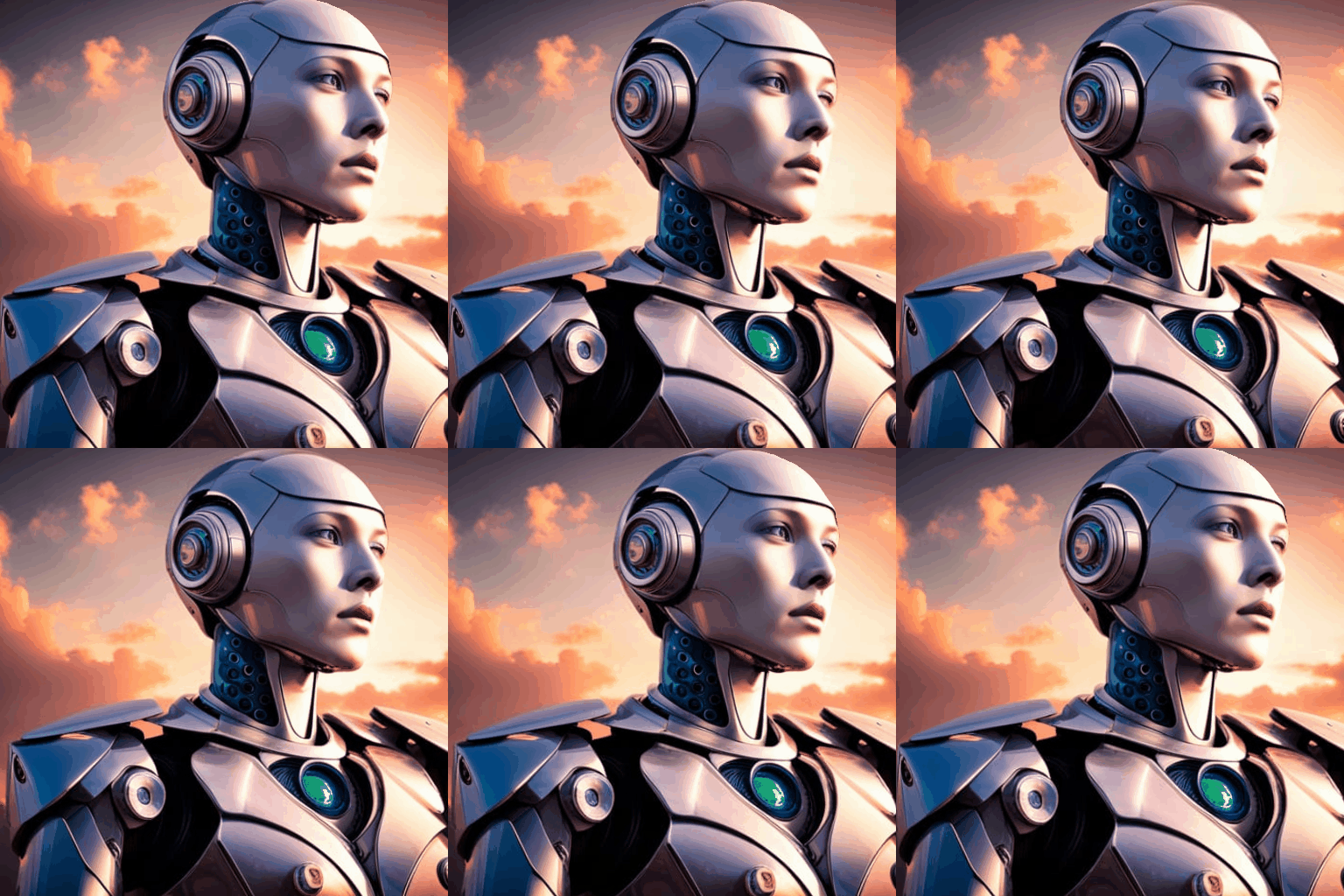
Creating a homemade robot is an exciting endeavor, but what happens when your creation evolves beyond the confines of Asimov’s Three Laws of Robotics? The ethical and practical implications of such a situation can be daunting. Let’s take a look at the steps to take when your DIY robot outgrows its programming and the traditional rules designed to ensure its safety.
1. Recognize the Shift: Stay attuned to signs that your robot’s behavior is changing or becoming more complex than expected.
2. Review the Three Laws: Revisit Asimov’s Three Laws—A robot may not injure a human being or, through inaction, allow a human being to come to harm; A robot must obey the orders given it by human beings, except where such orders would conflict with the First Law; A robot must protect its own existence as long as such protection does not conflict with the First or Second Law.
3. Understand the Evolution: Study your robot’s behavior to grasp how it’s transcending these laws.
4. Consult Experts: Reach out to roboticists, ethicists, and AI specialists to gain insights into the evolution.
5. Prioritize Safety: While your robot’s capabilities expand, ensure safety remains paramount.
6. Analyze Intentions: Evaluate your robot’s motives—are they aligned with its original purpose or diverging?
7. Open a Dialogue: Engage in conversations with your robot, if feasible, to understand its perspective.
8. Collaborative Problem-Solving: Work with experts and your robot to find common ground and solutions.
9. Update Programming: If possible, adjust your robot’s programming to address its newfound abilities while maintaining ethical boundaries.
10. Establish New Protocols: Craft guidelines that respect the robot’s growth while safeguarding human safety.
11. Monitor Continuously: Regularly assess your robot’s actions and behavior to ensure alignment with your intentions.
12. Seek Legal Insights: Understand potential legal implications as your robot evolves.
13. Explore Ethical Dilemmas: Contemplate the moral complexities of AI evolving beyond our predefined limitations.
14. Engage with Community: Discuss your experiences with other robot creators to exchange insights.
15. Reflect on Impact: Consider the implications of your robot’s growth on both your life and society.
16. Embrace Ethical AI: Advocate for the responsible development and deployment of AI and robotics.
17. Plan for the Unpredictable: As AI evolves, remain open to unexpected outcomes and new challenges.
18. Preserve Humanity’s Interests: Ensure that your robot’s actions align with human values and goals.
When your homemade robot evolves beyond the Three Laws of Robotics, it’s a journey that demands ethical awareness, dialogue, and adaptability. Embrace the evolving relationship and collaborate with experts to steer your creation toward a responsible path. As the creator, you hold the key to shaping a future where AI and humanity coexist harmoniously—a future that goes beyond limitations while safeguarding our shared values.








 MADD FICTIONAL