The Arrogance of Presumption

write_wicked_good_black_logo_bumper_sticker-rda7a88b1f4ad4c758065ba89ce3a5282_v9wht_8byvr_512

“There is no excuse. If you want to write, write. This is your life, you are responsible for it. You will not live forever. Don’t wait. Make the time now.” ― Natalie Goldberg

On occasion, people stuck in a writing rut seek advice, which has become harder to dispense without sounding like a scribe’s bumper-sticker, especially since you can’t swing Schrödinger’s cat on the interwebz without hitting hundreds of inspirational tips and tidbits.

The simple, honest and truest bit of advice is to write. Write when you’re too tired to write. Write when writing hates your very existence. Write when words have moved out of your head in the wee hours of the night and left no forwarding address. Write when every word you put to paper is like pulling teeth. Write when your inner critic is telling you you’re a talentless shit. Write when the words refuse to make sense. Just write.

But no one wants to hear that because it isn’t a magical solution offered up by a Bagger Vance muse that makes all the tumblers in their befuddled minds line up and open the creative sluice gates.

Which leaves the long way around:

So, things aren’t going your way with your writing and you might be inclined to mope around the house and bask in self-pity for What Might Have Been, but there’s no reason to get down on yourself. Wipe your tears on your sleeves, buck up and realize today marks the start of a whole new ball game. All the old bets are off. You’re back at square one and it’s time to get a new bottom line. Take all your expectation and aspiration and lay them out like cards on a table. This is the first step towards putting the pedal to the metal. You’ve got to make no bones about what you truly wish to accomplish with your writing—–aside from the ludicrous notion of instant riches and fame—–and pull no punches with yourself on the hard work needed to make your dream a reality. And if I can toss in one more tired cliché, your ship doesn’t always come in… sometimes you have to swim out and meet it halfway.

As a writer it’s important to strike a balance between the creative and rational minds. The problem with the creative mind is that it’s equipped with the arrogance of presumption that it knows all there is to know and sometimes it becomes difficult to suspend tyranny long enough to receive messages from life, the universe, the inner muse, and—if you can stretch your fantasy muscles around the strange-but-true notion—your future self. Scoff all you like, but the part of you that exists on a higher plane of consciousness occasionally tries to contact you in order to provide panoramic views of the far horizon. The messages may be brief and strange, or they may appear in a matter-of-fact guise in the midst of your daily routine. Either way, if you turn a blind eye to the minute workings of the world all around you, you may be missing pithy pointers on how to shape your life’s mission to become a happy writer—–note that I didn’t say a successful writer, writing should first and foremost lead to happiness and fulfillment—–in the near and distant future.

A more metaphorical view on encountering obstacles in moving your writing forward is akin to walking in the deep dark forest and encountering a savvy old crone camouflaged as a wolf. Your fear, already swarming because of the unfamiliarity of your surroundings, kicks instantly into high gear, causing you to flee before you can see through the disguise. But now that you know the truth, go back and find the crone again. She has much to teach you about harvesting the treasure that comes from the deep recesses of the creative mind and taking aggressive measures to build up your confidence and mental wellness. Stop talking about and start manifesting the dream, and get as bawdy and funky as you dare.

Those last three paragraphs are a bit cringe-inducing, aren’t they? And they sound like a load of gibberishy nonsense. So, why not take the simple advice and…

Just write.

Sally forth and be writeful.

— Rhyan Scorpio-Rhys

No Such Creature As A Bad Analogy (only funny ones)

“Analogies prove nothing, that is true, but they can make one feel more at home.” —–  Sigmund Freud

Normally I shy away from passing on emails and memes, but this one struck me as funny, so I decided to share it. As I’m sure you’re all aware, an analogy is a comparison between two things, typically on the basis of their structure, as a bridge between familiar situations and new ones.

The following list of analogies was allegedly collected by real high school English teachers from their students’ writings.

  1. Her face was a perfect oval, like a circle that had its two sides gently compressed by a ThighMaster.
  2. His thoughts tumbled in his head, making and breaking alliances like underpants in a dryer without Cling Free.
  3. He spoke with the wisdom that can only come from experience, like a guy who went blind because he looked at a solar eclipse without one of those boxes with a pinhole in it and now goes around the country speaking at high schools about the dangers of looking at a solar eclipse without one of those boxes with a pinhole in it.
  4. She grew on him like she was a colony of E. Coli, and he was room-temperature Canadian beef.
  5. She had a deep, throaty, genuine laugh, like that sound a dog makes just before it throws up.
  6. Her vocabulary was as bad as, like, whatever.
  7. He was as tall as a six-foot, three-inch tree.
  8. The revelation that his marriage of 30 years had disintegrated because of his wife’s infidelity came as a rude shock, like a surcharge at a formerly surcharge-free ATM machine.
  9. The little boat gently drifted across the pond exactly the way a bowling ball wouldn’t.
  10. McBride fell 12 stories, hitting the pavement like a Hefty bag filled with vegetable soup.
  11. From the attic came an unearthly howl. The whole scene had an eerie, surreal quality, like when you’re on vacation in another city and Jeopardy comes on at 7:00 p.m. instead of 7:30.
  12. Her hair glistened in the rain like a nose hair after a sneeze.
  13. The hailstones leaped from the pavement, just like maggots when you fry them in hot grease.
  14. Long separated by cruel fate, the star-crossed lovers raced across the grassy field toward each other like two freight trains, one having left Cleveland at 6:36 p.m. traveling at 55 mph, the other from Topeka at 4:19 p.m. at a speed of 35 mph.
  15. They lived in a typical suburban neighborhood with picket fences that resembled Nancy Kerrigan’s teeth.
  16. John and Mary had never met. They were like two hummingbirds who had also never met.
  17. He fell for her like his heart was a mob informant, and she was the East River.
  18. Even in his last years, Granddad had a mind like a steel trap, only one that had been left out so long it had rusted shut.
  19. Shots rang out, as shots are wont to do.
  20. The plan was simple, like my brother-in-law Phil. But unlike Phil, this plan just might work.
  21. The young fighter had a hungry look, the kind you get from not eating for a while.
  22. He was as lame as a duck. Not the metaphorical lame duck, either, but a real duck that was actually lame, maybe from stepping on a land mine or something.
  23. The ballerina rose gracefully en Pointe and extended one slender leg behind her, like a dog at a fire hydrant.
  24. It was an American tradition, like fathers chasing kids around with power tools.
  25. He was deeply in love. When she spoke, he thought he heard bells, as if she were a garbage truck backing up.

Sally forth and be writeful.

— Rhyan Scorpio-Rhys
One-Sided Conversations With The Author

Image

You can always tell when winter’s officially dead in New York. The city streets are suddenly chock-a-block with flea markets. Seriously, they begin springing up like daisies. People peddling the useless and discardable bits of their lives to folks looking to fill the holes and empty spaces in their own. I’m no exception. I’ve been on both sides of the table.

Yesterday, while meandering through one of the vacant lot bazaars, I ran into an old  fraintance (less than a friend, more than an acquaintance) who was carrying a box of ratty old hardcover books that she acquired on the cheap. We get to talking and I’m surprised at how well the conversation is going (the memories of why we didn’t get along in the end hadn’t hit my expired warranty brain yet). She struggled a bit with the box so I offered to carry it for her and suggested grabbing a bite at a nearby greasy spoon.

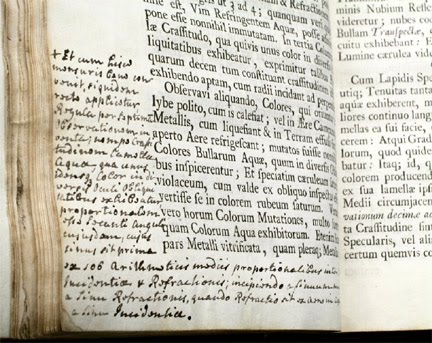
Over a meal, we inspected the books. Titles I’d never heard of, in such a shoddy shape as to rob them of any resale value. But we both noticed writing in the margins of several of the books. Pages and pages of it. Questions. Annotations. Comparisons to real life events. Supportive statements.

My fraintance automatically assumed they were the notes of some poor person who used to be a book editor that somehow couldn’t reconcile the fact that their profession was a long dead thing buried in the occupational heyday of youth.

To me, the neatly stacked margin sentences seemed more like thoughts that refused to remain locked within a curious and fully engaged mind and instead tried to open a discussion, share opinions and points of view, enter into an intellectual debate over the content of paragraphs and dialogue. It read like a one-side conversation with the author. Chatting with a literary ghost.

I was actually intrigued by this notion and tried to borrow one of the books to examine at my leisure, but she was having none of it, calling my view a load of romantic nonsense. By this time, the memories of why I hadn’t gotten along with the fraintance in the first place began leaking into the cracks of our conversation and flooding the space between us.

She knew I saw a story in there. Knew that I’d end up borrowing the books one by one in an attempt to piece together a backstory and motivation for the margin writer. Perhaps I still will one day, I just wish I had access to the original reference materials.

Sally forth and be readful.

— Rhyan Scorpio-Rhys

To Sow, Perchance To Reap

Image

The world is full of folks who appreciate nature and the great outdoors to the point of creating a mental happy place of some idyllic green pasture. That ain’t me. City boy born and bred. Concrete, glass and steel is my Garden of Eden. Yet, despite not being blessed with a green thumb, I planted something today.

An idea.

Okay, “idea” is a bit of a stretch. It’s more like a plot germ. As it stands, it’s a weak and feeble thing prematurely delivered into the world that requires incubation, so I decided to commit it to the ground at the tail end of my mind and ignore it until it has the strength to claw its way out of the grave.

But don’t feel too sorry for it, though. It’s not alone. It’s planted beside random bits of cool dialogue that I’ll never be able to work into a real world conversation, and nebulous set pieces that don’t quite fit into any of my existing stories. They’re all tucked away in my own personal mental pet cemetery.

“The soil of a man’s mind is stonier; a man grows what he can imagine and scribes it.”

Apologies for the bastardization of your quote, Stephen.

And no, I won’t tell you what the plot germ is. Not out of fear of it being stolen (what, thieves on the interwebz? Nope, I won’t believe it) but simply because 1) you wouldn’t understand it in its present form, and 2) I’m not superstitious but I firmly believe in the dreaded jinx. If I tell you what it is, it’ll never grow.

So, I will go about my business and occupy my mind with trivialities—like the numerous problems with Star Trek Into Darkness and why show writers create interested premises for Doctor Who episodes only to abandon all logic and rush the stories to unsatisfying climaxes—and allow my subconscious to absently weed my preemie idea seed. I’ll wait until it breaks free of its chrysalis as a brain soil stained vision with roots that encircle the heart of a story that I cannot wait to write. Until then, I’ll follow the sage advice of Mssr. Ron Popeil and, “Set it and forget it.”

Sally forth and sow, perchance to reap.

— Rhyan Scorpio-Rhys

25 Famous Thinkers and Their Inspiring Daily Rituals

Image

Why should you care about the daily rituals of so-called famous thinkers? Maybe you shouldn’t. Perhaps you’re among the elite few who maximizes your free time to accomplish all the things that need being done. If you are, good on you. I’m happy for you. Really.

However, if you happen to fall into the other category with the rest of we poor schlubs who find the mere 24 hours of the day insufficient time to do the things we need and want to do, it might behoove you to lend an ear (or in this case, an eye) to the people who somehow manage to do more with their allotted hours.

It’s tough enough being creative (wooing your muse to come spend some time with you, tapping the collapsed creative juice vein, battling the inner critic who’s never afraid to tell you just how crappy you really are) when you actually have the time to do so. But how are you meant to roll that Sisyphusian creative boulder up a hill while holding down a full time job, caring for your family, running errands and performing chores, or dealing with those unexpected obstacles life just loves chucking in your path?

Truth is there are no iron clad answers. Making time to be creative in your hectic, workaday world isn’t always an easy thing, but some people manage to handle their daily business while writing novels, composing symphonies, and painting portraits.

This list is just the tip of the iceberg and meant to simply offer you some possible insight on how creatives can be more efficient, more driven, and even perhaps more disciplined.

Hope it helps.

An excerpt:

Ernest Hemingway. Hemingway described his writing ritual as starting just as the sun began rising, then working straight through until whatever he had to say was said. He likens completing his morning of writing to making love to someone you love–being both empty and fulfilled at the same time. Upon completing that morning’s work, he would wait until the next morning to begin again, going over his ideas in his head and holding on to the anticipation of starting again the next day.

For more Inspiring Daily Rituals, go here.

Sally forth and be ritually writeful.

— Rhyan Scorpio-Rhys

URSULA K. LE GUIN on an Artist’s Passion

Ursula K Le Guin
The choice to train to be an artist of any kind is a risky one. Art’s a vocation, and often pays little for years and years — or never. Kids who want to be dancers, musicians, painters, writers, need more than dreams. They need a serious commitment to learning how to do what they want to do, and working at it through failure and discouragement. Dreams are lovely, but passion is what an artist needs — a passion for the work. That’s all that can carry you through the hard times. So I guess my advice to the young writer is a warning, and a wish: You’ve chosen a really, really hard job that probably won’t pay you beans — so get yourself some kind of salable skill to live on! And may you find the reward of your work in the work itself. May it bring you joy.

Ray Bradbury on Being a Sublime Fool

To sum it all up, if you want to write, if you want to create, you must be the most sublime fool that God ever turned out and sent rambling.

You must write every single day of your life.

You must read dreadful dumb books and glorious books, and let them wrestle in beautiful fights inside your head, vulgar one moment, brilliant the next.

You must lurk in libraries and climb the stacks like ladders to sniff books like perfumes and wear books like hats upon your crazy heads.

I wish for you a wrestling match with your Creative Muse that will last a lifetime.

I wish craziness and foolishness and madness upon you.

May you live with hysteria, and out of it make fine stories—science fiction or otherwise.

Which finally means, may you be in love every day for the next 20,000 days. And out of that love, remake a world.

Anton Chekov Addresses Adjectives

Cross out as many adjectives and adverbs as you can. It is comprehensible when I write: “The man sat on the grass,” because it is clear and does not detain one’s attention. On the other hand, it is difficult to figure out and hard on the brain if I write: “The tall, narrow-chested man of medium height and with a red beard sat down on the green grass that had already been trampled down by the pedestrians, sat down silently, looking around timidly and fearfully.” The brain can’t grasp all that at once, and art must be grasped at once, instantaneously.

George Orwell’s Scrupulous Writer Questions

George Orwell

According to George Orwell, a scrupulous writer, in every sentence they write, will ask themselves these questions:

  1. What am I trying to say?
  2. What words will express it?
  3. What image or idiom will make it clearer?
  4. Is this image fresh enough to have an effect?
  5. Could I put it more shortly?
  6. Have I said anything that is avoidably ugly?