

1. Read the Roman-Raphaelson book on writing. Read it three times.2. Write the way you talk. Naturally.
3. Use short words, short sentences and short paragraphs.
4. Never use jargon words like reconceptualize, demassification, attitudinally, judgmentally. They are hallmarks of a pretentious ass.
5. Never write more than two pages on any subject.
6. Check your quotations.
7. Never send a letter or a memo on the day you write it. Read it aloud the next morning—and then edit it.
8. If it is something important, get a colleague to improve it.
9. Before you send your letter or your memo, make sure it is crystal clear what you want the recipient to do.
10. If you want ACTION, don’t write. Go and tell the guy what you want.
Tag Archives: writing tips
Joyce Carol Oates’ Top 10 Tweet Tips on Writing
1) Write your heart out.
2) The first sentence can be written only after the last sentence has been written. FIRST DRAFTS ARE HELL. FINAL DRAFTS, PARADISE.
3) You are writing for your contemporaries–not for Posterity. If you are lucky, your contemporaries will become Posterity.
4) Keep in mind Oscar Wilde: “A little sincerity is a dangerous thing, and a great deal of it is absolutely fatal.”
5) When in doubt how to end a chapter, bring in a man with a gun. (This is Raymond Chandler’s advice, not mine. I would not try this.)
6) Unless you are experimenting with form–gnarled, snarled & obscure–be alert for possibilities of paragraphing.
7) Be your own editor/ critic. Sympathetic but merciless!
8) Don’t try to anticipate an ideal reader–or any reader. He/ she might exist–but is reading someone else.
9) Read, observe, listen intensely!–as if your life depended upon it.
10) Write your heart out.
Eleven Thoughts on Fiction

1. “Fiction reveals truths that reality obscures.” — Jessamyn West
2. “Truth may be stranger than fiction, but fiction is truer.” — Frederic Raphael
3. “Fiction’s about what it is to be a human being.” — David Foster Wallace
4. “First-rate fiction lays hands on the reader, to heal him or rough him up or, ideally, to do both.” — Ellen Currie
5. “The trouble with fiction is that it makes too much sense, whereas reality never makes sense.” — Aldous Huxley
6. “Details make stories human, and the more human a story can be, the better.” — V.S. Pritchett
7. “Character is the very life of fiction. Setting exists so that the character has someplace to stand. Plot exists so the character can discover what he is really like, forcing the character to choice and action. And theme exists only to make the character stand up and be somebody.” — John Gardner
8. “In writing fiction, the more fantastic the tale, the plainer the prose should be. Don’t ask your readers to admire your words when you want them to believe your story.” — Ben Bova
9. “Basically, fiction is people. You can’t write fiction about ideas.” — Theodore Sturgeon
10. “Structure is the key to narrative. These are the crucial questions any storyteller must answer: Where does it begin? Where does the beginning start to end and the middle begin? Where does the middle start to end and the end begin?” — Nora Ephron
11. “Fiction is a lie, and good fiction is the truth inside the lie.” — Stephen King
The Three Characteristics of Successful Fiction
Three characteristics a work of fiction must possess in order to be successful:
1. It must have a precise and suspenseful plot.
2. The author must feel a passionate urge to write it.
3. He must have the conviction, or at least the illusion, that he is the only one who can handle this particular theme.
— Isaac Bashevis Singer

The Ten (Plus Four) Commandments (of Writing)
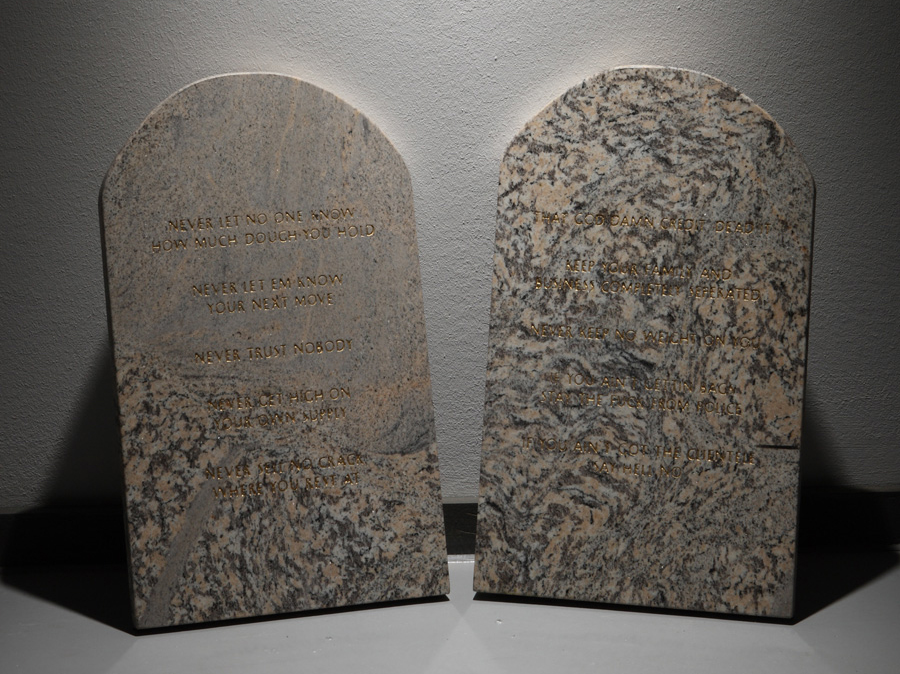
1. “The one great rule of composition is to speak the truth.” — Henry David Thoreau
2. “If you require a practical rule of me, I will present you with this: Whenever you feel an impulse to perpetrate a piece of exceptionally fine writing, obey it–wholeheartedly–and delete it before sending your manuscript to press. Murder your darlings.” — Arthur Quiller-Couch
3. “The best rule for writing–as well as for speaking—is to use always the simplest words that will accurately convey your thought.” — David Lambuth
4. “There are simple maxims . . . which I think might be commended to writers of expository prose. First: never use a long word if a short one will do. Second: if you want to make a statement with a great many qualifications, put some of the qualifications in separate sentences. Third: do not let the beginning of your sentence lead the readers to an expectation which is contradicted by the end.” — Bertrand Russell
5. “I have made three rules of writing for myself that are absolutes: Never take advice. Never show or discuss a work in progress. Never answer a critic.” — Raymond Chandler
6. “There are three rules for writing the novel. Unfortunately, no one knows what they are.” — W. Somerset Maugham
7. “Writing has laws of perspective, of light and shade, just as painting does, or music. If you are born knowing them, fine. If not, learn them. Then rearrange the rules to suit yourself.” — Truman Capote
8. “There is probably some long-standing “rule” among writers, journalists, and other word-mongers that says: “When you start stealing from your own work you’re in bad trouble.” And it may be true.” — Hunter S. Thompson
9. “If I were to advise new writers, if I were to advise the new writer in myself, going into the theater of the Absurd, the almost-Absurd, the theater of Ideas, the any-kind-of-theater-at-all, I would advise like this:
- Tell me no pointless jokes. I will laugh at your refusal to allow me laughter.
- Build me no tension toward tears and refuse me my lamentations. I will go find me better wailing walls.
- Do not clench my fists for me and hide the target. I might strike you, instead.
- Above all, sicken me not unless you show me the way to the ship’s rail.”
— Ray Bradbury
10. “Breslin’s Rule: Don’t trust a brilliant idea unless it survives the hangover.” — Jimmy Breslin
11. “One of the great rules of art: Do not linger.” — Andre Gide
12. “Do not pay any attention to the rules other people make…. They make them for their own protection, and to Hell with them.” — William Saroyan
13. “Over the years, I’ve found one rule. It is the only one I give on those occasions when I talk about writing. A simple rule. If you tell yourself you are going to be at your desk tomorrow, you are by that declaration asking your unconscious to prepare the material. You are, in effect, contracting to pick up such valuables at a given time. Count on me, you are saying to a few forces below: I will be there to write.” — Norman Mailer
14. “I’ll give you the sole secret of short-story writing, and here it is: Rule 1. Write stories that please yourself. There is no rule 2. The technical points you can get from Bliss Perry. If you can’t write a story that pleases yourself, you will never please the public. But in writing the story forget the public.” — O. Henry
Of Inspiration and Imagination

1. “Imagination is the real and eternal world of which this vegetable universe is but a faint shadow.” — William Blake
2. “An idea, like a ghost, must be spoken to a little before it will explain itself.” — Charles Dickens
3. “If writers had to wait until their precious psyches were completely serene there wouldn’t be much writing done.” — William Styron
4. “I sit in the dark and wait for a little flame to appear at the end of my pencil.” — Billy Collins
5. “Use your imagination. Trust me, your lives are not interesting. Don’t write them down.” — W.P. Kinsella
6. “You get ideas from daydreaming. You get ideas from being bored. You get ideas all the time. The only difference between writers and other people is we notice when we’re doing it.” — Neil Gaiman
7. “You go to the attic of your mind and rummage around and find something.” — Mary Higgins Clark
8. “Thinking is the enemy of creativity. It’s self-conscious, and anything self-conscious is lousy. You can’t try to do things. You simply must do things.” — Ray Bradbury
The Best Judge of Character? Why, 10 Famous Authors, Naturally
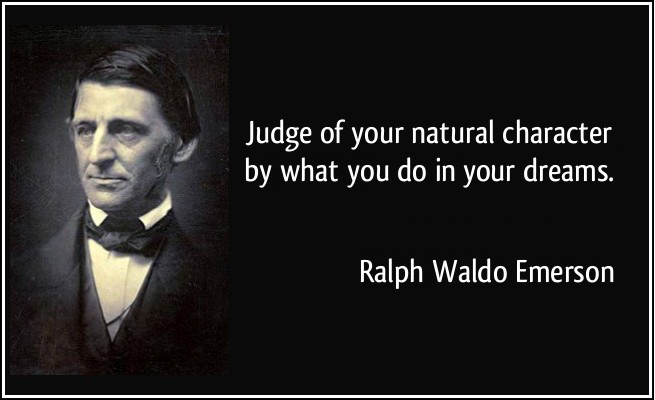
1. “Creation of character is, like much of fiction writing, a mixture of subjective feel and objective control.” — Julian Barnes
2. “Characters are not created by writers. They pre-exist and have to be found.” — Elizabeth Bowen
3. “The characters that I create are parts of myself and I send them on little missions to find out what I don’t know yet.” — Gail Godwin
4. “I don’t have a very clear idea of who the characters are until they start talking.” — Joan Didion
5. “I visualize the characters completely; I have heard their dialogue. I know how they speak, what they want, who they are, nearly everything about them.” — Joyce Carol Oates
6. “When I write, I live with my characters. It’s like going to work. You see the people at the next desk in full regalia all the time, and you know where they came from and where they are going. The point is to define the nuances of everything that’s happening with them and to find the element of their lives that is fascinating enough to record. That takes a lot of doing.” — William Kennedy
7. “Don’t write about a character. Become that character, and then write your story.” — Ethan Canin
8. “The character that lasts is an ordinary guy with some extraordinary qualities.” — Raymond Chandler
9. “It doesn’t matter if your lead character is good or bad. He just has to be interesting, and he has to be good at what he does.” — David Chase
10. “Think of your main characters as dinner guests. Would your friends want to spend ten hours with the characters you’ve created? Your characters can be loveable, or they can be evil, but they’d better be compelling.” — Po Bronson
Elizabeth Bowen’s 7 Tips on Approaching Dialogue
1. Dialogue should be brief.
2. It should add to the reader’s present knowledge.
3. It should eliminate the routine exchanges of ordinary conversation.
4. It should convey a sense of spontaneity but eliminate the repetitiveness of real talk.
5. It should keep the story moving forward.
6. It should be revelatory of the speaker’s character, both directly and indirectly.
7. It should show the relationships among people.

10 Thoughts on Dialogue From Notable Authors

1. “Dialogue has to show not only something about the speaker that is its own revelation, but also maybe something about the speaker that he doesn’t know but the other character does know.” — Eudora Welty
2. “Dialogue in fiction should be reserved for the culminating moments and regarded as the spray into which the great wave of narrative breaks in curving toward the watcher on the shore.” — Edith Wharton
3. “Good writers do not litter their sentences with adverbial garbage. They do not hold up signs reading ‘laughter!’ or ‘applause!’ The content of dialogue ought to suggest the mood.” — James J. Kilpatrick
4. “Nouns, verbs, are the workhorses of language. Especially in dialogue, don’t say, ‘she said mincingly,’ or ‘he said boisterously.’ Just say, ‘he said, she said.’” — John P. Marquand
5. “A man or woman who does not write good dialog is not a first-rate writer.” — George V. Higgins
6. “Dialogue that is written in dialect is very tiring to read. If you can do it brilliantly, fine. If other writers read your work and rave about your use of dialect, go for it. But be positive that you do it well, because otherwise it is a lot of work to read short stories or novels that are written in dialect. It makes our necks feel funny.” — Anne Lamott
7. “Dialogue which does not move the story along, or add to the mood of the story, or have an easily definable reason for being there at all (such as to establish important characterization), should be considered superfluous and therefore cut.” — Bill Pronzini
8. “To write successful dialogue the author must have access to the mind of all his characters, but the reader must not perceive any more than he would in real life.” — William Sloane
9. “Don’t write stage directions. If it is not apparent what the character is trying to accomplish by saying the line, telling us how the character said it, or whether or not she moved to the couch isn’t going to aid the case. We might understand better what the character means but we aren’t particularly going to care.” – David Mamet
10, “Remember that you should be able to identify each character by what he or she says. Each one must sound different from the others. And they should not all sound like you.” — Anne Lamott
A Special Brand of Bravery

In yesterday’s post, villains took center stage so it’s only fitting that the heroes receive a little equal time. In a future post I plan on discussing the anatomy of a hero (all right, guttermind, give it a rest) but today I’d like to explore the key ingredient your protagonist must possession to some degree in order to attract your audience and keep them invested:
Bravery.
And it should come as no surprise to any of you that if I’ve brought the subject up, there must be more than one type of courage you may either instill or bestow upon your hapless hero:
1. Heroic Bravery is the most typical brand of courage found in fictional characters nowadays, where the protagonist places themselves in jeopardy for the protection of others or to further a cause in which they passionately believe, knowing in their heart of hearts that the risk to their own well-being is completely worth it.
2. Steadfast Bravery is usually displayed by someone who routinely endures a mental or physical dangerous situation and challenges fate by meeting it head on with patient doggedness every single day.
3. Quiet Bravery, often confused with cowardice, is an offshoot of steadfast bravery where the situations are less physically dangerous. Protagonists maintain their sense of self-worth and hope as they handle their business with grace and patience.
4. Personal Bravery is exactly what it says on the tin. The protagonist risks everything for a chance at a better life as they pursue their seemingly impossible dreams. This type of bravery speaks to us all as we’ve all experienced it in some fashion at one time or another.
5. Devil-May-Care Bravery comes from protagonists that feel they have nothing left to live for–the loss of everything dear to them, a terminal illness, etc.–so they display insane courage in order to meet their inevitable death with open arms on their terms.
6. Frightened Bravery is easily the most interesting type of courage to explore within a protagonist. A character that normally chooses flight in fight-or-flight situations that has either mentally or physically been backed into a corner and forced to face their fears and rise above them can be viewed as the bravest of all the courageous archetypes (and it makes for one hell of a character arc).
The best thing about these? You’re not limited to one type per character, in fact, your protagonist may display each and every one of these types of bravery as they trod along their hero’s path. Your job as creator is to recognize which category suits your character best in order to fully flesh them out on the page.
Sally forth bravely and be writeful.
 MADD FICTIONAL