Unlock Your Inner Story

Photo: Unlock your inner story ...

They say, “Everyone has at least one good book in them” and while I think book might be a bit of a stretch, I wholeheartedly believe that everyone has at least one good story in them. The natural length—the pure story without padding or the encumbrance of unnecessary detail or description—of which can range from flash fiction (under 1,000 words) to short story (under 7,500 words) to novelette (7,500 to 17,500 words) to novella (17,500 to 40,000 words) to a proper novel (over 40,000 words).

No matter how non-creative you believe yourself to be, your brain is nonetheless gifted with the special ability of imagination, and regardless of how infrequently you put it to use, you still are able to dream up intricate realities, despite your age or IQ level. Haven’t we all, at one time or another, projected a new reality in our minds in the form of daydreaming our desires? And no two daydreams are exactly the same since we each possess unique preferences, points of view, wants and needs.

Yet, even armed with the knowledge of this gift, we, as writers, tend to suffer because we either do not fully believe in or properly comprehend our true nature as creators. Sure, we continue to imagine “what if” scenarios but sometimes we find it difficult to allow those thoughts to flow through us—the conduit—and blossom into the stories they need to become.

The following list isn’t a step-by-step “how to” guide, because no one can tell you precisely what you need to do to access your inner story. You are a totally unique entity, after all. View it more as a broom to help you sweep away the clutter piled up on the footpath to your personal tale.

1. Examine your self-image.

The first battle you must face is the one against your self-image. You are more than pen and paper, more than a keyboard, more than “just another writer” or more than whatever obstacle your past or conditioning has placed in your path. The main reason why most writers fail to connect with their inner story is because of their limited knowledge of who they truly are.

As flawed human beings we are so engrossed with the perceptions of who we are that we fail to see that we are usually the source for the reality we have created for ourselves. Sure, the walls of the prison may have been constructed by events of the past, by family, peers or environment, but we continue to fortify the walls and never once open the lock–the key is always in our possession–push the cell door to step out into freedom.

This in no way suggests you have to deconstruct your self-image–unless that’s your goal, then by all means, have at it. You’re merely peeling away the layers of the identity you’ve created for yourself for societal purposes and exposing your core self, the real you. Don’t worry, it’s only for the exercise of writing. You can reapply your layers once you’re done.

Your secret identity is safe with me.

2. Take note of your gifts.

Different from writer traits–talent, the hunger for knowledge, and diligence–a writer’s gift can range from an eye for detail, to a flair for description, to a talent for dialogue. Or, you might not even be aware of your talents, so I want you to grab a piece of paper and something to write with and in 60 seconds jot down a list of what you’re good at. Don’t think about it. Simply jot down, off the top of your head, the things that come easiest to you when you write.

All done? Now take a long, hard, honest look at your list. The things you don’t concentrate on, those bits and bobs that just sort of come naturally to you when you write… those are your gifts. You’d be surprised to discover how many writers aren’t aware of their innate skills because they aren’t utilized in their everyday work lives and wind up being placed in the “Hobby” category.

3. Exploit your strengths. 

Since you’re bothering to read this, my guess is that you’ve written a couple of pieces already and maybe even finished a few of them. Now, if you’re an avid reader, you will have no doubt compared your piece to your author idols, and have developed the brutally honest ability to cast a critical eye upon your own work and spot areas in your writing that aren’t as strong as others. And since the writing isn’t perfect, you are therefore a horrible writer who should no longer legally be allowed to string a sentence together in an email, let alone write a story.

Maybe it’s true. Maybe you really are a bad writer–hey, they exist–but that’s not my call to make. I don’t know you, so I’ll assume you at least have some fundamental writing potential. However, no matter how good you are, there is one basic truth you must learn to face: Your writing will never be perfect. Why? As stated in a previous post: Because wunderkind wasn’t conveniently inserted into your backstory, and perfection isn’t DNA-encodable at this point in time. Still, you should always strive to get your writing as close to perfection as you can manage, and accept the fact that: It. Will. Not. Be. Perfect.

Maybe you can’t write a convincing love scene. Maybe you struggle with organic dialogue. Maybe you get stumped when attempting to create a character’s internal arc. Maybe you’re rubbish at tying up all your story’s loose threads. Console yourself in the knowledge that you wouldn’t be the first. A few of these “weaknesses” and more are true for authors of published works, some of which even make bestseller lists.

And because, as a writer, you are always a student and ever pushing yourself and learning new ways to hone your craft, you will eventually learn to strengthen your weaknesses. In the meantime, put all of the aspects of your writing into perspective, make a deal to stop beating yourself up so much, and focus on your strengths. They’re your “A” game.

4. Gird your loins against the enemy.

In addition to dealing with possible self-image barriers, there are other obstacles that can block your path: Fear, intimidation, procrastination, and self-doubt. The problem with these buggers is that they often take the form of lies you tell yourself. And they happen to be effective as hell because they insulate your brain from facing unpleasantries, in this case the difficult portions of the writing process that you need to slog through in order to strike gold.

The biggest lie you can tell yourself as a writer is, “I’ll do it later.” It’s a dishonest postponement because later never comes. If you don’t confront the enemies that keep you from your writing and tamp the bastards down long enough to complete your piece, then you don’t have what it takes to be a writer. Staring into the gaping maw of the harsh realities that terrify you is one of the most important parts of the process.

Slap a “H” on your chest and “Handle” it.

5. Identify your genre.

At this point, you arch an eyebrow and ask, “Rhyan, how can anyone not know the genre of their story?”

The answer lies within the fact that writers are creators. Some are resistant to the notion of placing labels or classifications on their work. For others, classification difficulties arise when their piece contains elements from several genres as some writers disagree with the act of limiting creative freedom in order to adhere to strictly delineated genre segregation.

For your audience, knowing the genre sets not only the stage, but their expectations as well, and puts them in the proper mindset to both understand and accept the rules of your story.

At this stage in the process, the importance of identifying your genre has to do with story mechanics. Certain elements step to the forefront and operate differently depending on genre, so you should be aware of the rules of the category–even if you decide to break them because of the maverick you are–as you’re arranging your idea into the proper story structure (see: Simple Anatomy of a Plot Outline).

6. Plant your feet firmly in the soil of your story.

This is your story. First and foremost, it must feel natural to you. No matter how fantastical the environment, how outrageous the yarn you’re spinning, if you don’t feel confident in the pocket dimension you’ve created, there’s little chance of you selling the story as being credible. Your job is to take utter nonsense and portray it with as much authenticity as possible.

7. Go with your gut.

Some people seek permission to write. Thinly disguised under the “Oh, it’s just an idea I’m toying with” veil, they will ask family and friends if they should write about such-and-such or if this-that-or-the-other-thing would make an interesting topic.

I urge you not to be this person.

I’m reminded of a quote by Jerome Lawrence, “The whole point of writing is to have something in your gut or in your soul or in your mind that’s burning to be written.” So, if you can actually feel inspiration or instinct churning like hot snakes in your gut to write, forget the opinions of those around you, disregard the idea of “should” and just go for it.

Never live with regret, if you can help it.

8. Do it now. No better time than the present. 

To snatch a line from Pixar’s Ratatouille “Why not here? Why not now?”

By now you know you must show up for writing everyday, and there’s no time like the present. So, why not find yourself a quiet spot, practice listening, and trust what you hear. That’s your inner story talking to you, and it not only has to be unlocked but it must be accessible at will.

I know it’s become hackneyed to instruct you to follow your bliss, but if you deny your instincts to do what you truly want to do, then the problem becomes one of trust. Do you trust the voice within you or do you trust reality as you are made to perceive it? Or, are you willing to trust the voice and write what you hear, no matter how crazy it sounds?

You have to learn to be compassionate with yourself, as well as having compassion for yourself. Especially during the vulnerable times when you’re blocked and can’t bring yourself to write because you’re scared you’ll be rejected. Take some small comfort in knowing you’re not alone in this.

Since all art must be criticized, every single published author had to overcome fear of rejection. What you need to keep in mind is that your audience–human, just the same as you–can only relate to your writing from their own experience, and sometimes their feedback will be negative. That doesn’t necessarily indicate problems in your writing, and may simply reflect a varying viewpoint.

But fear of rejection has no business rearing its ugly head right now as it’s time for you to honor your inner story by listening to the words it shares with you and writing about it. Trust me, if you’re willing to enjoy the process, you can write damn near anything.

So, why not sally forth and be inner story writeful?

— Rhyan Scorpio-Rhys

Famous Thoughts on Grammar and Usage

1. “You can be a little ungrammatical if you come from the right part of the country.” — Robert Frost

2. “Word has somehow got around that the split infinitive is always wrong. That is a piece with the outworn notion that it is always wrong to strike a lady.” — James Thurber

3. “It is indeed acceptable practice to sometimes split an infinitive. If infinitive-splitting makes available just the shade of meaning you desire or if avoiding the separation creates a confusing ambiguity or patent artificiality, you are entitled to happily go ahead and split!” — Richard Lederer

4. “When you catch an adjective, kill it.” — Mark Twain

5. “The adjective is the banana peel of the parts of speech.” — Clifton Fadiman

6. “The adjective is the enemy of the noun.” — Voltaire

7. “If the noun is good and the verb is strong, you almost never need an adjective.” — J. Anthony Lukas

8. “Don’t say it was ‘delightful’; make us say ‘delightful’ when we’ve read the description. You see, all those words (horrifying, wonderful, hideous, exquisite) are only like saying to your readers ‘Please will you do my job for me?’” — C.S. Lewis

9. “Forward motion in any piece of writing is carried by verbs. Verbs are the action words of the language and the most important. Turn to any passage on any page of a successful novel and notice the high percentage of verbs. Beginning writers always use too many adjectives and adverbs and generally use too many dependent clauses. Count your words and words of verbal force (like that word “force” I just used).” — William Sloane

10. “The editorial ‘we’ has often been fatal to rising genius; though all the world knows that it is only a form of speech, very often employed by a single needy blockhead.” — Thomas Baington Macaulay

11. “Only presidents, editors and people with tapeworm have the right to use the editorial ‘we.’” — Mark Twain

Writing Joke of the Day: Comforting a Grammar Nazi

Q: What do you say when you are comforting a grammar nazi?
A: There, Their, They’re

English Professor

“In English,” he said, “A double negative forms a positive. In some languages, though, such as Russian, a double negative is still a negative. However, there is no language wherein a double positive can form a negative.”

A voice from the back of the room piped up, “Yeah, right.”

Library

A Texan was visiting Harvard University, and was lost. He stopped a student and asked, “Do you know where the library is at?”

“I sure do,” replied the student, “But, you know, you’re not supposed to end sentences with prepositions.”

“What?”

“Prepositions. You ended your sentence with an ‘at’, which you aren’t supposed to do.”

“Oh, ok,” said the Texan, “Do you know where the library is at, asshole?”

Grammar walks into a Bar

Three intransitive verbs walk into a bar. They sit. They Drink. They Leave

A comma splice walks into a bar, it has a drink and then leaves.

A dangling modifier walks into a bar. After finishing a drink, the bartender asks it to leave.

A Question mark walks into a bar?

Two Quotation marks “walk into” a bar.

A gerund and an infinitive walk into a bar, drinking a drink.

The bar was walked into by the passive voice.

The past, the present, and the future walked into a bar. It was tense.

A synonym ambles into a pub.

A gerund and an infinitive walk into a bar, drinking to drink.

A hyperbole totally ripped into this bar and destroyed everything.

A run on sentence walks into a bar it is thirsty.

Falling slowly, softly falling, the chiasmus collapsed to the bar floor.

A group of homophones wok inn two a bar.

Panda

A panda walks into a cafe. He orders a sandwich, eats it, then draws a gun and fires two shots in the air.

“Why?” asks the confused waiter, as the panda makes towards the exit. The panda produces a badly punctuated wildlife manual and tosses it over his shoulder.

“I’m a panda,” he says at the door. “Look it up.”

The waiter turns to the relevant entry and, sure enough, finds an explanation.

“Panda. Large black-and-white bear-like mammal, native to China. Eats, shoots and leaves.”

Neil Gaiman reads from The Graveyard Book

A favorite writer of mine, Neil Gaiman. Enjoy as he reads from The Graveyard Book, winner of the 2010 Cilip Carnegie Medal, the Newbery Medal and the Booktrust Teenage Book Prize 2009, and shortlisted for the Kate Greenaway Award.

Coined by the Immortal Bard: Popular Words and Phrases

shakespear-infographic_small

Many of the words and phrases we casually toss about in our everyday conversations can be traced back to a man who is considered the greatest writer of the English language, William Shakespeare. He boldly toyed with the language–as any good writer should–turning nouns into verbs, verbs into adjectives, adding prefixes and suffixes, and joining unrelated words to create new definitions. Below is a list of a few of the phrases and words coined by the immortal bard:

Phrases:

  • All that glitters is not gold (The Merchant of Venice)(“glisters”)
  • All’s well that ends well (title)
  • As good luck would have it (The Merry Wives of Windsor)
  • As merry as the day is long (Much Ado About Nothing / King John)
  • Bated breath (The Merchant of Venice)
  • Bear a charmed life (Macbeth)
  • Be-all and the end-all (Macbeth)
  • Better foot before (“best foot forward”) (King John)
  • The better part of valor is discretion (I Henry IV; possibly already a known saying)
  • In a better world than this (As You Like It)
  • Brave new world (The Tempest)
  • Break the ice (The Taming of the Shrew)
  • Breathed his last (3 Henry VI)
  • Brevity is the soul of wit (Hamlet)
  • Refuse to budge an inch (Measure for Measure / Taming of the Shrew)
  • Cold comfort (The Taming of the Shrew / King John)
  • Come what come may (“come what may”) (Macbeth)
  • Dead as a doornail (2 Henry VI)
  • A dish fit for the gods (Julius Caesar)
  • Dog will have his day (Hamlet; quoted earlier by Erasmus and Queen Elizabeth)
  • Devil incarnate (Titus Andronicus / Henry V)
  • Eaten me out of house and home (2 Henry IV)
  • Elbow room (King John; first attested 1540 according to Merriam-Webster)
  • Faint hearted (I Henry VI)
  • Fancy-free (Midsummer Night’s Dream)
  • Fight till the last gasp (I Henry VI)
  • Flaming youth (Hamlet)
  • Forever and a day (As You Like It)
  • For goodness’ sake (Henry VIII)
  • Foregone conclusion (Othello)
  • Full circle (King Lear)
  • The game is afoot (I Henry IV)
  • The game is up (Cymbeline)
  • Give the devil his due (I Henry IV)
  • Good riddance (Troilus and Cressida)
  • Jealousy is the green-eyed monster (Othello)
  • It was Greek to me (Julius Caesar)
  • Heart of gold (Henry V)
  • ‘Tis high time (The Comedy of Errors)
  • Hoist with his own petard (Hamlet)
  • Household words (Henry V)
  • Improbable fiction (Twelfth Night)
  • In a pickle (The Tempest)
  • In my heart of hearts (Hamlet)
  • In my mind’s eye (Hamlet)
  • Infinite space (Hamlet)
  • Infirm of purpose (Macbeth)
  • It is but so-so(As You Like It)
  • It smells to heaven (Hamlet)
  • Itching palm (Julius Caesar)
  • Kill with kindness (Taming of the Shrew)
  • Killing frost (Henry VIII)
  • Knit brow (The Rape of Lucrece)
  • Knock knock! Who’s there? (Macbeth)
  • Laid on with a trowel (As You Like It)
  • Laughing stock (The Merry Wives of Windsor)
  • Laugh yourself into stitches (Twelfth Night)
  • Lean and hungry look (Julius Caesar)
  • Lie low (Much Ado about Nothing)
  • Live long day (Julius Caesar)
  • Love is blind (Merchant of Venice)
  • Melted into thin air (The Tempest)
  • Though this be madness, yet there is method in it (“There’s a method to my madness”) (Hamlet)
  • Make a virtue of necessity (The Two Gentlemen of Verona)
  • Milk of human kindness (Macbeth)
  • Misery acquaints a man with strange bedfellows (The Tempest)
  • Much Ado About Nothing (title)
  • Murder most foul (Hamlet)
  • Naked truth (Love’s Labours Lost)
  • Neither rhyme nor reason (As You Like It)
  • Not slept one wink (Cymbeline)
  • [Obvious] as a nose on a man’s face (The Two Gentlemen of Verona)
  • One fell swoop (Macbeth)
  • Time is out of joint (Hamlet)
  • Out of the jaws of death (Twelfth Night)
  • Own flesh and blood (Hamlet)
  • Star-crossed lovers (Romeo and Juliet)
  • Parting is such sweet sorrow (Romeo and Juliet)
  • What’s past is prologue (The Tempest)
  • [What] a piece of work [is man] (Hamlet)
  • Pitched battle (Taming of the Shrew)
  • Play fast and loose (King John)
  • Pomp and circumstance (Othello)
  • Primrose path (Hamlet)
  • Quality of mercy is not strained (The Merchant of Venice)
  • Salad days (Antony and Cleopatra)
  • Seen better days (As You Like It? Timon of Athens?)
  • Send packing (I Henry IV)
  • Make short shrift (Richard III)
  • Sick at heart (Hamlet)
  • Snail paced (Troilus and Cressida)
  • Something in the wind (The Comedy of Errors)
  • Something wicked this way comes (Macbeth)
  • A sorry sight (Macbeth)
  • Sound and fury (Macbeth)
  • Spotless reputation (Richard II)
  • Stony hearted (I Henry IV)
  • Such stuff as dreams are made on (The Tempest)
  • Smooth runs the water where the brook is deep (“Still waters run deep”) (2 Henry VI)
  • The short and the long of it (The Merry Wives of Windsor)
  • Sweets to the sweet (Hamlet)
  • Swift as a shadow (A Midsummer Night’s Dream
  • Set my teeth on edge (I Henry IV)
  • Tell truth and shame the devil (1 Henry IV)
  • There’s no such thing (?) (Macbeth)
  • There’s the rub (Hamlet)
  • This mortal coil (Hamlet)
  • To gild refined gold, to pain the lily (“to gild the lily”) (King John)
  • To thine own self be true (Hamlet)
  • Too much of a good thing (As You Like It)
  • Tower of strength (Richard III)
  • Towering passion (Hamlet)
  • Trippingly on the tongue (Hamlet)
  • Wear my heart upon my sleeve (Othello)
  • What’s done is done (Macbeth)
  • What the dickens (The Merry Wives of Windsor)
  • Wild-goose chase (Romeo and Juliet)
  • Working-day world (As You Like It)
  • The world’s my oyster (Merry Wives of Windsor)

Words: 

  • accommodation (Othello)
  • accused (n.) (Richard II — first known use as a noun, meaning person accused of a crime)
  • addiction (Henry V / Othello)
  • admirable (several; seems unlikely)
  • advertising (adj.)(Measure for Measure; in context, means “being attentive”; the noun was already in use)
  • aerial (Othello)
  • alligator (Romeo and Juliet; Spanish “aligarto” was already in use in English)
  • amazement (13 instances; first known use as a noun)
  • anchovy (I Henry IV; first attestation in English of the Spanish word for dried edible fish)
  • apostrophe (“apostrophas”)(Love’s Labour’s Lost; seems to be a well-known word already)
  • arch-villain (Measure for Measure / Timon of Athens)
  • to arouse (2 Henry VI / Hamlet; “rouse” was the usual form)
  • assassination (Macbeth; “assassin” was already in use and derives from “hashish eater”)
  • auspicious (several; “auspice” was a Roman practice of fortune-telling by bird flight)
  • backing (I Henry VI; this is just a pun on a known word)
  • bandit (II Henry VI, actually “bandetto”, the first attestation in English of a familiar Italian word for people “banned”, i.e., outlaws)
  • barefaced (in the sense of “barefaced power”) (Macbeth)
  • baseless (in the sense of fantasy without grounding in fact) (The Tempest)
  • beached (several, merely means “possessing a beach”)
  • bedazzled (The Taming of the Shrew)
  • bedroom (A Midsummer Night’s Dream, merely means a place to sleep on the ground)
  • belongings (Measure for Measure)
  • to besmirch (Henry V)
  • birthplace (Coriolanus; first attestation)
  • to blanket (King Lear; first use as a verb)
  • bloodstained (I Henry IV)
  • blusterer (A Lover’s Complaint)
  • bold-faced (I Henry VI)
  • bottled (Richard III)
  • bump (Romeo and Juliet; first attestation of onomopoeic word)
  • buzzer (Hamlet; means gossipper)
  • to cake (Timon of Athens, first attestation as a verb)
  • to castigate (Timon of Athens)
  • to cater (As You Like It; from coetous, a buyer of provisions)
  • clangor (3 Henry VI / 2 Henry IV)
  • to champion (Macbeth; first attestation as a verb, and in an older sense of “to challenge”; though the noun was familiar as someone who would fight for another)
  • circumstantial (As You Like It / Cymbeline; first attestation in the sense of “indirect”)
  • cold-blooded (King John; first use to mean “lack of emotion”)
  • coldhearted (Antony and Cleopatra)
  • compact (several; seems to have been a common word)
  • to comply (Othello)
  • to compromise (The Merchant of Venice, several of the histories; seems to have been already in use)
  • to cow (Macbeth; first use in English of a Scandinavian verb)
  • consanguineous (Twelfth Night; “consanguinity” was already in use)
  • control (n.) (Twelfth Night)
  • countless (Titus Andronicus / Pericles)
  • courtship (several, seems unikely)
  • critic (Love’s Labour’s Lost; Latin term)
  • critical (not in today’s sense) (Othello, A Midsummer Night’s Dream)
  • cruelhearted (The Two Gentlemen of Verona)
  • Dalmatians (Cymbeline)
  • dauntless (Macbeth)
  • dawn (I Henry IV, King John; first use as a noun, the standard had been “dawning”)
  • day’s work (several, must have been a common expression)
  • deafening (II Henry IV; in the sense of a noise that is loud but does not produce real deafness)
  • to denote (several; already a word in Latin)
  • depository
  • discontent (Richard III / Titus Andronicus; the verb was in use but this is the first attestation as a noun)
  • design (several, seems unlikely)
  • dexterously (Twelfth Night)
  • dialogue (several, seems already familiar)
  • disgraceful (I Henry VI; means “not graceful”)
  • dishearten (Henry V)
  • to dislocate (King Lear, refers to anatomy)
  • distasteful (Timon of Athens)
  • distracted (Hamlet / Measure for Measure; seems possible)
  • divest (Henry V / King Lear; probably already in use as referring to a royal title)
  • domineering (Love’s Labour’s Lost; from a Dutch word)
  • downstairs (I Henry IV, supposedly first use as an adjective)
  • droplet (Timon of Athens)
  • to drug (Macbeth; first use as a verb)
  • to dwindle (I Henry IV / Macbeth, seems already familiar as a term for body wasting)
  • to educate (Love’s Labour’s Lost)
  • to elbow (King Lear; first use as a verb)
  • embrace (I Henry VI; first use as a noun)
  • employer (Much Ado about Nothing)
  • employment (several, obviously familiar)
  • engagement (several, seems simply the first attestation)
  • to enmesh (Othello)
  • to ensnare (Othello)
  • enrapt (Troilus and Cressida)
  • enthroned (Antony and Cleopatra)
  • epileptic (King Lear; first use as an adjective, though the noun was old)
  • equivocal (Othello / All’s Well that Ends Well; first use as adjective, though the verb “to equivocate” was familiar)
  • eventful (As You Like It)
  • excitement (Hamlet / Troilus and Cressida; both times as plural; first use as a noun)
  • expedience (several, supposedly first use as noun)
  • exposure (several, supposedly first use as noun)
  • eyeball (The Tempest)
  • eyedrops (II Henry IV; means “tears”)
  • eyesore (The Taming of the Shrew)
  • fanged (Hamlet, first attestation)
  • farmhouse (The Merry Wives of Windsor; first known use of the compound)
  • far-off (several, seems already familiar)
  • fashionable (Timon of Athens / Troilus and Cressida)
  • fathomless (not today’s sense) (Troilus and Cressida)
  • fitful (Macbeth)
  • fixture (not current sense) (Merry Wives of Windsor / Winter’s Tale)
  • flawed (King Lear; first use as an adjective)
  • flowery (A Midsummer Night’s Dream)
  • foppish (King Lear)
  • fortune-teller (The Comedy of Errors)
  • to forward (I Henry IV; first use as a verb)
  • foul-mouthed (several, seems already familiar)
  • freezing (Cymbeline)
  • frugal (several; “frugality” was already in common use)
  • full-grown (Pericles)
  • gallantry (Troilus and Cressida)
  • generous (several, obviously already known)
  • gloomy (several, “to gloom” was a verb)
  • glow (several; the word had originally meant red-and-warm)
  • gnarled (Measure for Measure; alteration of knurled which was a standard word for bumpy)
  • go-between (several, seems familiar)
  • to gossip (The Comedy of Errors; first use as a verb; “gossip” was one’s familiar friends)
  • gust (III Henry VI, seems already familiar and was an Old Norse word)
  • half-blooded (King Lear)
  • hint (Othello, first use in today’s sense)
  • hob-nails (I Henry IV, alleged; seems already familiar)
  • hobnob (Twelfth Night; older term was “hab, nab”, and not in today’s sense)
  • homely (several, seems already familiar)
  • honey-tongued (Love’s Labour’s Lost)
  • hoodwinked (already known from falconry)
  • hostile (several, seems like a word that is already familiar)
  • hot-blooded (The Merry Wives of Windsor / King Lear)
  • housekeeping (The Taming of the Shrew; seems unlikely)
  • howl (several, clearly familiar)
  • to humor (Love’s Labour’s Lost, first attestation as a verb)
  • hunchbacked (can’t find)
  • to hurry (Comedy of Errors, first attestation as verb)
  • ill-tempered (can’t find)
  • immediacy (King Lear, first use as noun)
  • impartial (2 Henry IV)
  • to impede (Macbeth, first use as verb, though “impediment” was already widely used)
  • import (several, and not used in the modern sense)
  • immediacy (King Lear, first attestation as a noun)
  • importantly (Cymbeline, first attestation as an adverb)
  • inaudible (All’s Well that Ends Well; “audible” was already in use)
  • inauspicious (Romeo and Juliet)
  • indistinguishable (not in today’s sense)(Troilus and Cressida)
  • inducement (several, seems unlikely)
  • investment (II Henry IV, not in present sense)
  • invitation (The Merry Wives of Windsor; signifies “flirting”)
  • invulnerable King John / Hamlet / The Tempest; first attestation for the negative; Coriolanus has unvulnerable)
  • jaded (several, seems already a term of contempt)
  • Judgement Day (I Henry VI; usual term had been “Day of Judgement”)
  • juiced (Merry Wives of Windsor; first attestation as an adjective)
  • kissing (several, first attestation of the participle, though surely not its first use)
  • lackluster (As You Like It)
  • ladybird (Romeo and Juliet)
  • to lament (several, seems already familiare)
  • to lapse (several, first attestation as a verb, though already familiar as a noun)
  • to launder (first use as a verb; “laundress” was in common use)
  • laughable (The Merchant of Venice)
  • leaky (Antony and Cleopatra / The Tempest)
  • leapfrog (Henry V; first attestation but seems unlikely as a coinage)
  • lonely (several, seems unlikely)
  • long-legged (can’t find)
  • love letter (can’t find)
  • to lower (several, seems already known)
  • luggage (first use as noun)
  • lustrous (Twelfth Night / All’s Well that Ends Well)
  • madcap (several, attestation as adjective; the noun had become popular just before)
  • majestic (several, first use as adjective)
  • majestically (I Henry IV; first attestation as adverb)
  • malignancy (Twelfth Night, seems possible)
  • manager (Love’s Labour’s Lost / Midsummer Night’s Dream; first attestation as noun)
  • marketable (As You Like It; first use as adjective)
  • militarist (All’s Well that Ends Well)
  • mimic (Midsummer Night’s Dream)
  • misgiving (Julius Caesar; first use as noun, though “to misgive” was in common use)
  • misplaced (several, seems unlikely)
  • to misquote (1 Henry IV; not in the present sense)
  • money’s worth (Love’s Labours Lost)
  • monumental (several, seems unlikely)
  • moonbeam (A Midsummer Night’s Dream)
  • mortifying (Merchant of Venice / Much Ado About Nothing )
  • motionless (Henry V)
  • mountaineer (Cymbeline; the sense is “hillbilly”)
  • multitudinous (Macbeth)
  • neglect (several, obviously already known)
  • to negotiate (Much Ado about Nothing / Twelfth Night; verb from the Latin)
  • new-fallen (Venus and Adonis / I Henry IV)
  • new-fangled (Love’s Labour’s Lost / As You Like It)
  • nimble-footed (several, seems already a familiar expression)
  • noiseless (King Lear / All’s Well that Ends Well)
  • to numb (King Lear, first attestation as a transitive verb)
  • obscene (several; straight from Latin)
  • obsequiously (first use of the adverb; comes from “obsequies”, or funeral rites)
  • outbreak (Hamlet, first attestation as a noun)
  • to outdare (I Henry IV)
  • to outgrow (can’t find)
  • to outweigh (can’t find)
  • over-cool (II Henry IV)
  • overgrowth (can’t find)
  • over-ripened (II Henry VI ;first-use of the familiar compound)
  • over-weathered The Merchant of Venice)
  • overview (can’t find)
  • pageantry (Pericles Prince of Tyre)
  • pale-faced (A Midsummer Night’s Dream)
  • to pander (several; was already a proverb)
  • pedant (several, seems already in common use for a stuffy teacher)
  • perplex (King John / Cymbeline)
  • perusal (Sonnets / Hamlet; first use as a noun)
  • to petition (Antony and Cleopatra / Coriolanus; first use as a verb)
  • pious (several, seems very unlikely)
  • posture (several, seems known)
  • premeditated (several; first attestation of the adjective, though the noun was in use)
  • priceless
  • Promethean (Othello / Love’s Labour’s Lost)
  • protester (not today’s sense) (Julius Caesar)
  • published (2 Henry VI)
  • puking (As You Like It)
  • puppy-dog (King John / Henry V)
  • on purpose (several; seems very unlikely)
  • quarrelsome (As You Like It / Taming of the Shrew)
  • questing (As You Like It; first use of the gerund)
  • in question (several, seems already in use)
  • radiance (several; first use as noun)
  • to rant (The Merry Wives of Windsor / Hamlet; loan-word from Dutch or previously-unattested English word?)
  • rancorous (2 Henry VI, Comedy of Errors, Richard III, all early plays, seems unlikely)
  • raw-boned (I Henry VI)
  • reclusive (Much Ado about Nothing; first use as adjective)
  • reinforcement (Troilus and Cressida / Coriolanus; seems already in use)
  • reliance
  • remorseless (several, first attestation of this form)
  • reprieve (several, obviously already in use)
  • resolve (several, obviously already in use)
  • restoration (King Lear)
  • restraint (several, seems already familiar)
  • retirement (II Henry IV; refers to military retreat; first use as noun)
  • revolting (several, obviously already familiar)
  • to rival (King Lear; first attestation as verb; noun was well-known)
  • rival (Midsummer Night’s Dream; first attestation as adjective, noun was well-known)
  • roadway (II Henry IV; first attestation of the compound)
  • rumination (As You Like It; first use as noun)
  • sacrificial (Timon of Athens; not today’s usage)
  • sanctimonious (Measure for Measure / Tempest)
  • satisfying (Othello / Cymbeline)
  • savage (several; the word was obviously already in use)
  • savagery (King John / Henry V; first use as this form)
  • schoolboy (Julius Caesar / Much Ado about Nothing)
  • scrubbed (The Merchant of Venice)
  • scuffle (Antony and Cleopatra; first use as noun, though the verb was familiar)
  • seamy-side (Othello)
  • to secure (II Henry VI; first use as a verb; the adjective was well-known)
  • shipwrecked (Pericles Prince of Tyre, seems unlikely)
  • shooting star (Richard II; first known use of the phrase)
  • shudder (Timon of Athens; first use as a noun; verb already well-known)
  • silk (alleged; obviously not Shakespeare’s)
  • stocking (obviously not Shakespeare’s)
  • silliness (Othello)
  • skim milk (I Henry IV; first use of the familiar term)
  • to sneak (Measure for Measure; supposed first use of the verb)
  • soft-hearted (2 Henry VI / 3 Henry VI; first use of the familiar phrase)
  • spectacled (Coriolanus; not in today’s sense)
  • splitting (II Henry VI; first use as adjective)
  • sportive (Richard III / Comedy of Errors / All’s Well that Ends Well; supposed first use)
  • to squabble (Othello; supposed first use, as with “to swagger”)
  • stealthy (Macbeth; first use as adjective)
  • stillborn (can’t find, obviously not Shakespeare’s)
  • to submerge (Antony and Cleopatra)
  • successful (Titus Andronicus, seems dubious)
  • suffocating (Othello; supposed first use as a descriptor)
  • to sully (I Henry VI)
  • superscript (Love’s Labour’s Lost)
  • to supervise (Love’s Labour’s Lost; also Hamlet but not in today’s sense)
  • to swagger (II Henry IV, others; in context this seems to be already a well-known word)
  • switch (first use to mean “twig”)
  • tardily (All’s Well that Ends Well; first use of adverb)
  • tardiness (King Lear; “tardy” as adjective was well-known)
  • threateningly (All’s Well that Ends Well; first use of the adverb)
  • tightly (The Merry Wives of Windsor; first use as an adverb)
  • time-honored (Richard II)
  • title page (can’t find; seems unlikely)
  • to torture (several; first use as a verb)
  • traditional (Richard III; first use as adjective)
  • tranquil (Othello; “tranquility” was an old word)
  • transcendence (All’s Well that Ends Well; first attestation of the noun)
  • tongue-tied (III Henry VI / Julius Caesar / Troilus and Cressida; seems first attestation of a phrase already in use)
  • unaccommodated (King Lear)
  • unaware (Venus and Adonis; first use as an adverb; the adjective was not yet in use)
  • to unclog (Coriolanus, first use as a negative)
  • unappeased (Titus Andronicus)
  • unchanging (The Merchant of Venice)
  • unclaimed (As You Like It; not in today’s sense)
  • uncomfortable (Romeo and Juliet)
  • to uncurl
  • to undervalue (The Merchant of Venice)
  • to undress (The Taming of the Shrew; seems unlikely)
  • unearthly (Winter’s Tale)
  • uneducated (Love’s Labour’s Lost, seems possible)
  • ungoverned (Richard III / King Lear)
  • to unhand (Hamlet)
  • unmitigated (Much Ado about Nothing)
  • unpublished (King Lear; in the sense of “still unknown”)
  • unreal (Macbeth, first use of the negative)
  • unsolicited (Titus Andronicus / Henry VIII; supposed first use of the form)
  • unswayed (Richard III; not in today’s sense, but “is the sword unswung?”)
  • unwillingness (Richard III / Richard II)
  • upstairs (I Henry IV; supposedly first use as an adjective)
  • urging (Richard III / Comedy of Errors; first attestation as a noun
  • useful (several, seems already familiar)
  • varied (Love’s Labour’s Lost, others)
  • vastly (Rape of Lucrece, not present sense)
  • viewless (Measure for Measure; means “invisible”)
  • vulnerable (Macbeth; used in today’s sense)
  • watchdog (The Tempest; first use of the phrase)
  • well-behaved (The Merry Wives of Windsor; first known use of the compound)
  • well-bred (II Henry IV; first use of the familiar compound)
  • well-read (I Henry IV)
  • whirligig (Twelfth Night)
  • to widen
  • widowed (Sonnet 97 / Coriolanus; first use as an adjective)
  • worn out (Romeo and Juliet / 2 Henry IV; seems unlikely)
  • worthless (III Henry VI, several others; seems just a first attestation)
  • yelping (I Henry VI; first attestation of this adjectival form)
  • zany (Love’s Labour Lost; simply a loan-word from Italian commedia dell’arte)

Writing Joke of the Day: Change a light bulb

How many screenwriters does it take to change a light bulb?

Answer:  Ten.

1st draft:  Hero changes light bulb.
2nd draft:  Villain changes light bulb.
3rd draft:  Hero stops villain from changing light bulb.  Villain falls to death.
4th draft:  Lose the light bulb.
5th draft:  Light bulb back in.  Fluorescent instead of tungsten.
6th draft:  Villain breaks bulb, uses it to kill hero’s mentor.
7th draft:  Fluorescent not working.  Back to tungsten.
8th draft:  Hero forces villain to eat light bulb.
9th draft:  Hero laments loss of light bulb.  Doesn’t change it.
10th draft:  Hero changes light bulb.

How many science fiction writers does it take to change a light bulb? 

Two, but it’s actually the same person doing it. He went back in time and met himself in the doorway and then the first one sat on the other one’s shoulder so that they were able to reach it. Then a major time paradox occurred and the entire room, light bulb, changer and all was blown out of existence. They co-existed in a parallel universe, though.

How many publishers does it take to screw in a light bulb? 

Three. One to screw it in. Two to hold down the author.

How many mystery writers does it take to screw in a light bulb? 

Two.  One to screw it almost all the way in, and the other to give it a surprising twist at the end.

How many screenwriters does it take to screw in a light bulb?

Why does it *have* to be changed?

How many cover blurb writers does it take to screw in a light bulb? 

A VAST AND TEEMING HORDE STRETCHING FROM SEA TO SHINING SEA!!!!

Famous Authors Reveal Their Writing Secrets (go on, you know you wanna look)

1. “The secret of getting ahead is getting started. The secret of getting started is breaking your complex overwhelming tasks into small manageable tasks, and then starting on the first one.” — Mark Twain

2. “People on the outside think there’s something magical about writing, that you go up in the attic at midnight and cast the bones and come down in the morning with a story, but it isn’t like that. You sit in back of the typewriter and you work, and that’s all there is to it.” — Harlan Ellison

3. “The secret is to start a story near the ending.” — Chris Offut

4. “The secret of successful fiction is a continual slight novelty.” — Edmund Gosse

5. “The big secret is the ability to stay in the room.” — Ron Carlson

6. “The secret to being a writer is that you have to write. It’s not enough to think about writing or to study literature or plan a future life as an author. You really have to lock yourself away, alone, and get to work.” — Augusten Burroughs

7. “It’s hard to explain how much one can love writing. If people knew how happy it can make you, we would all be writing all the time. It’s the greatest secret of the world.” — Andrea Barrett

8. “Composition is a discipline; it forces us to think. If you want to “get in touch with your feelings,” fine—talk to yourself; we all do. But, if you want to communicate with another thinking human being, get in touch with your thoughts. Put them in order; give them a purpose; use them to persuade, to instruct, to discover, to seduce. The secret way to do this is to write it down and then cut out the confusing parts.” — William Safire

9. “The secret of it all, is to write in the gush, the throb, the flood, of the moment – to put things down without deliberation – without worrying about their style – without waiting for a fit time or place. I always worked that way. I took the first scrap of paper, the first doorstep, the first desk, and wrote – wrote, wrote…By writing at the instant the very heartbeat of life is caught.” — Walt Whitman

10. “If there is a secret to writing, I haven’t found it yet. All I know is you need to sit down, clear your mind, and hang in there.” — Mary McGrory

Stop making that face. Did you really think you were going to uncover some magical shortcut to get you through the sometimes torturous process of writing? Ain’t I done learnt y’all better’n that? You go on now, here? And enjoy your weekend.

Sally forth and be secretly writeful.

— Rhyan Scorpio-Rhys

Writing Joke of the Day: Ode to the Spell Check

Eye halve a spelling chequer
It cam with my pea sea
It plainly marques four my revue
Miss steaks eye kin knot sea.
Eye strike a key and type a word
And weight four it two say
Weather eye am wrong oar write
It shows me strait a weigh.
As soon as a mist ache is maid
It nose bee fore two long
And eye can put the error rite
Its rare lea ever wrong.
Eye have run this poem threw it
I am shore your pleased two no
Its letter perfect awl the weigh
My chequer tolled me sew!

The Short and Short of Flash Fiction

flash-fiction
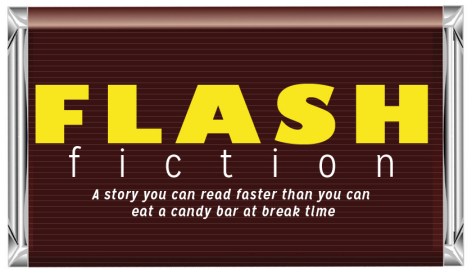
Flash fiction is defined as a style of fictional literature or fiction of extreme brevity. And while there’s no widely accepted rule as to the proper length of a flash fiction piece, I’ve seen word counts cap between three hundred and a thousand words. Although usually containing standard story elements such as a protagonist, conflict, obstacles, complications, and resolution, the limited word length can result in some of these elements to be merely hinted at or implied in the storyline.

David Gaffney wrote an interesting article for The Guardian entitled, Stories in your pocket: how to write flash fiction, which included the following six steps:

1. Start in the middle. You don’t have time in this very short form to set scenes and build character.

2. Don’t use too many characters. You won’t have time to describe your characters when you’re writing ultra-short. Even a name may not be useful in a micro-story unless it conveys a lot of additional story information or saves you words elsewhere.

3. Make sure the ending isn’t at the end. In micro-fiction there’s a danger that much of the engagement with the story takes place when the reader has stopped reading. To avoid this, place the denouement in the middle of the story, allowing us time, as the rest of the text spins out, to consider the situation along with the narrator, and ruminate on the decisions his characters have taken. If you’re not careful, micro-stories can lean towards punchline-based or “pull back to reveal” endings which have a one-note, gag-a-minute feel – the drum roll and cymbal crash. Avoid this by giving us almost all the information we need in the first few lines, using the next few paragraphs to take us on a journey below the surface.

4. Sweat your title. Make it work for a living.

5. Make your last line ring like a bell. The last line is not the ending – we had that in the middle, remember – but it should leave the reader with something which will continue to sound after the story has finished. It should not complete the story but rather take us into a new place; a place where we can continue to think about the ideas in the story and wonder what it all meant. A story that gives itself up in the last line is no story at all, and after reading a piece of good micro-fiction we should be struggling to understand it, and, in this way, will grow to love it as a beautiful enigma. And this is also another of the dangers of micro-fiction; micro-stories can be too rich and offer too much emotion in a powerful one-off injection, overwhelming the reader, flooding the mind. A few micro-shorts now and again will amaze and delight – one after another and you feel like you’ve been run over by a lorry full of fridges.

6. Write long, then go short. Create a lump of stone from which you chip out your story sculpture. Stories can live much more cheaply than you realise, with little deterioration in lifestyle. But do beware: writing micro-fiction is for some like holidaying in a caravan – the grill may well fold out to become an extra bed, but you wouldn’t sleep in a fold-out grill for the rest of your life.

And if I might add a few tips to Mr. Gaffney’s list:

  • Do your homework and read a ton of flash fiction stories. Stop groaning, they’re ultra-short.
  • Pay close attention to story settings and character development
  • Tell a proper story. Having a character deliver a monolog or go off on a diatribe, or spending the word count describing a setting, doesn’t help you hone your brevity writing skills.
  • Do not toss away your story if it happens to be too big and you just can’t whittle it down to size. Instead, pat yourself on the back for creating a short story. Every cloud, right?
  • If you’re using a word processing program, make use of the built-in word count feature.

For the record, extremely short fiction isn’t a brand spanking new concept. In fact, Ernest Hemingway once wrote the following six-word story:

“For sale: baby shoes, never worn.”

According to sources, the author considered it to be the finest prose he had ever written. Even more remarkable, it comes in under the stringent 140 character count of Twitter’s tweet fiction (see: To Make A Long Story Shortest). Way to go, Hemmy!

Sally forth and be flash writeful.

— Rhyan Scorpio-Rhys