The Short and Short of Flash Fiction

flash-fiction
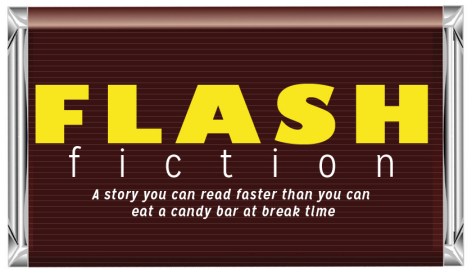
Flash fiction is defined as a style of fictional literature or fiction of extreme brevity. And while there’s no widely accepted rule as to the proper length of a flash fiction piece, I’ve seen word counts cap between three hundred and a thousand words. Although usually containing standard story elements such as a protagonist, conflict, obstacles, complications, and resolution, the limited word length can result in some of these elements to be merely hinted at or implied in the storyline.

David Gaffney wrote an interesting article for The Guardian entitled, Stories in your pocket: how to write flash fiction, which included the following six steps:

1. Start in the middle. You don’t have time in this very short form to set scenes and build character.

2. Don’t use too many characters. You won’t have time to describe your characters when you’re writing ultra-short. Even a name may not be useful in a micro-story unless it conveys a lot of additional story information or saves you words elsewhere.

3. Make sure the ending isn’t at the end. In micro-fiction there’s a danger that much of the engagement with the story takes place when the reader has stopped reading. To avoid this, place the denouement in the middle of the story, allowing us time, as the rest of the text spins out, to consider the situation along with the narrator, and ruminate on the decisions his characters have taken. If you’re not careful, micro-stories can lean towards punchline-based or “pull back to reveal” endings which have a one-note, gag-a-minute feel – the drum roll and cymbal crash. Avoid this by giving us almost all the information we need in the first few lines, using the next few paragraphs to take us on a journey below the surface.

4. Sweat your title. Make it work for a living.

5. Make your last line ring like a bell. The last line is not the ending – we had that in the middle, remember – but it should leave the reader with something which will continue to sound after the story has finished. It should not complete the story but rather take us into a new place; a place where we can continue to think about the ideas in the story and wonder what it all meant. A story that gives itself up in the last line is no story at all, and after reading a piece of good micro-fiction we should be struggling to understand it, and, in this way, will grow to love it as a beautiful enigma. And this is also another of the dangers of micro-fiction; micro-stories can be too rich and offer too much emotion in a powerful one-off injection, overwhelming the reader, flooding the mind. A few micro-shorts now and again will amaze and delight – one after another and you feel like you’ve been run over by a lorry full of fridges.

6. Write long, then go short. Create a lump of stone from which you chip out your story sculpture. Stories can live much more cheaply than you realise, with little deterioration in lifestyle. But do beware: writing micro-fiction is for some like holidaying in a caravan – the grill may well fold out to become an extra bed, but you wouldn’t sleep in a fold-out grill for the rest of your life.

And if I might add a few tips to Mr. Gaffney’s list:

  • Do your homework and read a ton of flash fiction stories. Stop groaning, they’re ultra-short.
  • Pay close attention to story settings and character development
  • Tell a proper story. Having a character deliver a monolog or go off on a diatribe, or spending the word count describing a setting, doesn’t help you hone your brevity writing skills.
  • Do not toss away your story if it happens to be too big and you just can’t whittle it down to size. Instead, pat yourself on the back for creating a short story. Every cloud, right?
  • If you’re using a word processing program, make use of the built-in word count feature.

For the record, extremely short fiction isn’t a brand spanking new concept. In fact, Ernest Hemingway once wrote the following six-word story:

“For sale: baby shoes, never worn.”

According to sources, the author considered it to be the finest prose he had ever written. Even more remarkable, it comes in under the stringent 140 character count of Twitter’s tweet fiction (see: To Make A Long Story Shortest). Way to go, Hemmy!

Sally forth and be flash writeful.

— Rhyan Scorpio-Rhys

To Make a Long Story Shortest: #TwitterFiction

First there was the micro novel, or microblogging novel, a work of fiction intended as a full-length novel written and distributed in chunks, varying in size, depending on the social media site it was being published on. Then, flash fiction burst onto the scene (see: The Short and Short of Flash Fiction) and dared to tell big stories with extreme brevity. Not to be undone, a new arrival,Twitter fiction (aka tweet fiction), tossed its hat into the ring, boasting its ability to tell a story within 140 characters.

Thumb your literary nose up at it, if you will, but surely you can see the art in concise writing. Catching the key moment of a story and carefully selecting the proper words so that your audience infers your meaning and does all the heavy lifting of filling in the details themselves requires a level of skill and finesse. Not to mention the challenge of drawing laughter or tears from your reader, or filling them with horror or dread as you build suspense in such a confined space.

And this latest sub-genre hasn’t escaped the notice of well-known writers who have tried their hand at 140-character novels:

Geoff Dyer – I know I said that if I lived to 100 I’d not regret what happened last night. But I woke up this morning and a century had passed. Sorry.

James Meek – He said he was leaving her. “But I love you,” she said. “I know,” he said. “Thanks. It’s what gave me the strength to love somebody else.”

Ian Rankin – I opened the door to our flat and you were standing there, cleaver raised. Somehow you’d found out about the photos. My jaw hit the floor.

Andrew O’Hagan – Clyde stole a lychee and ate it in the shower. Then his brother took a bottle of pills believing character is just a luxury. God. The twins.

Jeffrey Archer – “It’s a miracle he survived,” said the doctor. “It was God’s will,” said Mrs Schicklgruber. “What will you call him?” “Adolf,” she replied.

SJ Watson – She thanks me for the drink, but says we’re not suited. I’m a little “intense”. So what? I followed her home. She hasn’t seen anything yet.

Charlie Higson – Jack was sad in the orphanage til he befriended a talking rat who showed him a hoard of gold under the floor. Then the rat bit him & he died.

India Knight – Soften, my arse. I’m a geezer. I’m a rock-hard little bastard. Until I go mushy overnight for you, babe. #pears

Rachel Johnson – Rose went to Eve’s house but she wasn’t there. But Eve’s father was. Alone. One thing led to another. He got 10 years.

Inspired and curious, I even took a stab at Twitter narrative one idle Sunday and among my favorites are:

A large stone, the opportunity, a swampside grave; all that was needed to end a lifelong sibling rivalry. Guess who’s Daddy’s favorite now?

Mother warned him not to look but curiosity was his master. Now he struggles to reverse the time of eye to unsee the horror.

Regardless of your personal views on Twitter and tweet fiction, I honestly think you should give it a go. If nothing else, you can consider it a warm-up exercise to get your mental juices flowing. Can you think of a better way to hone your craft than practicing clear, clean and concise writing? And what have you got to lose? Surely not time. In the moments wasted complaining about the artform, you could have written several magnum opuses.

Sally forth and be tweetful.

— Rhyan Scorpio-Rhys

PS. If you’re looking for more famous author tweet novels, you can find them by searching #140novel on Twitter.

P.P.S. Not exactly #tweetfiction-related, but dealing with creating fiction, the NY Times ran an article on the importance of Twitter in today’s pop-culture era: How To Make a TV Drama in the Twitter Age.