Passage Through the Graveyard of Earthworms

dead-worms-in-ohio

My monotony needed twisting today, so I went for a stroll, sans iPod. You know, breathe in a bit of city fresh air, clear some cobwebs, that sort of deal.

There I was walking down the street, mind-sifting through character conversations and scene settings, when I looked down at the pavement and realized that I was traipsing through what looked like the aftermath of the Great Worm War of 2013. The sidewalk was a battlefield littered with the corpses of thousands of earthworms that coated an entire city block.

Logically I knew how this could have happened. I knew they came to the surface either during the heavy rains–but it’s been dry weather for the past week–or to pair off and mate only to get caught on things that are hard for them to crawl across, like sidewalks and subsequently fry on the surface from sun rays–but that normally occurs during spring.

So, what then? Had there actually been a battle? Warring clans pitched against one another over territorial disputes? Factions in conflict over the claiming of a throne? Families locked in a deadly dispute over an unholy union?

Or was it a warning?

As I stood there, staring at their dried remains, curled into runic shapes, I wondered if they had been somehow gifted with a vision of the approaching apocalypse and had sacrificed themselves in an effort to warn us in the only language they knew. The last Germanic language spoken to them by man before the two species went their separate ways.

In that moment I felt like Indiana Jones in the passageway to the Grail chamber, trying to decipher the worm cadavers’ possible portents of doom, only without the aid of a diary or Sean Connery whispering something about, “Only the penitent man will pass.” or like John Nash without an ounce of the mental code breaking ability.

And I stood there. Longer than I’m comfortable admitting. Frustrated by the limits of my linguistics. Finally, I forced myself to move on, but not before making a promise:

No more outdoor strolls without my iPod.

Sally forth and be writeful.

©2013 Rhyan Scorpio-Rhys

Creative Commons License

Excuse Me… Who Are You, Really?

“The first question she was asked was What do you do? as if that were enough to define you. Nobody ever asked you who you really were, because that changed. You might be a judge or a mother or a dreamer. You might be a loner or a visionary or a pessimist. You might be the victim, and you might be the bully. You could be the parent, and also the child. You might wound one day and heal the next.” ― Jodi Picoult, Nineteen Minutes

Why is that we commonly equate our life’s meaning with our work? Why is our sense of self so steeped in our achievements and how well we perform? And when we’re not constantly accomplishing, or striving to accomplish, why do we then feel worthless? As though our existences have been entirely depleted of meaning?

When I don’t write, or when I don’t feel much like writing, I feel like I’ve wasted a day. When moments pass me by that I don’t document—colorful, important moments that penning about now will surely help me learn the grand significance of later—I am overcome with regret. If I consider my role as the documenter of my life, what purpose do I serve on the planet if I’m not documenting?

Why is our sense of integrity and well-being so wrapped up in what we do, when what we do is not equal to who we are? The simple truth is because untangling the two isn’t easy.

Right now, ask yourself who you are. And in doing so, don’t allow yourself to answer in terms of profession, hobbies, relationships or material attachments. All of a sudden the notion of who you are becomes a far more intricate and convoluted matter, doesn’t it?

In many ways it seems an impossible question to answer simply because it’s so societally ingrained, and accepted, to create identities around what we do, accomplish, are talented and skillful in, the company we keep, and things we own or are able to own.

But what happens when all that falls away? When we’re left with nothing but ourselves? When, like an onion, each of those material outer layers is peeled back and we’re left with only ourselves, our essence and core being? What does that self consist of? Who is it? What is it? And how can we stop attaching so fervently to those outer sheaths long enough to make our own acquaintance? Because when it comes down to it, we are all we have. And the thing about those layers is that although seemingly protective, they merely make it easier to live in a state of denial; to focus stringently on esoteric elements so we never actually have to make the most important journey of all… the journey within.

The minute we attach our identity to something outside ourselves—whether it be our profession, relationships, recreational activities—when we are no longer capable of or excited about working that job or honing that skill or being with that person, we ultimately lose ourselves and sense of security. Because that is all we’ve allowed ourselves to know of ourselves.

But here’s the thing, our lives are ladened with purpose and meaning, we just have to be open to realizing it. We’re all here for purposes that extend far beyond mere occupations and relational titles. And every day we’re granted a plethora of opportunities to understand, showcase, and experience that. We’re here to be active participants in life; to feel fully, to love others and ourselves, to grow, to enjoy, to learn from life’s highs, lows, valleys and peaks.

There’s a quote I love from a poem by Ralph Waldo Emerson on the definition of success and I read it every time I get down on myself for not accomplishing and thus not feeling like the best version of myself—or rather, feeling like no self at all—and it goes like this:

“To laugh often and love much; to win the respect of intellingent persons and the affection of children; to earn the approbation of honest citizens and endure the betrayal of false friends; to appreciate beauty; to find the best in others; to give of one’s self; to leave the world a bit better, whether by a healthy child, a garden patch or a redeemed social condition; to have played and laughed with enthusiasm and sung with exultation; to know even one life has breathed easier because you have lived – this is to have succeeded.”

What enthralls me so deeply about this simple, yet evocative, passage is that it reminds me that success is measured in a myriad of ways. Too often people become so deeply connected to, and insistent on, climbing corporate ladders and other outward elements, that it becomes their only monitor of success, achievement, and thus, sense of self. And while that may indeed be one standard of success, so is simply living well, being well, enjoying each day, showing kindness to others, fulfilling passions, introducing a bit more creativity to the world through your very own unique and individualized thoughts, getting to know and love your self. Your true self — sans all the unprotected outer layers.

In my opinion, that is accomplishment and fortune defined. We just need to eradicate our preconceived notions of success and self-worth to realize it.

Sally forth and be writeful.

— Rhyan Scorpio-Rhys

Snatched From the Heart of Stars: What’s Your Creative DNA?

“People they come together, People they fall apart,
No one can stop us now , ‘Cause we are all made of stars” — Moby

Ideas spark ideas, as I’m sure you well know, and while contemplating a previous post on the message I would send to my younger self, I was hit with another thought along similar lines, but the scenario requires a little theater of the mind setup first:

It begins with the SETI (Search for Extra-Terrestrial Intelligence) Institute detecting a radio signal that finally confirms the existence of extraterrestrial life. How did the aliens learn of our existence, you ask? You know the deal: Voyager 1 and 2 get swallowed up by a singularity and spit out in the middle of uncharted space and intercepted by a curious and as-yet-thought-to-be-benign alien race. Now quit bogging down my back story with unnecessary questions.

Top minds–including astrophysicists, cryptanalysts, linguists and mathematicians–are called in to decipher the message and after an exhaustive code-breaking session, the oddest thing is found imbedded in the communique: my name. Uh-uh, no questions, remember?

After being properly vetted—they’d have to make sure I’m not some wackadoo that’s gonna build himself an Interocitor using off-world schematics or sell the Earth off to the highest bidder—I’m brought in to begin a controlled dialogue with the alien. During the exchange my new intergalactic pen pal asks the question: “Who are you?” I answer with my personal history and the reply I get back is, “No, who are you?

We’re all stumped at this point.

Over a pint and some pub grub, me, Neil DeGrasse Tyson, Brian Cox, and Michio Kaku (let’s face it, they’re all my buds at this point) are trying to puzzle this out when I’m struck with an idea, “What if the extraterrestrials are utilizing fourth-dimensional, or higher, level thinking and need broader definitions in which to extrapolate the answers they seek?” The astro-brainiacs think I might be onto something.

[I need to pause the post at this point because I can hear your laughter and it’s a bit disruptive. And rude, if I’m honest. Out of everything so far, the only problem you have is that I offered a solution in an astrophysics think tank? Really?]

And now we get to the meat of the nutshell:

If I had to encode myself into a relatively short information sequence, what sources would I pick?

Since mathematics and I feud constantly and are court-ordered to remain at least 500 yards apart from one another at any given time, I know I can’t make this work on a fundamental science level. My only option is to go the artistic route.

Now, the chore becomes one of selecting 10 works that once read/viewed/listened to/etc., would allow an absolutely non-terran life form to know the essence of me. This is what I came up with:

1. Movie: The Lion in Winter

The film takes place in the year 1183 AD and tells the story of King Henry II’s three sons all of whom want to inherit the throne, but Henry won’t commit to a choice, so they and his wife, Eleanor of Aquitaine, variously plot to force him.

I’ve chosen this to illustrate the relationship between me and all my families (both birth and extended). It speaks to the complexities of familial love and how I tend to love what I destroy and destroy the things I love.

View The Trailer

2. Book: Stranger in a Strange Land by Robert A, Heinlein

In not so subtle Christ analogy, the book tells the story of Valentine Michael Smith, a human who comes to Earth in early adulthood after being born on the planet Mars and raised by Martians. It explores his interaction with—and eventual transformation of—terrestrial culture.

This was chosen to illustrate my social anxieties–that wax and wane in an unpredictable manner–and the fact that I never feel I properly fit in with any crowd that isn’t one of my making. There truly exists no place on Earth where I feel at home.

3. Poem: Desiderata by Max Ehrmann

Go placidly amid the noise and haste, and remember what peace there may be in silence.
As far as possible without surrender be on good terms with all persons.
Speak your truth quietly and clearly; and listen to others, even the dull and ignorant; they too have their story.
Avoid loud and aggressive persons, they are vexations to the spirit.
If you compare yourself with others, you may become vain and bitter;
for always there will be greater and lesser persons than yourself.

Enjoy your achievements as well as your plans.
Keep interested in your career, however humble; it is a real possession in the changing fortunes of time.
Exercise caution in your business affairs; for the world is full of trickery.
But let this not blind you to what virtue there is; many persons strive for high ideals;
and everywhere life is full of heroism.

Be yourself.
Especially, do not feign affection.
Neither be critical about love; for in the face of all aridity and disenchantment it is as perennial as the grass.

Take kindly the counsel of the years, gracefully surrendering the things of youth.
Nurture strength of spirit to shield you in sudden misfortune. But do not distress yourself with imaginings.
Many fears are born of fatigue and loneliness. Beyond a wholesome discipline, be gentle with yourself.

You are a child of the universe, no less than the trees and the stars;
you have a right to be here.
And whether or not it is clear to you, no doubt the universe is unfolding as it should.

Therefore be at peace with God, whatever you conceive Him to be,
and whatever your labors and aspirations, in the noisy confusion of life keep peace with your soul.
With all its sham, drudgery and broken dreams, it is still a beautiful world. Be careful. Strive to be happy.

Chosen to represent my attempt at zen thoughts. These are the inner things I strive for that always seem to exist just beyond the reach of my higher consciousness fingertips. One day, though. This and the lottery. Hope springs eternal.

4. Art: The Scream by Edvard Munch

In his diary in an entry headed, Nice 22 January 1892, Munch described his inspiration for the image:

One evening I was walking along a path, the city was on one side and the fjord below. I felt tired and ill. I stopped and looked out over the fjord—the sun was setting, and the clouds turning blood red. I sensed a scream passing through nature; it seemed to me that I heard the scream. I painted this picture, painted the clouds as actual blood. The color shrieked. This became The Scream.

This piece represents the insanity that lies just beneath my cool surface. The things I see and hear that apparently no one else acknowledges. But it’s real, dammit. It better be.

5. Sculpture: The Thinker by Auguste Rodin

The Thinker was originally meant to depict Dante in front of the Gates of Hell, pondering his great poem. This is precisely why I have chosen this, as I am well aware that I am the cause of most of the disasters that have occurred in my life and have often sat and pondered how I let things get to their current state.

6. Photography: Tank Man by by Jeff Widener

The iconic photo of Tank Man, the unknown rebel who stood in front of a column of Chinese tanks in an act of defiance following the Tiananmen Square protests of 1989. This is an obvious one as it represents my personal autonomy and contemptuous behavior/attitude towards authority figures to the point of appearing as a provocateur or just plain anti-social.

7. Music: Ágætis byrjun by Sigur Rós

This album is 72 minutes of sonically rich, emotionally pulverizing perfection. From the orchestral splendor of “Starálfur,” to the transcendent ache of “Ný batterí.” each decayed synth tone and cymbal splash conjures a world of endless possibilities. Jón Þór “Jónsi” Birgisson wrote the following mission statement:

“We are not a band, we are music… We are simply gonna change music forever, and the way people think about music. And don’t think we can’t do it, we will.” 14 years after the fact — Spin presented Birgisson with that quote. He responded with laughter, “You’re young and full of energy and have this cockiness,” he said. “I think it’s beautiful.”

This represents my initial mindset when I first began to write again.

View The Music Video for “Starálfur”

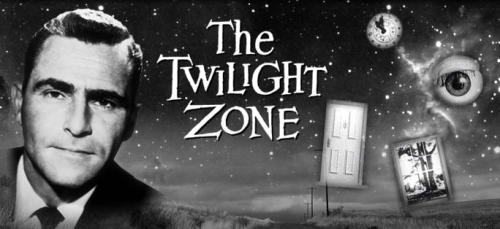
8. Television: The Twilight Zone (1959 series) by Rod Serling and various

This science-fiction/fantasy anthology series consisting of unrelated stories depicting paranormal, futuristic, kafkaesque, or otherwise disturbing or unusual events (typically featuring some sort of plot twist and moral), represents my imagination as it shaped the way I view fiction.
View The Episode, “Time Enough At Last”

9. Play: Sweeney Todd: The Demon Barber of Fleet Street by Stephen Sondheim

A 1979 musical thriller set in 19th century England tells the story of Benjamin Barker, aka Sweeney Todd, who returns to London after 15 years transportation on trumped-up charges. When he finds out that his wife poisoned herself after being raped by the judge who transported him, he vows revenge on the judge and, later, the whole world. He teams up with a piemaker, Mrs. Lovett, and opens a barbershop in which he slits the throats of customers and has them baked into pies.

This speaks to my scorpio nature of quietly holding a grudge with untold patience until the chance prevents itself to sting back. Not so much anymore, though. I’ve mellowed in my old age. Stop looking at me like you don’t believe me.

View The Original 1979 Commercial

10. Performance art: The invisible man: Liu Bolin’s camouflage artwork

Liu uses paint to camouflage him to make himself invisible in public. This represents the fact that I was born invisible and the only time I’m ever seen is when I write.

View The Video

Before you start nitpicking the logic of sending earth-logic/culture-bound works of art to an alien, I refer you to the Moby lyrics quoted at the top of the post and if we are all truly made of stars, there surely must be some commonality that binds us together, yes? Why can’t art be the universe’s language?

Sally forth and be creative DNA writeful.

–Rhyan Scorpio-Rhys

The Island of Misfit Posts #1: Discouraged by Discouragement

When I sit down to write these posts, I never know what they’ll be about beforehand. It’s a first-thought-that-hits-me-stream-of-consciousness sort of thing. Sometimes they’re on point, other times they meander a bit, but as stated in the About This Blog section, the posts are less about me attempting to appear clever or knowledgeable (what are the odds, really?), and more about getting myself into a proper writing frame of mind with a warm up exercise. Mental calisthenics, if you will.

As you might imagine, it doesn’t always go to plan. Case in point: the post below. Inspired in part by Susannah Breslin’s Forbes article, Why You Shouldn’t Be A Writer, and Martin Levin’s, You Suck And So Does Your Writing–which is more about petty squabbles between notable literary figures (how I would have combined the two ideas is anyone’s guess)–it was meant to be a discouragement piece, you know, separating the wheat from the chaff, and all that, that started out like this:

Of All the Things You Could Do With Your Life, Why On Earth Would You Purposely Choose To Be A Writer?

Don’t worry, it’s not a trick question, but one you should be prepared to ask yourself and answer before undertaking writing in any fashion as a serious profession. Among the more common reasons I’ve come across in my travels are:

1. No commuting and every day is Pajama Friday!

I can’t fault your logic here because commuting is generally a nightmare and what’s better than tooling around your house in a onesie all day long like an agoraphobic superhero? Sadly, it isn’t a good enough reason to want to be a writer, especially since there other telecommuting positions that offer more stability and better chances at becoming a career.

2. What better way is there to make a ton of dough and roll around in my piles of cash?

Well, you could try your hand at playing the lottery or betting the ponies, for starters. Rich writers are the exception to the rule. The majority of people who claim writing as a profession, work their mental fingers to the bone, producing material for years before they even get a glimpse at recognition, let alone a healthy paycheck. Instead of rolling in piles of cash, you’ll most likely be rolling up your coins, praying your landlord accepts pennies for rent.

3. Nothing better than being my own boss with flexible hours!

Flexible hours? Been writing long? Writing is a huge commitment that commandeers your entire life with absolutely no guarantee of any sort of financial gain. As stated earlier, there are other work-from-home opportunities that are far more secure and come equipped with a steady payday. And being your own boss isn’t the sipping Mai Tais under a beach umbrella fantasy you imagine it to be. First off, there’s no one to delegate all the donkey work to, and your brain doesn’t simply punch out when the working day has ended. Writing–and the guilt of not writing–never leaves you in peace until the article/book/screenplay/project has been completed.

4. It would be amazing to see my best-selling book in a bookstore/my script turned into a blockbuster feature film/win the Pulitzer Prize for my groundbreaking article series.

Who wouldn’t want any of those things? While we’re daydreaming, I’d also like to be an astronaut so that I can save the planet from extraterrestrial threats, be the smartest man in any room I’m in so that I can solve all the world’s problems and become Earth President, and build a safe-box time machine–that protects me from any sort of injury–equipped with a high end movie camera in order to jump back and forth in time to make the ultimate series of historical documentaries.

Now that my feet have touched terra firma and I’m once again grounded in reality, I can tell you that while it’s great to dream big, fame is one of the worst reasons to choose writing as a profession.

But the post wasn’t really working for me because I could feel myself getting snarkier as the piece went on, which wasn’t my intent going in. So, I decided to step off my soapbox and kill the post. And there it sat in my trash for days, forgotten like Charlie-In-The-Box, Dolly, Spotted Elephant, and King Moonracer. But it miraculously survived deletion during my numerous trash emptying sessions. This had to be a sign. What sign, I hadn’t the faintest, but I decided to attempt recycling it into a less judgmental, more positive message:

Writers are born critics who will criticize any and everything that crosses their paths, especially fellow writers. They will issue their assessments and commentary with the righteousness of having had their opinions validated by the Mount Horeb burning bush. These are the writers who cut open veins and bleed for love of the craft, whose skulls ring with haunting voices that cannot be silenced until exorcized onto the page, who believe in their heart of hearts that the only words that deserve to be written are the truths that need to be told.

I can’t lie, sometimes I feel the same way.

But I’m not as bothered by it anymore, because I know first hand that the writing process has it’s own way of weeding out the fly-by-night scribblers, posers and pretenders with the obstacles it scatters on the long and winding path to a completed project. Whether your driving force is money, fame. to impress a person/people, burning need, or love of the artform, you will still experience your fair share of procrastination, anxiety, writers block, time crunches, lack of motivation, fear of rejection, judgement of peers, and impatience of selling a piece.

If you can repeatedly bash your head into these walls, get up, dust yourself off and continue to write, who am I to question your motives? That, my friends, is the best I can do fer ya, today.

Sally forth and be writeful.

— Rhyan Scorpio-Rhys

To Sow, Perchance To Reap

Image

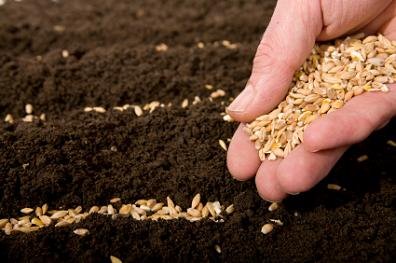
The world is full of folks who appreciate nature and the great outdoors to the point of creating a mental happy place of some idyllic green pasture. That ain’t me. City boy born and bred. Concrete, glass and steel is my Garden of Eden. Yet, despite not being blessed with a green thumb, I planted something today.

An idea.

Okay, “idea” is a bit of a stretch. It’s more like a plot germ. As it stands, it’s a weak and feeble thing prematurely delivered into the world that requires incubation, so I decided to commit it to the ground at the tail end of my mind and ignore it until it has the strength to claw its way out of the grave.

But don’t feel too sorry for it, though. It’s not alone. It’s planted beside random bits of cool dialogue that I’ll never be able to work into a real world conversation, and nebulous set pieces that don’t quite fit into any of my existing stories. They’re all tucked away in my own personal mental pet cemetery.

“The soil of a man’s mind is stonier; a man grows what he can imagine and scribes it.”

Apologies for the bastardization of your quote, Stephen.

And no, I won’t tell you what the plot germ is. Not out of fear of it being stolen (what, thieves on the interwebz? Nope, I won’t believe it) but simply because 1) you wouldn’t understand it in its present form, and 2) I’m not superstitious but I firmly believe in the dreaded jinx. If I tell you what it is, it’ll never grow.

So, I will go about my business and occupy my mind with trivialities—like the numerous problems with Star Trek Into Darkness and why show writers create interested premises for Doctor Who episodes only to abandon all logic and rush the stories to unsatisfying climaxes—and allow my subconscious to absently weed my preemie idea seed. I’ll wait until it breaks free of its chrysalis as a brain soil stained vision with roots that encircle the heart of a story that I cannot wait to write. Until then, I’ll follow the sage advice of Mssr. Ron Popeil and, “Set it and forget it.”

Sally forth and sow, perchance to reap.

— Rhyan Scorpio-Rhys