Do Your Legwork… the Proper Way

Lately I seem to be coming across more and more authors who thumb their noses up at the thought of doing research, which makes me scratch my puzzler. Not only is it a fundamental part of the process, regardless of the type of fiction you write, it is also a chance to learn and grow as a person as well as a writer. The simple fact is, if research truly is the bane of your existence, then you’re not doing it right.

Yes, you are most likely creating an entire world from scratch, in your own image and the laws of reality obey whatever rules strike your fancy, but even the most fantastical setting must have a sturdy foundation. And that foundation must be built with bricks of solid facts in order for your story to have any sort of credence.

I personally enjoy the research stage almost as much as the construction stage, but I understand how daunting a task fact-finding can be, so I’ve jotted down a few of the steps I tend to use when I’m in that researching frame of mind:

1. Pinpoint the right questions. The assumption is that you either have a strong interest in or possess a rudimentary knowledge of the story you’re attempting to pen. And that’s all you need in the beginning when you’re plucking the idea from the ether and committing it to the page in the form of an outline. But as you rearrange the story sequentially and create scenes to flesh the idea out into proper story form, you should be asking yourself how you’re going to make the story mechanics work. If your story is a period piece, you should be knowledgeable of that era, if your main characters hold down specific jobs, you should be familiar with the basics of their occupations, if the story takes place in a different part of the world… you get the point. Your research begins when you write your outline because that’s where you’ll find the questions that need answering.

2. Locate your resources. You’re probably thinking this part’s a cinch as long as you’ve got internet access, and I can’t really argue the point. As I’ve stated in a previous post, the internet is the wise sage of our virtual village (see: Applying Life Lessons To Your Writing) but, as is true with a great deal of online content, the reliability of the source material found therein can be erroneous, so verify, verify, verify as best you can in order to avoid unnecessary embarrassment at a later date. Myself, I tend to be a bit old-fashioned in my approach to research and armed with my trusty dusty library card I visit ye olde public bibliotheca in search of books pertaining to the various subjects in my story. I only rely on the internet as a back-up resource if I come up empty at the library.

3. Make a treasure map for your gold. What good is that golden nugget bit of research that you’ve discovered if you can’t lay your hands on it when you need it? If you own the book, sure you can bookmark or dog-ear pages, underline or highlight passages–but only if you own the book, please, marking up someone else’s tome is utter book sacrilege. If the book isn’t yours to mar, you can create your own index system by jotting down the book title, page and paragraph numbers, and a few keywords on the passage’s content. Then when you’re done info-gathering, you can transfer the text to your computer (arranged by subject headings) or to a notepad if you prefer to write longhand.

4. Create a vision board. Sounds hokey, I know, but pictures have that magical ability to transport your fertile imagination to all the unfamiliar aspects within your story and adding a visual component to your research and writing can help to serve as inspiration for time periods, locales, era clothing, vehicles, weaponry, etc.

5. Walk around in your story like you own the place. Nothing worse than a writer who lacks the confidence to strut their stuff within the world they’ve created. Even if that world is rife with utter nonsense, your job is to sell that nonsense as truth. There’s a saying that used to be popular when I wore a younger man’s clothes, but I haven’t come across it in a dog’s age, “If you can’t blind them with brilliance, baffle them with bullshit.” Now, this doesn’t mean you should out-and-out lie to your audience, but if the moment arrives when research fails and you need to invent something in order to make your story work, you should endeavor to portray it with as much authenticity as possible.

All the rest of the time? You live up to the trust that your audience places in your hands by checking and double-checking your sources and making sure your facts are as accurate as they can be. Also, you need to keep in mind that despite your best efforts, you aren’t ever going to get the facts correct all the time, but that doesn’t give you a reason not to do your due diligence. And should you ever deliberately decide to ignore the facts, you should alert your audience either in the author’s notes or afterword.

One of a writer’s biggest attractions to the written art form can be best summed up as, ex nihilo omnia fiunt–from nothing, everything is created–but we owe a duty to our audience to make the lie of fiction as truthful as possible.

Sally forth and be researchful.

The Three Characteristics of Successful Fiction

Three characteristics a work of fiction must possess in order to be successful:

1. It must have a precise and suspenseful plot.

2. The author must feel a passionate urge to write it.

3. He must have the conviction, or at least the illusion, that he is the only one who can handle this particular theme.

— Isaac Bashevis Singer

Of Inspiration and Imagination

Imagination_by_t1nus

1. “Imagination is the real and eternal world of which this vegetable universe is but a faint shadow.” — William Blake

2. “An idea, like a ghost, must be spoken to a little before it will explain itself.” — Charles Dickens

3. “If writers had to wait until their precious psyches were completely serene there wouldn’t be much writing done.” — William Styron

4. “I sit in the dark and wait for a little flame to appear at the end of my pencil.” — Billy Collins

5. “Use your imagination. Trust me, your lives are not interesting. Don’t write them down.” — W.P. Kinsella

6. “You get ideas from daydreaming. You get ideas from being bored. You get ideas all the time. The only difference between writers and other people is we notice when we’re doing it.” — Neil Gaiman

7. “You go to the attic of your mind and rummage around and find something.” — Mary Higgins Clark

8. “Thinking is the enemy of creativity. It’s self-conscious, and anything self-conscious is lousy. You can’t try to do things. You simply must do things.” — Ray Bradbury

21 Writing Lessons A Wise Man Would Share (and no, I’m not calling myself wise)

270497_5510453_lz

  1. Commitment is what transforms an idea floating around in your head into reality. Putting pen to paper speaks boldly of your intentions and are the actions which speak louder than the words. It is making the time when there is none. Coming through time after time after time, year after year after year. Commitment is the stuff character is made of; the power to shape ethereal things. It is the daily triumph of integrity over skepticism.
  2. No one is perfect. The quicker this is realized the faster you can get on with being excellent. Start every morning ready to write harder than you did the day before and plot further than you ever imagine.
  3. Avoid over explaining yourself in writing. Be confident that your audience is intelligent enough to understand.
  4. Write down what’s most important to you in your writing career and the steps to accomplish that goal and show up. Sometimes we tend to do the things that are most important to us when it’s written down.
  5. Play the hand you’re dealt. Stop envying someone else’s talent or success. Have the courage to face your own writing challenges head on. It builds character. Start looking for a way through instead of a way out.
  6. Become a student of life. Learn something new every day. The day you stop learning is the day you become obsolete so keep learning and keep writing.
  7. No excuses. Stop making excuses for not writing and replace them with ways to do better writing. Excuses are a waste of time and energy.
  8. Never be ashamed to tell anyone you’re a writer, whether you’re published or not. The definition of a writer is a person who writes or is able to write. Being ashamed to acknowledge this fact to people speaks to self-doubt, which is a desire killer.
  9. Never be afraid of a writing challenge. If you never strive to be more than what you are, you’ll never truly know what you can become.
  10. Service to others. Pointing people in the right direction is such a small thing. Give advice to those who ask for it. Offer support to those who want it. We’re all here to teach as well as learn.
  11. Work like hell. If you want to earn a living as a writer, that is. Treat it like a profession, put your absolute best foot forward and be thorough. Cross every “T” and dot every “I”.
  12. Discover you. Find your passion, life purpose, and pursue them… then write about them.
  13. Don’t take it personally. Don’t be afraid to acknowledge and laugh at something that you’ve written in the past that’s just plain awful. Self-awareness and self-confidence shows that you’re comfortable in your own skin.
  14. Manage your time. Our situation and environment is ever changing so be careful not to confuse the things that are urgent with the things that are important. Look for time wasters and eliminate them.
  15. Ask for help. Writing can be tough and although you do a majority of it alone, you should never write in a total vacuum and there’s no shame in seeking advice when you’re stuck.
  16. Do your homework. Know what you’re getting into before you start writing in a particular field, format or genre. Doing your homework reduces uncertainty and fear.
  17. Daydream often. Your imagination is a muscle that requires exercise and daydreaming is an excellent way to flex. Embrace and preserve your daydreams at all cost.
  18. Forgive and set free. Freeing your mind to write is almost as important as actually sitting down to write, so cultivate a healthy dose of forgiveness and set someone free. Learn to forgive others and stop carrying those bags of hate, guilt or regret.
  19. Stay one step ahead. Avoid big fish/small pond thinking if at all possible. If you’ve mastered a particular style of writing, why not be proactive, take the initiative, and see what other types of writing challenges are out there for you?
  20. Self-love. Become your own priority. Strive to be the you, you want to be. Once you accomplish this, it will show in your writing, trust me.
  21. Finish what you started. Avoid the urge to stray. Distractions are the writer’s most fearsome adversary. Avoid jumping off a project because a better idea has come along. Jot the better idea down, set it aside, and come back to it when you’re done with your current project.

Sally forth and be wisely writeful.

— Rhyan Scorpio-Rhys


The Three Simple Facts Of Writing

Today’s entry is a shortie because I’m busy wrestling with a wordy bastard of a story that refuses to be tamed but I’m in a particularly stubborn mood, so challenge met!

That said, I offer you my three simple facts of writing:

  1. If you do not write the story you truly want to write, it will never be read. You can’t have the unwashed masses confirm your greatness when you haven’t given them anything to be in awe of.
  2. If you don’t submit your work—–for review, publication, employment, or whatever—–the answer will always be no. The cruelest rejection you can ever receive is from yourself, the toughest critic you’ll ever know. If you never show your work, you never give an editor, publisher, prodco, or whatever, the chance to say yes (exercise caution, of course, and protect your writing before letting it fly out into the world).
  3. If you don’t write, you’ll never be a writer. Plain and simple. Also, many, many, many years from now, when you’re lying on your deathbed, do you really want a box of regret—–filled with all the unwritten stories of your life—–hanging over your head like the sword of Damocles? I think not.

Sally forth and be writeful.

— Rhyan Scorpio-Rhys

50 Questions That Can Help Free Your Mind (to concentrate on writing… hopefully)

The common advice for freeing your mind to write is to create a journal. I’m fairly certain that most of you have either 1) created a journal that you may or may not keep current, or 2) heard the advice and decided journaling isn’t for you (hey, it happens).

So, what other options do you have when you’ve lost your self in a quagmire of self-pity, mundane daily obligations and insurmountable life woes and can’t quite seem to maintain your true identify or nurture your creative center?

Why, you slap on your pith helmet, turn your gaze inward, and explore that largely ignored country of your core self, naturally. And the best way to accomplish this is with the list below. Why a list? Because you’re a writer and writers love lists.

Be advised that there are no right or wrong answers because sometimes simply asking the right questions is the answer.

  1. How old would you be if you didn’t know how old you are?
  2. Which is worse, failing or never trying?
  3. If life is so short, why do we do so many things we don’t like and like so many things we don’t do?
  4. When it’s all said and done, will you have said more than you’ve done?
  5. What is the one thing you would most like to change about the world?
  6. If happiness was the national currency, what kind of work would make you rich?
  7. Are you doing what you believe in, or are you settling for what you are doing?
  8. If the average human life span was 40 years, how would you live your life differently?
  9. To what degree have you actually controlled the course your life has taken?
  10. Are you more worried about doing things right, or doing the right things?
  11. You are having lunch with three people you respect and admire. They all start criticizing a close friend of yours, not knowing she is your friend. The criticism is distasteful and unjustified. What do you do?
  12. If you could offer a newborn child only one piece of advice, what would it be?
  13. Would you break the law to save a loved one?
  14. Have you ever seen insanity where you later saw creativity?
  15. What is something you know you do differently than most people?
  16. How come the things that make you happy don’t make everyone happy?
  17. What is one thing have you not done that you really want to do? What’s holding you back?
  18. Are you holding onto something you need to let go of?
  19. If you had to move to a state or country besides the one you currently live in, where would you move and why?
  20. Do you push the elevator button more than once? Do you really believe it makes the elevator faster?
  21. Would you rather be a worried genius or a joyful simpleton?
  22. Why are you, you?
  23. Have you been the kind of friend you want as a friend?
  24. Which is worse, when a good friend moves away, or losing touch with a good friend who lives right near you?
  25. What are you most grateful for?
  26. Would you rather lose all of your old memories, or never be able to make new ones?
  27. Is it possible to know the truth without challenging it first?
  28. Has your greatest fear ever come true?
  29. Do you remember that time 5 years ago when you were extremely upset? Does it really matter now?
  30. What is your happiest childhood memory? What makes it so special?
  31. At what time in your recent past have you felt most passionate and alive?
  32. If not now, then when?
  33. If you haven’t achieved it yet, what do you have to lose?
  34. Have you ever been with someone, said nothing, and walked away feeling like you just had the best conversation ever?
  35. Why do religions that support love cause so many wars?
  36. Is it possible to know, without a doubt, what is good and what is evil?
  37. If you just won a million dollars, would you quit your job?
  38. Would you rather have less work to do, or more work you actually enjoy doing?
  39. Do you feel like you’ve lived this day a hundred times before?
  40. When was the last time you marched into the dark with only the soft glow of an idea you strongly believed in?
  41. If you knew that everyone you know was going to die tomorrow, who would you visit today?
  42. Would you be willing to reduce your life expectancy by 10 years to become extremely attractive or famous?
  43. What is the difference between being alive and truly living?
  44. When is it time to stop calculating risk and rewards, and just go ahead and do what you know is right?
  45. If we learn from our mistakes, why are we always so afraid to make a mistake?
  46. What would you do differently if you knew nobody would judge you?
  47. When was the last time you noticed the sound of your own breathing?
  48. What do you love? Have any of your recent actions openly expressed this love?
  49. In 5 years from now, will you remember what you did yesterday? What about the day before that? Or the day before that?
  50. Decisions are being made right now. The question is: Are you making them for yourself, or are you letting others make them for you?

Sally forth and be free-mindedly writeful.

— Rhyan Scorpio-Rhys

The Arrogance of Presumption

write_wicked_good_black_logo_bumper_sticker-rda7a88b1f4ad4c758065ba89ce3a5282_v9wht_8byvr_512

“There is no excuse. If you want to write, write. This is your life, you are responsible for it. You will not live forever. Don’t wait. Make the time now.” ― Natalie Goldberg

On occasion, people stuck in a writing rut seek advice, which has become harder to dispense without sounding like a scribe’s bumper-sticker, especially since you can’t swing Schrödinger’s cat on the interwebz without hitting hundreds of inspirational tips and tidbits.

The simple, honest and truest bit of advice is to write. Write when you’re too tired to write. Write when writing hates your very existence. Write when words have moved out of your head in the wee hours of the night and left no forwarding address. Write when every word you put to paper is like pulling teeth. Write when your inner critic is telling you you’re a talentless shit. Write when the words refuse to make sense. Just write.

But no one wants to hear that because it isn’t a magical solution offered up by a Bagger Vance muse that makes all the tumblers in their befuddled minds line up and open the creative sluice gates.

Which leaves the long way around:

So, things aren’t going your way with your writing and you might be inclined to mope around the house and bask in self-pity for What Might Have Been, but there’s no reason to get down on yourself. Wipe your tears on your sleeves, buck up and realize today marks the start of a whole new ball game. All the old bets are off. You’re back at square one and it’s time to get a new bottom line. Take all your expectation and aspiration and lay them out like cards on a table. This is the first step towards putting the pedal to the metal. You’ve got to make no bones about what you truly wish to accomplish with your writing—–aside from the ludicrous notion of instant riches and fame—–and pull no punches with yourself on the hard work needed to make your dream a reality. And if I can toss in one more tired cliché, your ship doesn’t always come in… sometimes you have to swim out and meet it halfway.

As a writer it’s important to strike a balance between the creative and rational minds. The problem with the creative mind is that it’s equipped with the arrogance of presumption that it knows all there is to know and sometimes it becomes difficult to suspend tyranny long enough to receive messages from life, the universe, the inner muse, and—if you can stretch your fantasy muscles around the strange-but-true notion—your future self. Scoff all you like, but the part of you that exists on a higher plane of consciousness occasionally tries to contact you in order to provide panoramic views of the far horizon. The messages may be brief and strange, or they may appear in a matter-of-fact guise in the midst of your daily routine. Either way, if you turn a blind eye to the minute workings of the world all around you, you may be missing pithy pointers on how to shape your life’s mission to become a happy writer—–note that I didn’t say a successful writer, writing should first and foremost lead to happiness and fulfillment—–in the near and distant future.

A more metaphorical view on encountering obstacles in moving your writing forward is akin to walking in the deep dark forest and encountering a savvy old crone camouflaged as a wolf. Your fear, already swarming because of the unfamiliarity of your surroundings, kicks instantly into high gear, causing you to flee before you can see through the disguise. But now that you know the truth, go back and find the crone again. She has much to teach you about harvesting the treasure that comes from the deep recesses of the creative mind and taking aggressive measures to build up your confidence and mental wellness. Stop talking about and start manifesting the dream, and get as bawdy and funky as you dare.

Those last three paragraphs are a bit cringe-inducing, aren’t they? And they sound like a load of gibberishy nonsense. So, why not take the simple advice and…

Just write.

Sally forth and be writeful.

— Rhyan Scorpio-Rhys

No Such Creature As A Bad Analogy (only funny ones)

“Analogies prove nothing, that is true, but they can make one feel more at home.” —–  Sigmund Freud

Normally I shy away from passing on emails and memes, but this one struck me as funny, so I decided to share it. As I’m sure you’re all aware, an analogy is a comparison between two things, typically on the basis of their structure, as a bridge between familiar situations and new ones.

The following list of analogies was allegedly collected by real high school English teachers from their students’ writings.

  1. Her face was a perfect oval, like a circle that had its two sides gently compressed by a ThighMaster.
  2. His thoughts tumbled in his head, making and breaking alliances like underpants in a dryer without Cling Free.
  3. He spoke with the wisdom that can only come from experience, like a guy who went blind because he looked at a solar eclipse without one of those boxes with a pinhole in it and now goes around the country speaking at high schools about the dangers of looking at a solar eclipse without one of those boxes with a pinhole in it.
  4. She grew on him like she was a colony of E. Coli, and he was room-temperature Canadian beef.
  5. She had a deep, throaty, genuine laugh, like that sound a dog makes just before it throws up.
  6. Her vocabulary was as bad as, like, whatever.
  7. He was as tall as a six-foot, three-inch tree.
  8. The revelation that his marriage of 30 years had disintegrated because of his wife’s infidelity came as a rude shock, like a surcharge at a formerly surcharge-free ATM machine.
  9. The little boat gently drifted across the pond exactly the way a bowling ball wouldn’t.
  10. McBride fell 12 stories, hitting the pavement like a Hefty bag filled with vegetable soup.
  11. From the attic came an unearthly howl. The whole scene had an eerie, surreal quality, like when you’re on vacation in another city and Jeopardy comes on at 7:00 p.m. instead of 7:30.
  12. Her hair glistened in the rain like a nose hair after a sneeze.
  13. The hailstones leaped from the pavement, just like maggots when you fry them in hot grease.
  14. Long separated by cruel fate, the star-crossed lovers raced across the grassy field toward each other like two freight trains, one having left Cleveland at 6:36 p.m. traveling at 55 mph, the other from Topeka at 4:19 p.m. at a speed of 35 mph.
  15. They lived in a typical suburban neighborhood with picket fences that resembled Nancy Kerrigan’s teeth.
  16. John and Mary had never met. They were like two hummingbirds who had also never met.
  17. He fell for her like his heart was a mob informant, and she was the East River.
  18. Even in his last years, Granddad had a mind like a steel trap, only one that had been left out so long it had rusted shut.
  19. Shots rang out, as shots are wont to do.
  20. The plan was simple, like my brother-in-law Phil. But unlike Phil, this plan just might work.
  21. The young fighter had a hungry look, the kind you get from not eating for a while.
  22. He was as lame as a duck. Not the metaphorical lame duck, either, but a real duck that was actually lame, maybe from stepping on a land mine or something.
  23. The ballerina rose gracefully en Pointe and extended one slender leg behind her, like a dog at a fire hydrant.
  24. It was an American tradition, like fathers chasing kids around with power tools.
  25. He was deeply in love. When she spoke, he thought he heard bells, as if she were a garbage truck backing up.

Sally forth and be writeful.

— Rhyan Scorpio-Rhys

One-Sided Conversations With The Author

Image

You can always tell when winter’s officially dead in New York. The city streets are suddenly chock-a-block with flea markets. Seriously, they begin springing up like daisies. People peddling the useless and discardable bits of their lives to folks looking to fill the holes and empty spaces in their own. I’m no exception. I’ve been on both sides of the table.

Yesterday, while meandering through one of the vacant lot bazaars, I ran into an old  fraintance (less than a friend, more than an acquaintance) who was carrying a box of ratty old hardcover books that she acquired on the cheap. We get to talking and I’m surprised at how well the conversation is going (the memories of why we didn’t get along in the end hadn’t hit my expired warranty brain yet). She struggled a bit with the box so I offered to carry it for her and suggested grabbing a bite at a nearby greasy spoon.

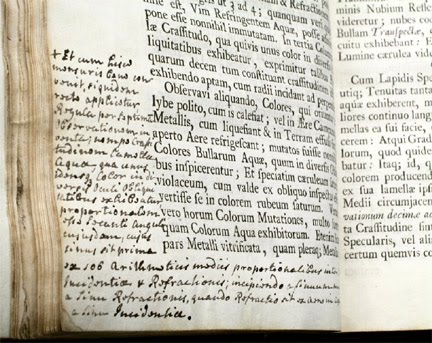
Over a meal, we inspected the books. Titles I’d never heard of, in such a shoddy shape as to rob them of any resale value. But we both noticed writing in the margins of several of the books. Pages and pages of it. Questions. Annotations. Comparisons to real life events. Supportive statements.

My fraintance automatically assumed they were the notes of some poor person who used to be a book editor that somehow couldn’t reconcile the fact that their profession was a long dead thing buried in the occupational heyday of youth.

To me, the neatly stacked margin sentences seemed more like thoughts that refused to remain locked within a curious and fully engaged mind and instead tried to open a discussion, share opinions and points of view, enter into an intellectual debate over the content of paragraphs and dialogue. It read like a one-side conversation with the author. Chatting with a literary ghost.

I was actually intrigued by this notion and tried to borrow one of the books to examine at my leisure, but she was having none of it, calling my view a load of romantic nonsense. By this time, the memories of why I hadn’t gotten along with the fraintance in the first place began leaking into the cracks of our conversation and flooding the space between us.

She knew I saw a story in there. Knew that I’d end up borrowing the books one by one in an attempt to piece together a backstory and motivation for the margin writer. Perhaps I still will one day, I just wish I had access to the original reference materials.

Sally forth and be readful.

— Rhyan Scorpio-Rhys

To Sow, Perchance To Reap

Image

The world is full of folks who appreciate nature and the great outdoors to the point of creating a mental happy place of some idyllic green pasture. That ain’t me. City boy born and bred. Concrete, glass and steel is my Garden of Eden. Yet, despite not being blessed with a green thumb, I planted something today.

An idea.

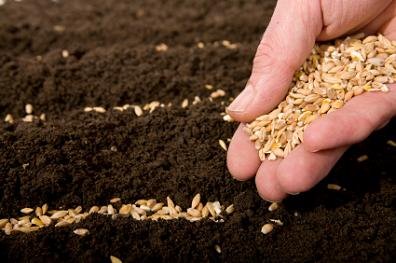
Okay, “idea” is a bit of a stretch. It’s more like a plot germ. As it stands, it’s a weak and feeble thing prematurely delivered into the world that requires incubation, so I decided to commit it to the ground at the tail end of my mind and ignore it until it has the strength to claw its way out of the grave.

But don’t feel too sorry for it, though. It’s not alone. It’s planted beside random bits of cool dialogue that I’ll never be able to work into a real world conversation, and nebulous set pieces that don’t quite fit into any of my existing stories. They’re all tucked away in my own personal mental pet cemetery.

“The soil of a man’s mind is stonier; a man grows what he can imagine and scribes it.”

Apologies for the bastardization of your quote, Stephen.

And no, I won’t tell you what the plot germ is. Not out of fear of it being stolen (what, thieves on the interwebz? Nope, I won’t believe it) but simply because 1) you wouldn’t understand it in its present form, and 2) I’m not superstitious but I firmly believe in the dreaded jinx. If I tell you what it is, it’ll never grow.

So, I will go about my business and occupy my mind with trivialities—like the numerous problems with Star Trek Into Darkness and why show writers create interested premises for Doctor Who episodes only to abandon all logic and rush the stories to unsatisfying climaxes—and allow my subconscious to absently weed my preemie idea seed. I’ll wait until it breaks free of its chrysalis as a brain soil stained vision with roots that encircle the heart of a story that I cannot wait to write. Until then, I’ll follow the sage advice of Mssr. Ron Popeil and, “Set it and forget it.”

Sally forth and sow, perchance to reap.

— Rhyan Scorpio-Rhys