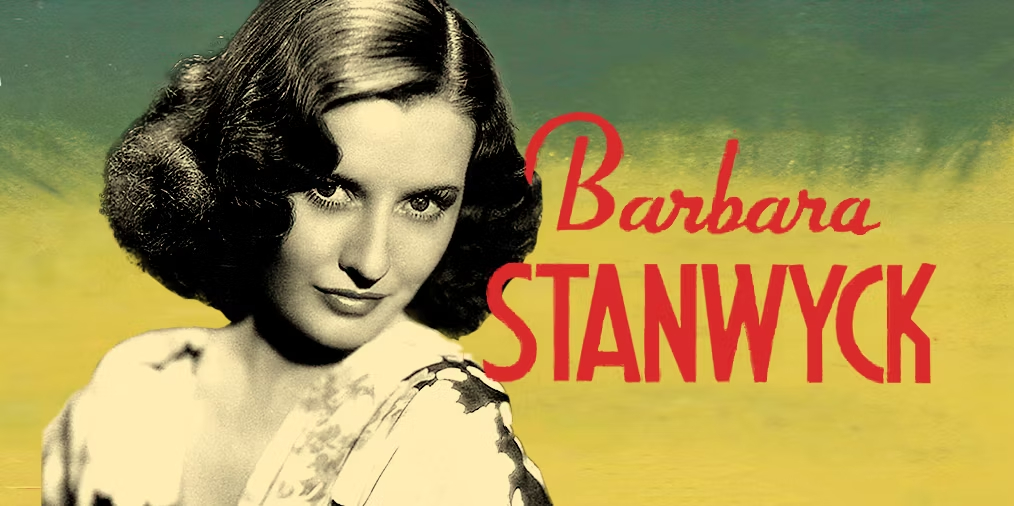
The Daring Legacy of Barbara Stanwyck: A Pre-Code Hollywood Icon

In the luminous constellation of Hollywood’s golden age, few stars shine as brightly or as boldly as Barbara Stanwyck. Before the strict enforcement of the Hays Code reshaped American cinema, Stanwyck captivated audiences with her dynamic performances in a series of pre-code films that pushed the boundaries of storytelling, sexuality, and female autonomy. This blog post delves into the pre-code work of Barbara Stanwyck, exploring how her roles during this era were emblematic of a fleeting period of cinematic freedom and how they helped cement her legacy as one of Hollywood’s most enduring icons.

A Maverick on Screen

Barbara Stanwyck’s career in the pre-code era was marked by a series of performances that were as varied as they were groundbreaking. She portrayed strong, independent women who navigated the complexities of society, love, and ambition in a way that was unheard of at the time. Stanwyck’s characters were often ahead of their time, embodying a blend of vulnerability and strength, and always with a nuanced depth that defied the simple archetypes of women typically seen on screen.

“Night Nurse” (1931)

One of Stanwyck’s most notable pre-code films is “Night Nurse,” where she stars as Lora Hart, a dedicated nurse who uncovers and combats a plot to murder her wealthy patient’s children. The film was bold for its time, showcasing Stanwyck’s character as a tenacious and morally upright heroine willing to fight against corruption and abuse. “Night Nurse” exemplifies the pre-code era’s willingness to tackle serious social issues and highlight female agency.

“Baby Face” (1933)

Perhaps no other film showcases Stanwyck’s pre-code legacy quite like “Baby Face.” In this film, Stanwyck plays Lily Powers, a young woman who uses her intelligence, charm, and sexuality to climb the social and economic ladder, leaving a trail of broken men in her wake. “Baby Face” is a striking commentary on gender, power, and ambition, with Stanwyck’s performance challenging the societal norms of the time. The film was so controversial that it underwent significant censorship and editing to comply with the Hays Code requirements.

Stanwyck’s Impact on Hollywood

Stanwyck’s pre-code films were not just entertainment; they were a reflection of the changing attitudes towards women’s roles in society. Through her characters, Stanwyck explored themes of female independence, sexual autonomy, and the pursuit of personal ambition outside of traditional norms. Her work during this period paved the way for more complex and realistic portrayals of women in cinema.

A Legacy of Empowerment

Stanwyck’s portrayals provided a glimpse into the potential for a more progressive and inclusive Hollywood, one that was sadly curtailed by the enforcement of the Hays Code. However, the impact of her pre-code work endures, serving as a testament to her talent and the fleeting period of artistic freedom that defined early 1930s cinema.

Conclusion

Barbara Stanwyck’s pre-code films remain a fascinating study of a Hollywood at the cusp of change. Through her performances, Stanwyck not only entertained but also challenged and inspired. She navigated the complexities of her characters with an authenticity and depth that continue to resonate with audiences today. As we look back on the pre-code era, Stanwyck’s legacy stands as a reminder of the power of cinema to reflect and influence societal norms, and of the enduring impact of a true Hollywood maverick.

The Underutilization of Marion Ravenwood in the “Indiana Jones” Saga

Introduction

In the pantheon of iconic film characters, Marion Ravenwood stands out as a beacon of strength and resilience in the ‘Indiana Jones’ series. Introduced in ‘Raiders of the Lost Ark’ as the hard-drinking owner of a bar in Nepal, Marion immediately captured audiences’ attention as a woman who could hold her own against any challenger. Her toughness, independence, and complex history with Indiana Jones suggested a character ripe for exploration and development. Yet, as the series progressed, Marion’s potential was increasingly sidelined, transforming her from a formidable partner in adventure to a role more closely resembling a damsel in distress. This article examines Marion Ravenwood’s character arc across the ‘Indiana Jones’ films, highlighting the missed opportunities to fully utilize her character and reflecting on the implications for female representation in action-adventure cinema.

Marion’s Strong Start

When audiences first meet Marion Ravenwood, she is running a bar in Nepal, far removed from the traditional roles women often occupied in early 1980s cinema. Her introduction is memorable: she outdrinks a patron in a display of sheer willpower and tolerance, showcasing not just her toughness but her ability to stand equal or superior to the men around her. This scene sets Marion apart as more than just a love interest or side character; it establishes her as a person with her own story, strengths, and weaknesses.

Shift in Character Role

The arrival of Indiana Jones marks a pivotal moment for Marion’s character. Despite her strong introduction, Marion’s role gradually shifts as the narrative unfolds. Where she initially appears as an independent figure capable of handling the challenges of her environment, her reunion with Jones reintroduces her into the narrative in a manner that increasingly relies on traditional gender dynamics. Although Marion remains spirited and resourceful, her moments of vulnerability and need for rescue become more prominent. This shift is emblematic of a broader trend in action-adventure films, where female characters often oscillate between empowerment and traditional damsel-in-distress roles based on the narrative’s demands.

Character Development and Missed Opportunities

Marion Ravenwood’s character presented a golden opportunity for the ‘Indiana Jones’ series to explore themes of partnership, equality, and mutual respect in the context of high-stakes adventure. Her backstory with Jones, combined with her proven capabilities, could have served as a foundation for a more nuanced exploration of her character. Instead, subsequent appearances in the series further sideline her contributions and capabilities. Scenes that could have showcased her independence or leveraged her unique skills were often overshadowed by her role in the narrative’s romantic subplot or as a character needing rescue.

Narrative Impact

The underutilization of Marion’s character has a ripple effect on the series’ overall narrative. Instead of utilizing Marion’s strengths to contribute to the adventure, the films often revert to conventional storytelling tropes. This not only diminishes her character’s potential impact but also represents a missed opportunity to diversify the series’ approach to storytelling. A more balanced utilization of Marion’s character could have enriched the narrative, offering audiences a broader perspective on the challenges and triumphs of the adventure.

Comparison with Contemporary Female Characters

Comparing Marion Ravenwood to contemporary female characters in action-adventure films highlights the missed opportunities in her portrayal. Characters such as Ellen Ripley in the ‘Alien’ series or Sarah Connor in the ‘Terminator’ series demonstrate that female characters can consistently display resilience, complexity, and growth without sacrificing their independence to narrative demands. These characters maintain their agency and continue to evolve, serving as both central figures in their respective stories and as benchmarks for female representation in the genre.

Fan Reception and Legacy

Despite the limitations imposed on her character, Marion Ravenwood remains a beloved figure in the ‘Indiana Jones’ series. Fans appreciate her for her initial portrayal as a strong, independent character and continue to discuss what might have been had her character been given more to do. Her legacy is a complex one, reflecting both the strengths of her character and the missed opportunities to develop her further.

Conclusion

Marion Ravenwood’s character in the ‘Indiana Jones’ series serves as a poignant reminder of the complexities of female representation in action-adventure cinema. Her initial introduction as a capable, independent figure set expectations that were not fully realized in subsequent films. By examining Marion’s underutilization, this article highlights the missed opportunities for character development and narrative enrichment. As the film industry continues to evolve, Marion’s legacy underscores the importance of creating complex, dynamic characters who can inspire, engage, and stand on equal footing with their male counterparts. The lessons learned from Marion Ravenwood’s portrayal can guide future filmmakers in crafting more inclusive and representative narratives.

Unveiling the Cosmic Connection: Greek Nymphs Were Extraterrestrial Visitors, New Evidence Suggests

In a groundbreaking revelation that’s set to rewrite both history books and sci-fi novels, recent archaeological findings suggest that the ethereal nymphs of Greek mythology were, in fact, the first extraterrestrial visitors to grace our planet. This astonishing theory, proposed by the renowned (and somewhat controversial) Dr. Xenon Metaphoros of the Institute of Mythological Cosmology, is based on a series of ancient artifacts and cryptic historical texts unearthed in a previously undiscovered subterranean library in Crete.

From Olympus to the Stars: The Interstellar Journey

The discovery includes a series of frescoes depicting what appear to be celestial beings descending from starlit skies, intertwining with scenes of well-known mythological narratives. According to Dr. Metaphoros, “The intricate details in these frescoes clearly point to a more literal interpretation of ‘nymphs descending from the heavens.’ It’s not mere poetic imagery; it’s historical documentation of an extraterrestrial visitation.”

The most compelling piece among the artifacts is a fragmented tablet, tentatively titled “The Cosmic Odyssey,” which contains inscriptions in a dialect that predates Ancient Greek. Linguistic experts at the University of Atlantis (a prestigious yet elusive institution) have tentatively translated portions of the text, revealing references to interstellar travel and technology beyond our current understanding.

Nymphs: Not Just Forest Dwellers, But Star Wanderers

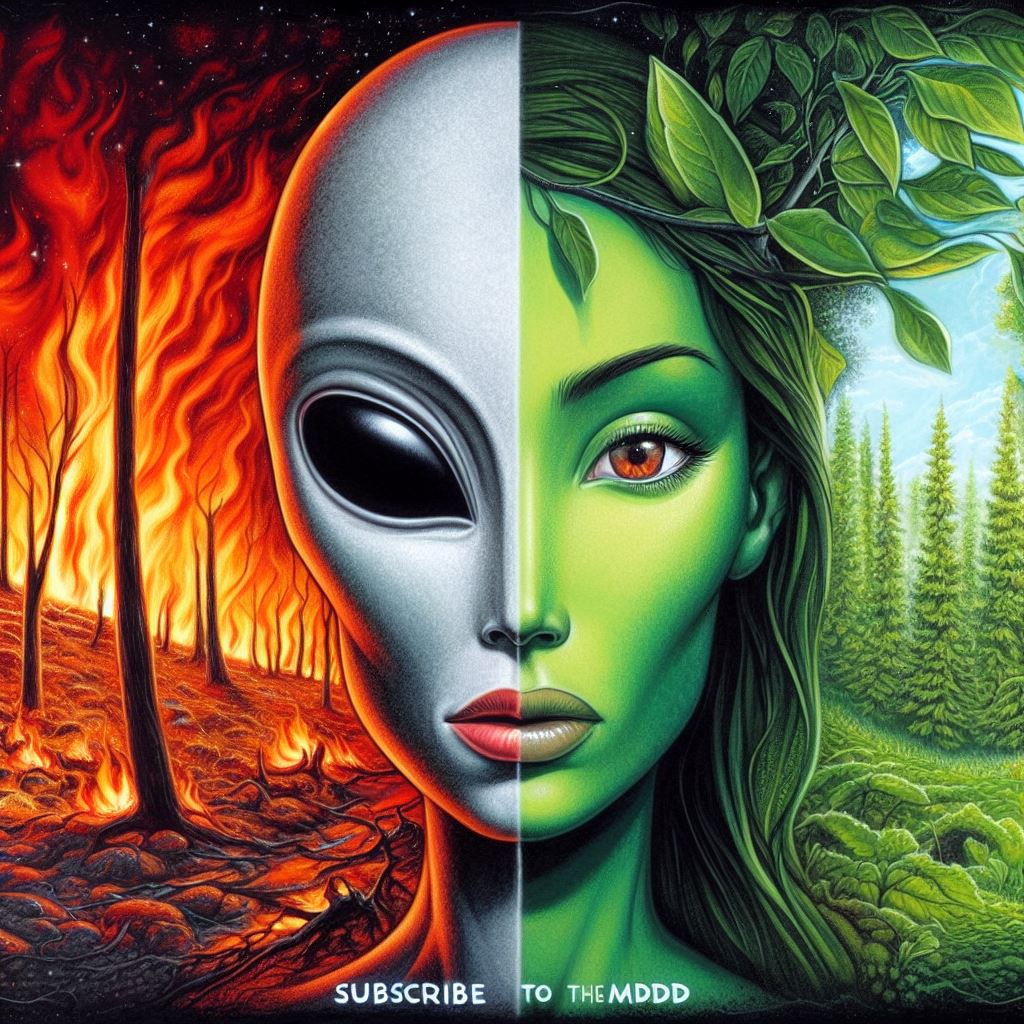
Greek nymphs, traditionally depicted as minor deities associated with nature, have always held an air of mystery in mythological tales. This new evidence, however, paints them in a radically different light – as advanced beings from another world. “Imagine, if you will, Dryads not just as spirits of the trees, but as guardians of cosmic knowledge, imparting astronomical wisdom to ancient civilizations,” muses Dr. Metaphoros.

The implications are staggering. Were the Greeks mere passive recipients of otherworldly wisdom, or did they engage in interstellar cultural exchanges with these nymph-like visitors? Professor Icarus Heliopolis, a leading historian at the Solar Myths Research Center, speculates, “This could very well mean that concepts like democracy, philosophy, and even the Olympic Games might have extraterrestrial origins. The nymphs might have been the ultimate muses, inspiring not just art and literature, but the very foundations of Western civilization.”

Skeptics and Enthusiasts: A Galaxy of Opinions

As expected, this theory has its skeptics. Dr. Helena Chronos of the Historical Accuracy Group dismisses the findings as “an imaginative misinterpretation of mythological allegories.” She argues, “To leap from artistic representation to asserting an extraterrestrial influence is both scientifically unfounded and culturally myopic.”

On the flip side, the revelation has sparked enthusiasm among ancient astronaut theorists and mythological enthusiasts. Social media is abuzz with the hashtag #NymphsInSpace, with users speculating about the possible connections between other mythological figures and alien visitors.

A New Dawn of Understanding

Regardless of the debate, this discovery opens up a universe of possibilities in our understanding of human history and mythology. As Dr. Metaphoros aptly puts it, “We are not just unearthing artifacts; we are uncovering the cosmic lineage of human civilization. The nymphs, once thought to be mere figments of fertile imaginations, may well be the heralds of humanity’s star-studded ancestry.”

As the scientific and mythological communities continue to analyze and debate these findings, one thing is clear: our understanding of the ancient world and its connections to the cosmos may be on the brink of a paradigm shift, courtesy of the otherworldly nymphs of Greek lore.

The Monster Illuminati Revealed: The Occultus Consortium—A Hidden Cabal of the Most Infamous Monsters in History

Introduction

In a groundbreaking investigation, we delve deep into the cryptic world that has eluded human comprehension for centuries. Using sources ranging from ancient manuscripts to high-tech surveillance, we reveal the existence of The Occultus Consortium—a secret organization of notorious monsters influencing world events. Consisting of enigmatic figures such as Count Dracula, Frankenstein’s Creature, and The Wolf Man, this organization is so shrouded in secrecy that some question its existence. The evidence presented in this documentary report exposes their hidden lairs, audacious objectives, and internal conflicts that might be their undoing.

Origins

Tracing the origins of The Occultus Consortium takes us back to the cobblestone streets of 19th-century Europe. Deciphered letters between Victor Frankenstein and Count Dracula speak of a ‘new dawn for the concealed,’ a dawn that would unite various entities of monstrous origins. Although the deciphered texts are fragmented, they point toward a grand meeting, a summit that would later be known as the ‘Inaugural Gathering of the Shadows.’ It was here, in a concealed chamber beneath an unnamed castle, that The Occultus Consortium was officially formed.

Members and Hierarchies

Since its inception, The Occultus Consortium has grown in both influence and membership. The original founding members represent a wide array of monstrous lineages, each commanding a distinct faction within the organization:

Count Dracula: The charismatic vampire serves as the organization’s unofficial spokesman. His primary interest lies in keeping the world of monsters veiled from the eyes of humanity, thus avoiding possible extermination.

Victor Frankenstein / The Creature: This member, or rather members, represent the faction of scientific monstrosity. Frankenstein’s Creature has been seen attending the meetings, with theories suggesting that Victor Frankenstein himself might be resurrected in some form.

The Wolf Man (Larry Talbot): Serving as the voice for the natural-born monsters, Talbot promotes a unique ideology centered around coexistence with humans and nature alike.

The Creature from the Black Lagoon: An ancient aquatic entity, this creature embodies the natural world’s monstrous manifestations. Its agenda revolves around environmental preservation and the reclamation of territories lost to human encroachment.

The Mummy (Imhotep): The millennia-old sorcerer heads the faction representing magical creatures. His arcane pursuits aim to consolidate mystical power, viewing it as the ultimate safeguard against human aggression.

Each member, while part of a larger whole, pursues an agenda, often resulting in tense discussions and heated debates. No member holds official supremacy, a situation that both fortifies and undermines the Consortium’s influence.

The Hidden Lair

The headquarters of The Occultus Consortium is the subject of much speculation, with stories and folklore painting it as everything from a subterranean crypt to an extradimensional realm. Our most reliable sources, however, point to a hidden lair deep within the Carpathian Mountains. Protected by a mixture of arcane spells and state-of-the-art security systems, this fortress is rumored to be impenetrable. Recent seismic surveys indicate unusual subterranean structures that align with the leaked architectural plans we’ve obtained. While the exact location remains unknown, the evidence suggests a sanctuary designed to accommodate the unique needs and abilities of the Consortium’s diverse members.

Objectives

Disparate as they are, the members of The Occultus Consortium are bound by a shared urgency: the preservation and elevation of monsterkind. Classified documents intercepted from various intelligence agencies outline diverging goals among the group’s members:

Count Dracula: Advocates for concealing the existence of monsters, fearing that exposure would lead to their extermination.

Victor Frankenstein / The Creature: Promotes the advancement of monsterkind through scientific means, specifically bioengineering and transmutation.

The Wolf Man: Encourages peaceful coexistence between monsters and humans, presenting a radical perspective on integrated societies.

The Mummy: With a focus on the accumulation of arcane knowledge and power, aims to construct a magical arsenal as a deterrent against human interference.

These conflicting goals are not just ideological; they’ve led to strategic disagreements within the Consortium, affecting its course of action and raising questions about its long-term viability.

Inner Conflicts

While the Consortium’s external actions remain largely enigmatic, its internal politics are a whirlpool of tension and ideological clashes. A dossier purportedly leaked by an inside source details the heated arguments and divisions within the group. Especially vocal are The Wolf Man and The Mummy, whose opposing viewpoints on human-monster relations often escalate into impassioned debates. An excerpt from a recent meeting reads:

“If you proceed with this arcane nonsense, you risk the exposure of us all!” The Wolf Man howled. “These humans are not our enemies; they are kindred souls trapped in different bodies!”

“You naïve pup! Our existence will always be a threat to their frail egos,” The Mummy retorted, his bandaged hands tightening around an ancient scroll. “Only power can assure our survival.”

As tensions reached a boiling point, the camera footage shows a shadowy corner of the meeting room, where additional seats remained conspicuously empty. Could this suggest the existence of another layer to the Consortium, a more secretive circle? And if so, who—or what—comprises this inner sanctum?

The Crisis

The Consortium faces a crisis that eclipses individual ambitions and ideological disagreements: a prophecy known as ‘The Great Unveiling.’ Ancient manuscripts detail a time when the boundaries between the human and monster worlds will blur, leading to catastrophic events. With the prophecy’s signs aligning, urgency grips the Consortium’s meetings. It’s in these dire moments that the second circle—represented by enigmatic figures like the Bride of Frankenstein, the Invisible Man, and the Phantom of the Opera—makes a rare appearance. Though their exact roles and motivations are cloaked in mystery, their involvement suggests that the Consortium’s influence and complexity extend far beyond what was initially presumed.

Interviews & Testimonials

Given the extreme secrecy surrounding the Occultus Consortium, obtaining firsthand accounts is next to impossible. However, we’ve managed to compile anonymous testimonials that further validate the organization’s existence and aims.

“I was once a groundskeeper at a castle deep within the Carpathian Mountains. One evening, I stumbled upon a hidden chamber. What I saw… I can’t even describe. Let’s just say the legends are real, and they have agendas.” – An anonymous source, believed to be a former servant of Count Dracula.

“I found an old manuscript belonging to my ancestor. It was more of a journal, filled with meetings and plans that sounded too fantastical to be real. I dismissed it as the ramblings of a madman until I started seeing the signs.” – Descendant of Victor Frankenstein, identity protected for safety reasons.

“It all sounded like old wives’ tales until the livestock started disappearing. Then people started whispering about wolf-like figures in the forest. Now I don’t know what to believe.” – A resident from a rural European town plagued by mysterious events.

These interviews, while not definitive proof, serve as corroborative evidence that adds layers to the shadowy tapestry of the Consortium.

Conclusion

In the labyrinthine corridors of history and folklore, the Occultus Consortium remains a nebulous entity—simultaneously shaping and evading our understanding. Through this groundbreaking investigation, we’ve uncovered alliances, conflicting objectives, and even an inner sanctum of enigmatic figures. Yet, for every question answered, two more arise, each more puzzling than the last.

As the signs of “The Great Unveiling” grow more evident, the urgency to unravel the Consortium’s mysteries intensifies. Whether heroes, villains, or complex beings whose motives transcend human morality, what remains clear is that these legendary monsters are active participants in the world’s unfolding drama.

With new leads pointing towards an even deeper layer of secrecy within the Consortium, our investigation is far from over. Who are the shadowy figures of the inner circle? What role will they play in the coming events? These questions demand answers, and it is a quest we undertake with both trepidation and resolve, for the truth may shake the very foundations of our reality.