Climbing The Freytag Pyramid (or getting on top of dramatic structure)

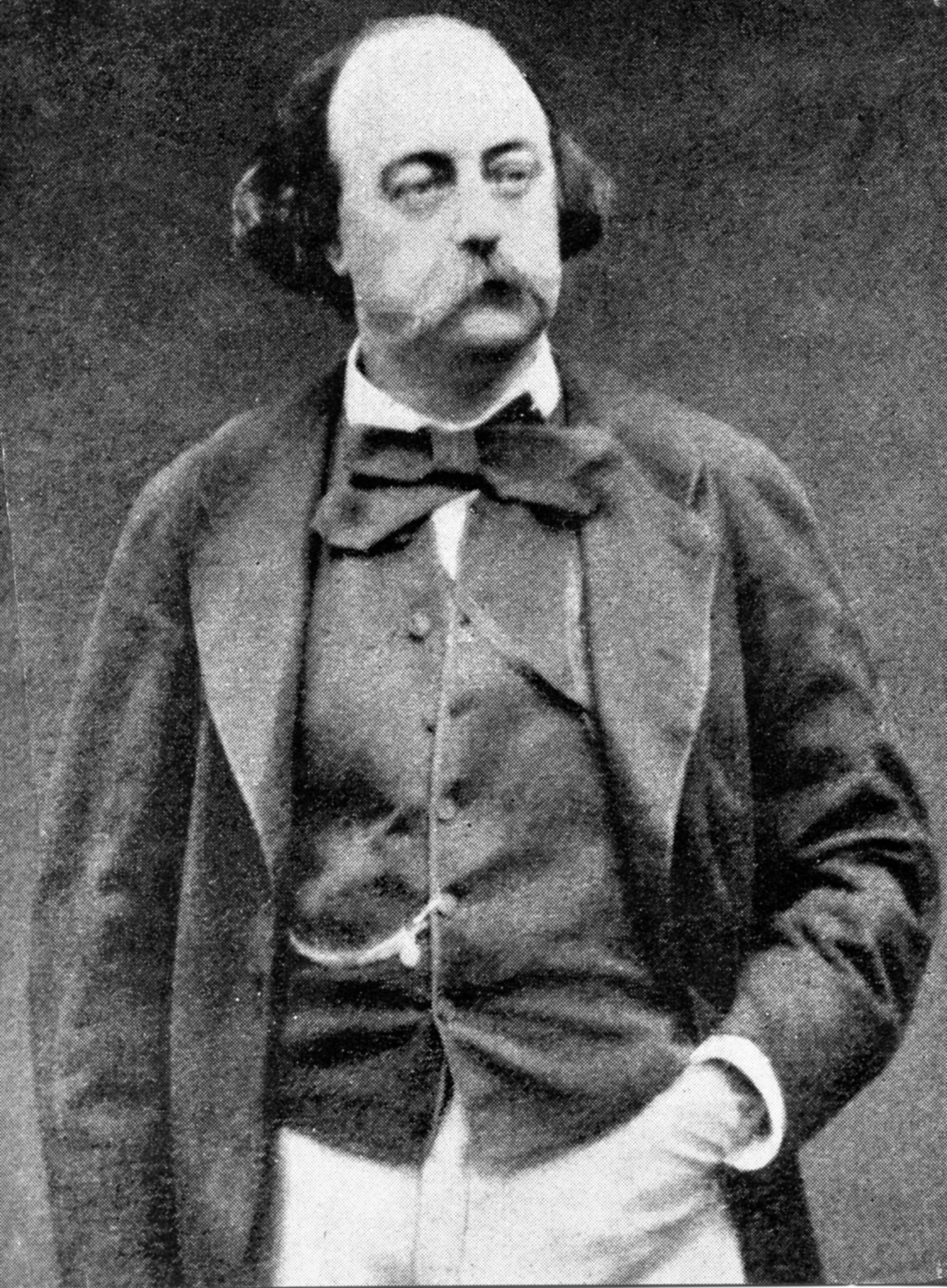
ImageScholars have been analyzing the structure of drama for nearly as long as it’s been written or performed. One of the more notable studies belongs to nineteenth century German playwright and novelist, Gustav Freytag and his “Die Technik des Dramas” (Technique of the Drama).

Image

He didn’t originate the concept, mind you, Aristotle introduced the idea of the protasis, epitasis and catastrophe—beginning, middle and ending—three-act plot structure, which was later replaced with drama critic Horace’s five-act structure.

But creators are never satisfied with the status quo, so when playwrights began toying around with three and four act plays, Freytag wrote a definitive structure study—referred to as Freytag Pyramid—that explained the necessity of dividing a standard drama into the following five acts:

Image

Stage 1: Exposition—as discussed in an earlier post—introduces the setting of the story, the characters, their situation, atmosphere, theme, and the circumstances of the conflict. Traditionally, exposition occurs during the opening scenes of a story, and when expertly executed background information is only gradually revealed through dialogue between major and minor characters.

Stage 2: Rising action—sometimes called complication and development—begins with the point of attack that sets a chain of actions in motion by either initiating or accelerating conflict. Difficulties arise, which intensifies the conflict, while narrowing the possible outcomes at the same time. Complications usually come in the form of the discovery of new information, the unexpected opposition to a plan, the necessity of making a choice, characters acting out of ignorance or from outside sources such as war or natural disasters.

In this stage, the related series of incidents always build toward the point of greatest interest.

Stage 3: Climax—is the turning point, where the protagonist’s journey is changed, for the better or the worse. In comedies, the protagonist’s luck changes from bad to good, due to their drawing on hidden inner strengths. Drama is the other side of the coin, where things take a turn for the worse and reveal the protagonist’s hidden weaknesses.

Stage 4: Falling action—during this stage, the conflict unravels and the protagonist either wins or loses against the antagonist. This is also where a moment of final suspense might be found, in which the final outcome of the conflict is in doubt.

Stage 5: Dénouement—also known as resolution, or catastrophe— in drama, brings the events from the end of the falling action stage to the actual closing scene. Conflicts are resolved in a manner that either creates normality and a sense of catharsis for the characters, or release of tension and anxiety for the audience. In comedy, the protagonist is always better off than they were at the beginning of the story. And in tragedy, the protagonist is worse off in the end—hence the alternate title for this stage, catastrophe.

As I’m sure you’re well aware, Freytag’s analysis wasn’t meant for modern drama. For starters, front loading your story with exposition is usually the kiss of death for your audience’s declining attention span. If exposition is truly needed, it should occur naturally within your story in the smallest fragments possible.

Also, modern storytellers tend to use falling action to raise the stakes of the climax for dramatic impact, having the protagonist fall short of their goal—–encountering their greatest fear or losing something or someone important to them. And when they’re at their lowest point, they’re struck with an epiphany, giving the protagonist the courage to take on the final obstacle, resulting in the classic climax.

And there you have it. Now, sally forth and writeful… and enjoy your weekend.
More Words Than You Need – Some Darlings Ain’t Long For This World

Image“So the writer who breeds more words than he needs, is making a chore for the reader who reads.” ― Dr. Seuss

No better moment exists than when you first get hit with that brand spanking new premise for a story. There will be those of you who disagree, citing the signing of a contract and being handed a check for your work as a better moment, but I beg to differ. When a story first bursts to life in your mind, you are in the superposition of optimism. The story will be great, the best thing you’ve ever written and will be well-received by the washed and unwashed masses alike. No reality lurking about to place limitations on your spectacular vision at this point.

So, you do your prep work—outlining, research, character development, etc.—and pound out your first draft. And you’re happy with yourself. Real happy. Your first instinct is to share it with the world, but before you slap your baby in the mail or post it online, I need to break some bad news to you. Your story isn’t perfect. Not only is it filled with mistakes but it’s a tad overweight.

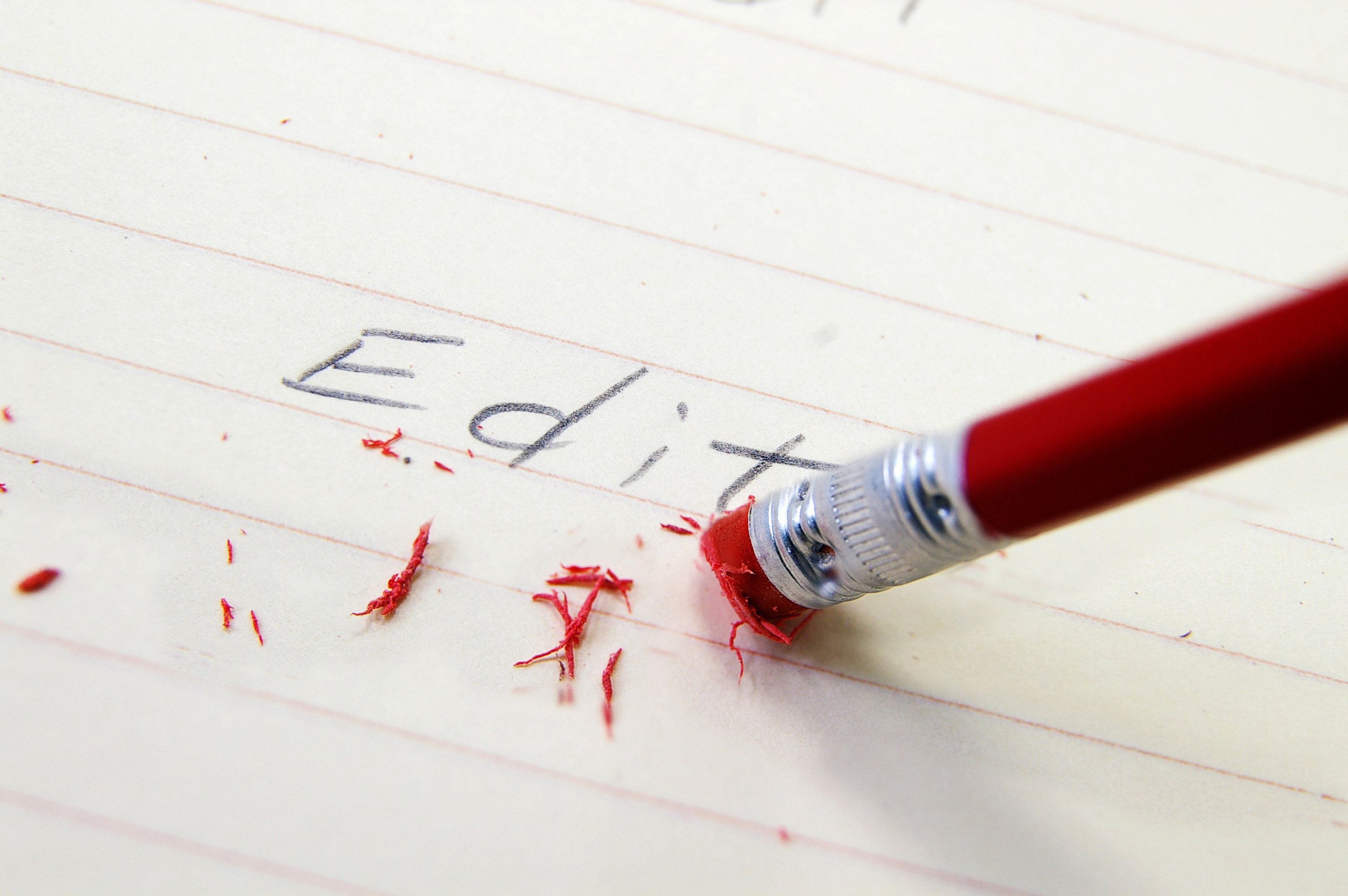
Since you most likely don’t have access to an editor at this stage in your writing career, the onus is on you to sharpen the edge of your blue-pencil blade to fix typos and cull clumsy or ambiguous phrasing.

If you’ve ever handed a story to someone to read, a story you were sure was error-free, you quickly learned that spotting mistakes in your own writing is difficult. The problem with self-editing is your mind glosses over errors because it knows what you meant to write and sometimes reads that instead of what you actually wrote. Fortunately, self-editing is a skill you can learn to hone in order to eliminate mistakes and improve the quality of your writing:

1. Don’t edit on the fly

I know this is a hard thing to do, but when you’re writing why not concentrate on getting your idea down on paper first? Sure, if you spot a typo it’s okay to correct it or to approach a sentence from a different angle in order to keep flow going, but when you begin deleting sections of your work or get caught in the dreaded rewrite loop—reworking the same paragraph over and over again—you’re placing road blocks between you and the forward progression of your story.

One solution to help break you out of this bad habit may be to try a distraction-free writing program like OmmWriter, Write or Die, Freedom, Grandview, and Don’t Look Back.

2. Set it and forget it

Once you’ve finished your latest magnum opus, stuff it in a drawer and go about your business before you even think about attempting to edit it. Concentrate instead on one of the many things you had to put aside in order to make time to write. What you’re doing here is stepping out from among the trees so you can see the entire forest.

You’ll find when you eventually return to your work, you’re approaching it with a new set of eyes that are better equipped to spot things you’ve missed, things that don’t work as well as you initially thought they did, inconsistencies, etc.

3. Big picture editing before sentence micromanagement

I know, I know, you’re eager to jump in and fine tooth comb your work sentence by sentence, and good on you for being that keen, but before you get into the detail work, I need you to consider examining your content and overall structure. Is there important information missing from the piece? Or a section that’s either irrelevant or seems out of place? How about scenes in desperate need of drastic revision?

Focus on the major issues before you begin tweaking words and sentences.

4. Put your work on a diet

You’ve over-written the piece. Uh-uh, don’t argue. You’re a writer who’s in love with the notion of stringing words together to convey ideas that plant images your audience’s mind, which means you over-write. Don’t be ashamed, most writers use more words than are absolutely necessary.

It’s time to get your piece into fighting shape by cutting its body mass index by ten percent. It’s easier to drop this excess poundage than you think, by simply losing mediocre phrases, unnecessary adjectives, and repeated points.

5. Don’t rely solely on spell-check

A spell-checking program can be your friend, but we all know from experience that it isn’t foolproof. The human eye is still the best tool for catching those sneaky homophone imposter stand-ins (to, too, two; it’s, its; yaw, yore, your, you’re; there, their, they’re), the ever-elusive missing words, auto-correct mishaps, etc.

6. Be backwards in your reading

Mistakes love sliding past you because they realize how tough it is proofing your own work. One of the ways to flip the script and catch them at their diabolical game is to start at the very end of your story and read it backwards. Sounds silly, but it works.

7. Push your darlings out of the nest

One of the awful things about being a writer is that you’re never one hundred percent completely satisfied with your work. But no matter how determined you are to touch the face of perfection, the hard fact is your writing will never be flawless. Accept it. You’re just going to have to settle for the best you can humanly manage. You’ll know when you’ve reached that point when you begin making slight adjustments, then reverting it back to its original form.

It’s time to stop, kiss your darlings on the forehead and push them out of the nest and let them fly into the world.

***

Actually, there are a plethora of editing tips that you can utilize before you get to this stage and instead of listing them all, I’ve decided to post the links below and allow you to browse them at your leisure and cherry pick the ones that work best for you.

30 Quick Editing Tips Every Content Creator Needs to Know

Ten Tips for Effective Editing

Editing Tips for Effective Writing

21 Proofreading and Editing Tips for Writers

And just for kicks I decided to link a list of homophones. Ya never know, might come in handy:

A List of English homophones

Sally forth and be writeful.

Don’t Be A Chump, Don’t Infodump

Image

Finding balance in your life isn’t simple. Balancing life and writing is even harder. Finding balance in your writing? That’s something you’ll be working on for the rest of your natural writing life, because a well-written story balances exposition, description, action and dialogue, but not in equal measure. You need to keep a watchful eye on exposition.

In its basic form, exposition is the part of a story that sets the stage for the drama to follow, introducing the theme, setting, characters, and circumstances, usually at the beginning of the story. Sounds straightforward enough, right? Well, writing good exposition that flows with the story and continues to draw the audience in, isn’t as easy as it sounds. In fact, many writers misuse exposition as an illegal dumping ground for information that not only causes a distraction that breaks the flow of a story, but also decreases interest.

And you don’t have to be an expert to spot the exposition dump (aka infodump) because we’ve all experienced and recognized it while reading a novel or watching a movie or television program. It’s that speed bump or sometimes roadblock in the story where the writer unloads a ton of information at once as a means of explaining things like backstory, characters, and the rules of the story world. If you’re a culprit of this, stop it now. We’ll forgive your ignorance in past works (go back and cull the exposition, if at all possible) but it’s a bad exposition technique and the line must be drawn here. This far, no further.

Typically, infodumping occurs when a character, new to the scene, is introduced to a foreign setting and is force-fed all the knowledge of the various individuals at play, the rules of the micro society, and the overall big picture of the story world. You’ll find this a lot in science fiction and fantasy tales.

Other bad/lazy infodumping techniques include “The Lecture,” where a speaker over-explains information the writer discovered during their research period of the writing process and thought would show their faux expertise in the subject. The other offender is commonly known in the sci-fi writing community as the “As You Know, Bob,” conversation, where one character tells another character information they already know. Please don’t do this. Not only is it lazy, but it comes across as unrealistic.

This isn’t to say that all exposition is bad, in fact, properly executed, it takes up roughly 10% of a well-balanced written piece (the other 90%, of course, being the description, action and dialogue that make up the scenes). Some of the information embedded within expository text is actually relevant, it simply requires a little finesse to fit it in seamlessly and not disrupt the story’s flow.

Of course, if you handle your description, action and dialogue properly, you can whittle that 10% down and most people won’t notice or care about the missing exposition.

Well, that’s enough infodumping for me today. I’m off to tear a story down and rebuild it.

Sally forth and be writeful.

Be Violent And Original (in your writing, naturally)

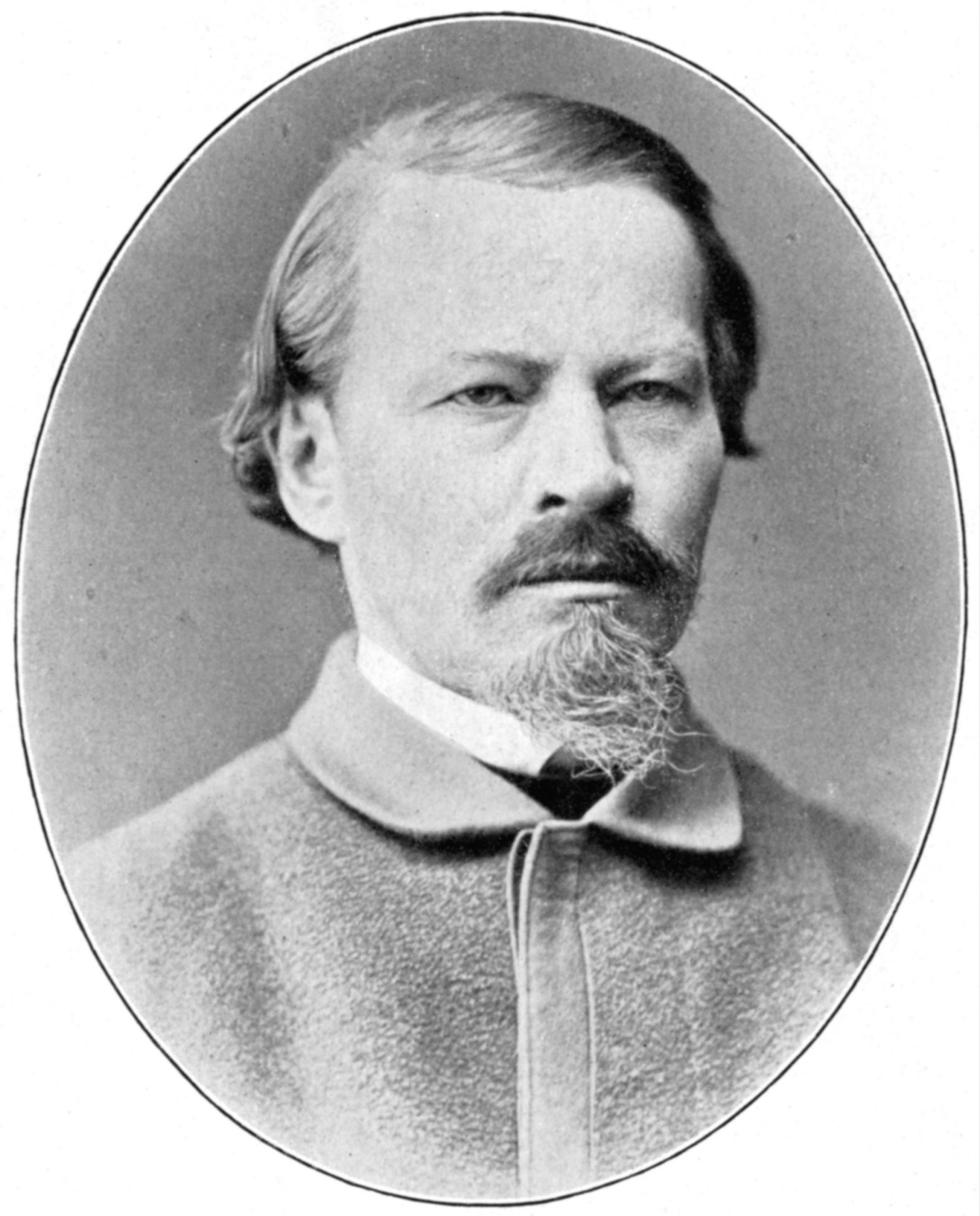
Image“Be regular and orderly in your life, so that you may be violent and original in your work.” – Gustave Flaubert

Live a good life. This isn’t something I should have to tell you. As you make your way through the workaday world, you should strive to do no harm, treasure your relationships with family and friends, seek calming pleasures that contribute to peace of mind, and live in harmony and balance.

Your written life? That’s a different creature all together.

Safe, tame, bland, and sometimes “it’s good” (with the unspoken “but…” attached on the end like a phantom limb) are among the worst things someone can say about your work. Whenever you write, your goal should be to provide elements that hook your audience and reels them in and after the story has been told, leaves them with an emotional takeaway.

Writing is about risk-taking, about snapping off the handbrakes, about shrugging off restraint, about leaving your internal censor bound and gagged in a tiny room, allowing your words and imagination to run amuck and wreak havoc in the world you’ve created.

If you’re not currently writing this way, what’s holding you back? What’s bridling your passion? What’s preventing you from creating bold characters, powerful phrases and dangerous situations? If not yours, then whose hand is on the lever that controls the sluice gates holding back the churning anxiety, obsession and peril your story desperately needs?

Are you trapped within the safe zone because of fear? Then allow me to geek out a moment as I quote the litany of fear, an incantation used by the religious/political sisterhood known as the Bene Gesserit from Frank Herbert’s science fiction classic, Dune:

I must not fear. Fear is the mind-killer. Fear is the little-death that brings total obliteration. I will face my fear. I will permit it to pass over me and through me. And when it has gone past I will turn the inner eye to see its path. Where the fear has gone there will be nothing. Only I will remain.

Fear is also an art-killer. It’s typically the fear of being judged by professionals, critics and peers, of not being admired by the audience for taking a controversial stance or doing horrible things to characters. But the possible opinions and tastes of everyone outside yourself shouldn’t factor in while you’re creating your story. The transfer of ownership hasn’t taken place at this point. It isn’t the reader’s story yet, it’s still yours, so why not write fiercely?

Give your characters barbed tongues and let them spit venom. Give them the courage to do all the things you would never dream of attempting, even on your most adventurous or foolhardy day. Tear their hearts out and make them suffer as you place them smack dab in the center of conflict and tension-filled drama.

Basically, I’m asking you to fish out that key that you’ve hidden in the back of a junk drawer within the deep recesses of your mind and open the door to your wildest imaginings.

You’ll come to discover that if you’re open, honest and free in your writing, yes, you will have your critics and people who won’t either like or understand your work, but you’ll also attract an audience that will come back for more.

What’s that? You need more incentive? Okay, well I didn’t want to break out the big guns but here goes:

I dare you to become more engaging and intriguing with your writing. I double-dog dare you.

See what you made me do? Happy now?

Sally forth and be writeful.

10 Reasons You Might Be A Writer (with apologies to Mssr. Foxworthy)

Image

“As a writer, I need an enormous amount of time alone. Writing is 90 percent procrastination: reading magazines, eating cereal out of the box, watching infomercials. It’s a matter of doing everything you can to avoid writing, until it is about four in the morning and you reach the point where you have to write. Having anybody watching that or attempting to share it with me would be grisly.” ― Paul Rudnick

You very well might be a writer if…

  1. You find yourself constantly editing, be it in your car, cruising down the street when rolling past a misspelled sign, or stumbling upon grammatical no-no’s on the interwebz, and you fix these errors constantly in your mind—and not always quietly.
  2. You collect things—social interactions, dialogue, life events, and basically anything you spy with thy little eye—and you file them away neatly in a folder, either physical or mental, for later use.
  3. You take a mental step back from your life experiences, examining them with a Holmesian eye and puzzle out how to properly describe the events in words for maximum clarity and impact.
  4. Your imagination is like the Energizer Bunny (is that critter still around? Never get old, seriously) and it can’t stop, won’t stop providing your brain with entertainment and fresh ideas so there’s never a mental dull moment.
  5. After reading a good book, you’re struck with the sudden desire to write. It happens.
  6. You often hear voices in your head… belonging to the characters in your latest story. They just won’t shut up, carrying on conversations with one another, whether you’re ready to capture it on paper or not.
  7. You get sideswiped by a truckload of guilt when procrastination becomes your master and you haven’t written anything for a while, and your inner nag kicks into overtime, pressuring you to get back to business!
  8. You laugh at grammar jokes. Don’t be ashamed, they’re funny.
  9. Everything inspires you. Books, song lyrics, movies, tv programs, street ads… they all fill your head with new ideas.
  10. And chiefly, you very well might be a writer if you simply keep writing, regardless of being published, or lack of praise or a support network. Even if you do not net one thin dime, you write anyway, because what sense would this world make if you didn’t write about it?

21 Writing Lessons A Wise Man Would Share (and no, I’m not calling myself wise)

270497_5510453_lz

  1. Commitment is what transforms an idea floating around in your head into reality. Putting pen to paper speaks boldly of your intentions and are the actions which speak louder than the words. It is making the time when there is none. Coming through time after time after time, year after year after year. Commitment is the stuff character is made of; the power to shape ethereal things. It is the daily triumph of integrity over skepticism.
  2. No one is perfect. The quicker this is realized the faster you can get on with being excellent. Start every morning ready to write harder than you did the day before and plot further than you ever imagine.
  3. Avoid over explaining yourself in writing. Be confident that your audience is intelligent enough to understand.
  4. Write down what’s most important to you in your writing career and the steps to accomplish that goal and show up. Sometimes we tend to do the things that are most important to us when it’s written down.
  5. Play the hand you’re dealt. Stop envying someone else’s talent or success. Have the courage to face your own writing challenges head on. It builds character. Start looking for a way through instead of a way out.
  6. Become a student of life. Learn something new every day. The day you stop learning is the day you become obsolete so keep learning and keep writing.
  7. No excuses. Stop making excuses for not writing and replace them with ways to do better writing. Excuses are a waste of time and energy.
  8. Never be ashamed to tell anyone you’re a writer, whether you’re published or not. The definition of a writer is a person who writes or is able to write. Being ashamed to acknowledge this fact to people speaks to self-doubt, which is a desire killer.
  9. Never be afraid of a writing challenge. If you never strive to be more than what you are, you’ll never truly know what you can become.
  10. Service to others. Pointing people in the right direction is such a small thing. Give advice to those who ask for it. Offer support to those who want it. We’re all here to teach as well as learn.
  11. Work like hell. If you want to earn a living as a writer, that is. Treat it like a profession, put your absolute best foot forward and be thorough. Cross every “T” and dot every “I”.
  12. Discover you. Find your passion, life purpose, and pursue them… then write about them.
  13. Don’t take it personally. Don’t be afraid to acknowledge and laugh at something that you’ve written in the past that’s just plain awful. Self-awareness and self-confidence shows that you’re comfortable in your own skin.
  14. Manage your time. Our situation and environment is ever changing so be careful not to confuse the things that are urgent with the things that are important. Look for time wasters and eliminate them.
  15. Ask for help. Writing can be tough and although you do a majority of it alone, you should never write in a total vacuum and there’s no shame in seeking advice when you’re stuck.
  16. Do your homework. Know what you’re getting into before you start writing in a particular field, format or genre. Doing your homework reduces uncertainty and fear.
  17. Daydream often. Your imagination is a muscle that requires exercise and daydreaming is an excellent way to flex. Embrace and preserve your daydreams at all cost.
  18. Forgive and set free. Freeing your mind to write is almost as important as actually sitting down to write, so cultivate a healthy dose of forgiveness and set someone free. Learn to forgive others and stop carrying those bags of hate, guilt or regret.
  19. Stay one step ahead. Avoid big fish/small pond thinking if at all possible. If you’ve mastered a particular style of writing, why not be proactive, take the initiative, and see what other types of writing challenges are out there for you?
  20. Self-love. Become your own priority. Strive to be the you, you want to be. Once you accomplish this, it will show in your writing, trust me.
  21. Finish what you started. Avoid the urge to stray. Distractions are the writer’s most fearsome adversary. Avoid jumping off a project because a better idea has come along. Jot the better idea down, set it aside, and come back to it when you’re done with your current project.

Sally forth and be wisely writeful.

— Rhyan Scorpio-Rhys


50 Questions That Can Help Free Your Mind (to concentrate on writing… hopefully)

The common advice for freeing your mind to write is to create a journal. I’m fairly certain that most of you have either 1) created a journal that you may or may not keep current, or 2) heard the advice and decided journaling isn’t for you (hey, it happens).

So, what other options do you have when you’ve lost your self in a quagmire of self-pity, mundane daily obligations and insurmountable life woes and can’t quite seem to maintain your true identify or nurture your creative center?

Why, you slap on your pith helmet, turn your gaze inward, and explore that largely ignored country of your core self, naturally. And the best way to accomplish this is with the list below. Why a list? Because you’re a writer and writers love lists.

Be advised that there are no right or wrong answers because sometimes simply asking the right questions is the answer.

  1. How old would you be if you didn’t know how old you are?
  2. Which is worse, failing or never trying?
  3. If life is so short, why do we do so many things we don’t like and like so many things we don’t do?
  4. When it’s all said and done, will you have said more than you’ve done?
  5. What is the one thing you would most like to change about the world?
  6. If happiness was the national currency, what kind of work would make you rich?
  7. Are you doing what you believe in, or are you settling for what you are doing?
  8. If the average human life span was 40 years, how would you live your life differently?
  9. To what degree have you actually controlled the course your life has taken?
  10. Are you more worried about doing things right, or doing the right things?
  11. You are having lunch with three people you respect and admire. They all start criticizing a close friend of yours, not knowing she is your friend. The criticism is distasteful and unjustified. What do you do?
  12. If you could offer a newborn child only one piece of advice, what would it be?
  13. Would you break the law to save a loved one?
  14. Have you ever seen insanity where you later saw creativity?
  15. What is something you know you do differently than most people?
  16. How come the things that make you happy don’t make everyone happy?
  17. What is one thing have you not done that you really want to do? What’s holding you back?
  18. Are you holding onto something you need to let go of?
  19. If you had to move to a state or country besides the one you currently live in, where would you move and why?
  20. Do you push the elevator button more than once? Do you really believe it makes the elevator faster?
  21. Would you rather be a worried genius or a joyful simpleton?
  22. Why are you, you?
  23. Have you been the kind of friend you want as a friend?
  24. Which is worse, when a good friend moves away, or losing touch with a good friend who lives right near you?
  25. What are you most grateful for?
  26. Would you rather lose all of your old memories, or never be able to make new ones?
  27. Is it possible to know the truth without challenging it first?
  28. Has your greatest fear ever come true?
  29. Do you remember that time 5 years ago when you were extremely upset? Does it really matter now?
  30. What is your happiest childhood memory? What makes it so special?
  31. At what time in your recent past have you felt most passionate and alive?
  32. If not now, then when?
  33. If you haven’t achieved it yet, what do you have to lose?
  34. Have you ever been with someone, said nothing, and walked away feeling like you just had the best conversation ever?
  35. Why do religions that support love cause so many wars?
  36. Is it possible to know, without a doubt, what is good and what is evil?
  37. If you just won a million dollars, would you quit your job?
  38. Would you rather have less work to do, or more work you actually enjoy doing?
  39. Do you feel like you’ve lived this day a hundred times before?
  40. When was the last time you marched into the dark with only the soft glow of an idea you strongly believed in?
  41. If you knew that everyone you know was going to die tomorrow, who would you visit today?
  42. Would you be willing to reduce your life expectancy by 10 years to become extremely attractive or famous?
  43. What is the difference between being alive and truly living?
  44. When is it time to stop calculating risk and rewards, and just go ahead and do what you know is right?
  45. If we learn from our mistakes, why are we always so afraid to make a mistake?
  46. What would you do differently if you knew nobody would judge you?
  47. When was the last time you noticed the sound of your own breathing?
  48. What do you love? Have any of your recent actions openly expressed this love?
  49. In 5 years from now, will you remember what you did yesterday? What about the day before that? Or the day before that?
  50. Decisions are being made right now. The question is: Are you making them for yourself, or are you letting others make them for you?

Sally forth and be free-mindedly writeful.

— Rhyan Scorpio-Rhys

The Arrogance of Presumption

write_wicked_good_black_logo_bumper_sticker-rda7a88b1f4ad4c758065ba89ce3a5282_v9wht_8byvr_512

“There is no excuse. If you want to write, write. This is your life, you are responsible for it. You will not live forever. Don’t wait. Make the time now.” ― Natalie Goldberg

On occasion, people stuck in a writing rut seek advice, which has become harder to dispense without sounding like a scribe’s bumper-sticker, especially since you can’t swing Schrödinger’s cat on the interwebz without hitting hundreds of inspirational tips and tidbits.

The simple, honest and truest bit of advice is to write. Write when you’re too tired to write. Write when writing hates your very existence. Write when words have moved out of your head in the wee hours of the night and left no forwarding address. Write when every word you put to paper is like pulling teeth. Write when your inner critic is telling you you’re a talentless shit. Write when the words refuse to make sense. Just write.

But no one wants to hear that because it isn’t a magical solution offered up by a Bagger Vance muse that makes all the tumblers in their befuddled minds line up and open the creative sluice gates.

Which leaves the long way around:

So, things aren’t going your way with your writing and you might be inclined to mope around the house and bask in self-pity for What Might Have Been, but there’s no reason to get down on yourself. Wipe your tears on your sleeves, buck up and realize today marks the start of a whole new ball game. All the old bets are off. You’re back at square one and it’s time to get a new bottom line. Take all your expectation and aspiration and lay them out like cards on a table. This is the first step towards putting the pedal to the metal. You’ve got to make no bones about what you truly wish to accomplish with your writing—–aside from the ludicrous notion of instant riches and fame—–and pull no punches with yourself on the hard work needed to make your dream a reality. And if I can toss in one more tired cliché, your ship doesn’t always come in… sometimes you have to swim out and meet it halfway.

As a writer it’s important to strike a balance between the creative and rational minds. The problem with the creative mind is that it’s equipped with the arrogance of presumption that it knows all there is to know and sometimes it becomes difficult to suspend tyranny long enough to receive messages from life, the universe, the inner muse, and—if you can stretch your fantasy muscles around the strange-but-true notion—your future self. Scoff all you like, but the part of you that exists on a higher plane of consciousness occasionally tries to contact you in order to provide panoramic views of the far horizon. The messages may be brief and strange, or they may appear in a matter-of-fact guise in the midst of your daily routine. Either way, if you turn a blind eye to the minute workings of the world all around you, you may be missing pithy pointers on how to shape your life’s mission to become a happy writer—–note that I didn’t say a successful writer, writing should first and foremost lead to happiness and fulfillment—–in the near and distant future.

A more metaphorical view on encountering obstacles in moving your writing forward is akin to walking in the deep dark forest and encountering a savvy old crone camouflaged as a wolf. Your fear, already swarming because of the unfamiliarity of your surroundings, kicks instantly into high gear, causing you to flee before you can see through the disguise. But now that you know the truth, go back and find the crone again. She has much to teach you about harvesting the treasure that comes from the deep recesses of the creative mind and taking aggressive measures to build up your confidence and mental wellness. Stop talking about and start manifesting the dream, and get as bawdy and funky as you dare.

Those last three paragraphs are a bit cringe-inducing, aren’t they? And they sound like a load of gibberishy nonsense. So, why not take the simple advice and…

Just write.

Sally forth and be writeful.

— Rhyan Scorpio-Rhys

No Such Creature As A Bad Analogy (only funny ones)

“Analogies prove nothing, that is true, but they can make one feel more at home.” —–  Sigmund Freud

Normally I shy away from passing on emails and memes, but this one struck me as funny, so I decided to share it. As I’m sure you’re all aware, an analogy is a comparison between two things, typically on the basis of their structure, as a bridge between familiar situations and new ones.

The following list of analogies was allegedly collected by real high school English teachers from their students’ writings.

  1. Her face was a perfect oval, like a circle that had its two sides gently compressed by a ThighMaster.
  2. His thoughts tumbled in his head, making and breaking alliances like underpants in a dryer without Cling Free.
  3. He spoke with the wisdom that can only come from experience, like a guy who went blind because he looked at a solar eclipse without one of those boxes with a pinhole in it and now goes around the country speaking at high schools about the dangers of looking at a solar eclipse without one of those boxes with a pinhole in it.
  4. She grew on him like she was a colony of E. Coli, and he was room-temperature Canadian beef.
  5. She had a deep, throaty, genuine laugh, like that sound a dog makes just before it throws up.
  6. Her vocabulary was as bad as, like, whatever.
  7. He was as tall as a six-foot, three-inch tree.
  8. The revelation that his marriage of 30 years had disintegrated because of his wife’s infidelity came as a rude shock, like a surcharge at a formerly surcharge-free ATM machine.
  9. The little boat gently drifted across the pond exactly the way a bowling ball wouldn’t.
  10. McBride fell 12 stories, hitting the pavement like a Hefty bag filled with vegetable soup.
  11. From the attic came an unearthly howl. The whole scene had an eerie, surreal quality, like when you’re on vacation in another city and Jeopardy comes on at 7:00 p.m. instead of 7:30.
  12. Her hair glistened in the rain like a nose hair after a sneeze.
  13. The hailstones leaped from the pavement, just like maggots when you fry them in hot grease.
  14. Long separated by cruel fate, the star-crossed lovers raced across the grassy field toward each other like two freight trains, one having left Cleveland at 6:36 p.m. traveling at 55 mph, the other from Topeka at 4:19 p.m. at a speed of 35 mph.
  15. They lived in a typical suburban neighborhood with picket fences that resembled Nancy Kerrigan’s teeth.
  16. John and Mary had never met. They were like two hummingbirds who had also never met.
  17. He fell for her like his heart was a mob informant, and she was the East River.
  18. Even in his last years, Granddad had a mind like a steel trap, only one that had been left out so long it had rusted shut.
  19. Shots rang out, as shots are wont to do.
  20. The plan was simple, like my brother-in-law Phil. But unlike Phil, this plan just might work.
  21. The young fighter had a hungry look, the kind you get from not eating for a while.
  22. He was as lame as a duck. Not the metaphorical lame duck, either, but a real duck that was actually lame, maybe from stepping on a land mine or something.
  23. The ballerina rose gracefully en Pointe and extended one slender leg behind her, like a dog at a fire hydrant.
  24. It was an American tradition, like fathers chasing kids around with power tools.
  25. He was deeply in love. When she spoke, he thought he heard bells, as if she were a garbage truck backing up.

Sally forth and be writeful.

— Rhyan Scorpio-Rhys

25 Famous Thinkers and Their Inspiring Daily Rituals

Image

Why should you care about the daily rituals of so-called famous thinkers? Maybe you shouldn’t. Perhaps you’re among the elite few who maximizes your free time to accomplish all the things that need being done. If you are, good on you. I’m happy for you. Really.

However, if you happen to fall into the other category with the rest of we poor schlubs who find the mere 24 hours of the day insufficient time to do the things we need and want to do, it might behoove you to lend an ear (or in this case, an eye) to the people who somehow manage to do more with their allotted hours.

It’s tough enough being creative (wooing your muse to come spend some time with you, tapping the collapsed creative juice vein, battling the inner critic who’s never afraid to tell you just how crappy you really are) when you actually have the time to do so. But how are you meant to roll that Sisyphusian creative boulder up a hill while holding down a full time job, caring for your family, running errands and performing chores, or dealing with those unexpected obstacles life just loves chucking in your path?

Truth is there are no iron clad answers. Making time to be creative in your hectic, workaday world isn’t always an easy thing, but some people manage to handle their daily business while writing novels, composing symphonies, and painting portraits.

This list is just the tip of the iceberg and meant to simply offer you some possible insight on how creatives can be more efficient, more driven, and even perhaps more disciplined.

Hope it helps.

An excerpt:

Ernest Hemingway. Hemingway described his writing ritual as starting just as the sun began rising, then working straight through until whatever he had to say was said. He likens completing his morning of writing to making love to someone you love–being both empty and fulfilled at the same time. Upon completing that morning’s work, he would wait until the next morning to begin again, going over his ideas in his head and holding on to the anticipation of starting again the next day.

For more Inspiring Daily Rituals, go here.

Sally forth and be ritually writeful.

— Rhyan Scorpio-Rhys